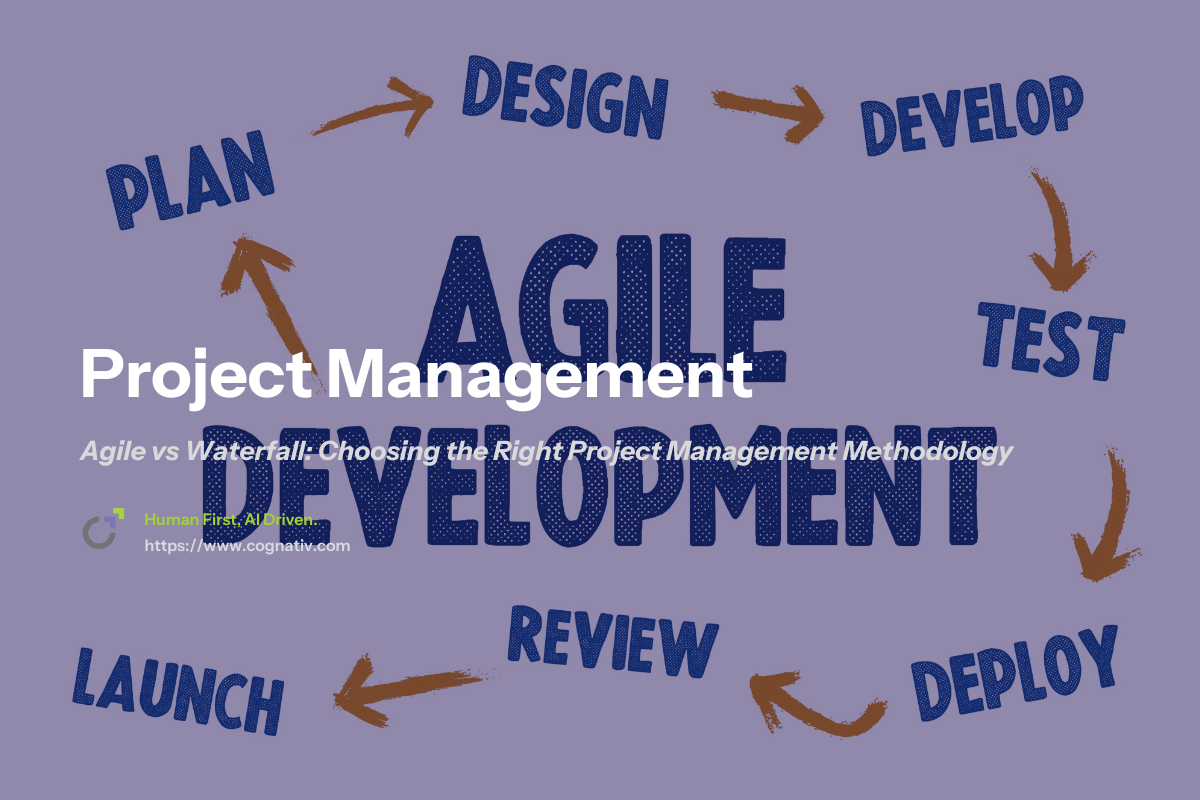
Agile vs Waterfall: Choosing the Right Project Management Methodology
In the world of project management, choosing between agile vs waterfall methodologies can significantly influence the success of your project. Both approaches offer distinct advantages depending on the development process, project life cycle, and team dynamics involved. Understanding these methodologies helps you manage projects effectively, especially when handling complex projects or coordinating multiple teams across the development lifecycle.
Key Takeaways
-
Agile methodology uses an iterative approach that relies on consistent feedback and collaboration to adapt to changing project requirements.
-
Waterfall method follows a structured design phase with sequential phases, focusing on comprehensive documentation and fixed project timelines.
-
Selecting the right methodology depends on project complexity, stakeholder involvement, and the need to manage inter project dependencies and technical debt.

Introduction to Agile vs Waterfall
Agile vs waterfall represents one of the most critical decisions in modern project management, directly impacting project success rates, team productivity, and stakeholder satisfaction. This comprehensive comparison will help project managers and development teams understand when to apply each project management methodology for optimal results.
Choosing between agile and waterfall methodologies isn’t about finding the “best” approach—it’s about selecting the right project management approach for your specific project requirements, team capabilities, and organizational context.
What This Guide Covers
This guide provides a detailed analysis of agile and waterfall methodologies, including core principles, practical applications, and a step-by-step decision framework. We’ll explore team structures, project timelines, and implementation challenges while avoiding generic advice that doesn’t address real-world complexities.
Who This Is For
This guide is designed for project managers, team leads, software developers, and business stakeholders evaluating methodology options for their projects. Whether you’re managing complex software development initiatives or considering agile adoption for your organization, you’ll find practical guidance for making informed methodology decisions.
Why This Matters
Your choice of project management methodology affects every aspect of project execution—from team dynamics and customer collaboration to risk management and final product quality. The wrong methodology can lead to project delays, budget overruns, and stakeholder dissatisfaction, while the right choice enables successful outcomes and continuous improvement.
What You’ll Learn:
-
Core differences between agile and waterfall project management approaches
-
When to use each methodology based on project characteristics
-
Step-by-step framework for methodology selection
-
Solutions to common implementation challenges
Understanding Project Management Methodologies
Project management methodologies provide structured frameworks for planning, executing, and delivering projects successfully. These methodologies define how project teams organize work, manage resources, coordinate activities, and measure progress throughout the project lifecycle.
The choice of project management methodology significantly affects team dynamics, stakeholder involvement, and project execution patterns. Different methodologies suit different types of projects, organizational cultures, and industry requirements, making methodology selection a strategic decision that impacts long-term project success.
What is Agile Methodology?
Agile methodology represents an iterative, flexible approach emphasizing continuous feedback loops and adaptive responses to change. Introduced through the 2001 Agile Manifesto, agile methodologies prioritize individuals and interactions over processes and tools, working software over comprehensive documentation, customer collaboration over contract negotiation, and responding to change over following rigid plans.
Key characteristics of agile project management include time-boxed sprints (typically 2-4 weeks), cross functional teams with shared accountability, frequent customer feedback sessions, and potentially shippable product increments delivered regularly. Agile teams embrace change as natural and beneficial, using iterative development cycles to incorporate learning and adapt to evolving requirements.
This connects to modern software development because agile processes align with rapid technological change, evolving user needs, and the competitive advantage of frequent product updates and continuous improvement.
What is Waterfall Methodology?
Waterfall methodology follows a linear, sequential approach where each project phase must be completed before the next phase begins. Introduced by Dr. Winston Royce in 1970, the waterfall model divides projects into distinct phases: requirements gathering, system design, implementation, testing, deployment, and maintenance.
Key characteristics of waterfall project management include comprehensive upfront planning, extensive documentation at each phase, formal phase gates requiring approval before progression, and a final product delivered at project completion. Waterfall projects rely on detailed project plans, fixed timelines, and minimal scope changes once development begins.
Building on traditional project management practices, waterfall methodology emerged from manufacturing and construction industries where sequential processes, comprehensive documentation, and predictable outcomes are essential for successful project delivery.
Transition: Understanding these foundational concepts enables us to examine how agile and waterfall methodologies differ in their approach to project execution and team collaboration.
Agile vs Waterfall: Core Differences and Applications
These methodologies represent fundamentally different philosophies about how projects should be planned, executed, and delivered, each addressing different types of uncertainty and project requirements.
Key Differences in Approach
Planning approaches differ dramatically between methodologies. Waterfall methodology requires comprehensive upfront planning with detailed requirements, technical specifications, and project timelines established before development begins. Agile methodology embraces iterative planning, with high-level roadmaps refined through continuous planning sessions and sprint planning meetings.
Flexibility and change management represent core philosophical differences. Waterfall projects treat changes as disruptive and costly, requiring formal change control processes and potentially significant timeline adjustments. Agile projects expect and welcome changes, using them as opportunities to deliver more valuable solutions based on evolving understanding and customer feedback.
Customer involvement patterns distinguish these approaches significantly. Waterfall methodology limits customer involvement primarily to requirements gathering and final product acceptance, with minimal interaction during development phases. Agile methodology requires ongoing customer collaboration through regular demos, feedback sessions, and iterative refinement of product features.
Risk management strategies differ in timing and approach. Waterfall projects attempt to identify and mitigate risks during upfront planning phases, potentially missing risks that emerge during development. Agile projects practice ongoing risk identification and mitigation through frequent deliveries, continuous testing, and regular retrospectives.
Team Structure and Collaboration
Waterfall team structures typically follow hierarchical organization with specialized roles and clearly defined responsibilities. Project team members work within functional silos, with limited cross-functional collaboration until integration phases. Project managers coordinate between specialized teams, and formal documentation facilitates communication between different project phases.
Agile team structures emphasize cross functional team composition with shared accountability for project outcomes. Self organizing teams include diverse skill sets required for complete feature development, from analysis and design through testing and deployment. Daily standups, sprint planning, and retrospectives create frequent interaction patterns that enhance team dynamics and collaborative problem-solving.
Communication patterns reflect these structural differences. Waterfall projects rely on formal documentation, status reports, and scheduled meetings to track progress and coordinate activities. Agile projects prioritize face-to-face communication, informal collaboration, and rapid information sharing through co-location or digital collaboration tools.
Timeline and Planning Differences
Waterfall methodology establishes fixed project timelines with sequential milestones and a single final delivery. Project phases have predetermined durations, and the entire scope must be completed before deployment. This approach provides predictable schedules but offers limited flexibility for scope adjustments or early value delivery.
Agile methodology uses iterative releases with potentially shippable increments delivered every sprint. Project timelines remain flexible, allowing teams to adjust scope based on learning and changing priorities. This approach enables early value delivery and frequent course corrections but requires stakeholder comfort with evolving timelines.
Budget considerations reflect these timeline differences. Waterfall projects typically use fixed-price contracts with comprehensive scope definitions, providing cost predictability but limited flexibility. Agile projects often use time-and-materials or value-based contracts, allowing budget flexibility while requiring ongoing investment decisions based on delivered value and learning.
Key Points:
-
Waterfall emphasizes predictability through comprehensive planning and sequential execution
-
Agile prioritizes adaptability through iterative development and continuous feedback
-
Team collaboration patterns differ significantly between hierarchical and cross-functional approaches
Transition: These core differences create distinct advantages and limitations that make each methodology suitable for different project contexts and organizational needs.
Choosing the Right Methodology: Step-by-Step Decision Framework
Selecting the appropriate project management methodology requires systematic evaluation of project characteristics, team capabilities, and organizational context to ensure alignment between methodology strengths and project requirements.
Step-by-Step: Methodology Selection Process
When to use this: Before project initiation or when evaluating current methodology effectiveness for ongoing projects.
-
Assess project requirements clarity and stability: Evaluate whether requirements are well-defined and unlikely to change (favoring waterfall) or evolving and requiring ongoing refinement (favoring agile). Consider regulatory requirements, compliance needs, and contractual obligations that may dictate documentation and process requirements.
-
Evaluate stakeholder involvement preferences and availability: Determine whether stakeholders can provide ongoing collaboration and feedback (supporting agile adoption) or prefer limited involvement with comprehensive upfront planning (supporting waterfall approach). Assess decision-making authority and approval processes.
-
Analyze team structure, skills, and collaboration capabilities: Consider whether your development team has experience with cross functional teams and self-organization (agile-friendly) or specialized expertise requiring coordinated integration (waterfall-suitable). Evaluate team member availability for intensive collaboration and continuous feedback.
-
Consider industry standards, regulatory requirements, and organizational culture: Assess whether your industry or organization requires extensive documentation, formal approval processes, or compliance with specific standards. Evaluate organizational readiness for cultural changes associated with agile adoption or preference for traditional project management approaches.
-
Determine budget flexibility and timeline constraints: Evaluate whether your project has fixed budget and timeline constraints requiring predictable planning (waterfall-aligned) or flexible investment allowing adaptive scope and timeline management (agile-compatible).
Comparison: Agile vs Waterfall
|
Feature |
Agile Methodology |
Waterfall Methodology |
|---|---|---|
|
Project Scope |
Flexible requirements with iterative refinement |
Fixed requirements with comprehensive upfront definition |
|
Team Structure |
Cross functional teams with shared accountability |
Specialized teams with hierarchical coordination |
|
Timeline |
Iterative releases with adaptive planning |
Sequential phases with fixed milestones |
|
Customer Involvement |
Continuous collaboration and feedback |
Limited involvement at requirements and acceptance |
|
Change Management |
Embraces change as valuable and expected |
Treats change as costly and disruptive |
|
Documentation |
Lightweight documentation focused on value |
Comprehensive documentation for all phases |
|
Risk Management |
Continuous identification and mitigation |
Upfront risk planning with formal mitigation strategies |
Choosing between methodologies depends on matching these characteristics with your specific project requirements, team capabilities, and organizational constraints. Projects with stable requirements, regulatory constraints, and traditional organizational cultures often benefit from waterfall methodology, while projects requiring adaptability, innovation, and frequent customer feedback typically succeed with agile approaches.
Transition: Even with careful methodology selection, implementation challenges can impact project success and require proactive management strategies.
Common Challenges and Solutions
Understanding implementation challenges helps project managers and development teams prepare for potential difficulties and develop effective mitigation strategies regardless of chosen methodology.
Challenge 1: Scope Creep and Changing Requirements
Solution: Agile methodology handles scope changes through iterative planning and backlog management, treating changes as natural evolution rather than project failures. Product owners prioritize features based on value, and sprint planning sessions provide regular opportunities to incorporate changes without disrupting overall project progress.
Waterfall methodology requires formal change control processes with impact assessment, stakeholder approval, and timeline adjustments. Clear communication about change costs and timeline implications helps stakeholders make informed decisions about scope modifications.
Challenge 2: Team Resistance to Methodology Change
Solution: Implement gradual transitions with comprehensive training programs and clear communication about methodology benefits. Start with pilot projects to demonstrate success and build confidence before organization-wide implementation.
Leadership support proves essential for overcoming resistance, particularly when transitioning from traditional waterfall to agile approaches. Invest in agile coaches or experienced practitioners to guide teams through methodology adoption and address concerns proactively.
Challenge 3: Misaligned Stakeholder Expectations
Solution: Establish clear methodology communication from project initiation, ensuring all stakeholders understand delivery patterns, involvement requirements, and decision-making processes. Regular updates and appropriate stakeholder involvement levels prevent misunderstandings about project progress and deliverables.
Set realistic expectations about timelines, deliverables, and change management processes based on chosen methodology. Agile projects require stakeholder comfort with evolving requirements and iterative delivery, while waterfall projects need stakeholder patience with sequential development and limited early visibility.
Transition: Successfully addressing these challenges enables teams to realize the full benefits of their chosen project management methodology.
Conclusion and Next Steps
The choice between agile and waterfall methodologies depends fundamentally on project characteristics, team capabilities, and organizational context rather than universal superiority of either approach. Successful project outcomes result from aligning methodology strengths with specific project requirements and team dynamics.
To get started:
-
Assess your current project requirements using the decision framework, focusing on requirement stability, team structure, and stakeholder involvement preferences
-
Evaluate team readiness for methodology implementation, including necessary training, cultural changes, and leadership support
-
Pilot your chosen methodology on a smaller project to validate approach effectiveness and identify implementation adjustments before scaling to larger initiatives
Related Topics: Consider exploring hybrid methodologies that combine agile and waterfall elements, specific agile frameworks like Scrum and Kanban for detailed implementation guidance, and project management tools that support your chosen methodology for enhanced team collaboration and progress tracking.