Anduril Raises $5 Billion as US Defense Tech Funding Accelerates
Anduril Industries has reportedly raised $5 billion in new funding, pushing the company’s valuation to approximately $61 billion and marking one of the largest private funding rounds in defense technology history. This capital injection arrives as the Pentagon dramatically increases its commitment to AI and autonomous systems, signaling a fundamental shift in how the United States approaches military modernization.
This article examines the specifics of Anduril’s funding round, the company’s technology stack and strategic positioning, and the broader acceleration of US defense tech funding that makes this moment significant. The analysis serves defense industry stakeholders, venture capital investors, and enterprise leaders evaluating AI and automation investments in regulated sectors. Understanding this landscape matters because the investment in defense technology is increasingly viewed as essential for national security infrastructure—and the implications extend well beyond military applications into commercial enterprise systems.
Anduril Industries has secured what appears to be a $5 billion funding round at a $61 billion valuation, representing a dramatic leap from its confirmed $30.5 billion valuation in June 2025, as US defense budgets allocate unprecedented resources to AI and autonomous capabilities.
Key outcomes from this analysis:
Clear understanding of Anduril’s funding trajectory and current market position
Insights into Pentagon budget trends driving defense tech acceleration
Assessment of Anduril’s technology differentiation versus traditional defense contractors
Implications for enterprise AI development and government contracting strategies
Actionable context for evaluating defense tech partnerships and investments
Understanding Anduril Industries and Defense Tech Innovation
Anduril Industries develops autonomous systems, AI-enabled command and control software, and next-generation military hardware for defense applications. Founded in 2017 by Palmer Luckey, Trae Stephens, Brian Schimpf, Matt Grimm, and Joe Chen, the Costa Mesa-based company has positioned itself as a software-first alternative to traditional aerospace and defense contractors, building capabilities designed for rapid development cycles rather than multi-decade projects.
Anduril’s Technology Stack
The company’s Lattice AI-powered software integrates data from sensors and autonomous platforms to provide real-time situational awareness for military operations. This operating system is hardware-agnostic, enabling sensor fusion, threat detection, resource coordination, and multi-domain command execution across aerial, maritime, and ground-based platforms.
Anduril Industries has expanded its product portfolio through acquisitions, enhancing its capabilities in sensing, computing, and air and missile defense. Key products include the ALTIUS family of fixed-wing drones, autonomous underwater vehicles, counter-UAS systems, and participation in the Air Force’s Collaborative Combat Aircraft program. The company also received a $159 million Army contract to prototype a night vision and mixed-reality system for the Soldier Borne Mission Command program, demonstrating its reach across multiple defense technology domains.
What distinguishes Anduril from legacy contractors is a modern industry landscape that treats software as the primary weapon system instead of an afterthought added to hardware. This approach enables faster iteration, more flexible deployment, and higher margins—defense tech innovators operate at 40–45% gross margins, significantly outperforming traditional defense primes’ margins.
Defense Tech Market Context
The defense technology sector encompasses companies applying commercial technology innovation—particularly artificial intelligence, robotics, and advanced manufacturing—to military applications. This sector has experienced rapid growth as the U.S. military’s need to rapidly modernize its arsenal drives demand for affordable mass and autonomous systems.
The focus on dual-use technologies reduces the gap between tech giants and traditional defense contractors, creating opportunities for startups to compete for contracts previously dominated by established aerospace primes. The Pentagon is moving away from low-risk, cost-plus contracts toward fixed-price deals, incentivizing innovation and creating favorable conditions for companies built on agile methodologies.
This funding environment explains why Anduril’s latest capital raise has attracted significant attention—it represents both a company-specific milestone and a validation of the broader defense tech investment thesis.
The $5 Billion Funding Round Details
Building on its established position in autonomous systems and AI-driven defense solutions, Anduril’s reported $5 billion raise represents a step-change in both scale and market expectations for the company.
Funding Structure and Valuation
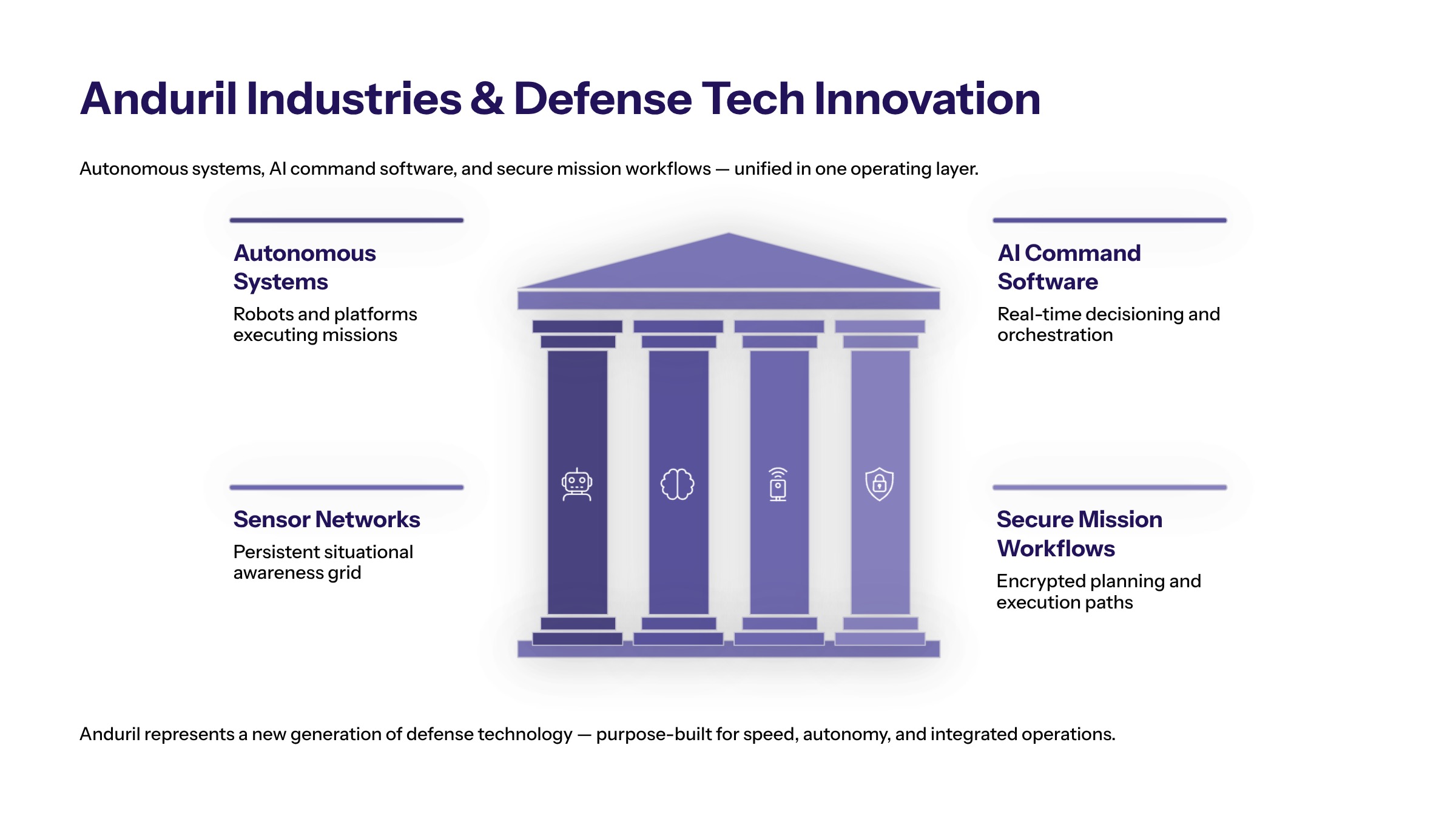
The reported $5 billion funding round values Anduril Industries at approximately $61 billion, though this figure remains unconfirmed in primary filings. For context, in 2025, Anduril Industries signed a term sheet to raise up to $2.5 billion in capital, which raised its valuation to approximately $30.5 billion. Founders Fund led that Series G round with a $1 billion investment—their largest ever—and demand reportedly exceeded supply by eight times.
Anduril Industries has raised more than $6 billion in total funding since its inception in 2017, with its latest funding round occurring in June 2025. The progression from the company’s Series F round (approximately $1.5 billion at $14 billion valuation in mid-2024) to the current reported figures demonstrates extraordinary growth velocity. Secondary market pricing on platforms like Forge has estimated valuations between $60-90 billion, suggesting investor sentiment may be driving ahead of confirmed transaction values.
Strategic Use of Capital
Previous funding has been directed toward scaling manufacturing, expanding R&D in AI and machine learning, building operating ecosystem infrastructure, and securing major government contracts. The company’s planned five-million square foot weapons factory in Ohio—Arsenal-1—indicates a push toward physical production scale that complements its software development capabilities.
Anduril Industries has secured several government contracts, including a $100 million production agreement from the Department of Defense’s Chief Digital and Artificial Intelligence Office. Additional contract wins include a 10-year, $642 million counter-drone (I-CUAS) program and participation in the IVAS (Integrated Visual Augmentation System) program—a $22 billion Army contract novated from Microsoft to Anduril.
Revenue growth supports this investment trajectory. In 2024, Anduril nearly doubled its revenue to approximately $1 billion, with projections suggesting continued expansion as contracts move from development to production phases.
Market Timing and Competitive Position
This funding arrives as the U.S. military is transitioning from pilot programs to long-term operational contracts with technology startups. Rapid development cycles are becoming the norm as firms focus on agile methodologies over multi-decade projects, and Anduril’s software-centric approach positions it to capture contracts that traditional aerospace primes struggle to execute efficiently.
Compared to Lockheed Martin, Raytheon, and Northrop Grumman, Anduril operates with fewer bureaucratic constraints and a business model more analogous to high-growth AI and robotics firms. However, defense startups are under increasing pressure to align with larger partners to succeed in the market, creating both competitive dynamics and potential partnership opportunities.
US Defense Tech Funding Acceleration Trends
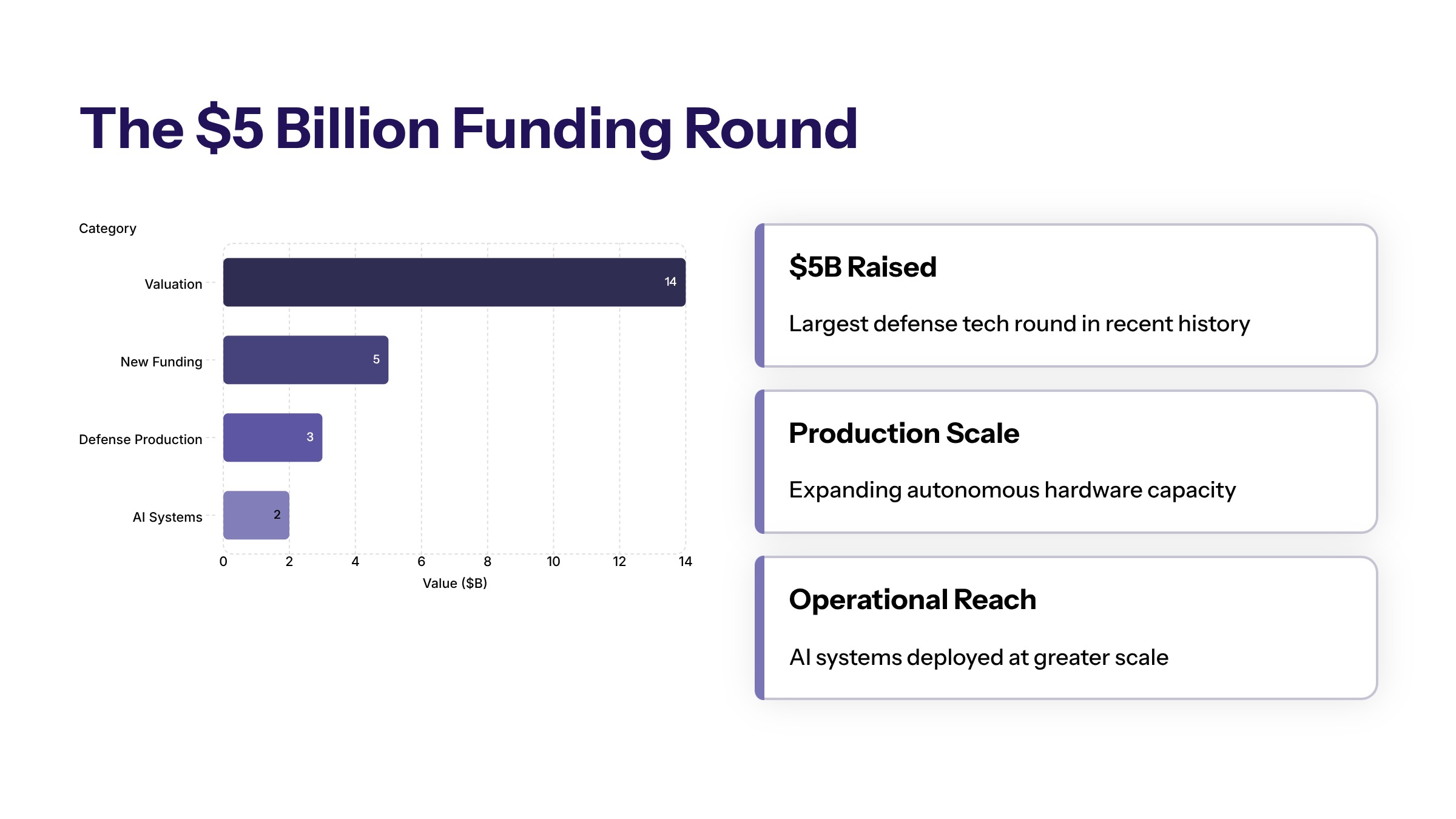
Anduril’s funding trajectory reflects broader patterns in how the US government and private capital are approaching defense technology investment.
Government Investment Priorities
The Department of Defense requested $1.01 trillion for FY2026, representing a 13-14% increase over FY2025. Within that budget, a dedicated line for AI and autonomous systems was established for the first time at $13.4 billion—comprising $9.4 billion for aerial autonomy, $1.7 billion for maritime platforms, $734 million for underwater systems, $210 million for autonomous ground vehicles, and $1.2 billion for cross-domain autonomy-enabling software.
FY2027 proposals amplify this direction further. The newly-named Defense Autonomous Warfare Group (DAWG) is seeking over $54 billion, representing a dramatic increase over previous autonomous systems spending. Counter-unmanned aerial systems funding totals approximately $3.1 billion across services, with additional allocations for directed energy and missile defense under the “Golden Dome” initiative.
This structured investment creates predictable demand for companies like Anduril that have built capabilities matching these priority areas.
Private Capital Flow into Defense Tech
Venture capital and growth equity have followed government signals into defense technology. The Anduril round demonstrates that investors view defense tech not merely as national security infrastructure but as a component of AI infrastructure with enterprise-scale opportunity.
Company | Recent Funding | Valuation | Primary Focus |
|---|---|---|---|
Anduril Industries | $5B (reported) | ~$61B | Autonomous systems, AI command & control |
Shield AI | $300M+ | ~$5B | Autonomous aircraft, AI pilots |
Rebellion Defense | $150M | ~$1B | AI-powered defense software |
Saronic | $175M | ~$1B | Autonomous maritime vessels |
The pattern across these companies shows capital flowing toward firms that combine AI and software capabilities with hardware systems designed for military applications.
Technology Integration Requirements
Several technical challenges drive investment in AI-first defense platforms. Integration needs between commercial AI capabilities and military requirements demand significant engineering development. Security and compliance considerations for defense tech development add complexity but also create barriers to entry that benefit established players.
Anduril Industries is focused on expanding international defense partnerships to enhance its technology offerings for government and allied defense organizations, recognizing that US budget trends are mirrored in allied nations facing similar modernization pressures.
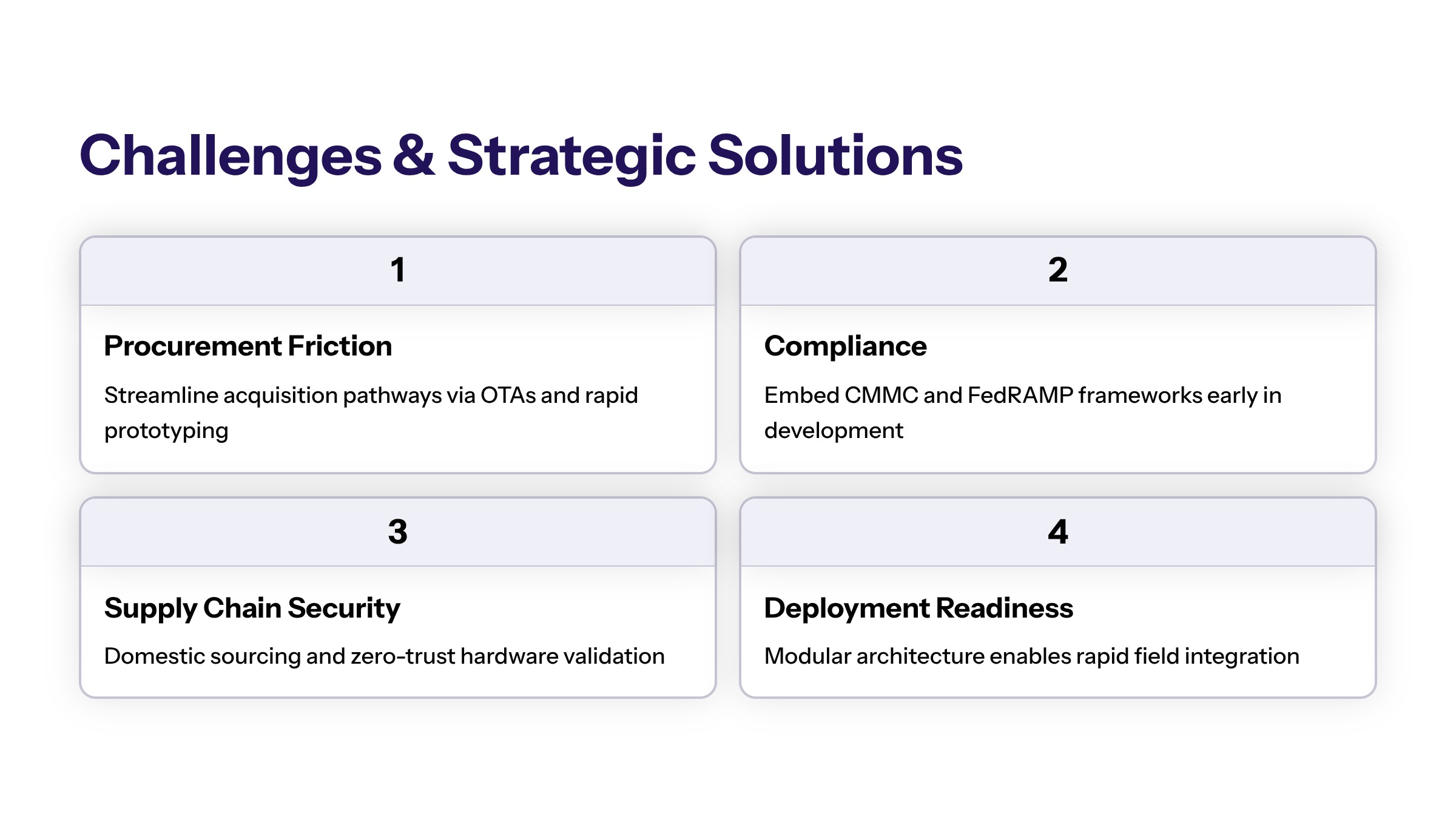
Common Challenges and Strategic Solutions
Defense tech companies face distinct implementation challenges that differ from commercial technology markets.
Scaling Manufacturing for Defense Applications
Supply chain security requirements and classified production environments create complexity for companies transitioning from prototype to production. Anduril’s investment in dedicated manufacturing facilities like Arsenal-1 addresses this challenge directly, bringing production capabilities in-house rather than relying on fragmented contractor networks.
Actionable approach: Build integrated manufacturing capabilities early, treating production engineering as a core competency rather than an outsourced function.
AI Integration in Secure Environments
Deploying AI systems in classified or sensitive defense contexts requires architectures that maintain security while enabling automation benefits. Lattice OS addresses this by providing a software layer that can integrate third-party hardware and software while maintaining appropriate data access controls and human oversight capabilities.
Solution: Design AI platforms with security and auditability as foundational requirements rather than retrofitted compliance features.
Regulatory Compliance and Government Contracting
Navigation of defense acquisition regulations requires specialized expertise that many technology startups lack. The Pentagon’s shift toward fixed-price contracts benefits companies capable of managing execution risk but creates challenges for organizations accustomed to cost-plus protection.
Strategy: Develop internal government contracting expertise and maintain innovation velocity within acquisition frameworks by structuring organizations for both regulatory compliance and rapid iteration.
Conclusion and Next Steps
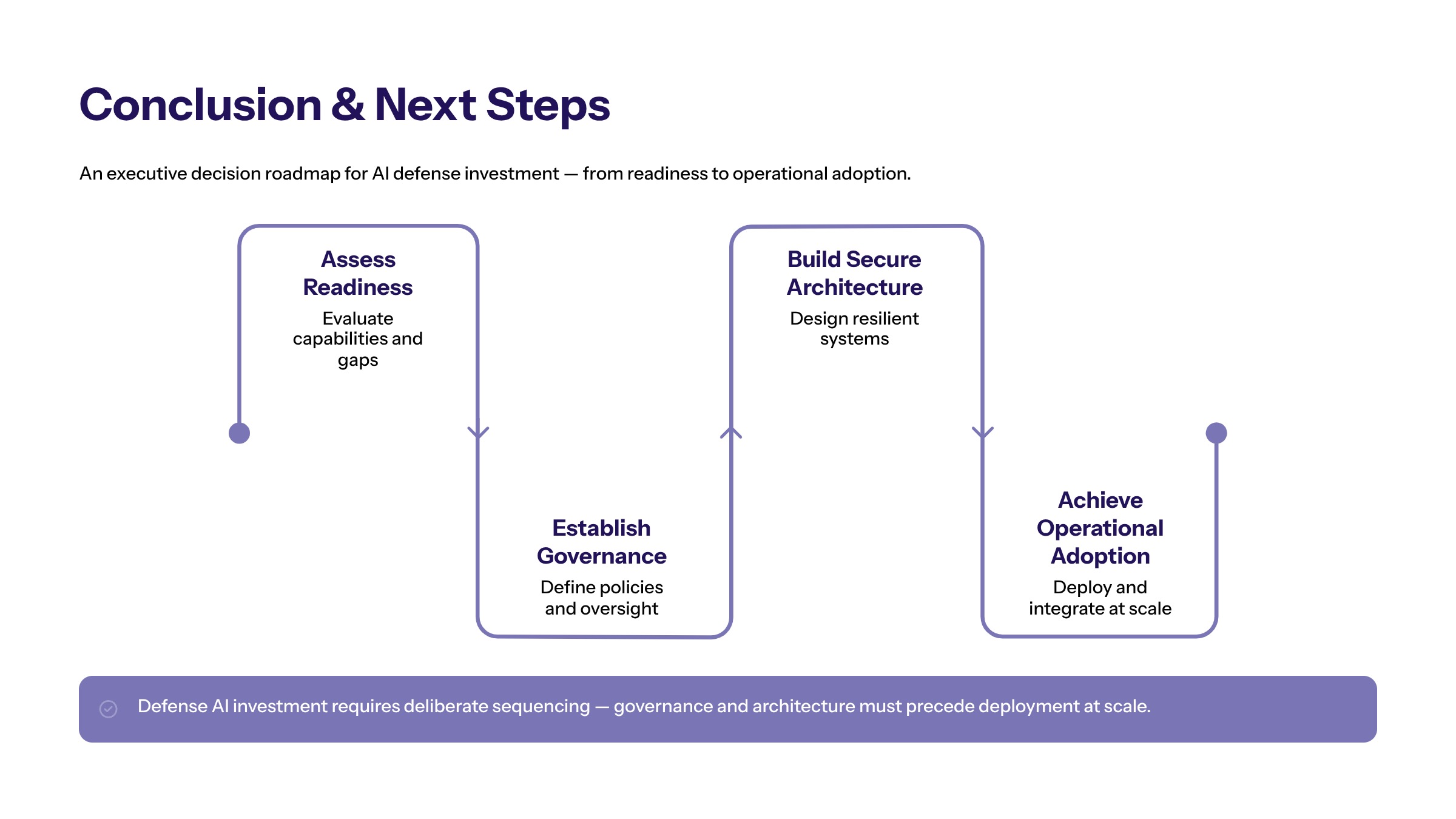
Anduril’s reported $5 billion funding round at a $61 billion valuation marks a significant milestone for both the company and the broader defense tech sector. As of 2025, Anduril Industries is valued at around $30.5 billion, reflecting its rapid growth and expansion in the defense technology sector—the reported new valuation would represent nearly a doubling in less than a year.
This trajectory makes sense in context: Pentagon budgets now include dedicated AI and autonomy funding lines exceeding $13 billion annually, the U.S. military is prioritizing software-centric platforms over traditional hardware programs, and companies demonstrating successful execution on government contracts are attracting premium valuations.
For enterprise leaders evaluating AI and automation investments:
Assess your organization’s positioning relative to defense tech partnership opportunities, particularly in data integration, sensors, and autonomous systems
Evaluate technology architectures against the security and compliance standards required for government and regulated sector applications
Consider how defense tech innovation patterns—software-first approaches, rapid iteration, AI-native platforms—might inform commercial enterprise modernization strategies
The convergence of AI capabilities, autonomous systems, and defense applications represents a multi-decade investment opportunity that extends beyond military contracts into adjacent commercial markets. Organizations developing AI-first architectures today will be better positioned to participate as these markets mature.
Additional Resources
Pentagon FY2026 budget documentation on AI and autonomy allocations
Defense acquisition regulation guidance for technology startups entering government contracting
Industry analysis on defense tech valuation methodologies and growth projections
Frameworks for evaluating AI-first architecture readiness in regulated environments