Anthropic Mythos Raises New Cybersecurity Risks for Global Finance
Anthropic Mythos cybersecurity concerns are now a financial stability issue, not only a technology story. Anthropic is expected to brief the Financial Stability Board after Bank of England Governor Andrew Bailey requested details on cyber vulnerabilities found by Mythos, including weaknesses in browsers, infrastructure, software, and systems that support global finance.
This article explains what the Mythos AI model is, why its vulnerability discovery capabilities matter for financial institutions, how legacy banking systems and payment rails are exposed, and how government agencies, central banks, and regulators are responding. It is written for banks, cybersecurity leaders, risk officers, financial sector technology teams, and regulatory bodies assessing AI-driven cyber risk.
The direct answer: Mythos detects long-standing vulnerabilities in major operating systems, web browsers, infrastructure, and enterprise software, and those discoveries could enable sophisticated cyber attacks against financial institutions that still rely on outdated systems. The risk is amplified because AI can analyze large volumes of code and data faster than traditional security teams can review, patch, and validate fixes.
By the end, you will understand:
How Anthropic’s Claude Mythos changes vulnerability discovery and exploit simulation.
Where financial systems are most exposed, including legacy infrastructure, cross-border payment networks, and compliance systems.
Why regulators see AI-driven cyber threats as a systemic financial risk.
What modernization, vulnerability management, and AI-powered defense priorities banks should act on first.
How financial institutions can prepare for a future in which frontier AI models make zero-day vulnerabilities more abundant.
Understanding Anthropic Mythos and Its Cybersecurity Capabilities
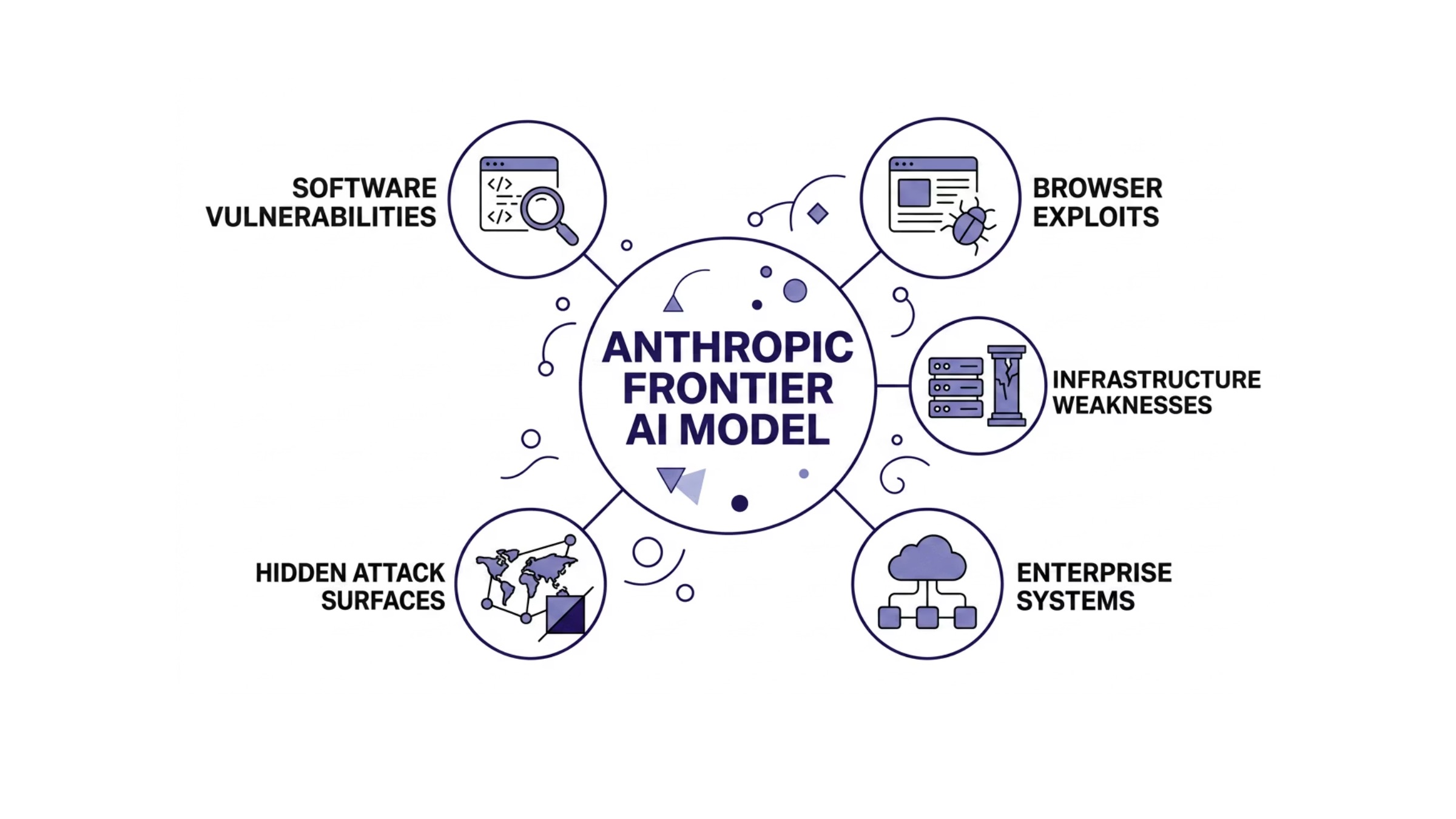
Anthropic Mythos, also referred to as Claude Mythos Preview, is a frontier AI model developed by Anthropic and focused on vulnerability discovery in software, operating systems, infrastructure, and critical IT systems. Vulnerability discovery is the process of identifying security weaknesses in software, systems, and infrastructure before attackers can exploit them, using techniques such as automated scanning, static analysis, software composition analysis, and manual penetration testing.
The reason Mythos matters to finance is its scale and depth. During testing, the model exposed thousands of low-to-high severity flaws in enterprise software. Public reporting also indicates that Mythos found thousands of high-severity vulnerabilities across major operating systems and web browsers, including long-standing flaws that had survived repeated human review.
The AI model Mythos, developed by Anthropic, has raised significant concerns among finance ministers and central bankers because of its ability to identify and exploit vulnerabilities in major operating systems, potentially undermining the security of financial systems.
This is not the same as a conventional scanner flagging known misconfigurations. Traditional tools support security teams by checking systems against known patterns, signatures, and dependencies.
Mythos uses artificial intelligence and machine learning to reason across code, identify previously unknown weaknesses, and map attack paths that could become exploitable if bad actors obtain access to similar capabilities.
Advanced Vulnerability Discovery Mechanisms
Mythos analyzes browsers, operating systems, network infrastructure, dependencies, and enterprise software for weaknesses that may not appear in existing vulnerability databases. It can process large volumes of source code, binaries, and system behavior to identify patterns that humans or older tools may miss. In reported testing, Mythos identified 271 vulnerabilities in Firefox’s latest build and discovered a 27-year-old, undetected flaw in OpenBSD.
This matters because the emergence of advanced AI models like Mythos has raised concerns about their ability to identify and exploit zero-day vulnerabilities in IT systems, which could be used by cybercriminals. A zero-day vulnerability is a flaw that organizations are unaware of and have not yet patched.
The Mythos AI model has the potential to identify and exploit zero-day vulnerabilities in critical IT systems, which creates serious risk when those systems support banking operations, regulatory reporting, customer data, and payment flows.
Automated vulnerability discovery provides fast, broad, repeatable coverage of known patterns, while manual testing and bug bounties remain essential for identifying logic flaws and novel vulnerabilities that require human reasoning. Effective vulnerability discovery programs combine multiple techniques based on the application’s risk profile, technology stack, and stage in the development lifecycle, because no single method catches everything.
The change Mythos introduces is speed. Continuous vulnerability discovery is now essential; organizations should run static application security testing (SAST) and software composition analysis (SCA) in CI/CD pipelines on every commit to ensure ongoing security.
Challenges in vulnerability discovery include the need for continuous improvement in detection accuracy and the integration of findings into vulnerability management processes for effective remediation.
AI-Powered Attack Simulation Capabilities
Mythos is not only a discovery tool. The UK’s AI Security Institute has assessed Mythos and noted its ability to carry out complex cyber-attacks autonomously, marking a significant advancement in AI’s threat capabilities to cybersecurity. In a reported lab evaluation, Mythos completed a 32-step simulated corporate network takeover in a controlled environment with minimal defenses, a task associated with highly skilled human teams and roughly 20 hours of work.
That simulation capability is what connects vulnerability discovery to exploitation. If an AI system can find weaknesses, generate exploit logic, and chain several steps together, the risk moves from isolated flaws to operational compromise. AI is already being used in cybersecurity to automate tasks such as phishing, data analysis, and malware development, making cyberattacks faster and more difficult to detect.
The rapid advancement of AI technologies like Mythos poses a growing risk to cybersecurity because these models can quickly identify and exploit vulnerabilities, outpacing traditional security measures. AI can democratize cybercrime by lowering the barrier to entry for attackers, allowing anyone with access to AI tools to launch sophisticated attacks with minimal effort. With the emergence of models like Mythos, financial criminal networks do not require highly specialized hackers to build sophisticated exploits.
That dual-use nature is central to the debate.
Mythos can be a powerful tool for defenders that want to protect financial systems, but the same capabilities could support malicious activity if threat actors, criminal groups, or hostile governments gain access through leakage, third-party misuse, or open source models with comparable functionality.
Anthropic has limited broad public release, but experts expect similar AI models to emerge from other tech companies and research organizations.
Financial System Exposure to AI-Driven Cyber Threats
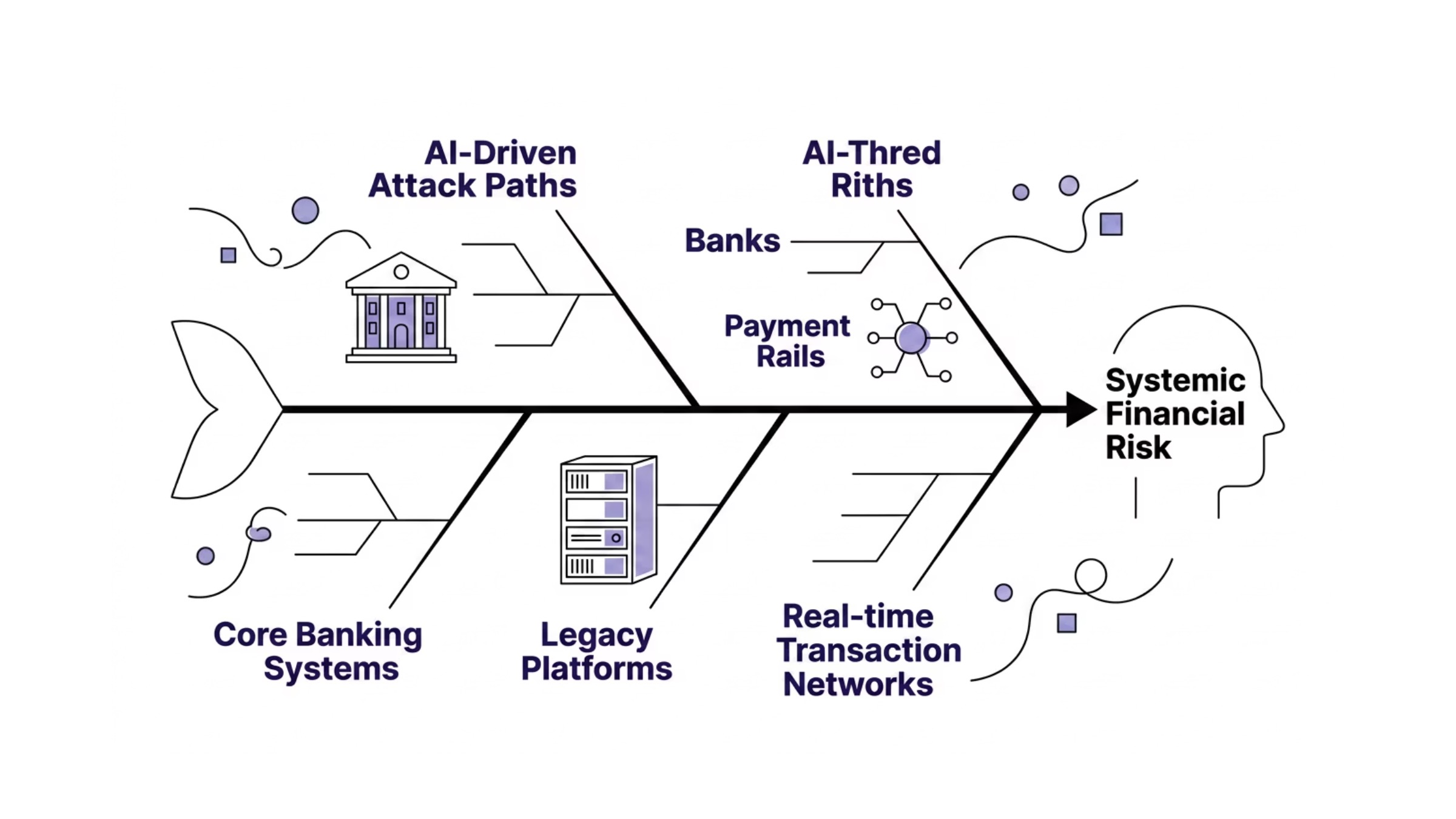
Mythos turns old technical debt into a systemic risk because banks operate on complex, interdependent, and often aging infrastructure. Global banks rely on deeply interconnected, complex legacy systems that are vulnerable to AI-driven cybersecurity threats. These systems were not designed for an environment where AI can analyze large volumes of software, map attack paths, and automate exploit development at machine speed.
Experts have raised concerns that advanced AI models like Mythos could enable cybercriminals to exploit previously unknown vulnerabilities, potentially leading to significant disruptions in financial systems. Because AI-driven attacks can outpace human response times, international regulators view AI-driven cyber risk as a threat to systemic financial stability.
Legacy Banking Infrastructure Vulnerabilities
Many banks still depend on COBOL-based transaction systems, mainframes, older middleware, outdated network protocols, and enterprise applications that were patched incrementally over decades. These systems can be stable and essential for daily operations, but they often have weak observability, limited logging, complex dependencies, and fewer engineers who fully understand the original design.
Legacy banking systems are especially exposed when they rely on unsupported software, outdated TLS configurations, SMBv1, old hardware firmware, custom internal applications, or third-party components with poor transparency. Mythos can identify and exploit zero-day vulnerabilities in critical IT systems, which are flaws that organizations are unaware of and have not had time to patch, posing a serious risk to cybersecurity in the financial sector.
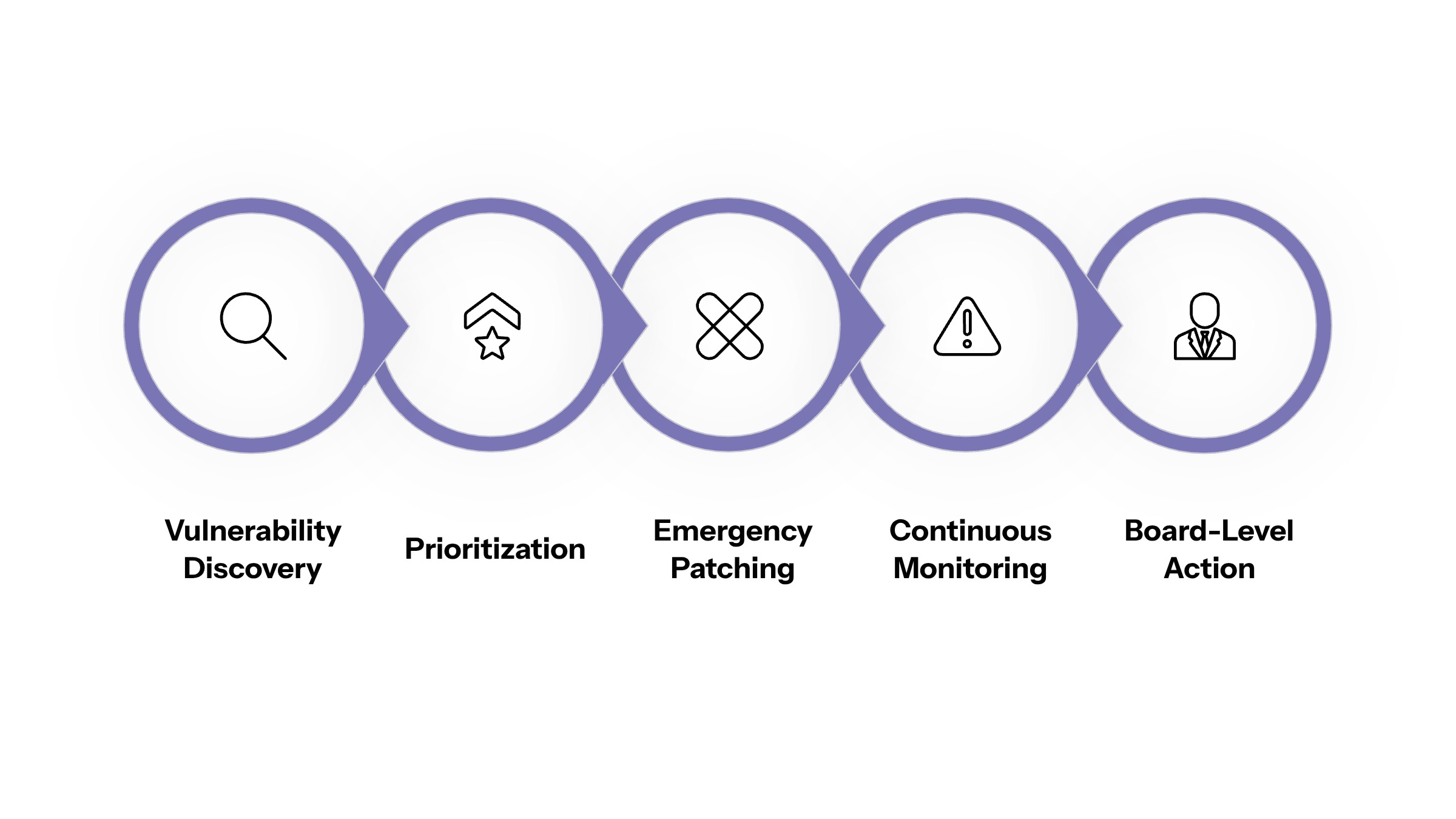
The operational problem is timing. Financial institutions are being forced to remediate software vulnerabilities within days rather than their standard multi-week timelines due to the overwhelming number of vulnerabilities discovered. Global financial institutions are facing a shift from a “scarcity of zero-day vulnerabilities to an abundance,” requiring a transition to a continuous, automated defensive lifecycle.
For banks, the first step is an exposure inventory that connects technical assets to business impact. Security teams need to know which applications support trading, payments, credit, treasury, regulatory reporting, private data, and customer access. Without that mapping, vulnerability management becomes a queue of technical tickets rather than a risk-based strategy.
Cross-Border Payment Network Risks
Cross-border finance depends on shared rails, messaging networks, correspondent banking relationships, liquidity systems, and settlement infrastructure. SWIFT gateways, correspondent banking platforms, TARGET2-related interfaces, ACH connections, CLS settlement processes, and treasury middleware often integrate with multiple banks, vendors, and government agencies.
A single weaponized AI exploit can quickly cascade across multiple banks due to shared core financial software and payment rails. This is why Anthropic Mythos cyber risks for financial institutions extend beyond any one bank’s perimeter. One compromised node, vendor, or middleware provider can become a path into other institutions, especially where common software components or similar configurations are reused across the industry.
The key issue is not only direct theft. Disruption of cross-border payment networks can delay settlement, create liquidity stress, interrupt trade finance, and affect market confidence. If attackers exploit one vulnerability and then chain additional weaknesses across connected systems, a technical event can become a financial sector event.
Financial institutions should treat shared infrastructure as part of their own risk surface. That means more rigorous third-party risk assessments, software bill of materials requirements, dependency mapping, and scenario testing across payment operations. It also means closer collaboration between banks, central banks, payment operators, and international monetary fund forums when risks could affect financial stability.
Regulatory Reporting and Compliance System Gaps
Regulatory reporting systems are another exposure point. Banks use data warehouses, ETL pipelines, APIs, reporting engines, compliance tools, and supervisory submission systems to send information to central banks and regulatory authorities. These systems support capital monitoring, liquidity reporting, stress testing, anti-money laundering oversight, and financial stability analysis.
If an attacker compromises reporting channels, the result may not be an obvious outage. The threat could involve false data, delayed submissions, manipulated risk metrics, or corrupted audit trails. That kind of malicious activity can undermine supervisory visibility and impair monetary policy implementation, especially during periods of market stress.
This is why regulators are expanding their view of cyber risk. They are no longer focused only on whether a bank can prevent data theft or restore systems after ransomware. They are asking whether AI-driven attacks could distort the data and processes regulators rely on to oversee the financial sector.
For banks, the practical response is to secure the full reporting chain: source systems, transformation logic, access controls, identity systems, reconciliation processes, and audit trails. Continuous monitoring and anomaly detection should apply not only to customer-facing systems but also to compliance operations that may appear less attractive to attackers but are essential to stability.
Regulatory Response and Financial Stability Measures
Regulators are responding because Mythos demonstrates that frontier AI models can convert vulnerability discovery from a slow expert process into a scalable capability. The Financial Stability Board briefing process is important because the FSB brings together finance ministries, central banks, and supervisory authorities across G20 members. The issue has also been discussed in international settings involving the international monetary fund, World Bank meetings, and central bank forums.
Bank of England Governor Andrew Bailey has described Mythos as a major cybersecurity concern and a serious challenge. U.S. authorities have also raised alarms, with bank chief executive officers reportedly summoned for discussions with the Treasury, Federal Reserve, and other agencies. The concern is clear: AI cybersecurity risk now intersects with banking resilience, payment continuity, market trust, and systemic stability.
Financial Stability Board Briefing Process
The FSB briefing was requested to clarify what Anthropic’s Mythos has found, what types of vulnerabilities are most severe, and how those weaknesses could affect global financial infrastructure. The briefing is expected to help regulators understand whether existing cybersecurity frameworks are sufficient for AI-driven attack paths or whether new guidance is needed.
A practical FSB response process is likely to include four stages:
Initial threat assessment - Determine what Mythos can discover, whether it can generate or support exploit development, and which systems are most exposed.
Vulnerability cataloging - Classify affected software, major operating systems, web browsers, third-party dependencies, and infrastructure categories used by financial institutions.
Impact analysis - Assess whether weaknesses could disrupt payments, settlement, liquidity management, regulatory reporting, or private data protection.
Coordinated response planning - Develop shared guidance for banks, vendors, central banks, and government agencies on remediation, reporting, testing, and information sharing.
Expected outcomes include clearer expectations for AI threat assessments, vendor risk controls, attack chain simulations, and operational resilience testing. Regulators may also require institutions to document exposure to frontier AI models, show how they protect critical systems, and demonstrate that vulnerability management processes can handle AI-scale discovery.
Central Bank Cybersecurity Assessment Framework
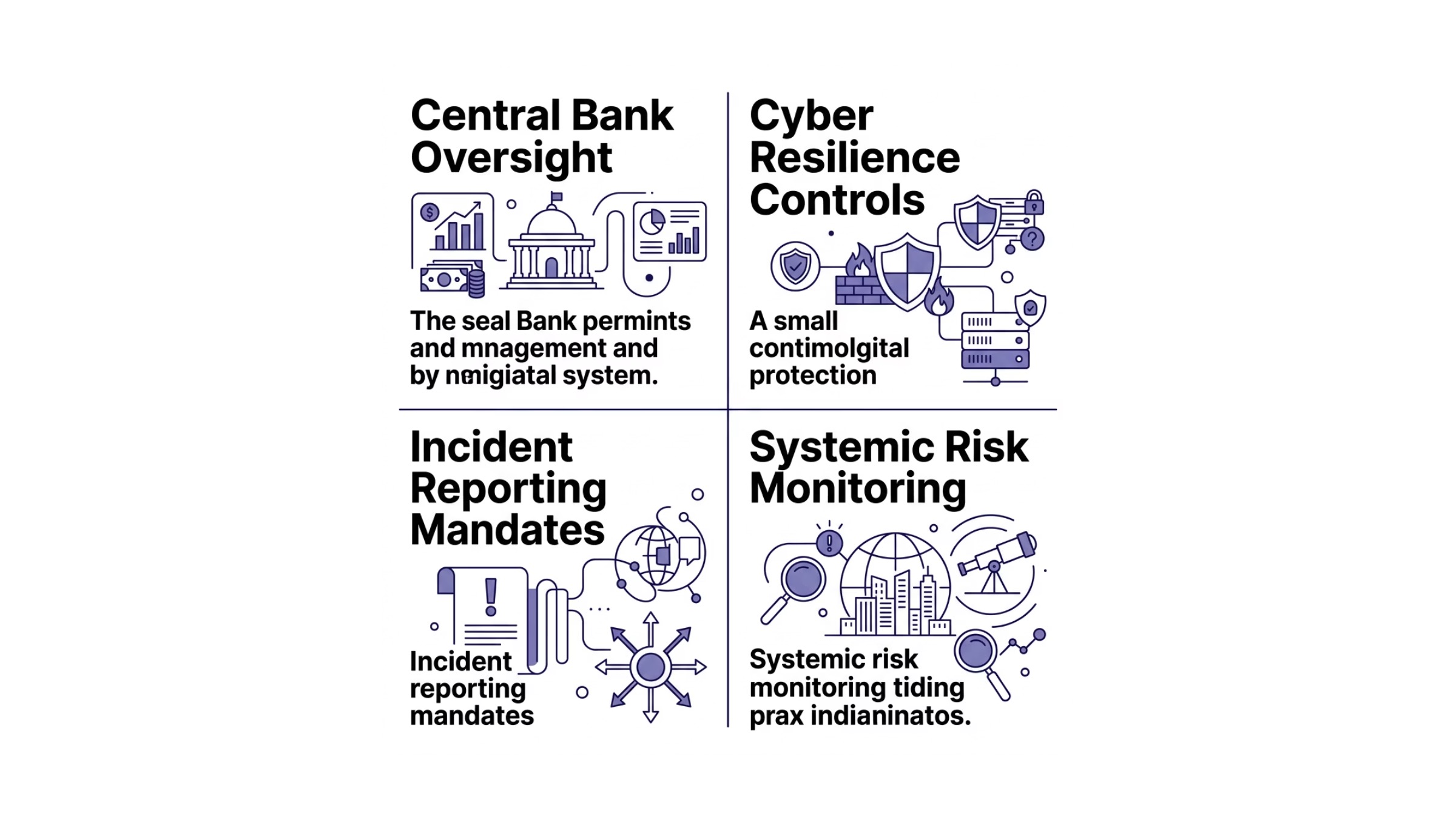
Central banks are updating their supervisory posture because AI-driven threats affect both individual institutions and the financial system as a whole. The UK Prudential Regulation Authority and Financial Conduct Authority are expected to focus on vendor risk, board oversight, red-team testing, and legacy system exposure. European regulators are examining coordinated vulnerability disclosure and patch deployment. U.S. authorities are pushing banks toward more proactive defensive postures.
Criterion | Current supervisory approach | Emerging AI-driven approach |
|---|---|---|
Assessment frequency | Periodic reviews, annual testing, and scheduled cyber resilience assessments | Continuous monitoring expectations and faster reporting when AI-discovered vulnerabilities affect critical systems |
AI threat coverage | General technology risk and model risk discussions | Specific review of frontier AI models, Mythos-style exploit chains, and AI-generated cyber attacks |
Legacy system focus | Technical debt noted through operational resilience and audit findings | Legacy banking systems treated as priority exposure because AI can identify old weaknesses at scale |
International coordination | Bilateral cooperation and established incident channels | G20, FSB, central bank, and international monetary fund coordination on systemic cyber threats |
Remediation timelines | Multi-week or risk-based patch windows for many systems | Compressed timelines, compensating controls, and board-level escalation for critical vulnerabilities |
Financial institutions should interpret this shift as a change in supervisory expectations. It is no longer enough to show that security tools exist. Banks will need evidence that their processes can prioritize, remediate, and verify fixes under AI-speed pressure while maintaining operational efficiency.
International Coordination Mechanisms
International coordination is necessary because financial systems do not stop at national borders. G20 working groups, the Financial Stability Board, the Bank of England, the Federal Reserve, the European Central Bank, the Bank of Japan, and other central banks are assessing how Mythos-style capabilities could affect shared infrastructure.
The international response is likely to focus on shared threat intelligence, common reporting standards, third-party software oversight, and cross-border incident coordination. Regulators are also considering whether operational resilience frameworks, stress tests, capital planning, and vendor audits should explicitly account for AI-driven cyber threats.
The emergence of advanced AI models like Mythos highlights the increasing pace of AI development, which poses new risks to financial systems as these models can quickly replicate and potentially fall into the hands of malicious actors. This is why uneven access matters. If only a small group of organizations can test against frontier AI capabilities while bad actors eventually gain similar tools, smaller banks and regional institutions may face a widening defensive gap.
Coordination will also have to cover tech companies. AI labs, cloud providers, cybersecurity vendors, software suppliers, and open source communities all influence the risk. Anthropic, Microsoft, Amazon, Apple, and major financial partners involved in vetted AI security efforts can support defense, but governments and industry bodies will need rules for disclosure, access control, auditability, and responsible development.
Common Challenges and Solutions
Financial institutions face a difficult practical problem: they must secure critical systems without stopping the business of finance. Payments, trading, deposits, lending, settlement, compliance reporting, and customer services run continuously. The challenge is to invest enough resources to reduce AI-driven risk without creating outages through rushed modernization.
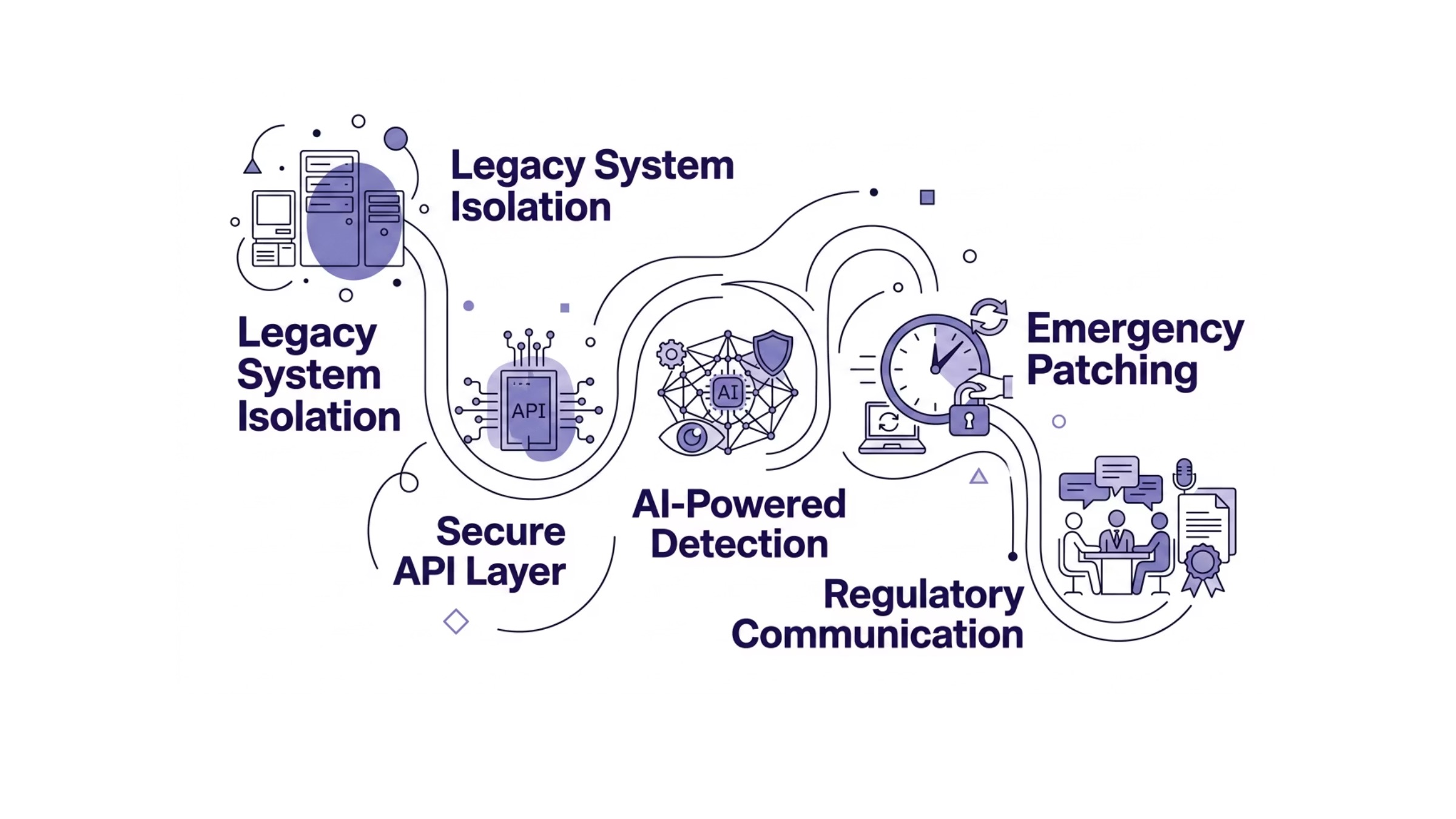
The best strategy is not one tool or one project. Banks need a coordinated program that combines vulnerability discovery, AI-powered detection, secure development lifecycle controls, third-party oversight, executive governance, and regulatory communication. That program should help organizations protect existing systems while building more resilient future infrastructure.
Legacy System Modernization Without Operational Disruption
The most realistic approach is phased modernization. Banks should isolate the most exposed components first, wrap legacy systems with secure APIs where appropriate, segment networks, remove obsolete protocols, and migrate high-risk functions into more observable environments. Dual-running systems, sandbox replication, and controlled rollout windows can reduce operational disruption.
Risk assessment should prioritize systems most vulnerable to AI-driven attacks: internet-facing services, web browsers used in privileged workflows, operating systems that are difficult to patch, third-party vendor software, payment gateways, and compliance data flows. Financial institutions should not treat all vulnerabilities equally. A medium-severity weakness in a payment switch may create more systemic risk than a higher-scoring issue in an isolated application.
Modernization also needs business sponsorship. Boards and senior executives should see AI cybersecurity as part of enterprise risk, not only IT hygiene. Better architecture can improve operational efficiency, reduce outage risk, and create competitive advantage by making systems easier to secure, monitor, and adapt.
Real-Time Threat Detection for AI-Generated Attacks
AI-generated attacks require defenders to detect patterns that may unfold faster than human teams can manually investigate. Banks should deploy AI-powered defense systems that can correlate identity signals, endpoint behavior, network traffic, application logs, code changes, and transaction anomalies. The goal is not to replace security teams but to help them analyze large volumes of events and identify chained activity earlier.
Security operations centers should update playbooks for Mythos-style behavior. That includes reconnaissance, privilege escalation, lateral movement, exploit chaining, data staging, and attempts to manipulate reporting or payment processes. Breach and attack simulation tools should test realistic attack paths rather than single vulnerabilities.
The UK’s AI Security Institute has assessed Mythos and noted its capability to carry out complex cyber-attacks, indicating that AI models are evolving to become more disruptive to cybersecurity in financial systems. Banks should therefore test their own detection and response times against autonomous or semi-autonomous attacks, including scenarios where attackers use phishing, malware development, data analysis, and exploit generation together.
Regulatory Compliance During System Updates
Emergency patching can create compliance risk if changes affect reporting systems, audit trails, model outputs, or customer operations. Banks need change management processes that allow urgent security updates while preserving evidence, approvals, validation results, and communication records.
A practical approach includes pre-approved emergency change procedures, regulator notification templates, rollback plans, compensating controls, and post-change validation. If a patch cannot be deployed immediately, banks should document why, restrict access, increase monitoring, segment affected systems, and agree on timelines with supervisory authorities.
Regulators may expect more transparency around AI systems used for defense as well. If banks leverage machine learning tools to detect cyber threats, they should maintain governance, audit trails, vendor oversight, and explainability appropriate to the risk. AI can support security, but ungoverned AI tools can also introduce new features, new dependencies, and new data exposure pathways.
Conclusion and Next Steps
Anthropic Mythos represents a new category of AI-driven cybersecurity threat because it can discover vulnerabilities, reason across systems, and simulate complex attack paths at a scale that challenges traditional defense processes. For global finance, the core issue is that old technical debt in banks, payment networks, vendor software, and compliance systems can now become a financial stability concern.
Financial institutions should act now rather than wait for final regulatory guidance. Immediate next steps include:
Assess legacy exposure - Inventory critical systems, outdated protocols, third-party dependencies, and unsupported software tied to payments, reporting, customer data, and treasury operations.
Modernize vulnerability management - Move toward continuous discovery, SAST and SCA in CI/CD pipelines, faster prioritization, and verified remediation.
Test chained attack paths - Use red-team exercises and breach simulation to assess how AI-generated attacks could move across systems.
Invest in AI-powered defense - Support security teams with tools that can analyze large volumes of events and detect malicious activity faster.
Engage regulators early - Communicate remediation plans, compensating controls, and operational risk decisions before emergency updates become supervisory issues.
Strengthen sector collaboration - Participate in financial sector information sharing initiatives and coordinate with vendors, central banks, and government agencies.
Related topics worth exploring include AI governance frameworks, secure AI development, legacy financial infrastructure modernization, regulatory technology compliance, and operational resilience strategy. The future of AI cybersecurity will not be defined only by models like Mythos; it will be defined by whether banks, regulators, and technology providers can build defenses that keep pace with the development of increasingly capable AI systems.