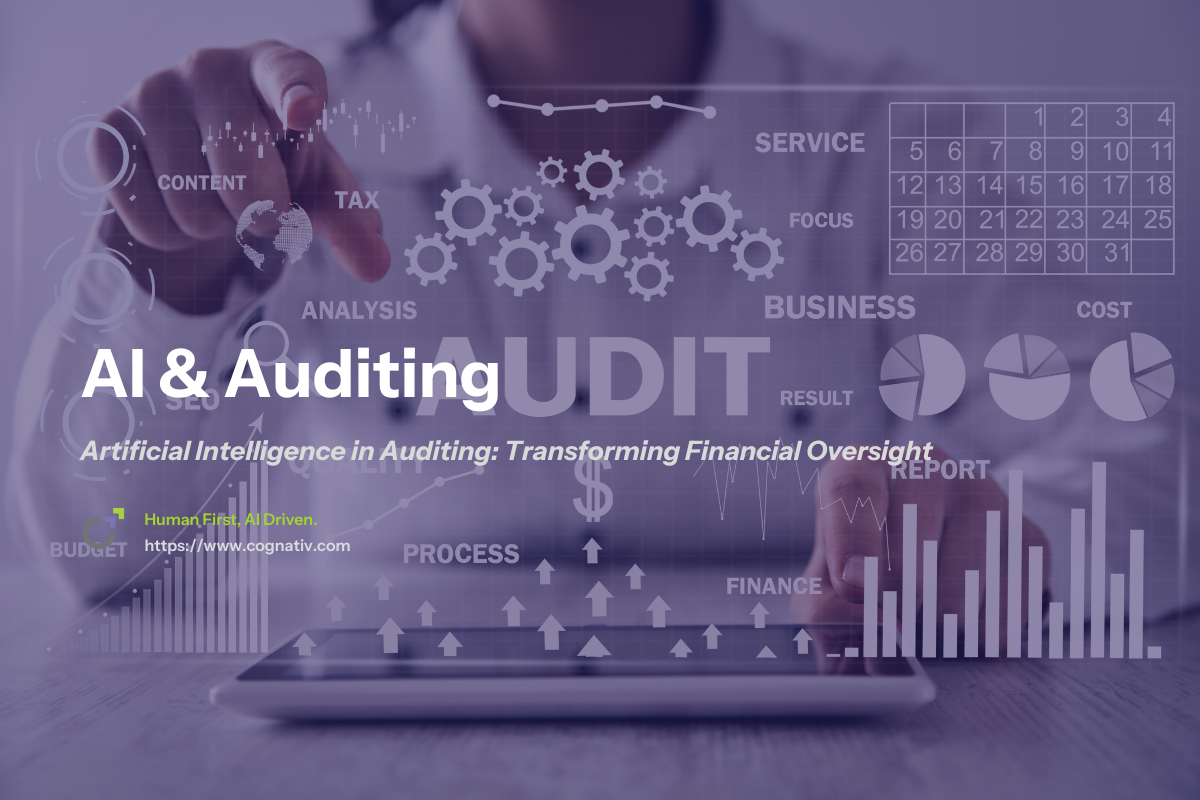
Artificial Intelligence in Auditing: Transforming Financial Oversight
Artificial intelligence (AI) is reshaping the landscape of auditing, driving profound changes in how organizations approach financial oversight. For enterprise leaders such as CIOs, CFOs, and CISOs, understanding the integration of AI in auditing is critical to leveraging its benefits while managing associated risks. This evolution impacts audit firms, internal audit teams, and audit clients alike, promising greater efficiency, improved audit quality, and enhanced fraud detection capabilities.
As AI technologies mature, their adoption in auditing aligns with broader digital transformation trends across industries. The convergence of machine learning, natural language processing, and robotic process automation is enabling auditors to transcend traditional, labor-intensive methods. Instead, they can focus on strategic analysis and high-risk areas, supported by AI-powered tools that deliver deeper insights and continuous monitoring.
Key Takeaways
AI in auditing automates routine tasks, improving efficiency and reducing human error.
Machine learning models enhance risk assessments by identifying patterns and anomalies in financial data.
AI adoption supports continuous auditing and real-time fraud detection, elevating audit quality.
Ethical AI use and human oversight remain essential to mitigate bias and ensure compliance with auditing standards.
Enterprise adoption of AI auditing requires strategic planning, skills development, and change management.
Regulatory frameworks and evolving auditing standards guide responsible AI integration in audit practices.

The Emergence of AI in Auditing
The auditing profession is undergoing a digital transformation driven by emerging technologies. AI systems now analyze vast amounts of financial statements and transactional data with unprecedented speed and accuracy. Leading audit firms are investing in AI-powered solutions to automate data extraction, document review, and population testing—tasks traditionally performed manually by human auditors.
This shift is not merely about replacing manual effort but enhancing auditors’ capabilities. By leveraging AI algorithms and predictive analytics, auditors gain improved quality in identifying unusual transactions, potential fraud, and operational risks. Continuous auditing enabled by AI tools facilitates real-time monitoring, allowing organizations to respond promptly to emerging threats.
The integration of AI in auditing also reflects broader trends in enterprise IT infrastructure modernization and data governance. As organizations accumulate more complex data across multiple systems, integrating data science with audit procedures becomes crucial. This integration supports comprehensive risk assessments and enables auditors to provide strategic insights that align with corporate governance and compliance objectives.
Implications for Enterprise Adoption
Adopting artificial intelligence in auditing presents enterprise leaders with opportunities to enhance audit quality and achieve reasonable assurance through advanced data analytics. Implementing AI-powered solutions requires firm leaders to balance technological innovation with professional judgment and ethical AI practices to ensure compliance and maximize audit outcomes.
Enhancing Audit Efficiency and Quality
AI-powered tools automate repetitive tasks such as data extraction and document review, freeing audit professionals to focus on complex judgment-based activities. This automation reduces audit cycle times and operational costs while improving accuracy by minimizing human error.
Machine learning models analyze historical data to detect patterns and anomalies that may indicate fraud or control weaknesses. Predictive models forecast potential risks, enabling auditors to prioritize high-risk areas and allocate resources more effectively. The result is improved audit quality and more reliable financial reporting.
Supporting Continuous Auditing and Fraud Detection
Traditional audits often rely on periodic sampling, which can miss subtle irregularities. AI enables continuous auditing by monitoring transactions and controls in real-time. This capability enhances fraud detection by identifying unusual transactions as they occur, allowing for proactive risk management.
Audit clients benefit from enhanced transparency and timely identification of issues, increasing trust in financial statements. Internal audit functions can leverage AI-driven continuous monitoring to strengthen internal controls and compliance efforts.
Navigating Compliance and Ethical Considerations
The use of AI in auditing raises important ethical considerations, including the risk of bias in AI algorithms and challenges related to data privacy. Human oversight remains essential to validate AI-generated insights and ensure adherence to auditing standards and regulatory requirements.
Audit firms and internal auditors must implement robust governance frameworks to manage AI risks. This includes transparent AI development, ongoing monitoring of AI systems, and training auditors in ethical AI practices and data science skills.
Opportunities and Challenges in AI Adoption for Auditing
The integration of artificial intelligence in auditing presents both significant opportunities and notable challenges for audit firms and professionals.
As AI-powered tools become more sophisticated, they offer the potential to transform the audit process through enhanced data analysis, continuous auditing, and improved audit outcomes.
However, successful ai implementation requires careful navigation of issues related to data quality, ethical practices, and the evolving skills needed by audit professionals.
Opportunities for Audit Firms and Professionals
Strategic Insights: AI-generated data-driven insights enable auditors to provide higher-value advisory services.
Enhanced Client Service: Automation allows audit teams to deliver faster, more accurate results, improving client satisfaction.
Talent Attraction: Firms adopting AI technologies position themselves as innovative workplaces attractive to top audit professionals.
Regulatory Compliance: AI supports adherence to evolving auditing standards and regulatory frameworks by improving documentation and audit trail quality.
Challenges to Address
Data Quality and Integration: Effective AI auditing depends on access to high-quality, integrated data across disparate systems.
Skills Gap: Auditors require training in AI technologies, data science, and machine learning to effectively interpret AI outputs.
Change Management: Successful AI adoption demands cultural shifts within audit teams, emphasizing innovation and continuous learning.
Ethical AI Use: Ensuring fairness, transparency, and accountability in AI systems is critical to maintaining trust and compliance.
The Evolving Audit Profession
AI's role in auditing will continue to expand, driven by advancements in generative AI, natural language processing, and robotic process automation. These technologies will further enhance audit procedures, from automated report generation to sophisticated predictive analytics.
Regulators and standard-setting bodies are increasingly focusing on AI governance, developing frameworks to ensure ethical AI adoption in auditing. Audit firms and enterprises that proactively embrace these frameworks will gain competitive advantages by delivering improved quality, efficiency, and assurance.
The future audit practice will be a hybrid model where human intelligence and AI-powered tools collaborate seamlessly. Audit professionals will focus on strategic analysis, judgment, and ethical oversight, supported by AI systems that handle data-intensive tasks.
Conclusion
Artificial intelligence is transforming auditing from a traditionally manual, periodic exercise into a dynamic, continuous process that enhances financial oversight. For enterprise leaders, understanding and strategically adopting AI in auditing is essential to improving audit quality, managing risks, and driving digital transformation.
Effective AI adoption requires investment in technology, skills development, and ethical governance. By embracing AI-powered auditing, organizations can unlock new levels of efficiency, insight, and assurance, positioning themselves for success in an increasingly complex regulatory and business environment.
Stay ahead of AI and tech strategy. Subscribe to What Goes On: Cognativ’s Weekly Tech Digest for deeper insights and executive analysis.