Best AI Agents for Small Business: How to Choose Useful, Governed Automation
The best AI agents for small business are not necessarily the most advanced tools. They are the agents that fit a clear workflow, connect to the right systems, respect customer data, and produce measurable operational value without creating unmanaged risk.
Small-business owners, founders, operations managers, and mid-market teams evaluating AI agents for small business automation should define "best" by workflow fit and control. Practical starting points include bounded workflows, voice-agent fit, tool evaluation, controls, and implementation readiness.
Small businesses should start with bounded AI agents for tasks such as support intake, lead routing, appointment handling, admin summaries, CRM updates, and follow-up. The agent should save time, improve consistency, and keep humans in control of customer-impacting decisions.
The better starting point is a practical evaluation framework: what workflow needs support, what data the agent needs, what actions it can take, and how the business will review outputs before trusting the system with more responsibility.
What Makes an AI Agent Best for a Small Business
An AI agent is best for a small business when it solves a specific operational problem. A tool that looks impressive in a demo may still be a poor fit if it cannot connect to the business systems, follow the workflow, or protect customer data.
Small teams usually need agents that reduce manual coordination. That may mean collecting lead details, summarizing customer requests, preparing follow-up tasks, routing appointments, drafting internal notes, or updating a CRM after review.
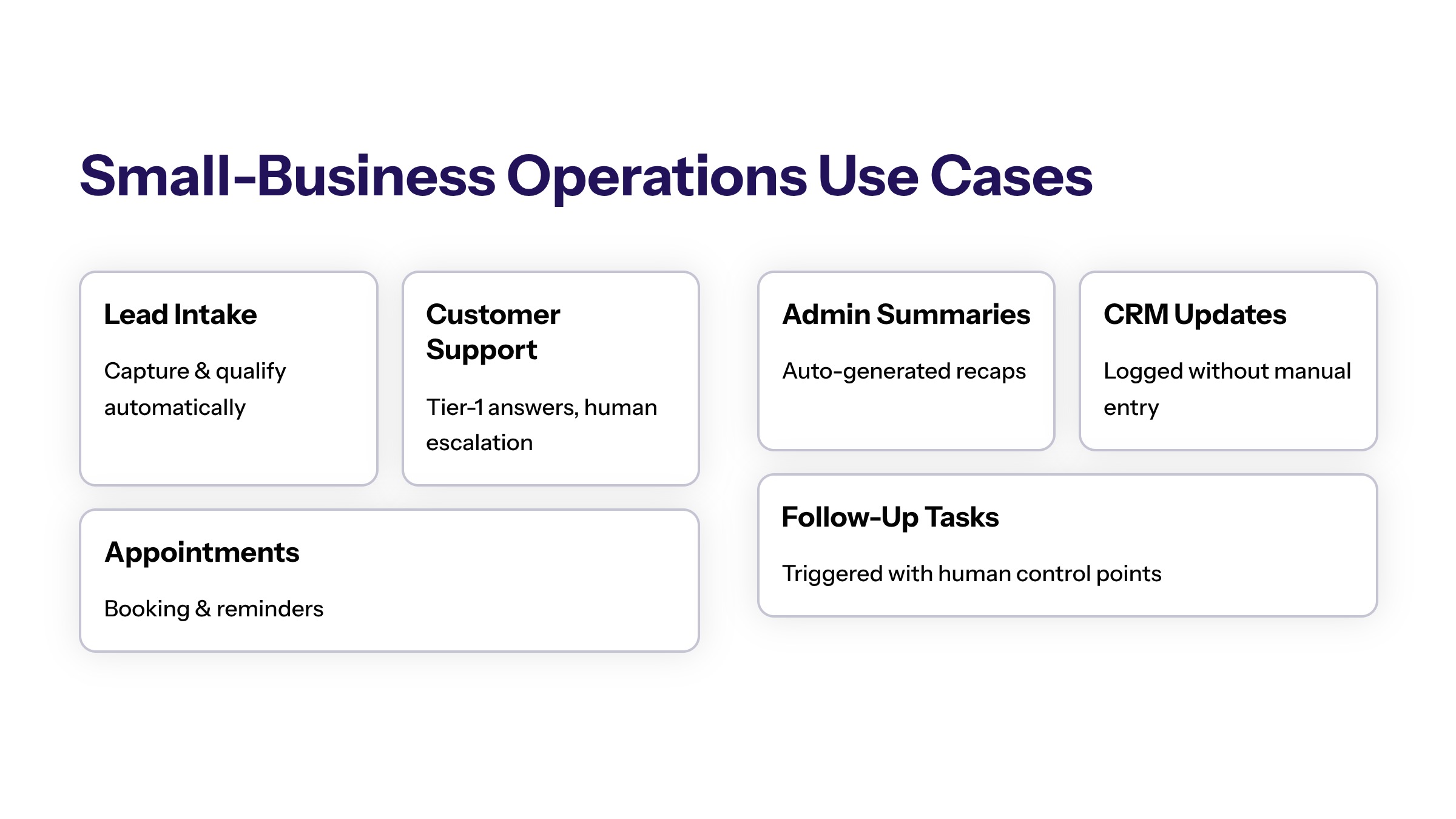
The best fit is usually narrow at first. A small business should not automate everything at once. It should choose one workflow where the task is repeated, the owner is clear, and the result can be measured.
"Best" should therefore mean best fit, not best headline. A small company with a high-touch sales process may need lead intake and follow-up support. A service business may need appointment handling and customer request summaries. A professional services firm may need document triage and internal task preparation. The right agent depends on the work that actually constrains the team.
The best agent should also be easy to govern. If the owner cannot explain what the agent can access, what it can change, when a person reviews output, and how mistakes are corrected, the tool is not ready for important workflows. Practical control is part of usefulness.
AI Agents for Small Business Automation
AI agents for small business automation should focus on work that slows the team down. Common candidates include intake, qualification, scheduling support, customer support summaries, service follow-up, invoice or document routing, and task reminders.
These workflows often have a clear pattern but enough variation to make simple automation difficult. An agent can interpret context, ask for missing information, draft a note, or route work to the right person. The business should still approve actions that affect customers, money, or sensitive records.
AI services can help teams identify where agents make sense and where simpler automation, better process design, or software cleanup should happen first.
Small-business automation should start with the manual steps that repeat every week. Look for requests that arrive through email, forms, calls, chat, spreadsheets, or CRM notes and then require someone to summarize, route, follow up, or update records. Those coordination tasks are often better first candidates than ambitious end-to-end automation.
AI agents are less useful when the underlying workflow is inconsistent. If every team member handles a request differently, the first step may be process definition. The agent can support the workflow after the business decides what good handling looks like.
Small-Business Operations Use Cases
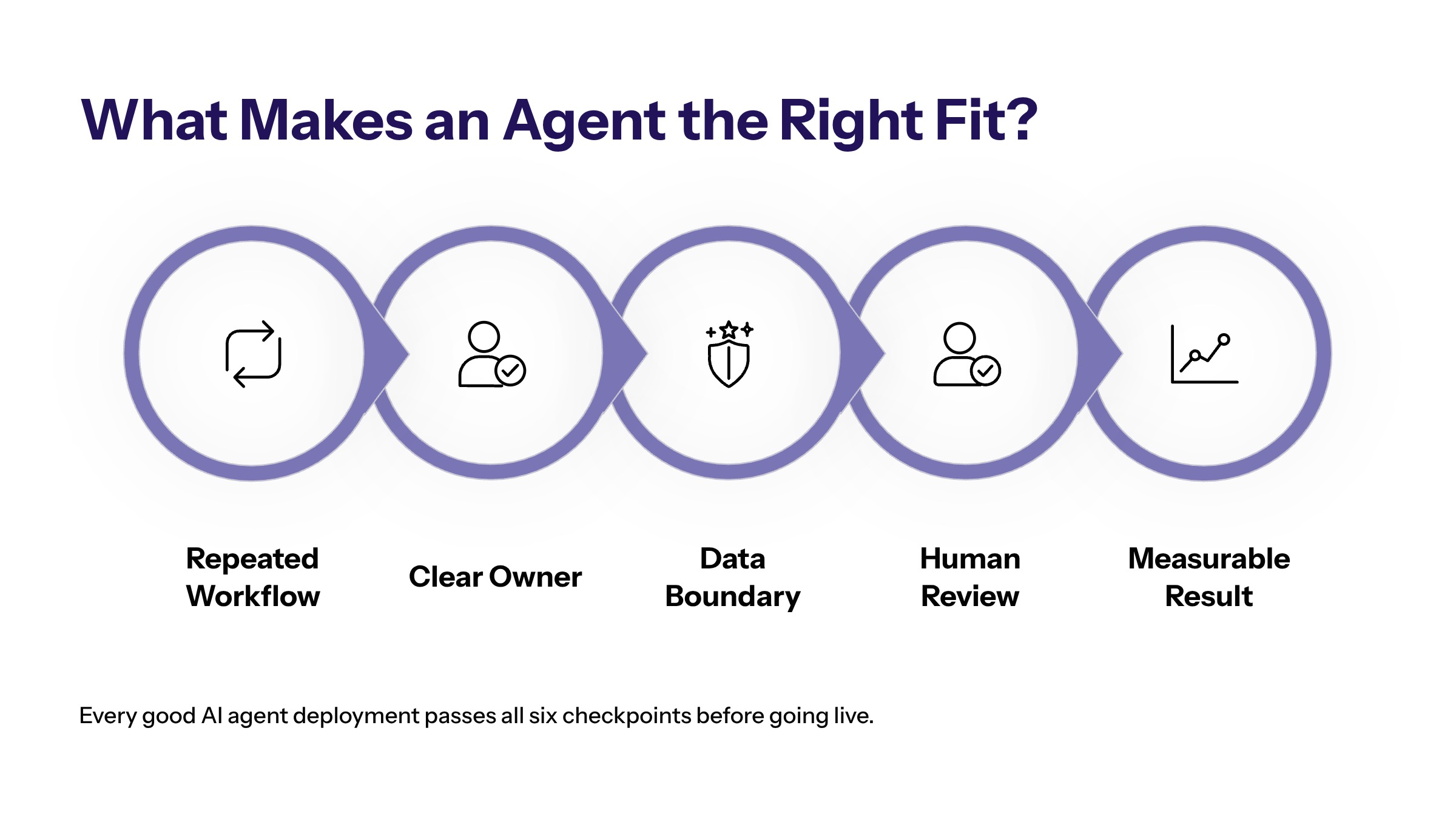
Small businesses should evaluate agents by workflow, not by feature list. A useful agent should reduce specific manual steps and create clearer handoffs.
Use Case | Agent Role | Human Control | Success Signal |
|---|---|---|---|
Lead intake | Collect details, summarize need, and route lead. | Sales owner reviews qualification. | Faster response and fewer missed leads. |
Customer support | Classify requests and draft internal notes. | Human approves customer response. | Lower queue age and better consistency. |
Appointment handling | Prepare scheduling options and reminders. | Owner confirms policy-sensitive cases. | Fewer manual scheduling touches. |
Admin summaries | Summarize documents, calls, or inbox items. | User verifies before action. | Less time spent gathering context. |
CRM updates | Draft updates or task records from approved notes. | Review before write access expands. | Cleaner records and fewer forgotten tasks. |
The pattern is simple: start with repeated work, keep approval visible, and measure whether the workflow actually improves.
The use-case table should be treated as a prioritization aid, not a promise that every workflow should be automated immediately. A small business may only need one strong agent to improve response time or reduce forgotten follow-ups. Adding five agents at once can create more review work than value.
Teams should also decide what not to automate. Sensitive pricing decisions, disputed customer issues, legal-sensitive questions, medical or financial advice, and unusual exceptions should usually move to a person. The agent can gather context and prepare a summary without making the final call.
AI Voice Agents for Small Business
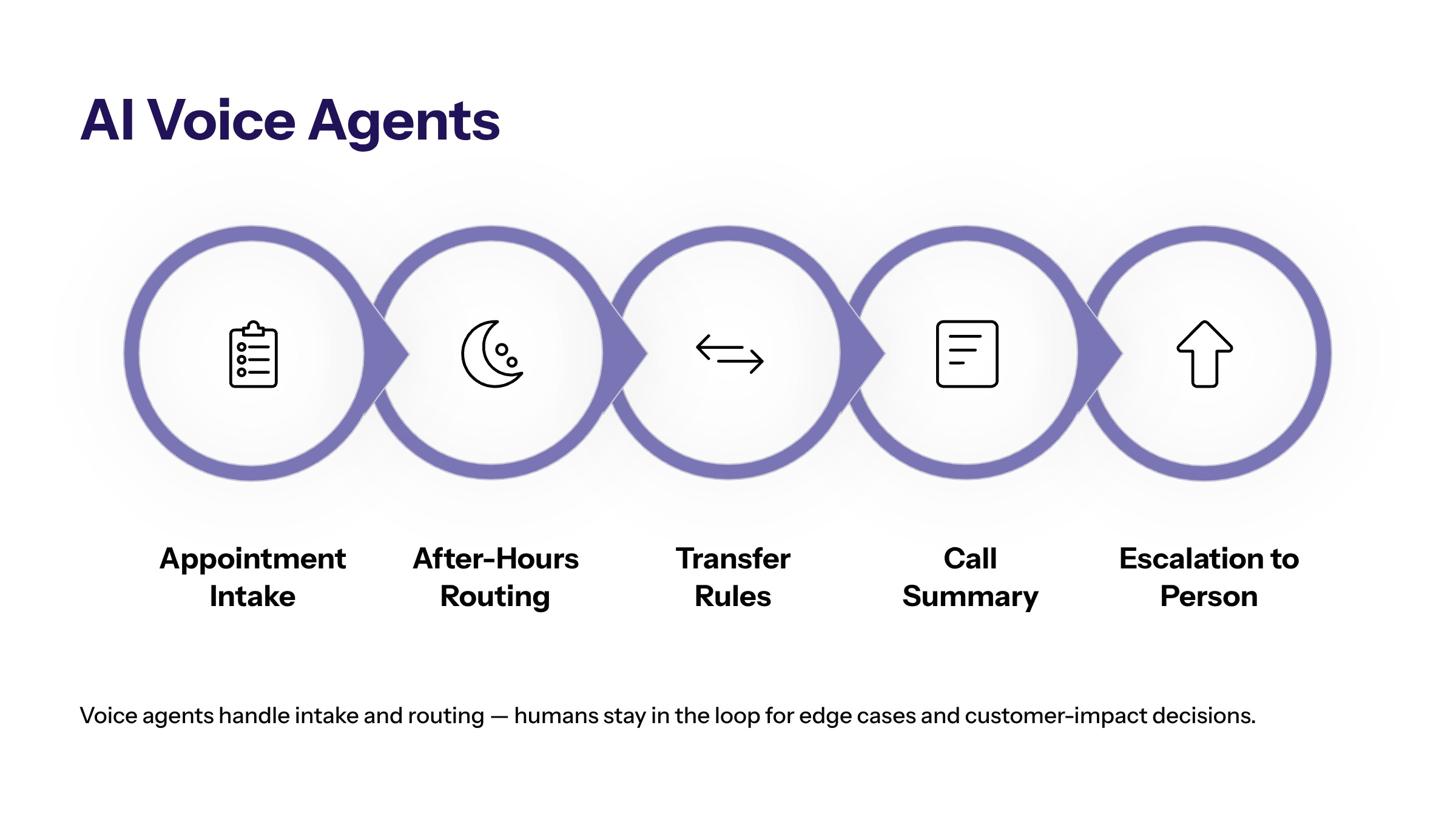
AI voice agents for small business can be useful for appointment intake, basic routing, after-hours support, or call summaries. They can also create customer experience risk if the business treats them as autonomous representatives without enough control.
Voice workflows should define what the agent can say, what it must not say, when it transfers to a person, and how call records are handled. If legal, healthcare, finance, or emergency-related claims are involved, the workflow needs current professional review and strict limits.
Small businesses should begin with low-risk voice workflows. A voice agent that gathers intake information and routes the request is easier to govern than one that makes promises, resolves disputes, or handles sensitive decisions.
Voice agents also need brand and trust controls. The agent should sound helpful, but it should not overpromise or pretend to be a human. The business should define transfer phrases, fallback behavior, and what happens when the caller is upset, confused, or asking for something outside the approved scope.
Call summaries can be a safer first use case than fully automated call handling. The agent can transcribe or summarize a call for internal review, create a task draft, or identify missing information. That gives the team value while keeping customer-impacting decisions with a person.
Build, Buy, or Use a Hybrid Approach
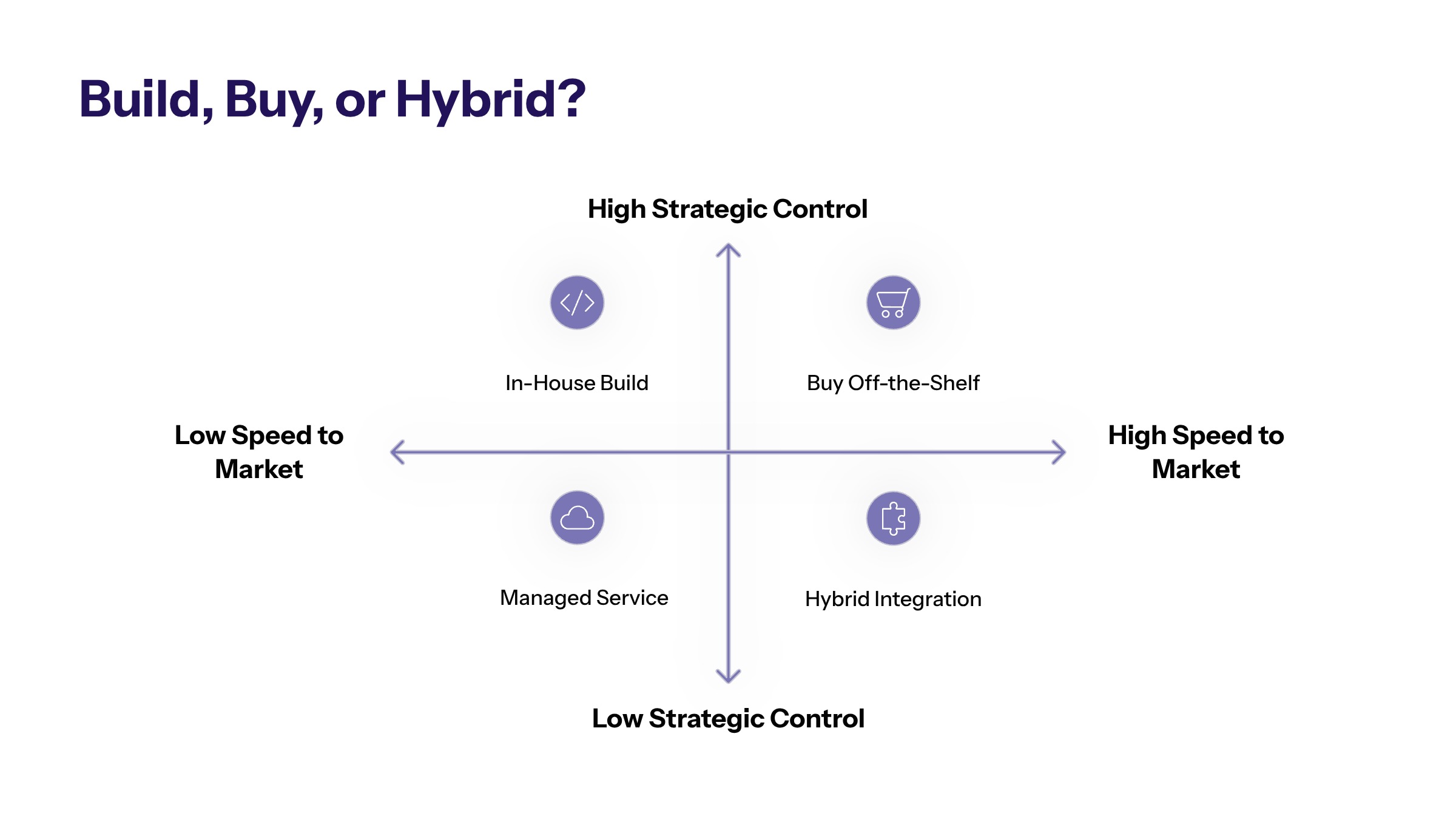
Buying a tool can be faster when the workflow is standard. Building custom functionality can be better when the workflow is unique, data-sensitive, or deeply tied to existing systems. A hybrid approach can combine a platform with custom integration and governance.
Small businesses should avoid overbuilding, but they should also avoid tool sprawl. If every team adopts a separate agent, the business may create duplicated records, inconsistent customer experience, and unclear ownership.
AI software development becomes relevant when agents need to connect to business systems, support custom workflows, or preserve ownership over data and process logic.
The buy path is strongest when the process is standard and the tool already fits the systems in use. The build path is stronger when the workflow is a source of competitive advantage, requires unusual integration, or handles sensitive logic. The hybrid path is often practical: use an existing platform for the interface or model layer, then customize the workflow, permissions, and reporting around it.
Ownership should be part of the decision. A cheap tool can become expensive if the business cannot export data, inspect workflow rules, change integrations, or understand how customer information is handled. Small businesses should avoid creating dependency they cannot manage.
Data, Permissions, and Customer-Impact Controls
Small businesses still need governance. Customer names, phone numbers, addresses, payment details, contracts, health information, and account history can be sensitive. An agent should only access what it needs.
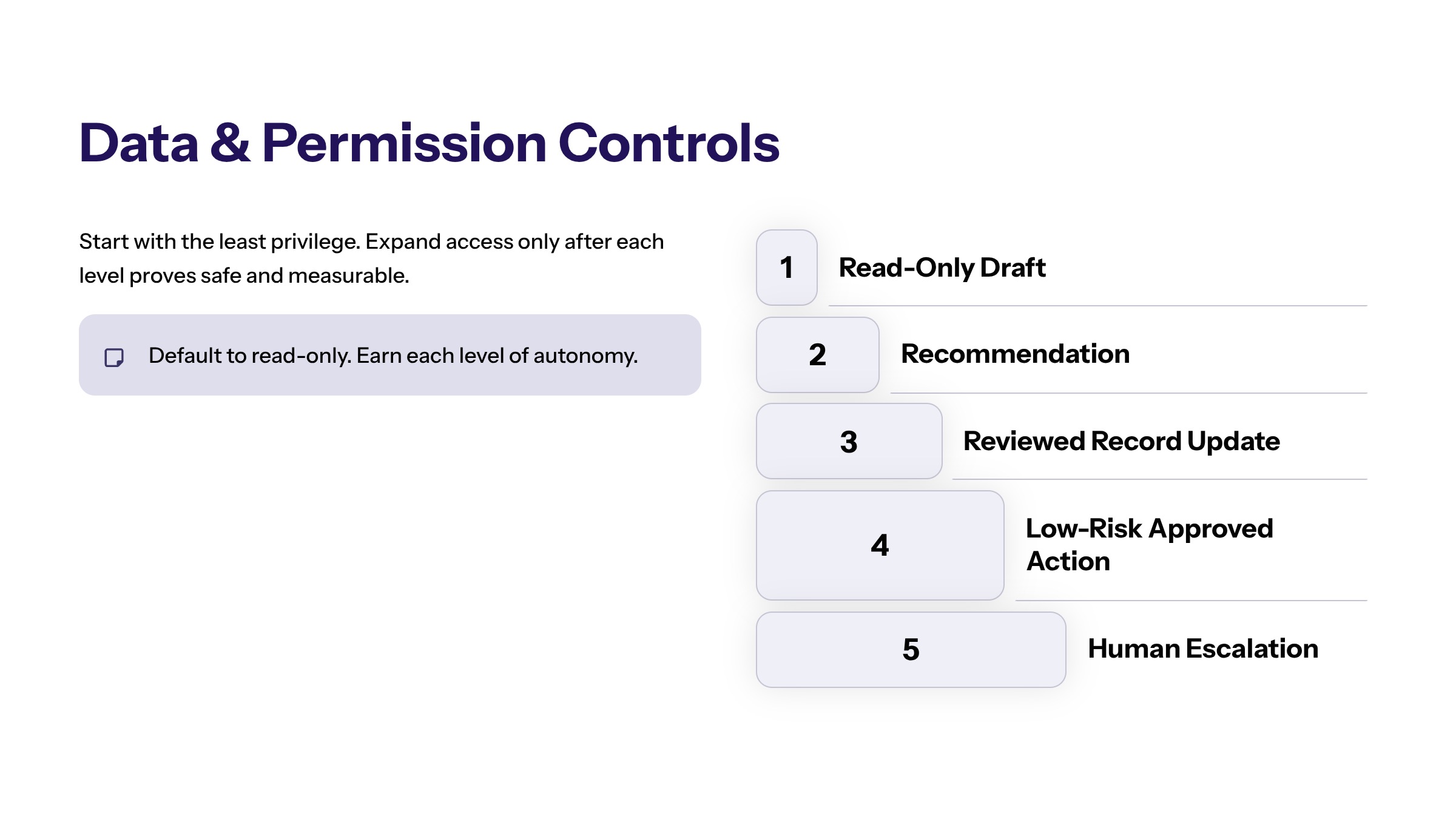
Permission boundaries should be clear. The agent may be allowed to read a lead form and draft a task, but not send a final quote. It may summarize a support request, but not promise a refund. It may prepare a CRM update, but not overwrite records without review.
Customer-impact controls should be simple and visible. Define which outputs require review, when escalation is mandatory, and who owns corrections. Small teams need controls that are practical enough to use every day.
A simple control ladder can help. At the lowest level, the agent reads approved inputs and drafts notes. Next, it recommends a task or route for review. Later, it may update a record after approval. Only low-risk, reversible actions should be considered for more automation. This ladder lets the business learn without giving away too much control too soon.
Small teams should also document who checks the agent. That may be the owner, manager, or process lead. The review does not need to be bureaucratic, but someone should look at errors, user feedback, and edge cases regularly. Without that habit, a useful agent can drift into a source of hidden customer experience risk.
How to Evaluate AI Agents Without a Vendor Ranking
Because vendor rankings change quickly, small businesses should evaluate fit instead of chasing a static list. The right question is not "which AI agent is best?" The right question is "which agent fits this workflow, budget, risk level, and system environment?"
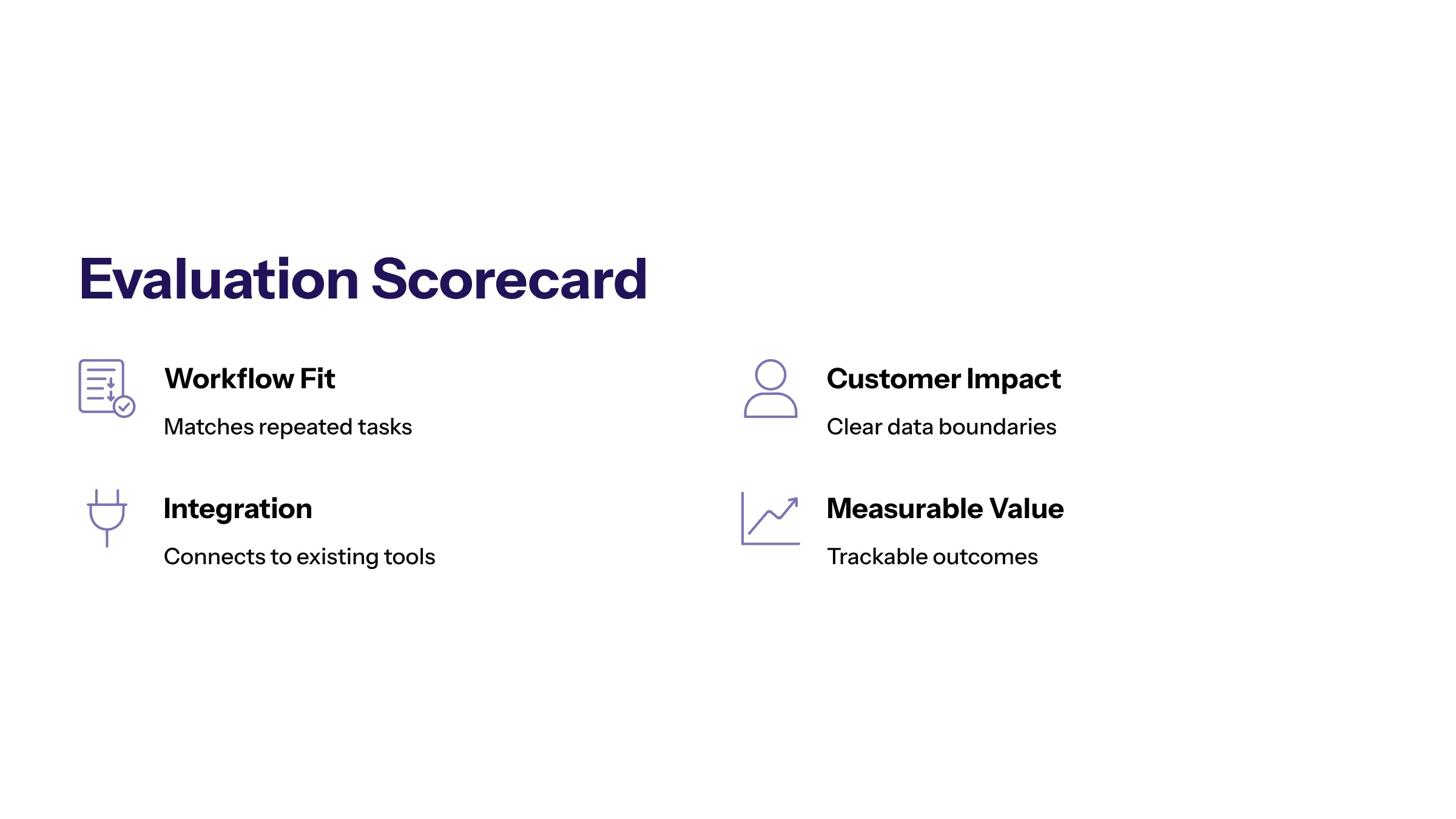
A practical scorecard should evaluate workflow fit, ease of integration, data controls, human review, support, documentation, exit options, and measurable value. If the tool cannot explain how it handles data, permissions, or mistakes, it is not ready for important business workflows.
Business strategy should guide the decision. The agent should support a priority such as faster response, cleaner handoffs, fewer missed tasks, better record quality, or more consistent customer service.
A vendor-neutral scorecard should include fit questions. Does the agent support the exact workflow? Can it connect to the right system without broad permissions? Can a human review outputs before action? Does it keep logs? Can the business change the workflow? Can the team stop using it without losing critical records or process knowledge?
Small businesses should be careful with "best" lists that focus on features but ignore implementation. A tool with many capabilities may still fail if setup is unclear, staff do not adopt it, or the workflow creates customer confusion. Fit, control, and adoption matter more than feature volume.
Implementation Roadmap for Small-Business AI Agents
The roadmap should start with one workflow. Document the trigger, owner, systems, current pain point, desired outcome, and approval rules. Then choose whether the first agent should read, summarize, draft, route, or update after review.
The pilot should be small enough to evaluate quickly. Track time saved, manual touches, response speed, correction rate, and user satisfaction. If the workflow becomes more confusing, pause and redesign before adding more autonomy.
After the pilot, decide whether to expand. Expansion might mean adding another workflow, connecting another system, increasing approved actions, or improving reporting. Each step should be based on evidence.
The roadmap should include a stop rule. If the agent creates more corrections than value, mishandles sensitive requests, confuses customers, or cannot be monitored, pause the rollout. A pause is not failure. It is how a business protects trust while improving the workflow.
Training matters too. Employees should know what the agent does, what it does not do, how to review its output, and how to report issues. If staff do not understand the boundary, they may either ignore a useful tool or trust it too much.
Common Mistakes When Choosing Small-Business AI Agents
A common small-business mistake is buying a tool before defining the workflow. Without a clear use case, the agent becomes another subscription rather than an operational improvement.
The second mistake is ignoring data quality. If CRM records are incomplete or customer requests are inconsistent, the agent may need process cleanup before automation.
The third mistake is over-automating customer interactions. Small businesses often compete on trust. AI should improve responsiveness without making customers feel trapped in an unmanaged system.
The fourth mistake is skipping ownership. Someone must own setup, review, corrections, permissions, and measurement. Otherwise the agent can quietly degrade over time.
A fifth mistake is chasing autonomy before usefulness. A small business does not need the agent to do everything independently. It needs the agent to make a real workflow faster, clearer, and easier to control. Human-in-the-loop automation can be the right outcome, especially when customer trust is involved.
How to Choose Useful AI Agents
The best AI agents for small business should make a real workflow easier to run. Choose one process, define the agent role, protect customer data, and measure whether the work improves.
Small businesses do not need the most complex AI system first. They need useful automation that respects the business, the customer, and the owner who remains accountable.
Frequently Asked Questions About Best AI Agents for Small Business: How to Choose Useful, Governed Automation
Use simple automation when the task follows stable rules. Use an AI agent when the workflow requires interpretation, context, summarization, routing, or recommendations. For related reading, see custom enterprise software.
They can be used safely when the scope is bounded, the data is permissioned, customer-impacting outputs are reviewed, and escalation paths are clear. For related reading, see custom software development.
Start with a repeated workflow that wastes time but has manageable risk, such as lead intake summaries, support triage, appointment routing, or CRM task preparation. For related reading, see AI agent frameworks.
Small businesses should start with repeatable low-risk tasks such as intake, summaries, scheduling preparation, lead triage, or support routing. Early wins should reduce manual work without adding review complexity. For related reading, see AI agent orchestration.
Small teams can keep agents controlled by limiting data access, using approval steps, reviewing outputs, and documenting who owns each workflow. Simple governance is still governance. For related reading, see AI agent platforms.
A custom agent makes sense when the workflow is valuable, specific, and not well served by standard tools. It should connect to the systems the business already uses and remain easy to monitor. For related reading, see AI agent tools.