Conversational AI in Financial Services: Banking, Trust, Automation, and Risk
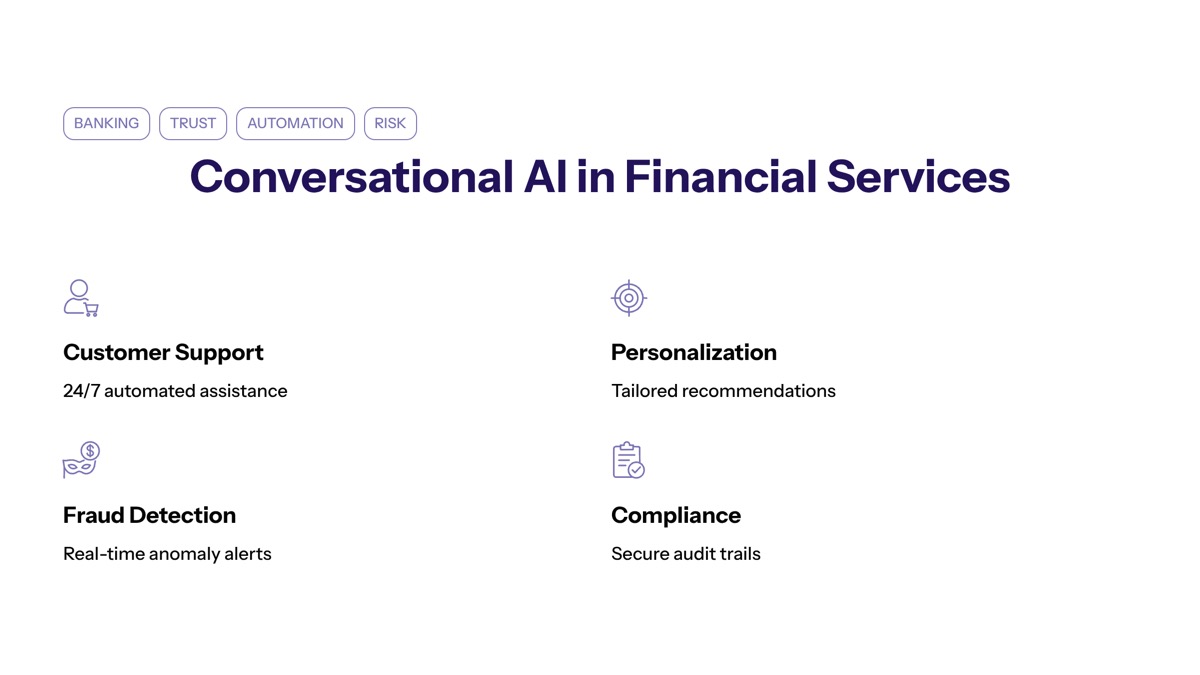
Conversational AI in financial services is moving from basic support chat to a more serious operating layer for banks, credit unions, lenders, fintech teams, and regulated institutions. The value is not only faster replies. The stronger opportunity is helping customers complete routine tasks, understand account options, receive fraud alerts, and move through complex workflows without waiting for every step to reach staff.
The financial services industry has a high bar for accuracy, privacy, auditability, and trust. Banking customers expect banks to answer quickly, but they also expect secure handling of sensitive customer data. That tension is why conversational AI solutions need more than a friendly interface. They need integration, governance, risk management, and clear escalation.
Used well, conversational AI improves customer experience while protecting regulated financial environments. Used poorly, it creates confusion, weakens trust, and exposes banks to avoidable operational and compliance risk.
What Is Conversational AI in Financial Services?
Conversational AI in financial services is the use of artificial intelligence, natural language processing, machine learning, and automation to support customers through chat, voice assistants, web chat, mobile banking apps, and messaging apps. It helps systems understand intent, retrieve account data, provide reliable answers, and guide customers through approved banking workflows.
Finance conversational AI may appear as virtual assistants, banking chatbots, AI powered assistants, or an AI agent embedded inside a customer-service platform. These systems can support customers with balances, fraud alerts, loan applications, onboarding, transaction history, savings accounts, and card activation.
The best systems do not replace human agents. They handle routine interactions, detect when requests require human intervention, and send customers to the right team with relevant resources and context. In practice, the AI agent becomes a routing and service layer rather than a final decision maker.
How Conversational AI in Banking Works
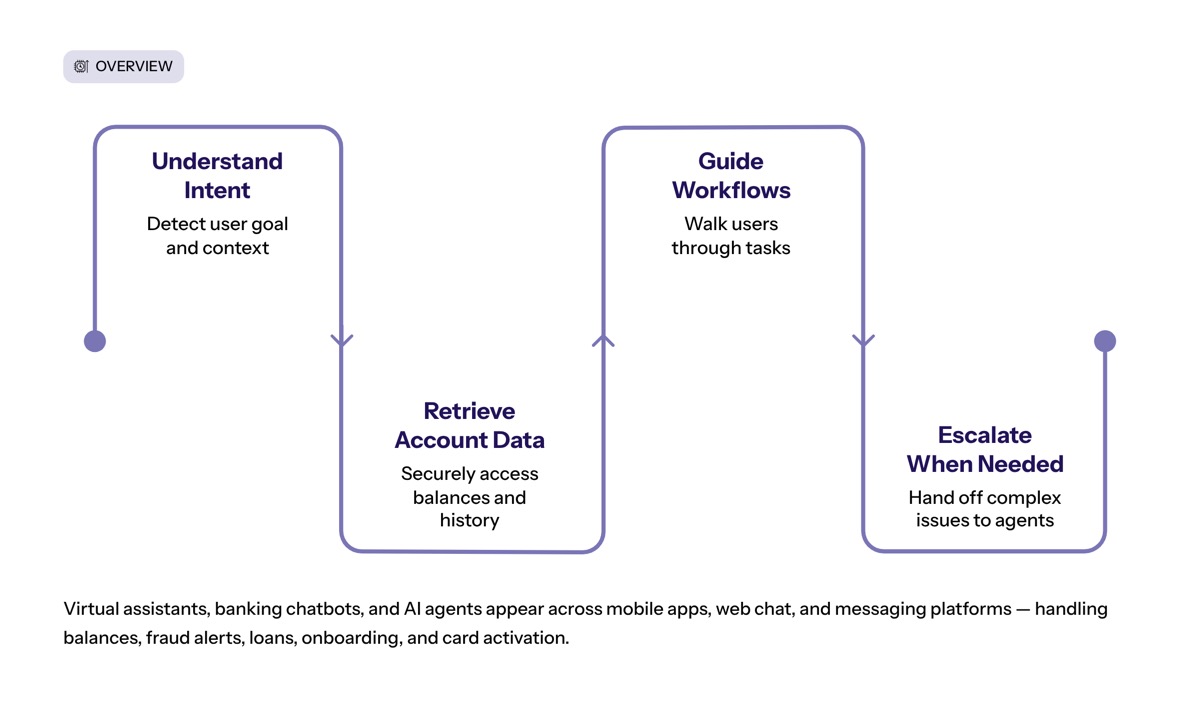
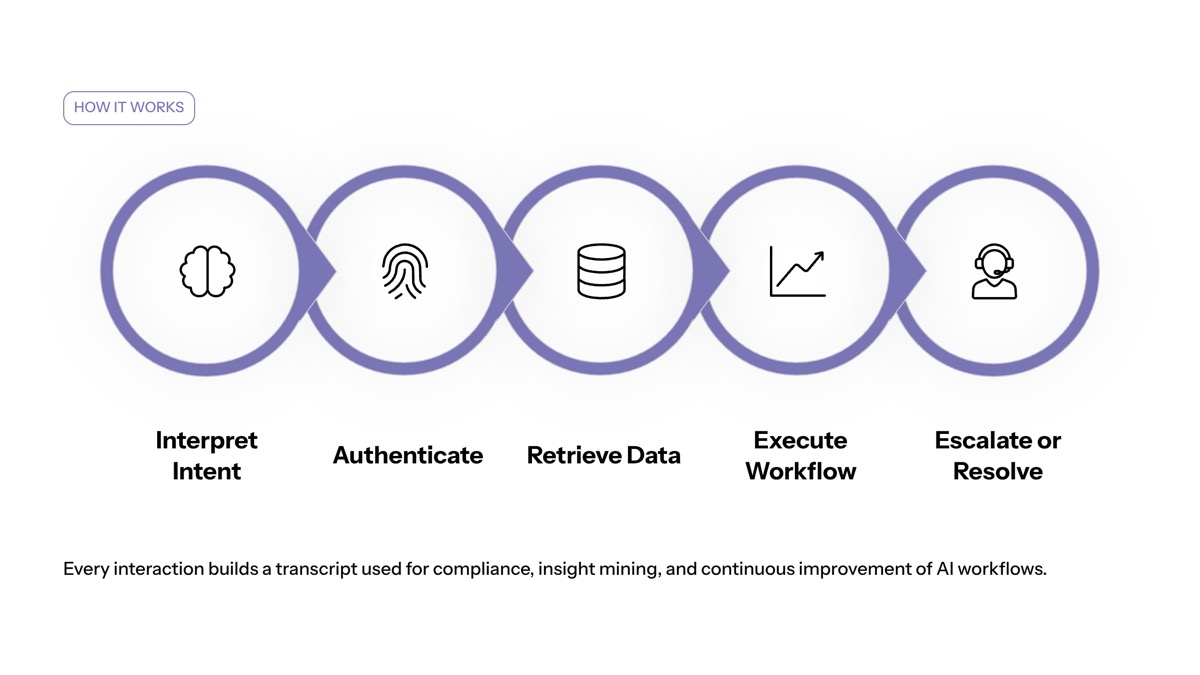
Conversational AI in banking starts by interpreting user intent. A customer may ask about checking balances, report a suspicious charge, start a loan request, or request help with account balance checks. The system uses natural language processing and machine learning to classify the request and choose the right response path.
From there, the AI agent may authenticate the customer, retrieve account information from core banking systems, present relevant resources, or trigger a workflow inside enterprise systems. When the request is sensitive, unclear, or high risk, the AI agent should escalate to human agents.
Conversational AI systems build transcripts and summaries of customer interactions, which can be used for compliance and to mine insights about common customer queries, challenges, and product issues, ultimately helping to refine AI solutions and improve future interactions.
Natural Language Processing and User Intent
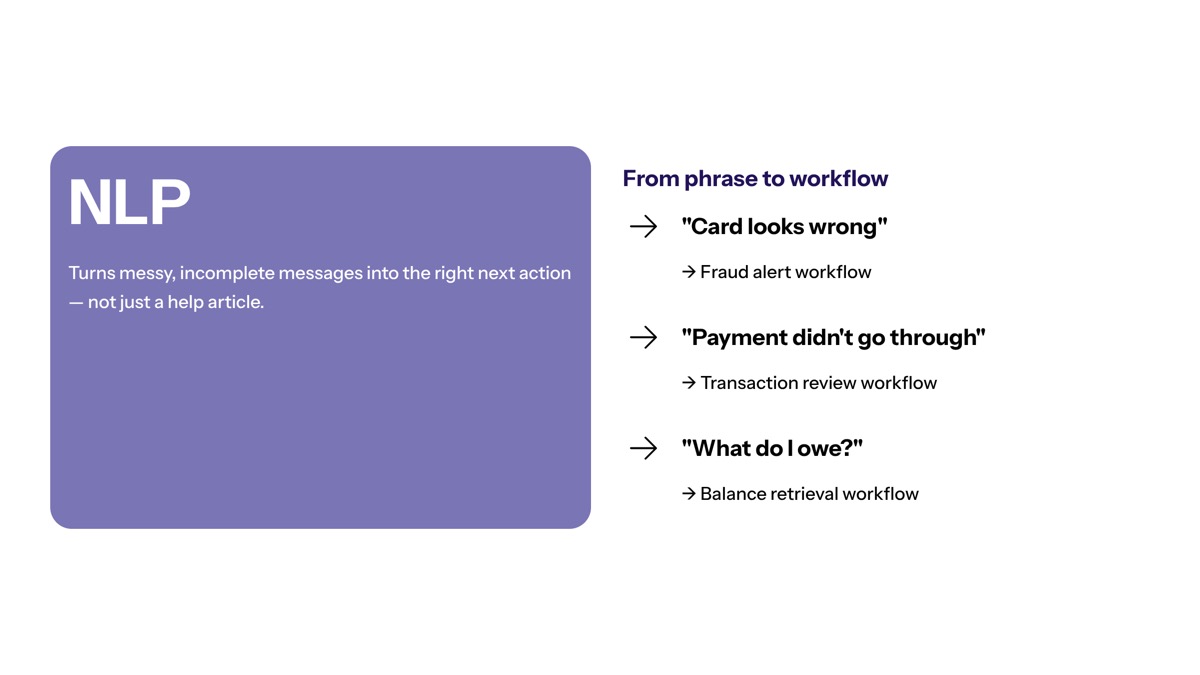
Natural language processing helps the system understand intent from short, messy, or incomplete customer messages. If a customer says a card "looks wrong" or a payment "did not go through," the AI agent must map that language to the correct workflow.
That is where intelligent automation matters. The system should connect the request to the next action, not only return a static help article.
Why the Banking Industry Is Adopting AI
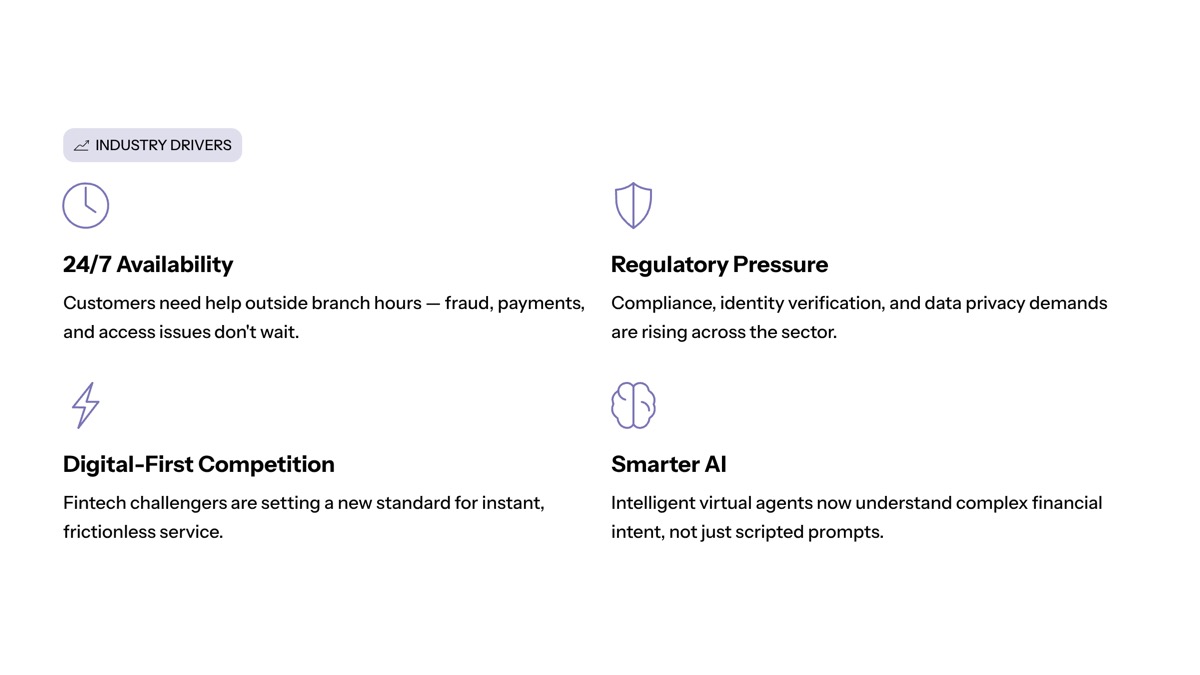
The banking industry is under pressure from rising customer expectations, digital-first competitors, compliance demands, and high service volume. Customers want immediate answers in digital channels, but banks still need to protect account data, verify identity, and avoid risky guidance.
Financial institutions are adopting conversational AI to provide instant, 24/7 service across multiple channels such as mobile apps and websites. That matters because banking customers often need help outside branch hours, especially when a payment, fraud alert, card issue, or access problem appears.
Conversational AI in banking is also becoming more capable. Conversational AI is reshaping financial services by transitioning from scripted chatbots to intelligent virtual agents that understand natural language and complex financial intent.
Customer Satisfaction and Faster Service
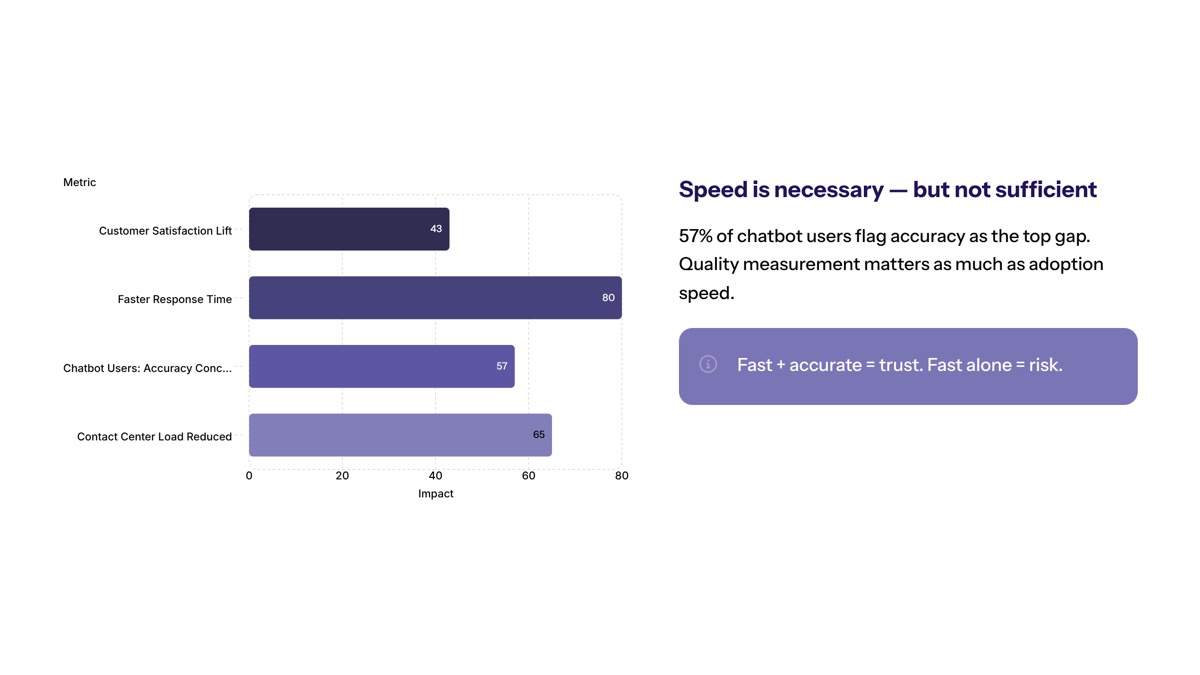
Conversational AI enhances customer service in banking by providing fast, accurate responses to routine inquiries, which improves customer satisfaction and reduces the load on human agents. The practical advantage is speed without forcing customer inquiries into the same queue.
Conversational AI improves customer experience in financial services by providing instant support and simplifying complex processes. Conversational AI improves key customer-experience dimensions like trust, speed, and personalization, allowing customers to receive help without waiting and leading to more relevant and human-like conversations.
Despite advances, 57% of chatbot users cite accuracy as an area requiring improvement, indicating ongoing challenges in conversational AI. That is why quality measurement matters as much as adoption.
Conversational Banking Across Digital Channels
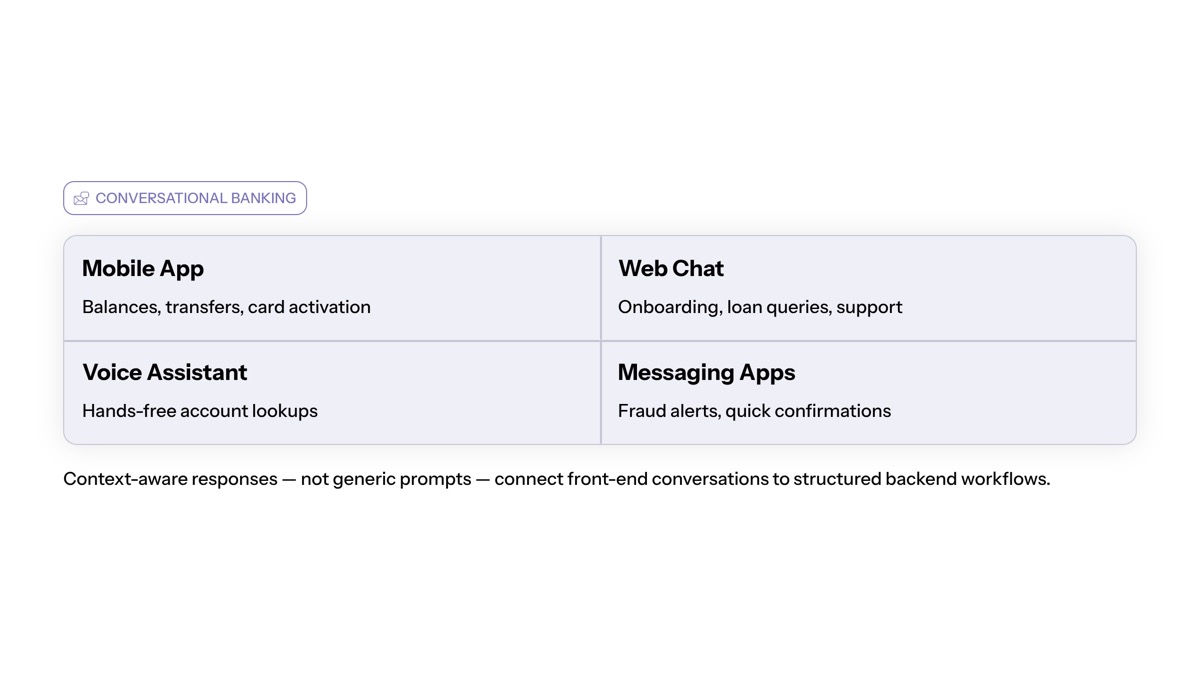
Conversational banking gives customers a familiar way to interact with banks across mobile banking apps, websites, web chat, voice assistants, and messaging apps.
In conversational banking, a customer can ask for account balances, request a card replacement, start onboarding, or check loan requests in plain language. The system should respond with context aware responses, not generic prompts.
Conversational banking is strongest when it connects the front-end interaction to structured data controlling the workflow.
Everyday Banking Tasks
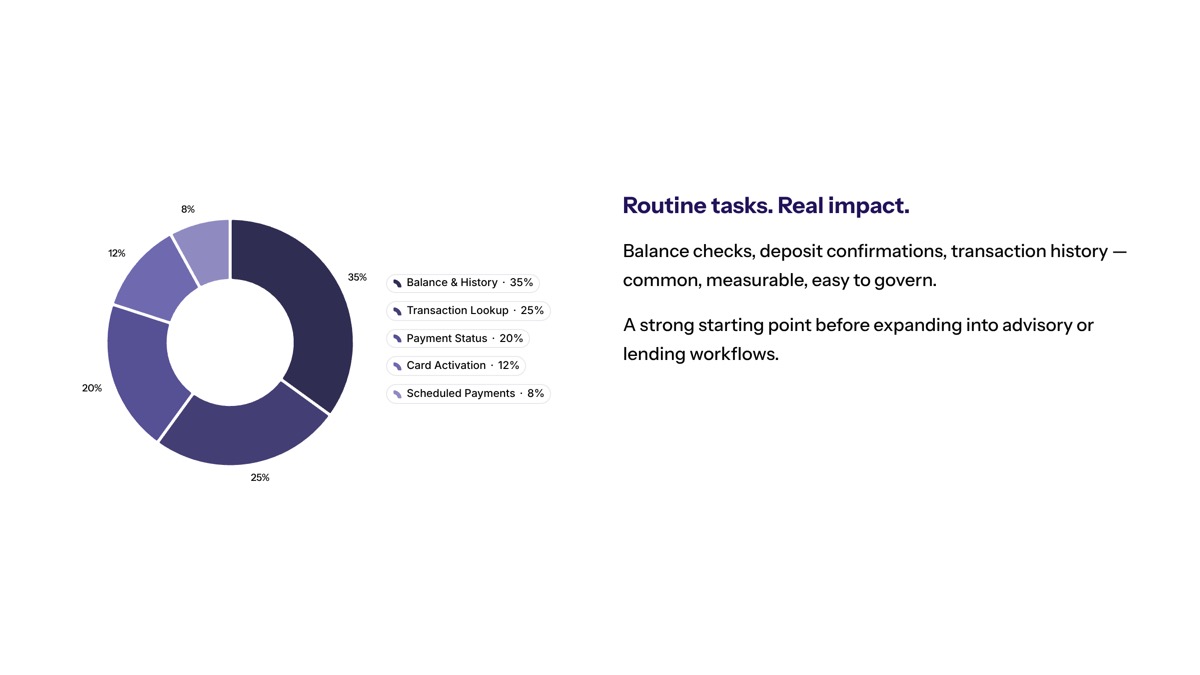
Checking account balances is one of the simplest use cases for conversational AI in banking. Customers often want quick answers about balances, recent deposits, transaction history, or scheduled payments.
The AI agent can retrieve account information, confirm identity, and provide an answer without making the customer navigate multiple screens. For account balance checks, the value is convenience, speed, and reduced contact center demand.
These routine workflows are a good starting point because they are common, measurable, and easier to govern than advisory use cases. They also show customers how conversational banking can make everyday service less frustrating.
Fraud Alerts and Fraud Detection
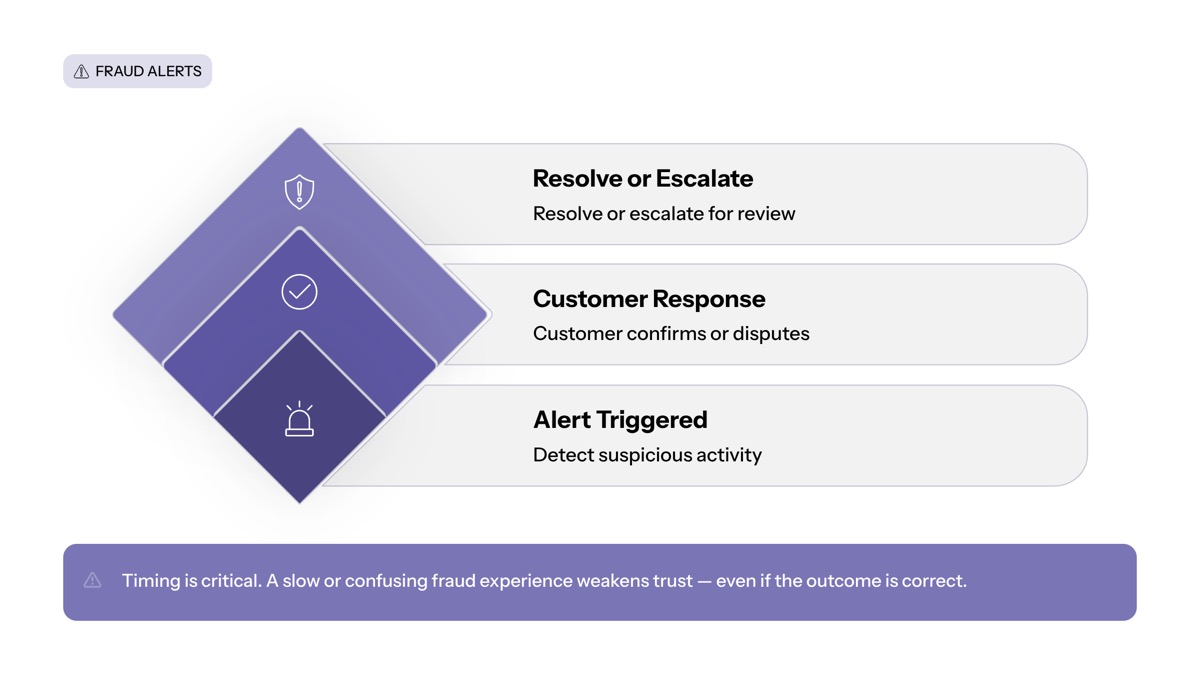
Fraud alerts are one of the most important use cases for conversational AI in financial services. A customer who receives fraud alerts needs fast clarification and a secure way to respond.
Conversational AI can guide customers through fraud alerts, confirm whether a transaction is recognized, and escalate suspicious activity for fraud detection review. Machine learning can support fraud detection by identifying patterns, but the customer-facing conversation still needs clear controls.
For fraud alerts, timing matters. A slow or confusing experience can weaken trust, while a clear workflow can protect the customer and reduce avoidable inbound volume.
Loan Requests and Lending Workflows
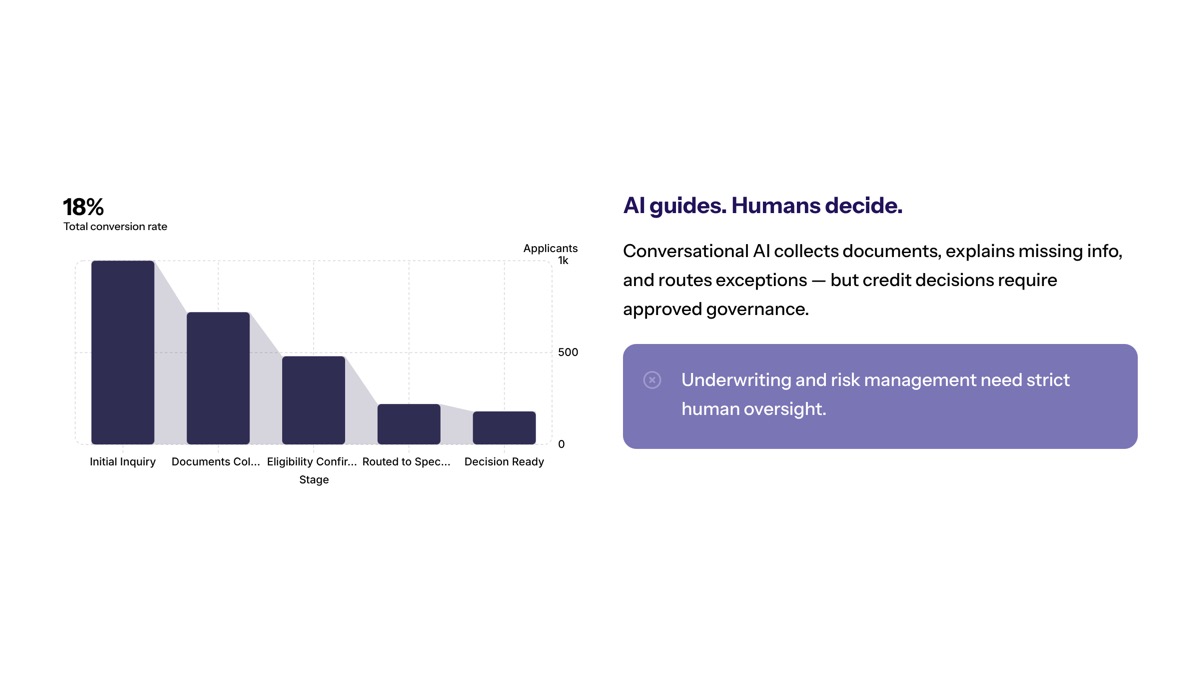
Loan applications are another strong use case because they involve documents, eligibility questions, and follow-up tasks. Conversational AI can guide customers through loan workflows, explain missing information, and route exceptions to specialists.
The system should not make credit decisions without approved governance. It can support data collection, explain process steps, and help customers understand what comes next.
Credit scoring, underwriting, and risk management require stricter oversight than simple service requests. That is where policy rules and compliance review remain essential.
Identification, Verification, and Payment Workflows
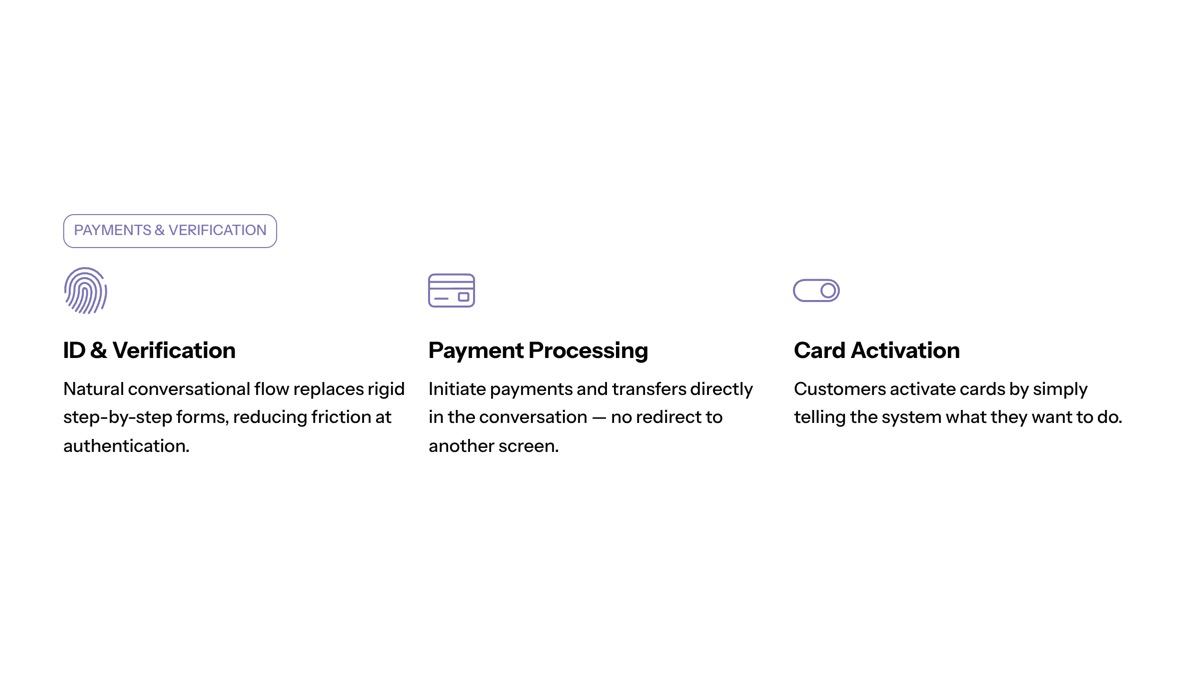
By utilizing conversational AI, banks can streamline the identification and verification process, making authentication feel more fluid and reducing friction for customers during interactions.
Conversational AI can streamline the identification and verification (ID&V) process by guiding customers through verification steps in a natural conversational flow, reducing friction and making authentication feel more fluid.
AI agents can facilitate payment processing directly in the conversation without redirecting the user to another screen or platform, enhancing the efficiency of transaction handling. Conversational AI supports self-service transactions, allowing customers to initiate payments, set up transfers, or activate cards by simply telling the system what they want to do, thus optimizing operational workflows.
Personalized Advice and Customer Journeys
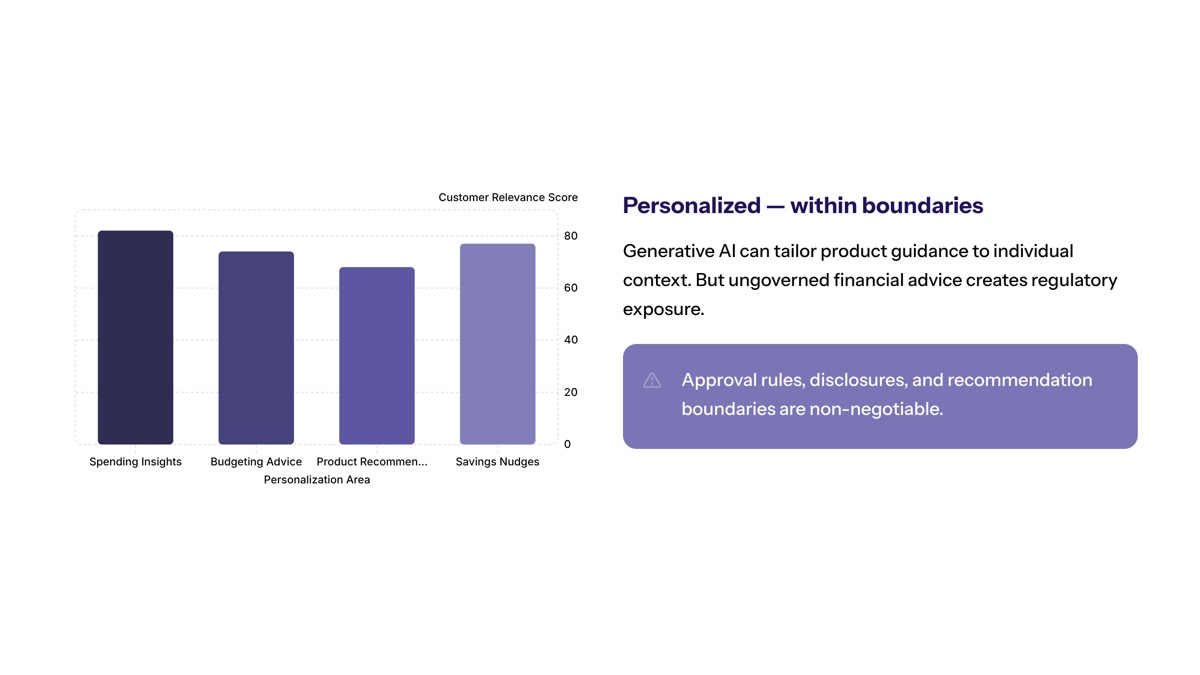
Conversational AI provides personalized financial guidance by analyzing spending patterns and offering tailored budgeting advice. This can support customer journeys when the advice is transparent, relevant, and tied to the customer's own context.
Generative AI is expected to enhance conversational AI in banking by enabling more personalized and dynamic interactions, such as generating tailored product recommendations based on customer preferences.
Personalized advice should not become ungoverned financial advice. Banks need approval rules, disclosures, and boundaries around what virtual assistants can recommend.
Personalized Support for New Customers
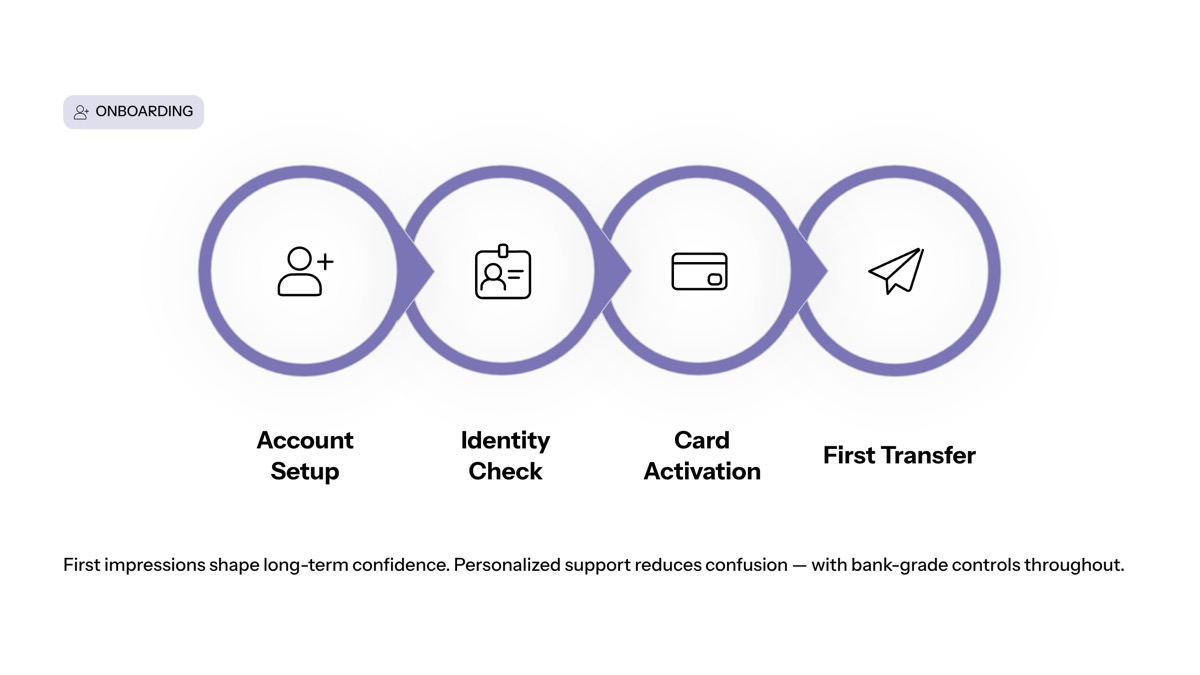
New customers often need help with account setup, identity checks, card activation, and first transfers. Personalized support can reduce confusion during onboarding and help customers understand what to do next.
The experience should feel like human like conversations, but it still needs bank-grade controls.
Cost Savings and Operational Efficiency
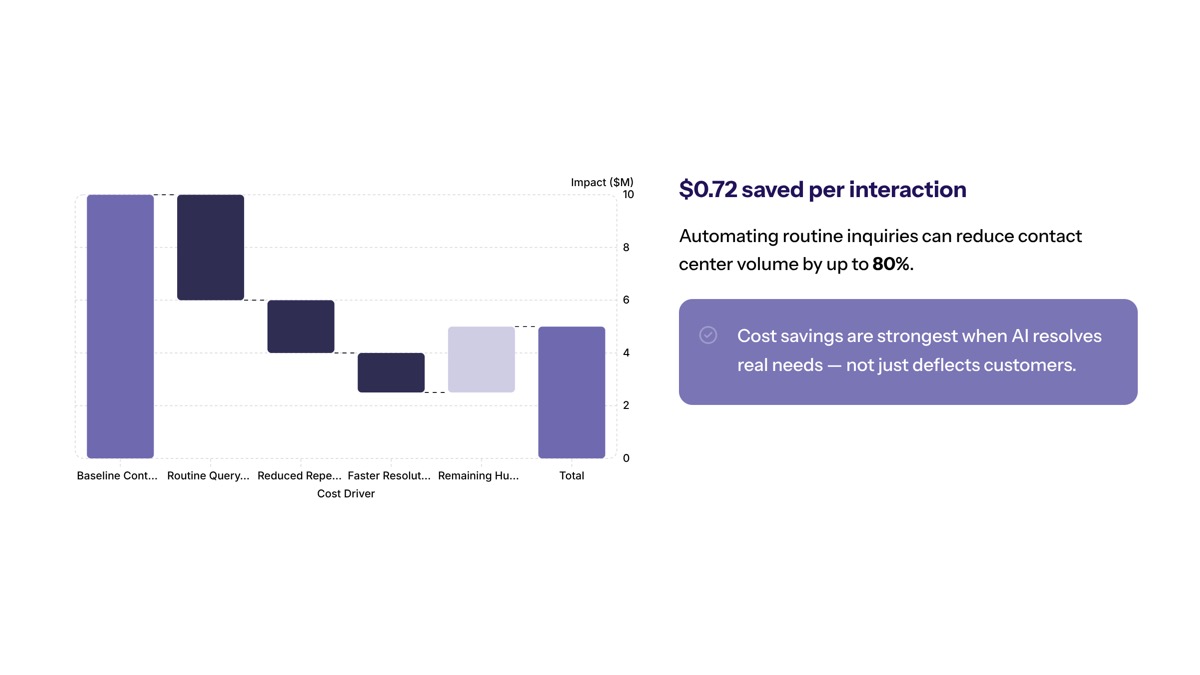
AI can lead to significant cost savings, resolving issues at a lower cost compared to human-led interactions, with some reports indicating an average savings of $0.72 per interaction.
Automating routine inquiries through AI can improve operational efficiency and reduce contact center volume by up to 80%. By handling a large portion of routine inquiries, conversational AI helps banks reduce the load on human agents, improving operational efficiency while reducing call volumes and operational costs.
These cost savings are strongest when conversational AI solutions resolve real customer needs, not when they simply deflect customers away from support.
Compliance Reporting and Customer Trust
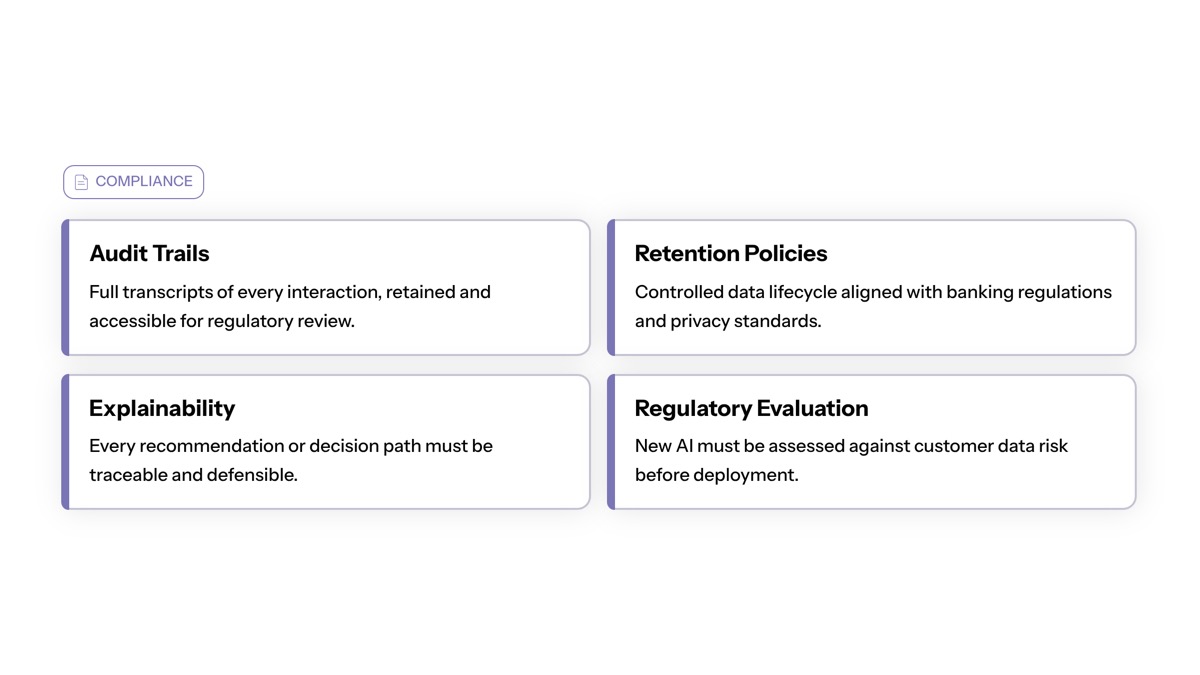
Conversational AI in banking helps maintain compliance by recording transcripts of conversations for audit and reporting, ensuring that interactions are secure and transparent, which builds customer trust.
Compliance reporting depends on complete records, controlled access, and the ability to explain how decisions or recommendations were made. Conversational AI platforms must support audit trails, retention policies, and review workflows.
In the banking sector, regulatory standards require that any new technology, including conversational AI, must be evaluated against potential risks to customer data and privacy, ensuring compliance with industry regulations.
Security in Regulated Banking Environments
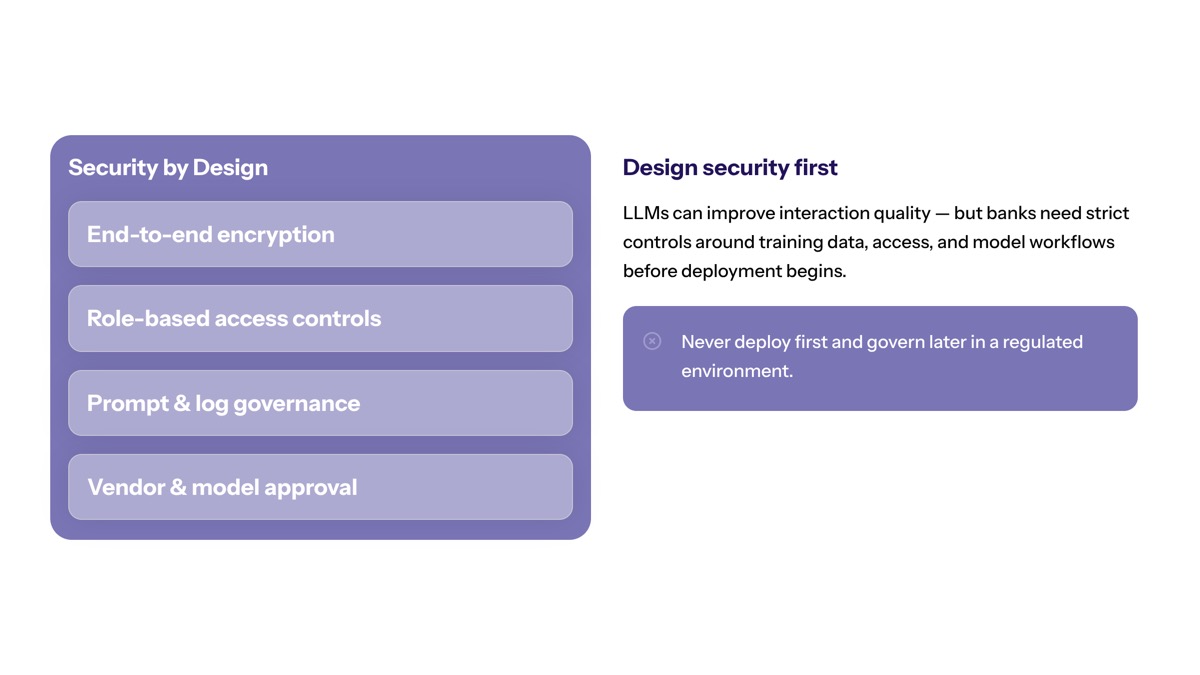
Data security is central to conversational AI in financial services. Conversational AI platforms must deliver end-to-end encryption, role-based access controls, and complete audit trails to meet the high security standards required in the banking industry.
Sensitive records should not be exposed to unmanaged tools, unsupported vendors, or unapproved model workflows. Large language models can improve interaction quality, but banks need strict controls around prompts, logs, training data, and access.
For regulated environments, the security model should be designed before a bank or fintech team starts implementing conversational AI.
Human Agents and Escalation
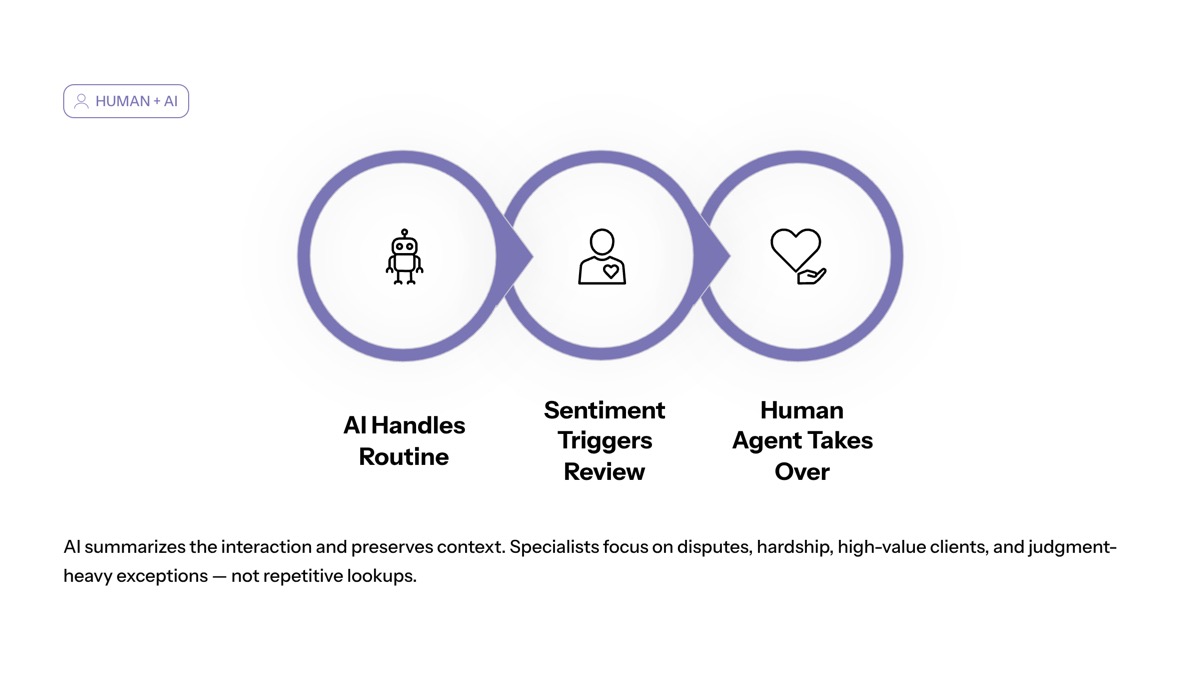
Conversational AI can analyze customer sentiment and escalate issues to human agents when frustration or urgency is detected, ensuring that critical customer concerns receive appropriate attention.
Human agents are still necessary for disputes, complaints, hardship conversations, high-value customers, unusual transactions, and requests that require judgment. The AI agent should make their work easier by summarizing customer interactions and preserving context.
The goal is not to remove human agents. It is to let specialists spend less time on repetitive lookups and more time on exceptions that affect customer satisfaction, trust, or revenue growth.
Implement Conversational AI Solutions Safely
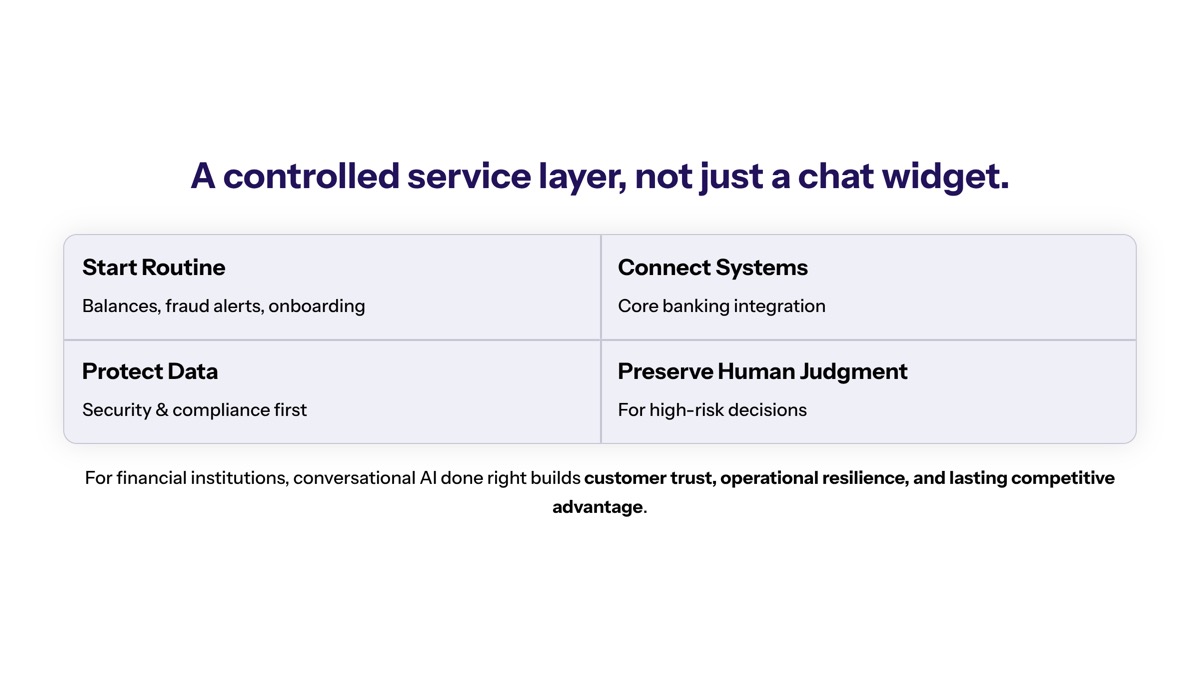
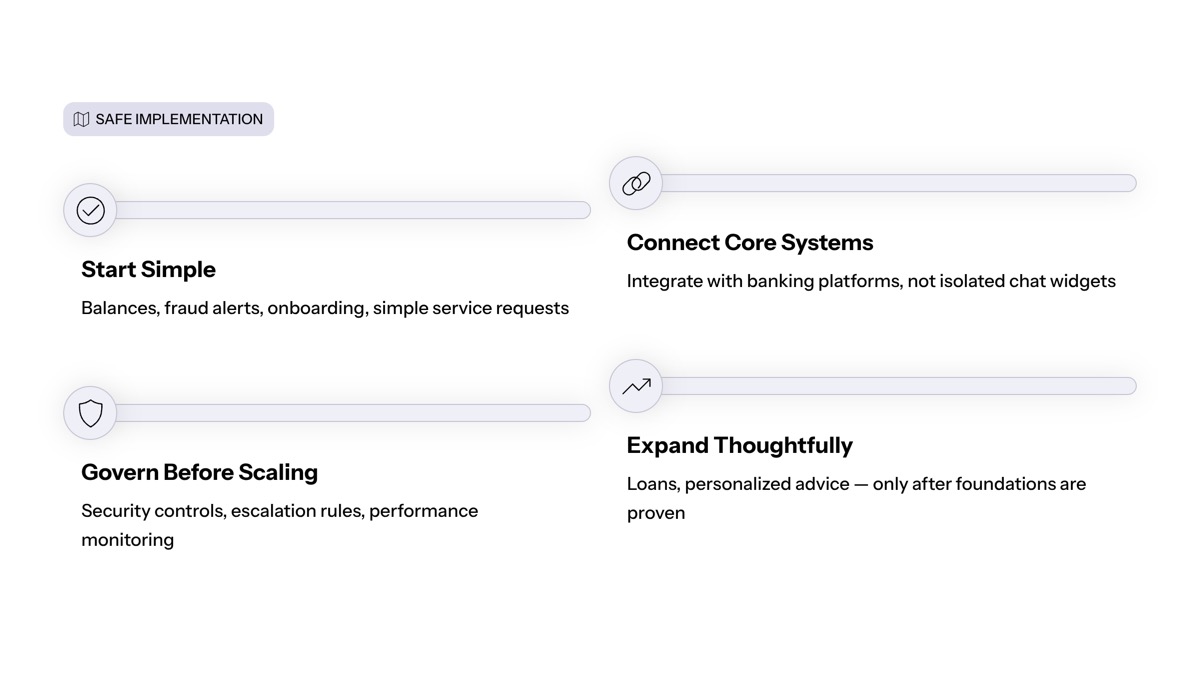
Financial institutions should implement conversational AI solutions in controlled phases. Start with balances, fraud alerts, onboarding, and simple service requests before expanding into complex workflows such as loan applications or personalized advice.
To deploy conversational AI safely, teams need approved knowledge sources, integration with core banking systems, escalation rules, security controls, and performance monitoring. Implementing conversational AI without these foundations can create operational risk.
The strongest systems are connected to real workflows, not isolated chat widgets. A well-governed AI agent can support customers while preserving the controls a bank needs.
Artificial Intelligence and Customer Engagement
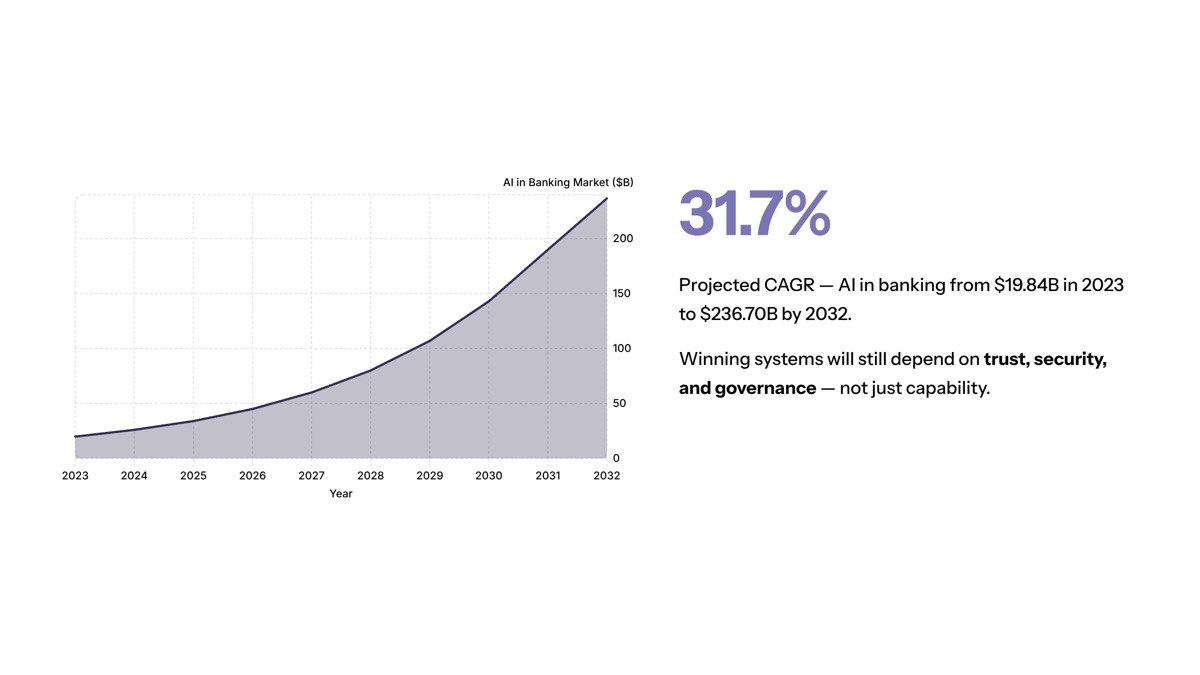
AI driven solutions are becoming more strategic across the banking sector. The market size of AI in banking is projected to grow from $19.84 billion in 2023 to $236.70 billion by 2032, reflecting a compound growth rate of 31.7%.
As banks increasingly adopt conversational AI, they are expected to transform their service delivery models, moving from traditional customer service approaches to more innovative, AI-driven interactions that enhance customer engagement.
Generative AI will likely expand the role of conversational AI in banking, but the winning systems will still depend on trust, security, and strong governance.
What To Build First
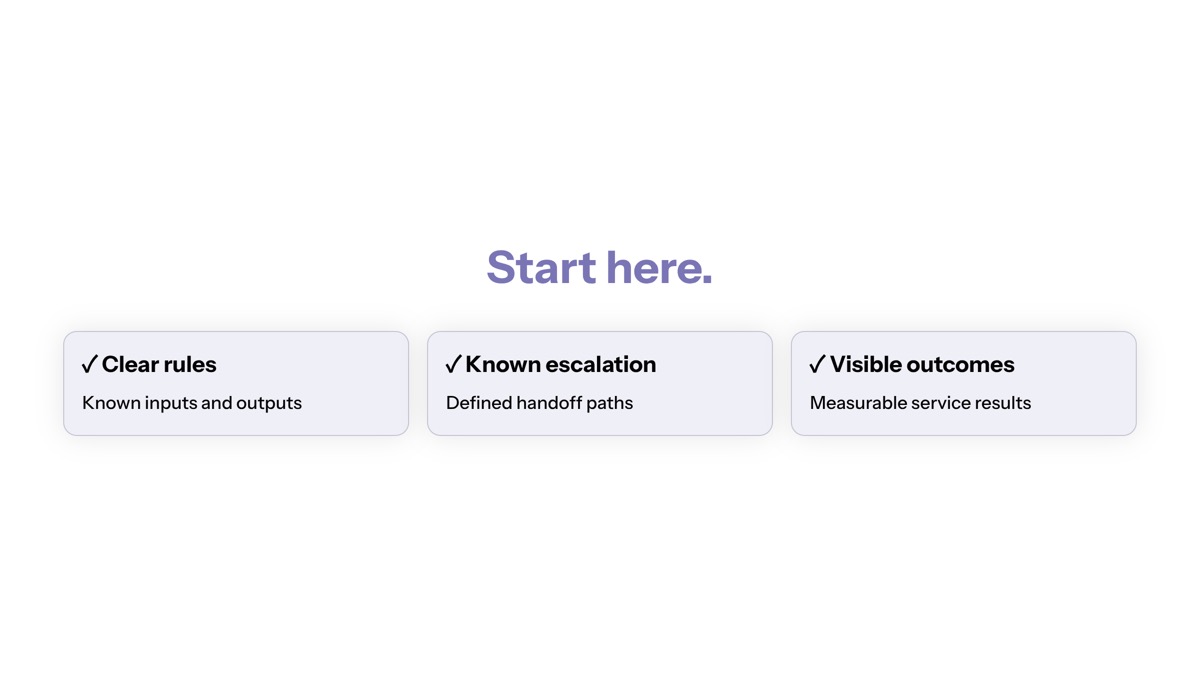
Start with safe, measurable workflows. Choose tasks with clear rules, known escalation paths, and visible service outcomes.
Success Stories and Metrics to Track
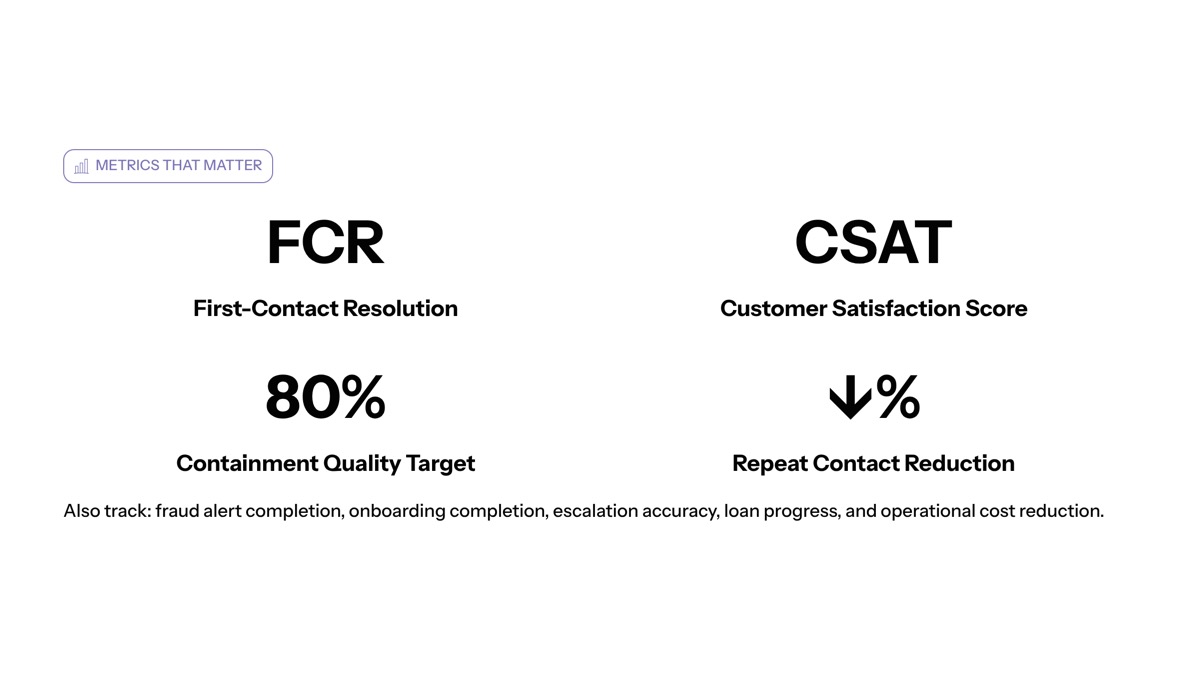
Success stories should be measured by outcomes, not novelty. Useful metrics include containment quality, first-contact resolution, fraud alert completion, customer satisfaction, escalation accuracy, onboarding completion, loan progress, and reduction in repeat contacts.
Banks should also track whether conversational AI platforms improve efficiency, reduce operational costs, and help support customers without increasing risk.
For new customers, the first experience with conversational banking can shape confidence in the institution. That makes onboarding, support quality, and reliable answers especially important.
Data Analysis for Better Service
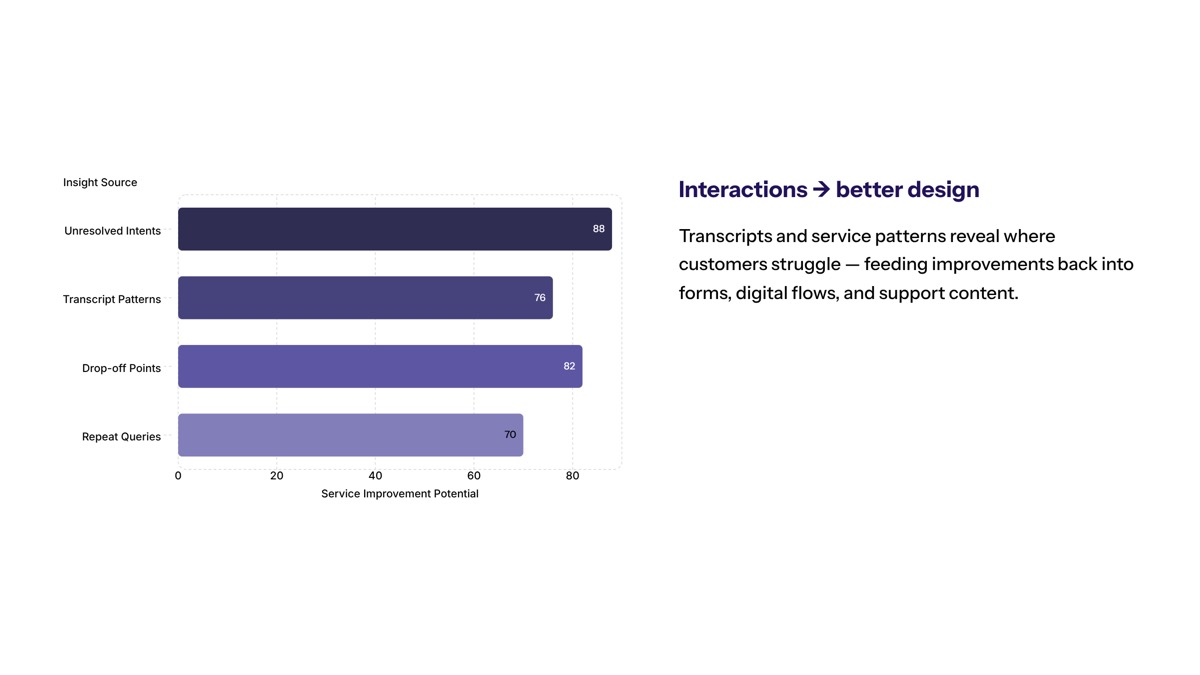
Data analysis from transcripts, unresolved intents, and service patterns can show where customers struggle. Those insights can help teams improve forms, digital flows, and support content.
The point is not to collect more data for its own sake. It is to convert customer interactions into better service design.
How AI Listens Before It Answers
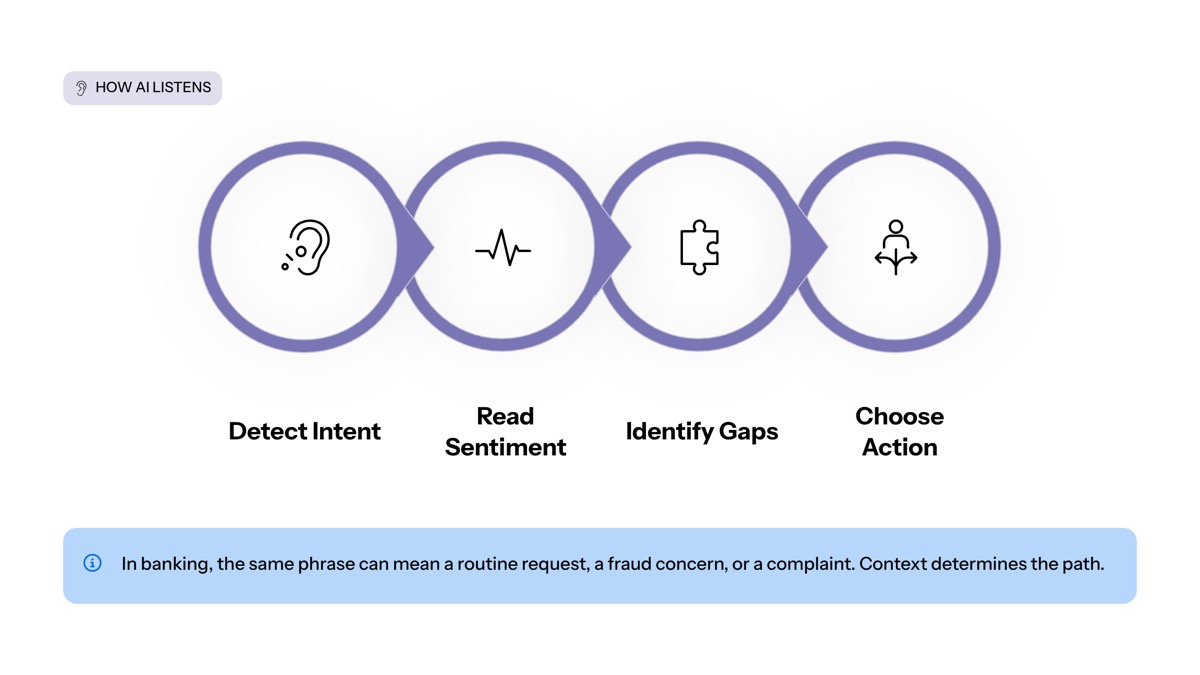
AI listens for intent, urgency, sentiment, and missing context before it chooses a response path. In banking, that sequence matters because the same phrase can mean a routine request, a fraud concern, or a complaint.
An AI agent should use that context to decide whether to answer, ask a clarifying question, or escalate.
Final Takeaway
Conversational AI in financial services can improve customer experience, efficiency, fraud response, and engagement when it is integrated into secure banking workflows.
The practical path is to begin with routine service, account checks, fraud alerts, and onboarding; connect the system to core banking systems; protect customer data; and preserve human intervention for high-risk or judgment-heavy situations.
For financial institutions, conversational AI is not just a support tool. It is a controlled service layer that can help customers move through banking journeys faster while protecting trust, compliance, and operational resilience.