Conversational AI in Healthcare: Use Cases, Risks, and Implementation Priorities
Conversational AI in healthcare is moving from simple chatbot experiments into operational systems that support patient access, administrative tasks, clinical workflow, and ongoing patient engagement. For healthcare organizations, the opportunity is not only faster responses. The real value comes from designing conversational AI systems that improve access, reduce repetitive workload, protect patient data, and support safer care delivery.
At the same time, conversational AI in healthcare is not a plug-and-play replacement for healthcare professionals. These systems operate inside complex healthcare systems where privacy, patient safety, clinical accuracy, and escalation rules matter. A useful implementation must treat conversational AI as part of the care environment, not as a standalone automation widget.
For healthcare providers, the question is no longer whether AI in healthcare will affect patient interactions. The practical question is where conversational AI can create measurable value without increasing patient harm, compliance exposure, or workflow confusion.
What Is Healthcare Conversational AI?
Conversational AI in healthcare refers to software that uses natural language processing, machine learning, and related AI technology to interact with patients, staff, and sometimes clinicians through text or voice. This form of conversational artificial intelligence can understand human language, respond to questions, route requests, and automate defined workflows.
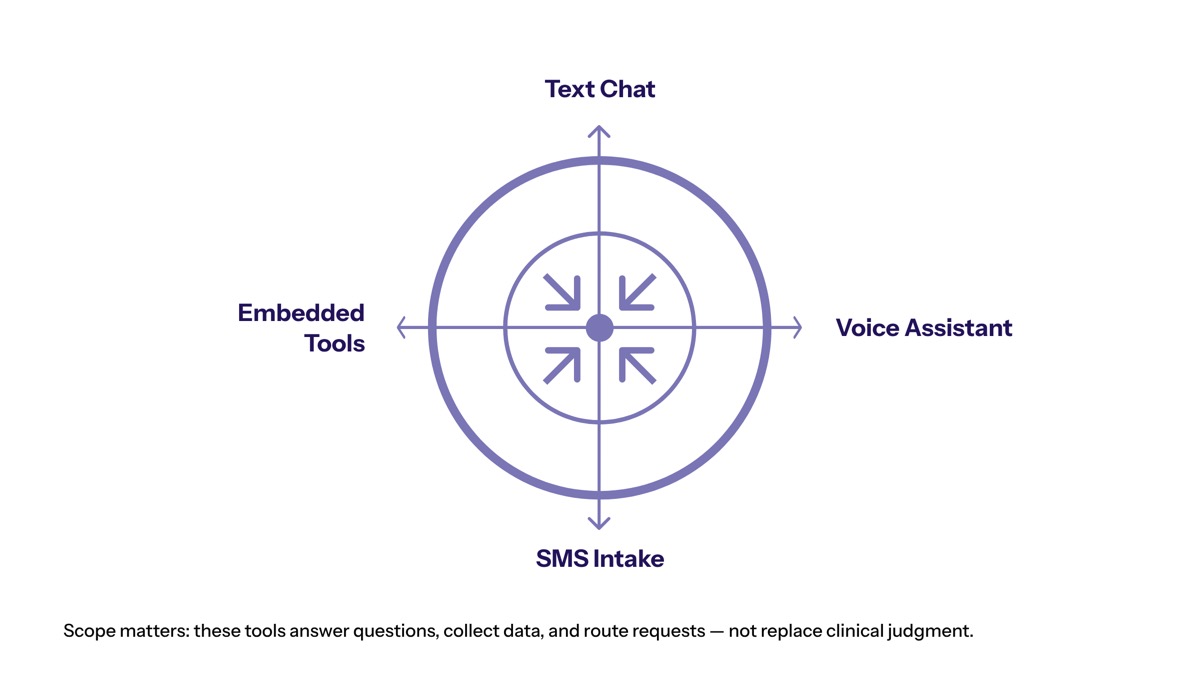
In practice, healthcare conversational AI can appear as website chat, patient portal assistants, call center tools, SMS-based intake flows, voice virtual assistants, or embedded tools inside healthcare platforms. Some conversational AI solutions are designed for simple administrative support, while others support patient triage, medication reminders, or clinical decision support.
The most important distinction is scope. Conversational AI tools can help answer questions, collect patient information, direct patients to the right next step, and reduce workload. They should not be positioned as independent clinicians, diagnostic authorities, or replacements for professional judgment.
Why Healthcare Systems Are Investing Now
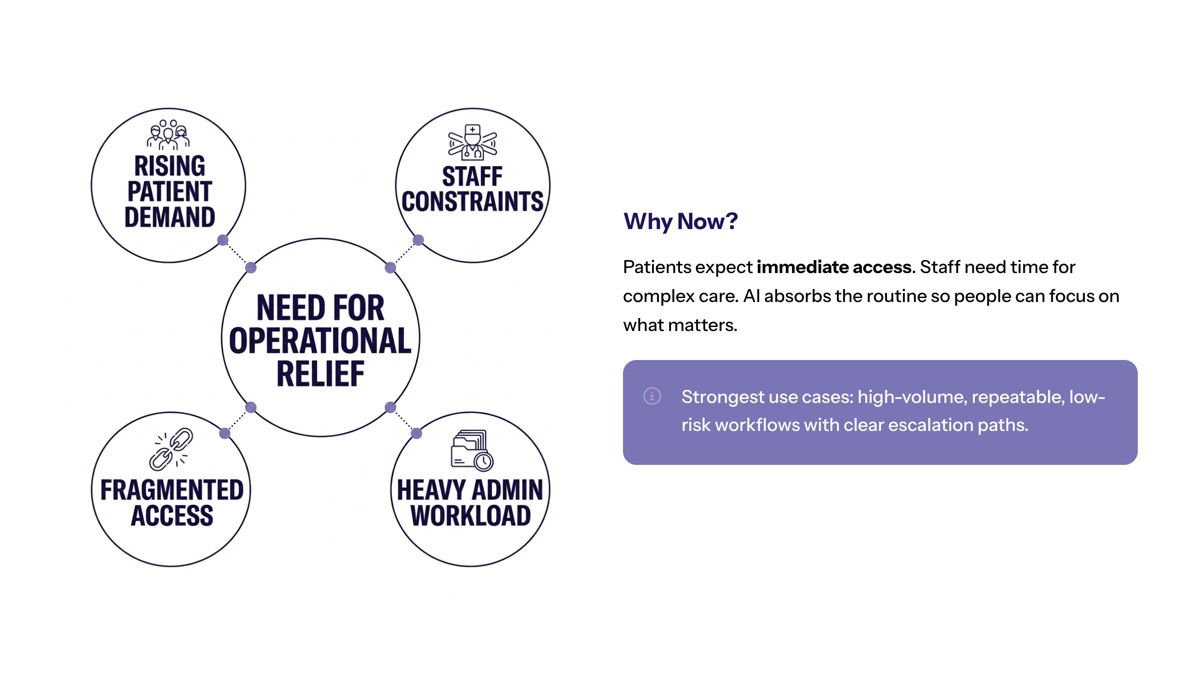
Healthcare organizations face rising demand, staff constraints, fragmented patient access, and heavy administrative workload. Across the healthcare sector, patients expect immediate access to information, while healthcare professionals need more time for complex patient care.
Conversational AI in healthcare can help by handling routine tasks that often slow down front-office teams, nurses, call centers, and administrative staff. Appointment scheduling, registration, billing inquiries, medication reminders, and answering frequently asked questions can all be structured into safer automated workflows.
That does not mean every workflow should be automated. The strongest use cases are those where conversational AI improves patient experience, reduces friction, and escalates appropriately when a human agent or licensed clinician is needed.
The Right Role for Healthcare Professionals and AI Assistants
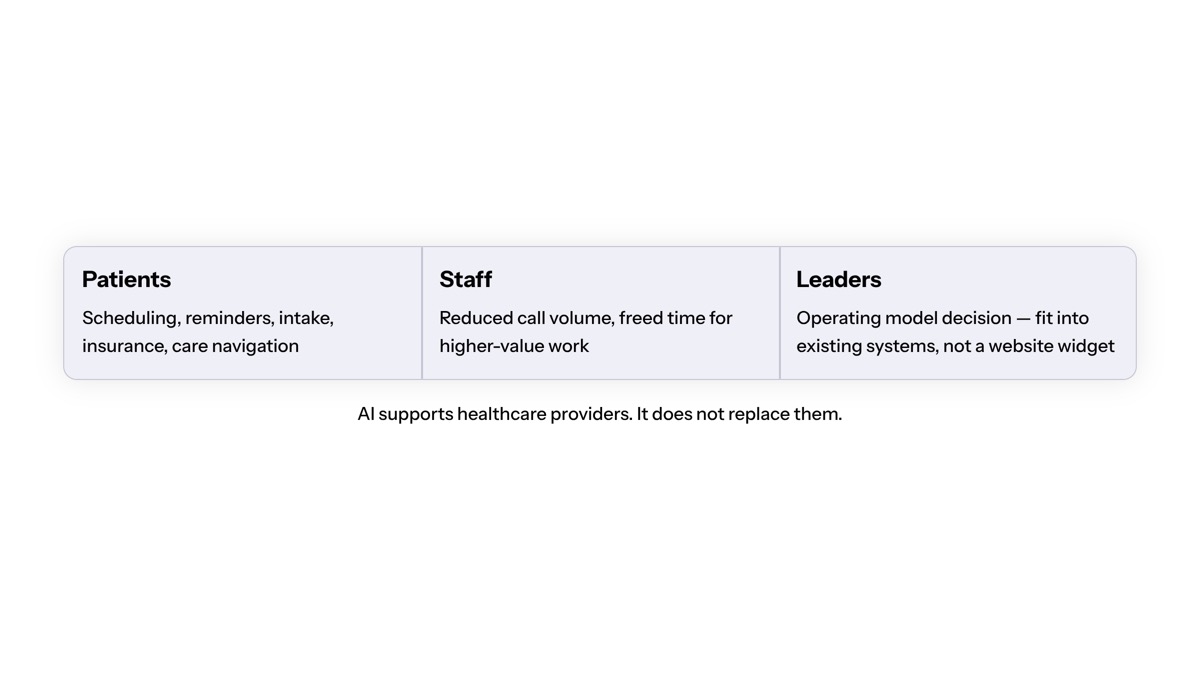
The best role for conversational AI is not to replace healthcare providers. It is to support healthcare providers by making routine communication faster, more consistent, and easier to manage.
For patients, healthcare conversational AI can provide immediate access to scheduling, reminders, intake forms, insurance questions, and basic care navigation. For staff, conversational AI tools and AI powered virtual assistants can reduce call center volume and free time for higher-value work.
For leaders, conversational AI in healthcare should be evaluated as an operating model decision. The question is how conversational AI systems fit into existing healthcare systems, not how quickly an organization can add a chatbot to a website.
Patient Access and Front-Door Navigation
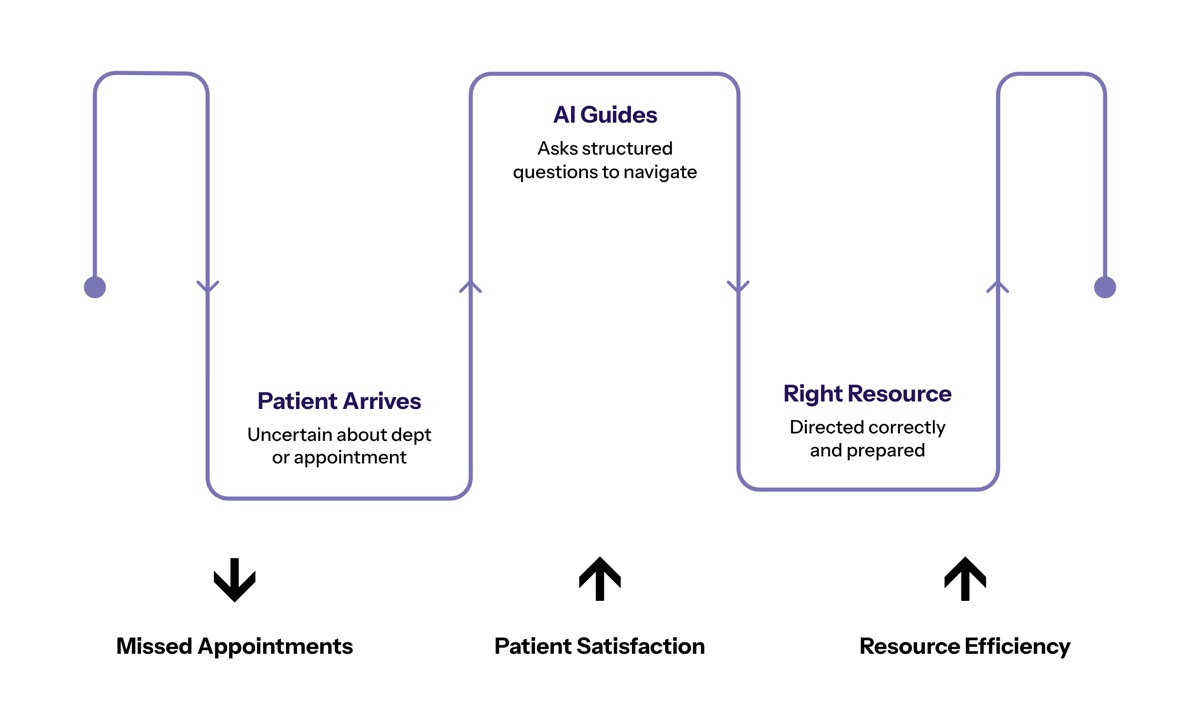
Patient access is one of the clearest use cases for conversational AI in healthcare. Many patients do not know which department, provider, form, or appointment type they need. A well-designed assistant can guide them through structured questions and direct patients to the appropriate resource.
This kind of conversational AI can reduce friction across the healthcare journey. It can help patients choose the right appointment path, understand preparation steps, confirm location details, and know whether a virtual or in person visit is appropriate.
The business value is straightforward. Better access workflows can reduce missed appointments, improve patient satisfaction, and help healthcare organizations use resource allocation more effectively.
Patient Triage and Symptom Intake
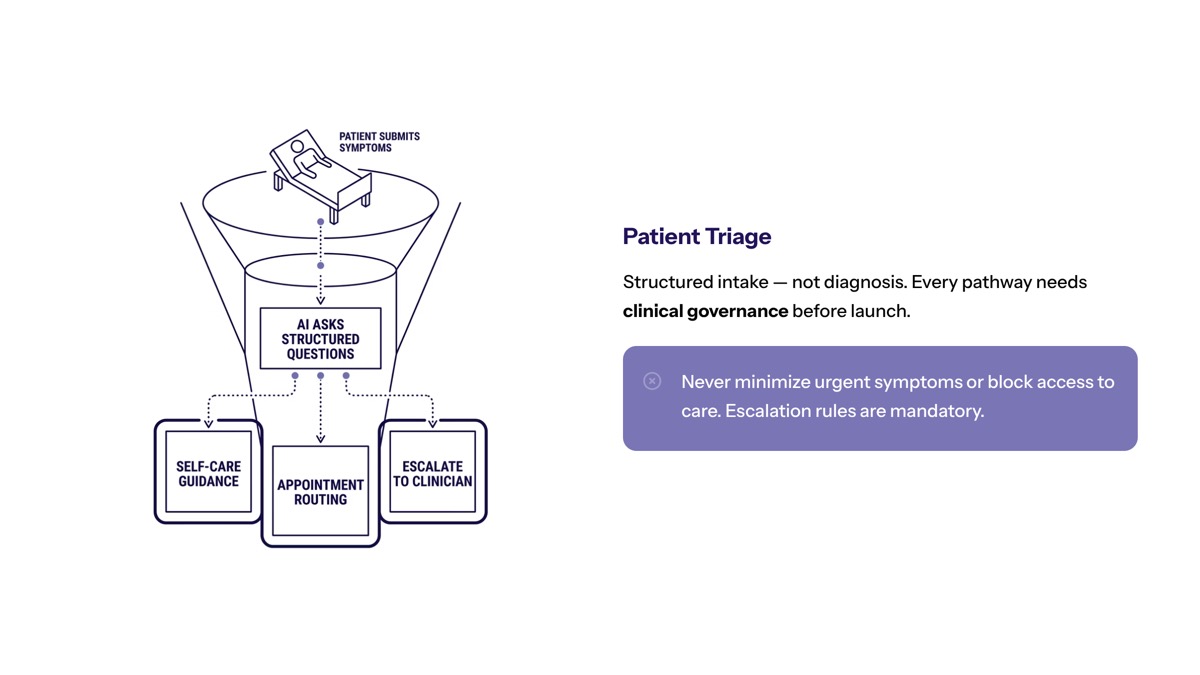
Patient triage is a sensitive but important area for conversational AI. A system can ask structured questions, collect symptoms, assess symptoms against approved pathways, suggest self care when appropriate, or connect patients to the right care resource based on their responses.
The risk is also clear. Conversational AI in healthcare must avoid overconfident conclusions. A triage assistant should not diagnose, minimize urgent symptoms, or block access to care. It should use clear escalation rules, conservative safety language, and approved clinical resources.
For healthcare providers, this means patient triage should be designed with clinical governance from the start. Patient safety has to be built into the workflow, not reviewed after launch.
Patient Engagement and Patient Outcomes
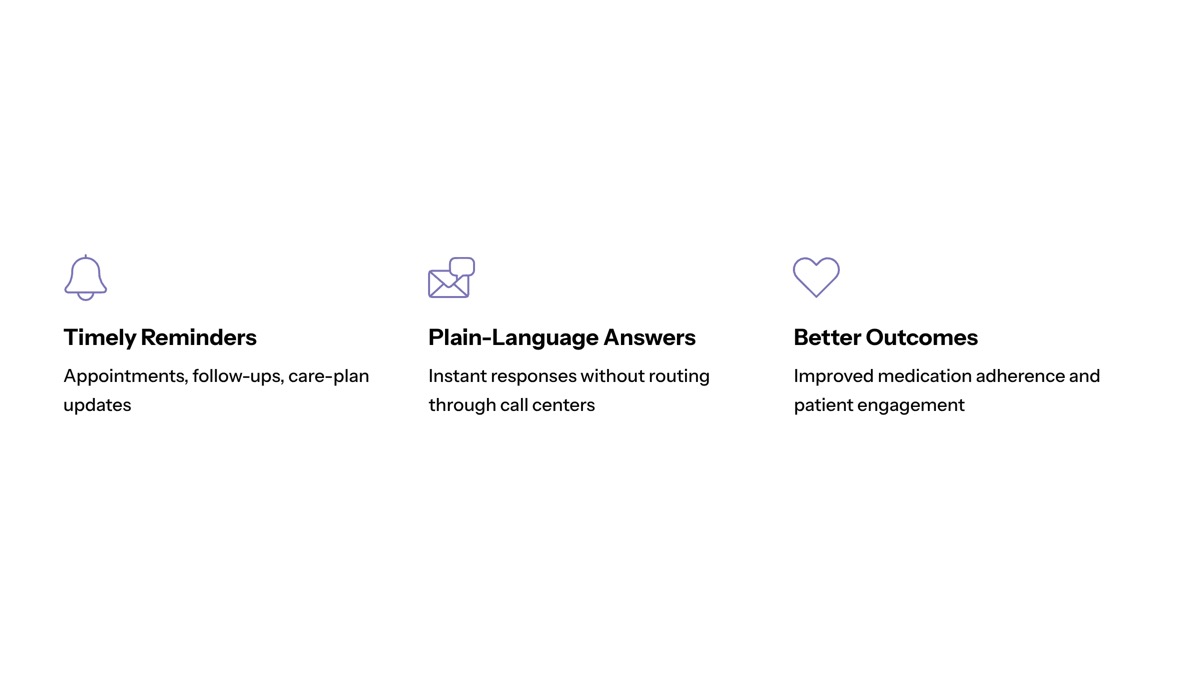
Patient engagement is one of the strongest areas for conversational AI in healthcare. Patients often need reminders, plain-language explanations, follow-up instructions, and help understanding what to do next.
Conversational AI can improve patient engagement by providing timely information, personalized interactions, and instant responses that help patients take an active role in their own care. When the system is well governed, it can support patient satisfaction and contribute to better patient outcomes without forcing every question through a call center.
AI-powered tools can also automate follow-up communications, such as sending personalized messages and reminders after appointments, procedures, or care-plan updates. That kind of continuity can improve medication adherence and overall patient engagement when it is connected to approved care workflows.
Medication Management and Side-Effect Tracking
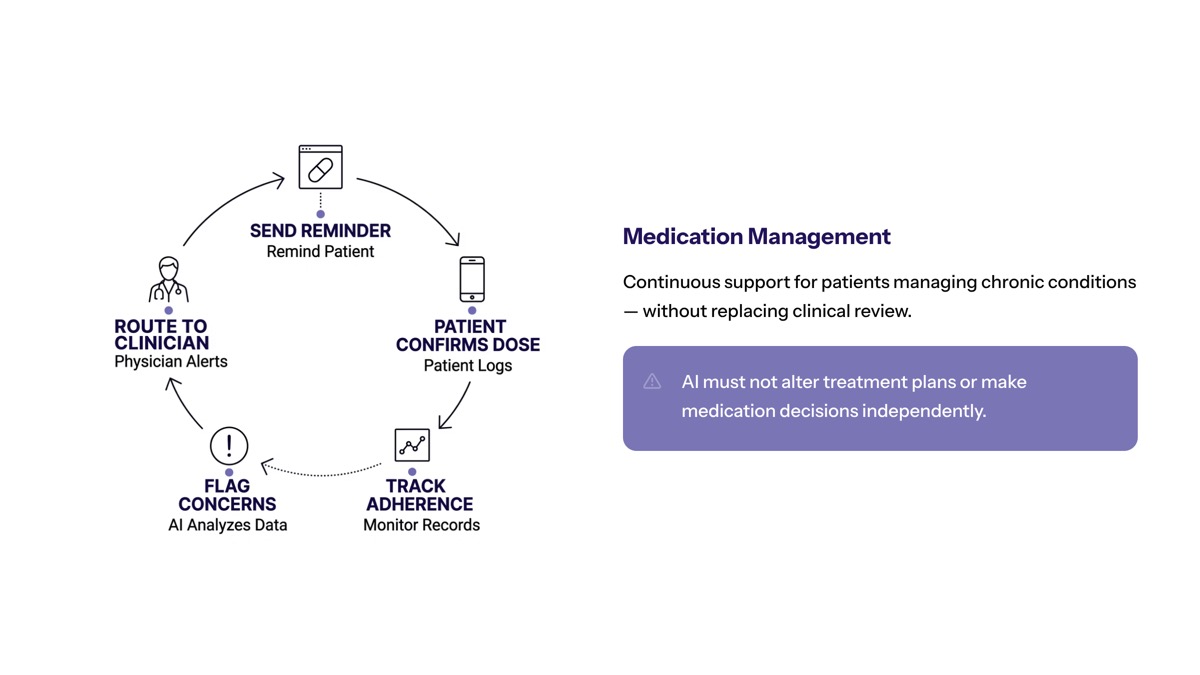
Medication management is a practical use case when the system is carefully controlled. Conversational AI can send personalized reminders for medication intake, track adherence, ask whether a dose was taken, and provide approved information about potential drug interactions.
AI can also provide continuous availability for health guidance, medication reminders, and side-effect tracking. For patients managing chronic conditions, this can make support feel less episodic and more connected to daily routines.
Medication workflows still require strict boundaries. Conversational AI should not independently alter treatment plans, make medication decisions, or replace clinical review. It can collect structured feedback, flag possible concerns, and route sensitive issues to healthcare professionals.
Chronic Disease Management
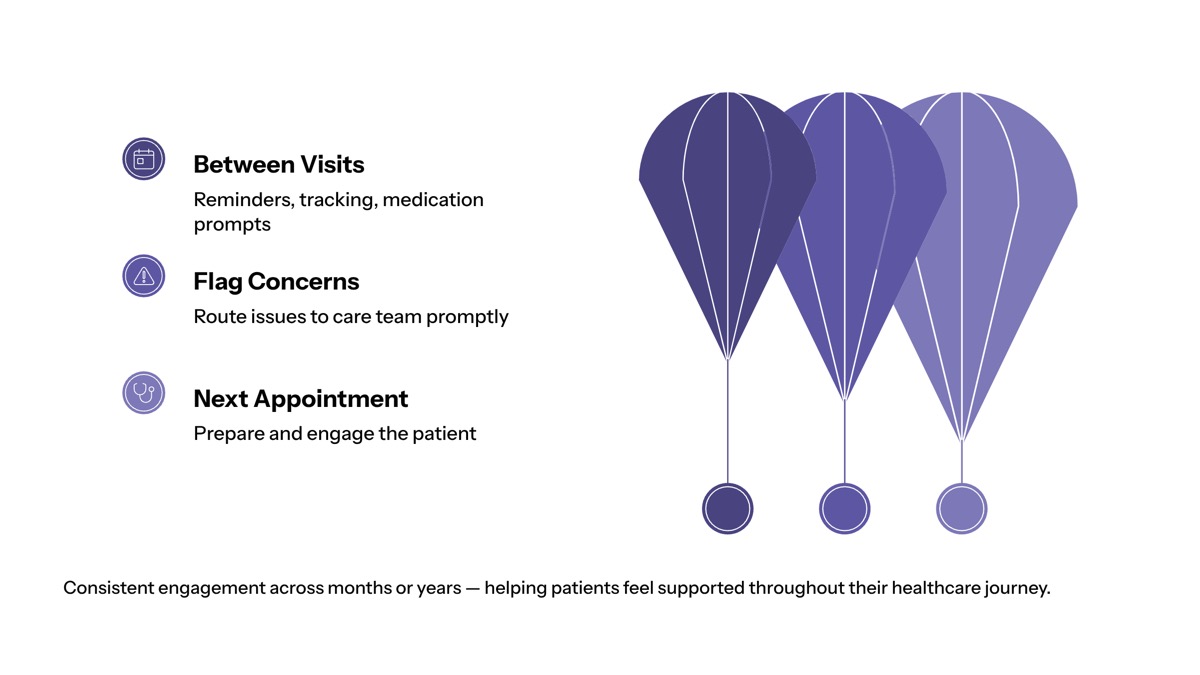
Chronic disease management often requires consistent engagement across months or years. Patients may need education, appointment reminders, symptom tracking, medication prompts, and practical encouragement to stay involved in their own care.
Healthcare conversational AI can help by creating a more continuous communication layer between visits. It can remind patients about routine tasks, ask structured follow-up questions, and route concerning responses to the right team.
Conversational AI enhances patient engagement by providing timely information and support, which can improve medication adherence and overall health outcomes, particularly for chronic disease management. It can also enhance the patient experience by helping people feel supported throughout their healthcare journey.
Mental Health Support and Escalation
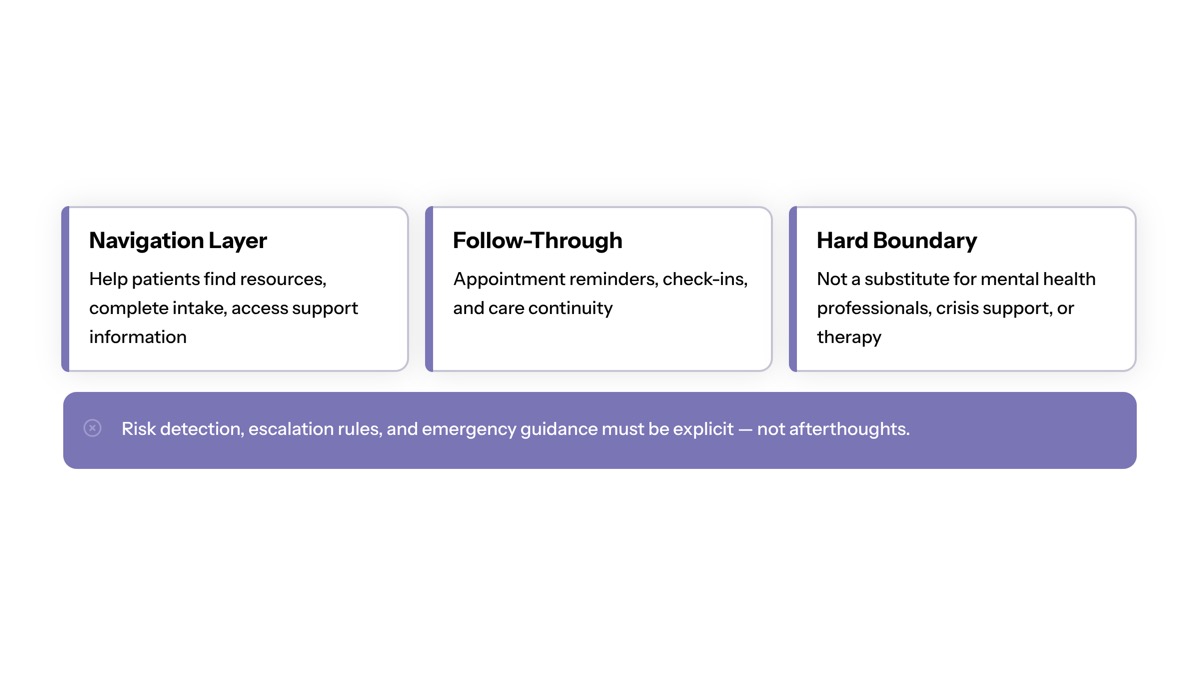
Mental health support is another area where conversational AI is attracting attention. Patients may use virtual assistants to find resources, complete intake forms, receive reminders, or access basic support information.
The boundary matters. Conversational AI should not present itself as a substitute for mental health professionals, crisis support, or therapy. For mental health use cases, escalation rules, risk detection, and emergency guidance must be explicit.
Healthcare organizations considering mental health support should treat conversational AI as a navigation and support layer. It can help with access and follow-through, but patient safety and human oversight must lead the design.
Administrative Tasks and Operational Efficiency
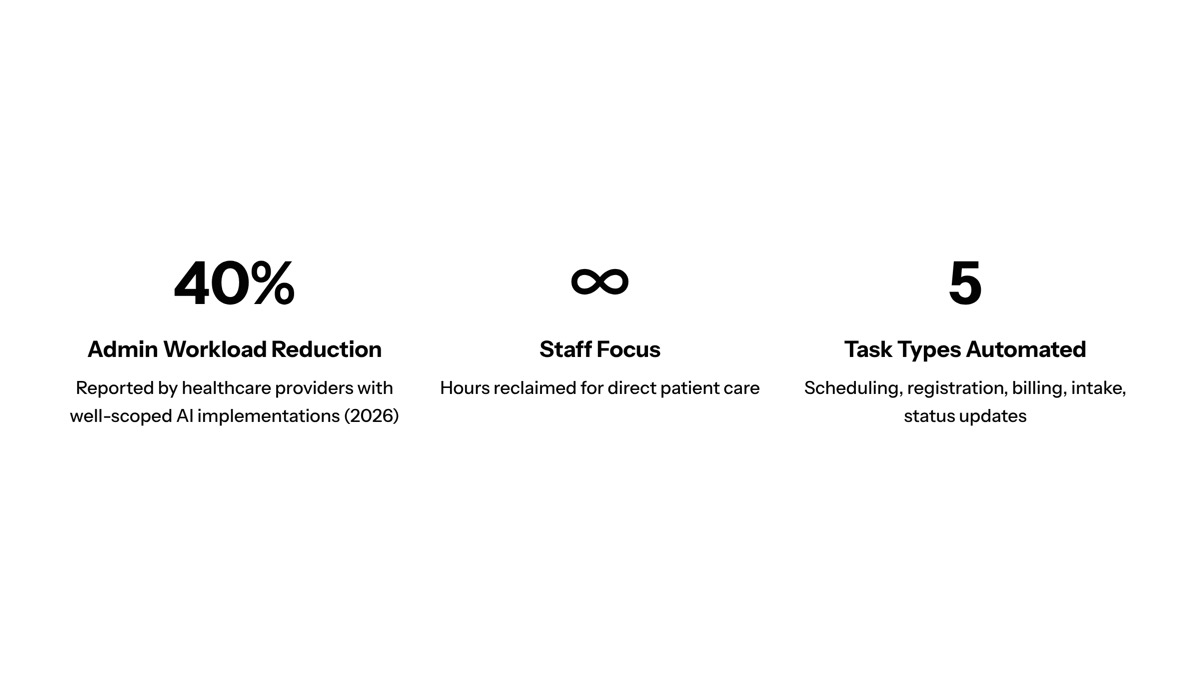
Administrative tasks are often the fastest path to measurable value. Conversational AI in healthcare can automate appointment scheduling, patient registration, insurance questions, billing inquiries, intake reminders, and routine status updates.
Automation of administrative tasks in healthcare allows staff to focus on higher value tasks, which can improve overall operational efficiency. As of 2026, healthcare providers using conversational AI systems report up to a 40% reduction in administrative workload when implementation is well-scoped and tied to real workflows.
The implementation of conversational AI in healthcare can improve operational efficiency by reducing administrative burdens, allowing healthcare staff to reclaim hours that can be redirected toward direct patient care.
Reducing Call Center Volume
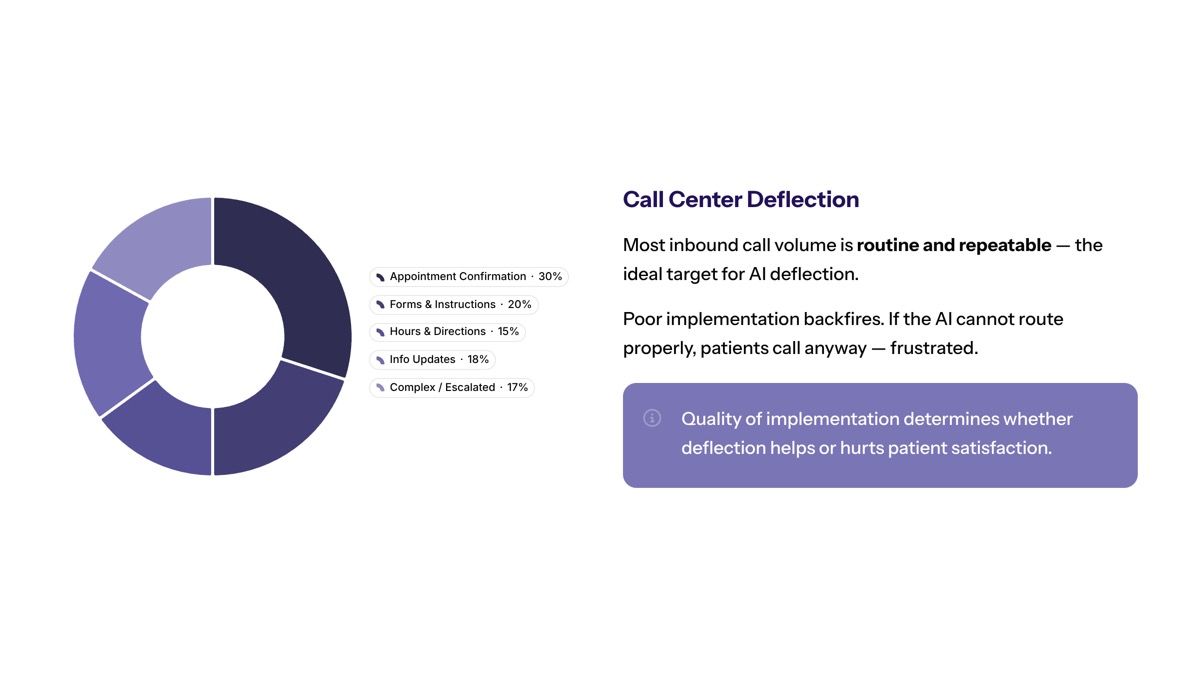
Call centers are often overloaded with repeat questions. Patients call to confirm appointments, ask about forms, check hours, request directions, update information, or clarify next steps.
Conversational AI tools can reduce call center volume by answering common questions and routing complex requests. This can improve patient satisfaction when the experience is fast, accurate, and easy to escalate.
A poor system can have the opposite effect. If virtual assistants cannot understand human conversation or route issues properly, patients may become frustrated and call anyway. That is why implementation quality matters.
Cost Savings and Resource Allocation
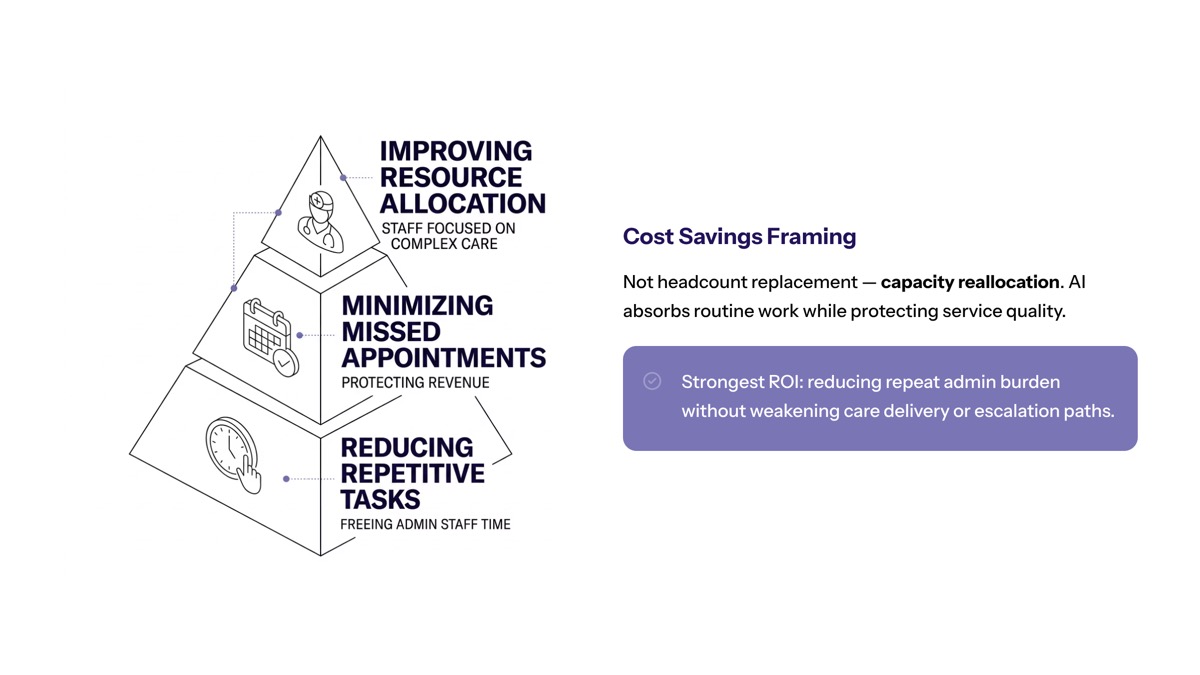
Conversational AI can lead to significant cost savings for healthcare organizations when it streamlines workflows instead of adding another disconnected system. The gains usually come from reducing repetitive tasks, minimizing missed appointments, improving resource allocation, and helping staff focus on more complex patient needs.
The financial value should not be framed as simple headcount replacement. In healthcare, the stronger business case is that conversational AI solutions can absorb routine work while protecting service quality and escalation paths.
For healthcare systems under pressure, this matters because a significant portion of staff time is often consumed by repeat administrative work. Reducing that burden can support operational efficiency without weakening patient care.
Clinical Decision Support and Clinical Intelligence
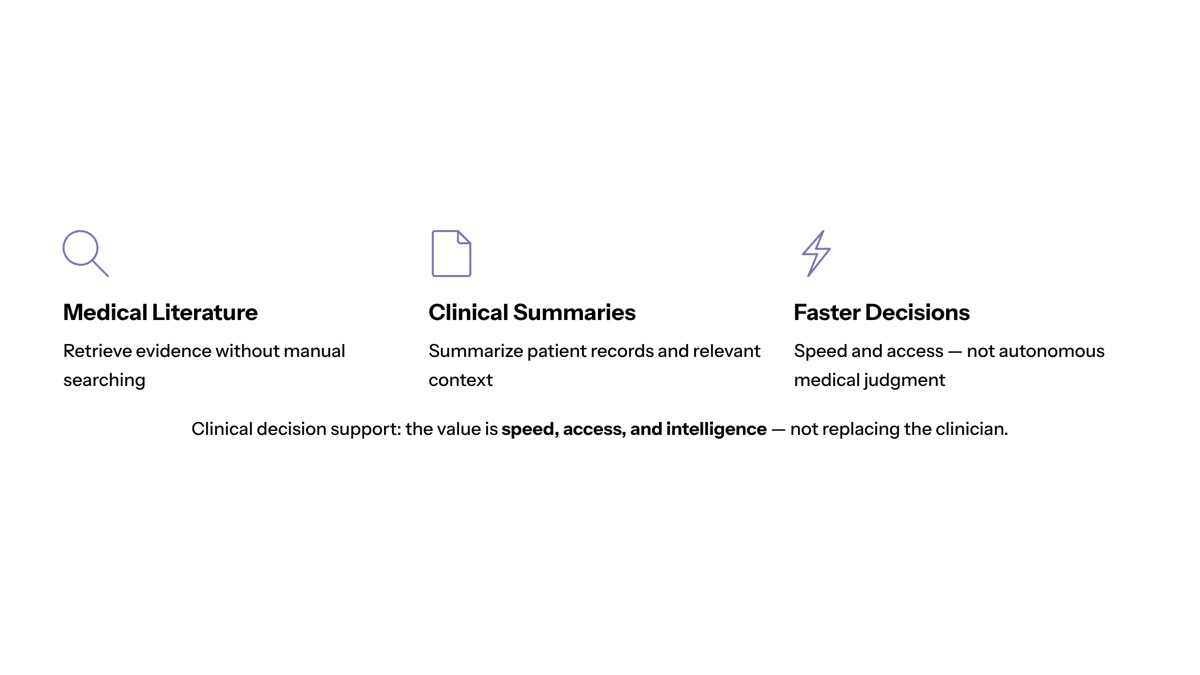
Clinical decision support is a more advanced use case. Conversational AI can help healthcare professionals ask specific questions, retrieve medical literature, summarize clinical resources, and access relevant patient records when integrated safely.
Conversational AI can streamline clinician workflows by providing quick access to the latest clinical evidence, allowing healthcare professionals to ask specific questions and receive accurate answers without manual searching. This reduces time spent looking for information and can improve decision-making efficiency.
AI chatbots can enhance clinical decision support by delivering critical insights faster, which helps clinicians make informed decisions regarding medication safety and treatment options. The value is speed, access, medical research retrieval, and clinical intelligence, not autonomous medical decision-making.
Reducing Clinician Cognitive Load
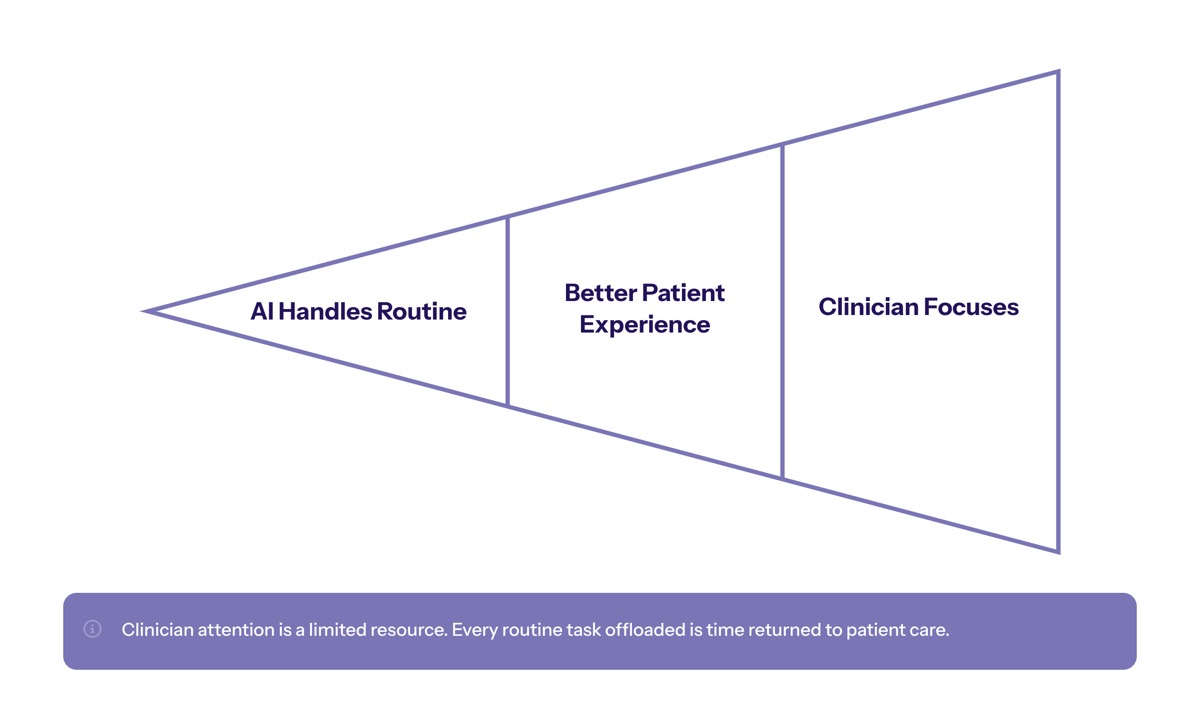
The integration of conversational AI in healthcare can significantly reduce cognitive load on clinicians by automating routine inquiries and providing real-time access to patient information. In a busy clinical workflow, that can reduce context switching and help healthcare professionals focus on the judgment-heavy parts of care.
This matters because clinician attention is a limited resource. When AI assistants handle repetitive questions or retrieve approved information quickly, healthcare professionals can spend more time on patient needs that require experience, empathy, and clinical reasoning.
The system still needs review. Any clinical decision support workflow should preserve clear accountability, validated content sources, and human oversight.
AI Scribes and Documentation Workflows
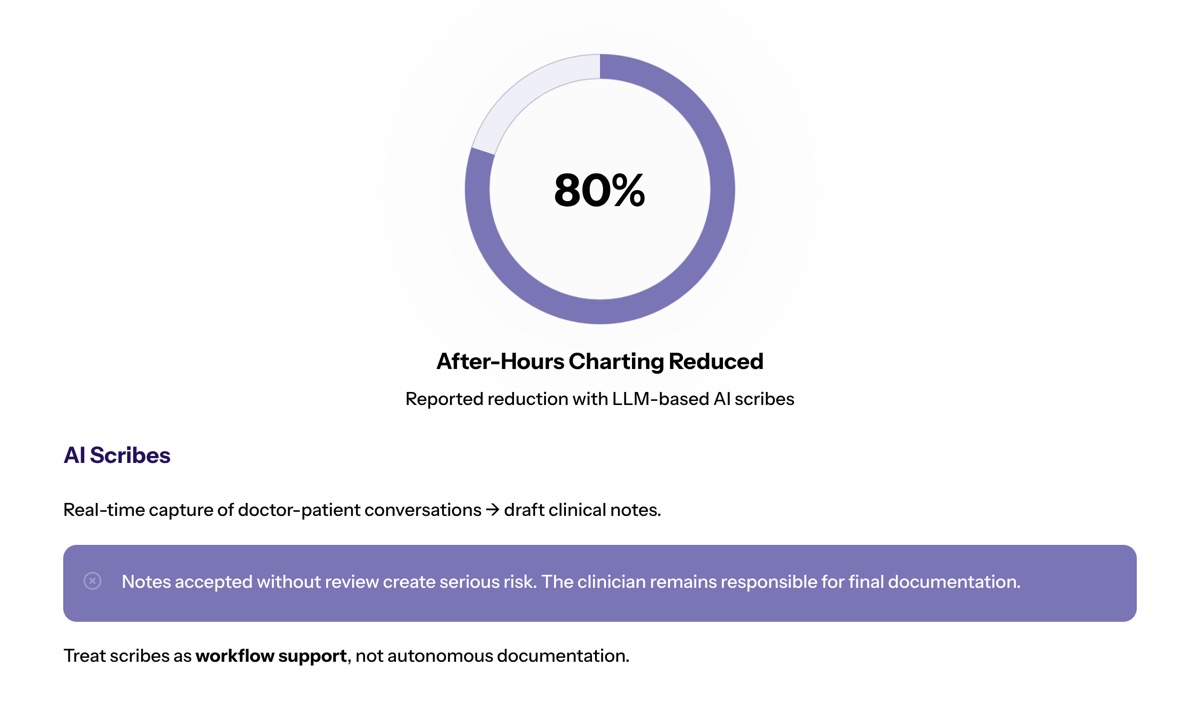
AI scribes are one of the most visible forms of AI in healthcare. These systems capture doctor-patient conversations in real time and help draft clinical notes.
Large language model-based AI scribes can significantly reduce after-hours charting time, with some reported reductions reaching up to 80%. That can improve clinical workflow when the system is accurate, reviewed, and integrated into documentation processes.
AI scribes also create risk if notes are accepted without review or if patient information is handled insecurely. Healthcare providers should treat scribes as workflow support. The clinician remains responsible for review, correction, and final documentation.
Electronic Health Records Integration
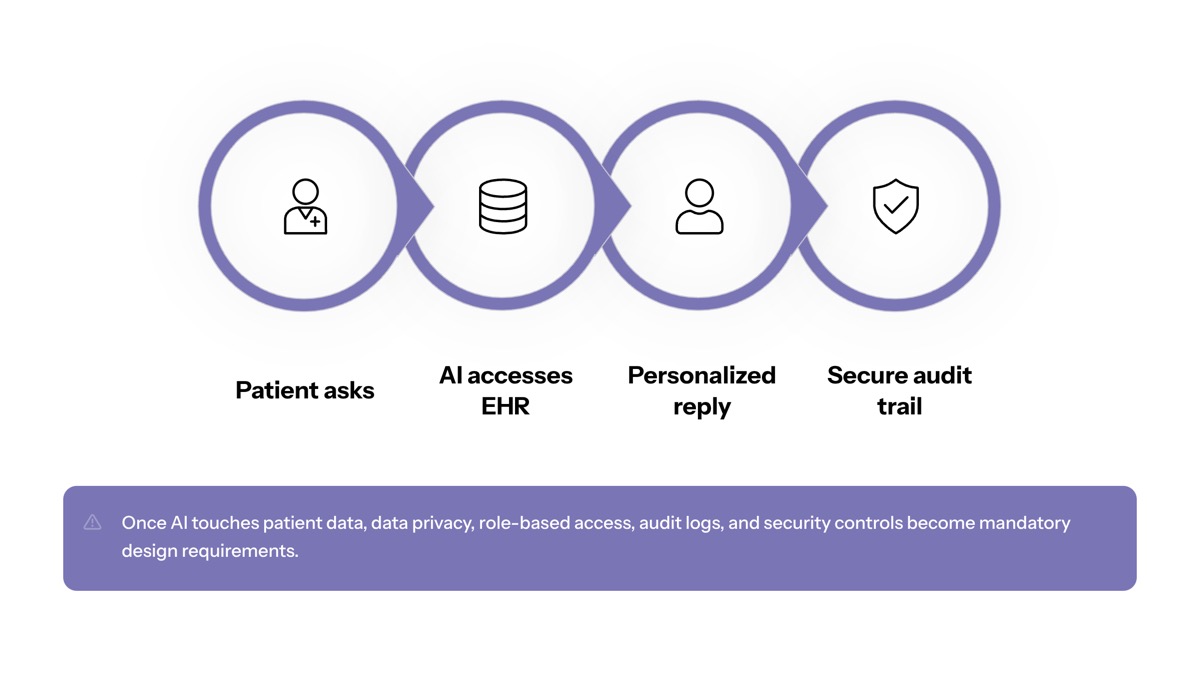
Many conversational AI platforms integrate with electronic health records to support more personalized and useful patient interactions. These systems often integrate directly into Electronic Health Records, or EHR, to provide secure and compliant patient experiences.
EHR integration can help the assistant confirm appointment details, retrieve patient records, collect patient information, or route requests based on existing context. That can make conversational AI in healthcare more useful than a disconnected chatbot.
It also raises the stakes. Once conversational AI systems touch patient data, data privacy, role-based access, audit logs, and security controls become mandatory design concerns.
Data Privacy, HIPAA Compliance, and Security
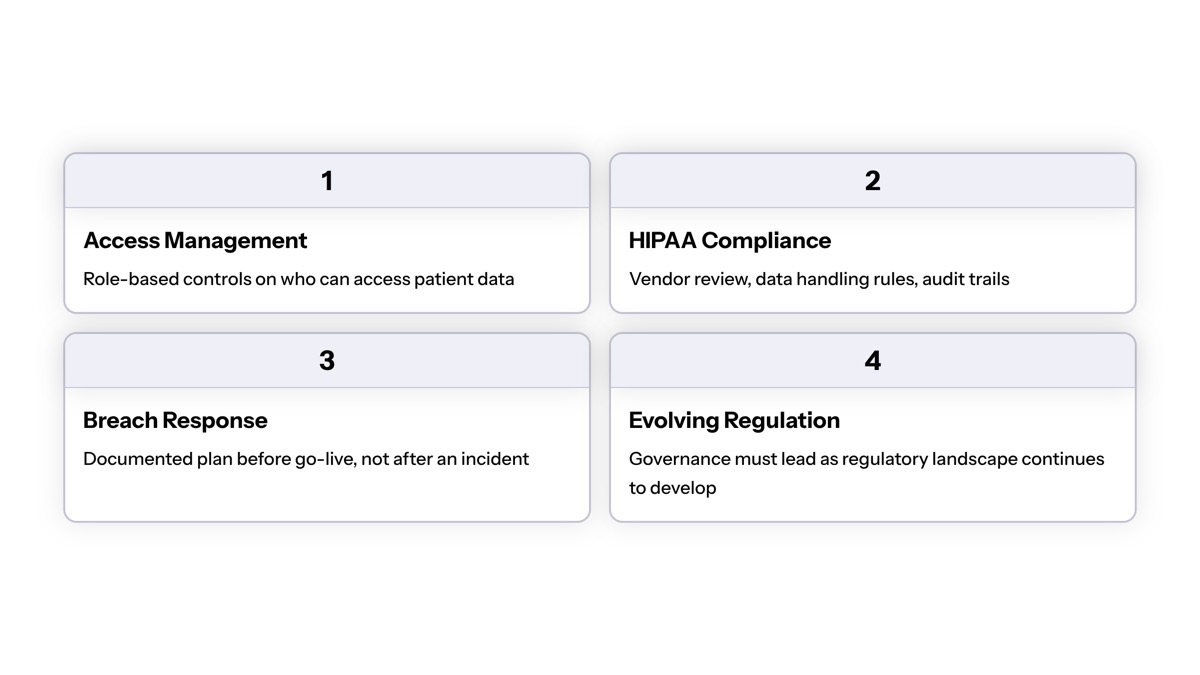
Data privacy is central to conversational AI in healthcare. Healthcare data is incredibly sensitive, and conversational AI systems must implement robust security measures to protect against data breaches and unauthorized access.
Conversational AI platforms must comply with regulations like the Health Insurance Portability and Accountability Act, or HIPAA, to ensure patient data and health information is managed responsibly and securely. HIPAA compliance is not a marketing phrase. It requires real controls, including access management, vendor review, auditability, data handling rules, and breach response planning.
The regulatory landscape for conversational AI in healthcare is still evolving, which makes governance especially important. Healthcare organizations need clear guidelines and standards to ensure patient safety, efficacy, and ethical use of these technologies before expanding them into sensitive workflows.
Machine Learning, Training Data, and Accuracy Risk
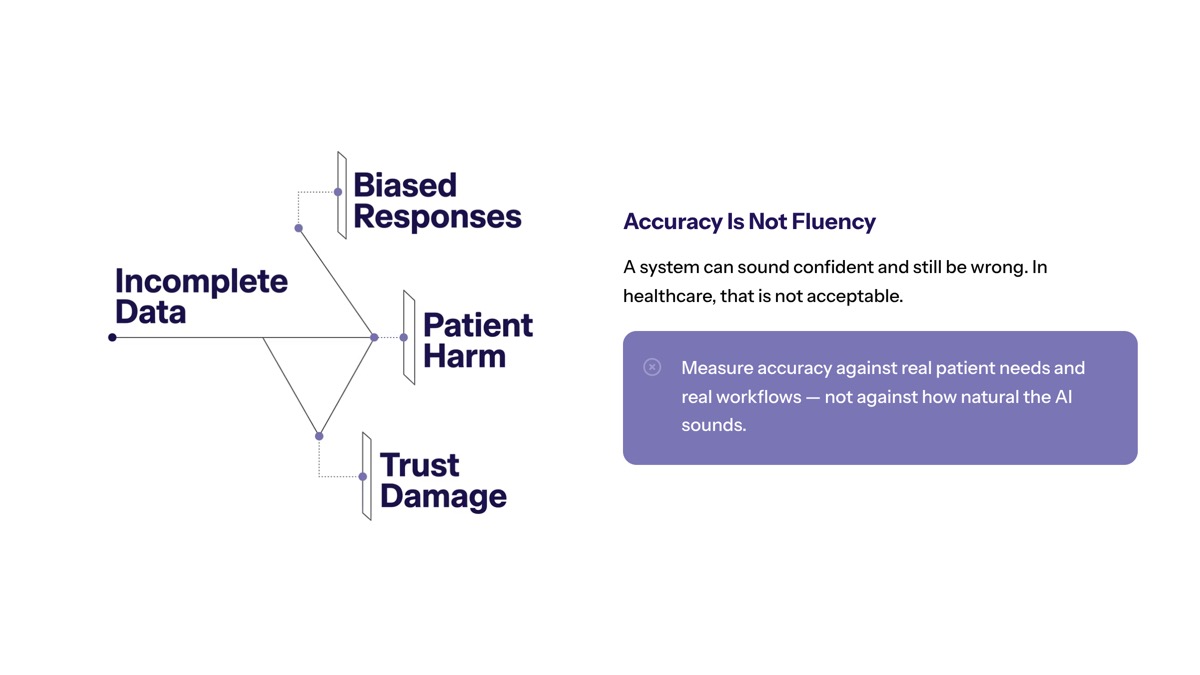
Training data matters because conversational AI systems learn patterns from the data and examples used to build or tune them. If training data is incomplete, biased, stale, or poorly governed, the system can produce unreliable responses.
In healthcare, unreliable responses are not just a quality problem. They can create patient harm, increase staff burden, or damage trust. This is why conversational AI in healthcare must use approved knowledge sources, careful testing, and ongoing review.
Accuracy should be measured against real patient needs and real workflows. It should not be assumed because the AI technology sounds fluent.
Health Literacy and Multilingual Support
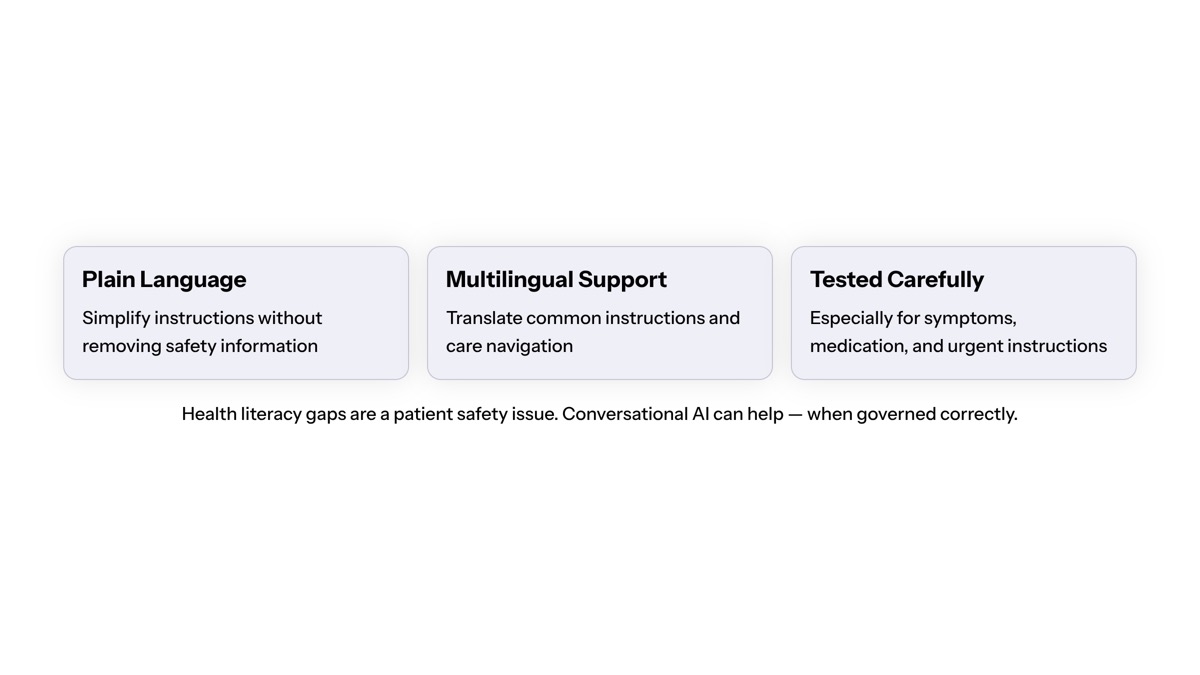
Health literacy is a major patient experience issue. Many patients struggle with complex instructions, medical terminology, insurance language, or portal navigation.
AI helps improve patient communication by using multilingual capabilities and adjusting language complexity to enhance health literacy. Conversational AI can explain next steps in plain language, translate common instructions, and help patients understand what action they need to take.
The system still needs limits. Simplified language should not remove important safety information. Multilingual support should be tested carefully, especially where symptoms, medication, or urgent instructions are involved.
Conversational AI Tools vs Conversational AI Systems
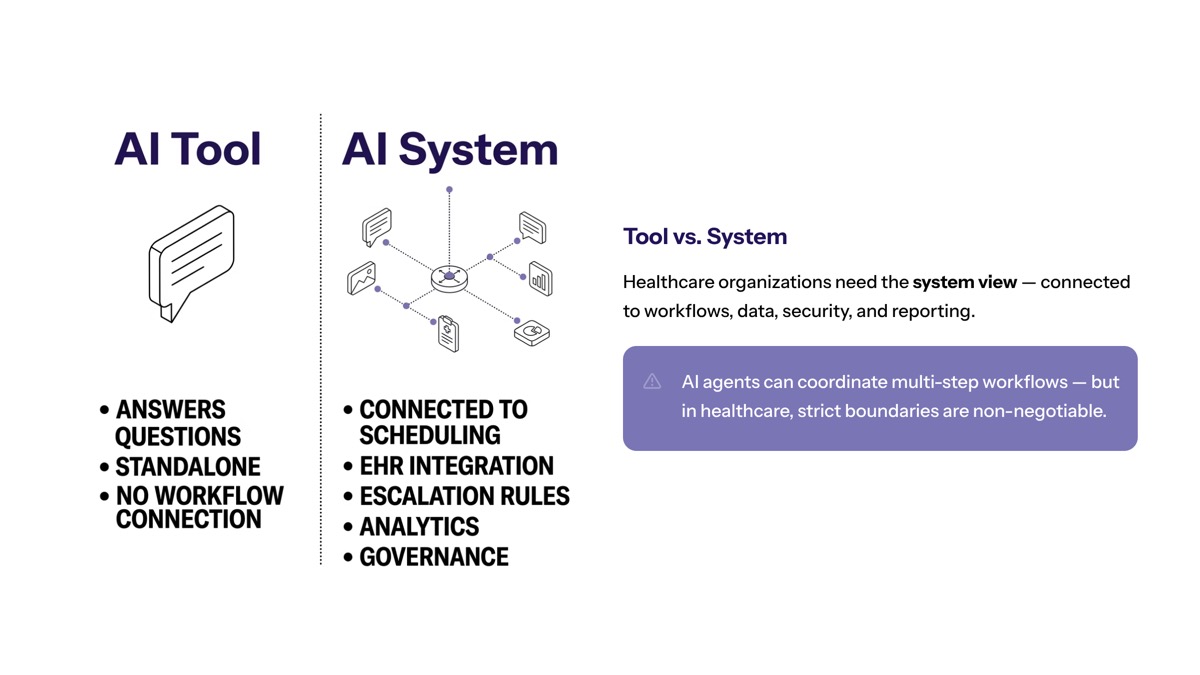
There is a difference between conversational AI tools and conversational AI systems. A tool might answer questions on a website. A system is connected to workflows, data, escalation rules, performance metrics, and governance.
For healthcare organizations, the system view is more useful. Conversational AI in healthcare should connect to scheduling, patient access, care navigation, security controls, and operational reporting.
This is also where AI agents become relevant. AI agents can coordinate multi-step workflows, but in healthcare they need strict boundaries. A poorly governed agent can create more risk than a basic assistant.
Common Implementation Mistakes
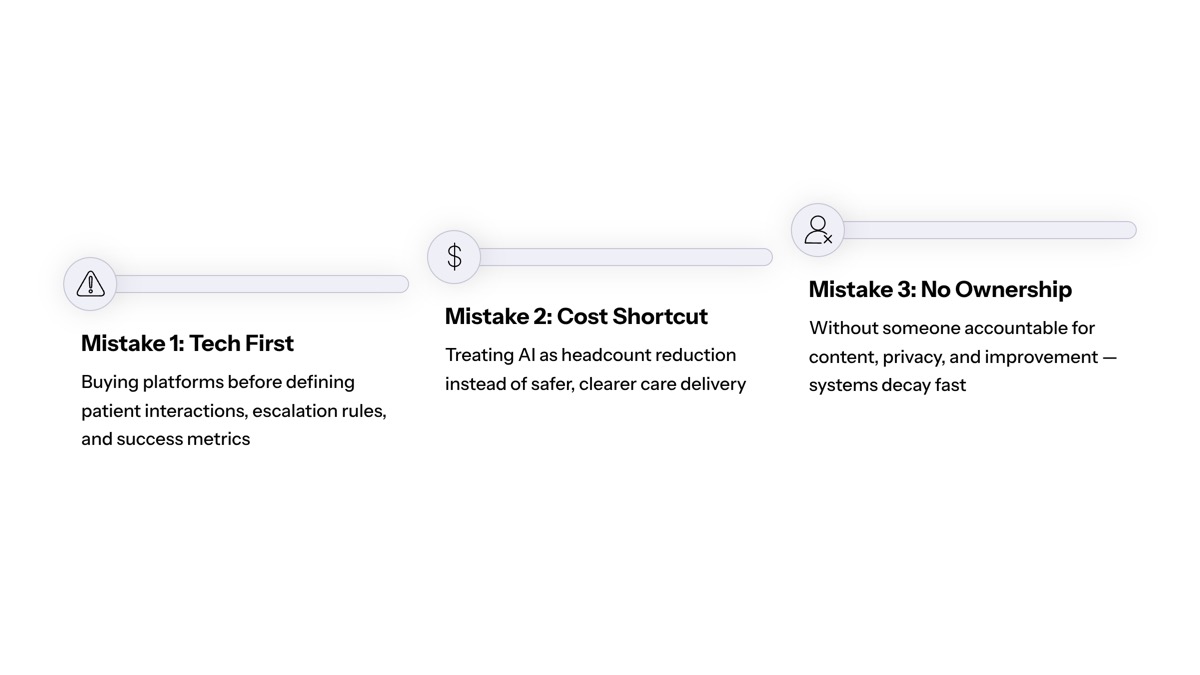
One common mistake is starting with technology instead of workflow. Healthcare providers may buy conversational AI platforms before defining the exact patient interactions, escalation rules, data requirements, and success metrics.
Another mistake is treating AI in healthcare as a cost-cutting shortcut. Conversational AI can reduce operational costs, but the first goal should be safer, clearer, and more efficient care delivery.
A third mistake is ignoring ownership. Someone must be responsible for content accuracy, clinical review, privacy, analytics, and continuous improvement. Without ownership, conversational AI solutions decay quickly.
How to Choose the Right Use Cases
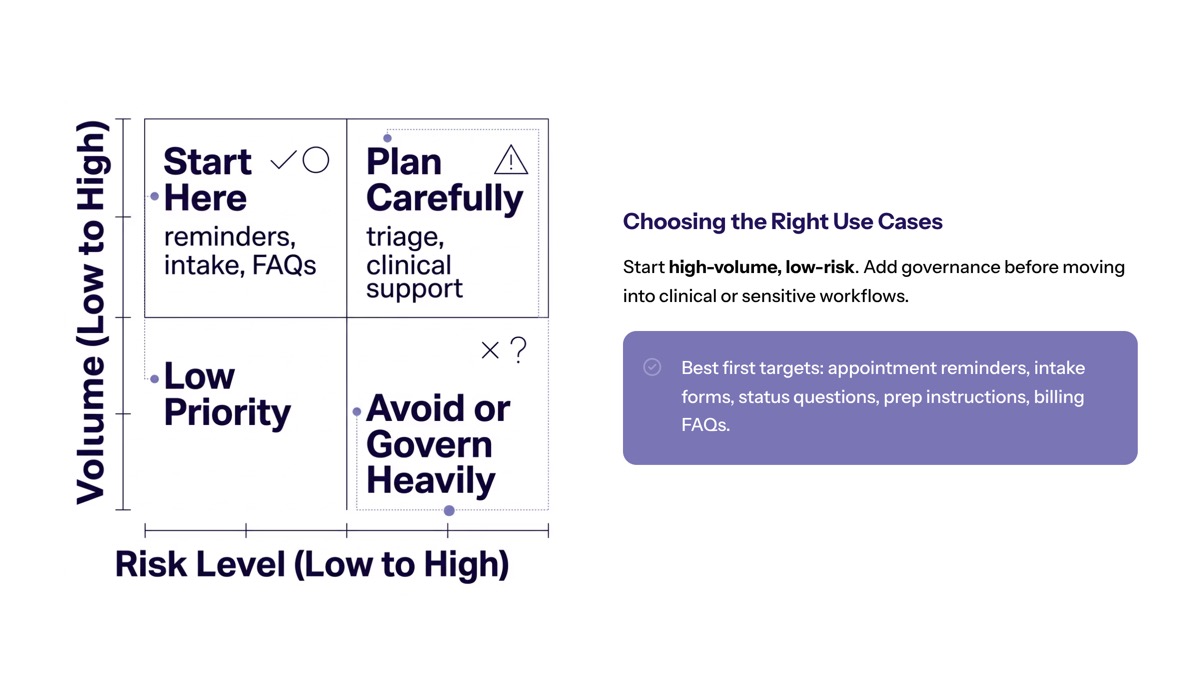
Start with workflows that are high-volume, repeatable, and low-risk. Appointment reminders, intake forms, status questions, directions, preparation instructions, and administrative tasks are often better first use cases than complex clinical guidance.
Then evaluate user value. Will conversational AI reduce friction for patients? Will it help healthcare professionals reclaim time? Will it improve patient experience without weakening safety?
Finally, check integration needs. If a use case requires electronic health records, patient records, or sensitive patient information, the governance requirements are higher.
Implementation Priorities for Healthcare Leaders
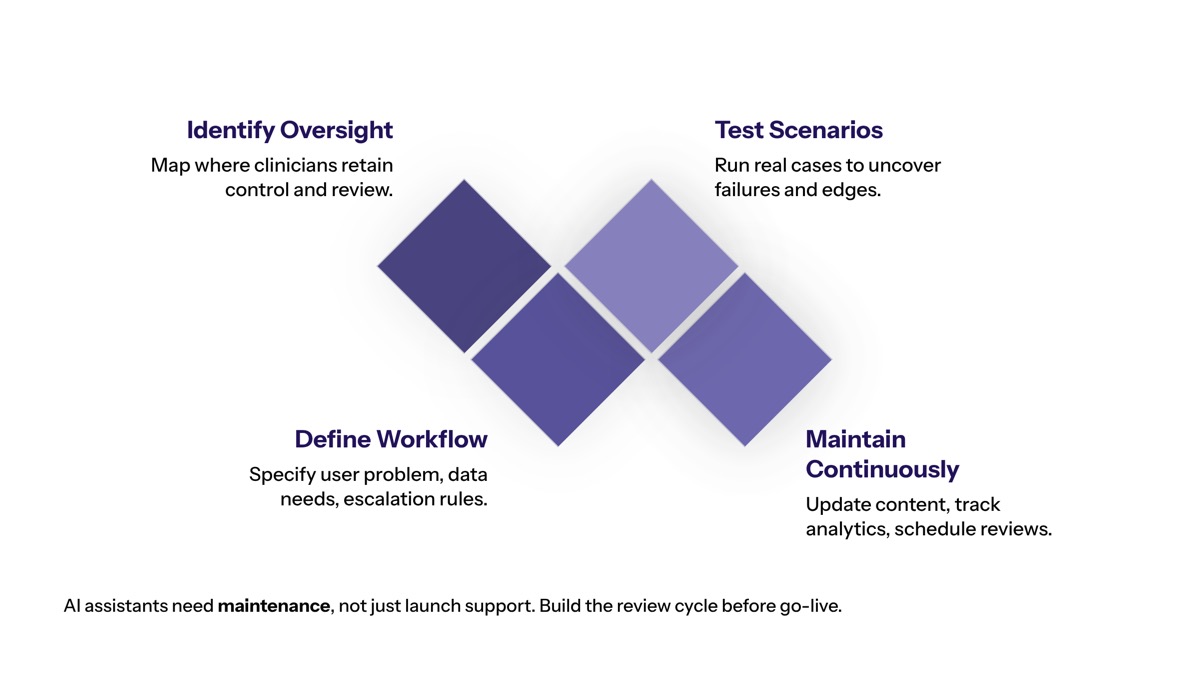
Healthcare leaders should define the target workflow before selecting conversational AI technology. They should document the user problem, expected outcomes, data requirements, escalation rules, and review process.
They should also identify where human oversight is required. Conversational AI in healthcare works best when humans remain responsible for complex judgment, sensitive communication, and clinical decisions.
The implementation should include testing with real-world scenarios, monitoring for failure patterns, and regular updates to content and workflows. AI assistants need maintenance, not just launch support.
Metrics That Matter
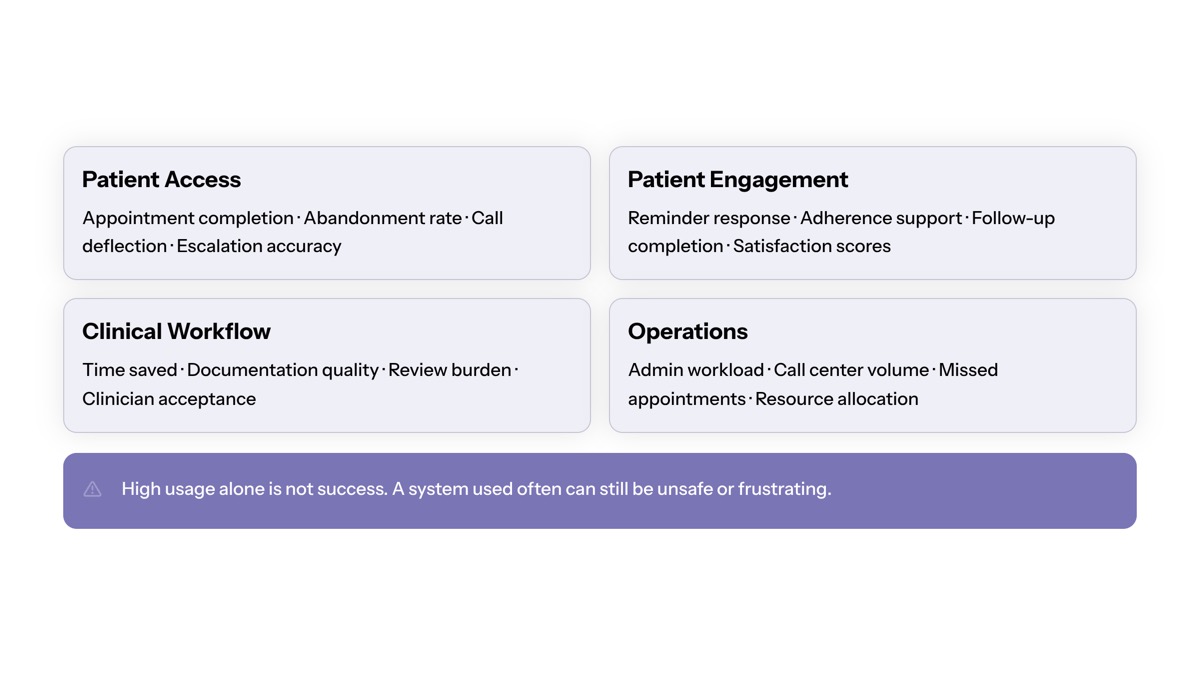
The right metrics depend on the use case. For patient access, track appointment completion, abandonment rate, call deflection, and escalation accuracy. For patient engagement, track reminder response, adherence support, follow-up completion, and patient satisfaction.
For clinical workflow, track time saved, documentation quality, review burden, and clinician acceptance. For operational efficiency, track administrative workload, call center volume, missed appointments, and resource allocation.
Do not measure conversational AI in healthcare only by usage. A high-use system can still be unsafe or frustrating if it fails to resolve patient needs.
Where Cognativ Fits in the Healthcare Industry
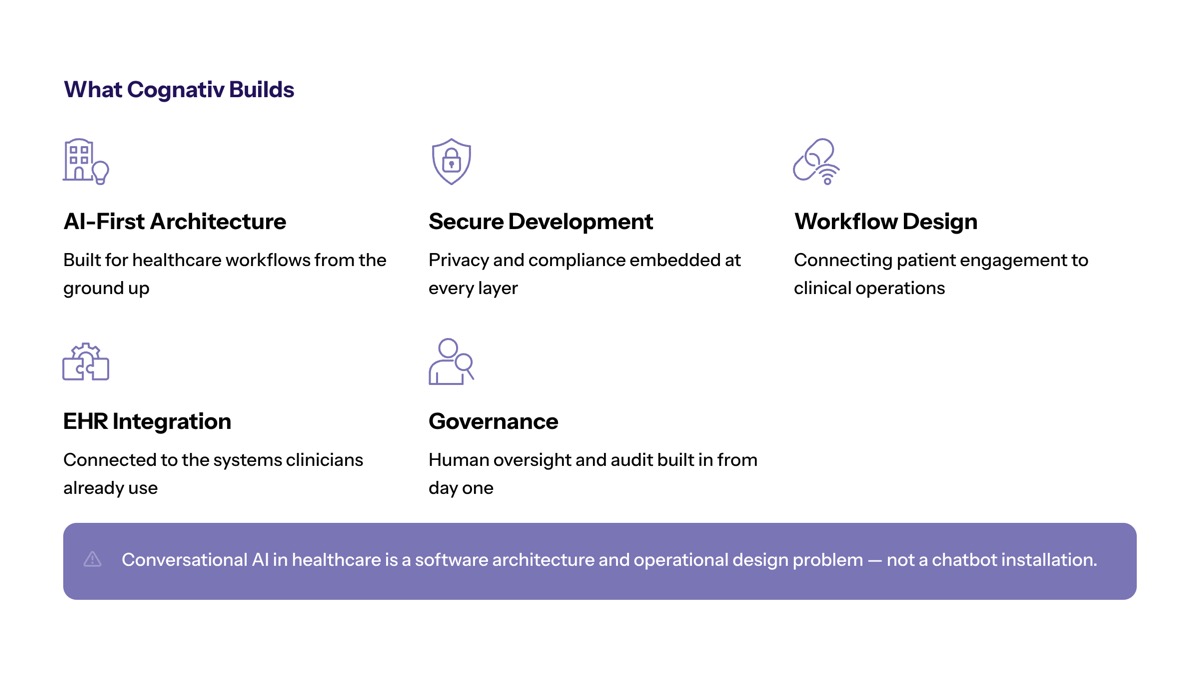
Cognativ approaches conversational AI in healthcare as a software architecture and operational design problem. The value is not just in adding virtual assistants. The value is in building secure, maintainable, integrated systems that support patient care and operational efficiency.
That includes AI-first architecture, secure development, workflow design, data privacy, integration planning, and governance. For healthcare organizations, this matters because conversational AI systems touch people, process, and infrastructure at the same time.
A strong implementation connects patient engagement, clinical workflow, healthcare systems, patient outcomes, and business priorities without pretending that automation alone can solve every healthcare challenge.
Cognativ's Role in Supporting Healthcare Organizations and Clinical Workflow
We ensure that conversational AI tools are securely connected to electronic health records and clinical decision support systems, enabling clinicians to access timely, relevant information without disrupting their workflow.
Final Takeaway
Conversational AI in healthcare can improve patient engagement, reduce administrative workload, support clinical decision support, and create better access across the healthcare journey. But it only works when healthcare organizations treat it as part of a governed system.
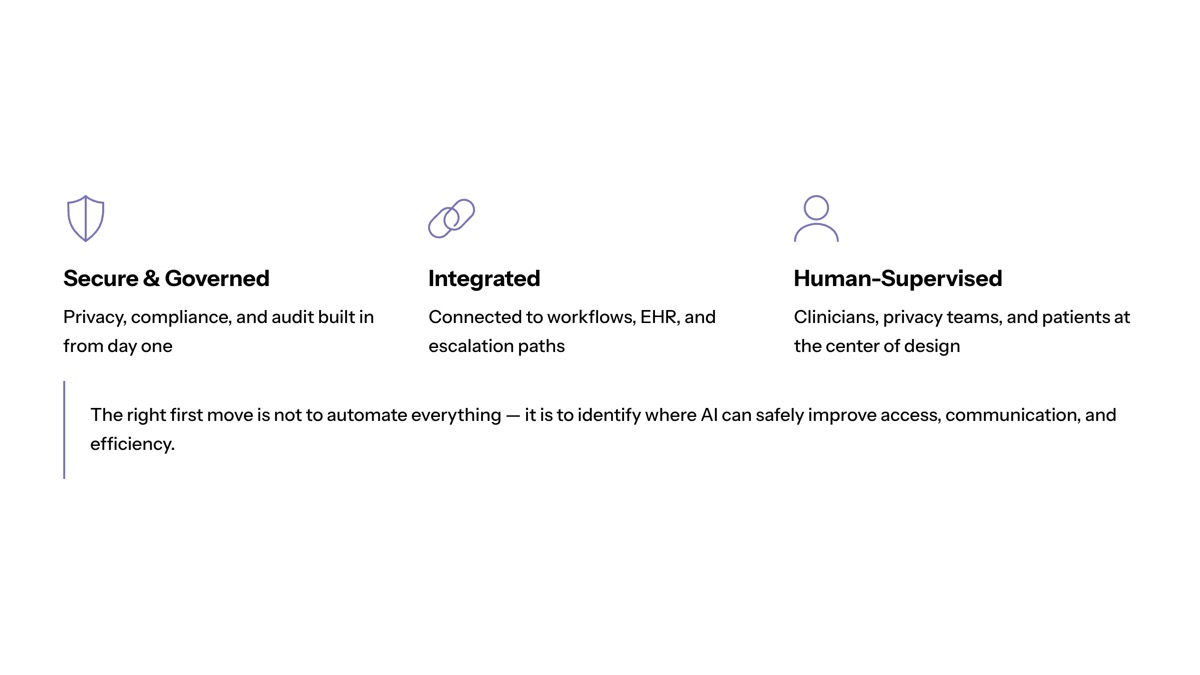
The strongest conversational AI implementations are secure, integrated, measurable, and human-supervised. They help patients get answers, help staff focus on complex work, and help healthcare providers improve patient care without compromising patient safety.
For healthcare organizations preparing for AI in healthcare, the right first move is not to automate everything. It is to identify the workflows where conversational AI can safely improve access, communication, and operational efficiency while keeping clinicians, privacy teams, and patients at the center of the design.