Conversational AI Use Cases: Practical Applications
Conversational AI use cases are expanding because businesses need faster service, better customer experience, and more efficient operations across voice and digital channels. The strongest applications are not generic chat widgets. They are targeted workflows where conversational AI can understand user input, preserve context, respond in natural language, and route sensitive issues to human agents when needed.
Conversational artificial intelligence combines natural language processing, natural language understanding, machine learning, natural language generation, generative AI, and connected data sources. Together, these capabilities let AI systems interpret human language, generate human like responses, and support simple and complex inquiries across the business world.
For Cognativ-style enterprise work, the right question is not simply where an AI tool can answer questions. The better question is where conversational AI use can reduce friction, improve operational efficiency, protect trust, and produce measurable business value.
What Are Conversational AI Use Cases?
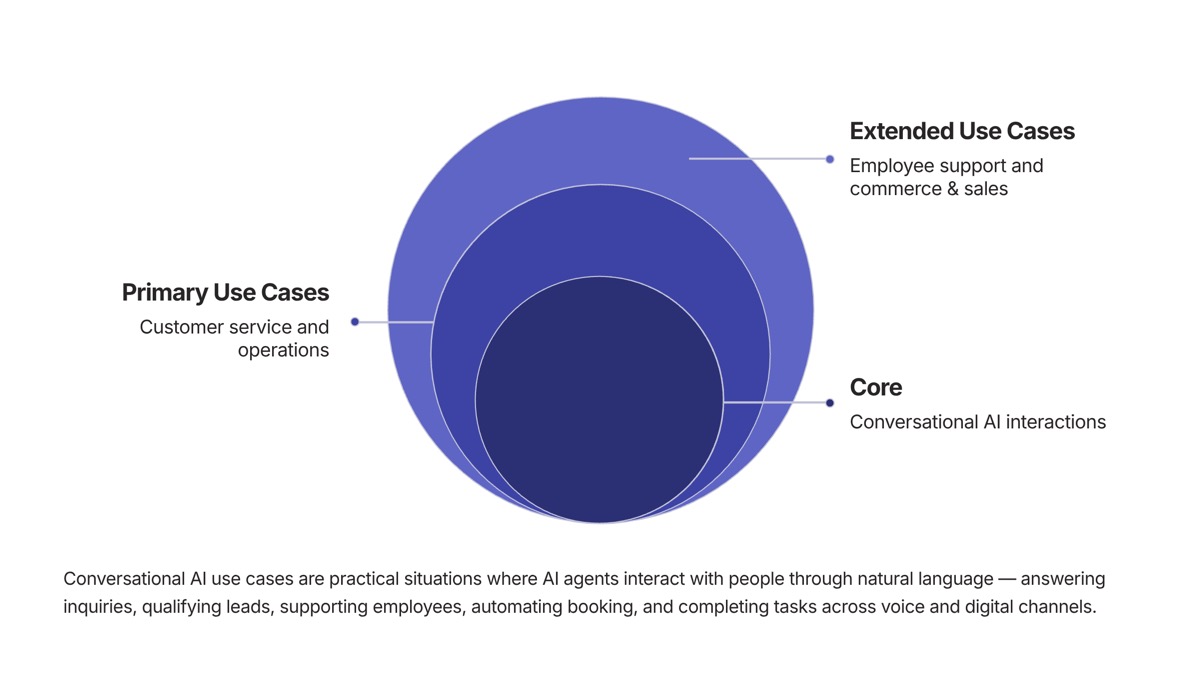
Conversational AI use cases are practical situations where AI agents, virtual assistants, voice assistants, customer service chatbots, or AI powered chatbots interact with people through natural language queries. These systems may answer routine inquiries, collect data, qualify leads, support employees, automate booking, or help customers complete a task.
A typical use case for conversational AI is customer service automation. The system handles high volume customer inquiries, uses customer history to keep continuity, and escalates complex queries to human agents when an issue needs judgment.
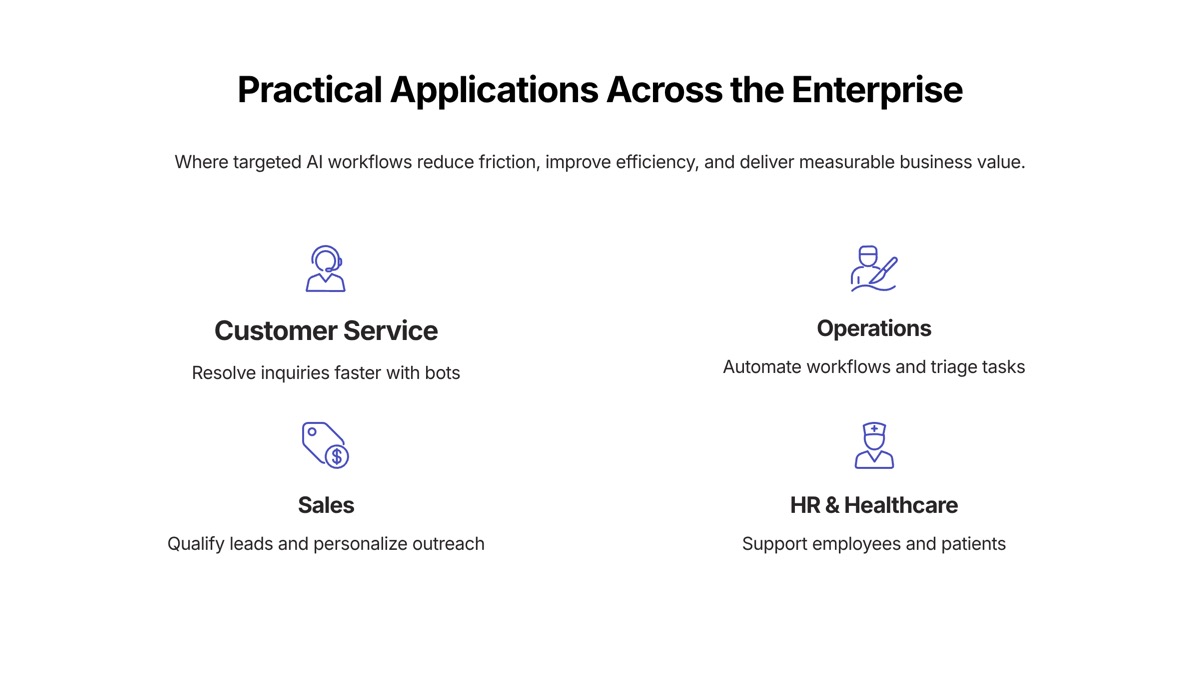
Conversational AI use cases also include marketing, HR support, travel booking, healthcare documentation, ecommerce assistance, supply chain updates, digital concierge services, and internal operations.
How Conversational AI Works
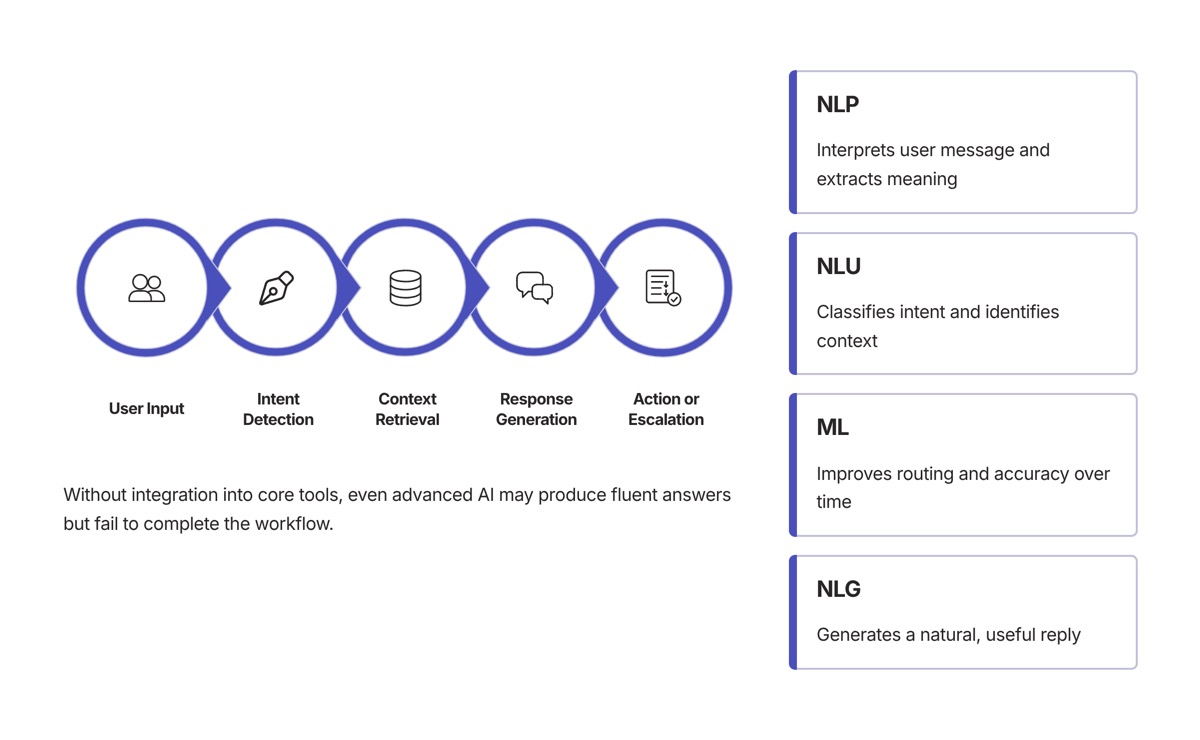
Conversational AI works by taking user input, identifying intent, retrieving relevant context, and generating a response or action. The system may use natural language processing to interpret a message, natural language understanding to classify intent, machine learning to improve routing, and natural language generation to produce a useful reply.
Conversational AI technology integrates natural language processing (NLP), machine learning, and natural language generation (NLG) to enable systems to understand and respond to human language effectively, facilitating seamless interactions across various platforms.
In practice, conversational AI works best when it connects to core tools. Without integration, even advanced conversational AI software may provide fluent answers but fail to complete the workflow.
Conversational AI Strategy
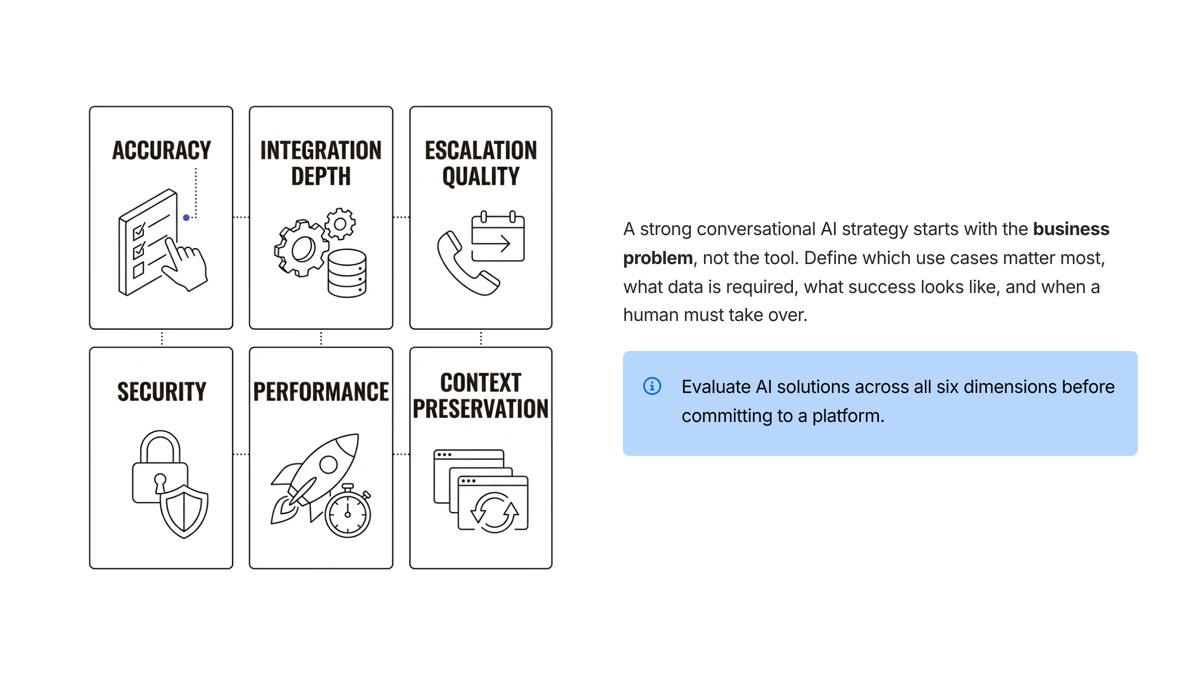
A strong conversational AI strategy starts with the business problem, not the tool. Teams should define which conversational AI use cases matter most, what data is required, what success looks like, and when a human should take over.
Successful implementation of conversational AI requires a well-defined strategy that includes planning for seamless integration with existing systems and processes to ensure a smooth customer experience.
Evaluating conversational AI should include accuracy, integration depth, escalation quality, security, performance, and whether the AI solution can preserve context across channels. A conversational AI initiative should have owners, metrics, and a launch scope.
Planning a Conversational AI Initiative
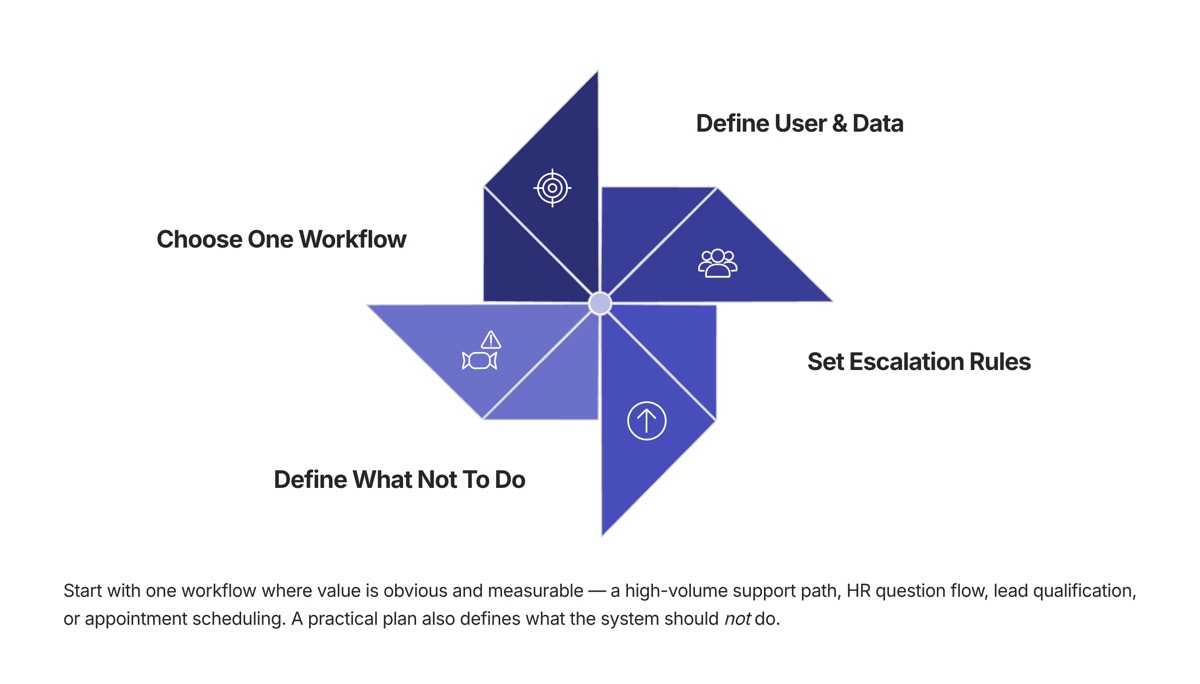
Before teams implement conversational AI, they should choose one workflow where the value is obvious and measurable. A good starting point may be a high volume support path, an internal HR question flow, lead qualification, or appointment scheduling.
The plan should identify the primary user, the expected user input, the data source, the escalation rule, and the result the user should receive. This keeps the AI tool grounded in a real job rather than a vague automation idea.
A practical plan also defines what the system should not do. Some requests require human review, some require compliance approval, and some are better handled by existing forms or service processes.
Role of AI Systems in Implementation
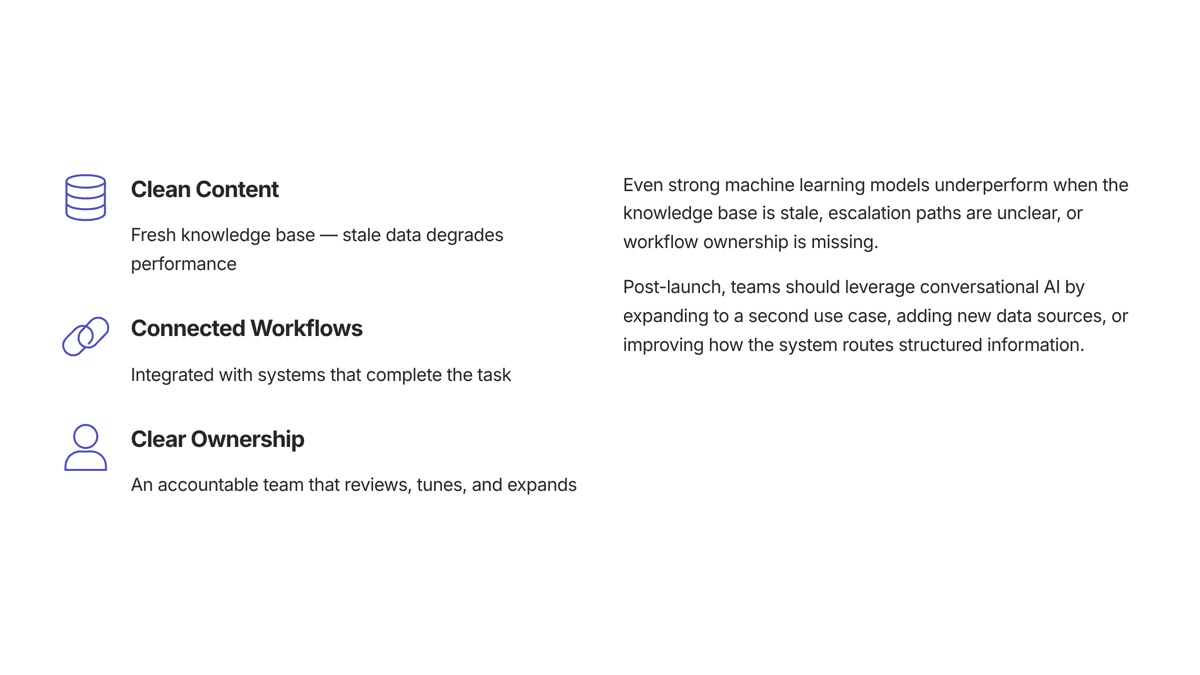
AI systems need clean content, connected workflows, and clear ownership. Even strong machine learning models will underperform if the knowledge base is stale, the escalation path is unclear, or the workflow owner is missing.
The best implementation teams treat AI agents as part of service design. They test natural language input, review misunderstood requests, and tune how the system responds across voice and digital channels.
Teams should also decide how to leverage conversational AI after launch. That may include expanding to a second use case, adding new data sources, or improving how the system captures and routes structured information.
Conversational AI Solutions and Architecture
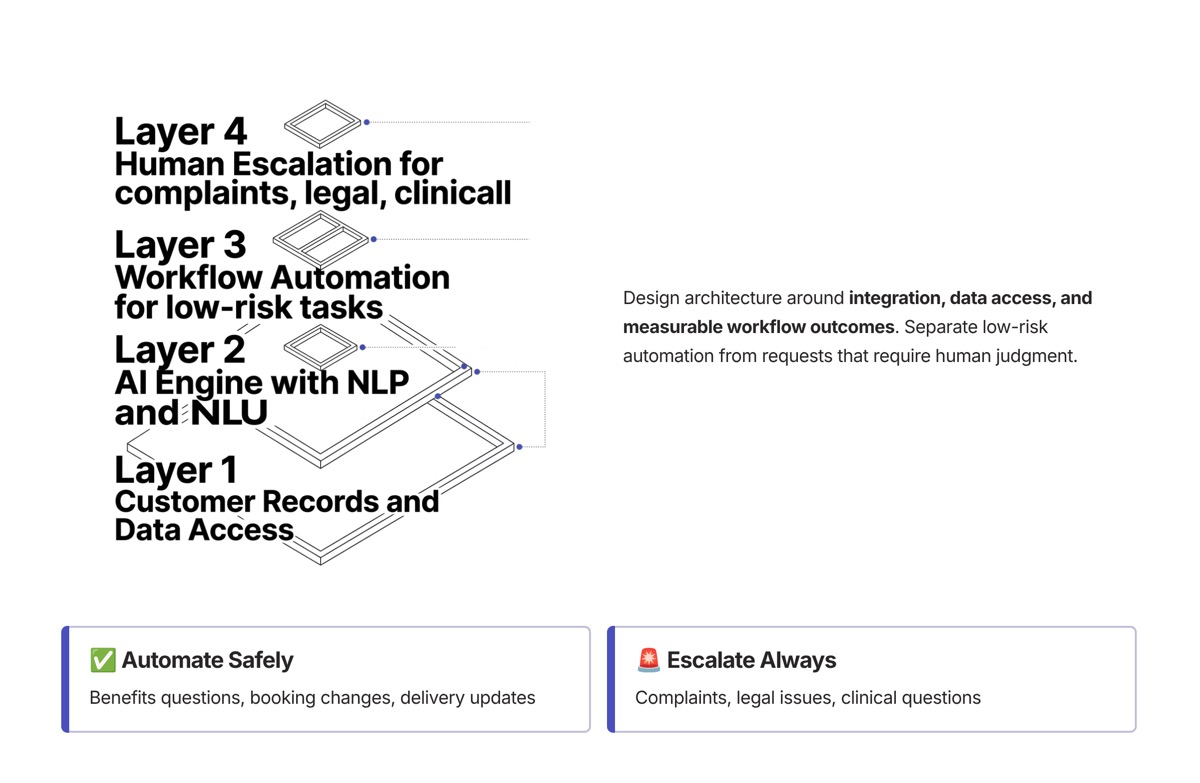
Conversational AI solutions should be designed around integration, data access, and measurable workflow outcomes. The architecture should define where customer records live, how the AI systems retrieve context, and when the conversation must escalate.
To leverage conversational AI safely, businesses should separate low-risk automation from requests that need judgment. A benefits question, booking change, or delivery update can often be handled directly. A complaint, legal issue, or clinical question may need review.
This architecture also supports enhancing customer interactions. When assistants have the right context, they can answer faster, avoid repeated questions, and help human agents see what happened before the handoff.
AI Assistants and Employee Productivity
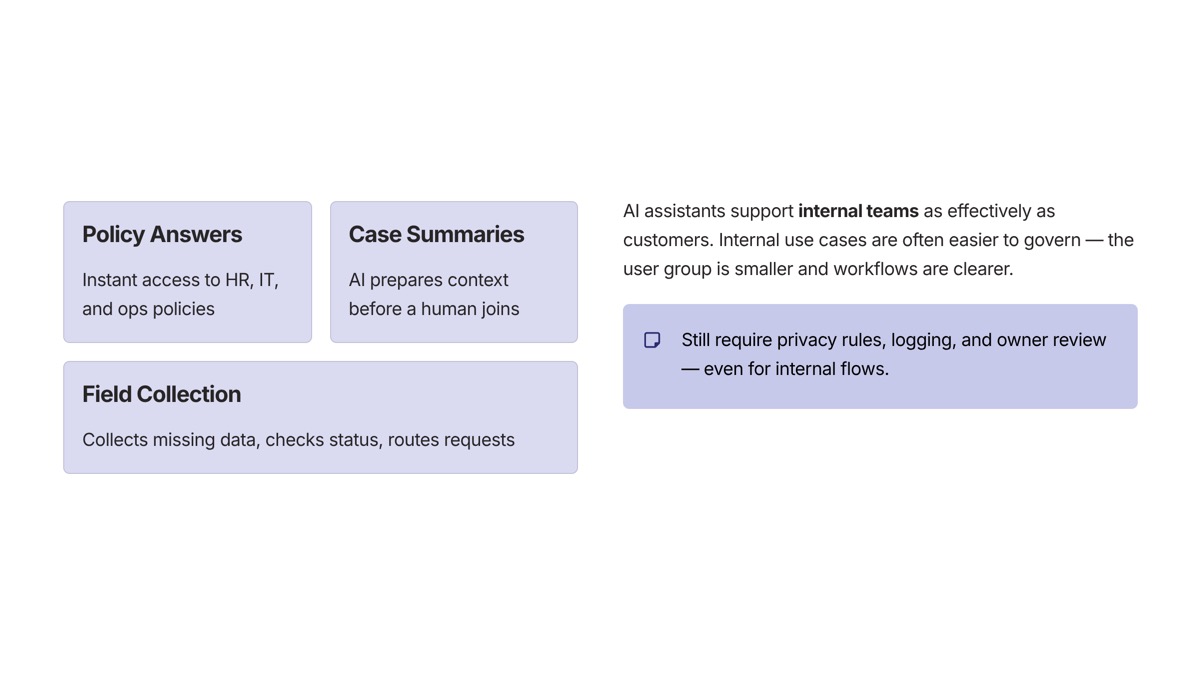
AI assistants can support internal teams as well as customers. They can answer policy questions, collect details from employees, surface relevant resources, and reduce repetitive lookup work.
In a service environment, AI assistants can prepare a summary before a person joins the case. In an operations team, they can collect missing fields, check status, or route the request to the right queue.
These internal conversational AI use cases are often easier to govern than public-facing flows because the user group is smaller and the workflows are clearer. They still need privacy rules, logging, and owner review.
Conversational AI Software and Platforms
Conversational AI software includes conversational AI platforms, conversational AI tools, voice assistants, virtual agents, conversational AI chatbots, and AI agents that operate across support, sales, operations, and internal workflows.
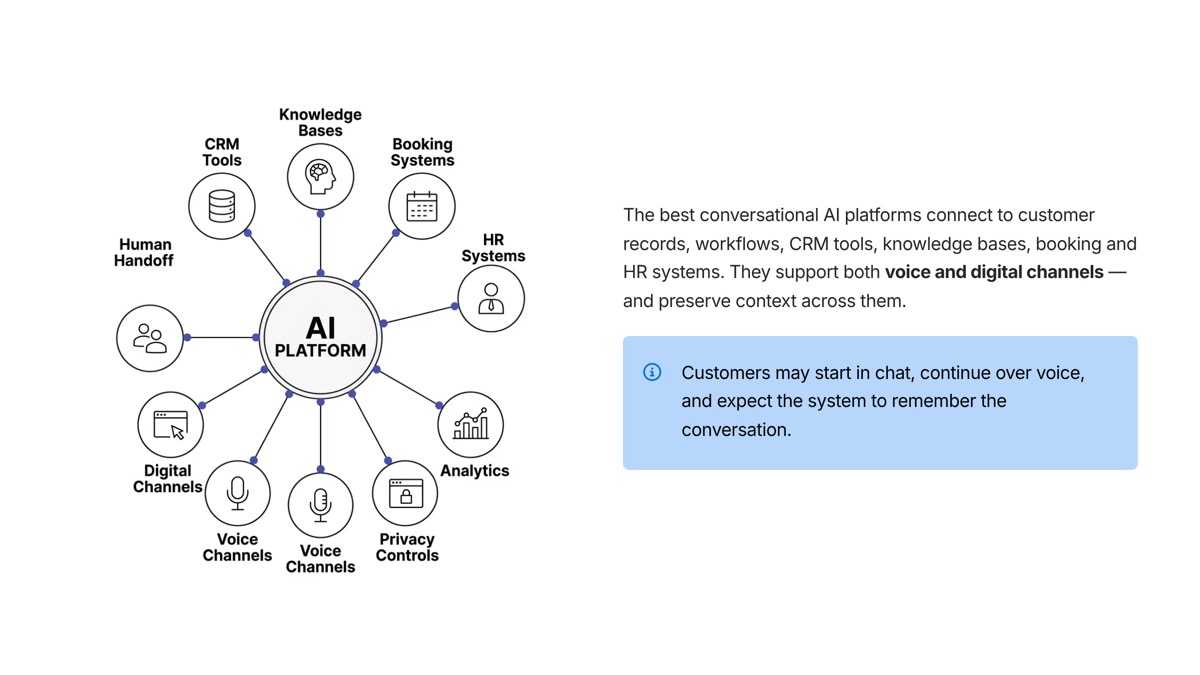
The best conversational AI platforms connect to customer records, workflows, CRM tools, knowledge bases, booking systems, HR systems, and service platforms. They should provide analytics, testing, privacy controls, and human handoff options.
Conversational AI solutions should also support voice and digital channels. Customers and employees may start in chat, continue over voice, and expect the system to preserve context.
Customer Service Use Cases
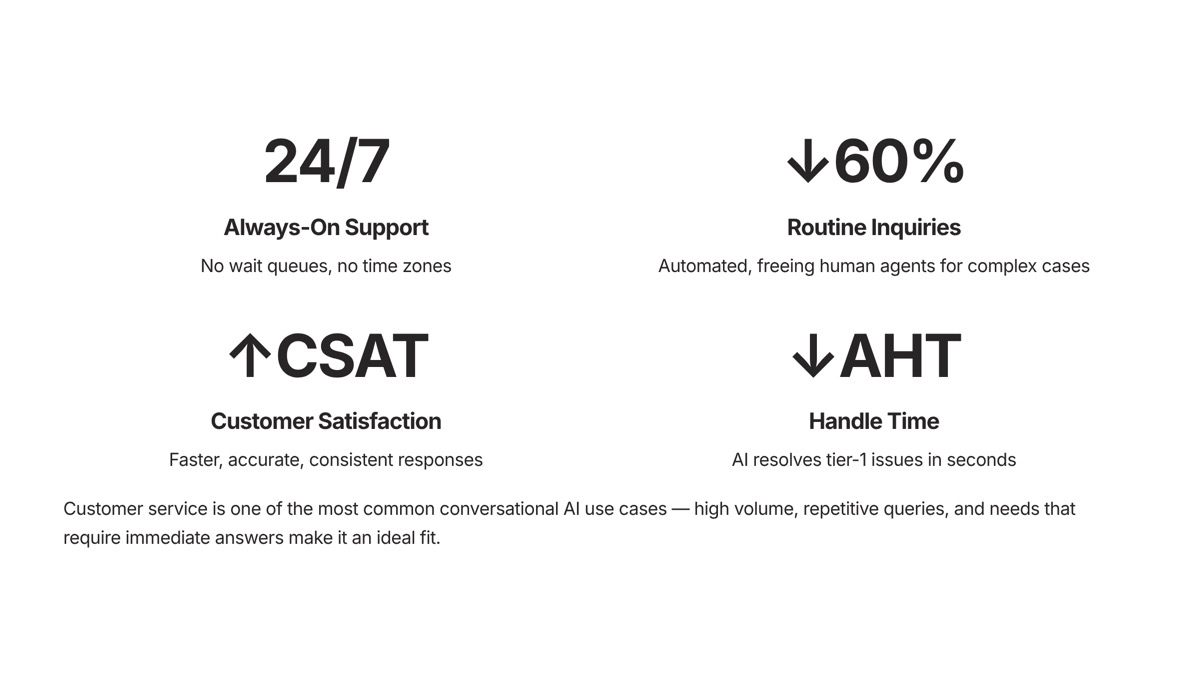
Customer service is one of the most common conversational AI use cases because support teams face high volume, repetitive customer queries, and customer service needs that often require immediate answers.
Conversational AI can significantly enhance customer service by providing 24/7 support, which reduces wait times and improves customer satisfaction.
AI-driven customer service solutions can automate routine inquiries, allowing human agents to focus on more complex interactions, thereby improving overall efficiency.
The integration of conversational AI in customer service can lead to improved metrics such as response time, accuracy of information provided, and customer satisfaction.
Customer Satisfaction and Customer Experience
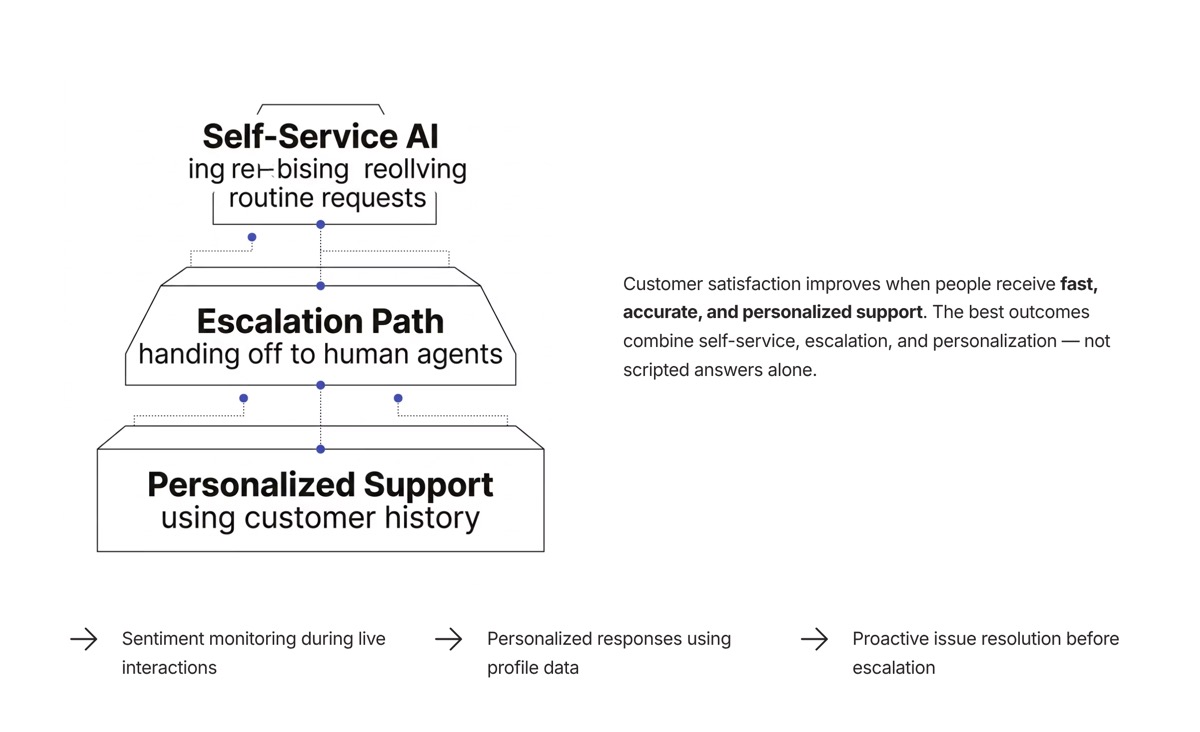
Customer satisfaction improves when people receive fast, accurate, and personalized support. Conversational AI use cases that improve customer experience usually combine self-service, escalation, and personalized support rather than relying only on scripted answers.
AI tools help with sentiment monitoring during customer interactions, allowing businesses to address issues proactively.
Conversational AI can enhance user engagement in various sectors, including retail, banking, and travel, by providing personalized interactions and streamlining service delivery.
Call Center and Voice Use Cases
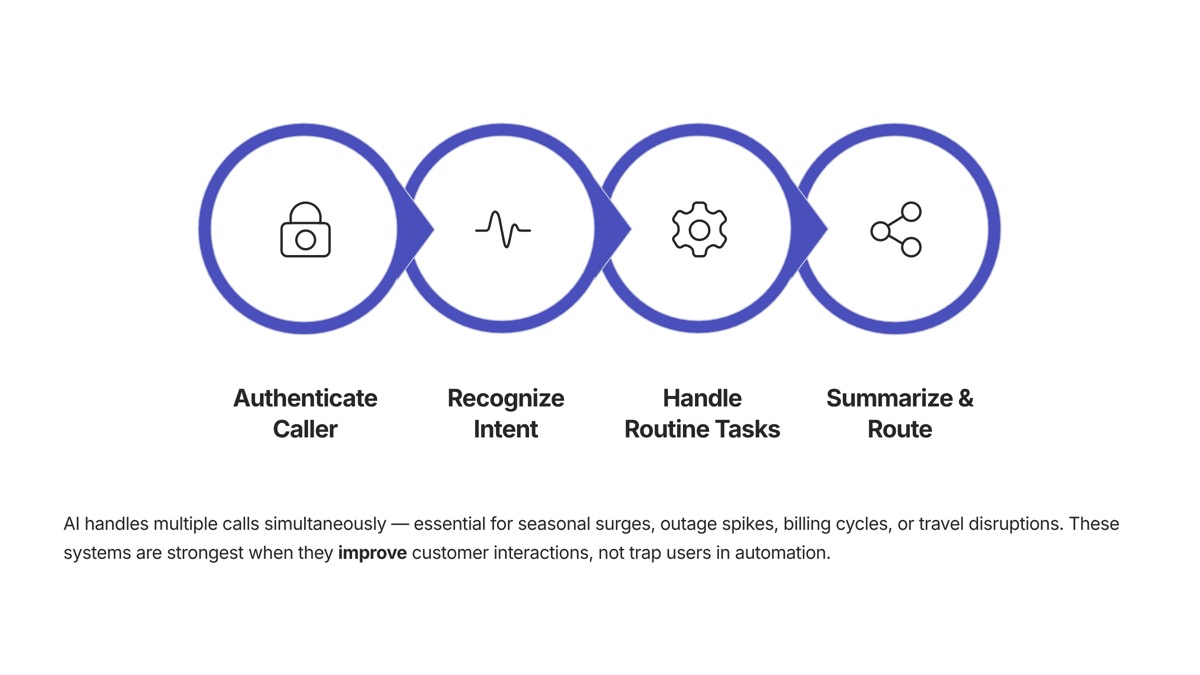
AI can handle multiple calls simultaneously, which is essential for businesses that experience peak hours. This makes voice assistants and AI agents useful for contact centers with seasonal surges, outage spikes, billing cycles, or travel disruptions.
In a call center, conversational AI focuses on recognizing intent, authenticating the caller, answering routine tasks, and routing sensitive issues. It can also summarize the conversation before a human agent joins.
These systems are strongest when they improve customer interactions instead of trapping users in automation.
Operational Efficiency Use Cases
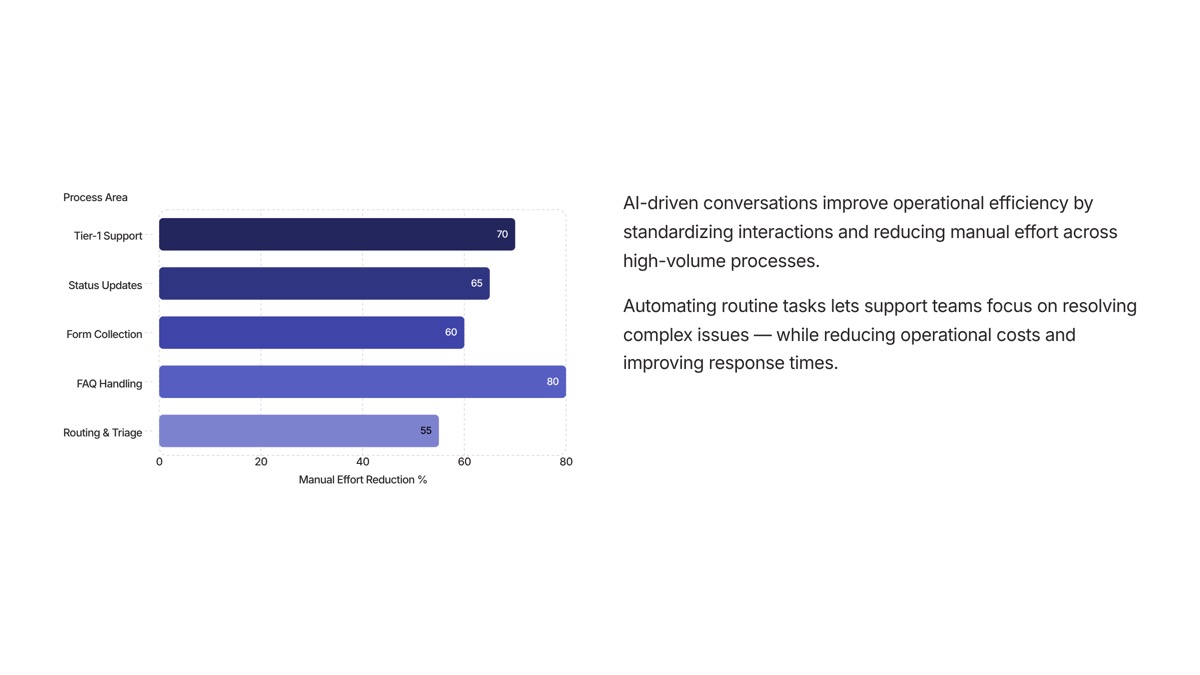
AI-driven conversations improve operational efficiency by standardizing interactions and reducing manual effort across high-volume processes, leading to sustained efficiency gains over time.
By automating routine tasks and providing self-service support, conversational AI empowers support teams to focus on resolving more complex issues, thereby enhancing overall operational efficiency.
The integration of conversational AI into business operations allows organizations to streamline workflows, reduce operational costs, and improve response times, ultimately enhancing productivity.
Supply Chain and Logistics
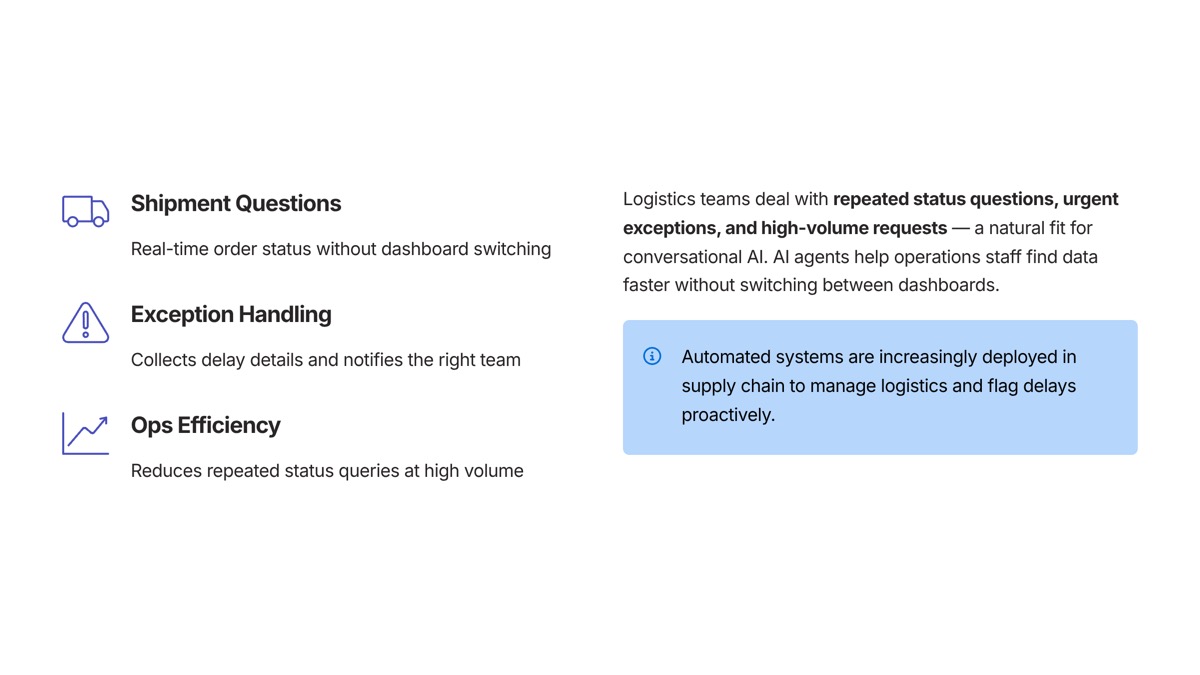
Automated systems are being utilized for supply chain operations to improve efficiency and manage logistics.
In supply chain teams, conversational AI applications can answer shipment questions, update order status, collect exception details, and notify teams when delays need attention. AI agents can help operations staff find data faster without switching between dashboards.
This is a practical conversational AI use case because logistics teams often deal with repeated status questions, urgent exceptions, and high volume requests.
Travel Booking and Digital Concierge Services
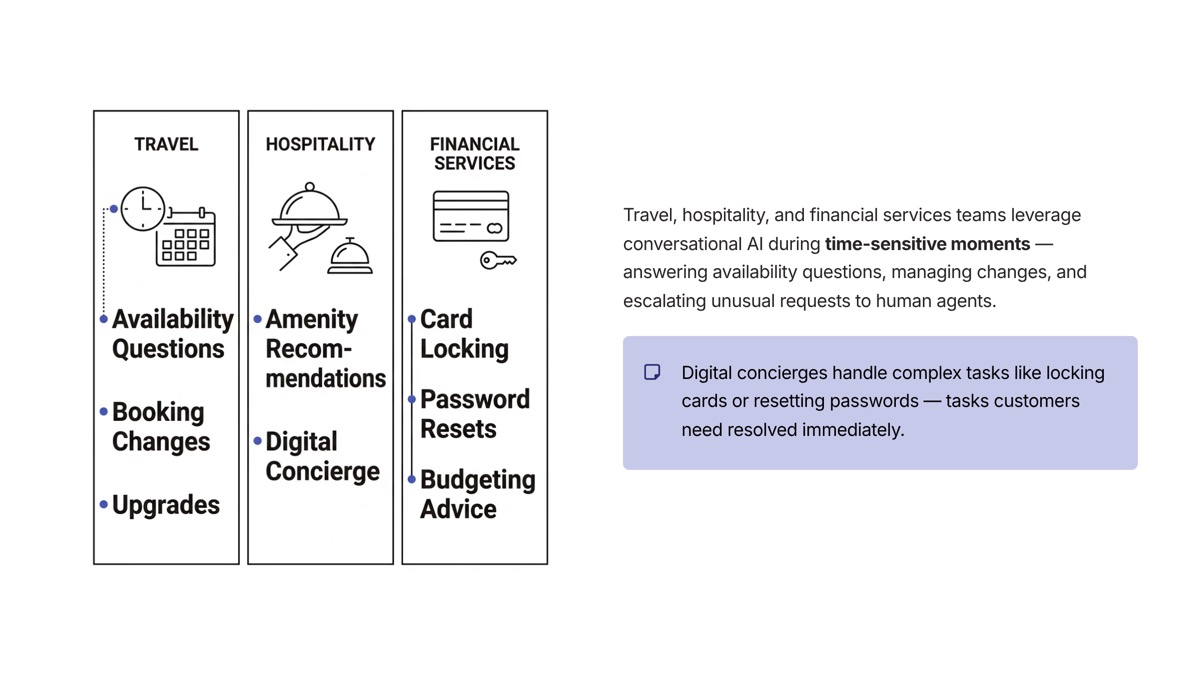
AI assistants automate booking and reservation processes for travel, providing instant answers regarding amenities and recommendations.
Digital concierges provide budgeting advice and manage complex tasks like locking cards or resetting passwords.
Travel, hospitality, and financial services teams can leverage conversational AI to support customers during time-sensitive moments. The system may answer availability questions, suggest options, manage changes, or escalate unusual requests to human agents.
Marketing and Lead Generation
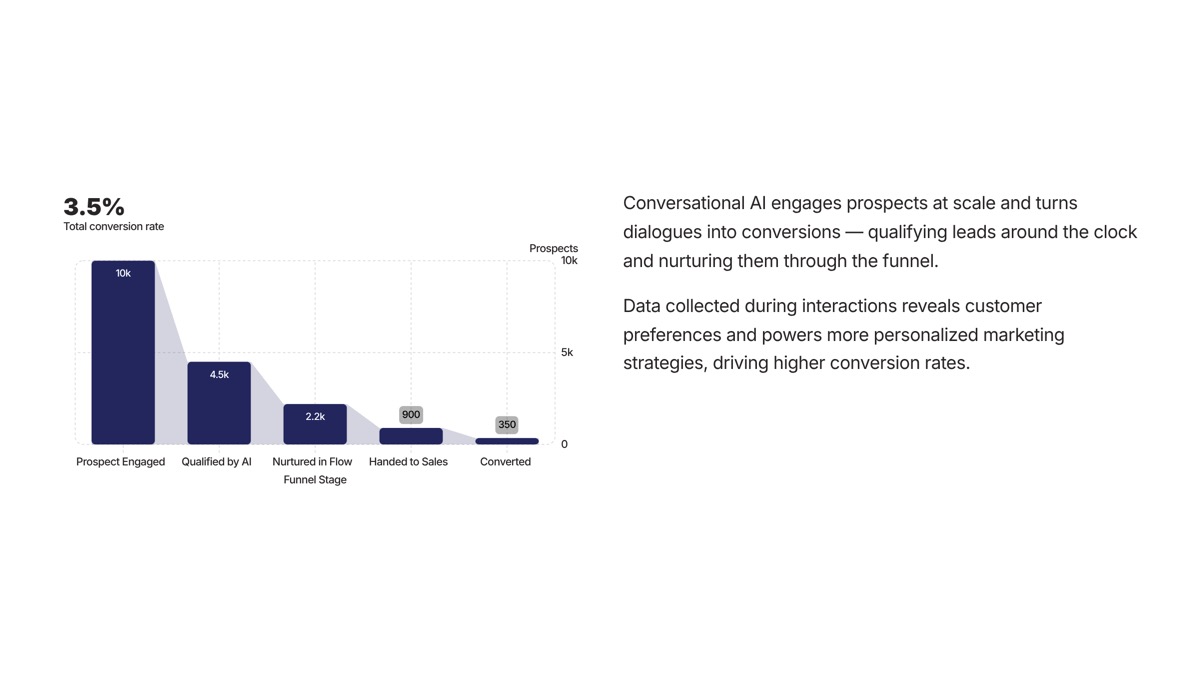
Conversational AI can significantly enhance marketing and lead generation by engaging prospects at scale and turning dialogues into conversions, with virtual assistants qualifying leads around the clock and nurturing them through the sales funnel.
By leveraging conversational AI for data collection, businesses can gather crucial customer data during interactions, which can be used to better understand customer preferences and tailor marketing strategies accordingly.
The integration of conversational AI into marketing strategies can lead to improved customer engagement, as it allows for personalized interactions based on customer data, ultimately driving higher conversion rates and customer satisfaction.
Conversational Commerce
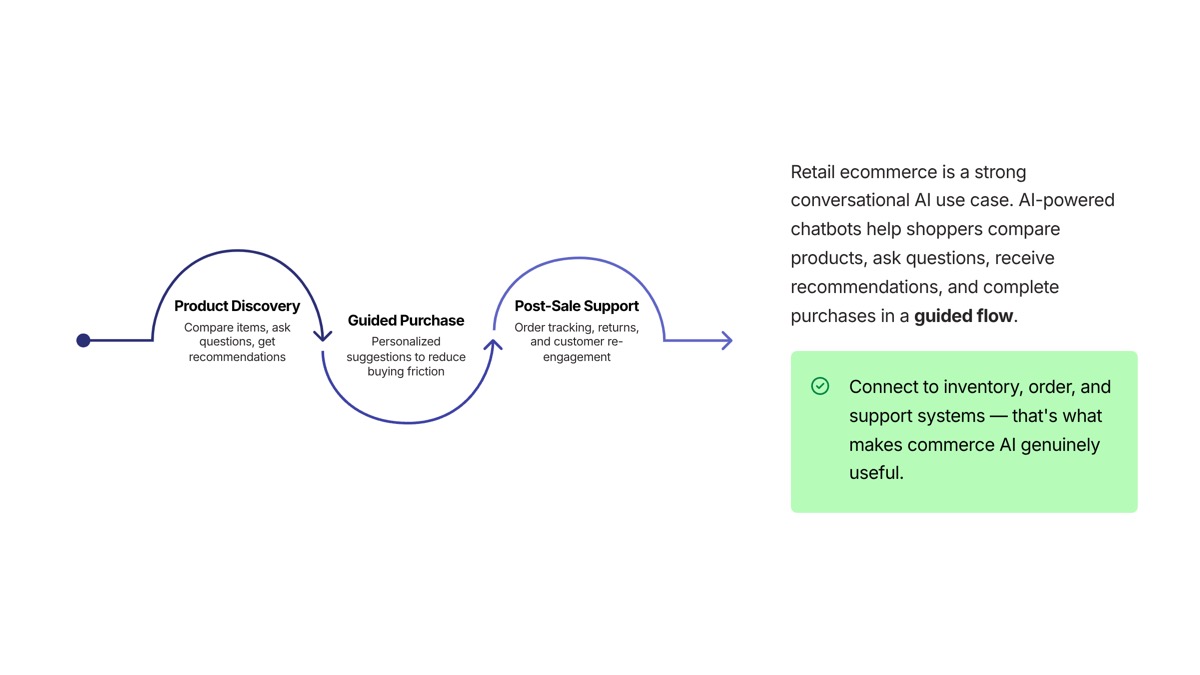
Retail ecommerce is a strong example of conversational AI use. AI powered chatbots can help shoppers compare products, ask questions, receive recommendations, and complete purchases in a guided flow.
AI tools in commerce can analyze user data, purchase patterns, and customer needs to recommend relevant products. This can enhance customer engagement when the system uses profile data responsibly.
The key is making the experience useful. Conversational commerce should answer questions, reduce friction, and connect to inventory, order, and support systems.
HR Support and Employee Service
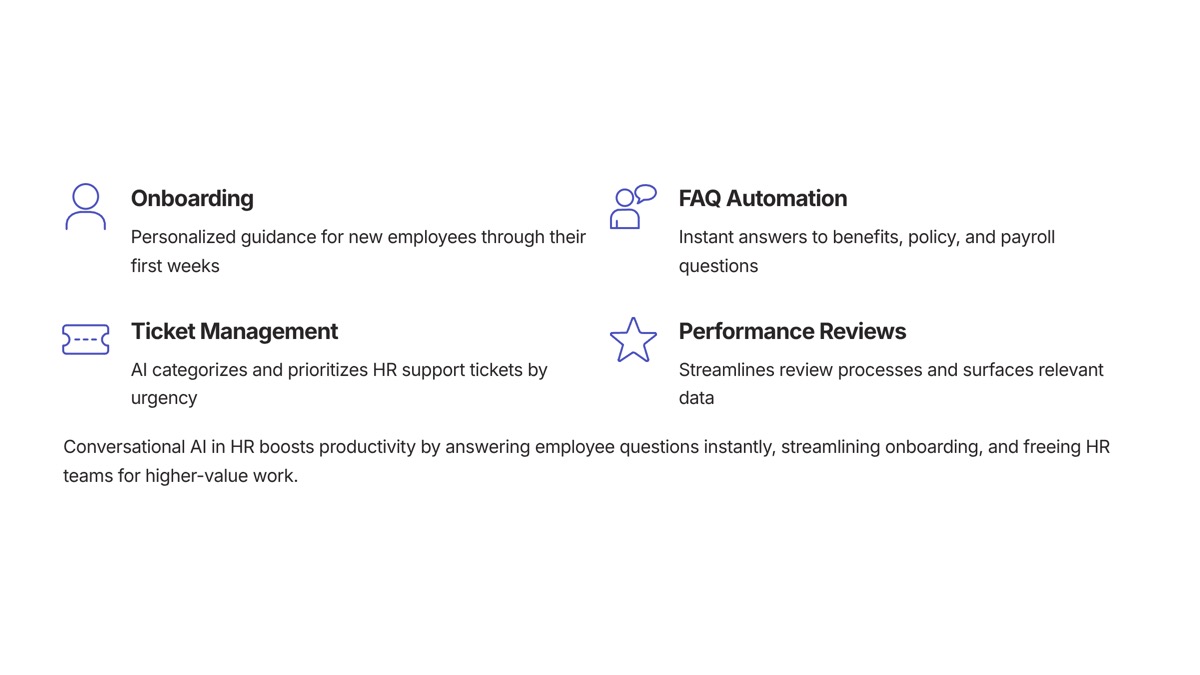
Conversational AI applications streamline HR operations by addressing frequently asked questions (FAQs) quickly, facilitating smooth and personalized employee onboarding, and enhancing employee training programs.
AI-driven chatbots in HR can manage and categorize support tickets, prioritizing them based on urgency and relevance, which helps in improving response times and employee satisfaction.
Integrating conversational AI into HR functions can significantly boost productivity by allowing AI agents to answer employee questions instantly, provide onboarding guidance, and streamline processes like benefits inquiries or performance reviews.
Healthcare Use Cases
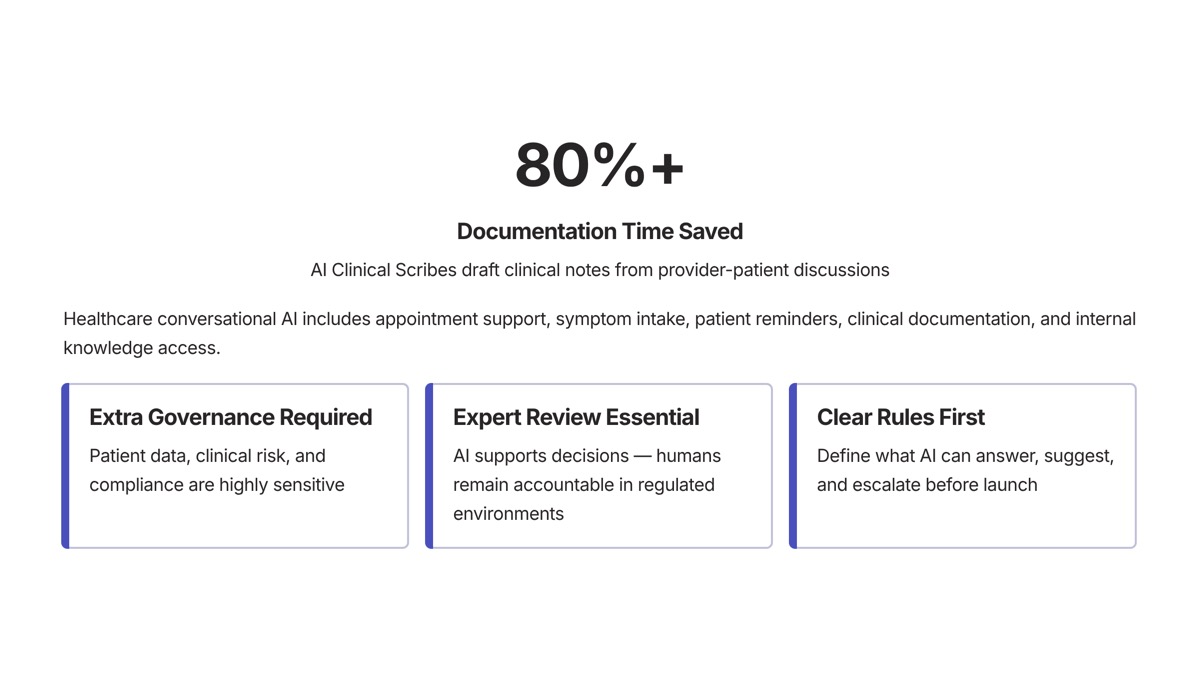
AI Clinical Scribes can reduce clinician documentation time by over 80% by instantly drafting clinical notes based on provider-patient discussions.
Healthcare conversational AI use cases may include appointment support, symptom intake, patient reminders, clinical documentation, and internal knowledge access. These workflows require extra governance because patient data, clinical risk, and compliance requirements are sensitive.
Healthcare use cases show why conversational AI technology must be connected to clear rules and expert review, especially when the system supports decisions in regulated environments.
Banking and Financial Services
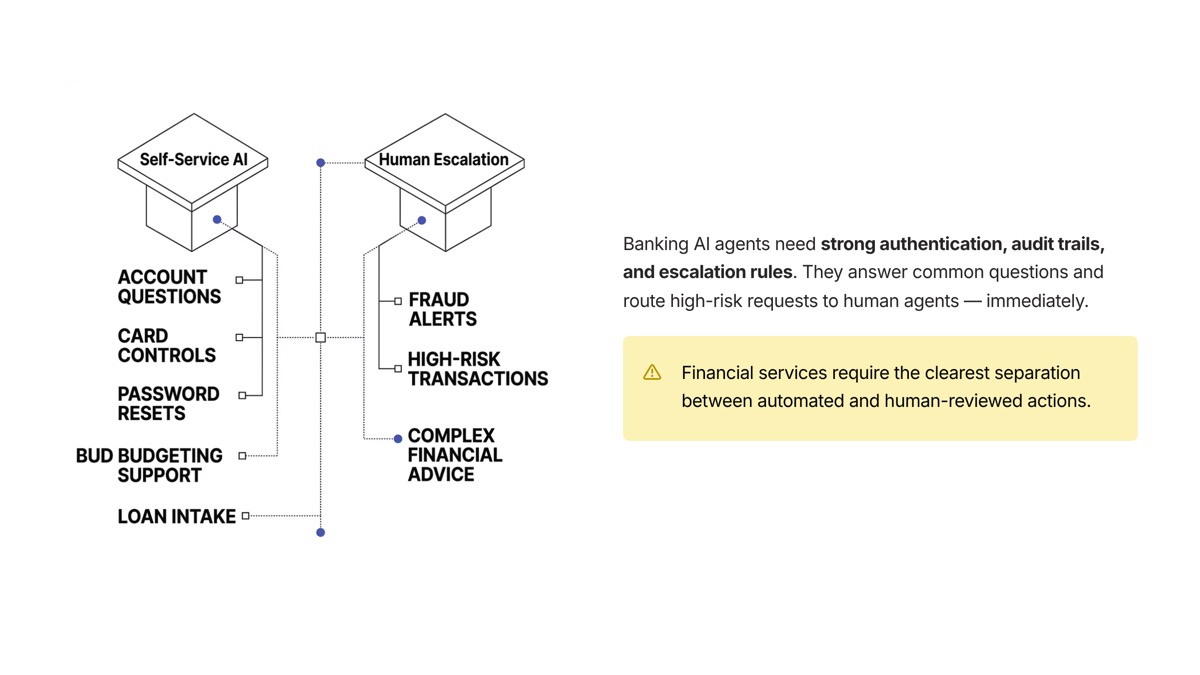
Banking use cases include account questions, fraud alerts, digital concierge services, card controls, budgeting support, loan intake, and password reset flows. Digital concierges provide budgeting advice and manage complex tasks like locking cards or resetting passwords.
AI agents in financial services need strong authentication, audit trails, and escalation rules. They can answer common questions and route high-risk requests to human agents.
This is one of the clearer conversational AI use cases because customers often need immediate action and secure support.
Data Collection and Customer Insights
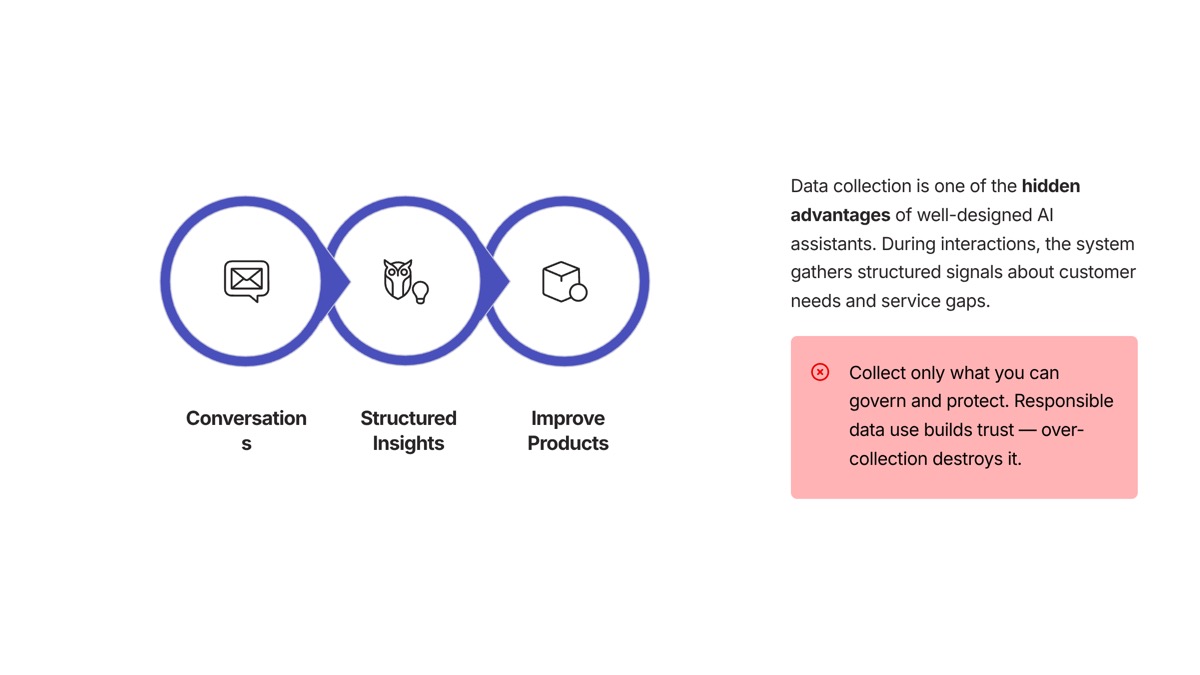
Data collection is one of the hidden advantages of well-designed assistants. During customer interactions, the system can gather structured information about customer needs, service signals, common blockers, and service gaps.
Using customer records should be done carefully. The goal is to create valuable insights, not to collect more information than the business can govern or protect.
When teams analyze user data from interactions, they can improve products, support content, workflows, and marketing messages.
Existing Systems and Integration
The integration of conversational AI into existing systems allows organizations to automate routine tasks, streamline workflows, and enhance user engagement by providing personalized, context-aware interactions.
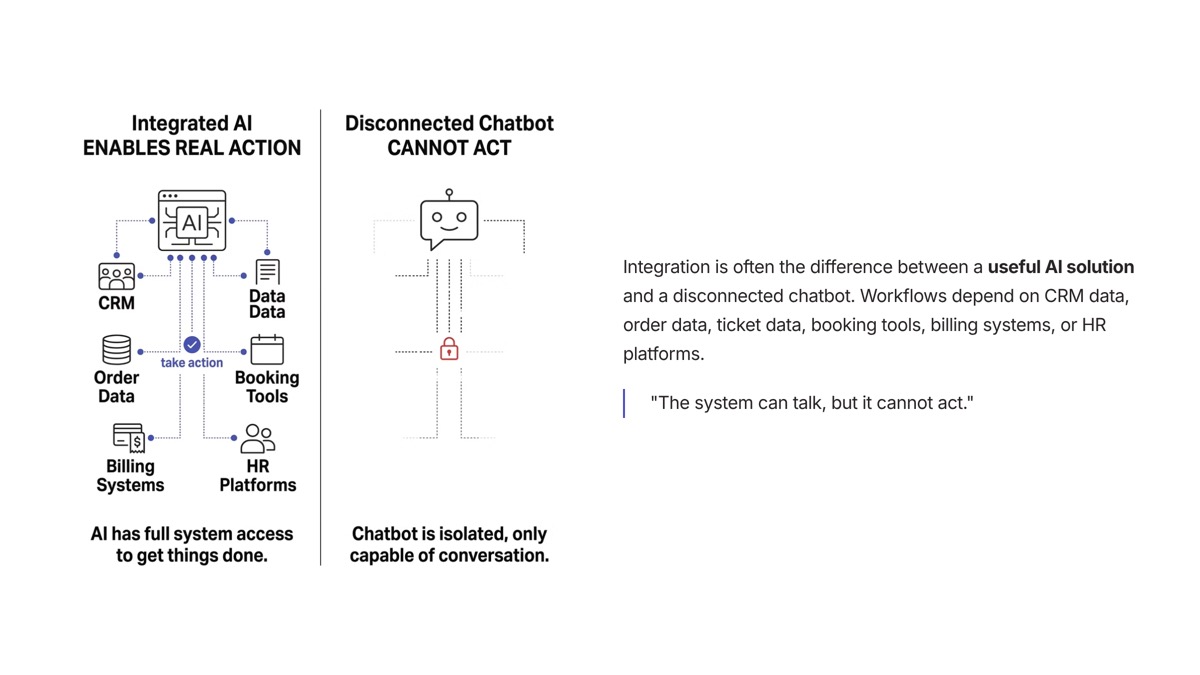
Integrating conversational AI with existing systems is often the difference between a useful AI solution and a disconnected chatbot. Workflows usually depend on CRM data, order data, ticket data, booking tools, billing systems, or HR platforms.
Teams that implement conversational AI without integration often create a surface-level experience. The system can talk, but it cannot act.
AI Agents and Human Agents
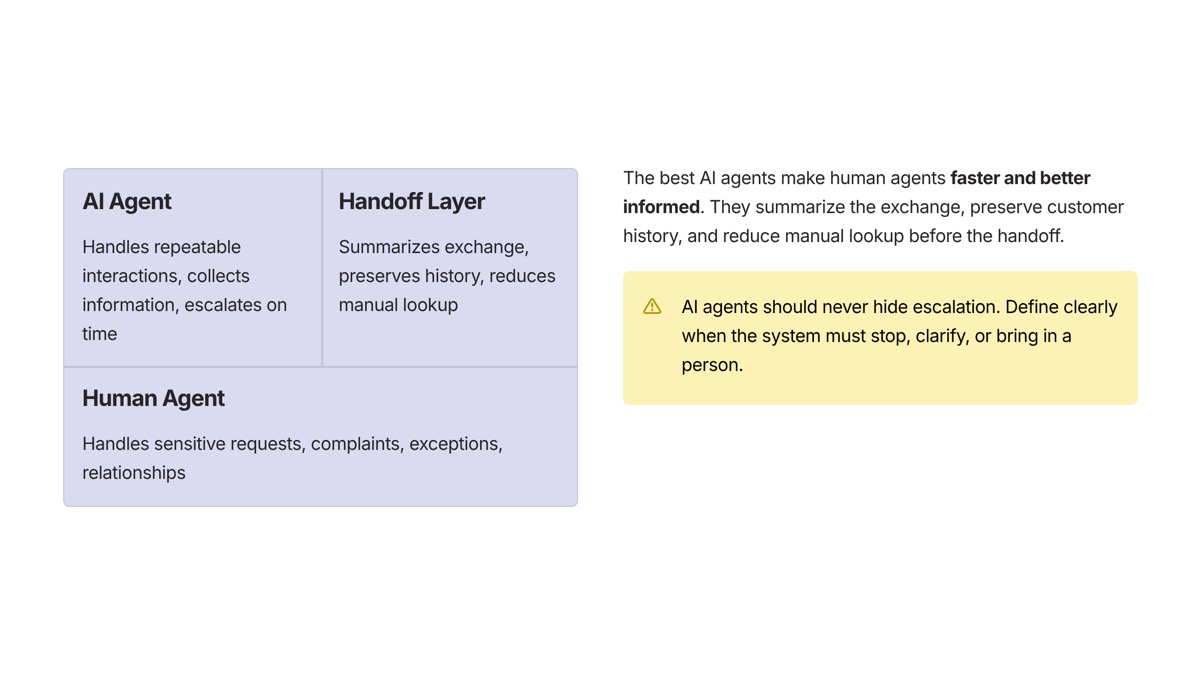
AI agents are useful when they handle repeatable interactions, collect required information, and escalate at the right time. Human agents are still needed for sensitive requests, complaints, exceptions, and relationship-heavy conversations.
The best AI agents make human agents faster. They summarize the exchange, preserve customer history, and reduce manual lookup before the handoff.
AI agents should not hide escalation. A strong conversational AI strategy defines when the system should stop, ask for clarification, or bring in a person.
Common Conversational AI Applications
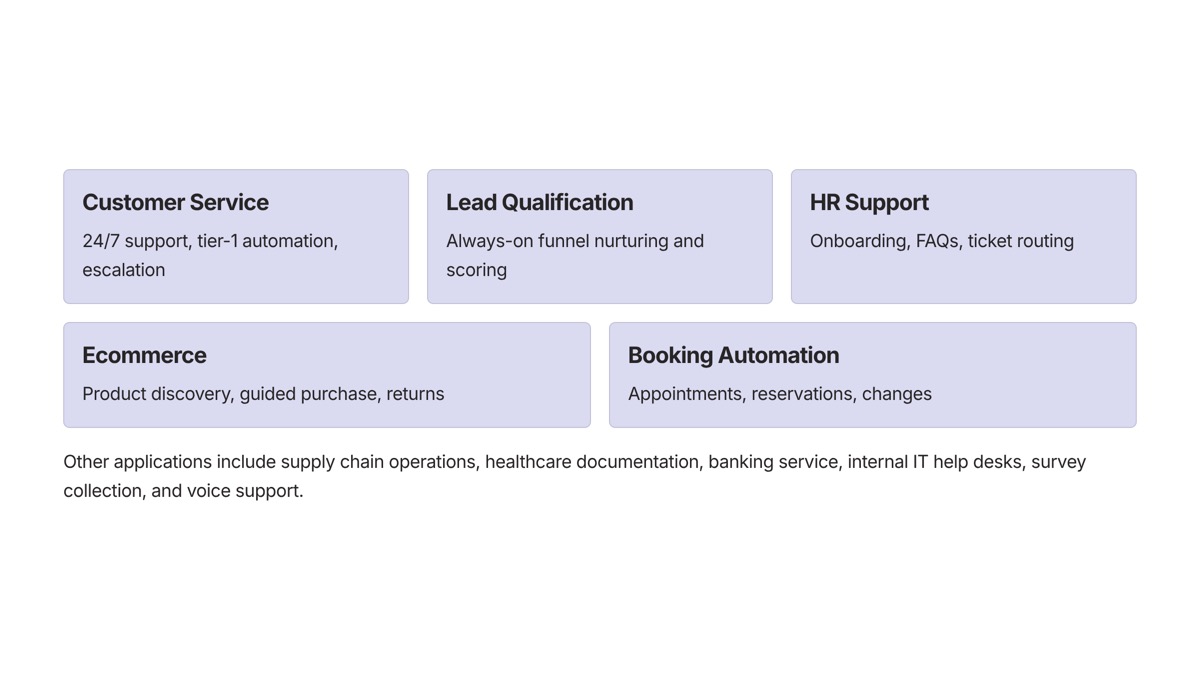
Five common conversational AI applications are customer service, lead qualification, HR support, ecommerce assistance, and appointment or booking automation.
Other conversational AI use cases include supply chain operations, healthcare documentation, banking service, internal IT help desks, survey collection, and voice support.
Examples of conversational AI include Google Assistant, customer service chatbots, virtual assistants, AI powered chatbots, digital concierges, and conversational interfaces embedded into business software.
AI Powered Chatbots and Virtual Assistants
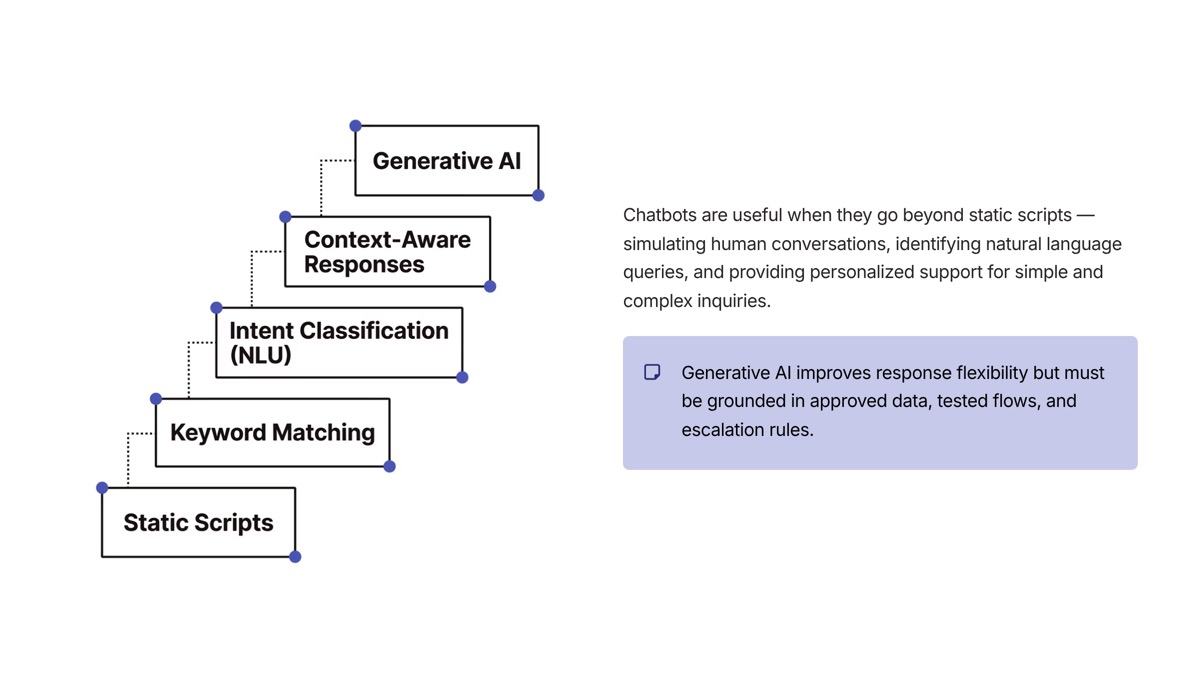
Chatbots are useful when they go beyond static scripts. They can simulate human conversations, identify natural language queries, and provide personalized support for simple and complex inquiries.
Virtual assistants and virtual agents can work across voice and digital channels, helping users complete tasks without switching between systems.
Generative AI and large language models can improve response flexibility, but they should be grounded in approved data, tested flows, and escalation rules.
Customer Conversations and Context
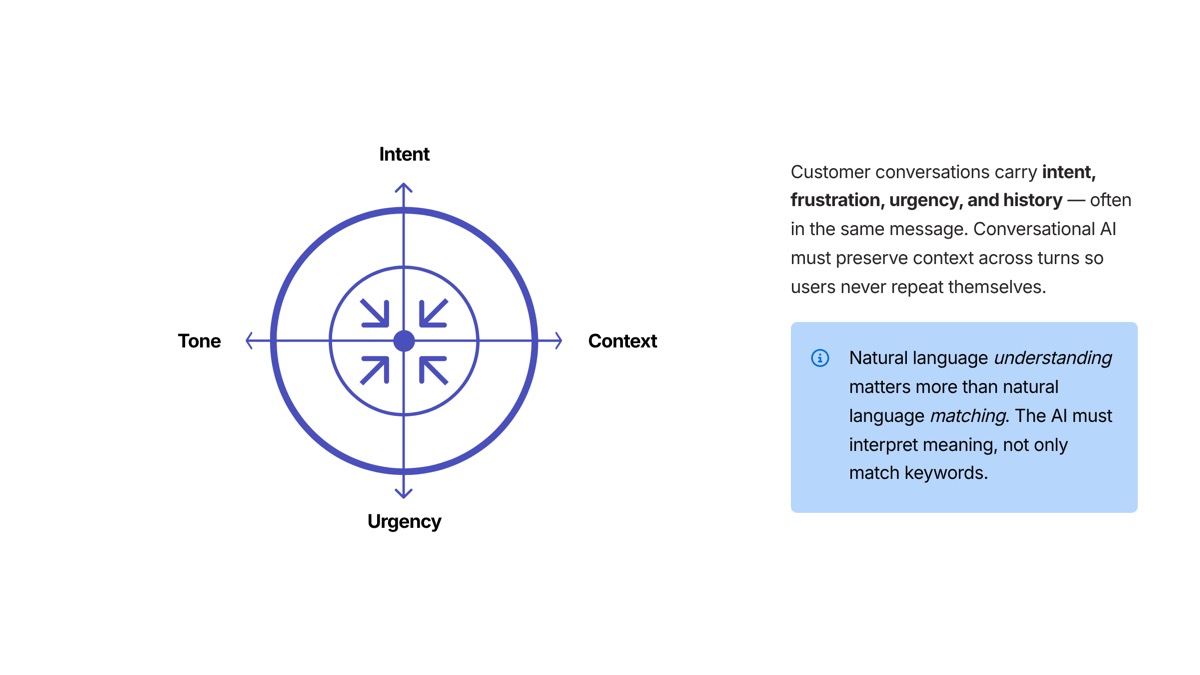
Customer conversations create context that many legacy systems miss. A customer may explain intent, frustration, urgency, and history in the same message.
Conversational AI systems should preserve context across turns so users do not need to repeat themselves. They should also recognize when customer needs are changing during the conversation.
This is why natural language understanding matters. The AI tool must interpret meaning, not only match keywords.
Metrics for Conversational AI Initiatives
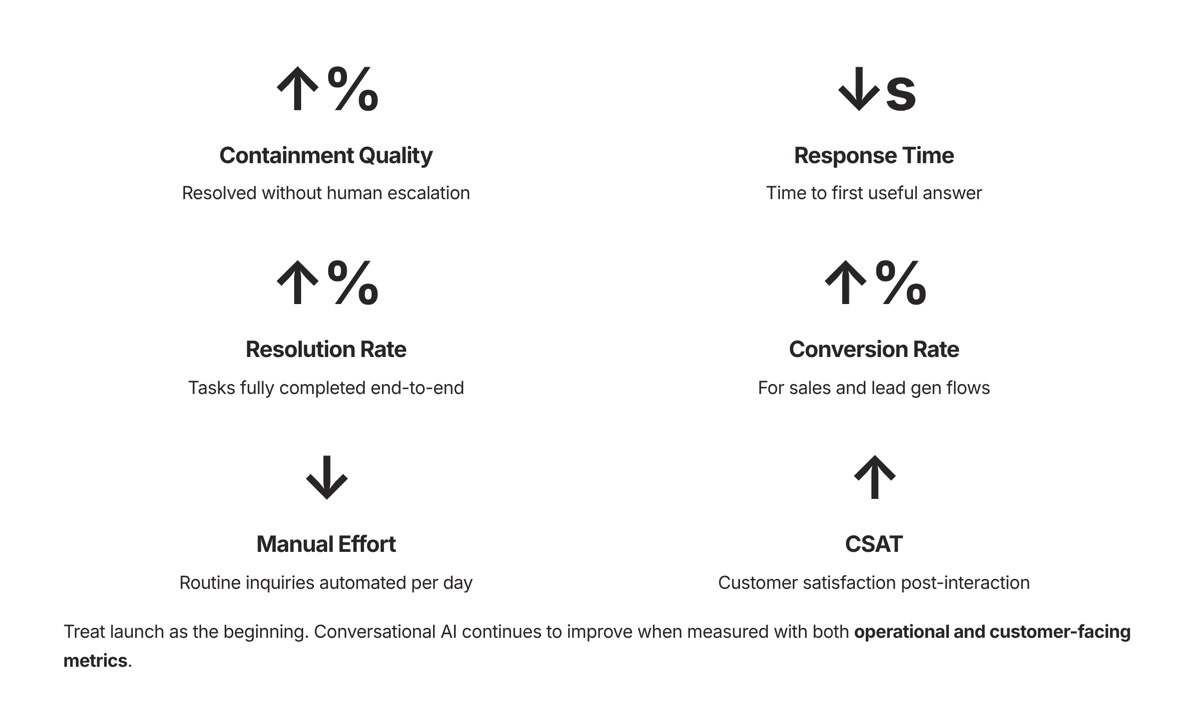
A conversational AI initiative should be measured with operational and customer metrics. Useful measures include containment quality, escalation rate, response time, resolution rate, conversion rate, satisfaction, and accuracy.
For operational efficiency, teams should measure manual effort removed, routine inquiries automated, handoff quality, and workflow completion. For customer experience, teams should review failed conversations and support outcomes.
Conversational AI continues to improve when teams treat launch as the beginning, not the end.
Data, Feedback, and Continuous Improvement
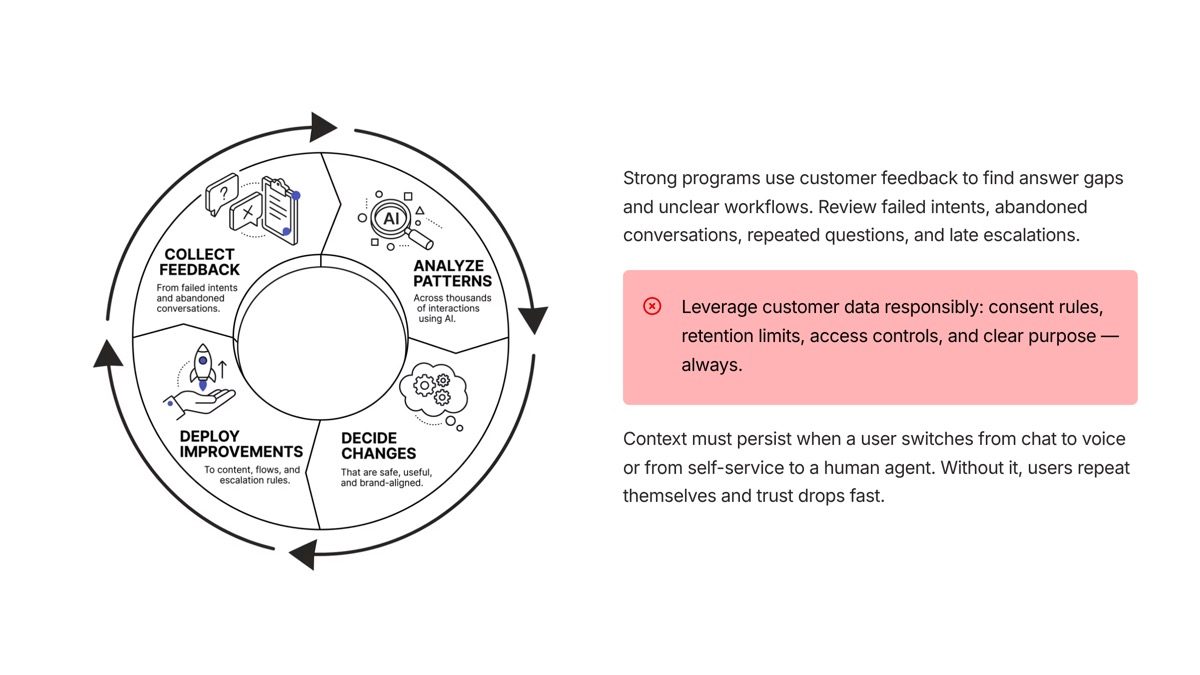
Strong programs use customer feedback to find answer gaps, unclear workflows, and moments where users still need human help. This review should include failed intents, abandoned conversations, repeated questions, and cases where escalation happened too late.
Leveraging customer data can improve personalization, but it should be limited to approved use cases. Teams need consent rules, retention limits, access controls, and clear reasons for using the data in the first place.
Artificial intelligence can help summarize patterns across thousands of conversations, but people still need to decide which changes are safe, useful, and aligned with the brand.
The system should also maintain context when a user switches from chat to voice, or from self-service to a human agent. Without context, users repeat themselves and trust drops quickly.
Risks and Governance
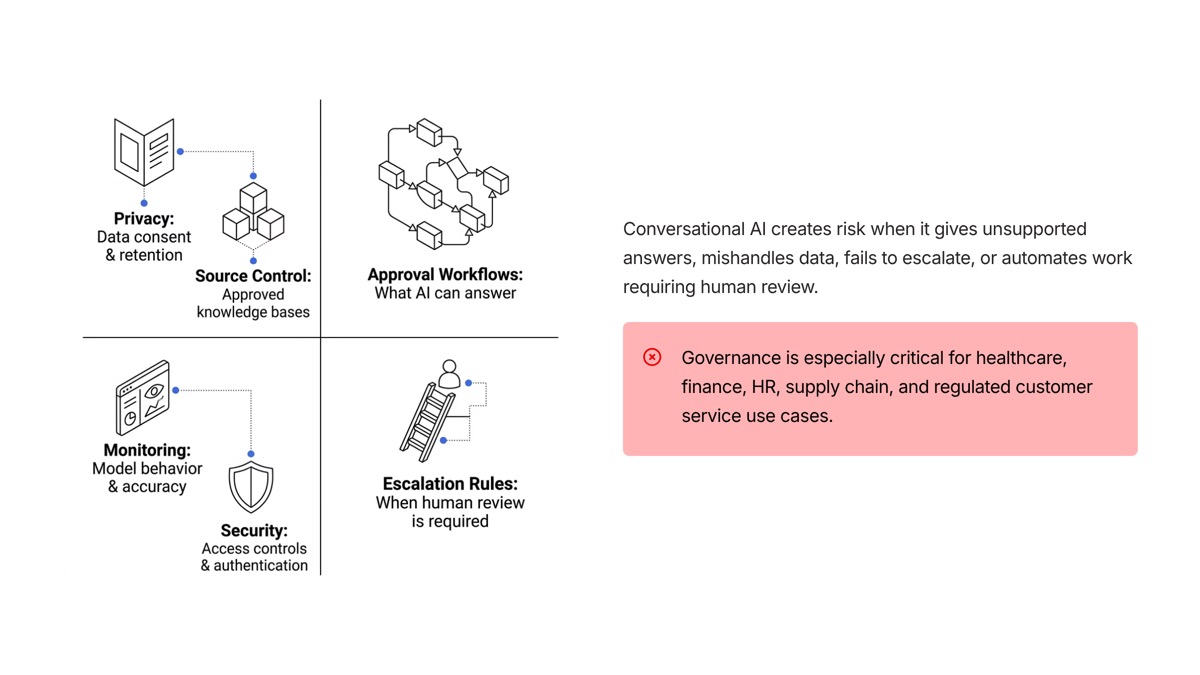
Conversational AI technology can create risk when it gives unsupported answers, mishandles data, fails to escalate, or automates work that needs human review.
Governance should cover privacy, source control, approval workflows, monitoring, security, and model behavior. Teams should decide what the AI tool can answer, what it can do, and what requires human review.
This matters especially when conversational AI use cases touch healthcare, finance, HR, supply chain, or regulated customer service.
Final Takeaway
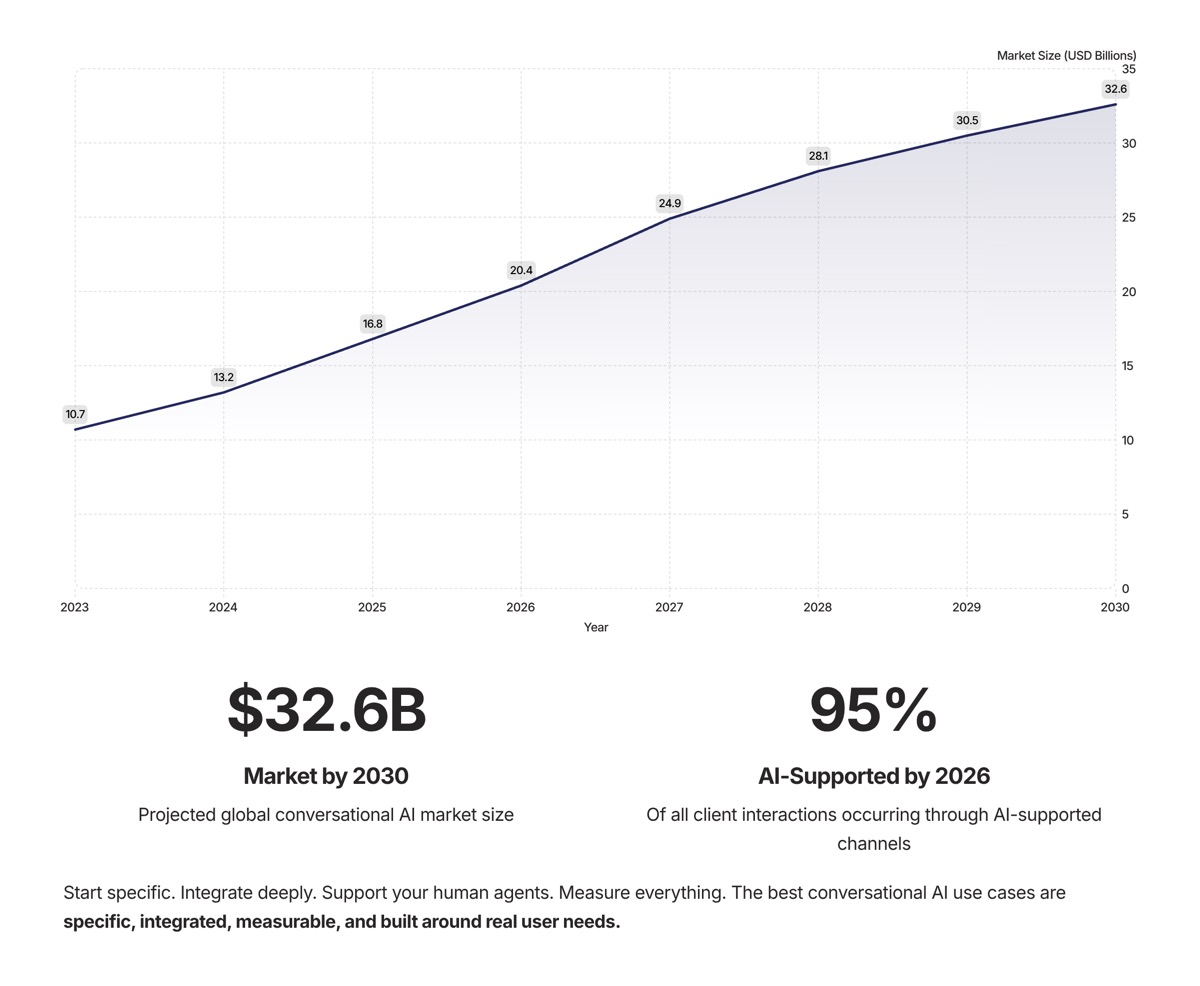
The conversational AI market is projected to reach USD 32.6 billion by 2030, reflecting its growing importance across various business domains.
By 2026, it is estimated that 95% of all client interactions will occur through channels supported by artificial intelligence algorithms, highlighting the technology's increasing integration into business processes.
The best conversational AI use cases are specific, integrated, measurable, and designed around real user needs. Start with a clear conversational AI strategy, connect the AI solution to core systems, support human agents, and keep improving the experience through data collection and operational metrics.