Digital Transformation Assessment Template
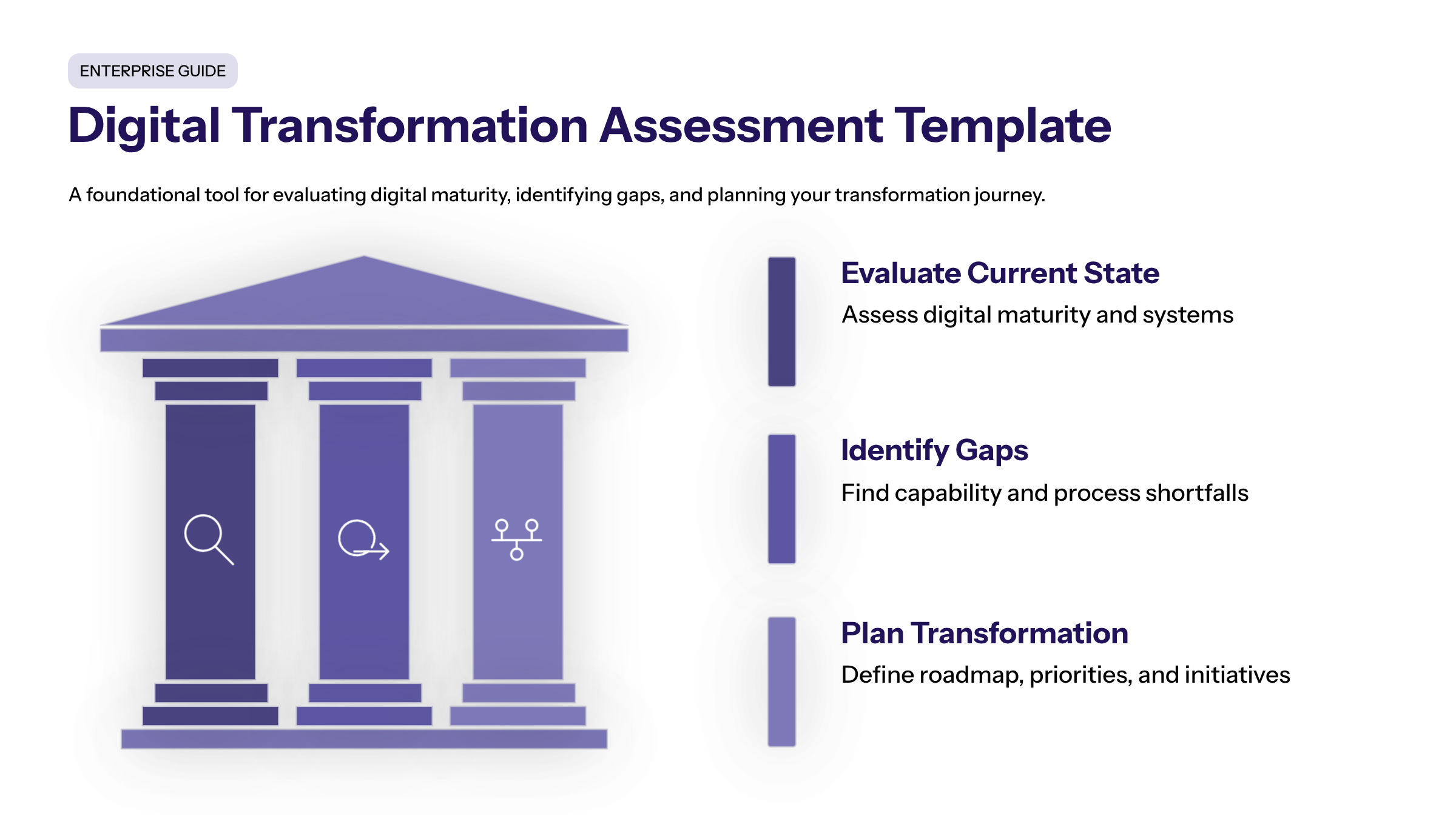
In today’s rapidly evolving digital landscape, organizations must continuously adapt to maintain competitiveness and operational excellence. A well-structured digital transformation assessment template serves as a foundational tool for enterprises seeking to evaluate their current digital maturity, identify gaps, and strategically plan their transformation journey.
This article provides an analytical overview of how to effectively leverage a digital transformation assessment template to drive actionable insights, optimize business processes, and align technology investments with organizational goals.
Key Takeaways:
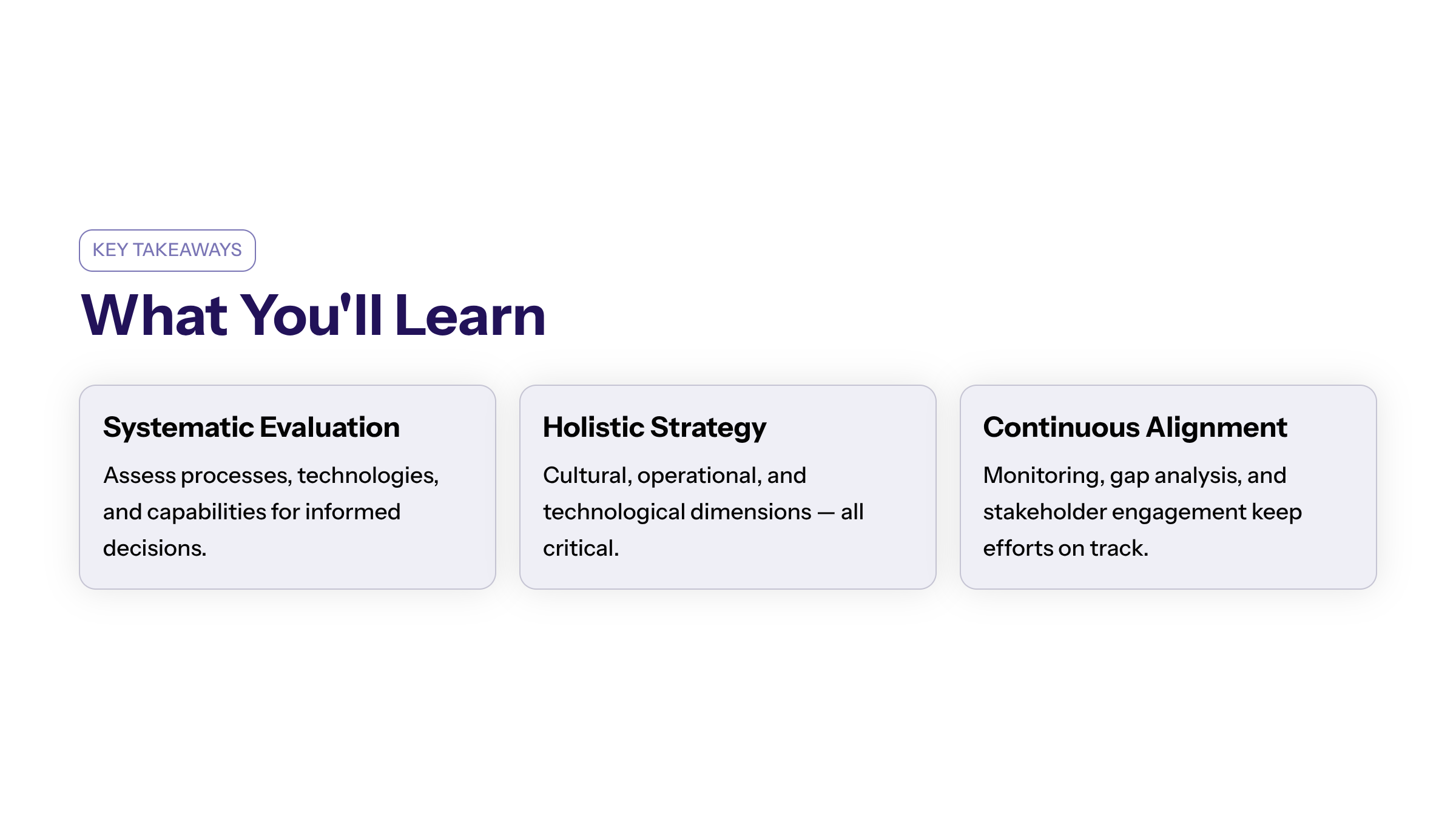
A digital transformation assessment template enables organizations to systematically evaluate their current processes, technologies, and capabilities, providing detailed information essential for informed decision-making.
Integrating a holistic digital transformation strategy that includes cultural, operational, and technological dimensions is critical for successful transformation and future-proofing.
Continuous monitoring, gap analysis, and stakeholder engagement ensure that digital transformation efforts remain aligned with evolving market changes and customer expectations.
In 2026, digital transformation assessments emphasize a holistic review of organizational readiness and human-centered orchestration, reflecting the increasing importance of aligning technology with people and processes.
Assessment templates often incorporate both leading indicators, such as technology adoption rates, and lagging indicators, like margin improvement, to provide a balanced view of progress.
Typically, these templates use a 5-level maturity scoring system—ranging from Initial/Ad-hoc to Optimized/Innovative—to categorize an organization's digital maturity status across key pillars.

Introduction to Digital Transformation
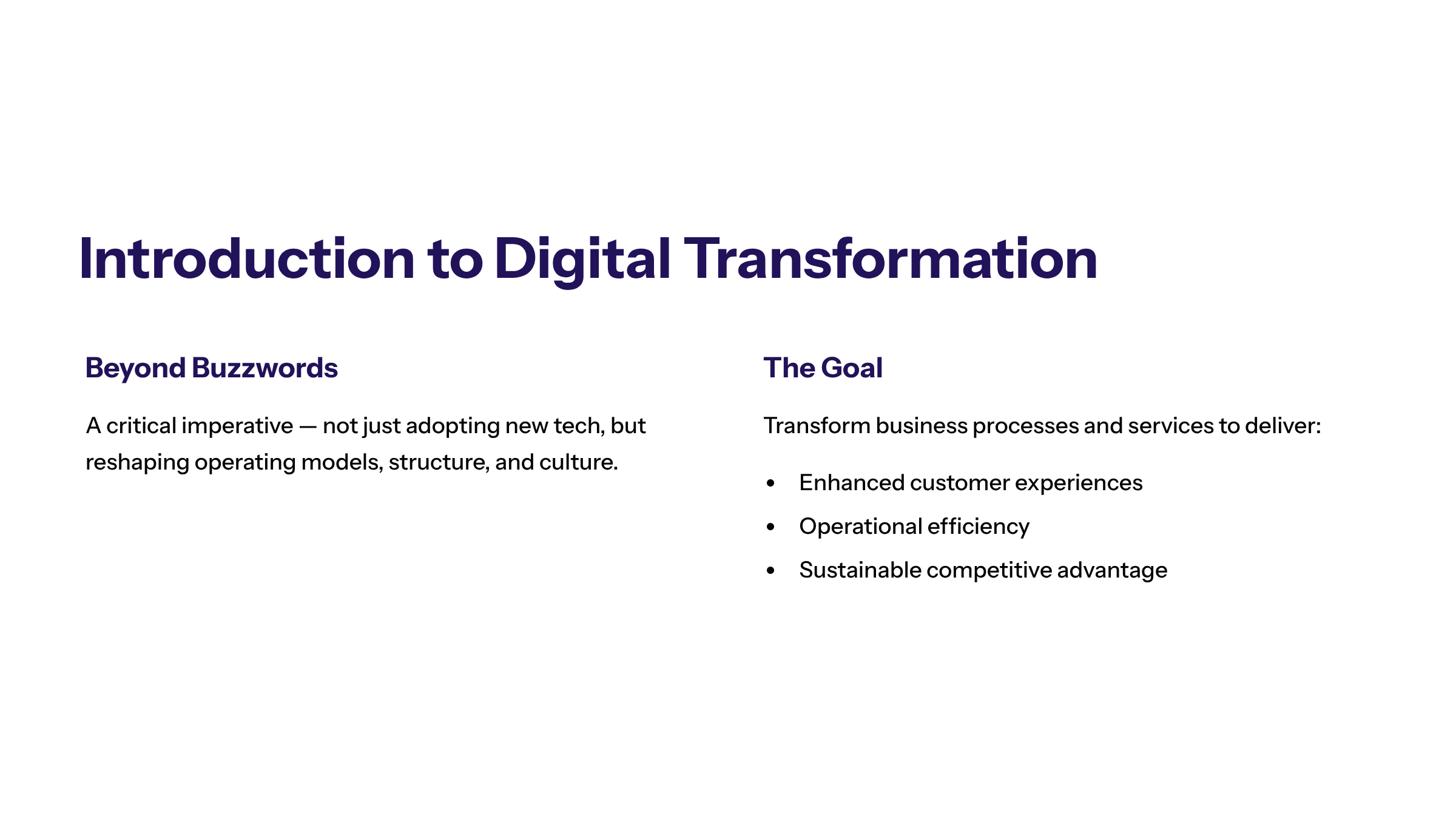
Digital transformation is no longer merely a buzzword but a critical imperative for businesses across industries. It involves more than just adopting new technologies; it requires a fundamental shift in the operating model, organizational structure, and culture. The goal is to transform business processes and services to deliver enhanced customer experiences and operational efficiency.
Enterprises such as Microsoft and Siemens exemplify how embedding AI-first architectures and cloud-native platforms can accelerate innovation while maintaining governance and compliance. The integration of new technologies like AI/ML, automation, and IoT into legacy systems demands a strategic approach, often guided by comprehensive assessment tools and a clear digital strategy.
The Role of a Digital Transformation Assessment Template
A digital transformation assessment template acts as a structured framework to collect data across various dimensions — from current processes and technologies to governance policies and workforce capabilities. This structured evaluation supports business leaders in identifying opportunities for growth, reducing errors in decision-making, and allocating resources effectively. It also helps organizations gain valuable insights into their digital transformation journey, providing a clear picture of where they stand and what steps to take next.
“Digital transformation is about fundamentally reinventing how organizations operate and deliver value, not just about technology adoption.” — McKinsey Digital
Moreover, a digital transformation strategy provides organizations with a clear narrative that motivates individuals and keeps teams focused amidst ongoing digital disruption. This narrative is essential for maintaining momentum and aligning diverse teams toward common transformation goals.
Setting Business Goals
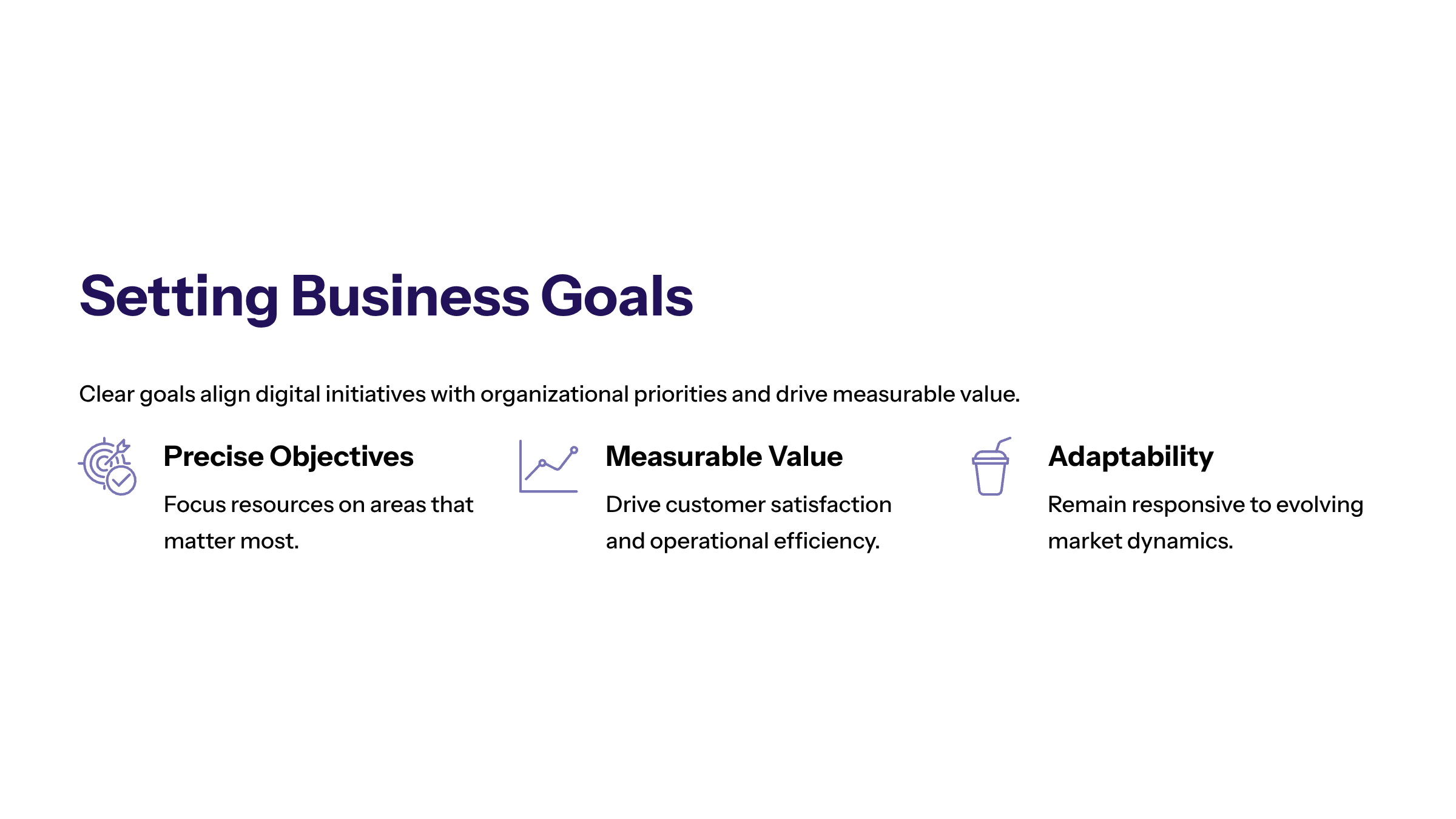
Setting clear and strategic business goals is a fundamental step in guiding a successful digital transformation journey. These goals serve as the foundation for aligning digital initiatives with organizational priorities, ensuring that every effort contributes to delivering measurable business value. By defining precise objectives, businesses can focus their resources on areas that drive customer satisfaction, operational efficiency, and innovation, while remaining adaptable to evolving market dynamics and customer expectations.
Defining Clear Objectives
Establishing clear business goals is the cornerstone of any successful digital transformation strategy. These goals should encompass enhancing customer experience, streamlining operational processes, and enabling data-driven decision-making. A well-articulated set of objectives helps organizations focus their efforts and measure progress effectively.
Enhance Customer Experience | Deliver personalized, seamless interactions across channels | Customer satisfaction score, Net Promoter Score (NPS) |
Optimize Operational Processes | Automate manual processes and reduce bottlenecks | Process cycle time, error rates |
Foster Innovation Culture | Encourage continuous improvement and agility | Employee engagement, number of innovation initiatives |
These KPIs are vital to track both the leading and lagging indicators of transformation success, ensuring a comprehensive understanding of progress and impact.
Aligning Goals with Market Changes
Incorporating market dynamics and customer expectations into goal-setting ensures that transformation efforts remain relevant and competitive. Organizations must anticipate external factors, such as regulatory changes (e.g., GDPR, HIPAA) and emerging digital opportunities, to adapt their digital strategy proactively.
This strategic planning is essential to identify areas where digital solutions can create the most impact and to set evaluation criteria that align with business objectives.
Assessing Current State
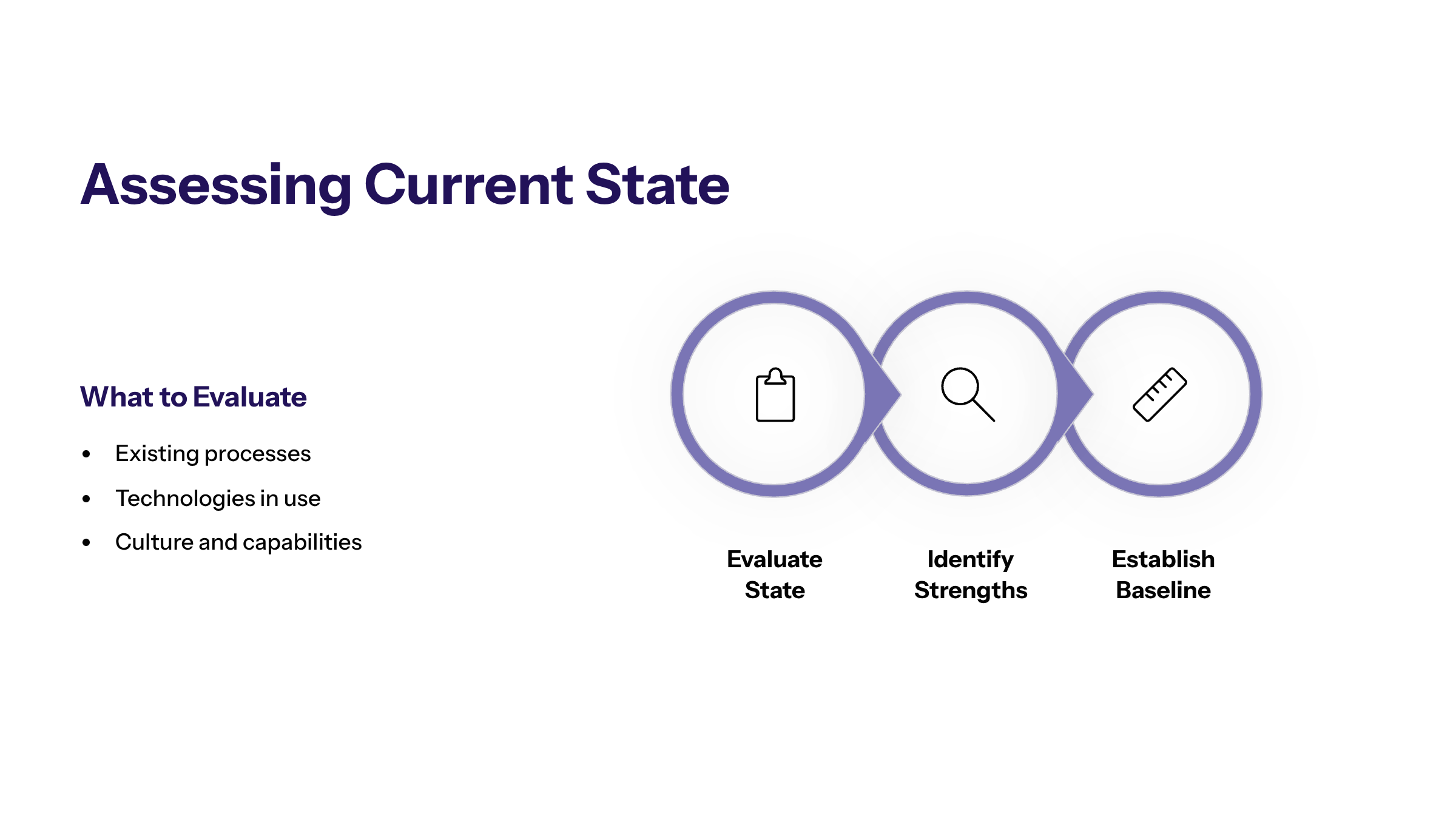
Assessing the current state is a critical early step in any digital transformation journey. It involves a thorough evaluation of an organization's existing processes, technologies, culture, and capabilities to establish a clear baseline. This assessment helps identify strengths, weaknesses, and gaps that may hinder transformation efforts.
By understanding the current digital maturity and operational landscape, business leaders can make informed decisions, prioritize initiatives, and allocate resources effectively to drive meaningful change aligned with strategic goals.
Conducting a Comprehensive Digital Maturity Assessment
Evaluating the current digital maturity involves assessing existing processes, technologies, and governance frameworks. Utilizing a digital transformation assessment tool facilitates a gap analysis, highlighting discrepancies between current capabilities and desired outcomes. This evaluation provides valuable insights that guide the digital transformation approach and help organizations prioritize initiatives effectively.
Digital maturity assessments often use a maturity model with stages such as Initial/Ad-hoc, Managed/Repeatable, Defined, Managed/Quantitative, and Optimized/Innovative. This model gauges capabilities across strategy, operations, culture, leadership, and customer experience, providing a structured way to benchmark progress.
Key Areas for Assessment:
Operational Processes: Identify manual processes and inefficiencies affecting productivity.
Technology Infrastructure: Evaluate the alignment of current technologies with business goals.
Data Management: Assess data quality, governance policies, and analytics capabilities.
Organizational Structure: Review roles, responsibilities, and cross-functional collaboration.
Skills and Capabilities: Determine workforce readiness and training needs.
Gathering Data and Feedback
Collecting detailed information from stakeholders across departments provides a holistic view of the organization’s digital landscape. Feedback mechanisms such as surveys, interviews, and workshops are essential to uncover pain points and areas for improvement. Engaging external experts during this phase can offer an unbiased perspective and additional evaluation criteria, ensuring a thorough assessment.
According to Gartner, organizations that systematically collect and analyze data during digital transformation initiatives are 2.5 times more likely to achieve successful outcomes.
Digital Maturity Assessment
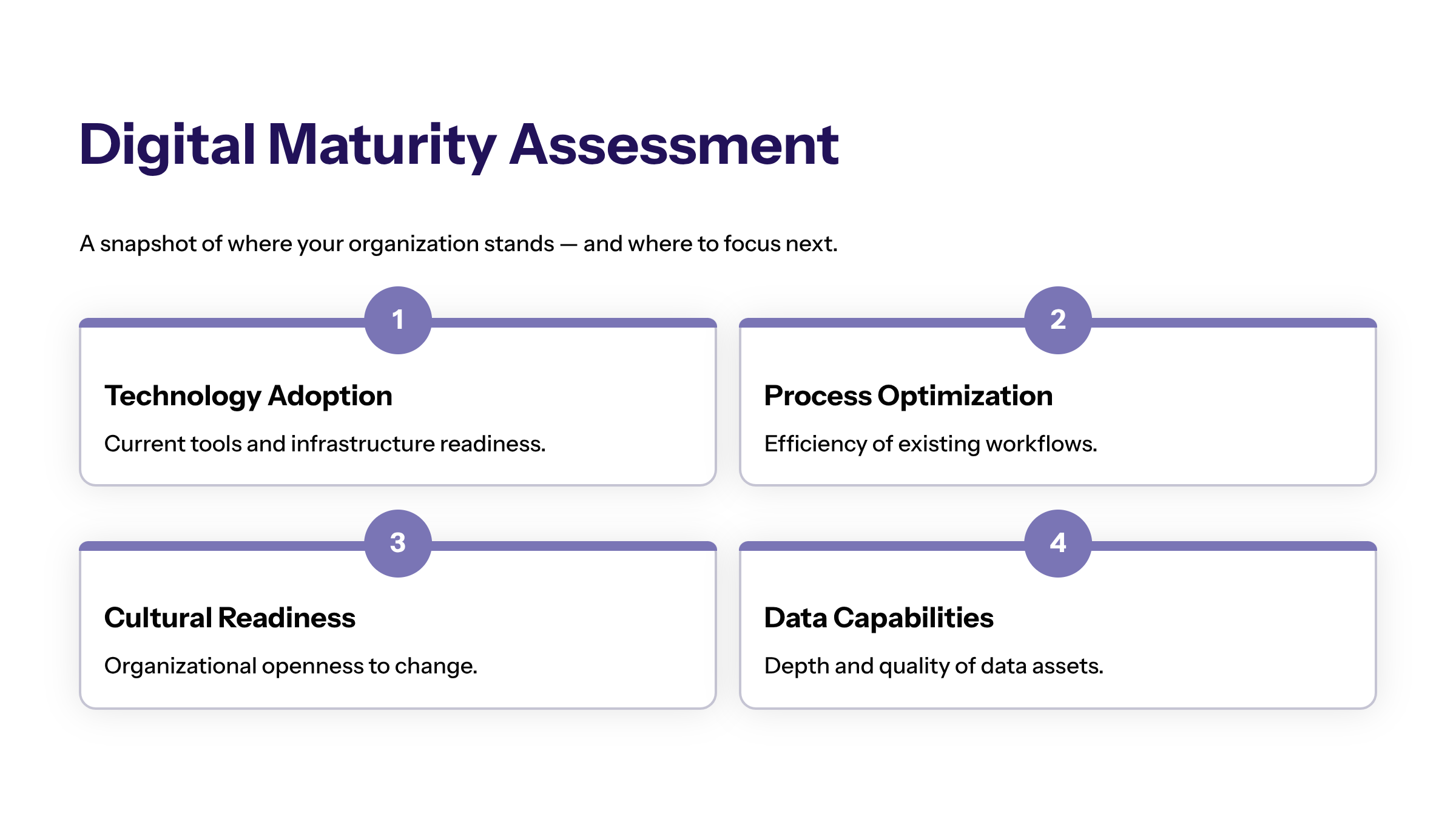
Understanding an organization's digital maturity is a crucial step in the digital transformation journey. A digital maturity assessment provides a clear snapshot of where the organization currently stands in terms of technology adoption, process optimization, cultural readiness, and data capabilities. This evaluation helps business leaders identify strengths to build upon and gaps that require targeted improvement, ensuring that digital transformation efforts are strategic, focused, and effective.
Frameworks and Methodologies
Applying established digital maturity frameworks enables organizations to benchmark their status against industry standards and best practices. Frameworks often use scorecards and heatmaps to visualize strengths and weaknesses, providing more detail on specific capabilities and gaps.
Leadership & Culture | Vision alignment, change management readiness | Ad hoc → Optimized |
Technology | Cloud adoption, AI integration, system interoperability | Basic → Advanced |
Processes | Automation, agility, process standardization | Manual → Automated |
Data & Analytics | Data governance, analytics maturity | Nascent → Data-driven |
Identifying Opportunities for Continuous Improvement
The assessment identifies not only gaps but also areas where digital technologies can transform services and operational models.
For example, automating supply chain processes or integrating AI-driven customer insights can unlock significant business value.
By leveraging these valuable insights, organizations can refine their digital transformation approach to focus on high-impact initiatives.
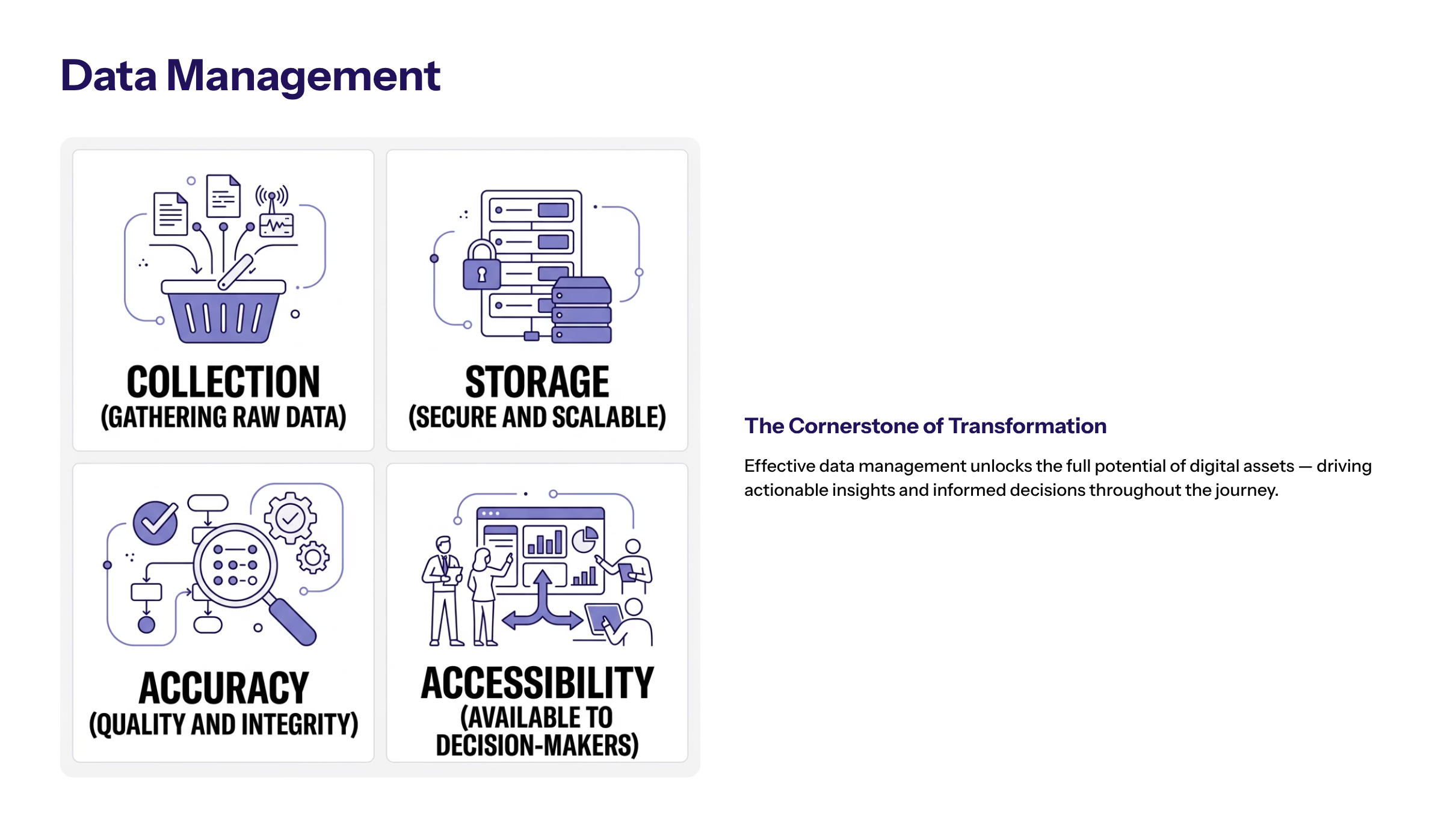
Data Management
Effective data management is a cornerstone of any successful digital transformation initiative. It involves not only the collection and storage of data but also ensuring its accuracy, security, and accessibility.
Proper data management enables organizations to unlock the full potential of their digital assets, driving actionable insights and supporting informed decision-making throughout the transformation journey.
Developing a Robust Data Strategy
Effective data management underpins all digital transformation efforts. Establishing governance policies ensures data quality, security, and compliance, which are critical for trustworthy analytics and AI applications.
Leveraging Data Analytics for Business Insights
By harnessing data analytics, organizations can gain actionable insights into customer behavior, market trends, and operational performance. These insights support informed decision-making and help prioritize initiatives that maximize business value.
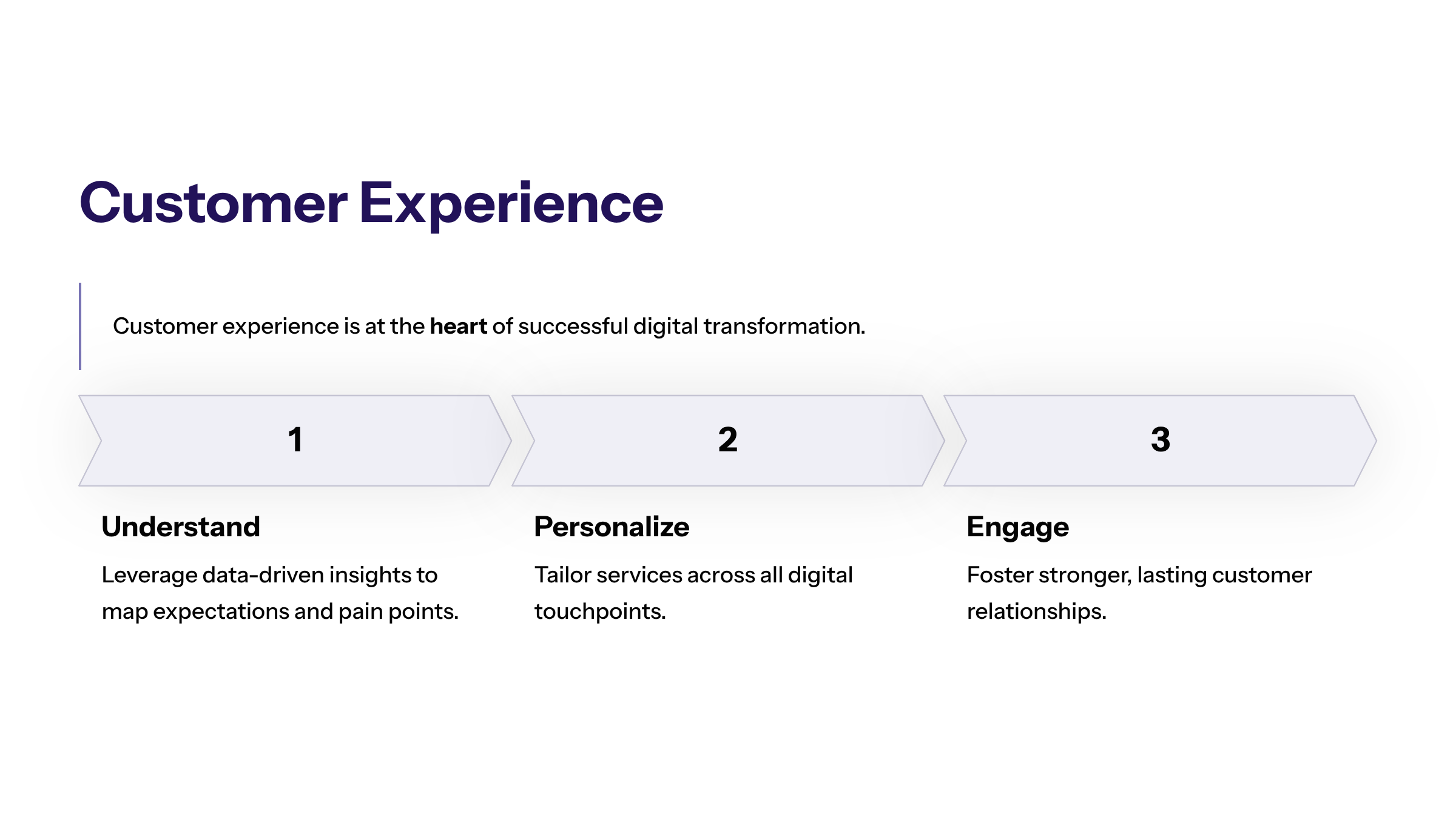
Customer Experience
Customer experience is at the heart of successful digital transformation efforts. In an increasingly digital world, organizations must prioritize creating seamless, personalized, and engaging interactions across all customer touchpoints.
By leveraging digital technologies and data-driven insights, businesses can better understand customer expectations and pain points, enabling them to tailor services and foster stronger relationships.
This customer-centric approach not only enhances satisfaction and loyalty but also drives competitive advantage in the digital era.
Prioritizing Customer-Centric Strategies
Digital transformation must focus on delivering exceptional customer experiences. This involves leveraging digital channels, personalizing interactions, and continuously adapting to evolving customer needs.
Monitoring and Enhancing Customer Engagement
Continuous evaluation through feedback mechanisms and analytics enables organizations to refine their customer engagement strategies, ensuring alignment with customer expectations and competitive positioning.
Change Management
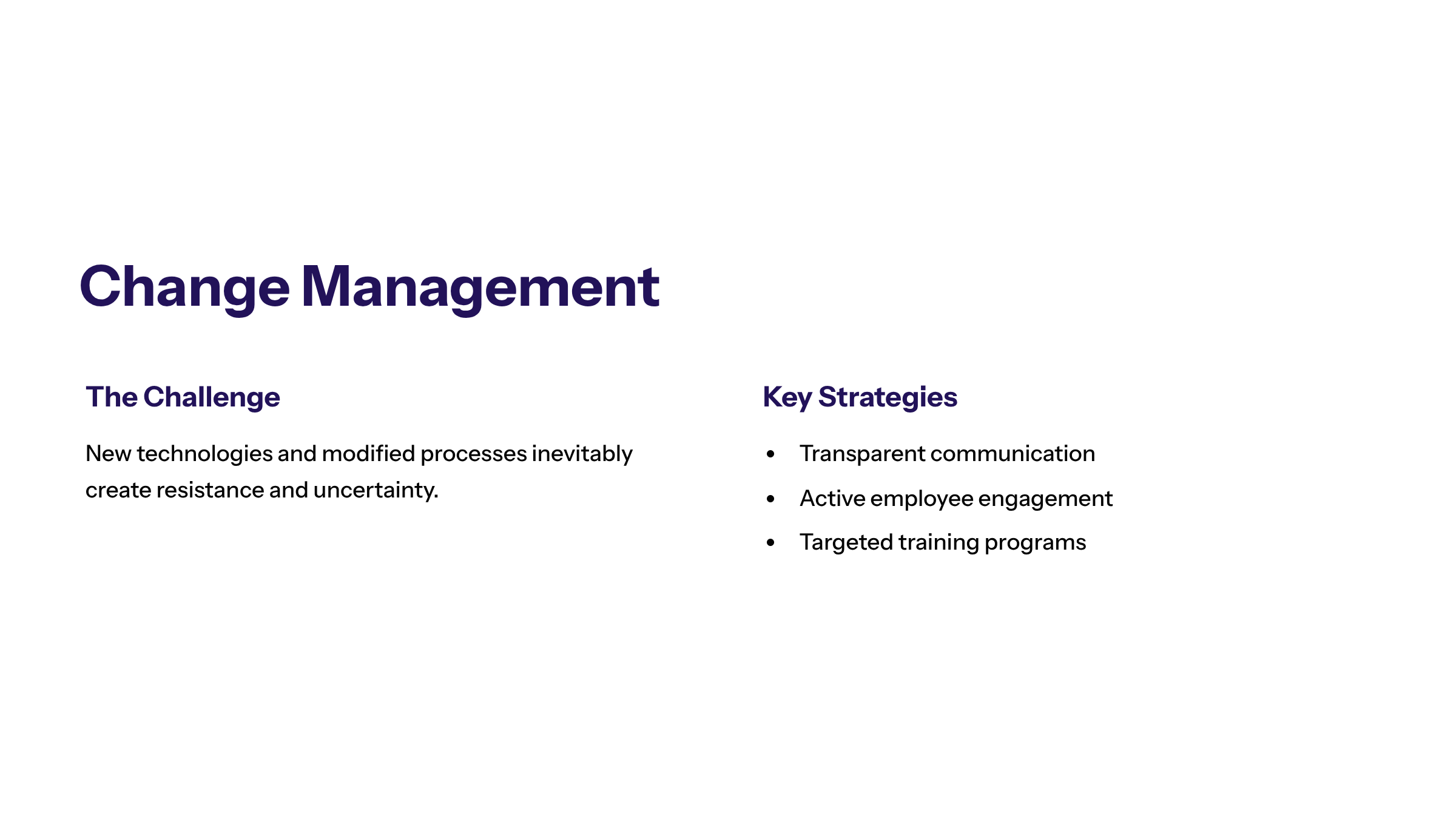
Effective change management is a critical component of any successful digital transformation initiative. As organizations adopt new technologies and modify business processes, they inevitably encounter resistance and uncertainty among employees and stakeholders.
This section explores strategies to manage cultural and organizational change, emphasizing the importance of transparent communication, employee engagement, and training.
By fostering a supportive environment, organizations can overcome barriers, empower their workforce, and ensure that digital transformation efforts translate into lasting, positive outcomes.
Managing Cultural and Organizational Change
Digital transformation requires a cultural shift that embraces innovation and agility. Change management plans should address potential resistance by fostering transparent communication, training, and employee empowerment.
Building a Culture of Continuous Improvement
Encouraging employees to contribute ideas and embrace new technologies supports sustainable transformation and long-term success.
“Change management is the linchpin of digital transformation; technology alone cannot drive change without people’s buy-in.” — Deloitte Insights
Decision Making
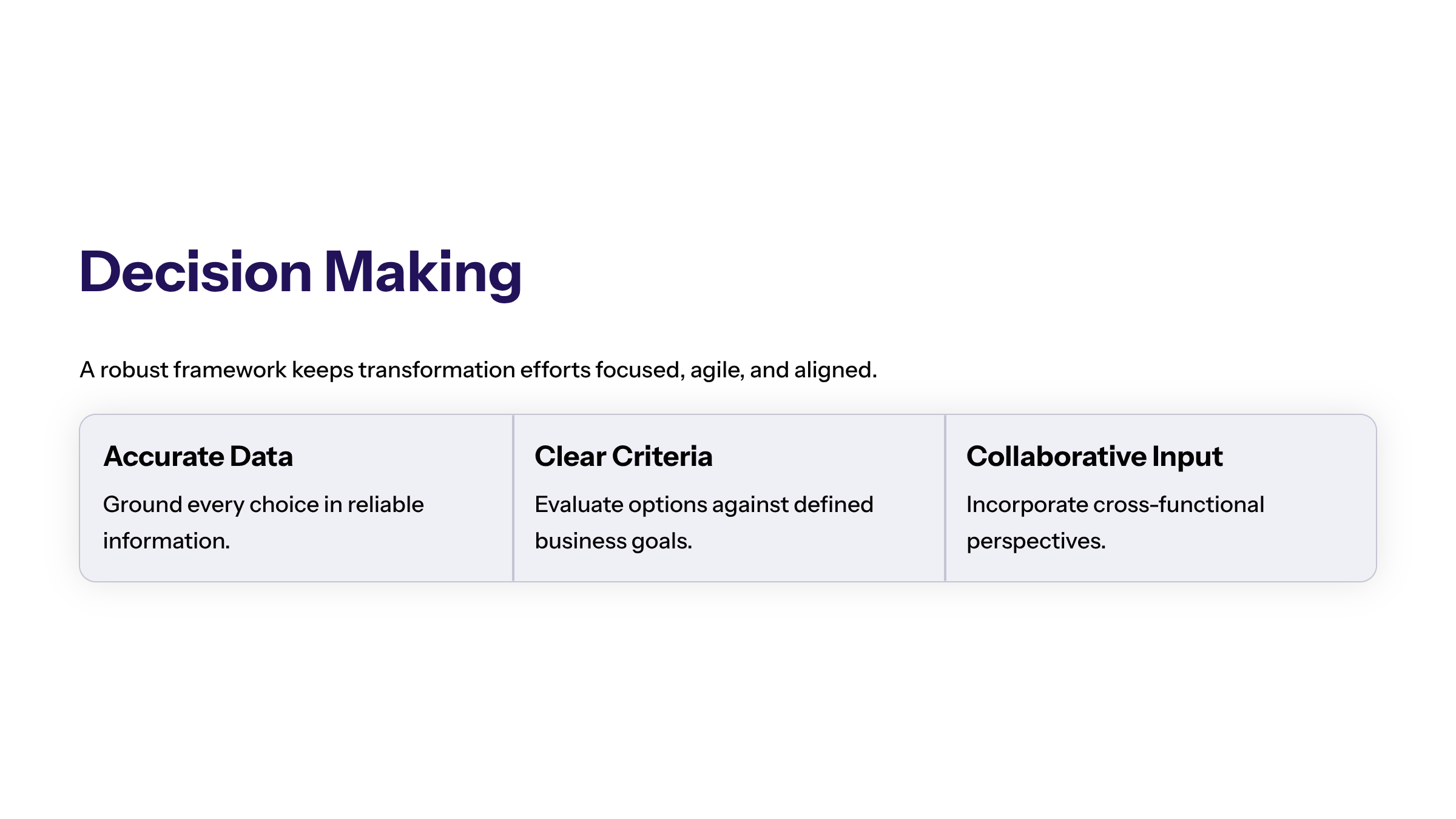
Effective decision making is at the core of any successful digital transformation initiative. It involves leveraging accurate data, clear evaluation criteria, and collaborative input to guide strategic choices that align with business goals. By establishing a robust decision-making framework, organizations can ensure that their digital transformation efforts are focused, agile, and capable of adapting to evolving market dynamics and emerging digital opportunities.
Establishing a Data-Driven Decision Framework
Implementing clear criteria and processes for decision-making ensures alignment with strategic goals. Cross-functional collaboration enhances the quality and acceptance of decisions.
Monitoring and Adapting Decisions
Continuous evaluation of decision outcomes allows organizations to refine strategies and respond effectively to market changes and emerging digital opportunities.
Common Pitfalls
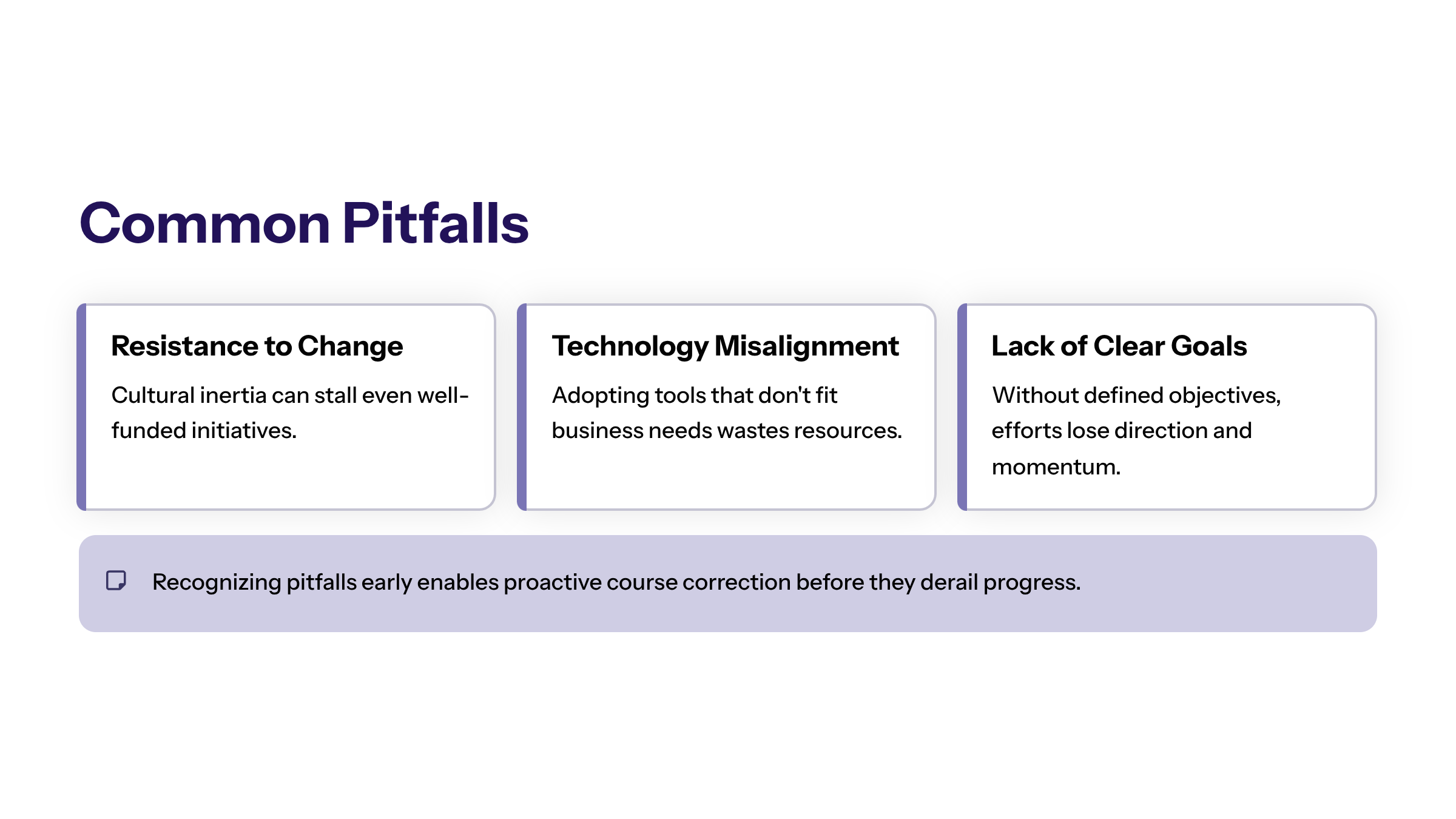
Embarking on a digital transformation journey is a complex endeavor that often comes with various challenges and obstacles. Recognizing common pitfalls early can help organizations proactively address potential issues before they derail progress.
Understanding these typical hurdles—from resistance to change to technology misalignment—enables business leaders to develop effective strategies that ensure smoother implementation and maximize the success of digital transformation efforts.
Recognizing and Mitigating Risks
Typical challenges include resistance to change, skill gaps, inadequate governance, and overreliance on technology without process optimization. Proactive strategies, including stakeholder engagement and training, are essential to mitigate these risks.
Buy-In
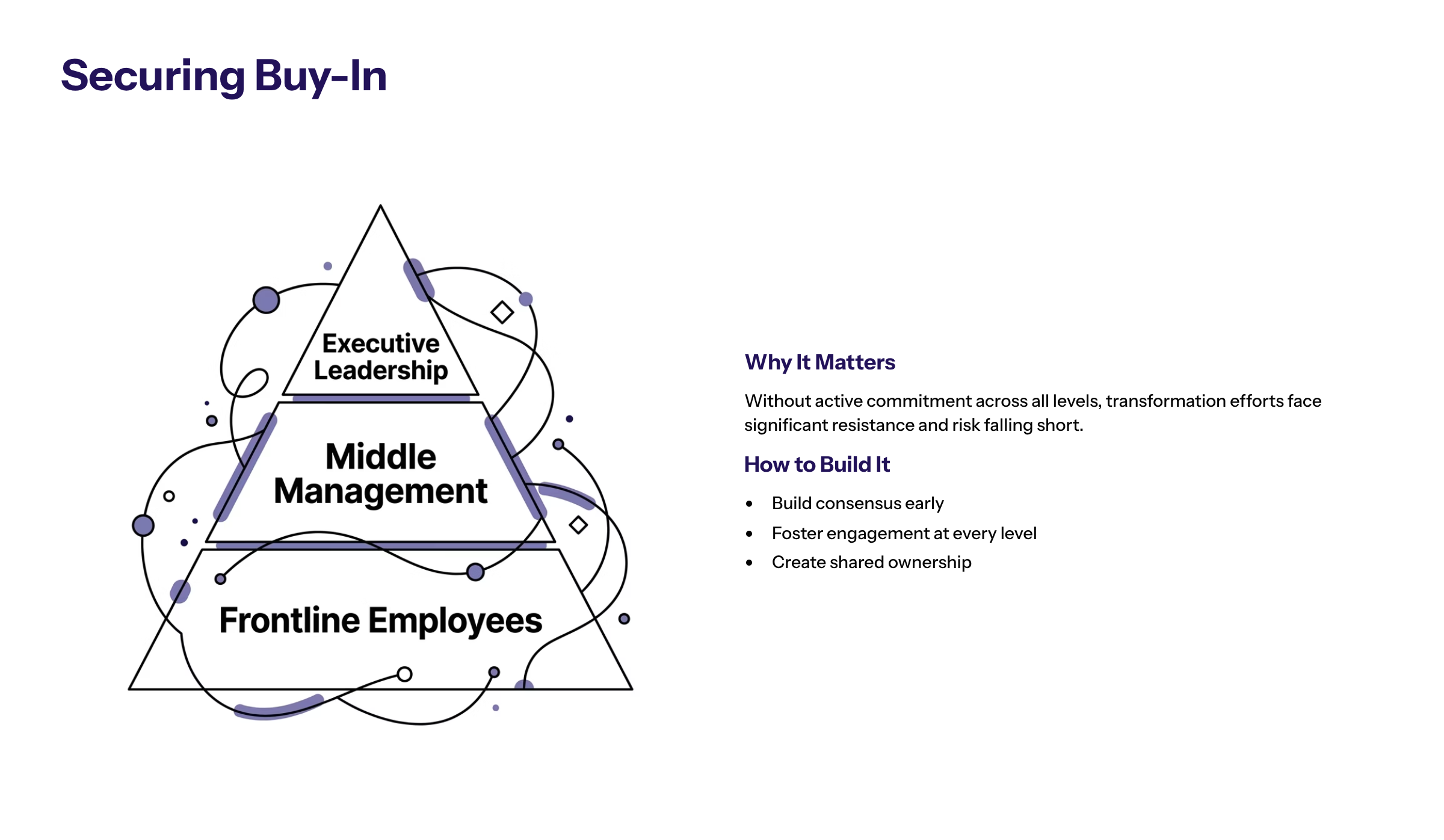
Securing buy-in is a pivotal step in ensuring the success of any digital transformation initiative. Without the active support and commitment of stakeholders—ranging from executive leadership to frontline employees—transformation efforts can face significant resistance and risk falling short of their objectives.
This section explores effective strategies for building consensus, fostering engagement, and creating a shared sense of ownership that drives momentum throughout the digital transformation journey.
Securing Stakeholder Support
Effective communication of the transformation vision and benefits fosters ownership and accountability among employees, customers, and partners.
Incentivizing Contributions
Recognition programs and incentives motivate stakeholders to actively participate and contribute to transformation success.
Assessment Tool
A digital transformation assessment tool is an essential component for organizations aiming to gain a clear and comprehensive understanding of their current digital capabilities.
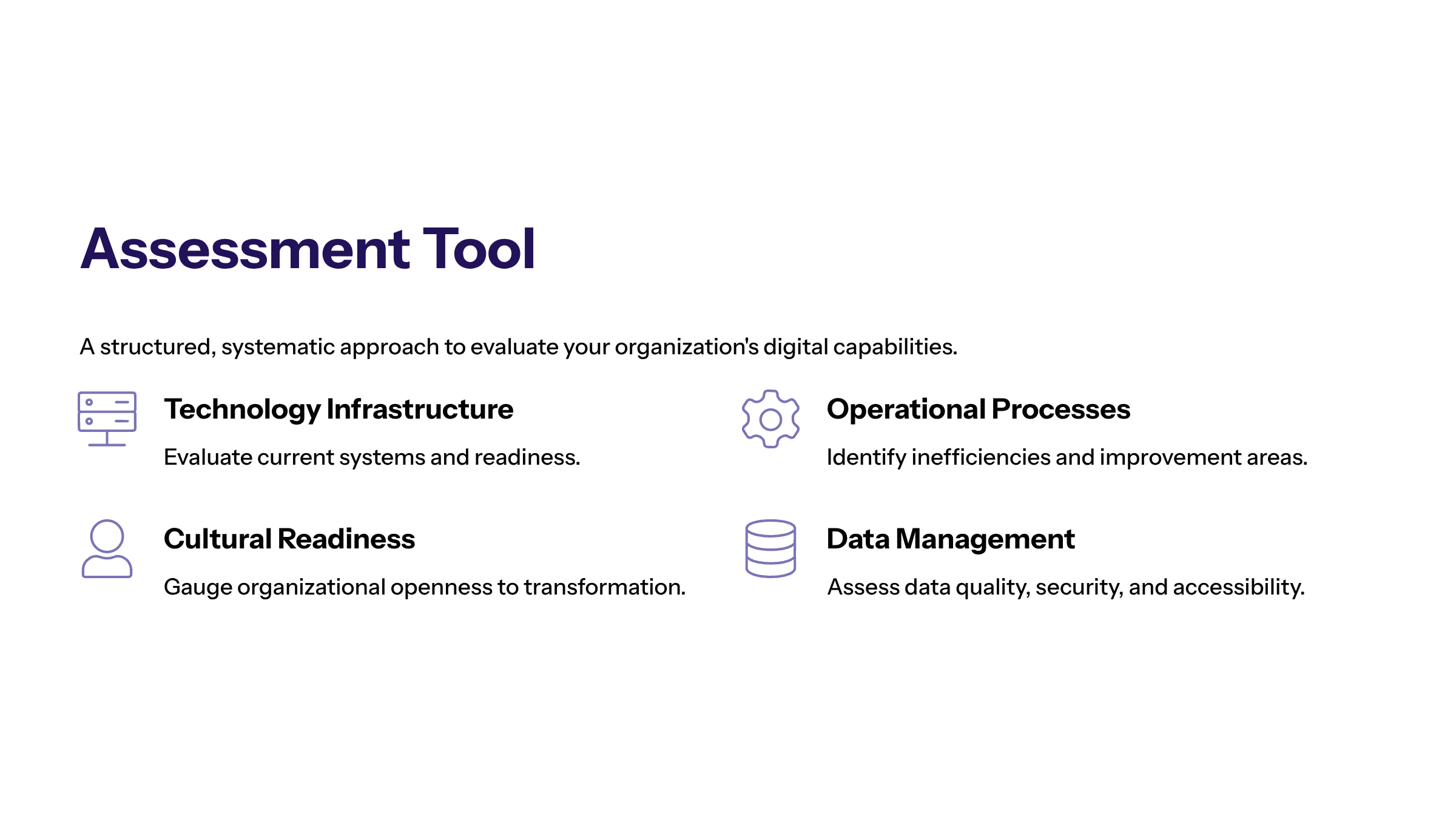
By providing a structured and systematic approach to evaluate various facets such as technology infrastructure, operational processes, cultural readiness, and data management, the tool helps identify strengths and pinpoint areas needing improvement.
Utilizing an assessment tool enables business leaders to make informed decisions, prioritize initiatives effectively, and align transformation efforts with overall business goals, ultimately driving successful digital transformation outcomes.
Utilizing Digital Transformation Assessment Tools
Assessment tools provide structured, repeatable methods to evaluate progress, collect feedback, and identify optimization opportunities. Integration with existing systems enhances data collection and reporting and supports continuous strategic planning.
Creating a Digital Transformation Roadmap
Developing a Comprehensive Roadmap
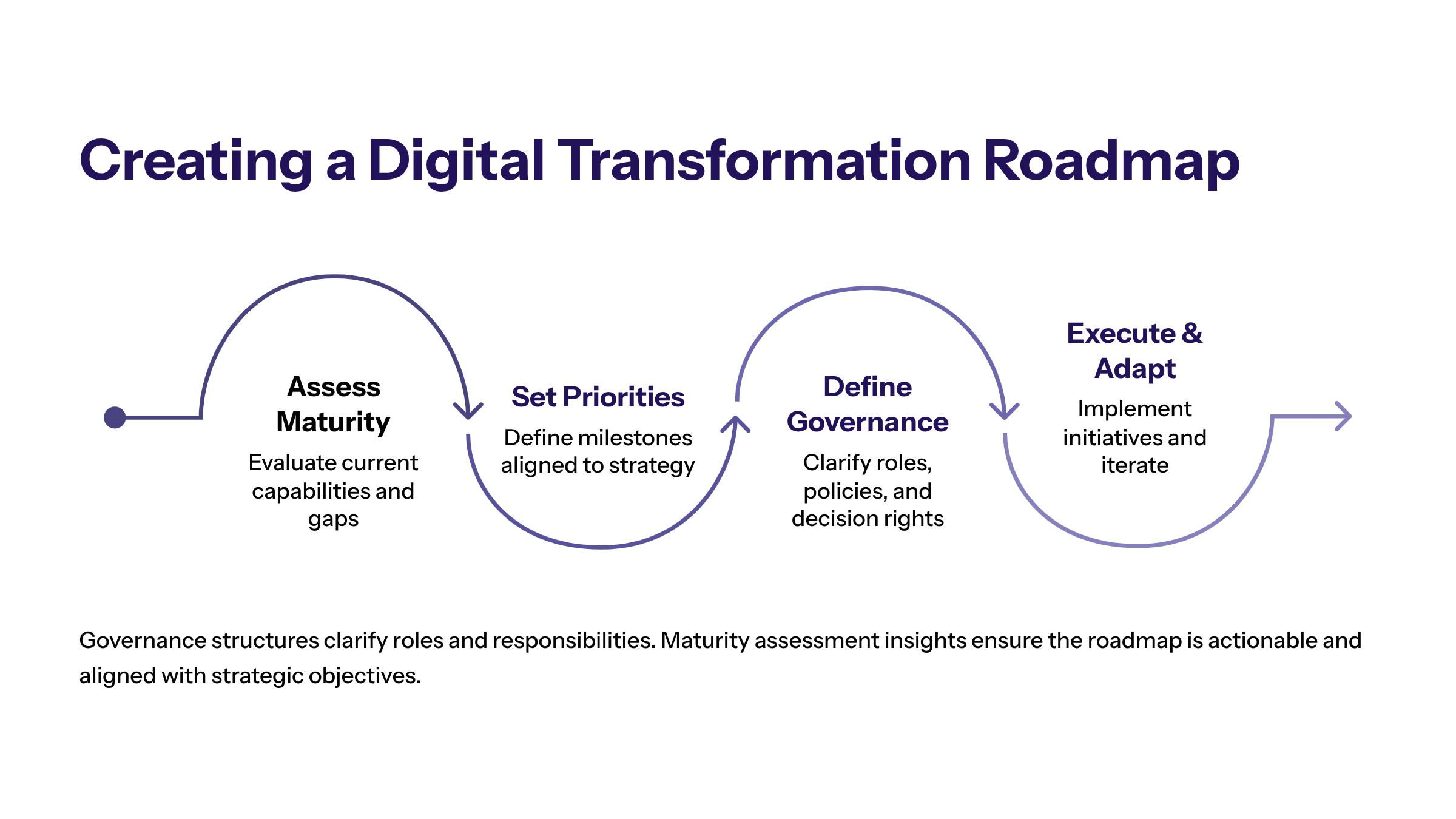
A detailed roadmap outlines goals, priorities, timelines, and resource allocation. Governance structures clarify roles and responsibilities, supporting effective execution.
Insights gained from digital maturity assessments help prioritize digital initiatives and set measurable milestones, ensuring the roadmap is both actionable and aligned with strategic objectives.
Continuous Monitoring and Adjustment
Ongoing evaluation using KPIs and analytics ensures the roadmap remains aligned with business objectives and market dynamics. Continuous monitoring and adaptation of the digital transformation strategy are essential to maintain its effectiveness and relevance in a rapidly changing digital environment.
Monitoring and Evaluation
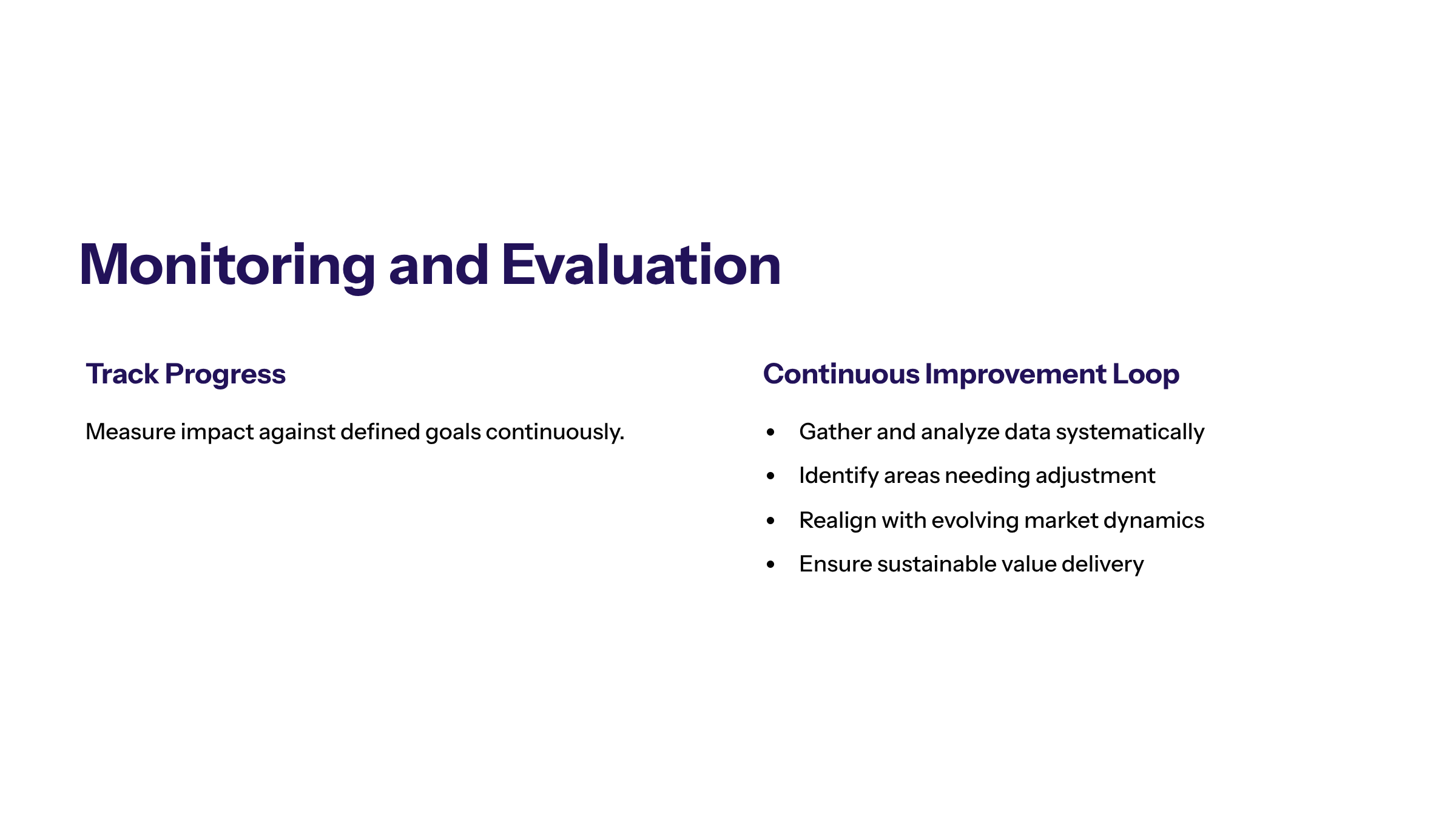
Effective monitoring and evaluation are critical components of a successful digital transformation journey. This ongoing process enables organizations to track progress against defined goals, measure the impact of digital initiatives, and identify areas requiring adjustment or improvement.
By systematically gathering and analyzing data, business leaders can make informed decisions that keep transformation efforts aligned with evolving market dynamics and organizational priorities, ensuring continuous value delivery and sustainable growth.
Establishing Evaluation Frameworks
Defining KPIs and metrics enables organizations to measure effectiveness and impact. Regular data collection and analysis inform continuous improvement.
Future-Proofing
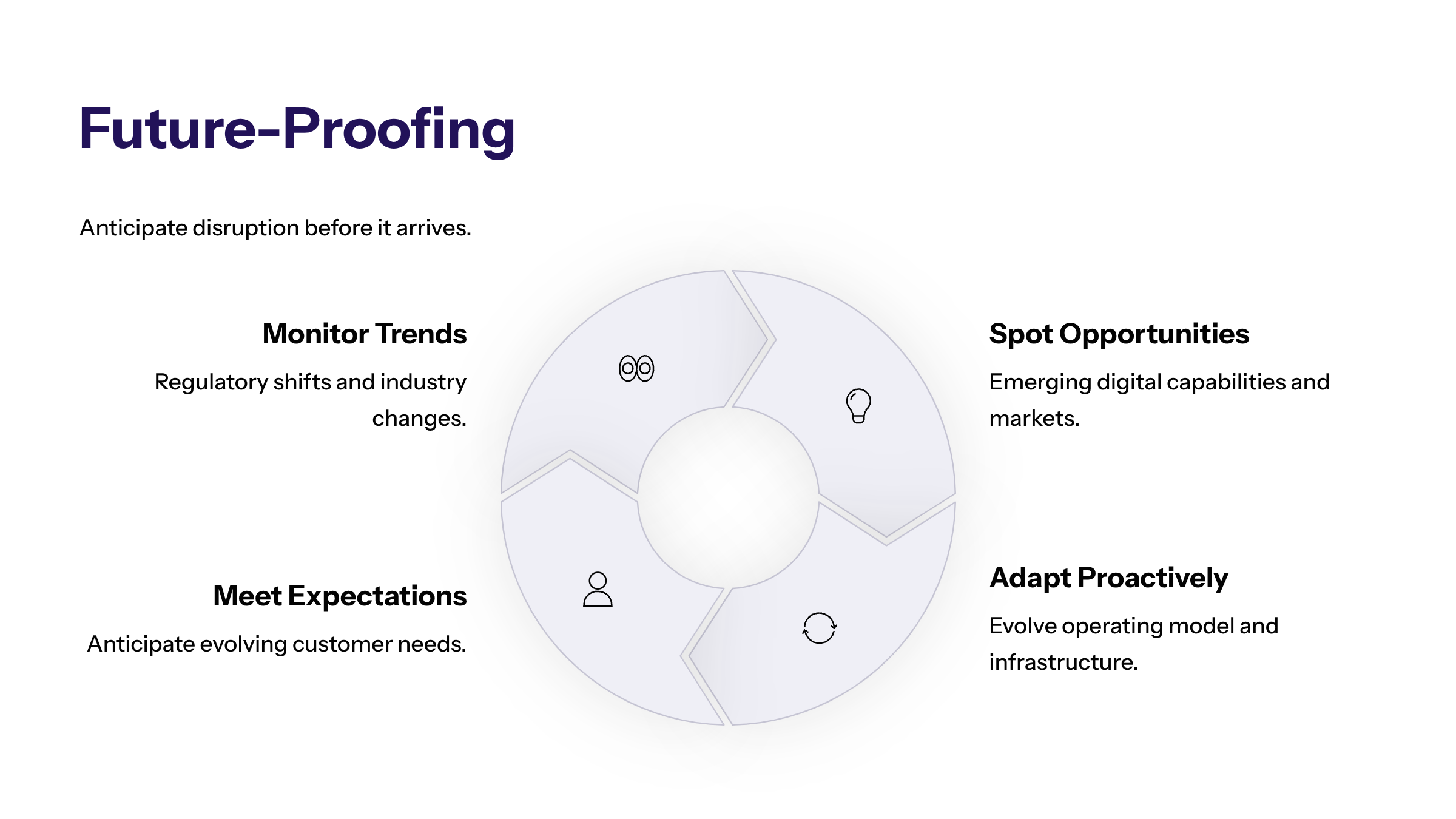
In an era marked by rapid market changes and technological advancements, future-proofing is essential for any organization that wants to sustain growth and remain competitive. A holistic digital transformation strategy incorporates future-proofing by anticipating evolving customer expectations, emerging digital opportunities, and potential disruptions.
By evaluating other criteria such as regulatory shifts and industry trends, organizations can proactively adapt their operating model, business processes, and technology infrastructure to meet the challenges the organization faces.
This forward-looking approach ensures that digital transformation initiatives deliver lasting business value and resilience in the digital era.
Building Agility and Innovation Capacity
Future-proofing strategies involve monitoring emerging technologies and trends, fostering a culture of experimentation, and prioritizing initiatives that sustain competitive advantage.
Data-Driven Resource Allocation
Leveraging data-driven decision-making ensures investments focus on initiatives that drive growth and resilience in the digital era.
Conclusion
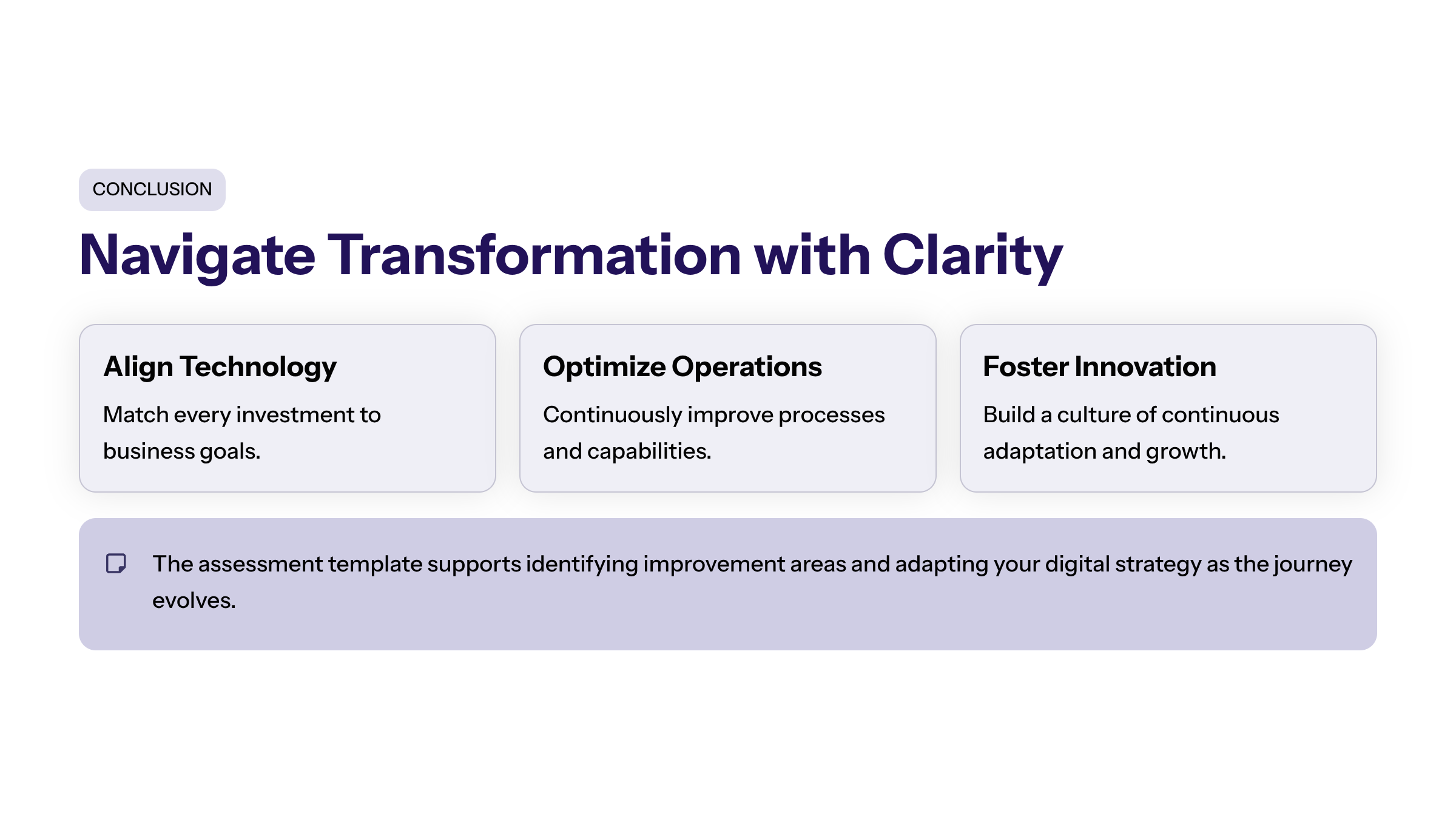
By leveraging a comprehensive digital transformation assessment template, organizations can navigate the complexities of digital transformation with clarity and strategic focus.
This approach aligns technology adoption with business goals, optimizes operational processes, and fosters a culture of continuous innovation—key ingredients for sustained success in today’s dynamic digital economy.
It also supports organizations in identifying areas for improvement and provides more detail on how to adapt their digital strategy as the digital transformation journey progresses.