Foxconn Profit Beats Forecasts on AI Server Demand
Foxconn’s profits exceeded expectations due to a global surge in artificial intelligence infrastructure spending, marking a pivotal shift in how enterprise technology investments are reshaping hardware manufacturing. On May 14, 2026, Hon Hai Precision Industry—better known as Foxconn—reported first quarter results that signal accelerating momentum in enterprise AI adoption, with AI server demand driving the company’s strongest revenue growth in years.
This article covers the enterprise AI infrastructure implications of Foxconn’s Q1 2026 performance and what these market signals mean for technology investment decisions. We focus specifically on enterprise leaders, CTOs, and technology consultants planning AI implementations who need to understand supply chain dynamics, hardware availability, and infrastructure planning considerations. While consumer electronics and electric vehicles remain part of Foxconn’s business, this analysis centers on the AI server segment that now dominates the company’s growth trajectory.
Foxconn’s revenue for the quarter reached T$2.13 trillion, marking a 29.7% year-over-year increase, driven largely by AI server demand—a clear indicator that enterprise AI infrastructure spending continues its upward trajectory despite broader economic uncertainty.
Key outcomes from this article include:
Understanding Foxconn’s dominant position in AI server manufacturing and what it signals for enterprise hardware availability
Analyzing the financial performance data that reflects enterprise AI spending trends
Identifying infrastructure planning considerations based on production capacity and market dynamics
Gaining technology roadmap insights for vendor relationships and procurement timing
Understanding Foxconn’s AI Server Business Foundation
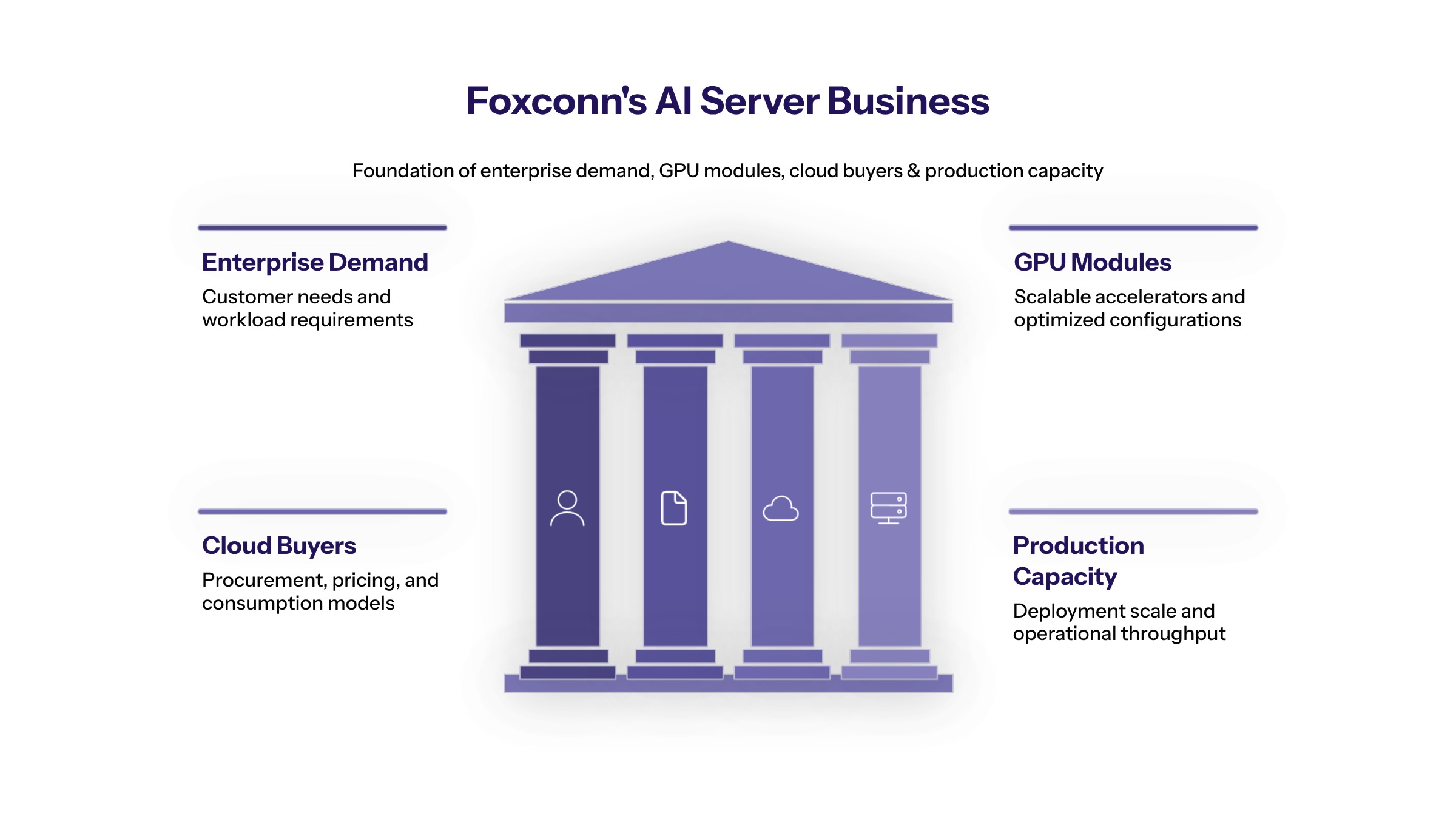
Foxconn has transformed from primarily an iPhone assembler into the world’s leading manufacturer for enterprise AI infrastructure hardware. This evolution reflects the broader industry shift where AI demand has become the primary driver of technology capital expenditure. For the first time in Foxconn’s history, cloud and networking products now account for 40% of total revenue, surpassing consumer electronics at 38%.
The connection between Foxconn’s profit performance and enterprise AI adoption rates is direct: as organizations deploy foundation models, generative AI applications, and large-scale training infrastructure, they require specialized server hardware that Foxconn manufactures at scale. Each AI server rack can sell for $2 million to $3 million, compared to approximately $800 for an assembled smartphone—fundamentally changing the revenue and margin dynamics of hardware manufacturing.
Foxconn’s Position in AI Infrastructure Manufacturing
Foxconn captured a 40% share of the global AI server rack market, establishing dominance in a segment that enterprises increasingly depend upon. The company’s partnerships with Nvidia, AMD, and major cloud providers position it as the critical manufacturing link in enterprise AI infrastructure supply chains.
Manufacturing capacity has expanded significantly, with Foxconn expanding production capabilities for AI servers to ramp up to 2,000 units per week in U.S. facilities. This domestic production capability in Taiwan, Texas, Ohio, and Wisconsin addresses supply chain adjustments that many enterprises require for regulatory compliance and logistics optimization.
The company’s ability to assemble Nvidia GPU modules (including A100, H100, and upcoming GB300 series), build complete server racks, and manufacture networking components makes it a single-source option for enterprises seeking integrated AI infrastructure solutions.
AI Server Market Dynamics Driving Demand
Enterprise AI workloads require increasingly specialized hardware configurations. Foundation models with hundreds of billions of parameters demand higher compute density, specialized accelerators, high-bandwidth networking (NVLink, InfiniBand), dense storage, and sophisticated cooling systems. Foxconn’s involvement with Nvidia’s GB300 and NVL72 rack systems demonstrates alignment with these technical requirements.
The relationship between AI model complexity and server infrastructure needs continues to intensify. Multi-modal AI applications, real-time inference requirements, and the shift toward AI-first architectures mean enterprises must plan for hardware capabilities that exceed current deployment needs. Demand for AI hardware cushioned Foxconn against traditional seasonal slowdown in consumer electronics, demonstrating the structural nature of this market shift.
This strong demand environment sets the context for understanding Foxconn’s specific financial performance in Q1 2026.
Analyzing Foxconn’s Q1 2026 Performance and Market Signals
The January-March quarter revealed both the opportunities and complexities in enterprise AI infrastructure manufacturing, with revenue growth significantly outpacing expectations while margin pressures emerged from operational factors.
Q1 2026 Financial Results Breakdown
Foxconn’s revenue for the quarter reached T$2.13 trillion, marking a 29.7% year-over-year increase, with March alone posting a record T$803.7 billion in revenue, up 45.6% year-over-year. This growth substantially exceeded analysts’ estimates, reflecting accelerating enterprise AI investment.
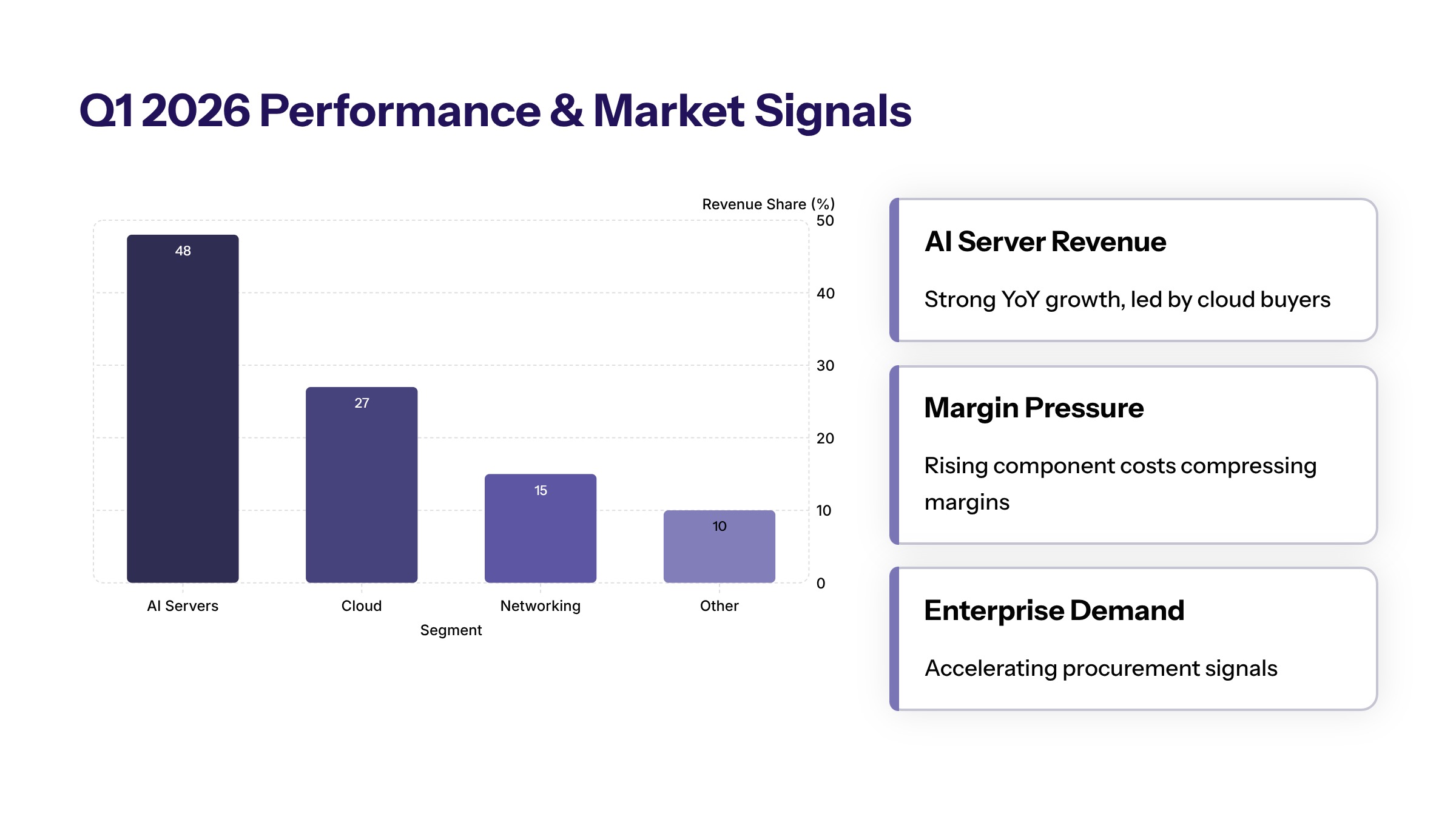
For the first time, cloud and networking products, which include AI servers, accounted for 40% of Foxconn’s total revenue, surpassing consumer electronics at 38%. Cloud and networking products expanded to comprise nearly 50% of overall sales for Foxconn when including related infrastructure components. The computing division contributed approximately 15%, with electronic components and other segments at 7%.
However, the net profit for Foxconn in Q1 2026 was NT$45.2 billion, which was a 24% miss compared to analyst expectations of NT$59.9 billion, largely due to higher taxes from repatriated earnings. Foxconn’s gross margin declined by 27 basis points to 5.88% from 6.15% a year ago, raising questions about whether this is a temporary issue or a sign of structural pressure. The demand for AI server racks significantly increased overall profitability despite narrow margins in hardware assembly.
Foxconn’s effective tax rate is sensitive to its capital structure and repatriation strategy, which can impact profit margins significantly, especially in a business operating at a gross margin of 5.88%. Enterprise leaders evaluating Foxconn as a supply chain partner should factor these margin dynamics into long-term planning.
Enterprise AI Investment Indicators
Foxconn’s Industrial Internet group reported a revenue increase of 85.8% year-over-year, with server products now representing 56.4% of its revenue, reflecting a 547% year-over-year surge in that segment. This dramatic growth in the server segment provides the clearest indicator of enterprise AI spending acceleration.
Foxconn’s cloud division benefitted from significant infrastructure investments by technology giants including major hyperscalers and enterprise customers deploying private AI infrastructure. Geographically, demand spans U.S. cloud providers, Asia-Pacific enterprises, and emerging markets in the Middle East investing in AI capabilities.
The company expects AI server shipments to double in 2026, signaling continued growth through year-end. For enterprise planners, this projection suggests both sustained demand and potential supply constraints that could impact hardware availability and pricing.
Competitive Market Position Analysis
With 40% global market share in rack assembly, Foxconn maintains manufacturing dominance that gives it significant influence over enterprise AI hardware availability. This market position reflects years of investment in specialized manufacturing capabilities and strategic partnerships.
New server models GB300 and BR200 enter production timeline for H2 2026, which enterprise buyers should factor into procurement planning. These next-generation systems will support more demanding AI workloads and may shift the competitive reality for organizations planning infrastructure investments.
Foxconn’s expansion in China, Taiwan, and the United States provides geographic diversification that addresses trade concerns and offers enterprises multiple sourcing options for their AI infrastructure needs.
Enterprise AI Infrastructure Planning and Investment Implications
Foxconn’s Q1 2026 performance provides concrete data points for enterprise infrastructure planning. The combination of strong demand signals, production capacity expansion, and margin pressures creates a planning environment where timing and vendor relationships matter significantly.
AI Infrastructure Investment Timing and Strategy
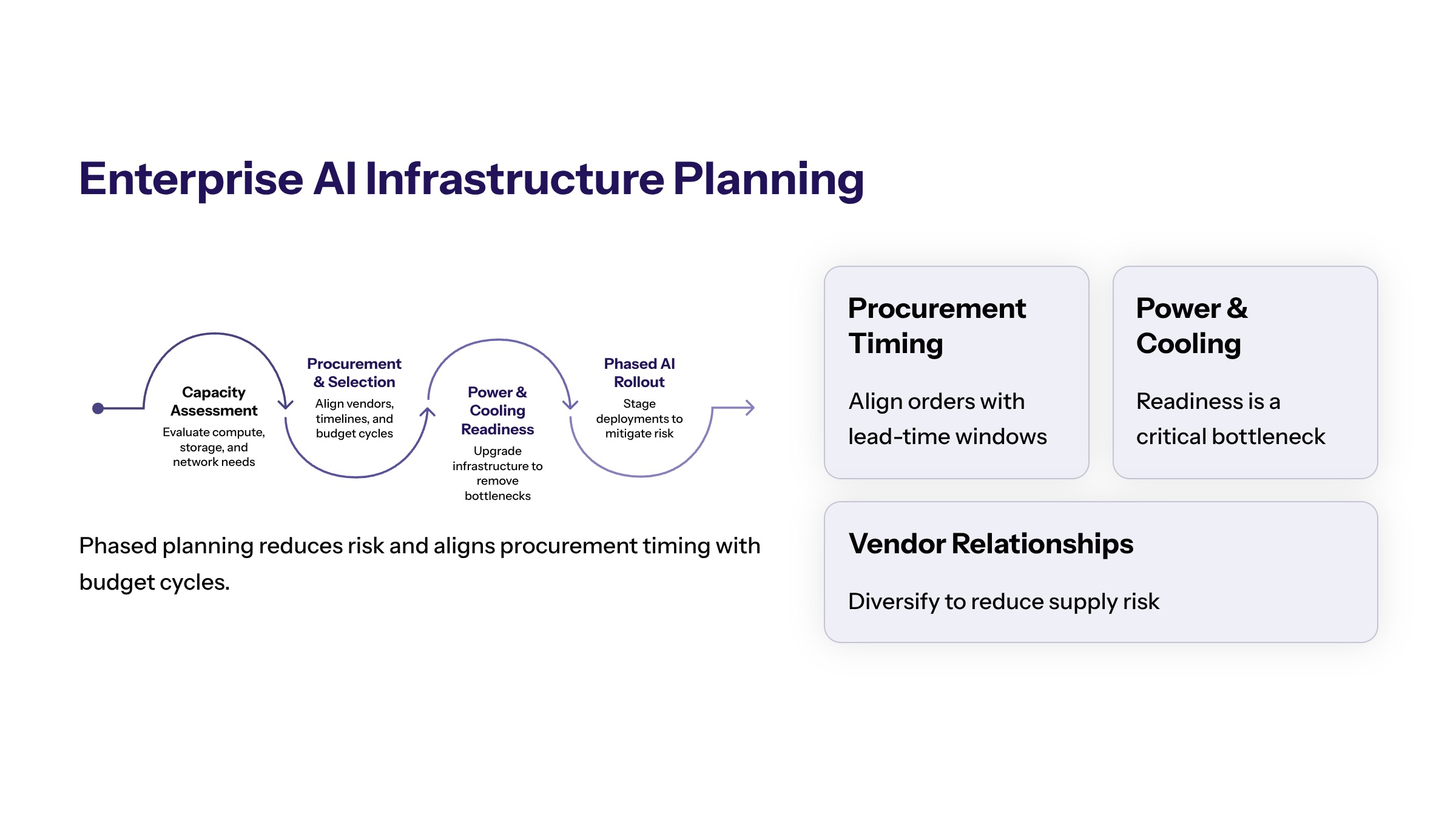
Enterprise AI infrastructure decisions require 12-18 month lead time planning, particularly for custom racks, power systems, and networking components. The current market environment favors early procurement commitments.
Strategic planning steps based on current market indicators:
Assess current infrastructure capabilities against projected AI workload requirements for next 24 months
Inventory vendor relationships and evaluate supply chain dependencies for critical components
Budget for facility readiness including power, cooling, and regulatory compliance costs
Build phased rollout plans aligned with Foxconn’s production capacity and component availability
Establish backup sourcing options to mitigate concentration risk in single-vendor relationships
Hardware availability considerations include GPU allocation (particularly Nvidia H100/H200 and upcoming Blackwell series), memory supply constraints, and peripheral infrastructure lead times. Foxconn’s production ramp to 2,000 racks weekly by late 2026 provides capacity planning benchmarks for enterprise procurement teams.
Budget planning should account for raw material costs that fluctuate with commodity markets, as well as potential tariff impacts on cross-Pacific supply chains. Investors and analysts monitoring the stock continue tracking these fundamentals as indicators of industry health.
Technology Stack and Vendor Relationship Considerations
Criterion | Direct Foxconn Partnership | Cloud Provider (CSP) | Third-Party Integrator |
|---|---|---|---|
Hardware Access | Priority allocation, custom configurations | Standard configurations, managed availability | Variable, dependent on CSP relationships |
Lead Time | 6-12 months typical | Immediate to 3 months | 3-9 months |
Cost Structure | Capital expenditure, volume discounts | Operating expenditure, usage-based | Hybrid, often premium pricing |
Integration Support | Limited, manufacturing focus | Extensive managed services | Full-service, specialized expertise |
Supply Chain Visibility | High, direct relationship | Limited, abstracted | Moderate, intermediated |
Enterprise leaders should expect continued supply chain adjustments as the industry responds to AI demand growth. Partnerships with Foxconn, through OEM relationships or direct engagement, provide supply chain reliability that may prove valuable as competition for hardware intensifies.
The Apple relationship remains important for Foxconn’s consumer electronics business with iPhone assembly, but enterprise AI infrastructure now drives growth expectations and strategic investments. This business mix reality affects how Foxconn allocates manufacturing capacity and prioritizes customer relationships.
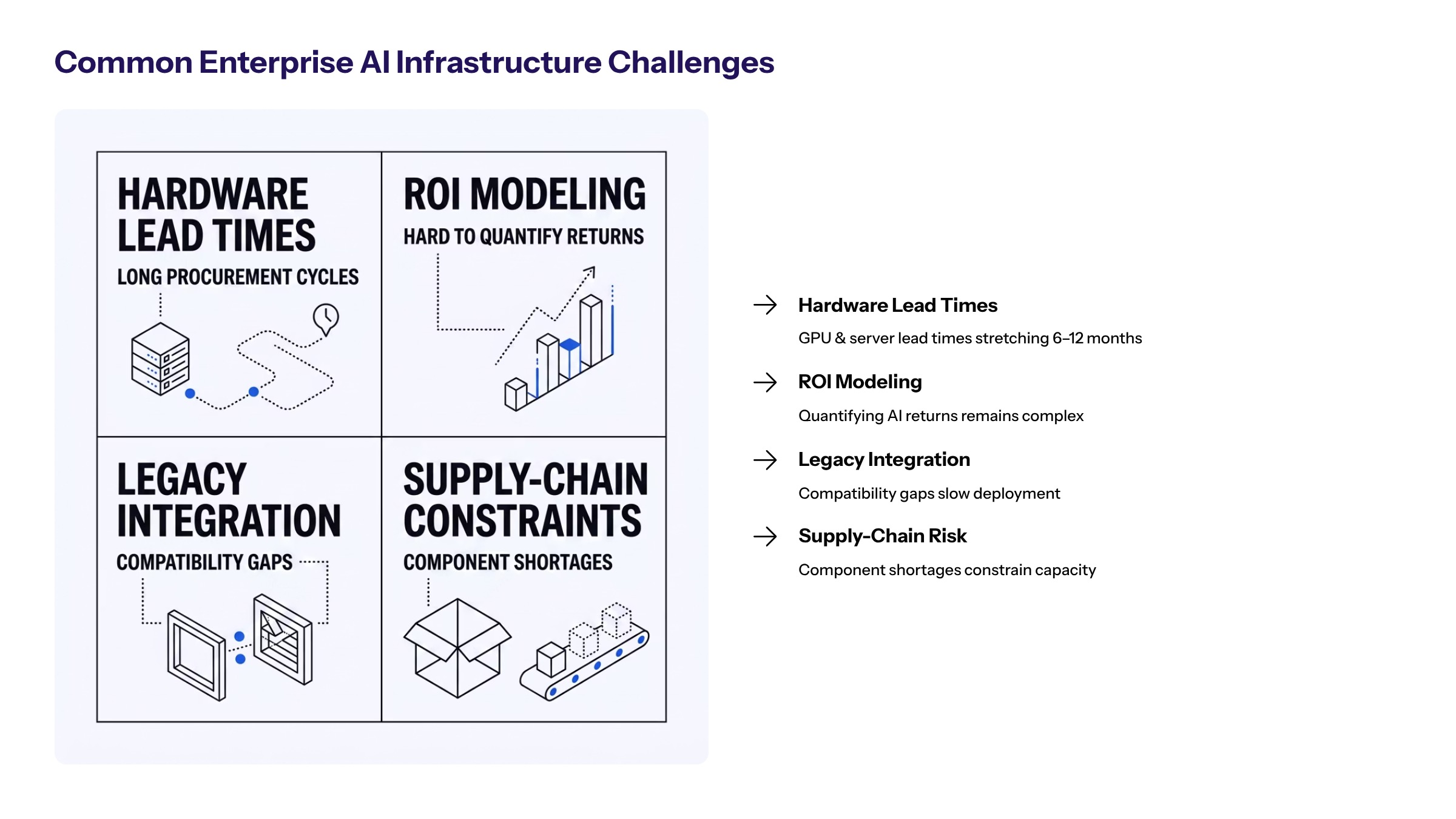
Common Enterprise AI Infrastructure Challenges
Understanding the challenges enterprises face when planning AI infrastructure investments helps contextualize Foxconn’s market position and production priorities.
Hardware Procurement and Lead Time Management
GPU and accelerator availability remains the primary constraint for enterprise AI deployments. Actionable approaches include establishing direct relationships with component manufacturers, participating in vendor allocation programs, and maintaining flexibility in deployment timelines.
Foxconn’s production capacity expansion to 2,000 racks weekly addresses part of this challenge, but peripheral components (networking, storage, power) can create secondary bottlenecks. Enterprise procurement teams should track the news and earnings call commentary from Foxconn and key component suppliers to anticipate availability changes.
Planning for resuming normal production after any supply disruptions requires maintaining buffer inventory and identifying alternative suppliers for non-specialized components.
Cost Justification and ROI Planning
AI infrastructure investments require comprehensive total cost of ownership models. Capital costs for server racks, accelerators, networking, and facility upgrades must be balanced against expected utilization rates, model refresh cycles, and energy costs.
ROI calculations should include:
Cost per inference/training hour across expected workloads
Energy efficiency metrics and power costs over 3-5 year horizons
Depreciation schedules aligned with technology refresh rates
Opportunity costs of delayed deployment versus early adoption
The margin dynamics visible in Foxconn’s results—strong revenue growth with compressed gross margins—reflect the broader reality that AI hardware remains expensive despite scale. Enterprises should plan accordingly.
Integration with Existing Enterprise Systems
AI infrastructure must interface effectively with existing data storage, governance frameworks, security controls, and network architecture. Organizations with legacy infrastructure face particular challenges aligning new AI capabilities with established systems.
Solution frameworks should address data pipeline integration, latency requirements for inference workloads, bandwidth allocation for training data movement, and compliance requirements for regulated industries. Adding AI infrastructure without addressing these integration challenges limits the expected returns on hardware investments.
Conclusion and Next Steps
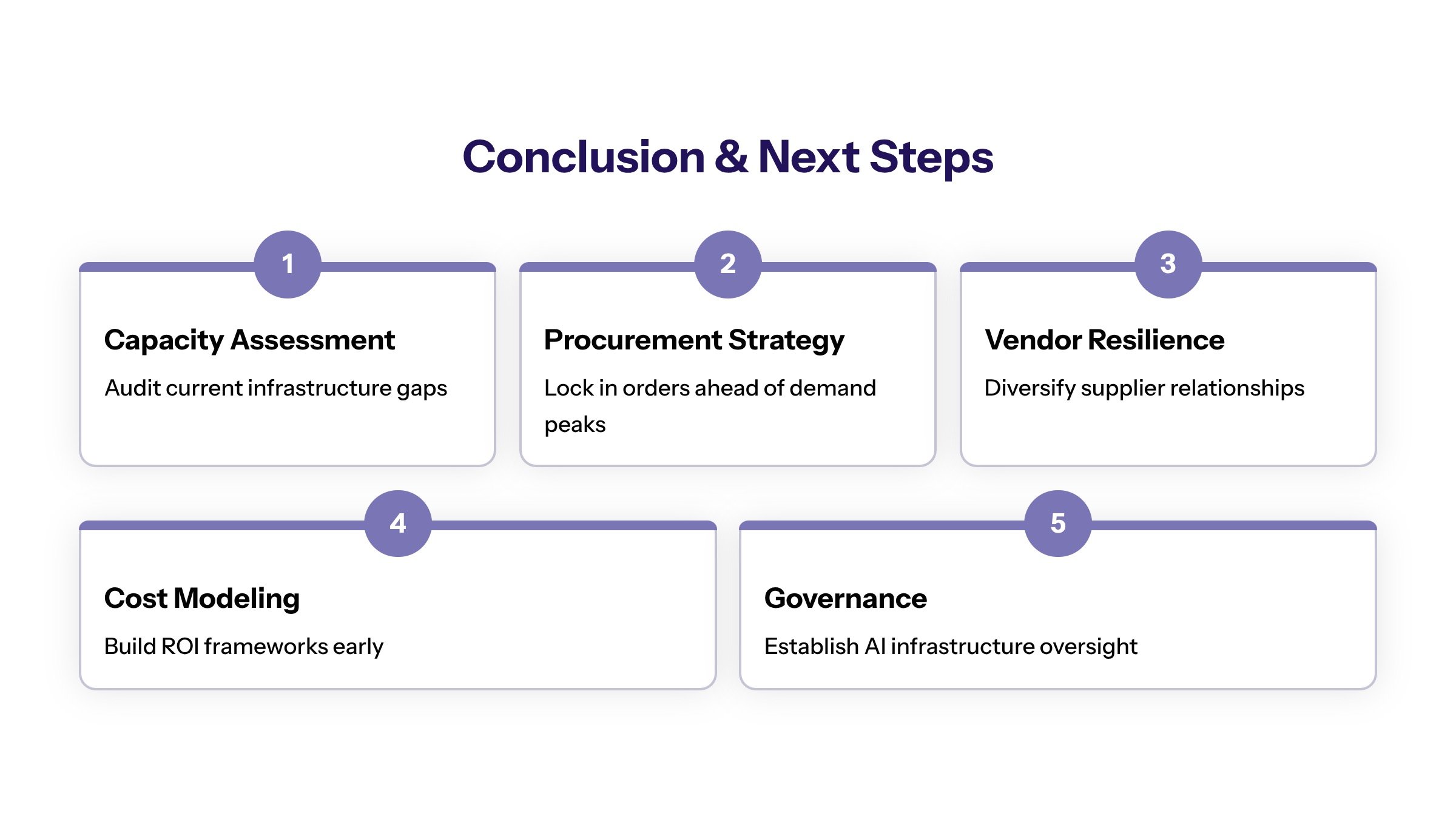
Foxconn’s Q1 2026 results—with revenue growth of 29.7% driven by AI server demand—confirm that enterprise AI infrastructure investment continues accelerating. The shift where cloud and networking products now exceed consumer electronics in revenue share represents a structural change in technology hardware markets that enterprise leaders must factor into strategic planning.
Immediate actionable next steps for enterprise technology leaders:
Conduct infrastructure capability assessment against AI workload projections for 2026-2028
Engage procurement teams on AI hardware availability and lead time expectations
Evaluate vendor relationships for supply chain resilience, particularly for GPU and accelerator access
Model total cost of ownership for planned AI deployments including facility readiness costs
Establish governance frameworks for AI infrastructure investments and technology refresh cycles
Related strategic considerations include AI-first architecture design (positioning AI as foundational capability rather than add-on), enterprise modernization strategy to support scalable compute, and hybrid cloud optimization to balance on-premise AI infrastructure with cloud provider services. The Thursday earnings announcement and subsequent analyst coverage provide ongoing opportunities to track industry momentum and adjust planning accordingly.
For enterprises committed to AI capabilities, the market signals from Foxconn’s performance are clear: demand remains strong, supply is expanding but constrained, and early investment in infrastructure relationships and procurement commitments offers competitive advantages. The story continues developing as production capacity catches up with enterprise requirements, but the fundamental trajectory of AI infrastructure spending appears durable.