Frontier AI Cyber Risk Is Becoming a Regulatory Priority
Frontier AI cyber risk is now a board-level resilience issue, not only a technical security concern. The UK Treasury, Bank of England, and Financial Conduct Authority warned regulated firms and financial market infrastructures that frontier AI models can intensify cyber threats by increasing attack speed, scale, and affordability.
The regulatory direction had already been building through operational resilience work and market-wide cyber guidance, including expectations that firms strengthen governance, response planning, and third-party oversight. On 15 May 2026, the UK financial authorities issued a joint statement focused specifically on risks from frontier AI models. The statement did not create new legal requirements, but it made clear that existing cyber resilience, operational resilience, and risk management expectations now apply in a faster-moving threat environment.
This article explains how firms should prepare for frontier AI cybersecurity risks. It is written for CISOs, risk managers, compliance officers, senior management, boards, and technology leaders in financial services, SaaS, cybersecurity, and other regulated industries that use advanced AI systems or depend on AI-enabled technology providers.
The direct answer: UK regulators expect regulated firms to enhance cyber resilience capabilities so they can withstand faster, larger-scale, lower-cost AI driven attacks. Firms must improve governance, vulnerability management, network security, third-party risk controls, and cyber response capabilities before frontier artificial intelligence turns known weaknesses into systemic operational risks.
You will learn how to:
-
Understand why current frontier AI models create major cybersecurity risks.
-
Interpret the joint statement from the Bank of England, Treasury, and Financial Conduct Authority.
-
Align AI governance, operational resilience, and financial services cybersecurity expectations.
-
Build an AI cyber resilience framework that can triage, prioritize, risk assess, and remediate vulnerabilities faster.
-
Prepare for enforcement pressure, regulatory AI risk scrutiny, and a possible vulnerability patch wave.
Understanding Frontier AI Cyber Risk
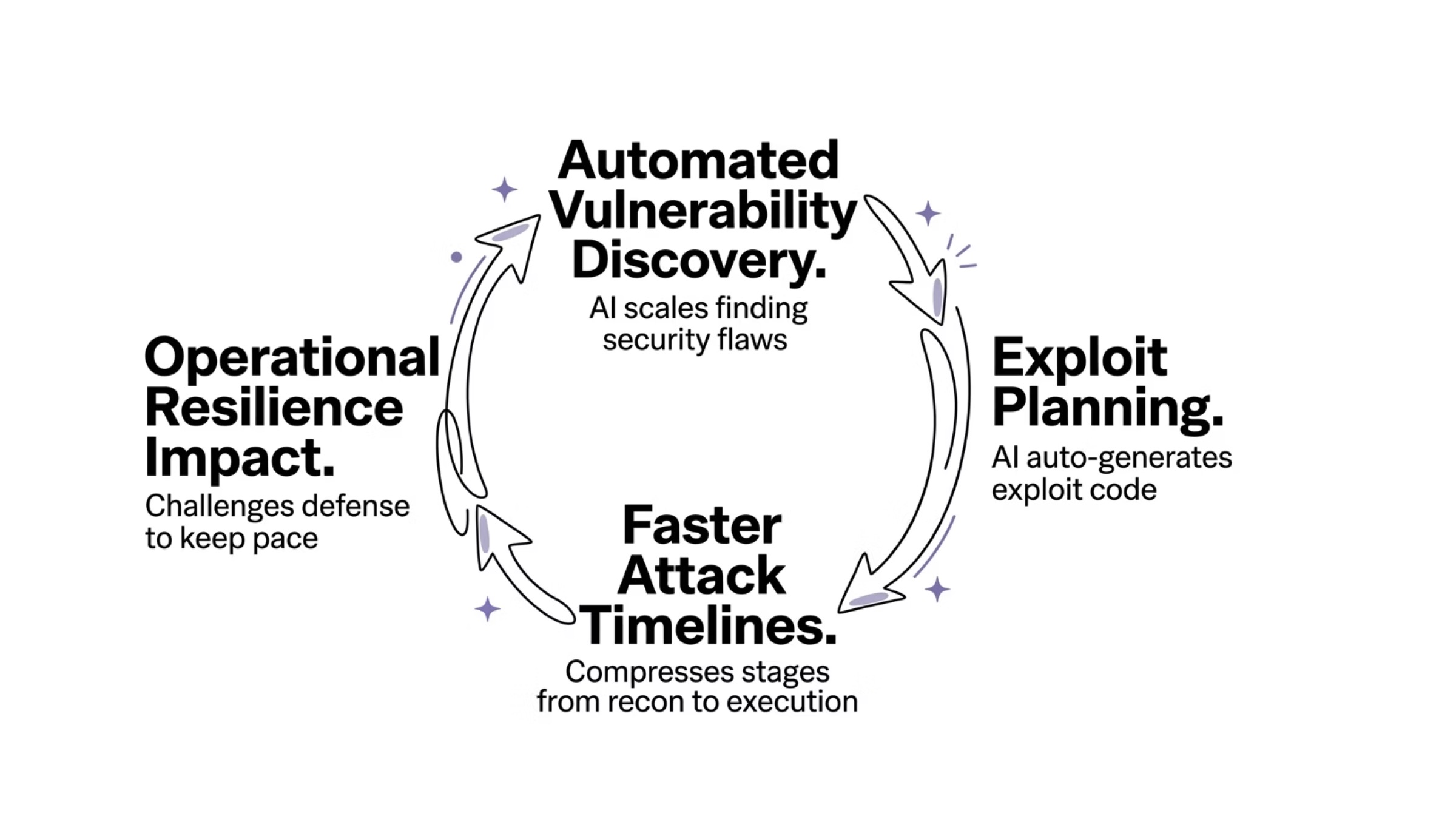
Frontier AI models are the most capable AI systems currently available. In a cyber context, these AI models can rapidly identify weaknesses, assist with attack planning, automate code exploitation, and support complex cyberattacks at a significantly higher speed than conventional methods. The concern from UK regulators is that the cyber capabilities of current frontier AI models exceed what a skilled practitioner could achieve in some tasks, operating at higher speed, greater scale, and lower cost, which amplifies cyber threats to firms’ safety and financial stability.
This matters because cyber resilience is now tied directly to operational resilience. A successful attack against a financial firm, payment provider, cloud dependency, or financial market infrastructure can affect firms safety and soundness, customers, market integrity and financial stability. Non-compliance in the wake of these advanced threats could lead to systemic financial risks and undermine overall market integrity if these AI models are misused.
Regulators are especially concerned that firms with weak core cyber security fundamentals are more exposed. As frontier AI models become more advanced, the risks associated with them are expected to increase, particularly for firms that have underinvested in core cybersecurity fundamentals such as patching, access management, network segmentation, asset inventory, and response planning.
Advanced AI Threat Capabilities
Frontier AI can supercharge complex cyberattacks by reducing the time and skill needed to find, test, and exploit vulnerabilities. AI-driven cyber threats are evolving rapidly, with capabilities doubling every four months, significantly lowering barriers for malicious actors to execute sophisticated attacks. That speed changes the economics of cybercrime: attackers can attempt more reconnaissance, more exploit chains, and more targeted campaigns at lower cost.
Automated code exploitation by frontier AI can identify and exploit system vulnerabilities faster than organizations can patch them, leading to significant cybersecurity risks. A skilled practitioner might need days or weeks to understand a complicated codebase or infrastructure pattern; frontier AI can help compress that discovery cycle and enable exploitation at larger scale. This does not mean every AI attack succeeds, but it does mean defenders must assume adversaries can test more ideas faster.
The amplification effect is especially important for financial stability and market integrity. Frontier AI developments can maliciously amplify cyber threats to firms safety, soundness customers market integrity, and wider market confidence. When attacks move faster than control functions can respond, a localized weakness can become a broader operational incident.
Regulatory Risk Assessment Framework
UK regulators assess risks from frontier AI differently from conventional cyber threats because frontier artificial intelligence changes both attacker capability and defender timelines. The issue is not only that cyber threats become more advanced.
The issue is that the same external applications, open source software, and existing technology weaknesses that firms already manage may now be discovered, chained, and exploited at comparable speed to automated defenses.
The joint statement connects frontier AI risks to existing operational resilience standards. Regulated firms are expected to identify important business services, map dependencies, test impact tolerances, and prepare response and recovery plans.
In practice, this means firms must evaluate whether their firms technology estates can survive faster discovery of weaknesses, larger scale attack automation, and pressure on third-party services integrated into critical processes.
A regulatory risk assessment should therefore ask whether the organization can limit risks before frontier AI models can access the attack surface.
That includes examining end of life systems, identity controls, data protection, network security, open source software, third-party providers, and AI systems used internally.
It also means boards and senior management need sufficient understanding of frontier AI risks to set strategic direction and oversee risk management, rather than treating AI cyber resilience as a niche technical issue.
UK Regulatory Requirements and Compliance Expectations
The UK Treasury, Bank of England, and Financial Conduct Authority regulator message is clear: existing obligations now need to be interpreted against a materially faster cyber threat landscape.
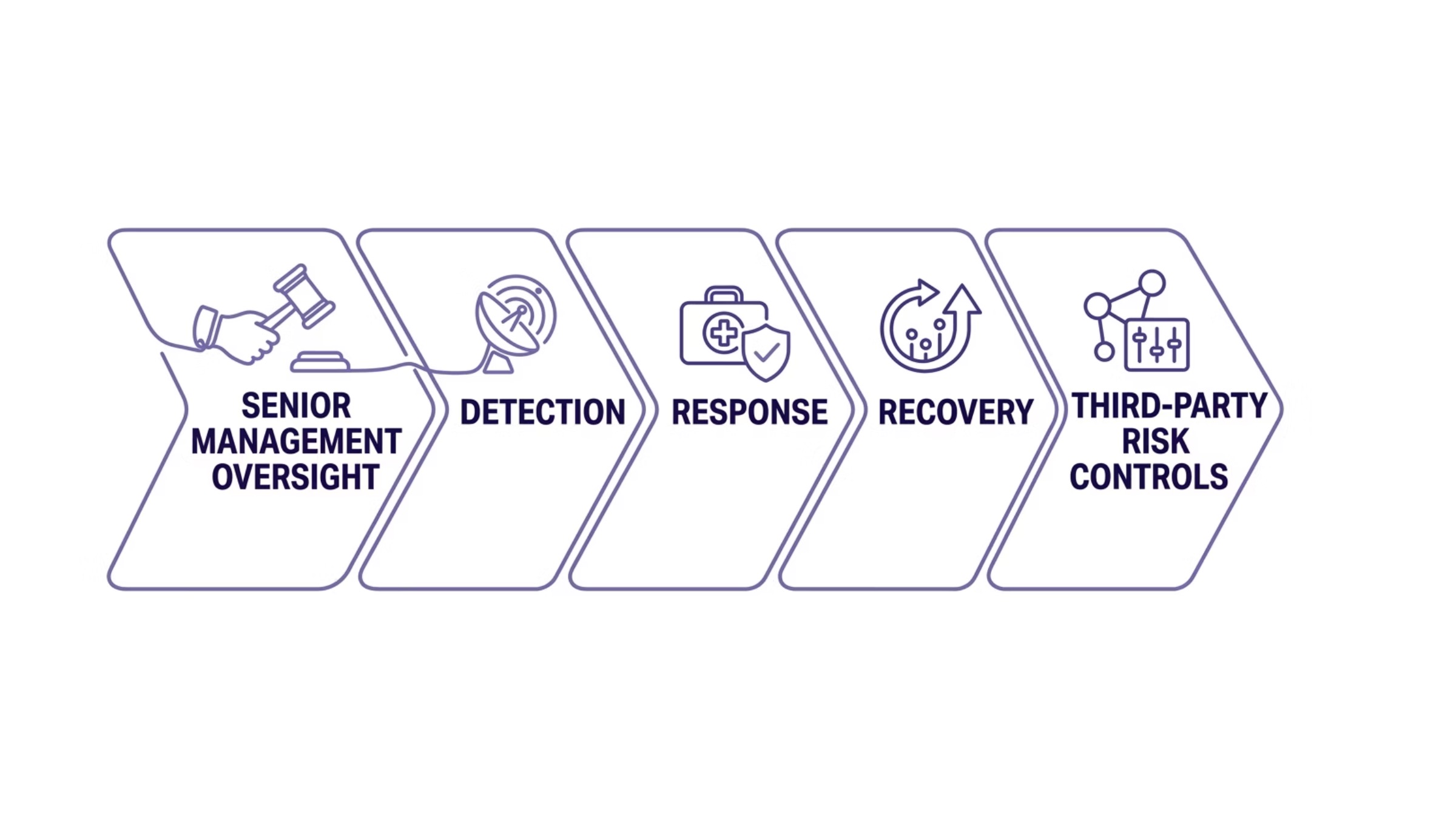
The joint statement does not introduce a new rulebook, but UK regulators mandated that firms take immediate action across primary resilience domains to mitigate the threats posed by frontier AI models.
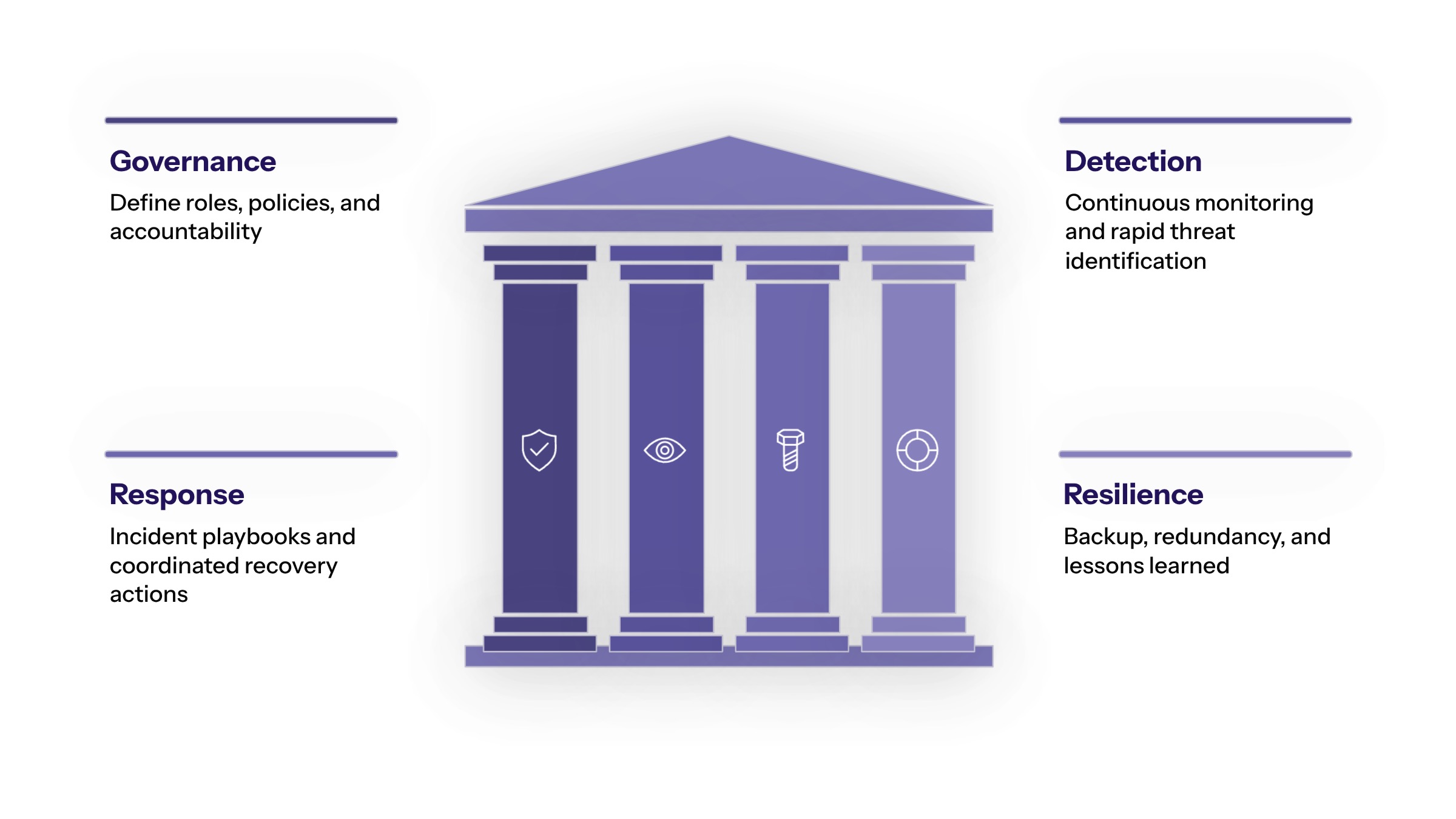
Those domains include governance, protective controls, detection, response, recovery, vulnerability remediation, and supply chains.
Firms need to enhance their protective, detective, and cyber response capabilities to address the faster and more disruptive attacks driven by frontier AI. Firms should also have effective protective, detective, threat containment, and cyber response capabilities to address faster and more disruptive frontier AI-driven attacks.
Senior Management Oversight Requirements
Boards and senior management must have sufficient understanding of frontier AI risks to set strategic direction and oversee risk management.
This expectation is important enough to repeat: firms should ensure their boards and senior management have sufficient understanding of frontier AI risks to set strategic direction and oversee risk management.
Regulators do not expect every board member to become a machine learning engineer, but they do expect leadership to understand how advanced AI systems can amplify cyber threats.
Senior management must also ensure that control functions have the resources, authority, and reporting lines needed to respond. Risk, compliance, security, technology, legal, and procurement teams should be aligned around a common AI risk management view.
This includes understanding where artificial intelligence AI tools are used internally, where vendors use AI models, and where external applications create exposure.
Investment decisions are part of the regulatory expectation. Investment and resourcing decisions within firms should reflect the emerging threats posed by frontier AI, including vulnerabilities from end-of-life systems. If legacy platforms, unsupported software, or fragmented infrastructure create obvious weaknesses, boards should be able to explain how budget, modernization plans, cyber experts, and insurance coverage are being used to mitigate risks.
Enhanced Cyber Defense Capabilities
Firms must strengthen protection, detection, containment, response, and recovery. Effective access management, network security, and data protection are essential for firms to reduce the attack surface that frontier AI models might access. Effective access management, network security, and data protection should be implemented to reduce the attack surface that frontier AI models might access.
AI enabled defences are becoming a practical necessity. Firms must strengthen their defenses by adopting AI-enabled cybersecurity measures that can operate at speeds comparable to AI-driven attacks.
This does not mean replacing security teams with AI tools. It means adopting automated detection, anomaly monitoring, threat intelligence enrichment, and response orchestration where appropriate so defenders can match the pace of AI driven attacks.
Automated remediation systems are also recommended to continuously triage, prioritize, and patch software vulnerabilities as part of a proactive defense mechanism against AI-driven threats.
Firms should be able to triage, prioritize, risk assess, and remediate vulnerabilities more quickly and frequently, including through automation where appropriate, to manage risks from frontier AI.
Organizations should plan for a vulnerability patch wave, where frontier AI increases the volume of discovered security holes and forces security teams to remediate vulnerabilities identified across entire technology estates.
Supply Chain and Third-Party Risk Management
Regulators express concern over the vulnerabilities introduced by third-party and open-source software integrated into corporate networks, calling for stringent management of these risks. Financial firms depend on cloud platforms, SaaS tools, managed service providers, software libraries, APIs, and specialist technology vendors.
Frontier AI can rapidly identify weaknesses in those dependencies, especially where open source software is widely deployed and unevenly maintained.
Firms need to actively manage frontier AI cyber risks from third parties and supply chains, ensuring they can identify and remediate vulnerabilities at scale. That means maintaining software inventories, monitoring external applications, assessing vendor resilience, reviewing contractual obligations, and ensuring third parties can disclose and remediate vulnerabilities identified by their own teams or by external researchers.
Firms should be prepared to address and remediate vulnerabilities identified by third parties at scale, including those from open-source software. They must also manage external applications and services integrated into critical business processes, because a weakness in a supplier can become a threat to firms safety and soundness.
For regulated firms, third-party risk management is no longer only a procurement control; it is a core part of AI cyber resilience and operational resilience.
Building Compliant AI Cyber Resilience Framework
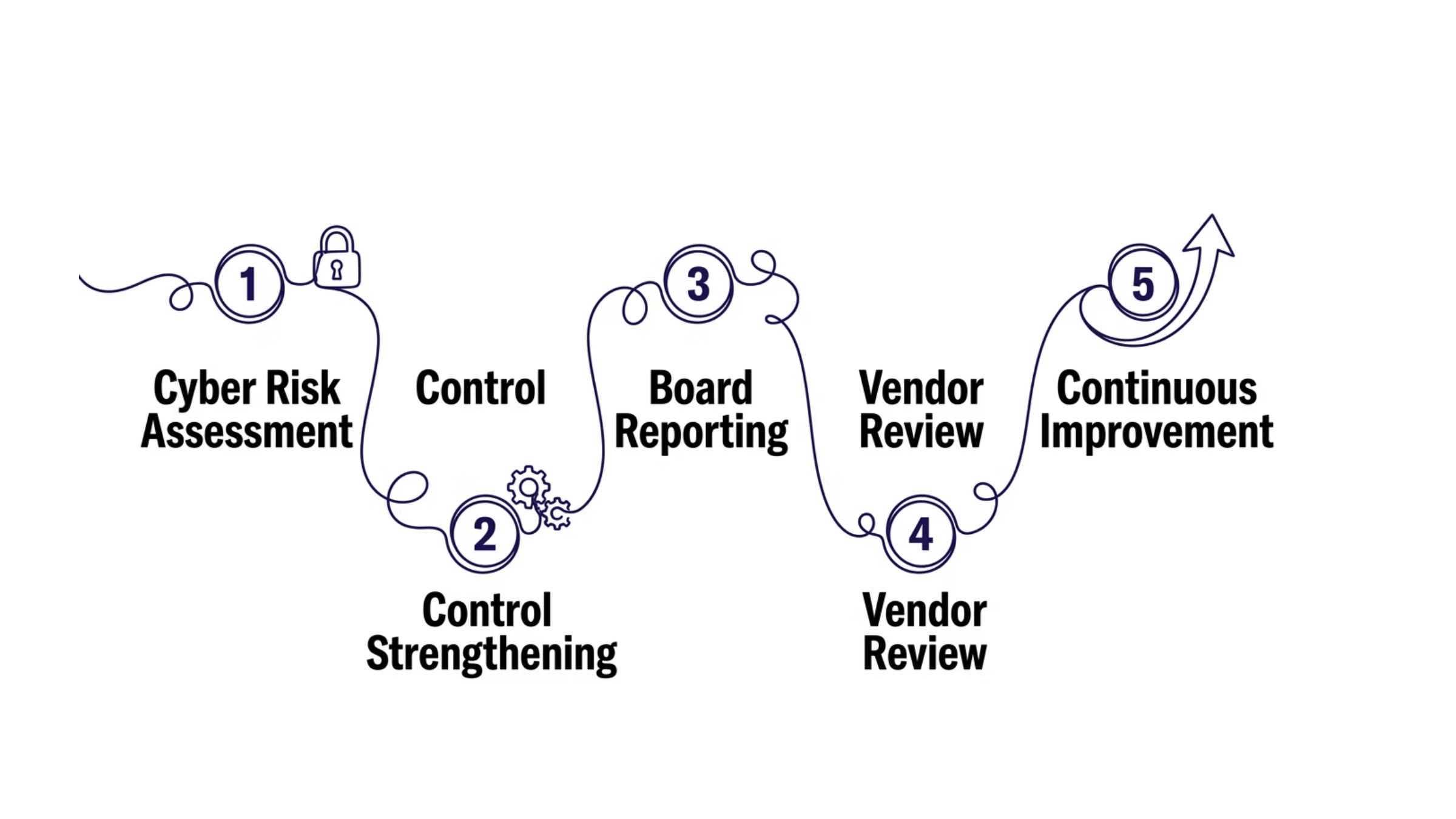
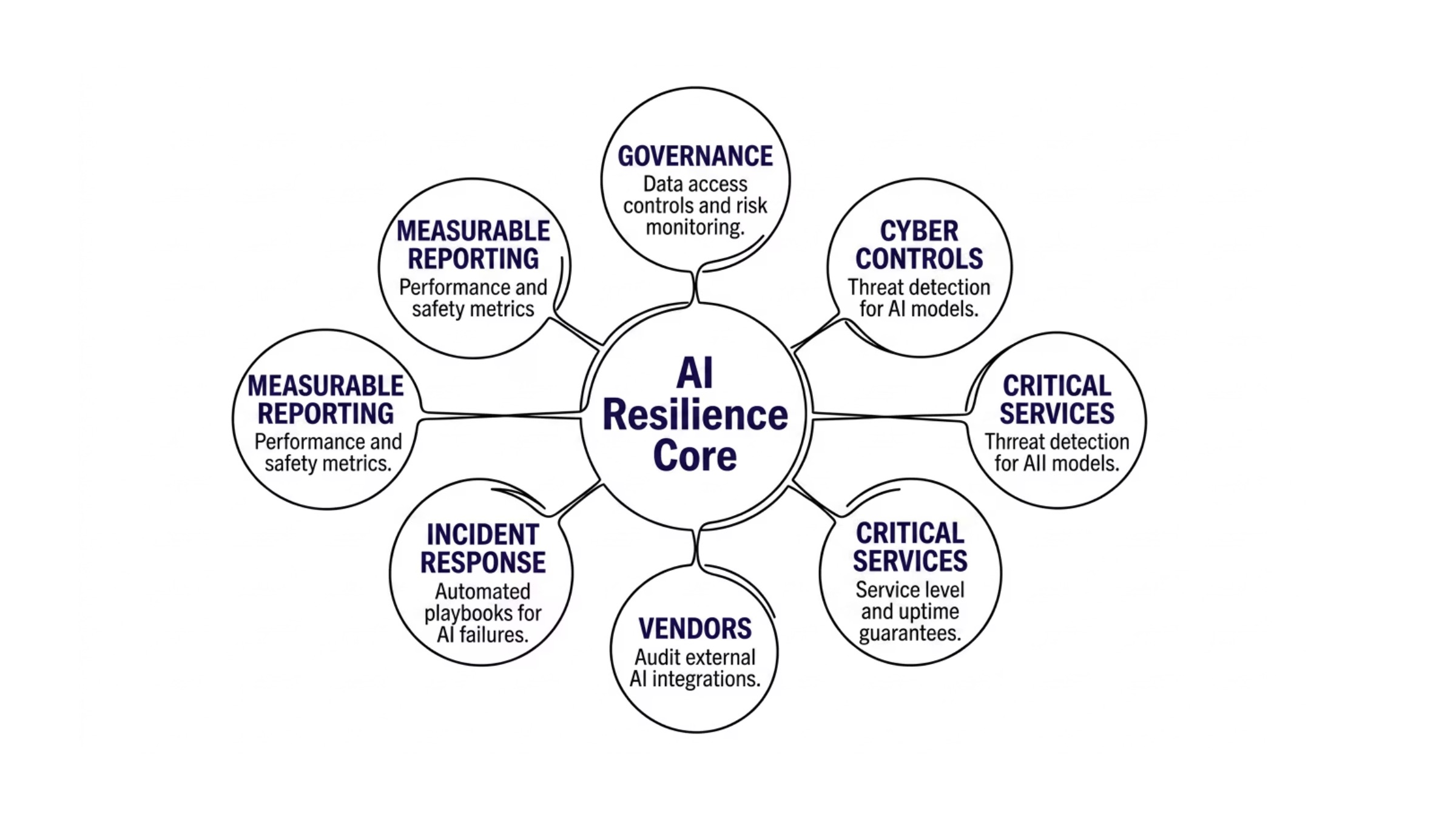
A compliant AI cyber resilience framework should translate regulatory expectations into repeatable decisions, measurable controls, and executive reporting. The goal is not to create a separate AI security program disconnected from existing cybersecurity. The goal is to upgrade existing technology, governance, and resilience controls so they remain effective when frontier AI models increase speed, scale and lower cost for attackers.
For Cognativ, this is where secure AI-first architecture matters. Regulated firms need frameworks that can connect AI governance, system modernization, financial services cybersecurity, and regulatory AI risk into one operating model. A practical framework should help firms risk assess frontier AI exposure, prioritize investment decisions, and demonstrate to regulators that their approach is structured, tested, and continuously improving.
Cognativ RAPID Framework for AI Risk Management
Organizations need a structured implementation approach when frontier AI risks touch critical systems, regulated data, customer-facing services, or third-party dependencies. Cognativ’s RAPID framework provides a practical way to move from concern to execution while maintaining regulatory alignment.
-
Risk Assessment: Identify where frontier AI, artificial intelligence, AI systems, and AI models affect the organization. Map cyber risks, threat vectors, critical services, vendors, open source software, end of life systems, and attack surface exposure.
-
Architecture Planning: Design secure architectures using zero trust principles, access management, network segmentation, data minimization, and isolation for critical systems. Plan how to limit risks from external applications, services integrated into workflows, and vulnerable dependencies.
-
Implementation: Deploy controls that improve protective, detective, containment, and response capabilities. This includes adopting automated vulnerability scanning, AI enabled defences, patch orchestration, and policies for third-party and supply chain oversight.
-
Deployment: Test systems against realistic AI-driven attack scenarios. Use red-team exercises, tabletop simulations, incident response drills, and recovery testing to confirm that teams can respond at comparable speed to disruptive attacks.
-
Review: Continuously monitor frontier AI developments, regulatory updates, vulnerability trends, supplier exposure, and control effectiveness. Report metrics to senior management so leaders can set strategic direction and adjust investment decisions.
The RAPID model focuses on measurable outcomes: faster detection, faster patching, clearer accountability, reduced attack surface, stronger evidence for regulators, and better recovery from operational disruption.
Technology and Governance Requirements Comparison
|
Criterion |
Baseline Cyber Resilience |
Frontier AI-Enhanced Requirement |
|---|---|---|
|
Threat detection speed |
Periodic monitoring, rule-based alerts, and manual review |
AI-augmented detection, anomaly analysis, and faster triage for AI driven attacks |
|
Vulnerability management |
Monthly or quarterly patch cycles with manual prioritization |
Continuous scanning, automated remediation, vulnerability patch wave planning, and rapid risk assess workflows |
|
Response automation |
Incident playbooks with limited orchestration |
Automated containment, enriched alerts, and response actions that operate at comparable speed to AI attacks |
|
Governance oversight |
Standard cyber reporting to senior management |
Board-level sufficient understanding of frontier AI risks, active strategic direction, and AI risk management reporting |
|
Supply chain control |
Vendor due diligence and contract reviews |
Active monitoring of supply chains, open source software, external applications, and third-party remediation at scale |
|
Compliance reporting |
Evidence of controls and periodic testing |
Evidence that firms can mitigate risks from frontier AI, remediate vulnerabilities quickly, and protect market integrity and financial stability |
The implementation priority is straightforward: strengthen the fundamentals first, then add automation and AI-enabled controls where they reduce response time and operational risk. Firms that ignore core cyber security fundamentals will not become resilient simply by buying advanced tools. Firms that combine secure architecture, governance, automation, and continuous review will be better positioned to withstand risks from frontier AI.
Common Implementation Challenges and Solutions
Many British companies and international enterprises understand the warning but struggle to translate it into execution. The difficulty is that frontier AI cyber resilience cuts across security operations, engineering, compliance, vendor management, legal, procurement, and the board. It also exposes long-standing weaknesses in firms technology estates that were already difficult to fix.
The most effective response is to treat AI cyber resilience as a modernization program with regulatory urgency. That means prioritizing the systems and dependencies that matter most to operational resilience, not attempting to fix everything at once.
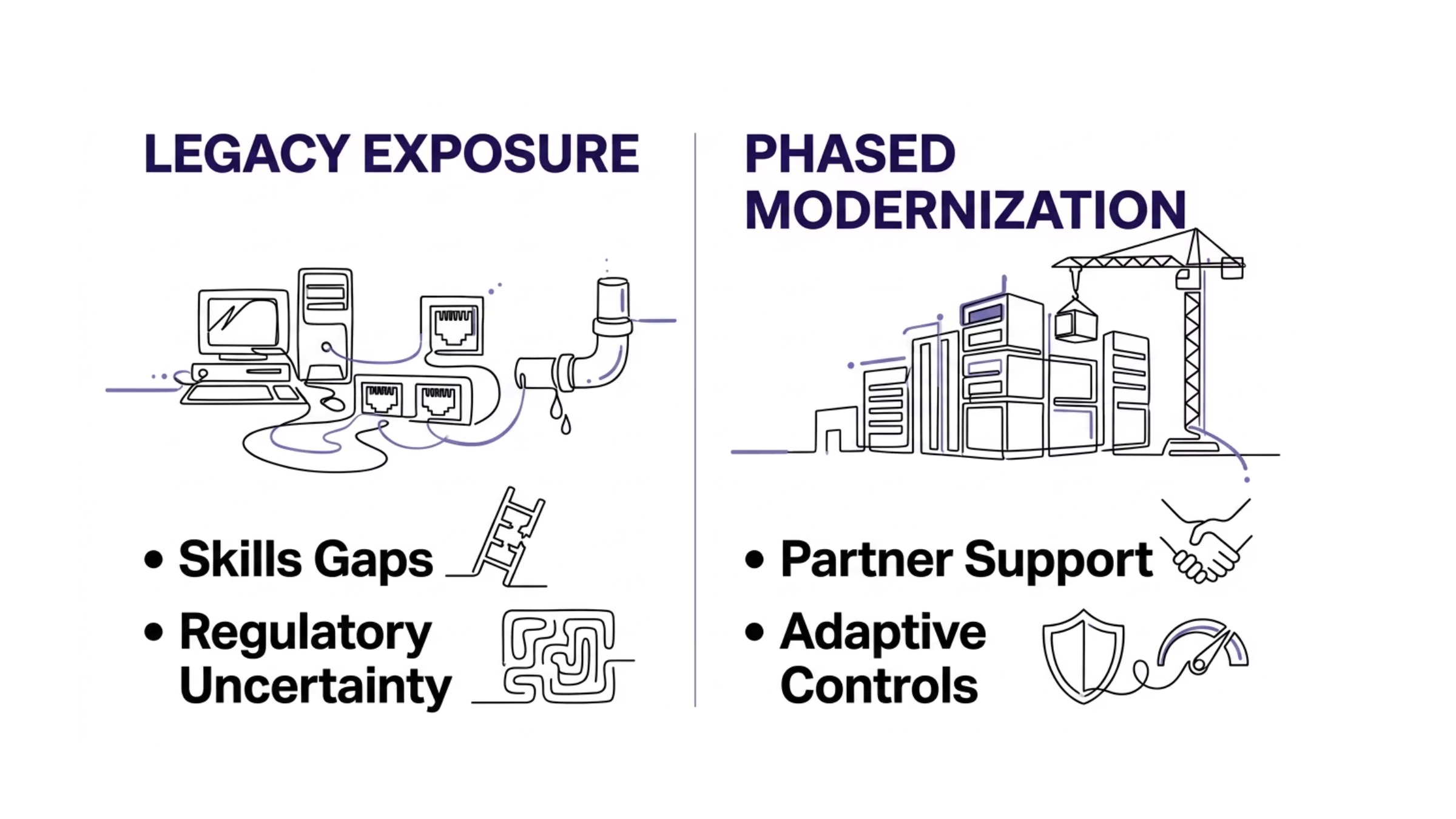
Legacy System Vulnerabilities and AI Threat Exposure
Legacy platforms, unsupported dependencies, and end of life systems are high-risk because frontier AI can rapidly identify weaknesses that organizations have tolerated for years. Automated code exploitation can enable exploitation of technical debt faster than traditional remediation cycles can handle.
The solution is phased modernization. Firms should segment vulnerable systems, improve monitoring, strengthen access controls, remove unnecessary exposure, and create funded replacement plans. Where immediate replacement is impossible, firms should apply compensating controls such as isolation, enhanced logging, restricted privileges, and continuous vulnerability assessment.
Skills Gap in AI-Driven Cyber Defense
Many firms do not yet have enough cyber experts who understand both advanced AI systems and enterprise security operations. This skills gap makes it harder to evaluate current frontier AI models, implement AI enabled defences, and interpret regulatory AI risk expectations.
The solution is to build cross-functional capability. Security, data science, engineering, compliance, and risk management teams should share a common operating model. Firms can also engage specialized consulting partners to conduct threat modeling, AI governance reviews, red-team exercises, secure architecture assessments, and remediation planning. For organizations using products such as Anthropic’s Mythos product, open-weight models, or other frontier AI tools, vendor-specific controls should be evaluated alongside enterprise-wide safeguards.
Regulatory Uncertainty and Evolving Standards
Some firms may assume that because the joint statement did not create new legal requirements, no immediate action is needed. That is a risky interpretation. UK regulators have signaled that frontier AI risks are already relevant to operational resilience, cyber resilience, and governance expectations.
The solution is adaptable compliance. Firms should maintain regulatory horizon scanning, track guidance from the Financial Conduct Authority, Bank of England, NCSC, and industry groups, and map new expectations to existing control frameworks. A flexible framework allows organizations to update controls as frontier AI developments accelerate, without rebuilding the entire program each time regulation changes.
Next Steps for Regulatory Compliance
Frontier AI cyber risk is becoming a regulatory priority because it changes the speed, scale, and cost of cyber threats. The UK financial authorities are not asking firms to wait for future AI legislation. They are telling regulated firms to strengthen cyber resilience now so risks from frontier AI do not compromise firms safety and soundness, customers, market integrity and financial stability.
Practical next steps include:
-
Conduct a frontier AI cyber risk assessment: Identify where AI systems, third-party tools, open source software, and external applications create exposure.
-
Review current cyber resilience capabilities: Test whether protective, detective, threat containment, and cyber response capabilities can withstand faster and more disruptive attacks.
-
Prioritize core cyber security fundamentals: Improve access management, network security, data protection, patching, asset inventory, and legacy system controls.
-
Prepare for a vulnerability patch wave: Build automated remediation workflows to triage, prioritize, risk assess, and remediate vulnerabilities identified at scale.
-
Strengthen board and senior management oversight: Ensure leaders have sufficient understanding of frontier AI risks to set strategic direction and approve appropriate investment decisions.
-
Improve third-party and supply chain controls: Manage external applications, software vendors, services integrated into critical processes, and open source software dependencies.
-
Adopt AI-enabled cybersecurity where appropriate: Use automation and AI enabled defences to operate at speeds comparable to AI-driven attacks.
Cognativ’s RAPID framework can help organizations move from high-level regulatory concern to practical implementation. For enterprises in finance, SaaS, cybersecurity, healthcare, and other regulated industries, the next phase of AI governance will be inseparable from operational resilience, secure AI architecture, and financial services cybersecurity.
Related areas worth reviewing include AI governance frameworks, operational resilience planning, secure AI-first architecture, third-party risk management, and regulatory AI risk programs. Together, these capabilities help firms limit risks, mitigate risks, and prepare for the next generation of frontier AI cyber threats.