
Google and SpaceX Explore Orbital AI Data Centers: Revolutionary Space Computing Partnership
Google and SpaceX are negotiating a major rocket-launch deal to deploy Google’s experimental orbital AI data centers into space, marking a pivotal shift in how tech companies approach computing infrastructure. This partnership, reported on May 12, 2026, represents one of the most ambitious attempts to solve the escalating resource constraints facing AI development on Earth.
This article examines the technical foundations, partnership dynamics, and strategic implications of space-based AI computing for enterprise technology leaders, AI infrastructure architects, and CIOs evaluating next-generation computing strategies. The scope covers current negotiations, implementation timelines, and the technical requirements for orbital data centers while addressing the challenges that could determine commercial viability.
Google is exploring partnerships with SpaceX to launch AI data centers in space, leveraging orbital infrastructure to overcome terrestrial computing limitations including power grid constraints, water cooling requirements, and land availability challenges. Elon Musk has stated that placing AI data centers in space could be the most cost-effective solution for building these resource-intensive facilities.
Key outcomes readers will gain from this analysis:
Understanding of how orbital AI data centers address terrestrial infrastructure bottlenecks
Clarity on Google-SpaceX partnership negotiations and competitive dynamics with other rocket launch companies
Technical requirements for space-based computing hardware and communications
Cost comparison frameworks between orbital and ground-based data center operations
Timeline expectations for prototype deployment and commercial scaling
Understanding Orbital Data Centers and Space Data Centers
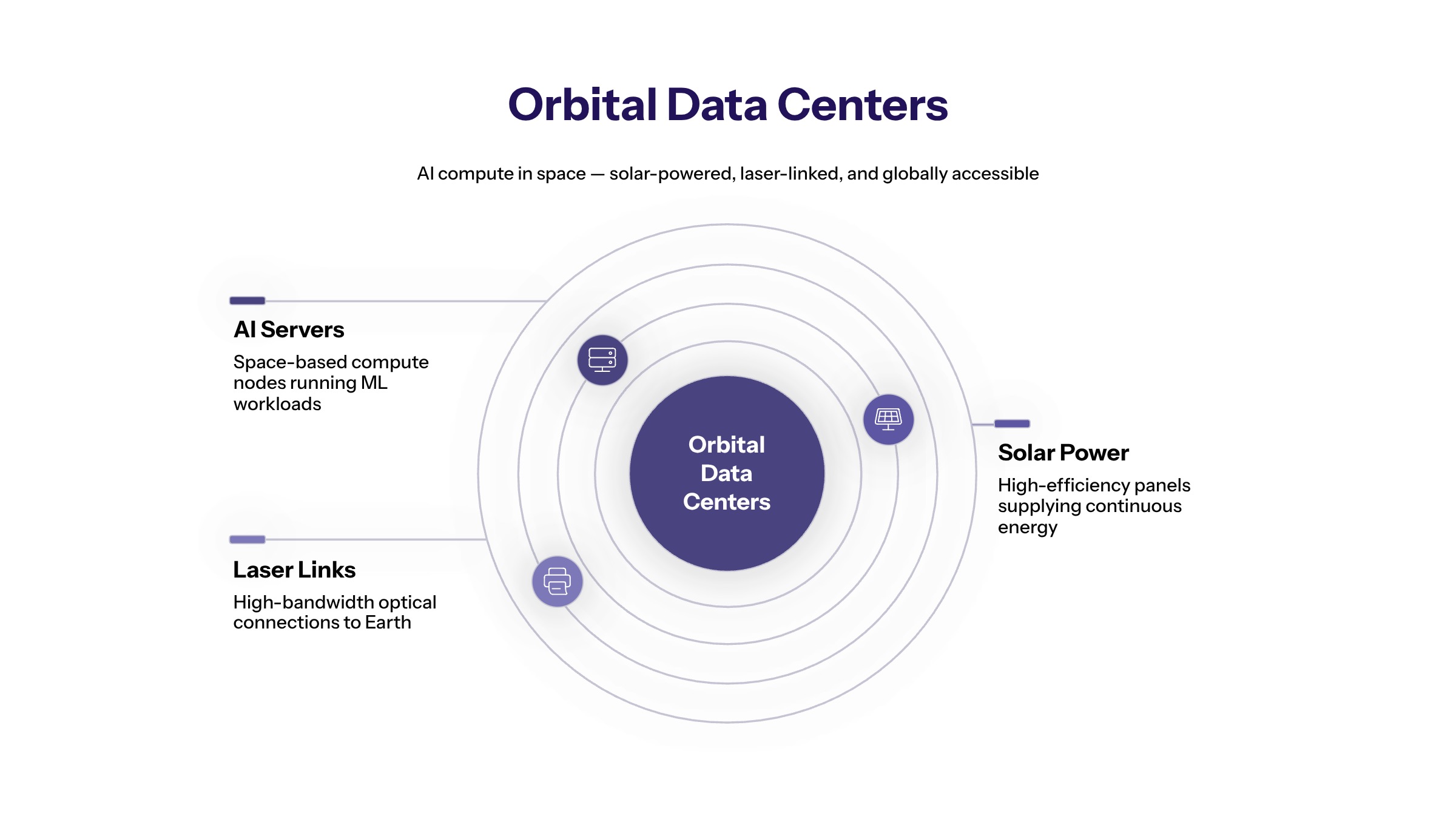
Orbital data centers, also known as space data centers, are computing systems deployed in Earth orbit that handle AI workloads—training, inference, and data processing—powered by solar energy and connected through high-bandwidth laser links. These facilities operate fundamentally differently from terrestrial data centers, functioning in microgravity under vacuum conditions with exposure to radiation and extreme thermal cycling.
Core Technology Components of Orbital Data Centers
Satellite-mounted computing hardware forms the foundation of orbital AI infrastructure, requiring specialized accelerators hardened against cosmic radiation and solar particles. Google is utilizing its internal Project Suncatcher research initiative to design a network of solar-powered satellites configured into an orbital AI cloud cluster. Power systems rely on expansive solar arrays that can operate nearly continuously in optimal orbits, while energy storage handles eclipse periods when satellites pass through Earth’s shadow.
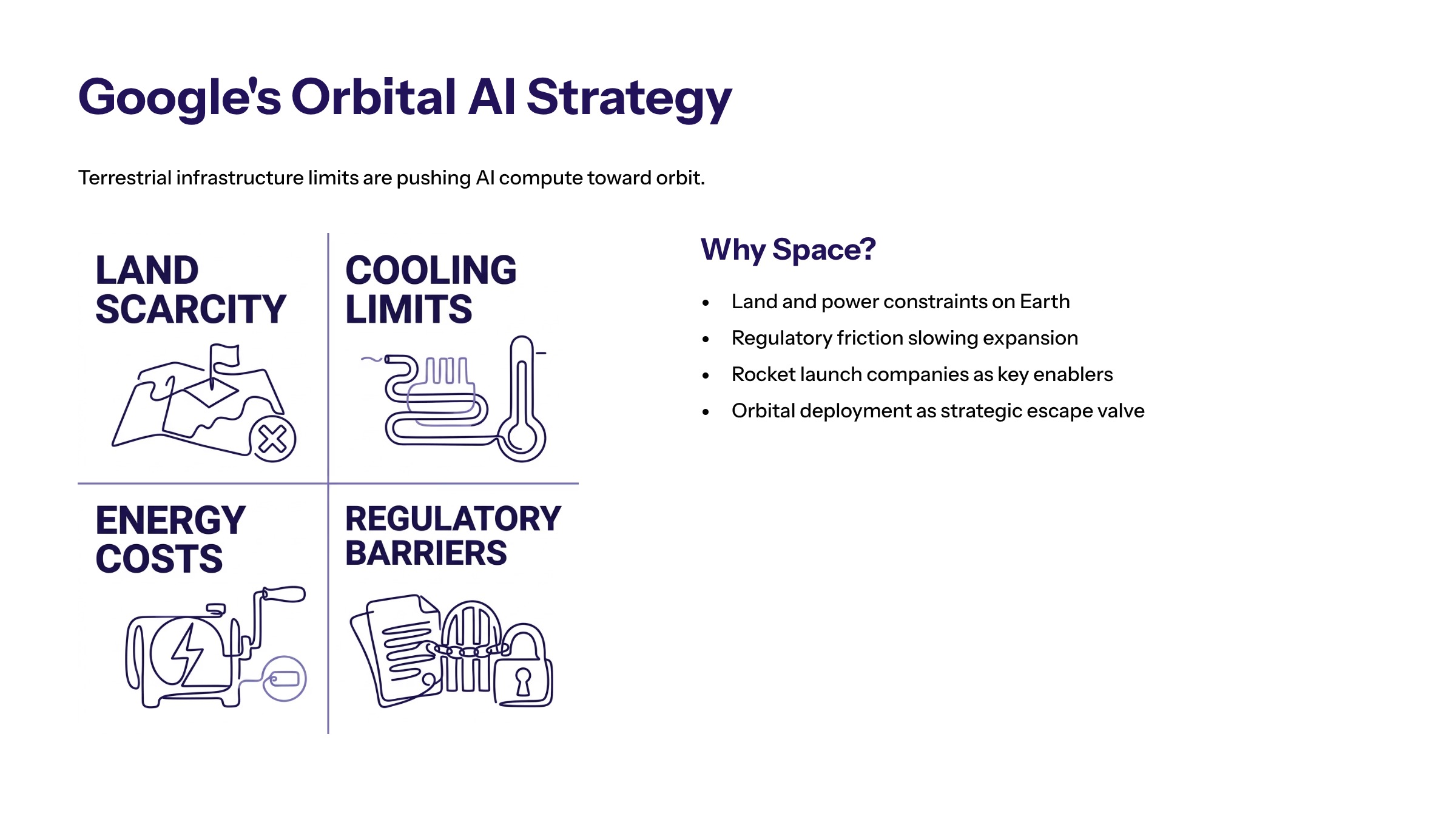
The connection between orbital infrastructure and terrestrial constraints is direct: processing power in space removes the need to build data centers on physical land, addressing local opposition and environmental regulations on Earth. AI data centers on Earth require immense power and water for cooling, which contributes significantly to operating expenses. The vacuum of space allows for passive radiative cooling of high-powered GPU processors, eliminating the need for massive amounts of water required for cooling terrestrial data centers.
Operational Advantages of Space Data Centers
Satellites in Low Earth Orbit (LEO) can access constant, direct sunlight without nighttime interruptions, providing nearly free, sustainable energy. Space-based facilities operating in sun-synchronous orbits capture up to 8 times more solar energy than panels on Earth, generating near-continuous power. This energy advantage addresses one of the most significant bottlenecks facing AI infrastructure expansion.
Operating in optimal orbits provides satellites with constant, direct sunlight, delivering predictable solar energy without day-night interruption. The shift toward orbital AI data centers represents a pivot to overcome terrestrial power grid, water cooling, and land constraints. Orbital data centers can improve data processing latency for global users by processing data on-site and delivering it via satellite networks.
For enterprise AI operations, these advantages translate into solutions for resource bottlenecks limiting AI model training and deployment. Artificial intelligence compute requirements are outpacing what terrestrial land, power, and water resources can support. Tech companies are exploring the creation of orbital AI data centers as a way to address the increasing demand for computing power that terrestrial facilities struggle to meet.
Understanding these foundational elements provides the context needed to evaluate specific partnership developments between major technology and aerospace companies.
Google’s Orbital AI Strategy and the Role of Rocket Launch Companies
Google faces increasing infrastructure limits across energy costs, cooling capacity, land availability, and regulatory friction. To maintain pace with frontier model training requirements for large language models and multimodal AI systems, the company has determined that new approaches beyond traditional data center expansion are needed.
Partnership Negotiations with SpaceX and Other Rocket Launch Companies
Google is in discussions with SpaceX to potentially launch AI data centers into space, as part of a broader trend among tech companies exploring this innovative approach. The talks center on a comprehensive rocket launch deal that would leverage SpaceX’s mass-to-orbit capabilities, particularly the Starship rocket program designed for high-capacity payload delivery.
These negotiations extend beyond simple launch services to include strategic alignment on orbital platform development. Google held approximately 6.11% ownership in SpaceX at the end of 2025, indicating existing financial ties that strengthen mutual interest in collaborative infrastructure projects. The discussions reported by Reuters and other outlets suggest both companies see significant potential in combining Google’s AI computing expertise with SpaceX’s launch and orbital operations capabilities.
Google is also exploring partnerships with other rocket launch companies to maintain negotiating leverage and ensure backup options. Blue Origin has proposed its own orbital computing project called “Project Sunrise” and is seeking FCC authorization for thousands of satellites configured for in-orbit computation. Planet Labs represents another potential partner for satellite manufacturing and launching small prototypical compute payloads.
This multi-track approach allows Google to compare technical capabilities, cost structures, and timeline commitments across rocket launch companies while reducing dependency on any single provider. The company’s willingness to engage multiple parties suggests orbital computing has reached a serious strategic priority rather than exploratory research.
Implementation Timeline for Orbital Data Centers
Google CEO Sundar Pichai mentioned that the company plans to test the viability of orbital data centers by sending small racks of machines into space within the next decade. The development of AI data centers in space is seen as a potential new normal within the next decade, with initial tests involving sending small racks of machines into orbit to evaluate their viability.
Project Suncatcher’s roadmap includes deploying two demonstration satellites by 2027, working with Planet Labs to test orbiting compute hardware including radiation resistance, thermal control, and communications systems. If prototypes succeed, scale-up to larger constellations would follow in the late 2020s and early 2030s.
Key milestones include:
2026-2027: Prototype satellite development and initial launch preparations
2027: Demonstration satellite deployment testing TPU hardware in orbit
2028-2030: Expanded constellation deployment if prototypes prove successful
Early 2030s: Potential commercial-scale orbital data center operations
These timelines set the stage for examining SpaceX’s complementary capabilities and competitive positioning in the emerging space computing market.
SpaceX’s Role in Space-Based Computing and Orbital Data Centers
SpaceX has positioned orbital AI compute as a strategic priority, including it prominently in their IPO S-1 filing alongside lunar infrastructure and interplanetary industrialization initiatives. The company’s acquisition of xAI in early 2026 and construction of the Colossus 1 terrestrial supercomputer cluster demonstrate commitment to AI computing across both Earth and space environments.
Technical Infrastructure Capabilities for Orbital Data Centers
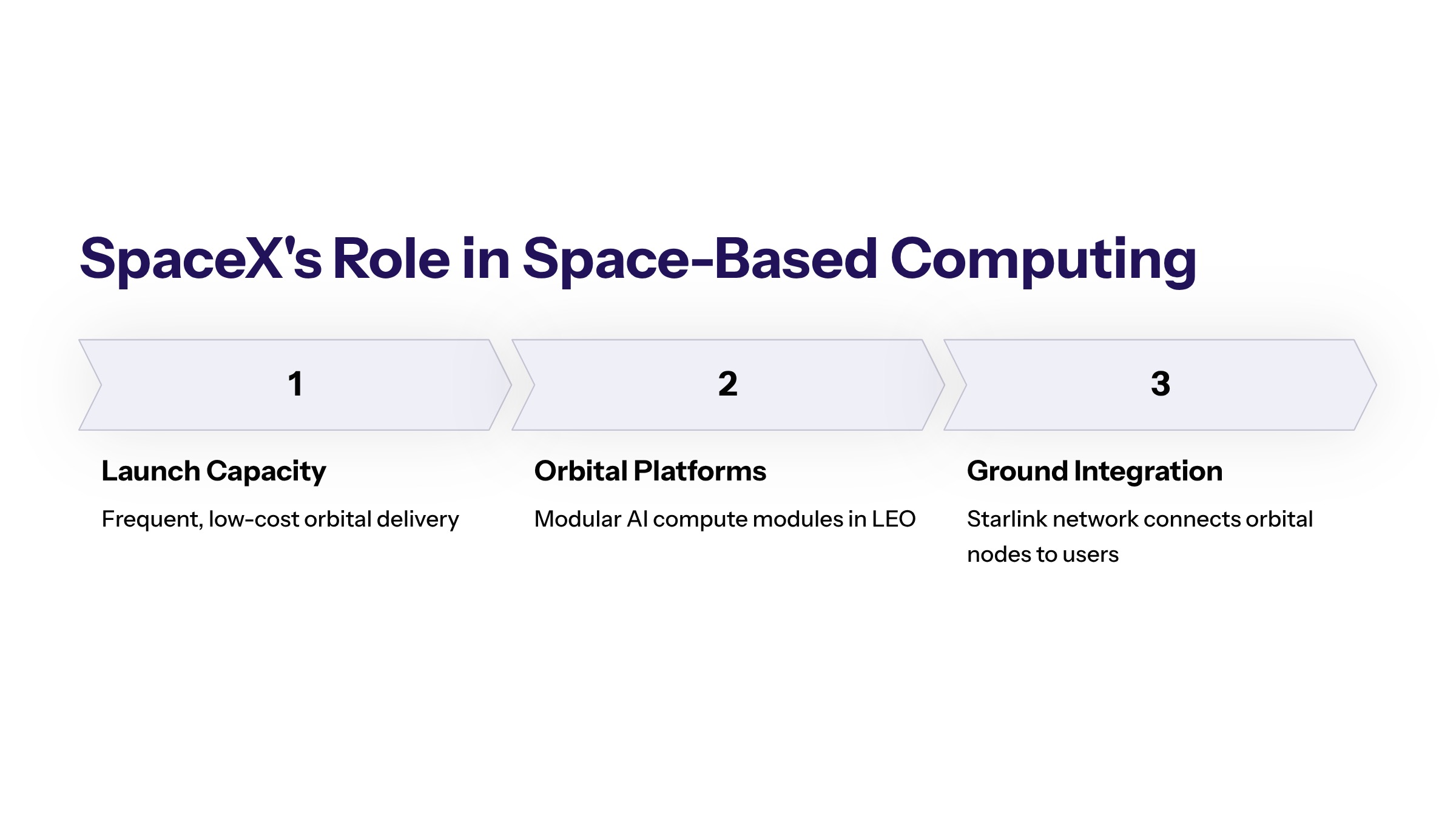
SpaceX brings unmatched rocket launch capacity and satellite deployment experience to orbital data center partnerships. Through Starlink operations, the company has built extensive capabilities in deploying, managing, and maintaining large constellations—skills directly applicable to orbital computing platforms in orbit maintenance, network connectivity, and inter-satellite networking.
The Starship rocket program, while still undergoing testing, promises dramatically reduced launch costs per kilogram that would make orbital data center deployment economically viable. Data will be routed dynamically between tightly clustered satellite formations using laser links, enabling fast global routing through space. This communication infrastructure, already proven through Starlink operations, provides the backbone for orbital computing networks.
Competing Partnerships and Market Position in Orbital Data Centers
SpaceX has established significant terrestrial computing capacity through the Colossus 1 cluster, comprising over 220,000 NVIDIA GPUs including H100, H200, and GB200 accelerators drawing approximately 300 megawatts of power. The company has leveraged this capacity through deals with AI development firms, notably providing Anthropic with full access to this computing infrastructure.
This positioning transforms SpaceX from a pure launch provider into a direct competitor in the AI compute market for frontier model training and deployment. Partnerships with Amazon, Google, and Broadcom emerging in parallel indicate SpaceX’s strategy to become a comprehensive computing infrastructure provider spanning terrestrial and orbital environments.
Cost and Operational Models Comparing Orbital and Terrestrial Data Centers
Building AI data centers in space could significantly reduce operational and maintenance costs due to the availability of solar power, which can be harnessed more effectively in space than on Earth. AI data centers in space are being considered as a solution to the limitations faced by terrestrial data centers, which require large amounts of water for cooling and have high power demands that are expected to increase.
Factor | Terrestrial Data Centers | Orbital Data Centers |
|---|---|---|
Power Source | Grid electricity (variable cost) | Solar (near-zero marginal cost after deployment) |
Cooling | Water-intensive systems ($$$) | Passive radiative cooling (minimal ongoing cost) |
Land | Acquisition and permitting required | No land constraints |
Maintenance | Regular physical access | Remote operation, difficult repairs |
Initial Investment | Moderate to high | Very high (launch costs) |
Scalability | Limited by local resources | Theoretically unlimited |
Challenges and Considerations for Orbital AI Data Centers
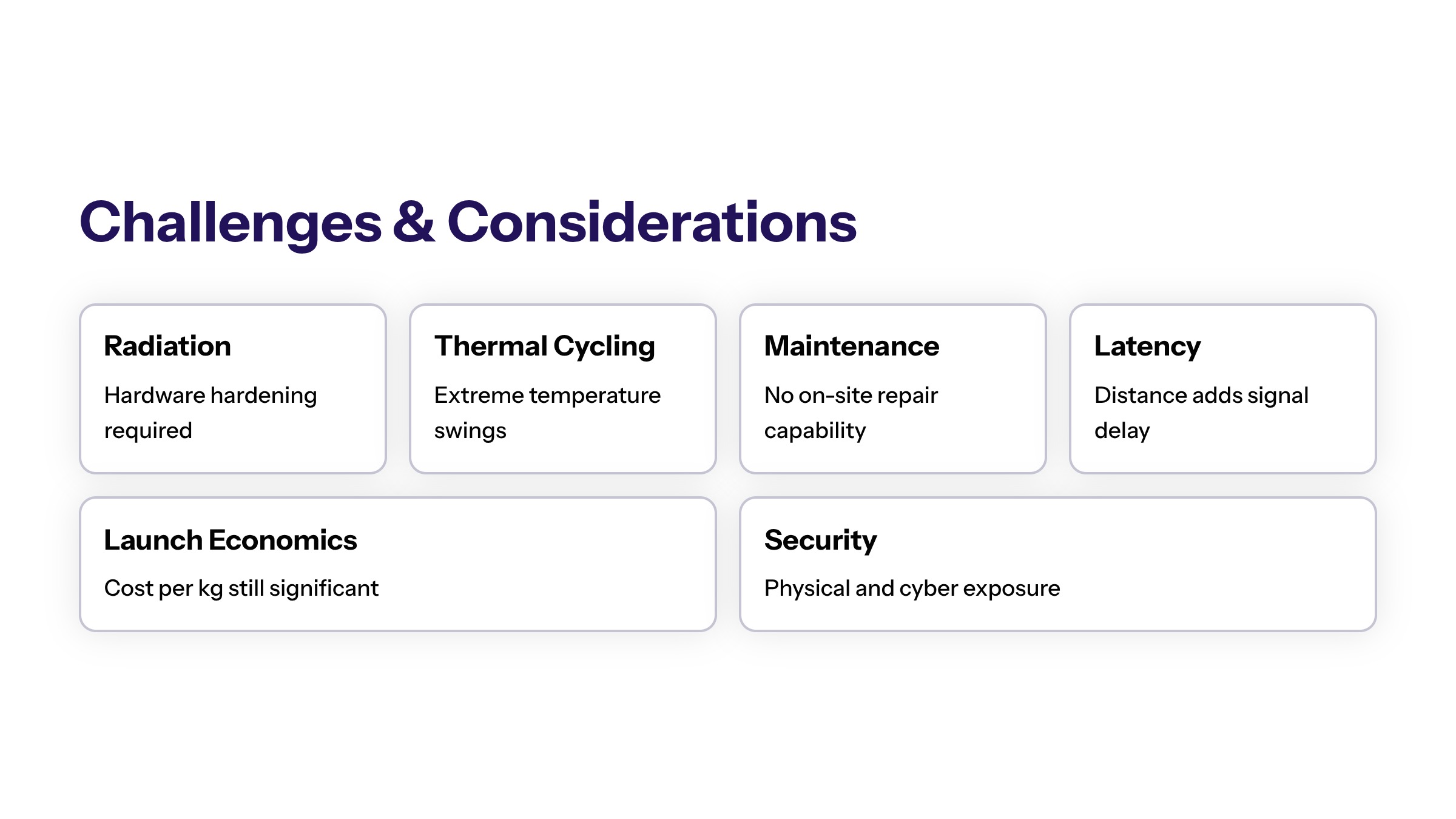
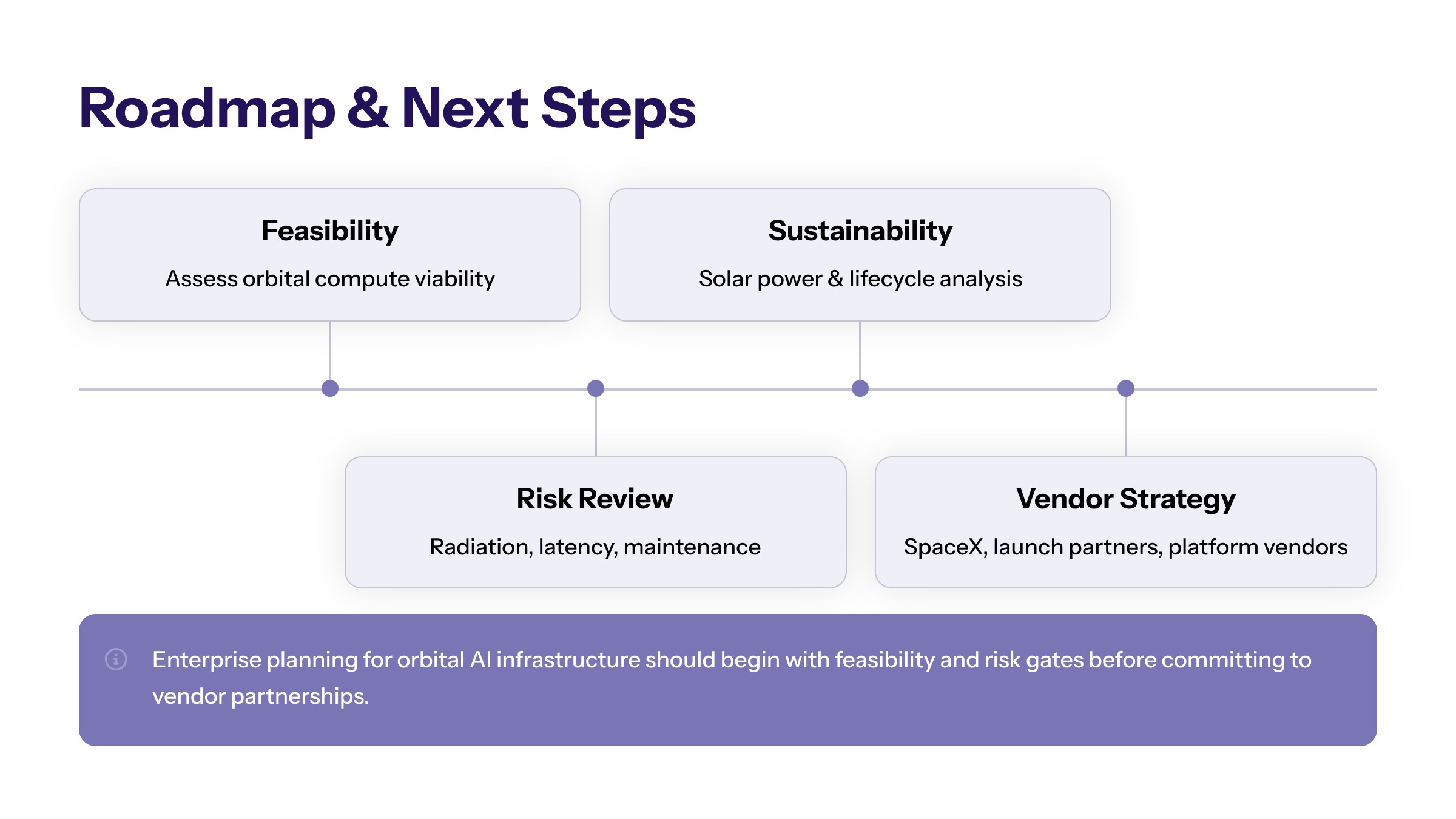
While orbital AI data centers offer compelling advantages, several challenges must be addressed to realize their full potential. The harsh space environment subjects servers to radiation that can degrade hardware reliability, requiring specialized shielding and error-correcting technologies. Additionally, the difficulty of physically accessing satellites complicates maintenance and fixing hardware faults, making robust system design and remote diagnostics essential.
Launch costs remain significant despite reductions from reusable rockets like SpaceX’s Starship. The high initial investment to pull AI infrastructure into orbit demands careful financial planning and risk assessment. Furthermore, geopolitical factors, including competition with countries like China in space technology, add complexity to regulatory and security considerations.
Thermal management, while aided by the vacuum of space enabling passive radiative heat dissipation, still requires precise engineering to handle temperature extremes and prevent overheating of densely packed servers. The matter of data security and compliance with terrestrial laws also becomes harder when processing occurs off-planet, necessitating new governance frameworks.
Future Outlook and Strategic Implications
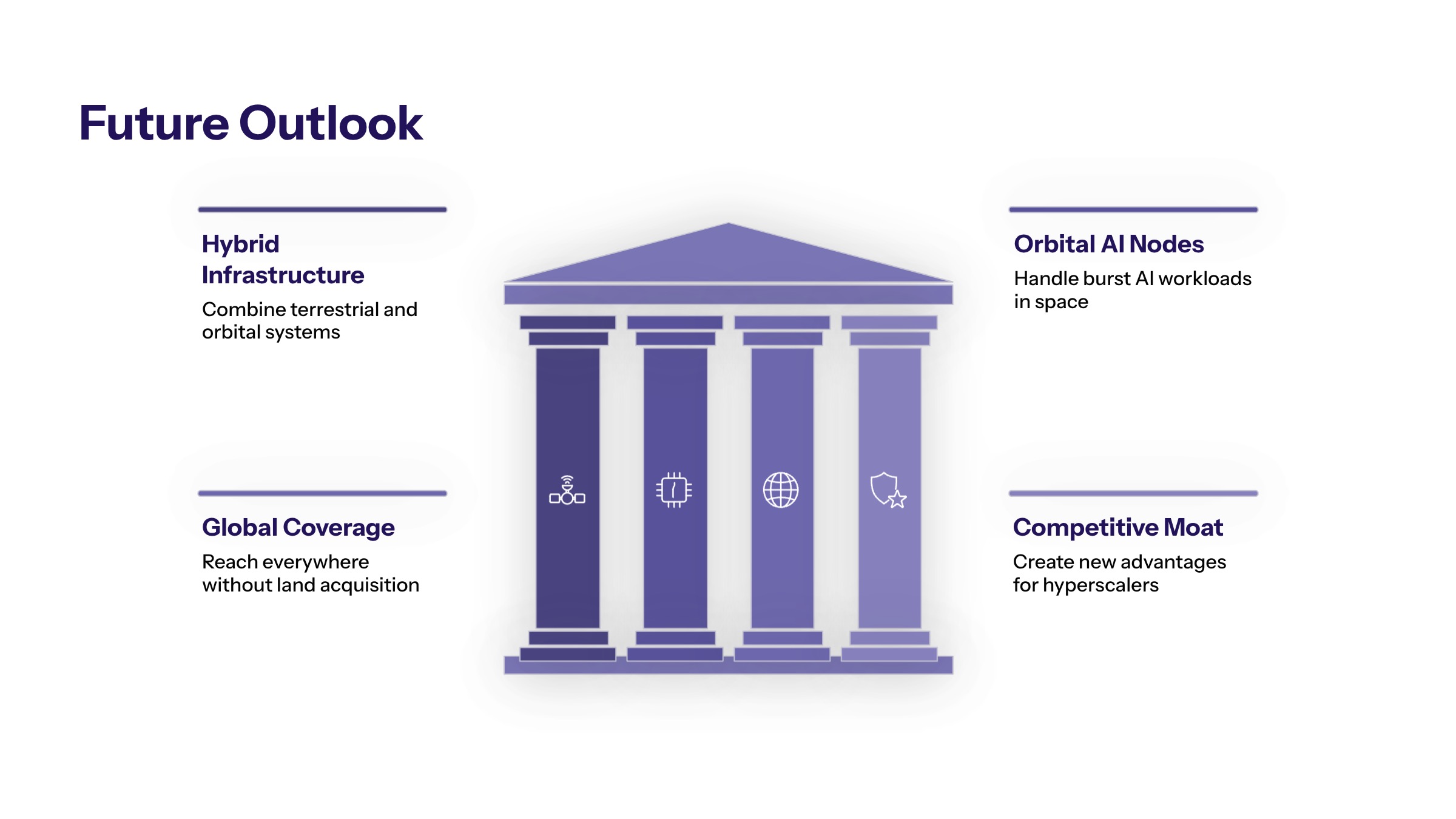
As Google and SpaceX continue negotiations, their collaboration could set a precedent for the industry, giving rise to a new era of space-based computing infrastructure. If successful, orbital AI data centers could transform how people access and interact with AI services by reducing latency and increasing sustainability.
The partnership aligns with broader trends of decentralizing compute resources and leveraging space for technological innovation. Over the next year and beyond, expect increased investment in orbital data center prototypes, further technical refinements, and evolving regulatory frameworks.
Enterprise technology leaders should monitor these developments closely, as the shift to orbital AI data centers may impact cloud service models, data sovereignty, and infrastructure strategies. Organizations can begin preparing by evaluating how their AI workloads might benefit from lower latency and more sustainable compute options.
Conclusion and Next Steps
Google and SpaceX’s exploration of orbital AI data centers represents a pioneering effort to overcome terrestrial data center limitations through innovative space technology. This partnership could redefine AI infrastructure by harnessing the unique advantages of space—continuous solar power, passive cooling, and freedom from land constraints—while addressing significant technical and operational challenges.
To stay ahead, enterprise leaders should:
Assess current AI infrastructure bottlenecks related to power, cooling, and latency.
Engage with technology partners to explore emerging space-based compute opportunities.
Develop flexible strategies that can integrate orbital data center capabilities as they mature.
Monitor regulatory and geopolitical developments impacting space-based infrastructure.
Prioritize security and compliance considerations for distributed and off-planet data processing.
By proactively engaging with this evolving landscape, organizations can position themselves to leverage the next generation of AI computing power, potentially gaining a competitive edge in an increasingly data-driven world.
Additional Resources
Google’s Project Suncatcher Research Papers
SpaceX Starship Technical Briefings
Industry Reports on Space-Based Computing and AI Infrastructure
Regulatory Guidelines for Orbital Satellite Operations
Case Studies on AI Workload Optimization and Latency Reduction Strategies