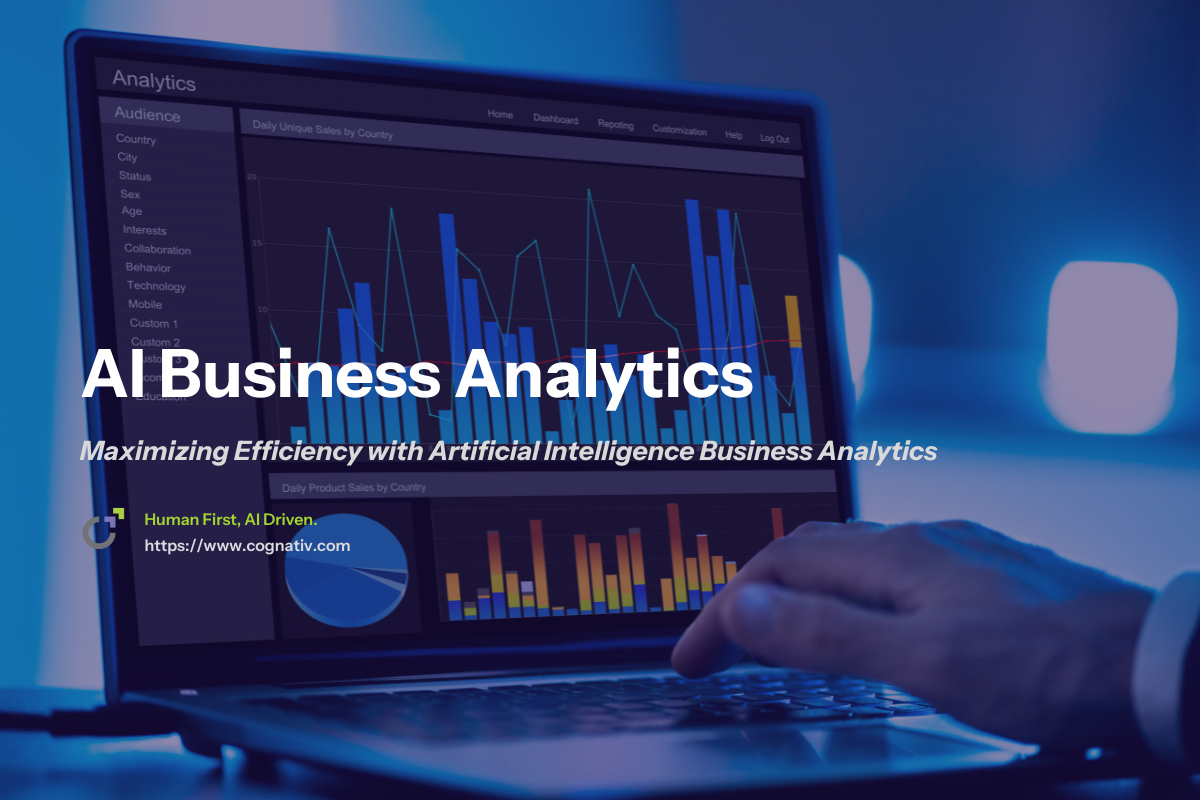
Maximizing Efficiency with Artificial Intelligence Business Analytics
Artificial intelligence business analytics is transforming how enterprises leverage data to drive smarter, faster decisions. Analytics and AI are now central to modern business intelligence and technological innovation, shaping the way organizations approach data-driven strategies.
For CIOs, CTOs, CISOs, CEOs, and CFOs, understanding the intersection of AI and business analytics—and recognizing business intelligence as a foundational skill in the field—is critical to maintaining competitive advantage, managing risk, and navigating digital transformation initiatives.
Technology plays a pivotal role in enabling these changes, providing the infrastructure and tools necessary for successful digital transformation. This article explores the strategic role of AI in business analytics, its applications across industries, and the implications for enterprise adoption, compliance, and future growth.
Key Takeaways
-
Artificial intelligence enhances business analytics by automating data processing, reducing human error, and enabling predictive insights.
-
AI-driven analytics supports evidence-based decision making, risk assessment, fraud detection, and operational efficiency.
-
Integration of AI with information systems and data science provides businesses with actionable insights to improve shareholder value.
-
Ethical implications and compliance considerations are essential as enterprises scale AI adoption.
-
Hands-on experience with AI tools and real-world applications accelerates innovation and drives measurable business outcomes.

The Convergence of AI and Business Analytics
Business analytics has long been a cornerstone of effective decision making in the business world. Traditionally, it involves statistical analysis, data mining, and predictive analytics to solve real business problems and provide meaningful insights. At the intersection of AI and business analytics, the integration of analytics and AI is transforming modern business practices by enabling organizations to extract deeper insights and drive innovation. However, the explosion of big data and advances in artificial intelligence technologies such as machine learning, deep learning, natural language processing, and generative AI have dramatically expanded analytics capabilities.
AI tools automate repetitive tasks, enhance data management, and uncover complex patterns that humans might miss. This convergence enables companies to leverage data-driven decisions more effectively and gain a competitive edge in fast-changing markets. Analytics also play a crucial role in evaluating company strategies and measuring business success. For example, machine learning models can analyze customer behavior in marketing or optimize supply chain operations by forecasting demand. By applying analytics and AI, organizations are better equipped to address real world issues and deliver practical solutions. Ongoing research continues to drive innovation in analytics and AI, ensuring these technologies remain at the forefront of business transformation.
Leading companies across finance, health care, telecommunications, information technology, and retail are integrating AI-powered business analytics into their information systems to improve operational efficiency, reduce risk, and detect fraud. This integration aligns with broader digital transformation trends emphasizing AI-first architectures and secure, scalable platforms.
AI Tools and Technologies
In today’s rapidly evolving business world, the integration of advanced AI tools and technologies is essential for organizations seeking to maximize efficiency and maintain a competitive edge. The Business Analytics and Artificial Intelligence program is designed to equip students with hands-on experience in leveraging these technologies to solve real business problems across a variety of industries.
Central to the program is a robust curriculum that covers a wide spectrum of AI-driven solutions, including machine learning models, natural language processing, deep learning, and generative AI. These technologies empower students to analyze data at scale, uncover meaningful insights, and support data-driven decisions that drive business success. By mastering business statistics, data mining, and predictive analytics, students develop the analytical skills necessary to interpret complex datasets and provide actionable recommendations to business leaders.
The program emphasizes real-world applications, offering students opportunities to collaborate with leading companies and industry professionals on projects that address current business challenges in supply chains, marketing, and finance. Through these partnerships, students gain a solid foundation in data management and learn how to apply advanced AI techniques to optimize operations, enhance risk assessment, and improve fraud detection.
A key differentiator of the program is its focus on ethical implications and the reduction of human error in AI and data science. Students are taught to recognize and mitigate potential biases in machine learning models, ensuring that their solutions are both effective and responsible. This ethical grounding is critical for building trust and supporting evidence-based decision making in high-stakes business environments.
By providing students with hands-on experience and exposure to the latest AI tools and technologies, the program ensures graduates are well-prepared to become data scientists and business leaders who can leverage data and analytics to make better business decisions. Whether optimizing supply chains, enhancing marketing strategies, or driving innovation in finance, students are equipped to deliver meaningful insights and create value for their organizations.
Ultimately, the Business Analytics and Artificial Intelligence program offers a comprehensive pathway for aspiring professionals to develop the skills, knowledge, and experience needed to thrive in the data-driven business landscape. With a focus on real-world applications, advanced AI techniques, and ethical best practices, the program prepares students to solve complex business problems and lead the next wave of digital transformation.
Implications for Enterprise Adoption
As enterprises increasingly adopt artificial intelligence business analytics, they must consider not only the technological benefits but also the strategic, ethical, and operational implications to ensure successful integration and compliance.
Strategic Integration and Cost Considerations
Enterprises adopting artificial intelligence business analytics must balance the promise of enhanced insights with implementation complexity and cost. Deploying AI-driven analytics requires investments in data infrastructure, skilled data scientists, and robust information systems capable of handling large-scale data mining and analysis.
However, the potential return on investment is significant. AI enables faster, evidence-based decision making that can improve shareholder value by optimizing marketing campaigns, streamlining supply chains, and enhancing fraud detection. Furthermore, automation of routine data tasks reduces human error and operational costs.
Compliance and Ethical Implications
As AI systems become more embedded in business analytics, compliance with regulations such as GDPR, HIPAA, and PCI-DSS is paramount. Enterprises must ensure data privacy, transparency, and security while deploying AI tools. Ethical implications, including bias in machine learning models and responsible AI usage, require governance frameworks and continuous monitoring.
Many organizations are now incorporating ethical AI principles into their curriculum and training programs to prepare current students and professionals for these challenges. This focus on responsible AI practices helps mitigate risks and builds trust with stakeholders.
Opportunities Enabled by AI Business Analytics
Artificial intelligence business analytics opens up numerous opportunities for businesses to leverage data in innovative ways, enabling smarter decisions and addressing complex problems across various sectors.
By integrating AI technologies with business analytics, companies can unlock actionable insights that drive operational efficiency, enhance risk assessment, and improve overall business applications. This fusion empowers organizations to transform raw data into meaningful insights, providing a competitive edge in the fast-evolving business world.
Enhanced Predictive Analytics and Risk Assessment
AI-powered business analytics enhances predictive capabilities, allowing companies to anticipate market trends, customer needs, and potential risks. For instance, advanced machine learning models can forecast demand fluctuations or identify early signs of financial fraud.
This capability supports proactive risk assessment and better resource allocation, helping enterprises stay agile in volatile environments.
Real-World Applications Across Industries
-
Healthcare: AI analytics improves patient outcomes by analyzing clinical data for early diagnosis and personalized treatment plans, directly addressing real-world issues such as reducing misdiagnosis and improving care delivery.
-
Finance: Fraud detection algorithms and credit risk models protect assets and ensure regulatory compliance.
-
Supply Chain: Predictive analytics optimize inventory management and logistics.
-
Marketing: Customer segmentation and behavior prediction drive targeted campaigns and higher ROI.
These applications demonstrate how AI business analytics delivers tangible value by solving real-world issues and supports strategic business goals.
Challenges and Future Outlook
Despite its promise, AI business analytics presents challenges such as data quality issues, integration complexity, and the need for specialized skills. Enterprises must invest in continuous training, robust data governance, and scalable infrastructure.
Looking ahead, the integration of generative AI and natural language processing will further enhance analytics capabilities, enabling more intuitive data exploration and automated report generation. Ongoing research in artificial intelligence business analytics is essential for driving innovation and ensuring that organizations stay ahead of emerging trends. The rise of private AI systems and AI-first architectures will also shape enterprise strategies, emphasizing security and compliance.
Conclusion
Artificial intelligence business analytics is a transformative force reshaping enterprise decision making, operational efficiency, and risk management. By integrating AI technologies with business analytics, companies can unlock actionable insights, drive growth, and maintain a competitive edge. However, success requires strategic investment, ethical governance, and a commitment to continuous learning.
Stay ahead of AI and tech strategy. Subscribe to What Goes On: Cognativ’s Weekly Tech Digest for deeper insights and executive analysis.