NVIDIA Deepens AI Infrastructure Control with IREN Deal: A $2.1 Billion Strategic Partnership
NVIDIA and IREN Limited announced a strategic partnership on May 7-8, 2026, to deploy up to 5 gigawatts of AI infrastructure globally using NVIDIA’s DSX architecture. This deal represents NVIDIA’s most significant move yet from chip supplier to full-stack AI infrastructure controller, with a potential equity investment of $2.1 billion through a five-year share purchase agreement.
This article covers the partnership’s financial structure, infrastructure deployment plans, and strategic implications for the AI economy. Investors, technology professionals, and AI industry stakeholders will find detailed analysis of what this deal means for the competitive landscape of AI data center development. Topics outside this scope include technical specifications of individual GPU architectures and unrelated NVIDIA product lines.
NVIDIA’s potential investment of $2.1 billion in IREN, through a warrant to purchase up to 30 million shares at $70 each, marks the company’s strategic expansion beyond hardware manufacturing into controlling the foundational infrastructure that powers AI workloads at scale.
Key outcomes from this analysis:
Understanding why NVIDIA is investing in data center operators rather than just selling chips
Grasping the financial structure and deployment timeline of the 5-gigawatt partnership
Recognizing how power and land access are becoming critical competitive advantages
Evaluating market implications for investors and AI infrastructure stakeholders
Identifying challenges and solutions in large-scale AI factory deployment
Understanding AI Infrastructure Control
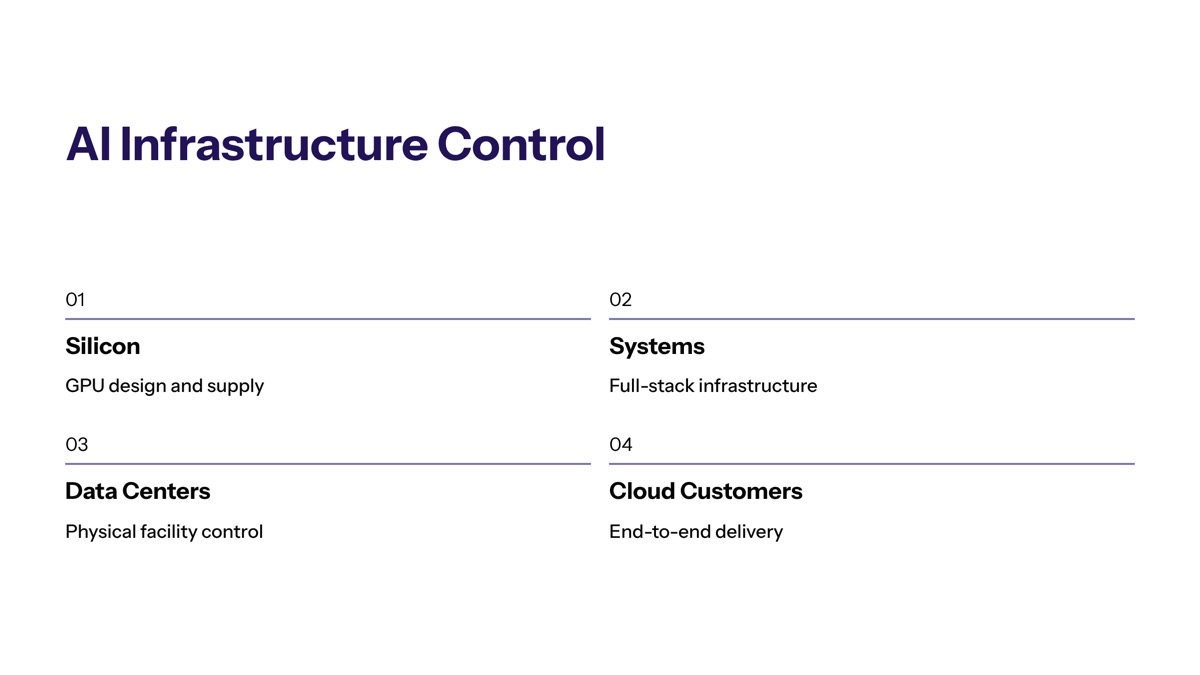
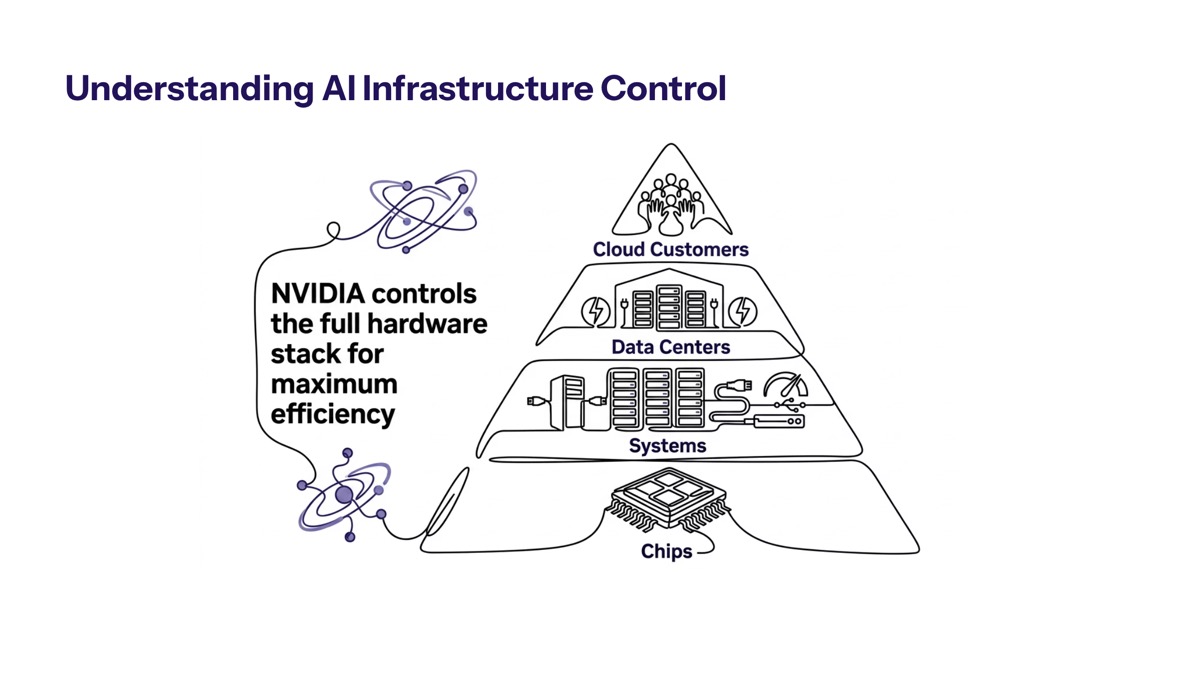
AI infrastructure control extends far beyond manufacturing chips. It encompasses ownership or tight influence over the entire technology stack: compute hardware, networking, storage, power generation and supply, physical land, cooling systems, and operational software. For NVIDIA, valued at around $5 trillion, ensuring sufficient AI computing capacity across this full stack is essential to prevent customers from turning to competitors like AMD.
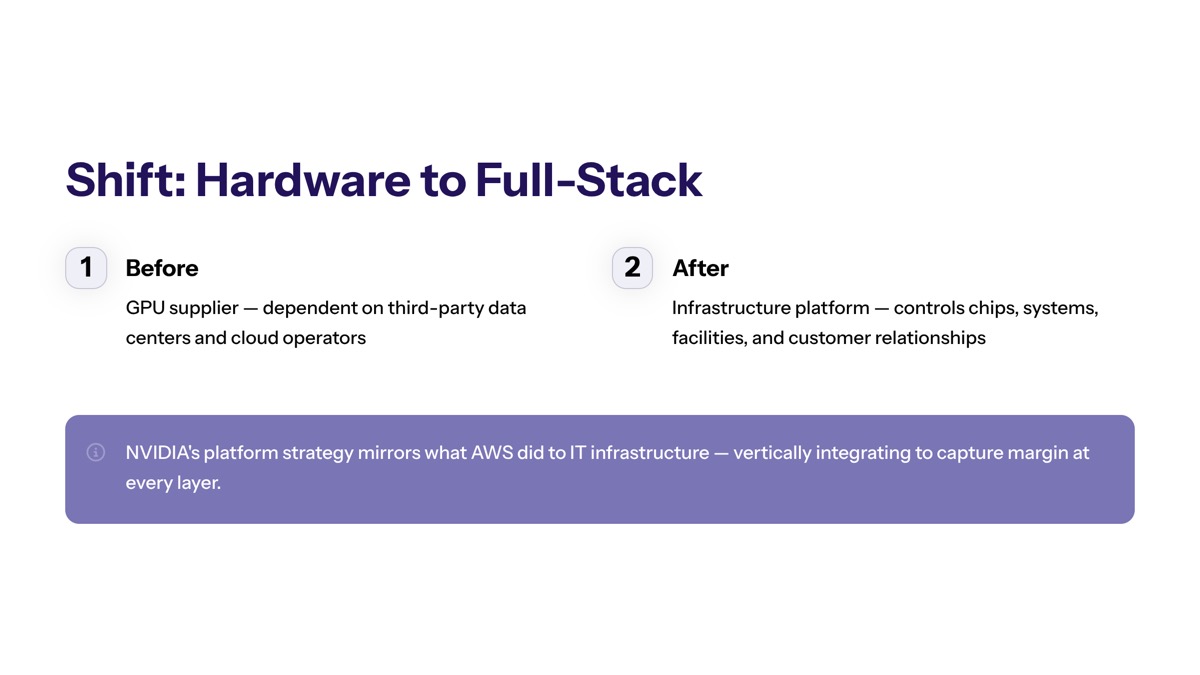
The integration with IREN signifies a shift from simply supplying chips to controlling the full stack of AI production. This transformation reflects how the AI race is shifting from pure chip competition toward control over power, land, data centers, and integrated compute deployment.
The Shift from Hardware to Full-Stack Solutions
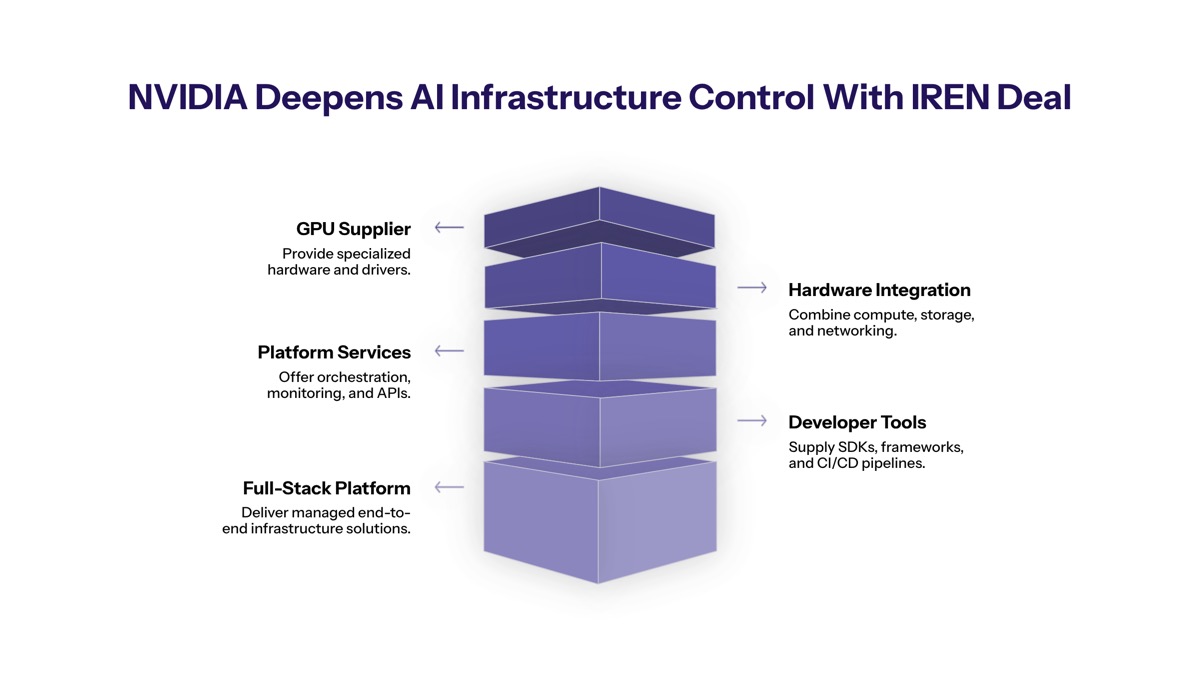
Full-stack AI infrastructure combines compute (GPUs and CPUs), Spectrum-X networking, storage systems, and integrated operations into a unified deployment model. NVIDIA’s DSX architecture—often called the AI factory reference design—standardizes this combination into a replicable template that partners like IREN can deploy at massive scale.
This approach treats compute, networking, and power as a single economic utility rather than separate procurement decisions. AI factories are becoming foundational infrastructure for the global economy, requiring deep integration across all these elements. The partnership aims to leverage IREN’s expertise in power, land, and data centers to enhance the deployment of NVIDIA’s AI infrastructure globally.
Power and Land as New Competitive Advantages
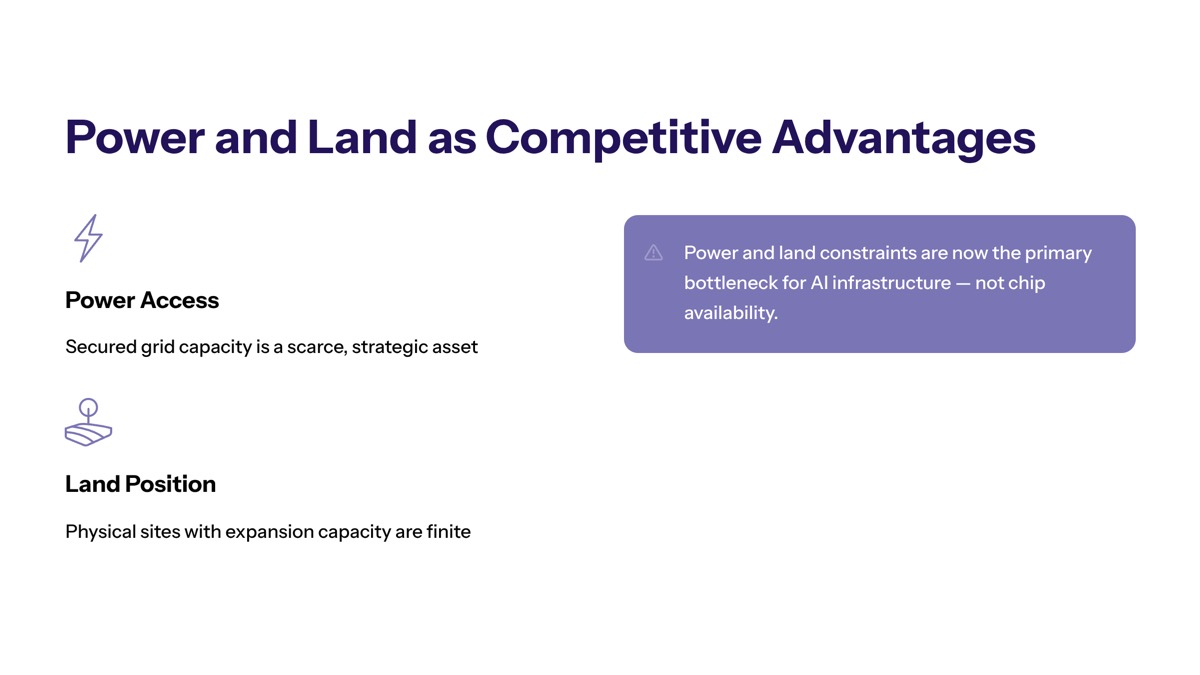
As AI workloads grow, the demand for reliable electricity and operational scalability is becoming a major competitive advantage in the AI infrastructure market. Global data centers consumed about 415 terawatt-hours of electricity in 2024, roughly equal to the annual electricity demand of Japan, and this demand is expected to more than double by 2030, reaching around 945 TWh.
Power availability has become a major bottleneck for AI. The deal gives NVIDIA access to IREN’s significant grid-connected power and land holdings across renewable-rich regions. By securing access to power and land, NVIDIA is enhancing its capabilities for high-density GPU deployments at scale.
Electricity demand from AI-focused servers could rise by about 30% annually through the end of the decade. This trajectory makes early access to grid connections and physical infrastructure essential for companies planning large-scale AI factories. IREN brings approximately 4.5 GW of power already secured or under development, including recent acquisitions in Spain adding 490 MW of grid-connected capacity.
The NVIDIA-IREN Partnership Breakdown
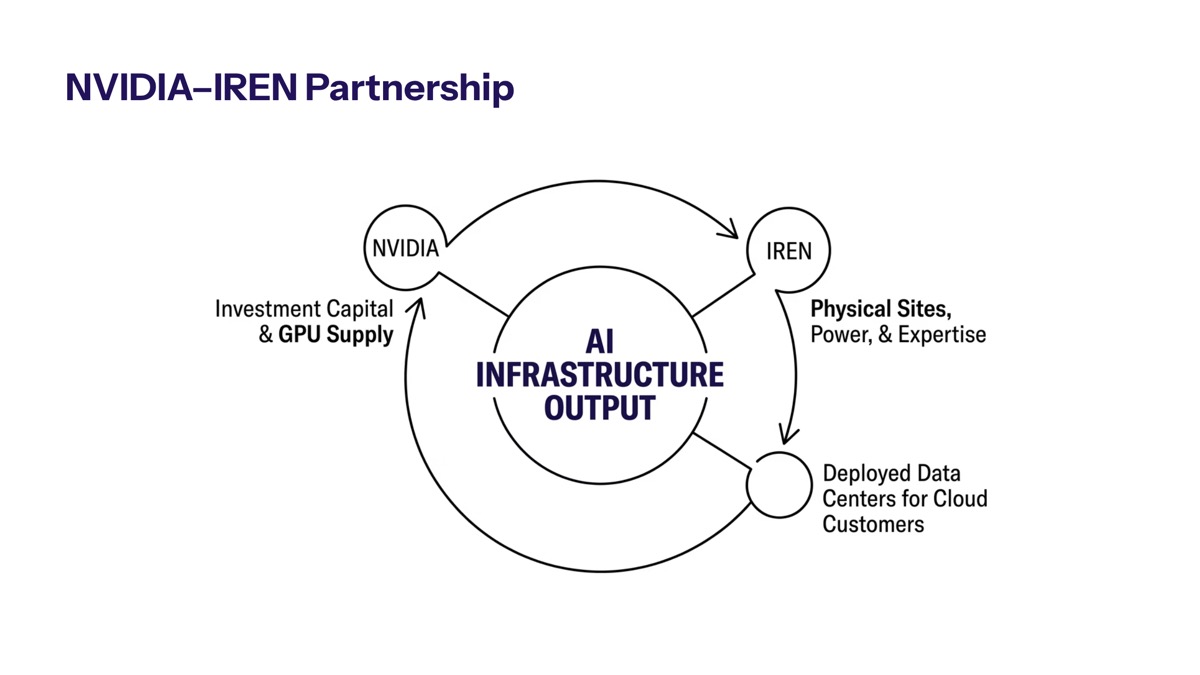
Building on these foundational concepts, the NVIDIA-IREN partnership represents a concrete implementation of full-stack infrastructure control, combining financial investment with deployment commitments at unprecedented scale.
Financial Structure and Investment Terms
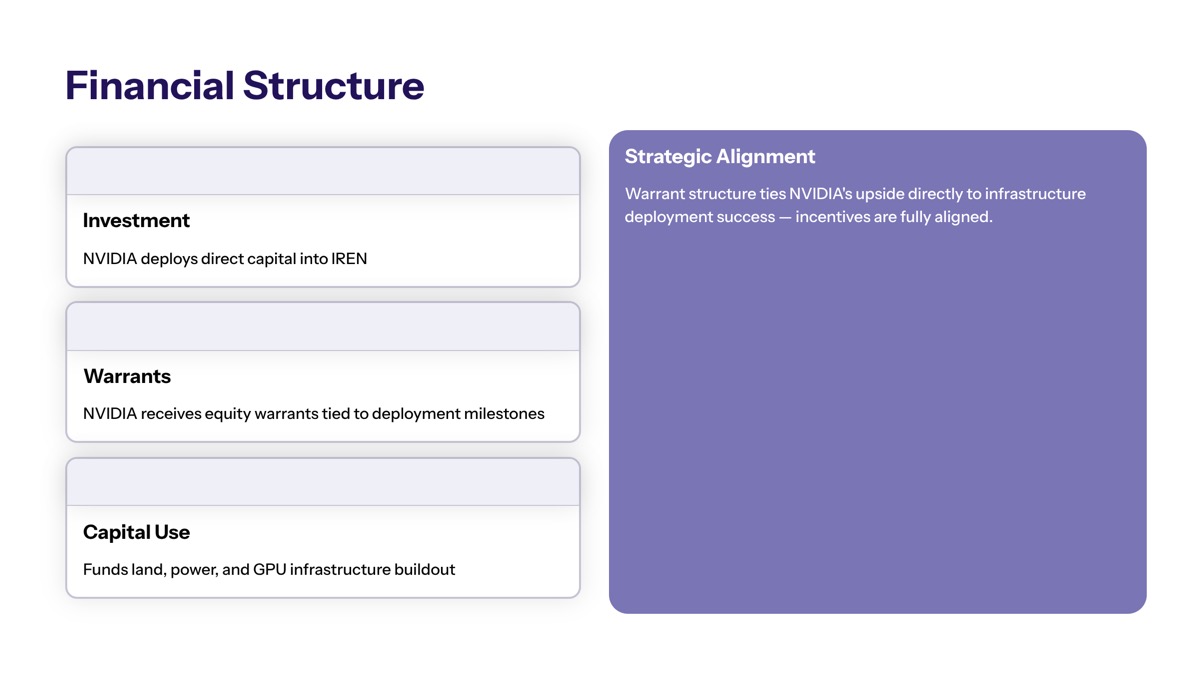
NVIDIA receives a five-year warrant to acquire up to 30 million IREN shares at $70 each, totaling a potential investment of $2.1 billion. This structure gives NVIDIA optionality rather than immediate equity commitment, allowing strategic alignment without absorbing full financial risk upfront. Regulatory approvals and other conditions govern the warrant’s exercise.
Beyond the equity component, the partnership includes a $3.4 billion AI cloud services contract tied to deploying DSX-aligned infrastructure. This dual structure—equity warrant plus services agreement—creates powerful incentive alignment between hardware supplier and infrastructure operator.
Wall Street responded positively to the announcement, with IREN shares surging approximately 27% following the news. The market reaction reflects investor confidence in both the partnership’s strategic logic and IREN’s transformation trajectory.
Infrastructure Deployment Scale
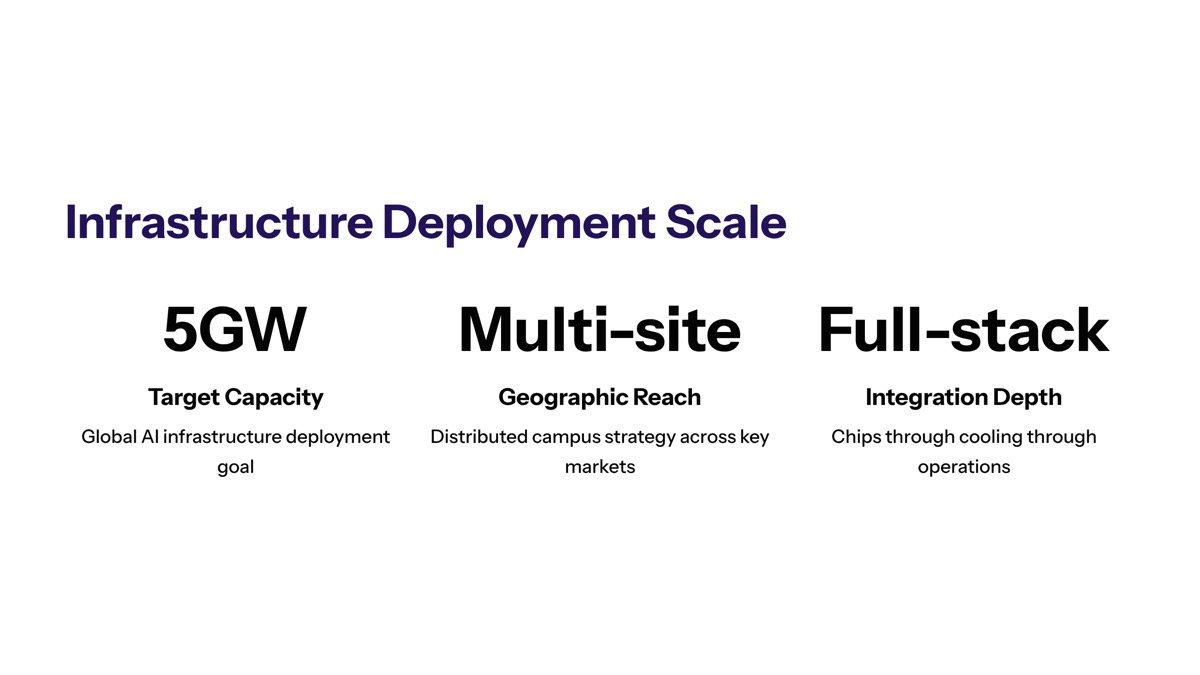
The partnership targets deployment of up to 5 gigawatts of AI infrastructure powered by NVIDIA’s DSX architecture across IREN’s global data center pipeline. This capacity represents a significant expansion of AI-ready compute infrastructure globally.
IREN’s Sweetwater campus in Texas is expected to serve as a flagship site for the deployment of NVIDIA’s DSX AI factory architecture. The Sweetwater campus alone targets 2 GW of capacity, with Sweetwater 1 already energized to approximately 1.4 GW and Sweetwater 2 under construction with initial phases of 600 MW.
The partnership between NVIDIA and IREN aims to deploy up to 5 gigawatts of AI infrastructure, reflecting how rapidly compute and power requirements are escalating alongside the rise of AI workloads. Global demand for AI-ready data center capacity could require more than $6 trillion in infrastructure investment worldwide by 2030.
IREN’s Transformation Strategy
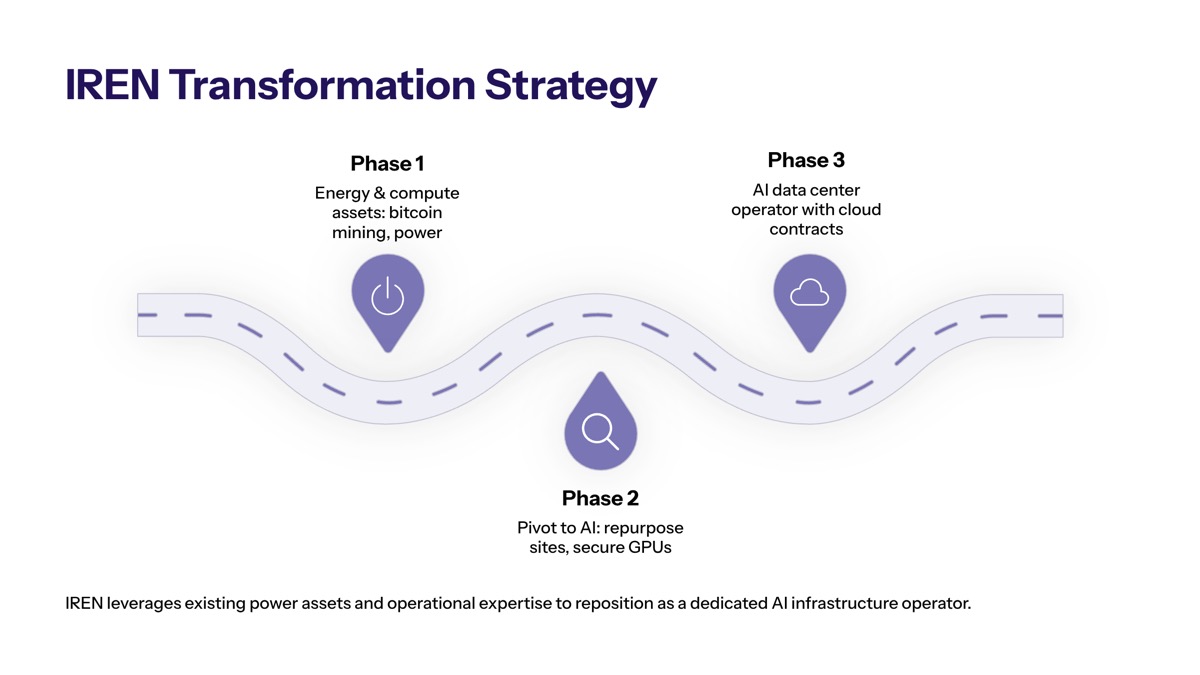
IREN is transforming from a bitcoin mining company into a vertically integrated global AI infrastructure provider. This pivot leverages the company’s existing expertise in power procurement, land acquisition, and high-density computing operations—skills directly transferable to AI workloads.
The company operates an aggressive expansion strategy targeting 150,000 NVIDIA GPUs by end of 2026, with significant orders of GB300 series units including more than 50,000 from recent purchases. IREN projects achieving $3.5-$3.7 billion in annualized AI cloud revenue by year-end.
IREN’s acquisition of Mirantis for approximately $625 million in May 2026 adds software and cloud infrastructure capabilities essential for AI cloud services delivery. The Nostrum acquisition in Spain expanded IREN’s European power portfolio, positioning the company for international scaling. This combination of infrastructure expertise, scale and infrastructure expertise, and software capabilities makes IREN a formidable partner for future deployments.
Strategic Implementation and Market Implications
The partnership’s implementation follows a structured timeline designed to accelerate AI infrastructure deployment while managing execution risk across multiple geographies and technology generations.
Deployment Timeline and Milestones
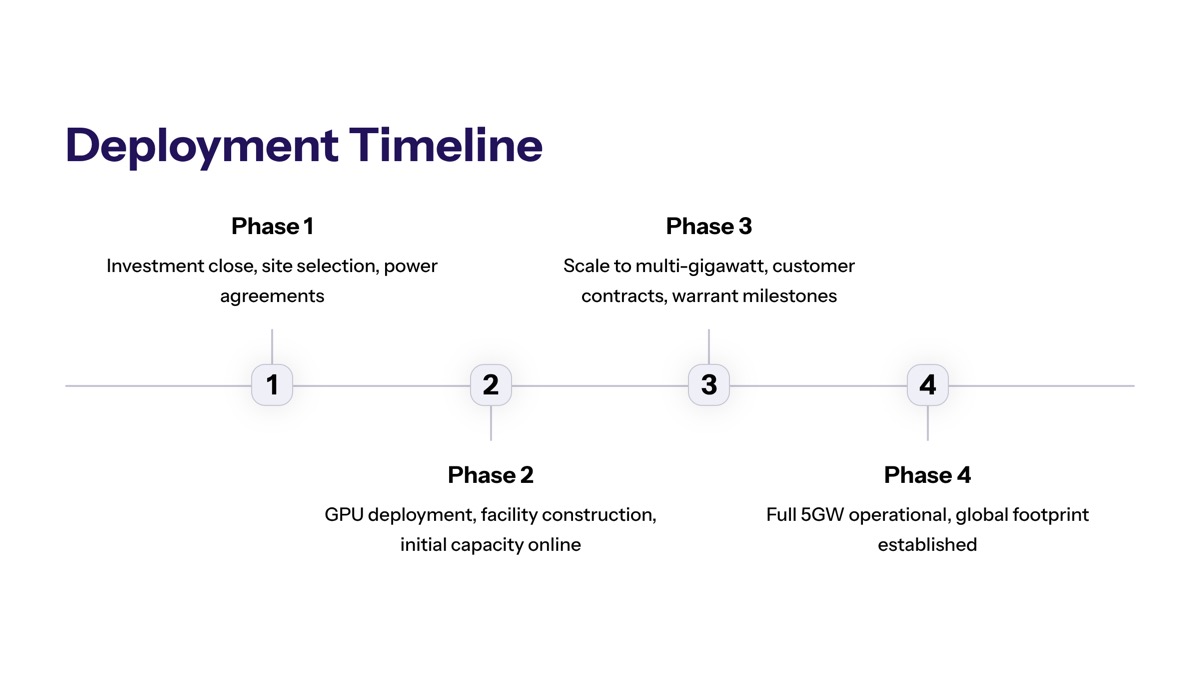
The deployment phases build systematically toward the 5 GW target:
2026: Initial DSX architecture deployment at Sweetwater campus with 150,000 GPUs deployed, 480 MW of new data center capacity online, and Childress facility expansion
2027: Scaling across additional Texas sites including liquid-cooled capacity upgrades and retrofitting of existing air-cooled facilities
2028: International expansion to European sites via the Nostrum acquisition’s Spanish power portfolio and APAC facilities with submarine cable connectivity
Beyond 2028: Achievement of full 5 GW capacity across North America, Europe, and Asia-Pacific regions
Each phase incorporates lessons from previous deployments, refining the DSX architecture implementation and optimizing power efficiency across diverse geographic conditions.
Competitive Positioning Analysis
Partner | Investment Size | Capacity Target | Geographic Focus |
|---|---|---|---|
IREN | $2.1B (warrant) + $3.4B services | 5 GW | Global (US, Europe, APAC) |
CoreWeave | Strategic partnership | Not disclosed | North America |
Microsoft via IREN | $9.7B hosting + $5.8B hardware | Significant portion of IREN capacity | Global |
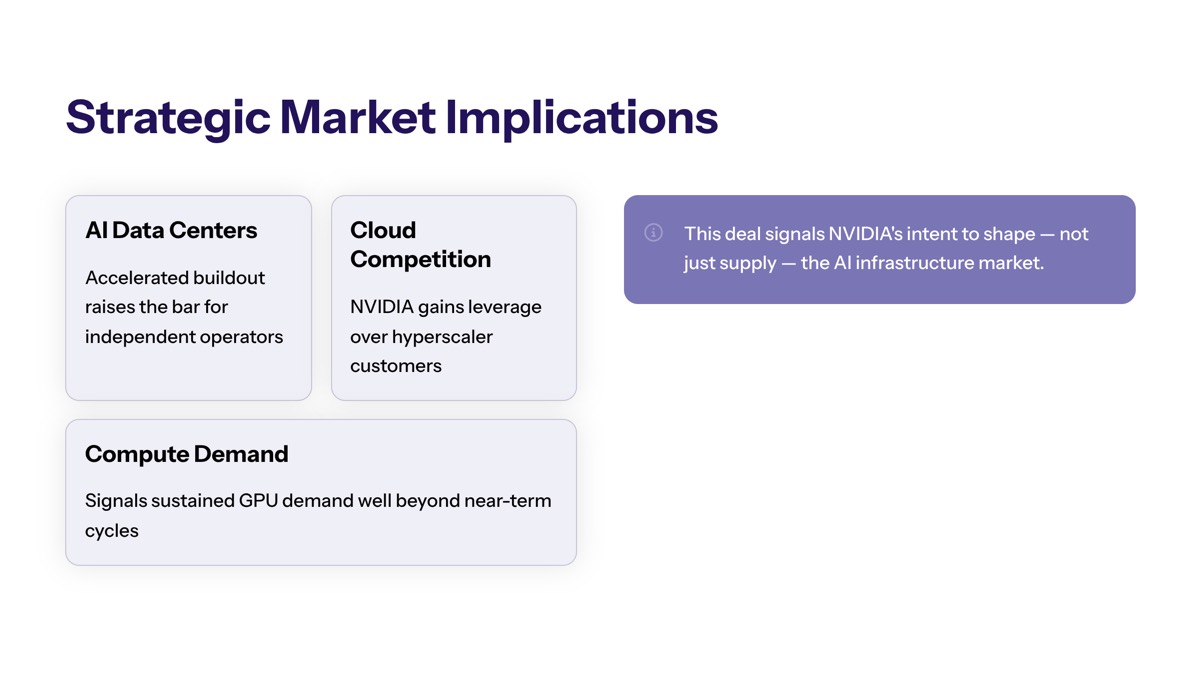
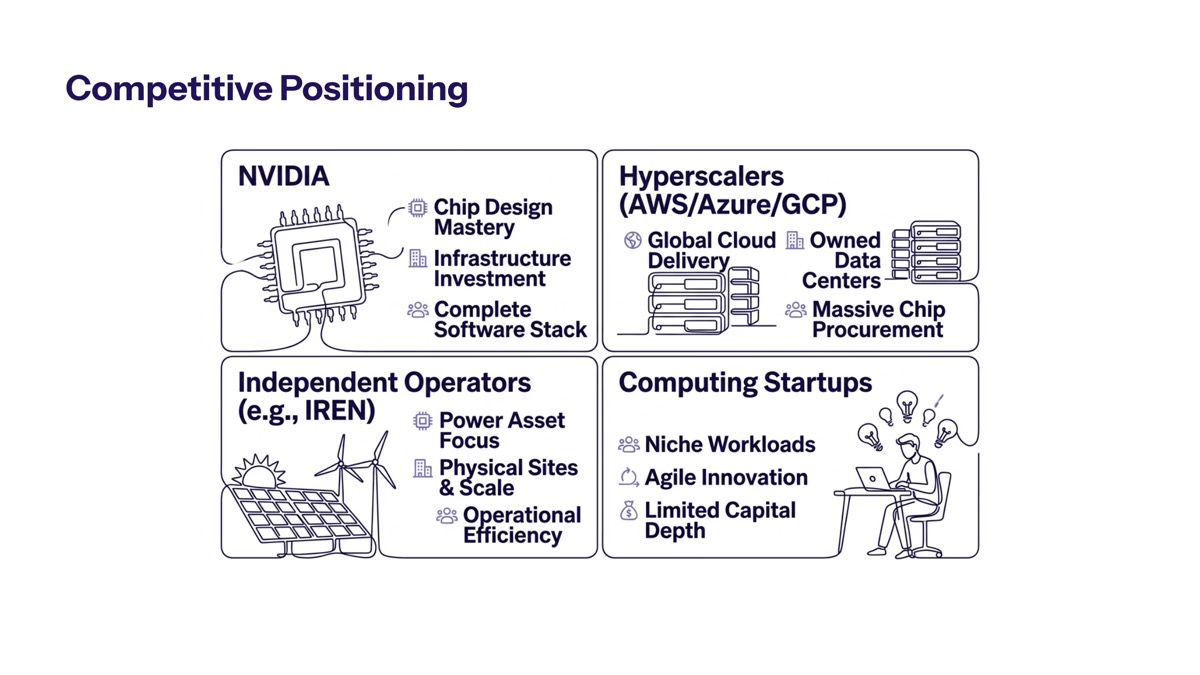
NVIDIA’s partnership validates ‘neocloud’ providers as primary alternatives to traditional hyperscalers, appealing to enterprise customers needing rapid access to hardware. This deal increases barriers to entry for competitors by locking up massive power capacity and specialized infrastructure that would take years to replicate.
The relationship with hyperscalers remains complex. Microsoft maintains a $9.7 billion contract with IREN alongside $5.8 billion in GPU and hardware orders through Dell. IREN functions simultaneously as supplier to and host for major cloud providers, creating a differentiated market position.
Common Challenges and Solutions
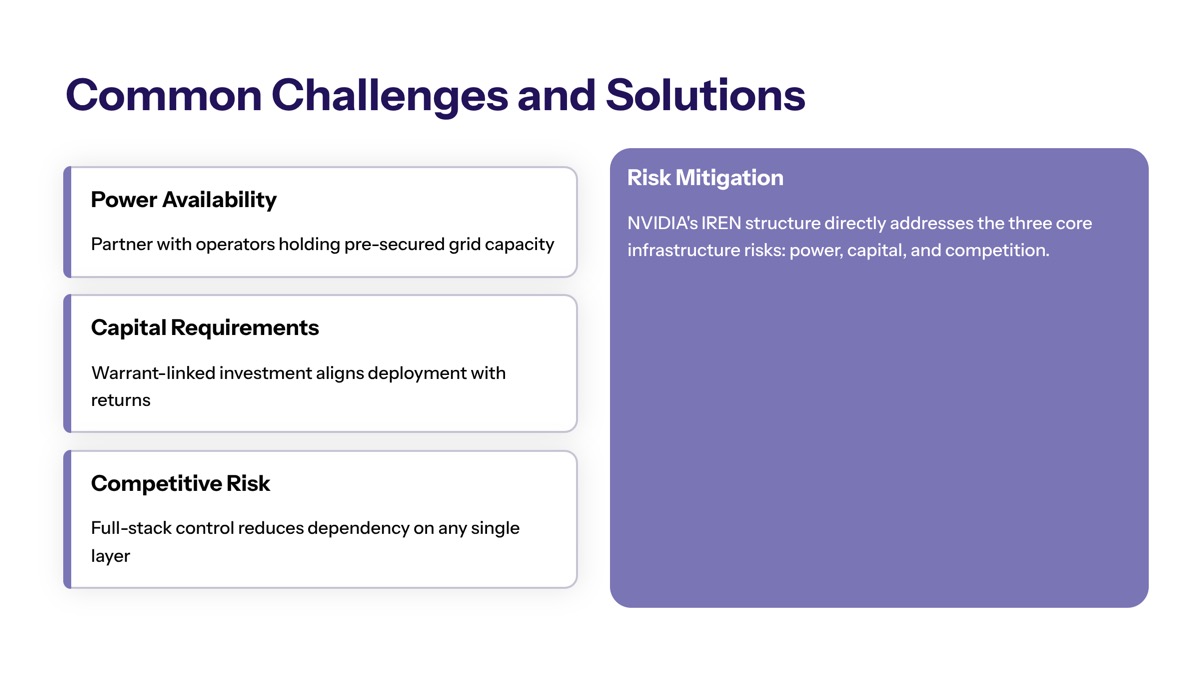
Large-scale AI factory deployment faces predictable obstacles. The NVIDIA-IREN partnership structure addresses several critical challenges through deliberate design choices.
Power Grid Integration Complexities
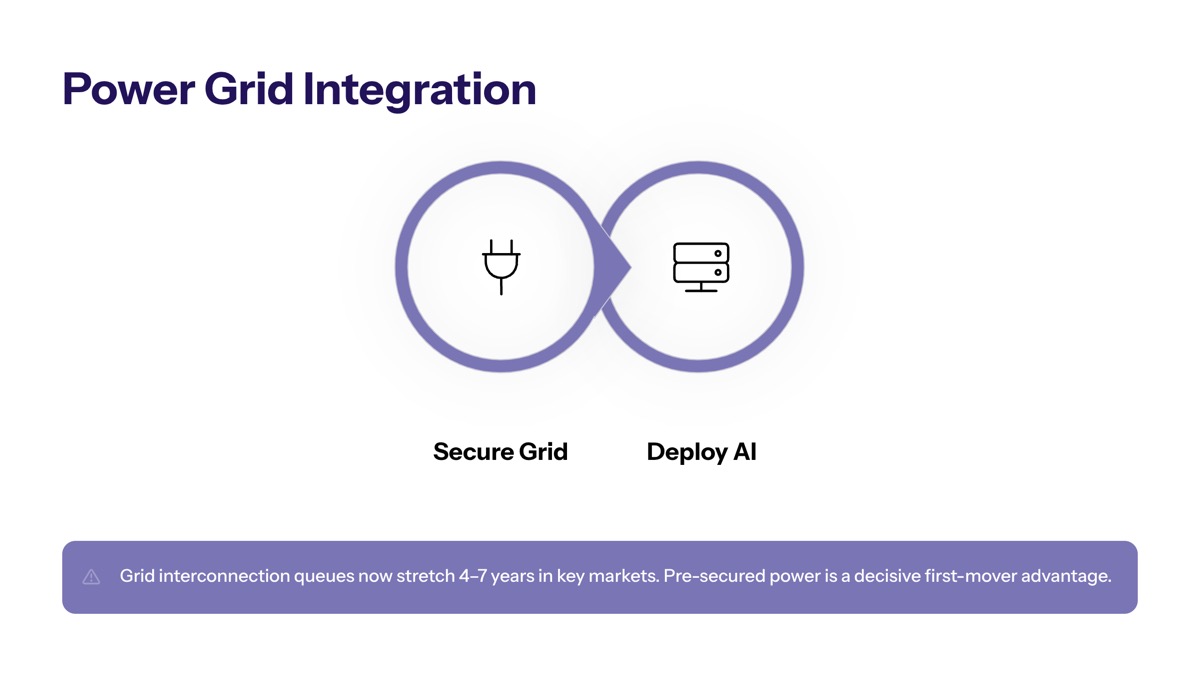
Deploying 5 GW of AI infrastructure requires sophisticated grid integration across multiple jurisdictions with varying regulatory frameworks and infrastructure capabilities. IREN addresses this through its existing portfolio of grid-connected power in renewable-rich regions, staged substation and distribution infrastructure development, and experienced power operations teams from its bitcoin mining background. The International Energy Agency projects that CO₂ emissions from electricity used by data centers are expected to peak at around 320 million tonnes by 2030, making renewable integration both an environmental and regulatory imperative.
Capital Intensive Infrastructure Requirements
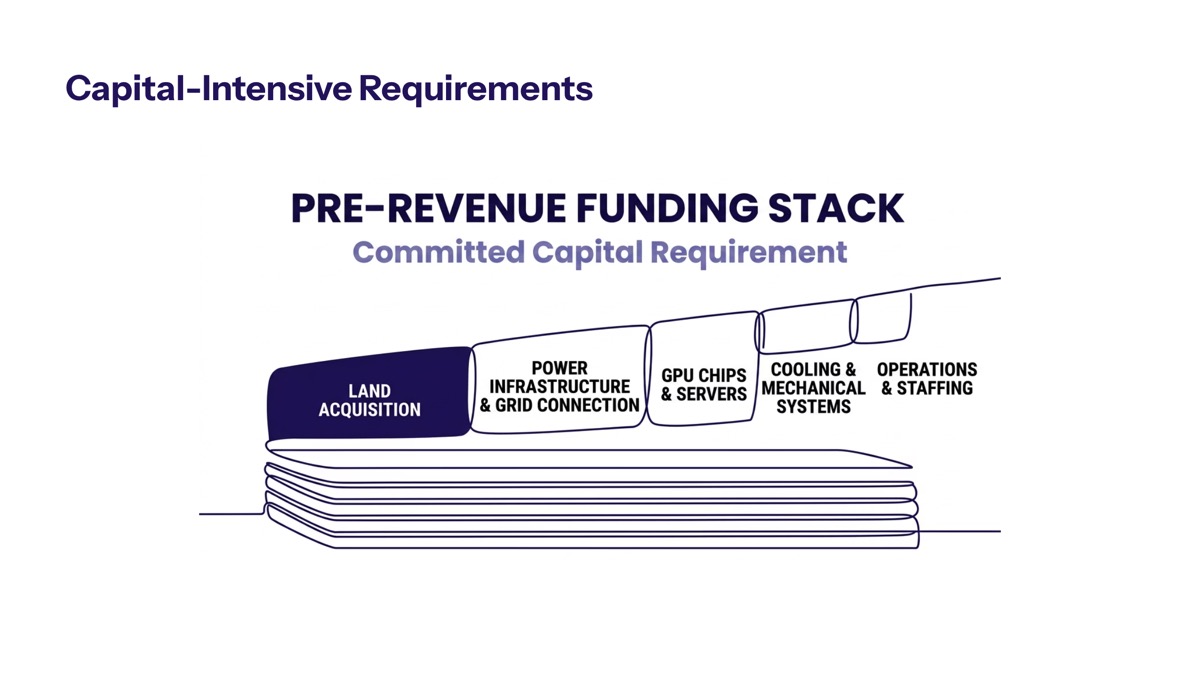
AI infrastructure is becoming a capital-intensive utility, similar to energy or telecommunications. Building 5 GW requires massive investment beyond GPUs—land, construction, cooling systems, substations, transmission infrastructure, and specialized operations personnel.
IREN addresses capital requirements through diversified financing: customer prepayments, GPU financing arrangements, convertible notes, and project-level financings. The company maintains approximately $2.6 billion cash as of April 30, 2026. NVIDIA’s warrant structure rather than outright purchase shares risk while aligning long-term incentives.
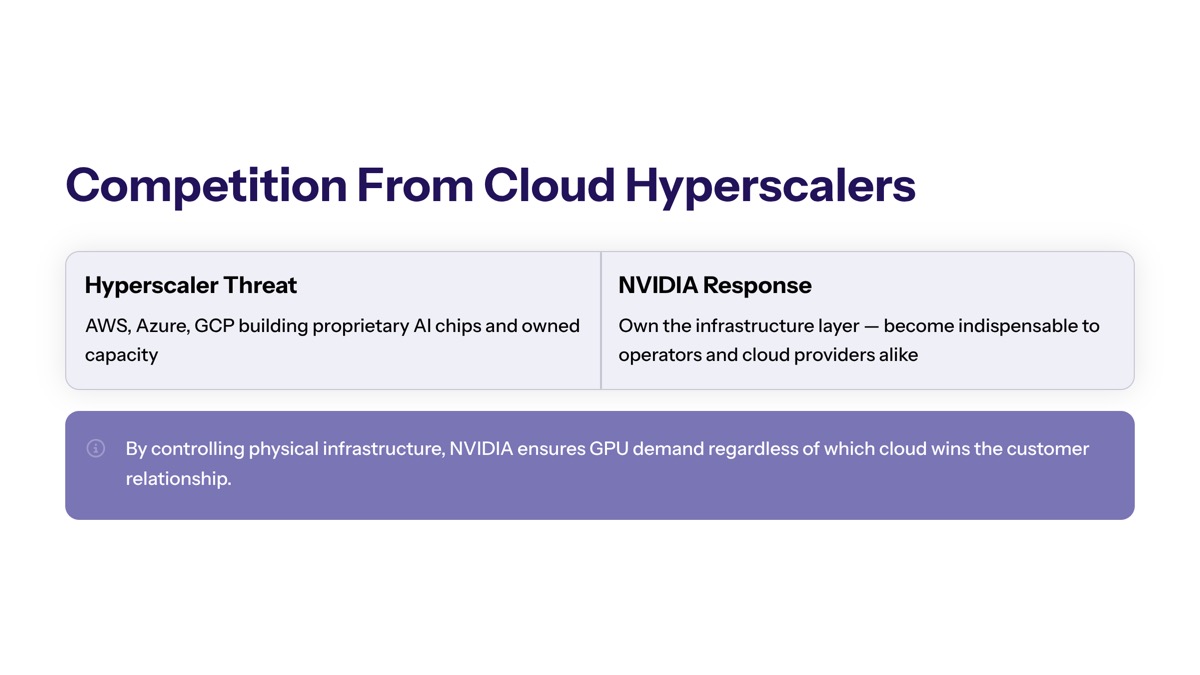
Competition from Cloud Hyperscalers
Major cloud providers continue building proprietary infrastructure, potentially bypassing independent AI infrastructure operators. The NVIDIA-IREN partnership differentiates through:
Specialized DSX architecture optimized specifically for AI workloads
Faster deployment timelines than hyperscaler construction projects
Access to power capacity in regions where hyperscalers face constraints
Flexibility for enterprise customers seeking alternatives to hyperscaler lock-in
The focus is shifting to AI factories—integrated systems where compute, networking, and power are treated as a single economic utility. This specialization creates defensible positioning against generalist cloud providers.
Conclusion and Next Steps
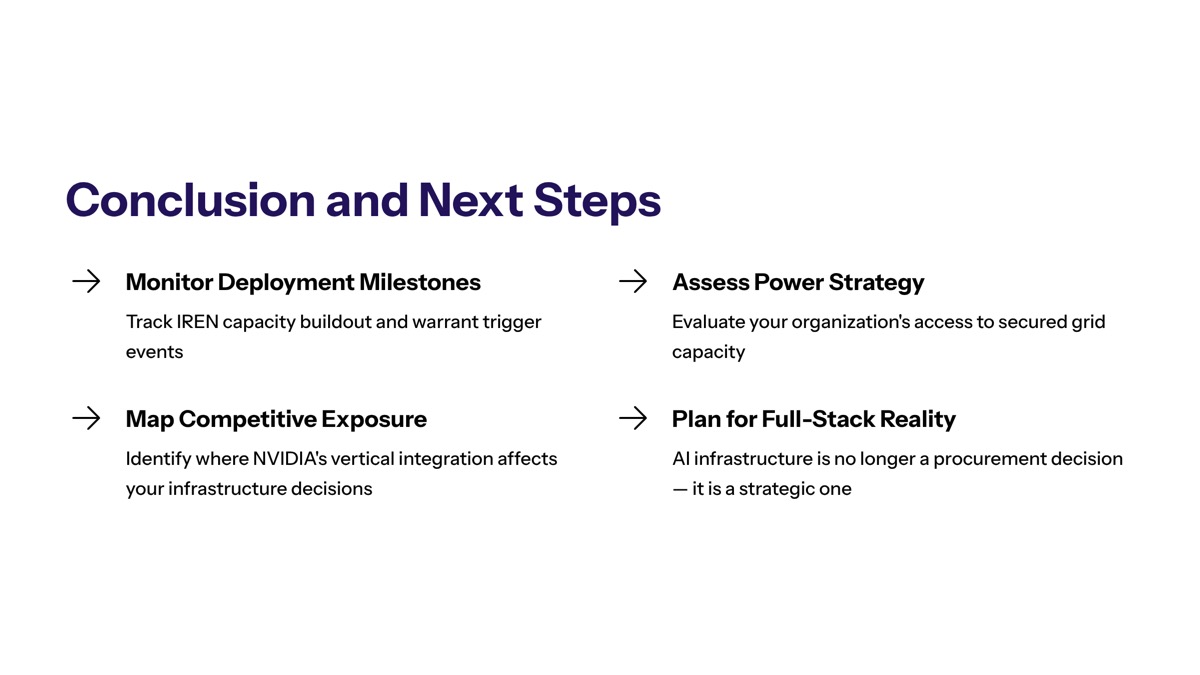
NVIDIA’s partnership with IREN represents a fundamental expansion of the company’s role in the AI economy—from chip manufacturer to infrastructure controller. The combination of $2.1 billion in potential equity investment, $3.4 billion in services contracts, and 5 GW of deployment capacity creates a vertically integrated supply chain for AI compute that few competitors can match.
The partnership reflects broader industry dynamics: AI factories are becoming foundational infrastructure for the global economy, requiring deep integration across compute, networking, software, power, and operations. Companies lacking access to power and land face increasingly difficult competitive positions.
Immediate next steps for stakeholders:
Investors: Monitor IREN’s quarterly deployment milestones and revenue ramp toward the $3.5-$3.7 billion AI cloud target
Enterprise buyers: Evaluate neocloud providers as alternatives for rapid GPU access outside hyperscaler queues
Competitors: Assess power portfolio acquisition opportunities before remaining capacity is locked up
Related developments worth tracking include NVIDIA’s other infrastructure partnerships, the evolution of DSX architecture specifications, and regulatory responses to data center power demand growth.
Additional Resources
NVIDIA official partnership announcement for complete terms and strategic rationale
IREN investor relations for SEC filings detailing warrant conditions and financial projections
International Energy Agency data center electricity reports for industry-wide power consumption trends and forecasts