Pentagon Signs Classified AI Deals with Major Tech Firms
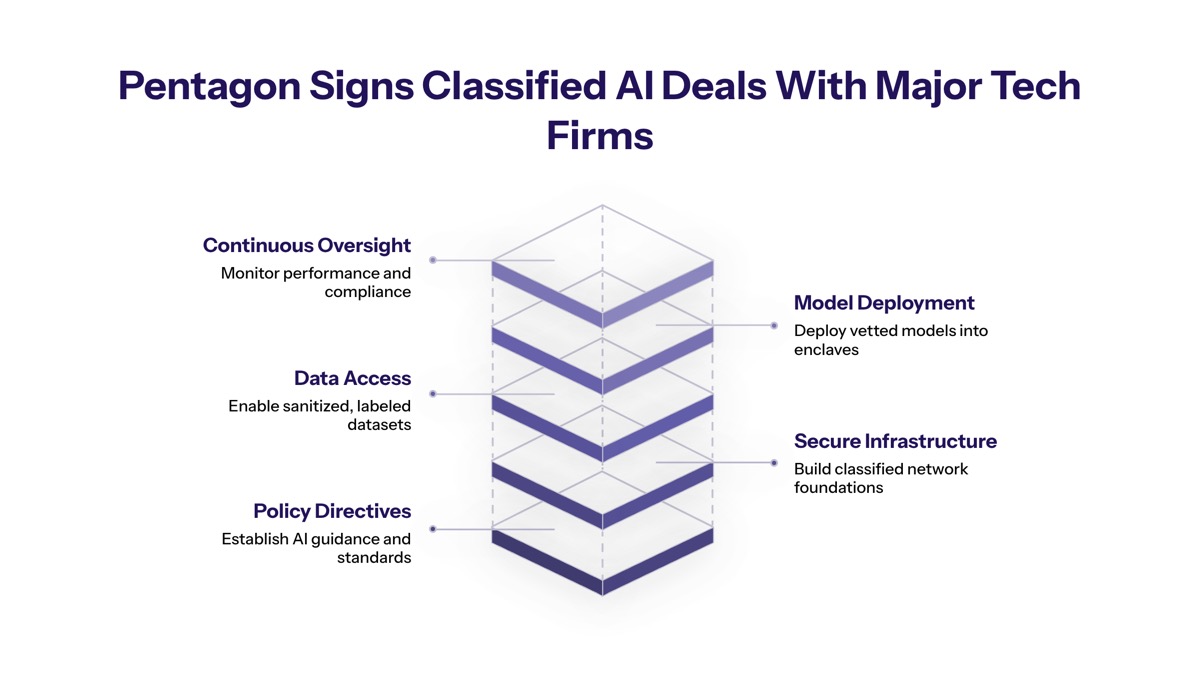
The Pentagon has signed classified AI deals with eight major technology companies to deploy artificial intelligence across the most secure military networks, marking a fundamental shift in defense AI strategy. On May 1, 2026, the U.S. Department of Defense finalized new classified AI contracts with OpenAI, Google, Microsoft, Amazon Web Services (AWS), Nvidia, SpaceX, Oracle, and Reflection AI, granting these leading AI companies access to Impact Level 6 (IL6) and Impact Level 7 (IL7) classified networks.
This analysis covers the Department’s AI Acceleration Strategy, including vendor selection criteria, security clearance processes for classified work, contract acceleration methods, and the notable exclusion of Anthropic due to supply chain risk concerns. The content addresses defense procurement professionals, enterprise technology leaders, and organizations seeking to understand how the US military is reshaping its approach to AI systems integration in complex operational environments.
Direct answer: The Pentagon has accelerated AI integration from 18 months to under three months while diversifying its vendor base across eight AI companies to prevent single-provider dependency and maintain decision superiority across all domains of warfare.
By reading this analysis, you will gain:
Understanding of IL6 and IL7 classified network requirements for AI deployment
Insight into the Pentagon’s multi-vendor diversification strategy
Knowledge of accelerated security clearance and onboarding processes
Analysis of vendor exclusion criteria and supply chain risk assessment
Practical lessons for enterprise AI adoption in regulated environments
Understanding Pentagon AI Procurement Framework
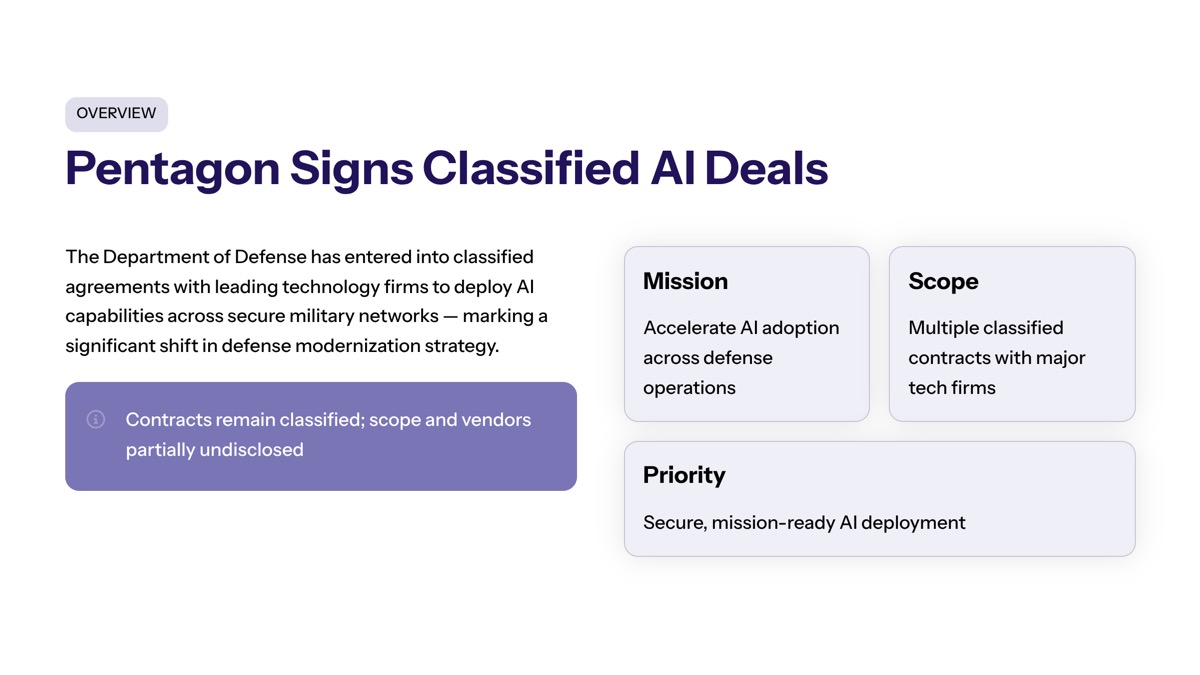
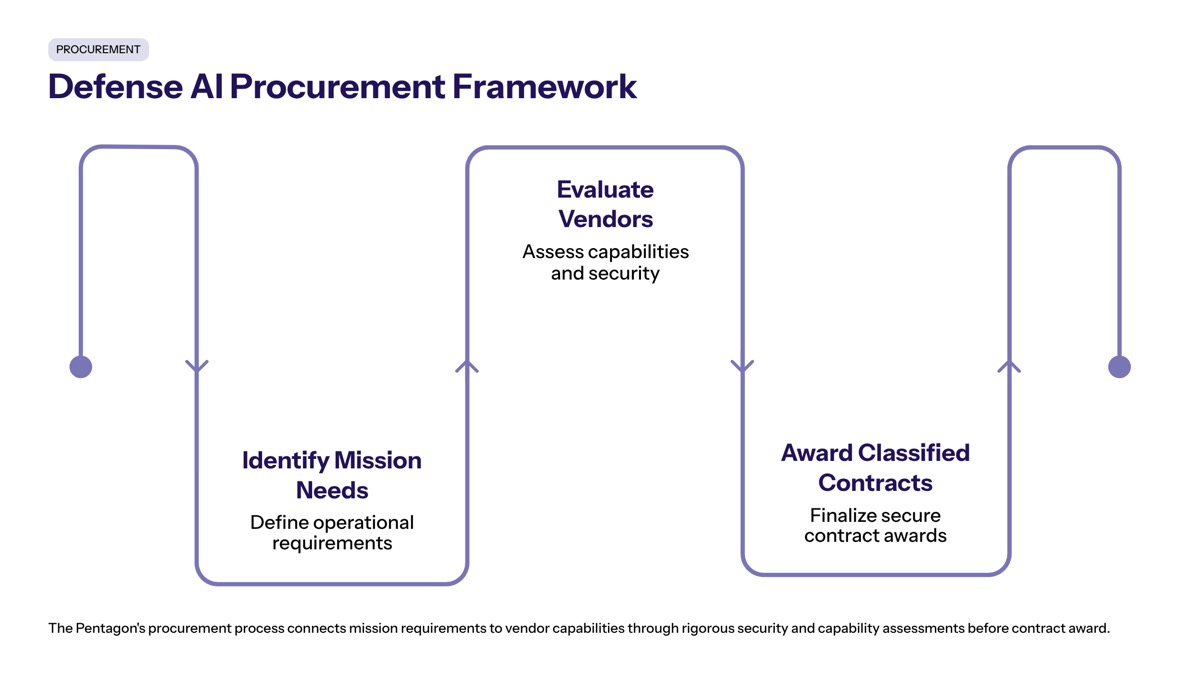
The Defense Department has established a comprehensive framework for integrating advanced AI capabilities into military operations. The Pentagon’s AI Acceleration Strategy aims to establish the United States military as an AI-first fighting force, enhancing decision superiority across all domains of warfare while ensuring human oversight remains central to critical decisions.
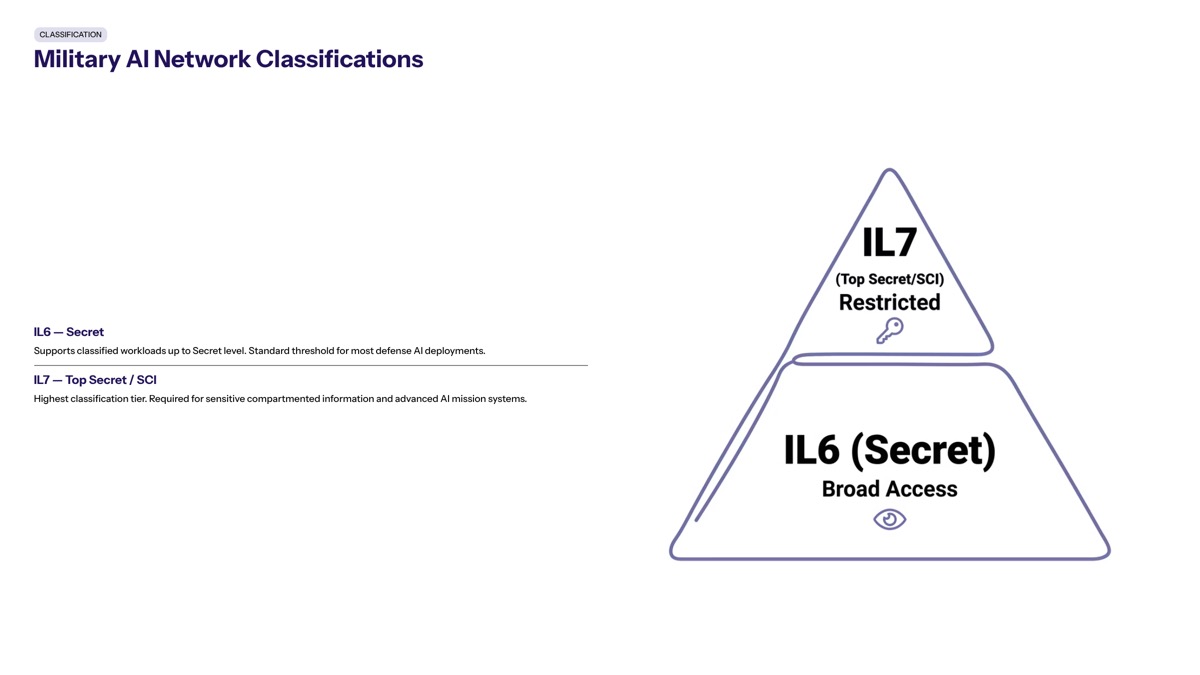
Military AI Network Classifications
Impact Level 6 and Impact Level 7 represent the highest security levels for cloud computing environments managing classified information. IL6 environments process classified data up to the SECRET level, requiring rigorous physical security controls, insider threat protections, cryptographic assurance, audit logging, and multifactor authentication with background-checked access. IL7 covers top secret or the most sensitive national security systems and data.
The Pentagon is integrating AI into Impact Level 6 and Impact Level 7 network environments specifically to enhance situational understanding and support decision-making during complex operations. These classifications connect to broader defense cybersecurity frameworks managed by the Defense Information Systems Agency (DISA) under the Cloud Computing Security Requirements Guide.
Vendor Selection Criteria
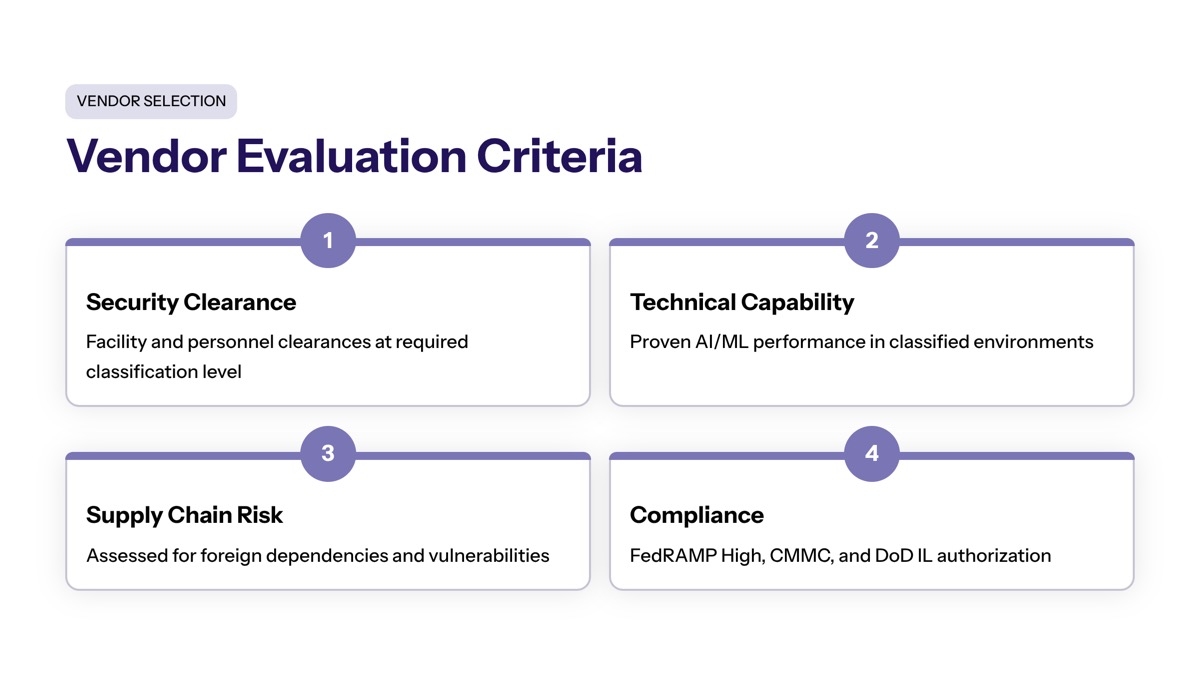
Vendors seeking clearance for classified networks must pass rigorous supply chain risk assessments and agree to contract language permitting lawful operational use of their AI capabilities for any government purpose. Security clearance requirements include accepting usage authorization for warfighting, intelligence, and enterprise operations without red-line restrictions.
The relationship between AI capabilities and national security considerations has become the central evaluation criterion. Tech companies must demonstrate willingness to support applications the Pentagon considers critical to maintaining decision superiority, including potential use in autonomous weapons systems and surveillance within legal bounds. This vendor selection approach sets the foundation for understanding specific implementation challenges in classified environments.
Classified Network AI Integration Process
Building on the security classification requirements, the Defense Department has implemented specific technical processes for deploying AI tools across its most sensitive networks.
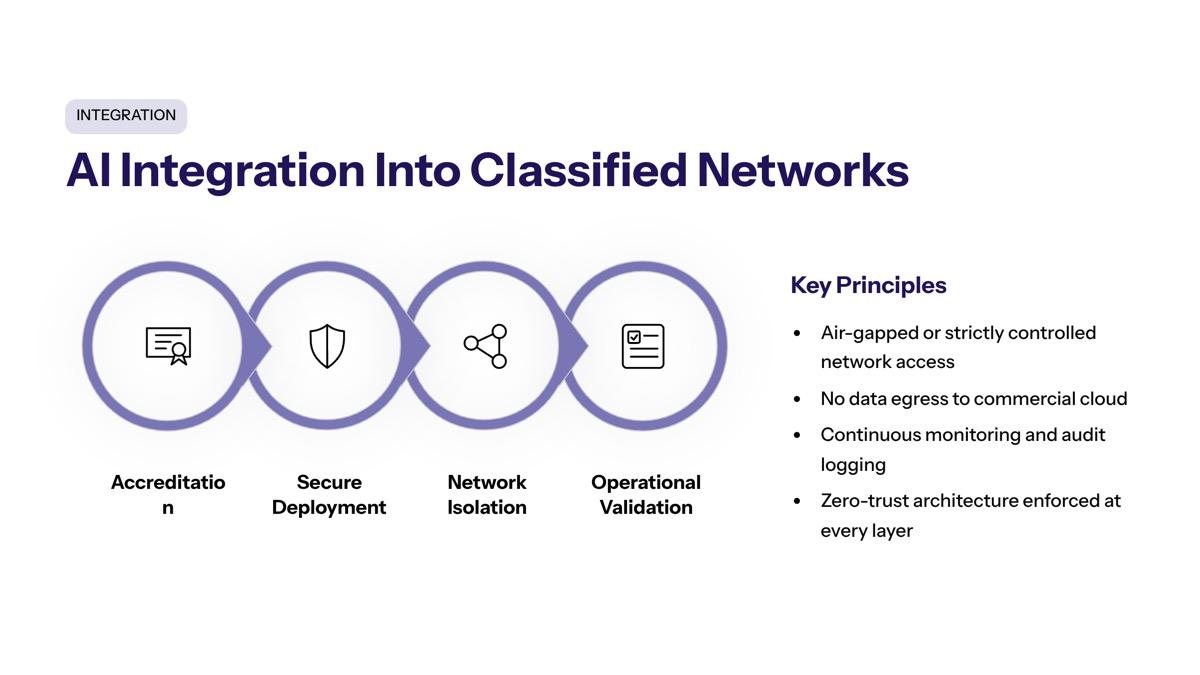
GenAI.mil Platform Deployment
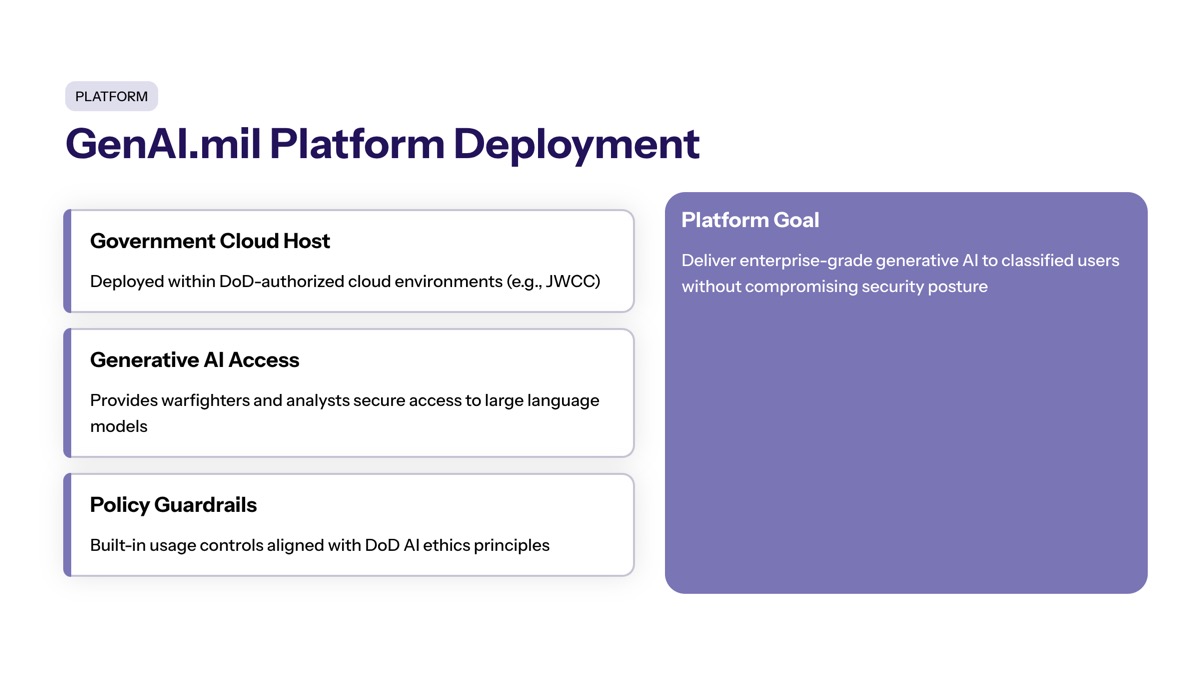
Over 1.3 million Department personnel have utilized the GenAI.mil platform, generating tens of millions of prompts and deploying hundreds of thousands of digital agents within five months of its launch on December 9, 2025. The platform provides access to dozens of pre-approved AI models, including Google’s Gemini 3.1 Pro, OpenAI’s ChatGPT, and xAI’s Grok, under government cloud infrastructure that maintains data isolation.
A notable feature is Agent Designer, which enables non-technical users to define tasks in natural language and generate AI agents without writing code. Since its introduction, over 103,000 agents have been built with approximately 1.1 million agent sessions logged. Use cases include automating briefing generation, summarizing field reports, document triage, and mapping personnel or logistic data—all designed to augment warfighter decision making and streamline data synthesis.
Timeline Acceleration Methods
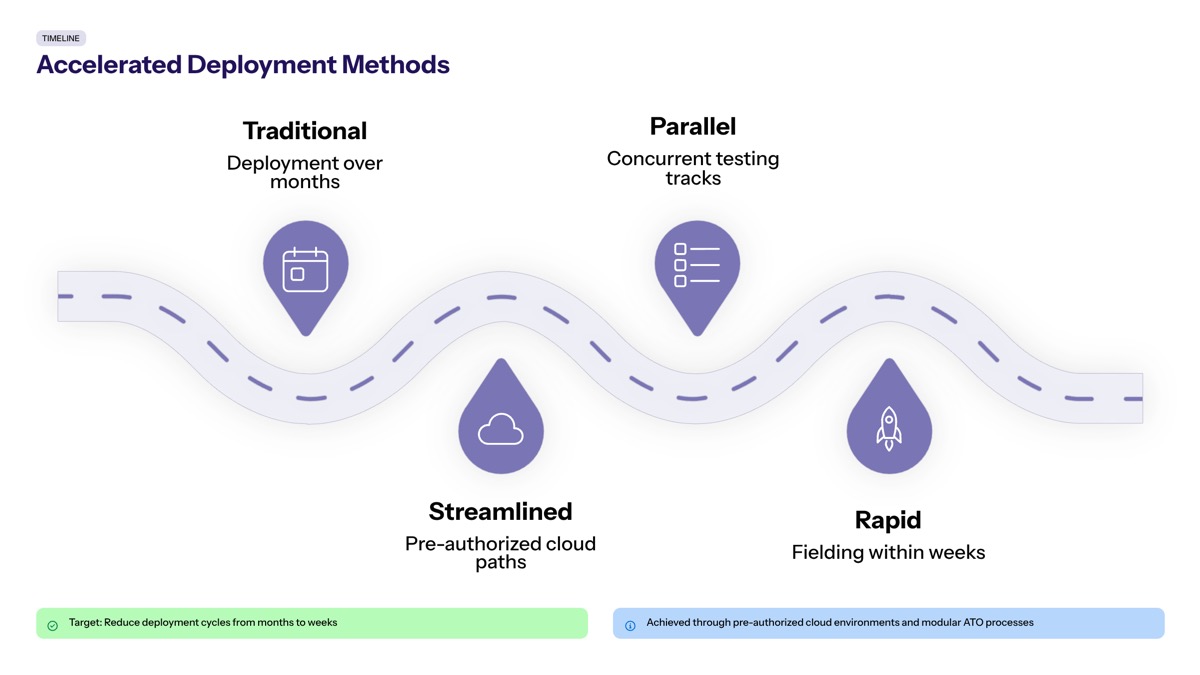
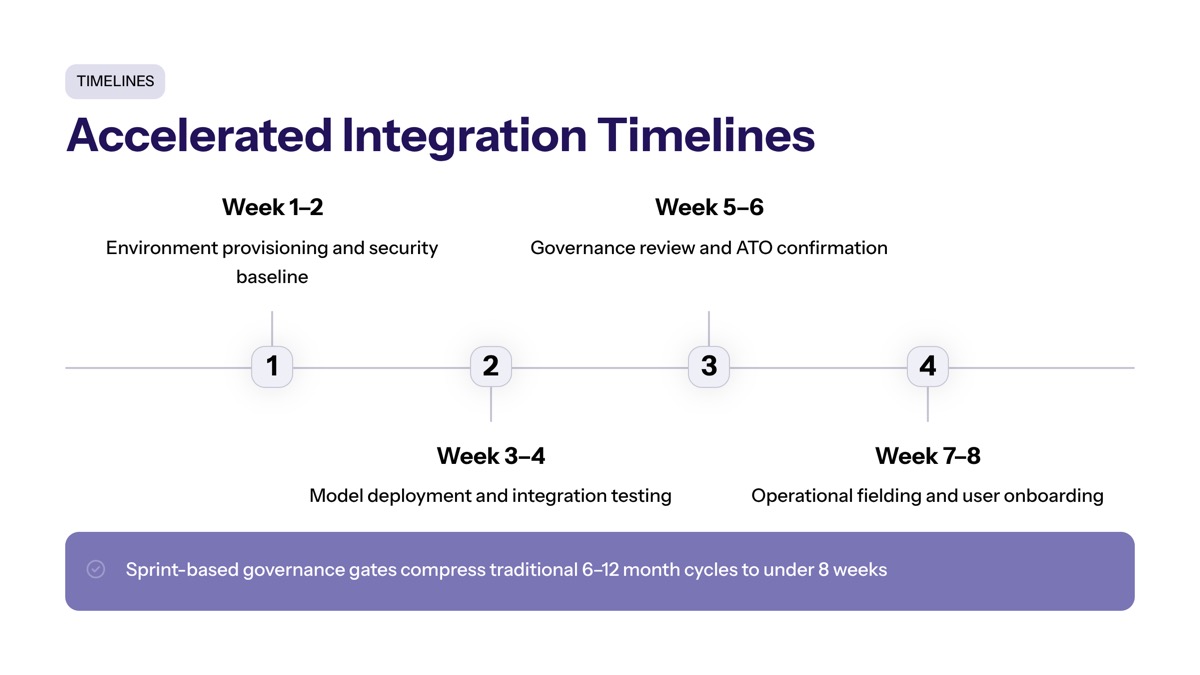
The Pentagon has accelerated its onboarding processes for integrating new technology into high-security environments, reducing the integration timeline from 18 months to less than three months for companies accepting required contract language. The Department of War has accelerated its integration timelines for AI technologies by implementing pre-approved contract terms, standardized security frameworks, pre-cleared infrastructure, and upfront supply chain risk vetting.
This acceleration enables the joint force to rapidly deploy the best tools available while maintaining security standards across classified networks.
Multi-Vendor Integration Strategy
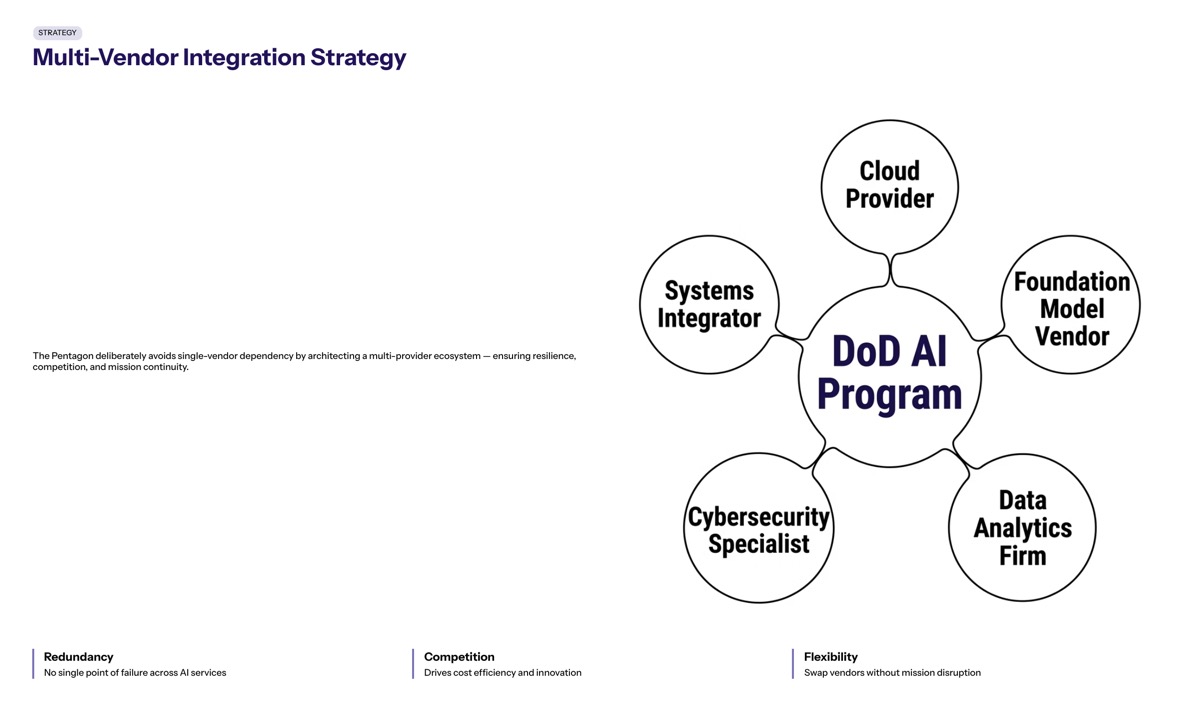
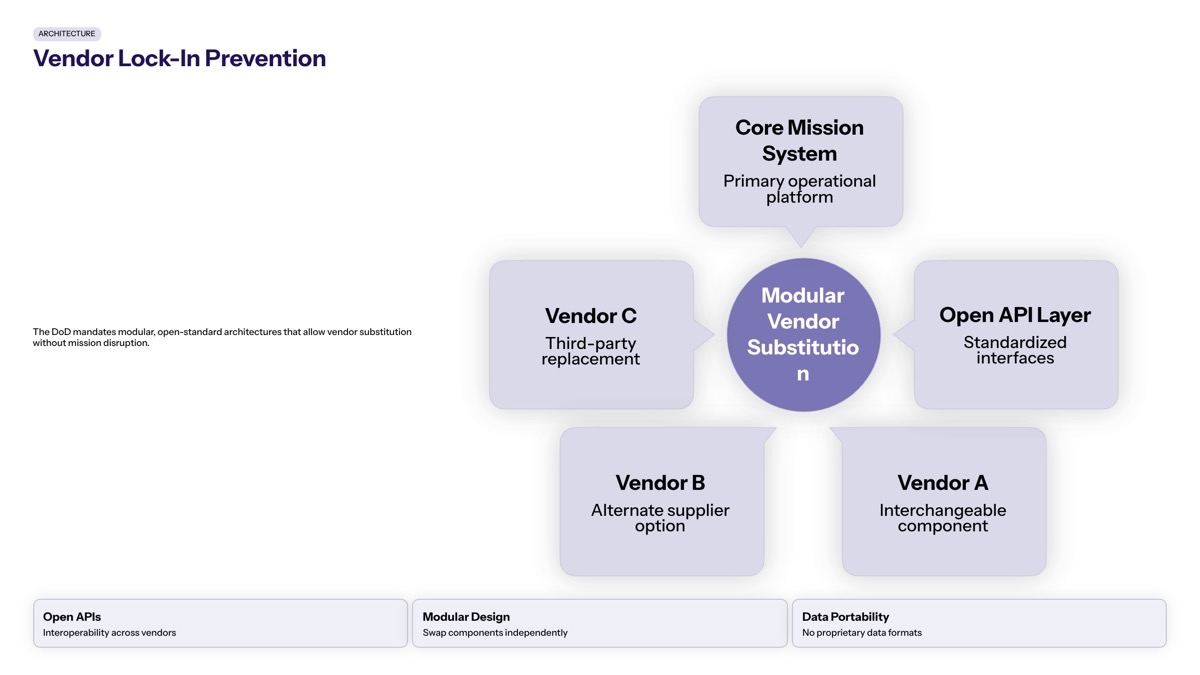
The Pentagon’s strategy includes diversifying its technology providers to prevent vendor lock-in and leverage unique strengths from different platforms. GenAI.mil’s architecture uses a contract broker layer allowing access to different models through a unified interface, enabling Agent Designer to select among approved models while maintaining security boundaries.
Key integration achievements include:
Diverse suite of AI models available through single platform
Standardized security controls across multiple vendors
Operational flexibility to switch between providers
Reduced dependency on any single AI company
This multi-vendor approach connects directly to the specific contract terms and strategic partnerships the Pentagon has established.
Contract Details and Strategic Implementation
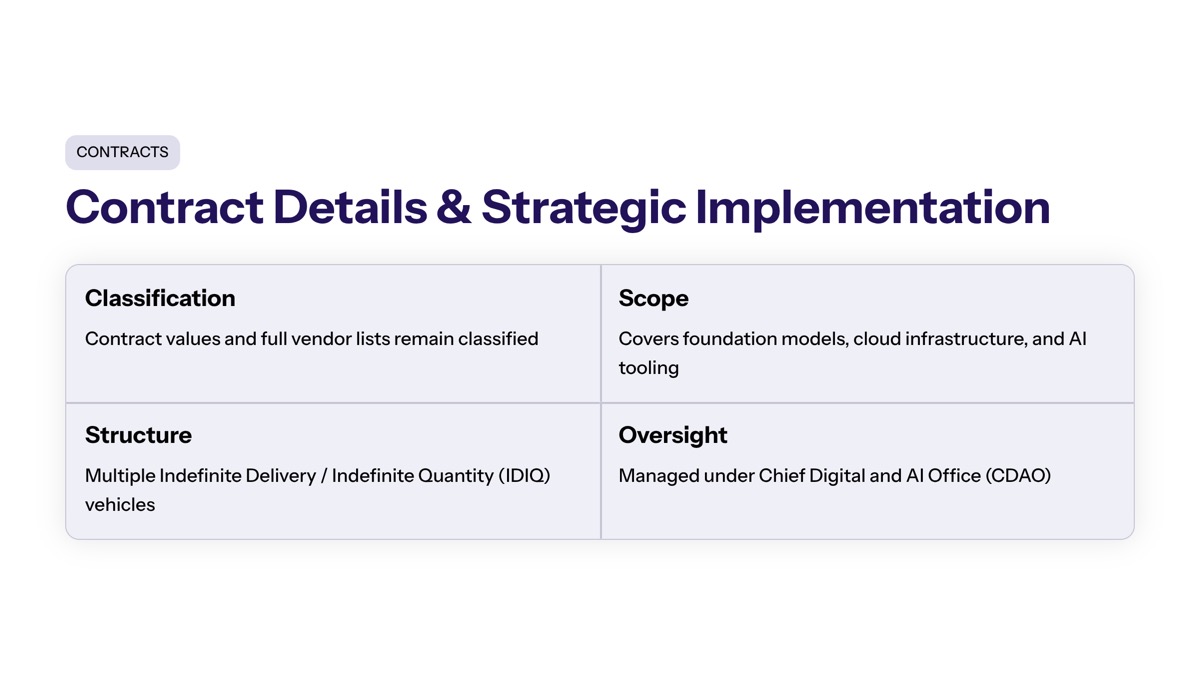
The new agreements with eight major tech companies represent the most significant expansion of AI capabilities into classified military networks to date, with clear strategic implementation implications.
Included Technology Partners
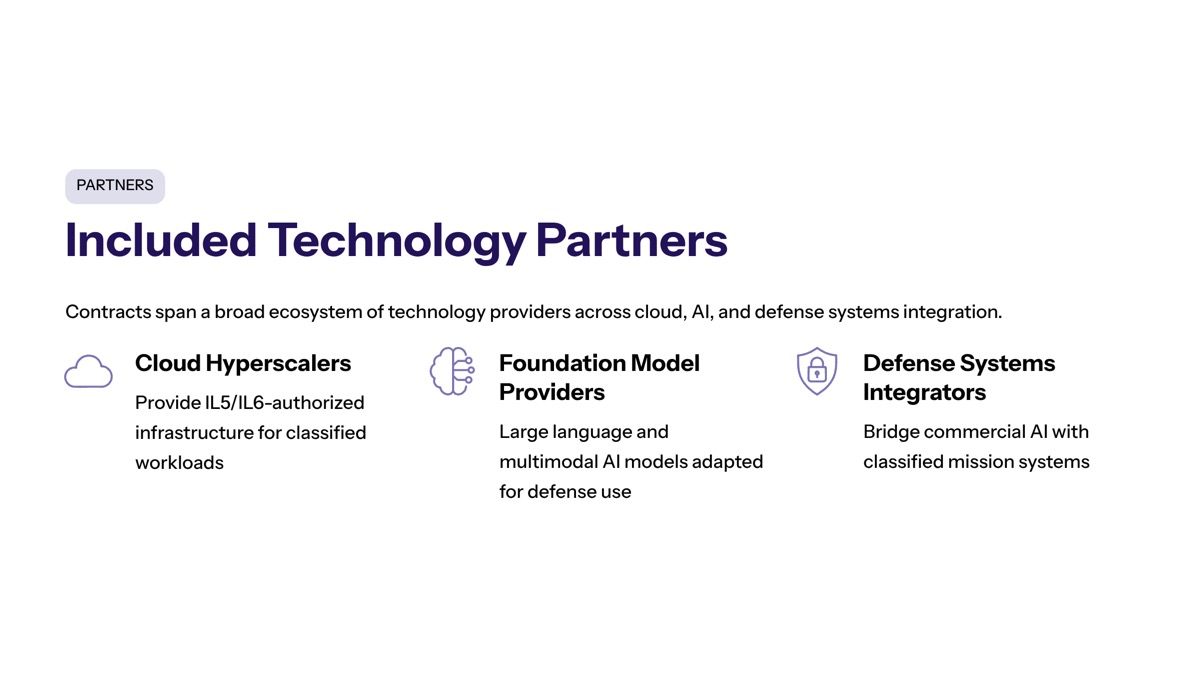
The participating companies in the agreements include SpaceX, OpenAI, Google, Nvidia, Reflection AI, Microsoft, Amazon Web Services, and Oracle. Each vendor brings specific capabilities to the resilient American technology stack:
Company | Primary AI Capabilities | Military Application Focus |
|---|---|---|
OpenAI | Large language models, ChatGPT | Intelligence analysis, document processing |
Gemini models, Agent Designer | Enterprise operations, workflow automation | |
Microsoft | Azure AI services, enterprise tools | Secure cloud infrastructure, productivity |
Amazon Web Services | Cloud AI services, machine learning | Data centers, scalable computing |
Nvidia | GPU infrastructure, AI hardware | Processing power for AI systems deployment |
SpaceX | Satellite communications, connectivity | Data transmission across network environments |
Oracle | Database management, enterprise AI | Data synthesis, secure information handling |
Reflection AI | Frontier AI models | Advanced AI capabilities for warfighting |
Reflection AI, which raised approximately $2 billion in October 2025 backed by 1789 Capital and connected to Donald Trump Jr., emerged as a notable addition to the vendor mix under the Trump administration’s defense priorities. President Donald Trump and the White House have prioritized building an AI-first fighting force that will strengthen our warfighters’ ability to maintain decision superiority.
Each contract requires agreement to lawful operational use for any government purpose, including uses tied to intelligence operations. The agreements accelerate deployment across classified networks with integration requirements spanning warfighting, intelligence, and enterprise operations.
Vendor Exclusion Analysis
Criterion | Included Vendors | Anthropic (Excluded) |
|---|---|---|
Usage clause acceptance | Agreed to “any lawful purposes” | Refused to remove usage restrictions |
Autonomous weapons | No contractual restrictions | Prohibited fully autonomous weapons |
Surveillance applications | Permitted for lawful purposes | Prohibited mass surveillance, domestic surveillance |
Supply chain designation | Cleared | Designated “supply chain risk” |
Contract status | Active IL6/IL7 access | Excluded, contract voided |
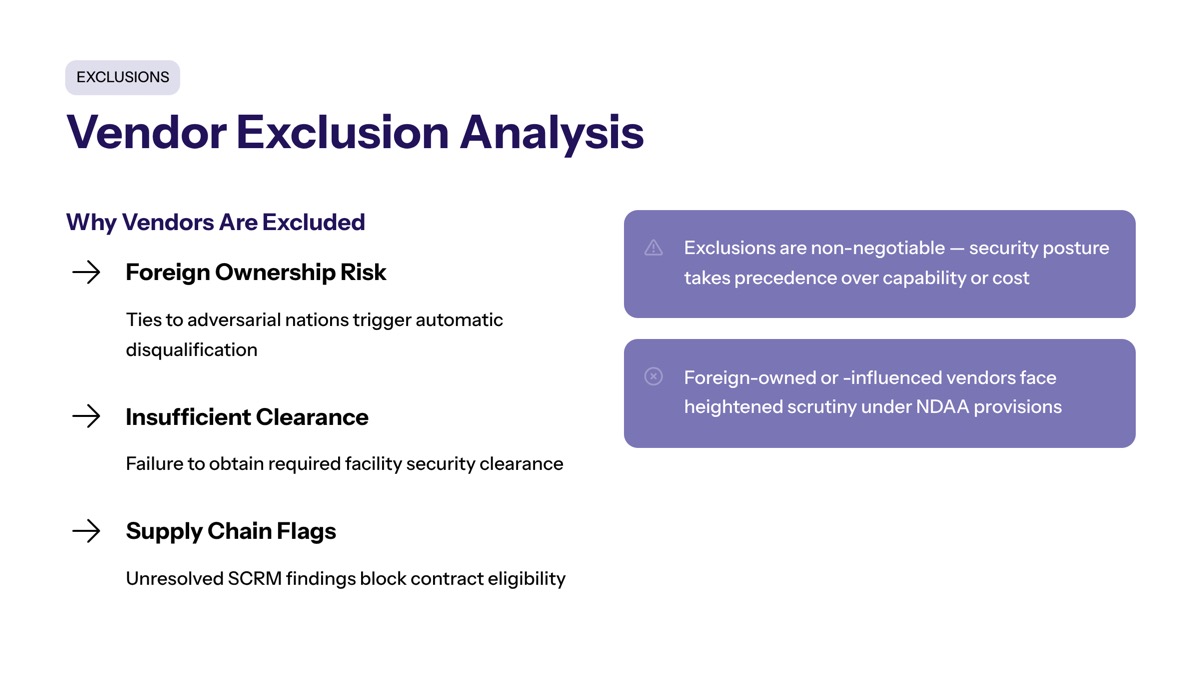
Anthropic refused to agree to language allowing the use of its Claude models for any lawful operational purpose, maintaining safety guardrails that prohibited use in fully autonomous weapons systems and mass domestic surveillance. The Pentagon formally designated Anthropic as a supply chain risk under the Federal Acquisition Supply Chain Security Act—a designation typically applied to foreign adversaries or external threats.
Anthropic sued the Pentagon following the exclusion, contesting the supply chain risk designation. The company’s previous $200 million contract from July 2025 for providing AI services to classified networks was effectively voided.
This exclusion demonstrates the Pentagon’s prioritization of operational flexibility over vendor-imposed ethical constraints. For enterprise organizations evaluating AI vendors, the Anthropic case illustrates how usage clause negotiations directly impact contract viability and continuity.
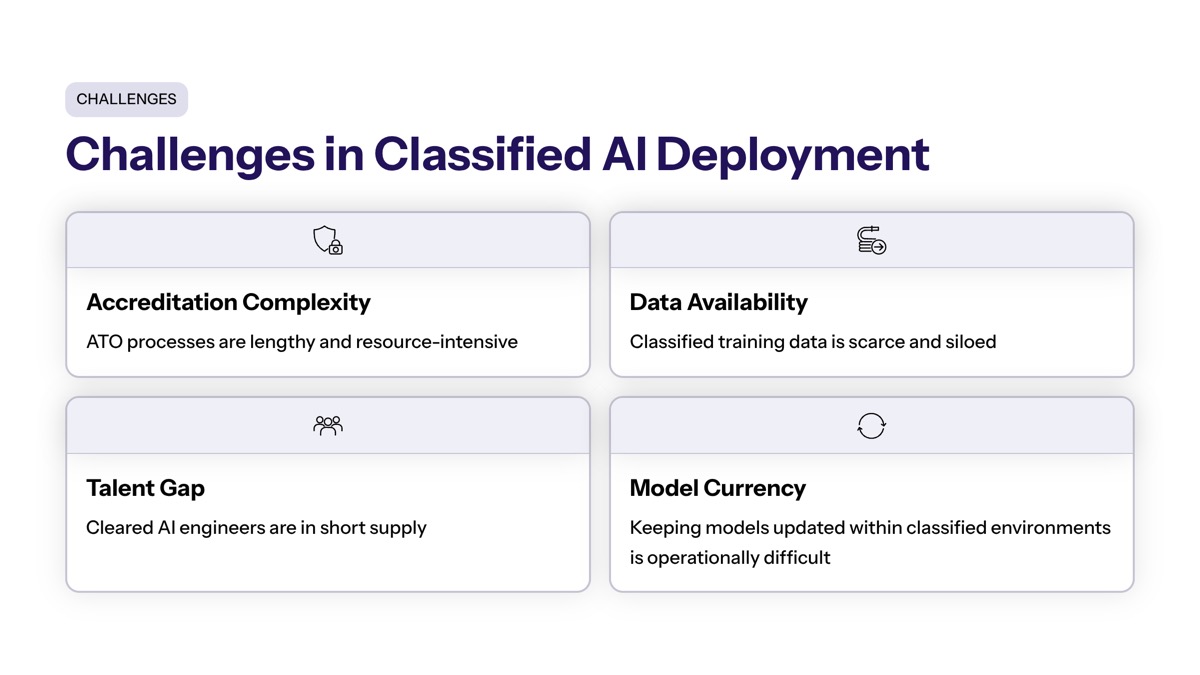
Common Challenges and Solutions in Classified AI Deployment
The Pentagon’s approach to classified AI deployment provides practical lessons for both military and enterprise secure AI implementations.
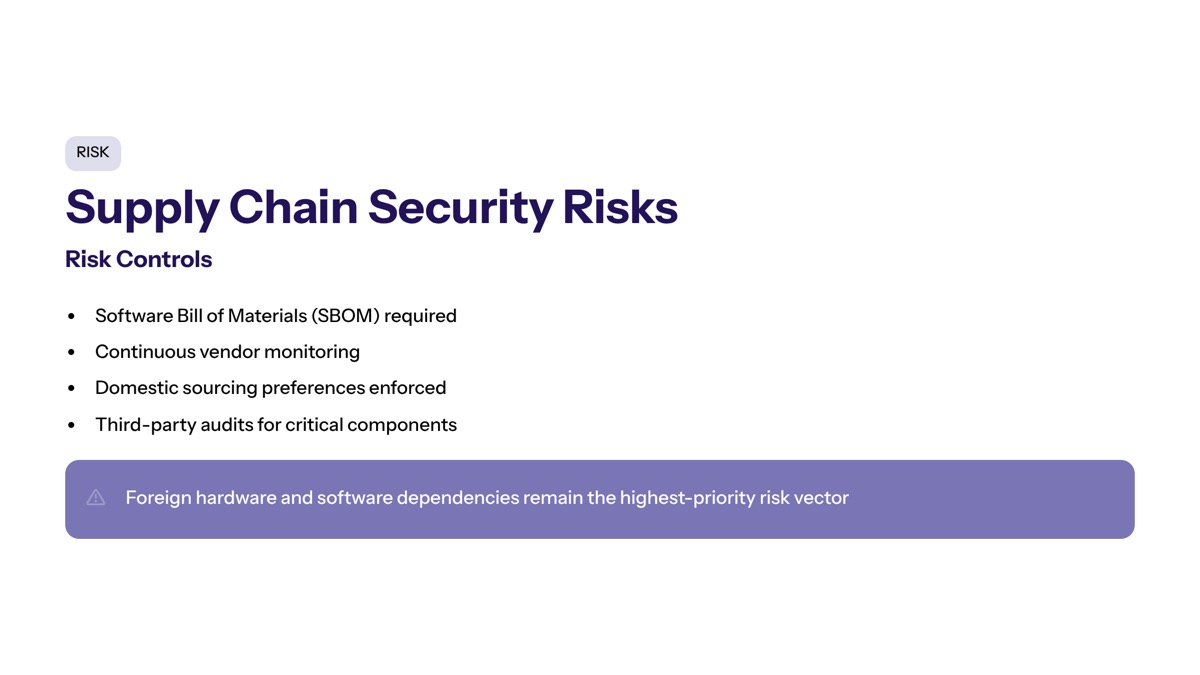
Supply Chain Security Risks
Organizations must conduct thorough AI vendor mapping and dependency audits to identify any undisclosed reliance on excluded vendors. Any dependency on Anthropic—even through subcontractors or embedded tools—must be revealed and phased out. Actionable approaches include implementing continuous vendor monitoring, requiring supply chain transparency in contracts, and establishing rapid vendor substitution protocols.
Vendor Lock-in Prevention
The Pentagon’s multi-vendor strategy demonstrates effective approaches to maintaining operational flexibility. Key techniques include API standardization across providers, maintaining overlapping capabilities across vendors, implementing contract broker layers that abstract vendor-specific interfaces, and negotiating flexible exit terms. The Defense Department explicitly stated that “overreliance on one vendor is never a good thing” as justification for diversifying across eight tech giants.
Accelerated Integration Timelines
AI is expected to reduce operational timeframes from months to days for intelligence and logistical operations by automating routine tasks. Process optimization techniques for reducing AI deployment cycles without compromising security include:
Pre-approving contract language that addresses usage clauses upfront
Using pre-vetted infrastructure and standard security frameworks
Conducting supply chain risk assessments before contract negotiation
Implementing modular deployment architectures for rapid integration
AI integration aims to shorten the military ‘kill chain,’ allowing faster identification and engagement of targets in operational contexts. These efficiency gains extend to many tasks across the joint force and will strengthen warfighters’ ability to maintain decision superiority and elevate situational understanding.
Conclusion and Next Steps
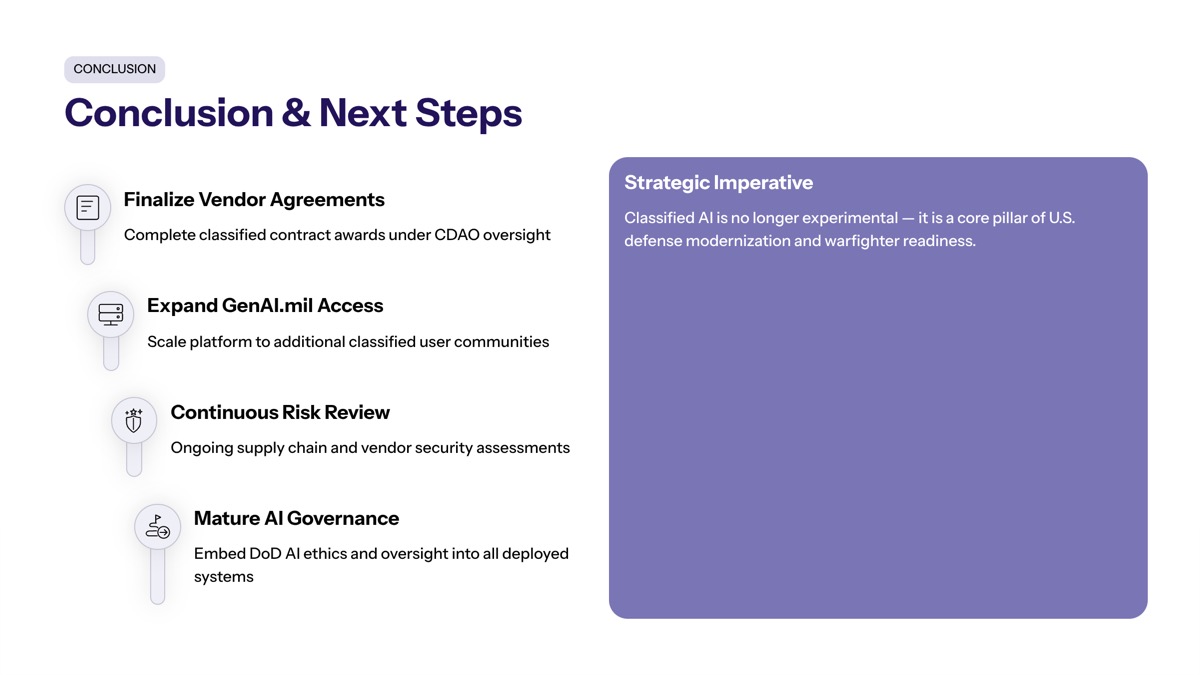
The Pentagon’s classified AI deals with eight leading tech companies represent a fundamental transformation in how the United States military acquires and deploys artificial intelligence. By reducing onboarding timelines from 18 months to under three months while diversifying across multiple providers, the Defense Department has created a model for secure, rapid AI integration that maintains decision superiority across all domains.
The initiative seeks to maintain U.S. technological leadership in AI amidst geopolitical competition and the evolving landscape of military technology. The agreements aim to enhance decision superiority by streamlining data synthesis and augmenting decision-making for warfighters in complex environments.
Immediate actionable steps for enterprise organizations:
Assess current AI vendor dependencies for potential supply chain risk exposure
Implement multi-provider strategies that prevent lock-in while maintaining security
Review AI vendor contracts for usage clause restrictions that may limit operational flexibility
Develop security-first AI integration processes aligned with regulatory requirements
Establish vendor evaluation frameworks that balance capabilities with compliance requirements
Related topics worth exploring include enterprise AI governance frameworks for regulated industries, secure AI implementation methodologies, and vendor risk management strategies that balance innovation with oversight requirements.
Additional Resources
Defense Information Systems Agency Cloud Computing Security Requirements Guide for IL6/IL7 classification details
Federal Acquisition Supply Chain Security Act provisions for understanding vendor risk designations
GenAI.mil platform documentation for enterprise-scale AI deployment architecture examples
Multi-vendor AI procurement frameworks for avoiding lock-in while maintaining capability diversity
Regulatory compliance requirements for AI deployment in sensitive environments, including human oversight mandates