Secure Custom Software Development: A Complete Guide for Enterprise Leaders
Secure custom software development is the practice of designing, building, testing, deploying, and maintaining custom software with security, compliance, and risk management built into every phase. For enterprise leaders, this means the software must support business needs while protecting customer data, intellectual property, core business processes, and regulated information from evolving threats.
This guide covers the security frameworks, compliance requirements, threat mitigation methods, and regulated industry considerations that shape enterprise software development. It is written for CTOs, CISOs, enterprise architects, compliance leaders, and business executives evaluating custom software development services, custom enterprise software, modernization programs, or a secure custom software development company.
The direct answer: secure custom software development integrates security controls, compliance requirements, and risk mitigation throughout the entire software development lifecycle, not only during final testing or post-launch audits. Using a Secure Software Development Life Cycle (SSDLC) framework incorporates security from the initial design phase, which helps prevent vulnerabilities before they become expensive operational risks.
By the end of this guide, you will understand how secure custom development supports:
Threat protection across applications, APIs, cloud platforms, and third party systems
Regulatory compliance for GDPR, HIPAA, PCI-DSS, SOC 2, and industry-specific standards
Data governance through classification, encryption, access control, and audit trails
Secure architecture using zero trust, least privilege, and layered controls
Enterprise risk management that connects security decisions to business objectives and tangible business outcomes
Understanding Security-First Development Foundations
Secure custom software development means building tailored solutions with security embedded from design through deployment and ongoing support. Custom software development (CSD) services involve designing, building, modernizing, or iterating applications to meet unique business needs, which are not available as commercial off-the-shelf products. Unlike off the shelf software, custom software solutions are designed to fit unique business processes, which helps eliminate inefficiencies associated with generic tools that may not align with specific operational needs.
For enterprise leaders, this matters because custom enterprise software often sits close to business operations, customer data, payment flows, healthcare records, business intelligence, advanced data analytics, and strategic workflows. Investing in custom enterprise software allows organizations to create solutions tailored to their specific processes, enhancing operational efficiency and providing a competitive edge. Organizations that invest in custom software often report improved operational efficiency, smoother integration with existing systems, and a strong return on investment (ROI).
Security-first development also supports enterprise risk management. Custom software must comply with industry-specific regulations, such as HIPAA for healthcare or PCI DSS for financial services, to ensure data security and protect sensitive information. Compliance meets legal standards like GDPR, HIPAA, or PCI-DSS, but mature governance goes further: it makes compliance measurable, auditable, and repeatable across the software development process.
Security by Design Principles
Security by design means security is planned before software architecture is finalized, before the technology stack is locked, and before developers write production code. It connects business goals, risk management, project management, and technical expertise so the development team can identify what must be protected, who may attack it, and which controls are required.
In practical terms, security by design includes threat modeling, risk assessment, secure software architecture planning, secure coding standards, and validation criteria. Microsoft STRIDE, for example, evaluates spoofing, tampering, repudiation, information disclosure, denial of service, and elevation of privilege. PASTA aligns attacker behavior with business objectives, while LINDDUN focuses on privacy risks.
Embedding security into every phase of the Software Development Life Cycle (SDLC) prevents vulnerabilities. Fixing bugs during development costs significantly less than handling a post-launch breach, especially when a breach triggers regulatory investigation, incident response, customer notification, operational downtime, or reputational damage. Integrating security testing early in the development lifecycle enhances application security because teams can correct architectural flaws, insecure dependencies, and weak access controls before release.
Security by design also enables enhanced security measures that are uniquely suited to an enterprise. Custom software development allows for the implementation of enhanced security measures that reduce the risk of cyber threats by addressing specific vulnerabilities in the organization’s workflows, infrastructure, and user roles.
Compliance and Governance Integration
Compliance and governance integration means translating legal, regulatory, and internal policy obligations into software requirements, security controls, audit evidence, and operating procedures. For secure custom software development, this commonly includes HIPAA, SOC 2, PCI DSS, GDPR, ISO 27001, NIST Cybersecurity Framework, NIST SP 800-53, and sector-specific standards such as IEC 62304 for medical software.
Compliance requirements often necessitate thorough documentation and audit trails to demonstrate adherence to regulations, which is critical for industries like finance and healthcare. A healthcare mobile app development initiative handling ePHI needs access control, audit logging, encryption, integrity protections, and privacy safeguards. A FinTech platform processing payment data needs PCI DSS controls for storage, transmission, key management, authentication, and monitoring.
Governance also requires continuous proof. Organizations must conduct regular security assessments and compliance audits to ensure that their custom software solutions meet evolving regulatory standards and mitigate risks. Verifying that a vendor complies with relevant industry regulations is essential for security assurance, and prioritizing partners with recognized cybersecurity certifications enhances security measures.
These foundations lead naturally to enterprise-scale implementation: once security, compliance, and governance expectations are clear, the next step is designing architecture that can enforce them across users, services, data, APIs, cloud solutions, and existing systems.
Enterprise Security Architecture for Custom Development
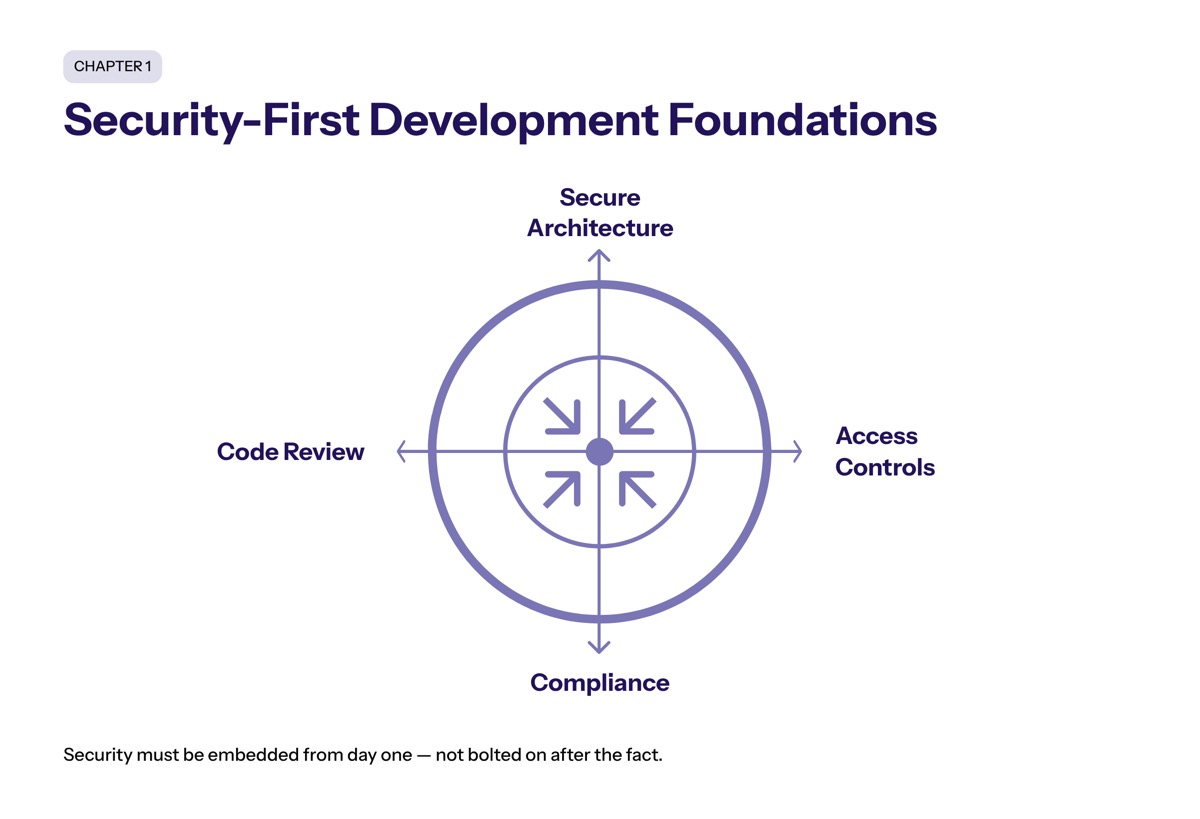
Security-first foundations become real when they are translated into enterprise software architecture. A secure architecture defines how identities are verified, how services communicate, how data is encrypted, how APIs are governed, how cloud computing environments are protected, and how legacy systems interact with modern technologies.
For custom enterprise software development, architecture must also support scalability, seamless integration, quality assurance, and service delivery. The right enterprise software development partner should design scalable solutions that protect sensitive assets while helping streamline operations, automate processes, and deliver scalable business capabilities as evolving market demands change.
Zero Trust Architecture Implementation
Zero trust architecture assumes no user, device, workload, network segment, or API call is trusted by default. In custom software, zero trust means every request is authenticated, authorized, evaluated in context, and limited to the minimum access required. Restricting user and system access rights to the bare minimum necessary prevents unauthorized access and reduces the blast radius if an account, token, or service is compromised.
NIST SP 800-207 defines zero trust architecture principles, and NIST SP 1800-35, published in 2025, provides 19 example Zero Trust Architecture implementations involving 24 vendor collaborators. For enterprise software, practical zero trust controls include role-based access, device posture checks, micro-segmentation, short-lived credentials, continuous monitoring, and policy-based authorization.
Security measures in custom software development include role-based access, user activity monitoring, and data encryption to protect data assets and ensure compliance with regulations. Implementing multiple layers of security controls improves overall security posture because identity controls, network segmentation, application rules, and monitoring reinforce each other.
Data Protection and Encryption Standards
Data protection safeguards sensitive customer data and intellectual property. In secure custom software development, this includes data classification, encryption at rest, encryption in transit, secure key management, backup encryption, access logging, and retention controls.
Authenticating and encrypting all data transmissions protects data integrity during transfer. For regulated enterprise solutions, that often means TLS 1.2 minimum, TLS 1.3 where required or preferred, modern cipher suites, mutual TLS for sensitive internal APIs, and no deprecated protocols. At rest, enterprises commonly use AES-256, envelope encryption, cloud KMS, hardware security modules, key rotation, and separation of duties.
Encryption must be tied directly to compliance requirements. HIPAA expects safeguards for ePHI, PCI DSS requires strong protection for cardholder data, and GDPR Article 32 requires appropriate technical and organizational measures such as encryption and pseudonymization. Regularly managing software patches and updates contributes to security maintenance, and tracking and updating open-source libraries regularly helps patch known security flaws before attackers exploit them.
Secure API Development and Integration
APIs are one of the highest-risk areas in modern enterprise software development because they connect web and mobile applications, cloud platforms, business software, internal services, third party systems, and legacy software. Insecure APIs can expose customer data, enable account takeover, bypass authorization, or create business logic abuse.
Secure API development requires strong authentication and authorization protocols such as OAuth2, OpenID Connect, short-lived tokens, refresh token controls, rate limiting, schema validation, input validation, secure transport, secrets management, and centralized logging. Broken authentication, weak authorization, excessive data exposure, and misconfiguration remain common API failure points.
Effective API governance includes:
A complete API inventory, including shadow APIs
Versioning, documentation, and ownership for each API
Gateway enforcement for authentication, authorization, throttling, and logging
Continuous monitoring for anomalies, abuse patterns, and data exfiltration
Secure integration patterns for existing systems, third party systems, and cloud solutions
Thorough testing, including security audits and penetration tests, is essential in custom software development to identify vulnerabilities and suggest necessary improvements. With architecture in place, leaders need a disciplined secure development process that turns these controls into repeatable delivery practices.
Secure Development Lifecycle Implementation
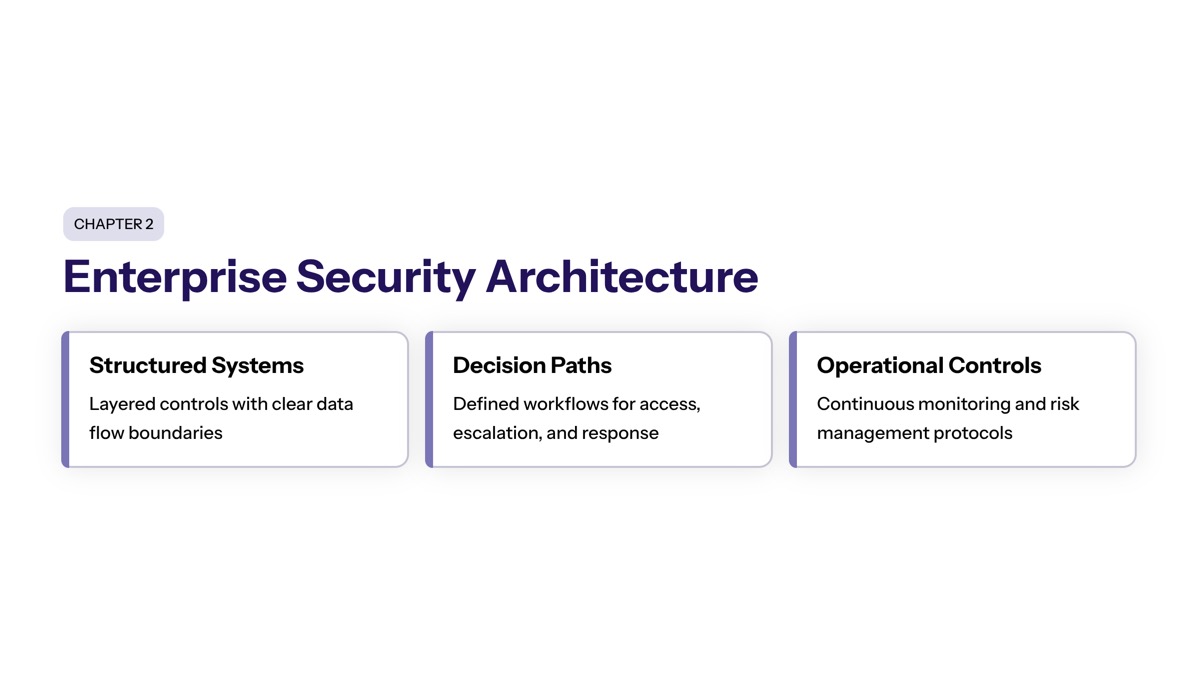
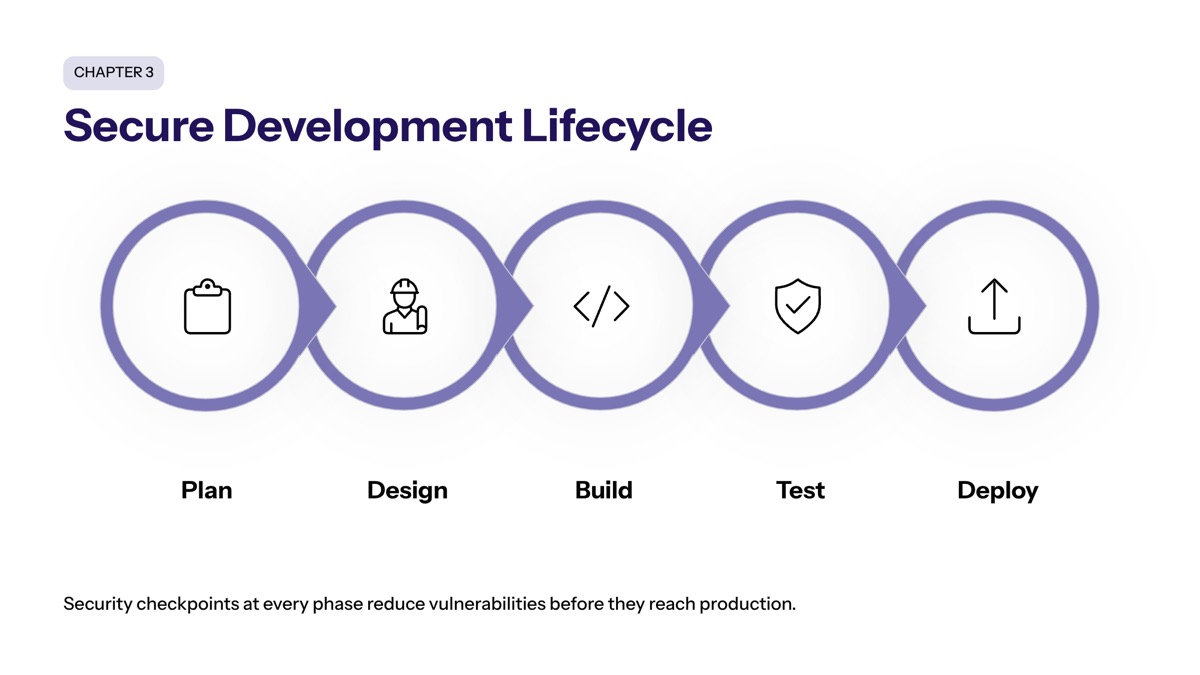
A secure development lifecycle connects business objectives, software engineering, compliance, architecture, development, testing, deployment, and ongoing maintenance. The custom software development process typically includes stages such as requirements gathering, design, development, testing, deployment, and ongoing maintenance to ensure the software meets business objectives.
For secure enterprise software development services, the SSDLC makes security measurable across the project’s scope. It also aligns the project manager, custom software developers, QA engineers, architects, compliance stakeholders, and business owners around risk-based priorities. This is especially important for complex projects, complex business operations, and organizations using digital transformation consulting to modernize critical platforms.
Security Requirements and Threat Modeling Process
Comprehensive threat modeling should begin before major architecture decisions are finalized and continue as features, integrations, APIs, cloud platforms, and user roles change. The goal is to identify attack vectors, define controls, validate assumptions, and document residual risk before the development process creates hard-to-change dependencies.
Security requirements analysis and risk assessment
Define the data, users, systems, compliance obligations, and business processes the application must protect. This includes customer data, intellectual property, regulated records, payment information, business intelligence, and AI-generated insights.Threat identification and attack vector mapping
Use data flow diagrams, context diagrams, trust boundaries, and threat registers to map how attackers could abuse authentication, authorization, APIs, cloud computing resources, open-source libraries, third party systems, or legacy systems.Security control design and validation planning
Select controls such as least privilege, role-based access, encryption, token management, logging, rate limiting, segmentation, secure configuration, and audit trails. Security controls should map to frameworks such as NIST, OWASP ASVS, ISO 27001, SOC 2, HIPAA, PCI DSS, and GDPR.Security testing and vulnerability assessment integration
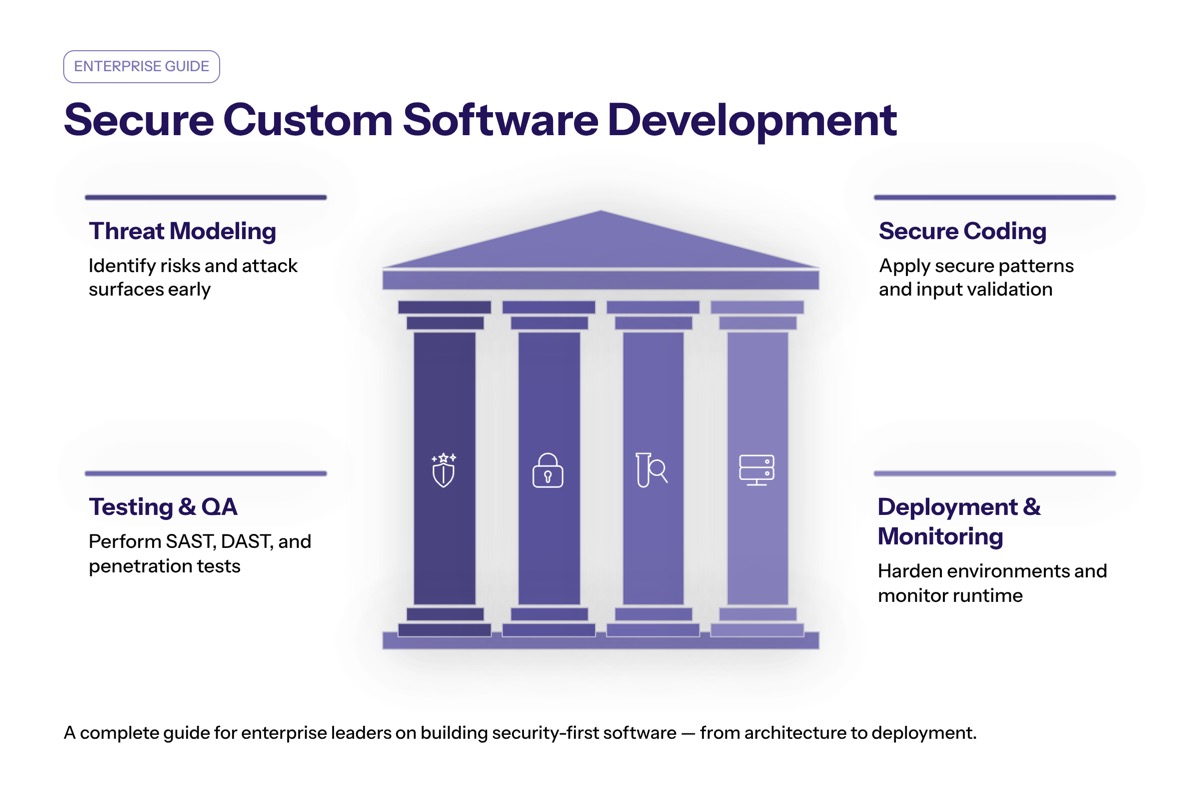
Define when to use SAST, dependency scanning, DAST, API security tests, penetration testing, fuzzing, secrets detection, and manual review. Using automated tools and human oversight can effectively scan for vulnerabilities because automation improves coverage while expert review finds design and business logic flaws.
Threat modeling also needs to account for AI. Integrating AI into custom software solutions can enhance operational efficiency by automating repetitive tasks and providing data-driven insights, which allows organizations to focus on strategic initiatives. AI-driven automation in custom software can lead to improved decision-making processes by analyzing large datasets quickly and accurately, enabling businesses to respond to market changes more effectively. The implementation of AI technologies in custom software can also facilitate personalized user experiences, allowing businesses to tailor their services to meet individual customer needs and preferences. However, AI features introduce risks such as prompt injection, sensitive data leakage, model inversion, and context poisoning, so AI-aware threat modeling is becoming part of secure custom development.
Secure Coding Practices and Code Review
Secure coding turns architecture and threat models into reliable software solutions. Developers should avoid insecure patterns such as SQL injection, hard-coded secrets, unsafe deserialization, weak session management, missing output encoding, excessive permissions, and insecure dependency use. Continuous integration should enforce automated tests, security scans, dependency checks, and policy gates so insecure changes are caught before release.
Security Practice | Implementation | Compliance Benefit |
|---|---|---|
Static Code Analysis | Automated vulnerability scanning | Early threat detection |
Secure Code Review | Peer review with security focus | Quality assurance |
Penetration Testing | Simulated attack scenarios | Real-world validation |
Static analysis, dependency scanning, and secrets detection help identify common implementation problems early. Secure code review adds human judgment, especially for authorization logic, error handling, data access patterns, and integration with existing systems. Penetration testing validates whether controls survive realistic attack paths.
The right mix depends on risk profile and compliance requirements. A public mobile app handling low-risk content may need lighter controls than a healthcare platform managing ePHI or a financial services system processing cardholder data. But every secure custom software development process should include automated vulnerability scanning, manual review, security-focused quality assurance, patch management, and production monitoring.
Deployment security completes the cycle. Teams should keep software up to date, separate development, testing, and production environments, monitor logs, maintain audit trails, revoke compromised keys or tokens quickly, and operate incident response procedures. Maintaining user trust protects brand value, and strong production security helps protect business growth after launch.
Common Security Challenges and Solutions
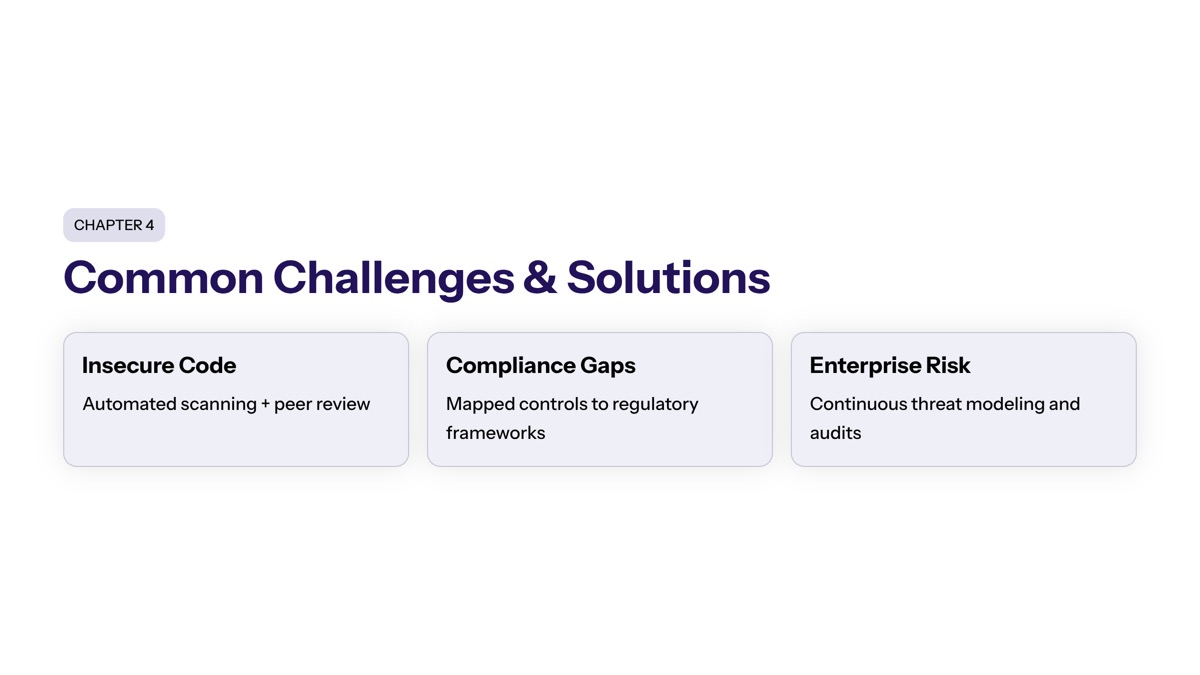
Custom development gives enterprises control, but it also introduces challenges across legacy integration, cloud operations, compliance evidence, vendor governance, and ongoing support. These challenges are manageable when security is treated as a core part of enterprise software development rather than an afterthought.
Choosing a secure custom software development partner requires evaluating how a vendor integrates security throughout their entire business operation and development lifecycle. The right software development partner should demonstrate secure project management, certified expertise, secure coding standards, compliance familiarity, incident response readiness, and transparent documentation. Clarifying intellectual property rights early ensures full ownership of the source code upon project completion.
Legacy System Integration Security
Legacy systems often lack modern authentication, encryption, logging, API governance, and documentation. The solution is not always a full rewrite. A safer path may include secure facades, API gateways, network segmentation, identity mediation, refactoring high-risk modules, and phased modernization.
Modernizing legacy systems can significantly reduce maintenance costs and improve system performance, allowing organizations to allocate resources more effectively. Legacy system modernization often involves a range of strategies, including code refactoring, functionality upgrades, and user experience enhancements to meet current business needs. Organizations that modernize their legacy systems can achieve better integration with new technologies, enhancing overall operational agility and responsiveness to market changes.
For secure custom enterprise software, integration boundaries must be explicit. Legacy software should not inherit broad trust from modern services, and new cloud solutions should not expose older systems without compensating controls. This approach supports seamless integration while reducing risk.
Cloud Security and Multi-Environment Management
Cloud, hybrid, and on-premise environments create configuration complexity. Different cloud platforms may use different identity models, encryption services, logging tools, network controls, and compliance certifications. Without standardization, configuration drift can weaken security across the enterprise.
A practical solution is to use infrastructure as code, policy as code, centralized identity and access management, continuous configuration scanning, secrets management, and environment-specific least privilege. Cloud computing can support scalable solutions, but cloud security must align with shared responsibility models and regulatory requirements.
For custom software development services, cloud security should be part of the technology stack discussion from the beginning. The tech stack, deployment model, data residency requirements, disaster recovery approach, and monitoring architecture should all support the enterprise’s compliance and risk management obligations.
Regulatory Compliance Automation
Manual compliance reporting is slow, incomplete, and difficult to sustain as software changes. Secure custom development should automate evidence collection wherever possible through audit logs, configuration snapshots, access review records, vulnerability scan results, test reports, deployment approvals, and compliance mapping.
Compliance automation should be integrated into continuous integration and delivery workflows. This means CI/CD pipelines can check encryption settings, dependency risk, infrastructure rules, secrets exposure, code quality, and policy adherence before deployment. It also means audit trails are produced as part of normal service delivery rather than reconstructed during an audit.
For regulated organizations, this is critical. Compliance requirements often necessitate thorough documentation and audit trails to demonstrate adherence to regulations, which is critical for industries like finance and healthcare. Regular assessments, automated reporting, and governance dashboards help leaders prove that custom solutions remain secure as business operations evolve.
These solutions give leaders a practical path from risk awareness to execution: assess the current environment, define compliance needs, design secure architecture, and choose an enterprise software development company capable of sustaining security over time.
Conclusion and Next Steps
Secure custom software development is not only a defensive practice. It is a business enabler for regulated industries and enterprises that need reliable software solutions, operational efficiency, scalable solutions, and trust in critical digital systems. Done well, custom software can enhance operational efficiency by streamlining business processes and reducing manual tasks, leading to faster execution and improved productivity.
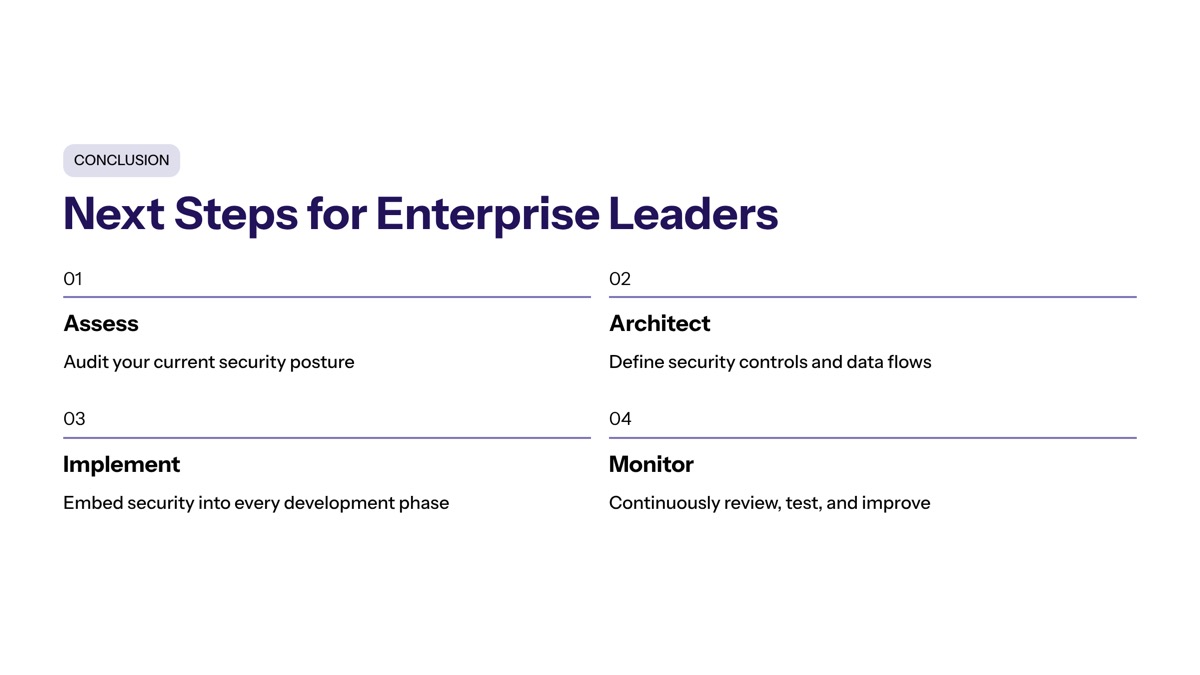
The next steps are straightforward:
Run a security assessment
Review existing systems, customer data flows, access controls, cloud platforms, APIs, open-source libraries, and legacy systems.Hold a threat modeling workshop
Map business objectives, attack surfaces, threat actors, trust boundaries, and required mitigations before architecture decisions are finalized.Complete a compliance gap analysis
Identify obligations under GDPR, HIPAA, PCI DSS, SOC 2, ISO 27001, NIST, and industry-specific regulations.Plan secure architecture
Define zero trust controls, encryption standards, API governance, logging, audit trails, patch management, and incident response.Evaluate the development partner
Choose an enterprise software development partner with proven technical expertise, secure delivery practices, recognized cybersecurity certifications, and experience building custom enterprise software for regulated environments.
Related advanced topics include AI-first security, zero trust expansion, automated compliance monitoring, secure mobile app development, and enterprise governance for modern app development. These areas are becoming central to digital transformation as enterprises adopt cutting edge technologies and innovative solutions.
Additional Resources
Use these resources to structure secure custom software development decisions, vendor evaluations, and implementation planning.
Security frameworks reference
NIST Cybersecurity Framework
NIST SP 800-53 security and privacy controls
NIST SP 800-207 Zero Trust Architecture
OWASP Application Security Verification Standard
OWASP secure coding guidelines
ISO 27001 information security management
Compliance standards checklist
Healthcare: HIPAA safeguards, audit logging, minimum necessary access, encryption, vendor BAAs
Financial services: PCI DSS, cardholder data protection, key management, secure transmission
Enterprise data management: GDPR, SOC 2, data classification, retention, breach response, privacy controls
Security assessment and threat modeling tools
Microsoft Threat Modeling Tool
OWASP Threat Dragon
IriusRisk
ThreatModeler
PyTM
Threagile
Data flow diagrams, threat registers, mitigation matrices, and residual risk documentation
Secure development checklist
Define security requirements before development
Apply least privilege across users, systems, and services
Encrypt data at rest and in transit
Track and update open-source libraries
Use automated tools and human oversight for vulnerability scanning
Run security audits and penetration tests
Maintain patching, monitoring, and ongoing support after launch