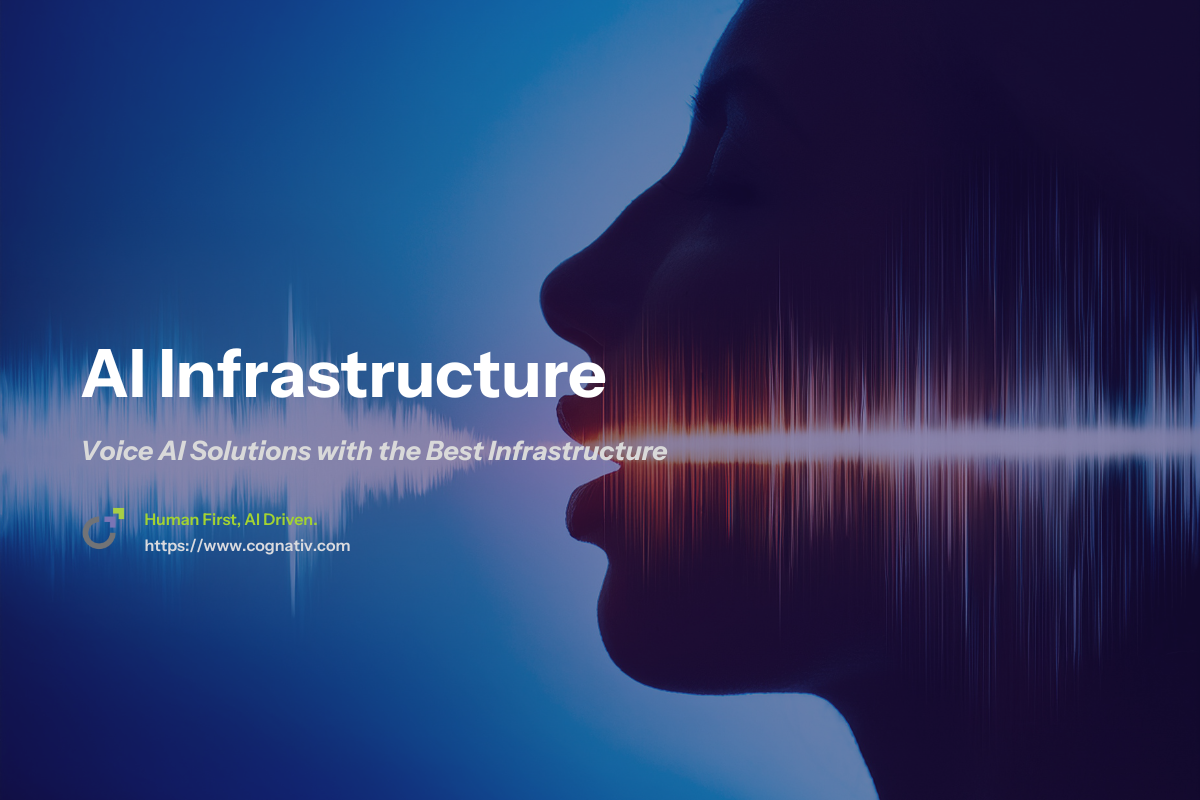
Voice AI Solutions with the Best Infrastructure
Voice AI is rapidly transforming enterprise interactions, offering businesses unprecedented capabilities to engage customers through intelligent, conversational interfaces. As organizations increasingly adopt voice AI agents powered by advanced AI models, the demand for voice AI solutions with the best infrastructure continues to surge.
These solutions not only provide human-like voice interactions but also deliver enterprise-grade reliability, real-time transcription, and seamless integration with business systems. For CIOs, CTOs, and technology leaders, selecting the right voice AI platform is critical to balancing innovation, cost, compliance, and operational control.
Key Takeaways
Voice AI platforms are evolving beyond simple speech-to-text or text-to-speech technologies to offer full-stack solutions that manage phone calls, call volume, and complex workflows with intelligent automation.
Leading voice AI providers emphasize programmable voice infrastructure, enabling enterprises to build voice-enabled apps with deep control over conversational AI agents.
Enterprise-grade reliability, pricing transparency, and support for regulated industries are increasingly vital as voice AI expands into mission-critical customer support and sales functions.
Integration capabilities with CRM systems and other business platforms ensure voice AI solutions enhance customer satisfaction and operational efficiency.
The future of voice AI hinges on balancing advanced features like emotional range and speech recognition with compliance, scalability, and developer community support.

Voice AI in the Enterprise Landscape
Voice AI is no longer a futuristic concept; it is now a foundational component of digital transformation strategies across industries. Enterprises are leveraging AI voice agents to automate customer interactions, reduce operational costs, and improve response speed. This shift is driven by advances in natural language understanding, speech recognition, and text-to-speech synthesis that enable voice agents to sound natural and manage complex conversations in real time.
Telecom providers, cloud platforms, and AI specialists are converging to offer voice AI solutions with programmable voice and telephony infrastructure. These platforms handle real-time audio processing, function calling, and workflow automation, allowing businesses to deploy AI receptionists and virtual assistants that scale with call volume and maintain high availability.
The trend toward voice-enabled apps reflects a broader move to integrate AI assistance into business systems, enabling more personalized, efficient, and context-aware customer experiences. As regulatory scrutiny intensifies, especially in sectors like healthcare and finance, voice AI platforms with enterprise-grade control and compliance certifications are becoming essential.
Implications for Enterprise Adoption
Adopting voice AI solutions with the best infrastructure presents enterprises with significant opportunities to enhance customer interaction through real-time voice and conversational AI. Leading providers offer advanced AI services that support voice agent deployment across contact centers and other business systems, enabling organizations to deliver human conversation quality with ultra realistic voices and multilingual support.
Understanding the key features of these voice AI platforms, including voice cloning, ai automation, and usage based pricing, is crucial for enterprises aiming to optimize their voice experience and achieve superior customer satisfaction.
Balancing Control and Innovation
Enterprises face critical decisions about how much control to retain over their voice AI infrastructure. Platforms offering full control enable customization of AI models, integration with proprietary data, and tailored conversational flows. This is especially important for regulated industries where data governance and compliance are paramount.
Conversely, turnkey solutions with no-code interfaces and pre-built workflows accelerate deployment but may limit customization and control. Organizations must assess their technical resources and strategic priorities to choose the right balance.
Cost and Pricing Transparency
Pricing models in voice AI vary widely, from usage-based fees to custom enterprise plans. Transparent pricing is crucial to avoid unexpected costs, especially as call volumes scale. Some providers offer free trial credits to facilitate evaluation and pilot testing, enabling enterprises to validate performance and cost-effectiveness before committing.
Compliance and Risk Management
Voice AI adoption raises concerns about data privacy, security, and regulatory compliance. Platforms with built-in support for HIPAA, GDPR, PCI-DSS, and other standards help mitigate risk. Features like secure telephony infrastructure, encrypted audio handling, and detailed audit logs support enterprise compliance requirements.
Enhancing Customer Experience
Voice AI agents capable of emotional range and multilingual support improve customer satisfaction by providing natural, empathetic interactions. Integration with CRM systems and quality monitoring tools ensures voice agents deliver consistent, personalized service while enabling continuous improvement.
Opportunities and Challenges
Entering the landscape of voice AI solutions with the best infrastructure offers enterprises a powerful toolkit to transform customer interaction and operational workflows. By leveraging real time agents and advanced voice infrastructure, businesses can unlock new levels of efficiency and engagement. However, navigating this space requires addressing both technological and integration complexities to fully capitalize on the potential of AI voice agents.
Opportunities
Intelligent Automation: Voice AI solutions enable intelligent automation of routine support calls, freeing human agents to focus on complex issues.
Scalability: Platforms with robust telephony infrastructure support high call volume and global reach, essential for enterprises with diverse customer bases.
Developer Community and Ecosystem: Active developer communities foster innovation, provide support, and accelerate the adoption of best practices.
Challenges
Background Noise and Audio Handling: Ensuring accurate speech recognition in noisy environments remains a technical hurdle.
Complex Workflows: Managing multi-turn conversations with interruptions and dynamic routing requires sophisticated orchestration.
Integration Complexity: Seamless integration with existing business systems demands flexible APIs and extensive customization capabilities.
Software Comparison: Voice AI Agents
Feature / Challenge |
Speechmatics |
ElevenLabs |
Retell AI |
Bland AI |
Pipecat |
Vapi |
|---|---|---|---|---|---|---|
Strong support for real-time transcription and automation workflows |
Focus on natural, expressive voice output; limited automation |
API-first, customizable automation capabilities |
Focused on outbound AI calls with simple automation |
Enterprise-grade orchestration, strong automation features |
Fast prototyping with automation support | |
Scalability |
Cloud and on-premise options; enterprise-grade reliability |
High-quality TTS with scalable API |
Scalable call volumes with usage-based pricing |
Simple pricing; good for variable call volumes |
Built for enterprise scale, low-latency global reach |
Suitable for startups and scaling with custom logic |
Developer Community |
Robust API, SDKs, active support |
Large developer base, SDKs for multiple languages |
Developer-first with API flexibility |
Developer-friendly API; fast setup |
Active enterprise-focused community |
Growing indie hacker community |
Background Noise Handling |
Advanced speech recognition optimized for noisy environments |
Primarily TTS; relies on integration for recognition |
Depends on integrated STT providers |
Basic speech recognition; limited noise handling |
Supports advanced STT integrations |
Depends on chosen STT model |
Complex Workflow Management |
Supports multi-turn conversations with context awareness |
Limited workflow orchestration |
Full control over conversational flows |
Fixed architecture; limited workflow complexity |
Deep control over complex workflows |
Modular workflows with flexibility |
Integration Complexity |
Flexible APIs; supports CRM and business system integration |
Integrates well with other AI and voice platforms |
API-first; supports custom integrations |
Simple API; fewer integration options |
Extensive API and SDK support for complex integrations |
Simple API; easy to connect with existing systems |
Pricing Transparency |
Usage-based pricing with enterprise plans |
Subscription and usage-based pricing |
Pay-as-you-go with custom enterprise plans |
Flat-rate per minute; transparent pricing |
Custom pricing; enterprise-focused |
Custom pricing; developer-friendly |
This table helps enterprises evaluate voice AI platforms based on their specific needs around opportunities and challenges. Selecting a solution that aligns with organizational priorities—whether it’s intelligent automation, scalability, or integration flexibility—ensures successful voice agent deployment and maximizes business value.
Building Voice AI for Strategic Advantage
The voice AI market is poised for continued growth, with enterprises seeking platforms that combine advanced AI capabilities with enterprise-grade infrastructure. Providers investing in programmable voice, real-time transcription, and emotional range will lead the market. The ability to deploy voice-enabled apps that integrate deeply with business systems while maintaining compliance will differentiate winners.
As AI models evolve, the line between human and AI conversation will blur further, enhancing customer engagement and operational efficiency. Strategic investments in voice AI infrastructure today will position enterprises for competitive advantage in the digital economy.
Conclusion
Voice AI solutions with the best infrastructure are essential for enterprises aiming to harness the power of conversational AI at scale. By focusing on platforms that offer full control, enterprise-grade reliability, transparent pricing, and compliance support, organizations can build voice agents that deliver superior customer experiences and operational efficiencies. Navigating the balance between innovation and risk will be key to successful adoption and long-term value realization.
Stay ahead of AI and tech strategy. Subscribe to What Goes On: Cognativ’s Weekly Tech Digest for deeper insights and executive analysis.