
Start with the Work You Need to Improve
The strongest starting point for AI is a clearly defined task: what people need to accomplish, what information they use, and where the current process falls short. That context determines whether the right approach is AI, rules-based automation, better integration, or a change to the workflow itself.
Cognativ examines the opportunity alongside the conditions needed to make it useful: accessible data, dependable system connections, clear responsibilities, and a way to evaluate the result. Together, we establish what is worth pursuing and what needs attention before implementation.
-
The task
The work to improve, the people involved, and the current constraint.
-
The information
Relevant data, access permissions, and connections to existing systems.
-
The evaluation
Output quality, review effort, operating cost, and the intended improvement.
Choose the approach
- AI
- Automation
- Integration
- Workflow change
AI and Automation Services, from Strategy to Implementation
Begin with an opportunity, an operating challenge, or an existing initiative that needs direction. We define the engagement around the outcome and connect the advisory, engineering, and adoption work required to support it.
AI Strategy and Consulting
- Use Cases
- Feasibility
- Investment Priorities
Identify where AI fits your business and which opportunities deserve investment. We assess the work involved, the available information, and the expected value alongside implementation and operating costs. The resulting priorities give leadership a basis for deciding what to investigate, test, or build.
AI Readiness and Data Preparation
- Data Quality
- Access
- Readiness
Establish whether the information needed for the proposed application is available, usable, and appropriately controlled. We examine source quality, permissions, knowledge ownership, and integration dependencies. That assessment identifies the preparation required for a meaningful evaluation and a workable implementation.
AI Implementation and Integration
- Development
- Integration
- Evaluation
Turn a defined use case into an application connected to the systems and information your team uses. We bring software development, data connections, and evaluation into the implementation scope. The work covers how people interact with the application, how outputs are checked, and how exceptions return to the responsible team.
Business Process Automation
- Workflows
- Business Rules
- Exceptions
Connect repeatable work across systems with clear rules and responsibilities. We examine process steps, approvals, handoffs, and exceptions before implementing automation. Where a task requires interpretation rather than a fixed rule, we assess whether an AI component adds value within that workflow.
AI Governance and Human Oversight
- Ownership
- Controls
- Review
Define who owns an AI application, what it is permitted to access or do, and where human review is required. We connect those decisions to implementation through access controls, approval points, monitoring, and records of relevant activity. Governance becomes part of how the application operates.
Adoption and Ongoing Improvement
- Adoption
- Performance
- Operating Costs
Help teams incorporate the application into their work and evaluate its usefulness after release. We connect user feedback with output quality, exception handling, and operating costs. Those findings guide changes to the workflow, application, or scope as business needs evolve.
See How Cognativ Makes Complex Work Repeatable
Cognativ's automation work includes translating a senior partner's cost-accounting methodology into guided software, connecting data intake, model validation, and reporting. In a separate data-platform engagement, Cognativ aligned aggregation, permissions, and commercial outputs with the needs of the business.
These projects show the process knowledge, data foundations, and delivery decisions behind repeatable operations.
Consulting Platform Expands Capacity 200x
Custom Software
Workflow Automation
Access Control
SmartSaaS
Consulting Platform Expands Capacity 200x
Cognativ turned a senior-partner-led consulting methodology into a scalable custom software platform.
The solution reduced engagement time by 50%, improved delivery quality, and increased capacity by 200x so junior consultants could execute premium engagements independently.
Explore the 200x Scaleup
Data Platform Reaches 75% Category Market Share
Data Platforms
Data Aggregation
Data Management
Technology Strategy
Data Platform Reaches 75% Category Market Share
Cognativ helped reposition a data management offering around a clearer market category, stronger operational narrative, and more defensible growth strategy.
The repositioning helped the business establish 75% market share in an emerging category while clarifying its value for enterprise buyers.
Explore the Data Category WinRAPID Connects AI Decisions with Business Outcomes
Created by Cognativ founder Ali Davachi, RAPID connects Research, Analyze, Plan, Implement, and Decide. We use it to manage the engagement from the initial business question through implementation and review, keeping technical choices connected to the work the organization needs to improve.
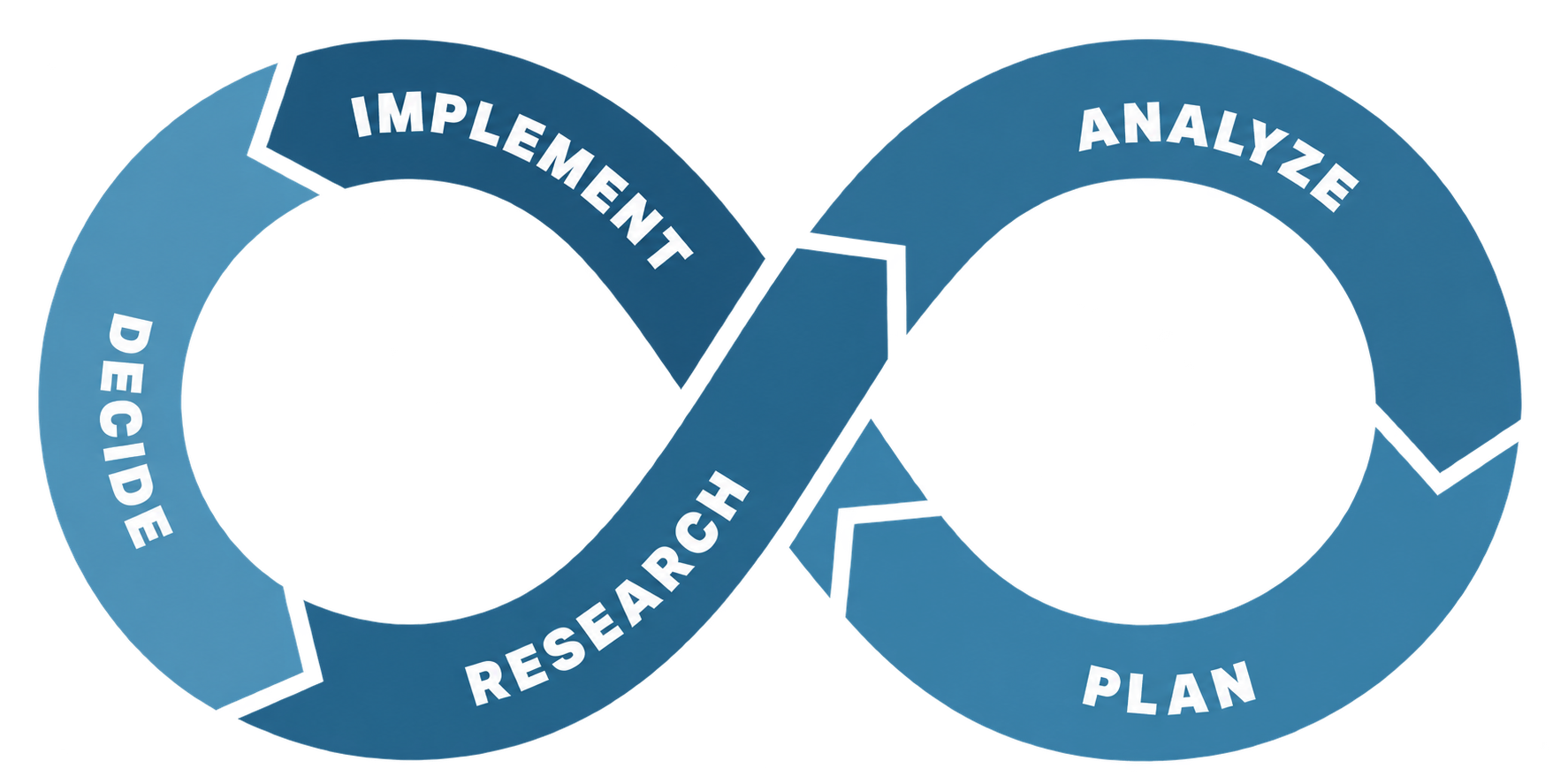
Research and Analyze: Establish the Use Case
Understand the current workflow, the people involved, and the information available. Examine where the proposed application could help, what could prevent it from working, and how its usefulness will be assessed. Unresolved questions become part of the investigation and evaluation plan.
Plan, Implement, and Decide: Evaluate, Deliver, and Improve
Define the implementation scope, responsibilities, and evaluation criteria. Test the approach with relevant tasks and review the results with the people who will use and manage it. Use that evidence to decide what to refine, introduce into operations, or expand.
Agree on What Success Looks Like Before You Build
A useful engagement starts with a specific business task and a shared understanding of the intended improvement. We connect that objective to the implementation requirements and the people responsible for evaluating and operating the result.
Define the Task and Evaluation Criteria
Clarify the intended users, inputs, outputs, and boundaries of the application. Agree on how the team will assess quality, effort, cost, and the handling of exceptions against the current way of working.
Prepare the Workflow and Its Owners
Establish the data connections, access permissions, review points, and operating responsibilities needed for delivery. Plan the introduction with the teams affected so technical implementation and adoption move together.
From First Conversation to an Agreed Engagement
Discuss the opportunity, review the proposed approach, and agree on the work before the engagement begins.
-
Book
Share the task, workflow, or AI opportunity you want to explore.
-
Discovery Call
Discuss the business objective, existing systems, available data, and current constraints.
-
Feedback Call
Review our understanding and the proposed consulting or implementation approach.
-
Agreement
Confirm scope, responsibilities, timing, and fees before the RAPID-managed engagement begins.
Discuss Your AI and Automation Priorities
Tell us what your team needs to accomplish and where the current process creates friction. Your first consultation is free.
Share the systems involved, the information available, and any tools or evaluations already underway. We will discuss the opportunity and the appropriate next step.
AI and Automation Consulting Questions
Understand the scope, the working relationship, and how to start.
When should we involve an AI consultant?
Bring Cognativ in when you need to evaluate an opportunity, choose between approaches, or define the requirements for implementation. We can also review an existing initiative that needs clearer objectives or a path into daily operations.
How do we decide between AI and traditional automation?
We examine the task. Defined rules and repeatable actions may suit conventional automation; work involving interpretation may benefit from AI. Some workflows combine both, with review points appropriate to the task.
Can we start with one use case?
Yes. A focused scope allows the team to evaluate a specific application, its dependencies, and its operating requirements before deciding whether to extend it.
Does Cognativ provide implementation as well as consulting?
Yes. The engagement can include application development, integration, evaluation, and adoption support. We agree on the scope and responsibilities before work begins.
Do we need to organize all our data first?
We start with the information required for the selected use case. The assessment identifies relevant gaps in quality, access, and ownership so preparation is tied to the application rather than an undefined data-cleanup program.
Can you work with our existing software and AI tools?
We assess their capabilities, integration options, permissions, and fit with the workflow. That helps determine what can be retained, connected, configured, or extended.
How will we know whether the solution is useful?
We agree on evaluation criteria before implementation and compare results with the current process. Relevant measures can include output quality, completion time, review effort, exception rates, and operating cost.
What determines the timeline and cost?
The use case, data preparation, integrations, evaluation requirements, and level of delivery support shape the engagement. We discuss timing and fees before agreement; the first consultation is free.