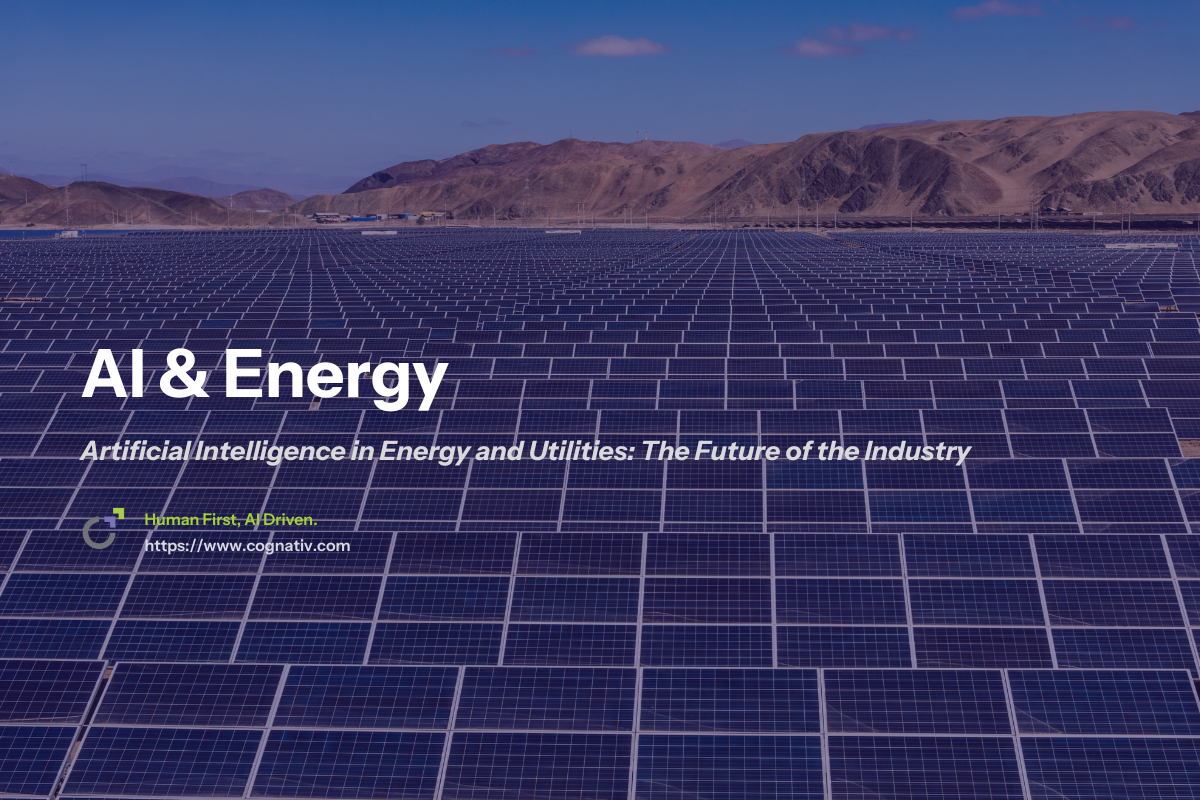
Artificial Intelligence in Energy and Utilities: The Future of the Industry
Artificial intelligence in energy and utilities is rapidly reshaping how energy companies operate, innovate, and engage with customers. As the utility industry faces increasing pressure to modernize infrastructure, integrate renewable resources, and meet growing energy demands, AI emerges as a critical enabler for delivering energy more efficiently and sustainably.
Utility executives across the globe are investing in AI technologies to optimize grid operations, enhance predictive maintenance, and drive smarter customer engagement, positioning their organizations at the forefront of the energy transition.
Key Takeaways
-
AI is revolutionizing the electric grid by enabling real-time insights, predictive analytics, and dynamic grid integration of renewable sources.
-
Utilities identify opportunities to optimize energy consumption patterns, manage peak demand, and improve asset maintenance through AI-powered solutions.
-
The rise of electric vehicles and distributed energy resources demands advanced AI technologies to balance grid load and ensure generation capacity.
-
Challenges such as data privacy, regulatory compliance, and integration with legacy systems require strategic planning and new business models.
-
Forward-looking utilities are leveraging AI to transform their operations, reduce costs, mitigate risks, and deliver personalized customer experiences.

AI’s Role in the Evolving Energy Landscape
The energy industry is undergoing a profound transformation driven by decarbonization goals, digitalization, and changing consumer expectations. The shift towards renewable energy generation and distributed energy resources (DERs) introduces complexity to the traditionally centralized electric grid. Artificial intelligence in energy and utilities offers a pathway to navigate this complexity by processing vast amounts of data from smart meters, sensors, and external sources such as weather forecasts.
AI-powered systems enable utilities to anticipate energy demand with unprecedented accuracy, manage grid stability, and integrate renewable sources effectively. For example, leading utility companies like Xcel Energy have adopted AI algorithms to predict output from solar and wind farms, adjusting grid operations to maintain reliability while advancing sustainability goals.
Moreover, the growing adoption of electric vehicles (EVs) introduces new load patterns that require sophisticated demand response strategies. AI facilitates dynamic pricing models and real-time load balancing to prevent grid overloads and optimize generation capacity. This integration of AI-driven insights into grid management exemplifies the critical role AI plays in modernizing the energy sector.
Implications for Enterprise Adoption and Strategy
Enterprise adoption of AI in energy and utilities is no longer optional but imperative for competitiveness. Utility executives must align AI initiatives with broader digital transformation and sustainability strategies. This includes investing in advanced technologies such as AI data centers, small modular reactors, and smart grids that support renewable sources and distributed generation.
The integration of AI impacts cost structures by reducing operational expenses through predictive maintenance and optimized asset management. For instance, AI-driven predictive maintenance minimizes downtime by forecasting equipment failures, enabling proactive interventions that extend asset life and reduce repair costs.
Regulatory compliance and risk management also benefit from AI’s capabilities. Automated reporting, scenario modeling, and real-time data exchange with regulatory bodies help utilities navigate policy volatility and meet evolving standards. Utilities that embed regulatory intelligence into AI systems gain a strategic advantage by turning compliance into a competitive differentiator.
However, challenges remain. Data privacy concerns, the complexity of integrating AI technologies into legacy infrastructure, and ethical considerations around AI decision-making require comprehensive risk assessments and governance frameworks. Successful AI adoption demands cross-functional collaboration and a culture that embraces innovation while maintaining operational resilience.
Opportunities Unlocked by AI: From Grid Optimization to Customer Engagement
Artificial intelligence in energy and utilities unlocks multiple opportunities across the value chain:
Optimizing Grid Operations and Renewable Integration
AI enables real-time monitoring and control of grid operations, supporting the integration of intermittent renewable sources such as solar and wind. By analyzing energy consumption patterns and weather data, AI systems predict fluctuations in generation capacity and dynamically adjust grid load.
Advanced AI-powered grid management tools enhance grid stability and prevent outages by detecting faults early and orchestrating demand response programs. Utilities can also leverage AI to optimize battery storage systems, ensuring efficient utilization of renewable energy and reducing reliance on fossil fuels.
Enhancing Asset Maintenance and Risk Management
Predictive maintenance powered by AI is transforming asset management in the utility industry. Continuous equipment monitoring and analytics forecast maintenance needs, reducing unplanned downtime and operational costs. This proactive approach enhances grid reliability and extends the lifespan of critical infrastructure.
AI also supports risk management by identifying vulnerabilities in energy supply chains. Utilities can simulate various scenarios to prepare for natural disasters, cyber threats, and market fluctuations, improving resilience and strategic planning.
Transforming Customer Engagement and Business Models
AI-driven customer data analysis enables utilities to deliver personalized recommendations and services. Energy disaggregation techniques provide insights into appliance-level energy usage, allowing utilities to tailor demand response programs and energy-saving tips to individual customers.
This hyper-personalization fosters stronger customer relationships and loyalty, helping utilities compete with emerging non-utility energy providers. Additionally, AI facilitates new business models centered on energy-as-a-service, dynamic pricing, and distributed energy resource management.
Challenges to Address for Sustainable AI Integration
Despite its promise, integrating AI into energy and utility companies involves several challenges:
-
Data Privacy and Security: Handling vast amounts of sensitive customer and operational data raises privacy concerns. Utilities must implement robust encryption, access controls, and compliance with regulations like GDPR and HIPAA.
-
Legacy System Integration: Many utilities operate with aging infrastructure that complicates AI deployment. Strategic modernization and interoperability are essential to leverage AI effectively.
-
Ethical and Regulatory Considerations: AI algorithms must be transparent and unbiased to avoid unintended consequences. Utilities need governance frameworks to ensure accountability and fairness.
-
Energy Consumption of AI Systems: AI data centers require significant energy, potentially increasing demand on the grid. Utilities must balance AI adoption with sustainability goals, exploring renewable-powered AI infrastructure and efficiency improvements.
Comparison of Traditional Utilities vs AI-Enabled Utilities
The transformation of the energy and utility industry through artificial intelligence in energy and utilities is profound. Below is a comparison highlighting key differences between traditional utility operations and the emerging AI-enabled utility model, emphasizing how cutting edge technology drives efficiency, better service, and sustainability.
|
Aspect |
Traditional Utilities |
AI-Enabled Utility |
|---|---|---|
|
Grid Management |
Manual monitoring and reactive maintenance |
Real-time insights and predictive maintenance powered by AI analytics, enabling optimized grid operations and enhanced grid stability |
|
Energy Efficiency |
Limited data-driven optimization |
AI analyzes vast amounts of data to recommend energy saving measures, optimizing energy consumption patterns and reducing energy costs |
|
Renewable Energy Integration |
Challenging due to intermittent energy sources |
Dynamic grid integration of renewable energy sources using AI to balance supply and demand efficiently |
|
Customer Engagement |
Generic communication and mass marketing |
Personalized recommendations based on customer behavior and energy usage disaggregation, improving customer satisfaction and loyalty |
|
Demand Response |
Static pricing models and limited load management |
Dynamic pricing models and real-time load balancing driven by AI to manage peak demand and grid load effectively |
|
Regulatory Compliance |
Manual reporting and compliance tracking |
Automated scenario modeling and real-time data exchange with regulatory bodies, turning compliance into a strategic advantage |
|
Asset Maintenance |
Reactive maintenance leading to downtime |
Predictive maintenance leveraging AI to forecast failures and schedule proactive interventions, extending asset life |
|
Energy System Planning |
Static long-term plans updated infrequently |
Rolling integrated resource planning enabled by AI, continuously adapting to real-time data, policy shifts, and market conditions |
|
Use of Data |
Limited to operational metrics |
Analyzing vast amounts of customer and grid data to drive insights, optimize operations, and deliver compelling results |
|
Business Model |
Focus on energy production and delivery |
Energy as a service with AI-driven new tools and technologies enabling flexible, customer-centric offerings |
This comparison illustrates how the ai enabled utility leverages generative AI and other advanced technologies to transform the energy landscape, driving efficiency and better service for utility customers while supporting sustainability goals.
AI as a Catalyst for Utility Industry Transformation
Looking ahead, artificial intelligence in energy and utilities will be a cornerstone of the smart grid and digital energy ecosystem. Emerging trends include:
-
AI-Enabled Smart Grids: Distributed intelligence networks will replace centralized control, allowing utilities to orchestrate DERs, EV charging, and energy storage dynamically.
-
Rolling Integrated Resource Planning: AI will enable continuous, adaptive planning that responds to real-time data, policy shifts, and market conditions, replacing static long-term plans.
-
AI-Powered Customer Experiences: Utilities will offer emotionally intelligent, personalized energy services, transforming customers into active “gridizens” engaged in energy management.
-
Collaboration with AI Solution Providers: Partnerships between utilities and AI innovators will accelerate adoption, share expertise, and establish industry best practices.
Utilities that invest now in AI-first architectures and embrace this cognitive transformation will unlock new value streams, improve operational efficiency, and maintain relevance in a rapidly evolving energy landscape.
AI as a Catalyst for Innovation in Regulated Utilities
Artificial intelligence in energy and utilities acts as a catalyst for innovation, enabling regulated utilities to adopt new technologies that optimize energy consumption and improve grid stability. By targeting the right person with personalized energy solutions, AI empowers energy utilities to enhance operational efficiency and deliver superior customer experiences in a rapidly evolving energy landscape.
Conclusion
Artificial intelligence in energy and utilities is more than a technological upgrade—it is a strategic imperative that reshapes how utilities deliver energy, manage assets, and engage customers. By harnessing AI’s capabilities, utility companies can optimize grid operations, integrate renewable resources, and create personalized customer experiences while navigating regulatory and operational challenges.
For enterprise leaders, the path forward involves adopting AI-enabled business models, investing in infrastructure modernization, and fostering a culture of innovation. The future utility will be a dynamic, intelligent platform that balances sustainability, reliability, and customer-centricity.
Stay ahead of AI and tech strategy. Subscribe to What Goes On: Cognativ’s Weekly Tech Digest for deeper insights and executive analysis.