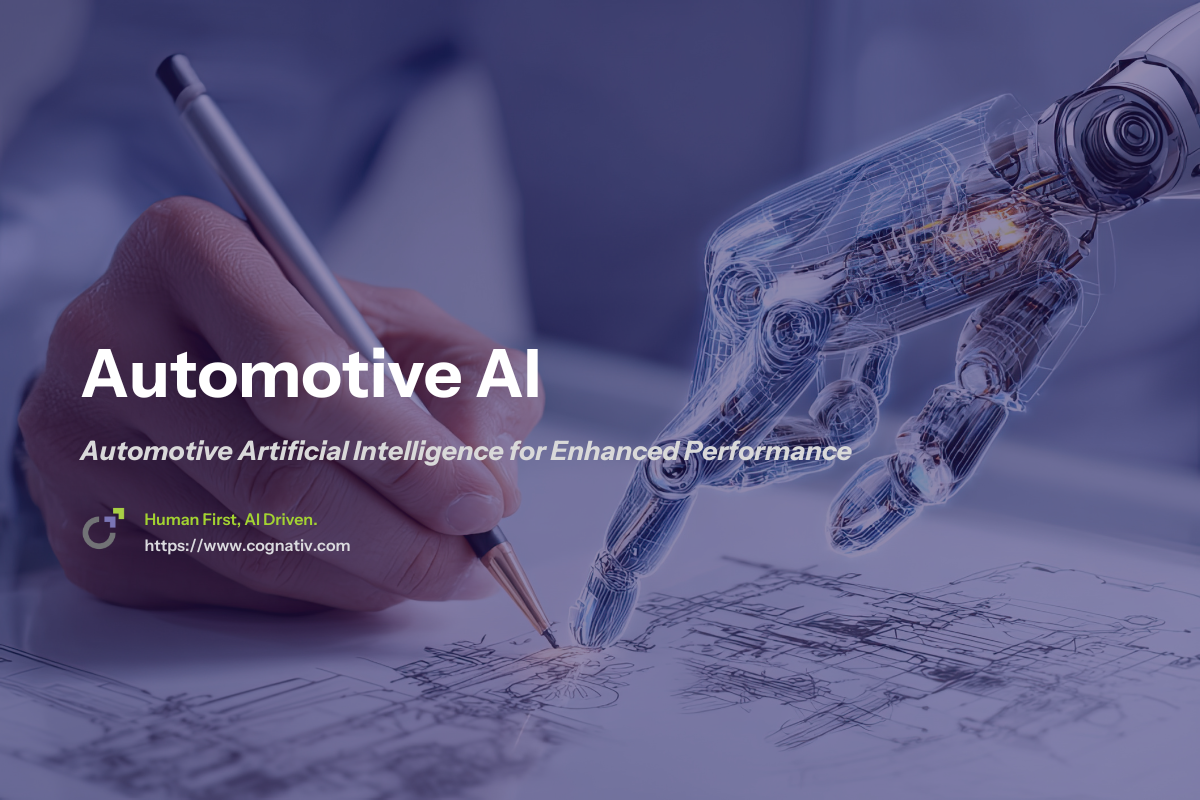
Automotive Artificial Intelligence for Enhanced Performance
The automotive industry artificial intelligence landscape is rapidly evolving, reshaping how car manufacturers, automotive companies, and related stakeholders approach vehicle design, manufacturing, and customer engagement.
This transformation is driven by advanced AI technologies that integrate machine learning, computer vision, and generative AI (gen AI) to deliver safer, more efficient, and personalized automotive experiences. Key players—from automotive manufacturers and Tier 1 suppliers to software platforms and AI tool developers—are investing heavily to capitalize on this shift.
The implications for enterprise adoption, operational efficiency, compliance, and risk management are profound, demanding strategic foresight from CIOs, CTOs, CISOs, and other executives.
Key Takeaways:
-
Automotive artificial intelligence is critical to advancing autonomous vehicle technology, improving vehicle safety, and optimizing manufacturing and supply chain processes.
-
AI-powered tools and machine learning models enable automotive companies to analyze vehicle data and customer data, enhancing customer relationships and operational efficiency.
-
The rise of software-defined vehicles and AI-driven supply chain management is transforming traditional auto industry business models.
-
Compliance with evolving regulations and ethical standards around AI deployment remains a strategic priority for automotive businesses.
-
Strategic investment in AI and digital transformation is essential for automotive manufacturers to maintain competitive advantage and meet growing market expectations.

Introduction to Automotive AI
The automotive industry refers to a sector undergoing a profound digital transformation fueled by artificial intelligence and machine learning. Automotive artificial intelligence encompasses a range of AI systems and algorithms that enhance vehicle performance, safety, and efficiency. From advanced driver assistance systems (ADAS) to fully autonomous vehicles, AI is embedded across the vehicle lifecycle. Additionally, AI technologies such as natural language processing and computer vision are revolutionizing customer experience and operational workflows.
This development aligns with broader trends in AI adoption across industries, where data analysis and AI-powered tools are leveraged to optimize business models and improve customer satisfaction. For automotive manufacturers, the integration of AI into connected cars and electric vehicles (EVs) is reshaping product portfolios and market strategies. The growing importance of software-defined vehicles (SDVs) underscores the shift from hardware-centric to software-centric innovation, demanding new competencies and ecosystem partnerships.
Automotive AI Applications
Automotive AI applications are diverse and rapidly expanding, reflecting the sector’s drive toward smarter, safer, and more efficient vehicles.
Advanced Driver Assistance Systems and Autonomous Vehicles
ADAS leverage AI algorithms and sensor data—including AI vision systems—to provide real-time hazard detection, lane keeping, and emergency braking. These systems improve vehicle safety and customer satisfaction by reducing human error and enhancing situational awareness.
Autonomous driving represents a pinnacle of automotive AI, where AI models process vast amounts of vehicle data to navigate complex road environments without human intervention. This autonomous vehicle technology relies on deep learning, sensor fusion, and real-time decision-making to improve traffic flow and reduce accidents.
AI-Driven Customer Experience and Marketing
Automotive companies are deploying AI-powered chatbots and analytics tools to analyze customer data, enabling personalized marketing and customer relationship management. These AI tools help optimize inventory management and sales trends analysis, resulting in cost savings and improved customer loyalty.
Connected cars equipped with AI systems enhance in-cabin experiences through voice recognition and adaptive interfaces powered by natural language processing. This personalization fosters deeper customer engagement and drives new business models focused on service and subscription-based offerings.
AI in Automotive Manufacturing
The manufacturing segment of the automotive industry is also experiencing a transformation driven by AI and machine learning.
Quality Control and Predictive Maintenance
AI-driven IoT sensors monitor production lines in real time to detect defects invisible to human inspectors, significantly improving quality control. Predictive maintenance algorithms analyze equipment sensor data to anticipate failures and reduce downtime, enhancing manufacturing efficiency and cost savings.
Supply Chain Optimization
AI is transforming supply chain management by enabling demand forecasting, inventory optimization, and logistics tracking. Machine learning models analyze market trends and vehicle data to predict supply chain disruptions, facilitating proactive adjustments and reducing operational risks.
Generative AI is increasingly used in vehicle design and prototyping, accelerating development cycles and reducing costs associated with traditional engineering methods.
Automotive Sector Transformation
The automotive industry is embracing AI not only as a technological upgrade but as a catalyst for new business models and operational paradigms.
Software-Defined Vehicles and New Business Models
The emergence of software-defined vehicles is redefining automotive manufacturing and customer engagement. These vehicles rely on over-the-air updates and modular software platforms, enabling continuous feature enhancements and personalized experiences.
Mobility-as-a-service and subscription models are gaining traction, supported by AI’s ability to analyze customer data and usage patterns to tailor offerings.
Sustainability and Energy Efficiency
AI-powered vehicles contribute to sustainability goals through energy-efficient powertrain management and optimized driving behaviors. Electric vehicles integrated with AI-driven battery management systems extend battery life and improve charging efficiency, aligning with regulatory pressures and consumer demand for green mobility.
AI Technology and Innovation
Continuous innovation in AI technologies underpins the automotive sector’s rapid advancements.
Deep Learning, Sensor Fusion, and Natural Language Processing
Deep learning models enable sophisticated perception and decision-making capabilities in autonomous vehicles. Sensor fusion combines data from cameras, lidar, and radar to create comprehensive environmental understanding, critical for safe navigation.
Natural language processing enhances human-vehicle interaction, enabling voice-controlled assistants that improve driver convenience and safety.
AI Model Evolution and Edge Computing
The development of lightweight AI models optimized for edge computing allows in-vehicle AI inference with low latency and enhanced privacy. This shift addresses challenges related to network reliability and data security, critical for safety-critical applications.
Customer Experience and AI
AI is reshaping automotive customer experience from sales through after-sales support.
Personalized Marketing and Support
AI algorithms analyze customer data to deliver personalized recommendations and targeted promotions, improving conversion rates and customer retention. AI-powered chatbots provide 24/7 support, handling inquiries efficiently and enhancing customer satisfaction.
Enhanced Vehicle Interaction
Connected cars equipped with AI systems offer adaptive interfaces that learn driver preferences, improving comfort and convenience. AI-powered infotainment and voice assistants reduce driver distraction, contributing to vehicle safety.
Supply Chain Optimization and AI
AI’s impact on supply chain optimization is a key driver of operational efficiency in the automotive sector.
Demand Forecasting and Inventory Management
Machine learning models improve demand forecasting accuracy, reducing overproduction and stockouts. AI tools enable real-time shipment tracking and dynamic route optimization, enhancing supply chain visibility and reducing costs.
Risk Mitigation and Resilience
AI-powered analytics identify potential supply chain risks early, enabling proactive mitigation strategies. This capability is essential in a globalized automotive supply chain vulnerable to disruptions.
Safety and Security
Safety and security remain paramount as AI systems become integral to vehicle operation.
Vehicle Safety Enhancements
AI algorithms analyze sensor data to anticipate and prevent collisions, supporting advanced driver assistance and autonomous driving functions. Real-time communication between vehicles and infrastructure improves emergency response times and traffic management.
Data Protection and Cybersecurity
Strict data protection measures are essential to safeguard customer data and prevent cyberattacks. Automotive companies are adopting AI-driven cybersecurity solutions to monitor and respond to threats, ensuring compliance with evolving regulations.
Regulatory and Ethical Landscape
The regulatory environment for automotive AI is complex and evolving.
Governments and industry bodies are establishing guidelines to ensure AI-powered vehicles meet safety, transparency, and accountability standards. Ethical considerations, including liability in autonomous driving incidents and data privacy, are addressed through robust AI ethics frameworks and compliance programs.
Key Technologies and Strategies in Automotive Artificial Intelligence
To fully harness the potential of automotive artificial intelligence, it is essential to integrate critical technologies and strategic approaches that address the evolving demands of the automotive sector. Incorporating self driving cars, machine learning algorithms, predictive analytics, and better manufacturing efficiency plays a pivotal role in advancing AI capabilities within the industry. Additionally, effective handling of customer inquiries and optimized production processes alongside automotive marketing strategies ensures a comprehensive AI-driven transformation.
Detailed Overview of Key AI Components and Their Impact
|
Key Term |
Description |
Impact on Automotive AI |
|---|---|---|
|
Self Driving Cars |
Vehicles equipped with AI systems capable of autonomous navigation without human intervention. |
Enhances vehicle safety, reduces accidents, and transforms mobility by enabling autonomous driving features. |
|
Machine Learning Algorithms |
Algorithms that enable AI systems to learn from data, improving their performance over time. |
Powers advanced driver assistance systems, predictive maintenance, and supply chain optimization. |
|
Predictive Analytics |
Analytical techniques that forecast future outcomes based on historical and real-time data. |
Improves demand forecasting, inventory management, and proactive maintenance, leading to cost savings. |
|
Better Manufacturing Efficiency |
AI-driven improvements in production processes to reduce waste and increase output quality. |
Enhances quality control, reduces downtime, and lowers operational costs in automotive manufacturing. |
|
Customer Inquiries |
AI-powered tools like chatbots that handle customer questions and support requests efficiently. |
Improves customer satisfaction by providing timely, personalized assistance and streamlining service. |
|
Production Processes |
AI integration in manufacturing workflows to optimize operations from assembly to logistics. |
Enables real-time monitoring, predictive maintenance, and dynamic scheduling, boosting overall efficiency. |
|
Automotive Marketing |
Use of AI to analyze customer data and tailor marketing campaigns to target audiences effectively. |
Drives personalized promotions, increases conversion rates, and strengthens customer relationships. |
Integrating these elements creates a robust framework for automotive AI, enabling manufacturers and service providers to deliver safer, smarter, and more customer-centric vehicles and experiences.
Conclusion
Automotive artificial intelligence is a transformative force reshaping the auto industry’s technology, operations, and business models. For enterprise leaders, embracing AI means navigating a complex landscape of innovation, regulation, and market dynamics. Strategic investments in AI-driven manufacturing, autonomous vehicle technology, and customer experience platforms are essential to stay competitive.
The future of automotive AI will be defined by collaboration across car companies, technology providers, and regulators to deliver efficient, safe, and personalized mobility solutions. CIOs, CTOs, and other executives must prioritize scalable AI architectures, compliance frameworks, and ecosystem partnerships to capitalize on this evolution.
Stay ahead of AI and tech strategy. Subscribe to What Goes On: Cognativ’s Weekly Tech Digest for deeper insights and executive analysis.