Best AI Agents for Business: How to Evaluate Enterprise-Ready Options
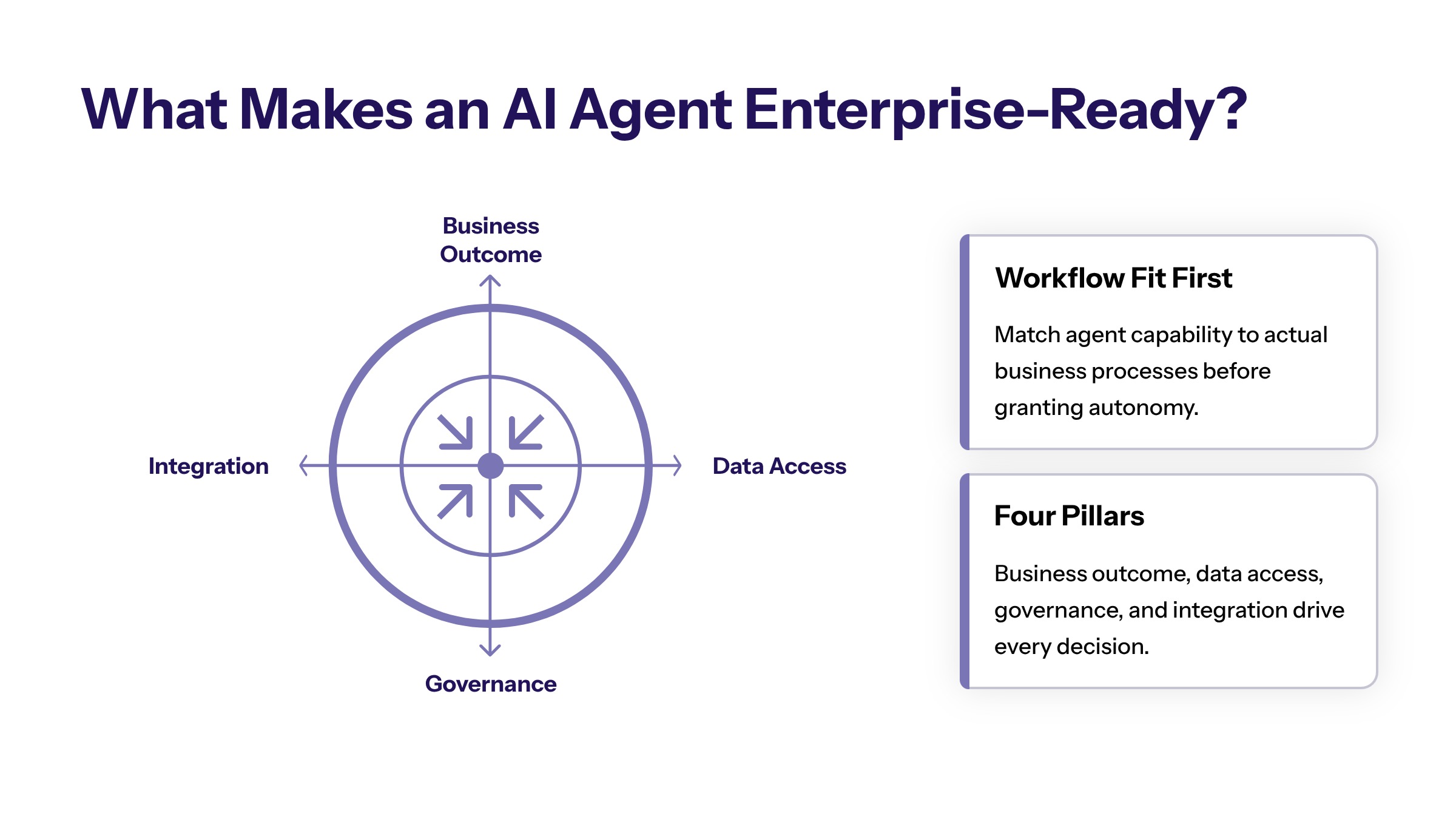
The best AI agents for business are not simply the most autonomous or the most heavily promoted. The best option is the one that fits the workflow, data, risk, integration, governance, and ownership requirements of the business. For enterprise teams, agent selection should be treated as an architecture and operating model decision, not a shallow tool ranking.
CTOs, operations leaders, digital executives, and procurement stakeholders evaluating AI agents for business workflows should compare operating fit before autonomy. Useful evaluation covers business AI agent categories, enterprise criteria, build-buy-hybrid decisions, and the mistakes teams should avoid before deployment.
The best AI agents for business are the ones that can operate inside defined workflows with traceable decisions, controlled data access, human escalation, reliable integrations, and measurable outcomes. A tool can look impressive in a demo and still be a poor fit for production if it cannot connect to systems, respect permissions, or prove what happened.
A useful buyer framework helps teams evaluate AI agent platforms, custom agents, and hybrid architectures by workflow fit, integration needs, governance controls, security expectations, and long-term ownership.
What Makes an AI Agent Best for Business Use
An AI agent is useful in business when it can help move work forward. That may include classifying requests, retrieving information, summarizing documents, recommending a next step, drafting a response, routing a task, or triggering an approved system action. The agent becomes valuable when those actions improve a workflow that already matters to the business.
Business fit comes before autonomy. A highly autonomous agent that cannot access the right data, cannot log its actions, and cannot escalate uncertain decisions is not enterprise-ready. A narrower agent that performs one workflow role reliably may create more value than a broad agent that is difficult to control.
The strongest evaluation starts with workflow fit. What process will the agent support? What input will trigger it? What systems will it read? What action can it take? Who owns the result? How will the business know the workflow improved? If those answers are unclear, agent selection is premature.
AI-first architecture is important because agents do not operate in isolation. They need data access, integration paths, model orchestration, permissions, observability, and user interfaces that support the workflow. The best agent strategy starts with the system around the agent.
AI Agent Categories for Business Teams
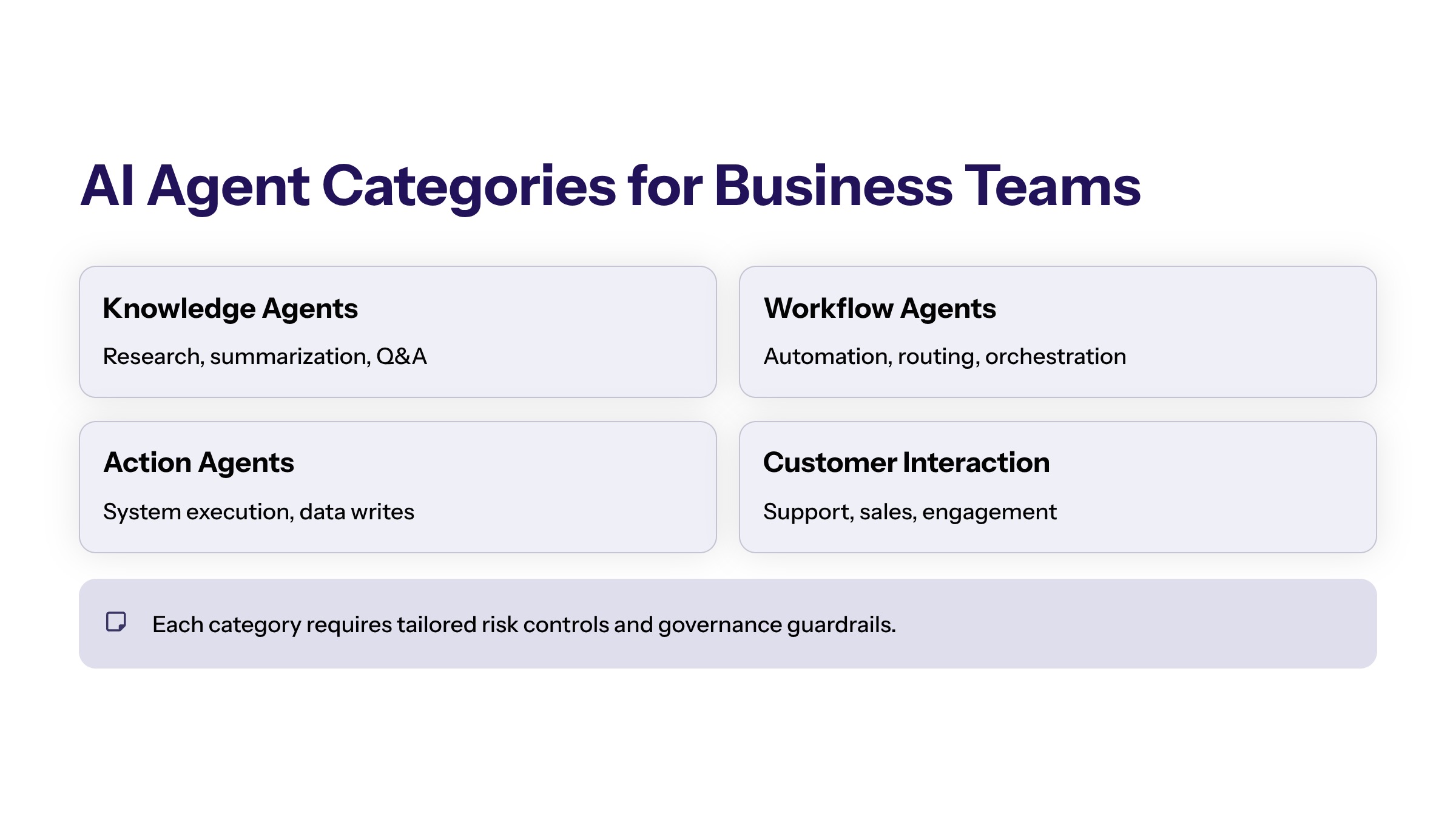
Business AI agents can be grouped by the role they play in the workflow. Some agents focus on knowledge work, such as summarizing documents or answering questions from approved sources. Others focus on operations, such as routing tasks, preparing approvals, or monitoring exceptions. Some are customer-facing, while others operate only inside internal workflows.
Knowledge agents retrieve and summarize information. They are useful for policy lookup, documentation support, onboarding, internal search, and research assistance. Their main risks are source accuracy, data access, and hallucinated answers.
Workflow agents coordinate tasks. They classify inputs, route work, prepare recommendations, and update workflow state. Their main risks are incorrect routing, weak escalation rules, and poor auditability.
Action agents trigger system changes. They may update records, create tickets, prepare orders, or initiate follow-up tasks. Their main risks are permission scope, unintended changes, and rollback complexity.
Customer interaction agents support conversations, service requests, and response workflows. Their main risks are tone, privacy, escalation, and customer-impacting errors. Enterprise teams should decide whether the agent is allowed to respond directly or only support a human operator.
The best AI agents for business operations often combine these roles carefully. For example, a support workflow may use knowledge retrieval, ticket classification, recommended responses, and escalation routing. The architecture should define which actions are automated and which require review.
Evaluation Criteria for Enterprise AI Agents
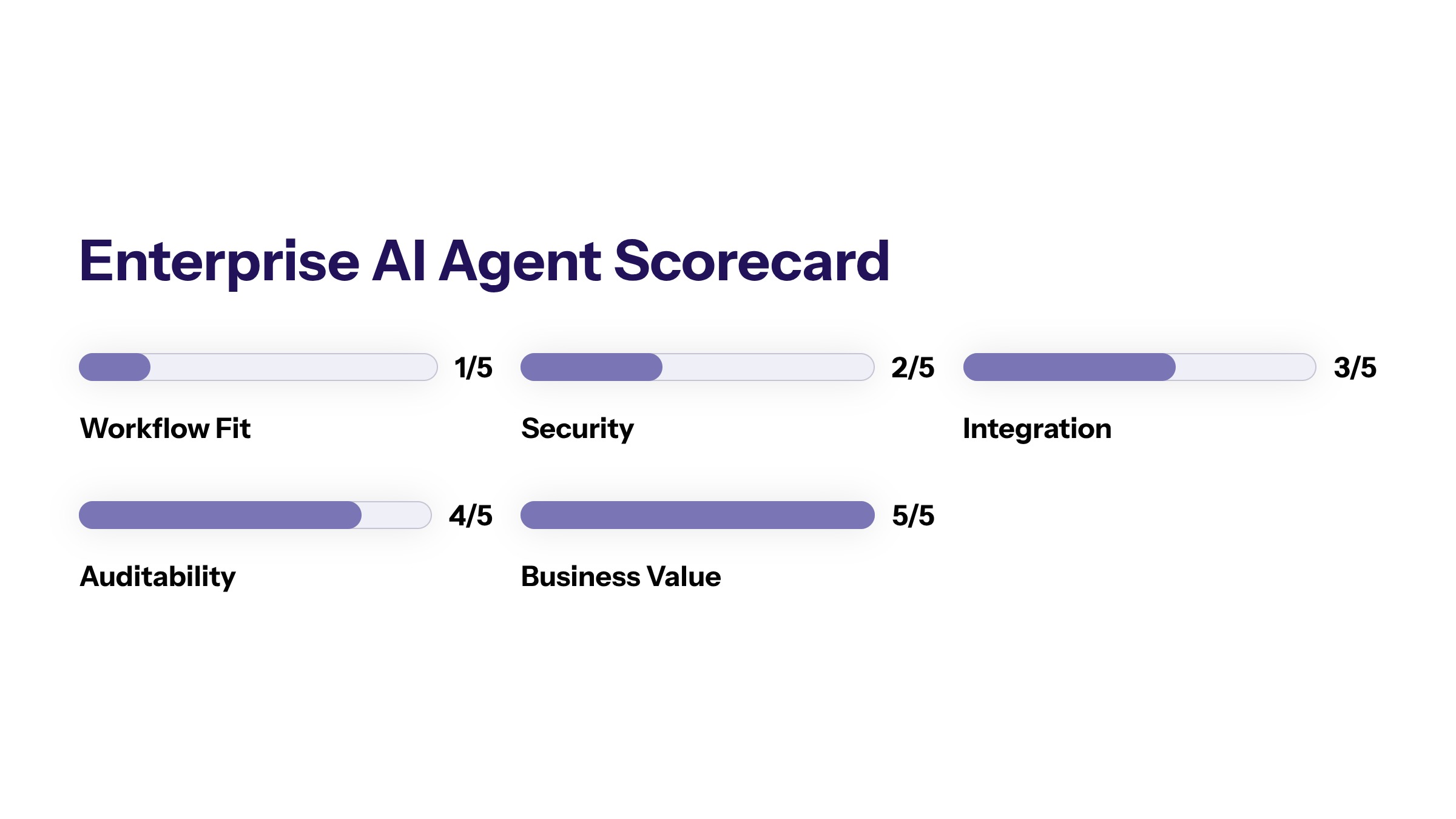
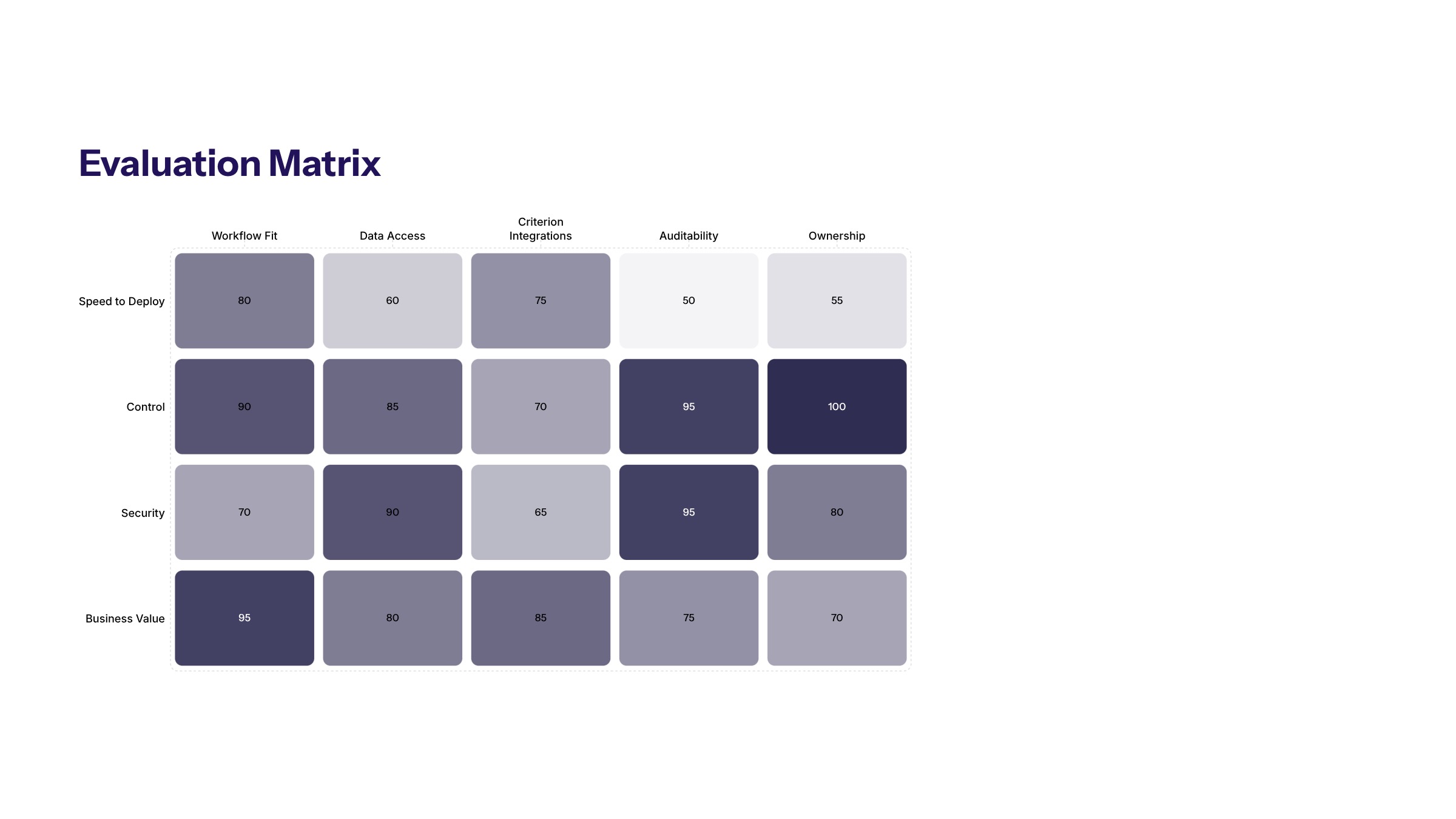
Enterprise evaluation should focus on whether the agent can operate safely in the business environment. The evaluation should cover workflow fit, data access, security, auditability, integration, support, ownership, and measurable value.
Criterion | What to Evaluate | Why It Matters |
|---|---|---|
Workflow fit | Specific process, role, trigger, output, and success metric. | Prevents tool-first adoption without business value. |
Data access | Approved sources, permissions, freshness, and data boundaries. | Agents are only useful when they can access the right context safely. |
Integration | APIs, workflow systems, CRM, ERP, ticketing, and document repositories. | Disconnected agents create more manual work. |
Auditability | Logs, decisions, prompts, actions, approvals, and user overrides. | Teams need evidence when agents affect operations. |
Security | Access controls, least privilege, monitoring, data handling, and incident response. | Agents can expose sensitive data or trigger unsafe actions if controls are weak. |
Ownership | Data portability, code ownership, export paths, and vendor dependency. | AI agents can become operational dependencies. |
This matrix helps teams move away from generic "top AI agents for business" conversations. The better question is whether an option can handle the workflow and risk profile the business actually has.
Security, Governance, and Integration Requirements
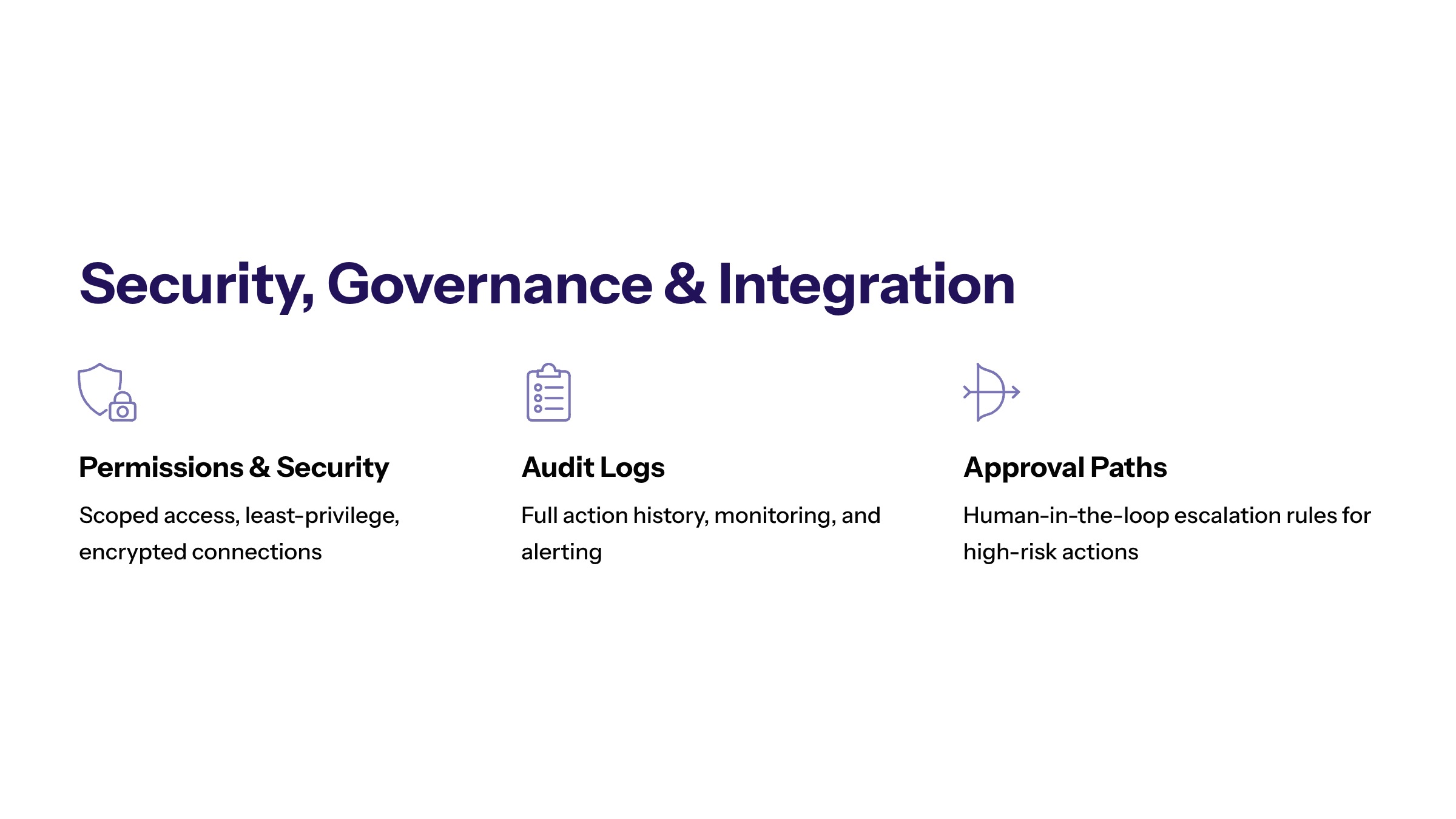
Agents that affect customers, revenue, compliance, employee records, or operational continuity need strong controls. Governance should define who owns the workflow, who owns the data, who approves changes, who reviews exceptions, and who decides whether the agent should scale.
Secure development practices should be part of agent evaluation. That includes least-privilege permissions, role-based access, audit logs, input validation, monitoring, escalation paths, and review thresholds. The agent should not receive broad system access because the demo looks useful.
Integration requirements are equally important. An agent that cannot connect to the system of record may only create another interface for employees to check. Enterprise-ready agents should connect to workflow engines, CRM, ERP, service platforms, identity systems, document repositories, analytics tools, or custom applications as needed.
Governance also needs evidence. If an agent recommends a decision, routes a ticket, or updates a record, the business should be able to review the input, output, data source, action, user override, and final result. Traceability is what turns agent activity into a controlled workflow.
Build vs Buy vs Hybrid AI Agent Strategy
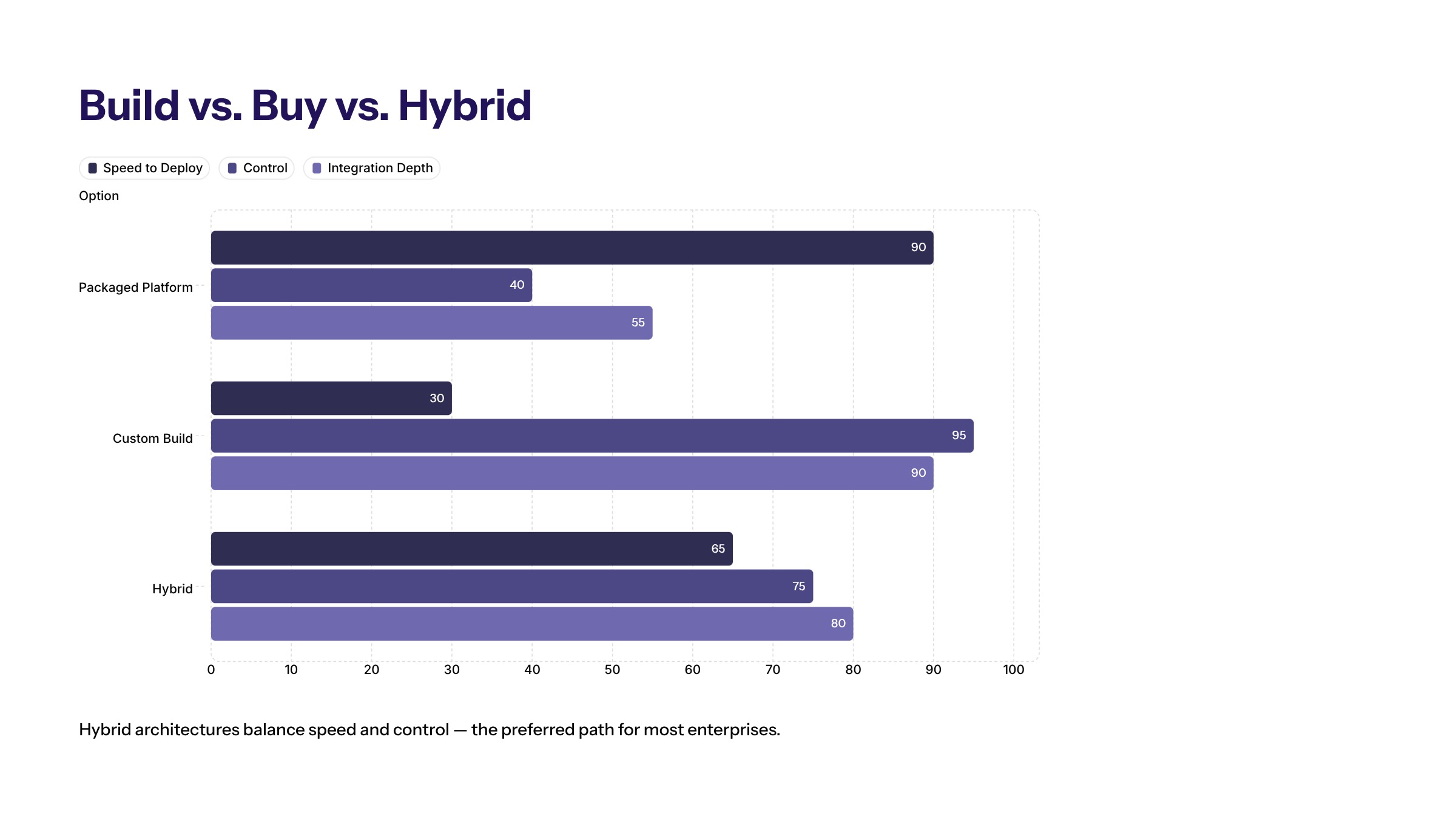
Some teams can use packaged AI agent platforms for standardized workflows. Others need custom agents or hybrid architecture because their workflows depend on legacy systems, internal data, regulated information, or proprietary business logic. The right strategy depends on speed, control, integration complexity, and long-term ownership.
Buying can be useful when the workflow is common, the integration requirements are modest, and the vendor's controls match the organization's needs. It can accelerate pilots, reduce initial development effort, and provide a managed interface.
Building can be useful when the workflow is unique, data access is sensitive, or the organization needs direct control over architecture, interfaces, and ownership. Custom development can create stronger fit but requires disciplined implementation and support.
A hybrid strategy is often practical. The organization may use commercial model services or workflow components while building custom orchestration, integrations, governance layers, and interfaces. This can balance speed and control when packaged platforms alone are not enough.
Strategy | Best Fit | Primary Risk |
|---|---|---|
Buy | Standard workflows and faster pilots. | Vendor lock-in, limited customization, and unclear data handling. |
Build | Complex workflows, proprietary data, and high-control environments. | Longer delivery if scope is not controlled. |
Hybrid | Enterprise workflows needing speed plus custom integration. | Architecture complexity and ownership ambiguity. |
The strategy should connect to business strategy. If the agent does not support a measurable business outcome, it is not the best option no matter how advanced the tool appears.
Common Selection Mistakes
A common selection mistake is choosing based on autonomy instead of workflow fit. More autonomy can mean more risk if the agent lacks boundaries. The best agent for a regulated approval workflow may be one that recommends and routes, not one that executes without review.
The second mistake is ignoring integration. Teams may buy an agent platform that works in isolation but cannot read the right data or update the right systems. That forces employees to copy information between tools, which weakens the automation case.
The third mistake is underestimating governance. Agents need permissions, logs, escalation rules, and ownership. If no one owns the workflow outcome, the agent becomes another unaccountable tool.
The fourth mistake is treating vendor claims as proof. Enterprise teams should test with real workflow variation, edge cases, incomplete data, and actual user review. A demo can show potential; a pilot should prove fit.
Selection Roadmap
A practical roadmap begins with the business process, not the vendor category. Identify one workflow where an agent could reduce manual effort, improve routing, or support better decisions. Define the outcome and map the current state.
Define the workflow. Document trigger, inputs, systems, owners, and decision points.
Choose the agent role. Decide whether it retrieves, summarizes, routes, recommends, drafts, or acts.
Set evaluation criteria. Include workflow fit, security, integration, auditability, support, and ownership.
Run a controlled pilot. Test with real cases and clear human review thresholds.
Review evidence. Decide whether to scale, revise, switch strategy, or stop.
This process helps teams answer "best" with evidence. The best AI agents for business workflows are the ones that make important work more consistent, controlled, and measurable.
How to Compare AI Agent Options Without Vendor Rankings
Teams can compare AI agent options with a weighted scorecard based on the target workflow. Give more weight to integration, security, auditability, and ownership when the workflow is operationally important. Give more weight to usability and adoption when the workflow is internal and low risk.
The scorecard should include a written decision record. Document why an option was selected, what risks remain, what assumptions were tested, and what would cause the team to change direction. This creates institutional memory and prevents the selection process from becoming a personality-driven preference for one tool.
Evidence should come from pilots, technical review, security review, user feedback, and workflow metrics. The best AI agents for business are not chosen by popularity. They are chosen because they improve a defined workflow with acceptable control and clear ownership.
This keeps the selection process useful for enterprise teams because it ties the final decision to evidence instead of brand preference. It also makes future optimization easier: if the chosen agent does not meet the agreed workflow metrics, the team can revise the process, improve the integration, change the control model, or select a different approach.
What to Document Before Selection
Before selecting an AI agent, document the workflow, business owner, data sources, systems involved, permitted actions, blocked actions, escalation path, success metric, and support owner. This gives procurement, technology, and business teams a shared basis for comparison.
Teams should also document assumptions. For example, an evaluation may assume that CRM data is accurate, APIs are available, employees will use the agent inside the current workflow, or sensitive records can be excluded. If those assumptions are wrong, the agent may fail even if the tool is capable.
A decision record should include why the selected option fits the workflow, what controls are required, what risks remain, and what the pilot must prove before scale. This is especially important when "best" language creates pressure to choose quickly. A documented decision helps the team explain why one agent strategy fits the business better than another.
Enterprise Readiness Signals
An AI agent option is more likely to be enterprise-ready when it can explain its role in the workflow, connect to approved data sources, respect user permissions, produce usable logs, and support human review. It should also fit the organization's support model. If the tool requires business teams to manage unclear failures without technical visibility, it may not be ready for production.
Readiness also includes change management. Users should know what the agent does, when to trust it, when to override it, and how to report issues. A strong agent strategy gives employees more workflow clarity instead of forcing them to supervise a black box.
Next Steps for Choosing Business AI Agents
The best AI agent decision is a business systems decision. Teams should identify the workflow, define success, assess integration and risk, and choose the agent strategy that provides the right balance of speed, control, and ownership.
For enterprise teams, the goal is not to chase the most advanced agent. The goal is to build or select agents that make business workflows more reliable, auditable, and useful.
Frequently Asked Questions About Best AI Agents for Business: How to Evaluate Enterprise-Ready Options
No. Packaged platforms can be useful for common workflows, but complex enterprise processes may require custom or hybrid architecture. The decision depends on workflow fit, data access, security, integration, and ownership. For related reading, see generative AI development.
Only inside defined boundaries. Low-risk actions may be automated after testing. High-risk actions should include human review, approval thresholds, and audit trails. For related reading, see AI and ML development.
Start with one workflow. Define the business outcome, map the current process, identify agent roles, and test options against real data and real exceptions. For related reading, see AI implementation planning.
A useful business AI agent supports a specific workflow, connects to needed context, follows permissions, and produces measurable outcomes. General capability matters less than fit for the work. For related reading, see AI automation services.
Buyers should compare workflow fit, integrations, security controls, auditability, human review, support, and ownership flexibility. Vendor demos should be tested against real workflow examples. For related reading, see enterprise AI services.
Teams should pilot one bounded workflow with clear data, owners, metrics, and review points before expanding seats or permissions. The pilot should reveal operational fit, not just feature breadth. For related reading, see AI consulting services.