Navigating Big Bang Rollout Risks: Best Practices for Success
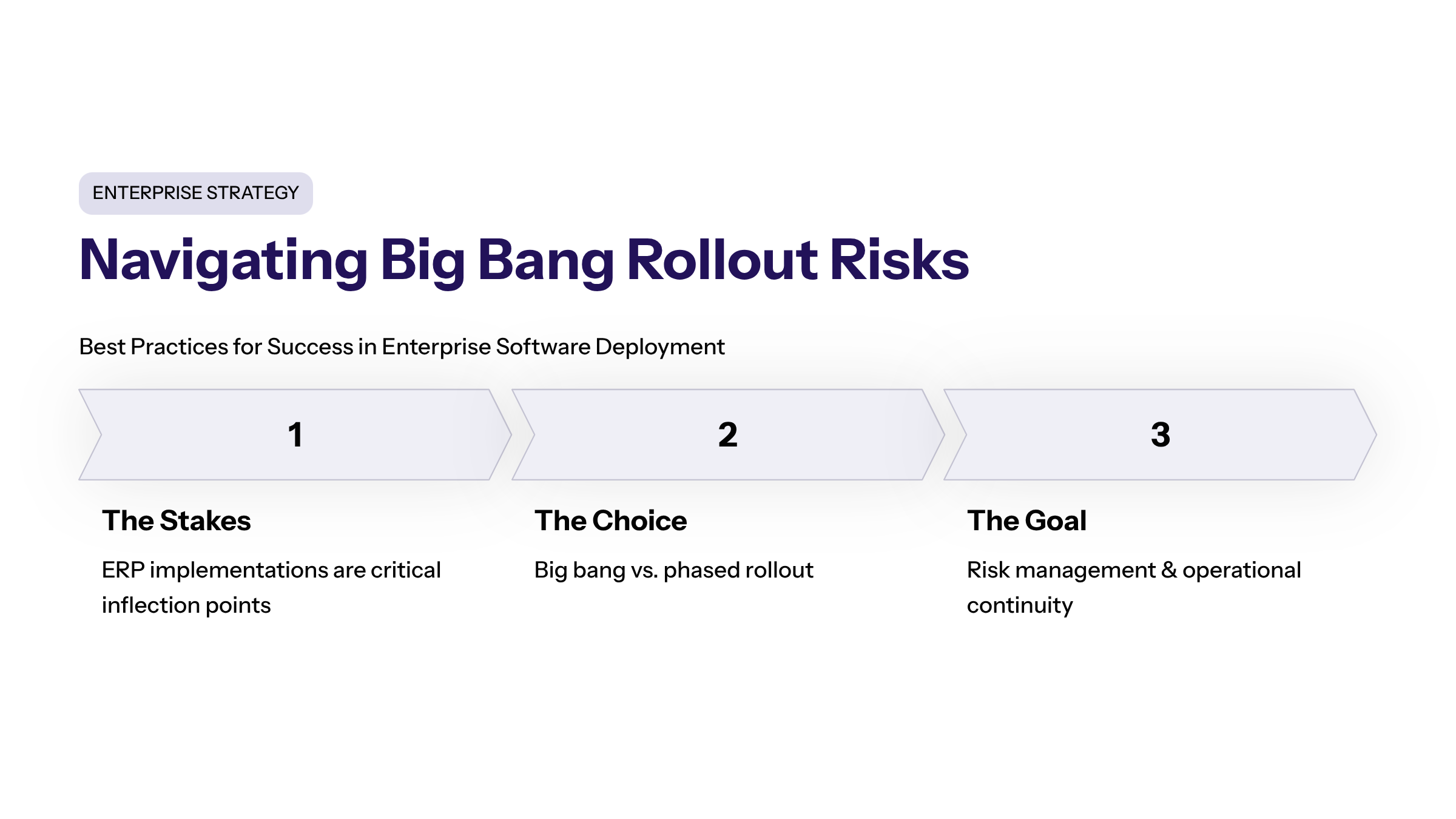
Enterprise software implementations, particularly those involving complex ERP systems, represent critical inflection points for organizations aiming to modernize operations and enhance competitive advantage. The choice between a big bang rollout and a phased implementation approach carries significant implications for risk management, operational continuity, and overall project success.
This article provides an in-depth, analytical exploration of big bang rollout risks, contrasting them with phased rollout strategies, and offers executive-level insights into best practices for enterprise deployment planning.
Key Takeaways:
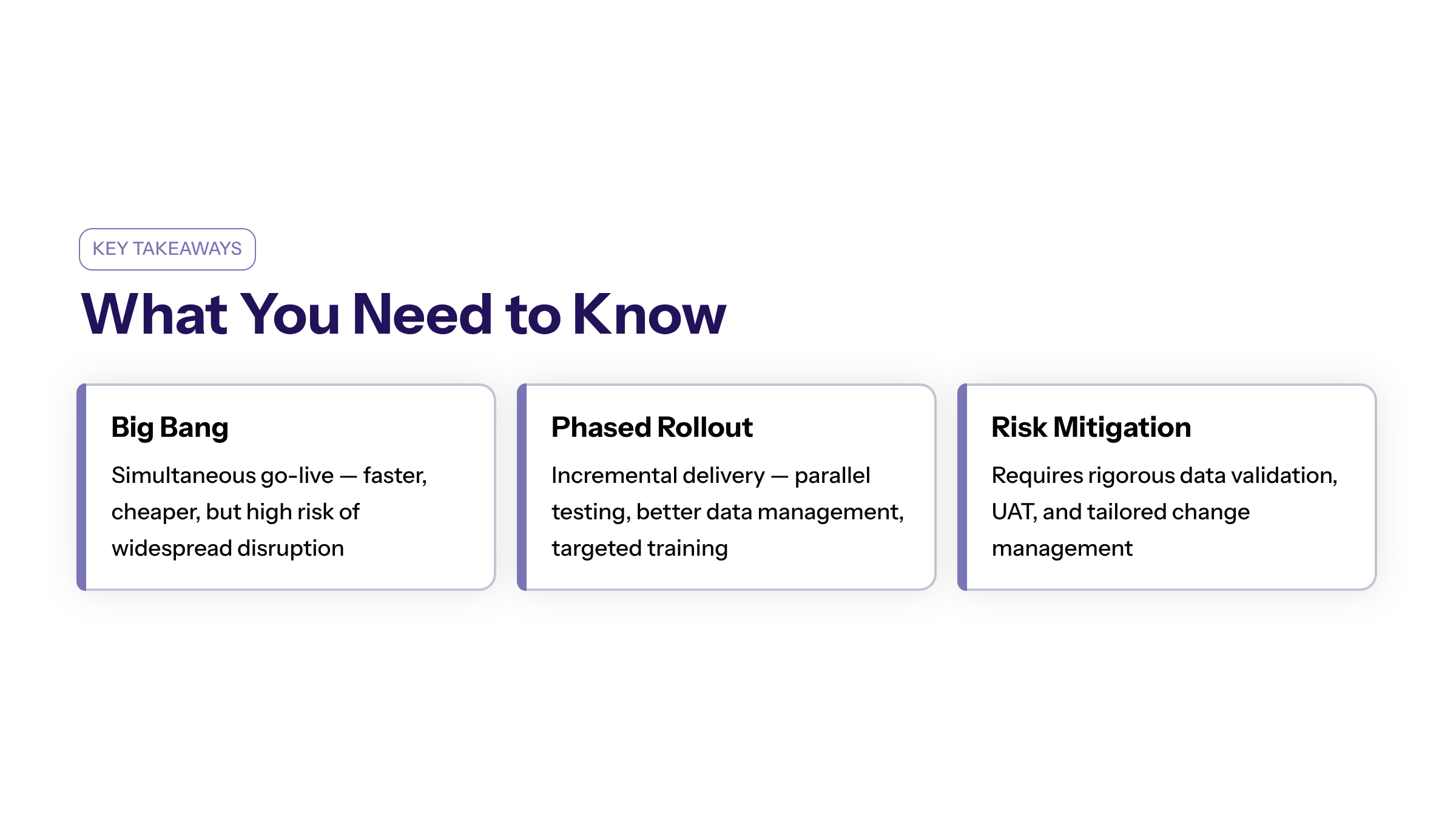
Big bang implementations, characterized by simultaneous go-live of the entire system, can offer cost savings and shorter implementation timelines but carry significant risks including widespread disruptions and operational paralysis.
A phased rollout mitigates risk by introducing new functionality incrementally, allowing for parallel testing, better data management, and targeted user training, which is especially beneficial in complex environments or global operations.
Effective risk mitigation requires comprehensive project management, rigorous data validation, user acceptance testing, and change management strategies tailored to the organization’s business needs and regulatory context.

Introduction to Deployment Strategies
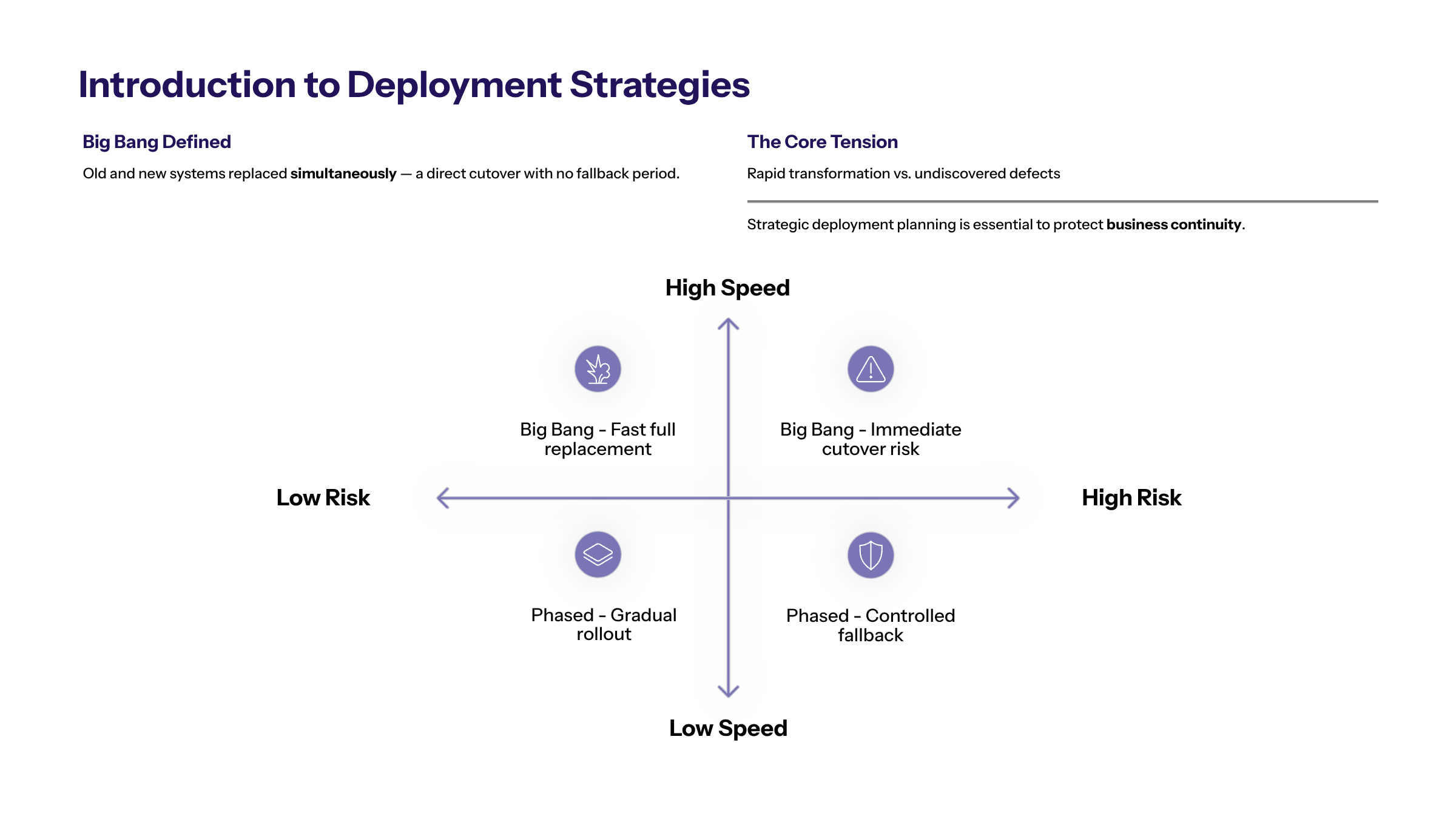
Enterprise software projects demand strategic deployment planning to avoid pitfalls that can jeopardize business continuity. The big bang approach, often tempting due to its promise of rapid transformation and cost efficiency, involves a direct changeover where old and new systems are replaced simultaneously.
This is known as a big bang deployment—a deployment strategy where the entire system is replaced at once, which increases the risk of undiscovered defects and human error compared to more gradual approaches. Conversely, a phased approach introduces new features or modules in controlled stages, maintaining dual systems during a transitional period to reduce risk.
Understanding the nuances of such deployment strategies is essential for executives overseeing system rollout initiatives. This includes balancing the advantages of a big bang implementation—such as a shorter implementation timeline and potential cost savings—with the significant risks it entails, including data integrity challenges, insufficient user training, and the complexity of maintaining dual systems.
Maintaining the previous version during phased approaches enables rollback and helps ensure system stability during updates.
Understanding Enterprise Software Implementations
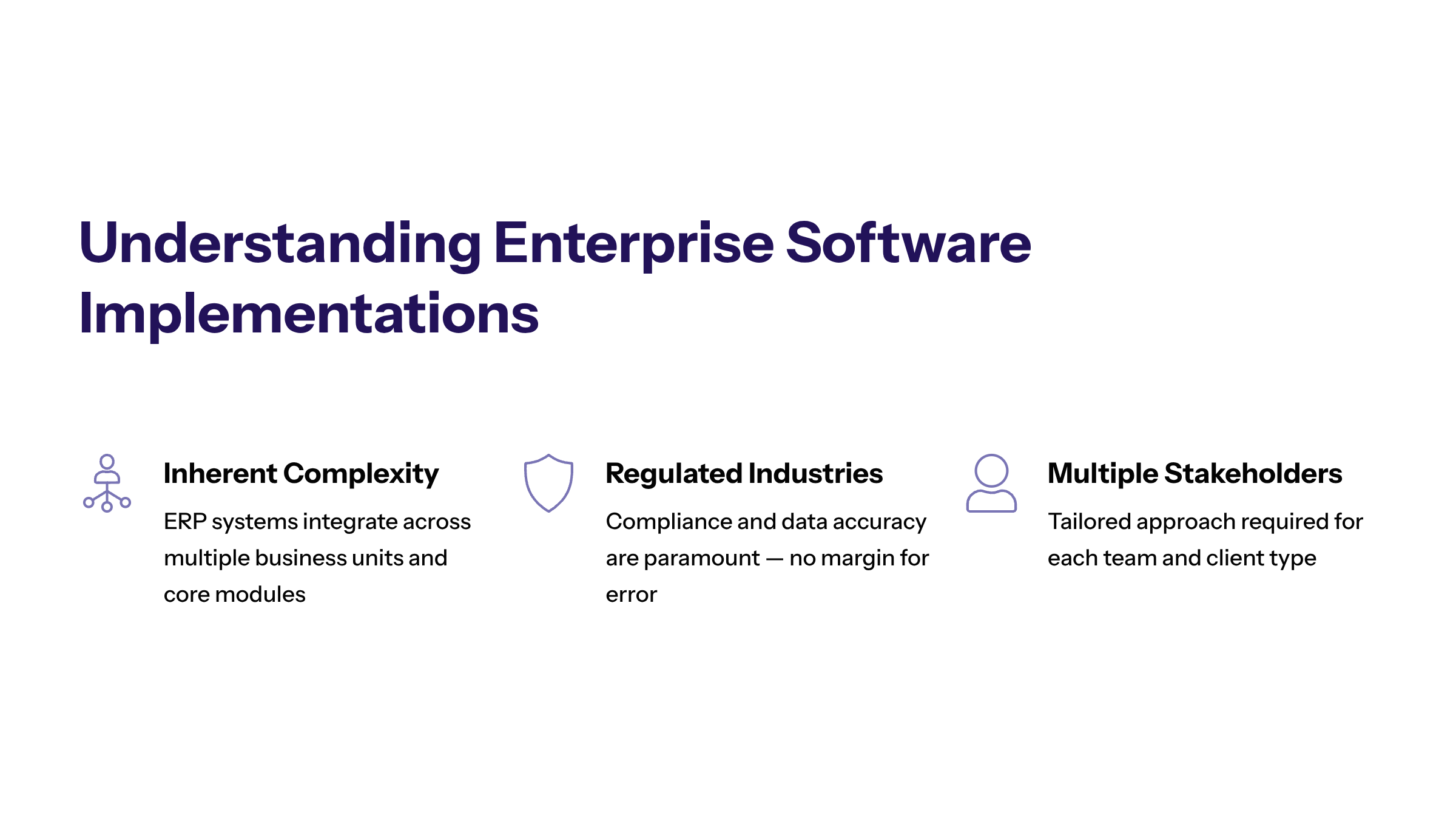
Enterprise software, particularly ERP implementations, are inherently complex due to their integration with multiple business units and critical core modules.
The rollout strategy must accommodate these complexities, especially in regulated industries where compliance and data accuracy are paramount. Each implementation involves more than just one group of stakeholders, so a tailored approach is necessary to address the unique needs of different teams and client types. The big bang approach is often better suited for smaller, less complex organizations.
The Role of Data Management and Migration
Data migration stands as a cornerstone of any successful enterprise system rollout. Maintaining data integrity during the transition from legacy systems to new platforms requires meticulous planning and execution.
Poor data quality or incomplete data validation can lead to operational disruptions, compliance risks, and diminished user confidence. These issues are especially prevalent in rushed ERP deployments, where inadequate time for data cleansing and validation results in critical data errors that impact core operations and reporting accuracy.
Importance of Change Management and User Training
User acceptance testing (UAT) and comprehensive user training are vital to ensure end users are prepared for new features and workflows.
A big bang rollout demands that internal teams and end users adapt simultaneously to the entire enterprise system, often resulting in a steep learning curve and potential resistance. This intense learning curve can lead to decreased productivity as employees must immediately master all new features and processes. Therefore, role-specific training tailored to employees at all levels must be conducted well before the go-live date to enhance readiness and minimize operational paralysis.
In contrast, phased rollouts enable targeting early adopters and tailoring training to specific business units, facilitating smoother adoption and reducing resistance. Lack of employee training and low user adoption are common pitfalls in rushed ERP implementations, underscoring the importance of structured change management.
Project Management and Risk Mitigation
A dedicated project team overseeing the entire project lifecycle is critical. This team manages parallel change processes, coordinates testing phases, and implements rollback strategies where necessary. Deploying 'new code' versions alongside existing code enables smoother transitions, easier rollbacks, and more controlled user migrations.
Risk mitigation also involves establishing contingency plans such as real-time monitoring teams and failover protocols to quickly address disruptions during the go-live date. Gradual migration to a 'new version' using feature toggles and continuous monitoring can further minimize risks and allow for rollback if necessary.
Managing Higher Risk
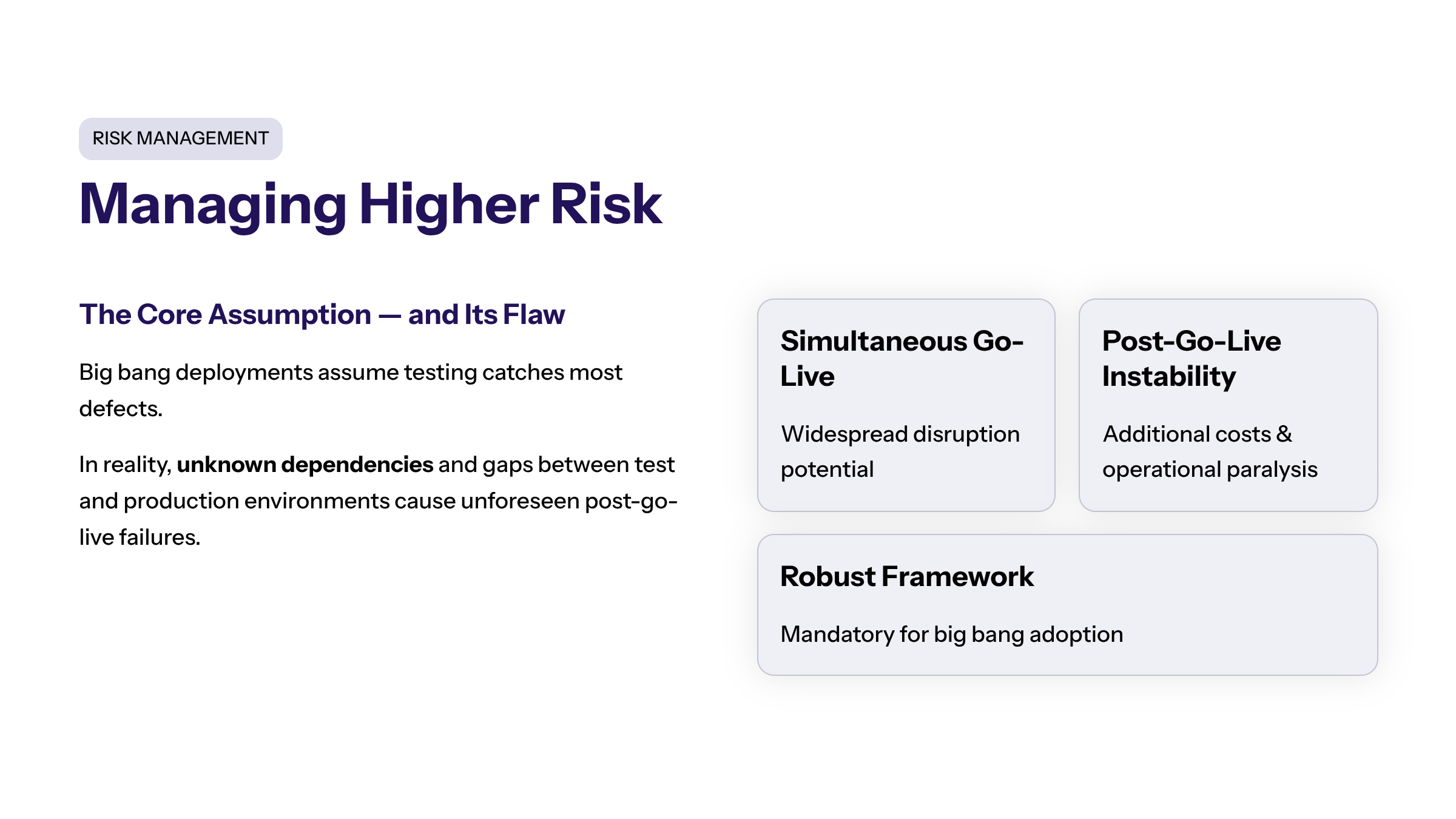
The inherent higher risk associated with big bang adoption necessitates a robust risk management framework.
Organizations must weigh the benefits of simultaneous go live against the potential for widespread disruptions and additional costs arising from post-go-live instability.
It is important to recognize that big bang deployments assume most defects can be discovered by testing; however, unknown dependencies and differences between test and production environments often result in unforeseen issues after rollout.
Risks Associated with Big Bang Implementation
Risk Factor | Description | Impact | Mitigation Strategies |
|---|---|---|---|
Data Integrity Issues | Errors during data migration or validation leading to inaccurate or incomplete data | Operational disruptions, compliance breaches | Rigorous data cleansing, parallel testing, and validation |
Insufficient User Training | Users overwhelmed by new platform functionality and workflows | Low adoption rates, increased error rates, operational paralysis | Role-specific training, phased rollout targeting early adopters |
System Instability | Unanticipated defects or incompatibilities due to simultaneous deployment | Downtime, customer dissatisfaction, delayed ROI | Extensive user acceptance testing, rollback plans |
Resource Intensive | High demand on internal teams during simultaneous go live | Burnout, mistakes due to human error | Staggered deployment phases, adequate staffing |
Hidden Costs | Post-live stability issues leading to additional expenses beyond original budgets | Budget overruns, extended recovery time | Contingency planning, real-time monitoring, failover protocols |
“Organizations that rush into big bang implementations without comprehensive risk mitigation often face costly setbacks that outweigh initial savings.” – Gartner ERP Research, 2024
Benefits of a Phased Rollout Approach
Phased rollout strategies provide a more controlled environment, enabling organizations to maintain dual systems during a transitional period. This stepwise deployment allows for thorough testing of individual modules or business units, minimizing widespread disruptions and enabling early realization of benefits from core modules.
Phased implementations also support parallel change management, where old and new systems coexist, allowing for smoother data migration and user adaptation. This approach is particularly advantageous for complex organizations with global operations, where localized rollout strategies can address regional regulatory requirements and business needs.
A phased rollout is often the prudent choice for large, complex organizations or those with lower risk tolerance. By implementing one module or business unit at a time, organizations can gain more understanding of system behavior in production and adapt their rollout strategy accordingly.
This incremental approach also allows for earlier wins and partial return on investment, as opposed to the delayed ROI typical of big bang rollouts, where financial benefits only materialize after the full rollout is complete.
Strategic Considerations for Rollout Strategy Selection
Selecting the appropriate rollout strategy requires evaluating organizational complexity, risk tolerance, resource availability, and business priorities. For example, smaller organizations with less complex environments might successfully implement a big bang approach, leveraging strong project management and experienced internal teams.
Conversely, enterprises operating in regulated industries or with multi-national footprints often benefit from phased rollouts, which accommodate incremental change and reduce the risk of operational paralysis.
Global Operations Considerations
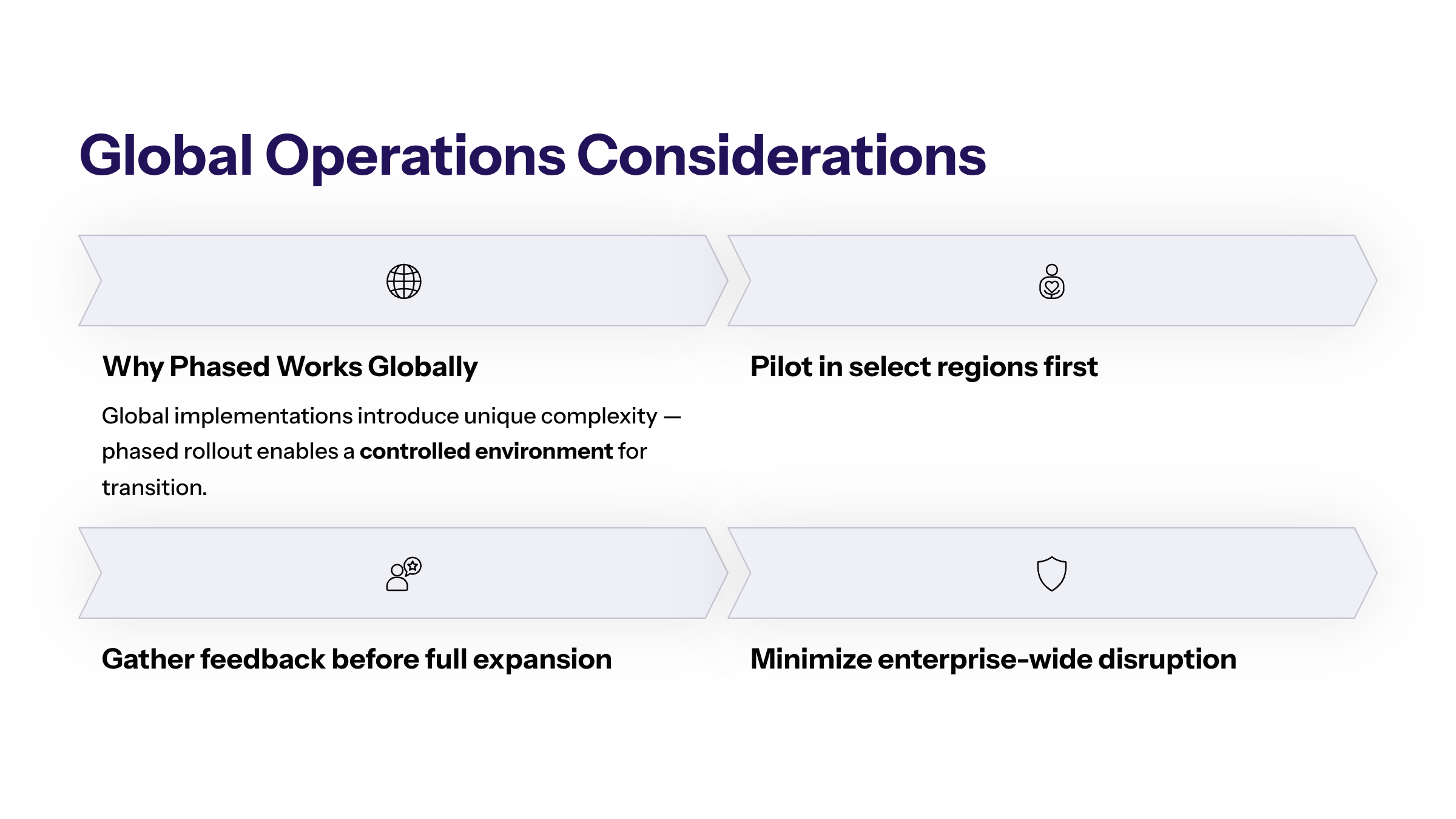
Implementing a new system across global operations introduces a unique set of challenges that require careful planning and execution. A phased implementation approach is particularly effective in these complex environments, as it allows organizations to manage the transition in a controlled environment and minimize disruption.
By targeting early adopters in select regions or business units, organizations can pilot the new system, gather feedback, and refine processes before expanding to the entire enterprise. This stepwise deployment not only supports risk mitigation but also enables the project team to address region-specific requirements and regulatory considerations.
In contrast, a big bang implementation—where the entire system goes live simultaneously—can expose global operations to significant risks. The complexity of coordinating a simultaneous go live across multiple locations increases the likelihood of widespread disruptions, which can impact business continuity and customer satisfaction.
Effective change management is essential in both approaches, but especially critical in global rollouts, where communication, training, and support must be tailored to diverse teams and time zones. By leveraging a phased implementation, organizations can ensure a smoother transition, reduce the risk of operational paralysis, and achieve a more successful system rollout on a global scale.
Parallel Change Management
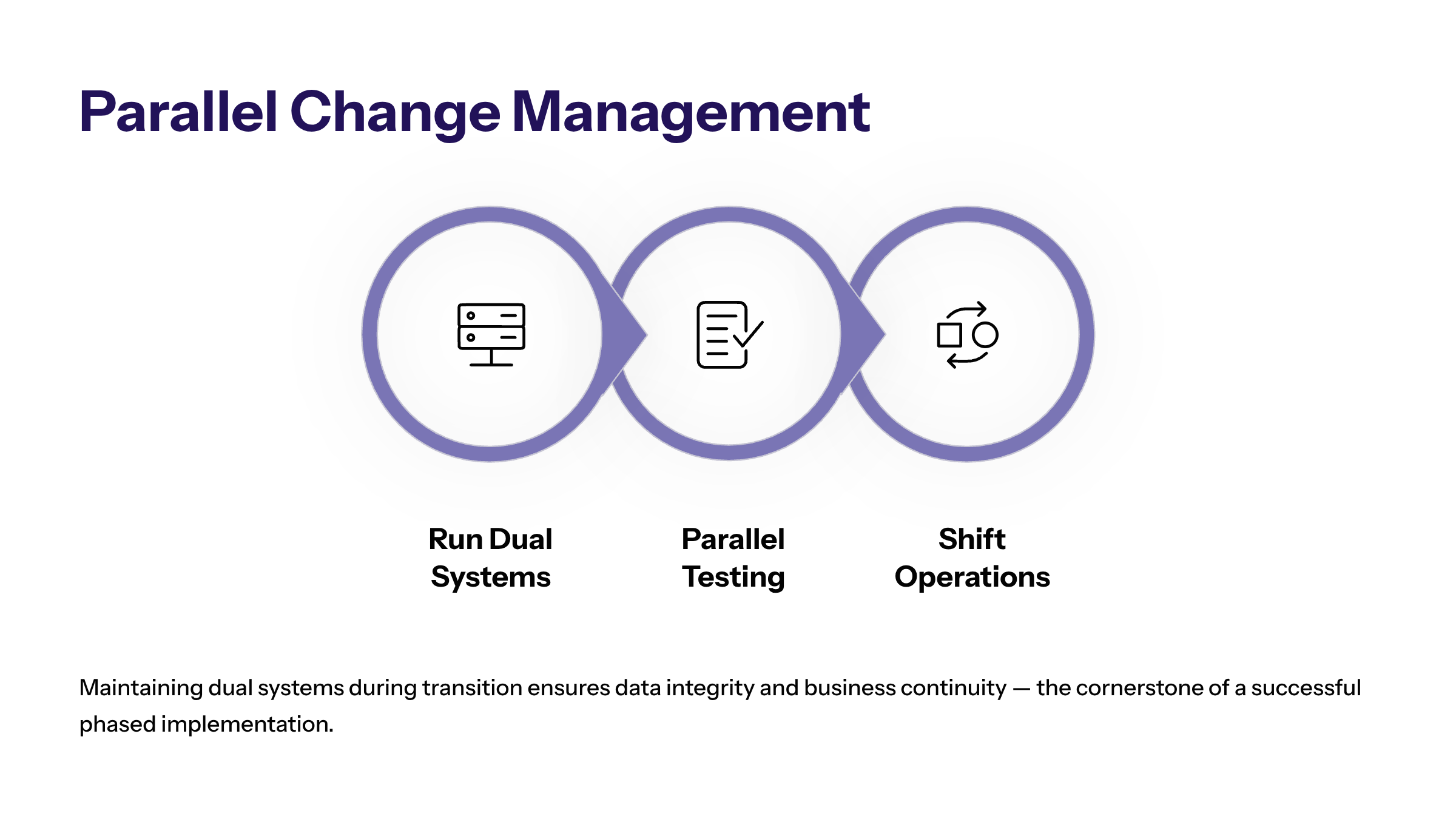
Parallel change management is a cornerstone of a successful phased implementation approach, especially when transitioning from an existing system to a new system.
This strategy involves maintaining dual systems—old and new—during a transitional period, allowing organizations to gradually shift core operations without jeopardizing business continuity. By running both systems in parallel, teams can conduct thorough data migration and parallel testing, ensuring that data quality and data integrity are maintained throughout the process.
ERP vendors often provide specialized tools and support to facilitate this parallel change, making it easier to validate data and resolve discrepancies before fully decommissioning the legacy system. This approach also enables organizations to identify and address issues in a controlled environment, reducing the risk of disruptions to critical business functions.
Effective change management during this period is essential, as it helps internal teams adapt to new workflows while still relying on familiar processes. Ultimately, parallel change management provides a safety net that supports a smoother, more reliable transition to the new system.
Post-Rollout Evaluation and Optimization
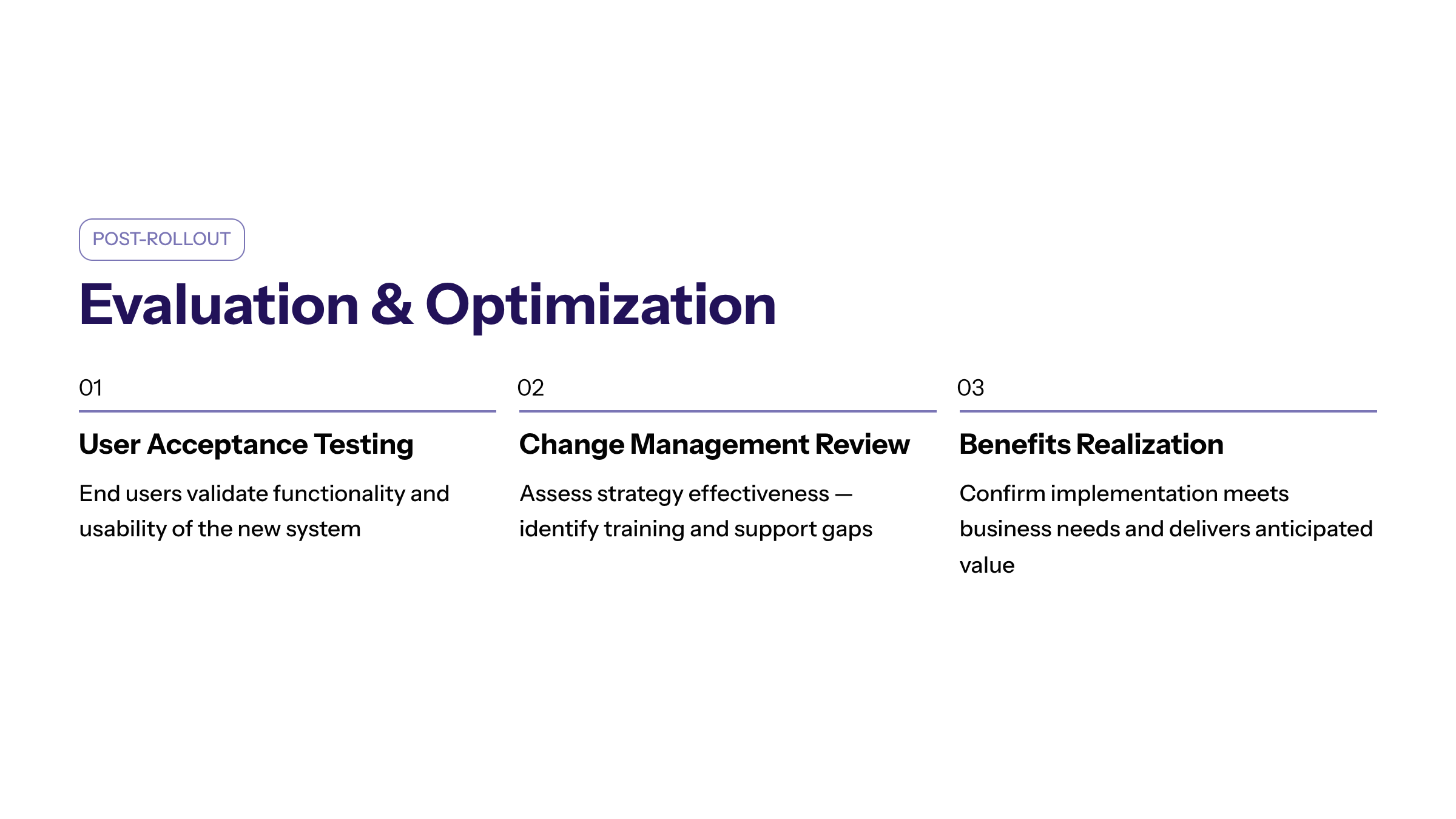
Once the new system is live, a comprehensive post-rollout evaluation is essential to ensure the implementation meets business needs and delivers the anticipated benefits. This process should include user acceptance testing, where end users provide feedback on the new system’s functionality and usability. The project team should also assess the effectiveness of the change management strategy, identifying areas where additional training or support may be needed.
For big bang implementations, post-rollout evaluation is especially critical, as any issues arising from the simultaneous go live must be addressed promptly to avoid prolonged disruptions. In a phased implementation approach, each phase offers an opportunity for incremental evaluation and optimization, allowing the organization to refine processes and resolve challenges before proceeding to the next stage.
By systematically reviewing the rollout strategy, capturing lessons learned, and making data-driven improvements, organizations can maximize cost savings, enhance user satisfaction, and ensure the new system continues to support evolving business needs. This commitment to ongoing optimization is key to realizing the full value of the system rollout and achieving long-term operational excellence.
Conclusion: Aligning Deployment Strategy with Business Needs
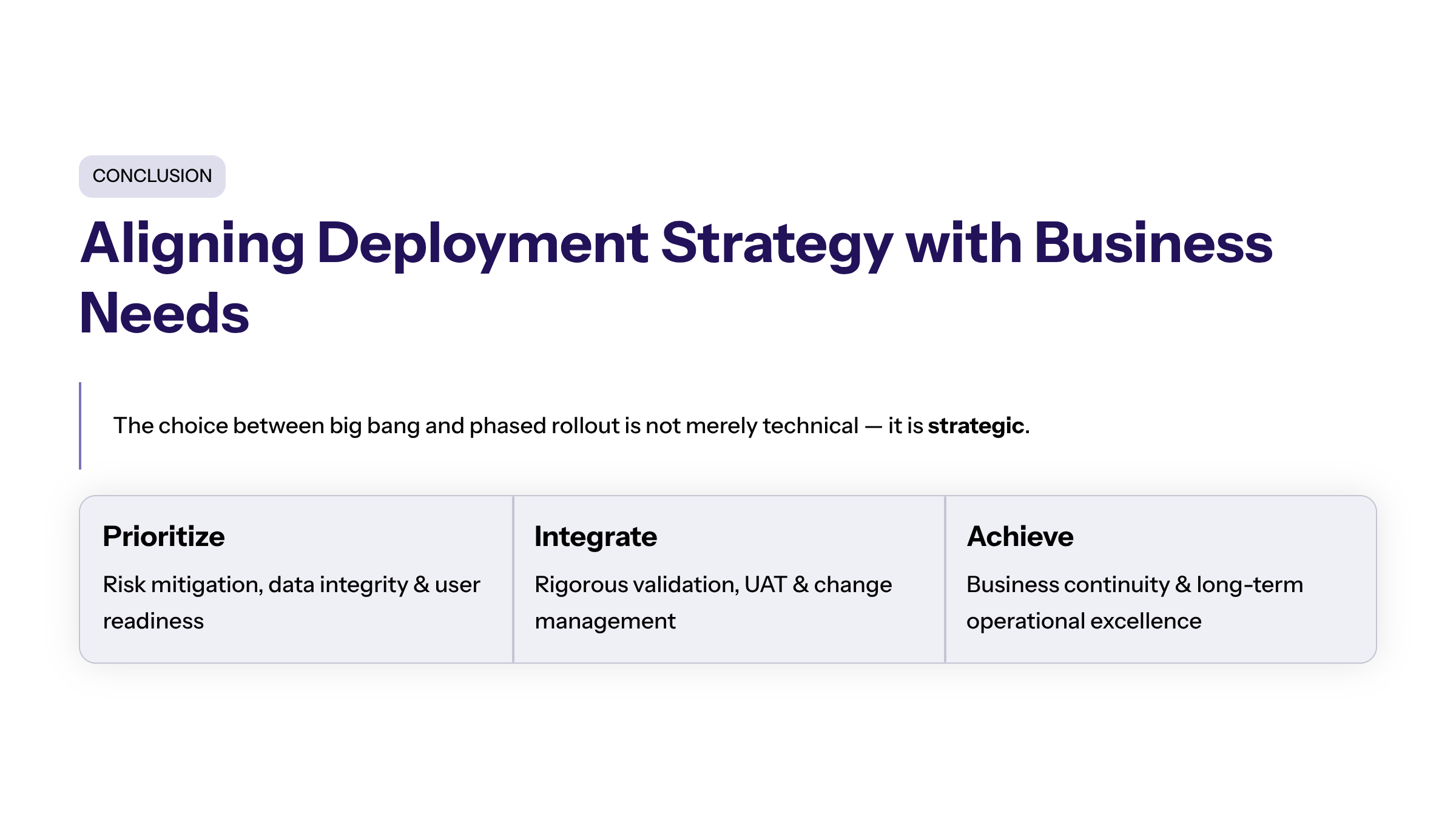
The decision between big bang and phased rollout approaches is not merely technical but strategic. Executives must prioritize risk mitigation, data integrity, and user readiness to ensure a successful system rollout that supports business continuity and long-term operational excellence.
By integrating comprehensive project management, rigorous data validation, user acceptance testing, and tailored change management plans, organizations can navigate the significant risks associated with big bang implementations or leverage the controlled advantages of phased rollouts. Ultimately, the chosen rollout strategy should align with the organization’s unique business needs, regulatory environment, and capacity for managing change.
For organizations planning or revisiting their rollout strategy, consulting with ERP vendors and independent experts can provide valuable insights to optimize deployment success and maximize return on investment.