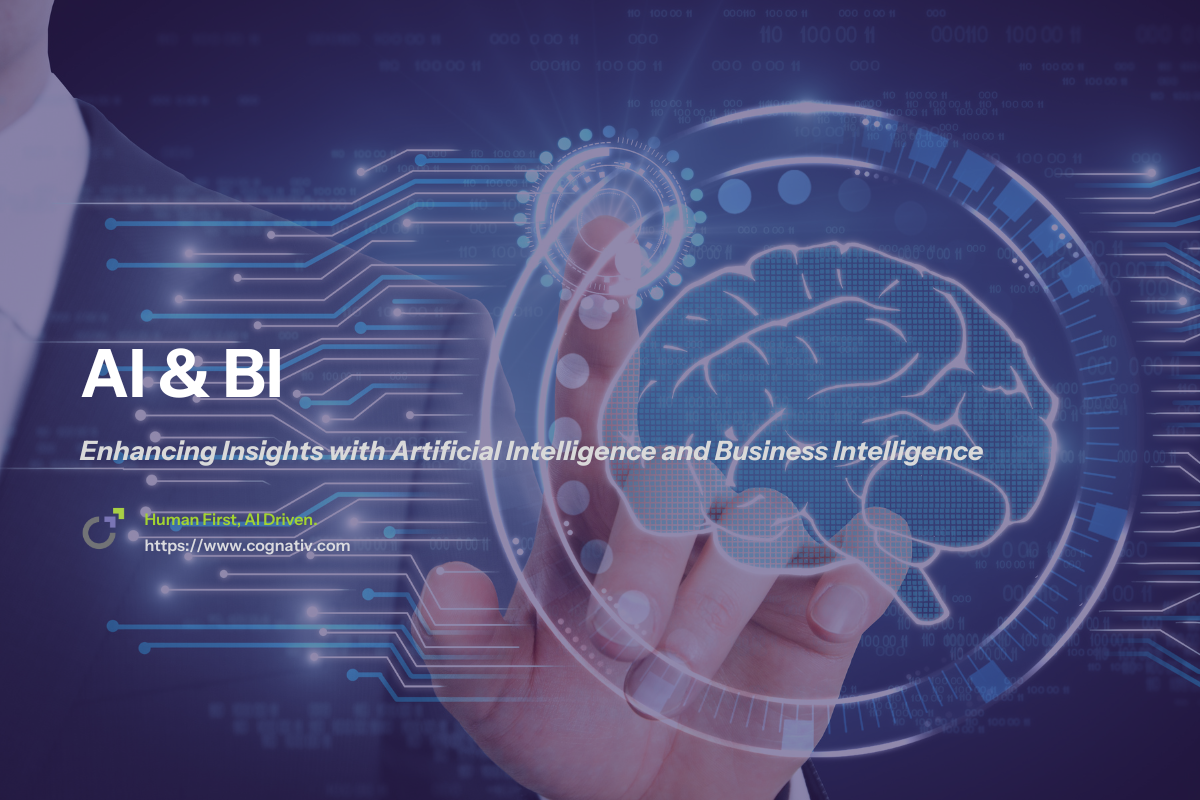
Enhancing Insights with Artificial Intelligence and Business Intelligence
Artificial intelligence business intelligence is revolutionizing how enterprises harness data to drive strategic decisions. As organizations grapple with growing data volumes and complexity, integrating AI into business intelligence (BI) systems enables more accurate, timely, and actionable insights. This transformation directly impacts CIOs, CTOs, CISOs, CEOs, and CFOs seeking competitive advantage through data-driven decision making, operational efficiency, and customer-centric strategies.
Key Takeaways:
AI-powered BI enhances analysis of structured and unstructured data, improving data quality and predictive capabilities.
Integration of AI tools automates routine tasks, freeing business analysts and BI professionals to focus on complex challenges.
AI-driven insights support informed decision making, optimize business processes, and enable targeted marketing based on customer preferences.
Challenges include data governance, specialized expertise requirements, and seamless integration with legacy BI tools.
Future trends point to deeper AI and BI integration, embedded analytics, and expanded use of natural language processing.

The Evolution of Business Intelligence with Artificial Intelligence
Business intelligence traditionally centers on analyzing historical data to identify patterns and inform decisions. BI tools like Microsoft Power BI, Tableau, and Qlik have long provided dashboards, reports, and descriptive analytics to visualize key performance indicators (KPIs). However, these legacy BI tools primarily focus on structured data and retrospective analysis, limiting their ability to predict future trends or handle unstructured data efficiently.
Artificial intelligence introduces machine learning models, deep learning algorithms, and natural language processing (NLP) to BI systems, enabling them to analyze vast datasets—including unstructured data such as customer feedback and social media content. AI-powered business intelligence automates routine data collection and analysis tasks, improving data quality and operational efficiency.
This integration reflects broader digital transformation trends where intelligent systems augment human decision making. Enterprises are increasingly adopting AI-driven tools to gain real-time insights, anticipate market shifts, and deliver personalized customer experiences. For example, financial institutions use AI-powered BI to detect fraud by analyzing transaction patterns, while retailers leverage predictive analytics to optimize inventory and marketing strategies.
Implications for Enterprise Adoption and Strategy
The adoption of AI-powered business intelligence reshapes enterprise data strategies and operational models. CIOs and CTOs must evaluate AI tools that integrate seamlessly with existing BI systems and data warehouses to ensure consistent data governance and security compliance.
Cost and Compliance Considerations
Implementing AI-driven BI solutions requires upfront investments in hardware, software, and specialized expertise. Organizations must also address compliance with regulations such as GDPR, HIPAA, and PCI-DSS, especially when handling sensitive data. AI systems must be transparent and explainable to mitigate risks related to algorithmic bias and data privacy breaches.
Enhancing Decision Making and Operational Efficiency
AI algorithms analyze critical data points across structured and unstructured datasets to provide predictive and prescriptive analytics. This capability empowers business leaders to make informed decisions rapidly, optimize workflows, and reduce human error. For instance, AI-powered BI tools can automatically generate bi reports highlighting emerging trends or anomalies, enabling proactive responses.
Business analysts benefit from AI automation that handles routine tasks such as data cleaning and report generation, allowing them to focus on interpreting complex business questions. Embedded analytics within AI platforms further democratize data access across departments, fostering a data-driven culture.
Opportunities: Unlocking Value with AI-Driven Business Intelligence
AI-powered BI offers several opportunities to enhance enterprise value:
Improved Customer Insights: AI analyzes customer behavior and preferences to deliver targeted marketing campaigns, boosting customer satisfaction and retention.
Predictive Capabilities: Machine learning models forecast market trends and consumer behavior, supporting strategic planning and risk management.
Operational Efficiency: Automation of data collection and analysis accelerates workflows and reduces costs.
Scalability: AI-driven applications scale with growing data volumes, accommodating complex business needs across industries such as healthcare, fintech, retail, and manufacturing.
Real-World Examples
Microsoft Power BI integrates AI features like natural language queries and automated insights, enabling users to explore data intuitively.
Salesforce Einstein combines AI and BI to enhance customer relationship management with predictive lead scoring and personalized recommendations.
Financial firms use AI to analyze financial reports and detect fraud patterns, improving compliance and risk mitigation.
Challenges and Risks in AI-Powered Business Intelligence
Despite its benefits, integrating AI into BI systems presents challenges:
Data Quality and Integration: Ensuring high-quality, consistent data across sources is critical. AI models rely on structured data from data warehouses but must also interpret unstructured data accurately.
Specialized Expertise: Deploying and maintaining AI-powered BI requires data scientists, AI specialists, and BI professionals with advanced skills.
Ethical and Regulatory Risks: Algorithmic bias, transparency, and compliance with data protection laws demand robust governance frameworks.
Change Management: Enterprises may face resistance adopting AI-driven workflows; leadership must guide teams through this transformation.
The Next Frontier in AI and Business Intelligence
The convergence of AI and BI is accelerating, with emerging trends shaping the future landscape:
Embedded Analytics: AI capabilities are increasingly integrated within BI tools, providing real-time, contextual insights.
Natural Language Processing: Enhanced NLP allows users to interact with BI systems using natural language, broadening accessibility.
Predictive and Prescriptive Analytics: Future BI systems will not only forecast trends but also recommend optimal actions.
Integration with IoT and Blockchain: AI will analyze data streams from IoT devices and leverage blockchain for secure, transparent data management.
Cloud-Native AI Platforms: Scalability and agility will improve as AI-powered BI solutions migrate to cloud environments.
Enterprises that invest in upskilling talent, establishing data governance, and adopting AI-first architectures will gain a strategic edge in leveraging artificial intelligence business intelligence.
Conclusion
Artificial intelligence business intelligence represents a paradigm shift in how organizations analyze data and make decisions. By combining AI’s predictive capabilities with BI’s data visualization and reporting strengths, enterprises can unlock deeper insights, improve operational efficiency, and tailor customer experiences. However, realizing these benefits requires addressing challenges around data quality, compliance, and expertise.
For CIOs, CTOs, and business leaders, the strategic imperative is clear: embrace AI-powered BI to drive innovation and maintain competitive advantage in a data-driven economy. Investing in integrated AI and BI solutions, fostering a data-literate workforce, and implementing robust governance will position organizations for success in the evolving digital landscape.
Stay ahead of AI and tech strategy. Subscribe to What Goes On: Cognativ’s Weekly Tech Digest for deeper insights and executive analysis.