Essential Change Management Checklist for Smooth Transition Success
Change management is a pivotal discipline in today’s rapidly evolving business landscape, where organizations must continuously adapt to technological advancements, market dynamics, and shifting workforce expectations.
This article provides an in-depth exploration of a robust change management checklist designed to facilitate smooth transitions, minimize employee resistance, and ensure successful organizational change. By integrating structured strategies, comprehensive planning, and continuous evaluation, businesses can navigate complex transformations with confidence and agility.
Key Takeaways
A structured and comprehensive change management checklist is fundamental to aligning change initiatives with business goals, ensuring effective communication, and empowering change champions throughout the organization.
Successful change management requires a collaborative change team, strategic planning including communication and training plans, and ongoing monitoring to evaluate progress and address concerns proactively.
Embedding sustainability and continuous improvement into the change process ensures that change initiatives deliver lasting value and prepare organizations for future change initiatives.

Introduction to Change Management
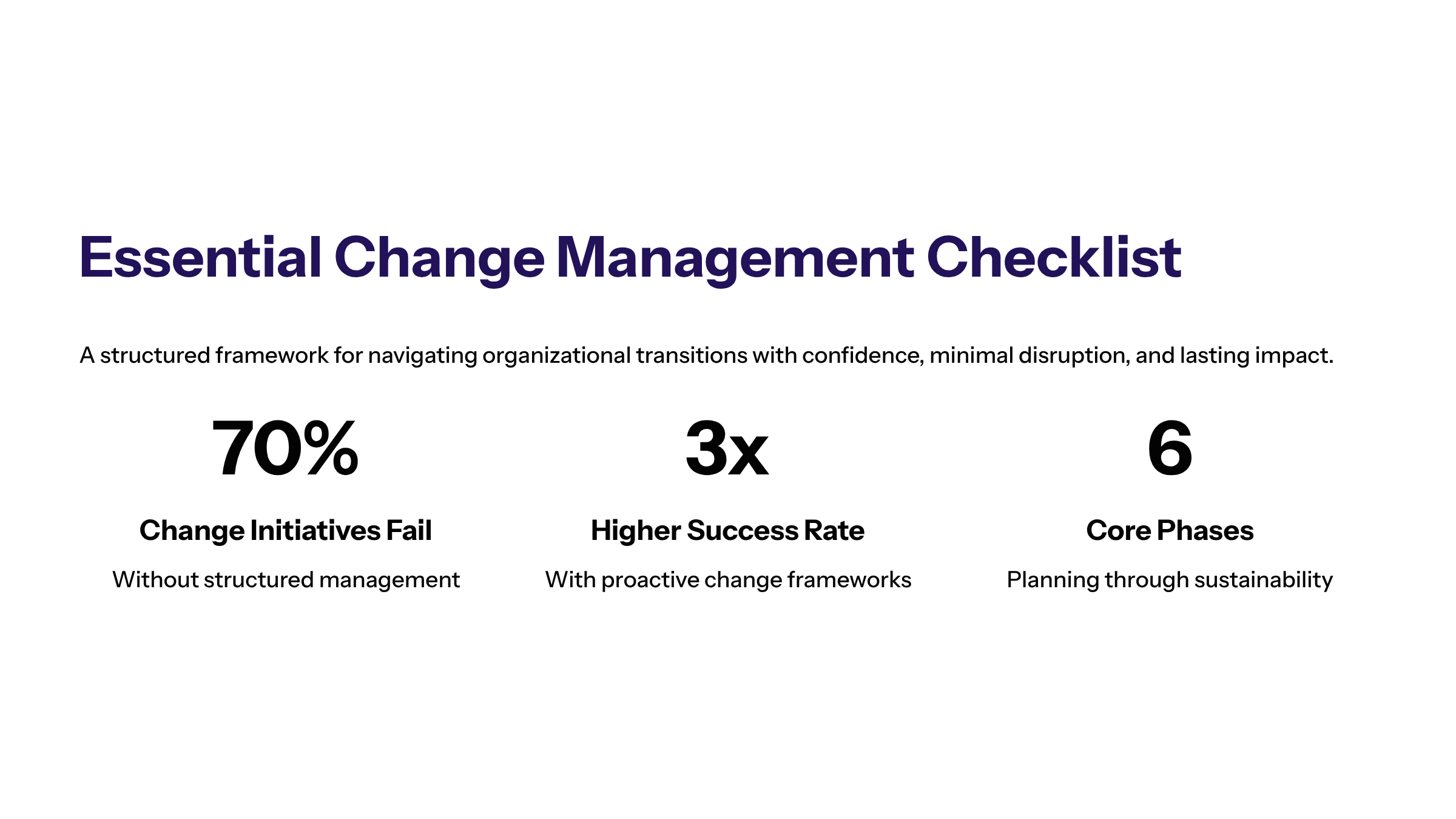
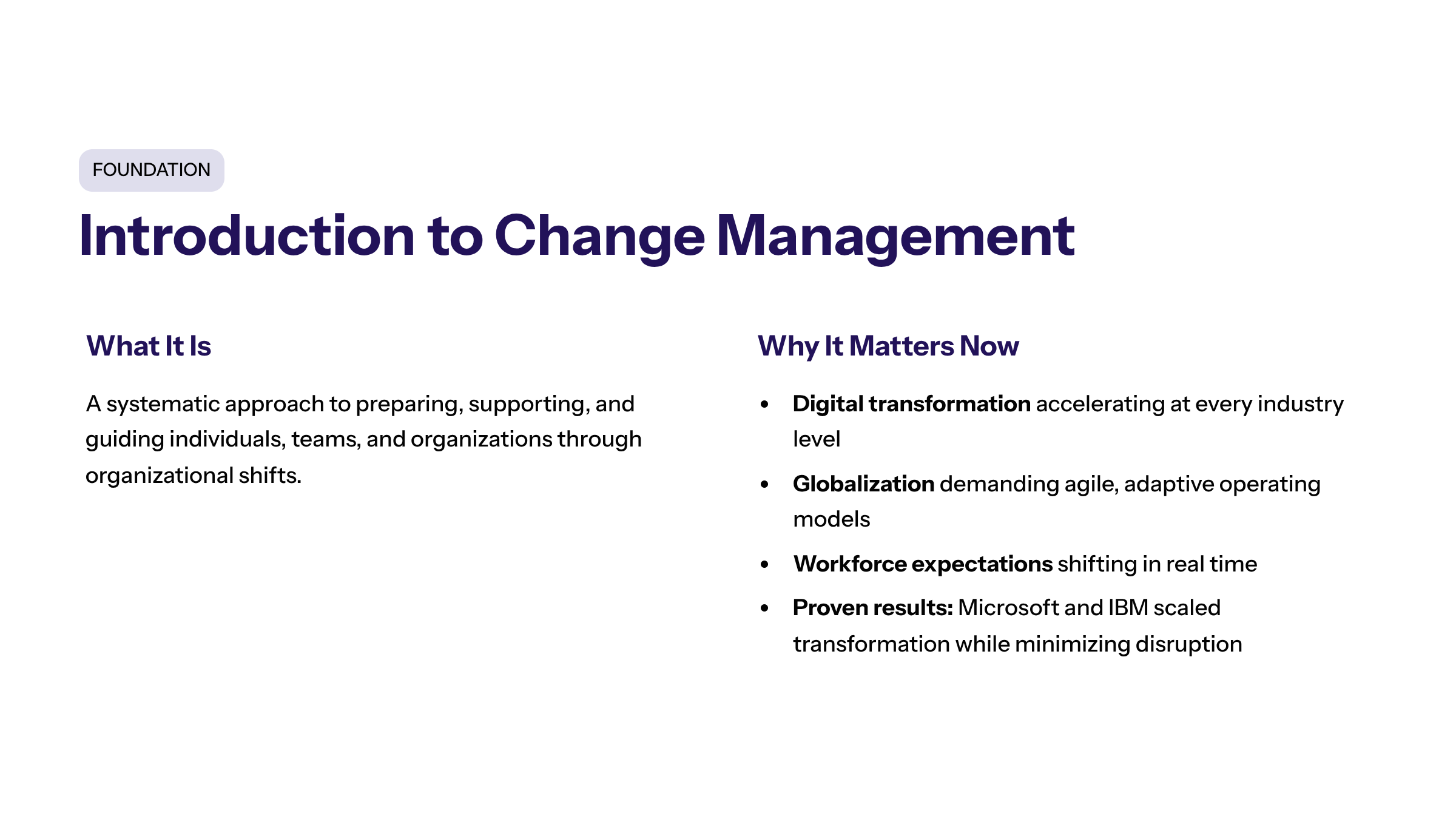
Change management is the systematic approach to preparing, supporting, and helping individuals, teams, and organizations in making organizational shifts. In an era marked by digital transformation, globalization, and evolving customer expectations, effective change management strategies are critical for maintaining competitive advantage and operational excellence.
Organizations such as Microsoft and IBM have demonstrated how structured change processes can accelerate adoption of new technology while minimizing disruptions.
The change management journey begins with recognizing the need for change, followed by a structured approach to planning, implementation, and evaluation. This article emphasizes the importance of a robust change management checklist as a strategic tool that guides organizations through this journey, enhancing overall performance and ensuring alignment with business objectives.
Resistance to change is natural and should be anticipated and addressed. Listening to concerns and acknowledging them as valid can help address the underlying fears or misconceptions about change.
Building a Comprehensive Checklist
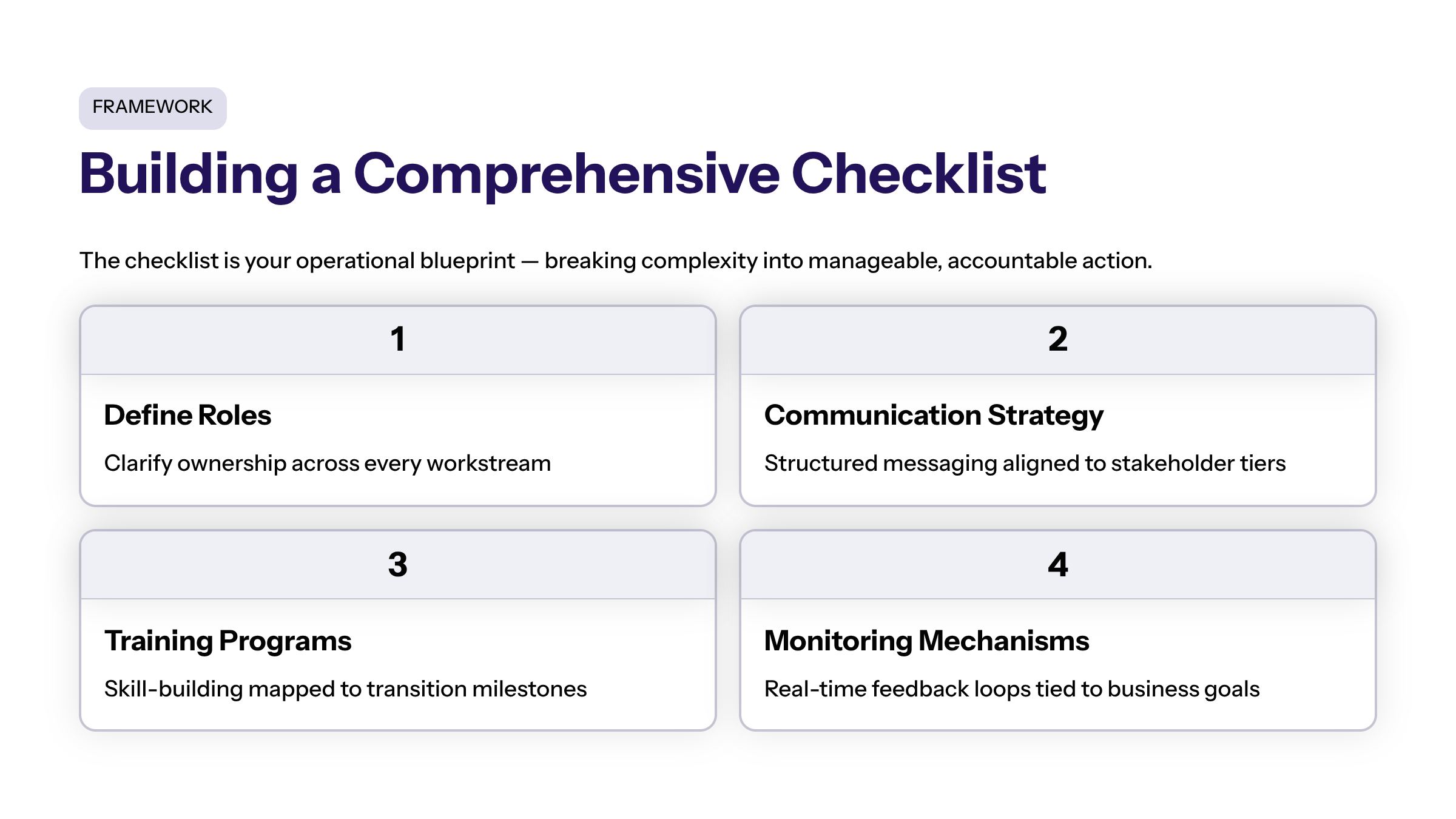
Creating a comprehensive change management checklist is a critical step in ensuring a smooth and successful transition. This checklist acts as a detailed guide that breaks down the complex change process into manageable and actionable tasks. It helps organizations clearly define roles, communication strategies, training programs, and monitoring mechanisms, all aligned with business goals. By establishing this structured framework, companies can proactively address challenges, engage key stakeholders, and maintain momentum throughout the change management journey.
Introduction to Building a Checklist
A comprehensive checklist serves as the backbone of any successful change management process. It provides clarity, structure, and accountability by breaking down complex change initiatives into manageable tasks. This framework supports organizational shifts by outlining communication plans, training programs, risk mitigation strategies, and feedback mechanisms.
Breaking the change process into manageable steps can help alleviate feelings of overwhelm and provide opportunities for quick wins and celebration, keeping teams motivated and engaged.
Key Elements of the Checklist
Element |
Description |
Importance |
|---|---|---|
Communication Plan |
Defines how and when information about the change will be shared with stakeholders |
Builds awareness, reduces resistance, and fosters engagement |
Training Programs |
Develops a structured training plan that includes different learning methods and resource allocation to upskill or reskill team members for adopting the change |
Ensures team members have the ability to implement change effectively |
Change Team |
A dedicated group including the project manager as the leader of the change initiative, along with change champions and key stakeholders |
Facilitates collaboration and drives momentum |
Monitoring and Feedback |
Regularly gathers feedback and tracks progress, including monitoring individual team member engagement and resource utilization, to identify issues and necessary adjustments |
Enables continuous improvement and timely response to challenges |
Sustainability Plan |
Strategies to embed change into organizational culture and maintain benefits over time |
Prevents regression and supports future change initiatives |
“Organizations that invest in structured change management are 6 times more likely to meet or exceed project objectives.” – Prosci Change Management Research
Change Management Fundamentals
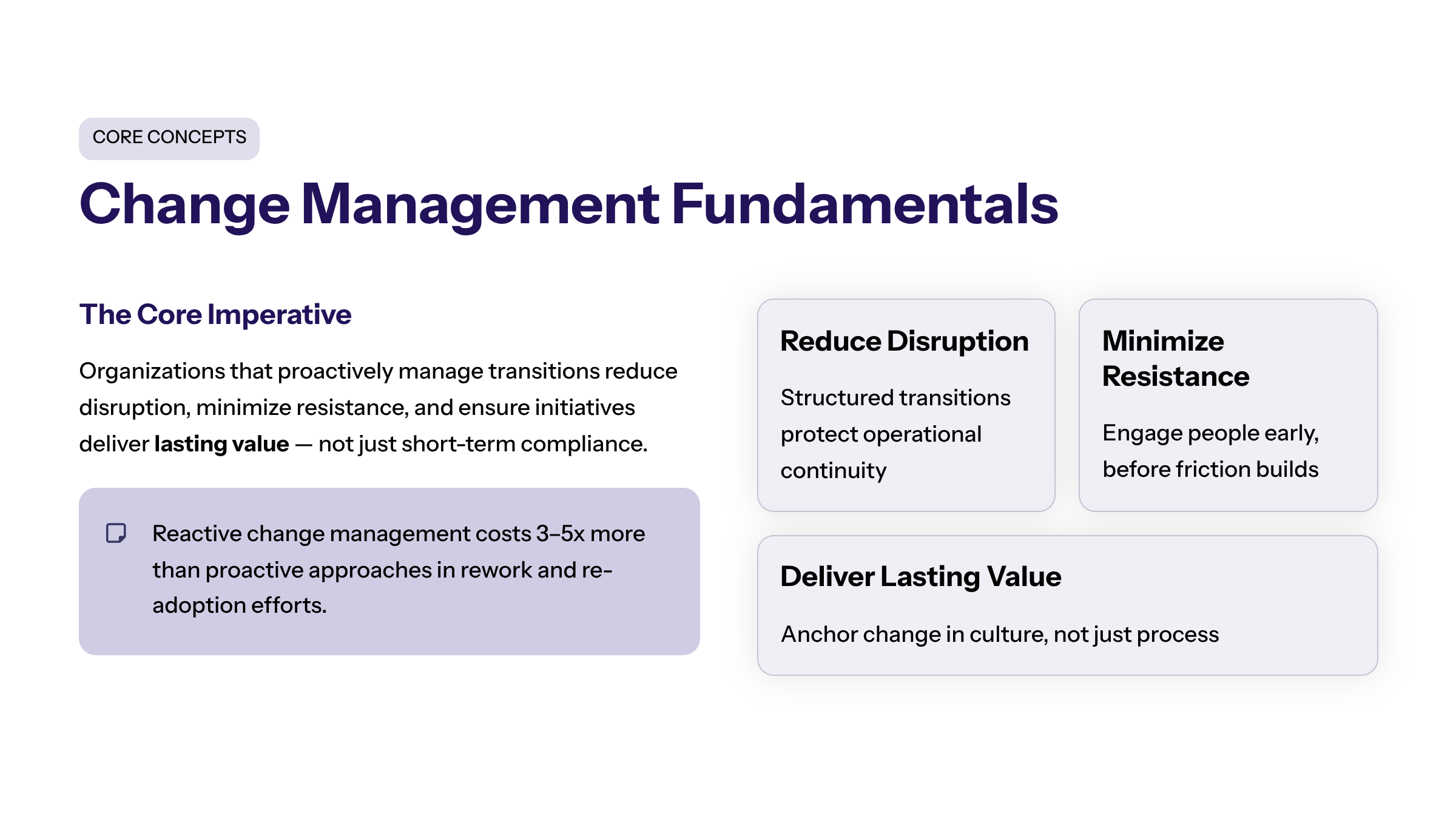
Effective change management is crucial for organizations aiming to thrive in today's fast-paced and constantly evolving business environment. By proactively managing transitions, companies can reduce disruptions, minimize employee resistance, and ensure that new initiatives deliver lasting value. This section introduces the foundational concepts and structured approach that underpin a successful change management process, setting the stage for a detailed exploration of the essential components and best practices outlined in this checklist.
Structured Approach
A structured approach to change management provides a clear roadmap that aligns change initiatives with organizational goals. This approach encompasses detailed planning, execution, and evaluation phases, ensuring that every aspect of the change process is managed effectively.
The structured approach is supported by established methodologies such as the Prosci ADKAR model and Kotter’s 8-Step Process, which emphasize awareness, desire, knowledge, ability, and reinforcement. These models guide organizations in addressing employee resistance, fostering engagement, and sustaining change.
Change Team
The change team acts as the nucleus of the change management process, comprising project managers, change champions, executives, and representatives from impacted departments. This team is responsible for developing strategies, implementing change initiatives, communicating with stakeholders, providing support, and monitoring progress.
Empowering change champions—employees who advocate for change within their teams—can significantly reduce resistance. For example, at Salesforce, change champions played a crucial role in the successful rollout of new CRM software by providing peer support and real-time feedback.
Effective change management involves collaboration across various stakeholders, especially in specialized environments such as call centers. Change management in call centers is the structured process of planning, implementing, and supporting changes that impact the organization. This process aims to enhance performance and customer satisfaction without disrupting day-to-day operations.
Planning and Preparation
Introduction to Planning and Preparation
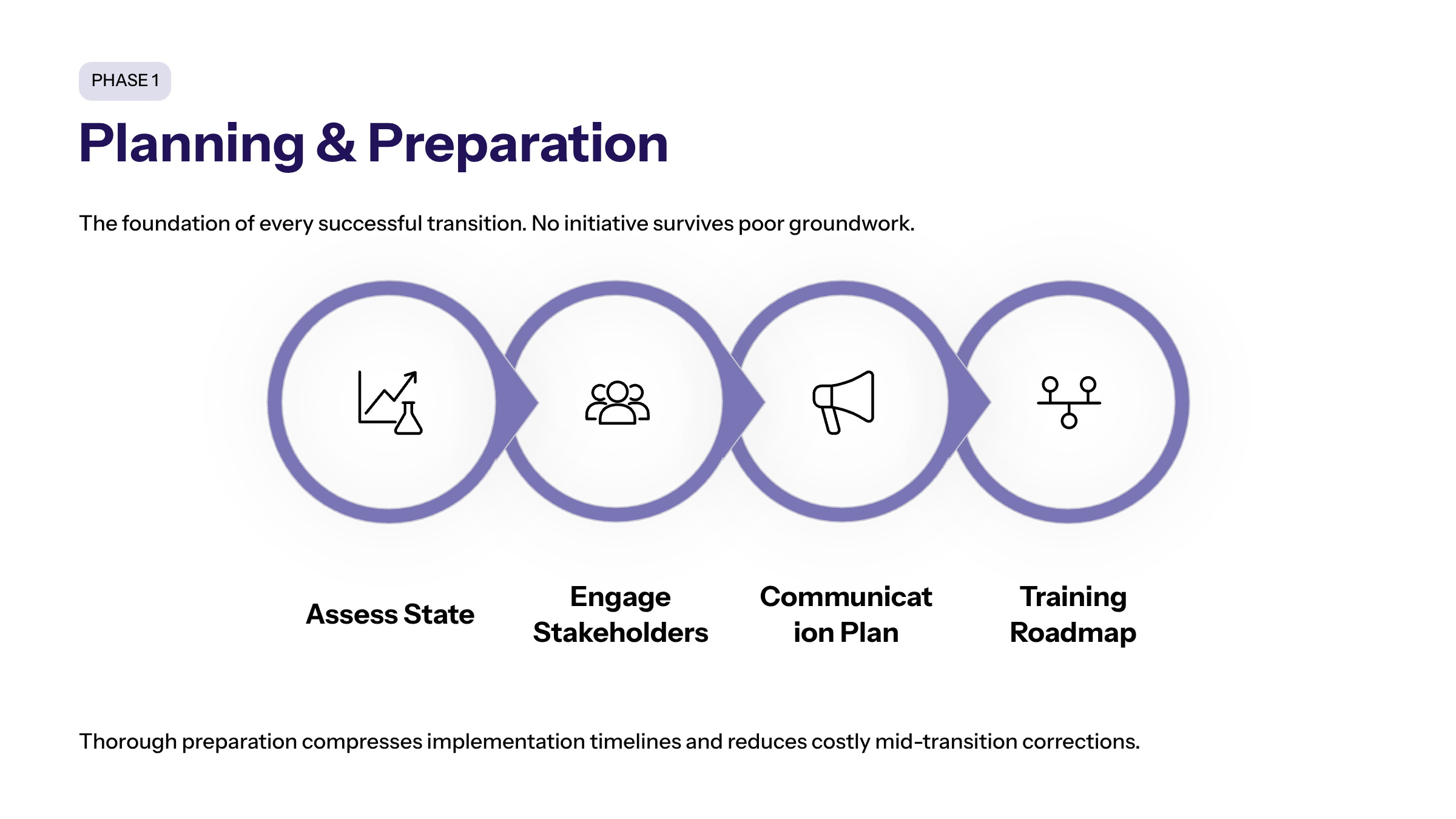
Planning and preparation are the foundational steps in any successful change management effort. This phase sets the stage by thoroughly understanding the current organizational environment, engaging key stakeholders, and crafting clear communication and training plans. Proper preparation ensures that change initiatives are aligned with business objectives and that employees are equipped and motivated to embrace new ways of working. By investing time and resources upfront, organizations can reduce resistance, mitigate risks, and pave the way for a smoother transition and lasting success.
Assessing the need for change is the first step in the change management process for call centers and other organizations alike. Setting clear goals and objectives helps in tracking progress during the change management process, ensuring alignment with business goals.
Current State Analysis and Stakeholder Identification
Understanding the organization’s current state is essential to determine the depth of change management required. This includes analyzing existing processes, technology infrastructure, and employee readiness.
Identifying key stakeholders—those who influence or are impacted by the change—is critical. Engaging these stakeholders early fosters buy-in and facilitates smoother implementation.
Communication and Training Plans
A communication plan outlines the messaging strategy, channels, frequency, and responsible parties. Transparency and clarity in communication help address concerns and build trust.
Training plans focus on developing new skills and knowledge essential for adopting the change. Combining live training sessions with self-paced modules accommodates diverse learning styles and enhances retention.
Training ensures that employees are comfortable with new tools and processes during change management in call centers and other settings. A change management checklist helps identify potential roadblocks early, ensuring that all tech rollouts are smooth and agents are trained effectively.
“Clear, consistent communication is the foundation of successful change management.” – Harvard Business Review.
Management and Leadership
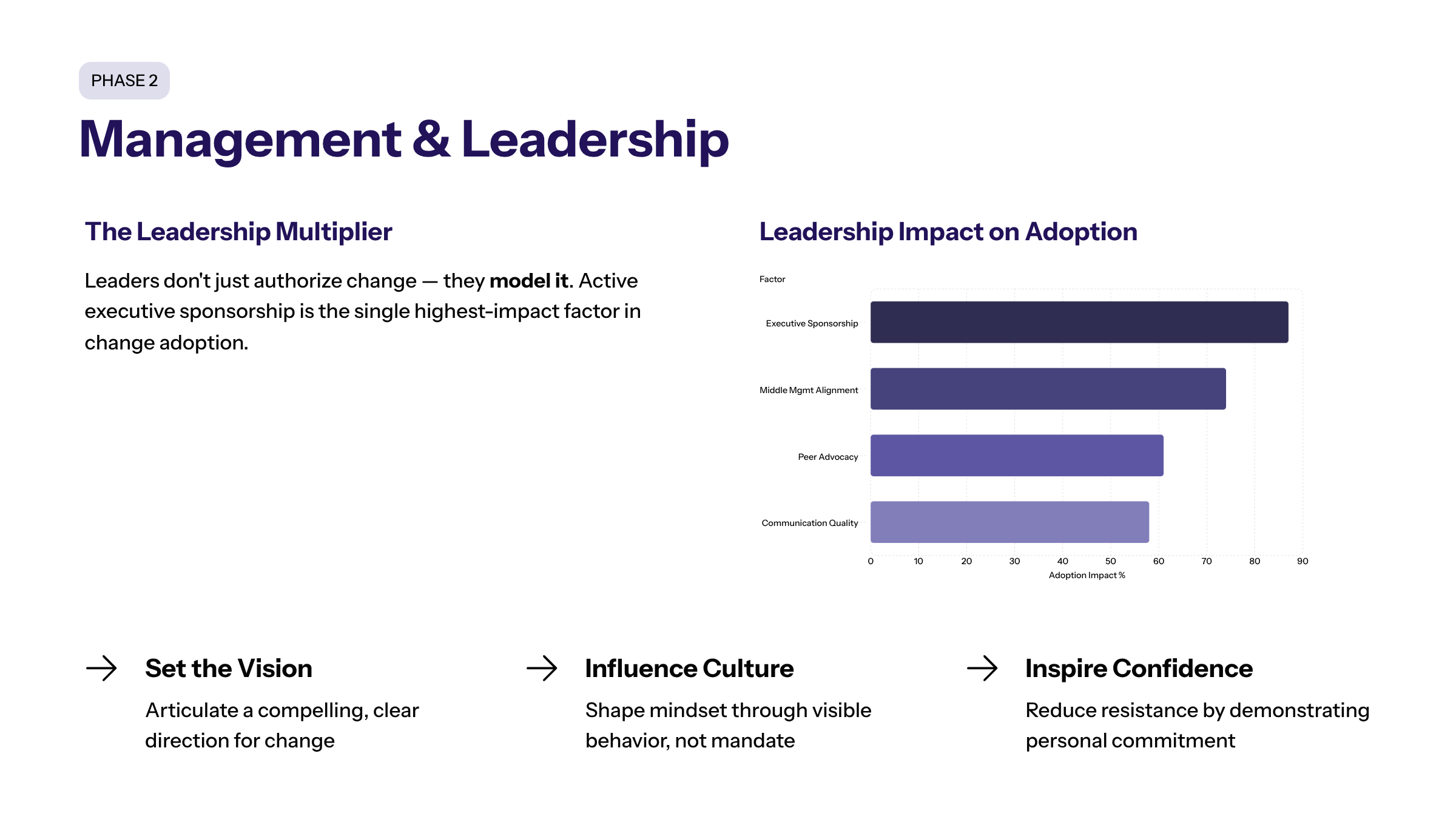
Effective management and leadership are pivotal to the success of any change management initiative. Leaders not only set the vision and direction for change but also influence the organizational culture and employee mindset. Their commitment and active involvement can inspire confidence, reduce resistance, and foster a supportive environment where change can thrive.
This section explores the critical roles that leadership and management play in guiding teams through transitions and ensuring that change initiatives align with business objectives.
Leadership commitment is a decisive factor in successful change management. Leaders provide vision, align change initiatives with business goals, and model behaviors that encourage adoption.
Active leadership involvement includes sponsoring change initiatives, participating in team meetings, and providing ongoing support and coaching to employees.
Management Skills and Coaching
Managers play a dual role as both leaders and coaches. They translate strategic objectives into operational actions and address employee concerns. Training managers in change management skills enhances their ability to guide teams through transitions effectively.
Listening to concerns and acknowledging them as valid can help address the underlying fears or misconceptions about change, which is critical for effective leadership during transitions.
Training and Development
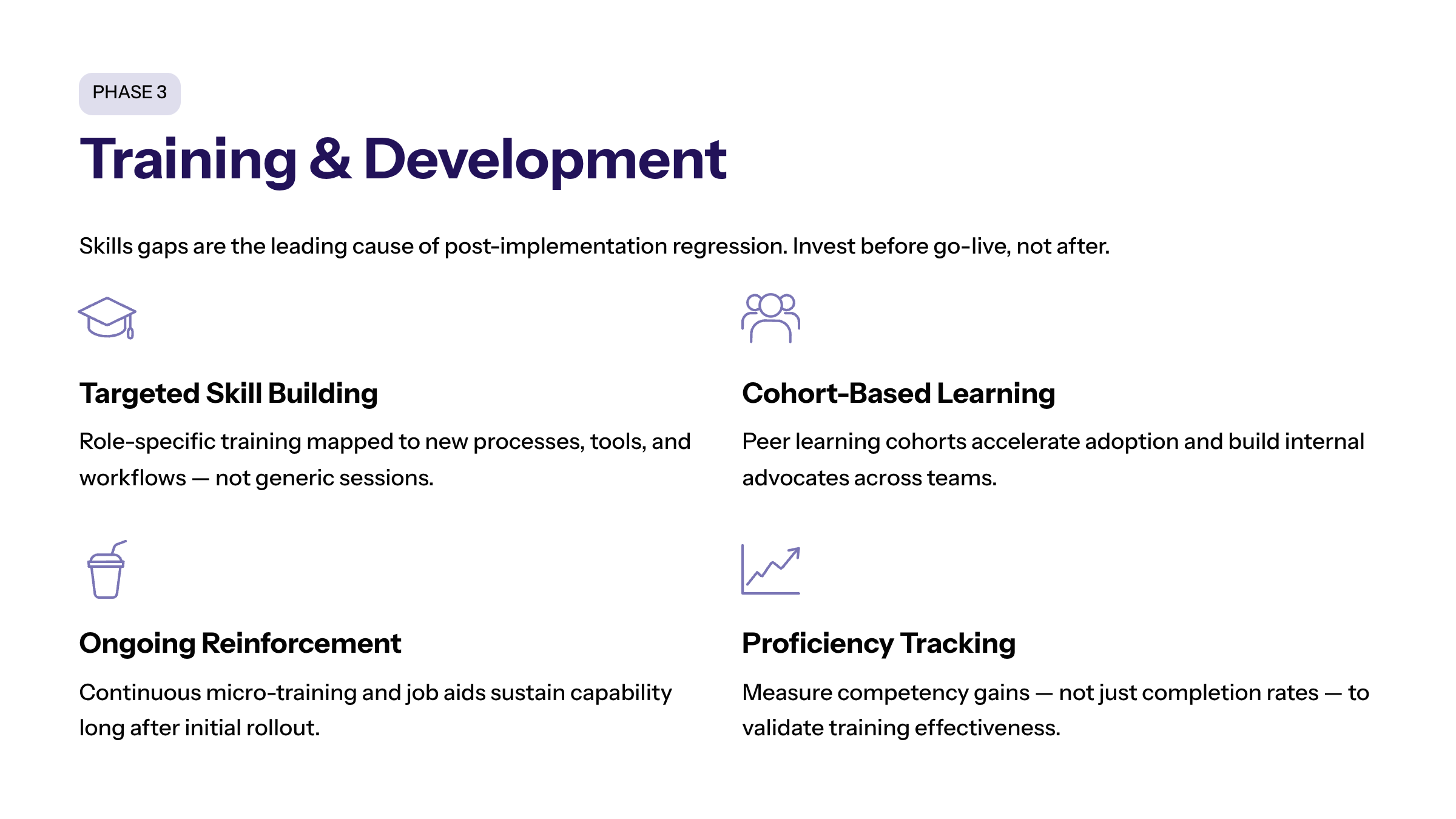
Effective training and development are vital components of successful change management. Equipping employees with the right skills and knowledge not only facilitates smoother adoption of new processes and technologies but also builds confidence and reduces resistance. This section explores how comprehensive training programs and ongoing support contribute to empowering team members throughout the change journey.
Comprehensive Training Programs
Training programs should be designed to equip employees with the necessary ability to implement change. This involves not only technical skills related to new software or processes but also soft skills like adaptability and problem-solving.
Ongoing Support and Feedback
Training does not end with initial sessions. Providing ongoing support through coaching, office hours, and feedback loops ensures continuous development and addresses emerging challenges.
For instance, Google’s approach to organizational change includes continuous learning platforms and real-time feedback mechanisms, fostering a culture of agility.
Integrating Digital Adoption Platforms (DAPs) for in-app guidance and leveraging AI for real-time sentiment analysis during change management can significantly enhance training effectiveness and employee engagement.
Implementation and Monitoring
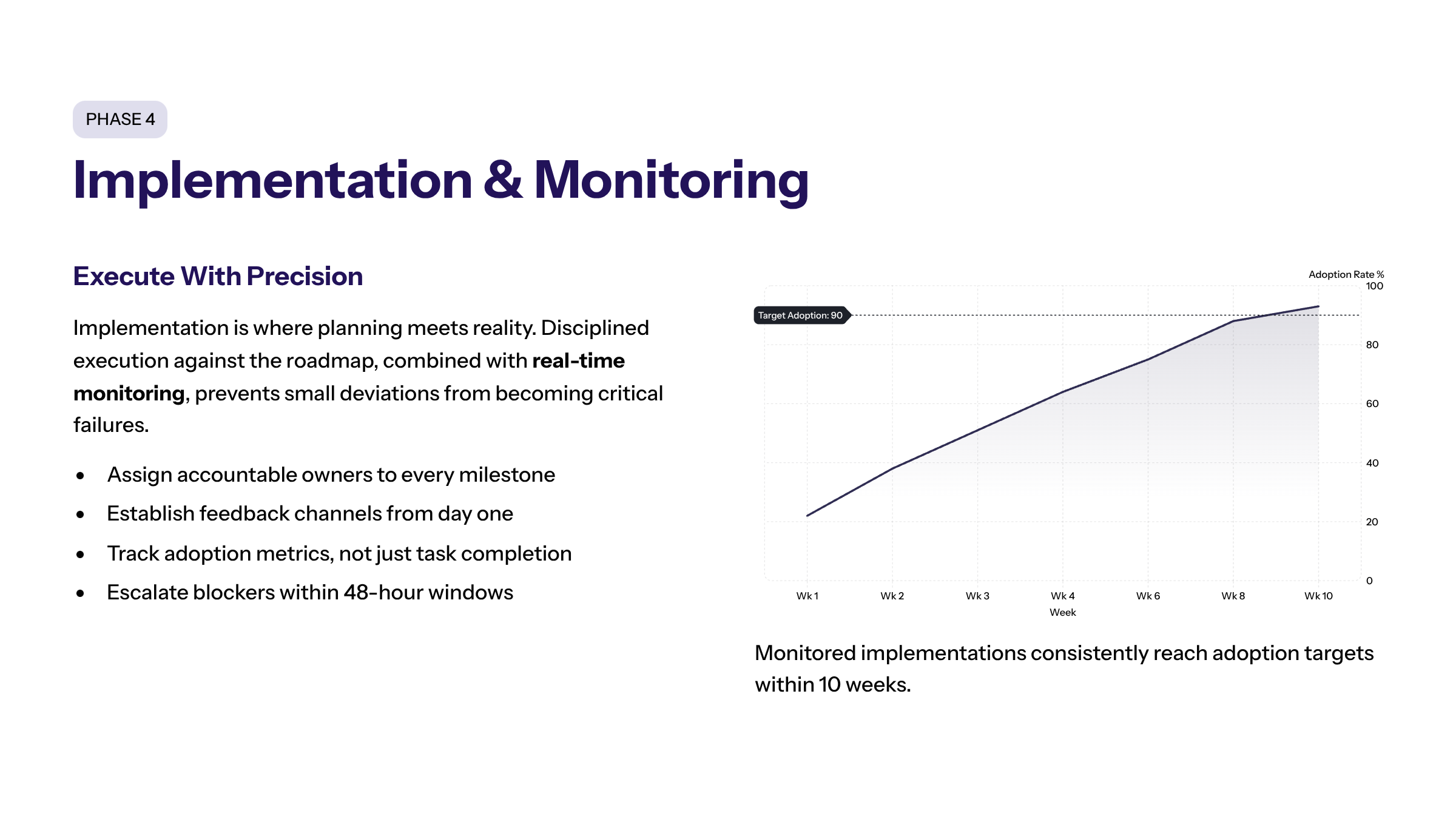
After thorough planning and preparation, the next crucial phase is implementation and monitoring. This stage involves executing the change initiatives according to the detailed plan while closely tracking progress to ensure alignment with objectives.
Effective monitoring allows organizations to identify challenges early, gather continuous feedback, and make necessary adjustments to keep the change process on track toward successful adoption.
Implementation Planning
A detailed implementation plan breaks down the change initiative into actionable steps with assigned responsibilities and timelines. This plan helps maintain operational stability and minimizes disruptions during transition.
Monitoring Progress
Regular monitoring through team meetings, progress reports, and performance metrics enables early identification of risks and issues. Organizations should gather feedback continuously to adjust strategies and provide support where needed.
Monitoring real-time adoption metrics like system usage and support ticket patterns can help identify friction points during the deployment of change, allowing for timely intervention.
Monitoring Activity |
Purpose |
Tools/Technologies |
|---|---|---|
Team Meetings |
Discuss progress, challenges, and next steps |
Microsoft Teams, Zoom, Slack |
Progress Tracking |
Measure KPI achievement and milestones |
Project management software like Asana |
Feedback Collection |
Capture employee sentiment and concerns |
Surveys (Qualtrics, SurveyMonkey), Pulse surveys |
“Continuous feedback loops are essential to sustain momentum and address concerns promptly.” – McKinsey & Company
Gathering continuous feedback is essential for evaluating the success of change management initiatives in call centers and other organizations.
Evaluation and Review
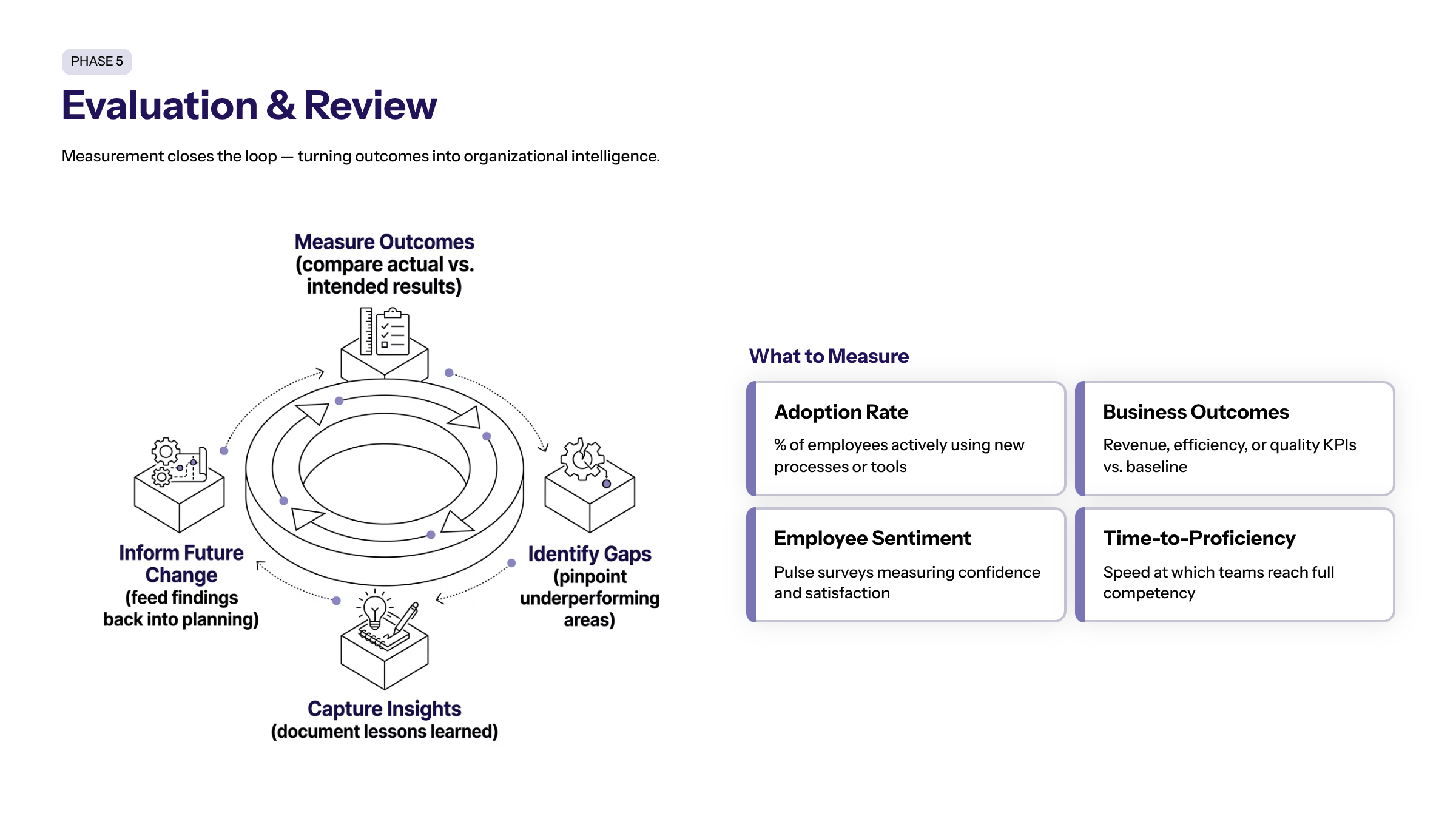
Evaluation and review are critical phases in the change management process that focus on measuring the effectiveness of the implemented changes. This stage allows organizations to assess whether the change initiatives have achieved their intended outcomes, identify areas for improvement, and capture valuable insights to inform future efforts. By systematically evaluating progress and outcomes, companies can ensure continuous learning and strengthen their change management capabilities.
Comprehensive Evaluation
Post-implementation evaluation assesses whether the change initiative met its objectives, delivered ROI, and identified lessons learned. This phase involves analyzing quantitative metrics and qualitative feedback.
Lessons Learned and Future Initiatives
Documenting successes and challenges informs future change initiatives, allowing organizations to refine mitigation strategies and improve readiness.
Evaluating the success of the change management checklist is essential for future initiatives in call centers and other sectors to ensure continuous improvement and sustained benefits.
Sustainability and Continuous Improvement
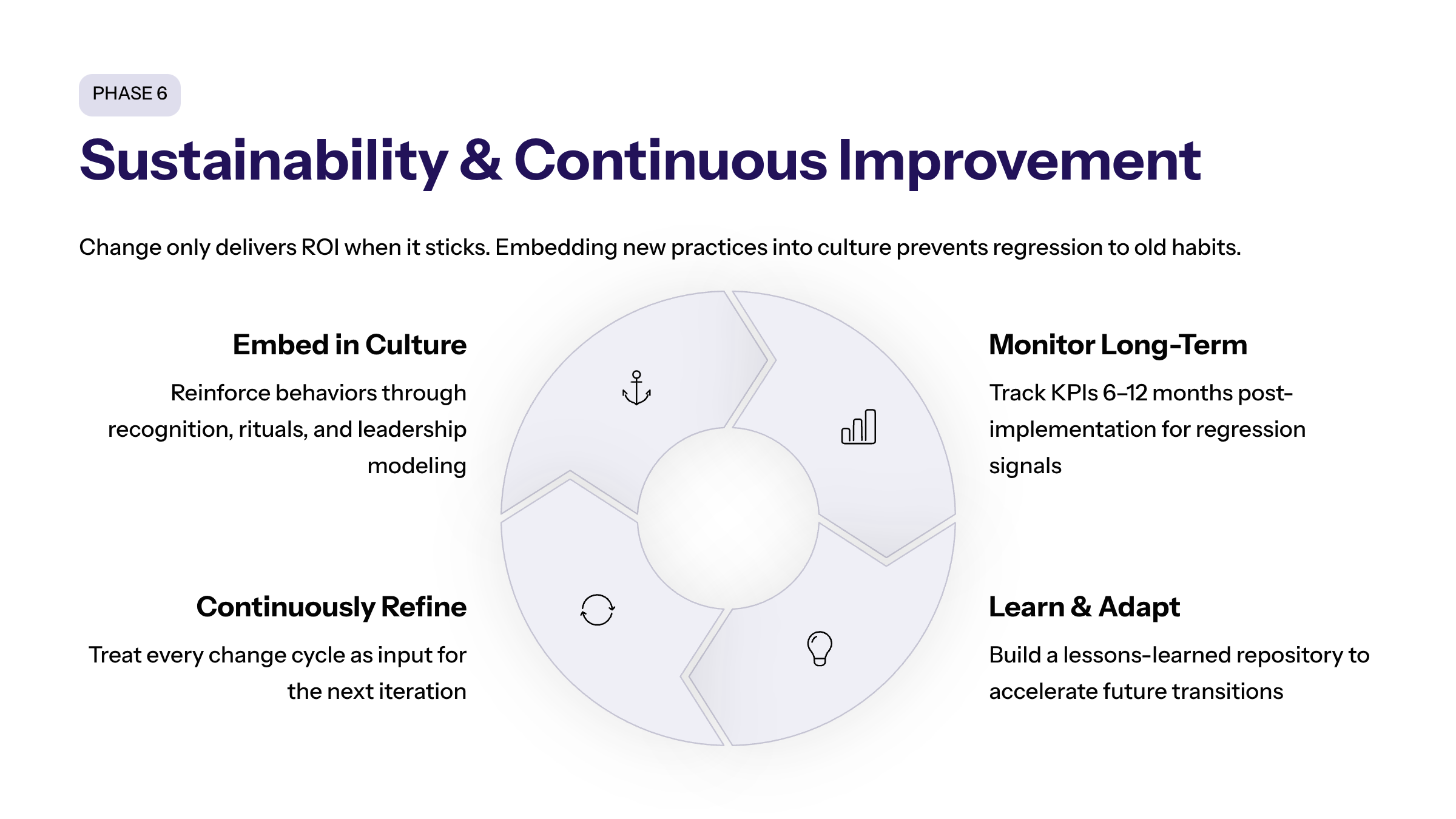
Sustainability and continuous improvement are vital to ensuring that the benefits of change are not only achieved but maintained over time. Without deliberate efforts to embed new practices into the organizational culture and consistently refine processes, organizations risk slipping back into old habits, undermining the success of change initiatives.
This section highlights the importance of establishing lasting change and fostering an environment of ongoing learning and adaptation to support long-term organizational growth.
Embedding Change
Sustainability involves integrating new behaviors, processes, and systems into the organizational culture to prevent regression. This may include updating policies, recognition programs, and ongoing training.
Continuous Improvement
Organizations should establish mechanisms for continuous review and improvement, leveraging data analytics and employee feedback to adapt to evolving conditions.
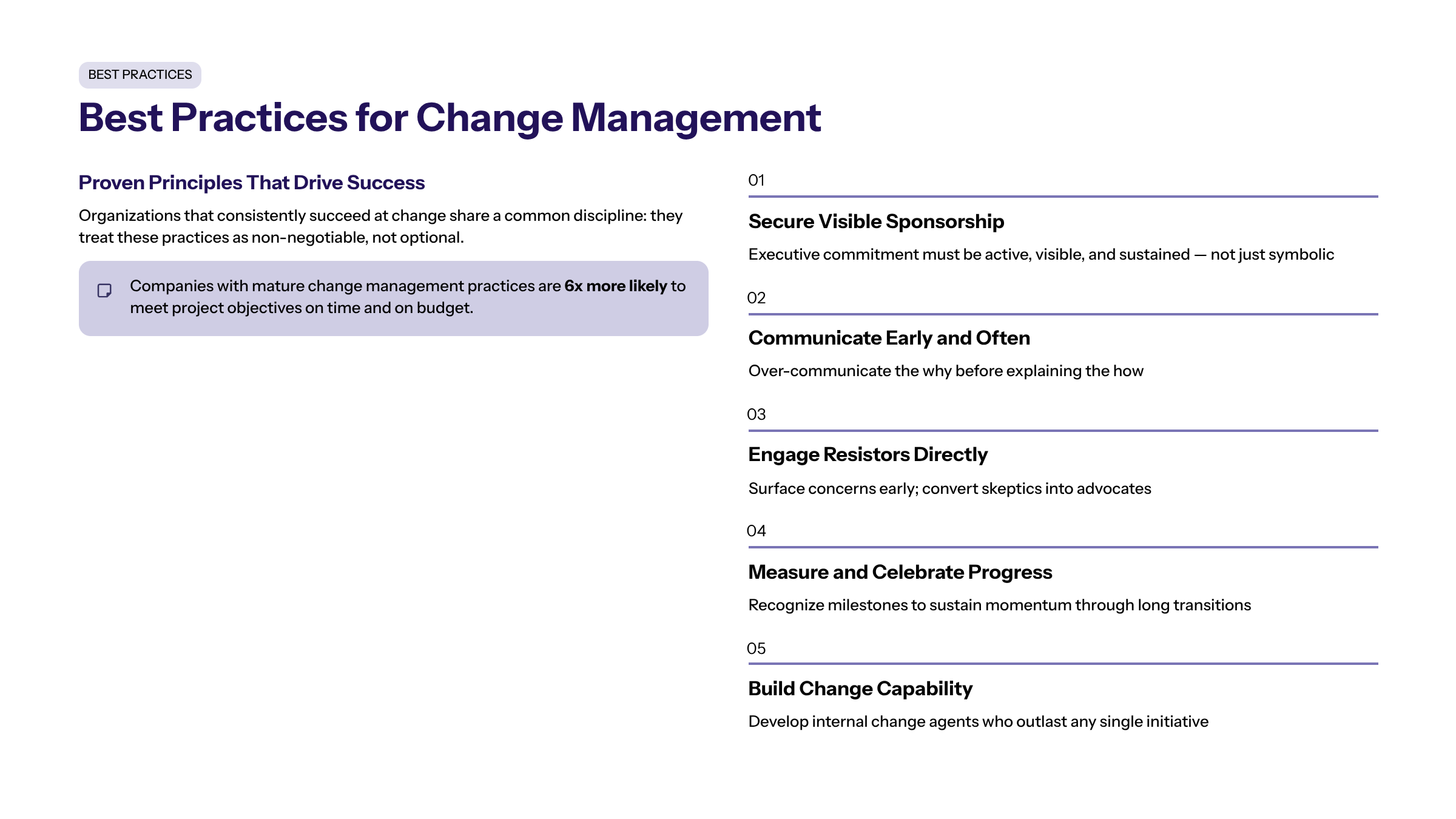
Best Practices
Implementing best practices in change management is crucial for maximizing the success of your initiatives. These practices provide proven strategies to navigate challenges, engage stakeholders effectively, and sustain momentum throughout the change process. By adopting a proactive and structured approach, organizations can reduce resistance, enhance communication, and foster a culture that embraces continuous improvement and adaptability.
Strategic Framework
Adopting best practices such as using a comprehensive checklist, fostering transparent communication, and leveraging artificial intelligence tools enhances the effectiveness of change management.
Technology Enablement
Emerging technologies like AI-driven analytics and digital adoption platforms can provide real-time insights, personalized learning, and automation to support change initiatives.
“AI-powered change management tools are transforming how organizations monitor progress and engage employees.” – Gartner
By following this essential change management checklist, organizations can navigate complex transformations with strategic clarity, operational stability, and sustained success. This analytical framework equips executives and change leaders with the tools and insights necessary to lead their organizations through the change management journey and position them for future success.