Mastering the Decision Rights Framework for Effective Leadership
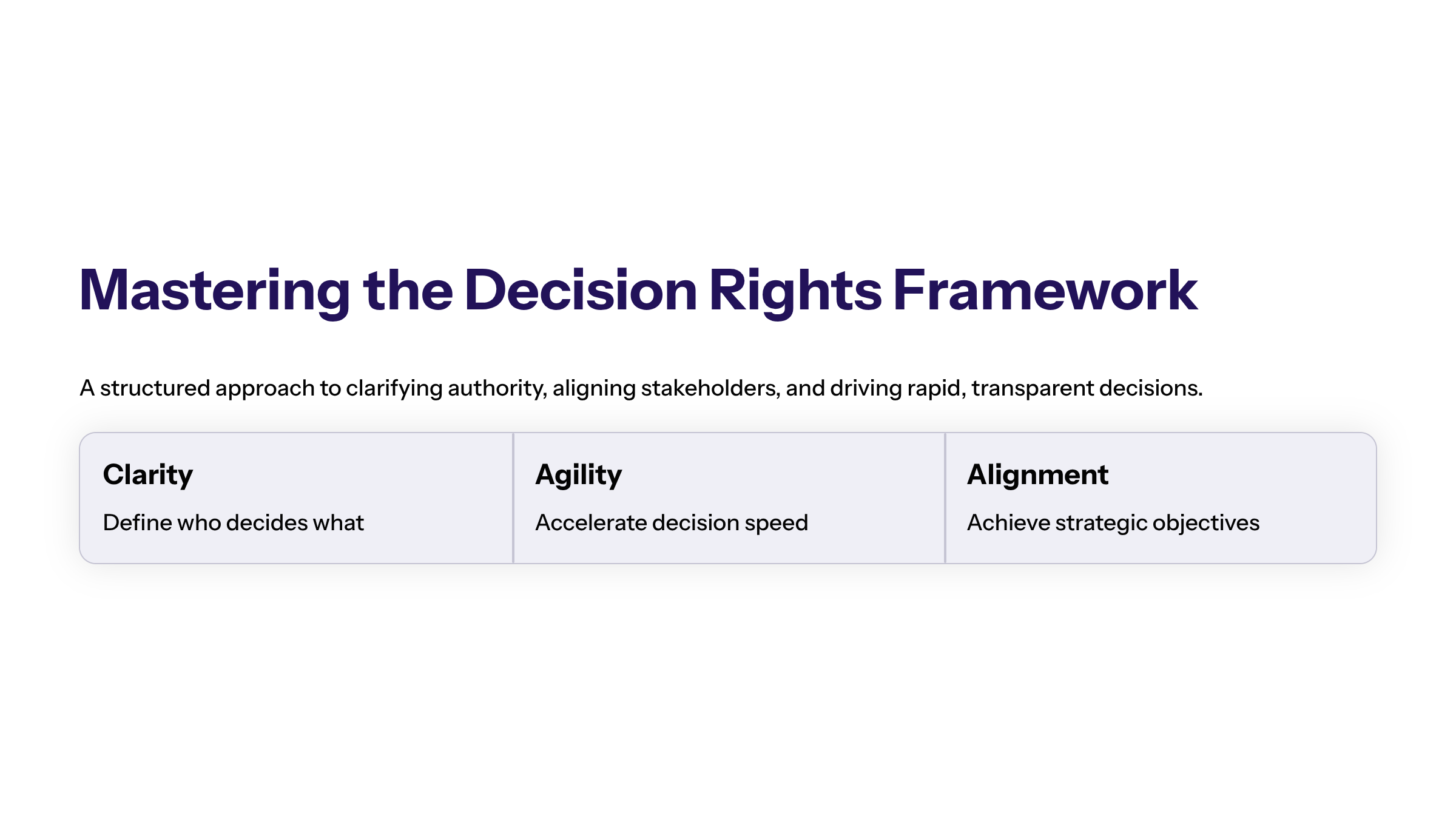
Effective decision making is a cornerstone of successful leadership in today’s complex business environment. This article explores the decision rights framework—a structured approach that clarifies decision making authority and roles within organizations.
By understanding and applying this framework, leaders can drive rapid and transparent decision making, align stakeholders, and achieve strategic objectives with greater agility. We analyze how decision rights frameworks fit into broader organizational dynamics, enhance accountability, and support digital transformation initiatives in large organizations.
Key Takeaways:
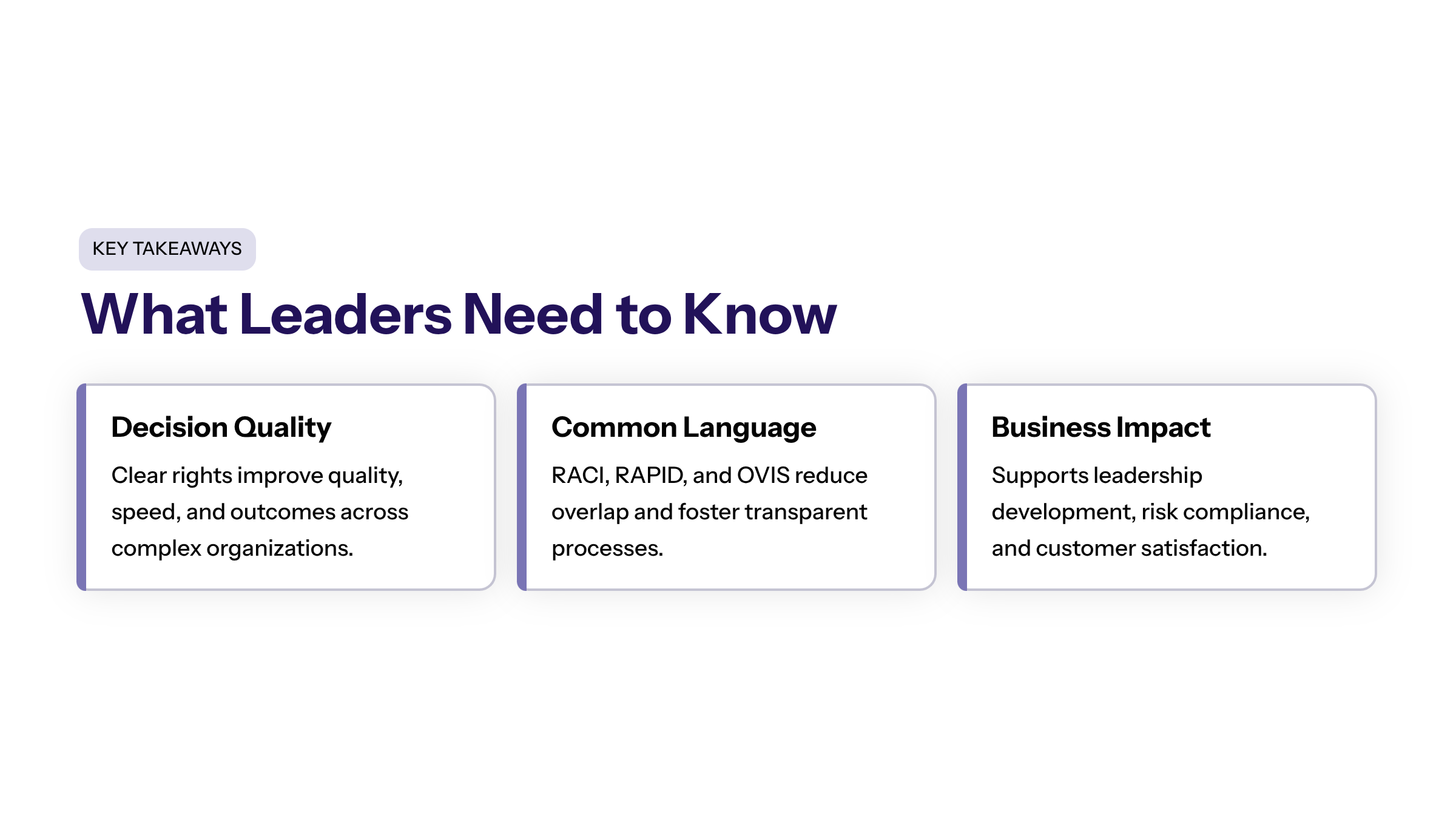
Clear decision rights are essential for improving decision quality, accelerating the decision process, and enabling better decisions across complex organizations.
Frameworks like RACI, RAPID, and OVIS provide a common language to define responsibilities, reduce overlapping roles, and foster transparent decision making processes.
Implementing a decision rights framework supports leadership development, risk assessments, and regulatory compliance, ultimately contributing to business success and customer satisfaction.

Introduction to Effective Decision Making
Decision making is a critical process in any organization, involving multiple stakeholders with varying interests and expertise. Effective leadership requires not only making timely decisions but also ensuring those decisions are well informed and aligned with strategic initiatives. The decision rights framework offers a clear structure to assign decision making authority, clarify responsibilities, and reduce ambiguity in the decision process.
Many organizations face challenges such as overlapping responsibilities, unclear decision making authority, and unhealthy competition among stakeholders.
These issues can slow down decision making, waste valuable time, and hinder organizational performance. By clarifying decision rights, companies gain a competitive advantage through rapid decision making and transparent decision making processes.
The Role of Technology in Decision Making
Digital transformation has amplified the need for clear decision rights. Technologies like AI-driven analytics and collaboration platforms enable organizations to process vast amounts of data quickly, but only if decision makers have the authority and accountability to act on insights. Integrating decision rights frameworks with digital tools enhances transparency, supports informed decisions, and accelerates implementation.
Digital solutions provide centralized information management for informed decisions, improve documentation and traceability of the decision process, and support better governance and accountability.
Advanced analytics help decision makers understand patterns and trends that inform choices, enabling organizations to learn from both successes and failures.
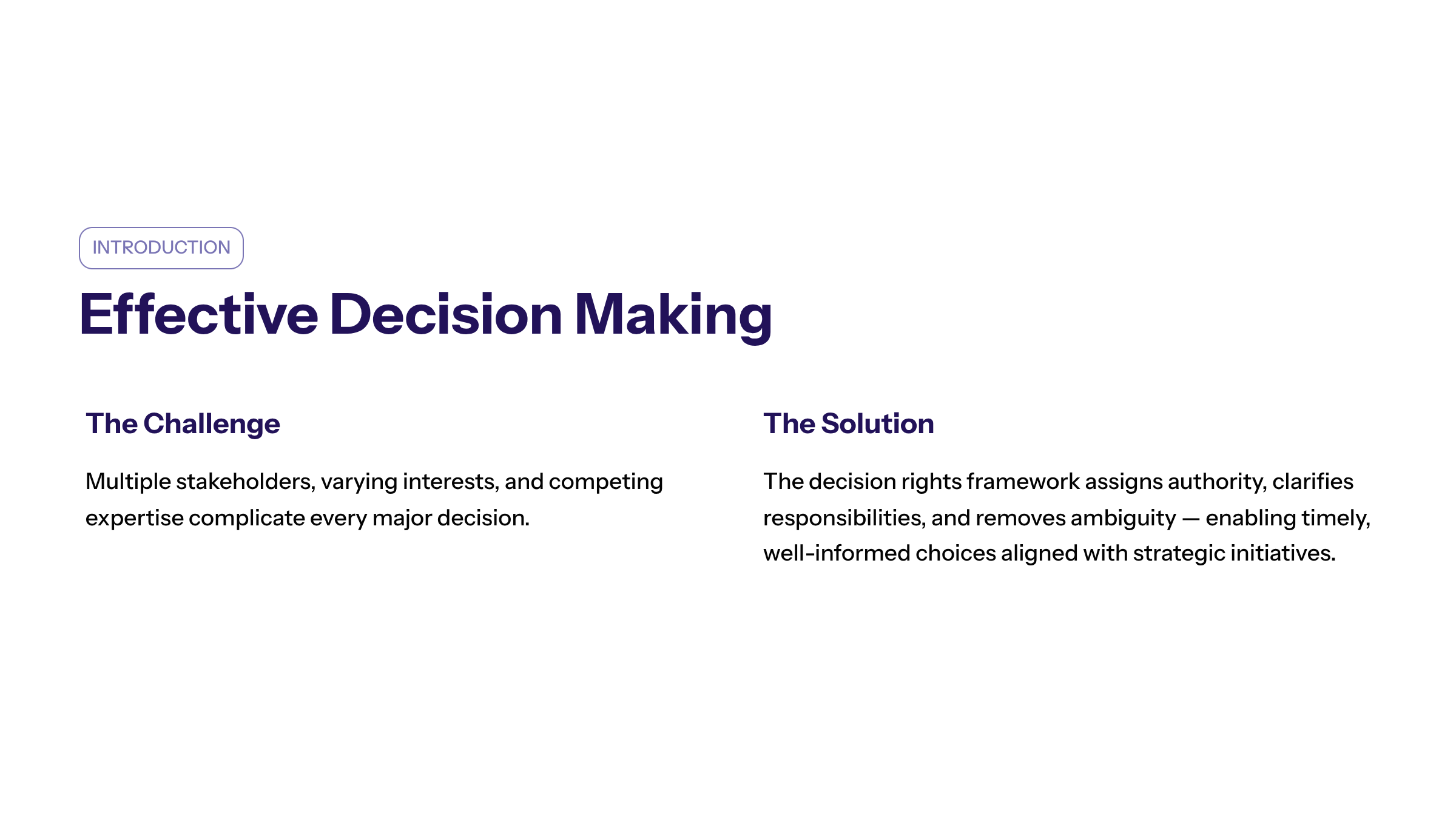
Understanding Decision Making Frameworks to Clarify Decision Rights
Decision making frameworks provide structured methodologies to guide organizations through complex choices. They help define who is responsible, accountable, consulted, and informed, ensuring clarity and reducing decision-making bottlenecks. The process of identifying decision makers in a Decision Rights Framework is iterative and generative, helping organizations continuously refine roles and responsibilities.
The OVIS Framework
The OVIS framework establishes and supports transparent decision rights, resulting in faster decision-making speed. It assigns clear roles for who Owns, Vetoes, Influences, and Supports decisions, helping organizations avoid decision-making paralysis and drift. OVIS can be effectively used alongside other frameworks like RACI to enhance clarity and accountability.
The RACI Framework
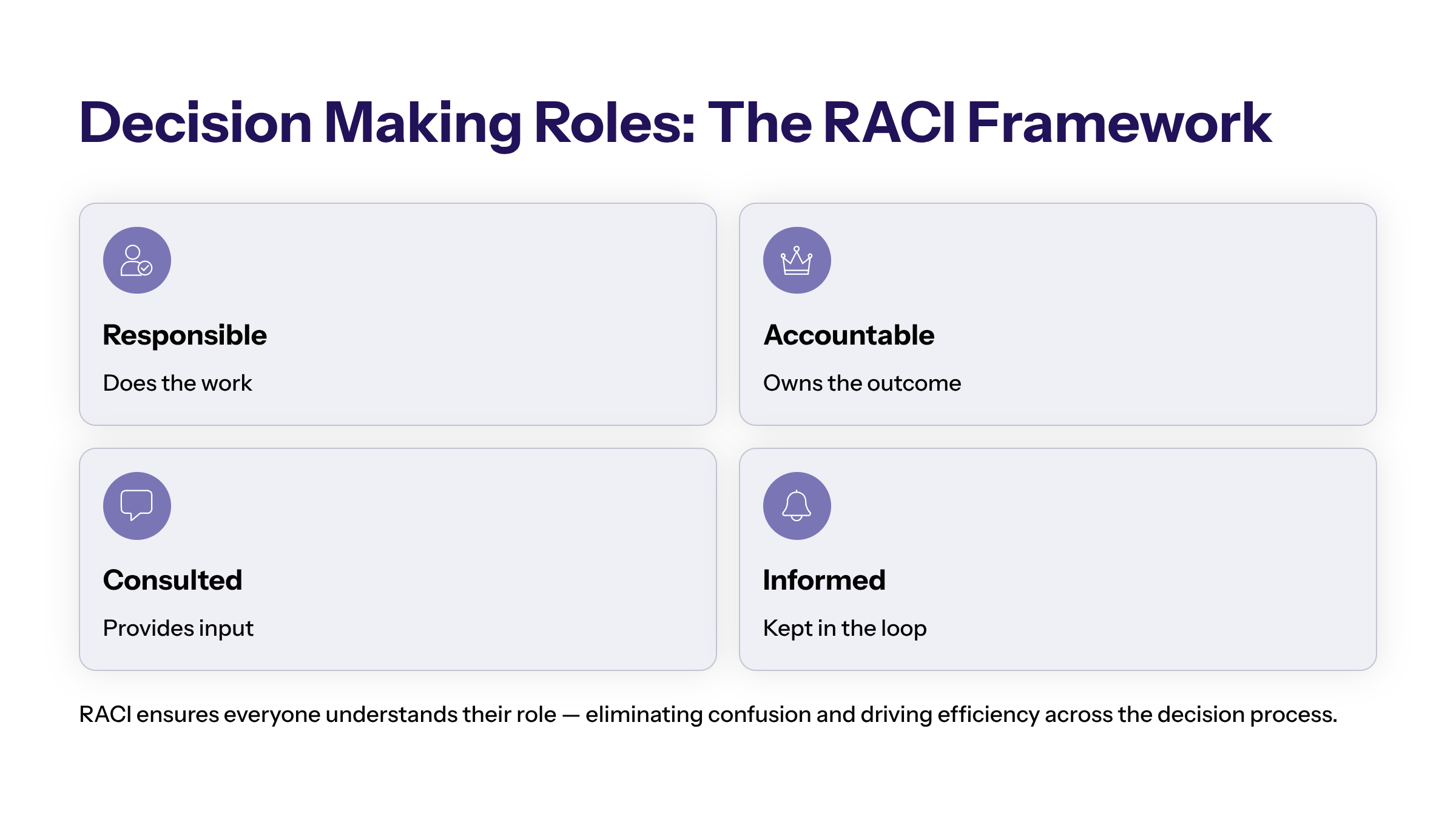
The RACI framework is widely used to delineate decision making roles:
Role | Description |
|---|---|
Responsible | Those who perform the task or make the decision |
Accountable | The person ultimately answerable for the decision |
Consulted | Stakeholders who provide input or expertise |
Informed | Those who need to be kept updated on the decision |
By assigning these roles clearly, organizations avoid overlapping responsibilities and ensure that all relevant parties are engaged appropriately. |
The RAPID Framework
Developed and popularized by Bain & Company, the RAPID framework focuses specifically on decision rights, assigning five distinct roles to accelerate decisions:
Role | Description |
|---|---|
Recommend | Propose solutions or options |
Agree | Provide approval or veto rights within their domain |
Perform | Execute the decision |
Input | Offer information or expertise |
Decide | Make the final decision |
RAPID reduces ambiguity by naming a single Decider and bounding Agree roles, enabling faster, better decisions in complex organizations. |
Implementing the RAPID framework can compress cycle time, reduce rework, and raise decision quality and accountability. It prevents the common failure modes of “everyone decides” (leading to paralysis and politics) and “no one decides” (causing drift and rework). By clarifying who recommends, agrees, inputs, decides, and performs, organizations gain more control over their decision processes.
“Clear decision rights are the foundation of effective leadership. Without them, even the best strategies can falter due to slow or unclear decision making.” — Harvard Business Review
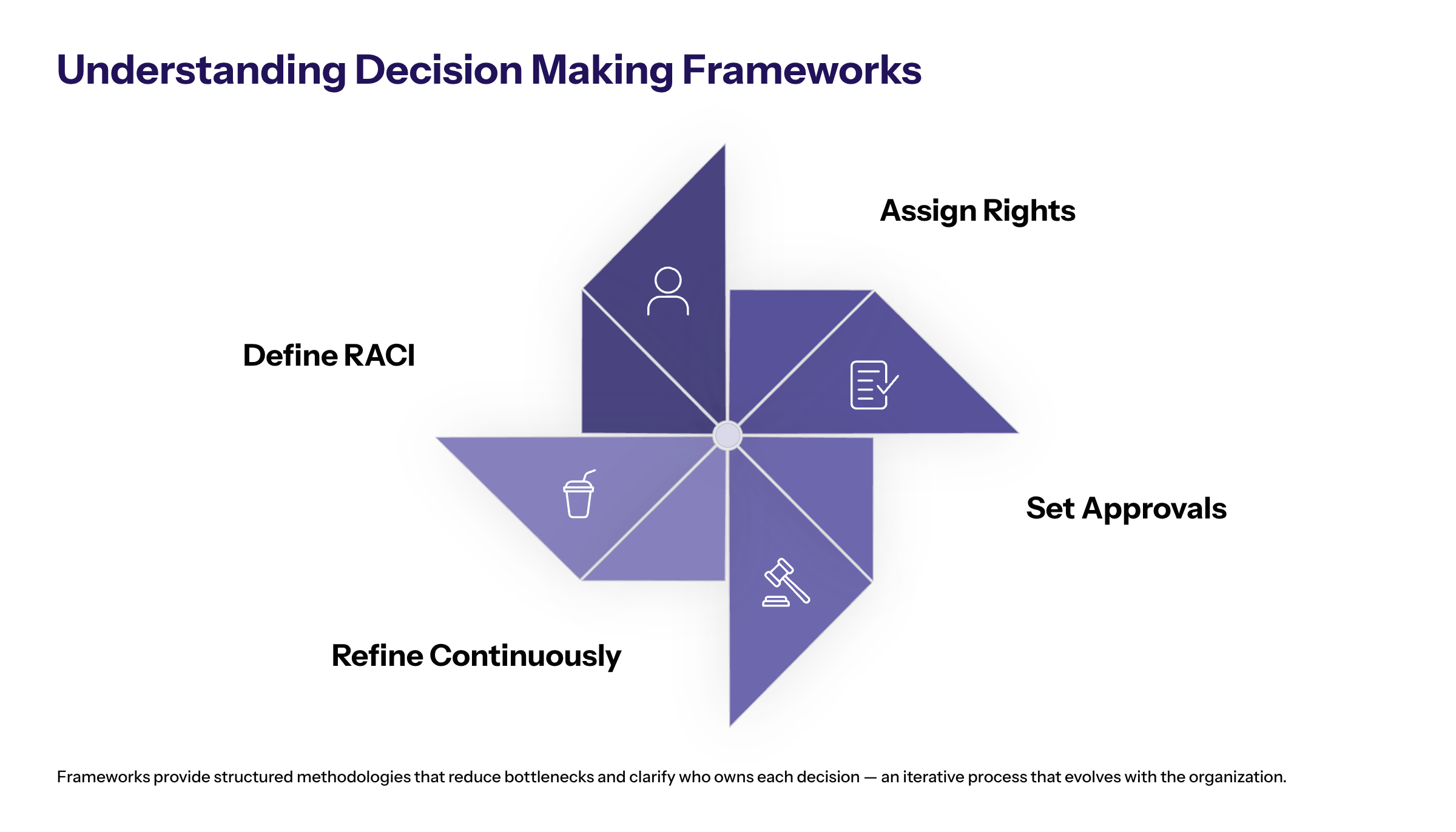
The Importance of Clarifying Decision Rights
Clear decision rights define who has the authority to make important decisions and who supports or influences those decisions. This clarity is vital for rapid decision making and achieving strategic objectives.
Avoiding Pitfalls of Overlapping Responsibilities
Organizations often struggle with overlapping decision making roles, leading to delays and unhealthy competition. A well-defined decision rights framework clarifies these roles, preventing conflicts and ensuring accountability.
Enhancing Accountability and Transparency
Transparent decision making processes build trust among stakeholders and improve performance metrics. When decision rights are clearly communicated, leaders can track outcomes, learn from successes and failures, and foster a culture of accountability. Clear accountability from a decision rights framework fosters a culture of responsibility and employee empowerment, which in turn improves worker satisfaction and customer satisfaction.
Defining Decision Rights to Drive Better Outcomes and Competitive Advantage
Defining decision rights is not just about assigning roles; it is about creating a common language and understanding that enables better decisions and value creation. Establishing clear decision rights can drive improved efficiency and greater progress toward strategic objectives.
Navigating Complex Market Dynamics in Large Organizations
In today’s fast-paced markets, organizations must make rapid decisions to respond to evolving customer needs and competitive pressures. A clear decision rights framework supports this agility by empowering frontline teams and other stakeholders to act within their authority. Empowering frontline employees leads to increased customer satisfaction and greater revenue growth. Organizations that clarify decision rights can push day-to-day decisions closer to where they directly affect operations, increasing flexibility.
Aligning Decision Rights with Strategic Initiatives
Decision rights frameworks help organizations align decisions with strategic initiatives such as digital transformation, risk management, and regulatory compliance. This alignment ensures that decisions contribute directly to business success and customer satisfaction. Clear decision rights also help organizations comply with evolving regulations, including those related to AI integration and pay transparency.
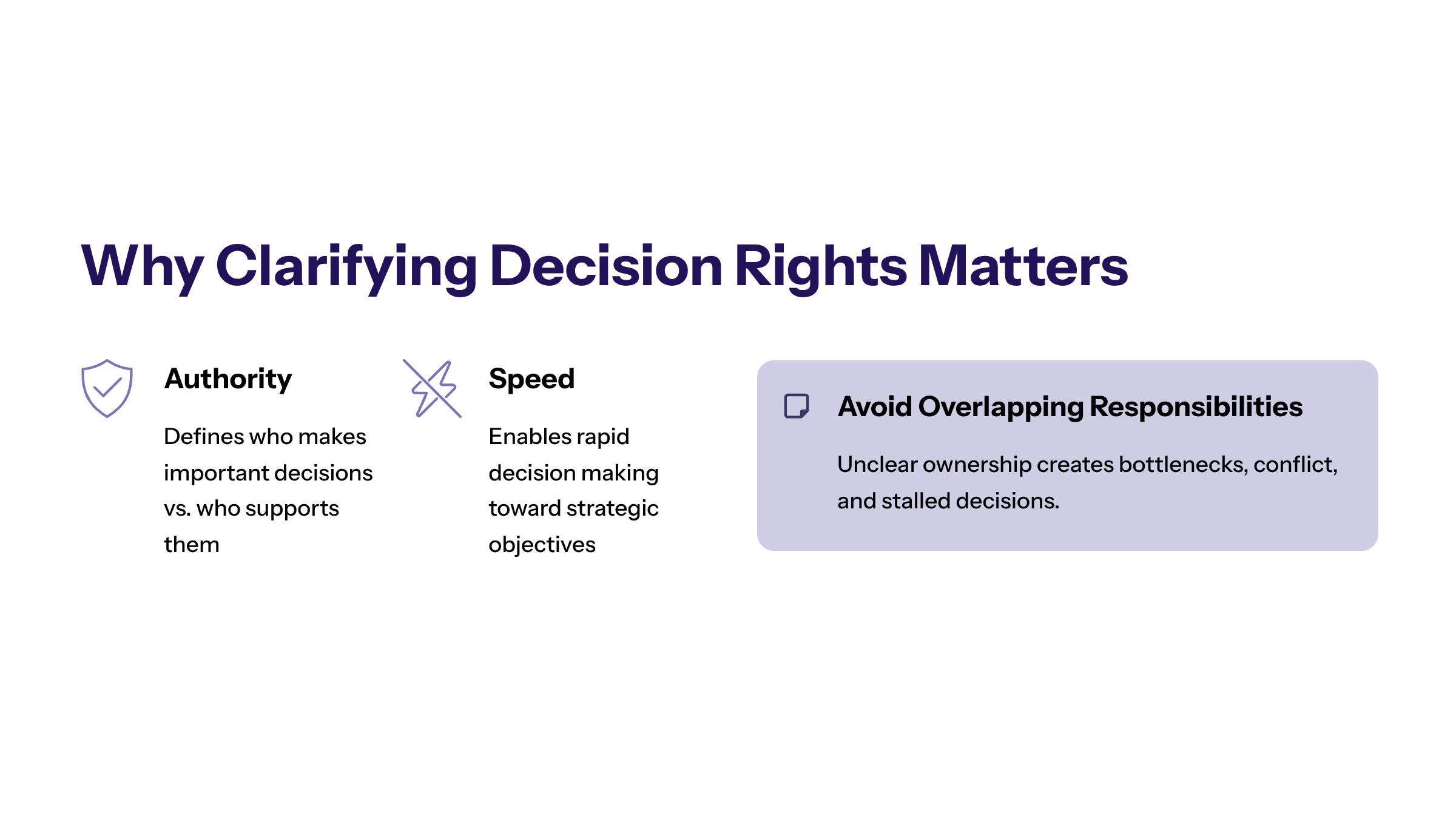
Organization’s Decision Making Needs in Large Organizations
Every organization has unique decision making needs shaped by its size, industry, and complexity.
Managing Risk and Compliance
Risk assessments and legal considerations are integral to many important decisions. Decision rights frameworks help define who is responsible for these aspects, ensuring compliance and mitigating risks.
Engaging Key Stakeholders
Effective decision making involves multiple stakeholders, including managing directors, department heads, and frontline teams. Defining their roles clearly within the decision rights process improves buy-in and fosters collaboration.
Using a Decision Inventory
A decision inventory identifies the most important decisions within an organization, such as budget allocations and strategic shifts. Visualizing the decision rights framework as a matrix helps categorize decisions and assign roles, enhancing clarity.
Decentralized Decision-Making Strategies
In a decision rights framework, decentralized decision-making allows regional managers to set local pricing while centralizing brand strategy at headquarters, balancing agility with consistency.
Decision Making Roles for Better Decisions
Understanding and defining decision making roles is essential for clarity and efficiency.
The Role of Responsible, Accountable, Consulted, and Informed
The RACI framework’s emphasis on these roles ensures that everyone understands their responsibilities in the decision process. This clarity reduces ambiguity and enhances decision quality.
Integrating Decision Rights with Leadership Development
Decision rights frameworks support leadership development by clarifying accountability and enabling leaders to focus on strategic priorities rather than operational ambiguities.
Real-World Applications and Benefits of Decision Rights Frameworks
Several organizations have demonstrated the tangible benefits of clarifying decision rights:
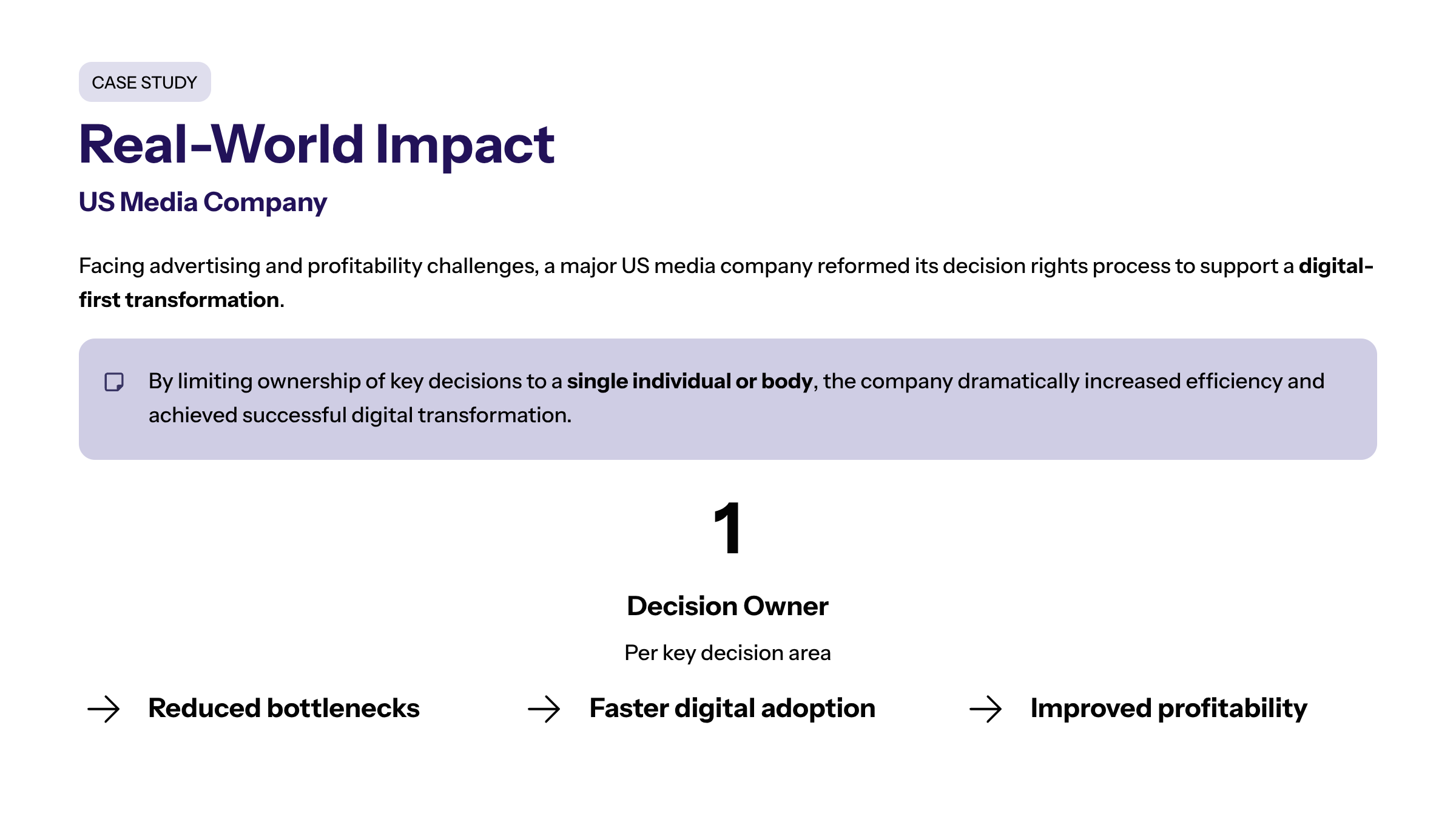
A major US media company reformed its decision rights process to support its transformation to a digital-first business model. Facing challenges related to advertising and profitability, the company limited ownership of key decisions to a single individual or body, dramatically increasing decision-making efficiency and enabling successful digital transformation.
A Fortune 500 financial services organization found that clarifying decision-making roles improved performance and increased worker satisfaction by building transparency and accountability into decision-making.
A global pharmaceutical company accelerated its products' time to market by twofold after clarifying decision-making processes and assigning accountability to specific people or cross-functional groups, speeding up critical decisions.
These examples illustrate how decision rights frameworks help organizations identify who owns, vetoes, influences, and supports decisions, reducing time wasted in meetings and supporting accountability.
By mastering the decision rights framework, organizations position themselves to make better decisions faster, adapt to complex choices, and maintain a competitive edge in an increasingly dynamic business landscape. Clear decision rights, supported by frameworks like OVIS, RACI, and RAPID, are indispensable tools for leaders aiming to drive value creation, foster accountability, and achieve sustainable business success.