Identifying and Overcoming the Reporting Bottleneck in Your Workflow
Effective management of reporting bottlenecks is essential for enterprises aiming to streamline business processes, optimize operational efficiency, and maintain competitive advantage.
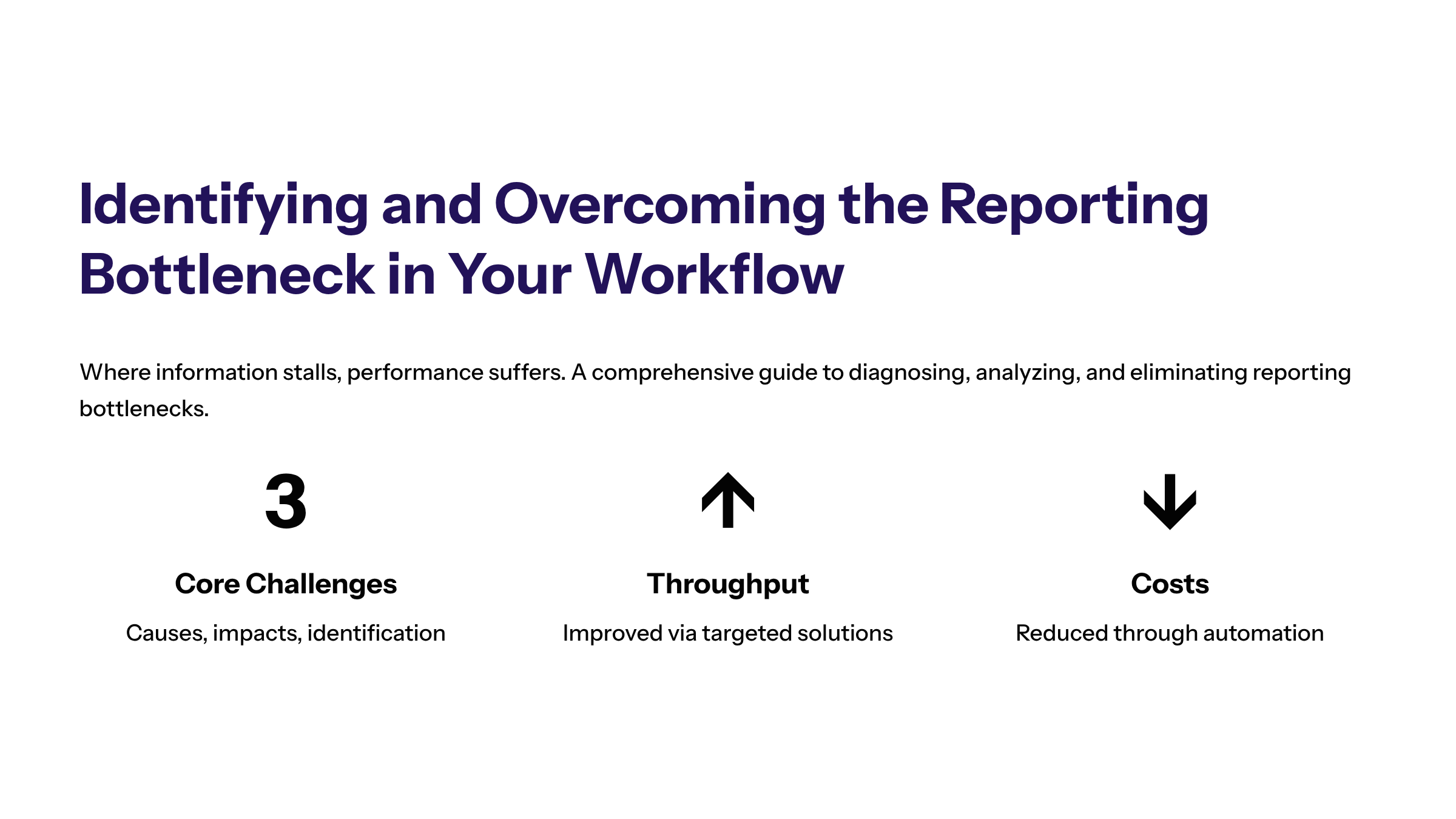
This article provides a comprehensive analysis of reporting bottlenecks—those critical points in workflows where the flow of information slows down or stalls—highlighting their causes, impacts, and strategies for identification and elimination.
By understanding how reporting bottlenecks arise and persist, businesses can deploy targeted solutions, leveraging advanced analytics, automation, and process redesign to improve throughput, reduce costs, and enhance decision-making agility.
Key Takeaways
Reporting bottlenecks significantly impact business operations by delaying critical information flow, increasing operational costs, and negatively impacting profit margins and customer satisfaction.
Conducting a thorough bottleneck analysis using tools such as root cause analysis, value stream mapping, and performance metrics is vital to identify inefficiencies and implement solutions that improve processes and optimize resource allocation.
Continuous monitoring, combined with intelligent automation and workflow redesign, is crucial to manage dynamic and long term bottlenecks, ensuring seamless integration of improvements and sustainable operational efficiency.
Cross-training staff can help manage multiple parts of the data process during high-stress stages, enhancing workforce flexibility and responsiveness.
Introduction to Workflow Optimization
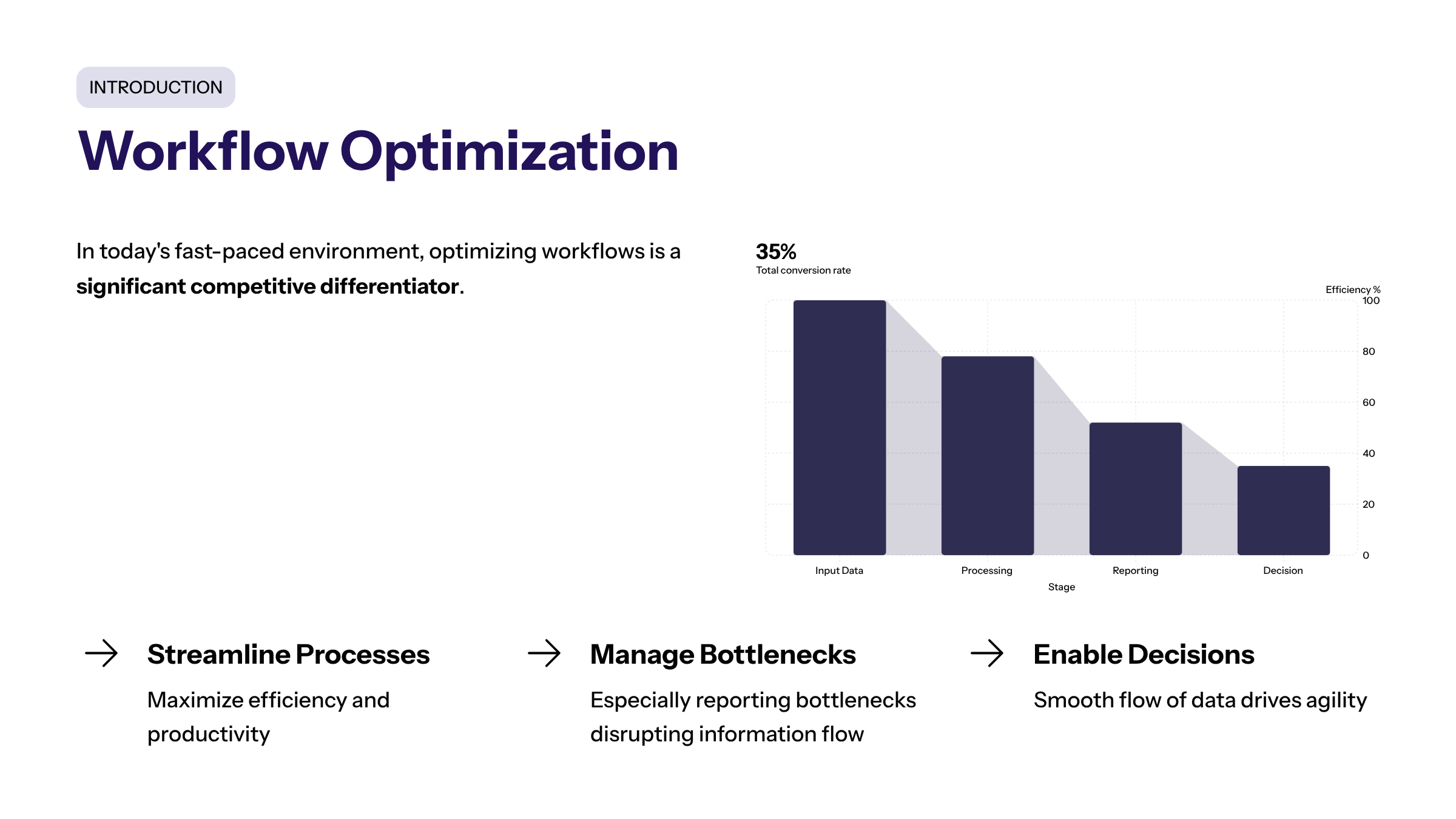
In today’s fast-paced business environment, the ability to optimize workflows is a significant competitive differentiator.
Workflow optimization focuses on streamlining business processes to achieve maximum efficiency and productivity. Central to this is the identification and management of bottlenecks—particularly reporting bottlenecks—that can disrupt the smooth flow of information and decision-making.
Reporting bottlenecks occur when the volume or complexity of reporting requests exceeds the system’s capacity to process them efficiently. This can be due to manual data aggregation, siloed data systems, outdated technology, or centralized decision-making structures that create chokepoints.
Manual data aggregation includes reliance on paper-based tools or static spreadsheets, which can slow down data collection and increase errors. Siloed data refers to fragmented systems that hinder communication across teams, further exacerbating delays.
The resulting delays not only slow down the whole process but can also lead to poor quality products, missed market opportunities, and reduced customer satisfaction.
The Broader Context of Reporting Bottlenecks
The rise of data-driven decision-making and regulatory compliance requirements (e.g., HIPAA, PCI-DSS, GDPR) has increased the volume and complexity of reporting demands.
Enterprises in sectors such as healthcare, fintech, manufacturing, and telecom face significant challenges in managing these demands without introducing bottlenecks. For instance, inefficient financial reporting increases compliance and financial risk due to potential manual errors, while increased operational costs often arise from wasted labor hours due to bottlenecks.
Leading organizations like Harvard Business Publishing and BASF have demonstrated that addressing bottlenecks through digital transformation and workflow automation can yield substantial gains in operational efficiency and customer satisfaction.
These examples underscore the importance of a systematic approach to bottleneck identification and elimination as part of a broader digital strategy. By 2026, identifying and resolving reporting bottlenecks will increasingly require process-oriented analysis and strategic application of AI and automation tools to keep pace with growing demands.

Understanding Business Process
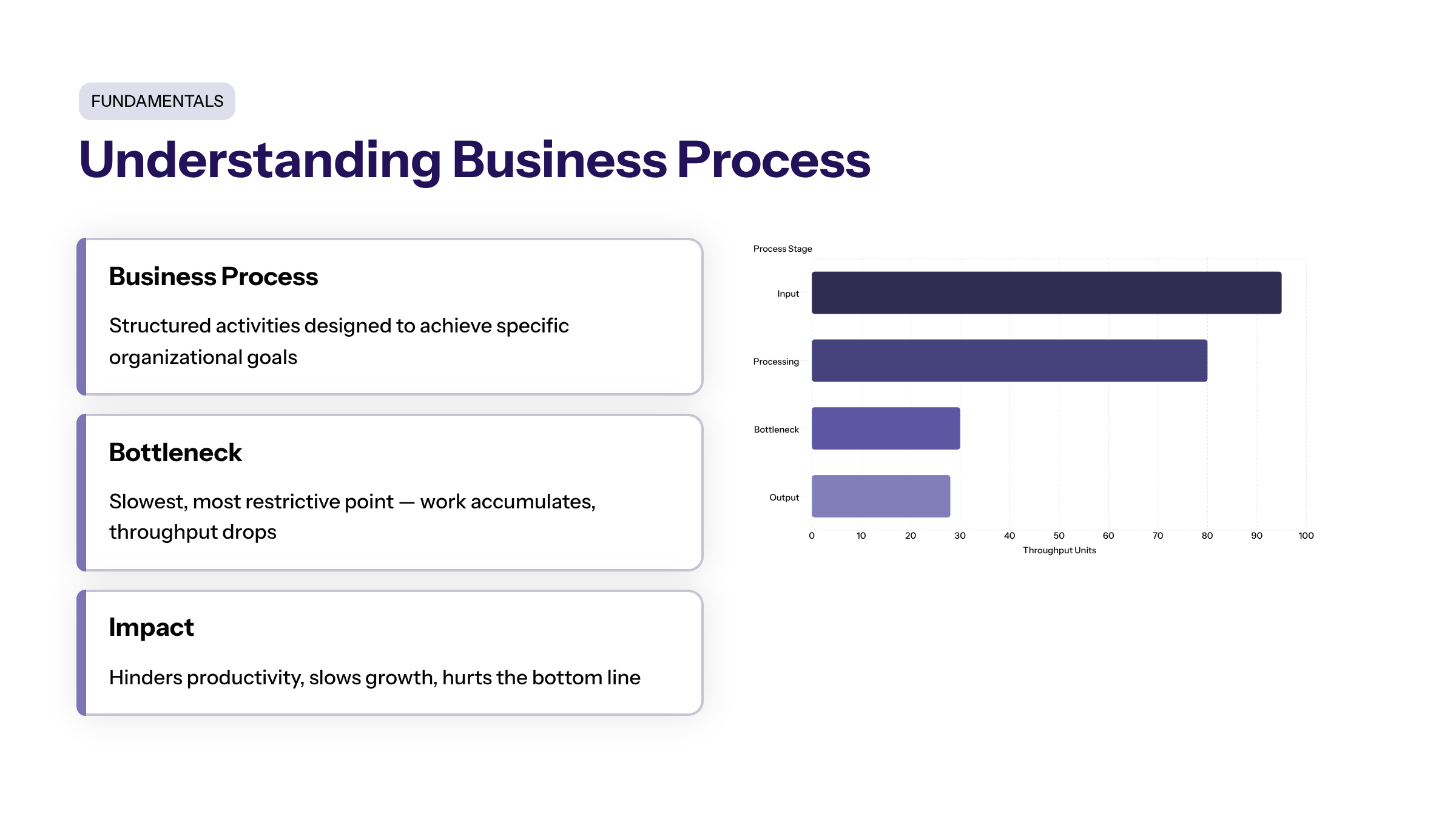
A business process is a structured set of activities designed to achieve specific organizational goals. Within these processes, bottlenecks represent the slowest points where work accumulates, limiting overall throughput and efficiency. Bottlenecks are the slowest or most restrictive parts of a system, process, or workflow that hinder productivity, slow growth, and negatively impact the bottom line.
Defining the Reporting Bottleneck
The reporting bottleneck is the stage in the reporting workflow where data collection, processing, or analysis slows down, often due to limited capacity, inefficient processes, or resource constraints. It acts much like the neck of a bottle that slows the flow of liquid, restricting the speed at which reports can be generated and decisions made.
Impact of Reporting Bottlenecks on Business Operations
Operational Efficiency: Reporting delays can cascade, causing idle time in downstream processes and reducing overall operational efficiency.
Cost Implications: Inefficient reporting workflows increase labor costs due to overtime and manual rework, and may require costly upgrades or additional resources.
Decision Latency: Delays in finalizing reports can cause decision-making lag, impacting market responsiveness and strategic agility.
Employee Morale: Persistent backlogs and high-pressure deadlines can negatively impact employee morale and productivity.
Key Metrics for Identifying Bottlenecks
To identify reporting bottlenecks, businesses should monitor key performance indicators such as cycle time, backlog volume, throughput rates, and resource utilization. Tools like value stream mapping and Kanban boards can visualize workflow stages and highlight where tasks pile up.
“In complex workflows, bottlenecks often shift dynamically, making continuous monitoring and adjustment essential to maintain maximum efficiency.” — Iva Krasteva, Agile Expert and Content Strategist
Identifying Bottlenecks
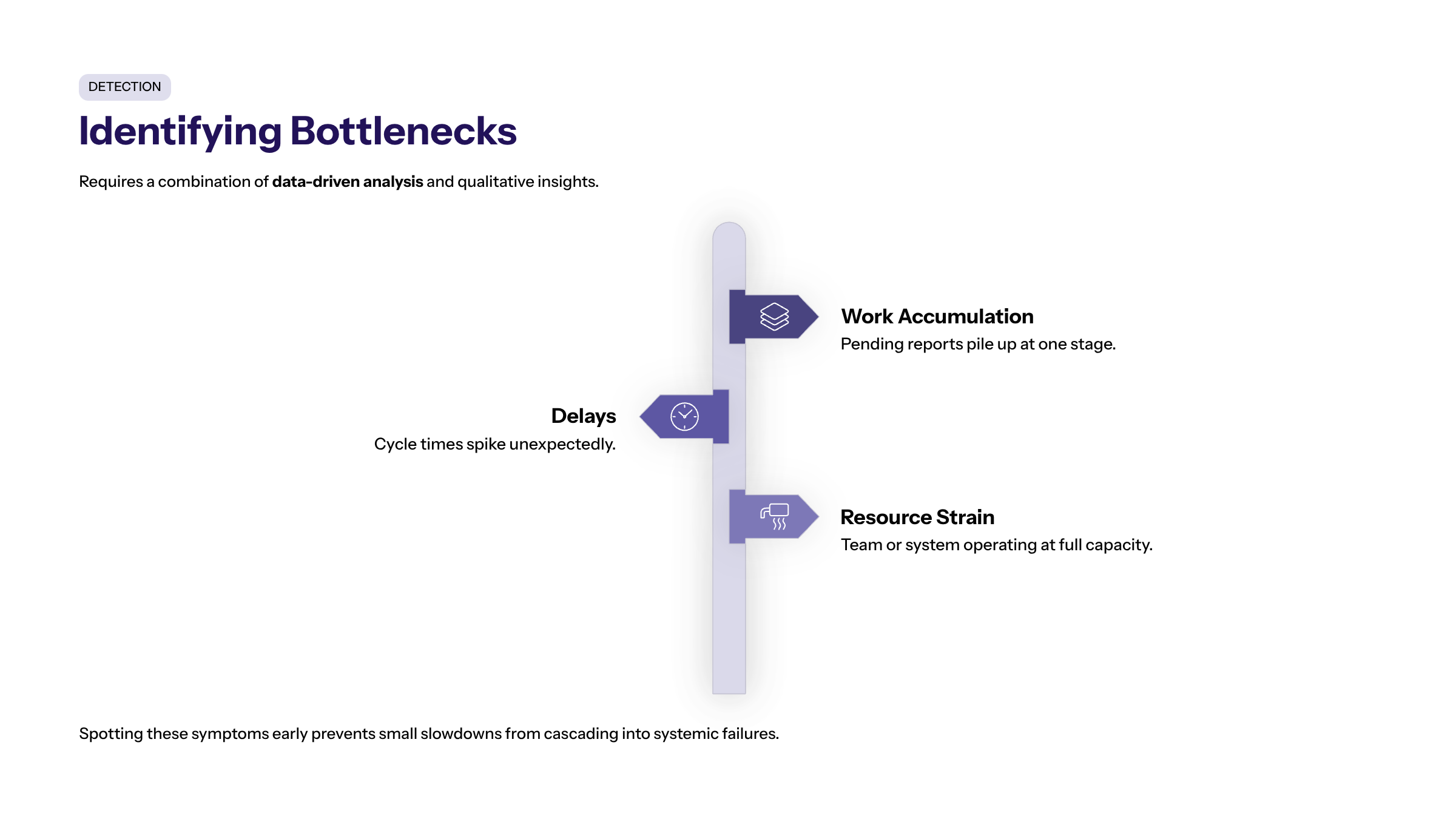
Identifying bottlenecks requires a combination of data-driven analysis and qualitative insights.
Signs and Symptoms of Bottlenecks
Accumulation of work-in-progress or pending reports at a particular stage.
Idle resources downstream waiting for inputs.
Missed deadlines and delayed decision-making.
Increased cycle times and inconsistent throughput.
Tools and Techniques for Bottleneck Identification
Tool/Technique | Description | Best Use Case |
|---|---|---|
Value Stream Mapping | Visualizes workflow stages, highlighting queues and delays | Initial identification of bottlenecks |
Cycle Time Heatmaps | Measures time to complete tasks in each stage | Pinpointing stages with longest delays |
Employee Feedback | Collects insights from frontline workers | Detecting hidden or dynamic bottlenecks |
Root Cause Analysis | Techniques like 5 Whys and Fishbone diagrams to find causes | Understanding underlying issues |
Process Mining | Analyzes event logs to reveal real workflow patterns | Complex, multi-system process analysis |
The Role of External Dependencies and Market Demand
External factors such as supply chain issues, market demand fluctuations, and regulatory changes can create or exacerbate bottlenecks. Ignoring these can lead to incomplete analysis and suboptimal solutions.
Conducting Bottleneck Analysis
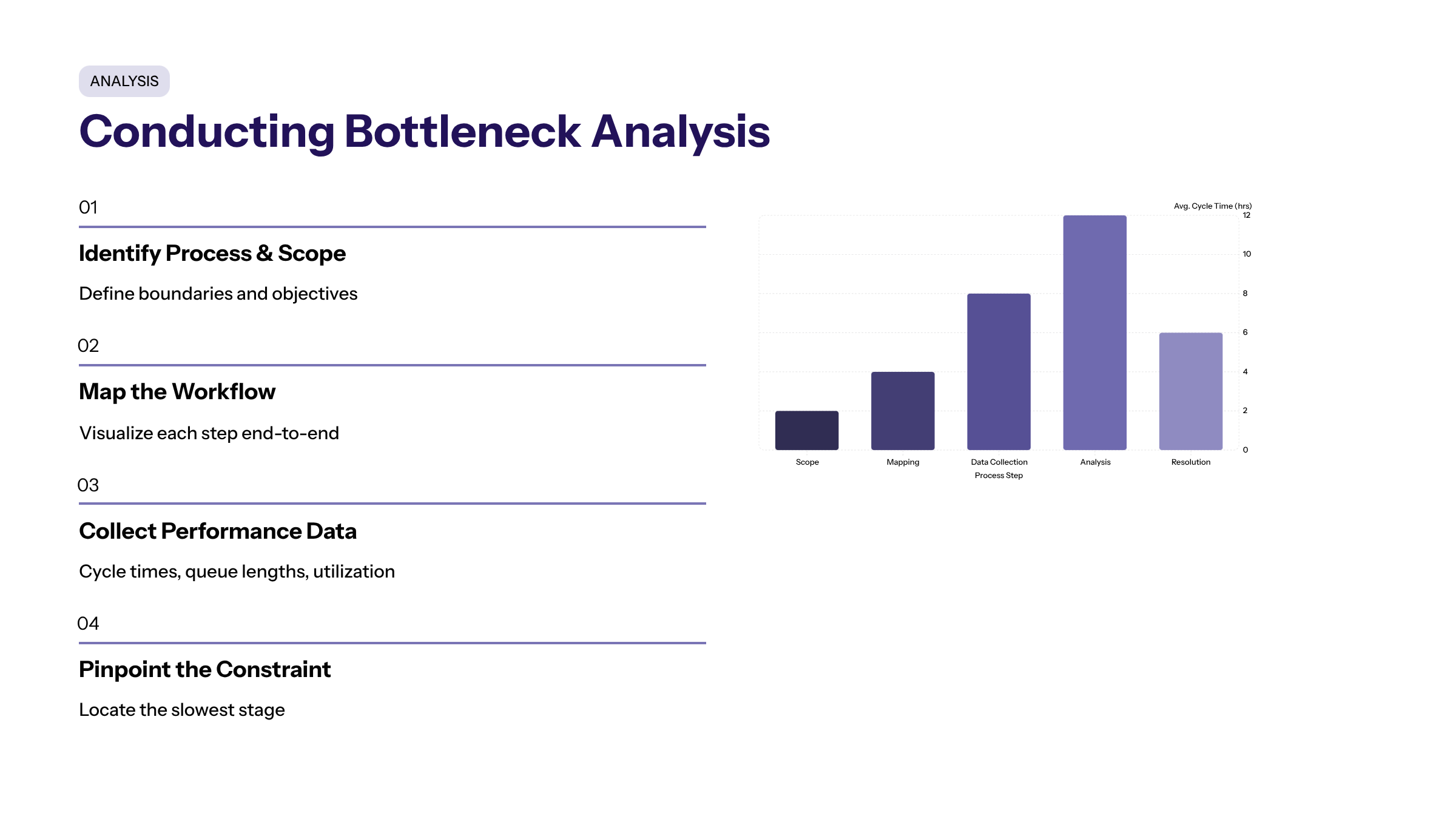
A systematic bottleneck analysis involves several key steps:
Step 1: Identify the Process and Scope
Clearly define the reporting process or system to analyze, establishing boundaries and objectives. This ensures focused efforts and stakeholder alignment.
Step 2: Map the Process Flow
Develop detailed process maps that include each step, the resources required, and dependencies. This visualization aids in spotting inefficiencies and resource constraints.
Step 3: Pinpoint the Bottleneck
Using performance metrics and observations, identify the slowest point consuming the most resources or causing delays.
Step 4: Analyze Root Causes
Collect data, conduct interviews, and apply root cause analysis tools to uncover why the bottleneck exists. Consider factors such as inefficient workflows, outdated technology, or skill gaps.
Step 5: Develop and Implement Solutions
Design targeted interventions such as redesigning workflows, reallocating resources, upgrading systems, or automating repetitive tasks to address root causes.
Step 6: Continuous Monitoring and Improvement
Establish mechanisms to monitor key metrics and adjust strategies proactively to manage dynamic bottlenecks and prevent recurrence.
“Bottleneck analysis is not a one-time exercise but an ongoing discipline critical to sustaining operational excellence.” — Hyland Professional Services
Analyzing the Bottleneck
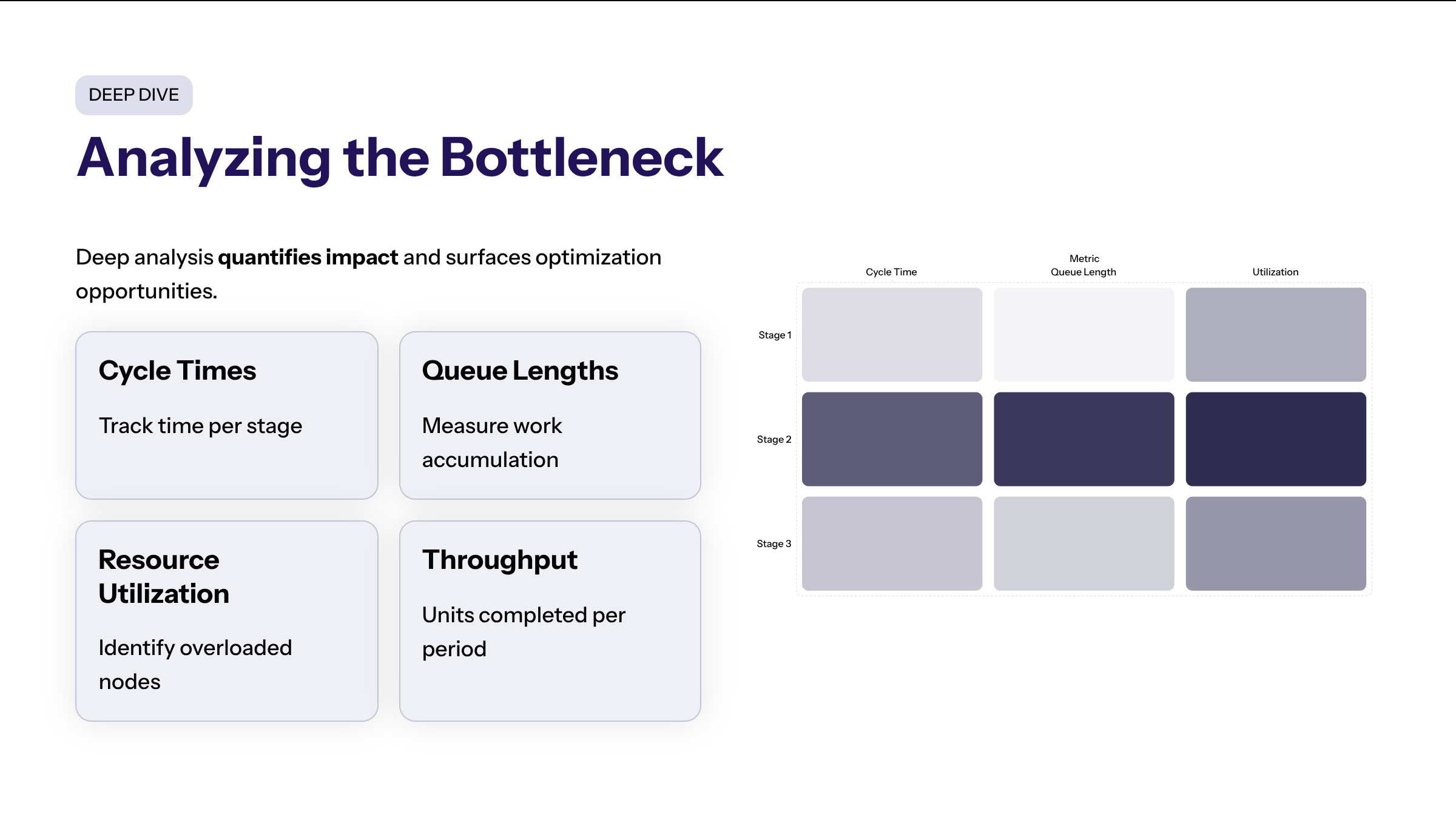
Deep analysis of the bottleneck stage is essential to quantify its impact and identify optimization opportunities.
Data Collection and Performance Metrics
Gather quantitative data on cycle times, queue lengths, resource utilization, and throughput. Analyze trends over time to distinguish between short term bottlenecks and long term bottlenecks. Improving data quality involves automating data cleansing and anomaly detection, which enhances accuracy and speeds up analysis.
Qualitative Insights
Engage with employees involved at the bottleneck stage to understand practical challenges, communication issues, and potential quick wins.
Impact Assessment
Evaluate how the bottleneck affects the whole process, including downstream delays, increased costs, and customer satisfaction.
Tools for Analysis
Advanced analytics platforms integrating live data and event logs.
Simulation models to test potential improvements without disrupting operations.
AI-based predictive models to forecast bottleneck emergence under varying conditions.
Key Steps to Elimination
Eliminating bottlenecks requires a strategic and systematic approach.
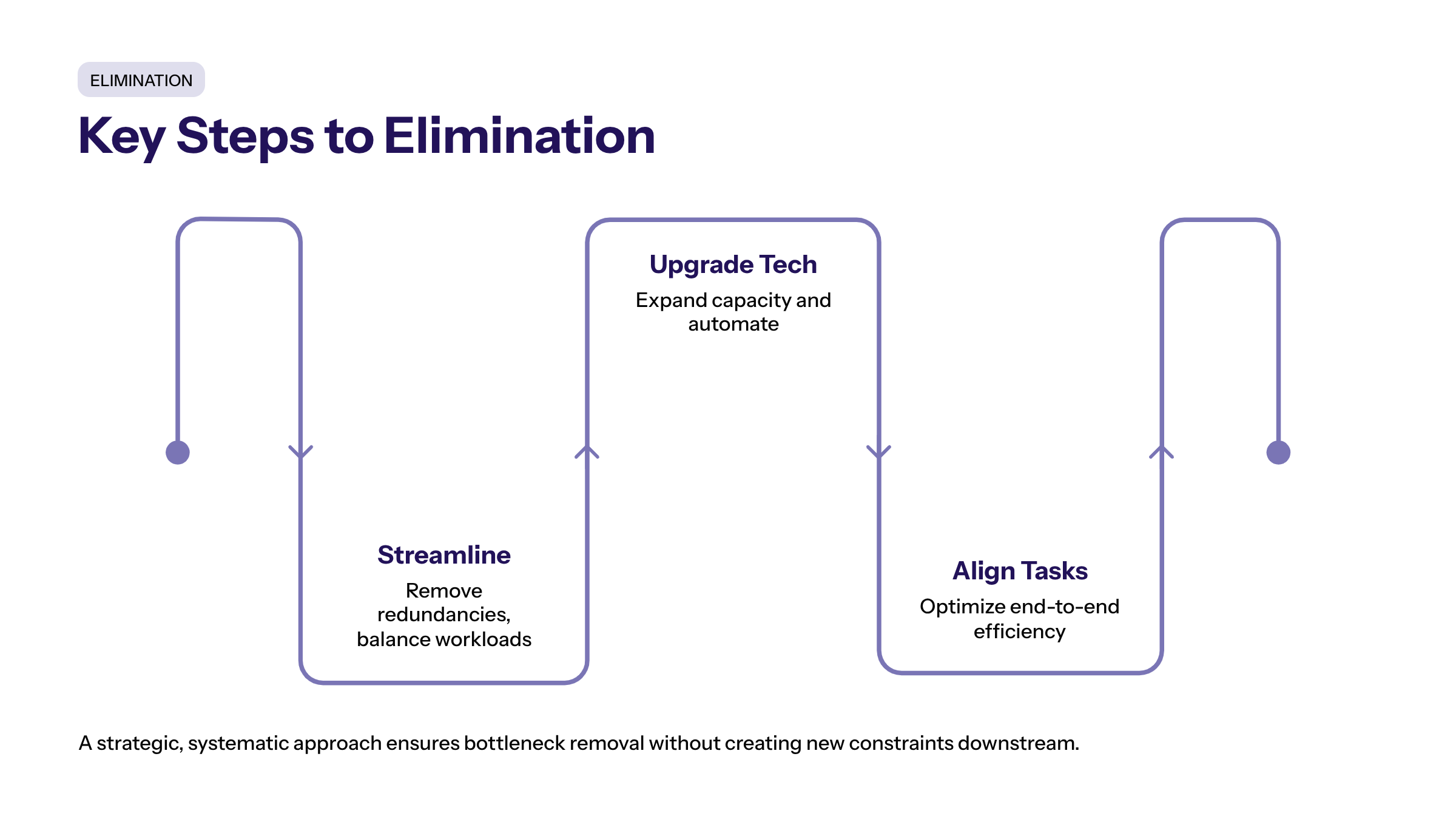
Step 1: Redesigning Workflows
Streamline processes by removing redundant steps, balancing workloads, and aligning tasks for maximum efficiency.
Step 2: Upgrading Technology and Capacity
Invest in modern, scalable systems and hardware that can handle increased reporting demands and facilitate real-time visibility. Investing in additional capacity, such as upgrading machinery or adding parallel equipment, may be necessary to resolve persistent bottlenecks.
Step 3: Reallocating and Cross-Training Resources
Cross-training employees enhances workforce flexibility, allowing rapid response to workload fluctuations and reducing labor-related bottlenecks. Cross-training staff can help manage multiple parts of the data process during high-stress stages, ensuring continuity and reducing dependency on specific individuals.
Step 4: Automating Repetitive Tasks
Implement robotic process automation (RPA) and intelligent document processing to reduce manual data entry and cleaning, speeding up report generation.
Step 5: Continuous Monitoring and Feedback Loops
Use dashboards and real-time monitoring tools to track key metrics, enabling early detection of emerging bottlenecks and rapid corrective action. Real-time data pipelines should replace slow batch processing to detect anomalies early and maintain smooth operations.
Elimination Strategy | Benefits | Challenges |
|---|---|---|
Workflow Redesign | Improves process flow and reduces delays | Requires change management and training |
Technology Upgrades | Enhances capacity and data processing speed | Capital investment and implementation time |
Resource Reallocation | Increases workforce flexibility | Potential resistance and skill gaps |
Automation | Reduces manual errors and accelerates tasks | Integration complexity and upfront costs |
Continuous Monitoring | Enables proactive bottleneck management | Requires ongoing commitment and resources |
Tools and Techniques
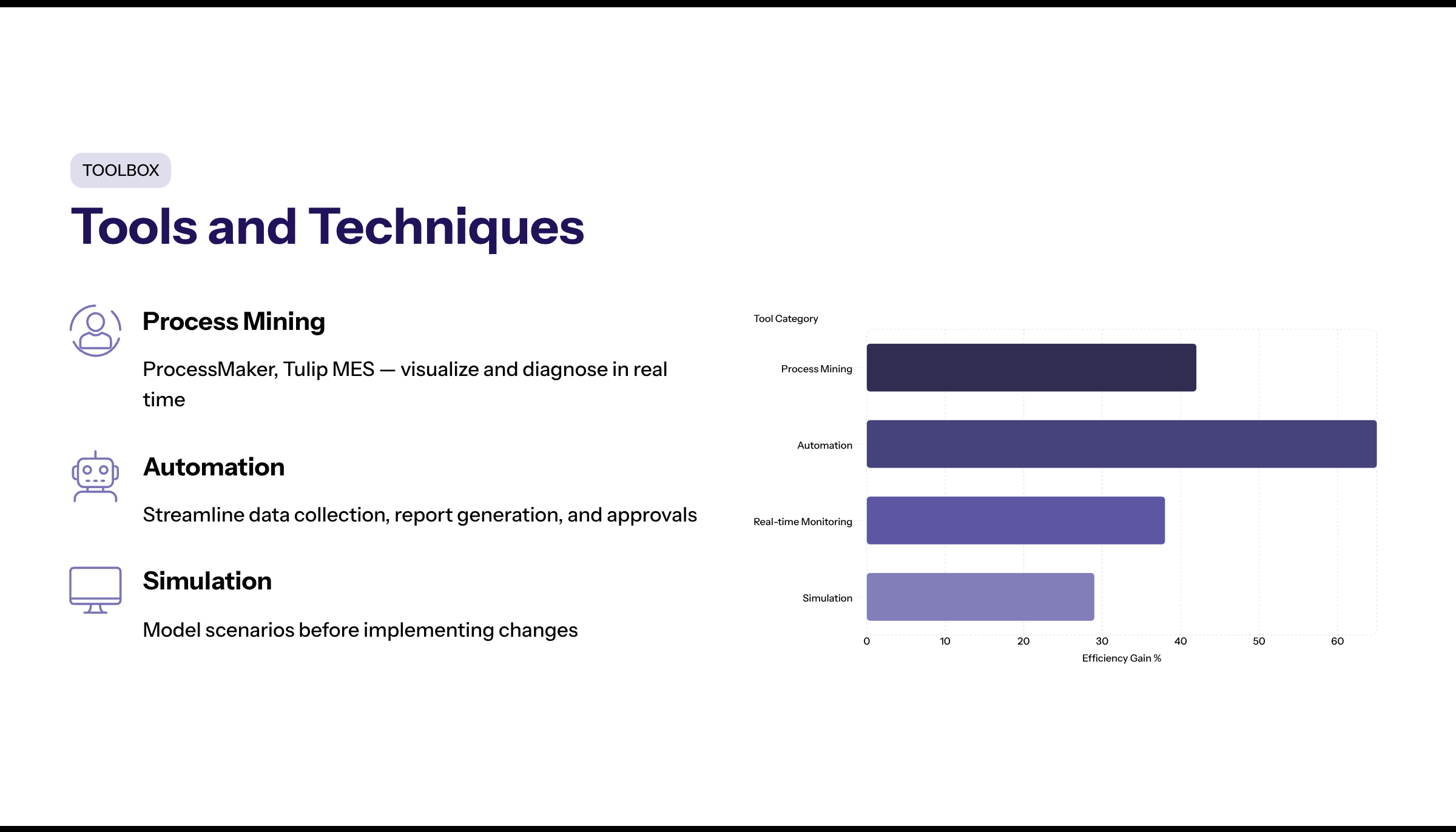
Modern bottleneck analysis and elimination rely heavily on digital tools and methodologies.
Bottleneck Analysis Software
Platforms like ProcessMaker and Tulip MES provide process mining, real-time monitoring, and simulation capabilities to visualize and diagnose bottlenecks effectively.
Workflow Automation
Automation tools streamline data collection, report generation, and approvals, reducing bottlenecks caused by manual repetitive tasks.
Lean Manufacturing and Agile Techniques
Adopting lean principles and agile methodologies helps identify waste and optimize workflows continuously.
Intelligent Automation and AI Integration
AI-driven analytics and robotic process automation enable predictive bottleneck identification and automated remediation, essential for handling complex, dynamic bottlenecks.
“Intelligent automation transforms bottleneck management from reactive troubleshooting to proactive optimization.” — NetSuite Manufacturing Insights
Eliminate Bottlenecks
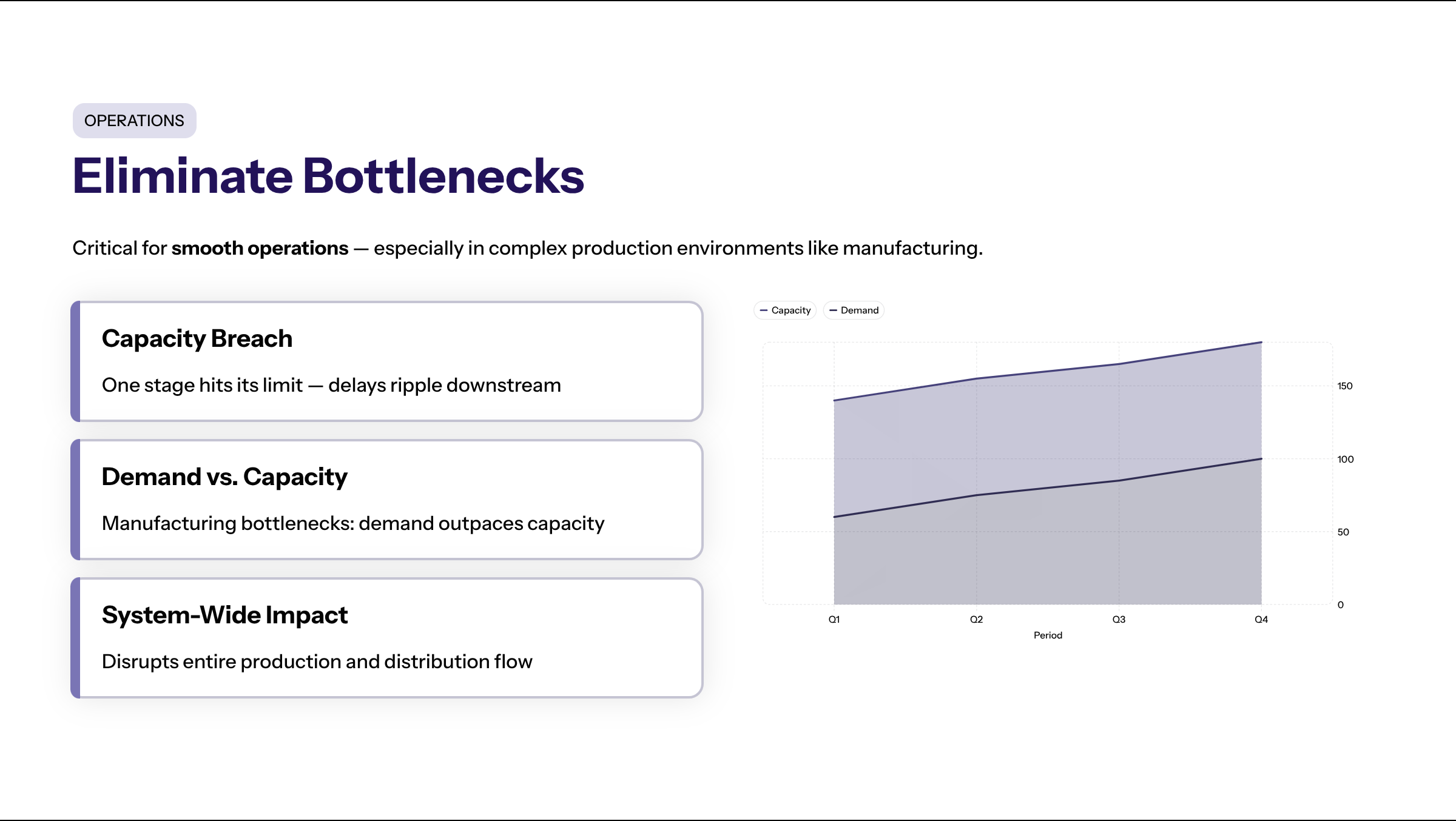
Eliminating bottlenecks is crucial for maintaining smooth operations across the entire operation, especially in complex production processes such as manufacturing. Bottlenecks often occur when a particular stage in the production line reaches or exceeds its full capacity, causing delays that ripple through distribution processes and impact overall production efficiency.
Manufacturing bottlenecks occur whenever demand outpaces capacity in a production process, disrupting the entire production system. This can cause upstream processes to accumulate work-in-process inventory while downstream operations sit idle. Chronic bottlenecks can incur additional costs such as storage expenses for unfinished goods and overtime pay for labor needed to catch up.
To effectively eliminate bottlenecks, businesses must first detect slowdowns and obvious signs of congestion in workflows. This enables timely allocation of resources and targeted interventions such as upgrading machinery or redesigning workflows to optimize processes.
Improving inventory management can prevent material-related bottlenecks by ensuring essential materials are available where and when needed.
Continuous improvement efforts, including cross-training staff and automating repetitive tasks, further support managing bottlenecks and sustaining operational flow.
Bottleneck Analysis Tools
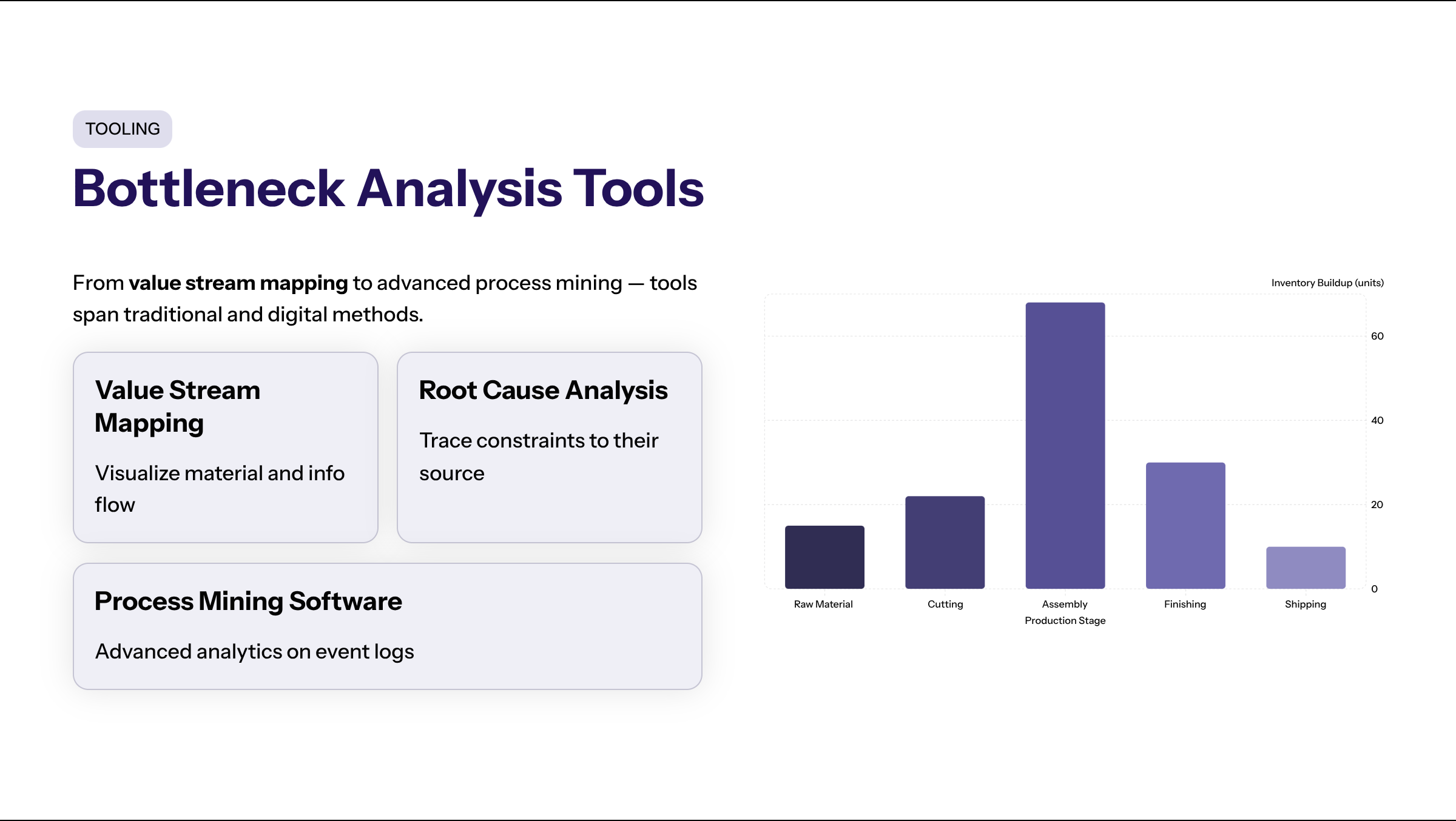
Bottleneck analysis tools play a vital role in identifying constraints within production processes and project management workflows. These tools range from traditional methods like value stream mapping and root cause analysis to advanced analytics tools and process mining software.
For example, a furniture manufacturer may use bottleneck analysis tools to visualize how raw materials move through the production line and pinpoint stages where the bottle slows, causing inventory buildup and delayed throughput.
By leveraging these tools, organizations can gain insights into bottlenecks shift over time and implement solutions that improve efficiency and streamline distribution processes.
Analysis Tools
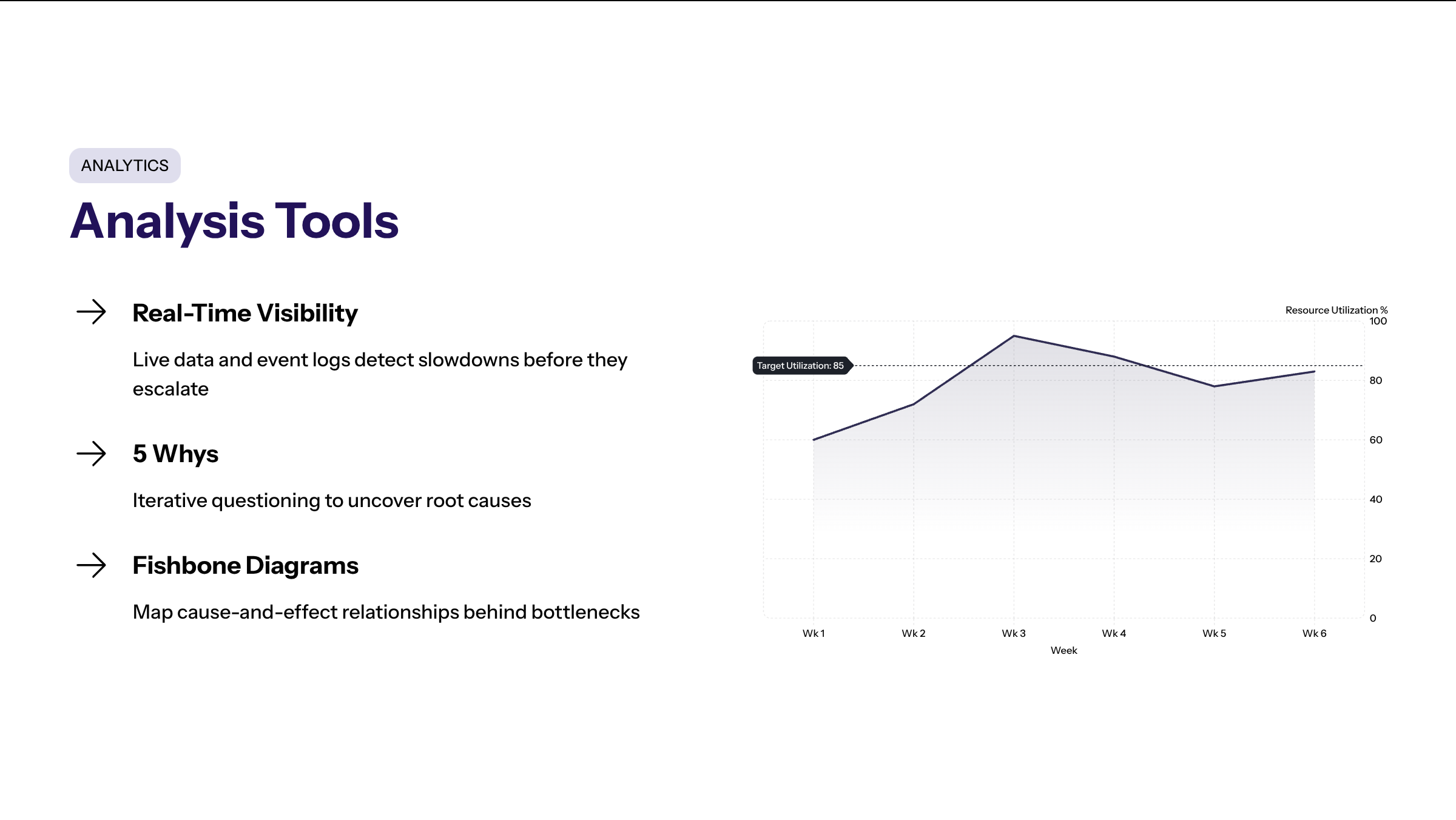
Effective analysis tools enable businesses to quantify the impact of bottlenecks and monitor key metrics such as cycle time and resource utilization.
Analytics tools integrated with live data and event logs provide real-time visibility into the production process, allowing teams to detect slowdowns before they escalate. Techniques like the 5 Whys and Fishbone diagrams help uncover root causes behind bottlenecks, supporting data-driven decision-making.
These tools also facilitate continuous improvement by tracking the effectiveness of interventions and guiding adjustments in resource allocation, workflow redesign, and technology upgrades.
Full Capacity
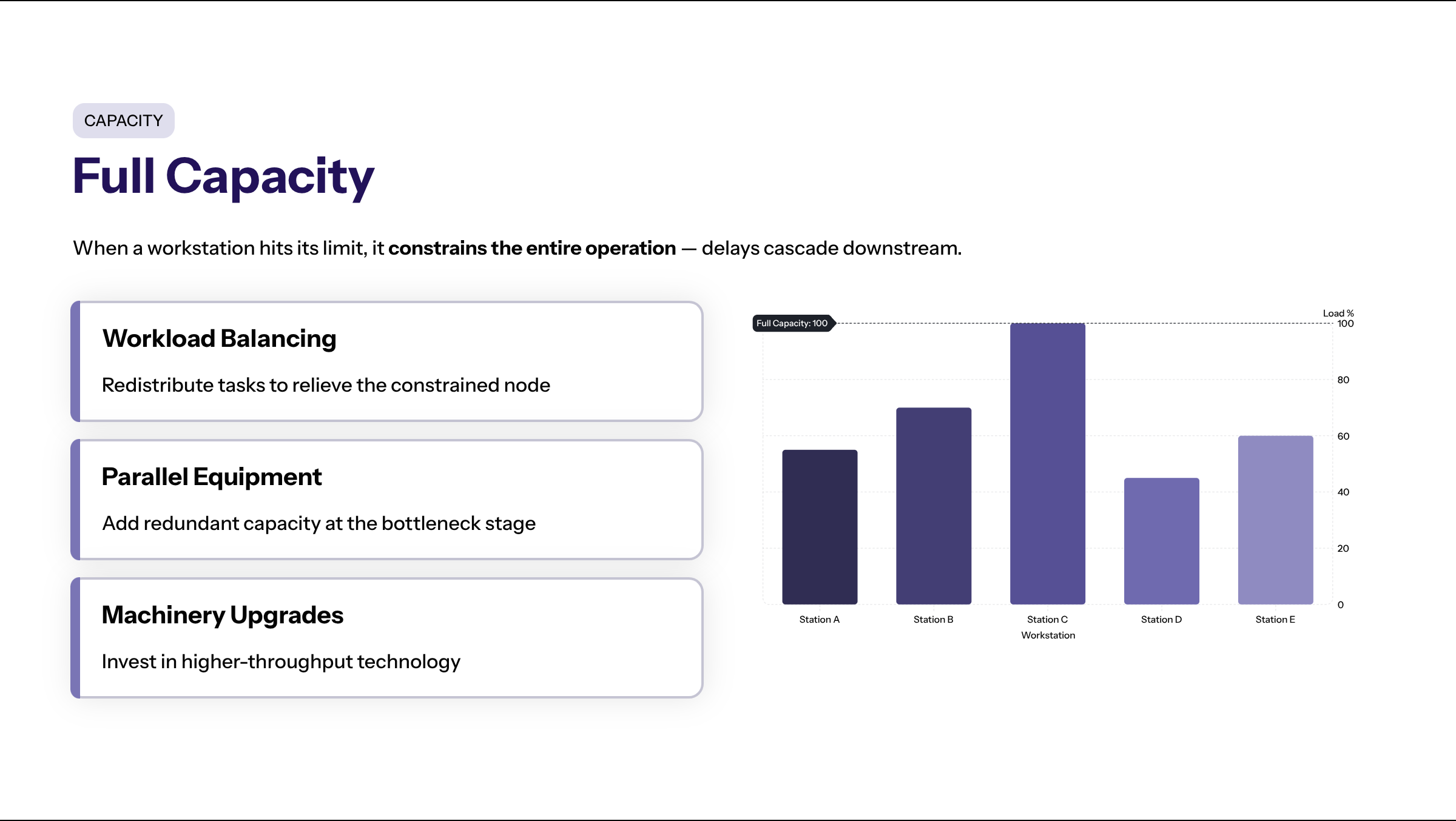
Operating at full capacity is often the point at which bottlenecks emerge in manufacturing and production environments. When a workstation or machine reaches its limit, it constrains the entire operation, limiting throughput and causing delays downstream.
Managing bottlenecks at full capacity requires careful balancing of workloads and sometimes investing in capacity expansion, such as adding parallel equipment or upgrading machinery. Understanding how each stage in the production process contributes to overall capacity utilization is essential for optimizing processes and ensuring that no single point becomes a persistent constraint.
Cycle Time
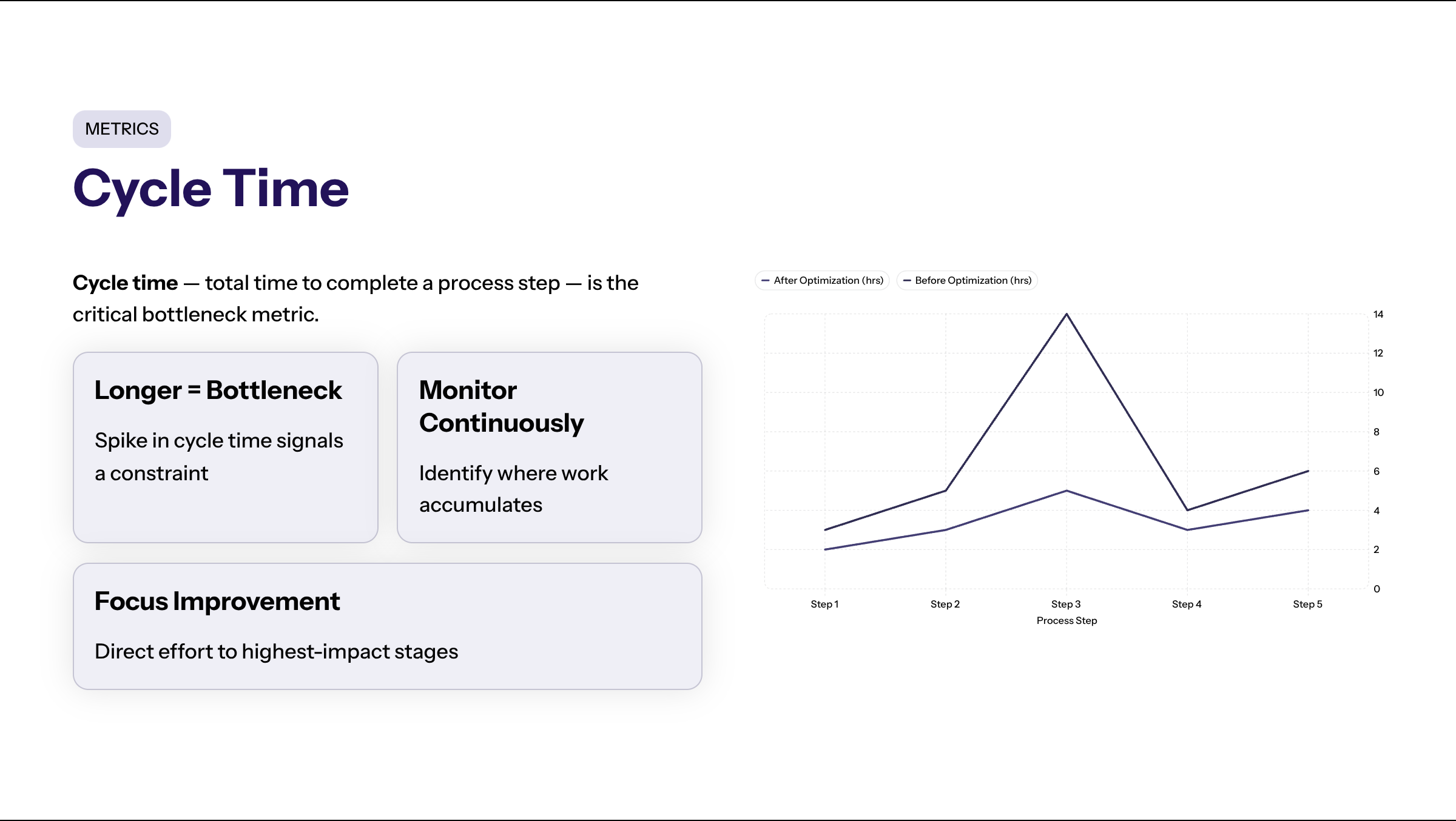
Cycle time—the total time to complete a task or process step—is a critical performance metric in bottleneck analysis. Longer cycle times at any stage can indicate bottlenecks that reduce production efficiency and slow the flow along the production line. Monitoring cycle time helps identify where work accumulates and where delays occur, enabling teams to focus improvement efforts effectively.
Reducing cycle time through workflow redesign, automation, or resource reallocation contributes to smoother operations and better throughput across the entire operation.
Employee Feedback
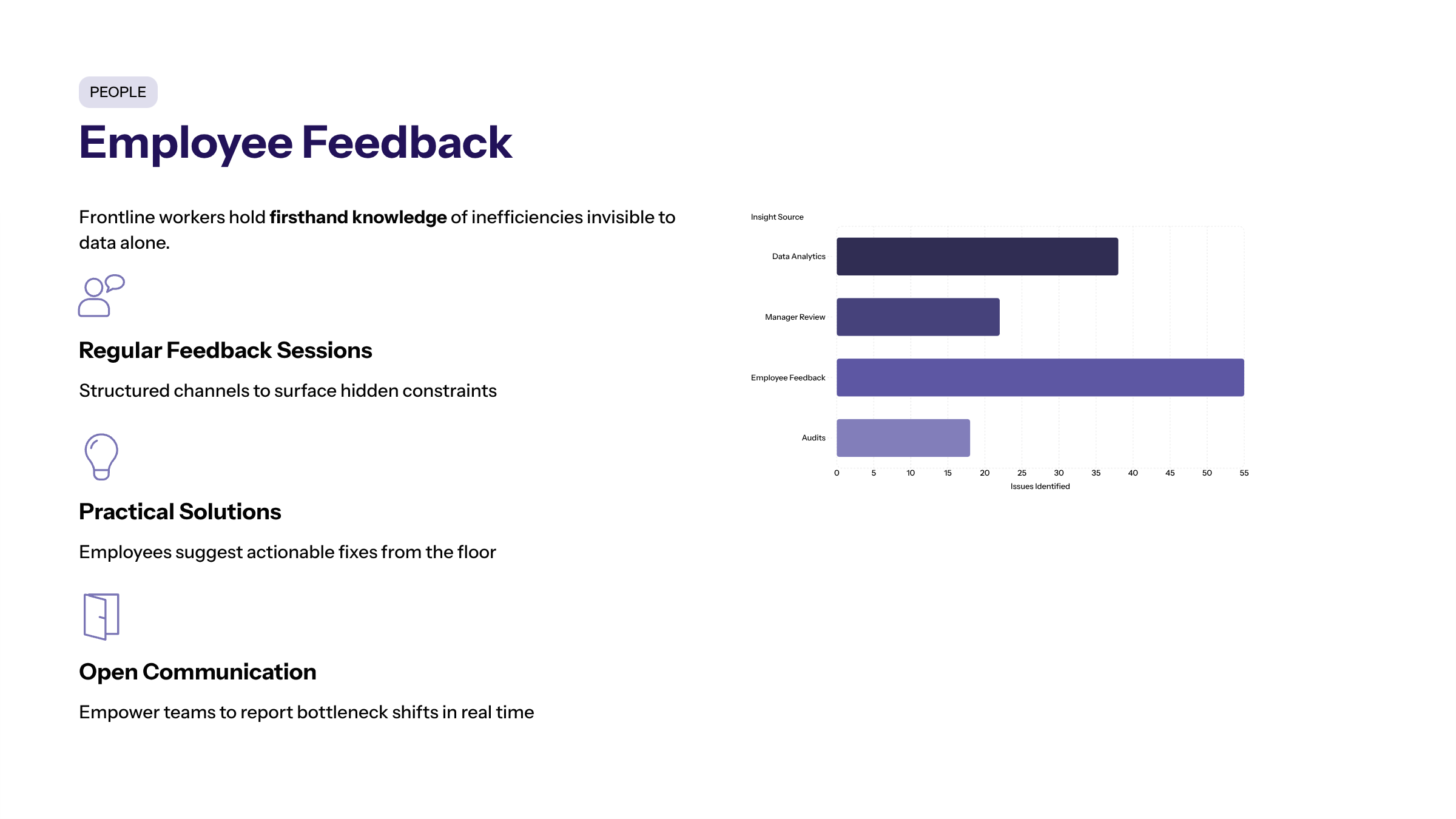
Incorporating employee feedback is a valuable component of managing bottlenecks and optimizing production and distribution processes. Frontline workers often have firsthand knowledge of workflow inefficiencies and hidden constraints that may not be apparent through data alone.
Regular feedback sessions and open communication channels empower employees to report bottlenecks shift and suggest practical solutions. This collaborative approach supports continuous improvement initiatives, enhances morale, and ensures that resource allocation and process changes align with real-world operational needs.
Conclusion
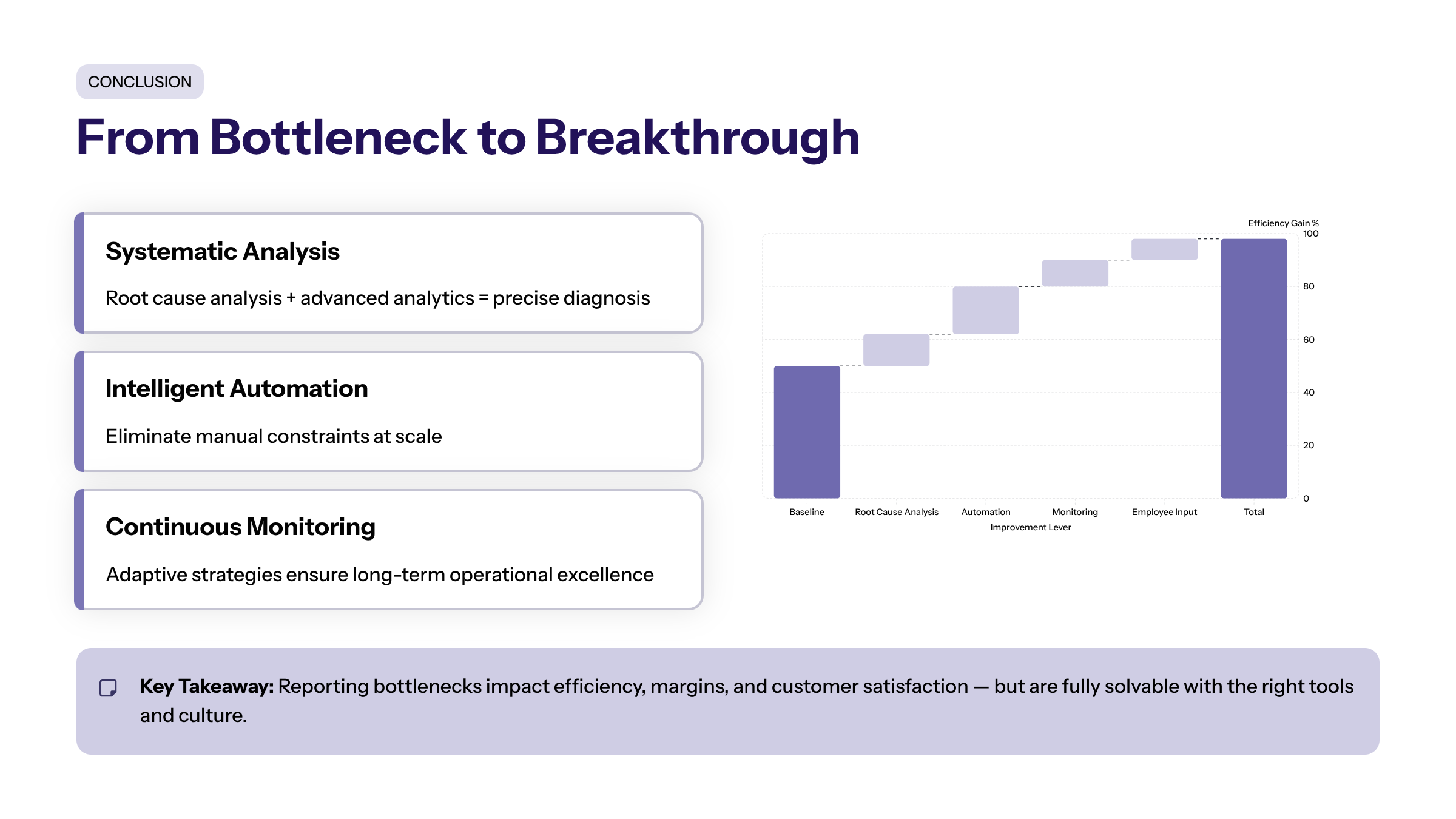
Reporting bottlenecks present significant challenges that can negatively impact operational efficiency, profit margins, and customer satisfaction. However, through systematic bottleneck analysis, leveraging root cause analysis, advanced analytics, and intelligent automation, businesses can identify, analyze, and eliminate these constraints effectively. Continuous monitoring and adaptive strategies are essential to manage dynamic bottlenecks, ensuring seamless integration of improvements and long-term operational excellence.
By embracing these best practices, enterprises across industries—from healthcare and manufacturing to fintech and telecom—can optimize their reporting workflows, accelerate decision-making, and maintain a competitive edge in a rapidly evolving market landscape.
In manufacturing processes, for example, the ability to allocate resources efficiently and respond to bottlenecks at critical stages can significantly enhance production efficiency and reduce downtime.
Achieving full implementation of bottleneck elimination strategies requires commitment across all organizational levels, ensuring that solutions are sustainable and integrated into everyday operations for lasting impact.