Essential Prioritization Matrix Template for Effective Task Management
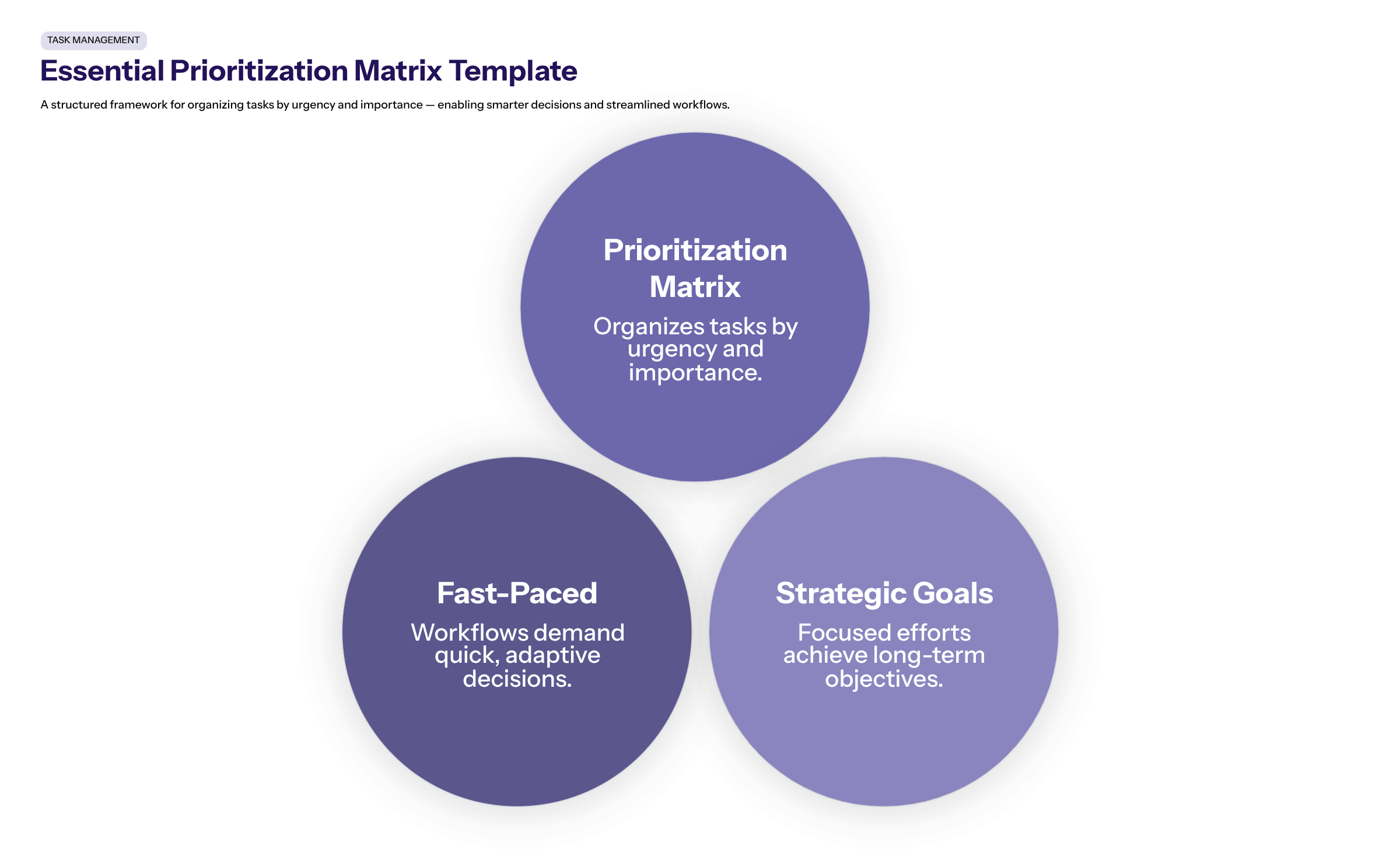
In today’s fast-paced business environment, effective task management is critical for organizations aiming to achieve strategic goals while optimizing resource allocation. A prioritization matrix template is a great tool for organizing and balancing urgent and important tasks efficiently. It serves as a powerful, structured framework that enables teams to systematically organize tasks based on urgency and importance, facilitating informed decisions and streamlined workflows.
This article offers an analytical exploration of prioritization matrices, their practical applications, and how they empower executives and teams to focus on high-impact activities, reduce inefficiencies, and enhance overall productivity by streamlining and enhancing the decision making process.
Key Takeaways:
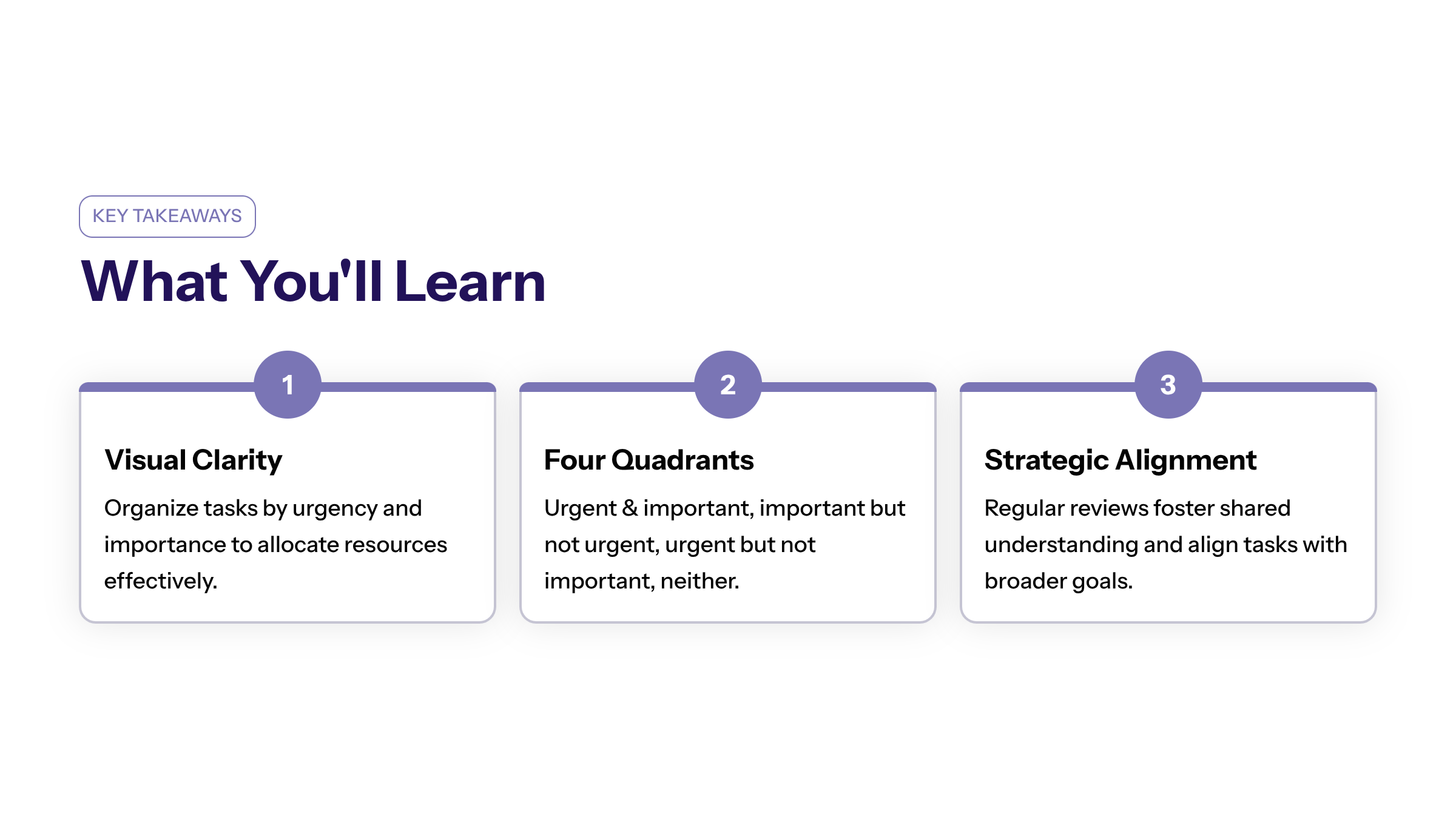
A prioritization matrix template provides a clear, visual method for organizing tasks by urgency and importance, helping teams prioritize tasks and allocate resources effectively.
Understanding the four quadrants of the prioritization matrix—urgent & important, important but not urgent, urgent but not important, and not urgent or important—enables teams to manage daily tasks strategically and avoid common pitfalls like focusing on low-impact activities.
Implementing and regularly reviewing prioritization matrices supports objective decisions, fosters a shared understanding among cross-functional teams, and aligns task management with broader strategic goals.

Introduction to Task Management
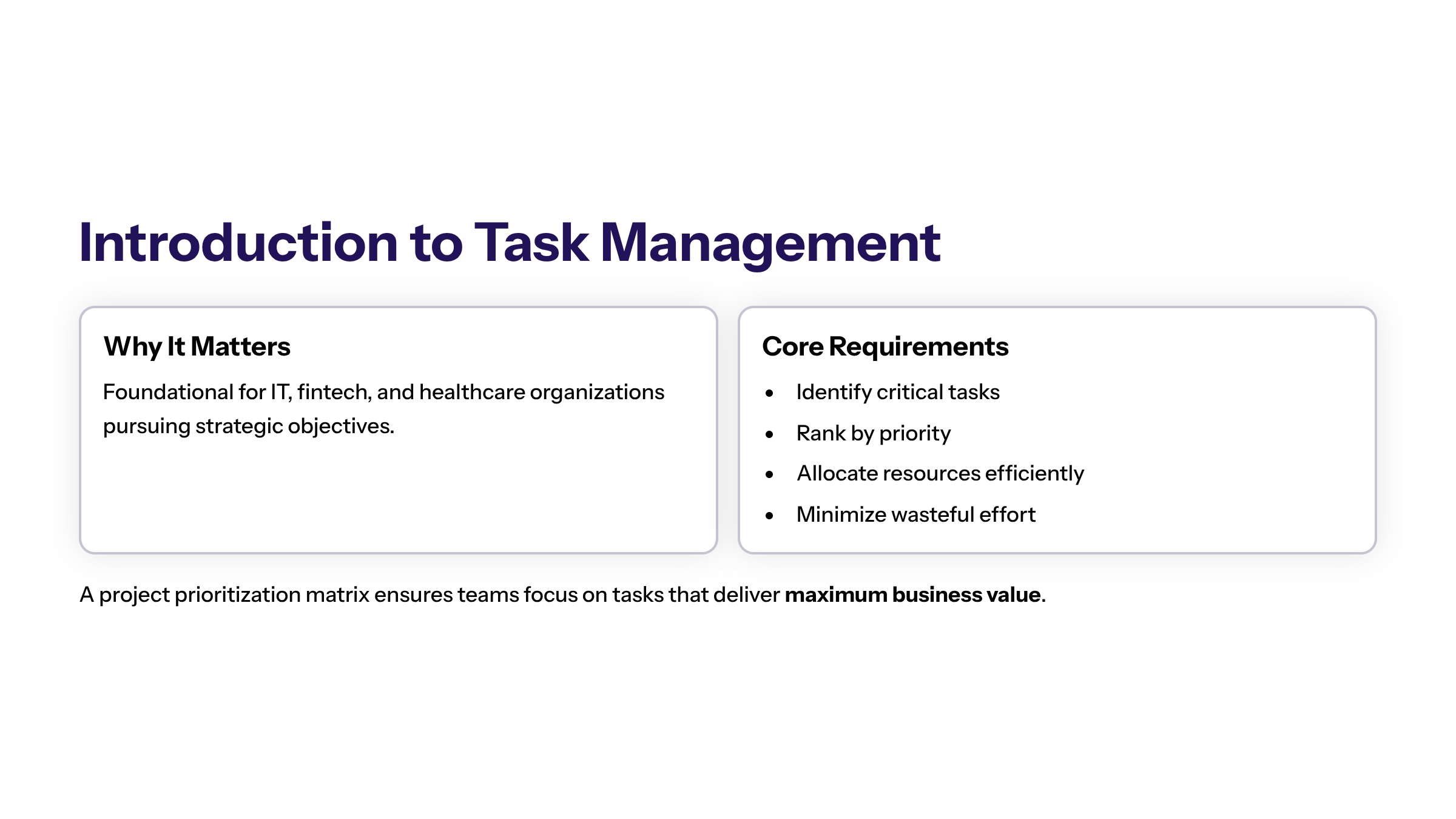
Effective task management is foundational for achieving organizational objectives, particularly in dynamic sectors such as information technology, fintech, and healthcare, where Cognativ and similar enterprises operate. It requires a structured framework that helps teams identify critical tasks, ranking tasks based on priority, allocate resources efficiently, and minimize wasteful efforts.
Utilizing a project prioritization matrix template enables organizations to streamline their workflow, ensuring that teams focus on tasks that deliver significant business value by organizing and prioritizing to dos for maximum business value.
The Role of Prioritization in Modern Enterprises
In complex environments, where multiple projects compete for limited resources, the prioritization process becomes essential.
By using a prioritization matrix template, the team figure out which tasks are high-priority, ensuring all team members are aligned and focused on the most impactful work. It facilitates resource allocation by highlighting tasks that offer the greatest potential impact relative to effort and cost.
This approach aligns with strategic goals, such as those outlined in digital transformation initiatives or AI-first architectures adopted by leading firms.
“Prioritization matrices are indispensable tools for organizations seeking to balance innovation with operational efficiency, enabling teams to make objective decisions amidst competing demands.” – Annelise Pretorius, Psychometrics Assessments Expert, AIHR
Understanding the Prioritization Matrix
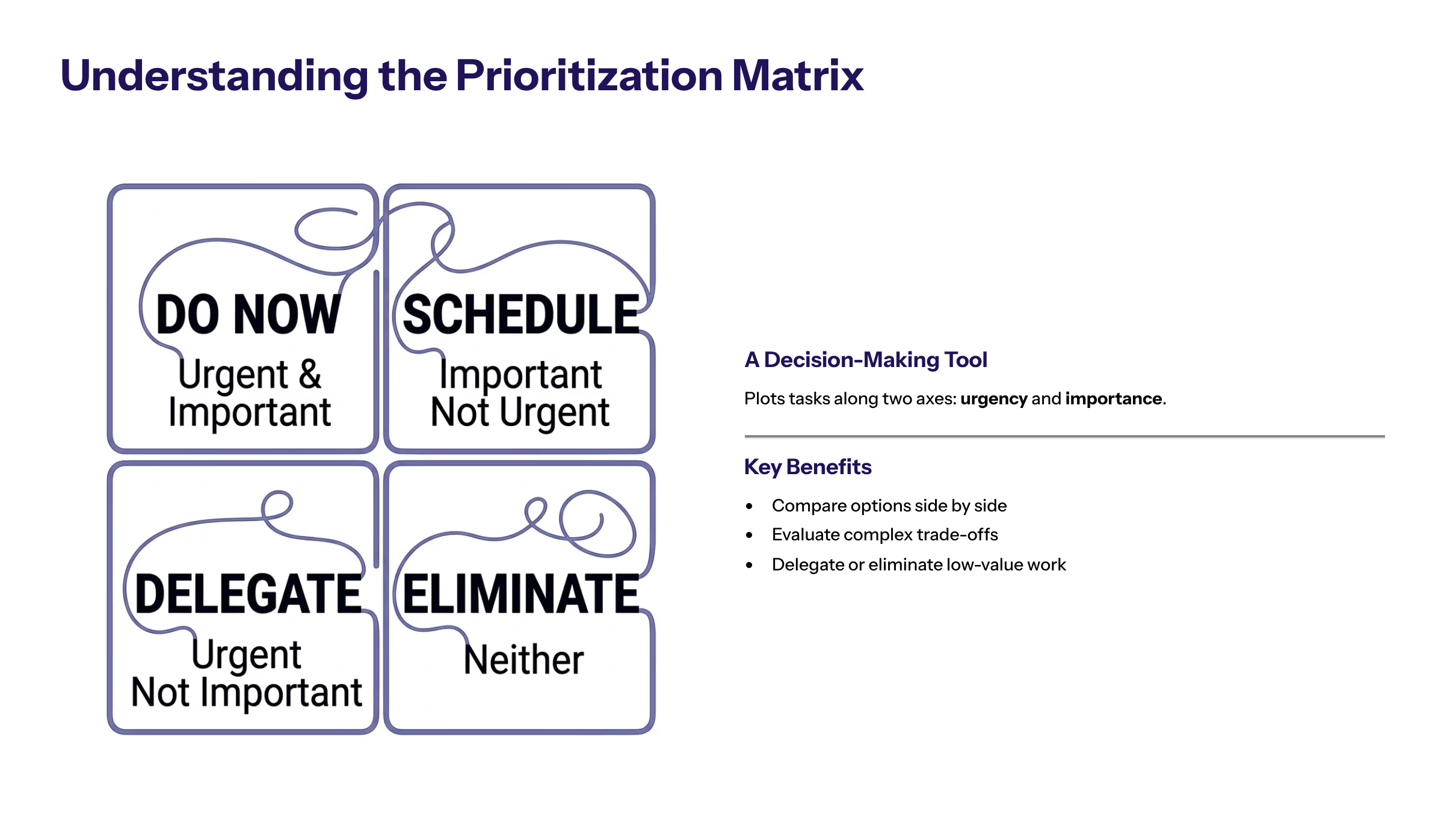
A prioritization matrix is a decision-making tool that visually plots tasks or projects along two axes—typically urgency and importance. It enables teams to compare options side by side, making it easier to evaluate multiple choices when facing complex trade-offs.
This visualization aids teams in organizing their to do list, ensuring that critical tasks receive immediate attention while less urgent or low importance activities are delegated, scheduled, or eliminated (also known as the urgent important matrix).
The Four Quadrants of the Prioritization Matrix
The matrix is divided into four quadrants, each representing a category of tasks:
Quadrant | Description | Recommended Action |
|---|---|---|
Urgent & Important | Tasks requiring immediate attention with significant consequences if delayed | Do immediately |
Important but Not Urgent | Tasks that contribute to long-term goals but do not require immediate action | Schedule for later |
Urgent but Not Important | Tasks that demand quick action but have low strategic value | Delegate to others |
Not Urgent & Not Important | Tasks with minimal impact and no pressing deadline; often referred to as 'fill ins', these can be addressed when time allows | Eliminate or minimize |
This framework is foundational to the Eisenhower Matrix, a widely adopted prioritization template used by cross-functional teams to ensure strategic alignment and effective task management.
Visualizing Priorities with the Impact Effort Matrix
Complementing the urgency-importance matrix, the Impact Effort Matrix evaluates tasks based on potential impact versus the effort required. In addition to prioritizing tasks, the Impact Effort Matrix and similar tools, like the Risk Priority Matrix, help teams identify and prioritize potential risks.
The Risk Priority Matrix assesses the severity and likelihood of potential risks to prioritize them effectively. This matrix helps identify quick wins—tasks that require low effort but yield significant benefits—and major projects that demand substantial resources but offer transformative value.
“The Impact Effort Matrix is particularly useful in project management contexts where teams must balance short-term gains with long-term strategic investments.” – Joe Newsum, McKinsey Alum and Leadership Coach
Benefits of Prioritization
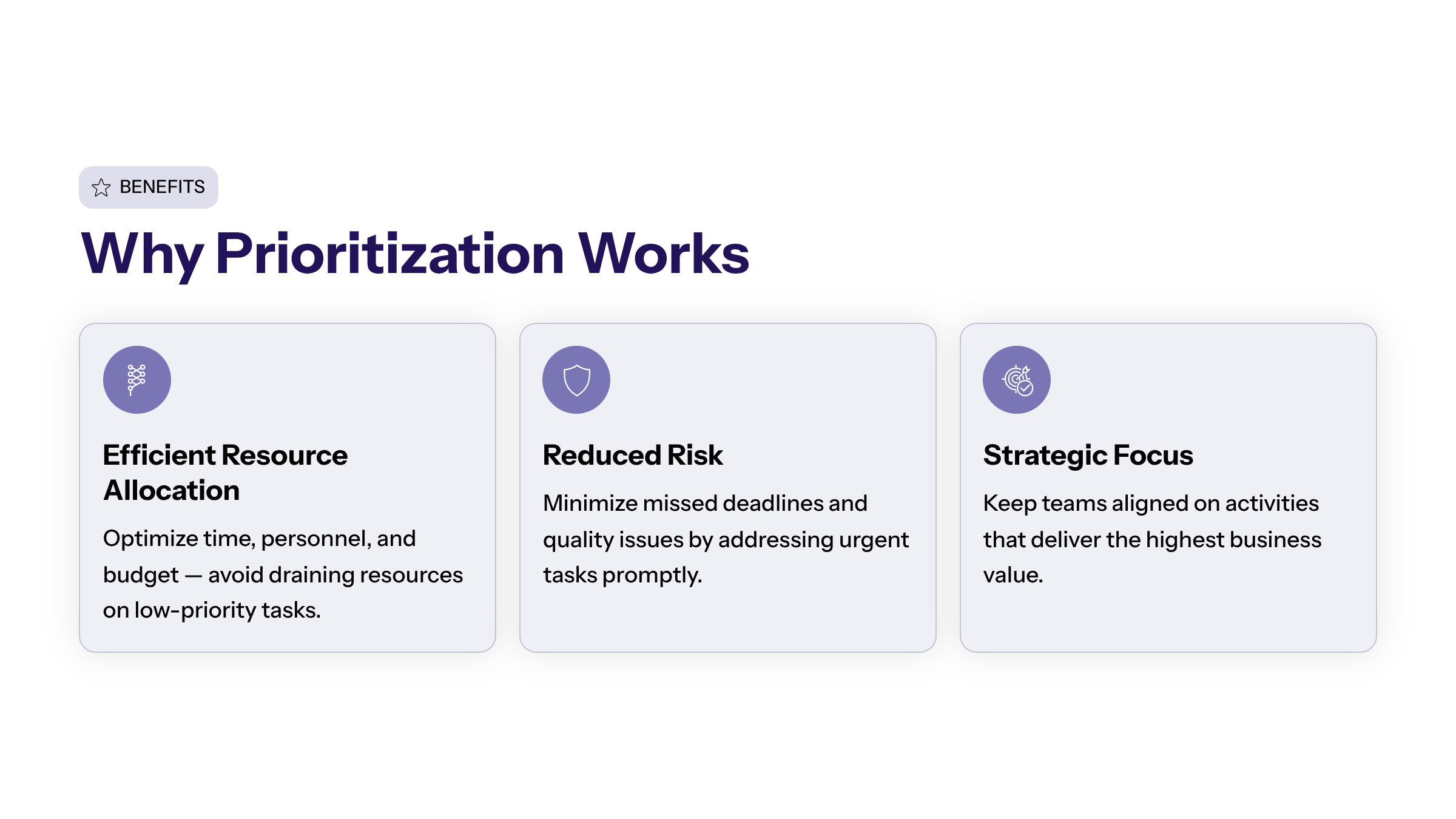
Implementing a prioritization matrix template offers numerous advantages:
Efficient Resource Allocation: By focusing on critical tasks, teams optimize the use of time, personnel, and budget, avoiding resource drain on low-priority activities.
Reduced Negative Consequences: Prioritization minimizes risks such as missed deadlines or quality issues by ensuring that urgent and important tasks are addressed promptly.
Enhanced Team Morale and Productivity: Clear priorities reduce confusion and overload, fostering a sense of accomplishment and motivation.
Improved Decision-Making: The structured framework supports objective decisions, reducing bias and aligning task management with strategic goals.
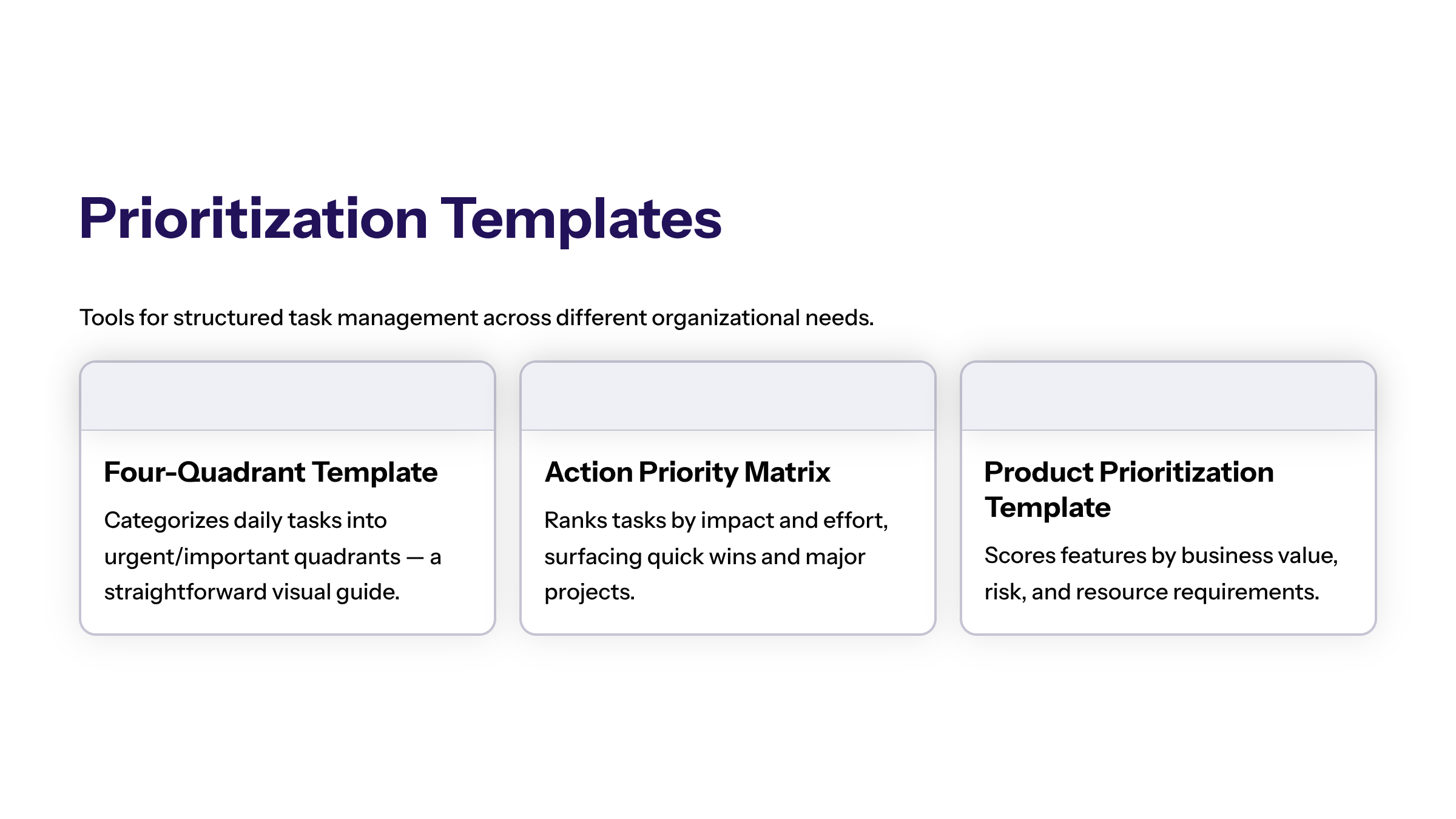
Prioritization Templates: Tools for Structured Task Management
Various prioritization templates exist to support different organizational needs:
Eisenhower Matrix Template
This template categorizes daily tasks into the four quadrants described above, providing a straightforward visual guide for prioritizing urgent and important tasks versus less critical ones. It is particularly effective for managing daily tasks and ensuring focus on what truly matters.
Project Prioritization Matrix Template
Designed for ranking multiple projects competing for resources, this template incorporates weighted criteria such as business value, risk, resource cost, and strategic alignment. It helps cross-functional teams compare multiple options objectively and allocate resources to initiatives with the highest potential impact.
Product Prioritization Matrix Template
Product managers use this template to prioritize new features or enhancements by balancing customer value, business value, operational cost, and implementation effort.
Techniques like the MoSCoW method (Must, Should, Could, Would) often complement this template to categorize features based on priority.
Task Prioritization Matrix Template
Ideal for individuals or small teams, this template assists in organizing a task list by urgency and importance, helping to identify quick wins and thankless tasks that can be delegated or eliminated.
Template Type | Primary Use Case | Key Features |
|---|---|---|
Eisenhower Matrix | Daily task management | Four quadrants, urgency & importance |
Project Prioritization Matrix | Ranking competing projects | Weighted criteria, scoring system |
Product Prioritization Matrix | Prioritizing product features | Customer & business value, MoSCoW method |
Task Prioritization Matrix | Organizing individual or team tasks | Urgency, importance, quick wins, thankless tasks |
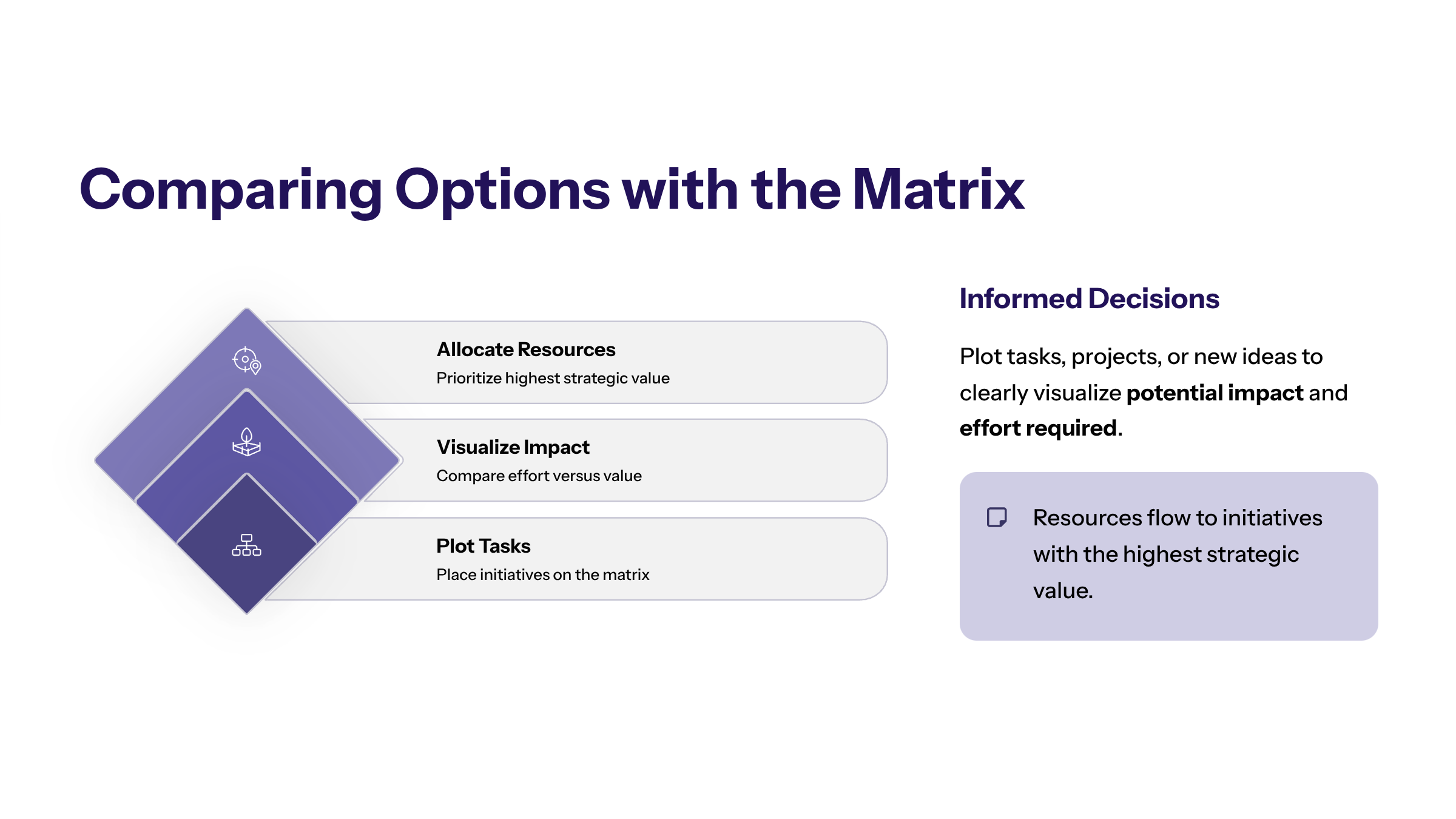
Comparing Options: Making Informed Decisions with the Matrix
A prioritization matrix is a powerful tool for comparing multiple options and making informed decisions in complex project environments. By plotting tasks, projects, or new ideas on the matrix template, teams can clearly visualize the potential impact and effort required for each option.
This structured framework enables organizations to prioritize based on strategic goals, ensuring that resources are allocated to initiatives with the highest business value.
For example, when using a project prioritization matrix template, teams can evaluate and rank projects by considering factors such as business value, risk, and resources required.
This approach makes it easier to compare multiple options objectively, identify which projects align best with organizational priorities, and allocate resources where they will deliver the most significant benefits.
By leveraging the matrix, teams can make objective decisions, avoid bias, and ensure that every project or task supports the broader strategic direction of the business.
Identifying and Managing Low Effort Tasks
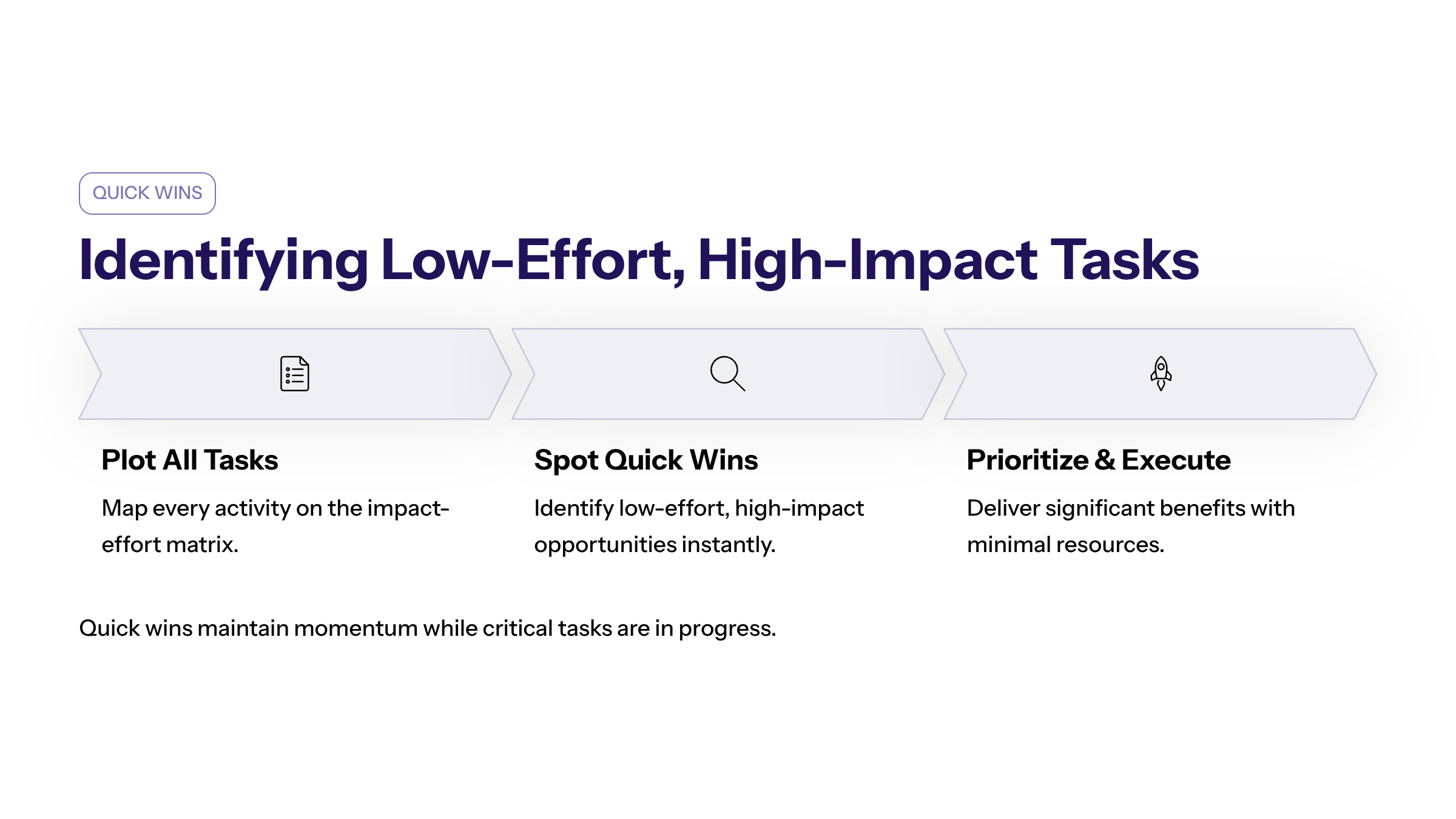
Low effort tasks, often known as “quick wins,” play a crucial role in maintaining momentum and delivering significant benefits with minimal resources.
The impact effort matrix is an excellent tool for identifying these opportunities. By plotting tasks on the matrix template, teams can quickly spot which activities require low effort but offer high impact, allowing them to prioritize these quick wins alongside more critical tasks.
Using a task prioritization matrix template, teams can organize daily tasks and ensure that important tasks are not overlooked in favor of less demanding ones.
This approach helps balance the workload, ensuring that the most critical tasks receive attention while still making progress on low effort activities that contribute to overall productivity.
By managing both high and low effort tasks effectively, organizations can maximize resource utilization and achieve continuous improvement.
Calculating Totals for Objective Prioritization
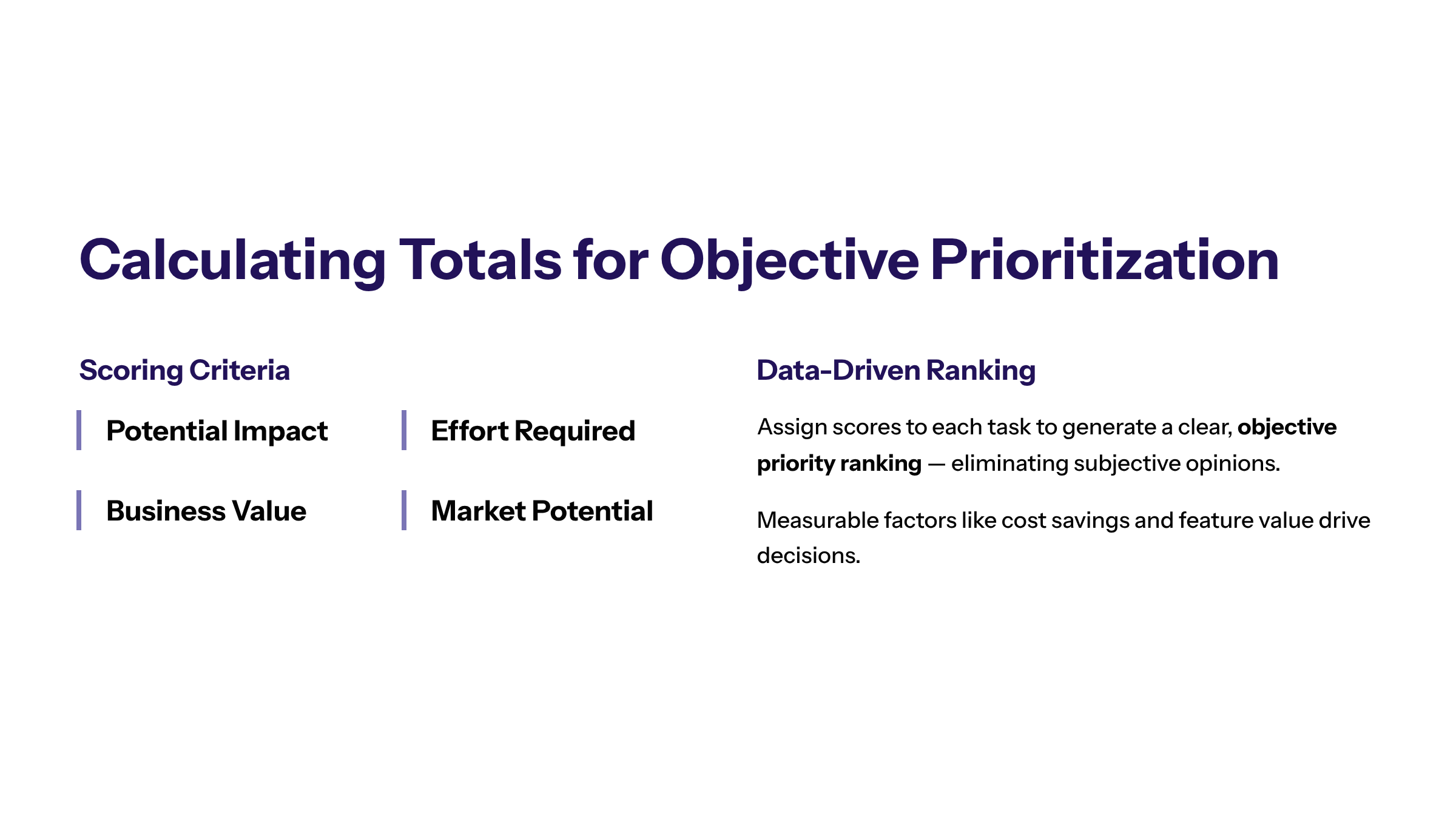
Objective prioritization is essential for effective project management, and calculating totals within a priority matrix template is a key part of this process.
By assigning scores to each task or project based on criteria such as potential impact, effort required, and business value, teams can use the project priority matrix template or product prioritization matrix template to generate a clear, data-driven ranking.
This scoring system ensures that prioritization is based on measurable factors like cost savings, market potential, and the value of new features, rather than subjective opinions. Calculating totals allows teams to compare projects and tasks side by side, making it easier to identify which initiatives should move forward.
This structured approach to the prioritization process supports objective decisions, helping organizations focus on projects that offer the greatest potential impact and align with strategic goals.
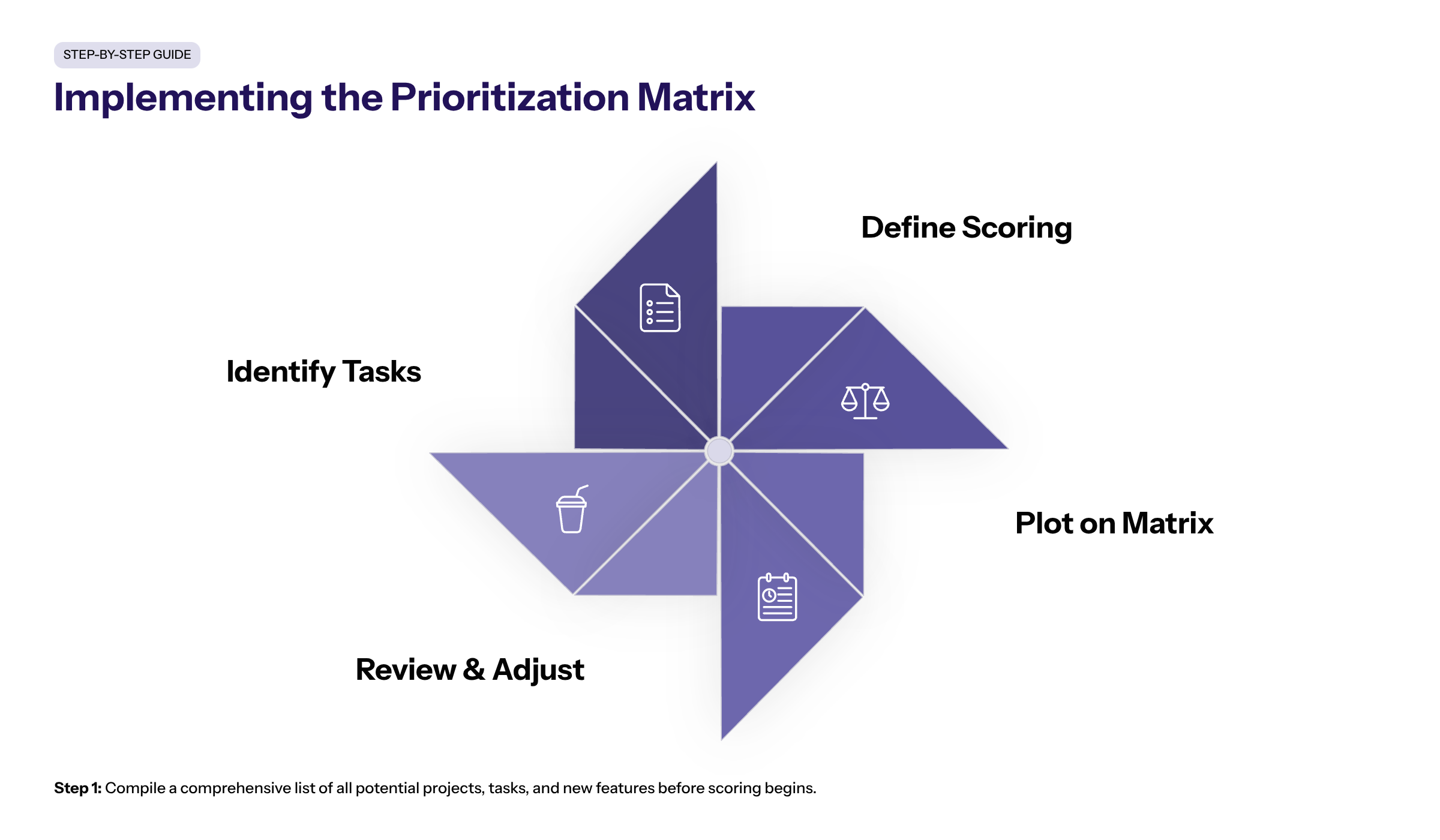
Implementing the Prioritization Matrix: A Step-by-Step Guide
Successful implementation requires a structured approach:
Step 1: Identify Tasks and Projects
Compile a comprehensive list of potential projects, tasks, or new features. Engage stakeholders across departments to ensure completeness.
Step 2: Define Evaluation Criteria
Establish criteria such as urgency, importance, business value, cost savings, and resource requirements. Assign weights to reflect strategic priorities.
Step 3: Score and Rank
Evaluate each item against the criteria using a consistent scoring system. Calculate totals to generate an overall ranking.
Step 4: Visualize Priorities
Plot tasks on the prioritization matrix to gain a shared understanding among team members and leadership.
Step 5: Review and Adjust Regularly
Priorities evolve as projects progress and market conditions change. Regularly revisit the matrix to adjust scores and ensure alignment with strategic goals.
“A dynamic prioritization process enables organizations to remain agile, responding to new challenges and opportunities with clarity and confidence.” – Annelise Pretorius, AIHR
Overcoming Common Challenges
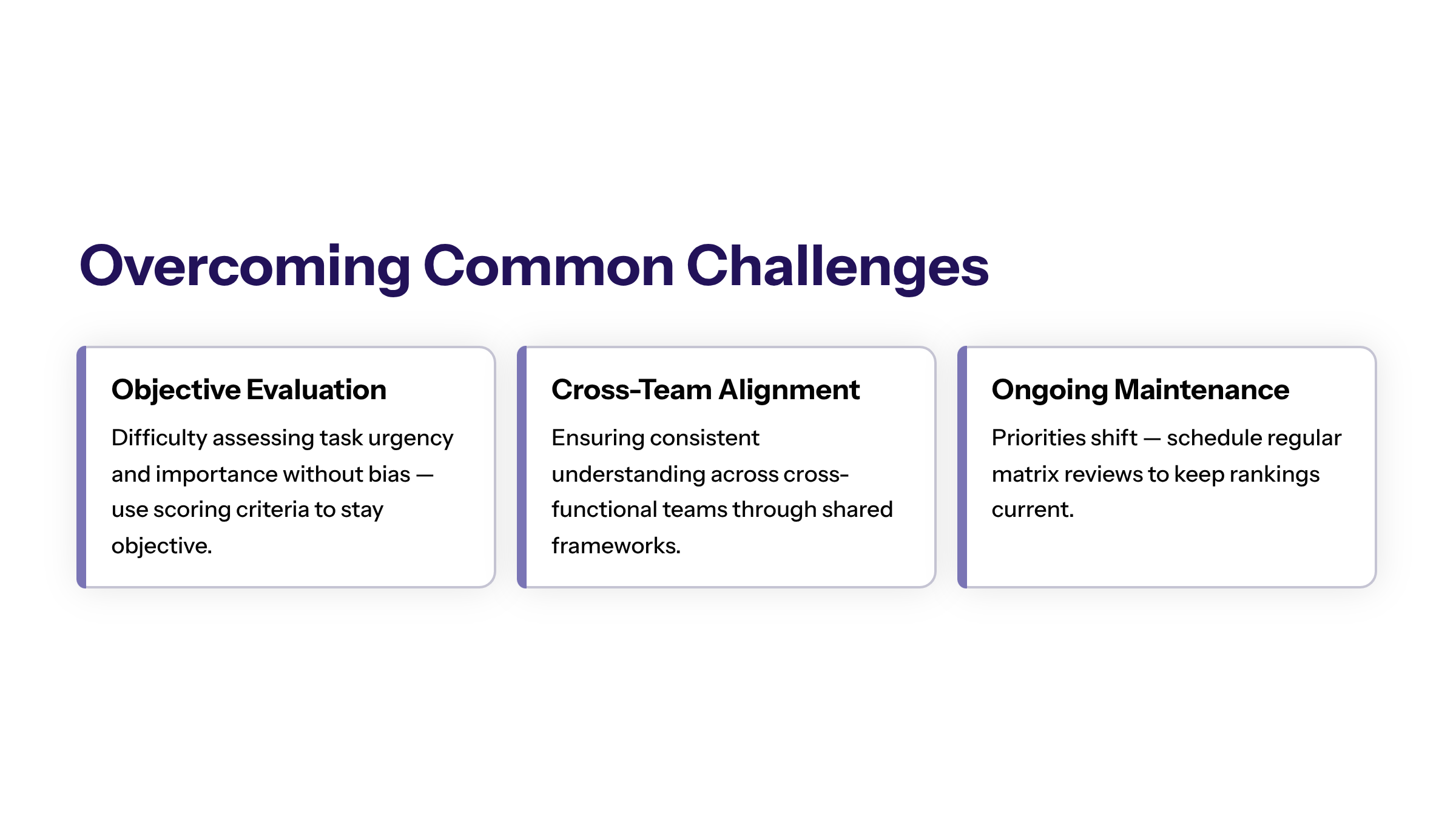
While prioritization matrices offer clarity, teams often face challenges such as:
Difficulty in objectively evaluating task urgency and importance.
Ensuring consistent understanding across cross-functional teams.
Managing tasks that may fit multiple quadrants or criteria.
Addressing these challenges involves clear communication, consensus-building, and leveraging data-driven insights to support decisions.
Best Practices for Effective Prioritization
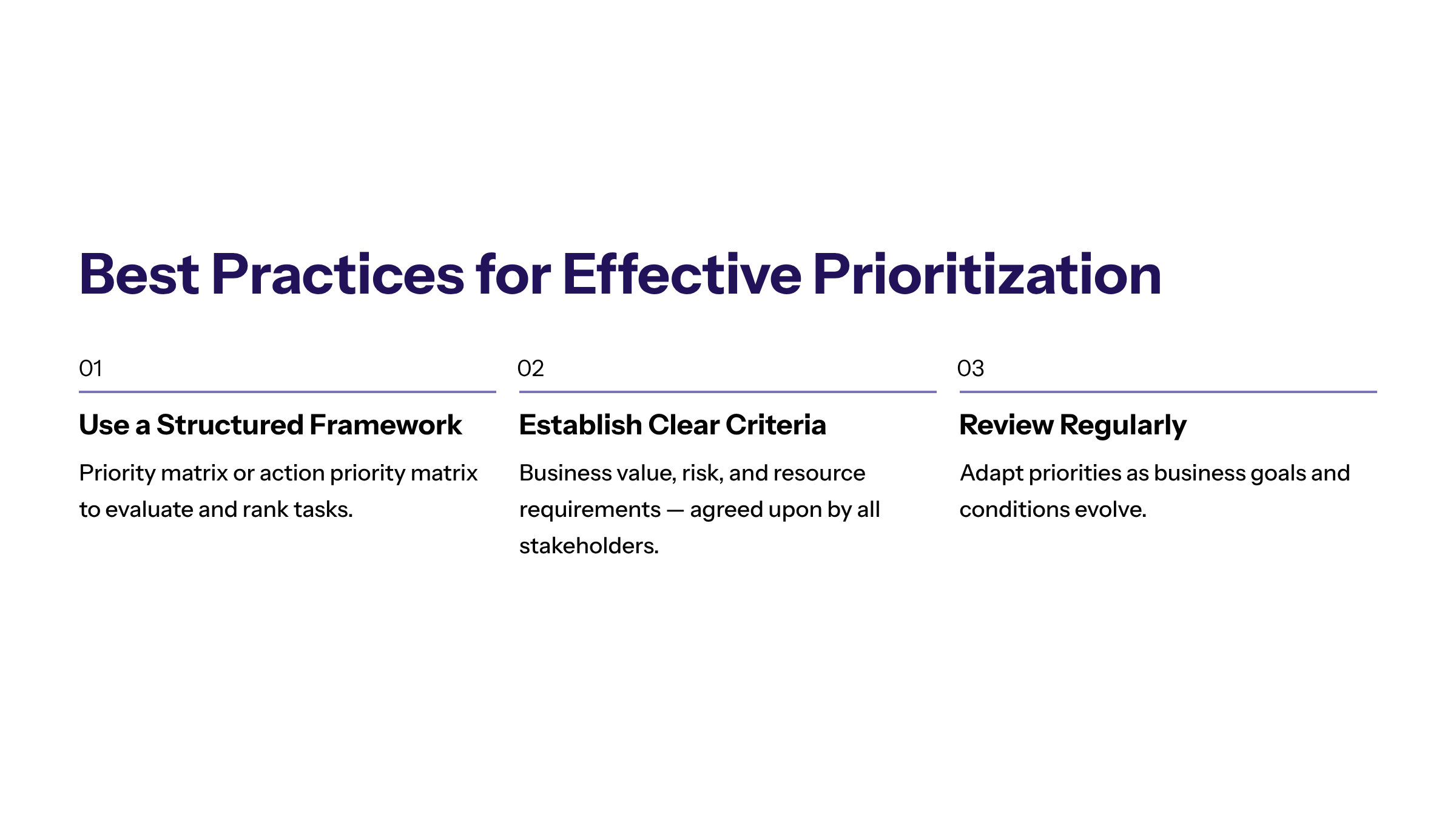
To achieve the greatest benefits from prioritization, teams should follow best practices that ensure clarity, alignment, and adaptability. Start by using a structured framework, such as a priority matrix template or action priority matrix, to evaluate and rank tasks and projects. Establish clear criteria for prioritization—such as business value, risk, and resource requirements—and ensure all stakeholders have a shared understanding of these priorities.
Regularly review and adjust the matrix template to reflect changing circumstances, keeping everyone on the same page and aligned with strategic goals.
Leverage tools like the Eisenhower matrix for daily tasks and the action priority matrix for larger projects to guide decision making and resource allocation. By following these best practices, teams can prioritize tasks effectively, maximize resource allocation, and drive projects toward successful outcomes with confidence and clarity.
Conclusion
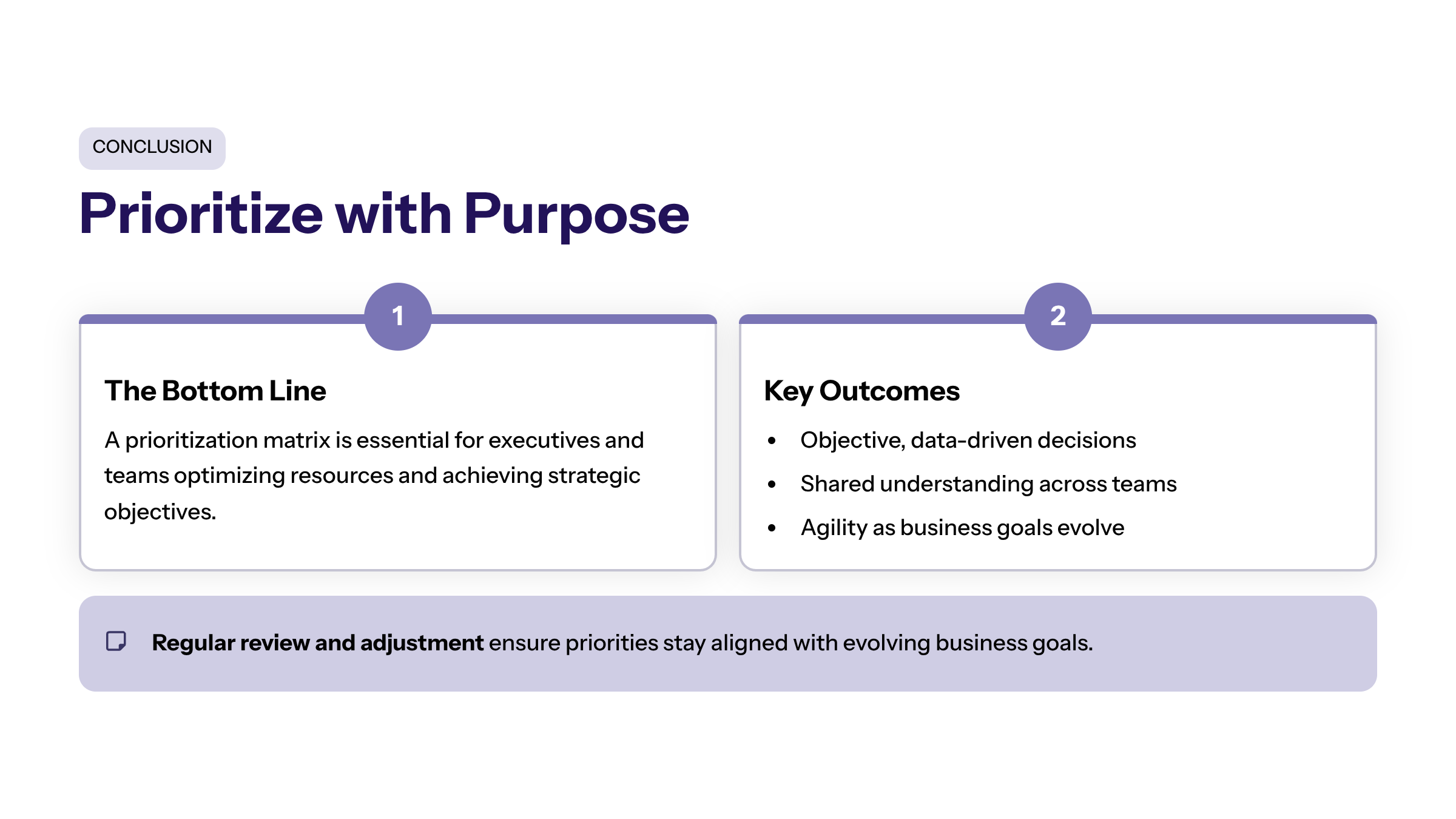
A prioritization matrix template is an essential tool for executives and teams aiming to enhance task management, optimize resource allocation, and achieve strategic objectives.
By providing a structured framework to rank tasks and projects based on urgency, importance, and impact, prioritization matrices facilitate objective decisions and foster a shared understanding across teams.
Regular review and adjustment ensure that priorities remain aligned with evolving business goals, enabling organizations to navigate complexity with agility and focus.
Implementing these frameworks, supported by proven methodologies such as the Eisenhower Matrix and Impact Effort Matrix, empowers organizations to transform their to do list into a strategic action plan that drives measurable business outcomes.