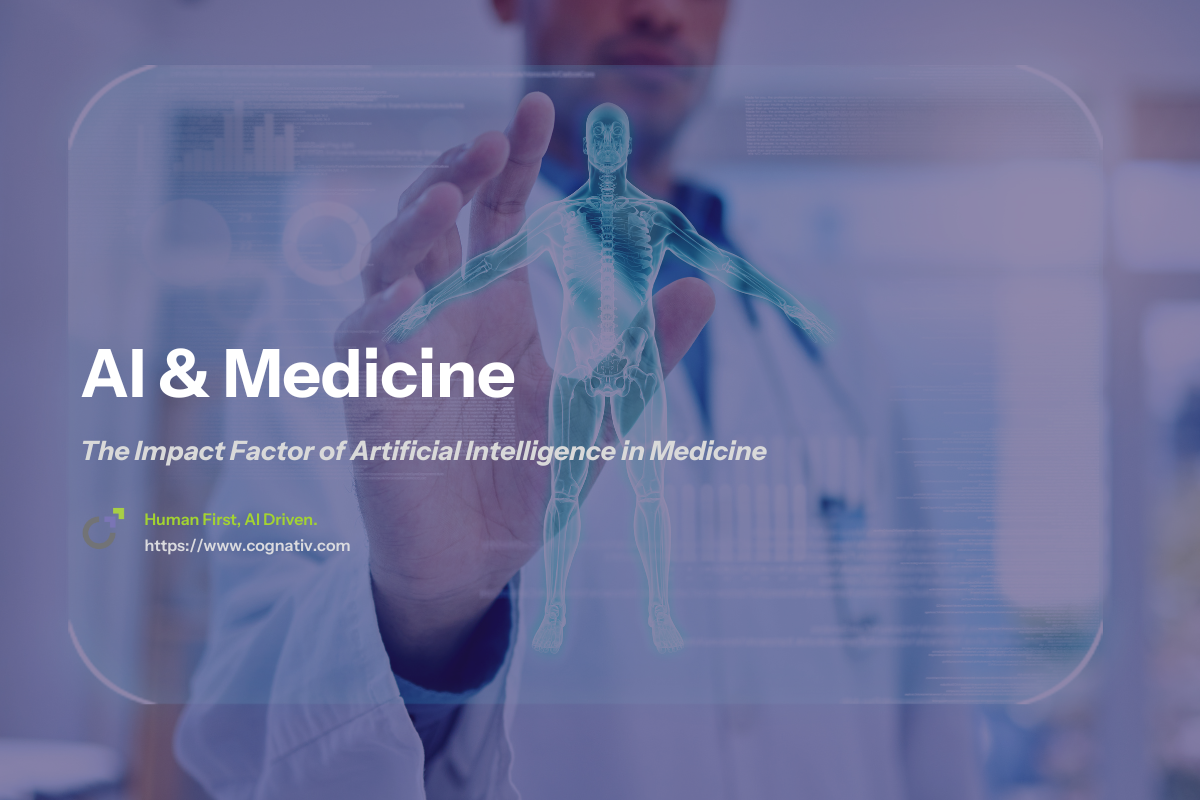
The Impact Factor of Artificial Intelligence in Medicine
Artificial intelligence (AI) is transforming medicine at an unprecedented pace. As AI technologies mature, their impact on clinical care, health informatics, and medical research is becoming increasingly significant. Stakeholders ranging from healthcare providers and researchers to technology vendors and regulators are navigating this evolving landscape. Understanding the impact factor of AI in medicine publications offers valuable insight into the scientific discipline pertaining to this field and highlights influential research shaping the future of healthcare.
The article, as a primary research output, plays a crucial role in contributing to a journal's impact factor and overall scientific influence within the academic community.
Key Takeaways
-
Artificial intelligence in medicine is an interdisciplinary field combining computer science, medically oriented human biology, and health care to support decision-based medical tasks.
-
Leading journals like Artificial Intelligence in Medicine publish original articles and conference papers that reflect a wide variety of interdisciplinary perspectives concerning the theory and practice of AI in medicine.
-
Metrics such as impact factor, Scimago Journal Rank (SJR), and h-index provide measures of the usefulness and potential impact of AI research within the medical domain.
-
AI applications in clinical medicine, health informatics, and medical imaging are driving innovation, improving patient outcomes, and reducing healthcare costs.
-
Enterprise adoption of AI in medicine requires careful consideration of compliance, risk, cost, and integration with existing healthcare infrastructure.

Introduction to the Field
Artificial intelligence in medicine is a scientific discipline that merges advanced computer science techniques with medical and healthcare expertise. This integration aims to develop intelligent devices and data-driven solutions that ultimately support human care providers in clinical assessment and decision-making. AI technologies are designed to assist the human care provider, enhancing their capabilities rather than replacing traditional healthcare professionals. Research studies and publication manuscripts in this field cover a broad spectrum, from machine learning algorithms analyzing large datasets to deep learning models interpreting medical images.
The journal Artificial Intelligence in Medicine stands as a leading platform that publishes original articles from a wide variety of interdisciplinary perspectives. These articles discuss projects and methods that contribute to the theory related to AI applications in real-world medical domains. The journal emphasizes both the theory and practice of artificial intelligence, making it a critical resource for understanding the potential high impact of AI innovations in healthcare.
Medicine and Health Care
Artificial intelligence in medicine encompasses numerous applications across clinical medicine, medically oriented human biology, and health informatics. AI-powered tools enable healthcare providers to analyze complex medical images, diagnose diseases with higher accuracy, and develop personalized treatment plans tailored to individual patients. This integration improves patient outcomes while enhancing the efficiency and cost-effectiveness of healthcare delivery.
Health informatics plays a pivotal role by combining computer science and healthcare to manage and analyze medical data effectively. AI-driven analytics identify patterns and insights from vast datasets, supporting clinical decision-making and facilitating new medical discoveries. The use of AI in medicine considers not only the immediate clinical benefits but also the broader implications for healthcare systems and patient safety.
Clinical Applications
The clinical applications of artificial intelligence are diverse and rapidly expanding. Machine learning algorithms analyze patient data to detect early signs of disease, monitor patient health remotely, and customize therapeutic approaches. Deep learning techniques applied to medical images enhance the detection of abnormalities such as tumors or vascular diseases, improving diagnostic accuracy.
AI's role in clinical settings extends beyond diagnosis. It supports clinical assessments by providing predictive analytics and risk stratification, helping clinicians prioritize care and allocate resources efficiently. These advancements reduce medical errors and improve patient safety, demonstrating the practical value of AI in everyday medical practice.
Examples of AI in Clinical Practice
-
AI algorithms that interpret radiology images to detect lung cancer earlier than traditional methods.
-
Predictive models that identify patients at high risk of hospital readmission, enabling proactive interventions.
-
Personalized medicine platforms that tailor drug regimens based on genetic and clinical data.
Role of Intelligence in Medicine
Intelligence in medicine refers to the application of artificial intelligence and machine learning to enhance clinical decision-making and improve healthcare outcomes. This involves leveraging data science to analyze large datasets, uncover hidden insights, and develop intelligent devices that augment human expertise. Intelligence AI in medicine encompasses interdisciplinary applications such as clinical decision support, medical imaging, and personalized medicine, driving innovation across multiple healthcare domains.
The practice of artificial intelligence in medicine aims to reduce healthcare costs while increasing the quality and safety of care. AI-powered decision support systems provide clinicians with evidence-based recommendations, facilitating more informed and timely decisions. This integration fosters a more patient-centric approach and enhances engagement by enabling personalized treatment plans.
Health Informatics and Medical Images
Health informatics is a critical domain that bridges computer science and healthcare, focusing on managing and analyzing medical data. Medical images, such as X-rays, MRIs, and CT scans, are essential components of health informatics. AI-powered tools analyze these images with remarkable precision, improving the detection and diagnosis of diseases.
The use of AI in medical imaging not only enhances diagnostic accuracy but also accelerates workflows, allowing radiologists and clinicians to focus on complex cases. Statistical methods and deep learning models are central to these advancements, enabling automated detection of anomalies and quantification of disease progression.
Journal Rankings and Metrics
Evaluating the impact of AI research in medicine involves several key metrics. The Scimago Journal Rank (SJR) measures the scientific influence and prestige of journals by considering both the number of citations and the importance of the citing journals. The impact factor, another widely used metric, reflects the average number of citations to recent articles published in a journal.
The h-index assesses the productivity and citation impact of researchers or journals, providing insight into sustained influence over time. Journals like Artificial Intelligence in Medicine maintain strong rankings and high impact factors, underscoring their role in disseminating significant research with practical and theoretical relevance. Medicine publishes original articles focused on AI applications, medical informatics, and imaging, and these journals are often peer-reviewed and interdisciplinary. Many leading journals in this field are open access journals, which facilitate broad dissemination and collaboration in the medical and biomedical communities.
NEJM AI and Other Resources
NEJM AI is an emerging publication dedicated to the application of AI methodologies and data science in clinical medicine and health care. It covers topics such as personalized medicine, medical imaging, telemedicine, and the ethical implications of AI deployment.
Additional resources, including open-access journals and online platforms, provide access to a broad range of research articles, conference papers, and reviews. These resources are strongly recommended for clinicians, researchers, and enterprise leaders seeking to stay current with the latest developments and opportunities in AI-driven medicine.
Ethics and Regulation in Health Care
The rapid advancement of artificial intelligence in medicine brings with it a host of ethical and regulatory considerations that are central to the responsible evolution of the field. As a scientific discipline, artificial intelligence in medicine must ensure that decision-based medical tasks are performed with the highest standards of care, transparency, and accountability. Leveraging advanced computer science techniques, AI systems are increasingly supporting human care providers in clinical medicine and medically oriented human biology, but this progress also demands careful oversight.
Addressing these challenges requires a variety of interdisciplinary perspectives concerning artificial intelligence in medicine. Collaboration between clinicians, computer scientists, ethicists, and regulatory experts is essential to navigate the complexities of health care and ensure that AI-driven solutions are both effective and ethically sound. The development and deployment of machine learning and deep learning models—especially those analyzing medical images or sensitive healthcare data—necessitate rigorous testing and validation in real world medical domains to minimize bias, reduce errors, and safeguard patient outcomes.
Transparency, reproducibility, and explainability are critical pillars in the publication of research articles, original articles, and conference papers on artificial intelligence in medicine. Submitted work must undergo thorough peer review, with journals and editorial boards emphasizing proper depth, accuracy, and the potential impact of findings. High-ranking journals, as measured by Scimago Journal Rank (SJR), play a pivotal role in setting these standards and fostering the dissemination of high-quality, impactful research. Open access journals further enhance collaboration and knowledge exchange, enabling a broader community of researchers, clinicians, and policymakers to engage with the latest advancements.
Establishing robust regulatory frameworks is increasingly important as intelligent devices and AI-powered systems become more integrated into healthcare. These frameworks must prioritize patient safety, privacy, and well-being, ensuring that the practical applications of artificial intelligence in medicine align with ethical principles and legal requirements. Leading publications such as NEJM AI provide a platform for discussing these issues, highlighting the need for strong novelty, potential high impact, and responsible innovation in published articles.
Ultimately, the aim of artificial intelligence in medicine is to enhance patient care, improve health outcomes, and support human care providers in their decision-making processes. Achieving this requires a deep understanding of the interplay between technology, human biology, and healthcare, as well as a commitment to ethical standards and regulatory compliance. As the field continues to evolve, ongoing dialogue and collaboration across disciplines will be essential to realize the full potential of AI in medicine while safeguarding the interests of patients and society.
Future Directions and Trends
The future of artificial intelligence in medicine promises continued growth and innovation. Areas such as precision medicine, population health analytics, and healthcare operations are poised to benefit from AI integration. Emerging technologies like natural language processing, Internet of Things (IoT), and blockchain are expected to converge with AI, creating new paradigms for healthcare delivery.
Enterprise adoption will increasingly focus on scalable, secure AI-first architectures that comply with regulations such as HIPAA and GDPR. Strategic investments in AI-driven digital transformation will be essential to harness the full potential impact of these technologies while managing risks and costs.
Conclusion
Artificial intelligence in medicine represents a transformative scientific discipline with profound implications for clinical practice, healthcare management, and medical research. Leading journals and metrics highlight the interdisciplinary perspectives and strong novelty driving this field forward. For enterprises, understanding these developments is critical to crafting effective AI strategies that balance innovation, compliance, and operational efficiency.
Stay ahead of AI and tech strategy. Subscribe to What Goes On: Cognativ’s Weekly Tech Digest for deeper insights and executive analysis.