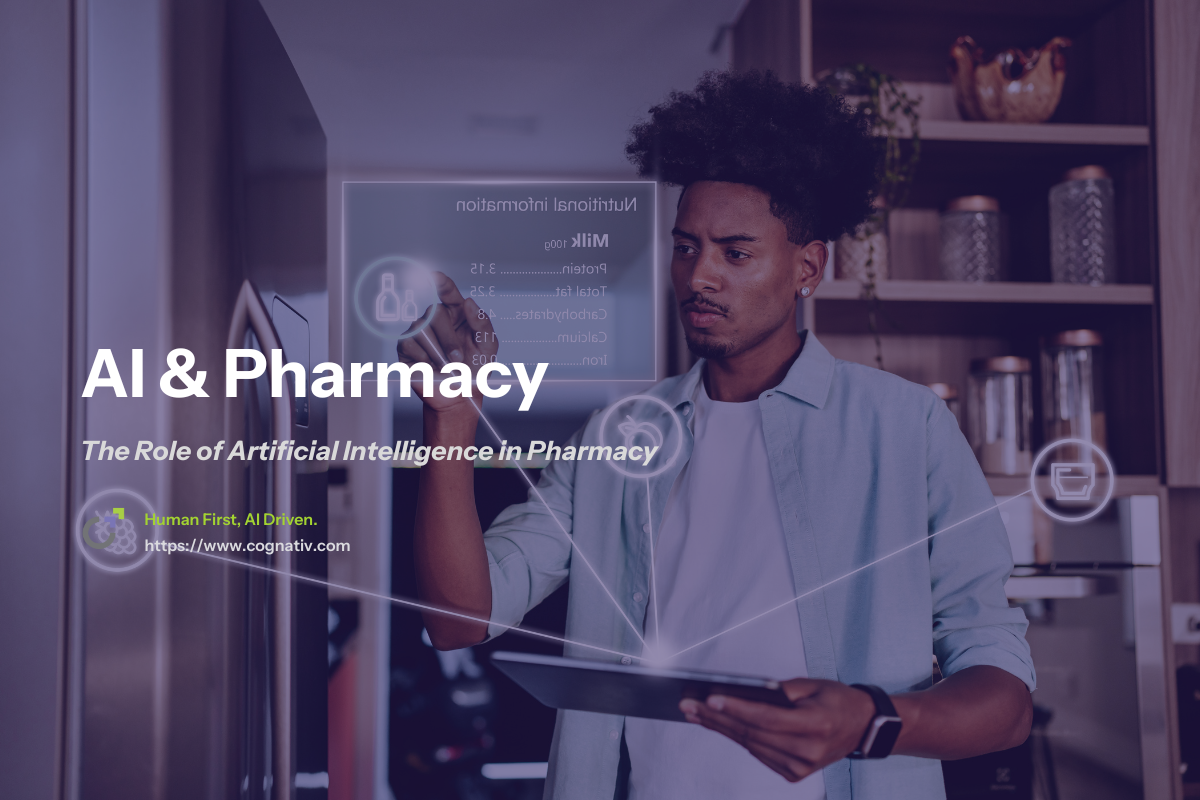
The Role of Artificial Intelligence in Pharmacy
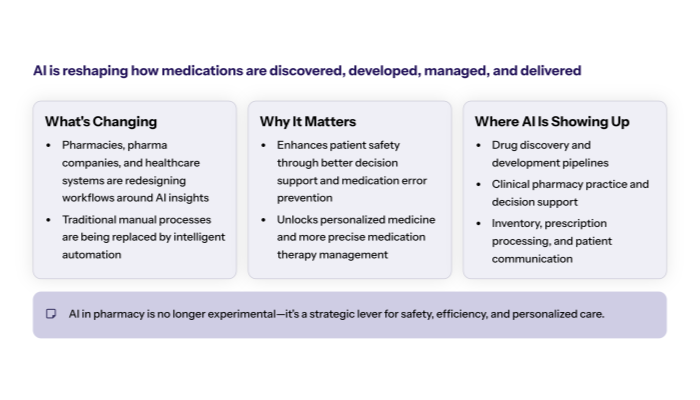
Artificial intelligence (AI) is reshaping the pharmacy sector, driving significant advancements in how medications are discovered, developed, managed, and delivered to patients. For healthcare executives and pharmacy leaders, understanding the strategic implications of AI integration is critical as it promises to enhance patient safety, optimize medication management, and transform clinical practice. Stakeholders ranging from pharmaceutical companies to retail pharmacies and healthcare organizations are leveraging AI technologies to improve operational efficiency, reduce costs, and deliver personalized medicine.
Key Takeaways
-
AI in pharmacy enhances patient safety and clinical decision support by analyzing vast patient data and identifying potential medication errors.
-
Integration of AI into pharmacy operations automates routine tasks like inventory management and prescription processing, reducing human error and operational costs.
-
AI-driven drug discovery accelerates pharmaceutical research, cutting development times and improving drug safety profiles.
-
Challenges remain around data quality, regulatory compliance, and ethical considerations, requiring robust governance frameworks.
-
Ongoing pharmaceutical education and training are essential for pharmacists to effectively utilize AI tools and maintain the human touch in patient care.

Introduction to Artificial Intelligence in Pharmacy
AI technology employs intelligent computer programs designed to mimic human cognitive functions such as learning, reasoning, and decision-making. In pharmacy, AI systems utilize machine learning and natural language processing to analyze patient data, medical records, and clinical trial results. This enables the creation of personalized treatment plans, real-time clinical decision support, and enhanced medication therapy management.
The present status of AI in pharmacy reflects a growing adoption across various settings—from hospital and retail pharmacies to pharmaceutical research and development. As healthcare systems increasingly digitize patient information, AI integration offers unparalleled opportunities to improve patient outcomes and streamline pharmacy operations.
AI Technology and Applications in Pharmacy
The pharmaceutical sector is embracing AI to automate time-consuming, repetitive tasks and to extract actionable insights from big data. AI algorithms can detect potential drug interactions, adverse reactions, and dosage recommendations by analyzing complex datasets including electronic health records and genomic information.
Automation and Operational Efficiency
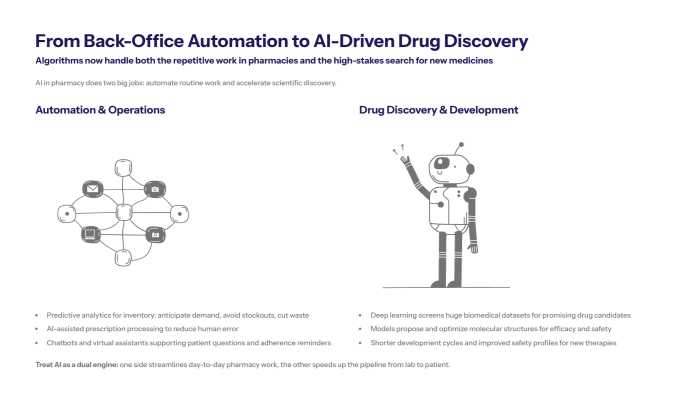
Pharmacy operations benefit from AI-powered automation in inventory management and prescription processing. Predictive analytics enable pharmacies to anticipate medication demand, avoid stockouts, and reduce waste. AI chatbots enhance patient communication by providing timely, personalized responses, thus improving medication adherence and patient engagement.
Drug Discovery and Development
AI is revolutionizing drug discovery by accelerating the identification of promising drug candidates and optimizing molecular structures. Technologies such as deep learning and neural networks analyze vast biomedical datasets to predict efficacy and safety, significantly shortening the drug development lifecycle. Pharmaceutical companies like Pfizer and Roche are investing heavily in AI-driven research platforms to maintain competitive advantage.
Clinical Pharmacy Practice and Patient Care
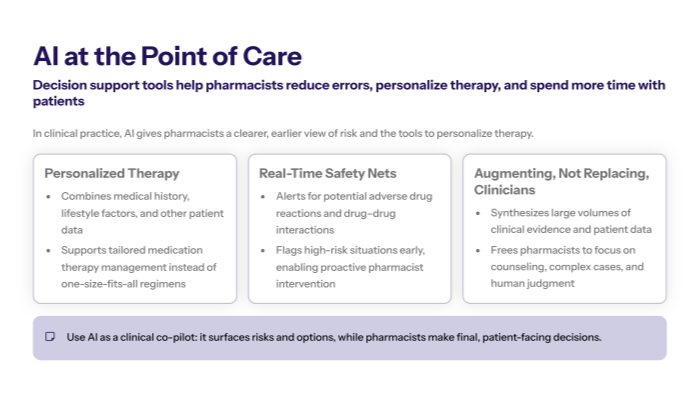
In clinical settings, AI tools empower pharmacists to deliver more effective, personalized care. By analyzing patient-specific data—including lifestyle factors and medical history—AI supports medication therapy management and clinical decision-making. This reduces the risk of medication errors and enhances patient safety.
Enhancing Patient Safety and Outcomes
AI systems provide real-time alerts for potential adverse drug reactions and drug-drug interactions, enabling proactive interventions. This enhances patient outcomes and reduces healthcare costs associated with medication-related complications.
Supporting Healthcare Professionals
AI augments the expertise of healthcare professionals by synthesizing large volumes of clinical evidence and patient data. This supports informed decisions, allowing pharmacists to focus on direct patient care and complex clinical tasks that require human judgement and insight.
Pharmacy Operations and Management
AI integration in pharmacy management streamlines workflows and improves efficiency. Automated dispensing systems, such as those implemented at the University of California San Francisco Medical Center, have demonstrated 100% accuracy in medication preparation, reducing human error and freeing pharmacists to engage more deeply in patient care.
Inventory and Prescription Management
Advanced AI models predict medication usage patterns and optimize stock levels. This not only reduces operational costs but also ensures timely availability of medications, a critical factor in retail pharmacy settings.
Patient Communication and Adherence
AI-driven applications facilitate ongoing patient engagement through medication reminders, symptom tracking, and virtual consultations. These tools help improve adherence and empower patients to participate actively in their health care.
Challenges and Limitations of AI in Pharmacy
Despite its transformative potential, AI adoption in pharmacy faces several challenges. Data quality and integrity are paramount for reliable AI outputs. Regulatory compliance, including adherence to HIPAA and GDPR, requires rigorous data security measures. Ethical considerations, such as patient autonomy and informed consent, must guide AI implementation.
Ongoing education and training in pharmaceutical education are essential to equip pharmacists with the skills needed to interpret AI-generated insights and maintain the human touch in patient interactions.
Education and Training for AI Adoption
To fully realize AI’s benefits, healthcare organizations must invest in continuous professional development. Pharmacy education curricula are evolving to include AI literacy, covering its applications, benefits, and limitations. Practicing pharmacists require training on AI tools to ensure safe, effective, and ethical use in clinical practice.

Conclusion
Artificial intelligence is profoundly transforming pharmacy practice, offering opportunities to enhance patient safety, optimize medication management, and accelerate drug discovery. For healthcare executives and pharmacy leaders, embracing AI integration is not just a technological upgrade but a strategic imperative that impacts cost, compliance, risk management, and patient care quality.
However, successful adoption depends on addressing challenges related to data quality, regulatory frameworks, and ethical standards, alongside investing in pharmaceutical education and workforce training. The future of pharmacy lies in the synergy of AI-driven insights and human judgement, ensuring personalized medicine and the human touch remain central to patient care.
Stay ahead of AI and tech strategy. Subscribe to What Goes On: Cognativ’s Weekly Tech Digest for deeper insights and executive analysis.