Companies in Need of IT Services: Who Needs Tech Support the Most?
Who needs IT services the most? This article covers various companies in need of IT services that rely heavily on IT support for cybersecurity, efficiency, and smooth operations. Learn which businesses benefit the most and why IT services are vital for them.
Key Takeaways
-
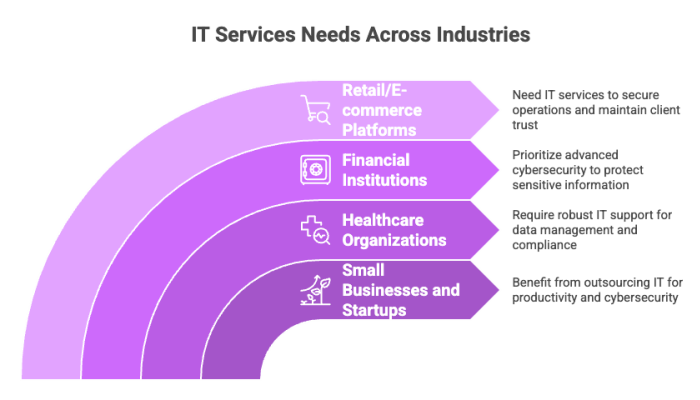
Small businesses and startups benefit significantly from outsourcing IT services due to limited resources, enhancing productivity and cybersecurity against threats.
-
Healthcare organizations require robust IT support to manage sensitive patient data and ensure compliance, given the high costs of data breaches and cyber threats.
-
Financial institutions and retail/e-commerce platforms prioritize advanced cybersecurity measures to protect sensitive information, maintain client trust, and secure operations.

Businesses Without Dedicated IT Departments
Small businesses and startups often struggle without dedicated IT departments. These companies are particularly vulnerable to cyber threats and data breaches, necessitating reliable IT services. Outsourcing IT support allows small businesses to access cost-effective solutions, improving efficiency and scalability in their operations.
Effective IT support for small businesses includes managing networks, databases, and troubleshooting hardware and software issues. Outsourcing these tasks allows business owners to focus on their core functions while experts manage IT operations. This enhances productivity and ensures security against cyber threats.
Additionally, IT support providers can implement robust security measures to reduce the risks associated with cyber threats. Client references and reviews offer valuable insights into the capabilities of different IT support providers, aiding businesses in making informed decisions.
Healthcare Organizations
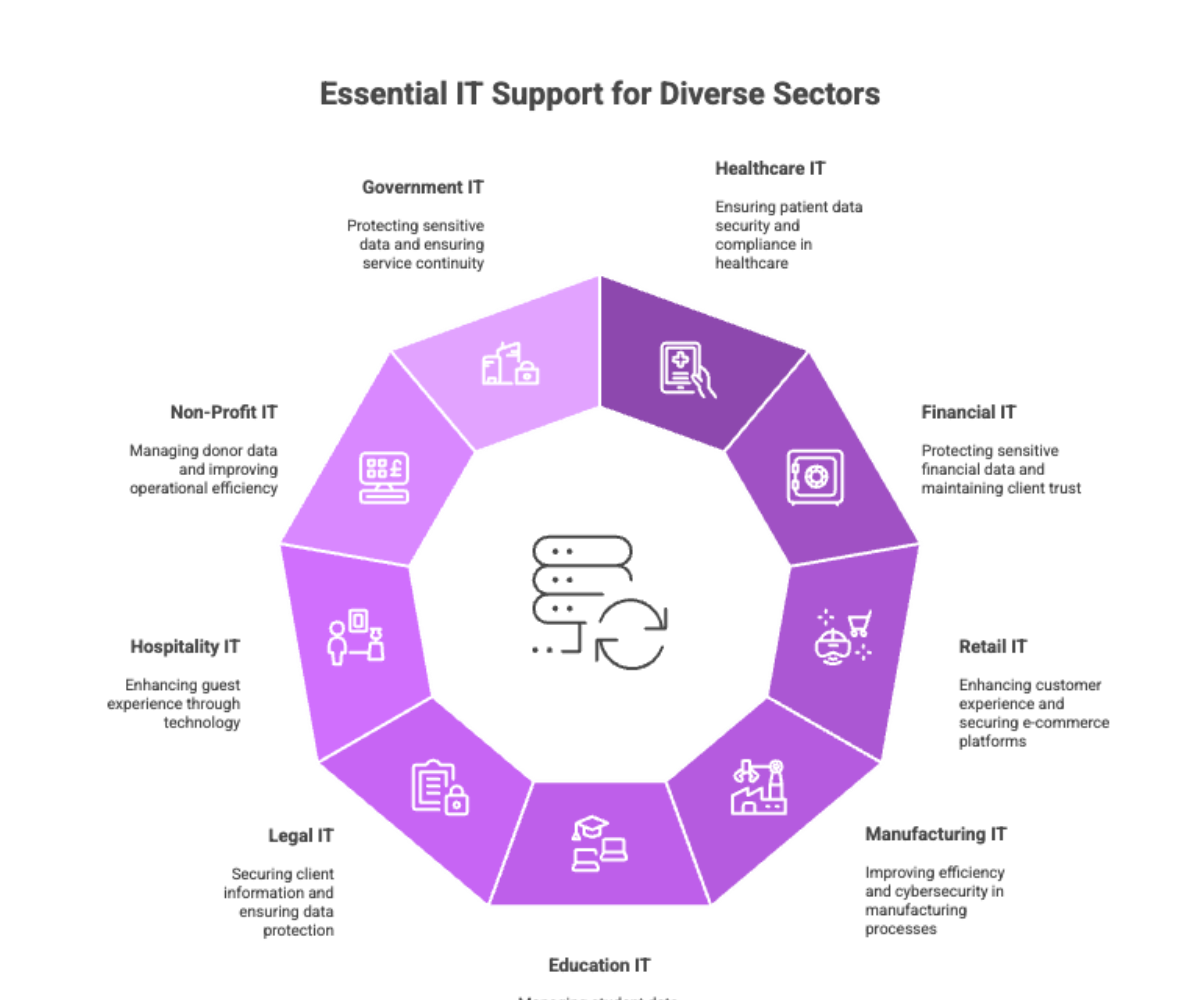
The healthcare industry depends on intricate IT systems to manage patient data and ensure regulatory compliance. A reliable IT structure is vital as it connects clinical operations with administrative tasks and compliance requirements. Any downtime in these systems can be detrimental, potentially costing around $636,000 per hour and jeopardizing patient safety.
Cloud environments are increasingly important for healthcare organizations. They facilitate secure data storage and support distributed care operations, simplifying patient information management. Despite these advancements, over 90% of healthcare institutions have experienced cyberattacks, highlighting the need for robust cybersecurity measures.
Cybersecurity in healthcare is financially significant, with the average cost of a data breach around $4.74 million. Healthcare-grade cybersecurity encompasses multi-layered strategies, including AI-driven threat detection and zero-trust security models, to protect sensitive patient information. Managed IT services play a crucial role in helping healthcare providers navigate these complex compliance landscapes effectively.
Financial Institutions
Financial institutions, including banks and fintech companies, handle highly sensitive financial data, making them prime targets for cyber attacks. Stringent cybersecurity measures like multi-factor authentication and regular security audits are necessary to protect against financial losses and identity theft.
A data breach in a financial institution can lead to substantial financial losses and serious reputational damage. Advanced cybersecurity solutions provide a strategic advantage to safeguard sensitive financial data and maintain client trust.
Retail and E-Commerce Platforms
Retail and e-commerce platforms rely on IT support for smooth operations, enhanced productivity, and driving innovation. IT infrastructure is crucial for delivering a positive customer experience, with 77% of retail IT decision-makers acknowledging its importance. Key priorities for IT support in this industry include:
-
Point-of-sale systems
-
Inventory management
-
E-commerce platforms
-
CRM systems.
Cybersecurity is a top priority for e-commerce platforms due to the risk of data breaches that can harm brand reputation and cause financial losses. Protecting credit card numbers, purchase histories, and customer information is crucial for maintaining customer confidence and trust.
Manufacturing Sector
The manufacturing sector is increasingly adopting IoT and generative ai technologies to enhance efficiency and productivity for the future. Key IT support focus areas include:
-
Reliable network infrastructure
-
Monitoring systems
-
Regular data backups
-
Disaster recovery plans
Ransomware crimes have become common in the manufacturing industry, making robust cybersecurity measures critical. Implementing IT support solutions allows manufacturers to scale operations, enhance developing automated inspection processes, and improve product quality through software development, driving growth and rise.
Educational Institutions
Educational institutions heavily depend on IT systems to manage student information and online learning platforms. A robust student information system (SIS) is vital for securely and efficiently managing student data.
Effective IT services enhance communication and engagement between educators, students, and parents through dedicated portals and messaging systems. Many K-12 schools use integrated systems that combine student information management with learning management platforms to streamline operations.
Legal Firms
Legal firms handle highly sensitive client information, necessitating robust security measures like multi-factor authentication. This enhances security by requiring users to provide multiple verification methods, reducing the likelihood of unauthorized access.
The use of multi-factor authentication signals to clients that a law firm takes data protection seriously, helping to build and maintain trust. Best practices for multi-factor authentication involve using diverse verification methods, educating staff about its importance, and regularly testing the system for effectiveness.
Hospitality Industry
The hospitality industry uses technology to enhance customer convenience and improve operational efficiency. Innovations include new technologies such as:
-
Mobile check-in
-
Keyless room entry
-
Virtual reality tours These significantly enhance the guest experience. Additionally, property management systems help hotels organize reservations and maintain guest data efficiently.
Additionally, chatbots and virtual assistants provide 24/7 customer support, easing the workload on staff and improving the guest experience through automation.
Non-Profit Organizations
Non-profits benefit from cost-effective IT solutions to manage donor information securely and enhance trust and transparency. Managed IT services ensure continuous maintenance and support without needing a large in-house team, enabling non-profits to focus on their mission.
Cloud services enable non-profits to manage resources better and collaborate more effectively with remote teams. These solutions help non-profits cut costs and improve operational efficiency, which is crucial for their success and cost savings.
Government Agencies
Government agencies hold a variety of sensitive data, making them prime targets for cyber attacks. Robust information technology support is crucial to protect this data and ensure continuity, competitiveness, and efficient service delivery.
Cybersecurity professionals play a central role in these organizations, protecting against ever-evolving cyber threats and ensuring compliance with cybersecurity regulations. Investing in cybersecurity is essential for government agencies to stay ahead and safeguard public data.
Case Studies: Successful IT Service Implementations
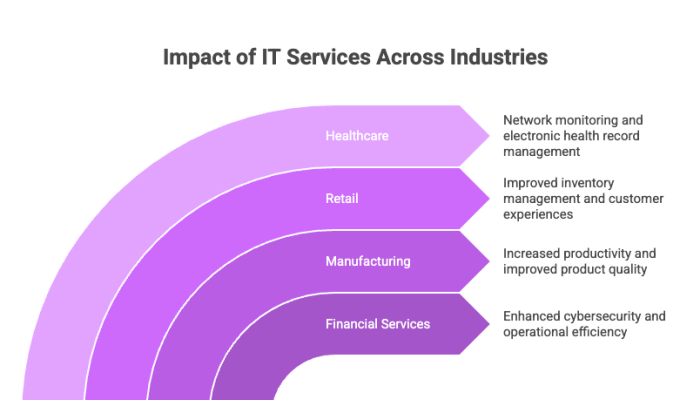
Real-world examples of successful IT service implementations offer valuable insights into how different industries benefit from tailored solutions. A financial services firm experienced enhanced cybersecurity, advanced data analytics, and improved operational efficiency after outsourcing their IT support, showcasing their expertise.
A manufacturing company that partnered with an IT support provider saw increased productivity, reduced downtime, and improved product quality that deliver better results in the supply chain. A retail chain improved inventory management, customer experiences, and achieved seamless integration between online and offline operations by outsourcing IT support.
A hospital successfully implemented an IT support system encompassing network monitoring, electronic health record management, and cybersecurity measures. These case studies highlight the significant difference made by top-notch IT services across a wide array of various industries, showcasing their track record.
Summary
In conclusion, IT support is indispensable for businesses across various industries. From small businesses to healthcare organizations, financial institutions, and beyond, each sector has unique IT needs that must be addressed to ensure their success and security. Investing in robust IT infrastructure and security measures is crucial for protecting sensitive data, enhancing operational efficiency, and staying competitive in today’s digital age.
The examples and insights provided throughout this blog post underscore the importance of tailored IT solutions in addressing the specific challenges faced by different industries. By understanding these requirements, businesses can make informed decisions about investing in IT services to ensure their long-term success and security.
Frequently Asked Questions
This FAQ section addresses common questions about companies in need of IT services, highlighting the critical role of tailored solutions and IT infrastructure in various industries. Whether you are a small business, healthcare organization, or part of the manufacturing sector, understanding how IT support, emerging technologies, and consulting firms optimize operations at a lower cost can provide a strategic advantage.
These insights demonstrate how leveraging joint ventures and advanced IT systems helps businesses stay ahead in a rapidly evolving digital world.
Why do small businesses need IT support?
Small businesses need IT support to manage their IT infrastructure effectively, enhance operational efficiency, and safeguard against cybersecurity threats due to the absence of dedicated IT departments. This reliance on external services is crucial for their overall stability and growth.
What are the IT challenges faced by healthcare organizations?
Healthcare organizations face significant IT challenges, including the need for secure patient data management, regulatory compliance, and protection against cyberattacks. Therefore, robust IT support is crucial for ensuring the integrity and safety of healthcare operations.
Why is multi-factor authentication important for legal firms?
Multi-factor authentication is crucial for legal firms as it significantly enhances security by necessitating multiple verification methods, thereby minimizing the risk of unauthorized access to sensitive client information. Implementing this measure is essential for protecting client confidentiality and maintaining trust.
How do IT services benefit non-profit organizations?
IT services enable non-profit organizations to manage donor information securely and facilitate collaboration among remote teams, ultimately leading to cost savings and improved operational efficiency.
What role do cybersecurity professionals play in government agencies?
Cybersecurity professionals are essential in government agencies as they safeguard sensitive public data, counteract evolving cyber threats, and ensure compliance with cybersecurity regulations. Their role is crucial in maintaining national security and public trust.