Process Debt: Challenges and Solutions for Your Business
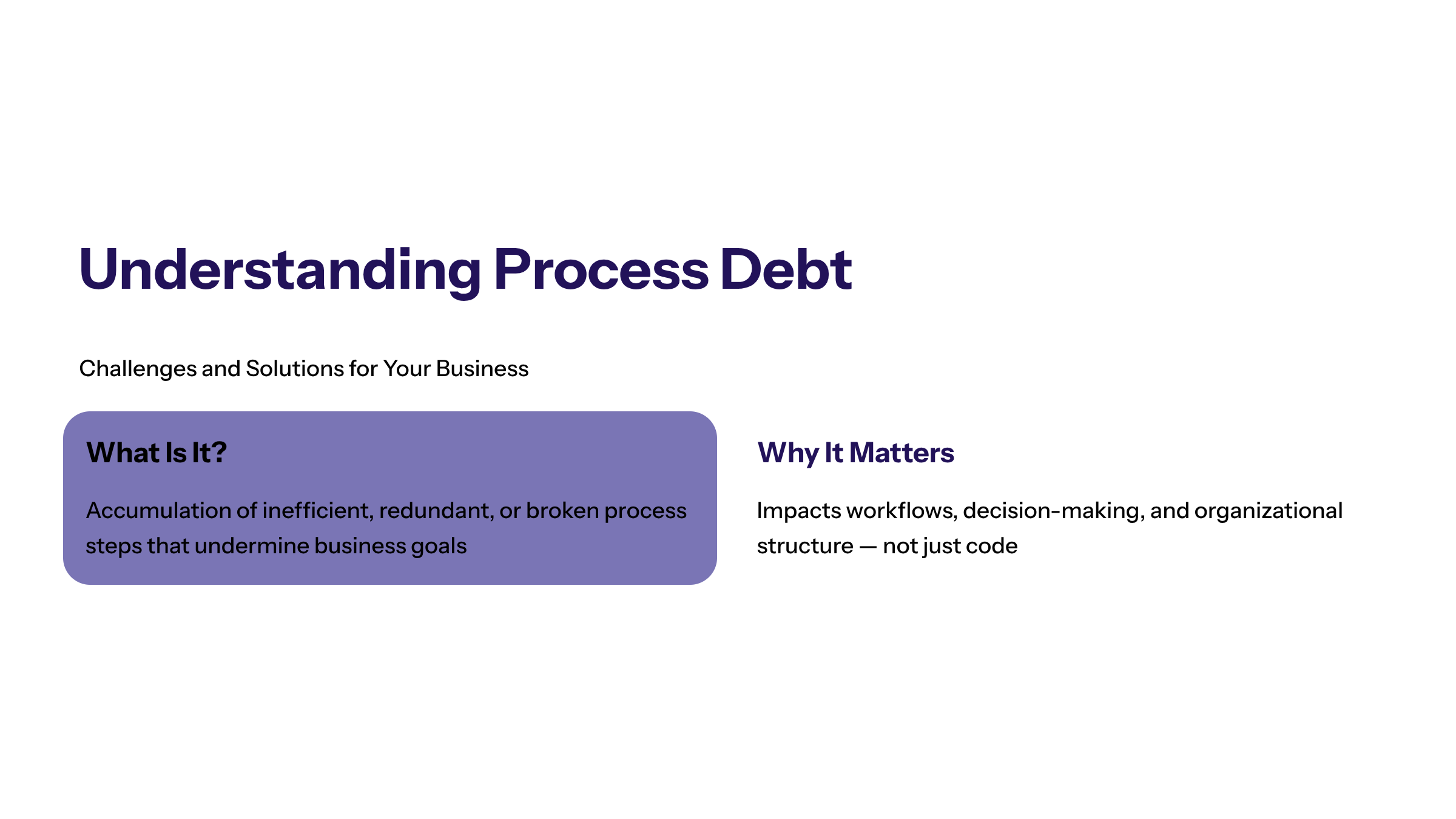
Process debt is an increasingly critical challenge for organizations navigating the complexities of digital transformation and software development. It refers to the accumulation of inefficient, redundant, or broken process steps that undermine business goals, increase operational costs, and reduce overall productivity.
Unlike technical debt, which focuses on suboptimal code or software architecture, process debt impacts workflows, decision-making, and organizational structure.
Addressing process debt is essential for companies seeking to optimize processes, meet evolving customer expectations, and sustain competitive advantage in a rapidly changing technology landscape.
Key Takeaways
Process debt accumulates through patchwork fixes, legacy systems, and automating broken processes, leading to inefficiencies that affect business value and employee satisfaction.
A comprehensive approach involving process documentation, process optimization, and automation—coupled with cultural change—is necessary to effectively identify, reduce, and fix process debt.
Longitudinal case studies and cross-company focus groups reveal that process debt is a harmful phenomenon with short and long term consequences, requiring ongoing mitigation strategies aligned with organizational goals.
Introduction to Process Debt
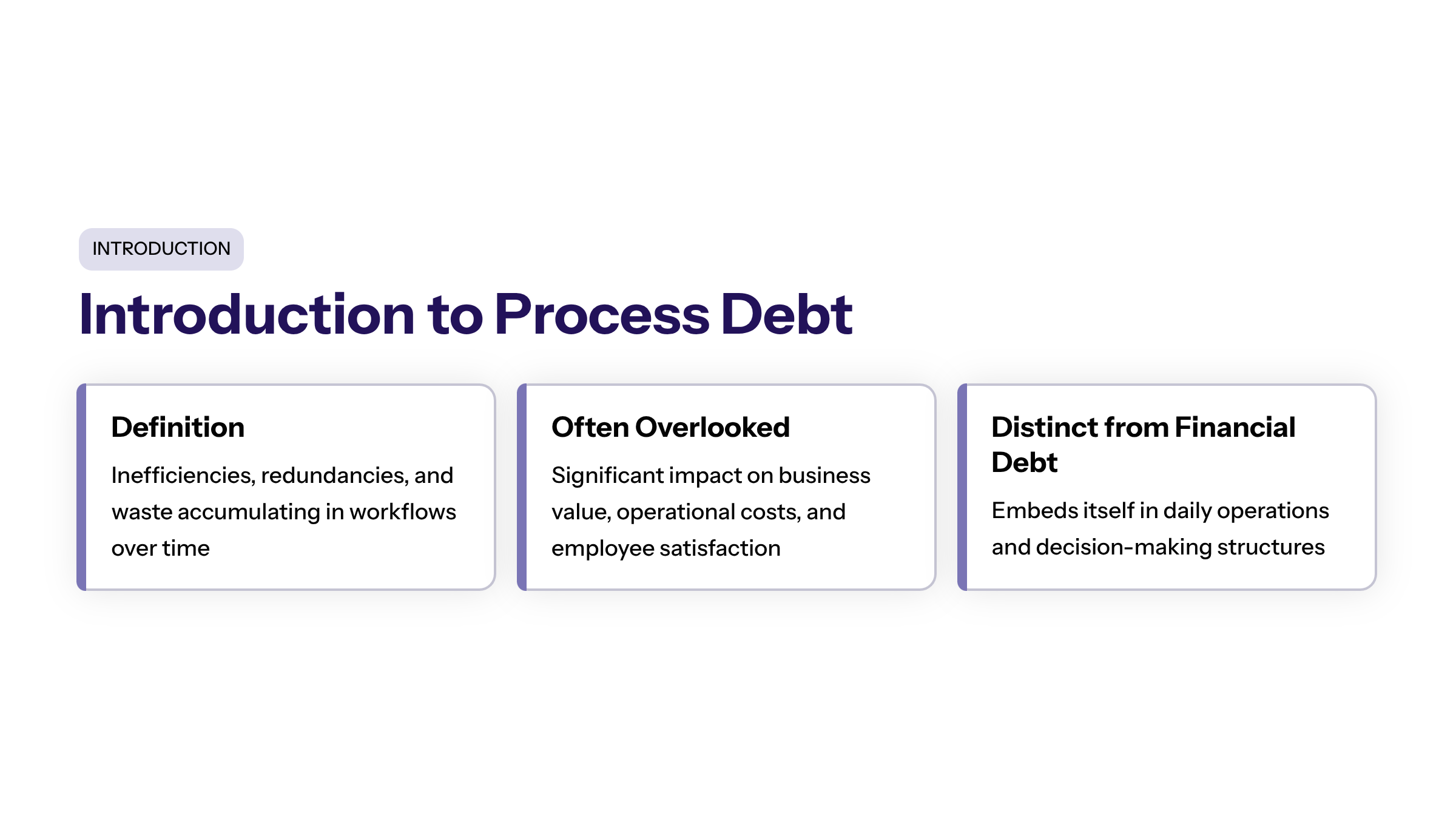
Process debt refers to the inefficiencies, redundancies, and waste that accumulate in workflows and operational processes over time. It is a harmful phenomenon that many organizations overlook, despite its significant impact on business value, operational costs, and employee satisfaction. Unlike financial debt, which involves monetary obligations, or technical debt, which concerns code quality and software architecture, process debt embeds itself in the daily operations and decision-making structures of companies.
Defining Process Debt and Its Relevance
Process debt is often the result of patchwork fixes, legacy systems that no longer align with current needs, and automating broken or redundant processes without prior optimization. This accumulation leads to operational drag that slows down transformation efforts and inhibits organizational agility. As companies pursue digital transformation initiatives, understanding and addressing process debt becomes essential to ensure that technology investments deliver the intended business value.
According to research from international organizations and peer-reviewed studies, process debt can generate both short term benefits—such as quick fixes to meet immediate demands—and long term negative impacts including increased costs and decreased employee morale. Recognizing this dual nature is critical for software organizations aiming to balance innovation with sustainable process improvement.
Expanding on the current literature, recent exploratory studies in software engineering emphasize the importance of defining process debt clearly. These studies report causes and occurrence patterns that help companies understand how process debt accumulates and its associated risks. Such research also highlights the need for future research and further attention to develop effective frameworks and present mitigation strategies that organizations can adopt to eliminate process debt systematically.

Causes of Process Debt
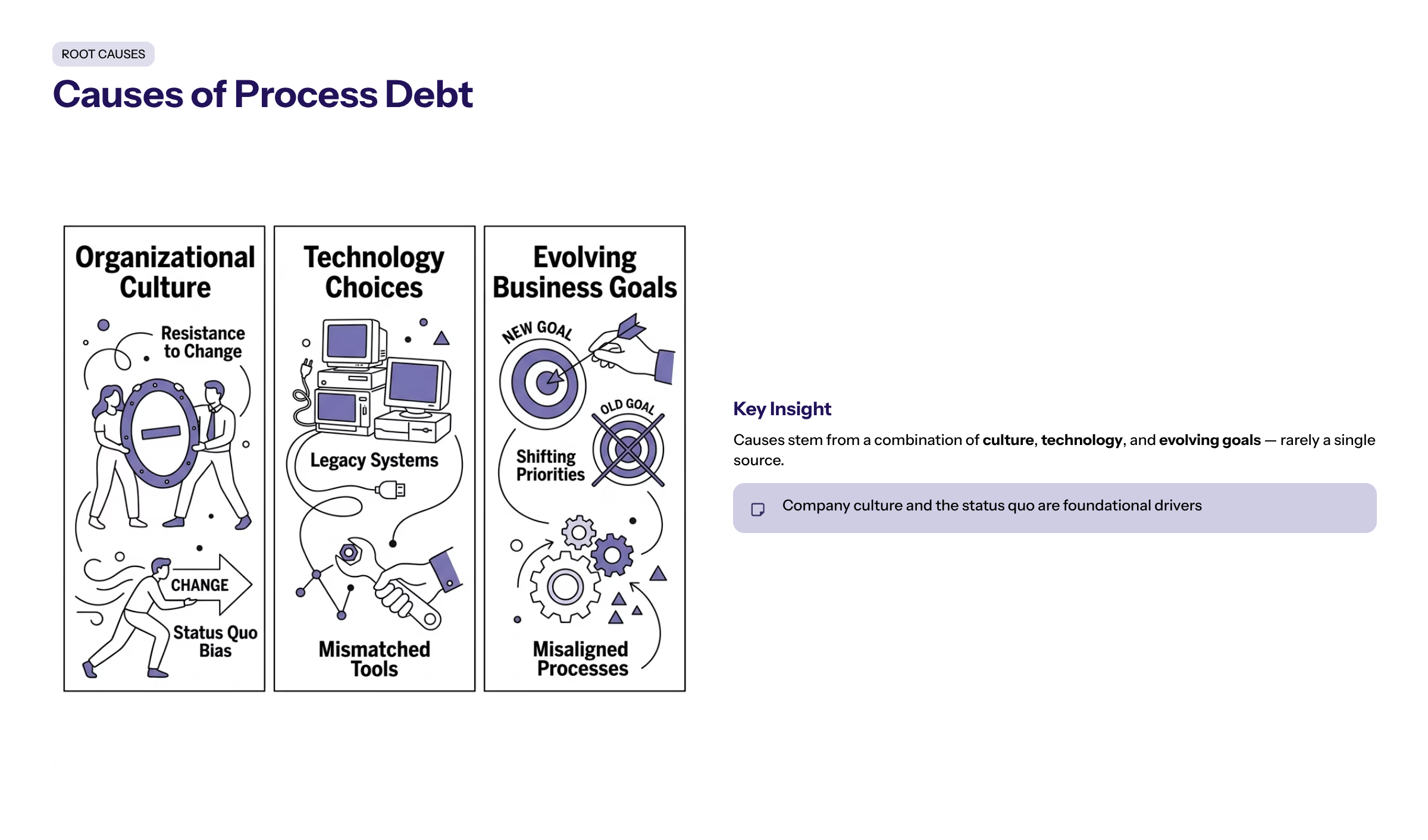
Understanding the root causes of process debt is foundational to developing effective mitigation strategies. These causes often stem from a combination of organizational culture, technology choices, and evolving business goals.
Company Culture and the Status Quo
One of the primary drivers of process debt is company culture. Many organizations resist change, adhering to the status quo with the mindset of “it’s always been done this way.” This resistance impedes process improvement efforts and perpetuates inefficient workflows. As new employees join, they often inherit these outdated processes without sufficient documentation or training, further embedding inefficiencies.
To reduce process debt effectively, companies must foster a culture that embraces continuous improvement and encourages questioning of existing workflows. Leadership plays a crucial role in setting the tone for change, ensuring that employees understand the value of improving processes and feel empowered to contribute ideas for optimization.
Legacy Systems and Patchwork Fixes
Legacy systems and infrastructure can create significant process debt by forcing teams to work around outdated technology. Patchwork fixes—ad hoc solutions implemented to bypass immediate problems—compound this issue by creating fragmented workflows that are difficult to maintain and optimize. Automating these broken processes without redesign often exacerbates inefficiencies rather than eliminating them.
Addressing these root causes requires organizations to invest in modernizing legacy systems and carefully evaluating the impact of patchwork fixes on overall process health. Introducing a new process that replaces inefficient legacy workflows can significantly reduce process debt and improve operational efficiency.
Automating Processes Without Optimization
An excellent example of process debt accumulation is the automation of broken or redundant processes. While automation promises efficiency gains, automating a flawed process simply locks in inefficiencies at scale. Without thorough process analysis and optimization beforehand, automation can increase operational costs and reduce business value.
To eliminate process debt related to automation, companies should prioritize improving processes before applying automation technologies. This approach ensures that automation supports streamlined workflows rather than perpetuating existing problems. Moreover, continuous monitoring and auditing of automated processes help detect and fix emerging inefficiencies early.
Consequences of Process Debt
The impact of process debt extends beyond operational inefficiencies, affecting financial performance, employee satisfaction, and customer experience.
Financial and Operational Costs
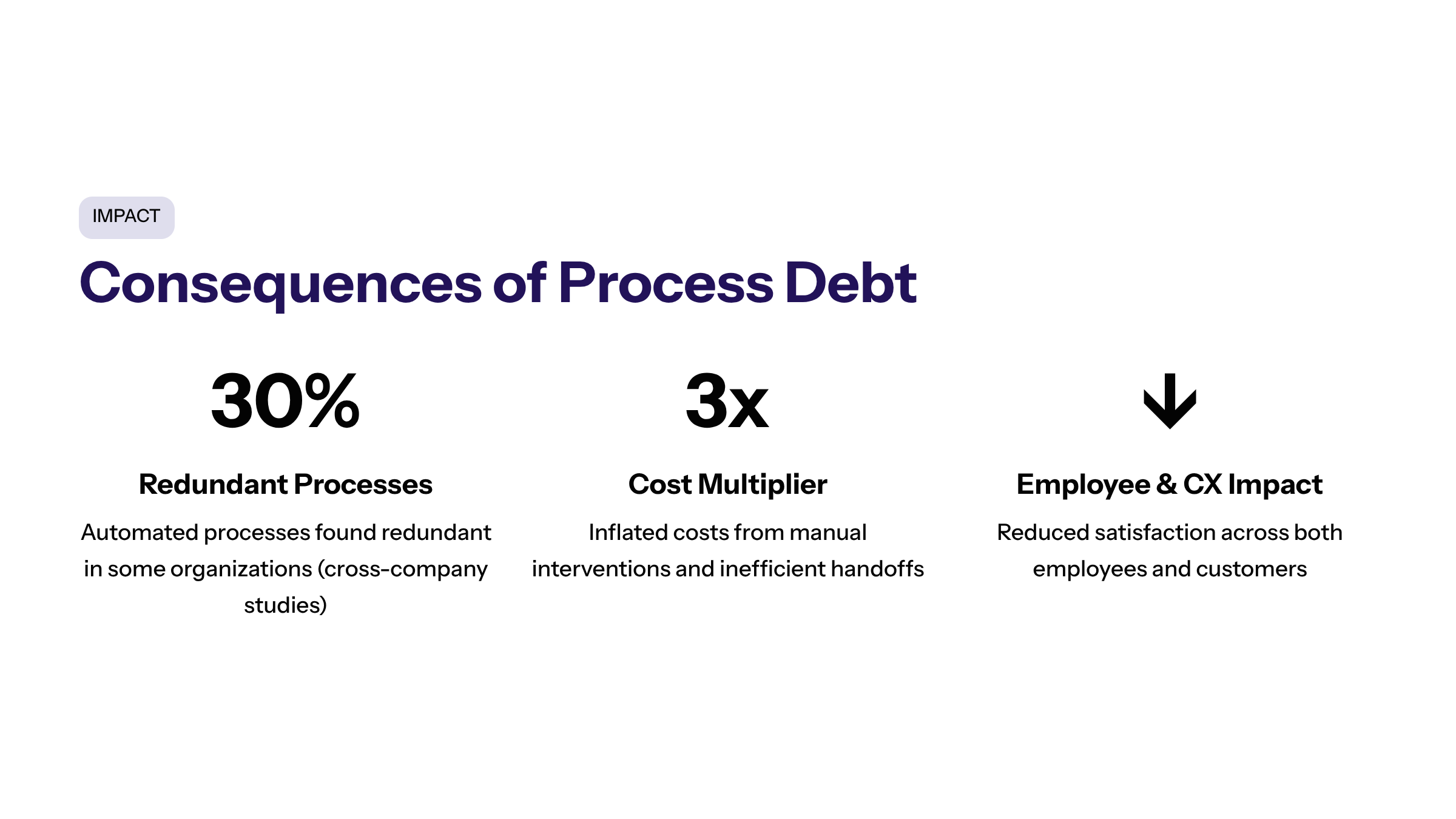
Process debt leads to inflated operational costs due to redundant processes, manual interventions, and inefficient handoffs. For instance, cross-company focus groups and longitudinal case studies have reported that up to 30% of automated processes in some organizations are redundant, resulting in wasted maintenance resources and increased costs. Additionally, process debt can cause budget waste to spiral out of control, especially in periods of economic uncertainty.
Reducing process debt not only lowers these operational costs but also improves the return on investment in digital transformation efforts. Companies that actively manage process debt can better allocate resources toward innovation and growth initiatives.
Employee Morale and Productivity
Inefficient processes frustrate employees, reducing satisfaction and productivity. When teams must navigate unclear or outdated process documentation, or repeatedly perform manual workarounds, morale suffers. This can lead to higher turnover and loss of institutional knowledge, further perpetuating process debt.
Improving processes through clear documentation, training, and stakeholder engagement can enhance employee satisfaction and retention. A culture that supports continuous process improvement encourages employees to identify and fix inefficiencies, contributing to a healthier organizational environment.
Customer Expectations and Business Value
Process debt can negatively impact customer satisfaction by slowing response times, increasing errors, and reducing the organization’s ability to innovate. As customer expectations evolve rapidly, companies burdened by process debt struggle to adapt, risking loss of market share and diminished business value. Moreover, the consequences of process debt can include poor visibility into organizational processes and blocked scalability, making it harder for organizations to adapt, expand, or innovate at speed.
By eliminating process debt, organizations can improve agility and responsiveness, enabling them to meet and exceed customer expectations. This alignment between efficient internal processes and external demands is critical for sustaining competitive advantage.
Relationship with Tech Debt
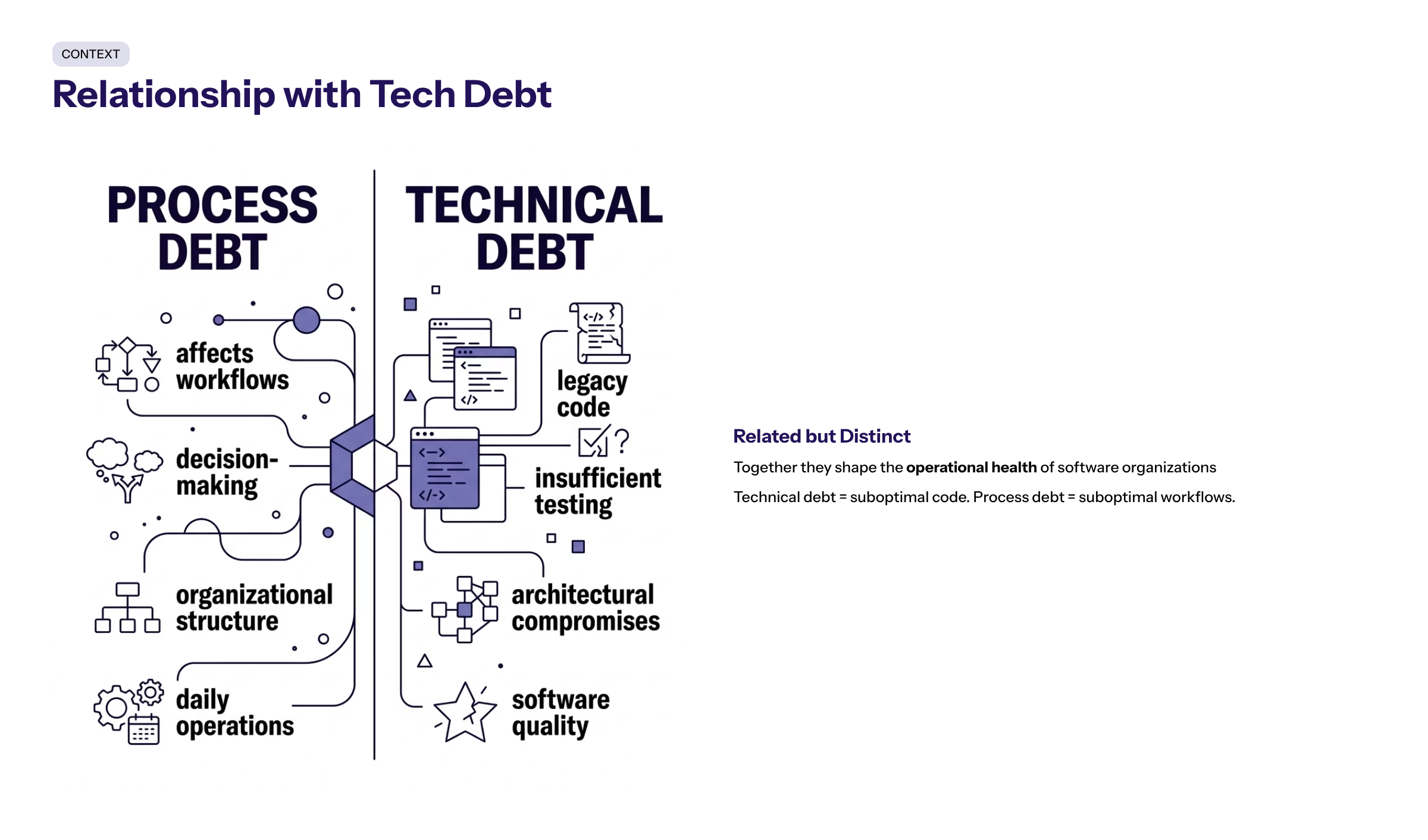
Process debt and technical debt are related but distinct concepts that together shape the operational health of software organizations.
Differentiating Process Debt and Technical Debt
Technical debt refers to suboptimal technical issues such as legacy code, insufficient testing, or architectural compromises that require future remediation. Process debt, on the other hand, involves inefficient workflows, unclear process steps, and organizational misalignments. Both types of debt accrue interest in the form of increased costs and reduced agility but require different management approaches.
Understanding these differences helps companies understand where to focus their improvement efforts and how to integrate strategies for fixing process debt alongside technical debt remediation.
Interplay and Compounding Effects
Fixing technical debt without addressing underlying process debt can lead to limited improvements, as broken processes continue to create inefficiencies. Conversely, process improvements without resolving technical debt may also fall short of delivering full value. Effective transformation efforts require a holistic view that addresses both technical and process debt simultaneously.
This interplay underscores the need for comprehensive process documentation and cross-functional collaboration to ensure alignment between software engineering practices and operational workflows.
Identifying Invisible Debt
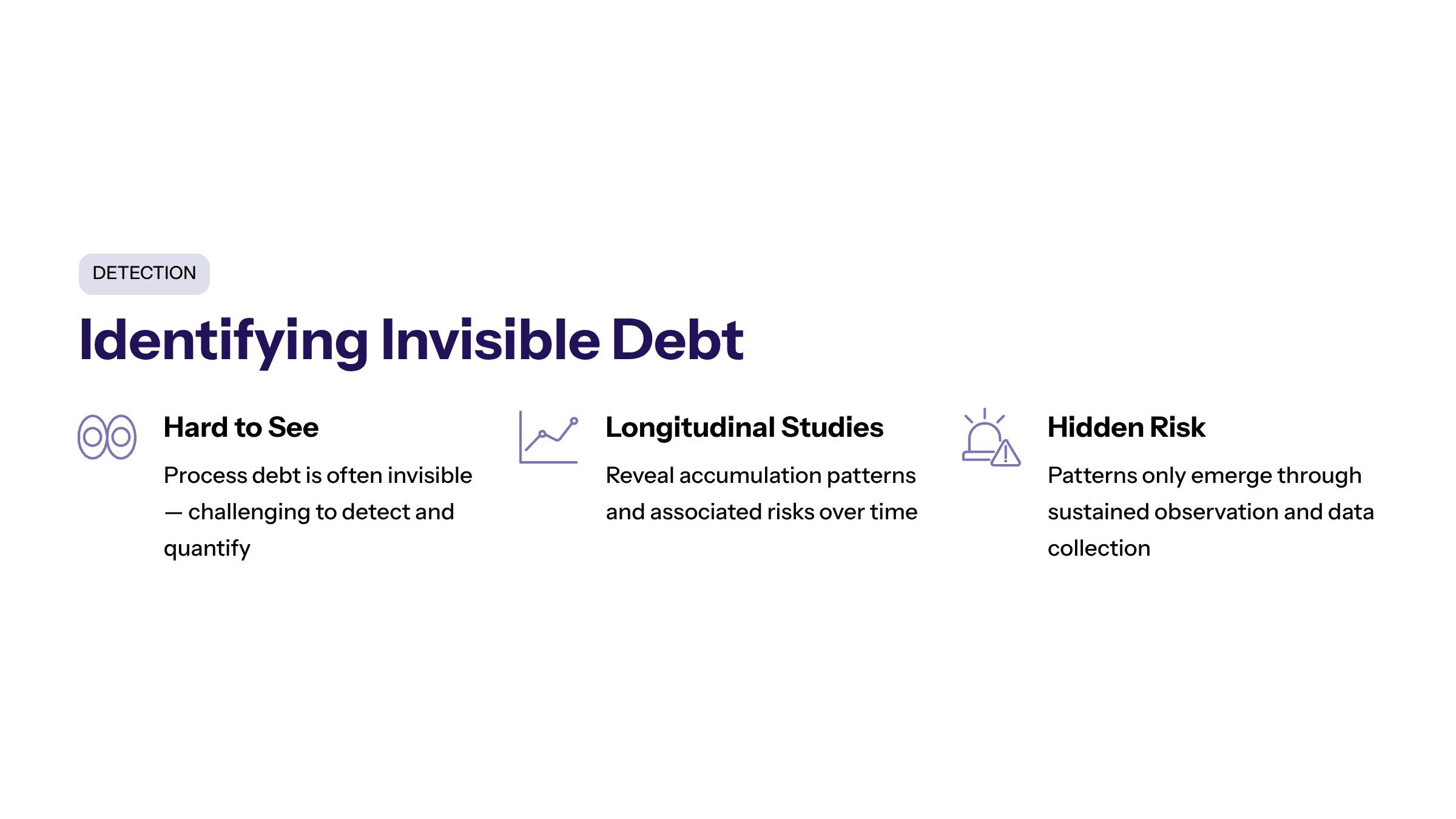
Process debt is often invisible, making it challenging to detect and quantify.
The Role of Longitudinal Case Studies
Longitudinal case studies provide valuable data on how process debt accumulates over time, revealing occurrence patterns and associated risks. These studies highlight how process debt evolves alongside changes in organizational structure, technology adoption, and business strategy. The accumulation of process debt can lead to a digital transformation ceiling, where operational workflows can't keep up with technology.
Such exploratory studies contribute to the current literature by reporting causes and consequences of process debt, offering insights that companies can use to develop targeted mitigation strategies.
Importance of Process Documentation and Data
Maintaining up-to-date process documentation is critical for uncovering hidden inefficiencies. Additionally, tracking data on process performance, bottlenecks, and employee feedback enables organizations to identify areas of process debt and prioritize remediation efforts. Collecting feedback from stakeholders is crucial for identifying process debt issues.
Investing in tools and frameworks that facilitate process visualization and data collection supports continuous monitoring and helps companies understand the impact of process debt on their operations.
The First Step to Overcoming Process Debt
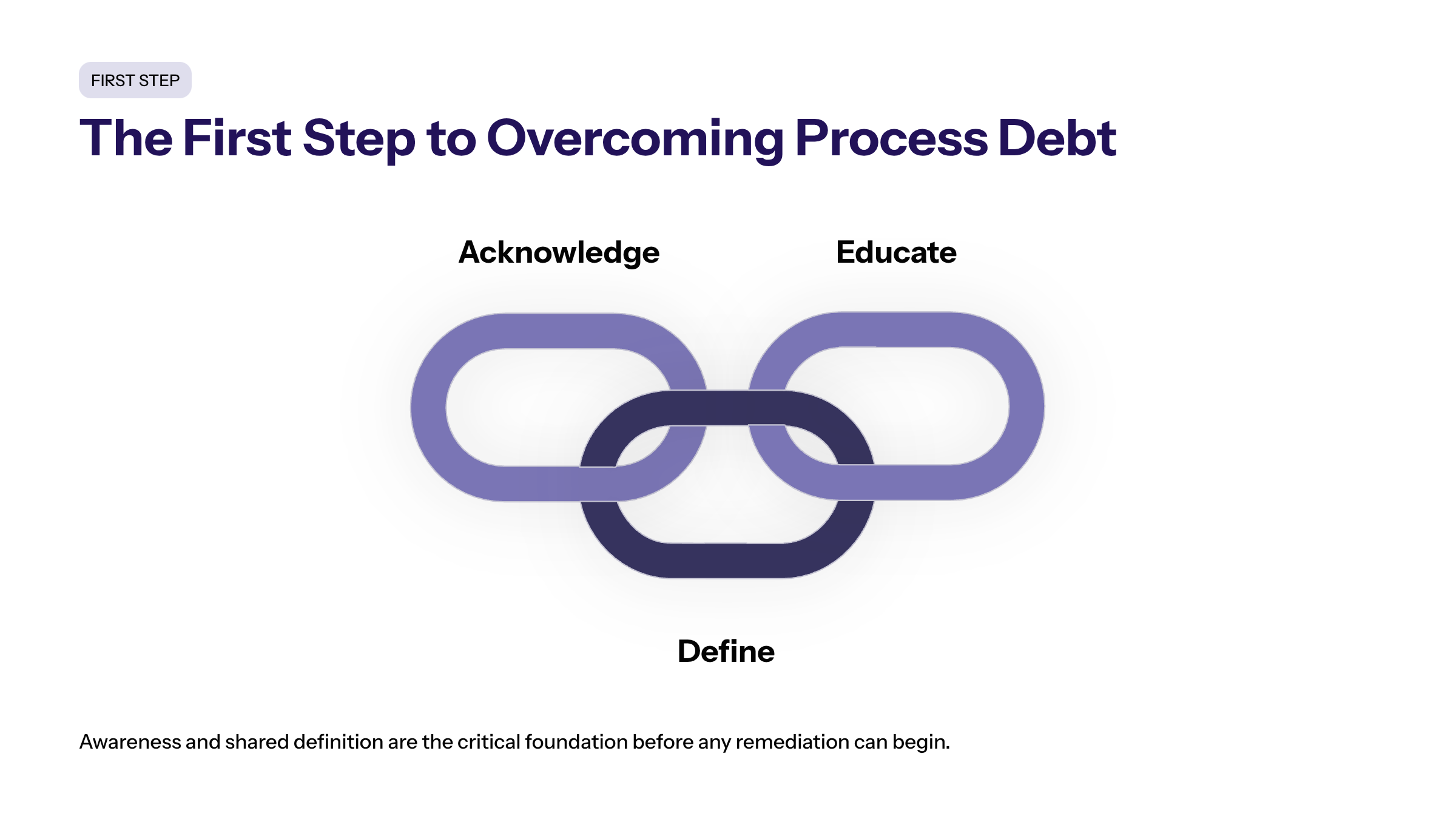
Acknowledging the existence of process debt and defining it within the organizational context is the critical first step toward resolution.
Building Awareness and Defining Process Debt
Organizations must educate stakeholders on what constitutes process debt and its impact on business goals. Clear definitions and frameworks help align teams and leadership, fostering a culture that values process optimization. Present mitigation strategies early in the process improvement journey encourages buy-in and provides a roadmap for reducing process debt systematically.
Establishing Process Ownership and Accountability
Assigning clear ownership of processes ensures accountability for identifying and addressing inefficiencies. Process owners play a key role in driving continuous improvement and aligning process changes with strategic objectives. Creating a culture of process ownership encourages teams to actively manage and improve their workflows.
Empowering teams to take responsibility for improving processes and eliminating process debt fosters a proactive approach that sustains long-term operational health.
Address Process Debt
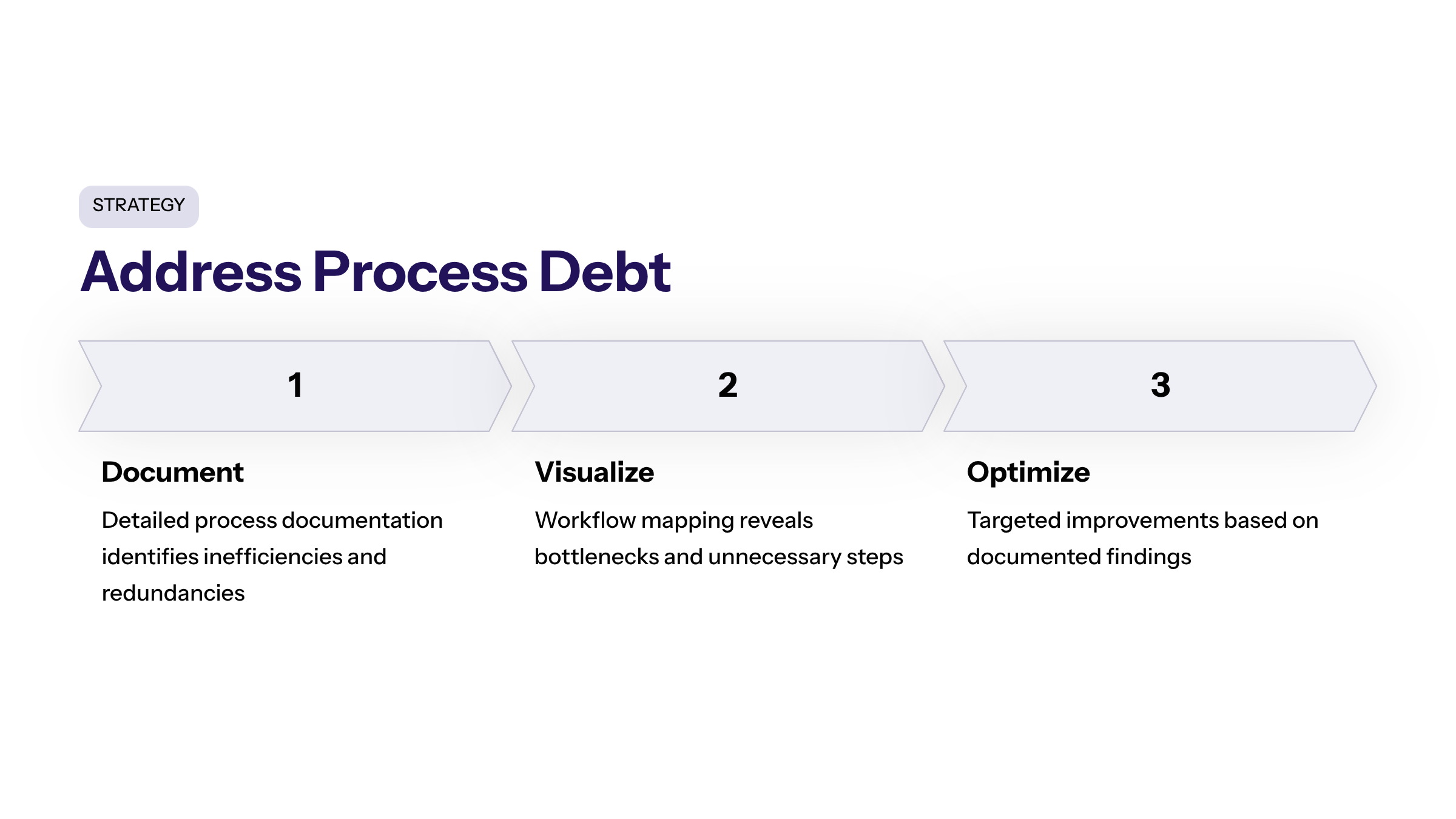
Addressing process debt requires a comprehensive, multi-faceted approach.
Process Documentation and Visualization
Detailed process documentation provides a foundation for identifying inefficiencies and redundancies. Visualizing workflows can reveal bottlenecks and unnecessary steps, facilitating targeted optimization. Process visualization can help identify bottlenecks and areas of process debt.
These practices support software engineering teams in understanding how processes interact and where improvements can be made, especially when integrating new process steps or automating existing ones.
Process Optimization and Automation
Optimizing processes before automating ensures that automation amplifies efficiency rather than perpetuating problems. This includes eliminating redundant process steps, improving synchronization between different teams and systems, and aligning workflows with customer expectations. Automation should be implemented only after optimizing existing processes to avoid adding to process debt.
By reducing process debt through thoughtful process optimization, companies can maximize the benefits of automation and digital transformation initiatives. Blueprint provides a Value Map Assessment of your entire automation estate in a matter of days, helping organizations identify redundancies and inefficiencies.
Cultural Change and Continuous Improvement
Fostering a culture of continuous process improvement encourages employees at all levels to contribute to identifying and fixing process debt. This cultural shift is essential to overcoming resistance to change and maintaining efficient processes over time. Engaging in continuous process improvement helps mitigate the accumulation of process debt.
Embedding process improvement into organizational values supports ongoing efforts to reduce process debt and enhance overall business performance.
Fix Process Debt
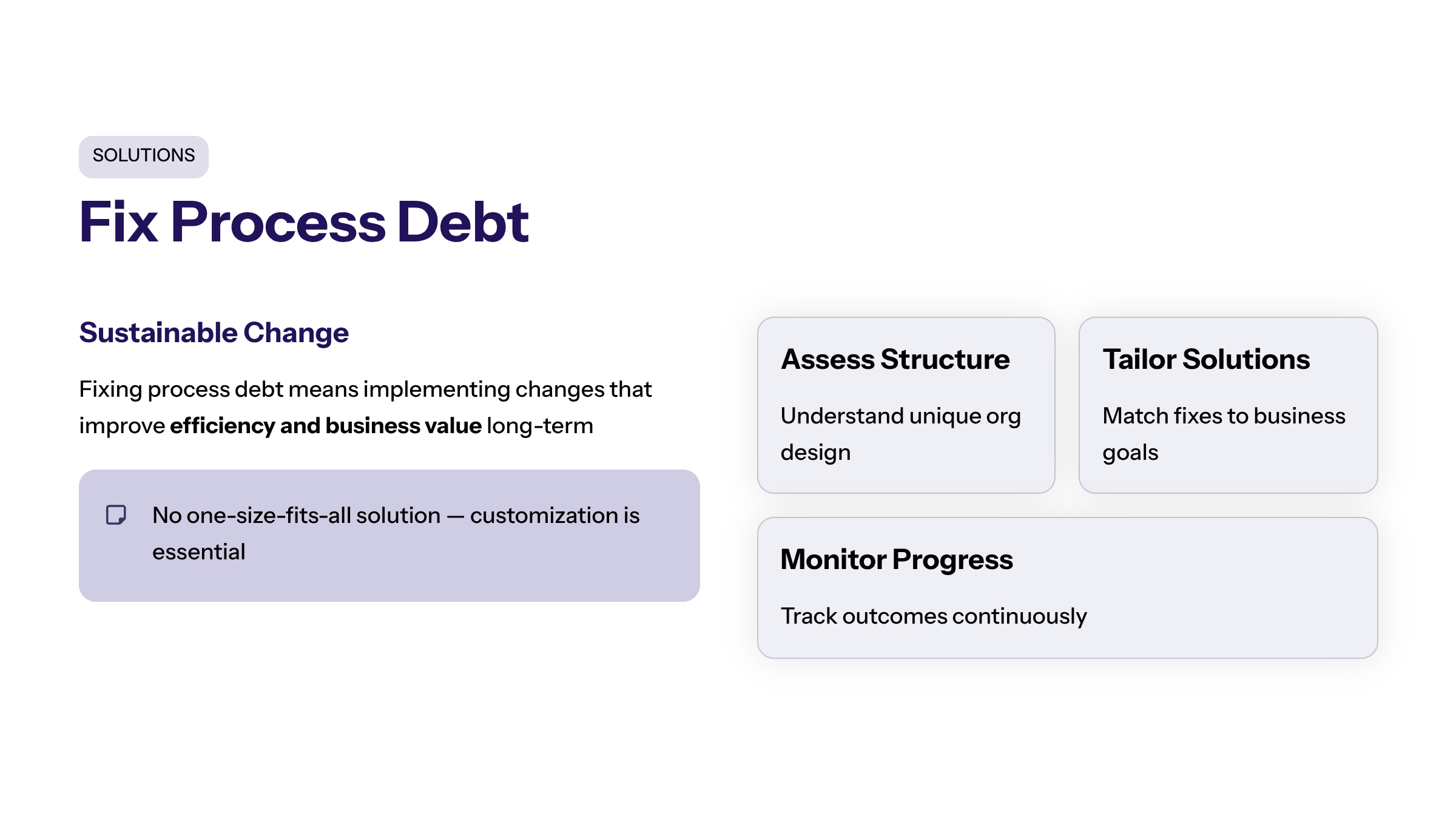
Fixing process debt involves implementing sustainable changes that improve efficiency and business value.
Tailoring Solutions to Organizational Needs
Different teams and companies may experience similar process debt challenges but require customized solutions based on their unique organizational structure and business goals. Recognizing the diversity of process debt manifestations enables companies to apply the most effective interventions and avoid one-size-fits-all approaches.
Prioritizing Process Improvements
Using data-driven approaches to prioritize process improvements ensures that resources are focused on changes that deliver the greatest impact in both the short and long term. Prioritizing process improvements is necessary to effectively manage process debt.
This prioritization aligns with software engineering best practices and supports strategic decision-making in process optimization initiatives.
Monitoring and Iterating
Ongoing monitoring of process performance and periodic audits help detect new instances of process debt and validate the effectiveness of remediation efforts. Regular audits of processes help identify inefficiencies and areas for improvement.
Continuous feedback loops and iterative improvements are critical to sustaining gains and adapting to evolving business needs.
Process Documentation
Process documentation is a cornerstone of effective process debt management.
Best Practices for Documentation
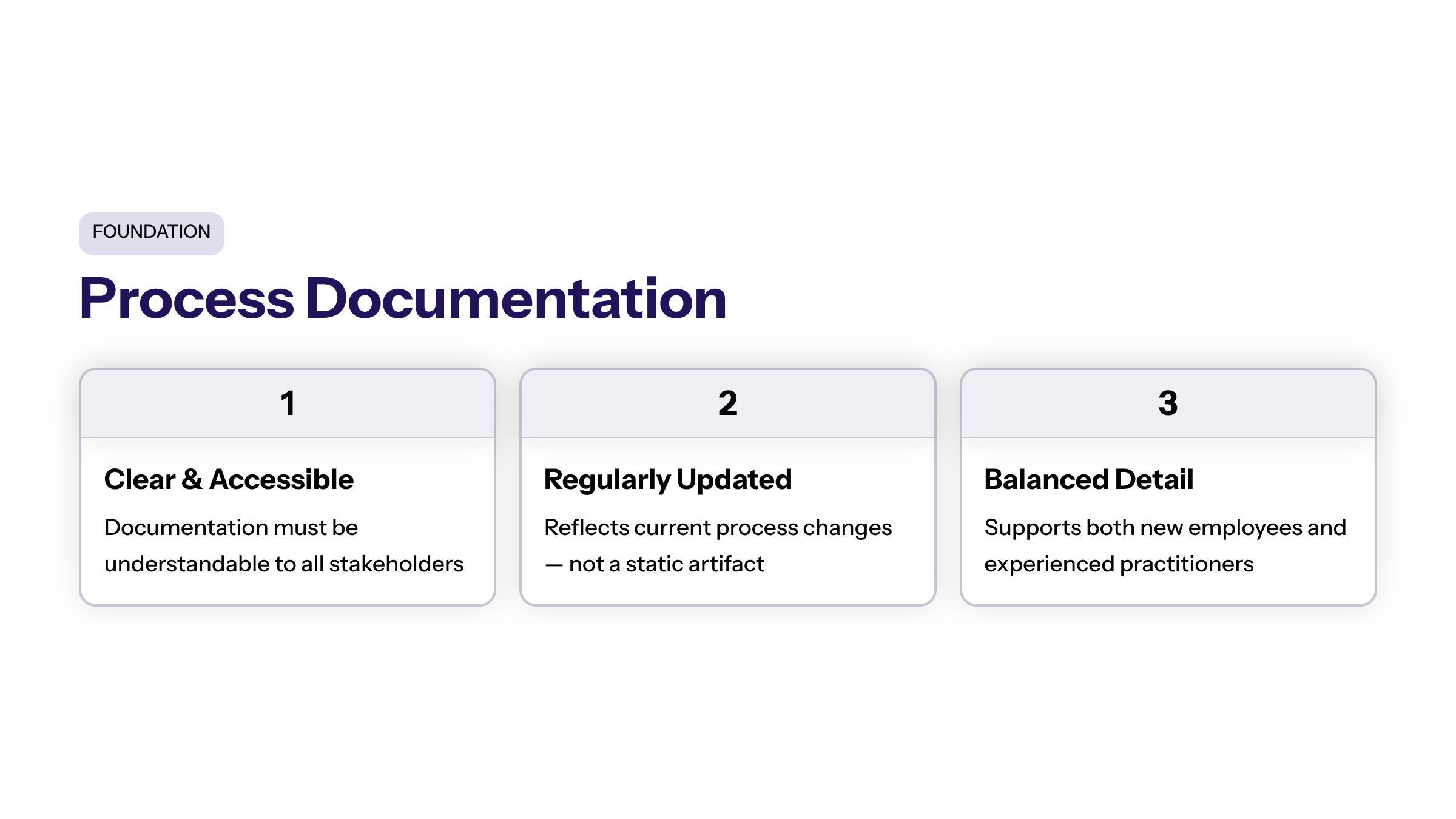
Documentation should be clear, accessible, and regularly updated to reflect process changes. It must balance sufficient detail with usability to support both new employees and experienced practitioners. Documenting processes is essential for understanding and managing process debt.
Incorporating process documentation into software engineering workflows ensures consistency and reduces the risk of accumulating new process debt.
Supporting Software Development and Engineering
In software organizations, process documentation supports consistent execution of process steps such as code reviews, testing, and deployment, reducing technical and process debt simultaneously. Well-documented processes facilitate training, knowledge transfer, and compliance, contributing to overall organizational resilience.
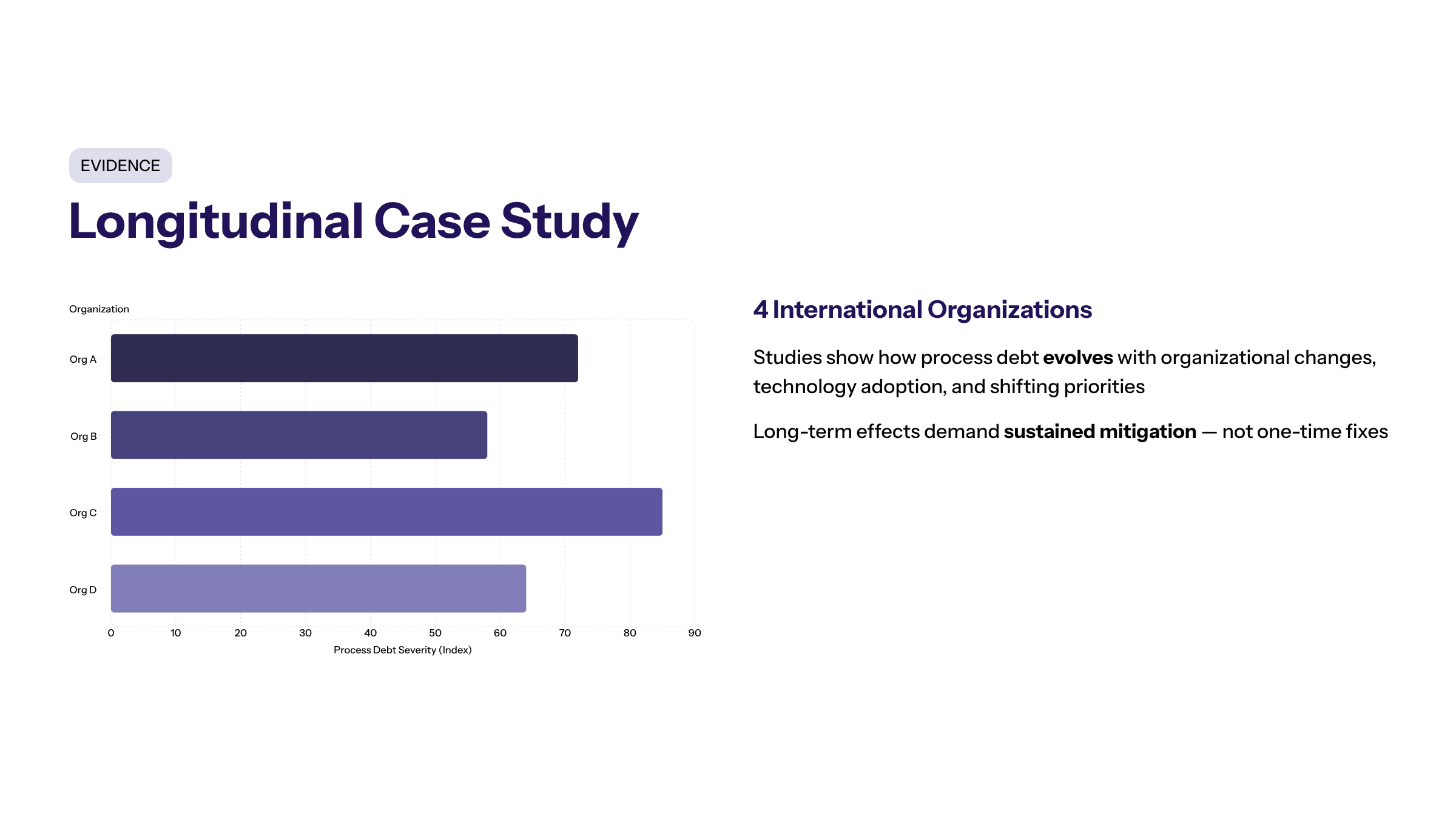
Longitudinal Case Study
Longitudinal case studies offer deep insights into the dynamics of process debt over time.
Insights from International Organizations
Studies involving four international organizations demonstrate how process debt evolves with organizational changes, technology adoption, and shifting business priorities. These insights help companies understand the long-term effects of process debt and the importance of sustained mitigation efforts.
Patterns and Risks Identified
These studies reveal common occurrence patterns such as synchronization debt, roles debt, and infrastructure deficiencies, highlighting associated risks like reduced software quality and increased operational costs. Process debt can accumulate due to the introduction of new tools without reviewing existing processes, leading to redundancies. Process debt is often a result of individuals creating workarounds that are not documented or aligned with organizational goals.
Understanding these patterns enables organizations to anticipate challenges and proactively address process debt.
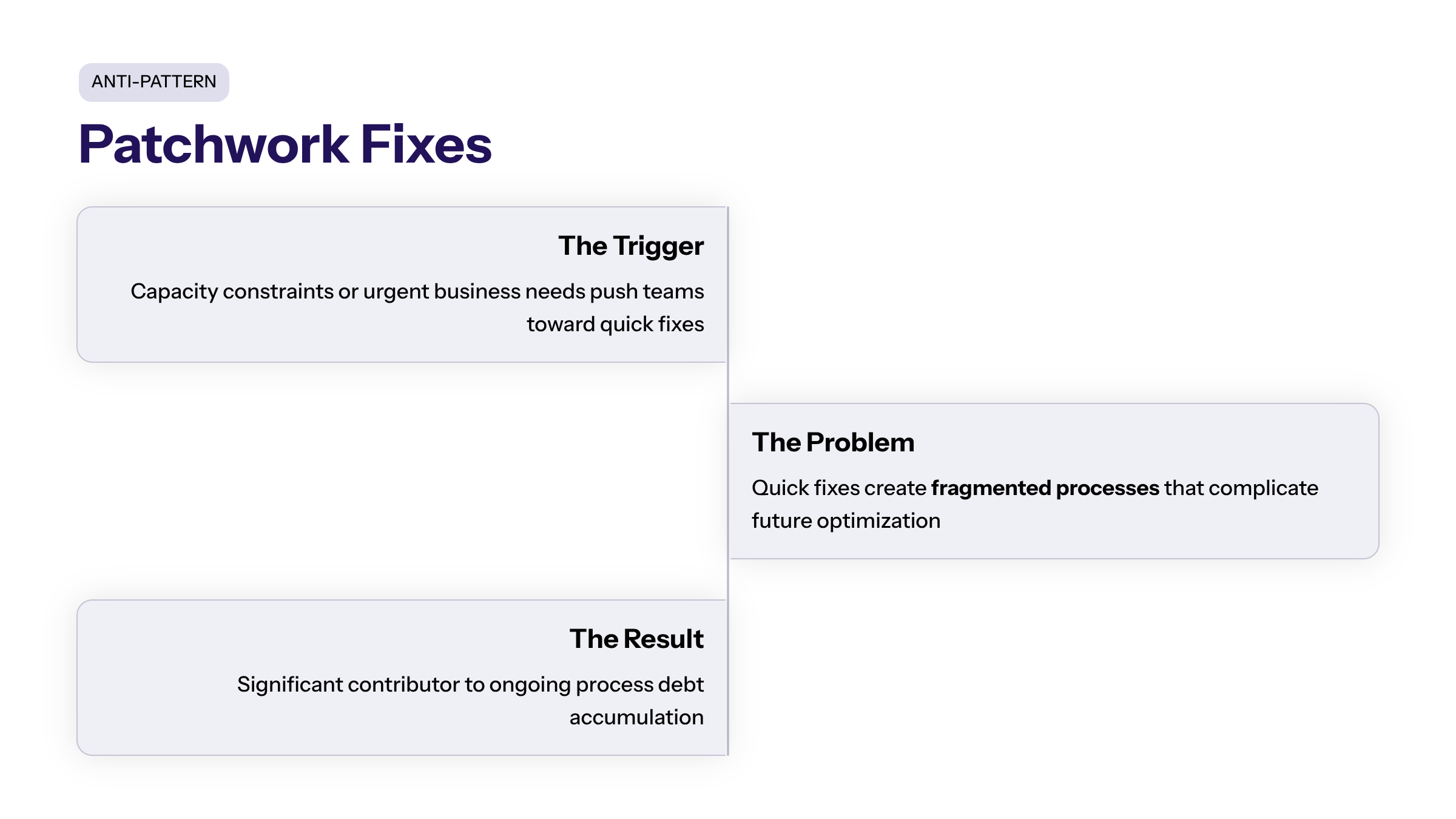
Patchwork Fixes
Patchwork fixes are a significant contributor to process debt accumulation.
Why Patchwork Fixes Persist
Organizations often resort to quick fixes due to capacity constraints or urgent business needs. However, these fixes create fragmented processes that complicate future optimization.
Recognizing the dangers of patchwork fixes encourages companies to invest in comprehensive process improvement initiatives.
Avoiding Patchwork Fixes
Investing in comprehensive process improvement initiatives and prioritizing process-related decisions can prevent the proliferation of patchwork fixes.
Strategic planning and resource allocation are essential to reduce process debt and support sustainable process management.
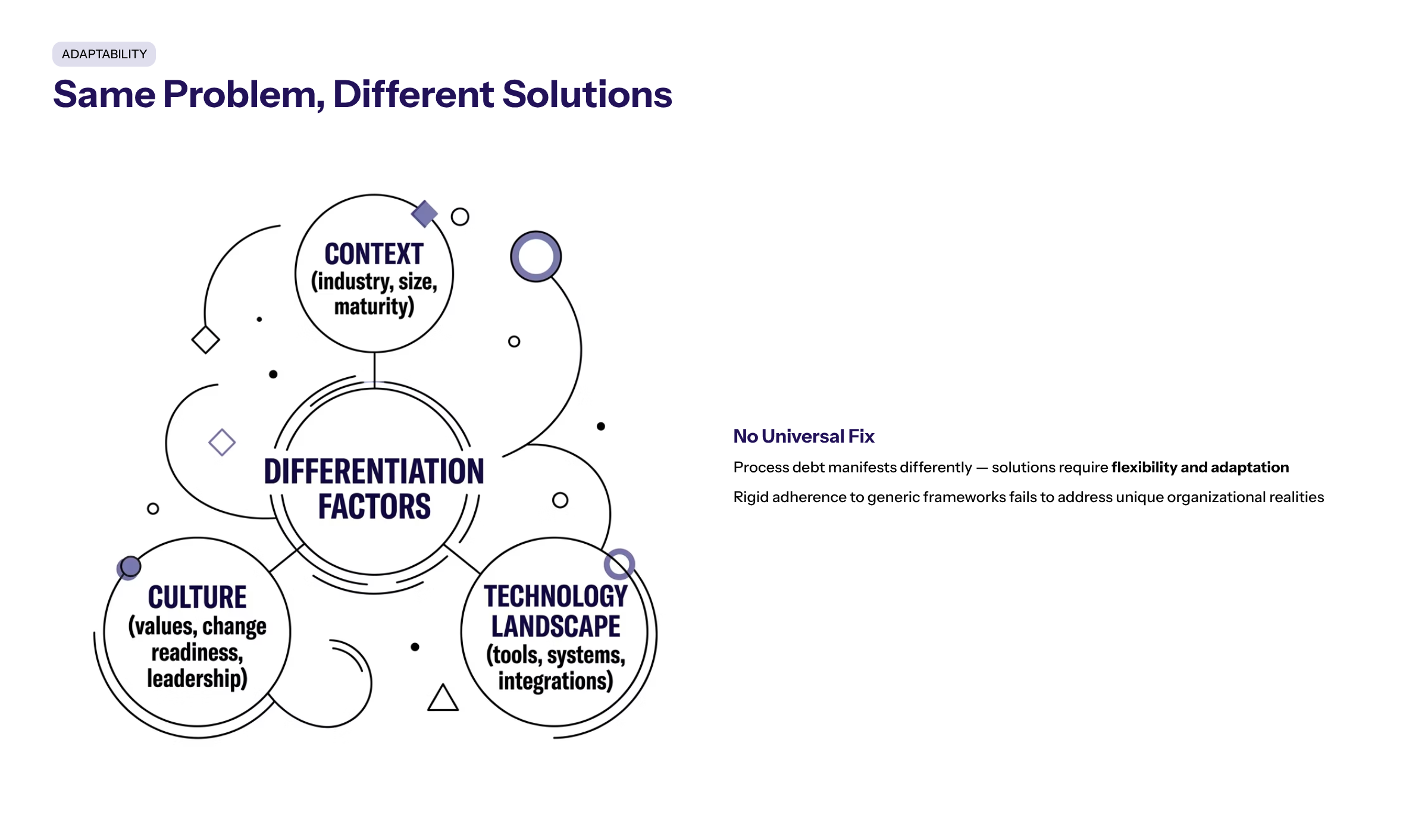
Same Problem, Different Solutions
Process debt manifests differently across organizations, necessitating tailored approaches.
Customizing Process Improvement Strategies
Effective solutions depend on understanding the unique context, culture, and technology landscape of each organization.
Companies understand that addressing process debt requires flexibility and adaptation rather than rigid adherence to generic frameworks.
Learning from Peer Organizations
Cross-company focus groups and benchmarking against industry peers provide valuable perspectives and best practices for managing process debt. Stakeholder feedback is an effective strategy to understand where process debt hides in an organization.
Sharing knowledge accelerates learning and helps organizations avoid common pitfalls in process optimization.
Company Culture and Process Improvement
Company culture significantly influences the success of process improvement efforts.
Fostering a Culture of Efficiency and Innovation
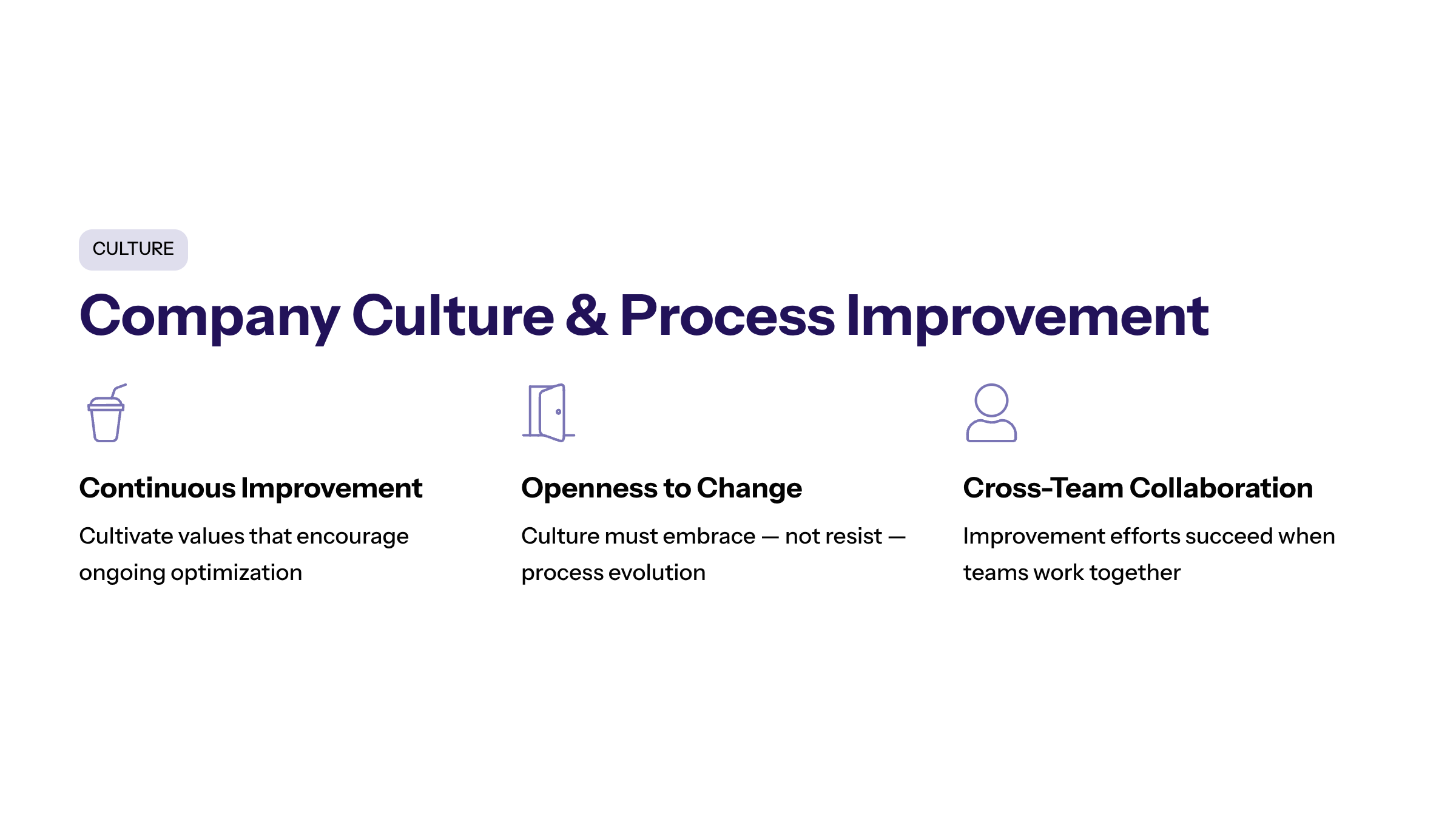
Organizations must cultivate values that encourage continuous improvement, openness to change, and collaboration across different teams.
Such cultural foundations are vital for reducing process debt and sustaining operational excellence.
Overcoming Resistance to Change
Leadership commitment and clear communication are essential to overcoming cultural barriers and embedding process optimization into everyday operations.
Addressing resistance proactively helps ensure that process improvements are embraced and maintained.
Financial Strategies for Debt Management
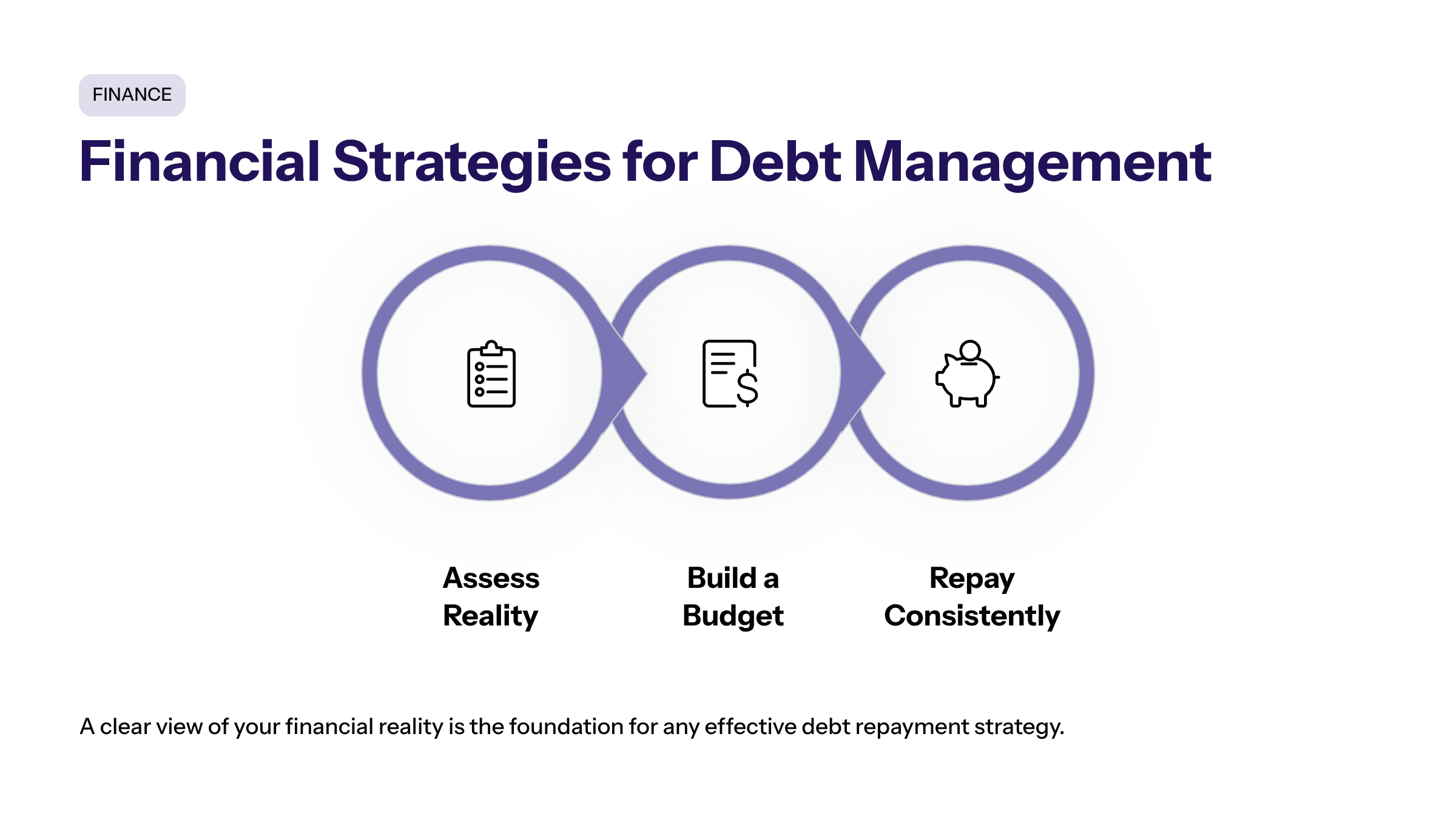
Effectively managing and processing debt starts with understanding your current financial situation, creating a budget, and implementing a consistent repayment strategy. Gaining a clear view of your financial reality involves listing every debt owed and tracking all income and essential expenses to identify how much extra money can be dedicated to debt payoff.
Budgeting and Prioritization
Differentiate between needs (e.g., rent, utilities, groceries) and wants (e.g., dining out, entertainment) to identify areas to cut discretionary spending. Cut unnecessary expenses, like unused subscriptions, to free up additional funds for debt repayment. Once a budget is established, select a method to prioritize debt payments while maintaining minimums on all other accounts.
Debt Repayment Methods
The Debt Snowball Method focuses on paying off debts with the smallest balances first to gain psychological momentum from quick wins. The Debt Avalanche Method focuses on paying off debts with the highest interest rates first to save money on interest over time. Power Payment involves applying the entire former payment amount of a cleared debt to the next target debt on the list.
Tools and Plans
Balance Transfer Cards allow moving high-interest credit card debt to a new card with 0% introductory APR for 12–21 months. Consider debt consolidation to combine multiple debts into a single, lower-interest loan. Consolidation simplifies multiple debts into a single monthly payment, ideally with a lower interest rate. Build a small emergency fund of $500 to $1,000 to cover unexpected expenses without relying on credit.
Professional Assistance and Legal Options
Seek professional help from reputable nonprofit credit counseling agencies if debt feels overwhelming. Debt Management Plan (DMP) structured through a nonprofit agency involves negotiating lower interest rates and making one monthly payment. Chapter 7 bankruptcy erases most unsecured debts within four to six months. Chapter 13 bankruptcy reorganizes debt into a 3–5 year repayment plan.
Maintaining Progress
Set up automatic payments to ensure timely payment of at least the minimum amount on all accounts each month. Regularly review your budget and debt lists to track progress and maintain motivation. Negotiate with creditors directly to request lower interest rates or payment plans.
Conclusion
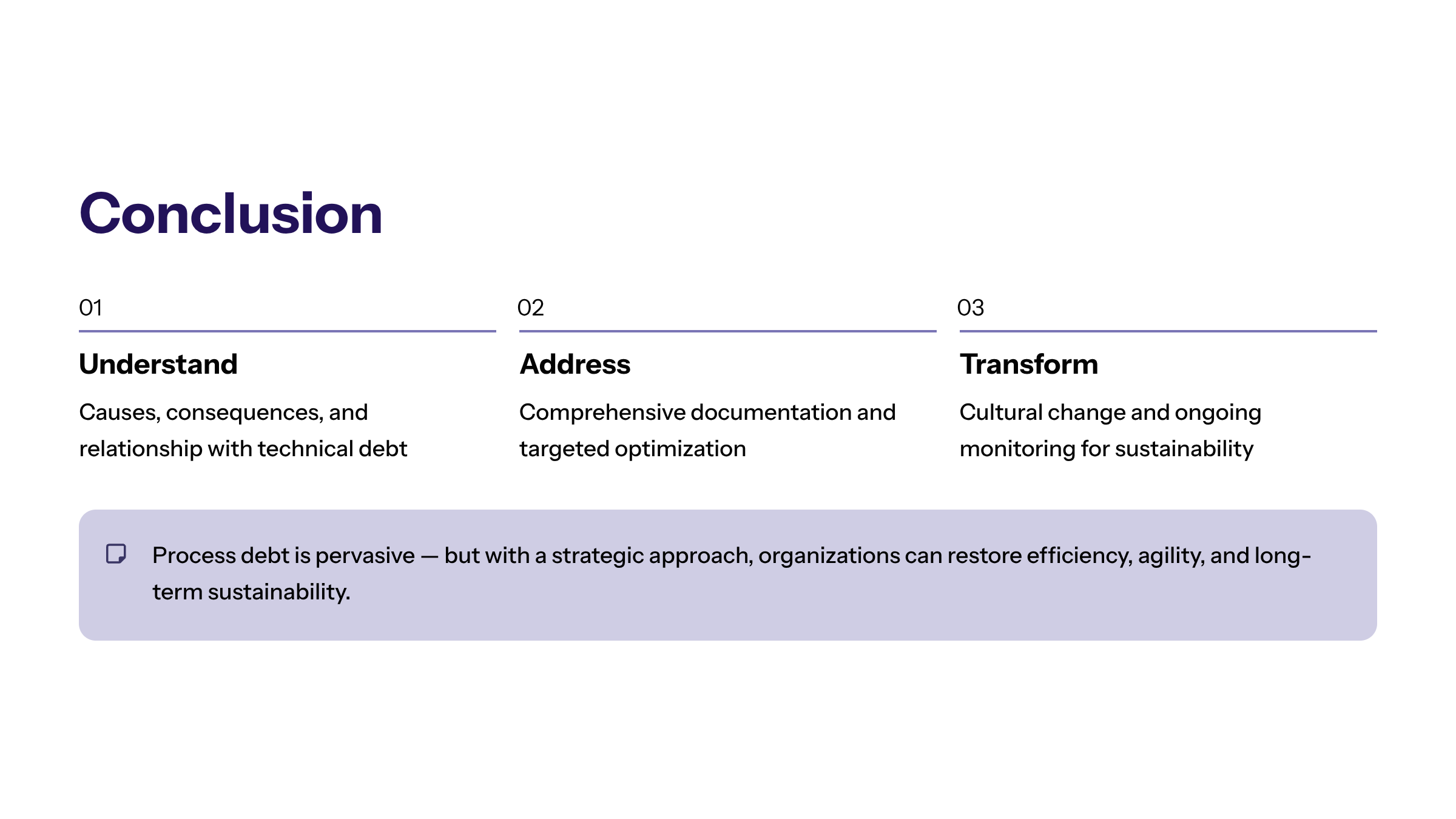
Process debt is a pervasive and harmful phenomenon that threatens the efficiency, agility, and sustainability of modern organizations.
By understanding its causes, consequences, and relationship with technical debt, companies can adopt a strategic approach to identify, address, and fix process debt.
This involves comprehensive process documentation, targeted optimization, cultural transformation, and ongoing monitoring. As digital transformation efforts accelerate, managing process debt becomes imperative to unlocking business value, meeting customer expectations, and maintaining competitive advantage.
Organizations that proactively tackle process debt position themselves for success in a complex, technology-driven business environment—turning invisible debt into visible opportunity.