
D2C Commerce Case Study
A quick view of the industry, retail focus, platform path, and teams involved in rebuilding a conversion-first ecommerce operation.
Industry Context
Ecommerce
Specialty
Direct-to-consumer fashion and lifestyle
Solution
Custom TotalCommerce platform
Users Served
Marketing, merchandising, and fulfillment teams
About the Project
A leading D2C fashion and lifestyle brand partnered with Cognativ after exhausting multiple off-the-shelf ecommerce platforms that failed to deliver meaningful ROI.
The Situation
Traffic and market interest were strong, but slow pages, high cart abandonment, and fragmented operations kept performance below potential.
The Risk
Product drops became fire drills, promotions required technical support, and fulfillment errors were rising as disconnected tools slowed every team.
The Opportunity
A unified TotalCommerce platform could give business teams direct control over catalog, checkout, inventory, campaigns, and analytics.
Transformation Objectives
Cognativ focused the rebuild around conversion performance, merchandising independence, and a single operating system for ecommerce execution.
Build a Branded Commerce Platform
Create a branded ecommerce platform combining merchandising control, real-time analytics, and conversion-first UX.
Centralize Commerce Operations
Bring inventory, orders, promotions, and product content into one TotalCommerce instance.
Enable Nontechnical Launches
Give merchandising and marketing teams the ability to launch SKUs, promotions, and campaigns without developer reliance.
Core Business Challenges
The brand had a loyal following and strong creative identity, but it lacked the operational muscle to scale. Each product drop relied on disconnected spreadsheets, inconsistent site updates, and last-minute technical fixes.
Consumer expectations were also rising. Shoppers expected fast pages, clear inventory, accurate sizing, and dependable shipping, while the legacy infrastructure lagged behind.
After failed agency builds, high churn, and internal debate over sunk technology costs, leadership needed a platform decision that would hold up beyond the next campaign.
Legacy Platform Overhead
Oracle and Java-based systems consumed budget, slowed delivery, and could not adapt to modern retail pace.
Cart Abandonment and Conversion Gaps
Slow page loads, poor mobile UX, and inconsistent product displays created drop-off points across the buying journey.
No Single Source of Truth
SKU data, order status, campaign logic, and fulfillment information were duplicated across tools.
Developer-Centric Workflow
Any business change, from product setup to promo launch, required backend intervention and testing cycles.
Promotion Fragmentation
There was no central system for launching or analyzing promotions, creating offer conflicts and missed revenue opportunities.
Disconnected Fulfillment
Inventory and order data lived in different places, causing oversells, fulfillment errors, and poor customer satisfaction.
Why Ecommerce Leaders Trust Cognativ
Cognativ helps ecommerce leaders turn fragmented platforms into systems that match how the business actually sells, fulfills, and grows.
For D2C brands, that means faster launches, cleaner product data, stronger conversion paths, and direct operational control without rebuilding the stack every season.
From Slow Commerce to Conversion Control
Cognativ rebuilds the buying path around speed, accuracy, and fewer avoidable drop-off points.
From Dev Dependence to Team Ownership
Business teams gain the tools to launch products, campaigns, and tests without waiting on every backend change.
From Campaign Chaos to RAPID Execution
RAPID turns product-drop pressure into a structured path for decisions, implementation, and measurable improvement.
The Cognativ Solution
Cognativ rebuilt the ecommerce stack with RAPID and TotalCommerce, replacing tool fragmentation with a single platform for daily execution.
Phase 1: Identify Commerce Bottlenecks
Cognativ worked with merchandising and operations leaders to map launch friction, conversion gaps, data issues, and fulfillment constraints.
Phase 2: Deploy Self-Service TotalCommerce
The new platform unified catalog, checkout, inventory, and marketing tools while enabling teams to launch SKUs, promos, and bundles in real time.
Architecture: Composition-Based SmartSaaS
The system was designed on Cognativ’s SmartSaaS™ framework to preserve flexibility, upgrade stability, and long-term scalability.
Operating Model: Shared Commerce Data
Marketing, merchandising, fulfillment, and leadership gained one operating view for orders, products, promotions, and performance.
How RAPID Guided the Transformation
“The challenge wasn’t building a better store—it was aligning a disconnected team around a unified strategy and system. RAPID helped us move from chaos to clarity in 90 days.”
– Ali Davachi, Cognativ Founder
Researching Conversion Friction
Cognativ traced checkout, mobile UX, page speed, product data, and fulfillment issues across the customer journey.
Analyzing Operating Silos
The team identified where spreadsheets, legacy systems, and developer handoffs were slowing launch velocity.
Planning One Commerce Platform
The roadmap centered catalog, checkout, inventory, orders, promotions, and analytics in one TotalCommerce direction.
Implementing Business Control
Nontechnical teams gained self-service workflows for product setup, promotions, campaign launches, and bundle testing.
Deciding With Shared Performance Data
Teams could evaluate conversions, fulfillment, orders, and top SKUs from the same source of truth.
What is the RAPID Framework?
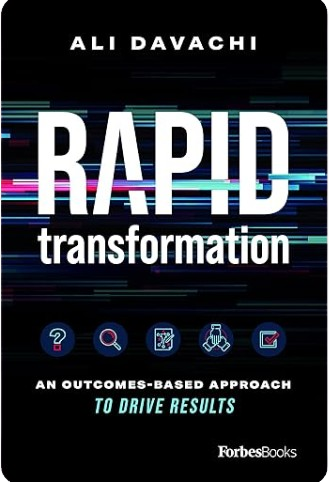
RAPID stands for Research, Analyze, Plan, Implement, and Decide. It is Cognativ’s structured transformation framework for aligning leadership, validating assumptions, and building technology around how companies actually operate.
Documented in RAPID Transformation by Ali Davachi, the framework helps business-critical platform work move from debate to measurable execution.
Results Obtained
The TotalCommerce rebuild improved the end-to-end user journey, removed common conversion blockers, and gave ecommerce teams one platform for daily execution.
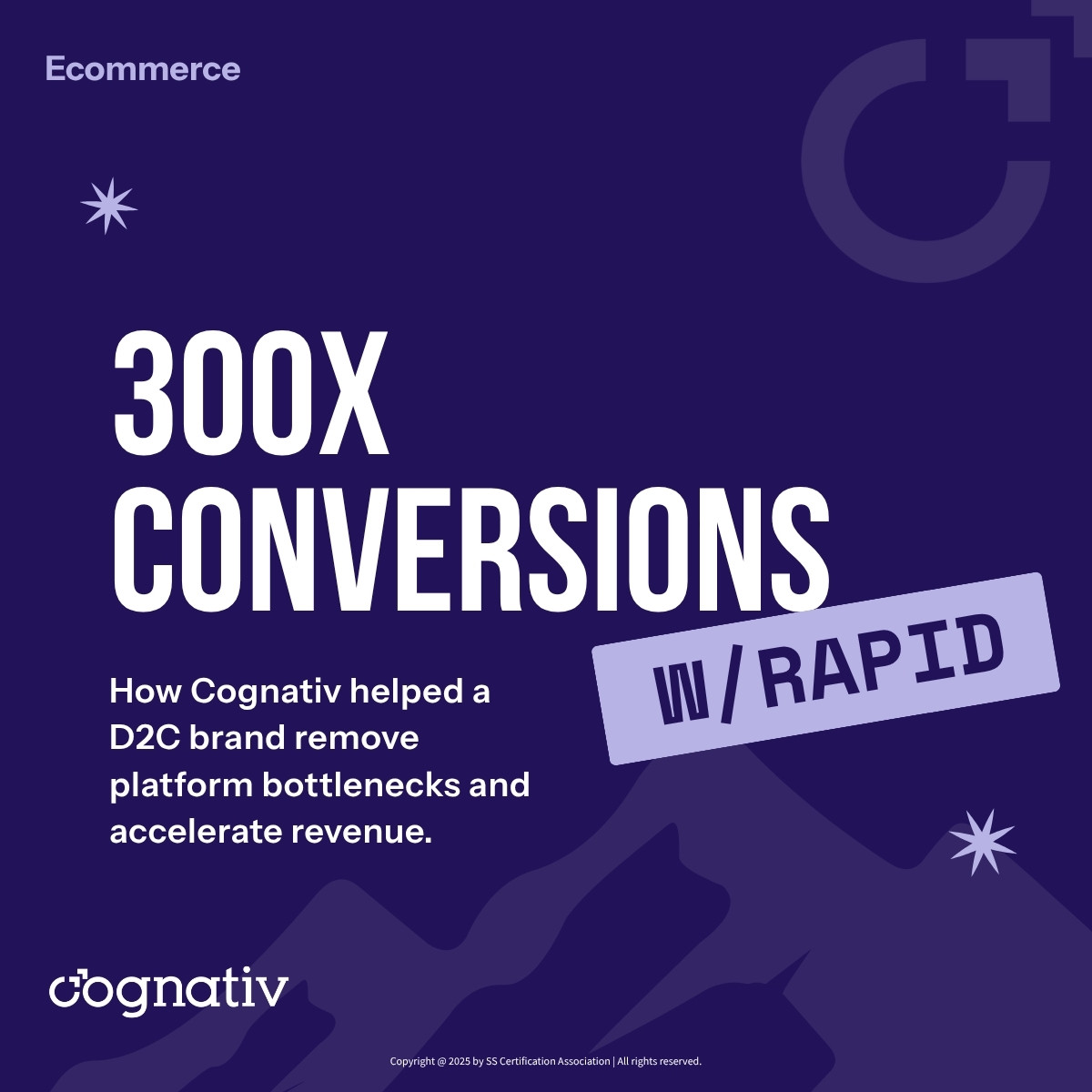
The brand achieved a 300x increase in site conversion and 150% growth in D2C revenue after launch without additional ad spend.
By retiring the Oracle stack and legacy licensing fees, the company also reduced technical overhead by 70% while creating a platform that could support sister brands, traffic spikes, and cross-channel campaigns.
300x Conversion Increase
Page load improvements and UX restructuring eliminated common customer drop-off points.
150% Revenue Growth
Streamlined merchandising and fulfillment contributed to higher revenue without extra ad spend.
70% Technical Overhead Reduction
Retiring legacy tools cut hosting, licensing, and DevOps costs dramatically.
Unified TotalCommerce Platform
Every department now works from shared data, timelines, and goals.
Immediate Benefits
Faster Promo Launches
Nontechnical users now control campaign workflows.
Real-Time Data
Executives can monitor fulfillment, orders, and top SKUs with a single login.
No Dev Wait Times
Merchandisers and marketers operate independently of backend ticket queues.
Increased Reliability
Uptime improved, and feature deployment risk dropped by 80%.
Ongoing Benefits
Sister Brand Support
The platform now supports two sister brands under the same architecture.
Full Ownership
The client can iterate, test new verticals, and protect margins with code and data ownership.
Seasonal Scalability
The solution continues to scale through traffic spikes, holiday events, and cross-channel initiatives.
Strategic Roadmap Support
Cognativ remains a partner for roadmap planning, platform optimization, and performance tuning.
Turn Traffic Into a Commerce System That Converts
Give merchandising, marketing, and fulfillment teams one platform for cleaner launches, faster campaigns, stronger conversion paths, and fewer technical blockers.
