
Customer value, flow and the broader performance problem
Both approaches value learning and improvement. The important question is therefore not whether efficiency or transformation matters more. Does your organization need to improve how value flows through existing work, determine what should change at a broader business level, or coordinate both?
Start with customer value and the value stream
Lean provides principles and practices for understanding customer value, improving value streams, reducing waste, strengthening flow, and creating a culture of continuous improvement.
Lean starts with value.
Teams identify what customers actually need, examine the value stream used to deliver it, remove unnecessary activity, improve flow, establish pull where appropriate, and continue learning toward a better future state.
Start with the outcome and unresolved business challenge
Cognativ’s RAPID Transformation framework connects Research, Analyze, Plan, Implement, and Decide around the business outcome an organization needs to improve.
RAPID starts with an outcome or unresolved business challenge.
It examines the evidence, constraints, opportunities, risks, people, processes, technology, and decisions surrounding that outcome before translating what is learned into implementation.
Understand the RAPID framework
How Lean and RAPID frame improvement work
Compare customer value, process improvement, planning, implementation, and decision-making against the same criteria. Both approaches use learning and practical action; their emphasis should be evaluated against the problem the organization needs to solve.
| Compare by | RAPID | Lean |
|---|---|---|
| Primary purpose | Turn a business challenge into evidence-backed action and measurable progress. | Create more customer value with fewer resources, less waste, and increasingly effective processes. |
| Starting point | A business outcome, opportunity, constraint, risk, or unresolved problem. | Customer value and the value stream required to deliver it. |
| Primary emphasis | Evidence, prioritization, implementation, ownership, risk, and recurring decisions. | Value, value streams, flow, pull, people, experimentation, and continuous improvement. |
| Process improvement | Used when process conditions affect the intended business outcome. | A central capability for understanding work and improving how value moves through it. |
| Planning | Plans evolve as evidence, dependencies, implementation, and results reveal new information. | Teams establish better current and future states through ongoing improvement rather than treating improvement as a one-time project. |
| Implementation | Implementation is an explicit phase that creates evidence for future decisions. | Improvement occurs through practical experimentation, standard work, problem solving, and changes to the value stream. |
| Decision cycle | Evidence determines what should continue, change, stop, escalate, or enter another RAPID cycle. | Continuous learning and experimentation drive repeated improvements toward better value delivery. |
| Best suited to address | Business challenges where multiple operating, strategic, technical, and organizational factors must be connected to an outcome. | Systems and value streams where customer value, flow, quality, time, effort, and waste can be continuously improved. |
Connect continuous improvement with broader business outcomes
Lean provides a powerful discipline for understanding how work creates value.
Value-stream thinking can reveal delays, unnecessary activity, poor handoffs, quality problems, capacity issues, and other conditions that prevent value from reaching the customer efficiently.
But not every transformation question begins inside a known value stream.
An organization may first need to determine which outcome matters, whether the current process should continue to exist, whether technology should replace part of it, which customer problem deserves investment, or how several organizational constraints interact.
See How the First 30 Days Begin
Use Lean evidence within the RAPID decision cycle
RAPID works at that broader decision boundary.
Research establishes the current reality. Analysis determines which opportunities and risks deserve attention. Planning defines an executable response. Implementation produces measurable evidence. Decide determines what happens next.
Lean practices can therefore become valuable inputs inside a RAPID engagement.
A value-stream map may reveal operating friction during Research. Lean problem-solving practices may support Analyze. Flow and pull principles may shape Plan and Implement. Continuous-improvement evidence can inform Decide.
RAPID does not require replacing those practices.
It provides a broader structure for connecting them with the business outcome the organization is trying to change.
Is the constraint in the value stream or across the business?
Organizations rarely struggle because every part of the system is broken in the same way. Sometimes the business knows what value customers need but the work required to deliver it contains delays, unnecessary handoffs, rework, excess inventory, quality problems, or other forms of waste. That is where Lean thinking can provide a strong improvement discipline.
Other situations begin with a less-defined question. The organization may need to determine why an important outcome is deteriorating, whether software should be modernized, how AI should be introduced, which operating constraint deserves investment, or how several competing initiatives should be sequenced. That requires broader investigation before improvement work can be focused.
Improve flow with Lean practices
Systems and value streams where customer value, flow, quality, time, effort, and waste can be continuously improved.
- Clarify customer value. Define what the customer actually needs and which activities meaningfully contribute to delivering it.
- Understand the value stream. Examine the complete sequence of work required to move from a need or request to delivered value.
- Remove unnecessary work. Identify delays, rework, excess movement, queues, defects, overproduction, unnecessary processing, and other sources of waste.
- Improve flow. Reduce interruption and friction so value can move more smoothly through the system.
- Create pull. Align activity more closely with actual downstream demand rather than producing work before it is required.
- Strengthen problem solving. Give the people closest to the work structured ways to investigate problems and improve how the system operates.
- Build continuous improvement. Treat improvement as an ongoing learning practice rather than a single transformation initiative.
Investigate cross-functional constraints with RAPID
Business challenges where multiple operating, strategic, technical, and organizational factors must be connected to an outcome.
- Clarify the business outcome. Define what materially needs to improve before choosing the intervention.
- Research the operating reality. Examine customers, processes, people, systems, data, incentives, constraints, and existing initiatives.
- Analyze competing options. Evaluate value, risk, resistance, dependencies, feasibility, capability, and expected impact.
- Prioritize across boundaries. Decide which work should move first when several processes, systems, teams, or business objectives compete for attention.
- Connect strategy with implementation. Turn decisions into sequenced work with ownership, measures, dependencies, and visible risks.
- Measure the response. Use implementation results and operating evidence to determine whether the intervention is improving the outcome.
- Make the next decision. Continue, change, stop, escalate, or begin another cycle based on what the evidence shows.
- Value stream and continuous improvement / Lean
- We know the customer value and need to improve how the work delivers it.
- Outcome-led transformation / RAPID
- We need to understand which business problem, constraint, or opportunity deserves action.
- Lean and RAPID
- We need broader transformation and continuous operational improvement. Lean and RAPID can support different layers of the same system.
Link customer value to the conditions behind performance
Better processes matter most when they remain connected to the business outcome they exist to support.
Customer Value
Understand what customers or stakeholders actually need and which outcomes create meaningful value.
Operating System
Examine the processes, value streams, systems, information, capabilities, and people used to deliver that value.
Transformation Context
Consider strategic priorities, technology choices, organizational constraints, risk, investment, and dependencies that may sit outside a single process.
Evidence and Decisions
Use results from implementation and improvement work to determine where the organization should continue investing, adjust direction, or stop.
Investigate the constraint, then test the response
Research, Analyze, Plan, Implement, and Decide stay connected around the business outcome. Implementation creates evidence. Evidence informs the next decision.
Research and Analyze
Understand the intended outcome and the system surrounding it.
Research can include customer value, value streams, workflows, operating data, technology, stakeholders, organizational conditions, constraints, and previous improvement efforts.
Existing Lean artifacts such as value-stream maps can provide useful evidence during this phase.
Determine what is preventing the desired result.
Analysis evaluates value, waste, risk, bottlenecks, dependencies, resistance, feasibility, capability gaps, and expected impact.
The objective is not to improve everything simultaneously.
It is to identify which problems and opportunities deserve attention based on the business outcome.
Research
Understand the intended outcome and the system surrounding it.
Analyze
Determine what is preventing the desired result.
Plan, Implement and Decide
Translate the evidence into a practical response.
Planning defines priorities, owners, dependencies, measures, sequencing, mitigation, implementation boundaries, and early proof points.
Lean practices can inform how individual processes or value streams should change inside that broader plan.
Put the response into practice while maintaining visibility.
Implementation may involve process improvement, operating-model changes, software, automation, data, AI, organizational change, or combinations of these.
The goal is to create observable movement rather than simply completing an improvement activity.
Evaluate what implementation revealed.
Decisions may include continuing improvement, adjusting priorities, changing the solution, escalating a constraint, stopping ineffective work, or beginning another RAPID cycle.
This creates a feedback loop between transformation activity and actual business results.
Plan
Translate the evidence into a practical response.
Implement
Put the response into practice while maintaining visibility.
Decide
Evaluate what implementation revealed.
Improve the work while coordinating change around it
Consider an organization experiencing long lead times, fragmented systems, customer frustration, inconsistent processes, and several modernization initiatives.
Lean can therefore strengthen work inside the system while RAPID helps the organization determine what the wider system needs to accomplish.
Understand and improve the work itself
Lean can help teams understand and improve the work itself.
- Define value. Clarify what customers actually need from the process.
- Map the work. Make the complete value stream visible rather than optimizing isolated activities.
- Expose waste. Identify delays, defects, queues, unnecessary movement, overprocessing, and other activities that do not create customer value.
- Improve flow. Redesign work so information, products, or services move with less interruption.
- Learn continuously. Give teams a repeatable method for testing and sustaining improvements.
Coordinate the broader transformation
RAPID can operate around the broader transformation.
- Define the business outcome. Determine which measurable result the organization is ultimately trying to change.
- Connect multiple constraints. Examine process, software, data, ownership, organizational, commercial, and customer conditions together.
- Prioritize investments. Determine which improvements, technology changes, or initiatives should move first.
- Coordinate implementation. Keep ownership, dependencies, risks, milestones, and measures visible as work progresses.
- Review the evidence. Determine whether individual improvements are contributing to the wider business result.
Order reliability and distribution flow in practice
These Cognativ engagements address order failures, manual work, and distribution capacity through integration and operational improvement. They illustrate RAPID in practice, not a claim that the clients implemented Lean or a guarantee of identical results.
Ecommerce Order Cancellations Fall 22%
Systems Integration
Workflow Automation
Order Management
Observability
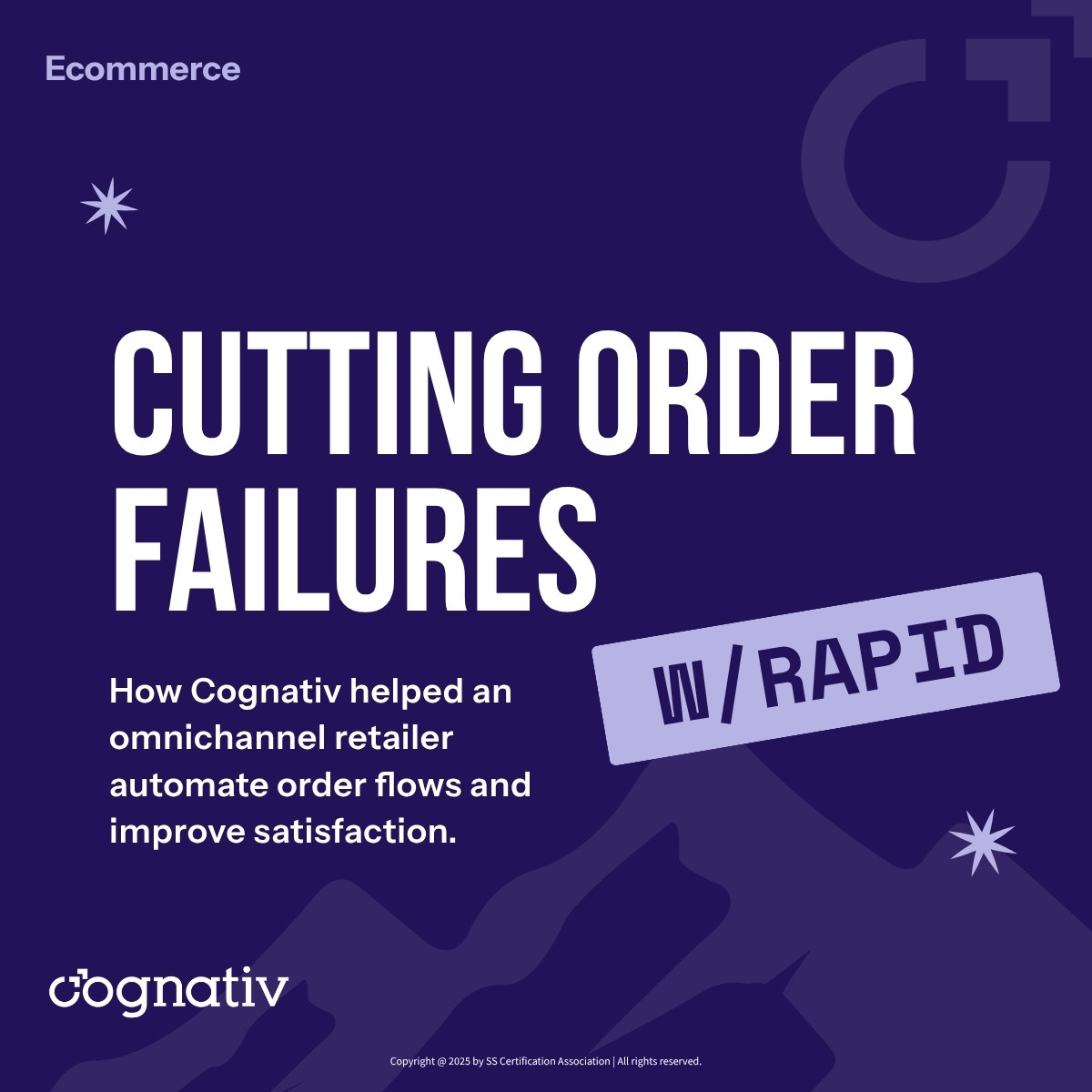
Ecommerce Order Cancellations Fall 22%
Cognativ implemented integration automation and real-time observability to reduce failed orders, improve customer communication, and stabilize fulfillment operations.
The work reduced order cancellations by 22%, lifted Net Promoter Score by 18 points, and cut manual order triage by 40%.
See the Order Recovery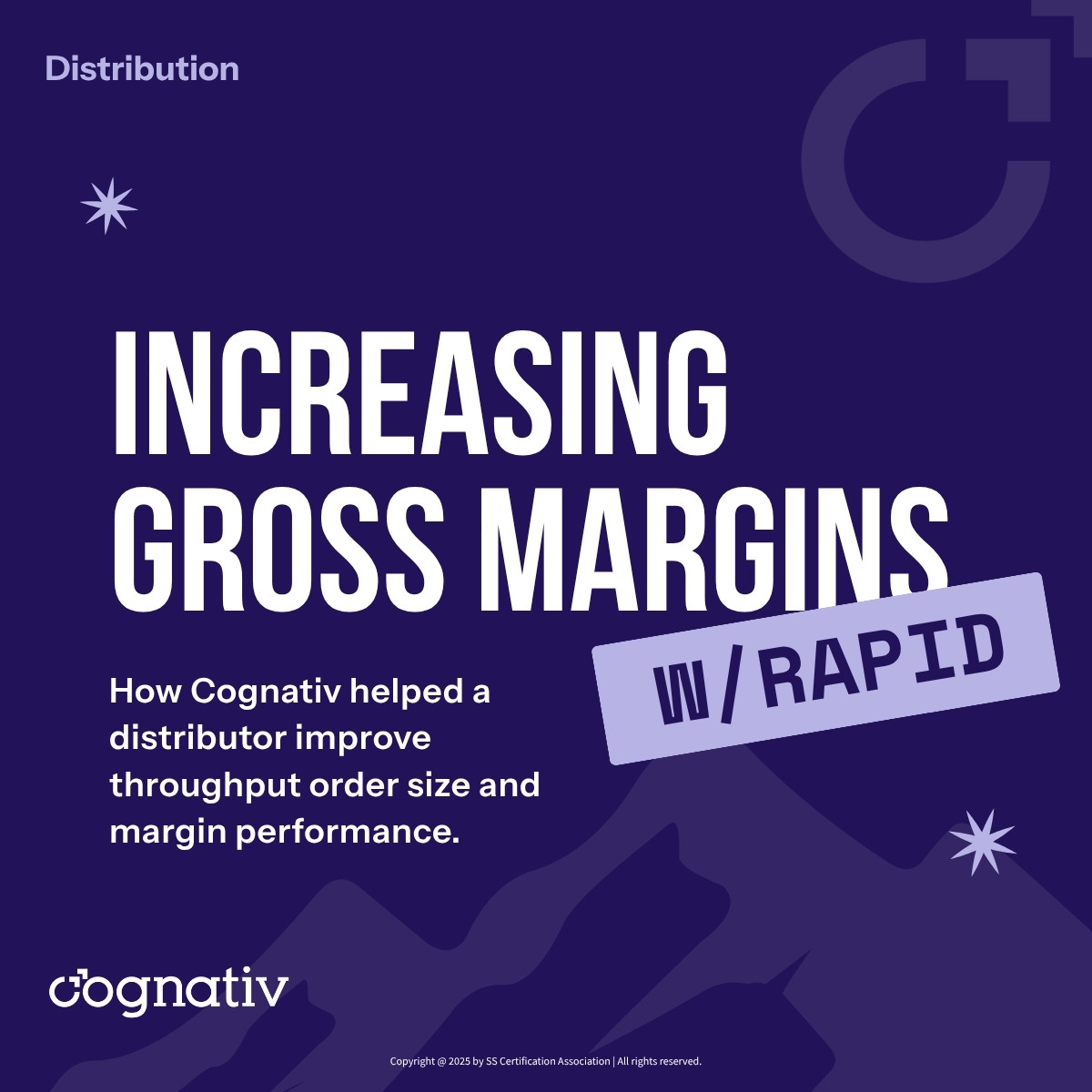
B2B Distribution Throughput Increases 35%
ERP Modernization
API Integration
Inventory Management
Warehouse Automation
B2B Distribution Throughput Increases 35%
Cognativ helped a B2B distributor modernize legacy ERP limitations, automate warehouse workflows, and improve operational visibility.
The transformation increased throughput by 35%, raised average order size by 20%, and lifted gross margins by 15%.
See the Throughput GainsLet operating results guide the next intervention
Process improvement creates valuable evidence.
RAPID helps leadership use that evidence alongside business priorities, technology decisions, organizational constraints, investment requirements, and customer outcomes to determine what should happen next.
Start with the improvement evidence already available
Organizations already using Lean often have valuable information available before a RAPID engagement begins.
Connect existing Lean evidence with the business outcome
Value-stream maps, process measures, improvement backlogs, operational dashboards, customer feedback, A3s, and team observations can all provide useful evidence.
- Business Outcome
- Define the measurable improvement the organization ultimately needs to create.
- Customer and Value Definition
- What customers need, how value is currently defined, and where expectations are changing.
- Value Streams and Process Evidence
- Existing maps, workflows, cycle-time data, quality information, queues, rework, and improvement history.
- People and Ownership
- The people doing the work, improvement leaders, process owners, decision makers, and teams affected by change.
- Constraints and Dependencies
- Technology, data, capacity, organizational, commercial, regulatory, and financial conditions affecting improvement.
- Success Measures
- The evidence that will show whether operational improvements are contributing to the intended business result.
Identify the questions that still need answers
The first objective is not to replace that work. It is to connect what the organization already knows with the wider business outcome and identify which questions remain unresolved.
See How the First 30 Days Begin

Turn continuous improvement into measurable business change
Cognativ can help connect customer value, operating evidence, technology, organizational constraints, priorities, implementation, and decision ownership without discarding the continuous-improvement discipline already in place.
RAPID vs. Lean FAQs
Explore how customer value, continuous improvement, implementation, and business decisions relate before choosing the support your organization needs.
What is the main difference between RAPID and Lean?
Lean focuses on creating customer value through better processes and value streams, with principles including value, flow, pull, waste reduction, problem solving, and continuous improvement.
RAPID begins with a defined business outcome and connects Research, Analyze, Plan, Implement, and Decide across the broader transformation environment.
Understand the RAPID framework
Is RAPID a Lean methodology?
No. RAPID is Cognativ’s outcomes-based transformation framework.
Lean practices can be used inside a RAPID engagement when process improvement, value streams, flow, or waste affect the intended business outcome.
Can RAPID and Lean be used together?
Yes. Lean can provide methods for understanding and improving how work creates value, while RAPID can connect those improvements with broader strategic, technological, organizational, and implementation decisions.
They can operate at different levels of the same transformation.
Is Lean only about eliminating waste?
No. Waste reduction is important, but Lean is broader.
Lean thinking starts with customer value and includes value streams, flow, pull, people, problem solving, experimentation, learning, and continuous improvement.
Does Lean apply outside manufacturing?
Yes. Lean thinking has been adapted to many forms of operational and knowledge work beyond manufacturing.
Its principles can be applied wherever organizations need to understand how work creates value and improve the system used to deliver it.
When does RAPID make more sense than Lean alone?
RAPID can be useful when the challenge cannot be resolved solely by improving an existing process or value stream.
Examples include deciding what technology to modernize, selecting between competing initiatives, coordinating process and organizational change, introducing AI, resolving cross-functional constraints, or determining which business outcome deserves investment first.
Does RAPID replace Lean?
No. An organization can continue using Lean practices for process improvement while applying RAPID to broader transformation decisions.
Existing Lean work can become evidence and operating context inside the RAPID cycle.
Can Lean practices be used during RAPID?
Yes. Value-stream mapping, problem solving, process observation, flow analysis, continuous-improvement data, and other Lean practices can contribute directly to Research, Analyze, Plan, Implement, and Decide.
The exact practices used should depend on the business problem and evidence required.