
Design Infrastructure Around the Services It Must Support
An infrastructure decision affects more than where an application runs. It changes how teams deploy, detect problems, recover service, and manage capacity and cost. A migration or platform redesign should account for those responsibilities from the beginning.
Cognativ examines workloads, dependencies, and operating evidence together. We identify the constraints behind recurring failures or difficult releases, then define changes that fit the service requirements and the team that will operate the environment.
-
Workloads
Application dependencies, data location, and demand patterns.
-
Continuity
Failure boundaries, recovery needs, and service priorities.
-
Delivery
Deployment paths, environment consistency, and rollback.
-
Operations
Monitoring, accountable owners, capacity, and cost.
Cloud and Infrastructure Services Built Around Your Workloads
An engagement can address a migration, an unreliable platform, or an operating environment that has become difficult to manage. We connect architecture and implementation with the practices needed to run the resulting system.
Infrastructure Assessment and Planning
- Workloads
- Dependencies
- Priorities
Establish how the current environment supports the applications that depend on it. We examine topology, dependencies, failure patterns, deployment practices, and resource use. The resulting priorities distinguish urgent service issues from longer-term architecture and operating improvements.
Cloud Architecture and Migration
- Architecture
- Migration
- Cutover
Plan the target environment and the route from the current setup. We assess workload suitability, data movement, integration dependencies, and operational requirements before sequencing the migration. Cutover checks and rollback planning make the transition part of the design.
DevOps and Deployment Engineering
- Delivery Pipelines
- Environments
- Release Controls
Improve the path from a reviewed change to a running service. We examine environment configuration, build and deployment steps, access boundaries, and release controls. The work aims to make releases repeatable and diagnosable, with clear ownership when a deployment does not behave as expected.
Observability and Reliability
- Monitoring
- Fault Isolation
- Incident Learning
Connect service behavior with the information teams need to investigate it. We align monitoring, logs, and actionable alerts with critical service paths and known failure modes. Findings guide fault isolation and operating changes so recurring incidents lead to specific engineering improvements.
Capacity and Cost Optimization
- Utilization
- Performance
- Operating Cost
Relate resource consumption to workload demand and business priorities. We examine utilization, performance constraints, and infrastructure spending to identify where a configuration or architecture change is justified. Capacity decisions account for the service requirements that must be maintained.
Recovery and Operational Readiness
- Recovery
- Runbooks
- Service Ownership
Prepare the environment and its owners for disruptions and change. We define recovery requirements, review backup and restore arrangements, and plan validation of the procedures in scope. Operating documentation and responsibility assignments connect the technical setup with the people who will respond.
Reliability Work That Restored Engineering Focus
Cognativ helped a telecom provider stabilize services through fault isolation, observability, and clearer incident ownership. Engineering and service teams gained a shared view of platform health and a basis for addressing recurring failures.
For a fintech platform, Cognativ diagnosed outages, hardened critical transaction services, and introduced monitoring and release governance. The work connected platform stability with the ability to resume product delivery.
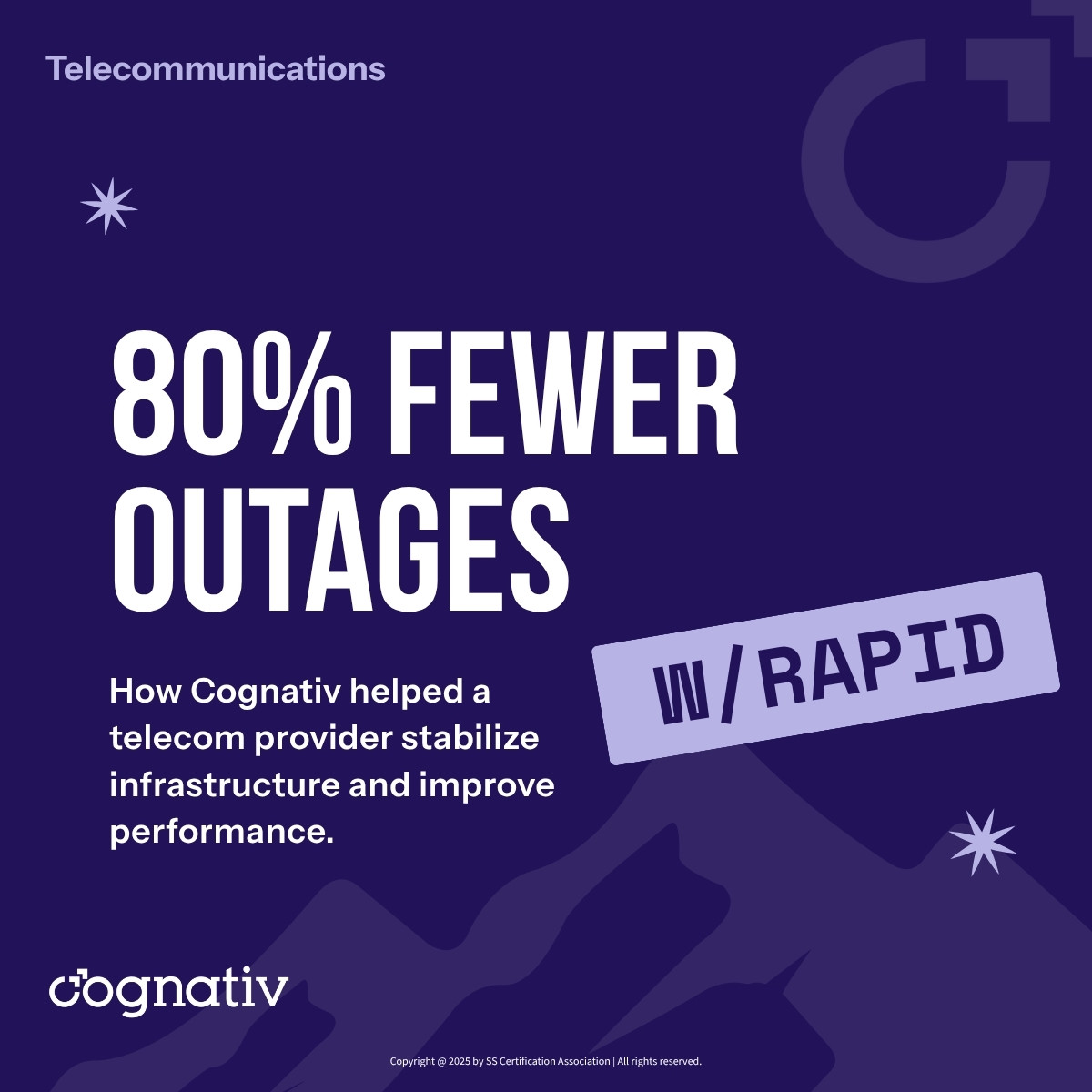
Virtual CTO Cuts Telecom Outages and Failures 80%
Software Reliability
Platform Modernization
Release Management
Virtual CTO
Virtual CTO Cuts Telecom Outages and Failures 80%
Cognativ provided Virtual CTO leadership to stabilize a telecom environment affected by outages, performance failures, and reactive technical operations.
The work reduced outages and performance failures by 80%, improved delivery discipline, and gave the business a more reliable operating foundation.
Review the Outage Reduction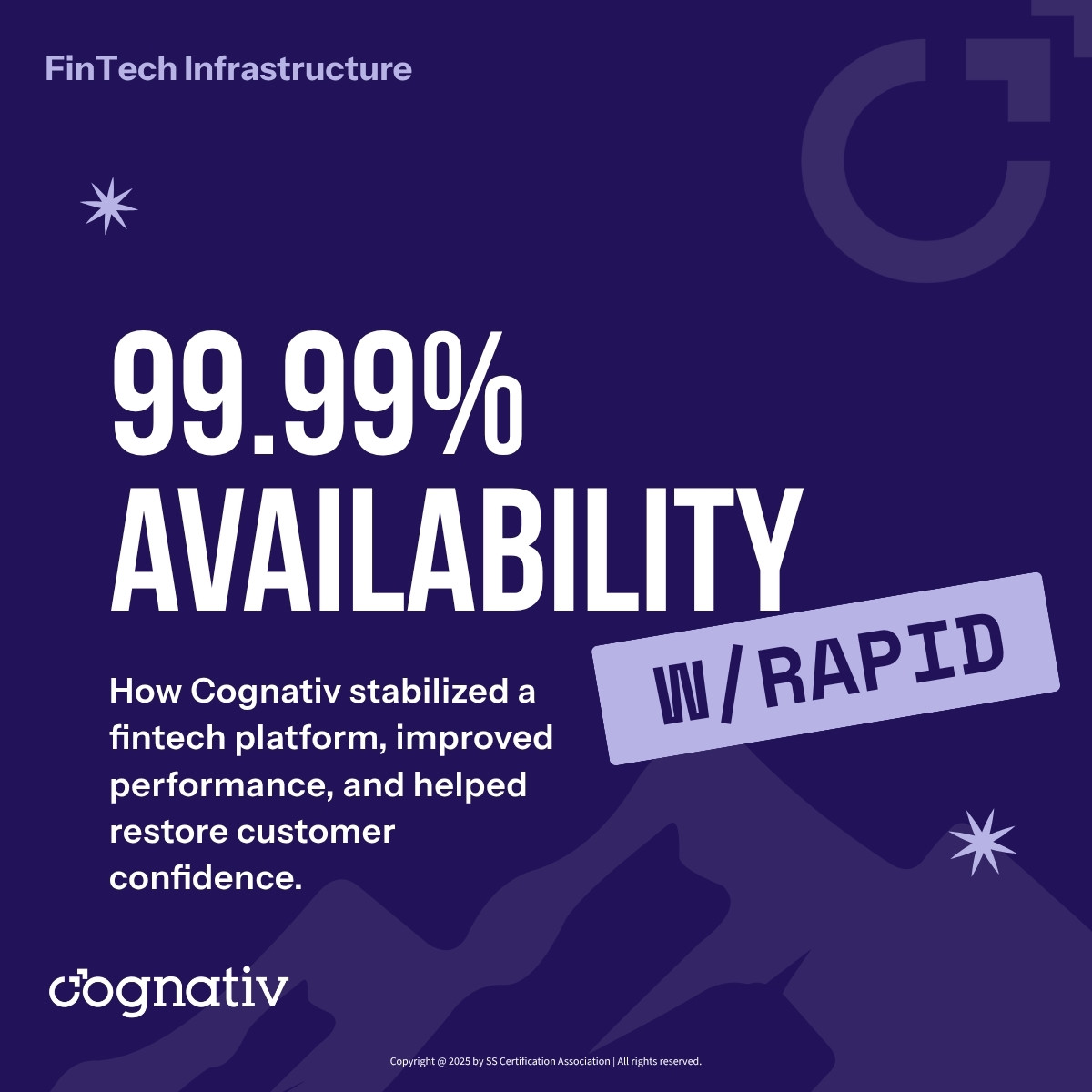
Fintech Platform Reaches 99.99% Availability
Platform Modernization
Elastic Scaling
Observability
Virtual CTO
Fintech Platform Reaches 99.99% Availability
Cognativ stepped in with Virtual CTO leadership to stabilize a fintech platform affected by reliability, performance, and scalability pressure.
The engagement helped the client reach 99.99% availability, restore customer confidence, and create a stronger foundation for regulated growth.
See the Fintech Stability CaseRAPID Grounds Infrastructure Changes in Operating Evidence
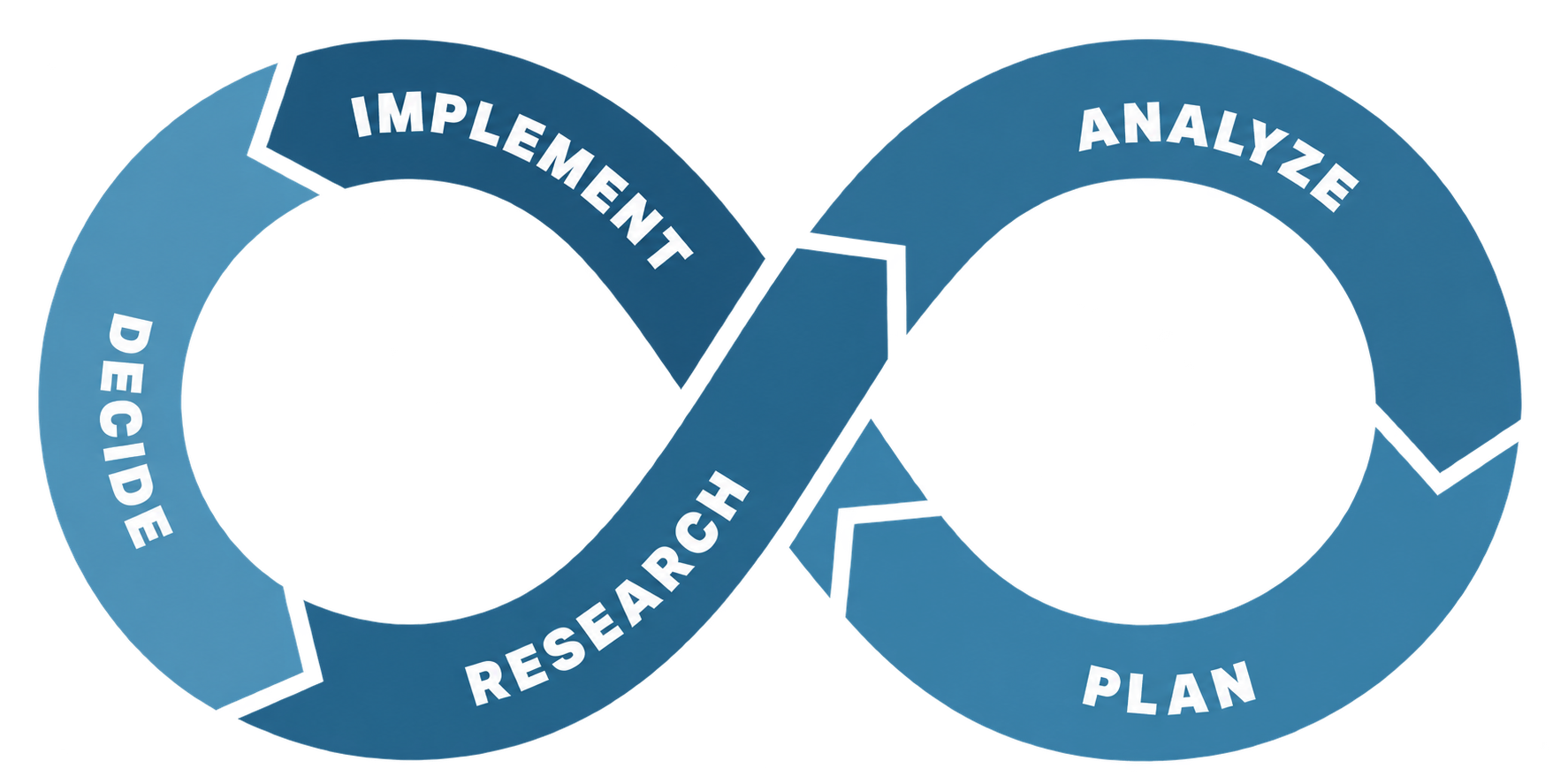
Cognativ uses Ali Davachi's RAPID method to manage infrastructure engagements through Research, Analyze, Plan, Implement, and Decide. Architecture choices remain connected to service behavior, implementation constraints, and the evidence gathered after a change.
Research and Analyze: Understand the Environment Under Load
Examine application dependencies, incident history, resource use, and the way teams deploy and recover services. Identify where the environment limits reliability or delivery. Establish the operating requirements against which proposed changes will be assessed.
Plan, Implement, and Decide: Change, Verify, and Refine
Sequence infrastructure changes with validation, rollback, and operating responsibilities. Review service behavior after implementation against the agreed requirements. Use the results to decide whether to extend the change, tune the configuration, or address another dependency.
Set the Service Requirements Before Changing the Environment
Infrastructure work needs a clear boundary around the workloads involved and the conditions they must continue to meet. We establish that boundary with business and technical owners before defining the implementation sequence.
Define the Workload and Operating Requirements
Identify critical services, dependencies, demand patterns, and recovery needs. Agree on the constraints around availability, access, change windows, and cost that the proposed work must respect.
Prepare the Change and Its Operators
Confirm environment access, provider and internal-team responsibilities, and the checks required for implementation. Include operating handover and rollback decisions in the plan so responsibility remains clear through the transition.
From Infrastructure Concern to an Agreed Plan
Explain the service issue or planned change. We use discovery and feedback to connect the operating requirements with a defined consulting and implementation scope.
-
Book
Share the workload, migration, or reliability concern you want to address.
-
Discovery Call
Review the environment, service requirements, and operating constraints.
-
Feedback Call
Discuss the assessment findings, proposed approach, and change dependencies.
-
Agreement
Confirm the work, access, operating responsibilities, schedule, and fees.

Discuss Your Infrastructure Priorities
Tell us what is changing in your environment or where reliability is holding the business back. Your first consultation is free.
Share the workloads involved, current hosting arrangement, and any migration or operating concerns. We will discuss the appropriate assessment and next steps.
Cloud and Infrastructure Consulting Questions
Explore the requirements behind migration, reliability, and infrastructure change.
Do we have to move everything to the cloud?
No. We evaluate the workloads and their requirements, including dependencies, data location, operating effort, and cost. The resulting plan can retain parts of the current environment while changing the areas that need attention.
Can you assess an environment before a migration is approved?
Yes. An assessment can establish workload dependencies, migration requirements, and the tradeoffs between approaches. It gives your team a technical basis for deciding whether and how to proceed.
How do you plan for business continuity during a migration?
The plan identifies critical service paths, cutover conditions, validation checks, and rollback decisions. We coordinate those requirements with the teams and providers involved in the transition.
Can you help with recurring outages?
We investigate failure patterns alongside the architecture, observability, and incident workflow. The scope can include fault isolation, monitoring improvements, and engineering changes directed at the causes of recurring service disruption.
How does DevOps fit into infrastructure consulting?
Deployment practices and environment management determine how reliably teams can change a system. We include the relevant build, release, configuration, and rollback work when it is necessary to support the infrastructure objective.
Can you review infrastructure spending?
Yes. We connect resource use and cost with workload demand and required service levels. Recommendations account for performance and reliability needs as well as opportunities to reduce unnecessary consumption.
Who operates the environment after the engagement?
Operating ownership is agreed in the scope. We work with your internal team and existing providers to define responsibilities, documentation, and handover requirements for the resulting environment.
What should we bring to the first conversation?
Start with the services involved, the current hosting arrangement, and the issue or planned change. Architecture diagrams, incident summaries, or usage and cost reports can help clarify the situation when available.