
Manage the Software Lifecycle with RAPID
Effective software delivery depends on more than the speed of development. Planning, requirements analysis, design, development, testing, deployment, and maintenance each involve decisions about scope, quality, cost, and business value. Cognativ connects those decisions across the software development lifecycle (SDLC), from the first product question to the application in use.
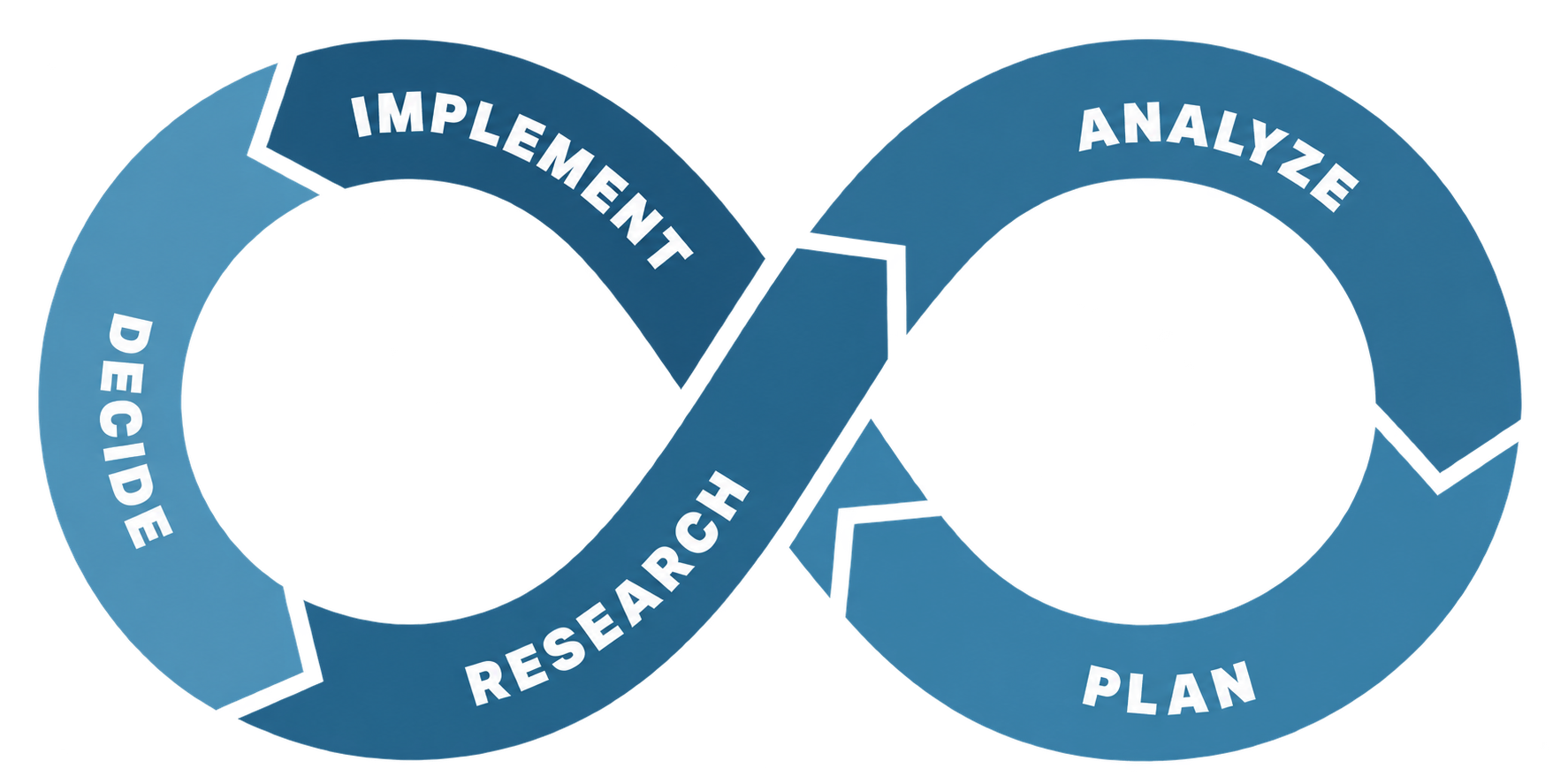
RAPID guides how we manage the consulting and delivery work throughout that lifecycle. Research and Analyze establish the evidence behind a priority; Plan, Implement, and Decide turn that understanding into reviewable work and a decision about what comes next. We revisit both cycles as requirements, test results, and operating conditions change.
We make efficiency part of the engagement: clarify acceptance criteria before work expands, expose dependencies before they block delivery, and review progress against the intended outcome. That gives product and engineering owners a basis for deciding what to continue, adjust, or stop, rather than measuring progress only by completed tasks.
-
Planning
Set the outcome, scope, and delivery constraints.
-
Requirements Analysis
Clarify user needs and acceptance criteria.
-
Design
Define architecture, interfaces, and dependencies.
-
Development
Build and review working increments.
-
Testing
Evaluate behavior, quality, and release readiness.
-
Deployment
Coordinate release, rollback, and ownership.
-
Maintenance
Use operating evidence to prioritize improvements.
Research + Analyze
Examine user needs, technical constraints, test findings, and operating feedback. Revisit the problem when the evidence changes.
Plan + Implement + Decide
Prioritize the next increment, assign ownership, review results, and decide whether to continue, adjust, or stop.
RAPID applies throughout the lifecycle. Phases can overlap and repeat as the product evolves.
Software Engineering Services Across the Product Lifecycle
The engagement can focus on a new application, a difficult integration, or the next stage of an established platform. We define the engineering scope around the product outcome and the conditions required to release and maintain it.
Custom Application Development
- Applications
- User Workflows
- Business Rules
Develop applications around the users, business rules, and workflows they need to support. We translate those requirements into working interfaces and services, with explicit acceptance criteria for the important journeys. Product reviews keep implementation connected to how the application will be used.
Product Engineering
- Product Scope
- Release Planning
- Iteration
Move a product from a defined concept into a usable release, then evolve it through successive increments. We connect feature priorities with architecture and delivery capacity so the roadmap reflects the effort and dependencies behind it. The scope can cover a new product or an existing platform entering its next stage.
API and Systems Integration
- APIs
- Data Contracts
- Error Handling
Connect applications without relying on repeated manual transfers or fragile workarounds. We define data contracts, authentication, error handling, and ownership at each boundary. Integration testing checks how the complete workflow behaves when information is missing, delayed, or rejected.
Application Modernization
- Legacy Code
- Refactoring
- Continuity
Improve the parts of an existing application that make change expensive or unreliable. We examine the codebase, dependencies, and operating behavior to decide where refactoring, replacement, or a new boundary will help. Delivery is sequenced around continuity of the functions the business already depends on.
Quality Engineering and Release Readiness
- Testing
- Acceptance
- Release Readiness
Establish checks that make a release decision defensible. We align automated and manual testing with critical user journeys, integration behavior, and the expected operating conditions. Defects and unresolved risks remain visible so product and engineering owners can decide what is ready and what needs more work.
Software Maintenance and Evolution
- Maintenance
- Performance
- Product Evolution
Keep an application useful after its initial release. We prioritize defects, dependency updates, performance issues, and enhancements alongside the product roadmap. An agreed maintenance scope defines the responsibilities and review cadence, with operating feedback informing future engineering work.
Engineering Behind Working Business Platforms
Cognativ rebuilt a telecom subscription platform after its initial MVP failed to support the business, bringing billing, onboarding, and subscriber reporting into a dependable core.
In an ecommerce engagement, Cognativ connected order handling with integration automation and observability to reduce failures and improve fulfillment. These projects show how engineering connects application behavior with the operations behind it.
Subscription Platform Rebuild Restores Growth
Subscription Software
Billing Systems
Platform Modernization
Billing Integration
Subscription Platform Rebuild Restores Growth
Cognativ helped rebuild a subscription and membership commerce platform after platform instability, delivery friction, and unclear execution slowed growth.
The RAPID-led rebuild restored operating confidence, improved the customer experience, and gave leadership a clearer path for investor-facing growth.
See the Subscription Rebuild
Ecommerce Order Cancellations Fall 22%
Systems Integration
Workflow Automation
Order Management
Observability
Ecommerce Order Cancellations Fall 22%
Cognativ implemented integration automation and real-time observability to reduce failed orders, improve customer communication, and stabilize fulfillment operations.
The work reduced order cancellations by 22%, lifted Net Promoter Score by 18 points, and cut manual order triage by 40%.
See the Order RecoveryRAPID Keeps Engineering Connected to the Product
RAPID, created by Cognativ founder Ali Davachi, brings Research, Analyze, Plan, Implement, and Decide into the management of software delivery. It connects the reason for a change with the evidence needed to build, release, and improve it.
Research and Analyze: Understand the Product and Codebase
Examine the user journeys, existing implementation, and dependencies behind the requested change. Identify the behavior that must be preserved and the limitations that need attention. This establishes a technical and product basis for the release scope.
Plan, Implement, and Decide: Deliver and Review Working Software
Sequence the implementation, testing, and release work with named owners and acceptance criteria. Review working increments with the people responsible for the product. Use those reviews and operating results to decide what is ready to release and what belongs in the next iteration.
Define the Release and the Team Behind It
A clear engineering engagement connects a product objective with a delivery boundary. We establish what the first release should accomplish and how Cognativ will work with your product, engineering, and operations teams.
Agree on the Product Increment
Identify the users, essential journeys, and acceptance criteria for the proposed release. Review existing code and documentation where available, then separate the work needed now from later enhancements.
Establish Delivery and Release Ownership
Agree on access, code review, testing, deployment, and handover responsibilities. Make dependencies on internal teams or vendors visible so the release plan reflects the people and systems involved.
From Software Requirement to Delivery Agreement
Bring the product objective and the current state of the application. We use the initial conversations to define a practical engineering scope before committing to delivery.
-
Book
Tell us about the application, integration, or release you need.
-
Discovery Call
Explore user needs, the current codebase, and delivery dependencies.
-
Feedback Call
Review the proposed engineering scope and release approach.
-
Agreement
Agree on deliverables, acceptance, responsibilities, schedule, and fees.

Discuss Your Software Project
Tell us what you need to build, connect, or improve. Your first consultation is free.
Share the users, current platform, and the release or business milestone driving the work. We can start with an existing application or a new product requirement.
Software Engineering Questions
Clarify how development, release, and ongoing ownership will work.
Can Cognativ work on an existing application?
Yes. We begin by understanding the codebase, architecture, dependencies, and current operating issues. That review informs whether the next step is a focused enhancement, refactoring, or a broader modernization effort.
Can you build a new product from an early concept?
We can help turn the concept into a defined product scope and an initial release. The starting work establishes the users, essential workflows, and assumptions that need validation before the engineering scope expands.
Do we need a complete specification before we start?
No. Bring the problem, intended users, and any existing product or technical material. We work through the requirements and acceptance criteria needed to plan the first useful increment.
How do you select the technology stack?
We consider the application requirements, existing systems, team capabilities, and maintenance needs. Technology choices are evaluated against those constraints rather than selected independently of the product.
Can you collaborate with our internal developers?
Yes. We agree on the areas Cognativ will own and the interfaces with your team. Shared review practices, delivery dependencies, and release responsibilities are defined as part of the engagement.
How is software quality evaluated?
The release scope includes acceptance criteria and a testing approach matched to the application. Reviews cover important user journeys, system integrations, and relevant performance or reliability requirements.
What happens after the first release?
We review the application in use and identify defects, improvements, and the next product priorities. Maintenance and further development can be included in an agreed follow-on scope with clear ownership.
How are development cost and timing established?
We examine scope, codebase condition, integrations, testing requirements, and team dependencies. Those findings shape the delivery proposal, including milestones and fees. Changes to the agreed scope are reviewed with you before they become additional work.