
Start with an outcome, not a solution
Cognativ uses RAPID as the foundation of its consulting and delivery work. The starting point is the outcome you need, not a predetermined software solution.
An outcome describes what should become better for the business or its customers. A solution describes one way to pursue it. RAPID keeps that distinction visible so teams can question a proposed purchase, project, or process before committing to the wrong change.
For example, launching a customer portal is an activity. Helping customers get an accurate answer without repeated follow-up is an outcome. A portal might support that outcome, but the work may also require clearer responsibilities, better information, or a simpler service process.
The outcome gives the team a basis for deciding what evidence to gather, what to prioritize, and what to measure. It also makes it possible to stop an activity that is consuming effort without improving the result.
What does RAPID stand for?
RAPID stands for Research, Analyze, Plan, Implement, and Decide. Each phase answers a different question. Together, they connect an understanding of the business to actions that can be tested and improved.
Research: what is really happening?
Gather verifiable information about performance, customers, and everyday work. Listen to the people involved as well as reviewing records. The aim is to understand both the operating facts and the assumptions that influence behavior.
Useful evidence can include customer feedback, financial information, process records, and the experience of teams doing the work. A shared explanation is not automatically a verified explanation: research should test it.
Analyze: what does the evidence mean?
Examine the information to identify the gaps that stand between current performance and the intended outcome. Consider people, finance, product, and technology, rather than assuming that every problem belongs to one department or needs a technical fix.
Analysis may expose missing information or challenge the original request. When it does, return to research before treating the recommendation as settled.
Plan: what must change, and who will make it happen?
Turn the findings into an actionable response across people, processes, and products. Identify the skills, resources, responsibilities, and dependencies needed to carry it out.
The plan should connect the proposed change to customer value and the business outcome. It should also make clear what the team will review to judge progress.
Implement: what happens when the plan meets daily work?
Put the agreed change into practice and observe how it performs. Implementation can involve changes to responsibilities, workflows, skills, or technology; it does not automatically mean building software.
Use milestones and feedback to identify obstacles while there is still time to respond. Refine the plan when new information shows that the original approach needs adjustment.
Decide: should the approach continue, change, or stop?
Compare actual results with the intended outcome. Continue what the evidence supports, change what needs refinement, and stop work that no longer serves the goal.
Decide is not a single approval at the end of a project. Decisions about resources, responsibilities, and next actions are needed throughout the work to keep progress moving.
Why RAPID uses two feedback cycles
Progress creates new knowledge. RAPID connects investigation with delivery so teams can use what they learn to sharpen priorities, refine their approach, and keep improvements moving.
The understanding cycle turns observations into a clearer picture of the business challenge.
The response cycle puts that insight to work and makes the effects of each change visible.
Feedback links the two, helping teams focus their next effort where it can make the greatest difference.
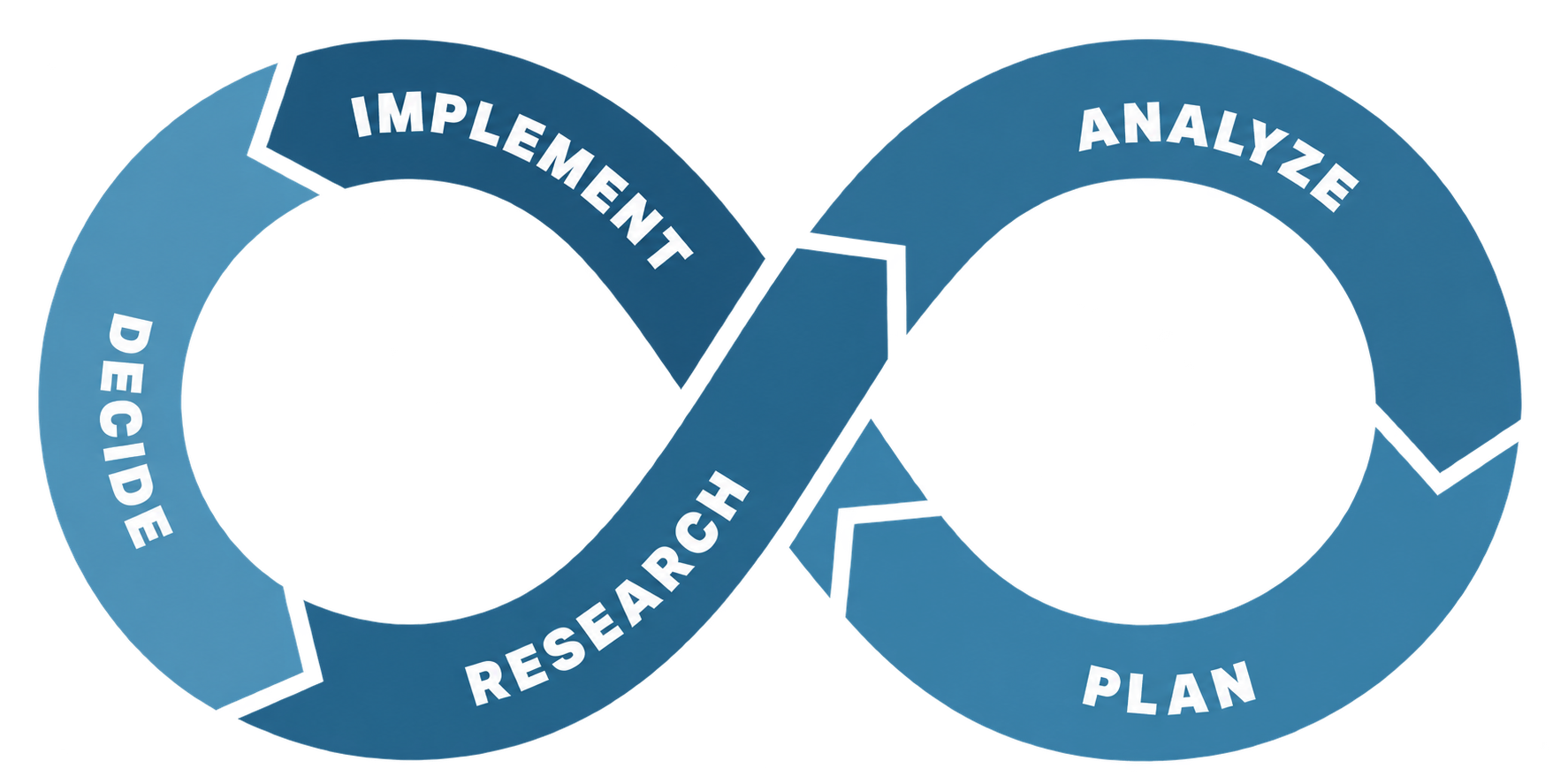
Research and Analyze: improve the understanding
Research supplies the evidence; analysis tests what it means. If an explanation does not hold up, or a critical fact is missing, the team gathers more focused information. This prevents an early assumption from becoming the basis for an entire project.
Research
Gather focused information about what is happening and where facts are missing.
Analyze
Test explanations against the evidence and identify what still needs investigation.
Plan, Implement, and Decide: improve the response
Planning defines a response, implementation tests it in practice, and decisions determine what happens next. Feedback can change the plan or reveal a question that needs more research. The intended outcome remains the reference point.
This repeated review is how RAPID supports adaptation without treating every obstacle as a reason to restart the whole initiative.
Plan
Define the response, responsibilities, and measures.
Implement
Put the change into practice and observe the result.
Decide
Continue, change, or stop based on the evidence.

Start with one business question
Your first consultation is free. What needs to improve, and what tells you it is not working today? Bring that question to discuss your priorities and identify a practical next step. You do not need a finished specification or a decision to buy software.
Make the framework concrete with working tools
The tools in RAPID Transformation help teams connect observations to action. They are working records to refine as understanding improves, not paperwork to complete for its own sake.
Skills inventory
Identify the specific skills and experience needed to support your outcomes and customer value. Record whether each capability is available internally, externally, or both. Ask team members to contribute so the inventory reflects more than one view of what the work requires.
- Internal / External
- Identify whether the skill can be provided internally, externally, or both.
- Outcome / Goal
- Identify the outcomes that depend on this skill.
- Customer value
- Identify the customer values that depend on this skill. Each skill must support at least one value or outcome.
Process inventory
Describe the processes that account for meaningful effort. Connect each process to the departments involved, the customer value it supports, and the outcome that depends on it. Record relevant risks and compliance requirements.
- Process
- Name or describe the process and reference supporting documentation where useful.
- Departments
- List the departments involved, including customers or vendors when they participate.
- Outcome / Goal
- Connect the process to the outcomes it supports.
- Customer value
- Connect the process to customer value; each process must affect at least one value or outcome.
- Risks
- Identify whether the process contributes to a risk in the risk inventory.
- Compliance
- Record yes or no, and understand the compliance impact on or from the process.
Gap analysis
Identify specific improvements rather than broad complaints. For a process gap, record the affected department, time to correct, skills required, and an initial recommendation. Link the improvement back to customer value and an outcome.
| Field | What to record |
|---|---|
| Process improvement | Name the process and the specific improvement being considered. |
| Department | Record one department per entry; use separate entries when several departments are involved. |
| Gap | Describe the gap identified during Research. |
| Time to correct | Estimate the elapsed time needed to adjust or correct the process. |
| Skills required | Identify the capabilities needed, referring to the skills inventory. |
| Customer value | Link the improvement to the customer value it supports. |
| Outcome | Link the improvement to the intended business outcome. |
| Initial recommendation | Record the proposed response and refine it as understanding improves. |
Prioritized easy wins
Identify changes that can build confidence while delivering tangible value. Compare them by outcome, customer value, estimated time, and cost. The easiest task is not necessarily the most useful first action.
- Easy win
- Name or describe an achievable improvement identified through Research and gap analysis.
- Customer value
- Link the improvement to customer value.
- Outcome
- Link the improvement to its intended outcome.
- Time to win
- Estimate the time needed to achieve the improvement.
- Cost to win
- Record the estimated cost in the worksheet cost field.
- Rank
- Assign a distinct priority position. Wins may be ranked within departments for simultaneous execution; implementation details are kept separately.
Project inventory
Organize the plans that address people, process, and product gaps, with easy wins at the top. Link each project to customer value, its intended outcome, and the gaps it addresses. Record its rank, estimated time and cost, estimated start date, and actual completion date.
- Project name
- Name or describe the plan to address people, process, or product gaps.
- Customer value
- Link the project to customer value.
- Outcome
- Link the project to its intended outcome.
- Gaps addressed
- Reference the relevant gap analyses.
- Estimated time
- Record an elapsed-time estimate or a target completion date.
- Estimated cost
- Record what the project is expected to cost.
- Rank
- Assign a distinct priority position, grouping easy wins at the top.
- Start date
- Record the estimated project start date.
- Completion date
- Record the actual completion date.
See how RAPID connects understanding to action
These published engagements show why the starting question matters: order failures can reveal integration gaps, unreliable reports can expose inconsistent data definitions, and stalled growth can point to a different business opportunity. Explore how Cognativ investigated each situation, shaped the response, and reported the results.
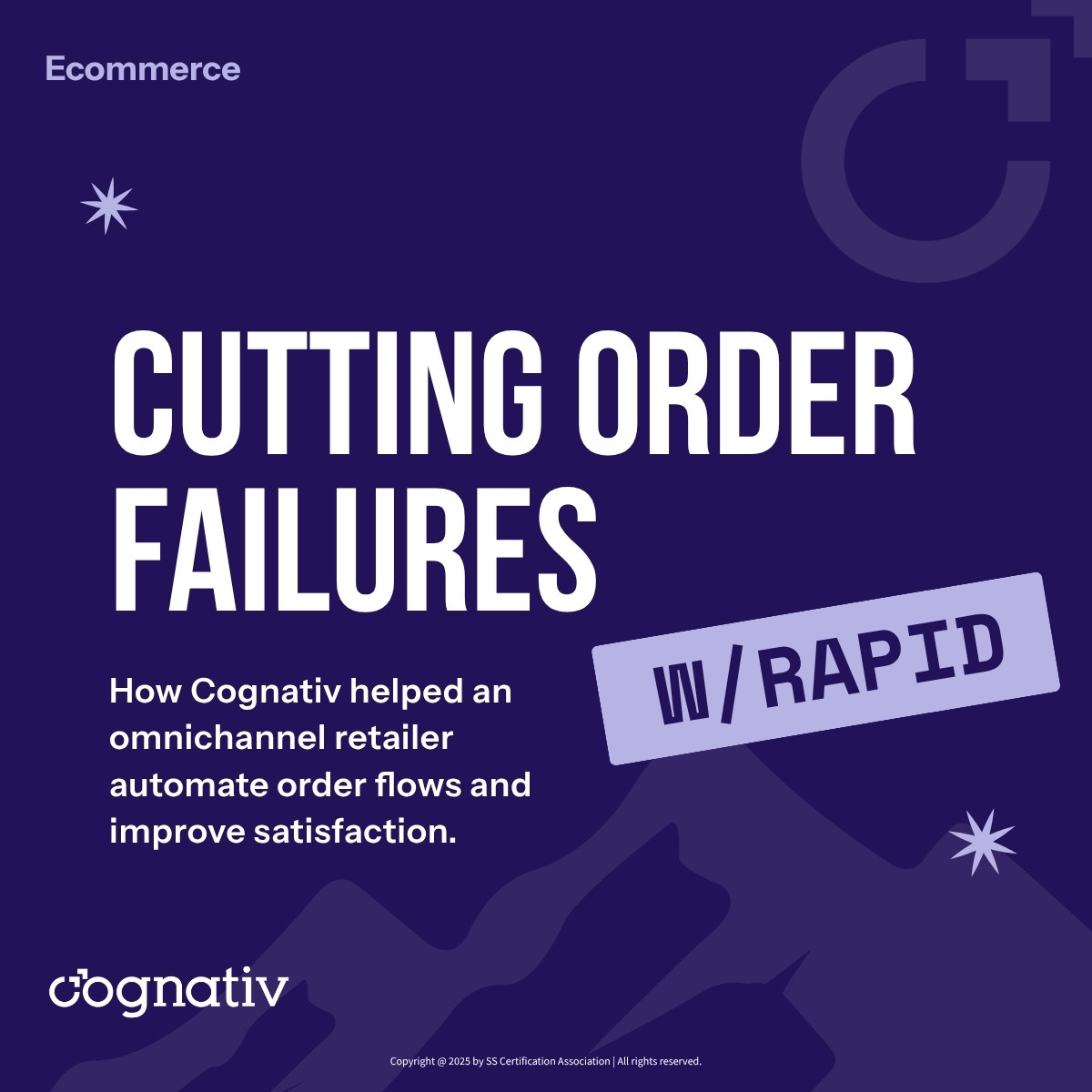
Ecommerce Order Cancellations Fall 22%
Systems Integration
Workflow Automation
Order Management
Observability
Ecommerce Order Cancellations Fall 22%
Cognativ implemented integration automation and real-time observability to reduce failed orders, improve customer communication, and stabilize fulfillment operations.
The work reduced order cancellations by 22%, lifted Net Promoter Score by 18 points, and cut manual order triage by 40%.
See the Order Recovery
Health Insurance Reconciliation Drops 70%
Data Integration
Claims Analytics
Business Reporting
Data Aggregation
Health Insurance Reconciliation Drops 70%
Cognativ integrated fragmented claims, enrollment, care management, finance, and reporting data into a unified insight engine for a health insurance organization.
The work reduced manual reconciliation by 70%, improved audit readiness, and gave leadership real-time visibility.
Review the Data Unification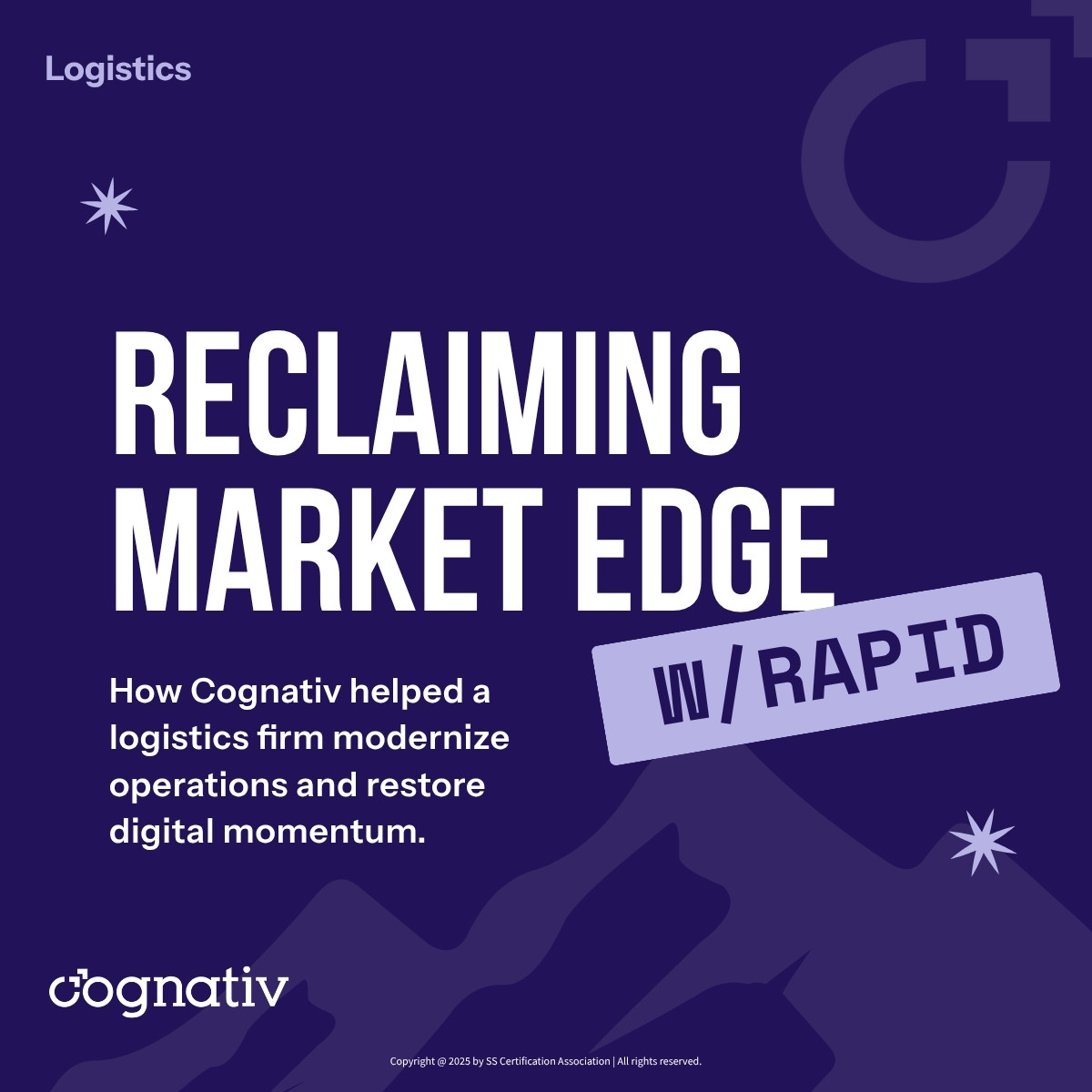
Logistics Platform Reduces Customer Churn by 35%
Logistics Software
Customer Portals
Workflow Automation
Systems Integration
Logistics Platform Reduces Customer Churn by 35%
Cognativ helped a logistics firm recover from a failed digital transformation by delivering a unified logistics platform through RAPID.
The work reduced customer churn by 35%, increased portal engagement 5x, lifted existing-client revenue by 22%, and cut compliance workflow time by 40%.
See the Logistics Reset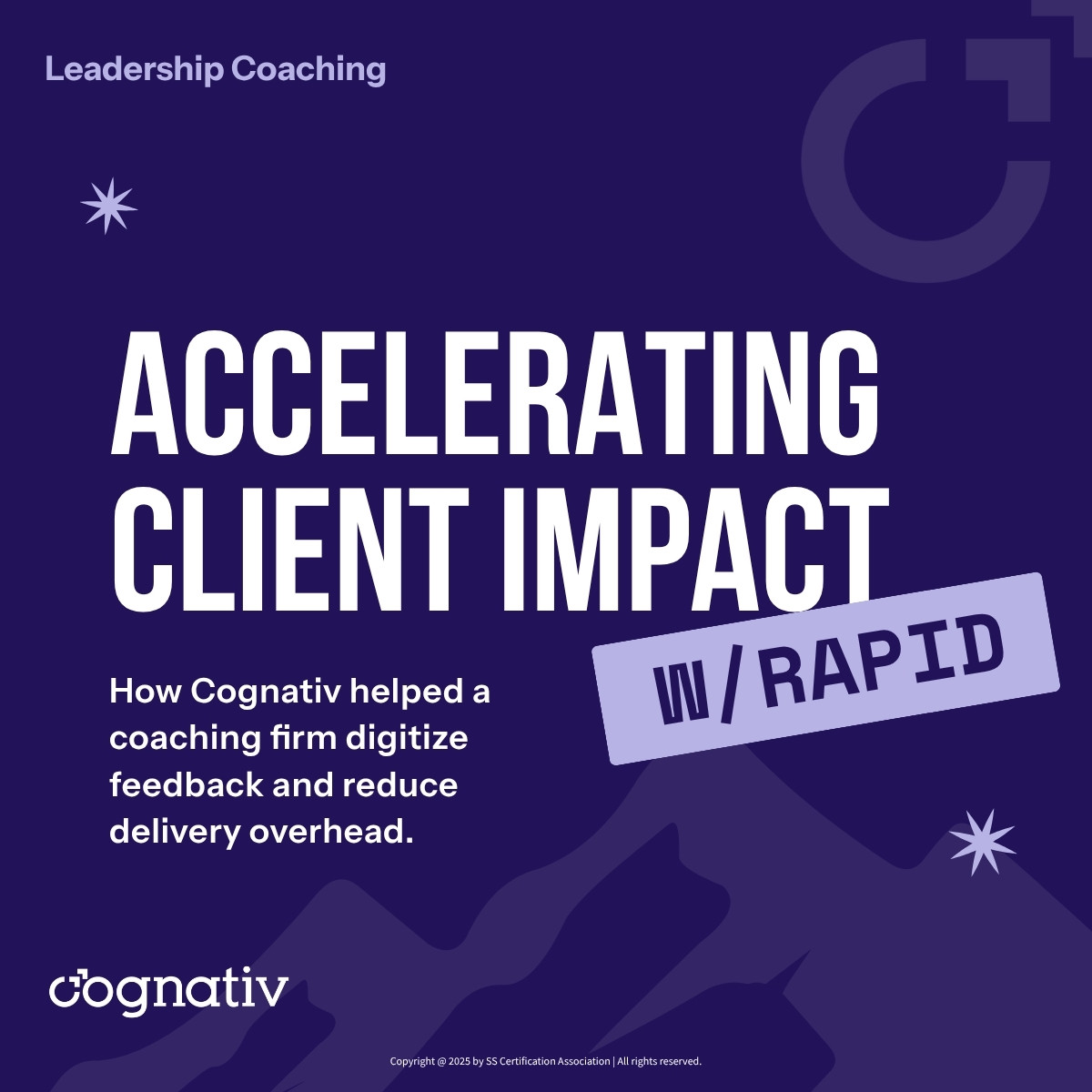
Leadership Reviews: 70% Faster Reporting
Custom Software
Reporting Automation
Access Control
Audit Trails
Leadership Reviews: 70% Faster Reporting
Cognativ transformed a 360-degree review system for a leadership coaching firm, replacing outdated back-end processes with a more scalable digital workflow.
The result was 70% faster report turnaround, 60% lower admin overhead, and new coaching tiers for enterprise clients.
Explore the Review Workflow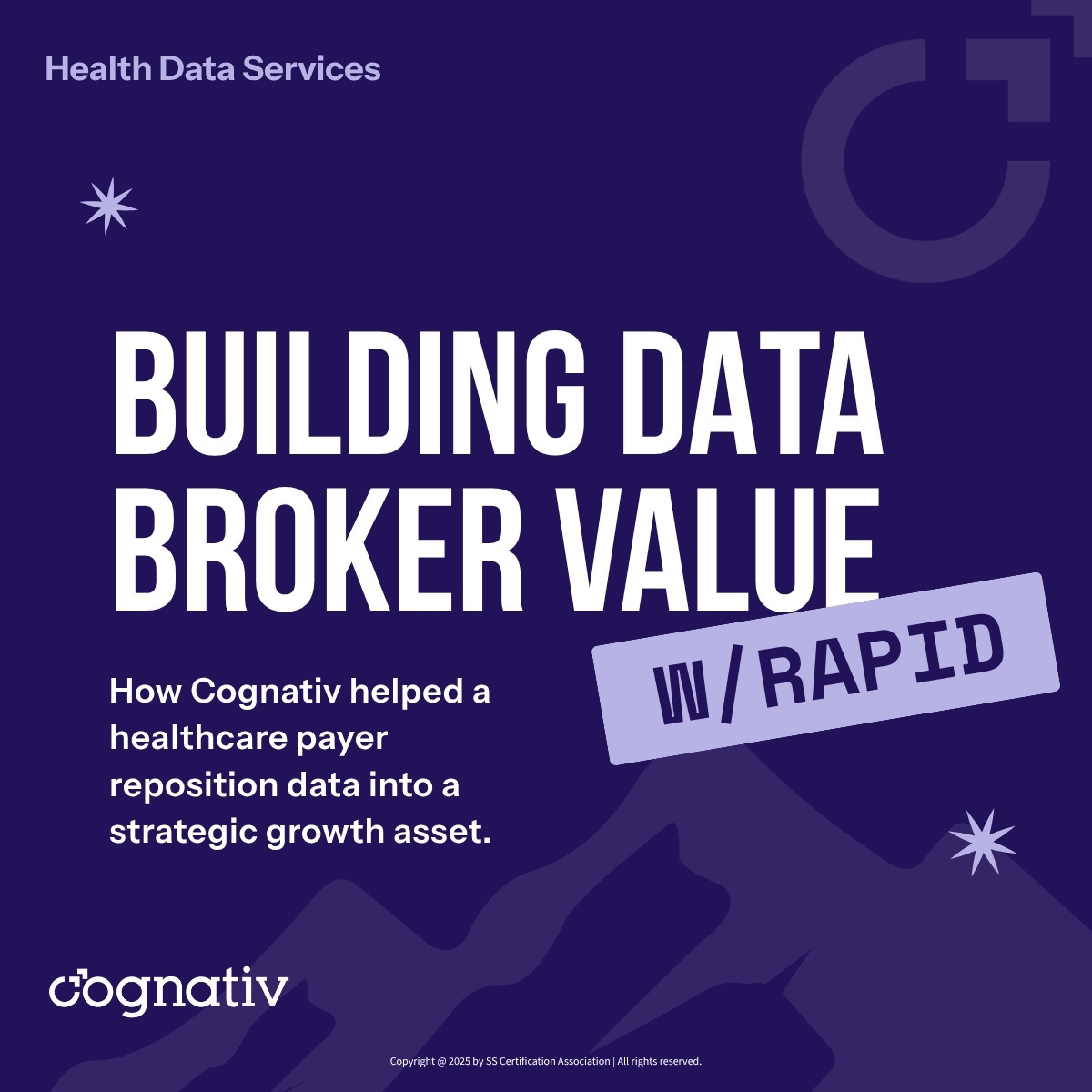
Healthcare Data: 20x Exit Valuation
Data Platforms
API Development
Data Integration
Data Marts
Healthcare Data: 20x Exit Valuation
Cognativ helped a traditional third-party payer reposition from a claims-processing service provider into a strategic healthcare data broker.
The transformation reshaped the company’s go-to-market model and increased exit valuation by 20x.
See the 20x Exit Story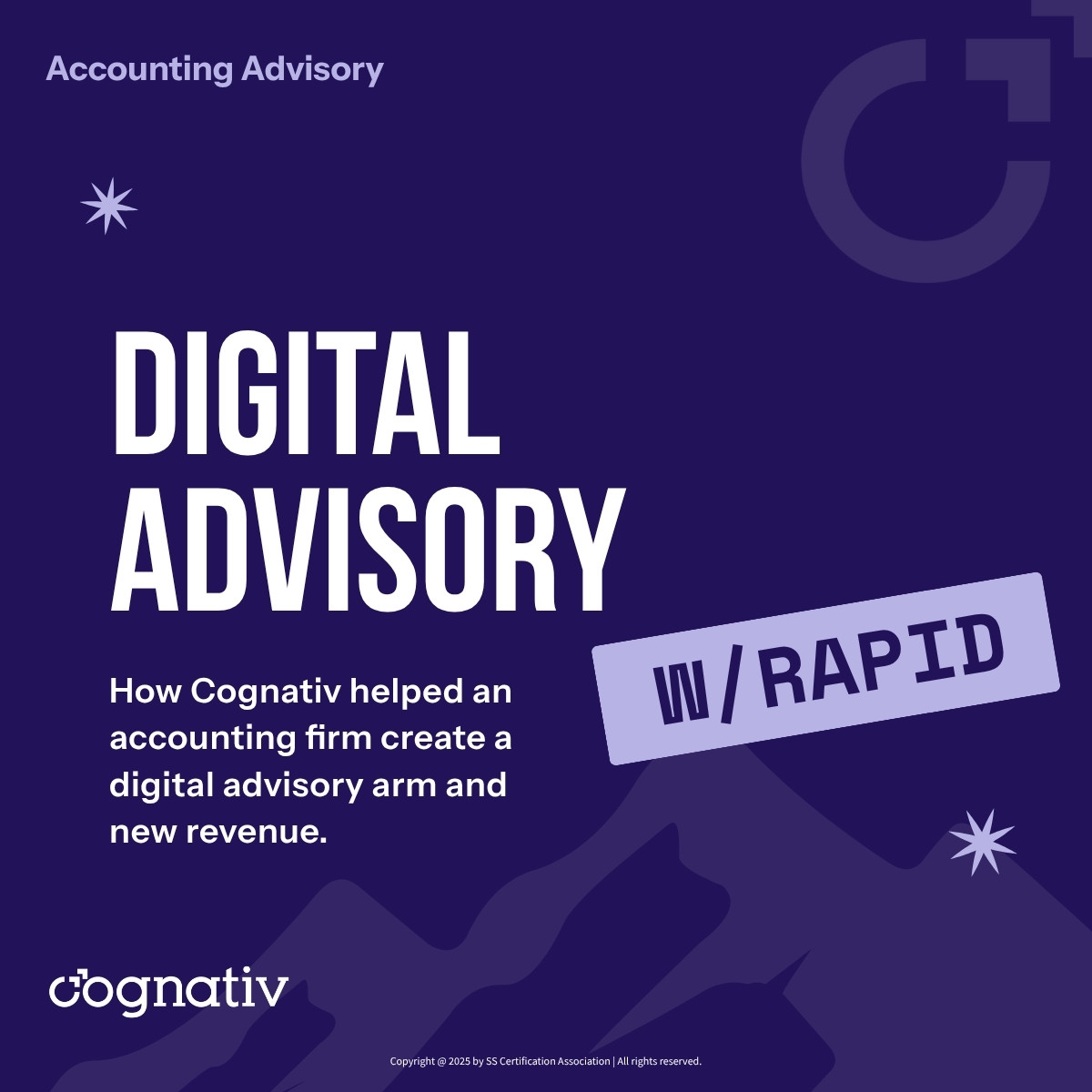
Digital Advisory Practice Tops $3M in Year One
Technology Consulting
ERP Implementation
Digital Finance
Digital Advisory
Digital Advisory Practice Tops $3M in Year One
Cognativ helped an accounting firm launch and scale a digital advisory arm, moving from traditional tax and audit services into ERP implementation, digital finance transformation, and strategic advisory.
The new practice generated more than $3M in year-one revenue.
Review the $3M Practice BuildFrom understanding RAPID to using it with Cognativ
The framework explains how understanding and action inform each other. Applying it to your organization requires a separate discussion of scope, participants, responsibilities, and delivery options. The RAPID consulting hub explains what that engagement can involve.
What leaders say about RAPID and Ali Davachi
Business leaders on Ali Davachi's ability to connect strategy, technology, and execution.
This book, as you can probably tell, is not about theory, because Ali is not about theory. He knows the theory, but he is far more impressed with its application to business success.
Ali has a great blend of technology and business expertise. He is detail oriented but also sees the big picture. He focused on delivering business value by leveraging appropriate technology, and this pragmatic approach is refreshing.
He has an outstanding knowledge of all aspects of IT and general business requirements. He has done an excellent job whenever I have worked with him. I would highly recommend him.
His ability to manage technical resources while simultaneously representing the company to clients and vendors as a senior executive was truly exceptional.
Over the span of nine months, he led the complete rearchitecture and rebuild of the firm's core operating platform and systems, putting the company on sound footing for growth in the coming months and years.
During the time I have known Ali (more than seven years), he has always demonstrated an ability to quickly analyze a business situation in order to offer viable solutions at a reasonable cost.
Explore RAPID in the words of its creator
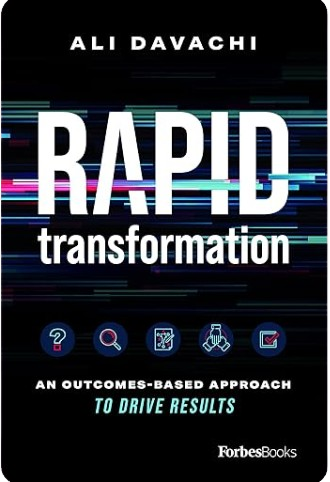
Read the first chapter of Ali Davachi's RAPID Transformation and explore its outcomes-based approach. Requesting the chapter does not book a consultation.
Questions about RAPID Transformation
Understand the framework before choosing how to apply it.
Who created RAPID Transformation?
Ali Davachi created RAPID Transformation and describes the framework in his book of the same name.
Cognativ applies RAPID across its consulting and delivery work.
Meet Ali Davachi and the Cognativ team
Is RAPID only for businesses in difficulty?
No. RAPID can help a business examine an opportunity as well as address a problem.
The common requirement is an outcome worth pursuing and a willingness to test assumptions against evidence.
Do the five phases always happen in order?
No. Research and Analyze inform each other, while Plan, Implement, and Decide form another feedback cycle.
New information can send the team back to an earlier question. Decisions are made throughout the work.
Does RAPID require replacing existing systems?
No. A recommendation may involve better use of existing systems, process changes, or clearer ownership.
New technology should follow from the needs identified, rather than being assumed at the start.
Does RAPID have a fixed completion time?
No. RAPID does not prescribe a universal deadline.
Scope, complexity, access to evidence, and the decisions required affect the work. Its feedback cycles can also become part of ongoing operations.
Can we use the book before speaking with Cognativ?
Yes. The book explains the framework and includes tools for examining outcomes, processes, and improvement opportunities.
Reading it does not commit you to a consulting engagement.