Achieving Standard Work Without Bureaucracy: A Practical Approach
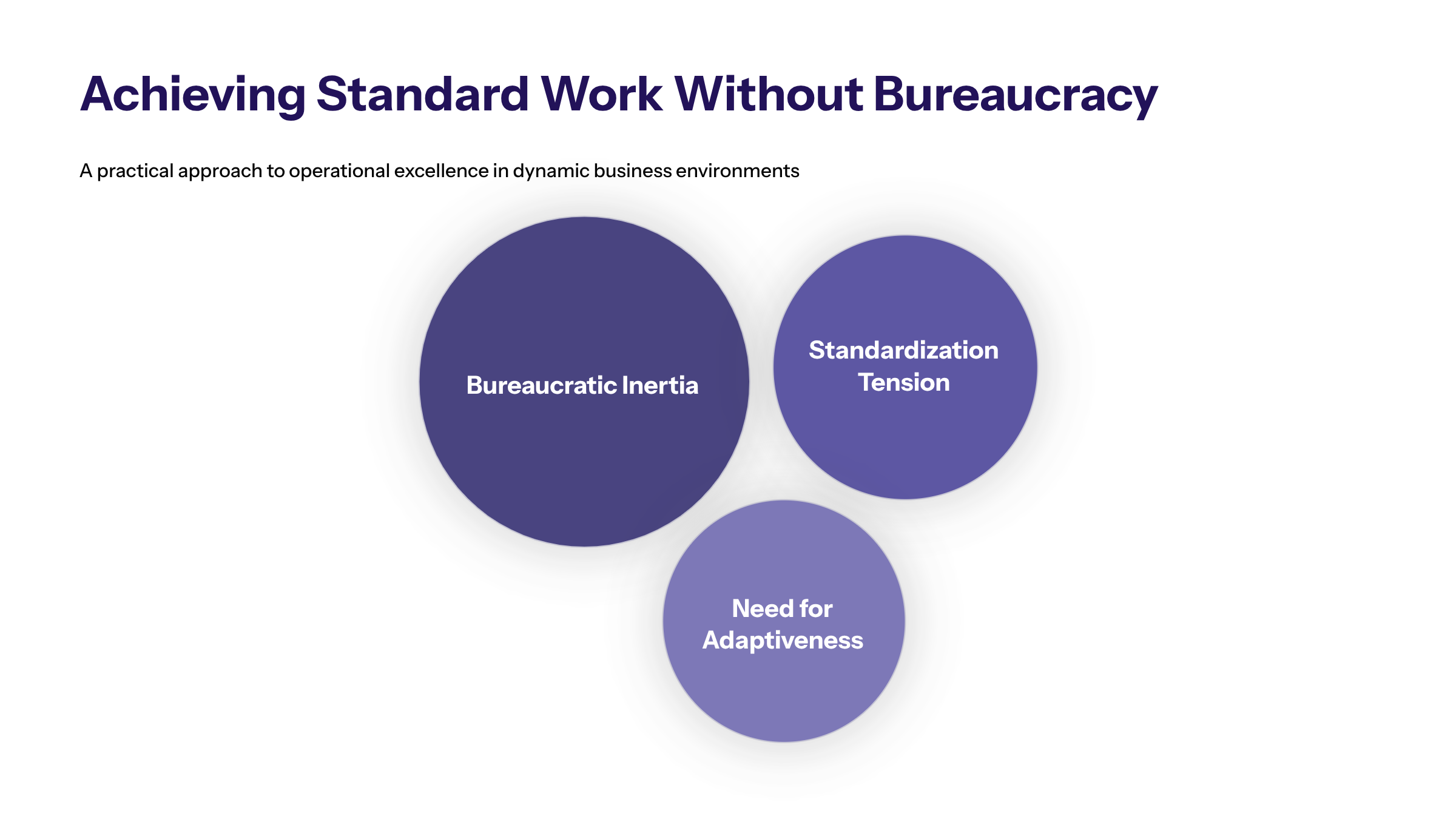
In today’s dynamic business environments, organizations face the critical challenge of implementing standard work without succumbing to the pitfalls of bureaucracy. Bureaucracy is often seen as synonymous with inertia and stagnation, which can hinder agility and innovation in organizations. Moreover, bureaucratic structures are inherently ill-suited for modern imperatives such as adaptiveness, learning, and innovation. Yet, bureaucracy's staying power is attributed to its simplicity and the value it provides in planning and coordinating tasks. Despite the rapidly evolving challenges facing businesses today, most firms remain organized along this entrenched paradigm of bureaucracy.
This article explores how business leaders can adopt a model focused on outcomes rather than rigid rules, leveraging digital platforms and collaborative governance to drive efficiency, innovation, and improved outcomes.
We analyze the balance between standardization and flexibility, empowering frontline staff, and sustaining progress in complex organizations.
Key Takeaways:
Standard work without bureaucracy enables organizations to scale sustainably by focusing on outcomes, not micromanagement.
Empowering employees, especially frontline staff, to co-create solutions fosters innovation and improves customer experience.
Collaborative governance models and digital tools support alignment, accountability, and continuous improvement in standard work.
Introduction to Standard Work
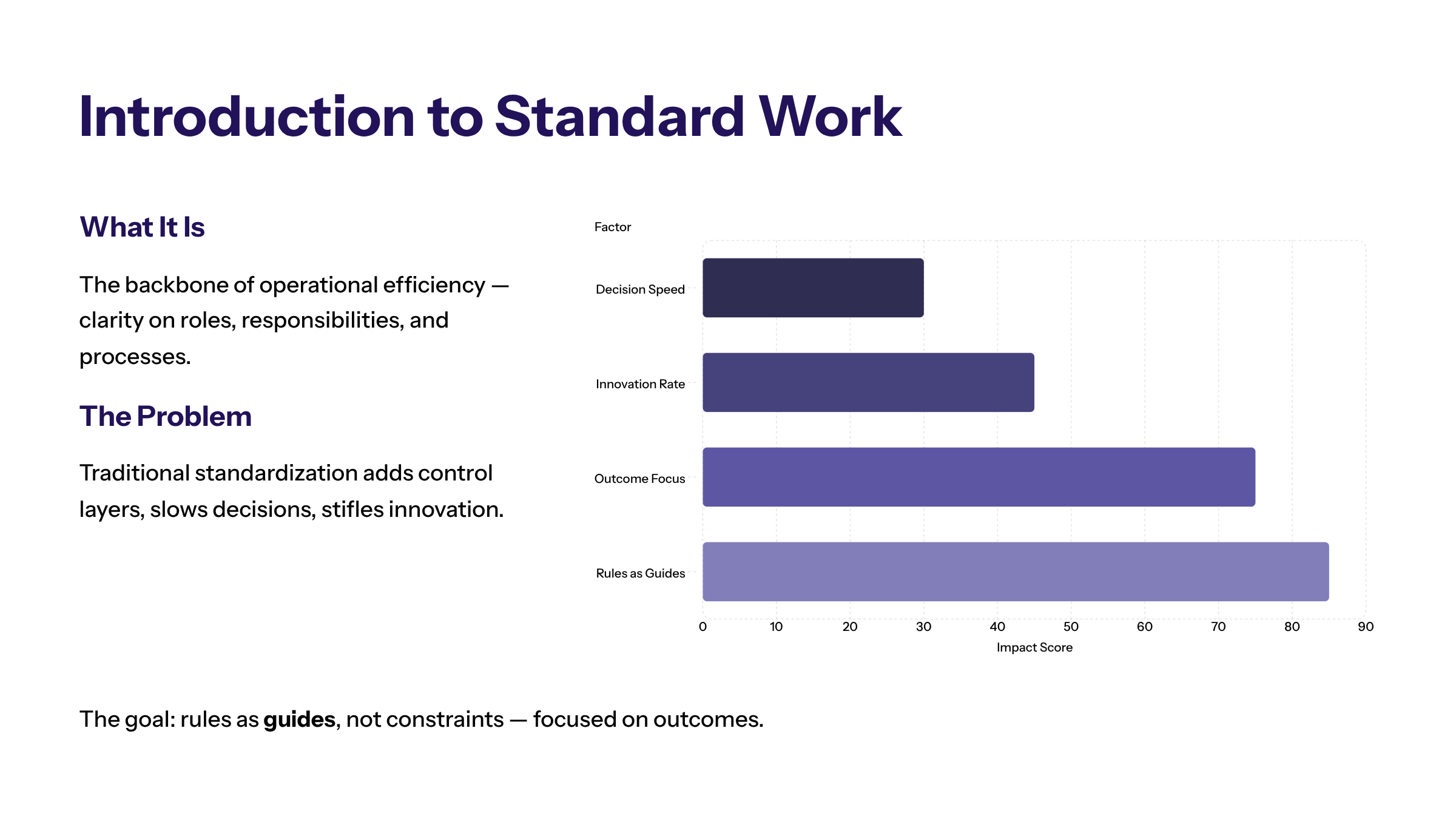
Standard work forms the backbone of operational efficiency, providing clarity on roles, responsibilities, and processes essential for consistent delivery. However, traditional approaches often equate standardization with bureaucracy—adding layers of control, slowing decision making, and stifling innovation. To thrive in fast-evolving markets, companies must adopt a model focused on outcomes, where rules serve as guides rather than constraints.
Importantly, standard work shifts from coercive bureaucracy to enabling bureaucracy, where standards serve as tools for empowerment and shared learning. Rather than rigid protocols, a living recipe in standard work is treated as the best-known method for a task and is intended to be challenged and improved continuously. Embedding standards into software makes them seamless rather than restrictive, allowing organizations to benefit from consistent practices without stifling creativity.
Digital platforms and automation technologies play a pivotal role by offering systems that codify best practices while enabling employees to adapt processes responsively. For example, organizations like Amazon and Microsoft utilize workflow automation combined with real-time feedback loops to maintain standard work that evolves with business needs.
The Role of Digital Platforms in Standard Work
Digital tools provide a framework that supports standardization without bureaucracy by:
Automating repetitive tasks to reduce human error and free resources for creative problem solving.
Offering transparent dashboards that align teams around key performance indicators and outcomes.
Enabling rapid piloting and scaling of new processes based on data-driven insights.
Automation is particularly critical to streamline governance processes and reduce the burden on teams, ensuring consistency without the need for manual intervention. As business leaders embrace these technologies, they create space for employees to exercise judgment and ownership, fostering a culture of continuous improvement.

Benefits of Standardization
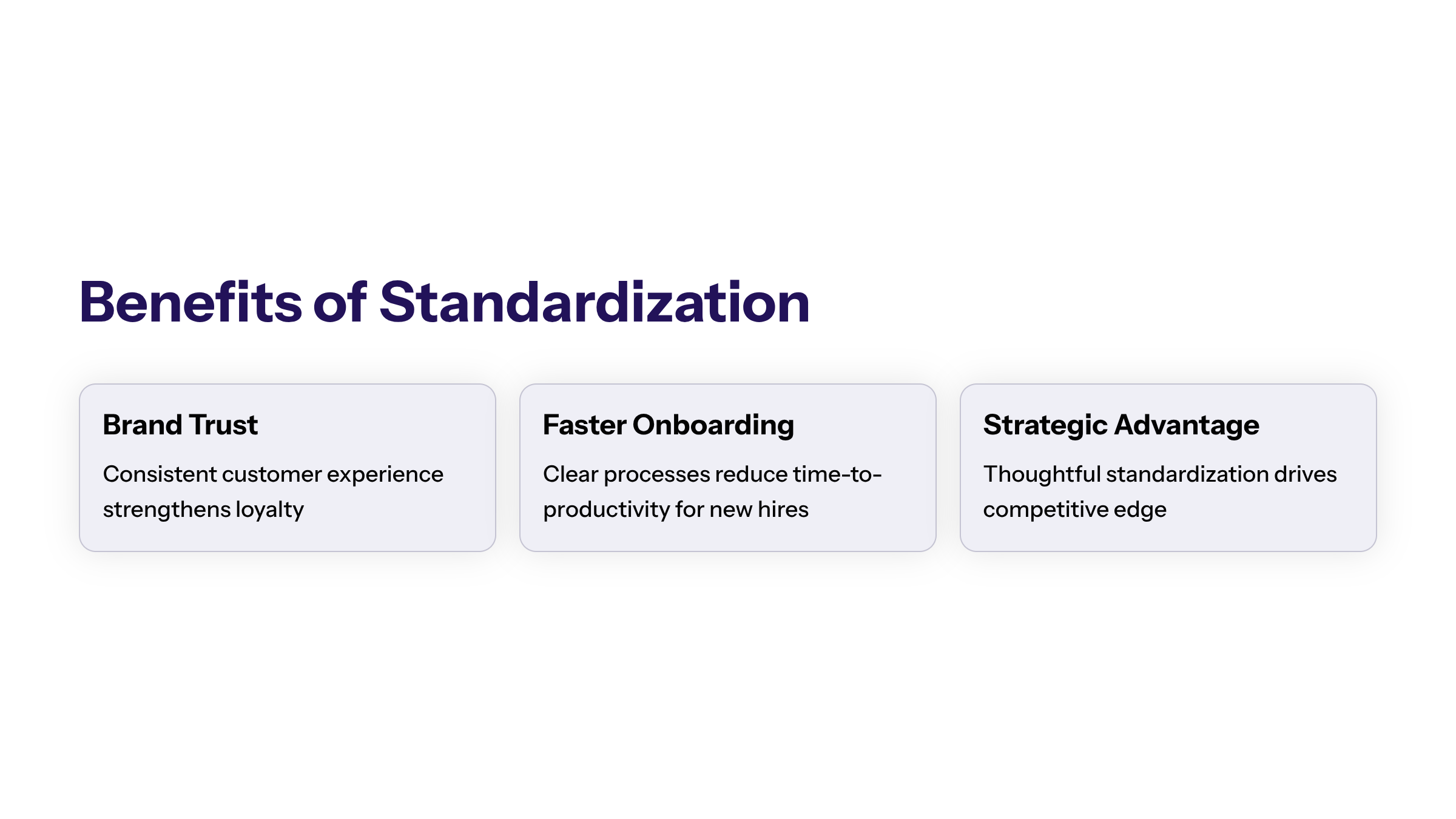
Standardization brings several strategic advantages when implemented thoughtfully:
Consistent Customer Experience: Delivering uniform services and products strengthens brand trust and loyalty.
Accelerated Onboarding: Clear processes help new employees ramp up quickly, reducing time-to-productivity.
Reduced Bureaucracy: By eliminating unnecessary rules and focusing on essential practices, organizations minimize overhead and improve agility.
Improved Outcomes: Standard work aligned with business goals enhances operational efficiency and decision making.
Streamlined Workflows: Standardization can reduce errors and improve outcomes while leaving room for creativity and ownership.
Pilot Teams and Scaling Standard Work
A practical approach involves deploying small teams to pilot standard work initiatives. These teams co-create solutions, identify bottlenecks, and refine processes before broader rollout. This method reduces risk and ensures alignment with organizational goals.
"Pilot programs are the first step in embedding standard work that balances control with flexibility," notes Julian Noreja, business consultant. "They help organizations avoid slow decision making while building accountability."
Applying the 80/20 rule helps identify the 20% of processes that drive 80% of performance or customer value, allowing for targeted standardization. Piloting standards with a small team or department allows for feedback and refinement before broader implementation, ensuring standards are practical and effective.
Problem Solving and Adaptation
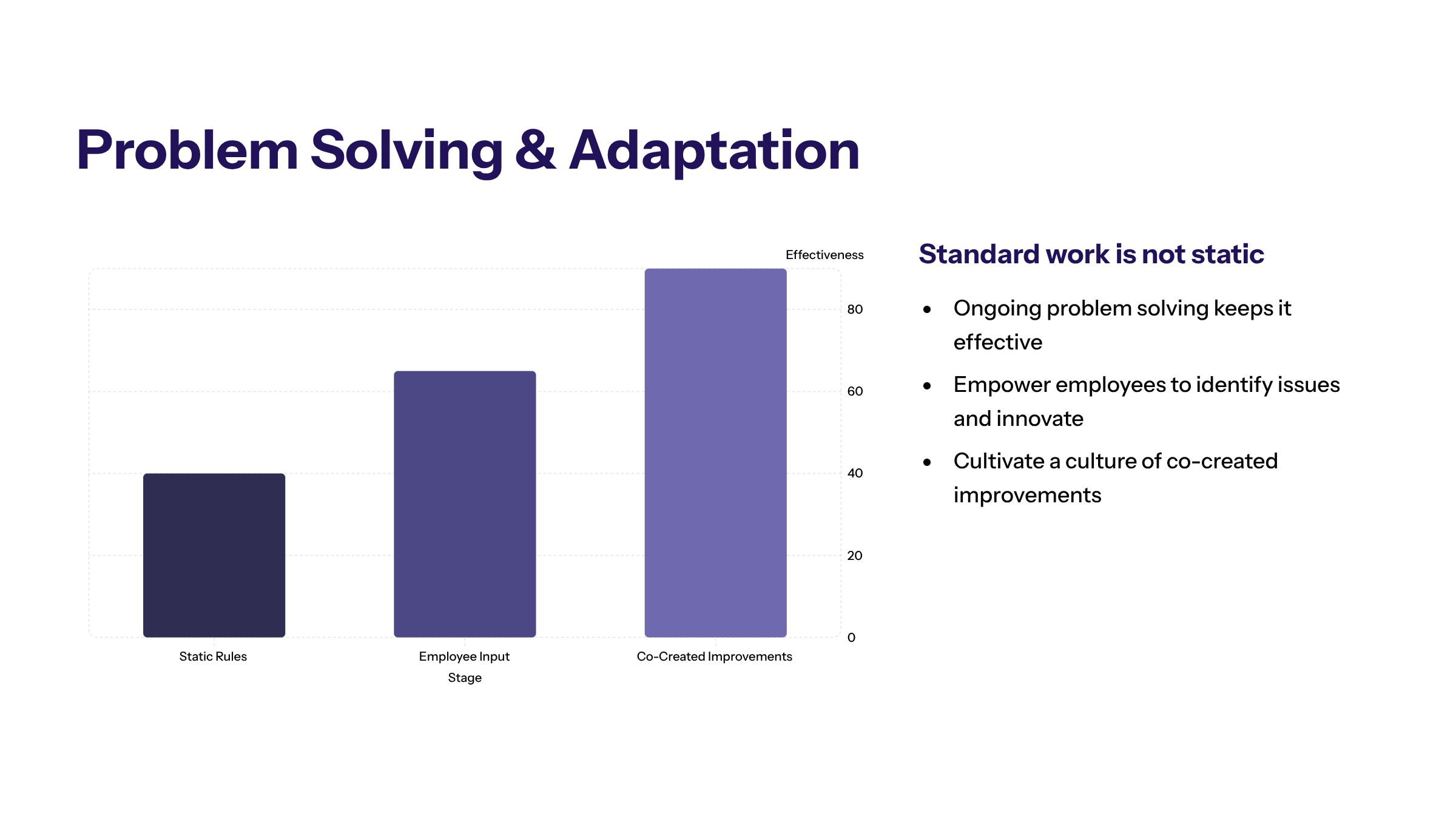
Standard work is not static; it requires ongoing problem solving and adaptation to remain effective. Empowering employees to identify issues and innovate solutions is critical.
Empowerment and Innovation
Organizations must cultivate a culture where employees feel responsible and supported to co-create improvements. This approach aligns with design standards that encourage experimentation within guardrails, enabling teams to respond to complexity without bureaucratic delays.
Empower front-line teams to handle routine decisions and only escalate complex issues to prevent management bottlenecks. This empowerment fosters ownership and accountability at the point of service delivery.
Viewing Challenges as Opportunities
Reframing challenges as growth opportunities fosters resilience. For instance, companies like Google and Netflix emphasize learning from failures as a core principle, integrating lessons into evolving standard work.
The Breakthrough Method exemplifies this approach in public service contexts. It gives civil servants the tools and legal grounding to make thoughtful, creative exceptions for residents in need. Cities employing the Breakthrough Method allow frontline civil servants to craft individualized support plans for residents facing complex challenges, encouraging them to identify needs beyond typical service offerings. This method helps civil servants work differently within existing rules to unlock better outcomes and greater trust in government. Each support plan includes a cost-benefit analysis demonstrating how unconventional interventions could lead to long-term savings.
Cities can improve resident outcomes by distinguishing between rules and norms, allowing for more creative frontline service delivery. Empowering frontline staff to make exceptions can lead to improved quality of life for residents facing complex challenges.
Implementation and Governance
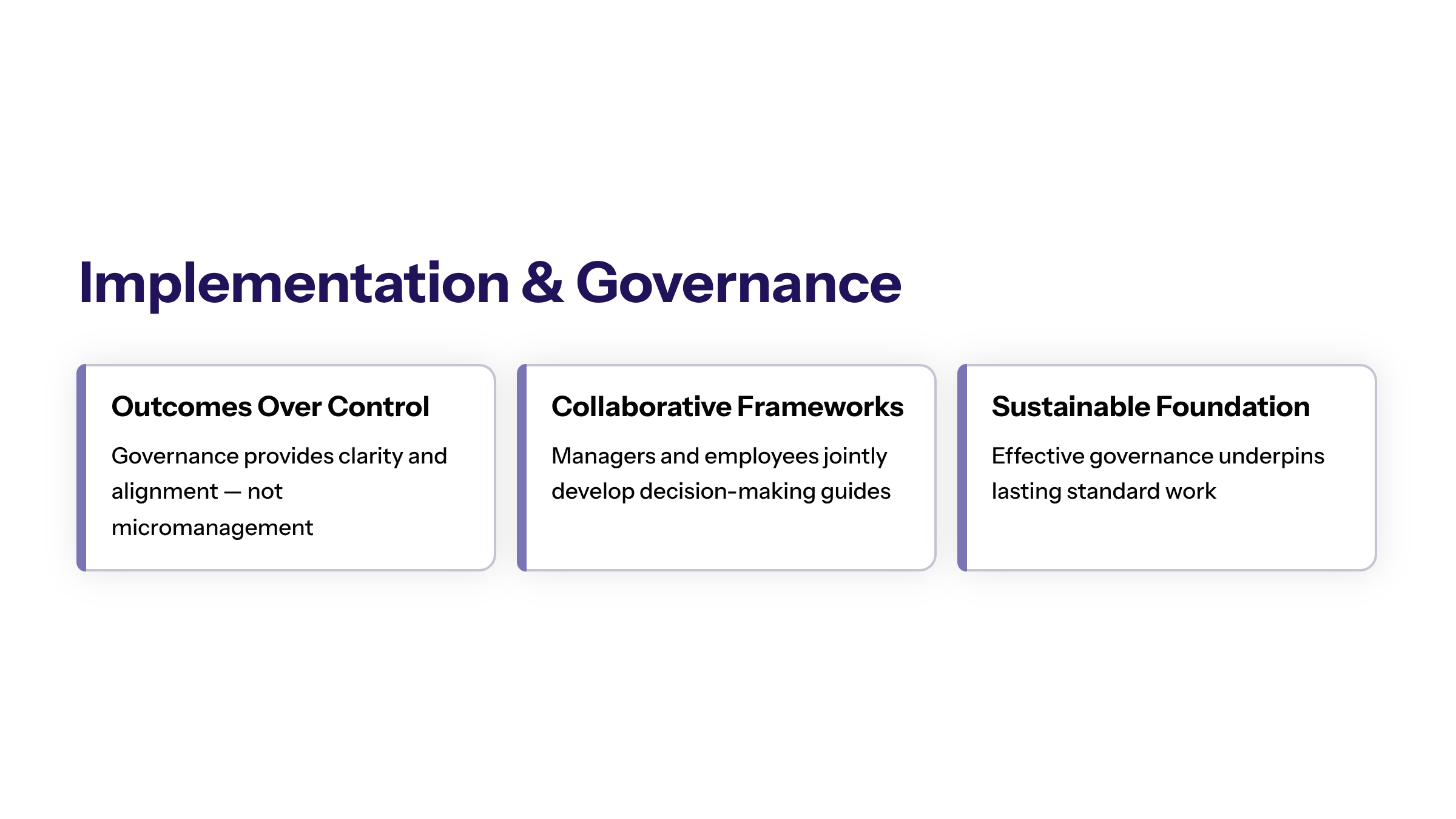
Effective implementation and governance underpin sustainable standard work. Governance should prioritize outcomes over control, providing clarity and alignment without micromanagement.
Collaborative Governance Models
Collaborative governance involves managers and employees jointly developing frameworks that guide decision making. This approach enhances transparency, accountability, and trust.
Governance Principle | Description | Benefit |
|---|---|---|
Clarity | Well-defined roles and expectations | Reduces confusion and speeds execution |
Transparency | Open communication of decisions and risks | Builds organizational trust |
Outcome Focus | Linking standards to business objectives | Ensures relevance and value |
Adaptability | Continuous feedback and improvement loops | Maintains alignment with changing needs |
Nadzeya Stalbouskaya from IAG GBS highlights, "Governance is not a gate but a guide that accelerates transformation when aligned with business outcomes."
Governance can be designed as collaboration rather than control, which can accelerate delivery in complex environments. Effective governance should provide clarity, not confusion, with well-defined expectations, roles, and processes that are easy to follow. Embedding feedback loops in governance models can improve their effectiveness over time.
Governance should connect every decision back to a business capability, objective, or risk to ensure it is relevant and credible. When governance is viewed as a strategic enabler rather than a burden, it transforms how organizations operate and fosters innovation. Lightweight governance models can enhance innovation by reducing bureaucratic hurdles.
Balancing Bureaucracy and Flexibility
Striking the right balance is essential. Too much bureaucracy inhibits innovation, while too little risks inconsistency. Leaders should apply principles that foster alignment and ownership while maintaining necessary controls.
Achieving 'zero bureaucracy' paradoxically requires some level of bureaucracy to design effective routines and infrastructures. Organizations are fundamentally bundles of routines that co-evolve with infrastructures, shaping the public value they can produce. Bureaucracy emerged as an organizational form to create stability and predictability, making enterprises more efficient. The goal of achieving 'zero bureaucracy' is not to eliminate rules but to embed good routines within infrastructures that facilitate public value.
Enabling Frontline Staff
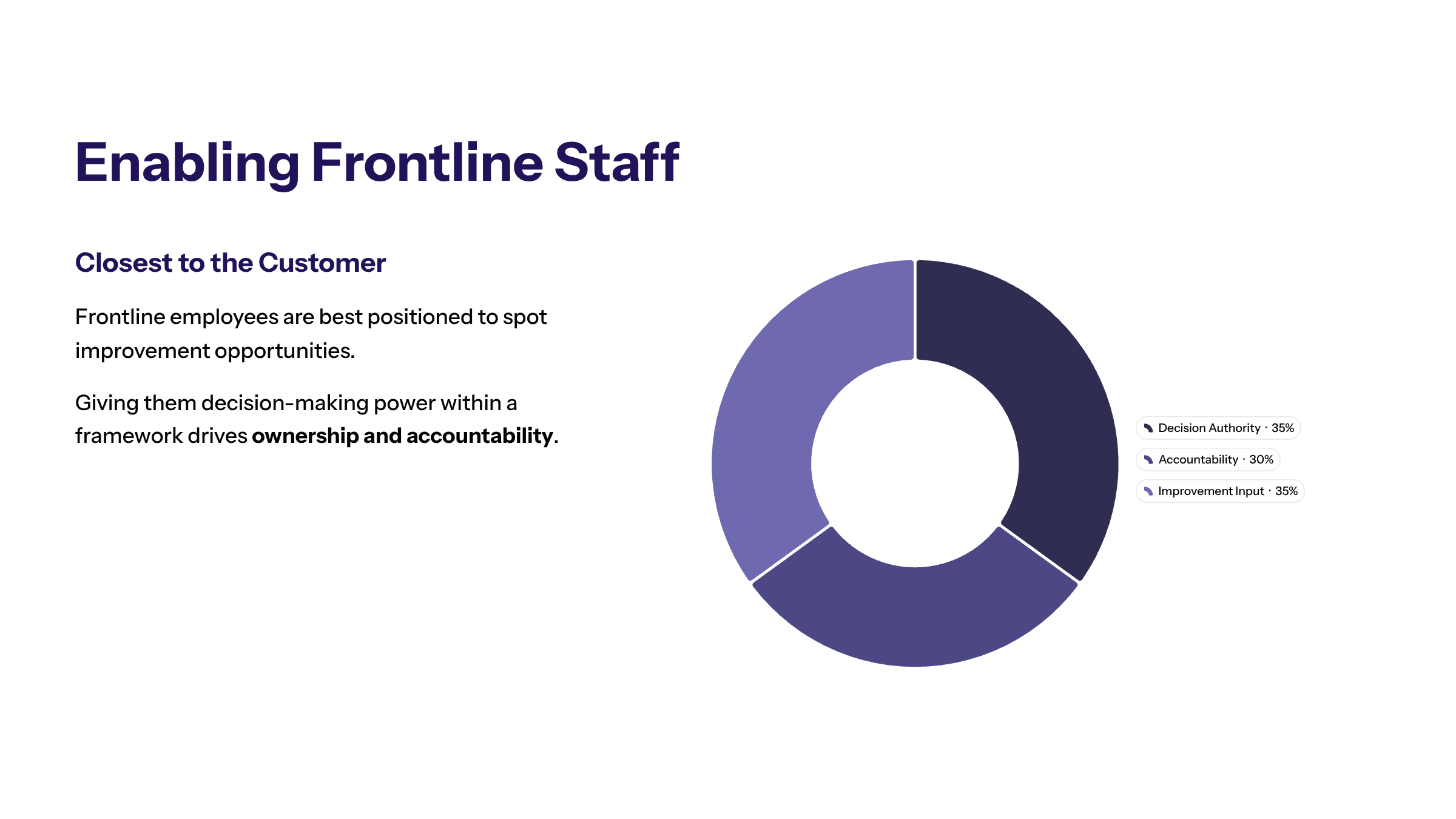
Frontline employees are closest to the customer and often best positioned to identify improvement opportunities. Empowering them is crucial for effective standard work.
Autonomy and Responsibility
Giving frontline staff the power to make decisions within a framework encourages ownership and accountability. This autonomy must be supported by training, resources, and recognition programs.
Career Development and Recognition
Organizations should offer career paths that reward adaptability and problem solving. Recognizing contributions reinforces a culture of continuous improvement.
Beth Blauer of Johns Hopkins University stresses, "When frontline civil servants have discretion grounded in law and purpose, they unlock better outcomes and build trust."
Sustaining Standard Work
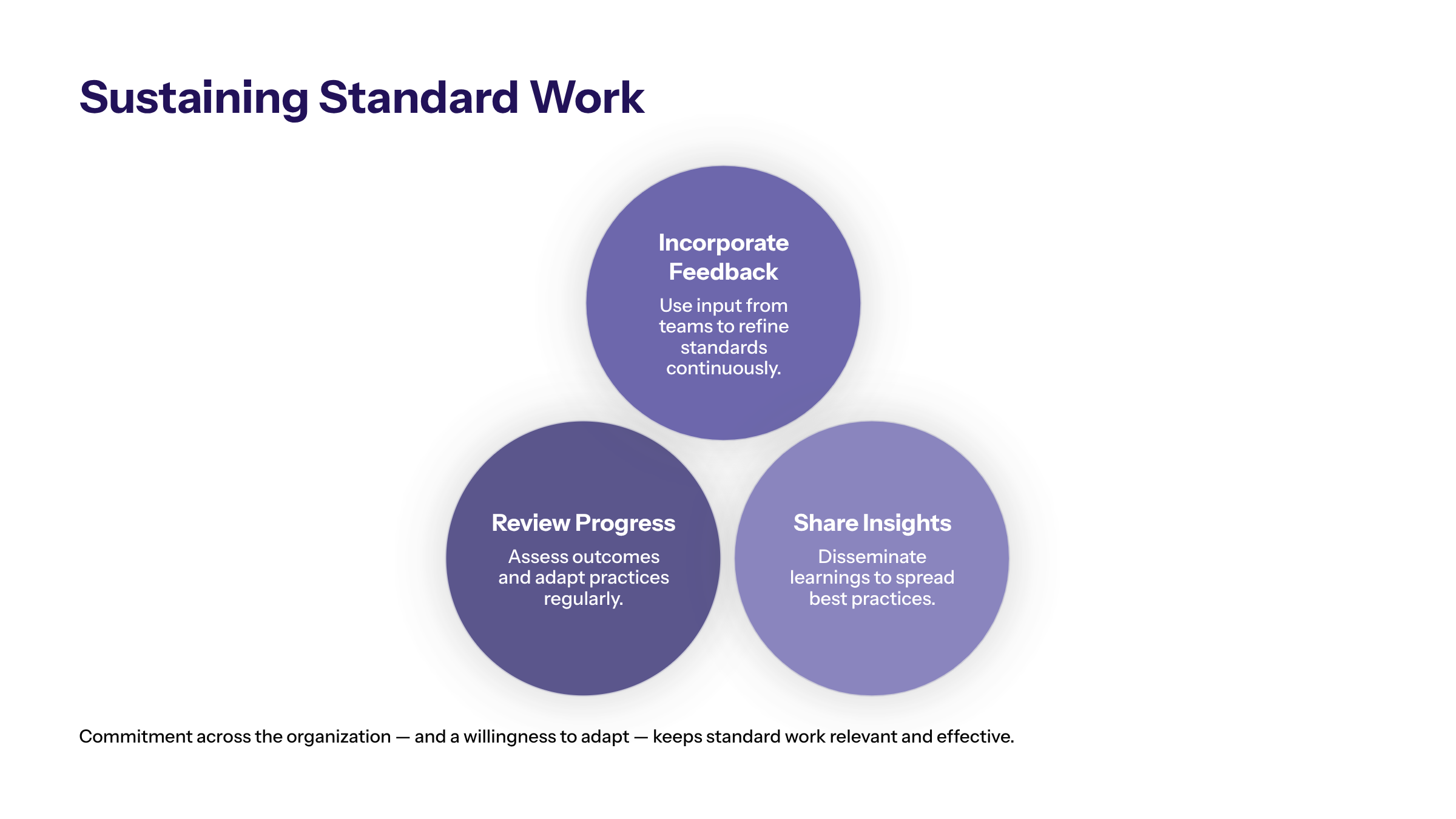
Sustaining standard work requires commitment across the organization and a willingness to adapt.
Continuous Review and Feedback
Regularly reviewing progress and incorporating feedback ensures processes remain effective and aligned with objectives.
Documenting Lessons Learned
Sharing insights helps avoid repeating mistakes and spreads best practices throughout the organization.
Embracing Change
Organizations must remain flexible, willing to evolve standard work as market conditions and technologies change.
Trade-Offs in Standard Work Implementation
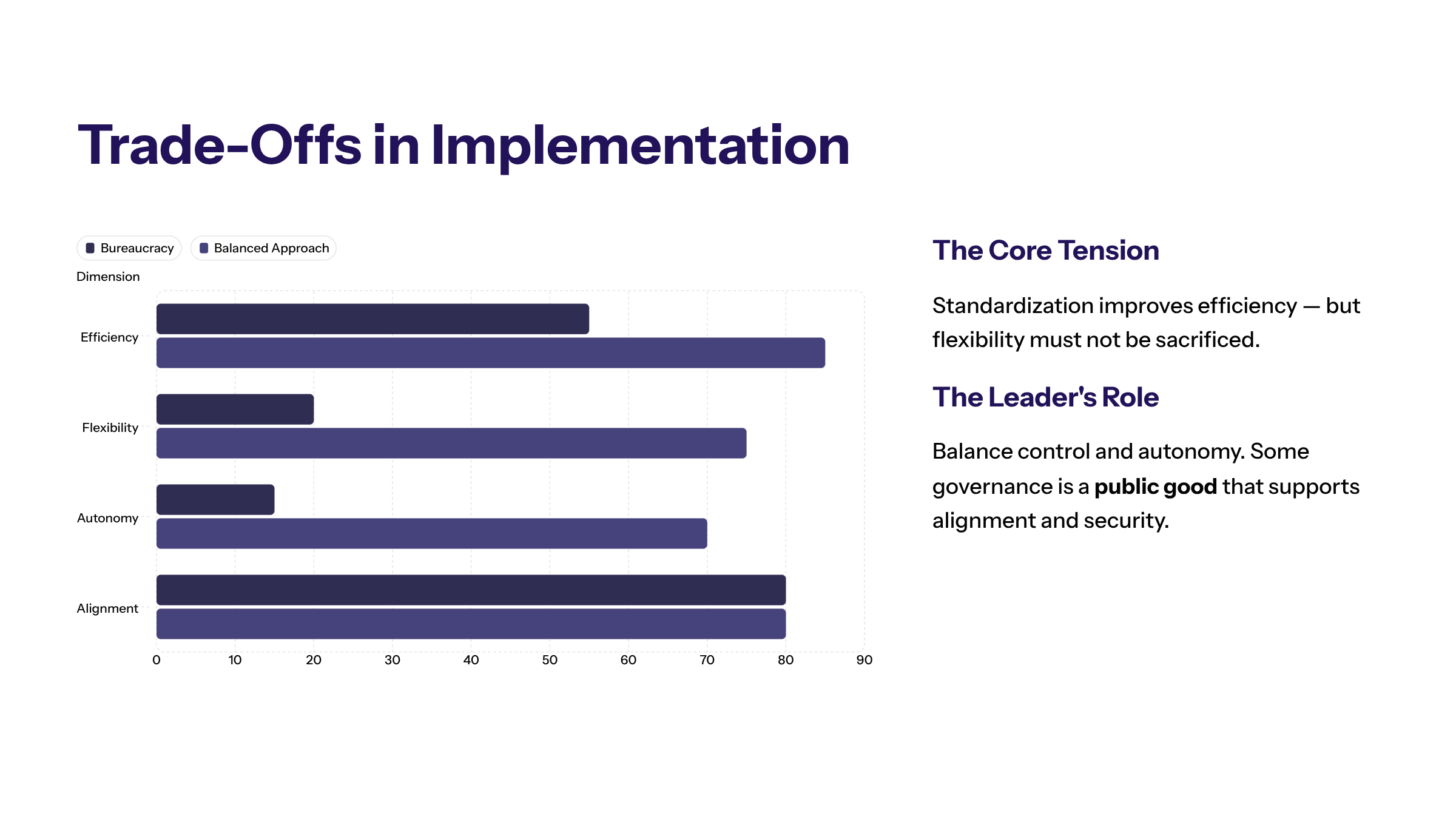
Importantly, organizations must recognize the trade offs involved in implementing standard work without bureaucracy. While standardization improves efficiency and consistency, it requires effort in management to ensure flexibility is not sacrificed. Leaders need to strike a balance between control and autonomy, understanding that some level of governance is a public good that supports alignment and security across teams.
Standard Work as a Public Good
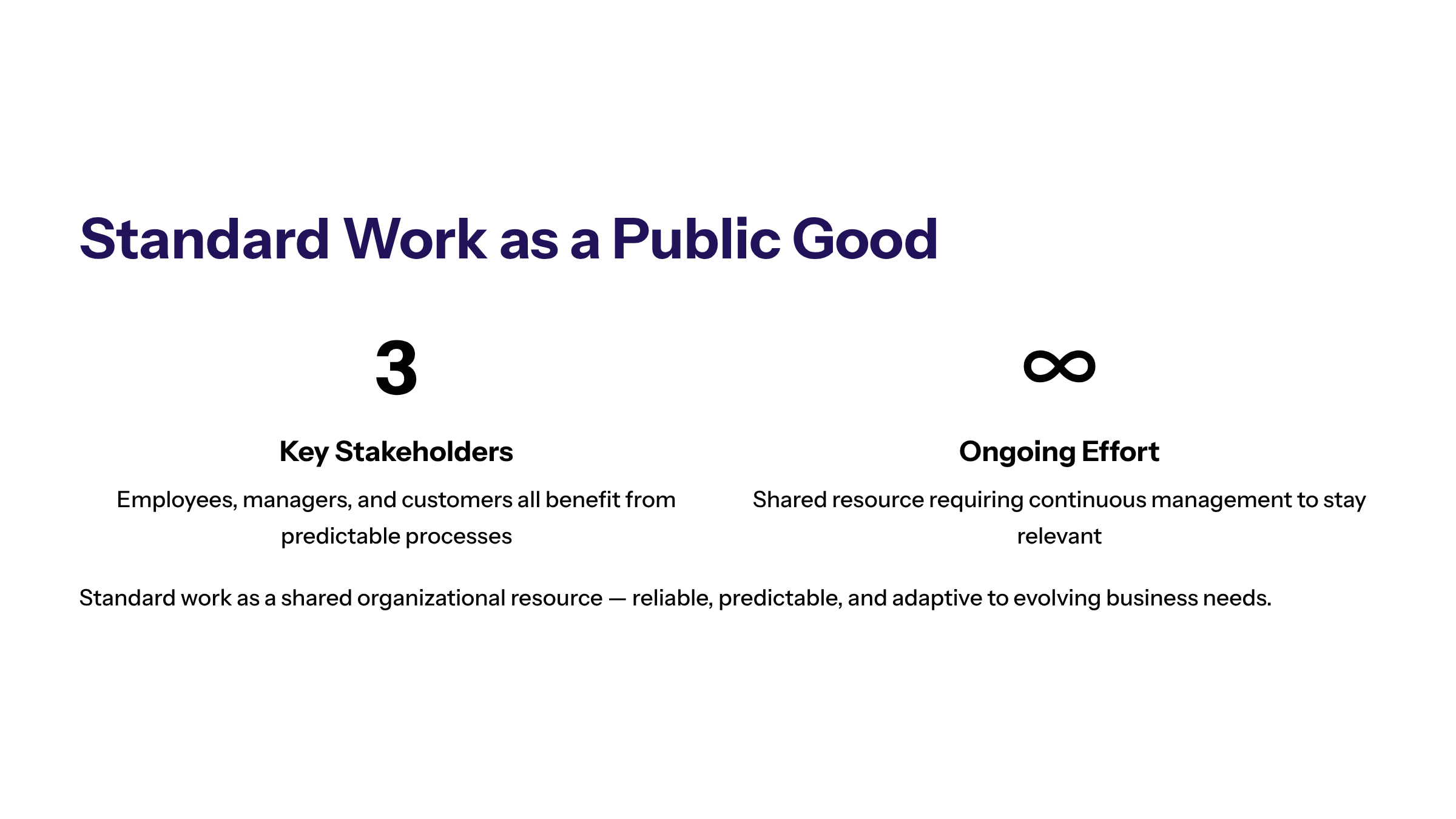
Standard work can be viewed as a public good within organizations, benefiting all stakeholders by creating predictable and reliable processes. This shared resource requires ongoing management effort to maintain its relevance and effectiveness, ensuring that it adapts to the evolving needs of the business and its customers.
Different Ways to Manage Standard Work in Dynamic Business Environments
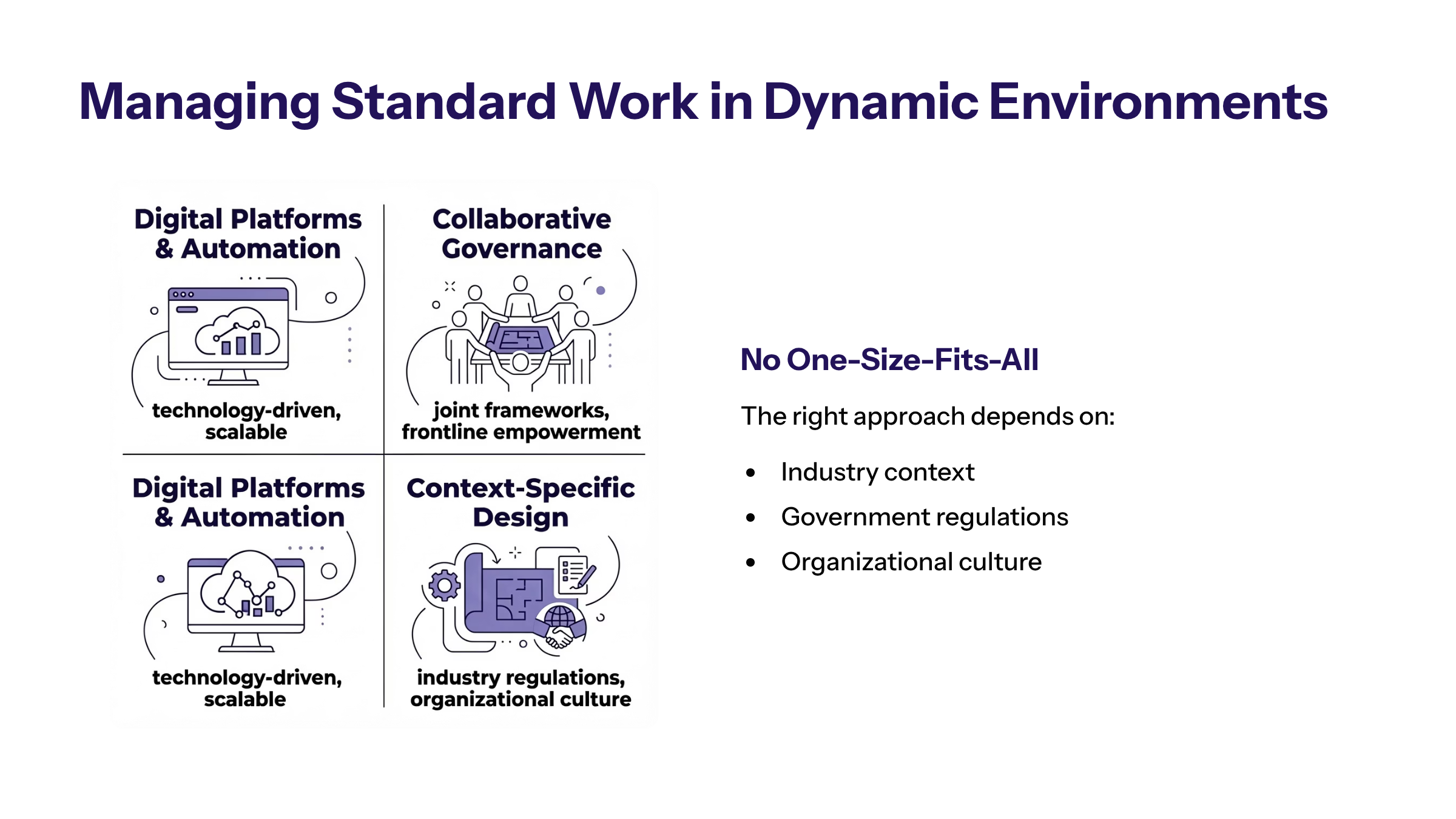
There are different ways organizations can manage standard work to improve outcomes in dynamic business environments. Some adopt a model focused on digital platforms and automation, while others emphasize collaborative governance and frontline empowerment. Importantly, the choice of approach should consider the unique context of the industry, government regulations, and organizational culture.
The Role of Government and Security in Standard Work
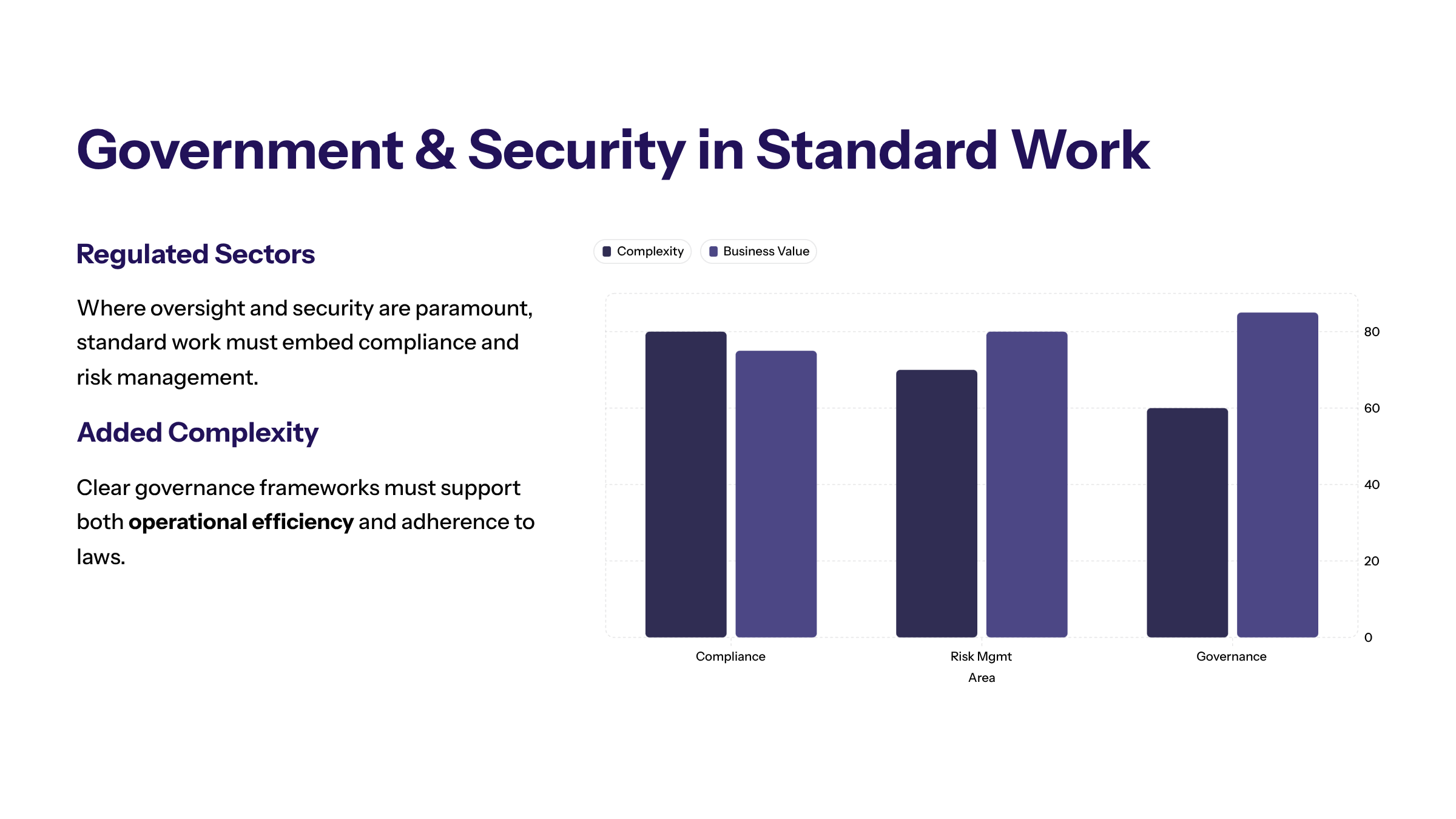
In sectors where government oversight and security are paramount, standard work must incorporate compliance and risk management practices. This adds complexity but also highlights the importance of clear governance frameworks that support both operational efficiency and adherence to laws and regulations.
Looking to the Future: The Deal Between Flexibility and Control
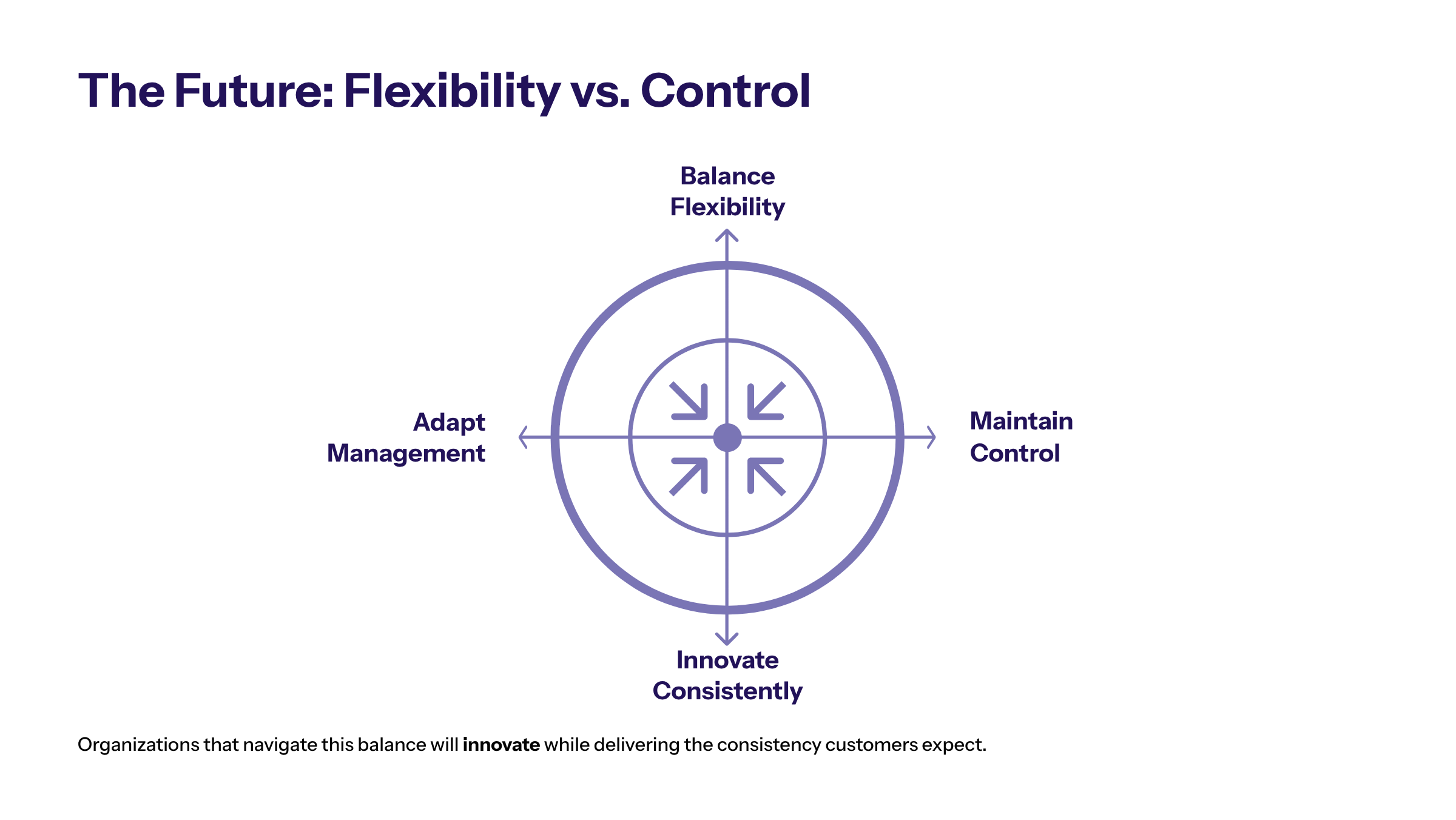
The future of standard work lies in finding the right deal between flexibility and control. Organizations that successfully navigate this balance will be better positioned to innovate while maintaining the consistency and quality that customers expect. This requires ongoing effort, open communication, and a willingness to adapt management practices as new ideas and technologies emerge.
Conclusion
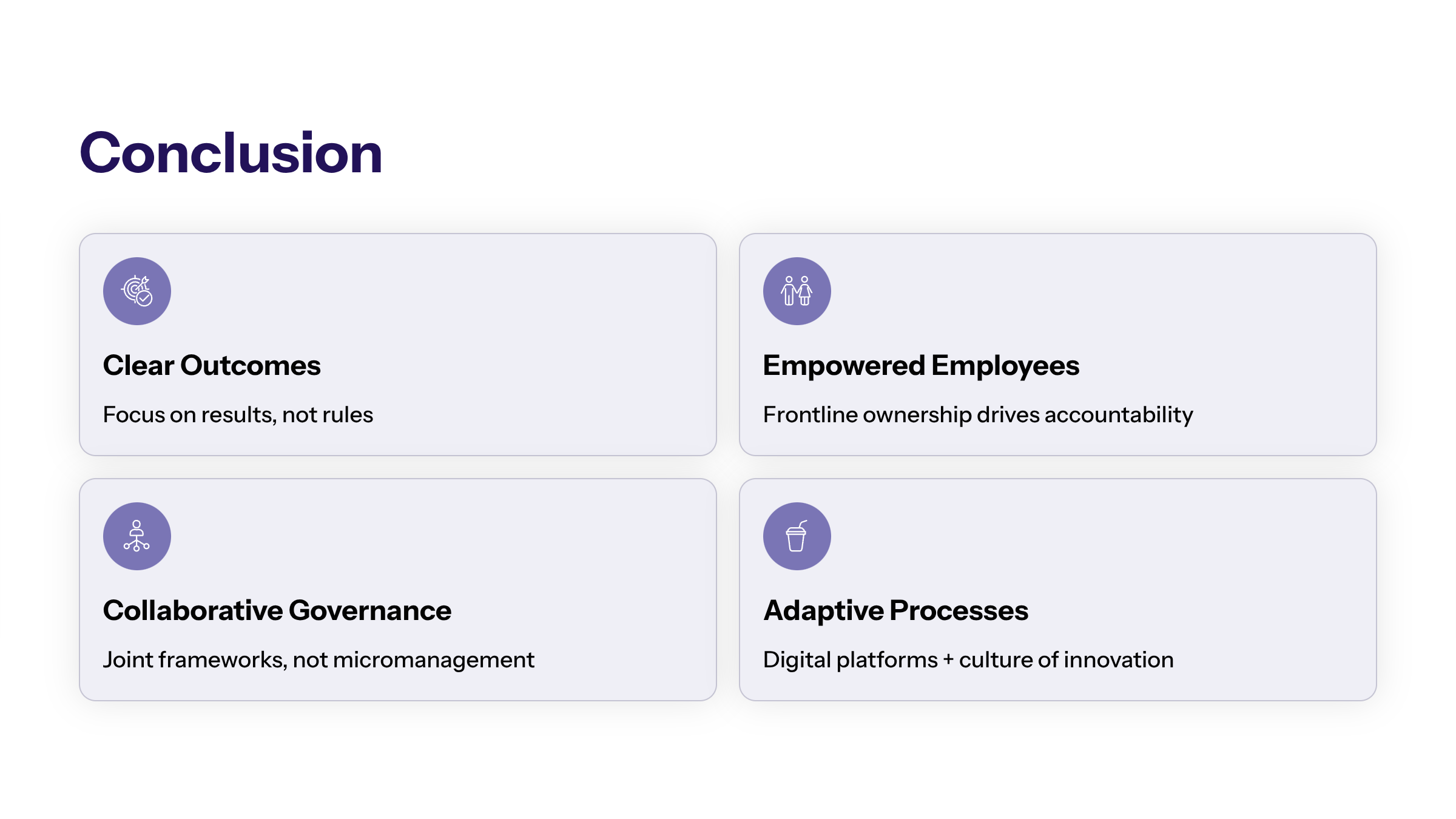
In conclusion, achieving standard work without bureaucracy demands a strategic blend of clear outcomes, empowered employees, collaborative governance, and adaptive processes. By leveraging digital platforms and fostering a culture of innovation and accountability, organizations can create efficient, scalable models that thrive in complexity and drive sustained business success.