A Comprehensive Guide to the Approval Process Audit
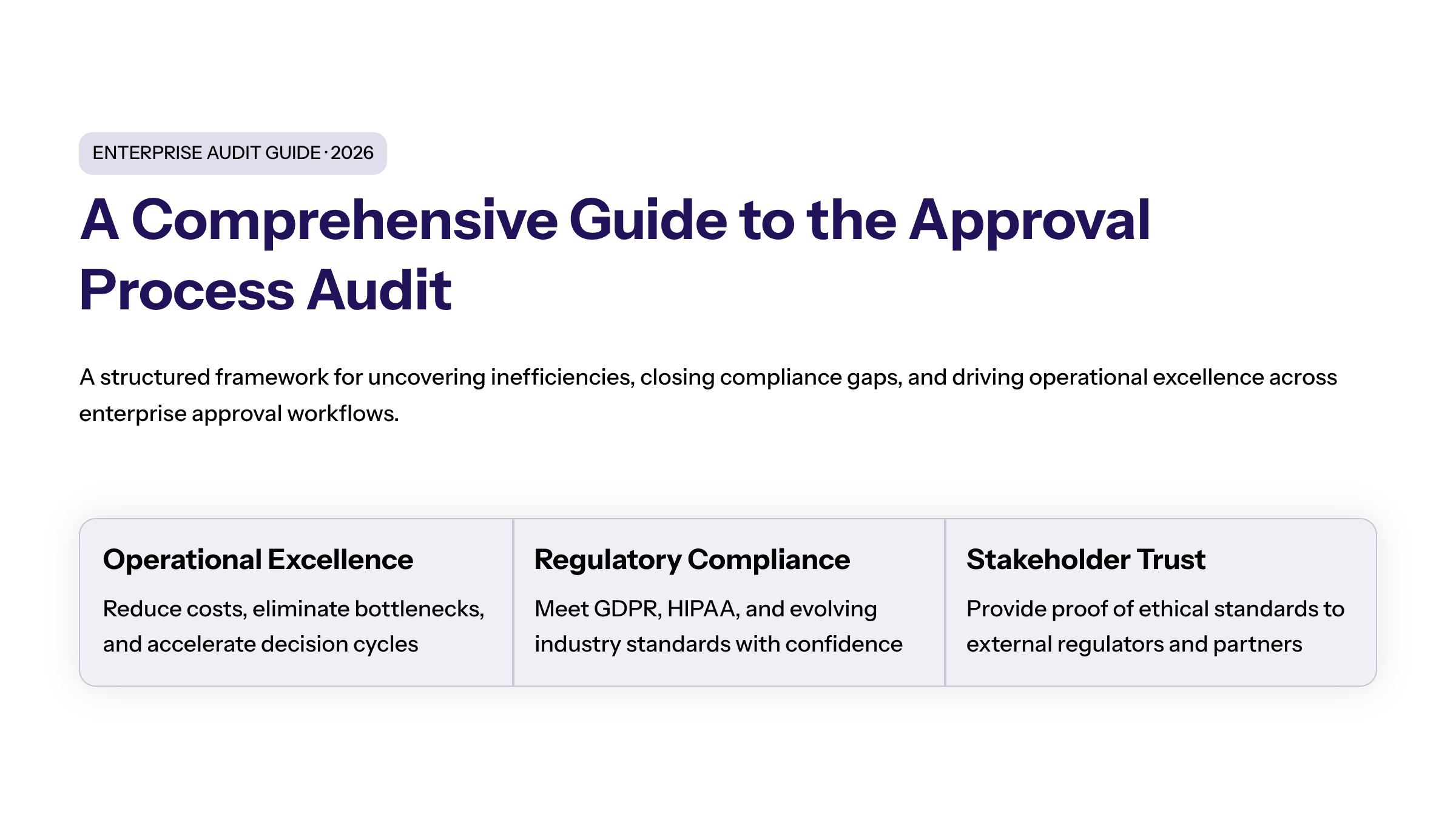
The approval process audit is a critical component of business process audits, offering organizations a structured review to identify inefficiencies, compliance gaps, and improvement opportunities within their approval workflows. In an era where operational excellence and regulatory compliance are paramount, understanding and optimizing approval processes not only reduces costs but also enhances customer experience and stakeholder trust. Structured approval processes provide proof required by external regulators that security and ethical standards are being met, making these audits indispensable for maintaining organizational integrity amidst complex regulatory landscapes as of 2026.
This guide provides an analytical overview of approval process audits, their strategic relevance, and practical frameworks for implementation, tailored for executive decision-makers navigating complex organizational environments.
Key Takeaways
-
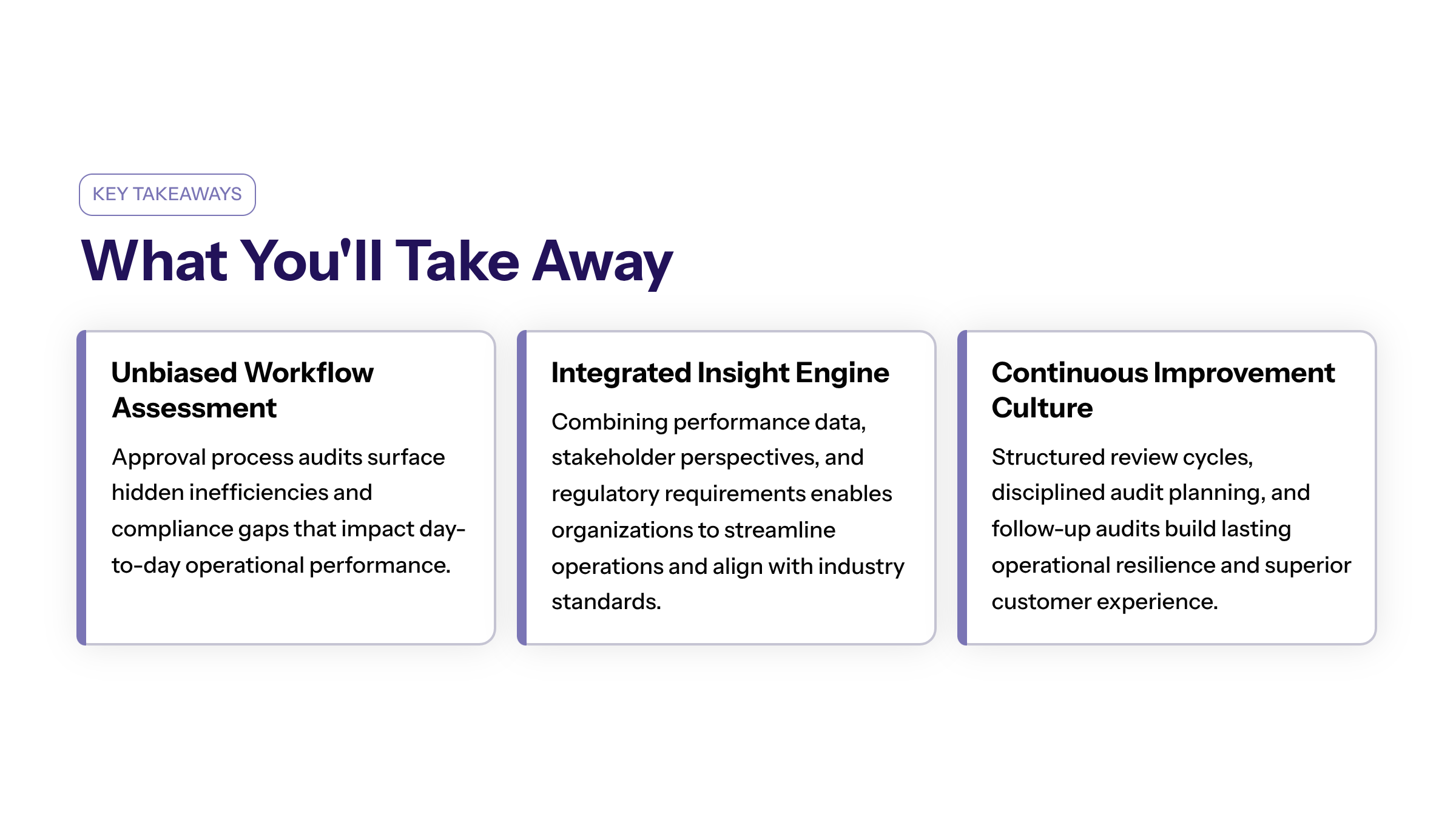
Approval process audits deliver an unbiased assessment of organizational workflows, uncovering hidden inefficiencies and compliance issues that impact operational performance.
-
Integrating performance data, stakeholder insights, and regulatory requirements, these audits enable organizations to streamline operations, improve process performance, and align with industry standards.
-
Continuous improvement through structured review, audit planning, and follow-up audits ensures sustainable enhancements, fostering operational resilience and superior customer experience.
-
Regular audits foster a culture of integrity by using data-driven insights to refine workflows and reduce bottlenecks, which in turn supports risk mitigation, regulatory readiness, transparency, and continuous improvement.
-
Organizations prioritizing audits have seen reductions in operational costs by catching inefficiencies early.

Introduction to Business Process Audits
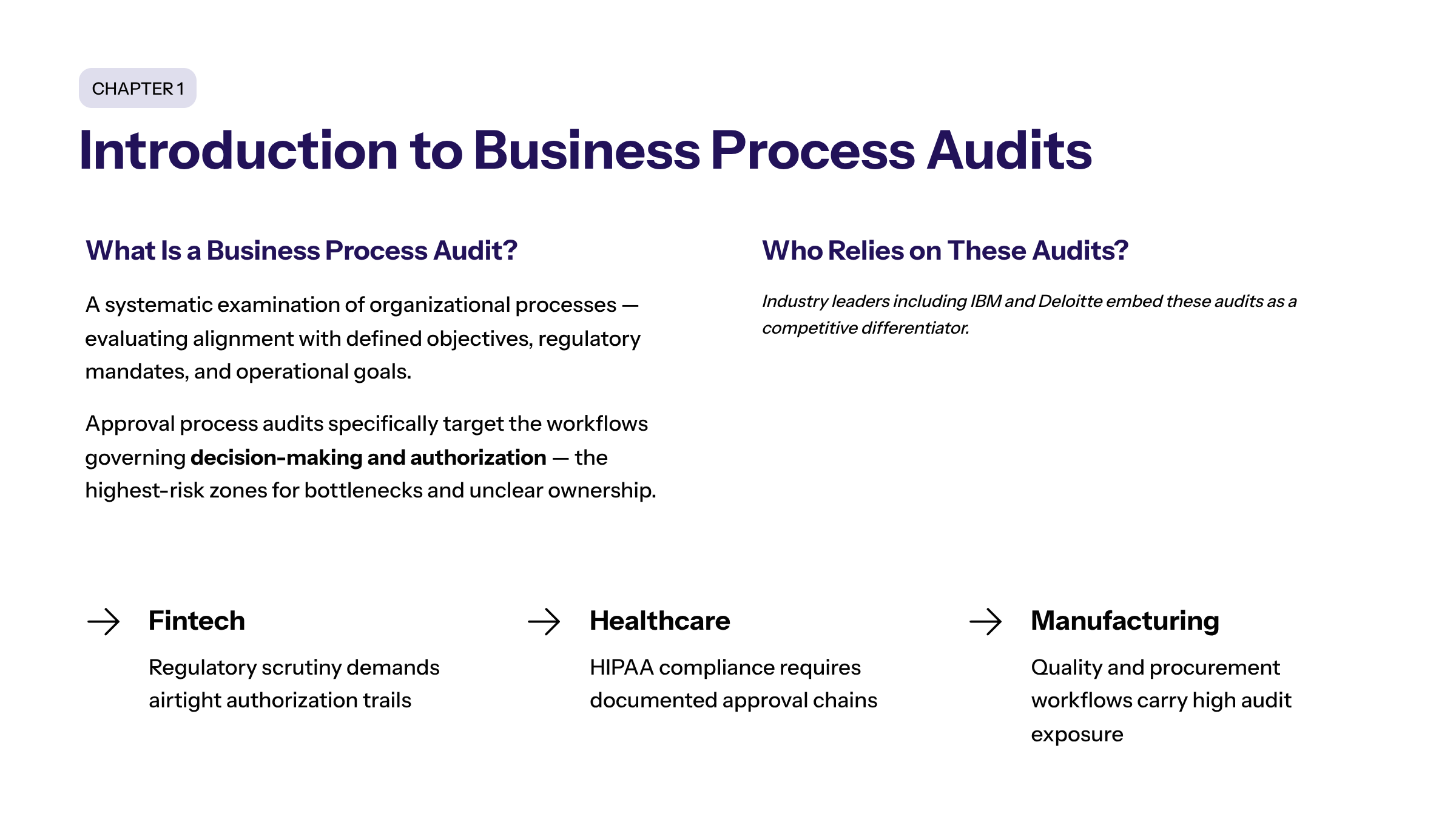
Business process audits represent a systematic examination of an organization's processes to evaluate how well they meet defined objectives, regulatory compliance, and operational goals. Specifically, an approval process audit focuses on the workflows that govern decision-making and authorization, which are often fraught with bottlenecks, unclear ownership, and manual interventions.
In today’s fast-paced business environment, organizations such as IBM and Deloitte emphasize the importance of these audits to maintain competitive advantage and regulatory compliance across industries including fintech, healthcare, and manufacturing.
By conducting a structured review, organizations can identify gaps, reduce operational inefficiencies, and enhance customer satisfaction through improved process efficiency. Moreover, auditing internal workflows is important, but external processes carry the most reputational risk; a business process audit allows companies to assess how their external workflows are functioning in real time, ensuring every handoff, approval, and follow-up happens smoothly, reducing gaps and surprises.
Regular business process audits enhance operational efficiency by uncovering delays and manual bottlenecks, which in turn improves compliance with service-level agreements and regulatory requirements. These audits are vital for compliance and governance reasons, including risk mitigation, regulatory readiness, transparency, and continuous improvement.
Understanding the Audit Process
Defining Audit Objectives
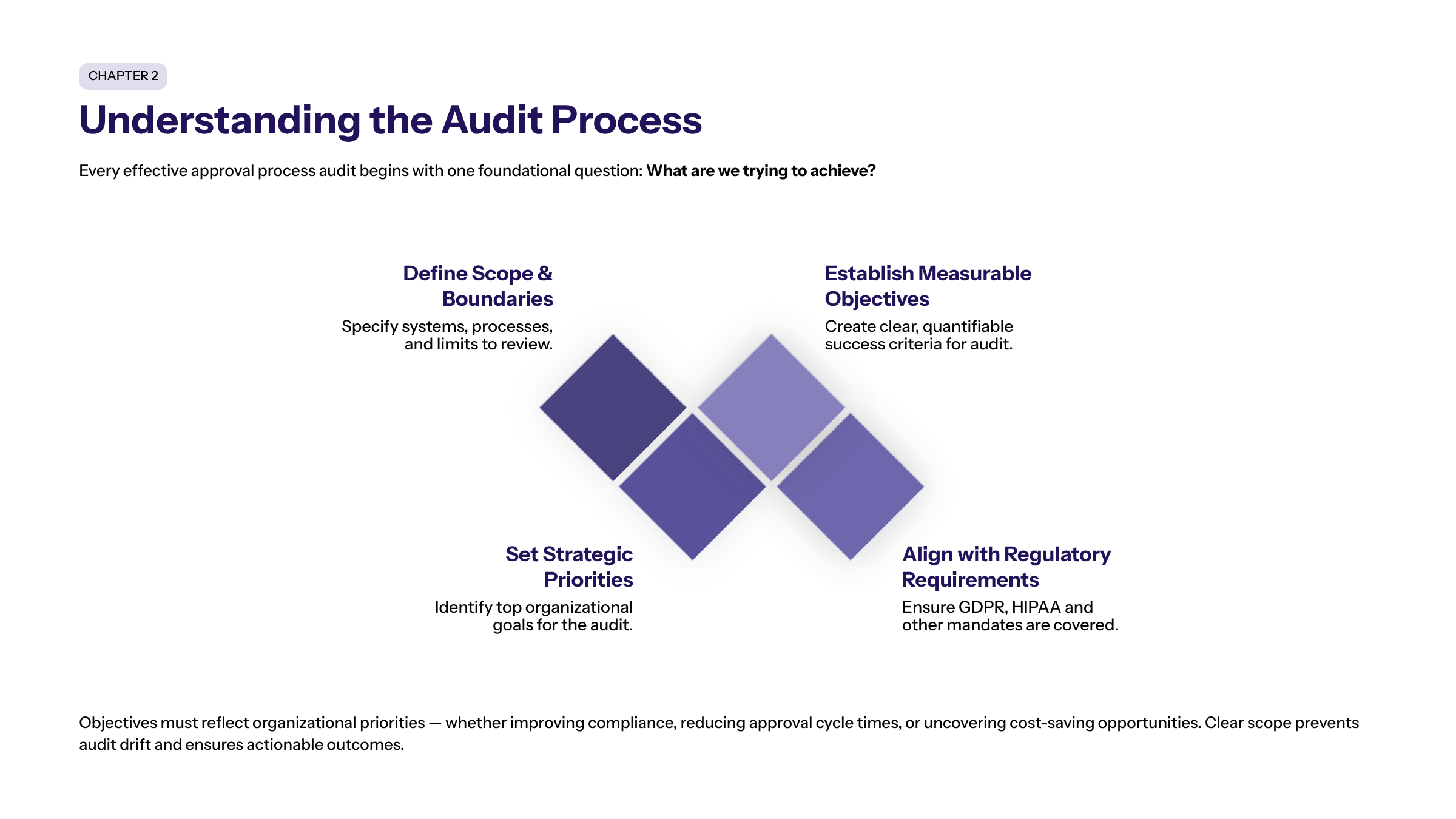
A foundational step in any approval process audit is establishing clear, measurable audit objectives. Defining the objective and scope is the first step in conducting a business process audit. These objectives should reflect the organization's strategic priorities, such as improving compliance with regulatory requirements like GDPR or HIPAA, identifying cost-saving opportunities, or enhancing customer experience through faster approval cycles.
Engaging internal teams—including legal advisors, vendor management, and senior management—is essential to incorporate diverse perspectives and necessary knowledge. This collaborative approach ensures the audit objectives align with both operational realities and external audit expectations. A successful audit requires clear goals tied to business problems to ensure it delivers real value.
Conducting the Audit
The audit process involves a systematic examination of relevant documentation, workflows, and performance metrics. Collecting process performance data is a critical step in the business process audit to understand how the process works. Collecting performance data such as key performance indicators (KPIs) related to cycle time, approval bottlenecks, and manual intervention points provides quantitative insights into process performance.
Interviews with key stakeholders offer qualitative context, revealing pain points and uncovering hidden inefficiencies. The audit must be conducted impartially, leveraging system controls and audit logs to ensure a comprehensive and unbiased assessment. For automated systems, auditors ensure that only authorized personnel have permission to view, edit, or sign off on items. Using visual aids like flowcharts can help identify redundancies and clarify roles during a process audit.
Analyzing for bottlenecks and risks is a key part of the business process audit process. Bottleneck detection involves analyzing data for recurring delays and manual touchpoints that could be automated, which can significantly improve turnaround times and stakeholder satisfaction.
Pre-Audit Preparation
Gathering Information
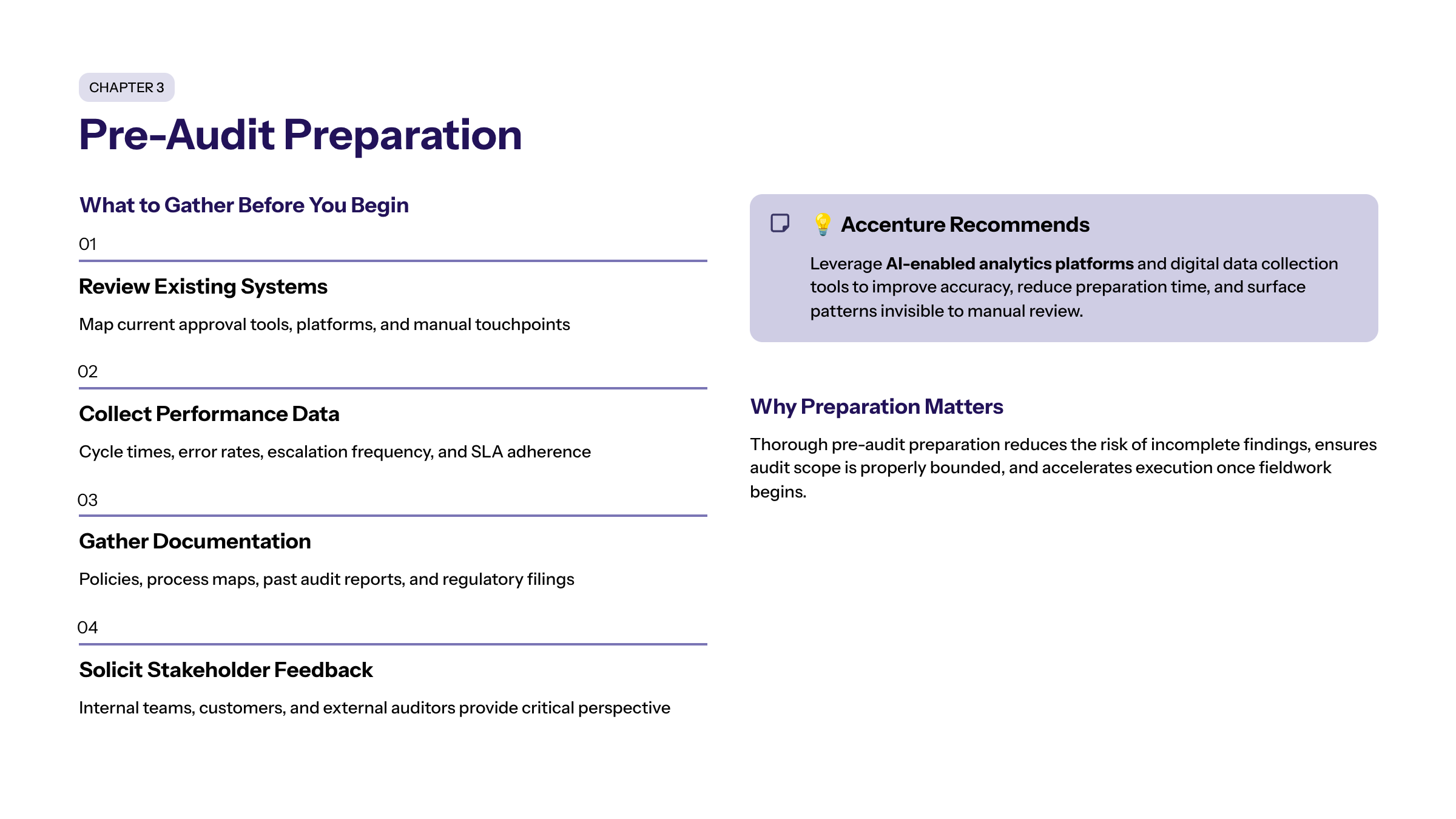
Effective audit planning requires thorough information gathering. This encompasses reviewing existing systems, relevant documentation, and performance data, alongside conducting market research and soliciting customer feedback to identify improvement opportunities.
Organizations like Accenture recommend leveraging digital tools and AI-enabled analytics platforms to streamline data collection and enhance the accuracy of insights. Implementing a centralized electronic system can streamline document management and improve the efficiency of audits. Comprehensive preparation sets the stage for a focused and efficient audit process.
Conducting the Audit
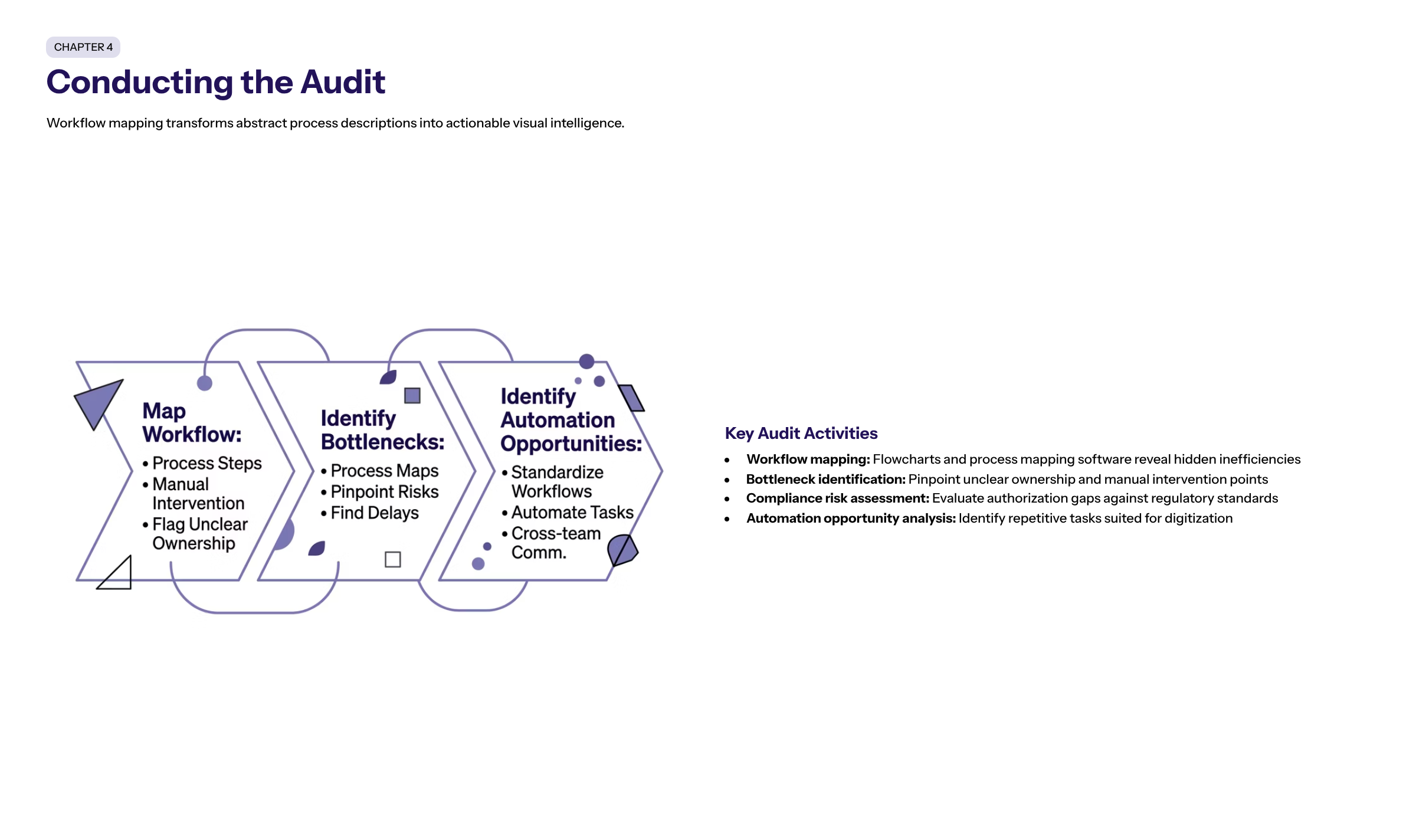
Mapping the Current Workflow
Mapping the approval workflow is a critical exercise to visualize process steps, identify repetitive tasks, and highlight areas of manual intervention. Tools such as flowcharts and process mapping software assist in pinpointing unclear ownership, bottlenecks, and compliance risks.
This structured review facilitates identifying opportunities to automate repetitive tasks, standardize approval workflows, and improve communication between internal teams and external auditors.
Analyzing Audit Findings
Identifying Key Issues
Analyzing audit findings involves evaluating compliance issues, operational inefficiencies, and improvement opportunities. Root cause analysis helps in understanding underlying problems, such as unclear roles or outdated system controls. Audits can identify gaps in internal controls that could lead to legal penalties, financial misstatements, or data breaches.
Audit reports should present key takeaways clearly, providing senior management with actionable insights and recommendations for corrective actions that align with industry standards and regulatory compliance. Recommendations should prioritize actionable steps such as establishing standardized communication timelines or implementing automated workflow tools.
Documenting Results
A well-documented audit trail enhances transparency and accountability. Documenting a clear set of prioritized recommendations is essential after analyzing the findings of a business process audit. The audit report must include detailed findings, recommendations, and a plan for implementing changes, ensuring all stakeholders understand the audit results and their implications. This documentation also serves as proof during external audits and regulatory reviews.
Implementing Changes
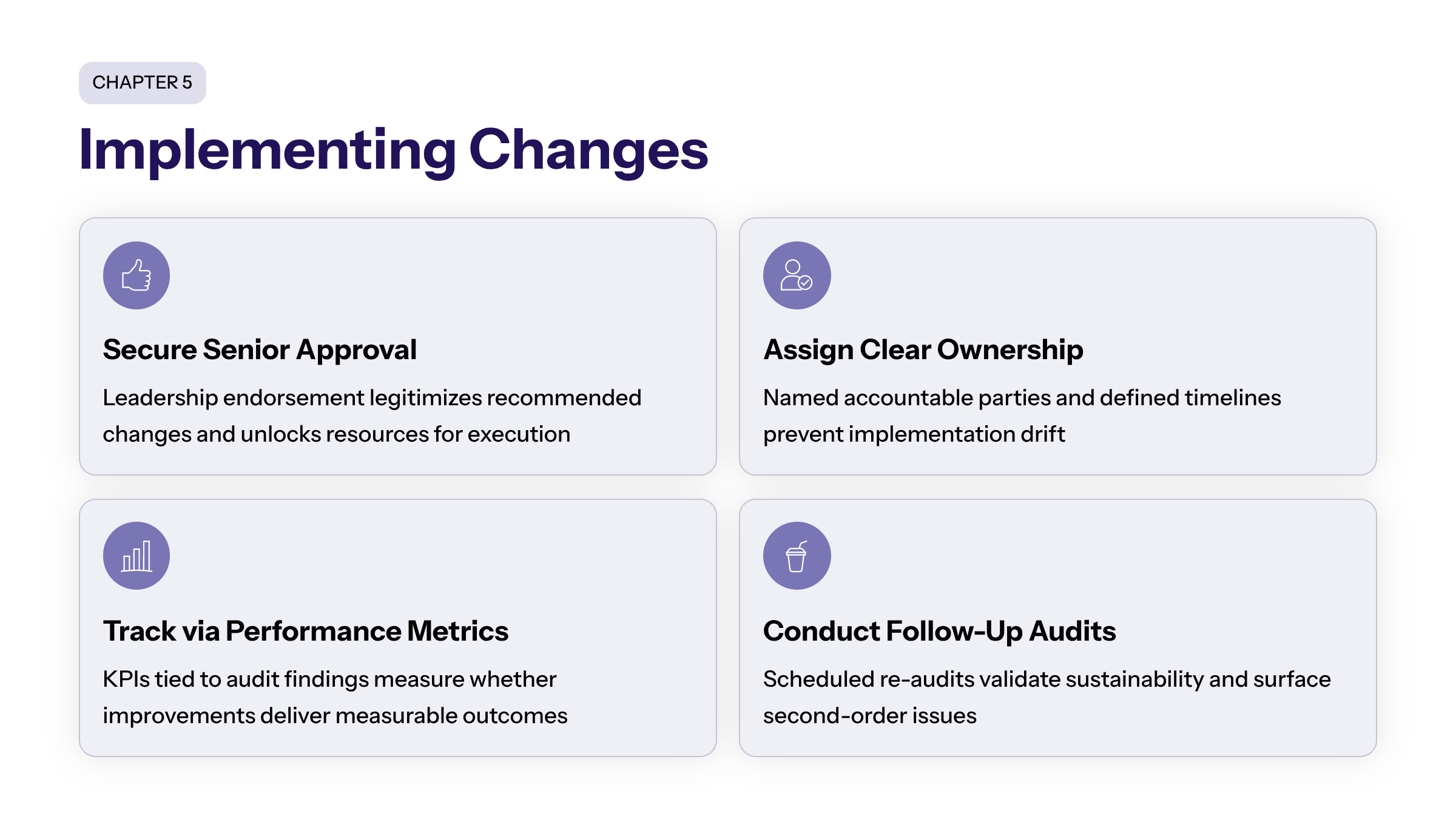
Approval and Implementation
Senior management approval is vital for endorsing recommended changes. Assigning clear ownership and establishing timelines ensures accountability during implementation. Tracking progress through performance metrics and conducting follow-up audits helps measure effectiveness and sustainability.
Implementing and monitoring changes is the final step in a business process audit to ensure improvements are effective. Establishing a system for tracking progress and evaluating impact after implementing changes supports continuous improvement and operational excellence.
Workflow Optimization
Optimizing the approval workflow focuses on streamlining operations, eliminating unnecessary steps, and fostering continuous improvement. Organizations should embed regular audit cycles into their governance frameworks to maintain alignment with evolving business goals and regulatory requirements. Regular business process audits enhance operational efficiency by uncovering delays and manual bottlenecks, which in turn improves compliance with service-level agreements and regulatory requirements.
Tools and Technologies
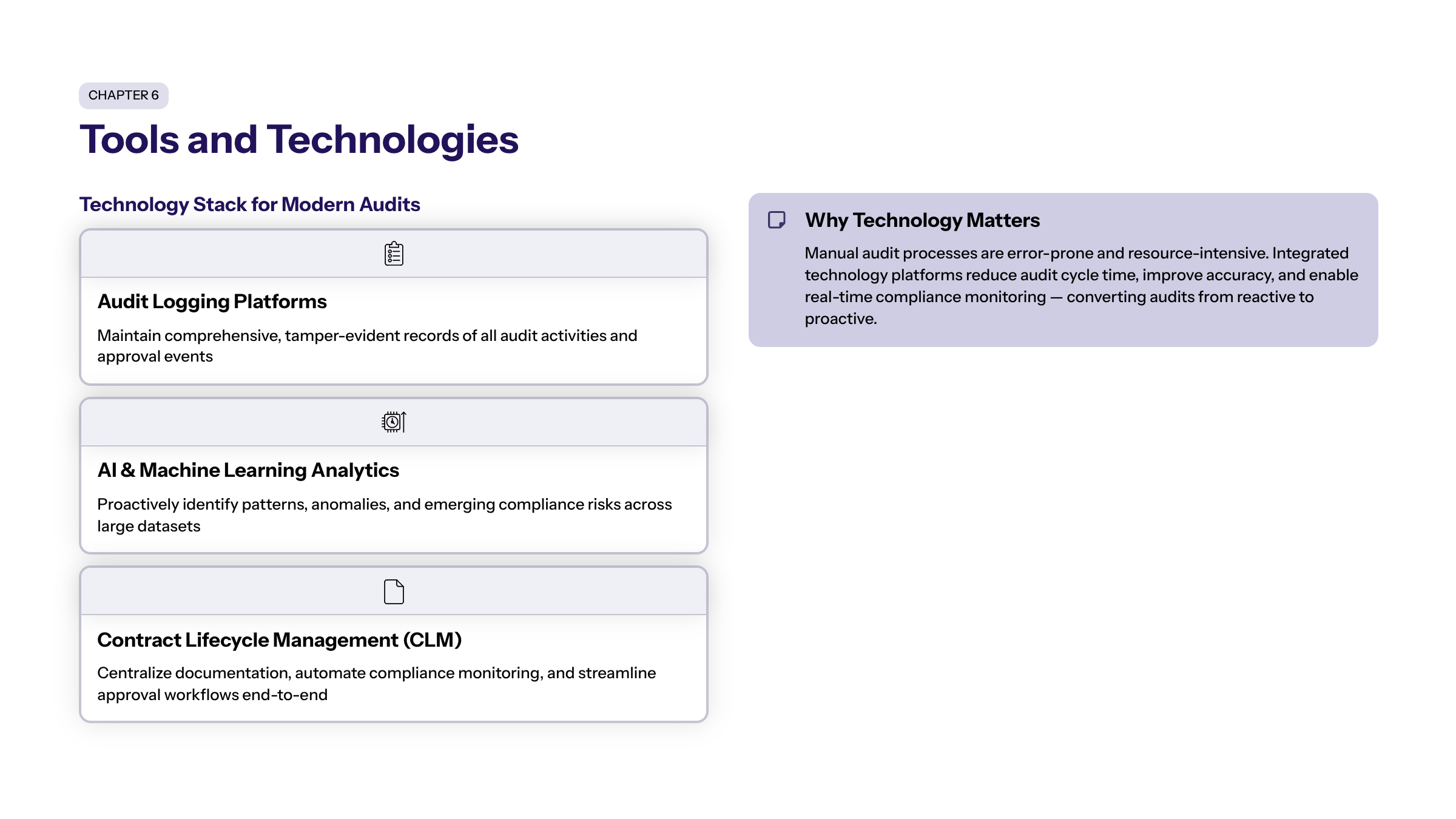
Audit Logging
Utilizing audit logging technologies enables organizations to maintain comprehensive records of audit activities, track performance metrics, and ensure compliance with regulatory requirements. Platforms integrating AI and machine learning can enhance analysis, identifying patterns and risks proactively.
Technology tools like contract lifecycle management (CLM) platforms can centralize documentation and automate compliance monitoring, enhancing the auditing process. Automated systems can streamline the bidding process and improve supplier management during audits.
Onboarding Clients
The audit process also encompasses client onboarding, ensuring external stakeholders understand audit objectives and methodologies. Providing training and leveraging digital tools improves onboarding efficiency and fosters transparency. Moxo is a service orchestration platform that helps streamline external-facing workflows and supports business process audits, enabling organizations to manage complex approval and onboarding processes with structure and accountability.
Best Practices
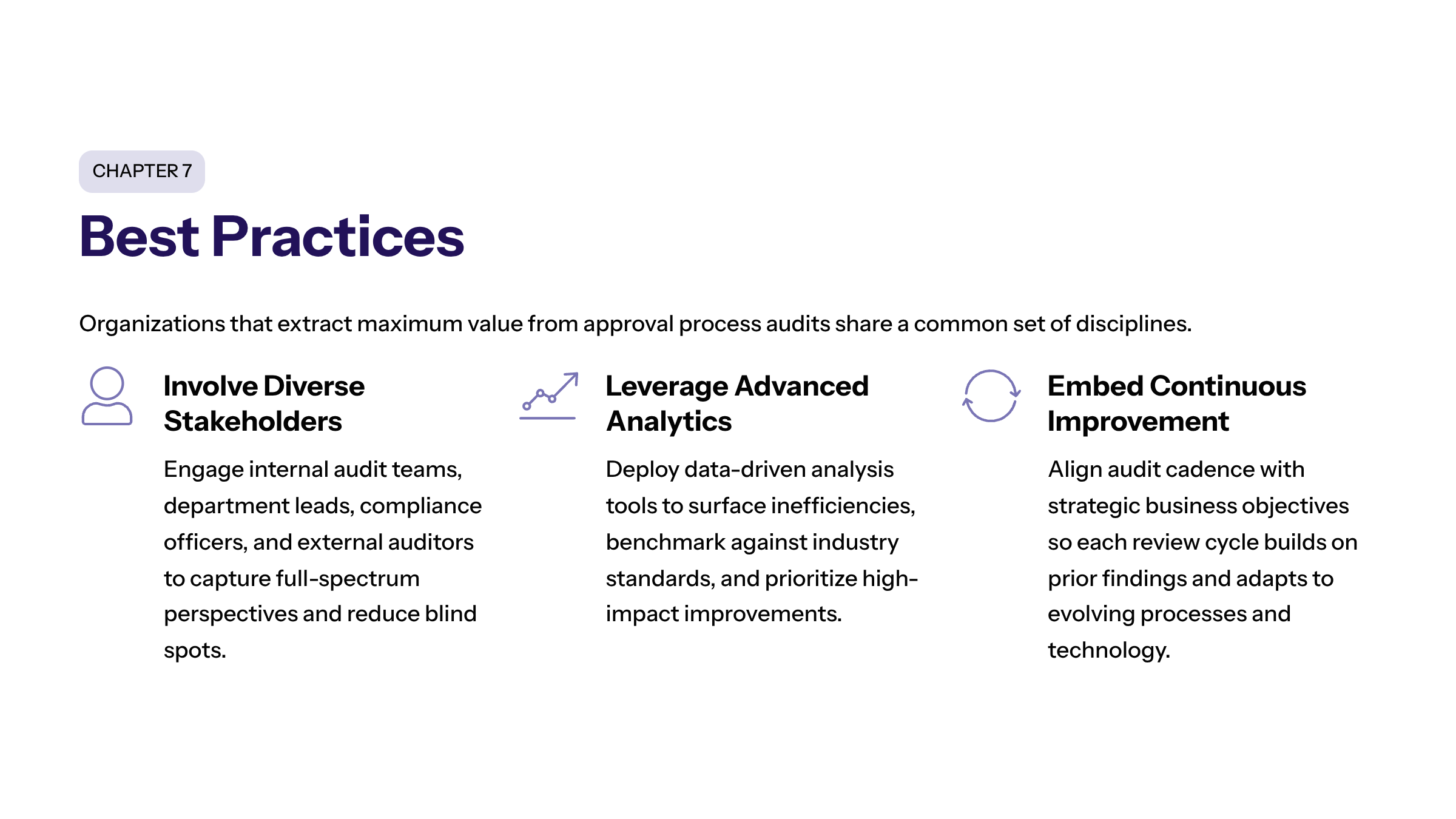
Adopting best practices such as involving diverse stakeholders, leveraging advanced analytics, and embedding continuous improvement cycles positions organizations to maximize the value of approval process audits. Aligning audit efforts with strategic business objectives ensures these reviews contribute meaningfully to operational excellence.
Regular audits help organizations stay aligned with changing processes and technology, ensuring continuous improvement. A thoughtful process audit evaluates the entire ecosystem, including technology integration, to uncover hidden inefficiencies. Automation and AI tools should be integrated into workflows to simplify processes and enhance audit effectiveness.
Audit Report
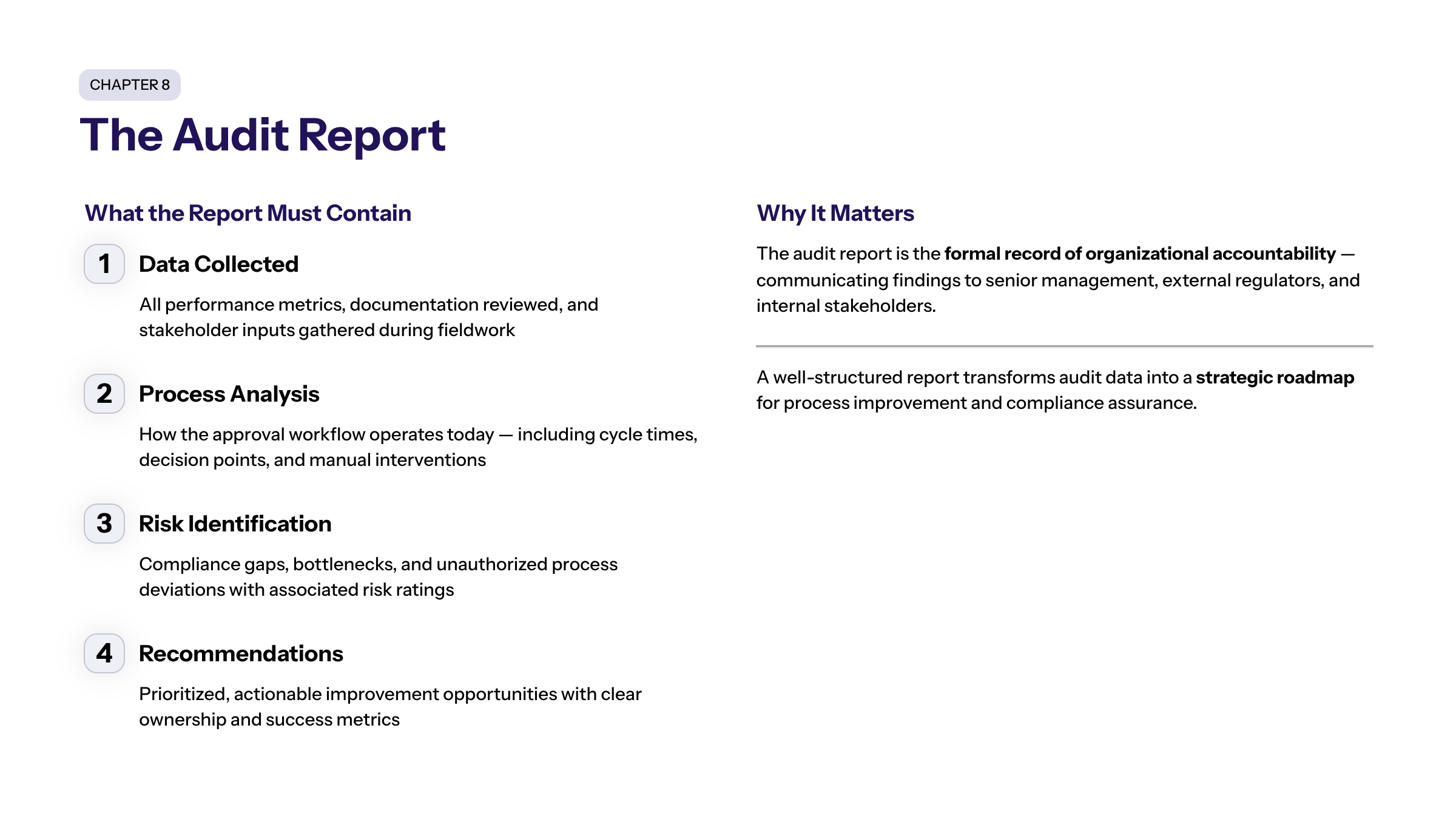
An essential deliverable of the approval process audit is the audit report. This comprehensive document consolidates all relevant information gathered during the audit, including data collected, analysis of how the process works, identified associated risks, and valuable insights derived from the evaluation. The audit report serves as a formal record that communicates audit findings, highlights opportunities for improvement, and provides clear recommendations for process improvement.
The report should be structured to facilitate understanding among senior management and stakeholders, enabling informed decision-making. It also functions as a reference for tracking progress on corrective actions and serves as evidence during external audits or regulatory reviews.
Audit Efforts
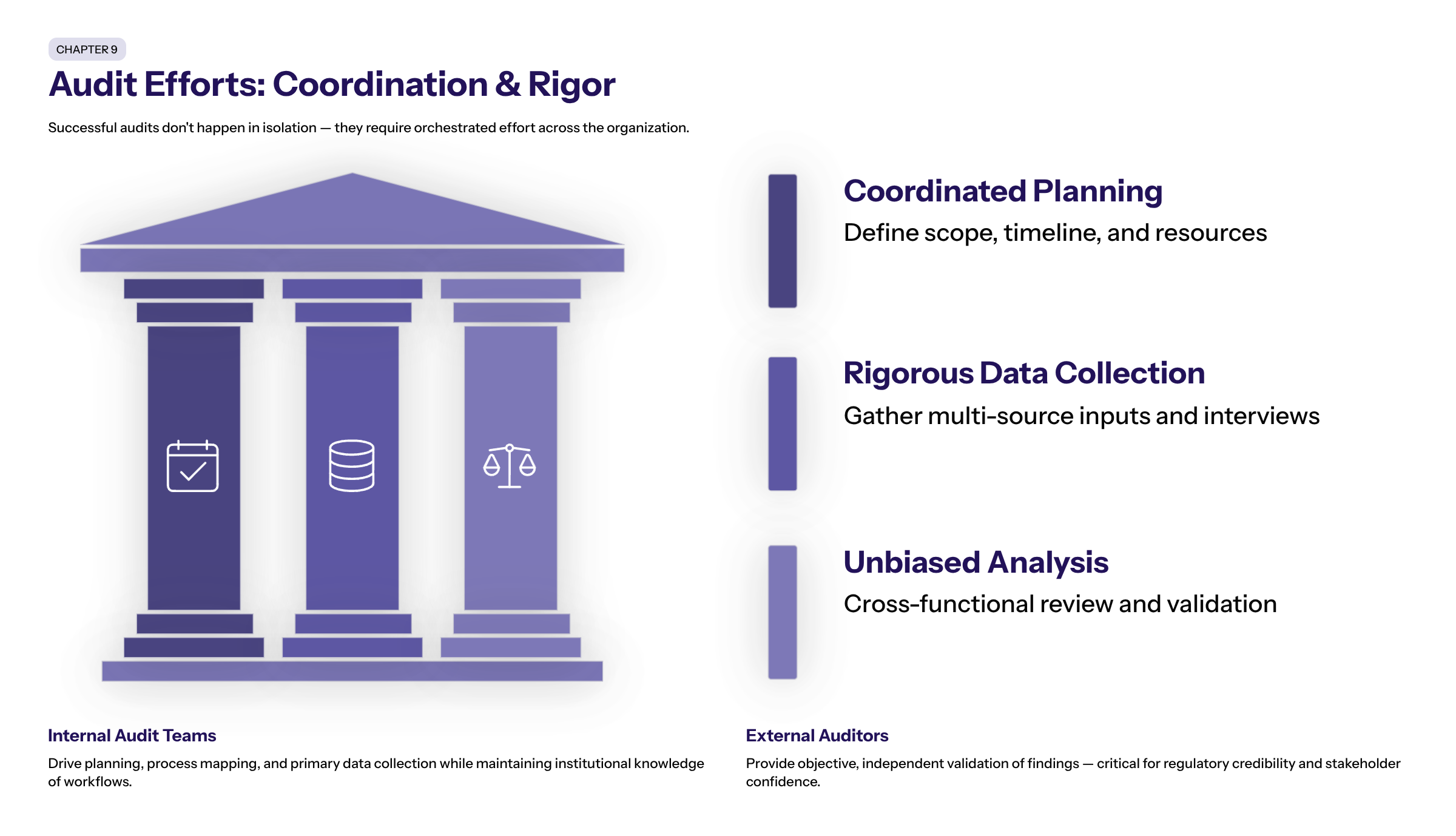
Successful approval process audits require dedicated audit efforts that encompass detailed planning, data collection, stakeholder involvement, and rigorous analysis. These efforts must be coordinated to ensure the audit is thorough, unbiased, and aligned with organizational goals.
Involving stakeholders throughout the audit efforts—ranging from internal audit teams to external auditors—helps gather diverse perspectives and relevant information, enhancing the quality of the audit. Consistent communication and collaboration contribute to uncovering hidden inefficiencies and operational pain points that might otherwise be overlooked.
Audit efforts should also focus on identifying key performance metrics and monitoring them over time to evaluate the impact of implemented changes. This continuous cycle of audit efforts supports ongoing process improvement and helps improve efficiency in complex processes.
Approval Workflow
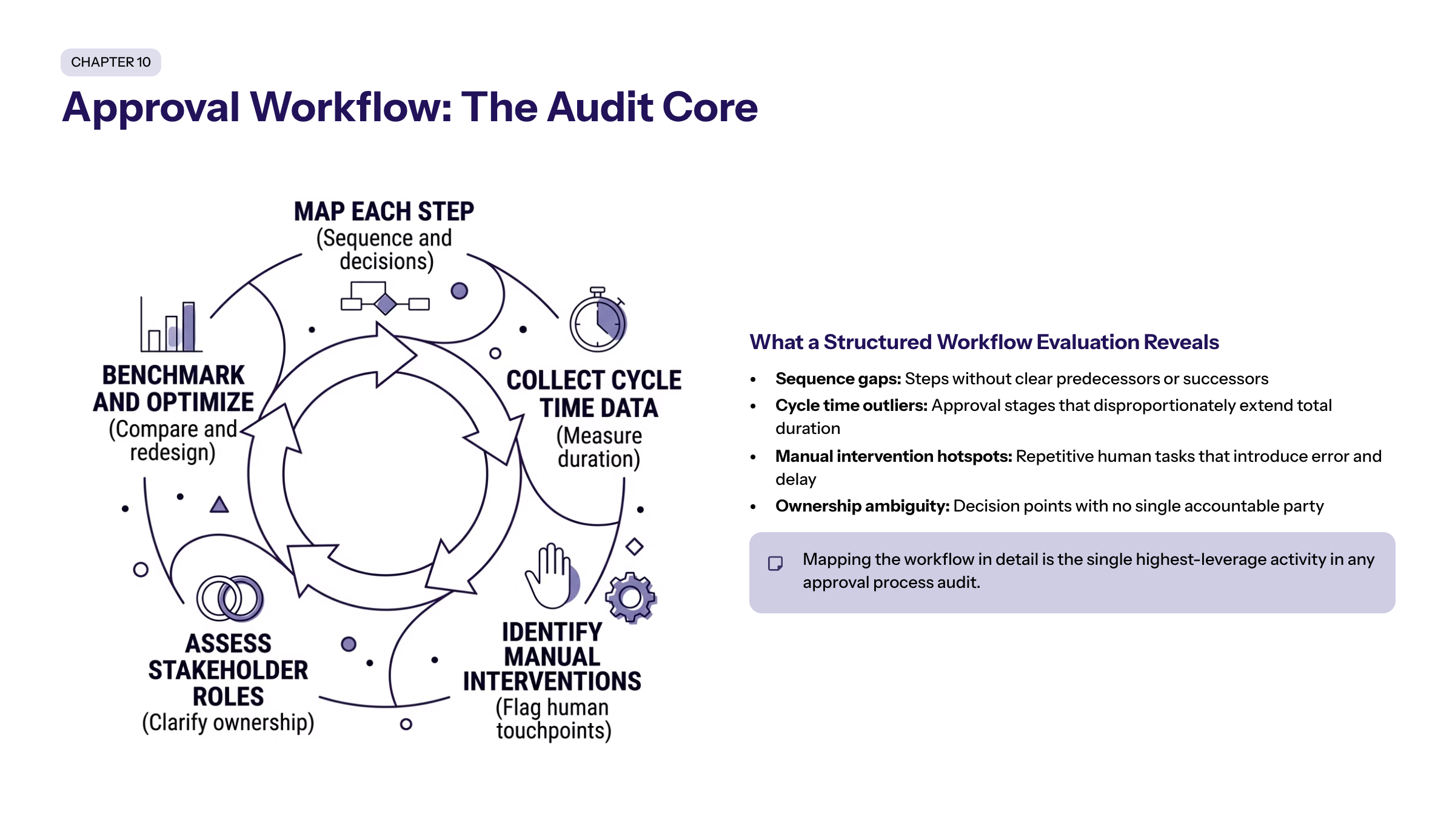
The approval workflow is at the core of the approval process audit. Understanding how this workflow operates—including the sequence of approval steps, decision points, and the roles of involved stakeholders—is crucial for identifying bottlenecks and inefficiencies.
A structured evaluation of the approval workflow involves mapping each step, collecting data on cycle times, and assessing manual interventions or repetitive tasks that slow down the process. It also involves analyzing system controls to ensure compliance and reduce associated risks.
Improving the approval workflow often includes automating routine approvals, clarifying ownership, and standardizing communication channels. These enhancements contribute to faster decision-making, better compliance, and improved efficiency across the organization.
Client Onboarding
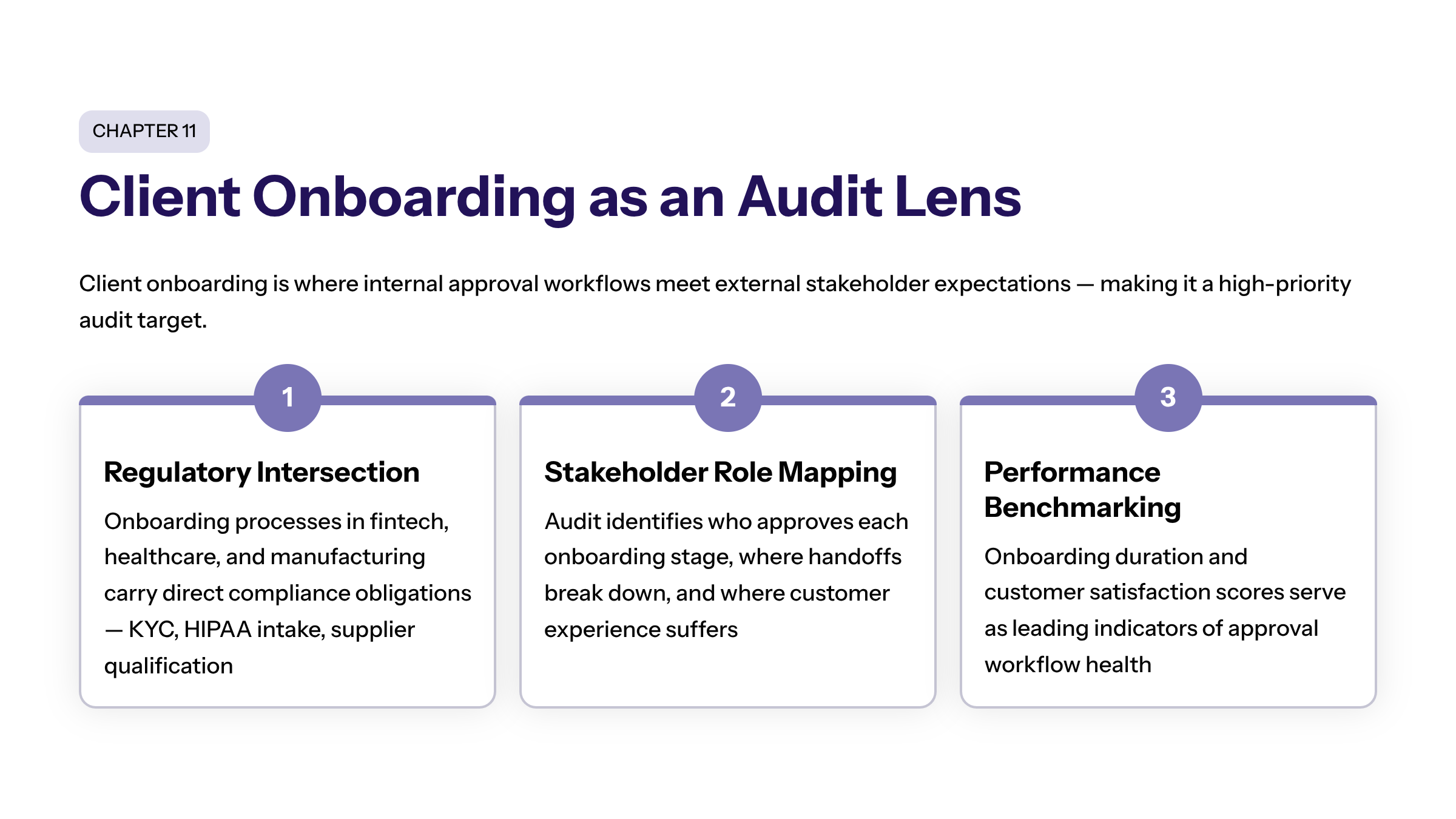
Client onboarding is a critical external process that often intersects with approval workflows, especially in industries such as fintech, healthcare, and manufacturing. Auditing client onboarding processes provides valuable insights into how organizations engage with external stakeholders and ensures that these interactions comply with regulatory requirements.
A structured evaluation of client onboarding involves collecting relevant information about onboarding steps, stakeholder roles, and performance metrics such as onboarding duration and customer satisfaction. This audit can identify opportunities for improvement, such as streamlining documentation requirements, automating approvals, and enhancing communication with clients.
Integrating client onboarding audits with approval process audits helps organizations create a seamless experience for clients while maintaining control and compliance. Leveraging technology and involving stakeholders from both internal teams and clients ensures the onboarding process is efficient, transparent, and aligned with business objectives.
Conclusion
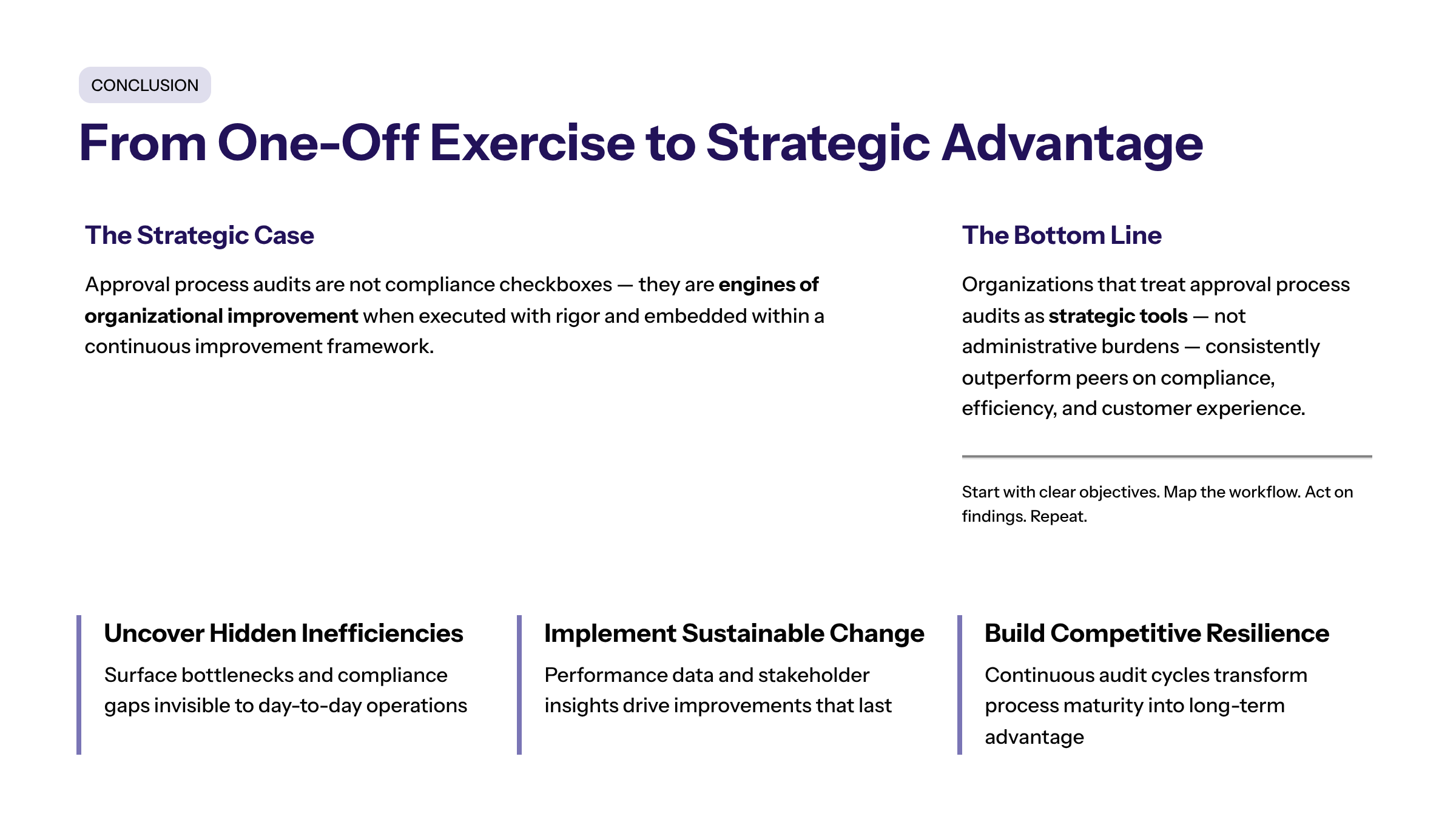
Approval process audits are indispensable for organizations striving to enhance efficiency, ensure regulatory compliance, and deliver superior customer experiences. By adopting a structured review approach that integrates performance data, stakeholder insights, and advanced technologies, businesses can uncover hidden inefficiencies and implement sustainable improvements. Embedding these audits within a continuous improvement framework transforms them from one-off exercises into strategic tools that drive long-term operational resilience and competitive advantage.