Mastering the Cross Functional Delivery Model for Optimal Team Success
In today’s fast-evolving business landscape, organizations face unprecedented complexity and competing priorities that demand agile, innovative solutions. The cross functional delivery model has emerged as a critical framework enabling organizations to break down fragmented workflows and siloed structures, fostering seamless collaboration across various departments.
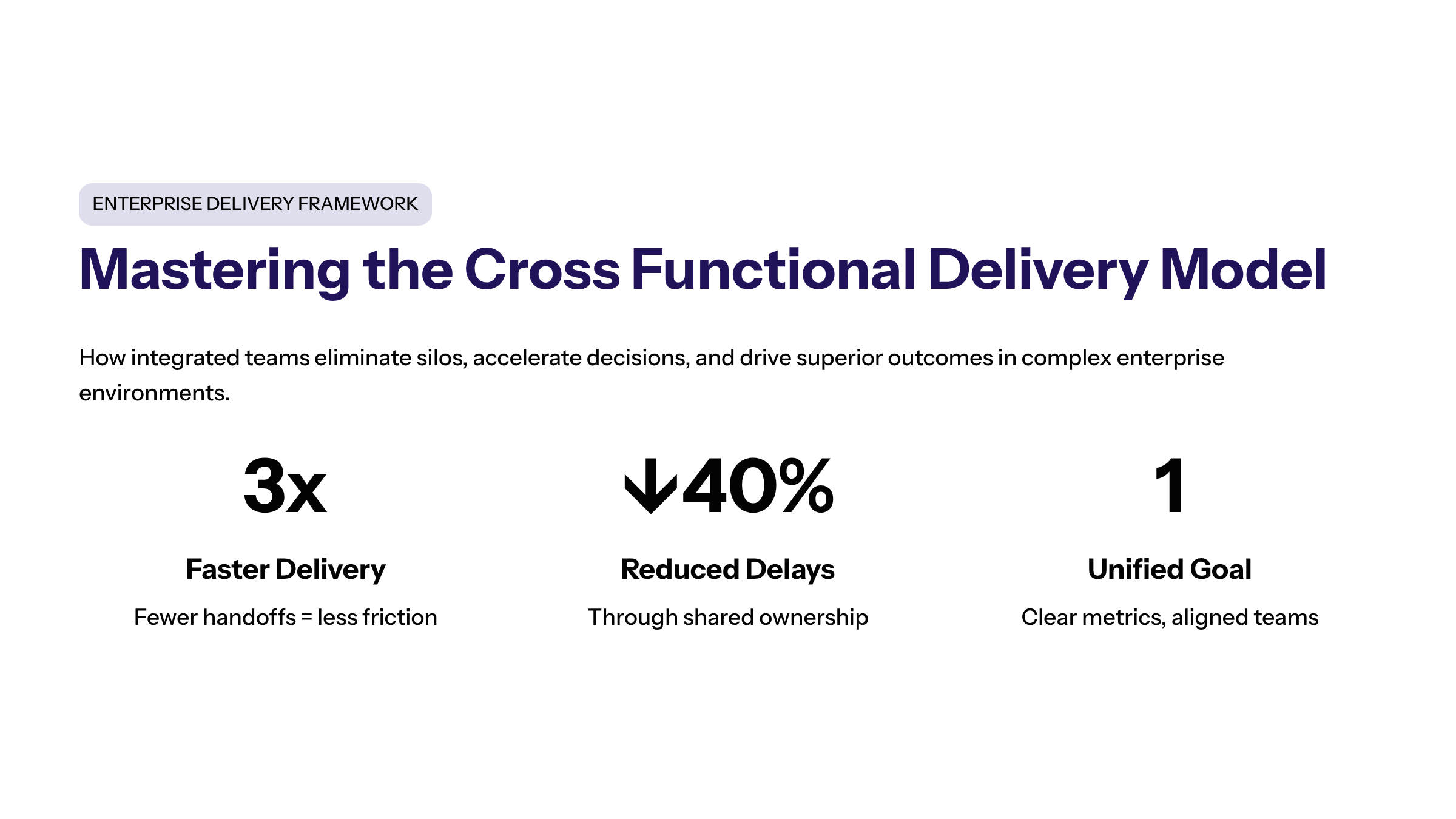
Characterized by fewer handoffs, which accelerate project delivery, this model empowers teams to tackle complex challenges with greater alignment, shared objectives, and clear metrics, ultimately accelerating decision making and driving superior outcomes.
The cross functional delivery model aims to provide all the answers for aligning team performance with organizational goals, ensuring that every initiative supports the broader mission and strategic objectives of the company.
A key feature of this model is decentralized decision-making, which allows teams to make key decisions internally without seeking approval from external department heads, thereby speeding up delivery and enhancing ownership.
This article provides an analytical exploration of the cross functional delivery model, emphasizing its relevance for executives seeking to optimize team structures and enhance collaboration tools. The model is often seen in Agile environments, enabling iterative delivery and continuous improvement.
Drawing on real-world examples from leading technology firms and industry best practices, we delve into how this model fosters a collaborative culture, improves communication, and supports continuous improvement.
We also examine the roles of team members, leadership dynamics, and ground rules essential for success, offering a comprehensive guide to mastering this transformative approach.
Key Takeaways
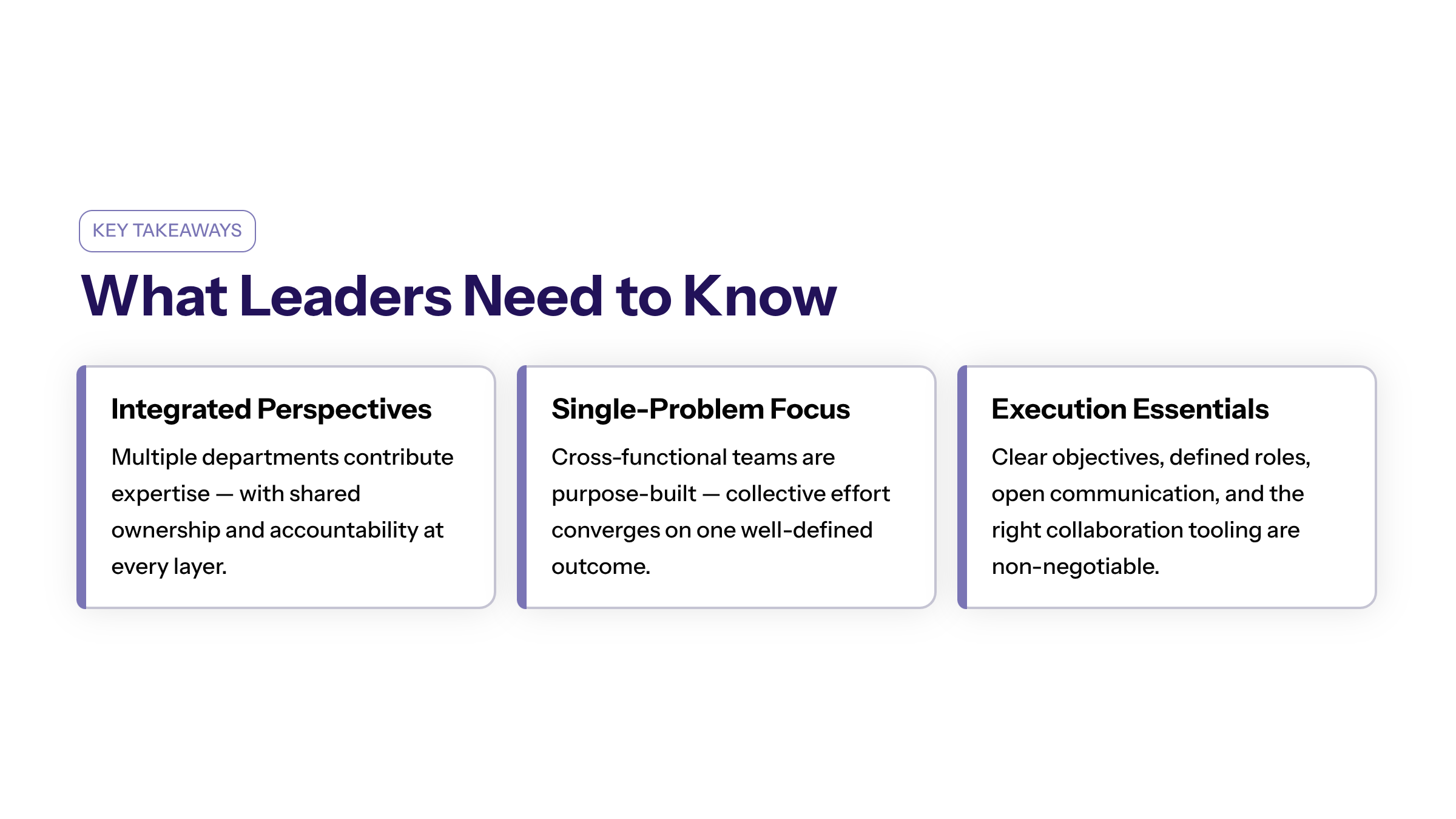
The cross functional delivery model integrates multiple perspectives from diverse expertise across various departments, enabling teams to solve complex problems with shared ownership and accountability. Notably, cross-functional teams are built to solve one problem, focusing their collective efforts on delivering specific outcomes efficiently.
Effective implementation requires clear objectives, well-defined roles, open communication, and the use of collaboration tools to overcome communication barriers and ensure that all team members understand their contributions toward common objectives.
Strong leadership and a collaborative culture that prioritizes mutual respect, conflict resolution, and continuous improvement are foundational for sustaining high-performing cross functional teams that deliver measurable business value.

Introduction to Cross Functional Teams
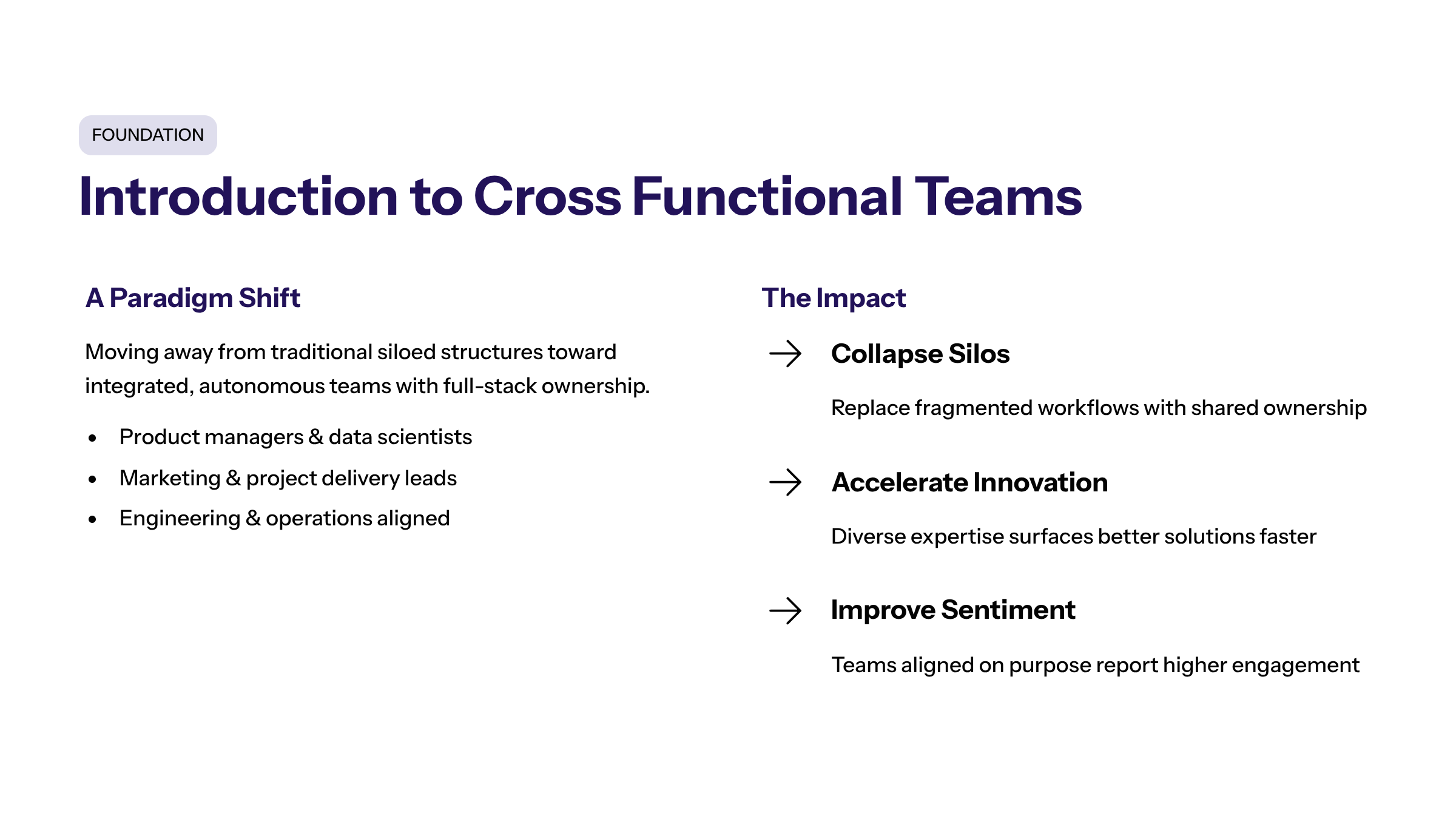
The cross functional delivery model represents a paradigm shift away from traditional, siloed organizational structures toward more integrated, autonomous teams. These teams combine diverse expertise—from product managers and data scientists to marketing teams and project managers—to address strategic business goals collaboratively. By collapsing silos and replacing fragmented workflows with shared ownership, cross functional teams enhance innovation, reduce delays, and improve overall team sentiment.
Organizations such as Amazon and Microsoft have leveraged this model to accelerate product development and improve customer satisfaction. Their success underscores how cross functional collaboration enables teams to navigate competing priorities effectively while maintaining focus on clear metrics and key results.
This section introduces the foundational concepts of cross functional teams, emphasizing the importance of alignment around shared objectives and the role of strong leadership in fostering a collaborative culture.
The Strategic Importance of Cross Functional Collaboration
Cross functional collaboration is no longer optional but essential in dynamic markets where speed, agility, and innovation determine competitive advantage. By integrating multiple perspectives, teams gain the ability to identify blind spots and potential roadblocks early, ensuring solutions are robust and user-centric. Moreover, collaboration tools such as Slack, Jira, and Asana facilitate transparent communication, enabling team members to stay on the same page despite geographic or departmental divides.
“Cross functional teams thrive when they have a clear understanding of their objectives and how to track progress,” notes Dr. Emily Chen, a leading organizational psychologist. “This clarity, combined with psychological safety and mutual respect, drives creativity and accountability.”
Building an Effective Cross Functional Team
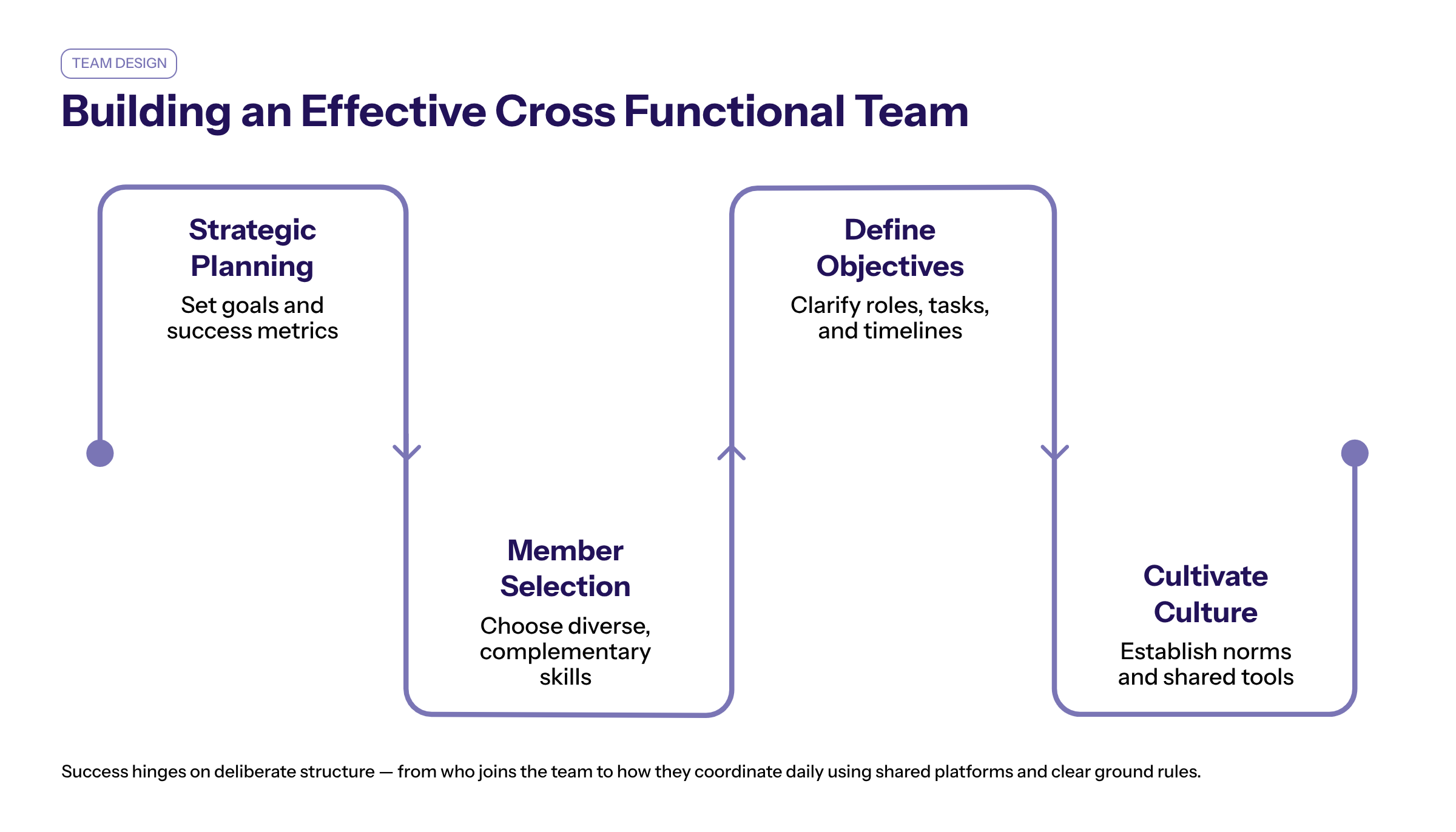
Building an effective cross functional team requires strategic planning, thoughtful selection of team members, and deliberate cultivation of a collaborative culture. Success hinges on defining clear objectives, establishing ground rules, and leveraging project management platforms to streamline communication and coordination.
Defining Clear Objectives and Roles
A successful cross functional team begins with shared objectives that align with broader business goals. Each team member must understand how their unique skills contribute to these objectives, ensuring collective success.
Clear roles and responsibilities prevent inefficiencies and foster accountability, reducing the risk of duplicated efforts or gaps in ownership. To maximize success, leaders use tools like RACI charts to clarify roles and collaborative hubs to maintain transparency.
Role | Responsibilities | Key Skills |
|---|---|---|
Product Manager | Owns the problem statement, aligns business goals with user needs | Strategic thinking, communication |
Data Scientist | Analyzes data to inform decisions and identify trends | Analytical skills, data modeling |
Marketing Team | Develops targeted campaigns based on customer insights | Creativity, market analysis |
Project Manager | Coordinates tasks, manages timelines, and tracks progress | Organization, leadership |
Team Leader | Facilitates collaboration, resolves conflicts, and drives focus | Communication, conflict resolution |
A typical cross-functional team includes specialists such as product managers, engineers, UX designers, and QA leads, each bringing unique expertise to collectively drive the development and delivery of high-quality products.
Fostering a Collaborative Culture
Establishing a culture of mutual respect and open communication is critical. Fostering open communication is a key principle in structuring effective teams, as it enhances collaboration, trust, and overall team performance. Team building activities and regular check-ins help build trust and break down communication barriers.
Leaders must encourage active listening and empower team members to share diverse perspectives, thereby challenging the status quo and promoting innovation. Building trust and psychological safety within teams improves problem solving by encouraging idea sharing and learning from mistakes, which leads to more effective identification and resolution of issues. Teams have greater employee engagement by working on shared objectives and combating isolation.
Leveraging Collaboration Tools
Modern collaboration platforms are indispensable in managing cross functional teams. Tools like Jira enable tracking of key results and potential roadblocks, while communication platforms such as Slack reduce information silos and enhance real-time problem solving. Integrating these tools ensures that teams maintain greater alignment and focus, even when working remotely or across multiple time zones.
Cross Functional Team Size and Structure
A successful cross functional team is typically composed of 7-9 team members, striking the right balance between diverse expertise and effective communication.
This optimal size allows for a wide range of perspectives from various departments—such as marketing, development, and design—while ensuring that collaboration remains seamless and focused. Each team member brings unique skills to the table, contributing to a dynamic environment where innovative solutions can flourish.
The structure of a cross functional team should be flexible and adaptable, tailored to the specific needs of the project at hand. Clear roles and responsibilities are essential, with a team leader and product manager guiding the team’s efforts and representatives from different departments providing specialized knowledge.
This clarity helps prevent overlap, fosters mutual respect, and ensures that all voices are heard. Open communication is encouraged at every stage, enabling team members to work together efficiently and achieve the team’s objectives.
By building a team structure that values trust, respect, and effective communication, organizations set the stage for cross functional success.
Cross Functional Collaboration
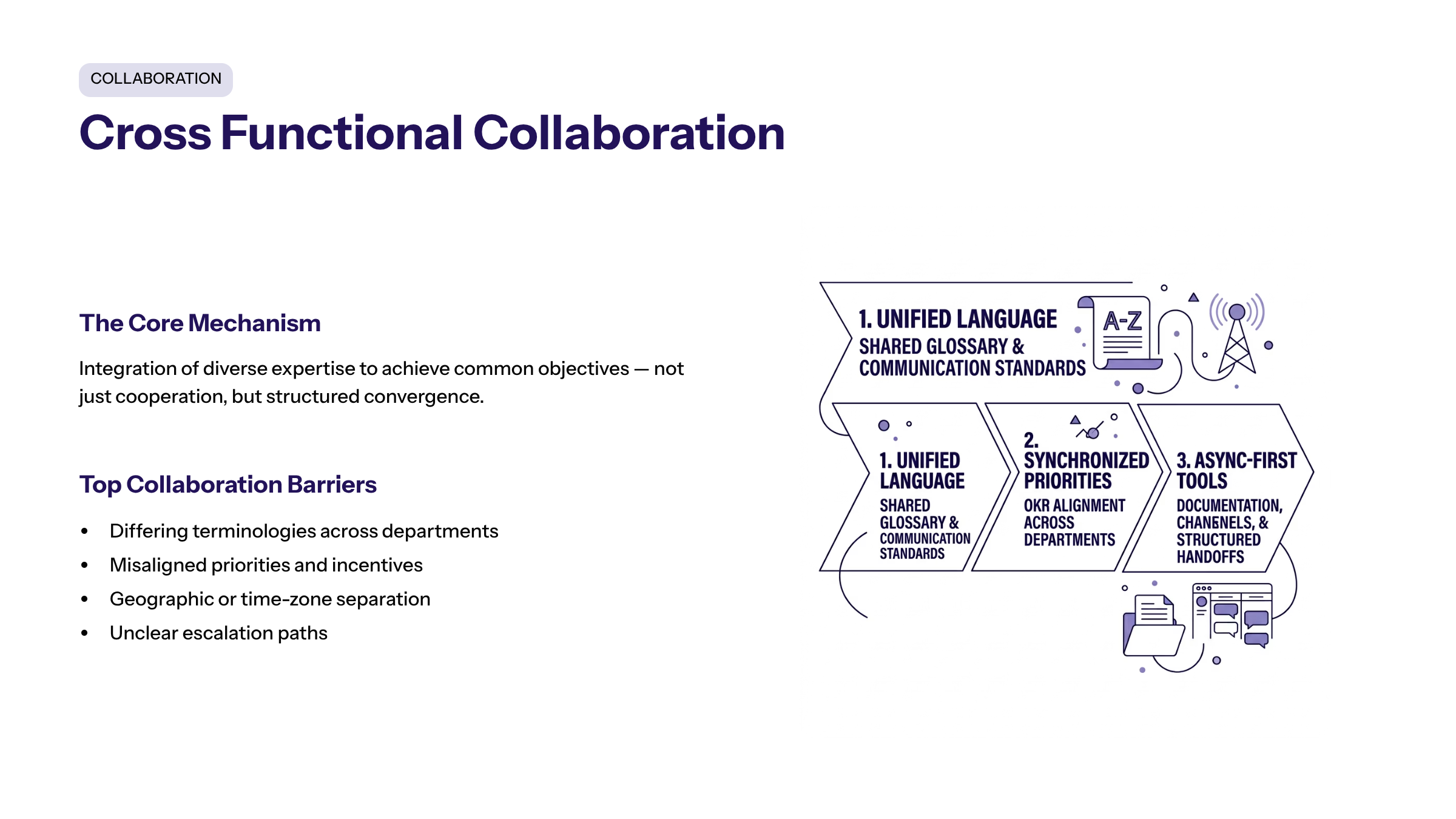
Cross functional collaboration is the core mechanism through which teams integrate their diverse expertise to achieve common objectives. This section explores the dynamics of effective collaboration, highlighting challenges faced and strategies to overcome them.
Overcoming Communication Barriers
Communication barriers often arise from differing terminologies, priorities, or geographic separation. Establishing ground rules for open communication, active listening, and regular status updates helps mitigate misunderstandings. Using shared metrics and transparent reporting fosters trust and ensures that all team members understand progress toward goals.
Managing Competing Priorities and Conflicting Goals
Cross functional teams frequently encounter competing priorities that can derail focus.
Aligning team objectives with organizational vision and establishing clear decision-making protocols enables teams to navigate conflicts constructively. It is crucial to ensure that team objectives are closely aligned with organizational goals, so that cross-functional efforts directly support the company's broader mission and strategic priorities.
The role of the product owner or product manager is particularly vital in balancing business goals with technical feasibility.
Examples of Effective Cross Functional Collaboration
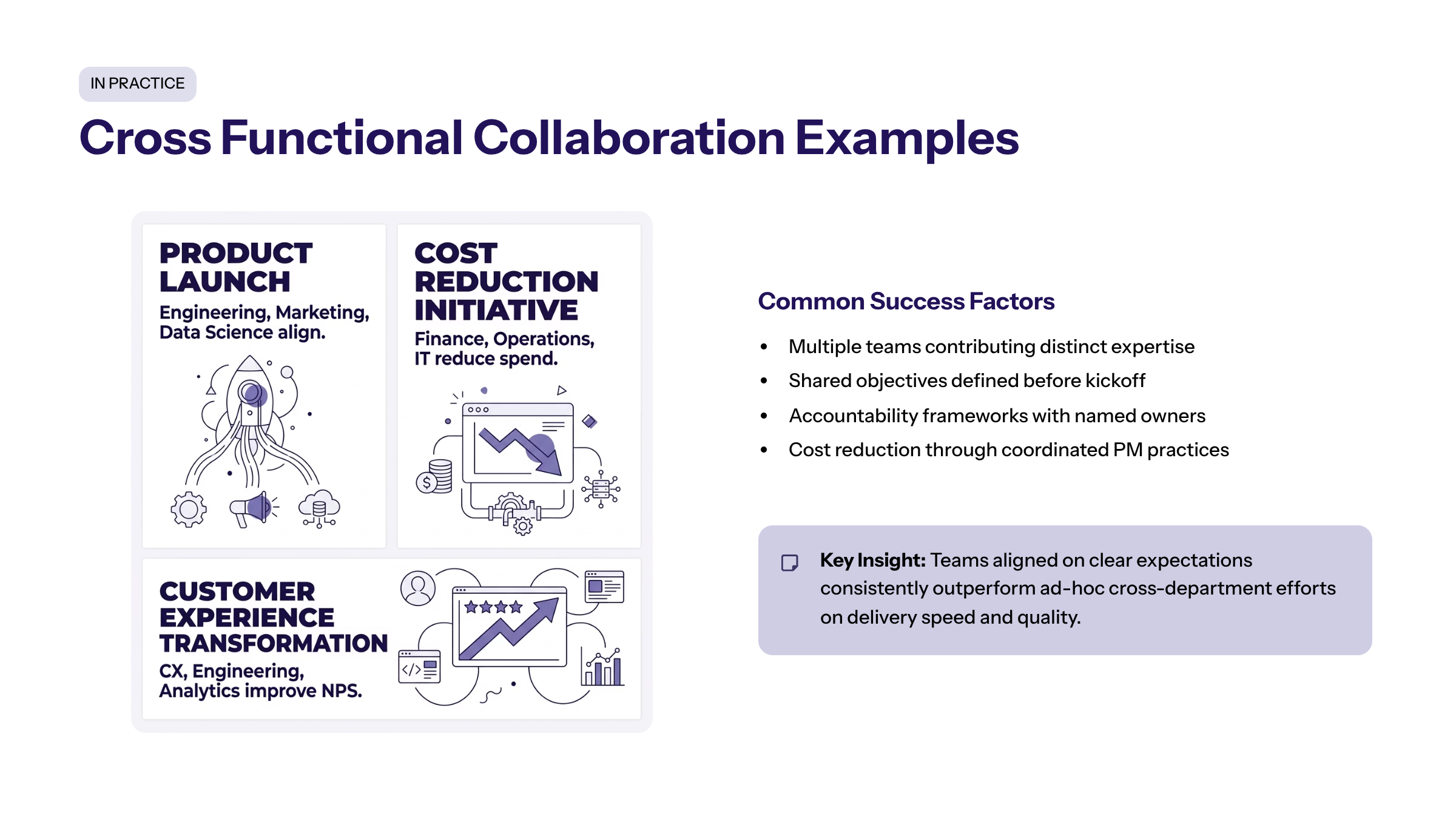
What are some cross functional collaboration examples? Here are specific instances that illustrate how cross-functional teams work together to create synergies and achieve shared goals:
At Google, cross functional teams working on the Android platform integrate engineers, UX designers, and marketing experts to iterate rapidly on new features, ensuring alignment with user needs and market trends. In these teams, work is managed internally without reliance on other teams, which fosters shared ownership and efficient problem-solving.
Salesforce employs cross functional collaboration to streamline customer service improvements by linking customer support, product development, and sales teams, enhancing feedback loops and accelerating issue resolution. These cross-functional teams handle tasks internally, emphasizing shared responsibility and minimizing dependence on other teams.
Teams can complete projects up to 30% faster by eliminating departmental handoffs and wait times, demonstrating the efficiency gains of this model.
Establishing a Collaborative Culture
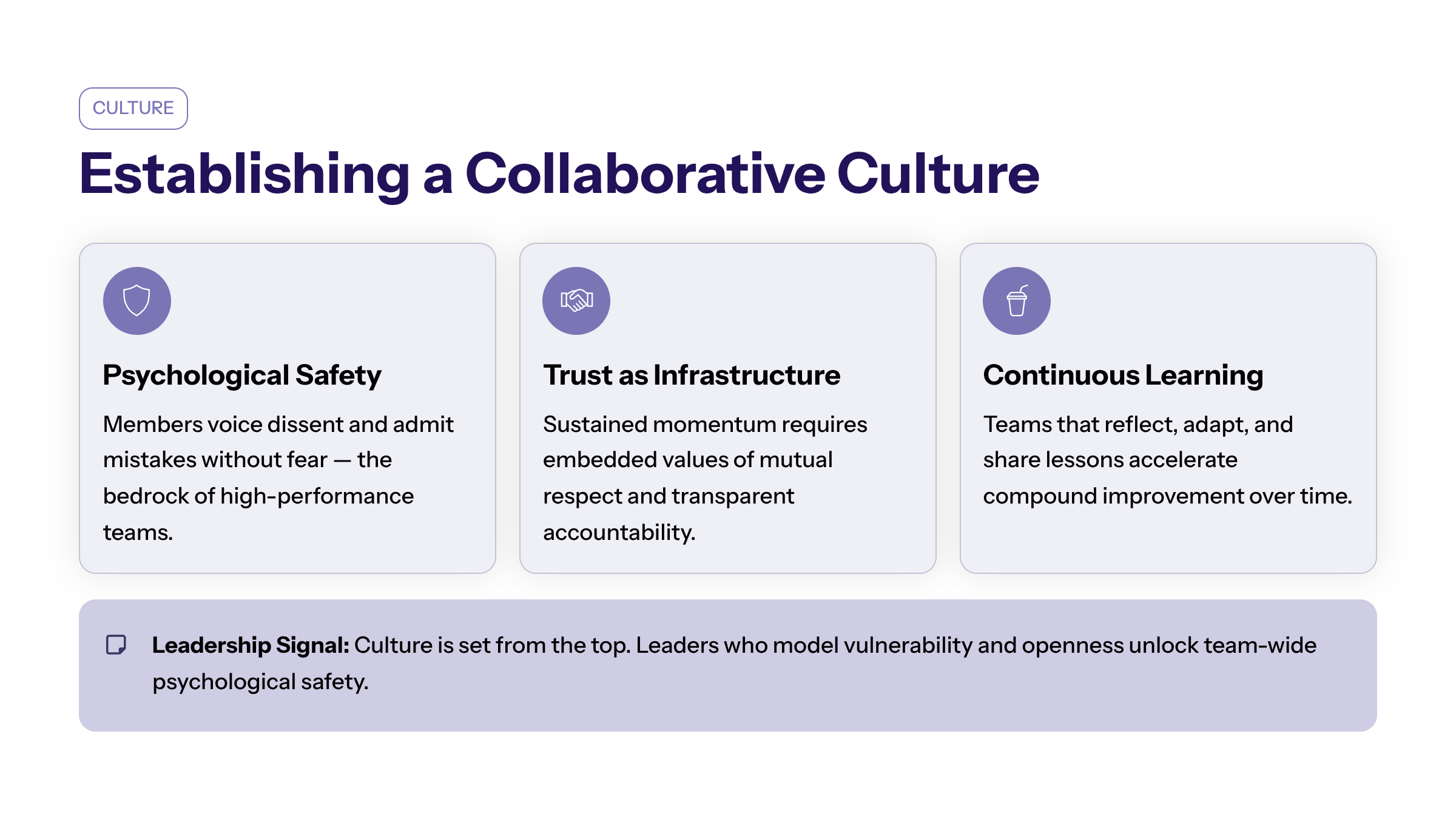
A collaborative culture sustains the momentum of cross functional teams by embedding values of trust, psychological safety, and continuous learning.
Building Trust and Psychological Safety
Teams perform best when members feel safe to voice dissenting opinions and admit mistakes without fear of reprisal. Leaders must model vulnerability and encourage constructive conflict resolution to build this environment.
Continuous Improvement and Adaptability
Cross functional teams should regularly review their processes and outcomes, adapting to changing circumstances and integrating lessons learned. This iterative approach aligns with Agile methodologies, promoting resilience and sustained success.
Ground Rules for Success
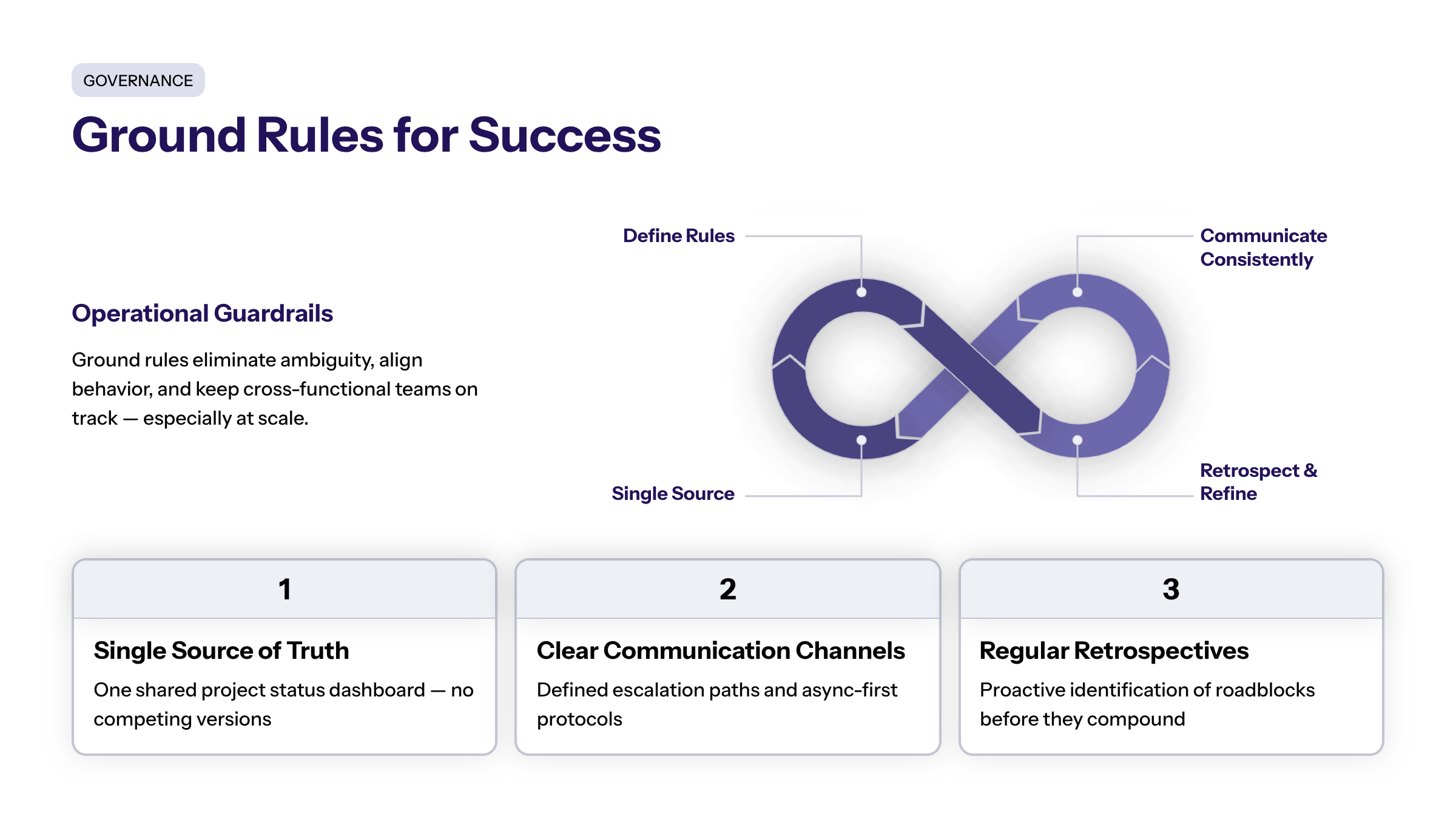
Ground rules provide a framework that guides team behavior and decision making, ensuring alignment and efficiency.
Essential Ground Rules
Clear communication channels and a single source of truth for project status prevent confusion.
Regular check-ins and retrospectives enable proactive identification of potential roadblocks.
Embracing multiple perspectives and constructive conflict enhances problem solving.
Accountability frameworks clarify ownership of tasks and outcomes.
Implementing Ground Rules in Practice
For example, Spotify’s “Squad” model incorporates regular stand-ups, shared OKRs, and transparent dashboards to maintain focus and alignment across their cross functional teams.
Leadership in Cross Functional Teams
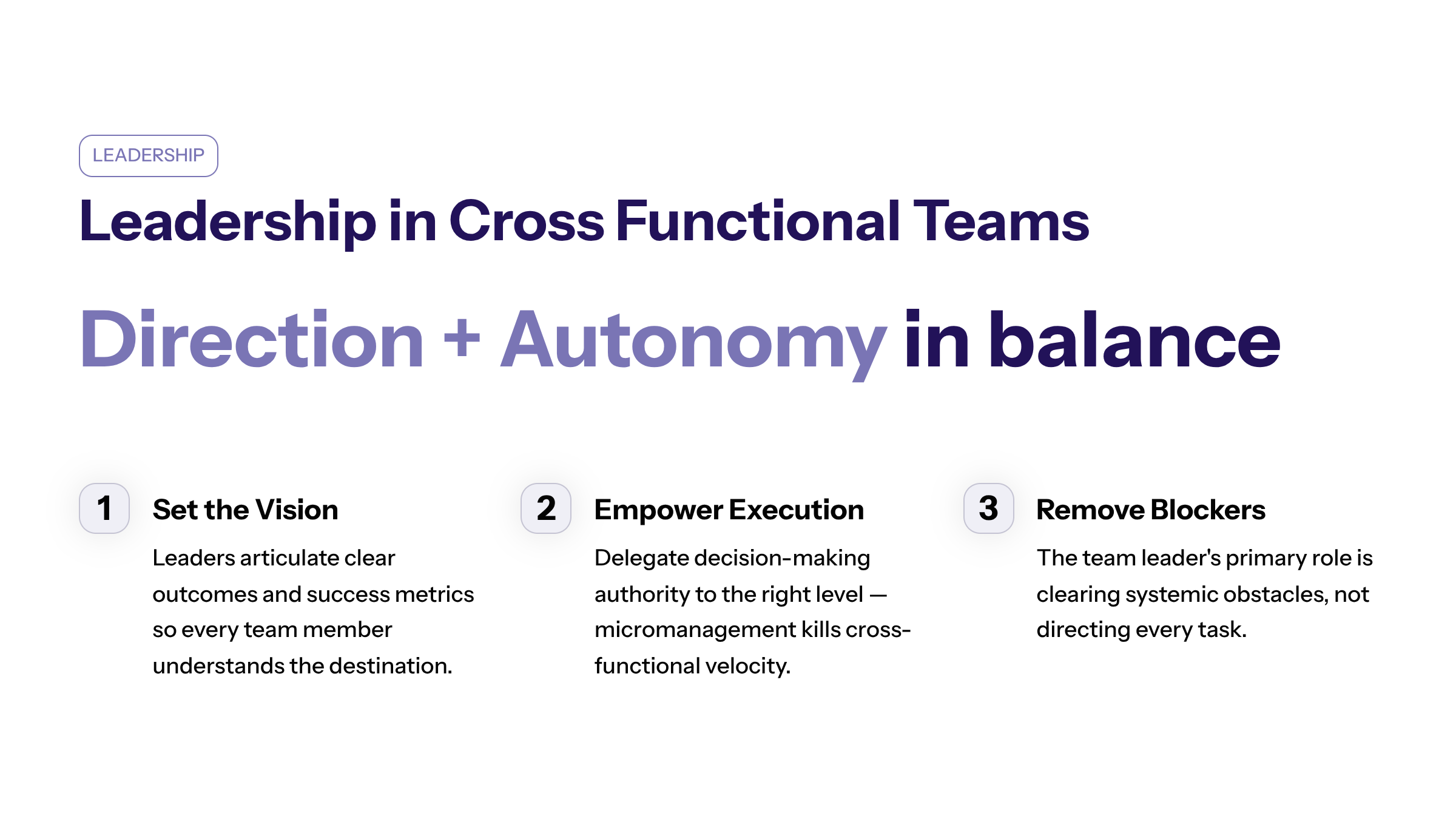
Strong leadership is the linchpin of successful cross functional teams. Leaders must balance providing clear direction with empowering autonomy.
Role of the Team Leader
Effective team leaders facilitate collaboration, manage conflict resolution, and maintain focus on shared objectives. They foster a culture of mutual respect and ensure that communication flows freely among team members.
Leadership Skills for Cross Functional Success
Key skills include excellent communication, active listening, emotional intelligence, and the ability to navigate competing priorities. Leaders must also leverage collaboration tools to track progress and maintain greater alignment.
Empowering Teams Through Autonomy and Accountability
Leaders should empower teams to make decisions internally, balancing autonomy with accountability to ensure delivery excellence. This approach accelerates decision making and enhances team motivation.
By mastering the cross functional delivery model, organizations can unlock the full potential of their teams, driving innovation, improving customer satisfaction, and achieving strategic business goals. The integration of diverse expertise, clear objectives, open communication, and strong leadership creates a powerful engine for sustainable success in today’s complex business environment.
The Role of Product Managers
Within a cross functional team, the product manager plays a pivotal role in steering the team toward its objectives. Acting as the central point of coordination, the product manager is responsible for defining and prioritizing project goals, setting key results, and ensuring that all team members are aligned and on the same page. Their ability to establish ground rules and foster open communication is crucial for maintaining a collaborative environment where every team member feels empowered to contribute.
Excellent communication skills, active listening, and conflict resolution are essential qualities for a product manager. By encouraging team members to share their perspectives and expertise, the product manager helps facilitate collaborative problem solving and drives the team toward innovative solutions.
They are also responsible for tracking progress, identifying potential roadblocks, and making necessary adjustments to keep the project on course. Through clear decision making and a commitment to open communication, the product manager ensures that the cross functional team remains focused, agile, and capable of achieving its key results.
Cross Functional Team Success Metrics
Measuring the effectiveness of cross functional teams requires the establishment of clear metrics and key results that directly align with the team’s objectives. Common success metrics include lead time for change, sprint predictability, escaped defects, cycle efficiency, and team sentiment—each providing valuable insights into how well the team is performing and where improvements can be made.
Lead time for change tracks the calendar days from idea to production, with lower values indicating faster delivery of value to users. Sprint predictability compares committed story points with completed work, with a ratio above ninety percent suggesting sound estimation and healthy flow.
Escaped defects count bugs that slip past testing, and the trend should move down quarter over quarter to indicate improved quality. Cycle efficiency measures the share of active engineering time versus wait states, with higher percentages indicating fewer handoffs and delays. Team sentiment is assessed through lightweight pulse surveys that check engagement and burnout levels among team members.
Dashboards provide quantitative data, while qualitative signals from stakeholder surveys and customer outcomes fill in the gaps for measuring success. Release postmortems analyze production pushes within forty-eight hours to identify what worked, what failed, and what changes are needed for next time.
Customer outcomes link features to adoption curves, support ticket volume, and revenue impact, providing a direct line from backlog items to financial results.
Effective cross functional teams thrive when they have a transparent understanding of their goals, priorities, and performance indicators. Tracking and analyzing these metrics not only helps teams tackle complex challenges but also fosters a culture of continuous improvement and collaborative problem solving.
As teams understand their key results and measure their impact, they are better equipped to refine their approach, enhance customer satisfaction, and deliver sustained business value.
Cross Functional Collaboration Examples
Cross functional collaboration is the cornerstone of successful project delivery, enabling teams to work together seamlessly toward a common goal. Effective collaboration often involves more than one team, each bringing diverse expertise and perspectives to the table. By aligning around clear expectations and shared objectives, these teams can overcome challenges such as lack of accountability and reduce costs through thoughtful project management.
Open Communication
Open communication is essential for fostering trust and transparency within and across teams. It ensures that all team members understand their roles and responsibilities, helping to prevent misunderstandings and promote accountability. The scrum master plays a vital role in protecting flow by enforcing cadence, facilitating retrospectives, and removing blockers that may impede progress. Through regular check-ins and active listening, open communication supports continuous improvement and keeps teams aligned on their common goal.
Clear Communication
Clear communication establishes a single source of truth for project status and expectations, minimizing confusion and streamlining decision making. Key leadership roles contribute significantly to this clarity: the tech lead serves as the engineering authority, overseeing design patterns and code review standards to maintain technical quality; the UX/UI lead anchors the human side of the product by gathering research and crafting interaction models that enhance user experience; and the delivery manager handles external alignment and coordinates release logistics to ensure smooth handoffs and timely delivery. Together, these roles support a well-coordinated, high-performing cross functional team focused on achieving shared success.
Conclusion
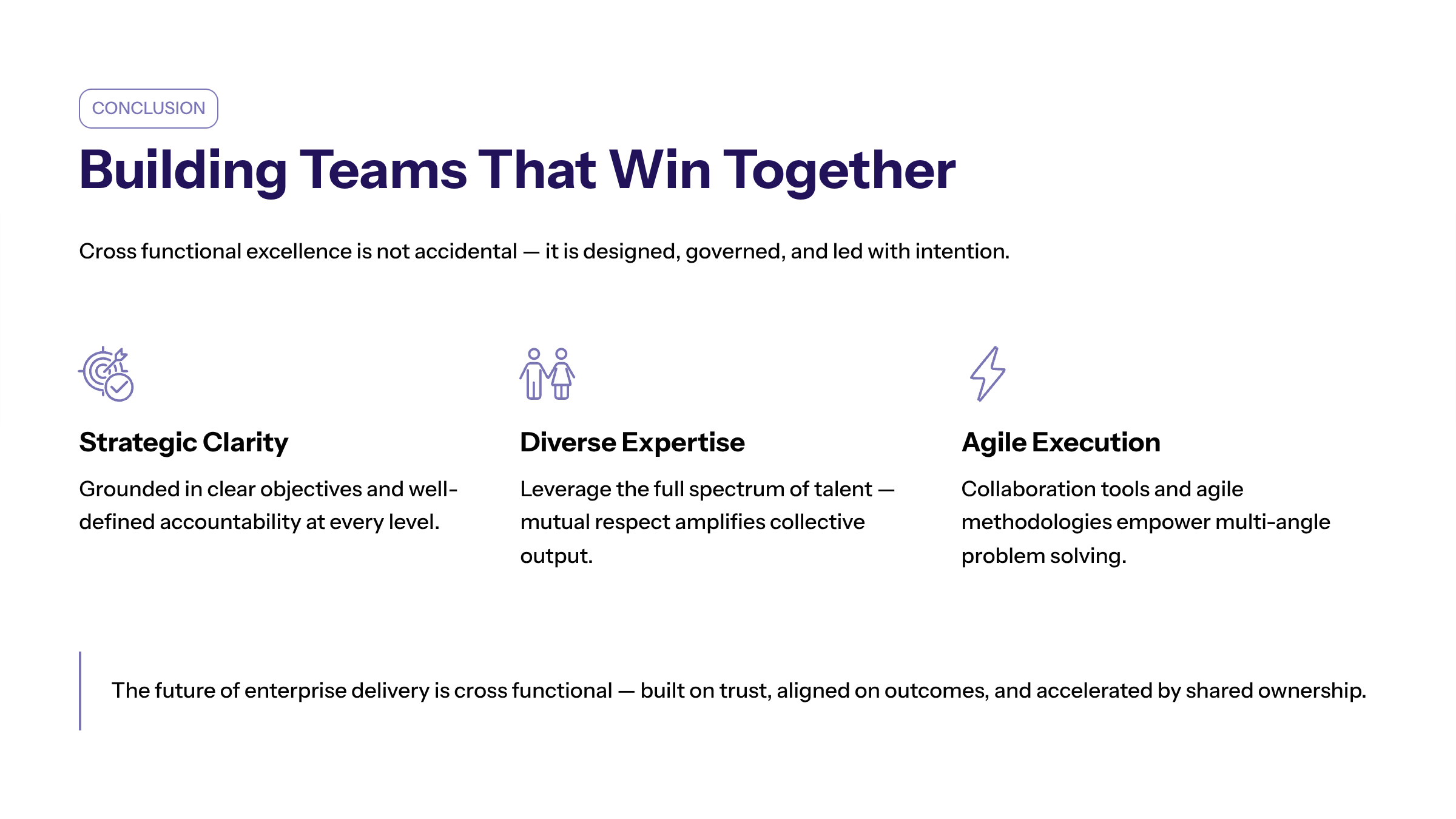
In conclusion, building and leading successful cross functional teams is about more than just assembling talent from different departments—it requires a strategic approach grounded in clear objectives, open communication, and a collaborative culture. Cross functional teams thrive when they leverage diverse expertise, utilize project management platforms, and foster mutual respect among team members. By embracing collaboration tools and agile methodologies, organizations can empower their teams to approach challenges from multiple angles, drive innovation, and achieve collective success.
A commitment to continuous improvement, clear communication, and shared goals ensures that cross functional teams not only meet but exceed expectations, resulting in improved customer satisfaction and business growth. Ultimately, the key to a successful cross functional team lies in its ability to work together seamlessly, adapt to change, and maintain a culture of trust, respect, and ongoing development. By mastering these principles, organizations can unlock the full potential of their teams and set the stage for long-term success.
Looking ahead, in 2026, the cross-functional delivery model remains a primary strategy for organizations to remain agile and innovative, continuously adapting to evolving market demands and technological advancements.