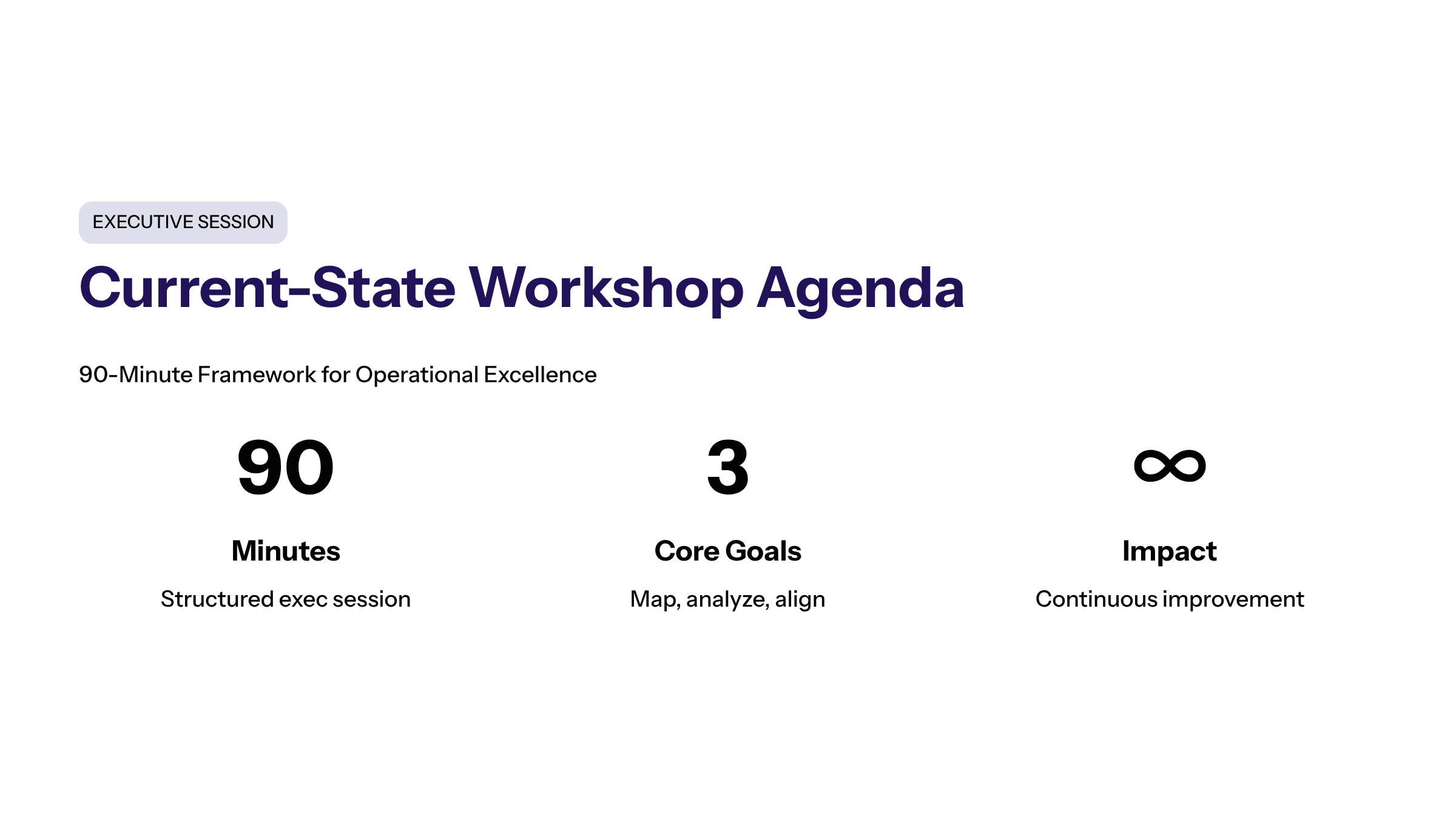
Current-State Workshop Agenda (90-Min Exec Session)
In today’s fast-paced business environment, organizations must continuously refine their processes to maintain competitive advantage and operational excellence. A well-structured current state workshop agenda is essential for executives and cross-functional teams to collaboratively analyze existing workflows, identify inefficiencies, and lay the groundwork for transformative improvements.
This article provides an expert, analytical overview of a 90-minute current state workshop agenda designed to facilitate effective process mapping, drive continuous improvement, and align stakeholders around a shared vision for the future state map.
Key Takeaways
A focused current state workshop agenda enables organizations to capture a detailed and accurate picture of existing processes, uncovering gaps and inefficiencies critical to operational excellence.
Integrating cross-functional perspectives through a process mapping workshop fosters collective knowledge, buy-in, and alignment necessary for successful transformation initiatives.
Establishing a clear link between current state mapping and future state map development accelerates continuous improvement efforts and supports strategic decision-making.

Process Mapping Workshop: Setting the Foundation for Operational Excellence
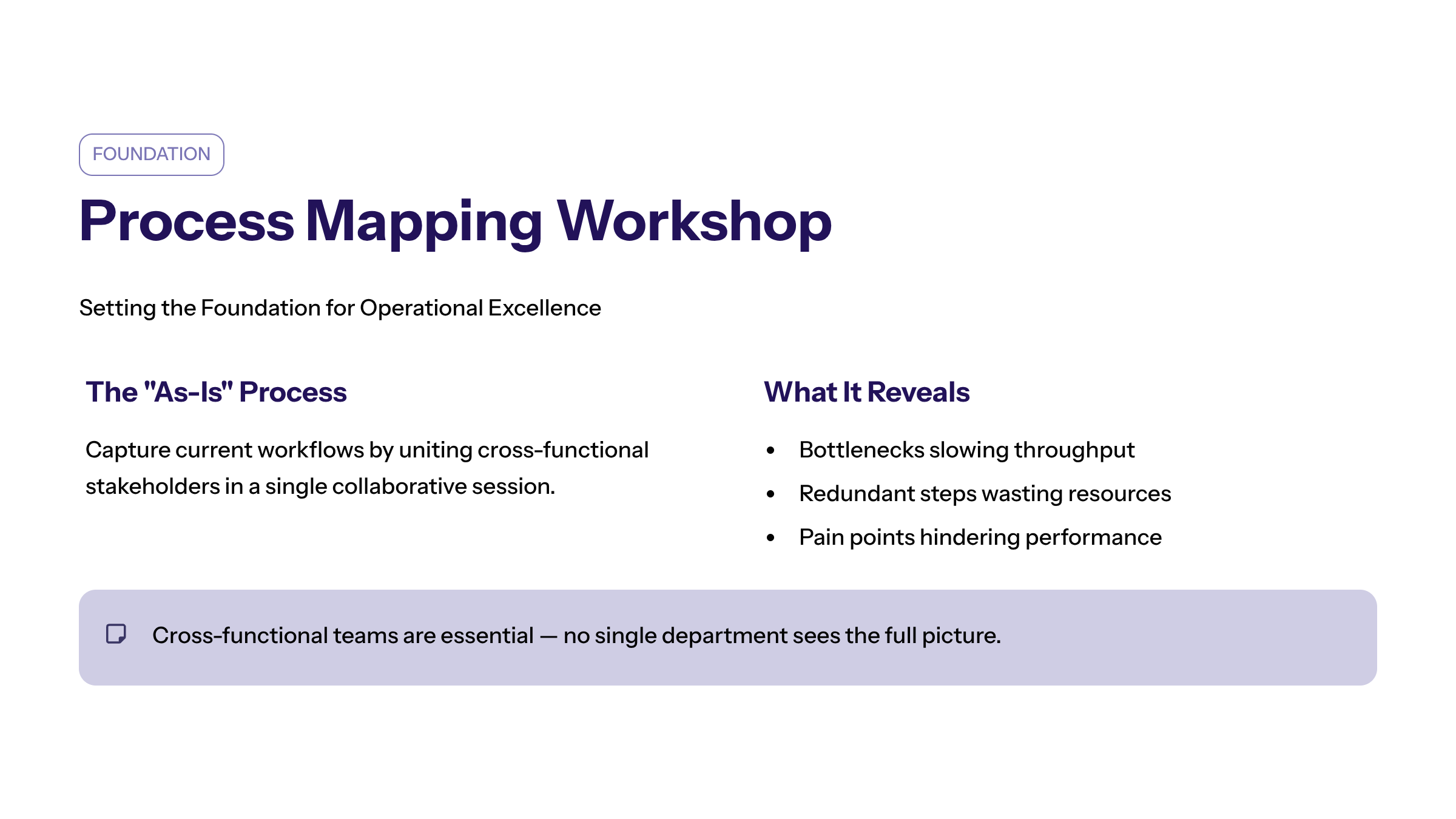
A process mapping workshop serves as a cornerstone for organizations aiming to understand and optimize their workflows. By bringing together stakeholders from different departments, this collaborative session captures the “as-is” process, revealing bottlenecks, redundancies, and pain points that hinder performance.
Importance of Cross-Functional Teams in Process Mapping
Cross-functional teams comprising business analysts, project managers, operations leaders, and frontline staff provide diverse insights into process components and constraints. For example, a recent digital transformation project at Deloitte Digital highlighted how involving IT, compliance, and customer service teams in process mapping workshops led to a more comprehensive understanding of operational challenges and regulatory constraints, enhancing solution design.
Preparing for the Workshop: Data and Participant Readiness
Effective workshops begin with thorough preparation. Gathering existing research, customer feedback, and performance metrics equips workshop participants with a shared understanding of current processes. Providing workshop attendees with pre-workshop materials, such as process documentation or value stream maps, primes them to engage actively. This preparation aligns with best practices outlined by the Nielsen Norman Group, emphasizing the value of homework assignments to maximize workshop productivity.
Workshop Activities: Capturing the Current State
The session typically starts with a high-level overview of the process scope and objectives, followed by collaborative mapping exercises. Using sticky notes or digital whiteboards, workshop participants outline each process step, decision point, and information flow. Facilitators guide the group to identify pain points and inefficiencies, encouraging open dialogue to surface hidden challenges. This visual and participatory approach ensures that all voices are heard and that the map reflects collective knowledge.
Diverse activities in workshops include a mix of individual reflection, small group work, and full group discussion. Establishing safe space ground rules encourages participation without judgment, ensuring honest feedback regarding current failures. These ground rules help create a conducive workshop environment that fosters open communication, collaboration, and creativity among workshop attendees.
“Process mapping workshops are most successful when they foster an environment of trust and open communication, enabling participants to candidly discuss constraints and opportunities,” notes Mark Keith, a process improvement consultant.
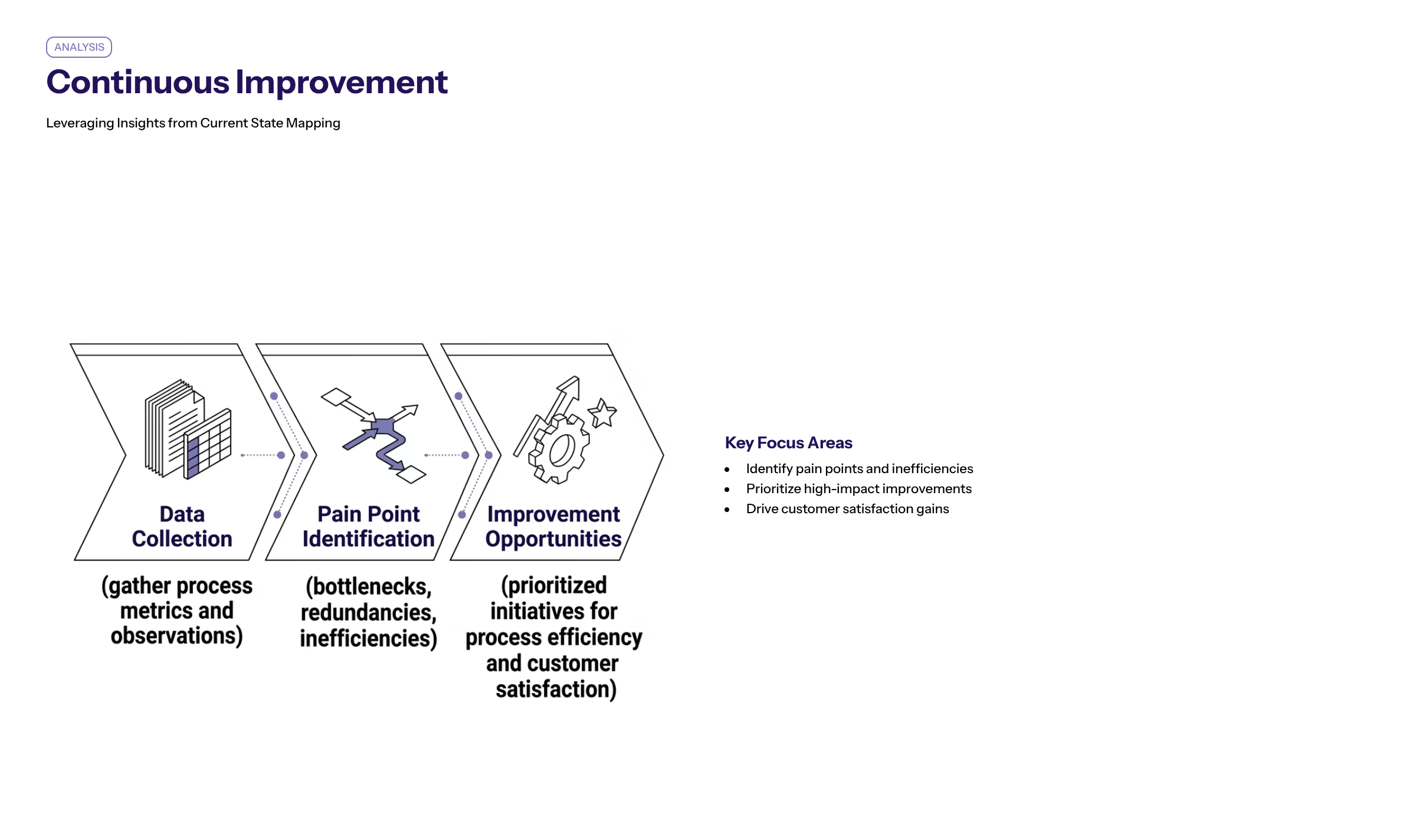
Continuous Improvement: Leveraging Insights from Current State Mapping
Once the current state is mapped, the focus shifts to analyzing the data to identify potential areas ripe for improvement. This step is critical for driving continuous improvement initiatives that enhance process efficiency and customer satisfaction.
Identifying Pain Points and Inefficiencies
Through facilitated discussions, workshop participants pinpoint bottlenecks, delays, and non-value-added activities. For instance, a value stream mapping exercise at a healthcare provider revealed excessive handoffs between departments, contributing to patient wait times. Recognizing such pain points enables targeted interventions.
Prioritization and Gap Analysis
Not all issues carry equal weight. Employing a structured approach with techniques such as dot voting or impact-effort matrices helps prioritize pain points based on their potential impact and feasibility of resolution. A gap analysis compares the current state against organizational goals or industry benchmarks, highlighting critical areas to address. Future state maps rely on improvements being defined through the observable gaps between the current and future state, making this analysis essential for effective planning.
Facilitating Participant Engagement and Ownership
Providing workshop participants with facilitation techniques and clear roles enhances engagement and accountability.
Encouraging cross-department collaboration breaks down silos and fosters a culture of shared responsibility for process improvements, a principle echoed in Lean Six Sigma methodologies. Stakeholder analysis involves identifying the key players or customer types to ensure diverse perspectives are considered.
Facilitating cross-functional dialogue through surveys, interviews, and direct observation is part of stakeholder engagement that enriches workshop outcomes.
Future State Map: Designing the Path Forward
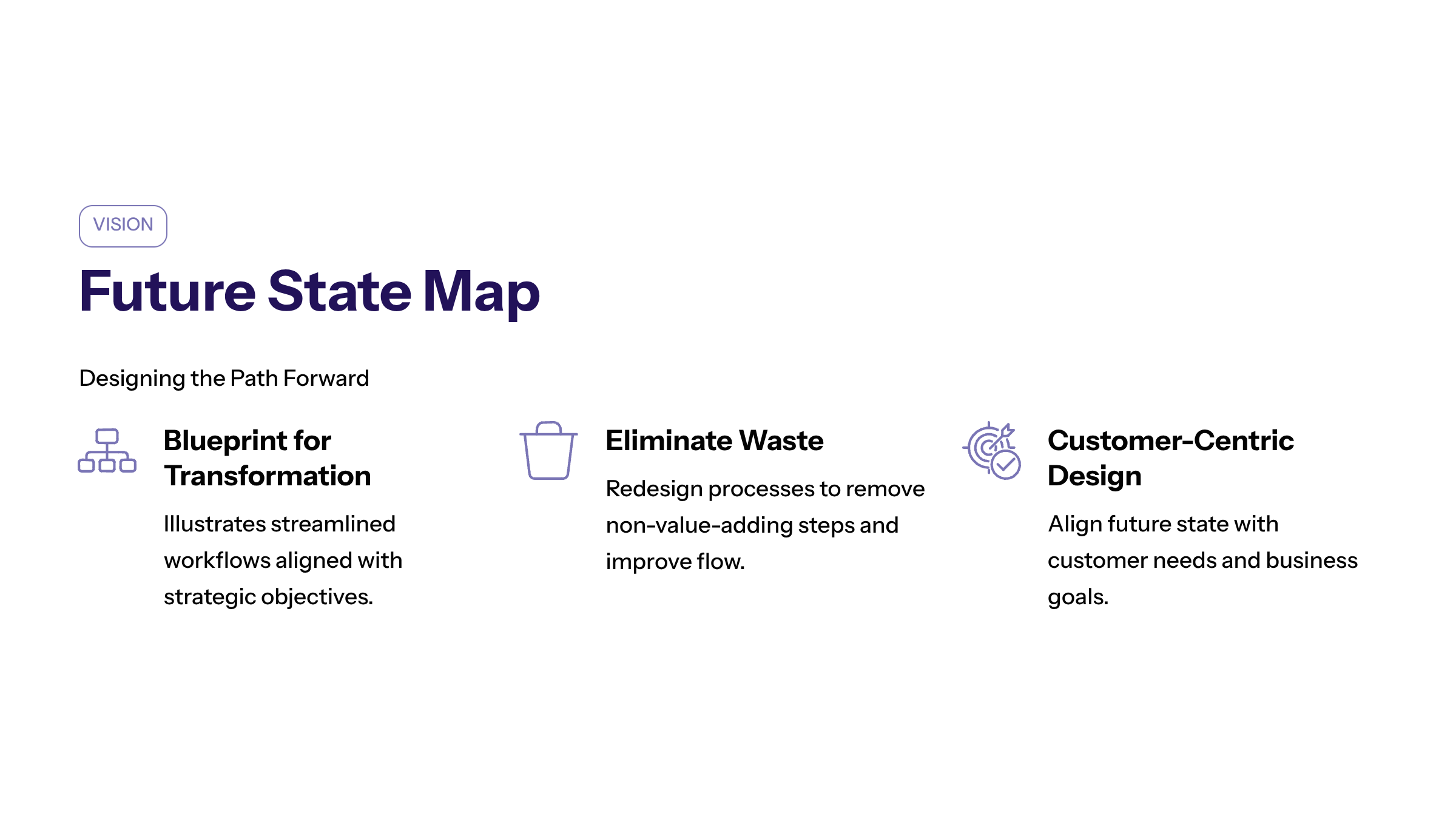
Building on insights from current state mapping, the future state map articulates an optimized vision of processes aligned with strategic objectives and customer needs.
Concept and Benefits of Future State Mapping
The future state map serves as a blueprint for transformation, illustrating streamlined workflows that eliminate waste and improve flow. It enables organizations to envision how technology, automation, or policy changes can alleviate current constraints. For example, integrating AI-powered automation in financial services has redefined process steps, reducing manual errors and accelerating cycle times.
Workshop Activities: Visioning and Solution Ideation
Participants brainstorm potential solutions, leveraging creative techniques such as design thinking or scenario planning. The goal is to generate ideas that address identified pain points without prematurely fixating on specific technologies or implementations. This ideation phase benefits from diverse perspectives, ensuring that solutions are both innovative and practical.
Aligning Future State with Performance Metrics
Defining key performance indicators (KPIs) linked to the future state map ensures measurable outcomes. Organizations like McKinsey emphasize the importance of establishing metrics early to track progress and sustain continuous improvement momentum.
Current State Mapping: Best Practices for Executive Workshops
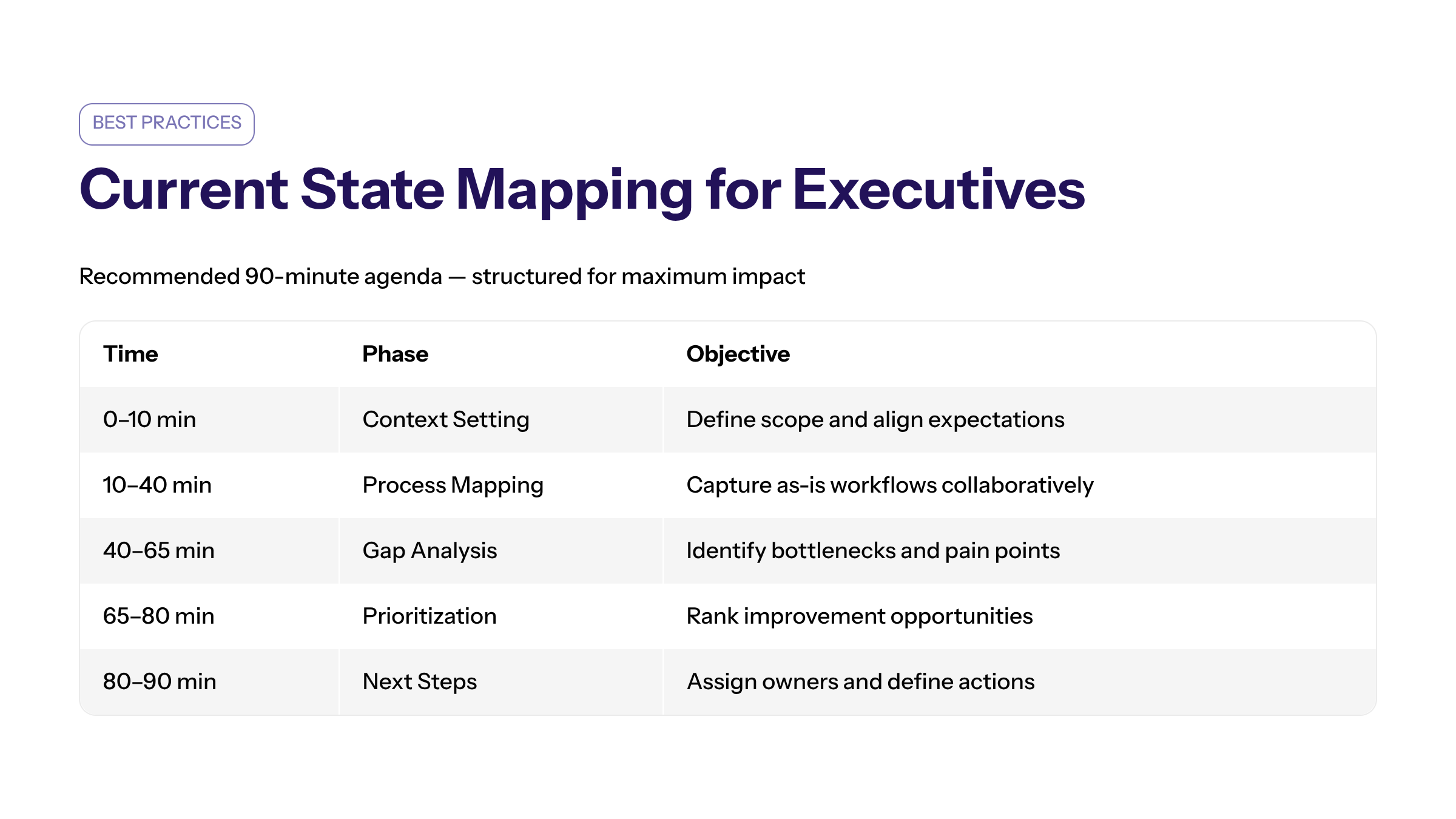
For executive audiences, time is limited, making a focused and structured agenda vital. The following table outlines a recommended 90-minute current state workshop agenda designed to maximize impact:
Time | Activity | Objective |
|---|---|---|
0-10 | Introduction and Objectives | Set context, define scope, and align expectations |
10-30 | Process Mapping Exercise | Capture detailed current state process steps |
30-45 | Identify Pain Points and Inefficiencies | Surface and discuss operational challenges |
45-60 | Prioritize Issues and Conduct Gap Analysis | Focus on critical areas for improvement |
60-80 | Brainstorm Potential Solutions | Generate ideas for future state improvements |
80-90 | Summary and Next Steps | Outline action plan and assign responsibilities |
Facilitating Effective Executive Workshops
Executives benefit from concise, data-driven discussions supported by visual aids and clear decision points. Facilitators should emphasize the strategic implications of identified issues and encourage alignment on priorities. Including real-world examples or benchmarking data enhances credibility and focus. Time-boxing allocates specific, realistic times for each section of the workshop with buffers to ensure smooth transitions and maintain engagement.
According to the Lean Enterprise Institute, “executive engagement in current state mapping workshops is crucial for driving meaningful change and securing necessary resources.”
Mapping Workshop: Integrating Techniques and Technologies
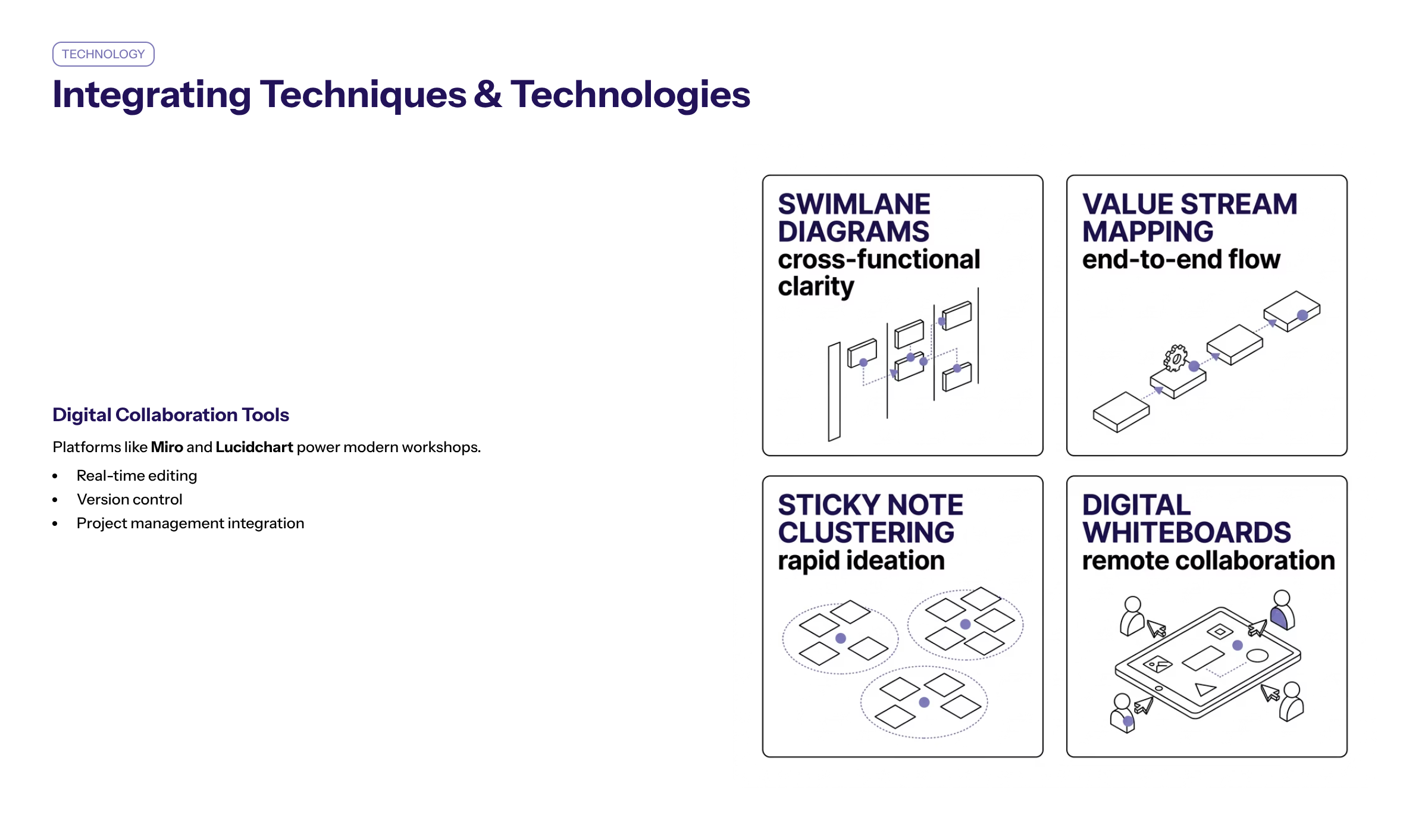
Modern mapping workshops increasingly leverage digital collaboration tools such as Miro or Lucidchart to facilitate remote or hybrid sessions. These platforms support real-time editing, version control, and integration with project management systems, enhancing workshop efficiency and documentation.
Techniques to Facilitate Mapping Workshops
Sticky Note Brainstorming: Encourages idea generation and flexibility.
Swimlane Diagrams: Clarify roles and handoffs between functions.
Value Stream Mapping: Visualize material and information flow to identify waste and inefficiencies within the value stream.
Dot Voting: Democratize prioritization of pain points and ideas.
Addressing Constraints and Industry-Specific Considerations
Different industries face unique constraints, such as regulatory compliance in healthcare (HIPAA) or financial services (PCI-DSS, GDPR). Workshops must incorporate these components to ensure feasible and compliant future state designs. For example, Cognativ’s AI-First architecture consulting integrates compliance considerations early in process redesigns to mitigate risk.
Driving Continuous Improvement through Structured Workshops
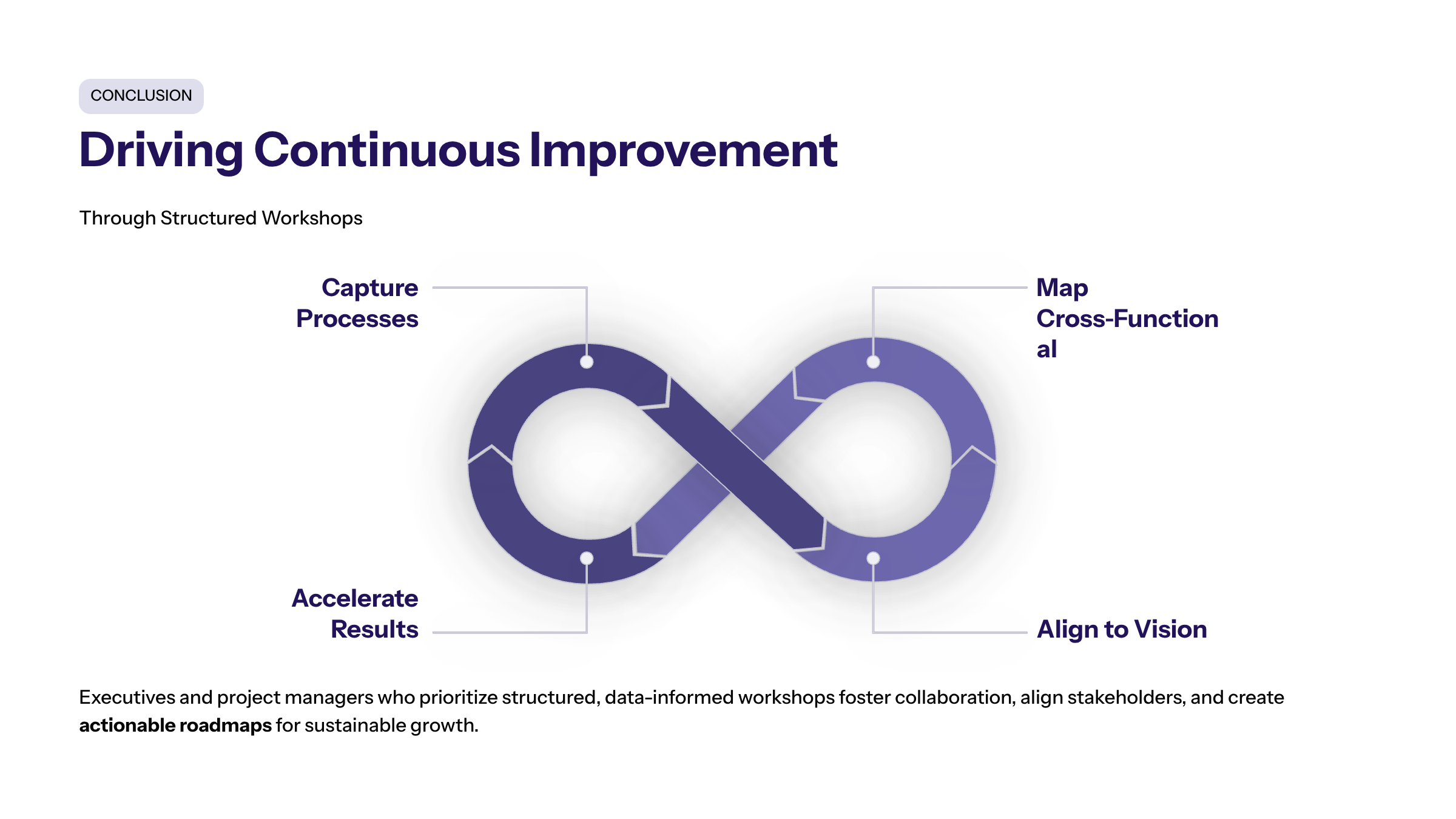
A well-crafted current state workshop agenda is a powerful tool for organizations seeking operational excellence and sustainable growth. By systematically capturing current processes, engaging cross-functional teams, and linking insights to future state visioning, businesses can accelerate continuous improvement initiatives that deliver measurable results.
Executives and project managers should prioritize a structured approach with data-informed workshops that foster collaboration, align stakeholders, and create actionable roadmaps. Embracing modern facilitation techniques and technologies further enhances workshop effectiveness, ensuring organizations remain agile and competitive in an evolving landscape.
By adopting these expert strategies, organizations can transform current state workshops from routine exercises into strategic catalysts for innovation and efficiency.