Digital Transformation Roadmap Template for Success
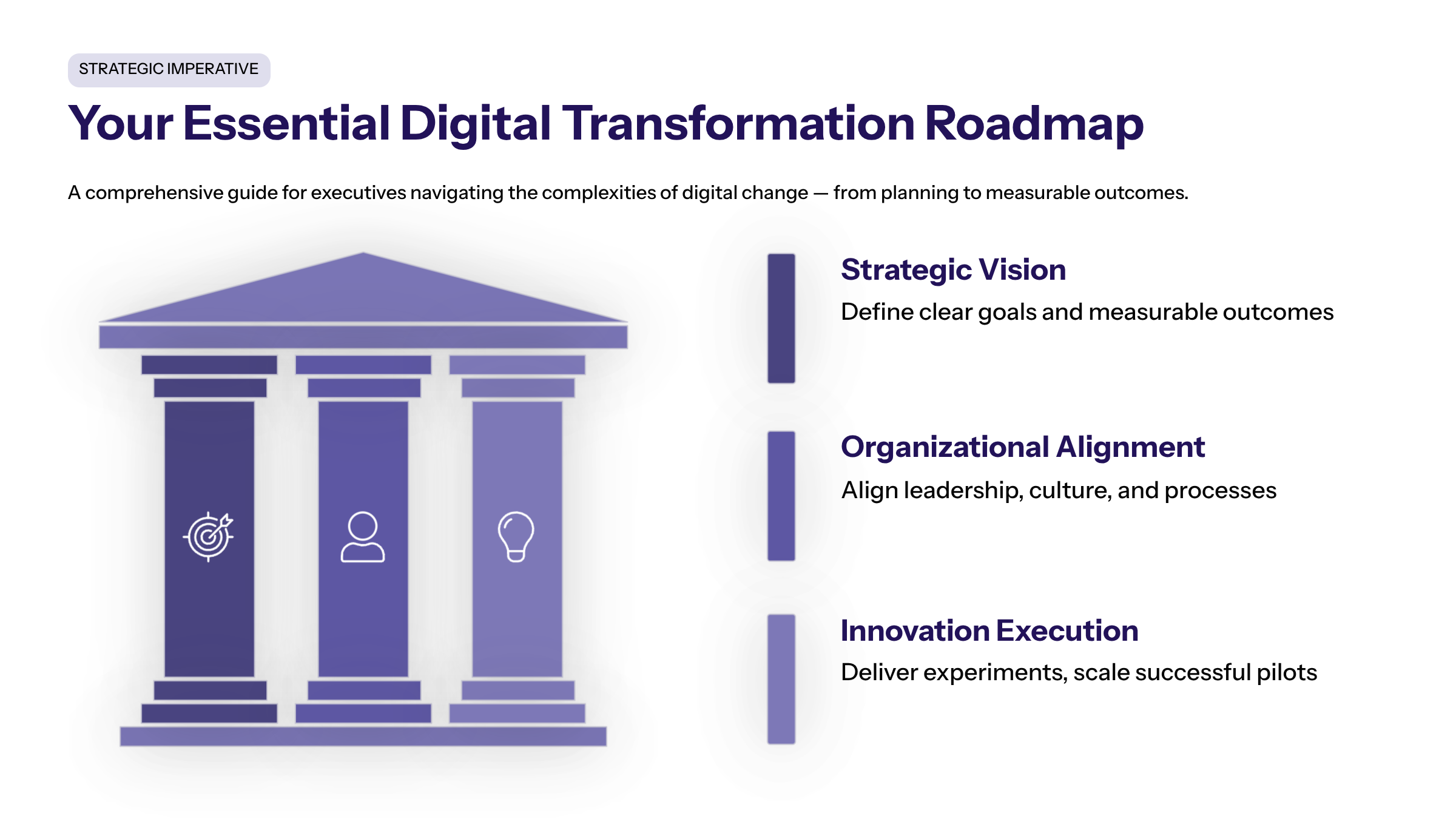
Digital transformation is no longer a choice but a strategic imperative for organizations aiming to thrive in today’s rapidly evolving digital economy. This article provides a comprehensive digital transformation roadmap template designed to guide executives and decision-makers through the complexities of planning, executing, and sustaining digital initiatives that deliver measurable business outcomes.
We explore how a well-structured roadmap aligns strategic vision with actionable goals, ensures organizational alignment, and drives innovation across different departments.
By integrating real-world examples, cutting-edge technologies such as machine learning, and proven frameworks, this analysis equips leaders with the insights needed to navigate their digital transformation journey effectively.
Key Takeaways
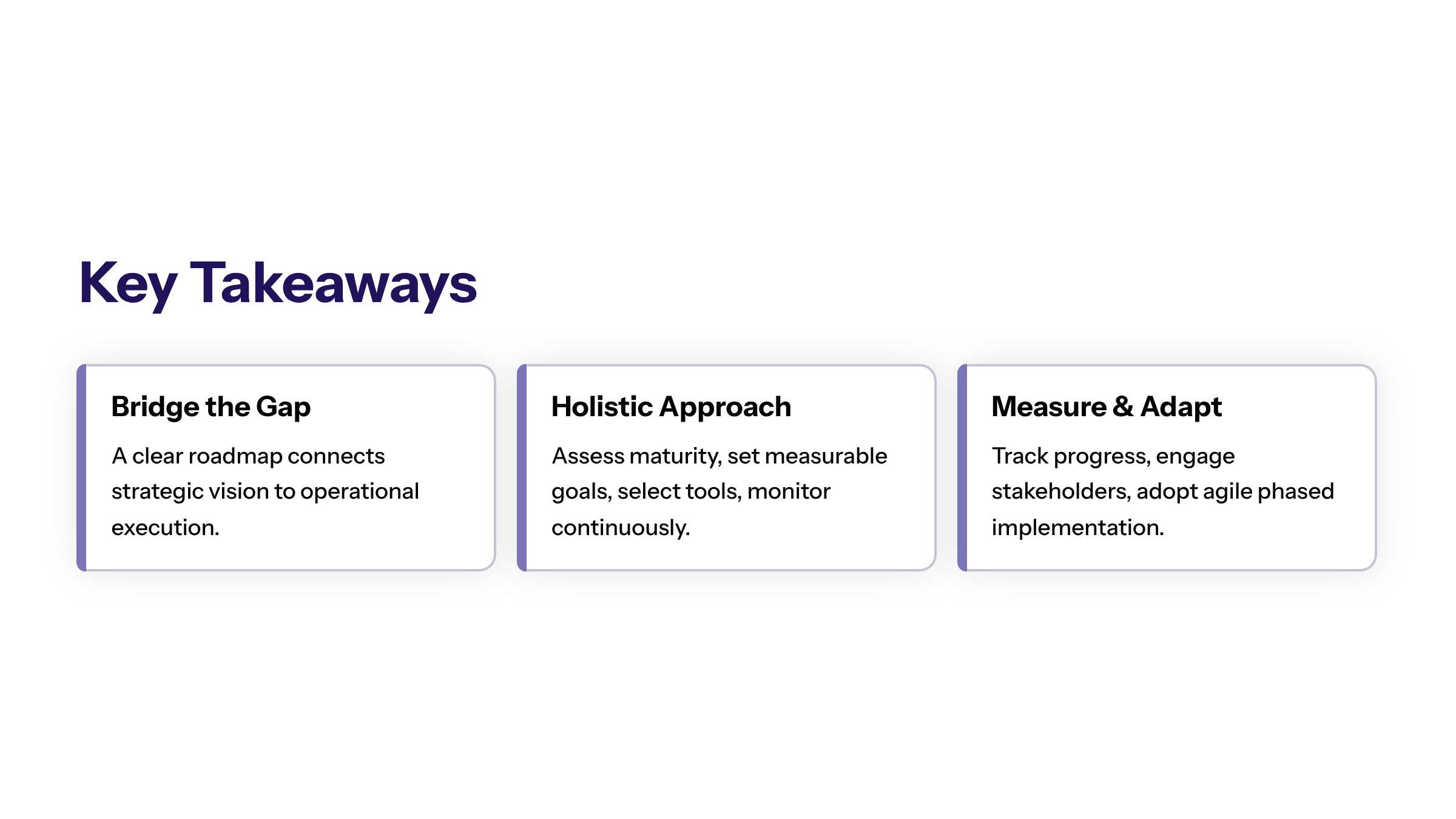
A clear digital transformation roadmap is essential for bridging the gap between strategic vision and operational execution, as it outlines strategic initiatives, milestones, and technology adoption strategies, enabling organizations to remain competitive and customer-centric.
Successful digital transformation requires a holistic approach encompassing current digital maturity assessment, setting measurable objectives to achieve the desired outcome, selecting the right tools, and continuous monitoring.
Organizations must measure success by tracking progress against defined goals, engaging stakeholders across different departments, and adopting an agile, phased implementation strategy to improve the likelihood of achieving desired outcomes and long-term value.
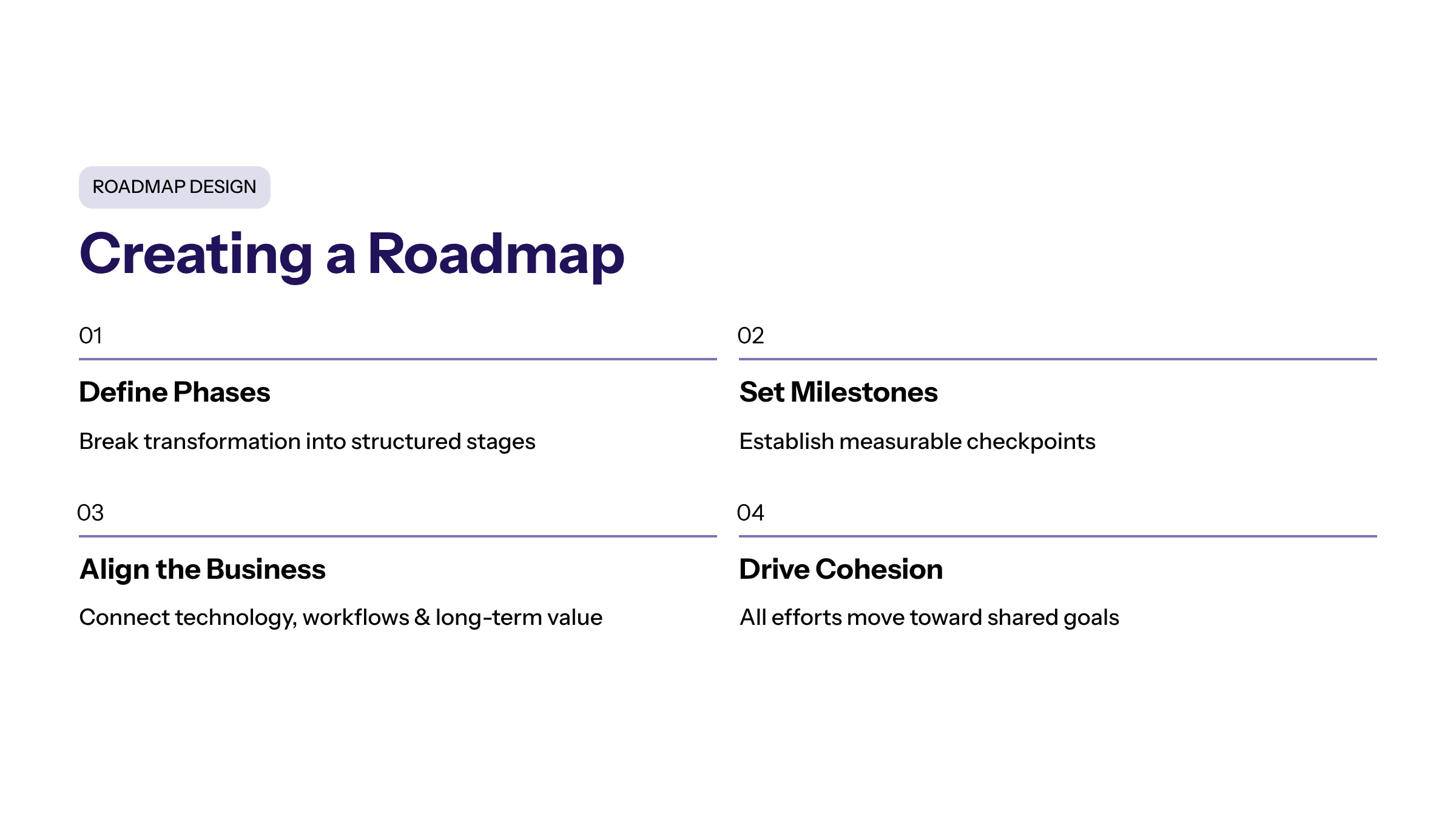
The roadmap should create alignment across the business by breaking down the transformation into defined phases, with clear objectives, responsible teams, and measurable outcomes.
Investing 15–20% of the transformation budget in training is crucial for success in digital transformation, ensuring employees are equipped to leverage new tools and processes effectively.
Constant communication is vital to keep stakeholders informed and engaged throughout the digital transformation process, fostering transparency and collaboration.
Best practices include starting with quick wins to build momentum, ensuring leadership commitment to drive change, fostering open communication, adopting an agile mindset to remain flexible, and prioritizing user experience to meet customer expectations.

Introduction to Digital Transformation
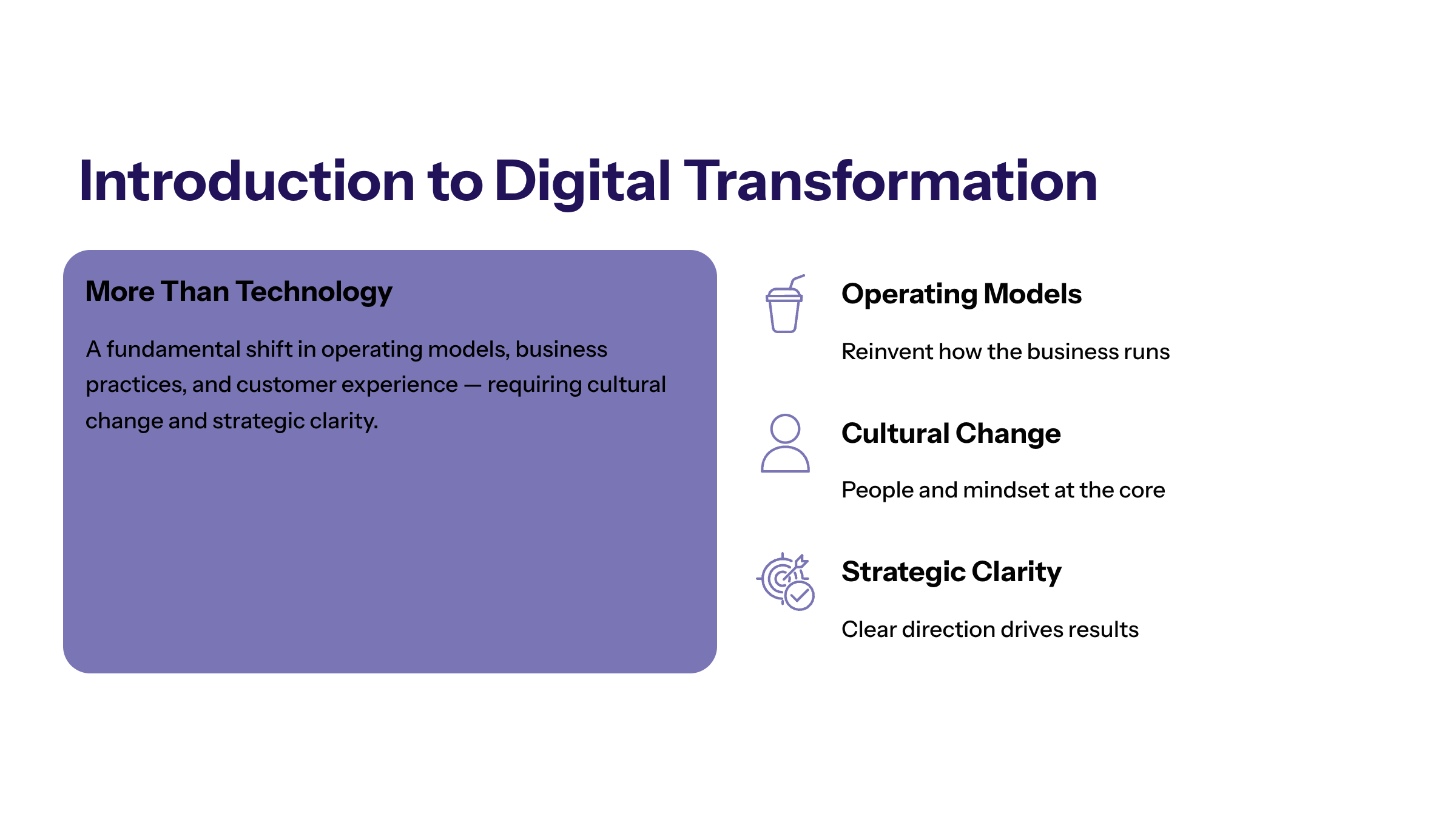
Digital transformation represents a fundamental shift in how organizations leverage digital technologies to transform their operating models, reinvent business models, optimize internal processes, and enhance customer experience. It involves more than just technology adoption; it requires cultural change, operational redesign, and strategic clarity.
Digital transformation is a critical change in how an organization operates, integrating digital tools and technologies to revolutionize business practices.
Organizations like Nike and Coca-Cola have demonstrated how investing in digital-first supply chains and employee upskilling can create sustainable competitive advantages and operational efficiencies.
The Strategic Importance of a Digital Transformation Roadmap
A digital transformation roadmap serves as a strategic roadmap and a clear roadmap that translates high-level digital transformation strategy into a clear, actionable plan. It outlines key initiatives, milestones, and resource allocation, providing a structured pathway to achieve business goals.
A digital transformation roadmap is a structured, goal-oriented plan that reflects how an organization operates and where it aims to go.
Unlike a strategy that defines the ‘why’ and ‘what,’ the roadmap focuses on the ‘how’ and ‘when,’ ensuring that transformation efforts are coordinated, measurable, and aligned with organizational priorities.
Governance and accountability are key elements of an effective roadmap, including defined ownership structures and decision rights to prevent orphan projects and ensure clear responsibility throughout the transformation journey.
Defining Digital Transformation Strategy
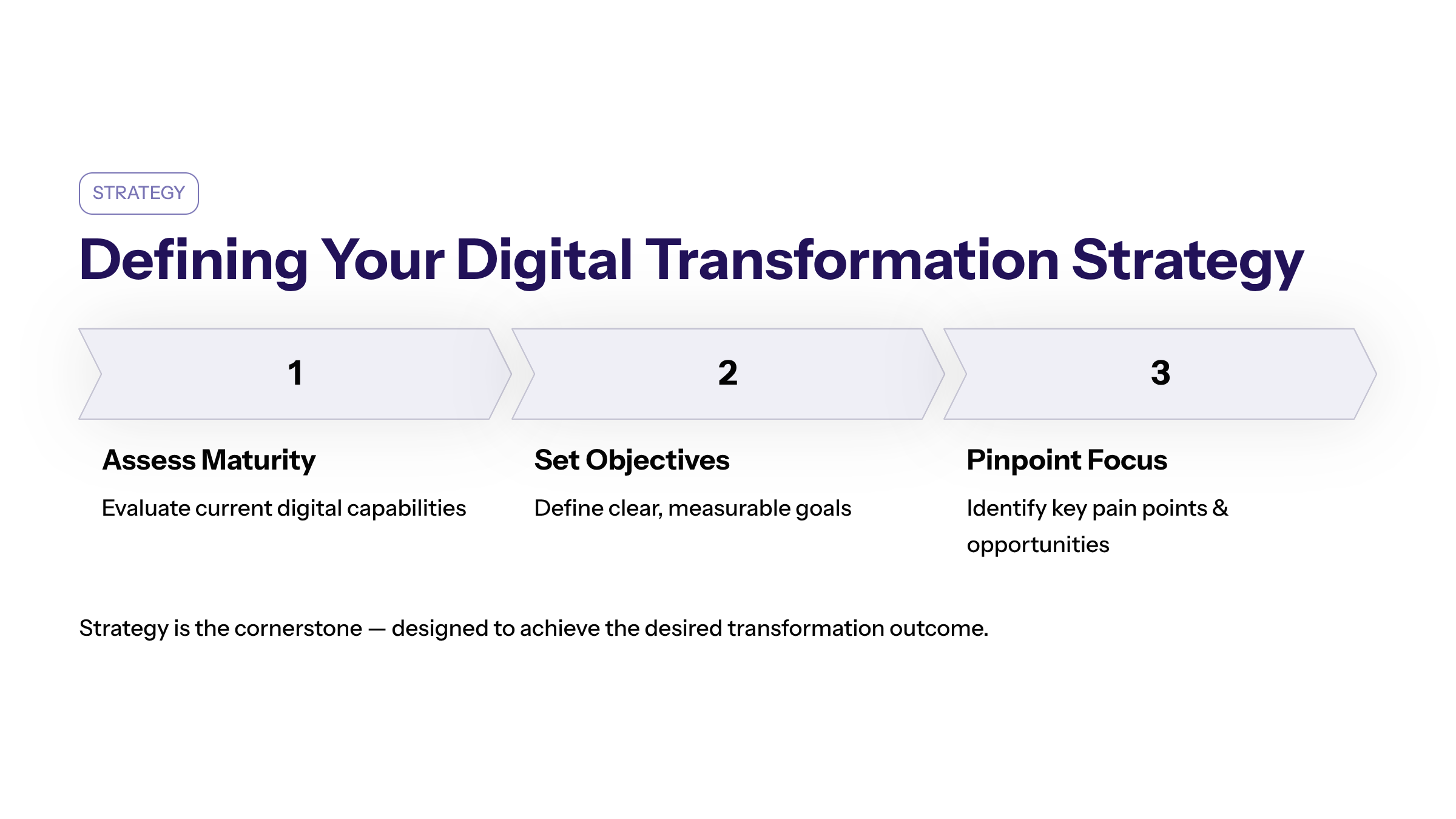
Developing a robust digital transformation strategy is the cornerstone of any successful roadmap. The strategy should be designed to achieve the desired outcome of the transformation by setting clear, measurable goals that address key pain points.
It involves assessing the current digital maturity of the organization, identifying strategic objectives, and pinpointing focus areas for improvement. Vision and strategic objectives must link digital goals to measurable business outcomes, such as a 15% reduction in operating costs.
Vision and goals should define the purpose of the transformation and set SMART goals, such as improving customer experience or efficiency. This strategic clarity ensures that digital initiatives are purpose-driven and aligned with long-term business outcomes.
Before setting goals, organizations should assess digital maturity to establish a realistic readiness baseline, enabling them to set achievable targets and prioritize initiatives effectively.
A gap analysis identifies the difference between the current state and the envisioned future state, helping to pinpoint areas requiring change and focus efforts accordingly.
Prioritized initiatives should consist of a ranked backlog of 5–10 projects, balancing quick wins with long-term foundational bets to maintain momentum while building sustainable capabilities.
Success metrics for digital transformation include leading indicators like adoption rates and lagging indicators such as ROI and customer satisfaction, enabling organizations to measure progress comprehensively.
Organizations should embed zero-trust cybersecurity frameworks into their digital transformation roadmaps as 81% of organizations plan to do so by 2026, ensuring security is integral to the transformation.
Assessing Current Digital Maturity
The assessment phase of digital transformation is critical for understanding where an organization stands in its digital journey. This phase comprises an audit of existing technology, processes, data, skills, and culture. Current state assessments should provide a detailed audit of existing digital maturity and legacy systems to identify gaps. Tools like Deloitte’s Digital Maturity Index provide frameworks to evaluate strategic and operational dimensions, helping to identify gaps and prioritize initiatives.
Data management tools provide insights into customer behavior, operational performance, and overall organizational health, supporting informed decision-making during the assessment phase.
Setting Clear Digital Transformation Objectives
Objectives should be SMART—Specific, Measurable, Achievable, Relevant, and Time-bound—to facilitate effective tracking and accountability. Digital transformation objectives should be clearly defined from the outset to avoid wasted investments. Common objectives include enhancing customer engagement, improving operational efficiency, and fostering innovation. Establishing key performance indicators (KPIs) linked to these objectives enables organizations to measure progress, measure success, and adjust strategies dynamically.
Identifying Focus Areas
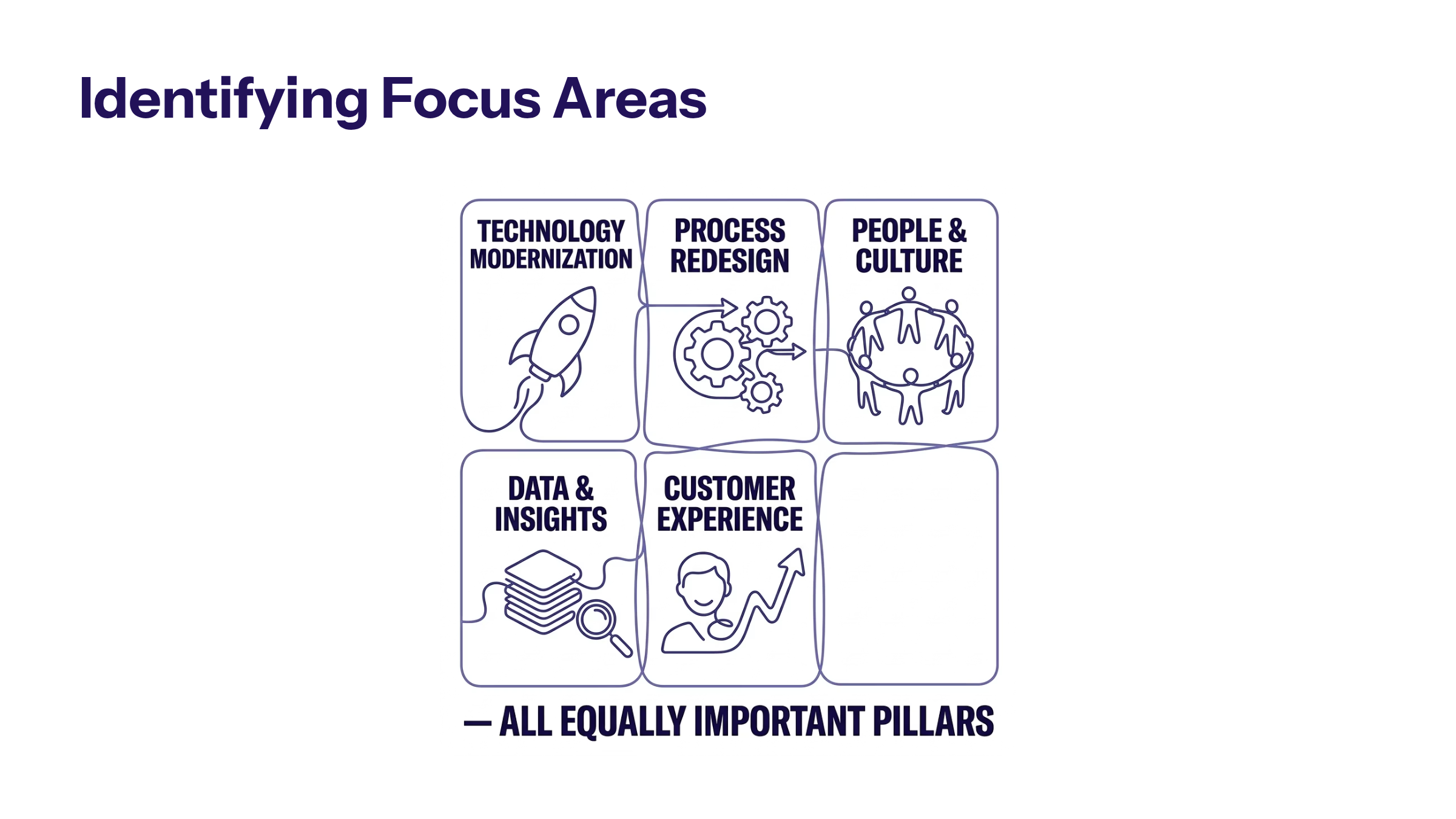
Selecting the right focus areas is essential to ensure that transformation efforts are moving in the right direction and address the most impactful aspects of the business.
The key pillars of focus in a digital transformation roadmap include technology, process redesign, people and culture, data and insights, and customer experience. These areas often include customer experience, data analytics, process automation, and technology modernization.
Understanding Customer Needs
A successful digital transformation roadmap begins with a deep understanding of customer needs. In today’s digital landscape, customers interact with businesses across multiple channels and expect seamless, personalized experiences at every touchpoint. To meet these expectations, organizations must analyze customer interactions, gather actionable feedback, and leverage customer data to identify pain points and opportunities for improvement.
By placing customer needs at the heart of your digital transformation strategy, you ensure that every digital initiative is designed to enhance the customer experience and deliver tangible business outcomes. This customer-centric approach not only drives higher satisfaction and loyalty but also informs smarter resource allocation and prioritization within your transformation roadmap.
For example, analyzing customer data can reveal which digital services or features are most valued, guiding investment in the right tools and technologies.
Incorporating customer insights into your digital transformation plan enables your organization to make informed decisions, adapt quickly to changing preferences, and create solutions that truly resonate with your target audience.
Ultimately, a transformation roadmap that prioritizes customer needs empowers your business to deliver exceptional experiences, foster long-term relationships, and achieve strategic objectives in a competitive digital marketplace.
Customer Experience as a Central Pillar
Incorporating customer needs and expectations into the roadmap drives innovation and competitive differentiation. Leveraging customer data and feedback loops helps tailor digital initiatives that improve interactions, response times, and personalization.
Leveraging Data and Machine Learning
Data-driven decision-making is a critical enabler of digital transformation. Integrating machine learning and advanced analytics can uncover insights that optimize processes and predict business outcomes, as seen in organizations like United Airlines, which used IoT and AI to create intelligent airport operations.
Driving Innovation
Innovation is the engine that propels digital transformation forward, enabling organizations to adapt, grow, and lead in an ever-evolving digital economy. A robust digital transformation roadmap outlines how your organization will harness new technologies—such as machine learning, artificial intelligence, and the Internet of Things—to create value, streamline internal processes, and reimagine business models.
To drive innovation, your digital transformation strategy should identify key initiatives that leverage digital technologies to improve operational efficiency, enhance customer experience, and unlock new revenue streams. This involves setting clear objectives, defining key performance indicators, and establishing measurable outcomes that track progress and ensure alignment with business goals.
Fostering a culture of experimentation and continuous learning is essential for innovation to thrive. Encourage teams to pilot new digital initiatives, learn from customer data, and iterate quickly based on real-world feedback. By embedding innovation into your transformation roadmap, you create a clear direction for your organization—one that is agile, responsive, and focused on delivering long-term value.
Moreover, driving innovation requires careful planning and strategic decision-making. Assess your current digital maturity, identify areas for improvement, and allocate resources to the initiatives that will have the greatest impact on customer engagement and business outcomes. By doing so, you position your organization to achieve a sustainable competitive advantage, improve customer experience, and realize the full potential of your digital transformation journey.
In summary, a digital transformation roadmap that prioritizes innovation ensures your organization remains at the forefront of industry trends, meets evolving customer needs, and achieves measurable business success. By leveraging the right tools, focusing on key milestones, and maintaining a clear vision, you can drive innovation that transforms your business and delivers lasting results.
Creating a Roadmap
A well-constructed digital transformation roadmap template keeps the organization aligned throughout the transformation, providing clear direction for digital initiatives and ensuring all efforts move cohesively toward shared goals. Successful digital transformations require alignment across the business to connect efforts to technology, workflows, and long-term business value. It breaks down transformation into phases with defined milestones and measurable outcomes.
Structuring the Roadmap in Phases
Phased implementation mitigates risk and allows for iterative learning. Typical phases include:
Foundation: Assessing current state and defining vision.
Build: Developing and piloting digital initiatives.
Scale and Optimize: Rolling out successful pilots and refining processes.
An agile mindset treats the roadmap as a living document that requires quarterly reviews and adjustments, allowing organizations to remain flexible and responsive to new information and changing conditions.
Resource Allocation and Organizational Alignment
Effective resource planning, including budgeting for technology and training, is vital. Investing 15–20% of the transformation budget in training ensures employees are equipped to leverage new tools and processes effectively. For example, Coca-Cola’s Digital Academy exemplifies how investing in employee development supports transformation success.
Ensuring cross-departmental collaboration fosters organizational alignment and reduces dependency on siloed efforts. Inadequate collaboration among team members can derail even the most promising digital transformation strategies, making collaboration a critical success factor.
Communication should be constant to keep stakeholders informed and engaged throughout the digital transformation process, fostering transparency and minimizing resistance.
Selecting the Right Tools
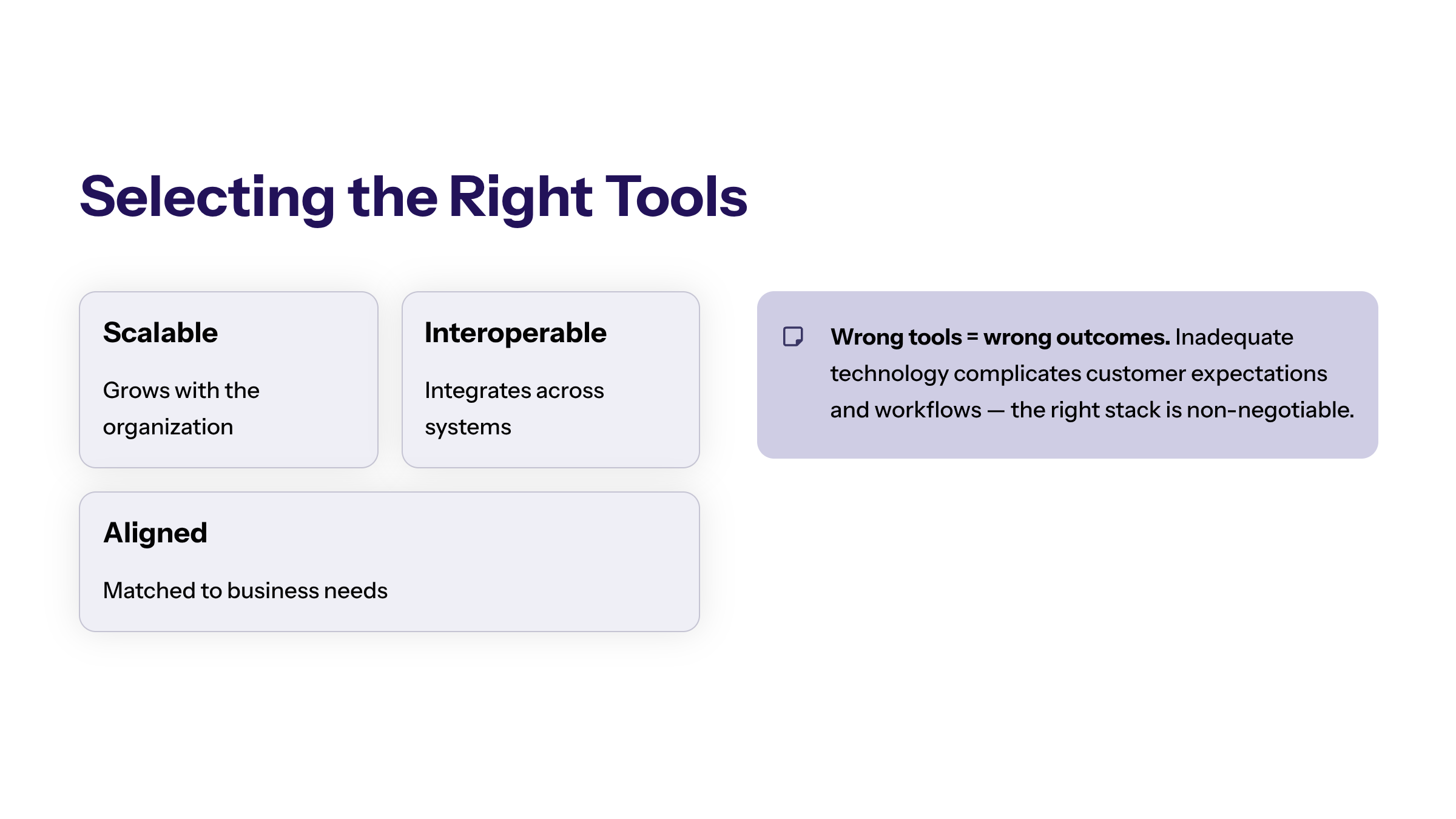
Choosing appropriate digital technologies is critical to achieving transformation objectives. Tools should be scalable, interoperable, and aligned with business needs.
Using inadequate tools can complicate the management of customer expectations and workflows during digital transformation, underscoring the importance of selecting the right technology stack.
Data Management and Analytics Platforms
Platforms such as IBM Watson and Google Cloud AI provide advanced analytics and predictive capabilities that inform decision-making and roadmap refinement.
Roadmapping and Change Management Tools
Tools like Aha! and Smartsheet help visualize and manage transformation projects, while change management platforms facilitate communication and stakeholder engagement, essential for overcoming resistance.
Implementing Digital Initiatives
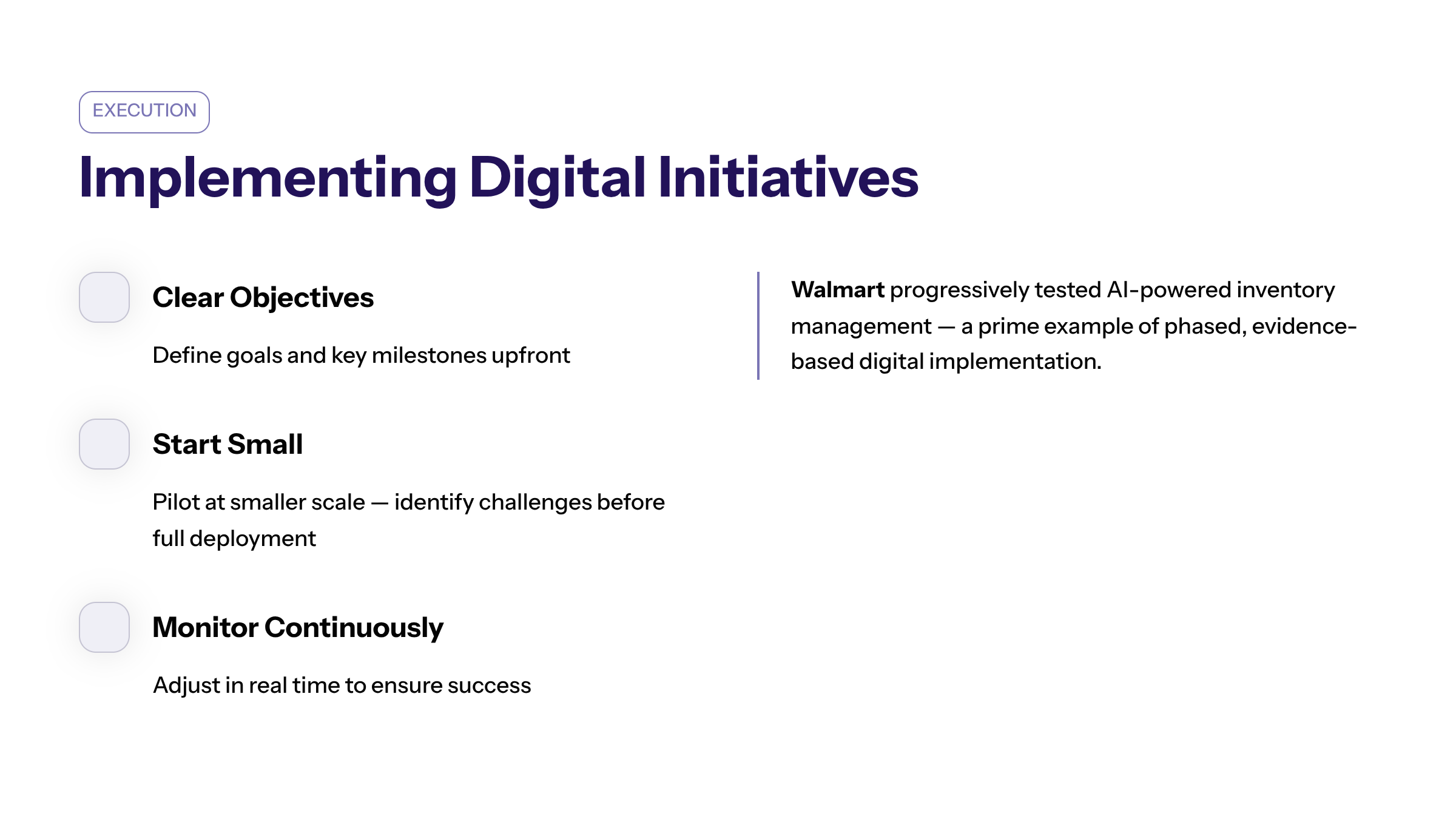
Digital initiatives must be executed with clear objectives, key milestones, and continuous monitoring to ensure success.
Pilot Testing and Iteration
Launching initiatives on a smaller scale allows organizations to identify challenges and make necessary adjustments before full deployment. Walmart’s progressive testing of AI-powered inventory management is a prime example.
Monitoring Progress and Measuring Success
Using KPIs and feedback loops enables organizations to track outcomes and drive continuous improvement. Regular reviews ensure initiatives remain aligned with strategic goals and customer needs.
In 2026, an effective digital transformation roadmap should focus on proving ROI and orchestrating emerging technologies like AI to maximize value and maintain competitive advantage.
Overcoming Challenges
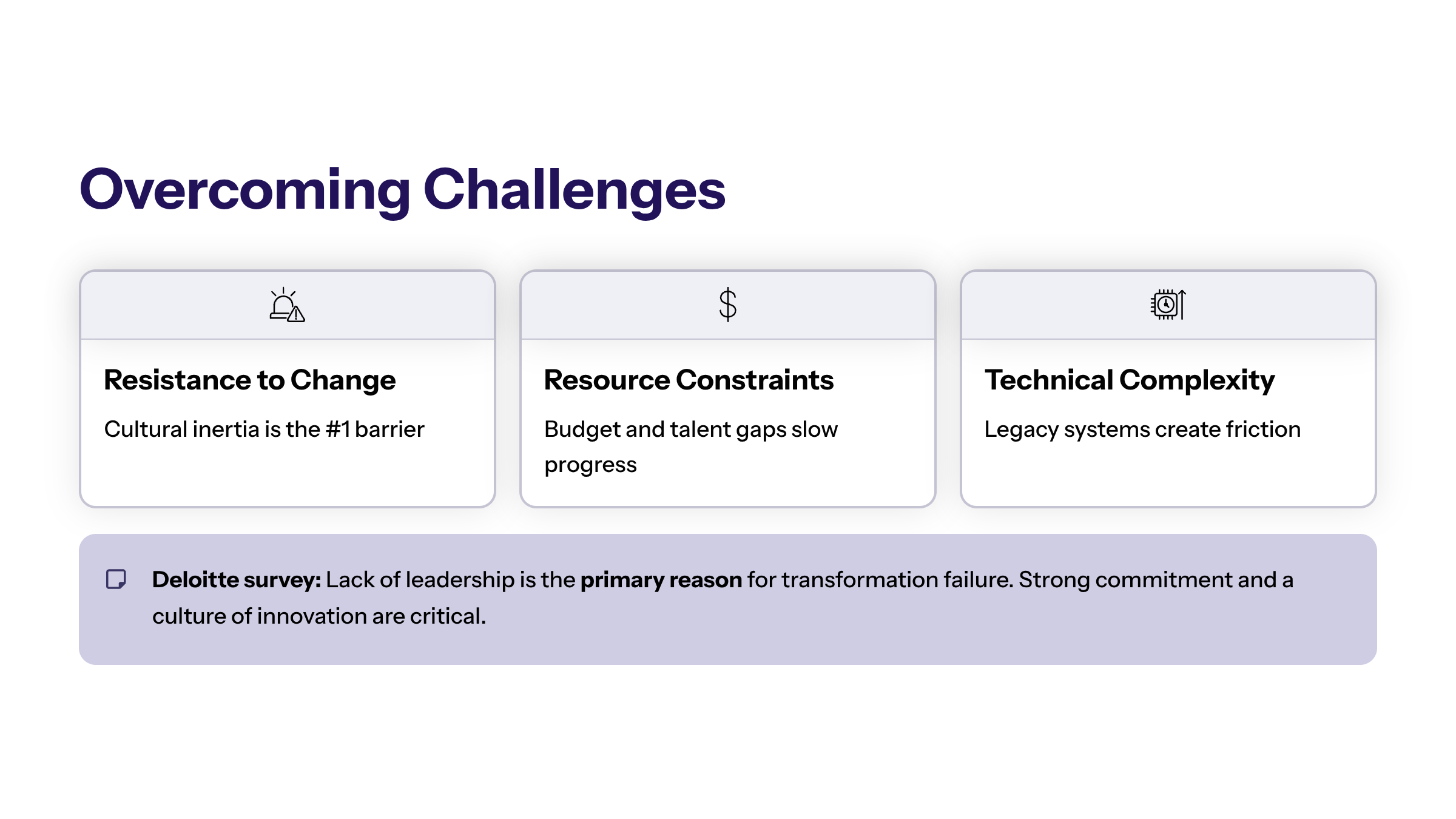
Digital transformation journeys often face obstacles such as resistance to change, resource constraints, and technical complexities.
Leadership and Cultural Change
Strong leadership commitment and fostering a culture of innovation are critical success factors. According to a Deloitte survey, lack of leadership is a primary reason for transformation failure.
Communication and Collaboration
Maintaining open communication channels and encouraging collaboration across departments prevent misalignment and build momentum.
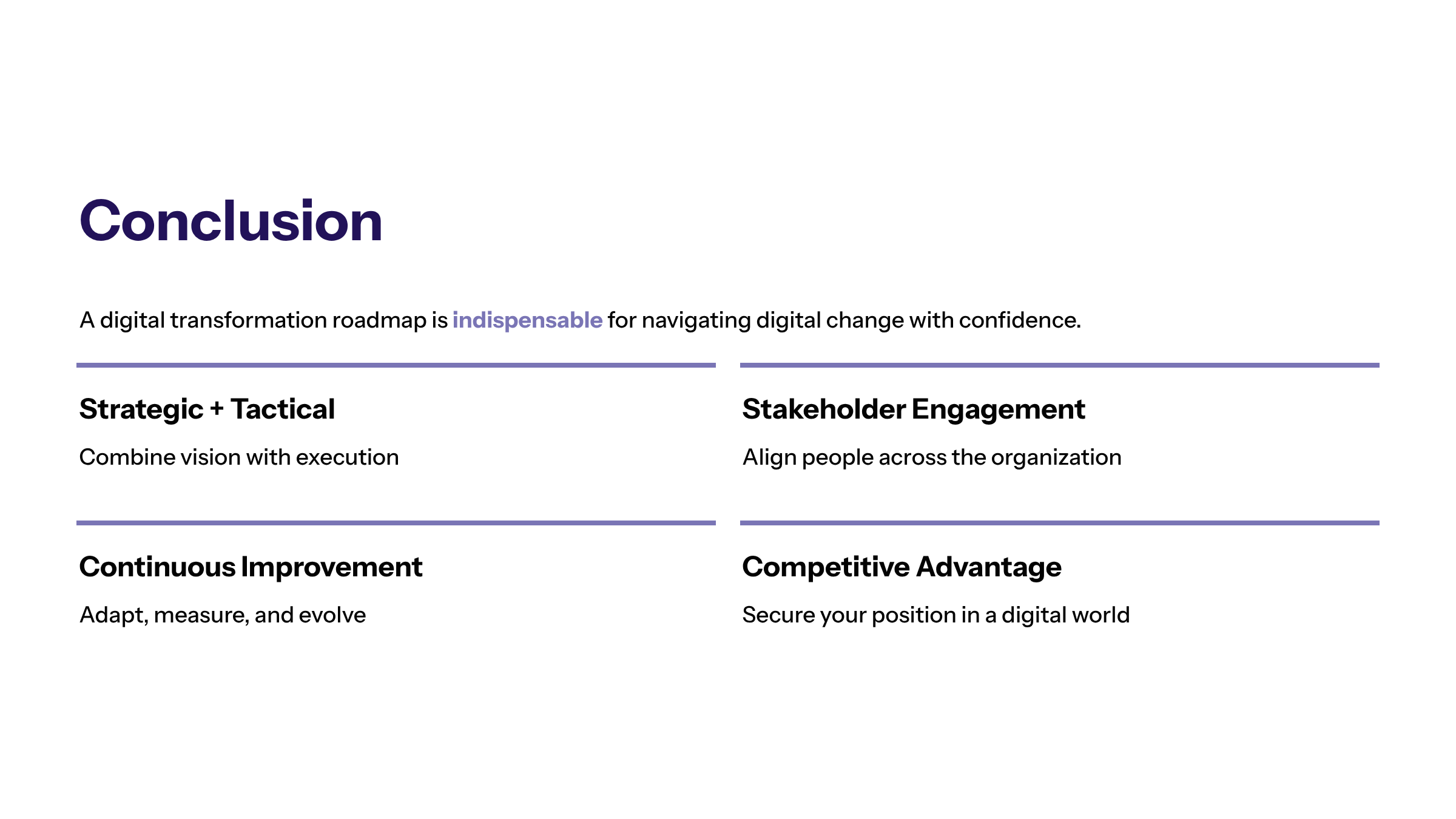
Conclusion
A digital transformation roadmap is indispensable for guiding organizations through the complexities of digital change. By combining strategic vision with tactical execution, engaging stakeholders, and adopting a continuous improvement mindset, organizations can achieve meaningful business outcomes, enhance customer experience, and secure competitive advantage in an increasingly digital world. The insights and frameworks discussed here provide executives with a practical, expert guide to crafting and implementing their digital transformation roadmap template for success.