Essential Scaling Checklist for Business Success
Scaling a business is a multifaceted challenge that demands strategic planning, operational excellence, and a keen understanding of growth dynamics.
This article provides an analytical, expert-driven scaling checklist designed for executives and business owners aiming to scale sustainably and effectively. It synthesizes critical insights into growth strategy, team building, financial management, operational optimization, brand development, partnerships, and agility, offering a comprehensive framework to navigate the complexities of scaling.
Key Takeaways
Sustainable scaling requires a clear growth strategy aligned with core values, supported by robust financial planning and operational efficiency.
Building the right team and maintaining company culture are pivotal to managing complexity and driving business growth.
Continuous measurement through key performance indicators (KPIs) and agile adaptation ensures long-term success in a dynamic market environment.
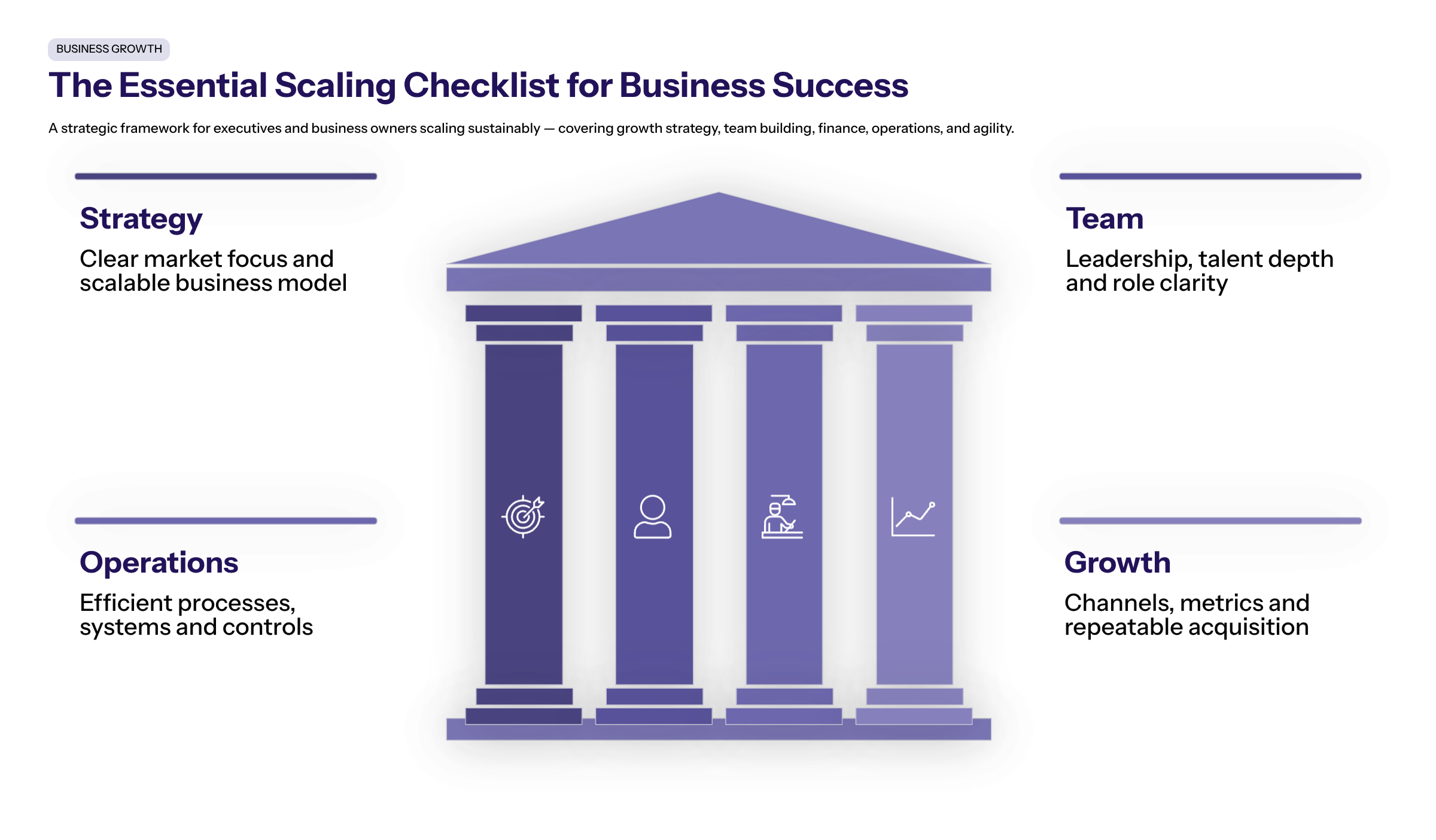
Introduction to Scaling
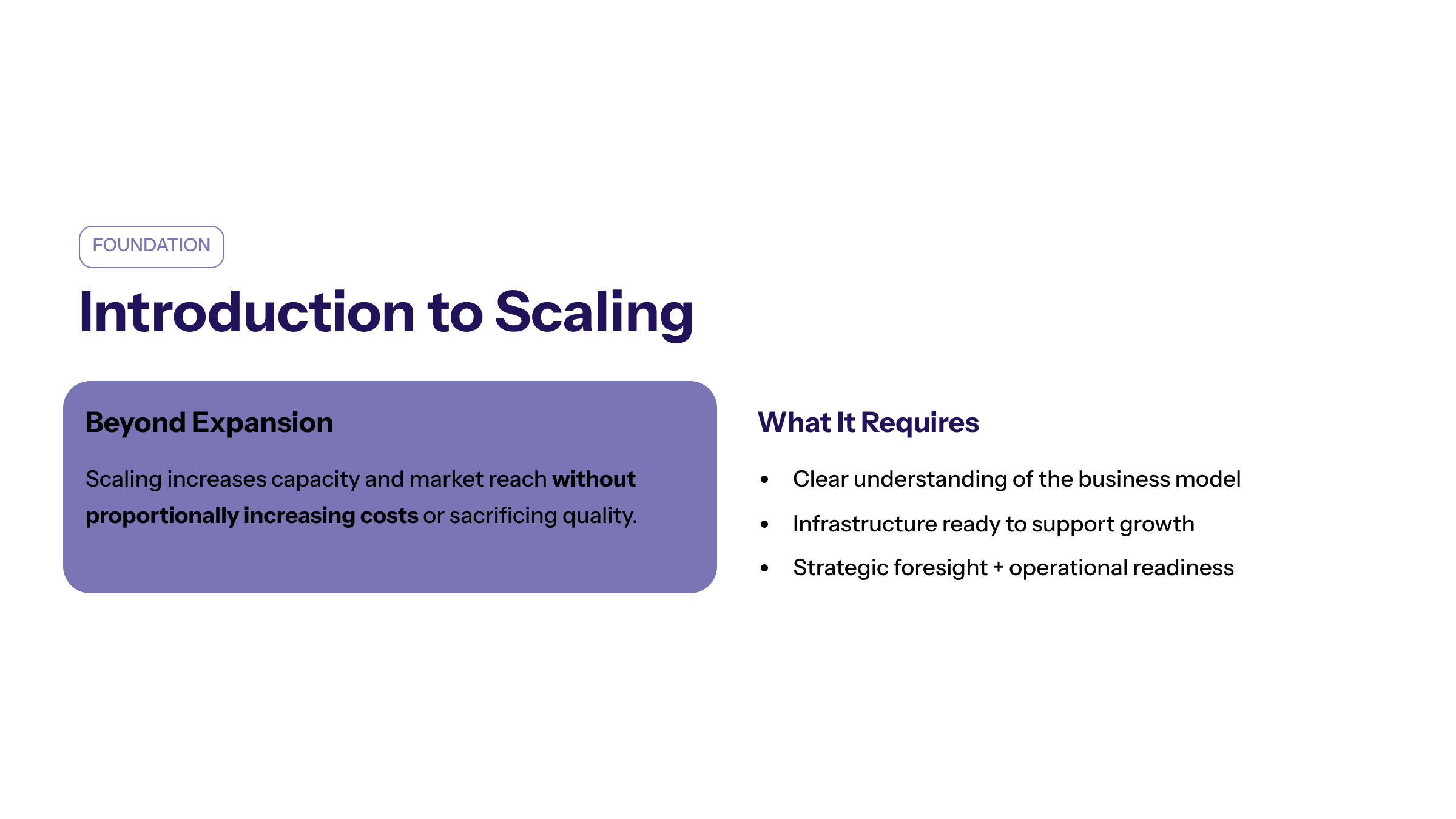
Scaling a business transcends mere expansion; it involves a calculated approach to increase capacity and market reach without proportionally increasing costs or sacrificing quality. Business owners must embrace a growth plan that integrates strategic foresight with operational readiness, ensuring that growth is not only achievable but sustainable.
This journey of scaling starts with a clear understanding of the business model and infrastructure needed to support expansion. For example, standardizing processes through SOPs and automating core tasks become incredibly valuable as they ensure quality consistency and reduce operational errors.
Growth invariably introduces complexity—more customers, larger teams, and heightened operational demands.
Without effective systems, support structures, and the right people, scaling efforts can quickly become chaotic, undermining the very success they seek to achieve. Therefore, understanding and monitoring key performance indicators (KPIs) becomes essential for measuring progress and identifying areas for improvement.
A scaling checklist can help businesses determine these critical areas and implement the necessary changes to operate efficiently at scale.
The Strategic Importance of KPIs
KPIs such as customer lifetime value, conversion rates, and operational efficiency metrics provide clarity on business health and scalability.
They serve as navigational tools, enabling business owners to make data-driven decisions and recalibrate strategies in response to evolving challenges. Setting SMART goals—Specific, Measurable, Attainable, Relevant, and Time-bound objectives—ensures that the growth plan is actionable and trackable.
This approach makes a significant difference in how projects are prioritized and resources allocated, which is crucial to convincing investors and boards of directors about the viability of scaling initiatives.

Defining a Growth Strategy
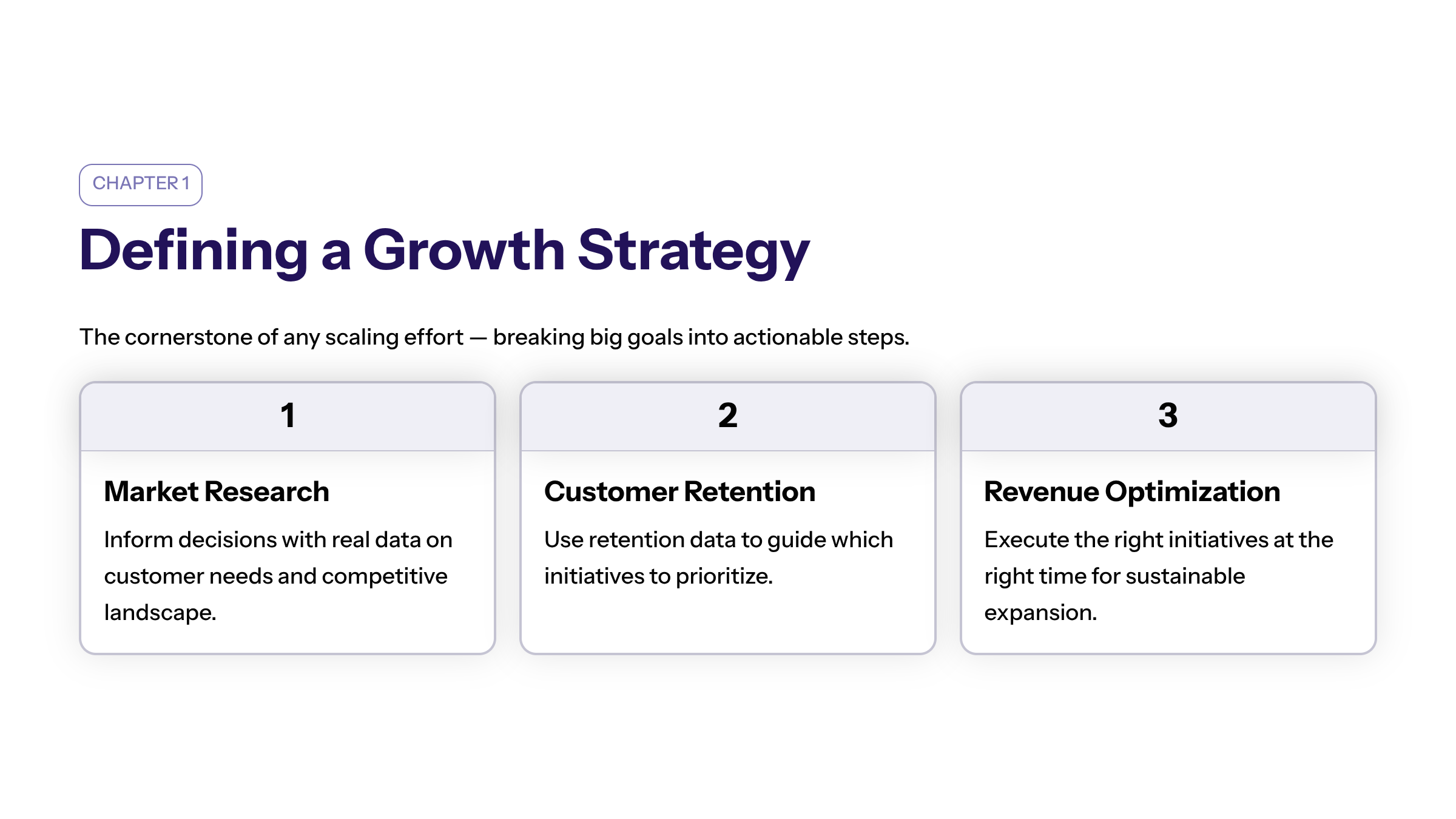
A growth strategy is the cornerstone of any scaling effort. It focuses on executing the right initiatives at the right time to foster sustainable expansion. This strategy must be meticulously developed, breaking down overarching goals into actionable steps informed by market research, customer retention data, and revenue optimization. Financing this strategy requires a robust finance model that accounts for funding needs and cash flow management to avoid pitfalls during scaling.
Aligning Strategy with Core Values
Ensuring that the growth strategy aligns with the organization’s core values prevents operational chaos and preserves brand integrity. This alignment fosters a coherent culture and guides decision-making, allowing businesses to scale without losing sight of their foundational principles. It also helps determine which projects to implement and which to defer, ensuring that the business remains focused on its mission throughout the scaling journey.
Regular Strategy Review
Dynamic markets necessitate regular reviews and adjustments to the growth plan. Continuous evaluation allows businesses to respond proactively to challenges and capitalize on emerging opportunities, maintaining momentum toward long-term objectives. For instance, regularly revisiting the finance model and operational workflows can highlight inefficiencies or funding gaps, enabling timely course corrections that keep the scaling process on track.
Building the Right Team
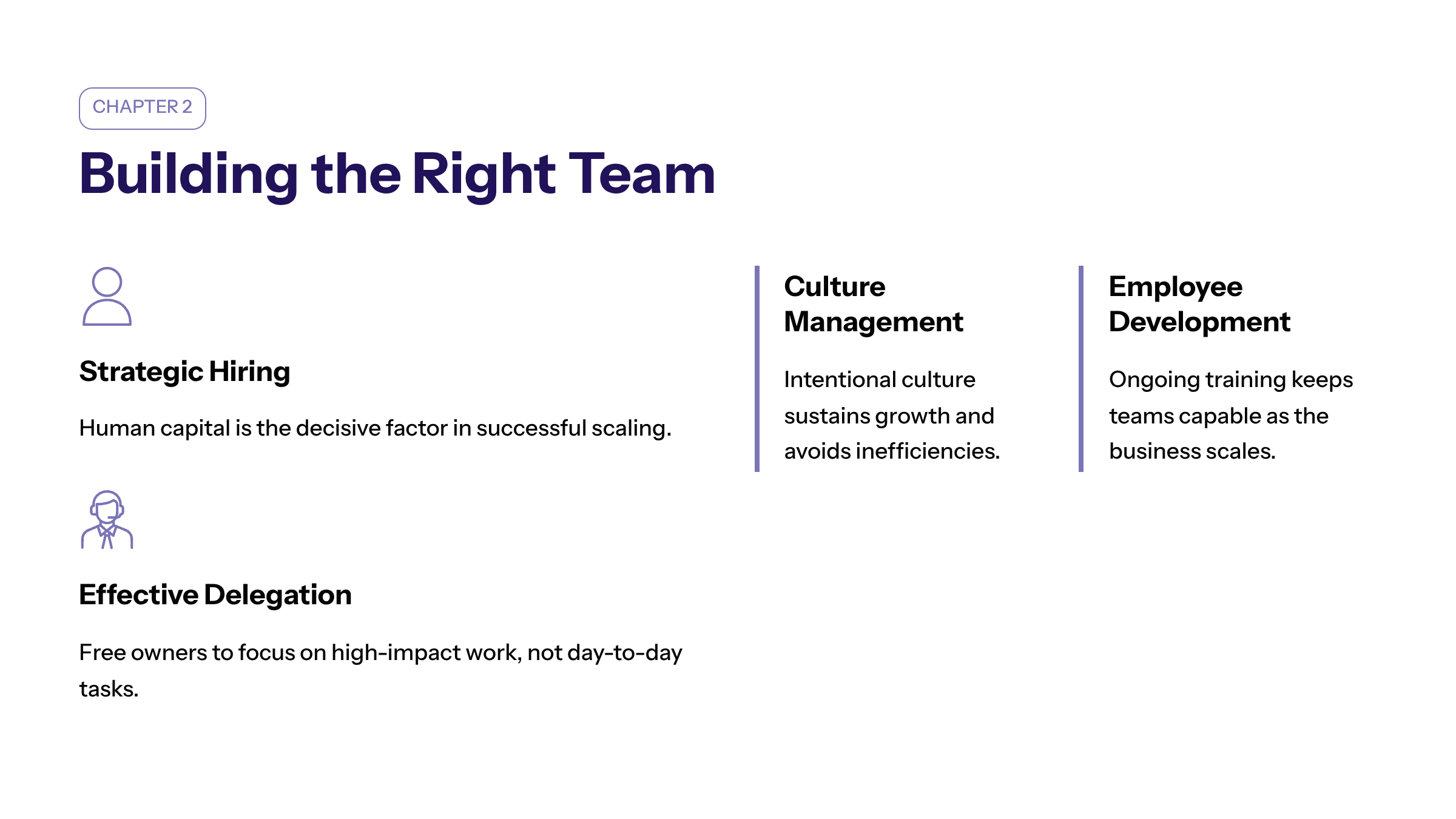
Human capital is often the decisive factor in successful scaling. Strategic hiring, ongoing employee development, and intentional culture management are essential to avoid inefficiencies and sustain growth. Effective delegation is necessary for scaling, allowing business owners to focus on the high-impact work that drives growth rather than getting bogged down in day-to-day tasks.
Strategic Hiring and Development
Investing in upskilling and clear career pathways enhances employee retention and internal mobility, which are critical for maintaining operational continuity during expansion phases. A strong team not only supports the increased workload but also brings fresh ideas and innovation to the table, which can lead to new projects that fuel further growth.
Cultivating Company Culture
As organizations grow, preserving a strong, values-driven culture supports effective communication and alignment. This intentional culture-building mitigates risks of fragmentation and disengagement, which can derail scaling efforts. The culture becomes a key asset that differentiates the company in the eyes of employees, customers, and investors alike.
Impact on Business Growth
A well-structured team directly influences sales figures and overall business performance. Identifying key areas for improvement and recruiting talent accordingly can significantly accelerate scaling trajectories. For example, having the right leadership in place can lead to more efficient operations and better execution of the growth strategy.
Financial Management and Key Performance Indicators
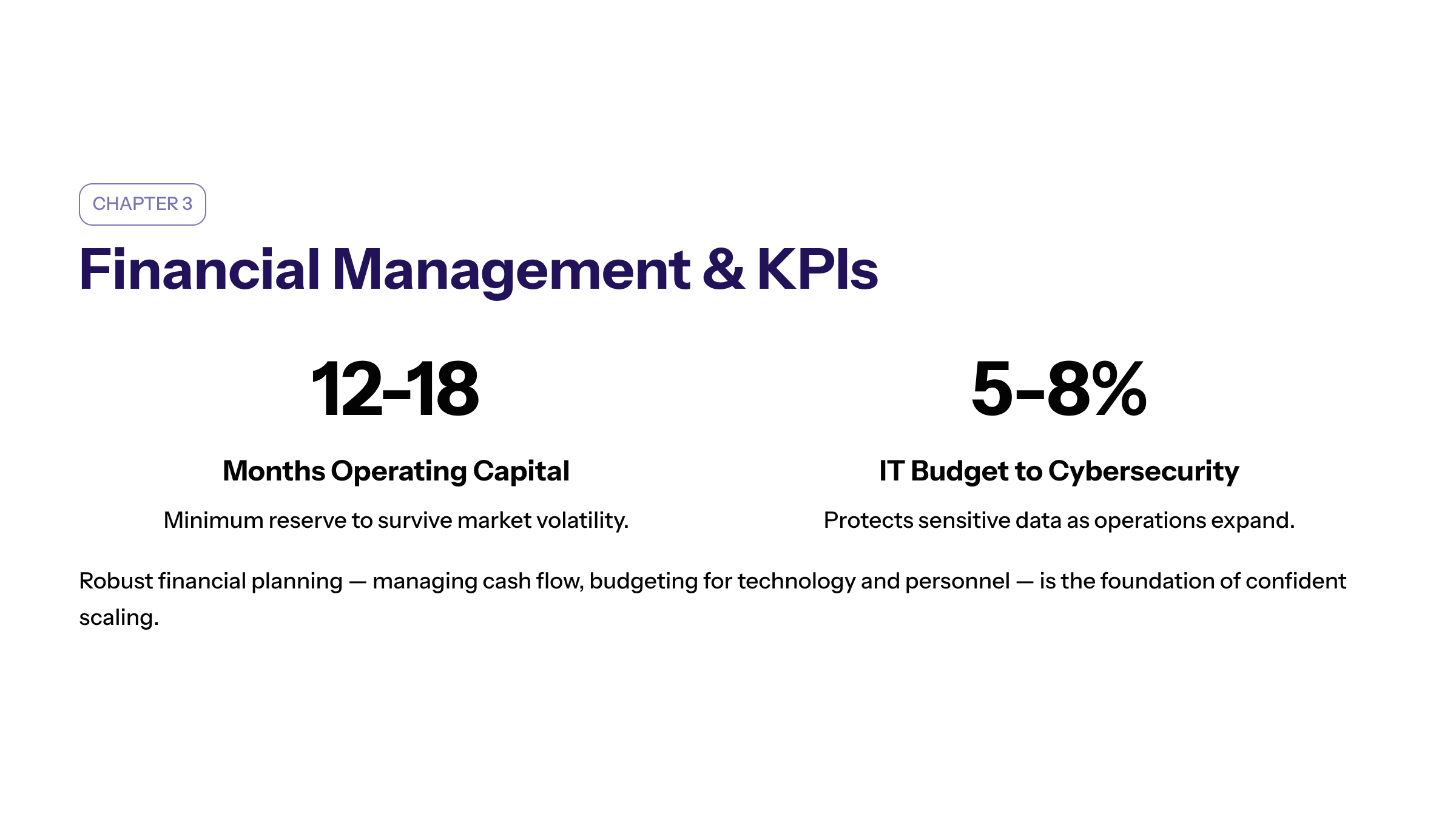
Robust financial planning underpins all scaling activities. Managing cash flow, budgeting for investments in technology and personnel, and maintaining a reliable financial foundation enable businesses to scale with confidence. Maintaining at least 12-18 months of operating capital is necessary to survive market volatility, and allocating 5-8% of the IT budget to cybersecurity protects sensitive data as operations expand.
Cash Flow and Investment Planning
Effective cash flow management prevents financial strain and supports strategic investments necessary for growth, such as marketing campaigns, technology upgrades, and talent acquisition. Funding decisions must be carefully evaluated to ensure that the business does not overextend itself, which can jeopardize the entire scaling effort.
Leveraging KPIs for Financial Insight
Monitoring financial KPIs, including expenses, revenue growth, and customer lifetime value, equips business owners with actionable insights to optimize spending and forecast future needs. This data-driven approach is incredibly valuable when presenting to investors or the board, as it demonstrates fiscal responsibility and a clear path to profitability.
Operational Optimization
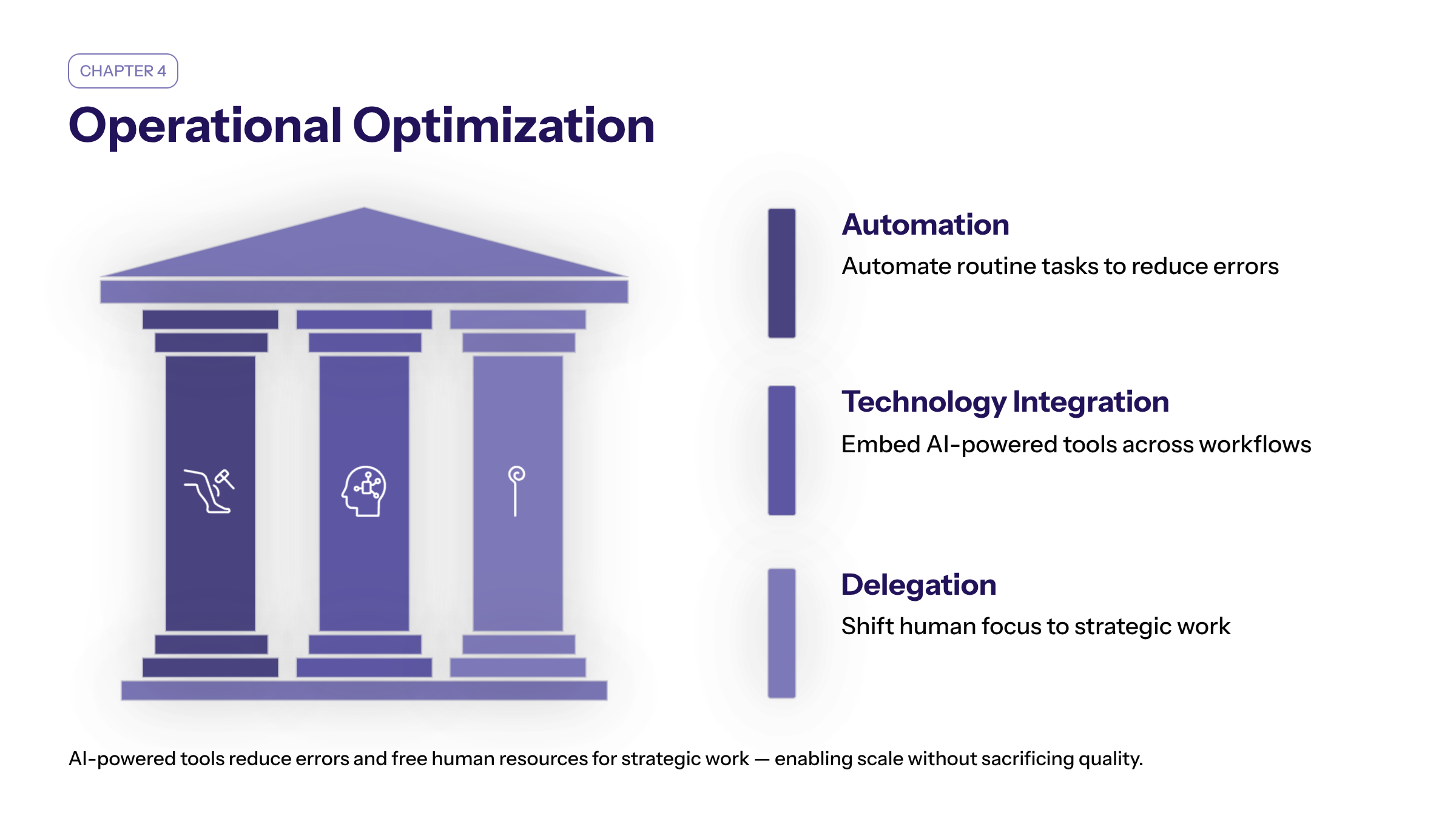
Scaling demands operational processes that can accommodate increased workloads without compromising quality or efficiency. Automation, delegation, and technology integration are critical components of this optimization. AI-powered tools can improve efficiency by automating routine tasks and reducing errors, freeing human resources to focus on strategic initiatives.
Automation and Delegation
Identifying repeatable tasks suitable for automation—such as invoicing, scheduling, and customer relationship management—reduces errors and frees up human resources for strategic activities. Delegation allows business owners and leaders to operate at a higher level, focusing on scaling projects that matter most.
Access to Skilled Talent
Utilizing remote professionals and specialized contractors in marketing, accounting, and human resources can provide operational support without the overhead of traditional hiring, facilitating scalable growth. This approach offers flexibility and access to expertise that might otherwise be cost-prohibitive.
Continuous Process Improvement
Regularly reviewing and refining operational workflows ensures that the business remains competitive and can adapt to scaling pressures effectively. Standardizing processes through SOPs is an example of infrastructure improvements that support consistent quality and efficiency as the business grows.
Driving Business Growth
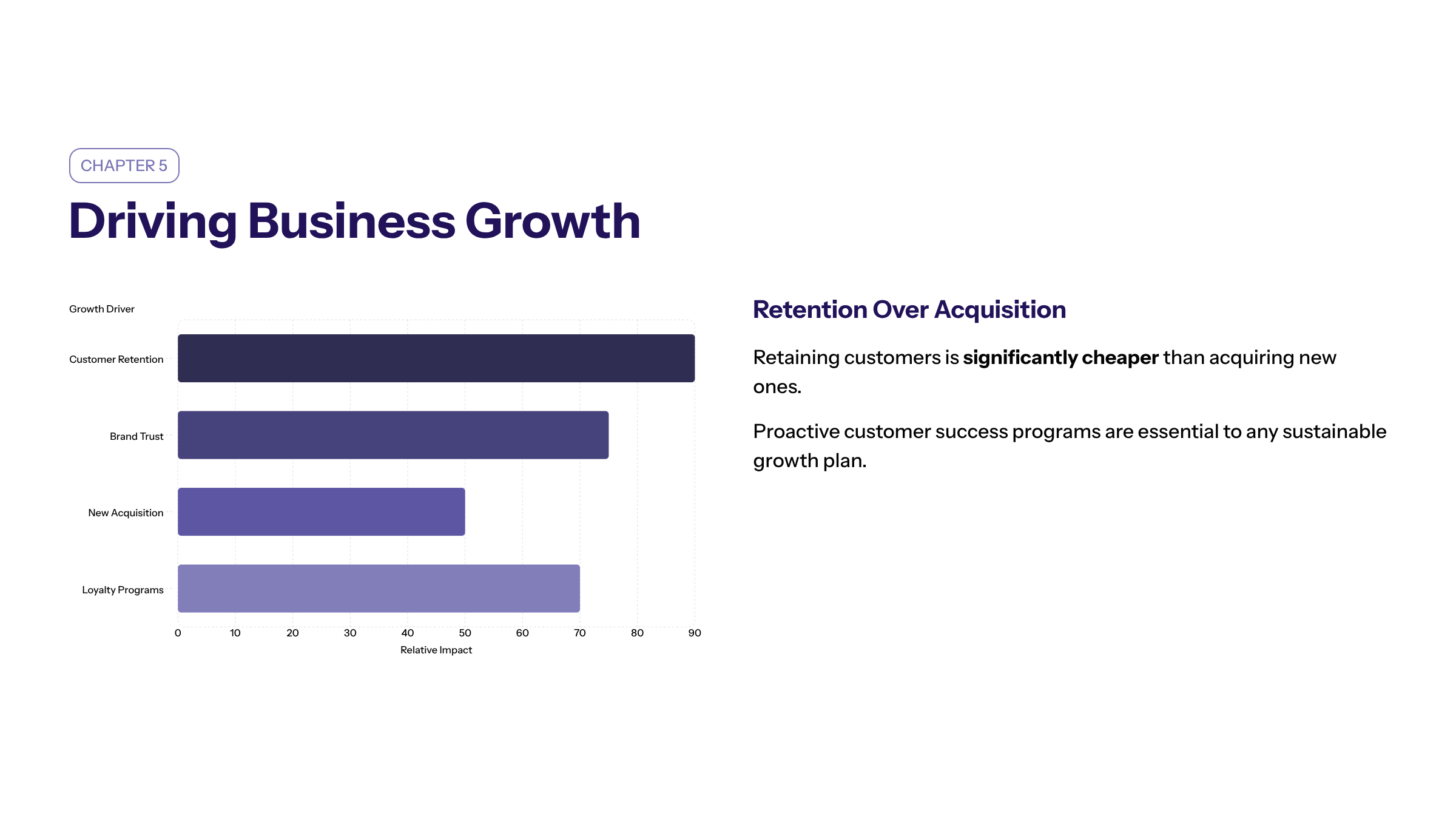
A strong brand and effective marketing strategy are vital to attracting and retaining customers during growth phases. Trust-building and customer loyalty underpin sustainable revenue increases. Customer retention is significantly cheaper than acquiring new customers, making proactive customer success programs an essential part of the growth plan.
Brand Development
Enhancing brand presence through consistent messaging and quality service fosters customer trust, which translates into repeat business and positive referrals. A strong brand can also lead to more favorable terms with investors and partners, who see the business as a reliable and scalable opportunity.
Marketing Strategy Optimization
Focusing marketing efforts on both client acquisition and retention maximizes lifetime value and supports steady growth. Marketing initiatives should be designed to lead potential customers through the sales funnel efficiently, converting leads into loyal clients.
Innovation and Expansion Opportunities
Identifying new markets, products, or services as part of the growth plan encourages continuous business evolution and revenue diversification. This innovation mindset ensures that the business remains relevant and competitive throughout its scaling journey.
Brand and Marketing
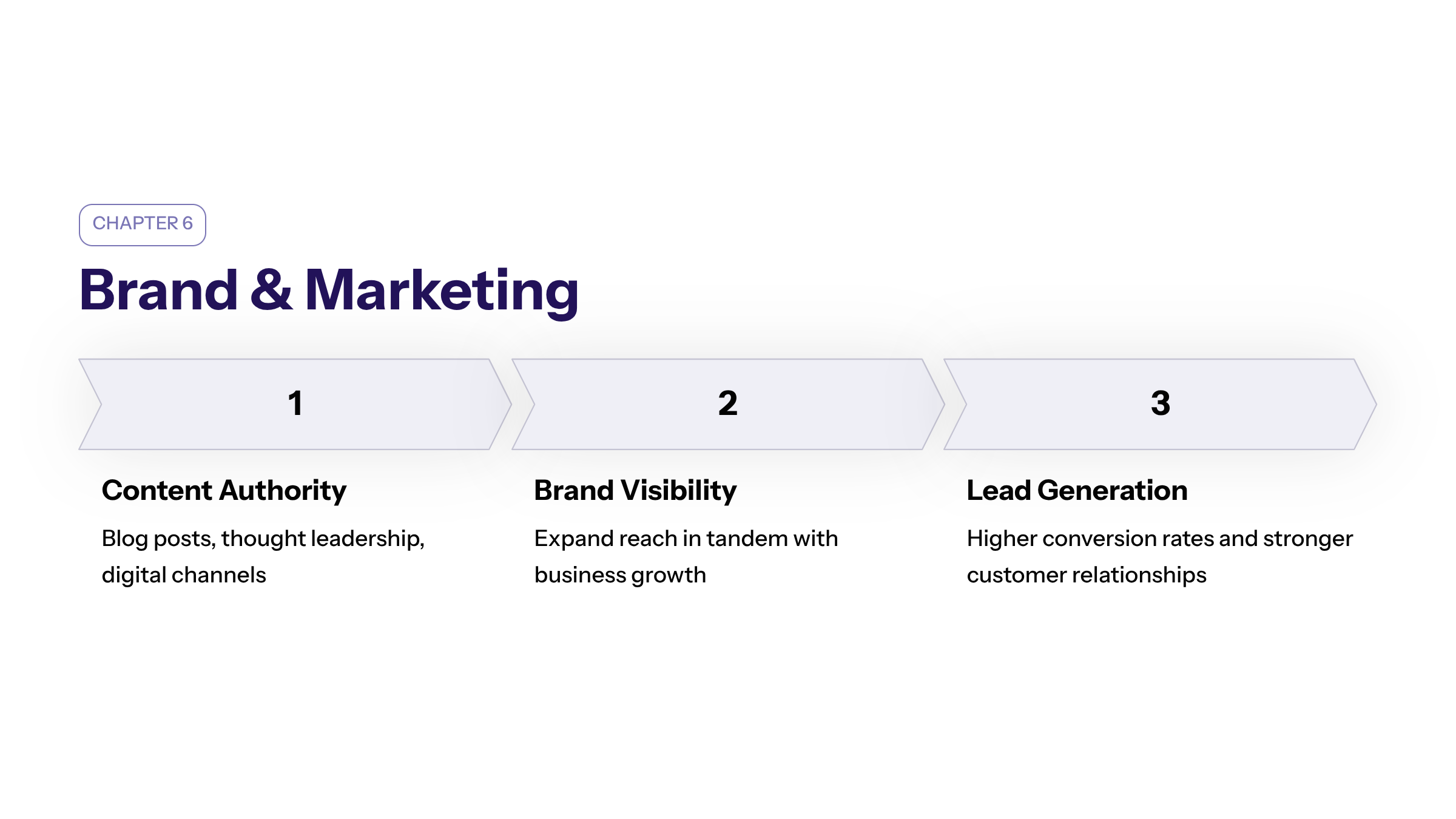
Expanding brand visibility in tandem with business growth requires strategic marketing initiatives and customer engagement practices.
Marketing Strategy Components
Developing content such as authoritative blog posts and leveraging digital channels strengthens brand authority and customer relationships. These efforts lead to increased lead generation and higher conversion rates.
Customer Service and Retention
Prioritizing exceptional customer service and retention programs ensures that growth does not come at the expense of customer satisfaction. Loyal customers often become advocates who help lead new business opportunities.
Network and Partnerships
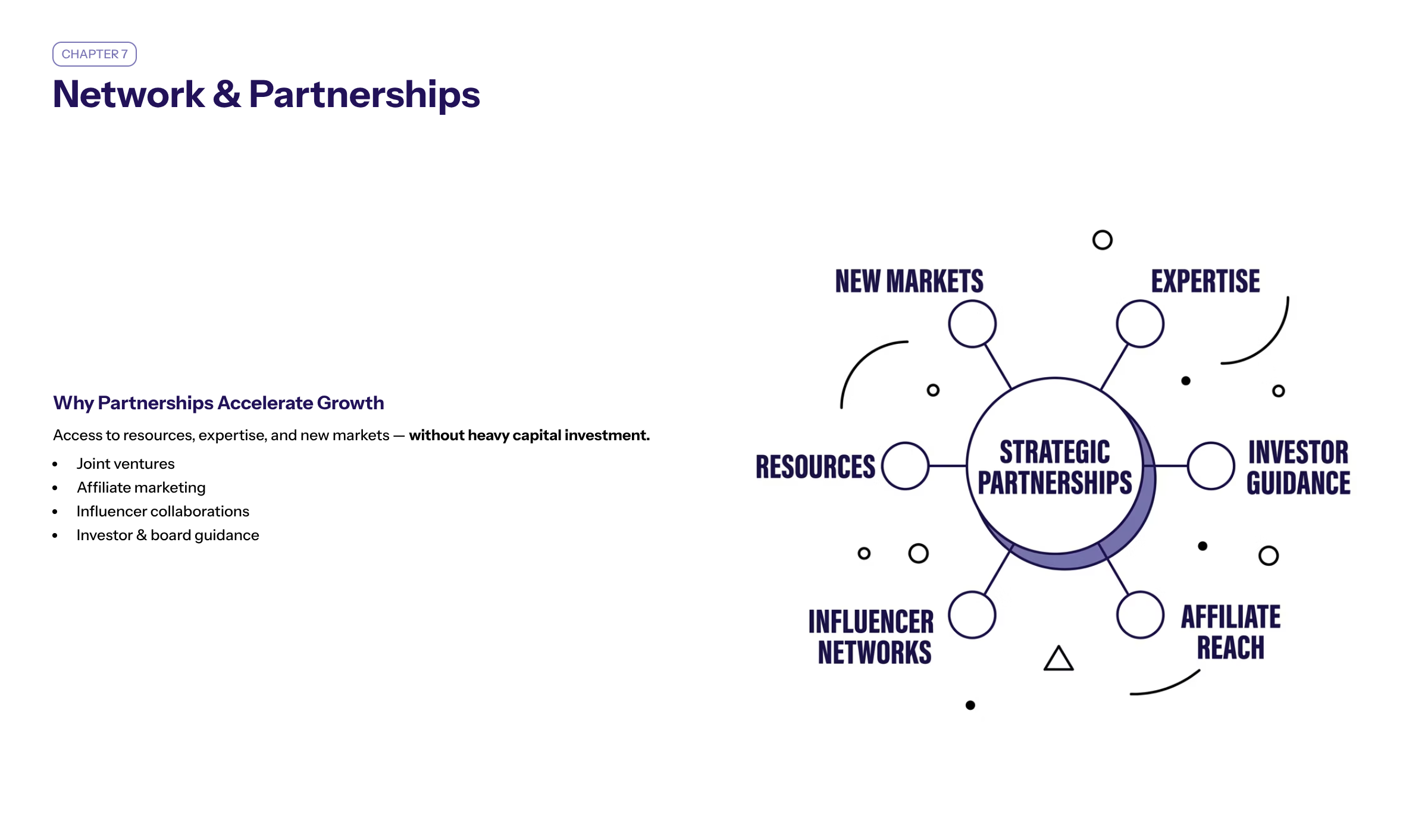
Strategic partnerships and industry networks accelerate growth by providing access to resources, expertise, and new markets without heavy capital investment.
Building Strategic Alliances
Engaging in joint ventures, affiliate marketing, and influencer collaborations broadens reach and drives mutual business benefits. These partnerships can also provide valuable insights and support from experienced investors and board members.
Industry Community Engagement
Participation in peer groups and professional communities offers support, fresh perspectives, and collaboration opportunities essential for scaling. These networks often lead to new projects and ideas that drive growth.
Metrics and Agility
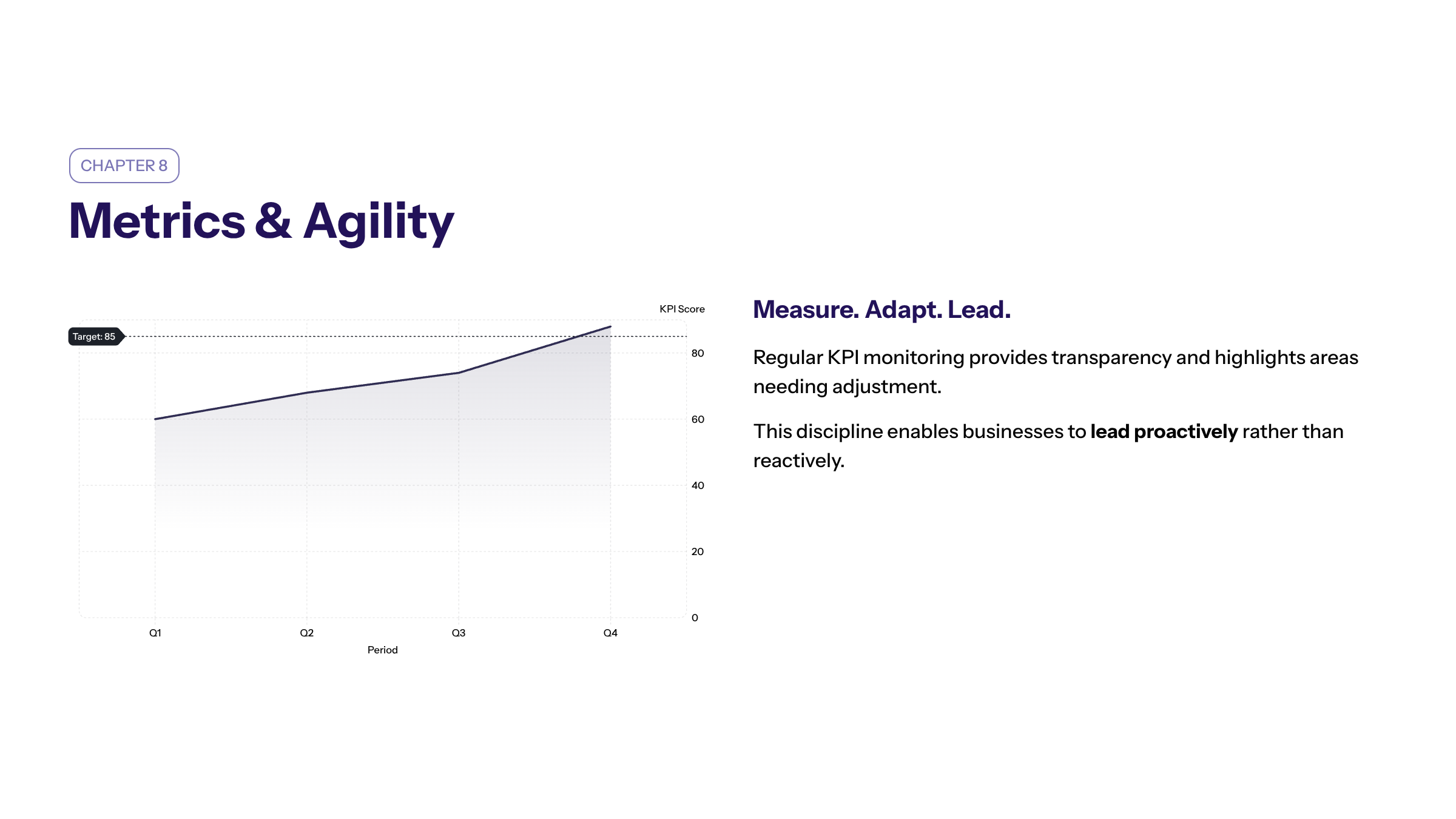
Sustained scaling requires ongoing measurement and the flexibility to adapt strategies based on performance data and market conditions.
Continuous KPI Tracking
Regular monitoring of KPIs provides transparency into business performance and highlights areas needing adjustment. This discipline enables businesses to lead proactively rather than reactively.
Agile Strategy Adaptation
Successful businesses embrace agility, refining their growth plans to respond to challenges and leverage new opportunities promptly. This adaptability is a key difference between companies that scale sustainably and those that falter.
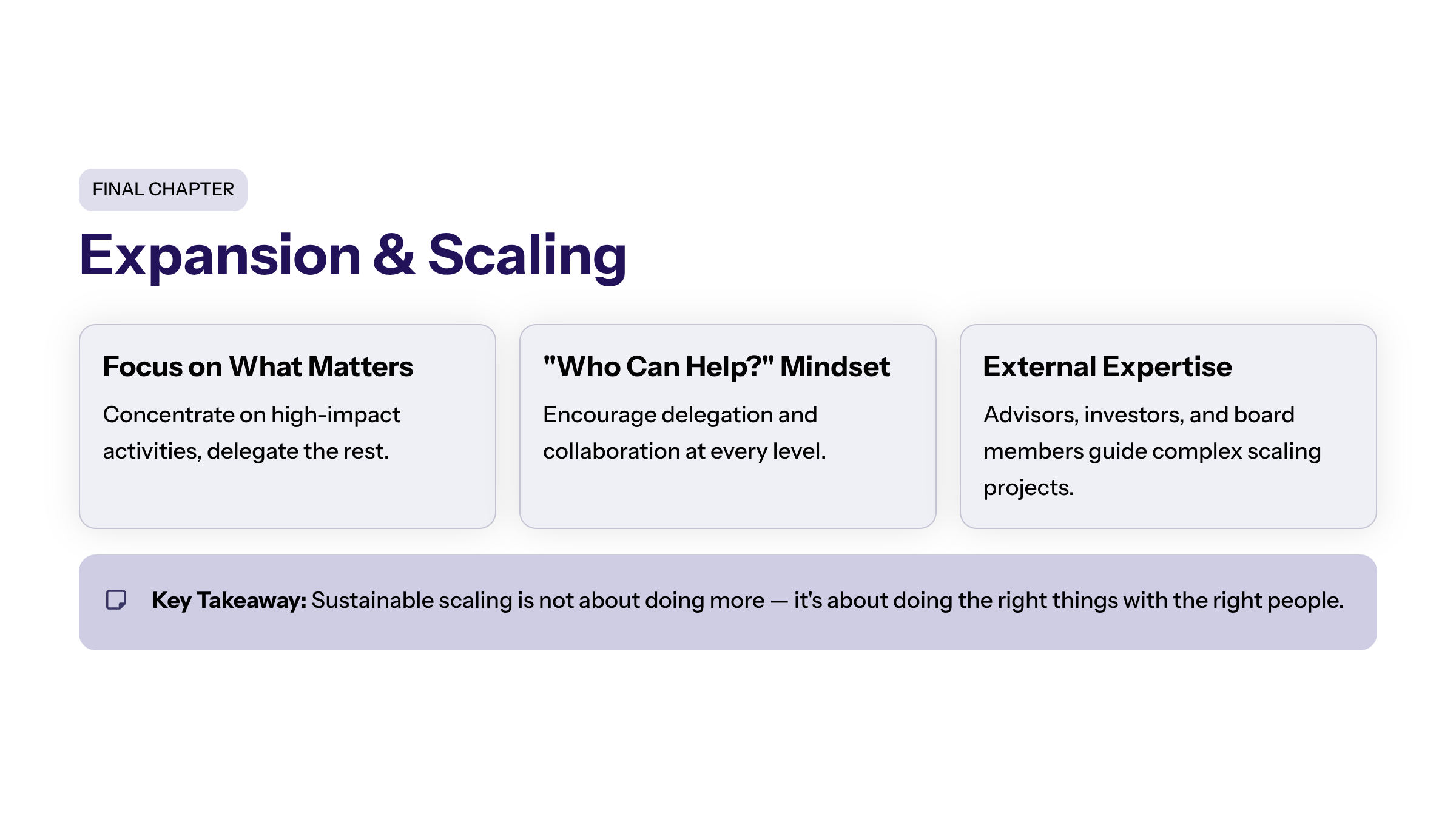
Expansion and Scaling
Scaling sustainably involves focusing on the right activities and leveraging expertise to manage growth effectively.
Leveraging Expertise
Adopting a “Who can help?” mindset encourages delegation and collaboration, enabling business owners to concentrate on high-impact initiatives. Bringing in external advisors, investors, or board members can provide the necessary guidance to implement complex scaling projects.
Culture and Team as Growth Drivers
Strengthening organizational culture and building a capable team ensure that scaling efforts are supported by a resilient internal foundation.
Operational Excellence
Ongoing identification and optimization of operational areas prevent bottlenecks and support seamless expansion.
Accessing Remote Talent
Incorporating remote professionals expands operational capacity and provides specialized skills crucial for scaling success.
This comprehensive scaling checklist offers a structured yet flexible framework for business leaders seeking to navigate the complexities of growth. By integrating strategic planning, financial discipline, operational efficiency, and human capital development, businesses can scale not just rapidly but sustainably, securing long-term success in competitive markets.