Essential Weekly Transformation Checkpoint Agenda
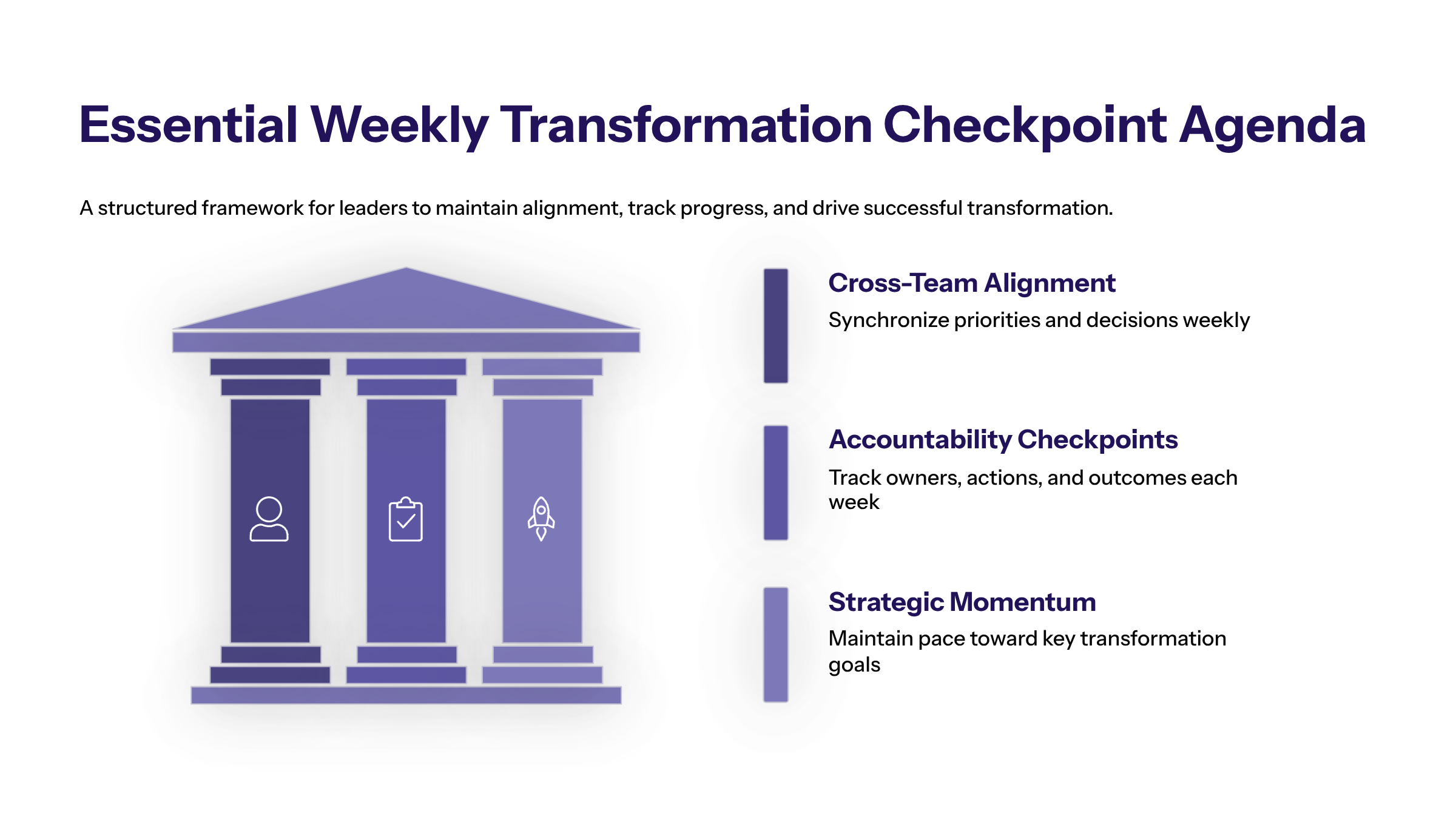
In today’s fast-paced business environment, maintaining alignment and momentum across different departments is critical to achieving strategic objectives. A weekly transformation checkpoint agenda serves as a vital tool for leaders and teams to track progress, address challenges, and ensure accountability.
This article provides a comprehensive analysis of how structured weekly meetings can enhance productivity, support decision-making, and drive successful transformation initiatives.
By integrating clear objectives, financial tracking, and problem-solving strategies, organizations can effectively navigate complex projects and maintain forward momentum.
One key to effective weekly meetings is shared visibility: using a single system of record ensures all team members see real-time progress before the meeting begins. This transparency allows the meeting to focus on decision-making and problem-solving rather than information sharing.
The typical duration of a weekly transformation checkpoint ranges from 60 to 90 minutes, concentrating on goal alignment, performance evaluation, and accountability. Within this timeframe, core components of an effective agenda include mission review, capacity quick-check, real-time KPI review, means-based accountability, AI integration tracking, issue triage, shadow operating model check, cross-functional alignment, action item review, and forward planning.
Action item review aims for a 90% completion rate of the previous week's tasks, clearly defining task owners and deadlines for the upcoming week. This rigorous follow-up fosters accountability and keeps the team on track.
Key Takeaways
-
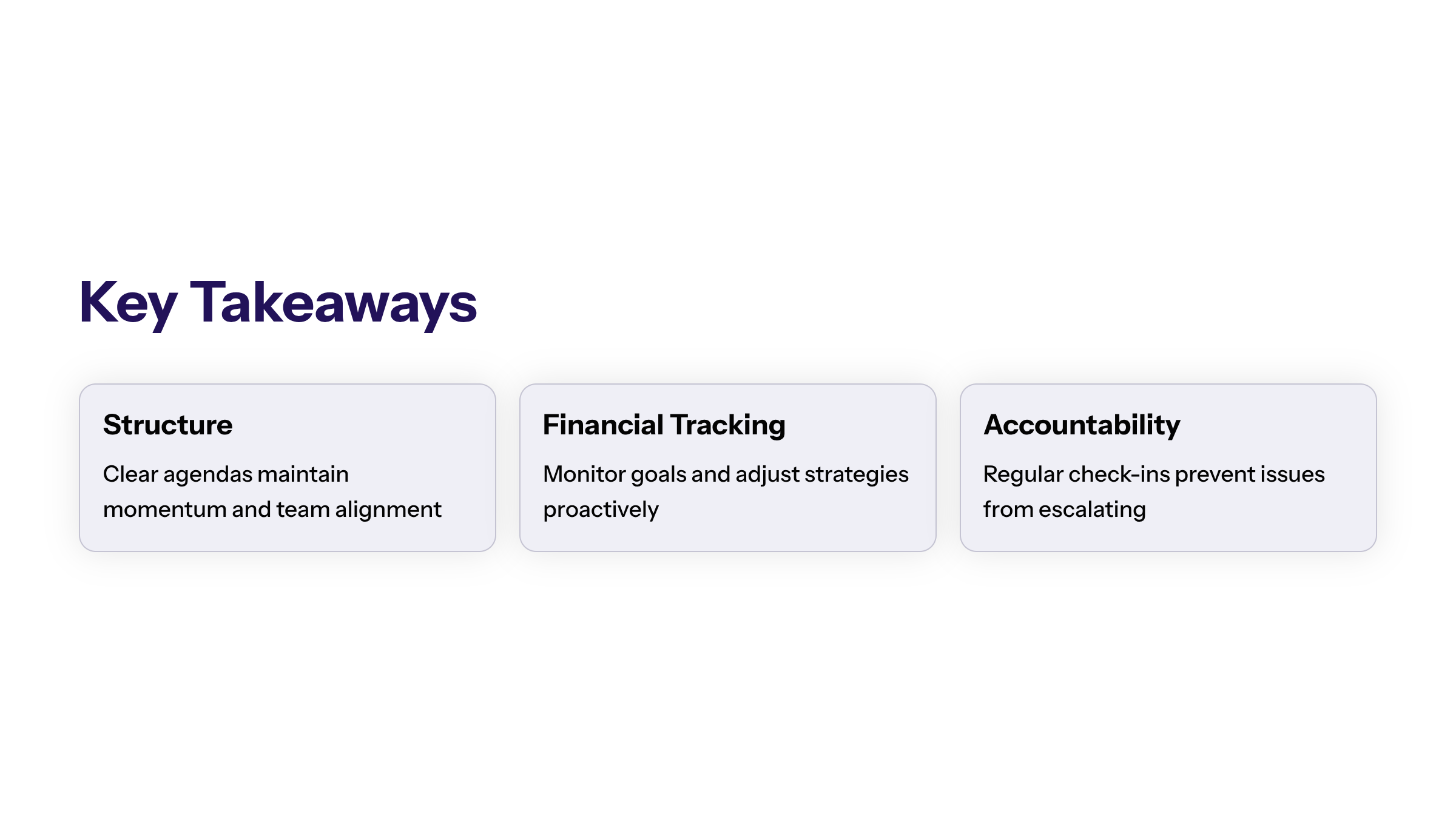
Structured weekly meetings with clear agendas and checkpoints are essential for maintaining momentum and ensuring alignment across teams and departments.
-
Financial tracking and planning integrated into weekly meetings enable teams, such as sales and operations, to monitor progress toward financial goals and adjust strategies proactively.
-
Effective problem-solving strategies combined with regular check-ins foster accountability, support collaboration, and help teams address issues before they escalate.
-
Pre-reads including agendas and metric reports should be sent at least 24–48 hours in advance to focus meetings on decision-making.
-
Confirming the next meeting date at the end of each session helps participants know when to report back on their commitments.
-
In 2026, weekly transformation checkpoint agendas focus on capacity over messaging, treating organizational change as a load-bearing system that must be measured and monitored in real-time.
-
Leaders prioritize change capacity and review team load using capacity dashboards to ensure employees aren't overloaded by new processes.
-
Means-Based Accountability focuses on specific activities that drive future results, building confidence even when final targets have not yet been met.
-
AI integration tracking assesses AI’s contribution as a workforce partner to productivity and creative output.
-
A transformation office (TO) can improve value creation by up to 50%, speeding value delivery while improving transparency and accountability.

Introduction to Team Meetings
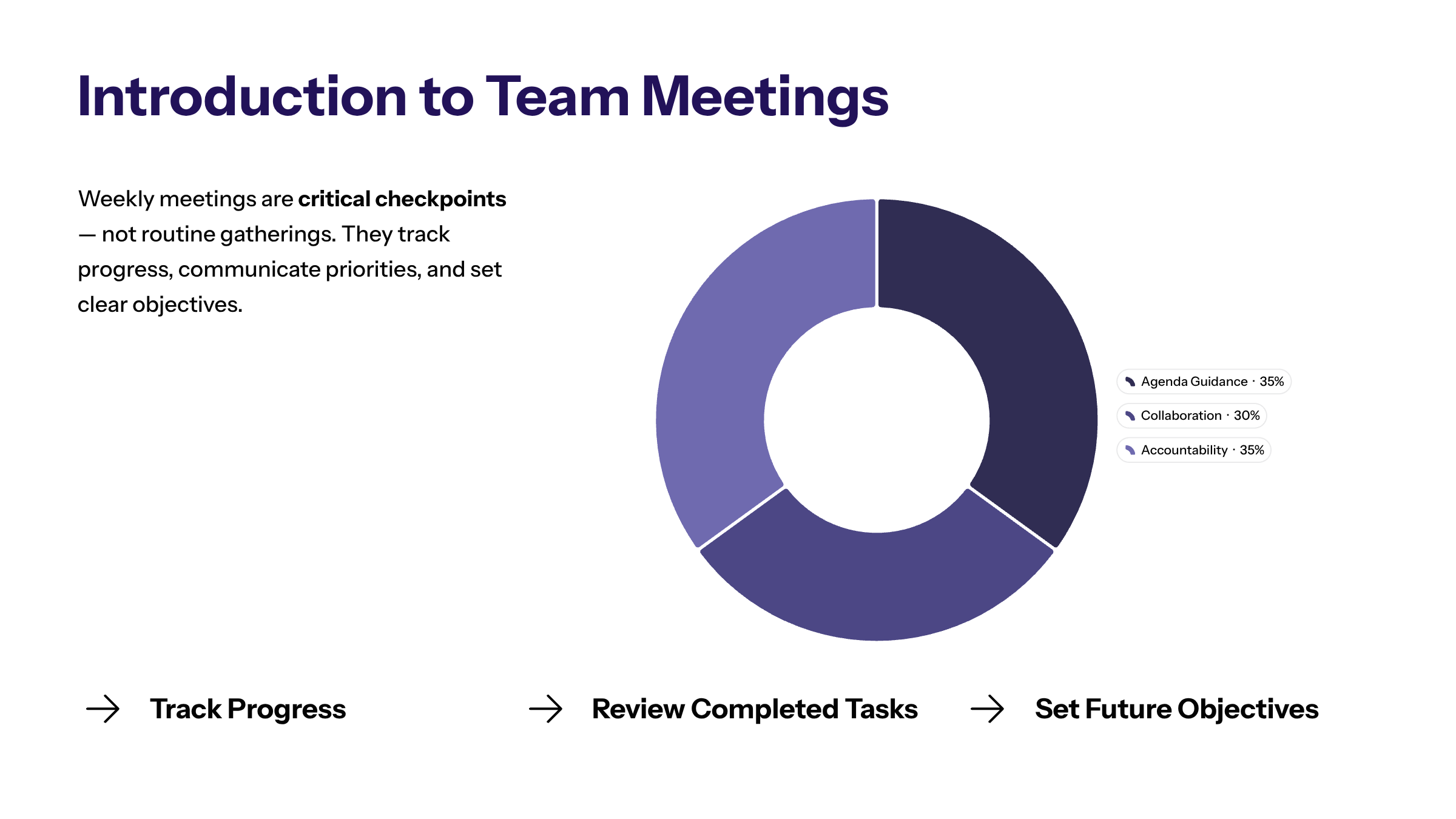
Weekly team meetings are more than routine gatherings; they are critical checkpoints that enable organizations to track progress, maintain momentum, and ensure that everyone’s time is used effectively. These meetings provide a platform to communicate priorities, review completed tasks, and set clear objectives for the future. The agenda plays a central role in guiding discussions, facilitating collaboration, and promoting accountability.
The Role of Weekly Meetings in Transformation
Transformation initiatives, whether digital, operational, or cultural, demand rigorous oversight and coordination. A weekly transformation checkpoint agenda ensures that leaders and team members have a consistent forum to:
-
Review progress toward strategic goals using real-time KPI dashboards tracking 5–15 critical leading indicators instead of lagging financial results,
-
Identify and address challenges and bottlenecks through issue triage and cross-functional alignment,
-
Align priorities across different departments and workstreams,
-
Assign clear next steps and action items with deadlines to ensure accountability.
For example, companies like Microsoft and Amazon incorporate structured weekly check-ins that emphasize cross-functional collaboration and data-driven decision-making, enabling faster problem resolution and more agile execution.
Aligning Team Goals and Objectives
Research shows that teams with clearly defined objectives and regular progress reviews outperform those without such structures. Weekly meetings help prevent stagnation by:
-
Reviewing the outcomes of the last meeting,
-
Discussing ongoing projects and their status using a single system of record for shared visibility,
-
Planning for the next stage of work with clear deliverables.
This approach fosters a culture of accountability and ensures that the team is collectively focused on achieving business priorities.
Weekly Meeting Objectives
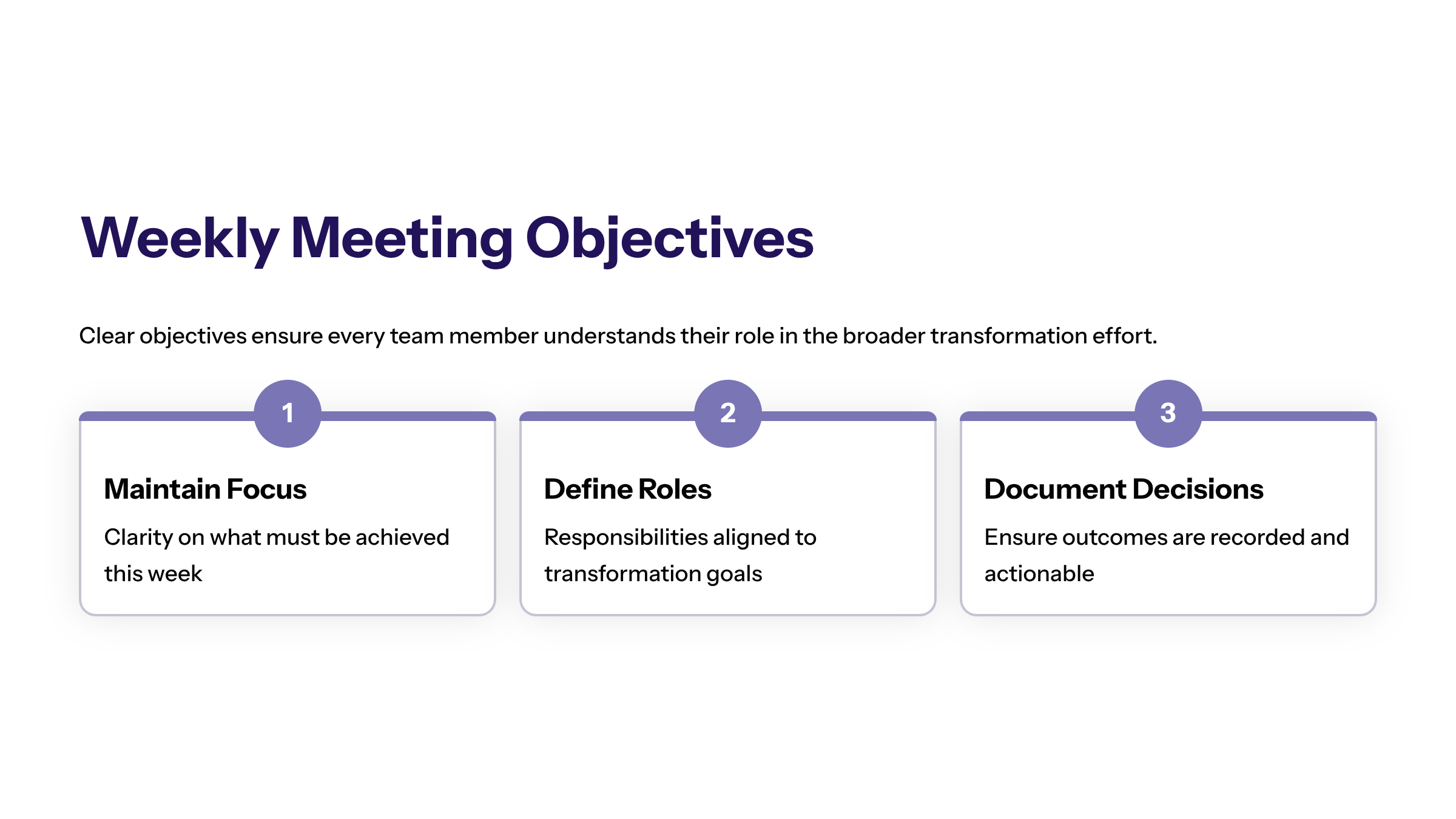
The primary goal of weekly meetings is to maintain focus and clarity on what needs to be achieved, ensuring that all team members understand their roles and responsibilities in the broader transformation effort.
Setting Clear Objectives
Having clear objectives for each meeting helps to:
-
Keep discussions on track,
-
Avoid unnecessary diversions,
-
Ensure that decisions are made and documented,
-
Facilitate the assignment of to dos and tasks.
For instance, a weekly agenda may include reviewing key performance indicators (KPIs), discussing blockers, and deciding on resource allocation for upcoming projects.
Preventing the Status Quo
Without regular checkpoints, teams risk falling into the status quo, where progress stalls and challenges go unaddressed. Weekly meetings act as a mechanism to challenge assumptions, encourage new ideas, and foster positive momentum.
Research Insights on Meeting Effectiveness
Studies by the Harvard Business Review highlight that teams that conduct structured weekly meetings with a focus on problem-solving and accountability report higher levels of productivity and engagement. These meetings help in developing a shared understanding of priorities and enable leaders to run faster by eliminating bottlenecks early.
Financial Tracking and Planning
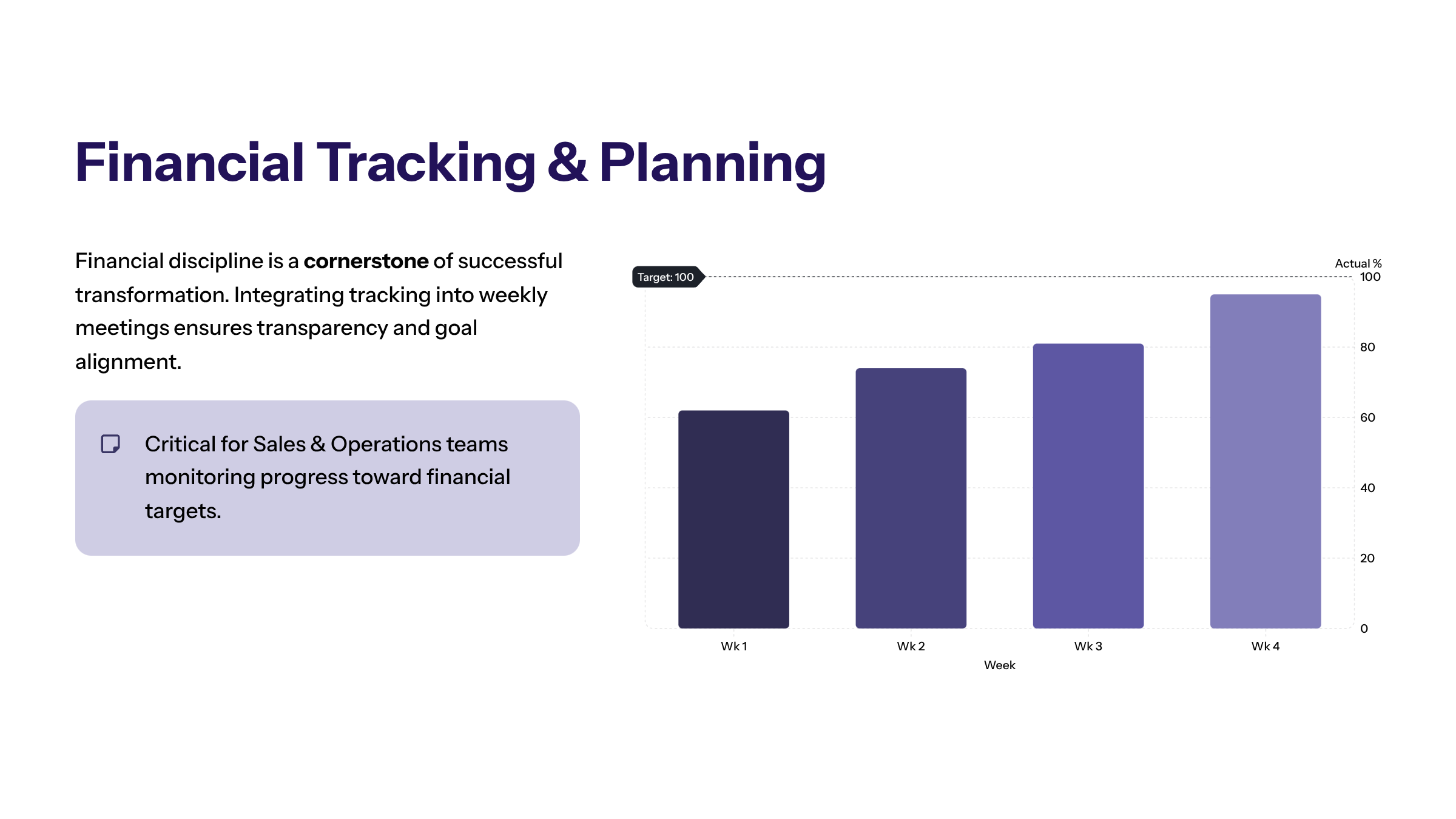
Financial discipline is a cornerstone of successful transformation programs. Integrating financial tracking into weekly meetings ensures transparency and alignment with organizational goals.
Importance for Sales and Operations Teams
Sales teams, in particular, benefit from regular financial reviews to monitor pipeline health, forecast revenue, and adjust sales strategies. Operations teams use financial tracking to manage budgets, control costs, and optimize resource allocation.
Tools and Technologies for Financial Collaboration
Modern tools such as Microsoft Teams, Salesforce, and Tableau facilitate real-time collaboration and data visualization during meetings. These platforms enable teams to review financial dashboards, track progress toward targets, and make data-driven decisions seamlessly.
Planning for the Future
Weekly financial discussions help teams to:
-
Identify areas requiring additional support or investment,
-
Adjust plans based on current performance,
-
Ensure that financial goals remain aligned with the broader transformation strategy.
Establishing clear financial goals reduces the possibility of value leakage during a transformation and supports ongoing accountability.
Problem Solving Strategies
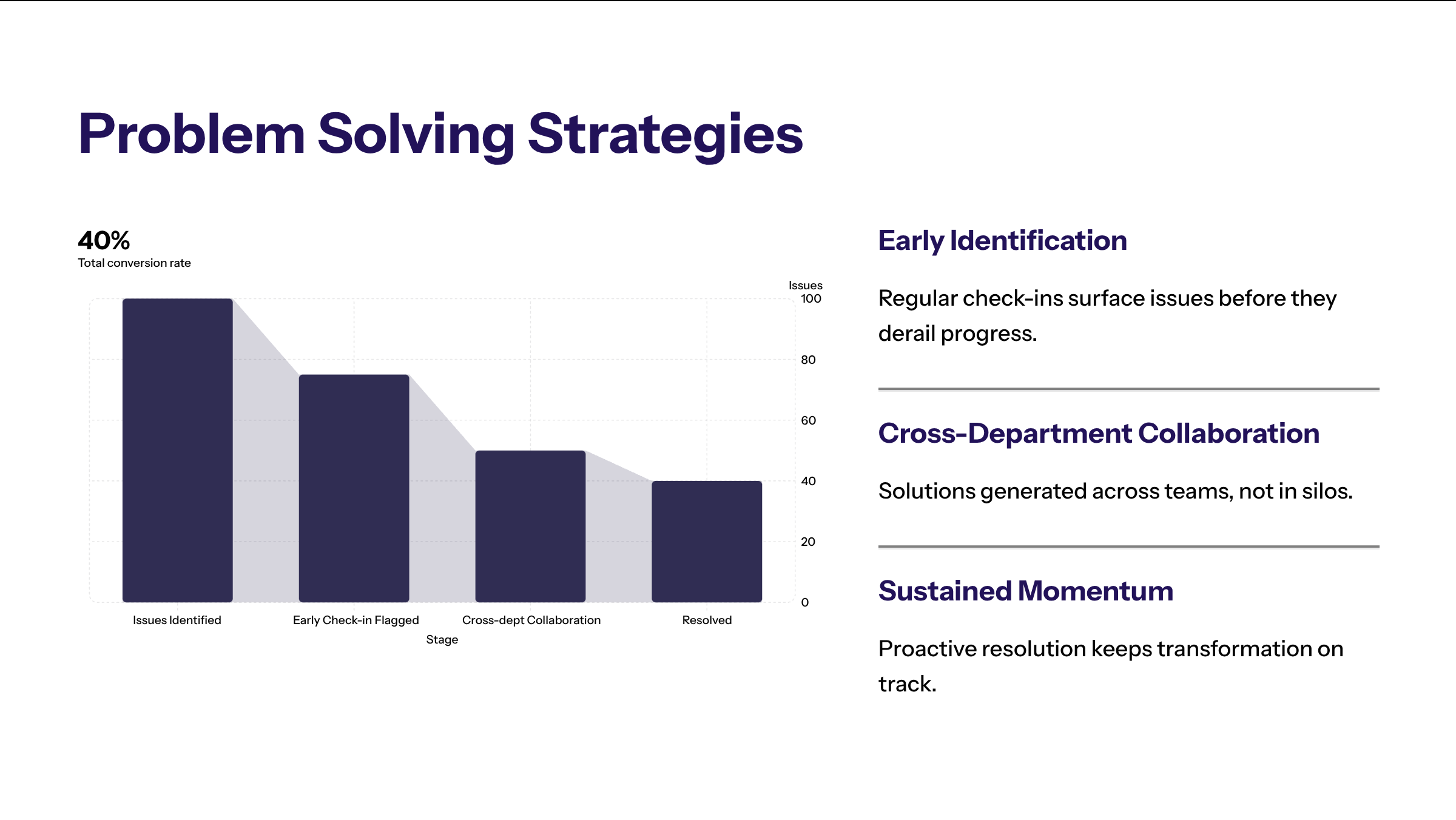
Effective problem-solving is essential for maintaining momentum and addressing challenges before they derail progress.
Structured Problem-Solving Process
A well-defined process includes:
-
Identifying issues early through regular check-ins,
-
Collaborating across departments to generate solutions,
-
Assigning accountability for implementing fixes,
-
Monitoring outcomes to ensure resolution.
Leveraging Data and Research
Using data-driven insights supports objective decision-making. For example, companies like Google use analytics to pinpoint operational inefficiencies discussed during weekly meetings, enabling targeted interventions.
Maintaining Accountability and Momentum
Regular progress updates and check-ins help to:
-
Hold team members accountable for their commitments,
-
Ensure that action items are completed on schedule, aiming for a 90% completion rate,
-
Foster a culture of continuous improvement.
Enhancing the Meeting Process for Greater Impact
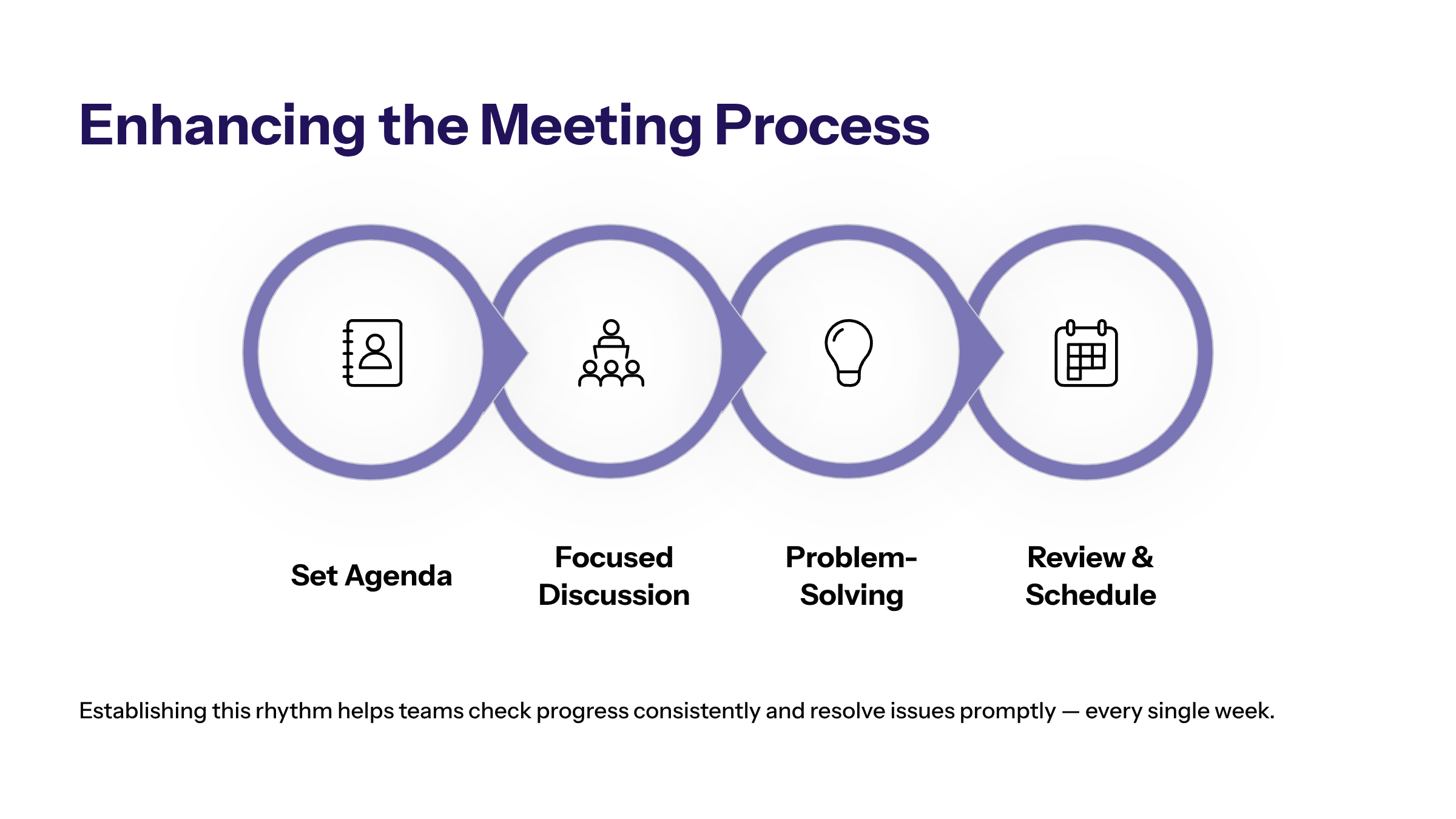
To make the most of a weekly transformation checkpoint agenda, it is crucial to determine a clear meeting process that everyone understands and follows. This process should begin with setting the agenda and objectives, continue through focused discussions and problem-solving, and conclude with a review of commitments and scheduling the next meeting. Establishing this rhythm helps teams to check progress consistently and resolve issues promptly.
The meeting should also provide space for the rest of the team to raise concerns or share insights that might not fit into the formal agenda but are essential for the life of the project. Encouraging open communication at the right point in the meeting ensures that all voices are heard and that potential obstacles are surfaced early.
Including self-awareness checkpoints—brief, intentional pauses where team members share one word describing their current emotional state—can build team emotional intelligence, reduce conflicts by 20%, and improve collaboration. Role rotation during meetings encourages diverse perspectives and engagement, contributing to a healthier team dynamic.
Preparing for the Next Week's Meeting
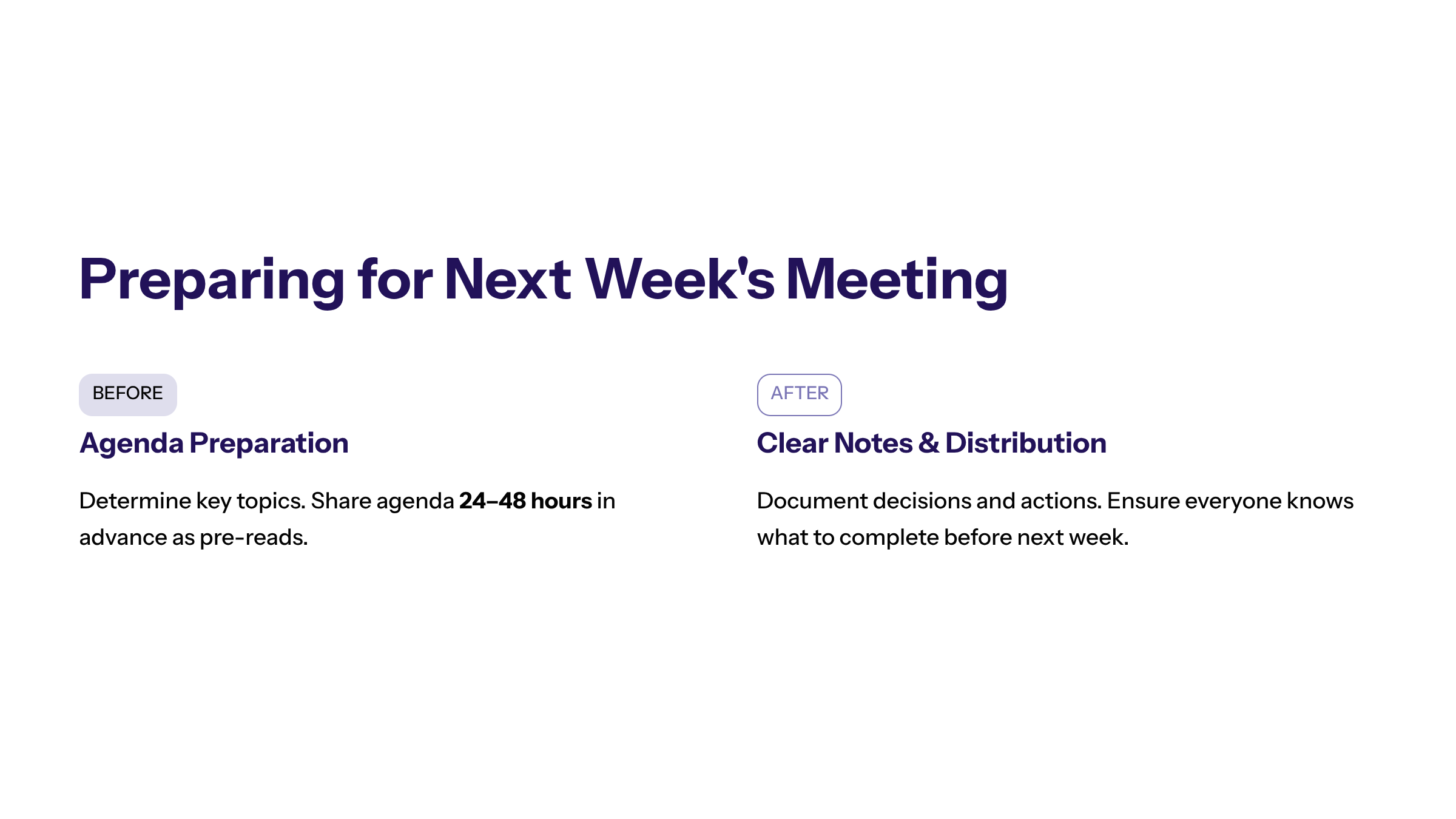
Effective weekly meetings depend on thoughtful preparation and writing of the agenda and minutes. Before the meeting, leaders should determine the key topics to cover and share the agenda with participants at least 24–48 hours in advance as pre-reads to give them time to prepare.
After the meeting, writing clear notes and distributing them ensures that everyone knows what was decided and what actions are supposed to be completed before the next week.
This cycle of preparation, execution, and follow-up creates a sense of continuity and purpose, making it easier for teams to begin each meeting with clarity and focus.
The Role of the Transformation Office
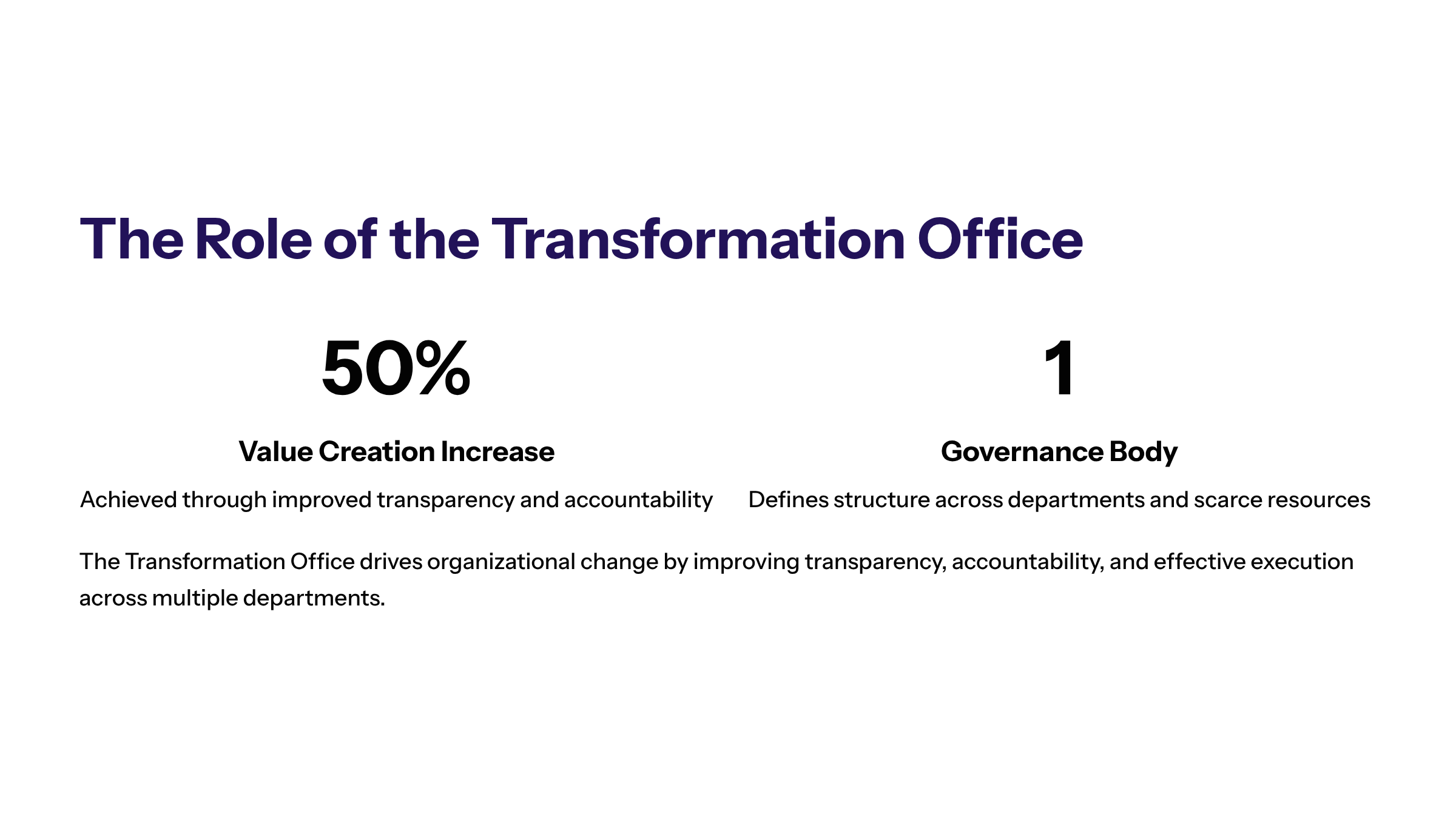
A transformation office (TO) plays a pivotal role in driving successful organizational change. It helps speed value delivery by improving transparency and accountability, often increasing value creation by up to 50%. The TO defines governance and organization, ensuring effective execution across multiple departments and scarce resources.
The initial period of establishing the TO is critical to transformation success, as it sets the foundation for aligned processes, decision rights, and tracking mechanisms. Regular engagement with workstream owners through weekly checkpoint meetings minimizes problems and enables agile adjustments.
Conclusion
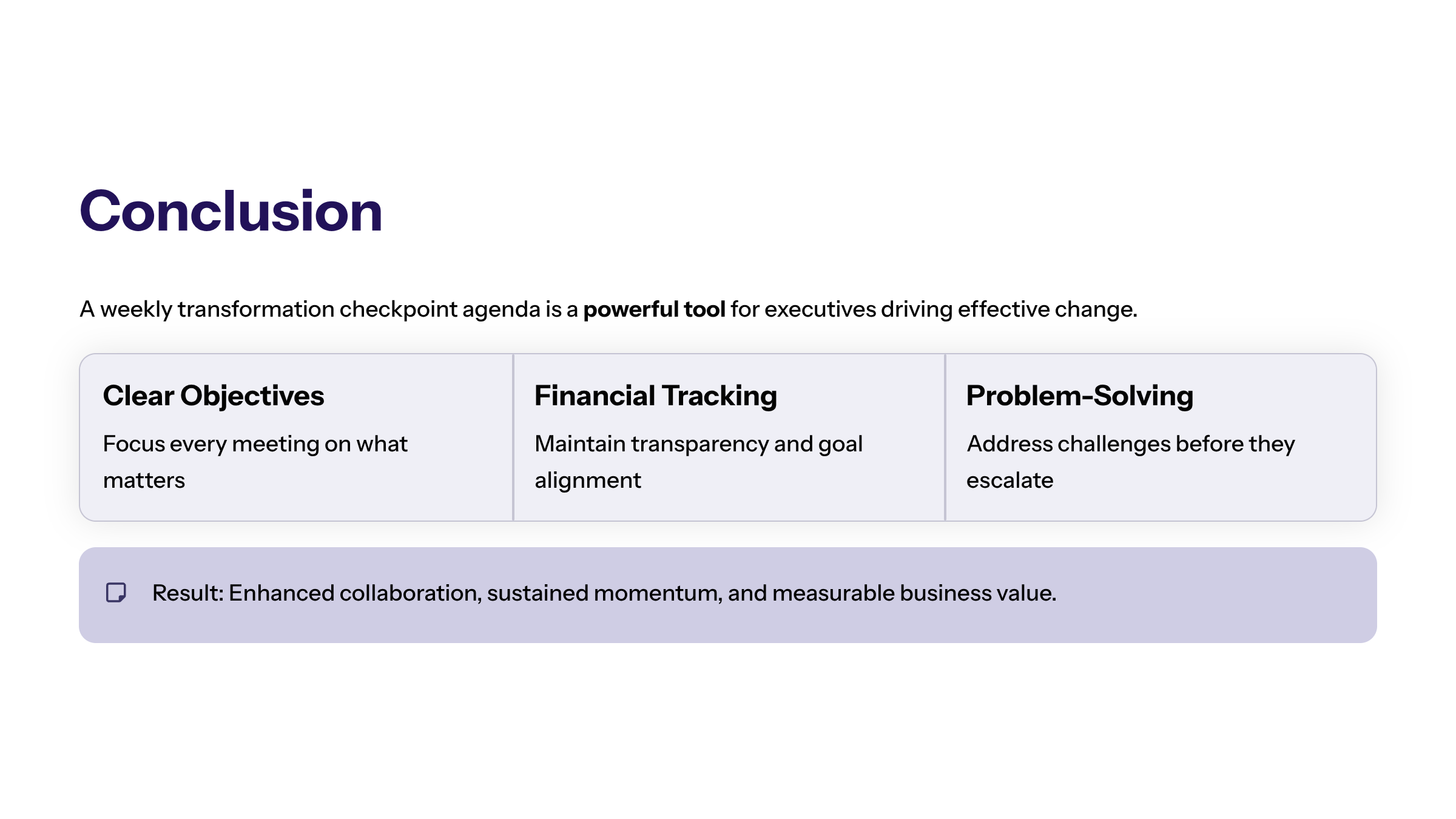
A weekly transformation checkpoint agenda is a powerful tool for executives and teams aiming to drive effective transformation. By combining clear objectives, financial tracking, and robust problem-solving strategies, organizations can enhance collaboration, maintain momentum, and achieve measurable results.
Embracing these practices enables leaders to address challenges proactively, support their teams effectively, and ensure that transformation efforts deliver sustained business value.
“Effective meetings are not just about checking boxes—they are about creating shared understanding and driving purposeful action.”
— Source: Harvard Business Review