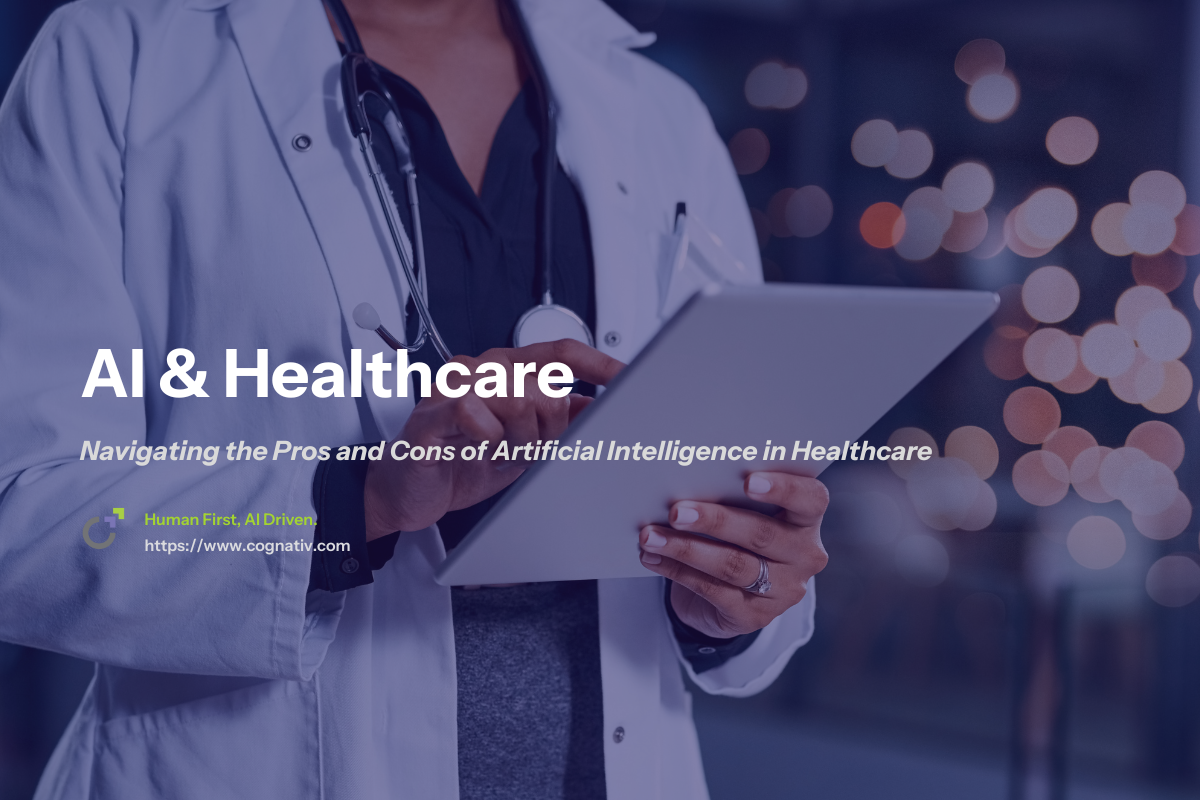
Navigating the Pros and Cons of Artificial Intelligence in Healthcare
Artificial intelligence (AI) is reshaping the healthcare landscape, offering transformative potential for providers, patients, and healthcare organizations. From accelerating early diagnosis and personalized treatment plans to streamlining administrative tasks and enhancing operational efficiency, AI's impact is profound. However, alongside these significant benefits lie challenges related to data privacy, ethical concerns, regulatory compliance, and high implementation costs.
For healthcare executives—CIOs, CTOs, CISOs, CEOs, and CFOs—understanding the nuanced pros and cons of artificial intelligence in healthcare is critical for strategic decision-making and successful digital transformation.
Key Takeaways
-
AI enhances diagnostic accuracy, accelerates drug development, and improves patient care through personalized treatment plans and predictive analytics.
-
Operational efficiency gains arise from AI-driven automation of administrative tasks and optimized management of electronic health records (EHRs).
-
Risks include potential biases in AI algorithms, data privacy vulnerabilities, regulatory challenges, and significant upfront costs, especially for smaller healthcare providers.
-
Successful AI adoption requires balancing innovation with human oversight, ethical considerations, and compliance with evolving healthcare regulations.
-
The future of AI in healthcare hinges on responsible implementation, integration with clinical workflows, and continuous evaluation to maximize benefits while mitigating risks.

AI’s Role in the Evolving Healthcare Ecosystem
Artificial intelligence technologies—spanning machine learning, deep learning algorithms, natural language processing, and robotic process automation—are increasingly embedded within healthcare systems worldwide. Leading platforms such as IBM Watson Health exemplify how AI's ability to analyze vast amounts of patient data and medical images, including CT scans, can enable early detection of diseases and more accurate diagnoses. These capabilities support healthcare professionals in delivering quality care and improving patient outcomes.
The healthcare industry faces mounting pressure to reduce costs, improve operational efficiency, and enhance the patient experience. AI addresses these imperatives by automating routine administrative tasks, minimizing human error, and enabling predictive analytics that inform personalized treatment options. Moreover, AI’s capacity to securely manage sensitive patient data within electronic health records aligns with growing demands for data privacy and compliance with regulations like HIPAA and GDPR.
However, the integration of AI also introduces complexity. Algorithmic biases may inadvertently affect patient outcomes, and the opaque nature of some AI systems challenges transparency and accountability. High implementation costs and regulatory hurdles can slow adoption, particularly for smaller healthcare providers. These factors necessitate a strategic, measured approach to incorporating AI into clinical practice and healthcare operations.
Implications for Enterprise Healthcare Adoption
Healthcare organizations looking to incorporate AI must consider several strategic dimensions:
-
Cost and Resource Allocation: While AI promises significant cost savings through operational efficiencies and improved patient care, initial investments in AI software, infrastructure, and training can be substantial. Smaller healthcare providers may face barriers to entry without scalable, cost-effective solutions.
-
Compliance and Data Privacy: Ensuring the secure handling of sensitive patient data is paramount. AI systems managing electronic health records must comply with stringent data privacy laws and safeguard against breaches that could compromise patient trust and result in legal penalties.
-
Risk Management and Ethical Oversight: AI algorithms must be transparent and auditable to mitigate risks of misdiagnosis or biased treatment recommendations. Establishing clear governance frameworks and maintaining human oversight are essential to uphold ethical standards and patient safety.
-
Integration with Clinical Workflows: Seamless integration of AI tools into existing healthcare systems and workflows is critical. AI should augment healthcare professionals’ expertise rather than replace it, facilitating more informed and timely clinical decisions.
Opportunities Presented by AI in Healthcare
AI’s ability to analyze vast amounts of patient histories, genetic data, and real-time data from remote monitoring devices opens new avenues for personalized medicine. Predictive analytics enable early diagnosis of rare diseases and chronic conditions, improving treatment outcomes and reducing hospital readmissions.
Operationally, AI-driven automation can streamline appointment scheduling, billing, and patient communication, freeing healthcare professionals to focus on direct patient care. Enhanced data analytics support research efforts, accelerating drug discovery and enabling more effective clinical trials.
Real-World Examples
-
IBM Watson Health utilizes deep learning algorithms to assist healthcare providers in developing personalized treatment plans based on comprehensive patient data.
-
Remote patient monitoring devices integrated with AI analyze real-time data to alert clinicians to changes in patient status, enabling proactive interventions.
-
Natural language processing tools facilitate the rapid analysis of medical images and clinical notes, supporting early disease detection and accurate diagnoses.
|
Opportunity |
Description |
|---|---|
|
Improved Access to Care |
AI technologies can improve access to healthcare services, especially in underserved or remote areas, through telemedicine and remote patient monitoring. |
|
Enhanced Diagnostic Accuracy |
AI algorithms analyze patient data and medical images to provide more accurate diagnoses, aiding healthcare professionals in clinical decision-making. |
|
Personalized Treatment Plans |
Leveraging vast amounts of patient histories and genetic data, AI supports the development of tailored treatment options that improve patient outcomes. |
|
Streamlined Operations |
Automation of administrative tasks and integration with electronic health records help healthcare facilities optimize workflows and reduce human error. |
|
Accelerated Medical Research |
AI accelerates medical research by processing large datasets quickly, enabling faster drug discovery and improved clinical trials. |
|
Support for Health Care Providers |
AI tools assist health care providers by analyzing patient data in real time, enhancing remote patient monitoring and enabling proactive interventions. |
|
Public Health Advancements |
AI's ability to analyze population health data supports public health initiatives, disease surveillance, and epidemic prediction, improving overall community health. |
Challenges and Risks to Address
Despite its promise, AI in healthcare faces significant challenges:
-
Algorithmic Bias and Diagnostic Accuracy: AI systems trained on unrepresentative datasets may produce biased outcomes, disproportionately affecting certain populations. Ensuring diverse data inputs and continuous validation is essential.
-
Security Risks: The connectivity required for AI systems exposes healthcare facilities to potential cyber-attacks. Robust cybersecurity measures are necessary to protect sensitive patient information.
-
Regulatory and Ethical Concerns: The evolving regulatory landscape requires that AI implementations meet compliance standards. Ethical dilemmas around patient consent, accountability for AI-driven decisions, and balancing automation with human judgment must be carefully navigated.
-
High Implementation Costs: The financial investment required for AI infrastructure, software, and training can be prohibitive, especially for smaller healthcare providers. Strategic partnerships and scalable solutions can help mitigate these barriers.
|
Challenge/Risk |
Description |
|---|---|
|
Algorithmic Bias and Diagnostic Accuracy |
AI systems trained on unrepresentative datasets may produce biased or inaccurate data outcomes, disproportionately affecting certain populations. Ensuring diverse data inputs and continuous validation is essential for successful implementation. |
|
Security Risks and Data Breaches |
The connectivity required for AI technology exposes healthcare facilities to potential cyber-attacks and data breaches. Robust cybersecurity measures are necessary to protect sensitive patient data and maintain trust. |
|
Regulatory and Ethical Concerns |
The evolving regulatory landscape requires careful consideration of compliance standards. Ethical dilemmas around informed consent, accountability for AI-driven decisions, and balancing automation with human oversight must be addressed. |
|
High Implementation Costs |
Significant upfront costs for AI software, infrastructure, and training can hinder widespread adoption, especially among smaller healthcare providers and medical groups. Strategic planning is required to manage resource allocation. |
|
Integration Challenges |
Incorporating AI into existing clinical practice and healthcare systems demands seamless integration to streamline operations without disrupting workflows or compromising patient care. |
|
Social and Environmental Factors |
AI systems may not adequately account for social variables or environmental factors that influence patient outcomes, necessitating human judgment to complement AI recommendations. |
|
Excessive dependence on AI technology can diminish the value of human expertise and clinical intuition, potentially affecting patient experience and outcomes. Continuous human oversight is vital. |
Strategic Considerations for Healthcare Leaders
The trajectory of AI in healthcare is one of incremental integration and refinement. Future developments will likely emphasize enhanced transparency, explainability of AI algorithms, and stronger regulatory frameworks. Healthcare organizations must prioritize:
-
Building multidisciplinary teams combining data scientists, clinicians, and ethicists to guide AI strategy.
-
Investing in continuous education and training for healthcare professionals to effectively leverage AI tools.
-
Establishing clear policies for data governance, informed consent, and patient privacy.
-
Collaborating with technology providers to ensure AI solutions align with clinical needs and operational realities.
By thoughtfully navigating the pros and cons of artificial intelligence in healthcare, enterprise leaders can harness AI's transformative potential to improve patient care, optimize costs, and drive innovation.
Cons of AI in Healthcare
While artificial intelligence offers significant benefits, healthcare organizations must also consider the cons of AI to ensure responsible and effective adoption. Some of the primary challenges include:
-
Algorithmic Bias: AI systems can inherit biases present in training data, potentially leading to unfair or inaccurate treatment recommendations that disproportionately affect certain patient populations.
-
Data Privacy and Security Risks: Managing vast amounts of sensitive patient data increases vulnerability to data breaches and cyber-attacks, which can compromise patient confidentiality and trust.
-
High Implementation Costs: The upfront investment in AI software, infrastructure, and training can be substantial, posing barriers particularly for smaller healthcare providers and medical groups.
-
Integration Challenges: Incorporating AI into existing clinical workflows and healthcare systems can be complex, requiring seamless integration to avoid disrupting operations and ensure clinical utility.
-
Over-Reliance on AI: Excessive dependence on AI technology may diminish the value of human clinical judgment and oversight, potentially impacting patient outcomes and experience.
-
Regulatory and Ethical Concerns: Navigating evolving regulatory frameworks and addressing ethical issues such as informed consent, accountability, and transparency remain ongoing challenges.
-
Inaccurate Data and Diagnostic Errors: AI systems are only as good as the data they analyze; inaccuracies or limited datasets can lead to misdiagnosis or inappropriate treatment recommendations.
Understanding and mitigating these cons is essential for healthcare professionals and organizations to harness AI's transformative potential while safeguarding patient care and operational integrity.
Conclusion
Artificial intelligence stands as a pivotal force in the evolution of healthcare—offering significant benefits in diagnostic accuracy, personalized treatment, operational efficiency, and patient outcomes. Yet, realizing these benefits requires careful management of risks related to data privacy, ethical considerations, regulatory compliance, and implementation costs. For healthcare executives, the challenge lies in strategically balancing AI innovation with human oversight and robust governance frameworks.
As AI continues to mature, its integration into healthcare systems must be deliberate and data-driven, emphasizing transparency, security, and collaboration. Embracing these principles will enable healthcare organizations to not only improve quality care and operational efficiency but also to position themselves at the forefront of digital transformation in the healthcare industry.
Stay ahead of AI and tech strategy. Subscribe to What Goes On: Cognativ’s Weekly Tech Digest for deeper insights and executive analysis.