Handoff Mapping Checklist: Efficient Project Transitions
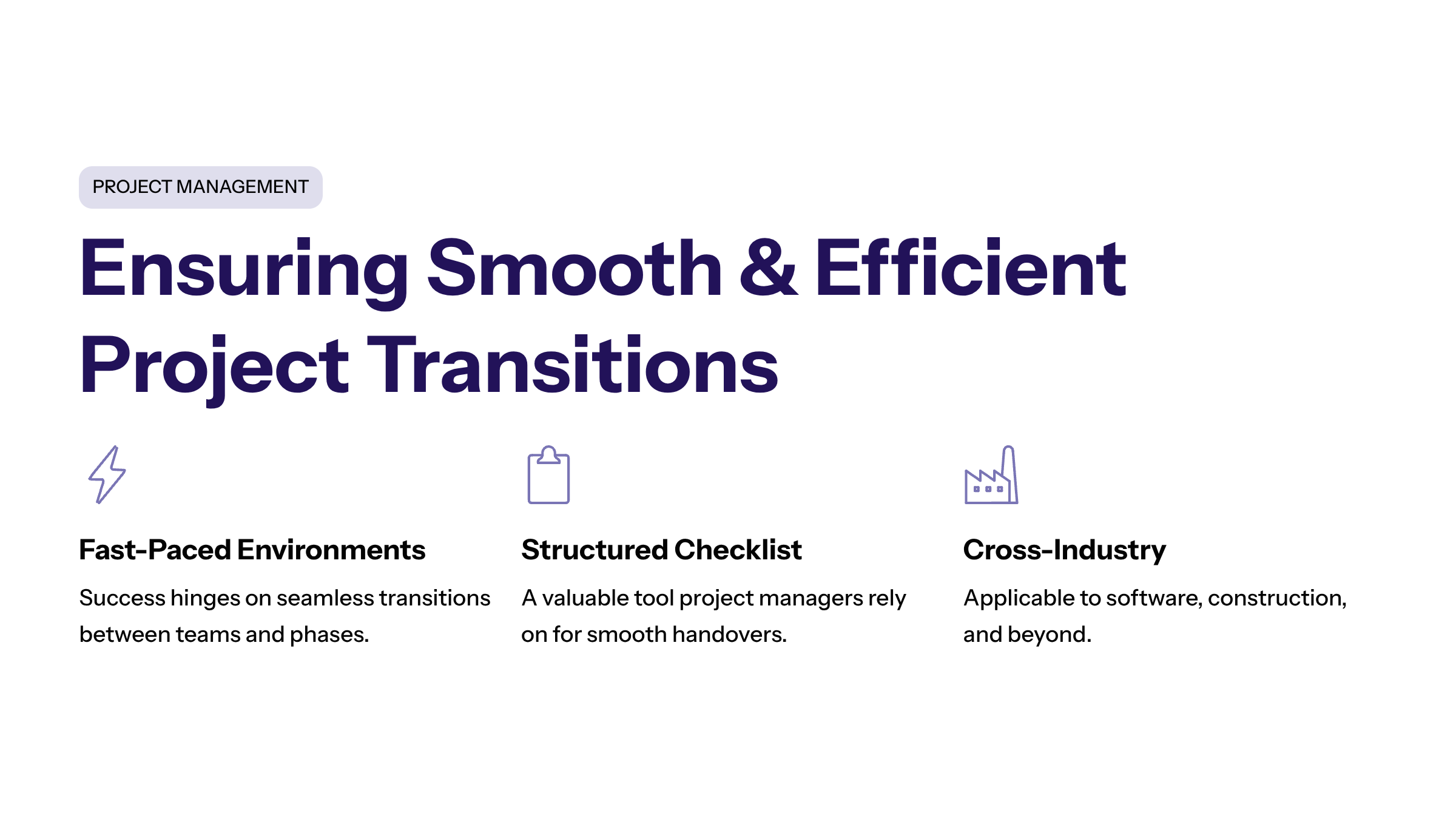
In today’s fast-paced business environment, the success of projects hinges not only on effective execution but also on seamless transitions between teams or phases—a process that requires a structured handoff process and the active involvement of key stakeholders and key team members.
A well-structured handoff mapping checklist is a valuable tool that project managers and organizations rely on to guarantee a smooth and efficient transition.
This article provides an analytical and professional overview of the handoff mapping checklist, its critical role in project handover, and practical strategies to optimize the handover process across industries such as software development, construction projects, and more.
Understanding and implementing a comprehensive handoff mapping checklist ensures that key stakeholders remain on the same page, minimizes disruption, and preserves institutional knowledge through effective knowledge sharing.
By integrating proper documentation, process improvement techniques, clear communication protocols, and ensuring all critical information is captured and shared, organizations can safeguard project outcomes and foster team collaboration.
This approach aligns with modern digital transformation practices where tools like project management software and process maps facilitate transparency and accountability.
Key Takeaways: The Role of Key Stakeholders, Key Metrics, and the Handover Checklist
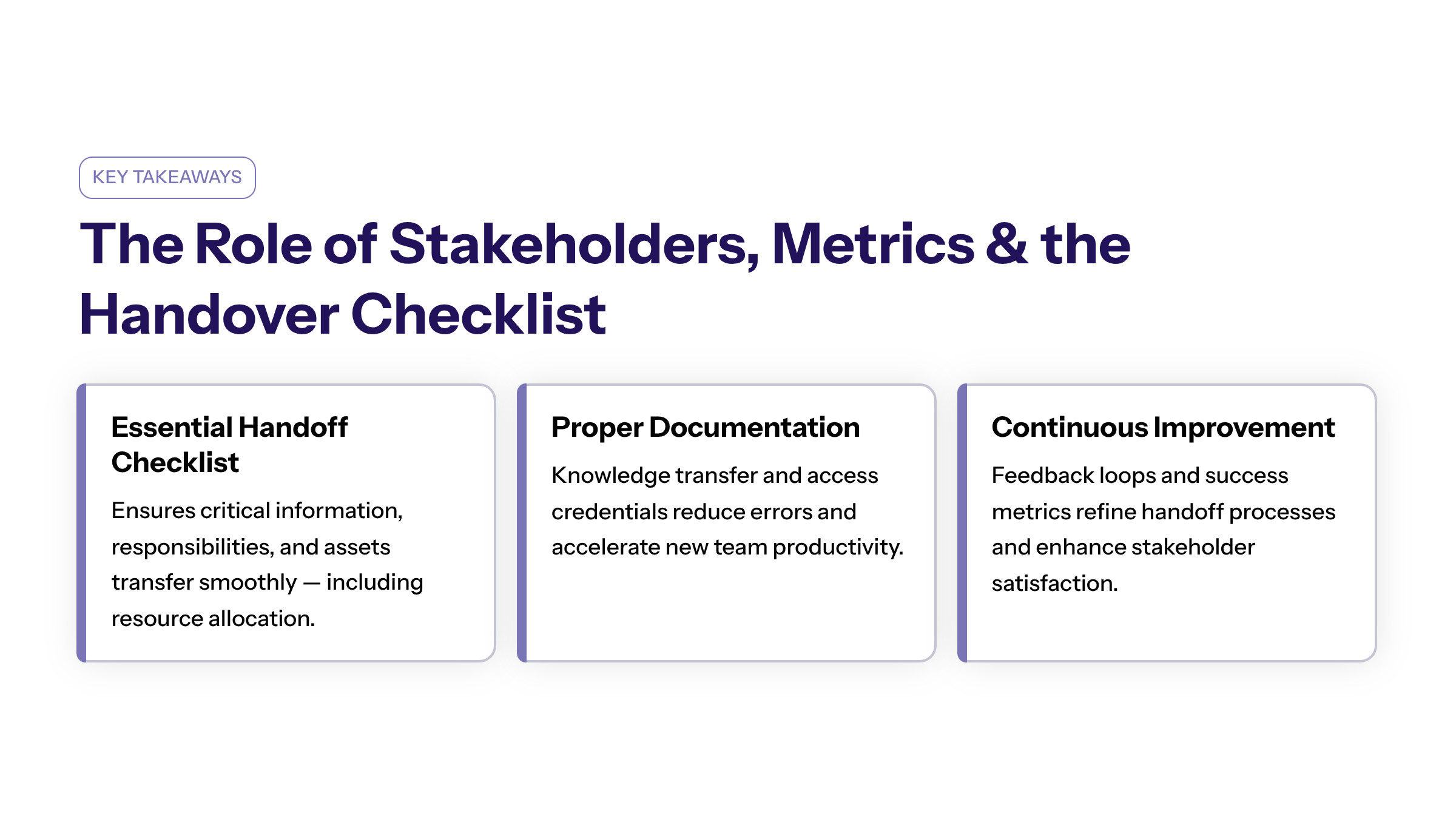
A handoff mapping checklist is essential for managing the handover process, ensuring that all critical information, responsibilities, and project assets, along with effective resource allocation, transfer smoothly to the receiving team.
Proper handover documentation, including knowledge transfer and access credentials, supports a seamless transition, reduces errors, and accelerates the new team’s productivity.
Continuous improvement through feedback loops and by gathering feedback from all parties involved, performance data, and well-defined success metrics enables organizations to refine handoff processes, enhancing stakeholder satisfaction and future project outcomes.

The Importance of a Well-Planned Handover Process and the Handoff Process
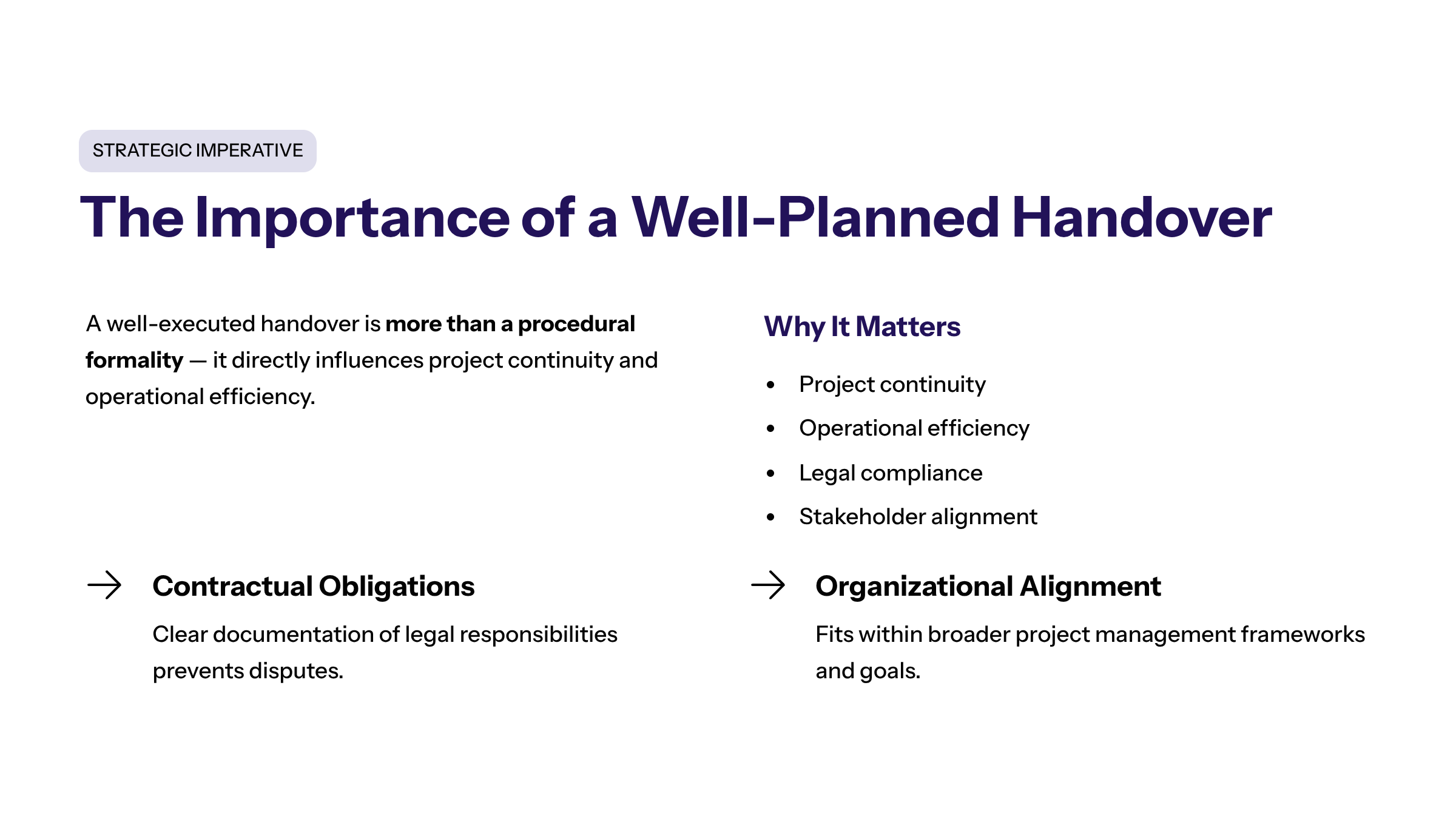
A well-executed handover is more than a procedural formality; it is a strategic imperative that influences project continuity and operational efficiency. Meeting contractual obligations during handovers is also crucial, as clearly documenting and understanding legal responsibilities helps prevent disputes and ensures all parties are aligned. This section explores how a smooth handover process fits within broader project management frameworks and organizational goals.
Process mapping and effective onboarding are foundational to successful handoff mapping and process improvement. These are not just 'nice to have'—they are critical for reducing errors, improving employee experiences, and ensuring compliance. By embedding these practices, organizations can achieve smoother workflows and better overall process performance.
Context and Relevance of Key Stakeholders and Critical Information
Project handovers occur across various industries, including complex software development projects, from software development projects transitioning between development and maintenance teams to construction projects shifting from contractors to facility managers. The complexity of these transitions demands structured approaches to knowledge sharing, documentation, and communication. According to the Project Management Institute, ineffective handovers contribute significantly to project delays and budget overruns, underscoring the need for robust handoff mapping checklists.
Digital transformation initiatives further amplify this need. Enterprises deploying AI-first architectures or integrating FinTech platforms must ensure that handovers preserve compliance with regulations such as HIPAA, PCI-DSS, and GDPR, while maintaining operational continuity. The adoption of new tools to support handover checklists and workflows can enhance process effectiveness, especially during pilot programs and iterative project phases. Therefore, a handoff mapping checklist is not merely a checklist but a valuable tool for risk mitigation and process improvement. Thorough testing and validation during handovers are essential to prevent operational disruptions and ensure a seamless transition.
How the Handover Fits Within Wider Project Management and the Handoff Process
The handover process is a critical phase within the project lifecycle, bridging execution and operational maintenance. It encompasses transferring project assets, documentation, responsibilities, and institutional knowledge to the receiving team, while clearly identifying all parties involved in the handover—including departing and incoming teams, as well as any internal or external key stakeholders impacted by or contributing to the process. Effective handovers facilitate team collaboration and minimize process bottlenecks, which are common pain points identified in process maps.
Organizations like Deloitte Digital and Accenture emphasize integrating handover planning early in the project timeline, allocating resources for knowledge transfer sessions, and leveraging project management software to track progress. This strategic integration helps avoid last-minute rushes and incomplete handovers, ensuring a smooth transition that aligns with service level agreements (SLAs) and organizational standards.
Standardizing handoff content using frameworks such as SBAR or I-PASS is essential to ensure consistency and clarity throughout the handoff process.
Components of a Comprehensive Handoff Mapping Checklist and Critical Information
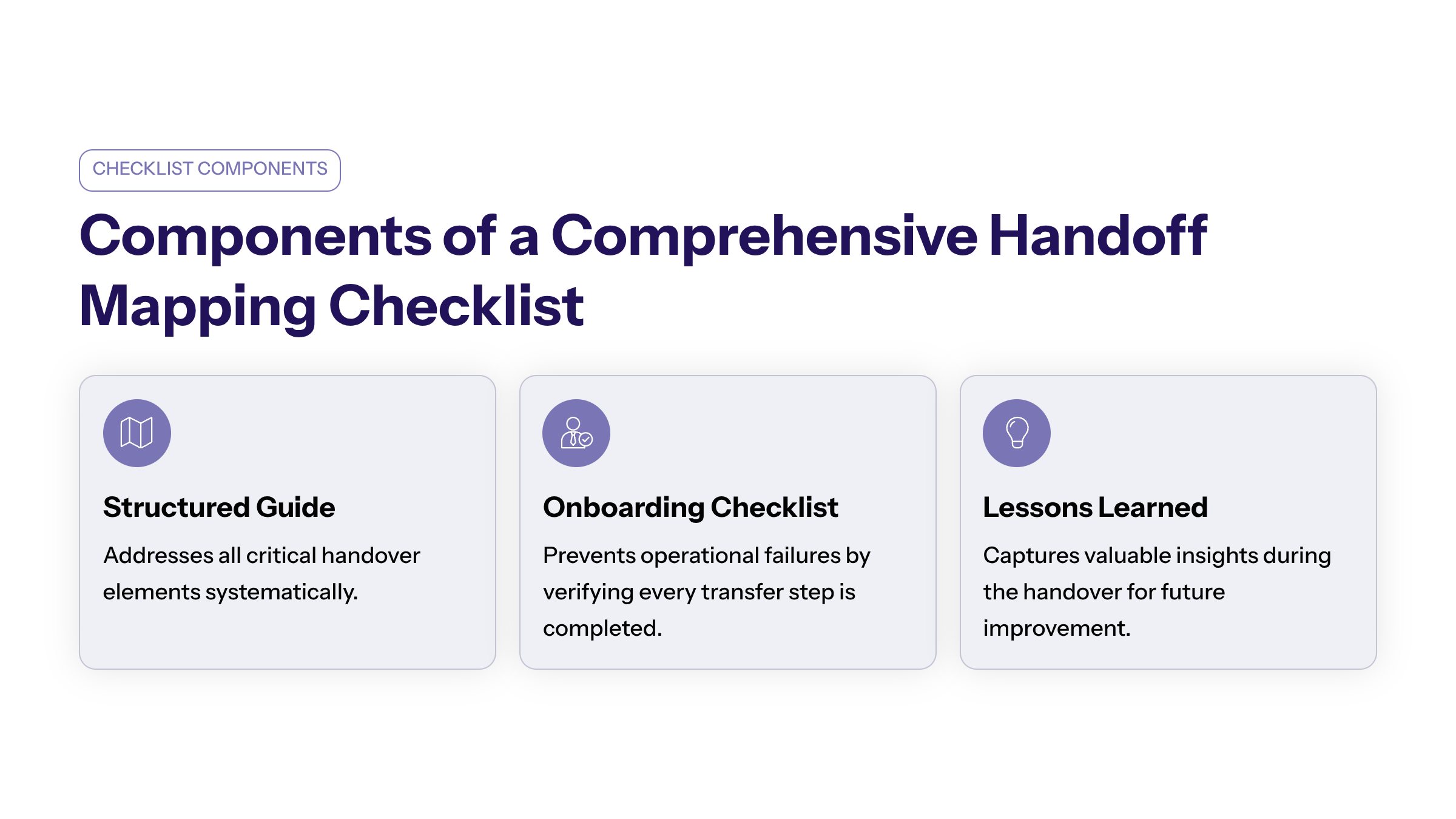
A handoff mapping checklist functions as a structured guide that ensures all critical elements of the handover are addressed systematically. Including a detailed onboarding checklist is crucial, as it helps prevent operational failures by verifying that every critical transfer step is completed and documented. This section delves into the essential components that make such checklists effective, including capturing valuable insights and lessons learned during the handover.
Documentation Components: Centralizing Critical Information
Contact information for all key stakeholders
Inventory of deliverables and assets
Status of outstanding tasks and issues, including a progress report of ongoing or incomplete tasks to help the successor understand what needs to be completed
Access credentials and permissions
Centralized project overview, including objectives, scope, current status, milestones, timelines, deadlines, budget, and deliverable tracking
Technical documentation such as schematics, specifications, user manuals, software dependency management, and process maps that document and standardize workflows
Centralized documentation should include all relevant project files—such as plans, specifications, contracts, and other materials—in an accessible location to ensure continuity and ease of reference.
Introduction to Essential Components of the Handover Checklist
The checklist serves as both a communication tool and an accountability framework. It standardizes handover procedures, reduces errors and omissions, and promotes transparency among involved parties. Key components include stakeholder identification, documentation format, project timelines, access credentials, and training plans.
Establishing clear ownership is crucial, ensuring each task has a primary owner responsible for its completion after the handoff. This clarity helps avoid confusion and ensures accountability throughout the transition.
Stakeholder Identification and Roles: Engaging Key Stakeholders for Effective Knowledge Sharing
Identifying key stakeholders and key team members — including project managers, development teams, and sales teams — is fundamental. Clear role definitions ensure that responsibilities for each handover task are assigned and understood.
Stakeholder Role | Responsibilities | Importance |
|---|---|---|
Project Manager | Oversees handover planning and execution | Ensures alignment and accountability |
Development Team | Transfers technical knowledge and documentation | Preserves institutional knowledge |
Sales Team | Provides client insights and ongoing support | Facilitates client satisfaction |
Receiving Team | Assumes operational control post-handover | Drives project continuity |
“Clear stakeholder mapping is vital to avoid the common pitfall of miscommunication during handovers,” notes Errol Allen Consulting.
Handover Documentation: Ensuring Proper Documentation of Critical Information
Proper documentation is the backbone of an efficient transition. It includes:
Project scope, milestones, timelines, deadlines, budget, duties, deliverables, and challenges
Technical documentation such as user manuals, schematics, software specifications, and dependency management
Access credentials and system permissions
Progress reports on unfinished tasks
Process maps and workflow guides
Training materials including video tutorials and how-to guides
Centralizing these documents in a secure, accessible repository—often integrated within project management software—facilitates easy retrieval and reduces knowledge loss.
Defining Success Metrics and Key Performance Indicators (KPIs)
Establishing measurable success metrics, including defining clear, measurable goals for a successful handover, helps evaluate the handover’s effectiveness. Key metrics may include:
Time to operational readiness for the receiving team
Number of unresolved issues post-handover
Stakeholder satisfaction scores
Compliance with documentation standards
Tracking these KPIs enables continuous improvement and aligns with broader organizational goals, while also evaluating the handover's effectiveness and ensuring a shared understanding of success.
Documentation Format and Accessibility: Integrate Documentation for Easy Access
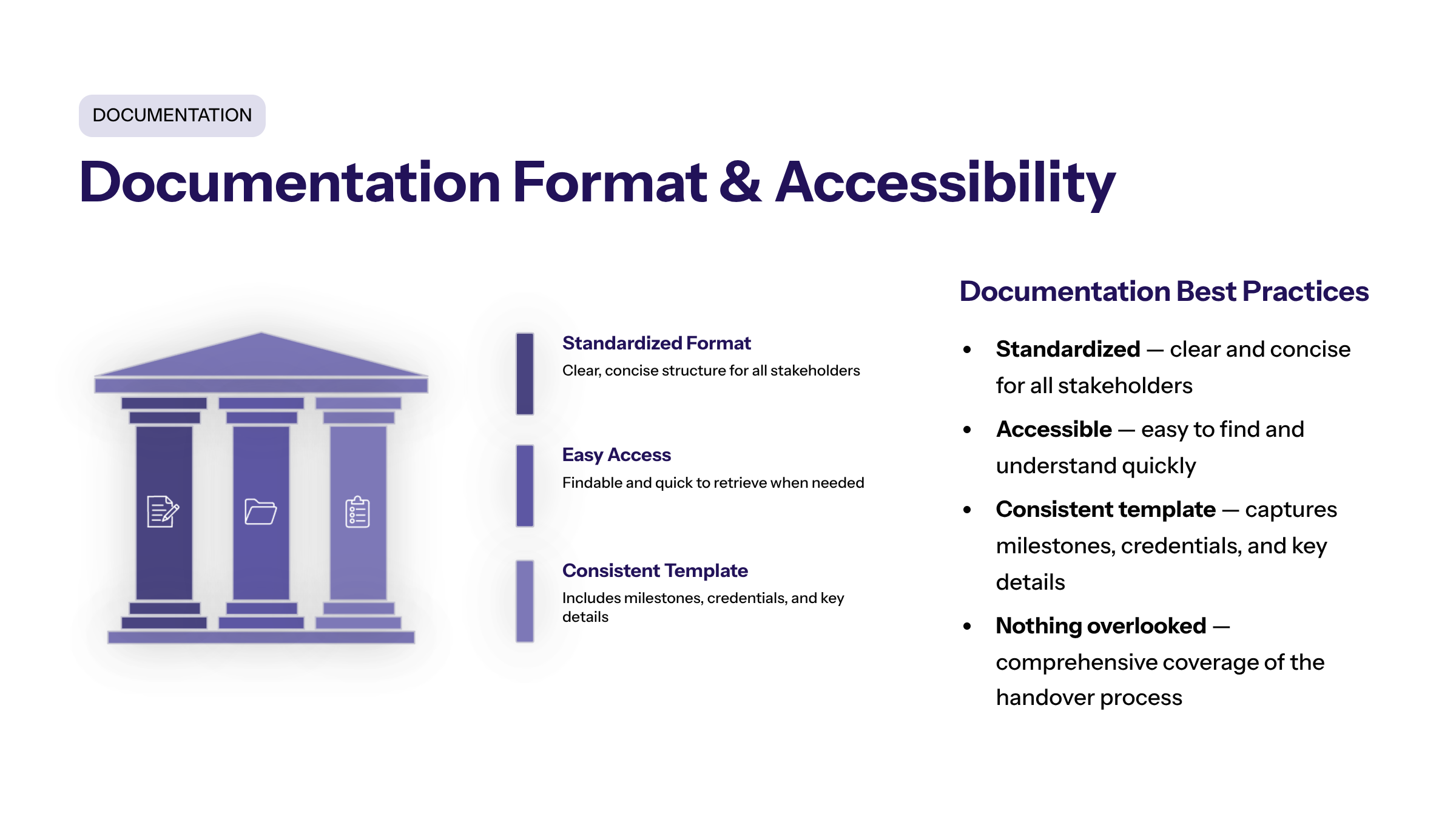
Proper documentation is the backbone of any successful project handover, ensuring a smooth and efficient transition between teams or project phases. The format of handover documentation should be standardized, clear, and concise, making it easy for all key stakeholders to quickly find and understand the information they need. Utilizing a consistent handover checklist template helps capture all relevant details, from project milestones to access credentials, and ensures nothing is overlooked during the handover process.
Equally important is the accessibility of this documentation. Storing handover documents in a central repository—such as a shared drive, project management software, or a dedicated document management system—guarantees that team members, the new team, and the project owner can access critical information at any time. This approach not only streamlines knowledge transfer but also reduces the risk of information silos or lost data, which can disrupt the efficient transition of responsibilities.
By prioritizing both proper documentation format and easy accessibility, organizations empower their teams to maintain continuity, minimize confusion, and accelerate onboarding for new team members. This best practice is essential for ensuring that the handover process supports ongoing project success and sets the stage for future projects.
Managing the Handover Process: Phases and Best Practices for a Smooth Handoff Process
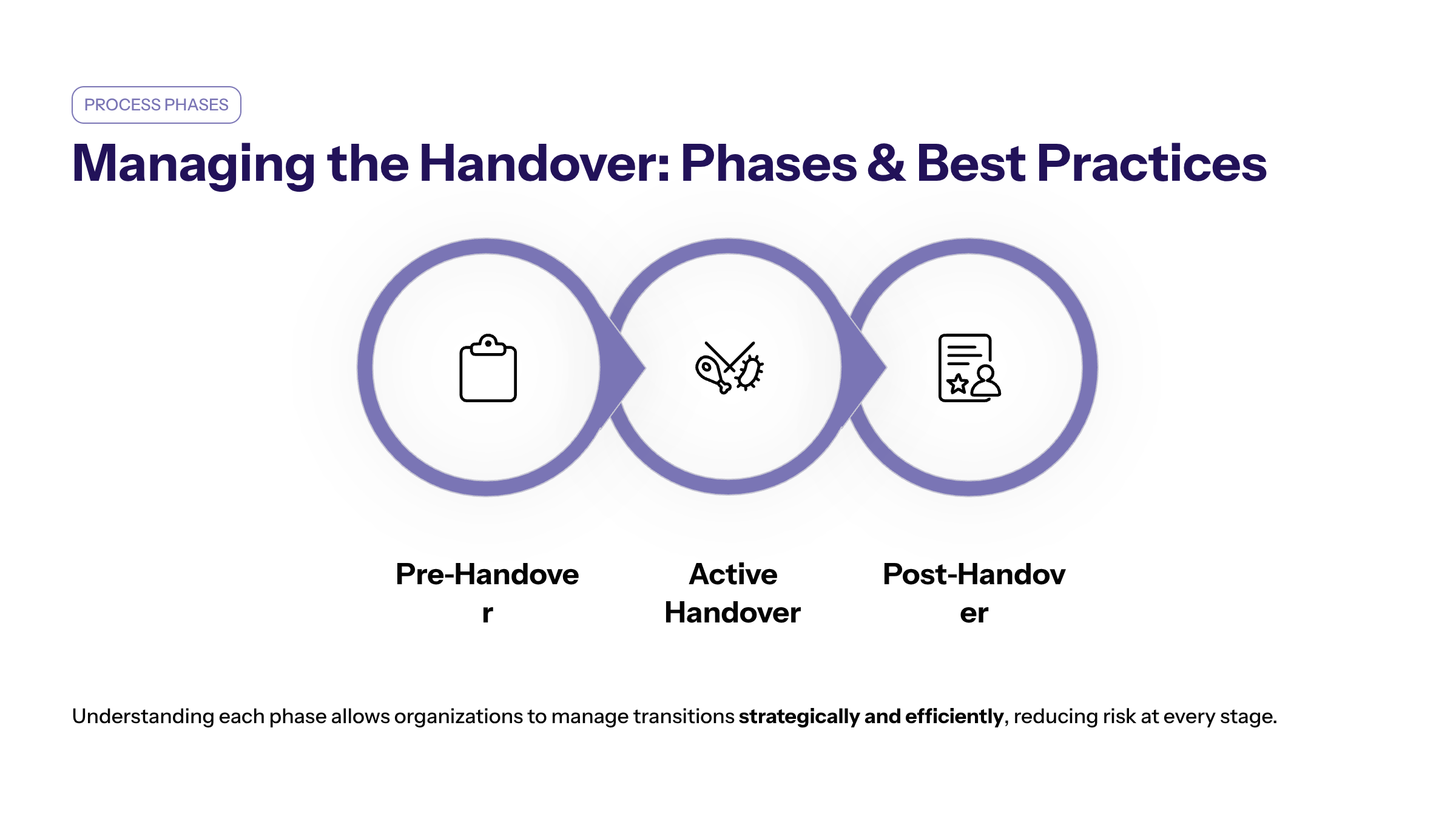
Understanding the phases of the handover process allows organizations to manage transitions strategically and efficiently.
Overview of Handover Phases
The handover process typically unfolds in three phases:
Pre-Handover: Planning, documentation preparation, stakeholder communication, and risk assessment.
Handover Meeting: Formal transfer of responsibilities, walkthroughs, knowledge transfer sessions, and final walkthroughs that address last-minute defects.
Post-Handover: Ongoing support, performance monitoring, feedback collection, and scheduling follow-up reviews.
Each phase requires careful attention to detail and clear communication to ensure a smooth transition. Confirmations and feedback during the handoff process can be ensured through formal acknowledgement from the recipient, securing sign-off from all stakeholders involved.
Pre-Handover: Setting the Stage for Success
During the pre-handover phase, project managers should:
Develop a detailed handover checklist tailored to the project type (software development, construction project, etc.)
Allocate resources for documentation updates and training sessions
Conduct risk assessments to identify potential bottlenecks or knowledge gaps and address unresolved issues and pending approvals
Communicate timelines and expectations to all relevant parties
Handover Meeting: The Critical Transfer Point
The handover meeting formalizes the transition. It should include:
Presentation of handover documentation and project assets
Live demonstrations or walkthroughs of critical systems or processes
Q&A sessions to clarify doubts
Formal sign-off by key stakeholders to acknowledge acceptance
Multishoring emphasizes that “a well-structured handover meeting is the linchpin of a successful handover, setting the tone for operational continuity.”
Post-Handover: Ensuring Ongoing Support and Improvement
After the formal handover, ongoing support is crucial to address unforeseen issues and reinforce knowledge transfer. Best practices include:
Establishing clear points of contact for support queries
Scheduling follow-up meetings to monitor progress and conduct reviews
Collecting feedback to identify areas for process improvement
Updating handoff mapping checklists based on lessons learned to enhance future projects
Change Management and Risk Assessment: Engaging Key Stakeholders and Managing Key Metrics
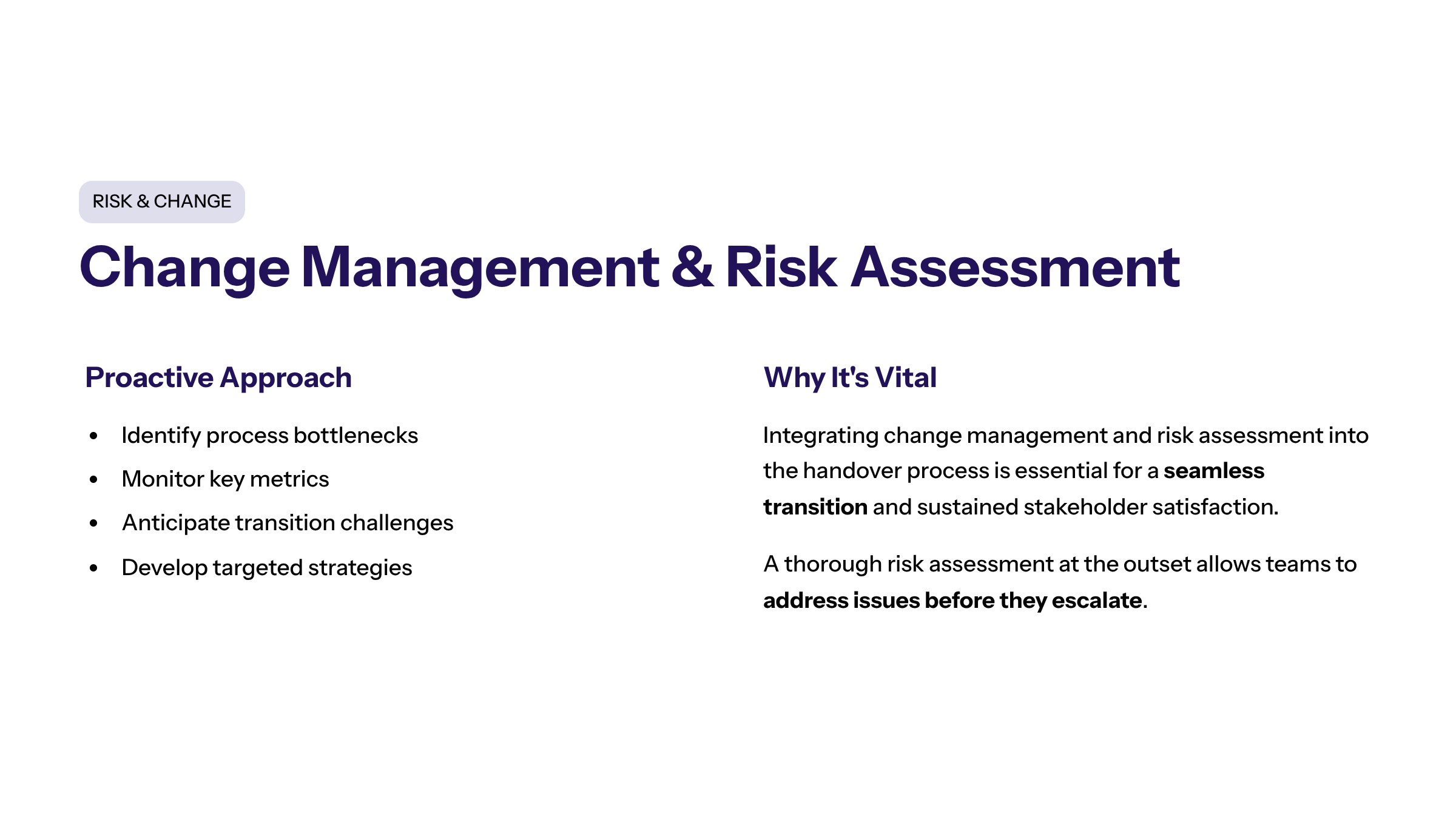
Integrating change management and risk assessment into the handover process is vital for achieving a seamless transition and maintaining stakeholder satisfaction. A well planned handover begins with a thorough risk assessment, where project managers identify potential process bottlenecks, monitor key metrics, and anticipate challenges that could disrupt the transition. This proactive approach allows teams to develop targeted strategies to minimize disruption and address issues before they escalate.
Change management is equally critical, as it ensures that all team members and key stakeholders are on the same page throughout the handover. Communicating effectively about upcoming changes, new responsibilities, and any process adjustments helps to align expectations and foster buy-in from everyone involved. This includes regular updates, clear documentation of process changes, and open channels for feedback and questions.
By embedding change management and risk assessment into the handover process, organizations can not only safeguard project outcomes but also enhance stakeholder satisfaction and team collaboration. This approach supports a well executed handover, reduces resistance to change, and lays the groundwork for continuous improvement in future project transitions.
Leveraging Technology and Process Improvement for Seamless Transitions: Visually Map and Integrate Documentation
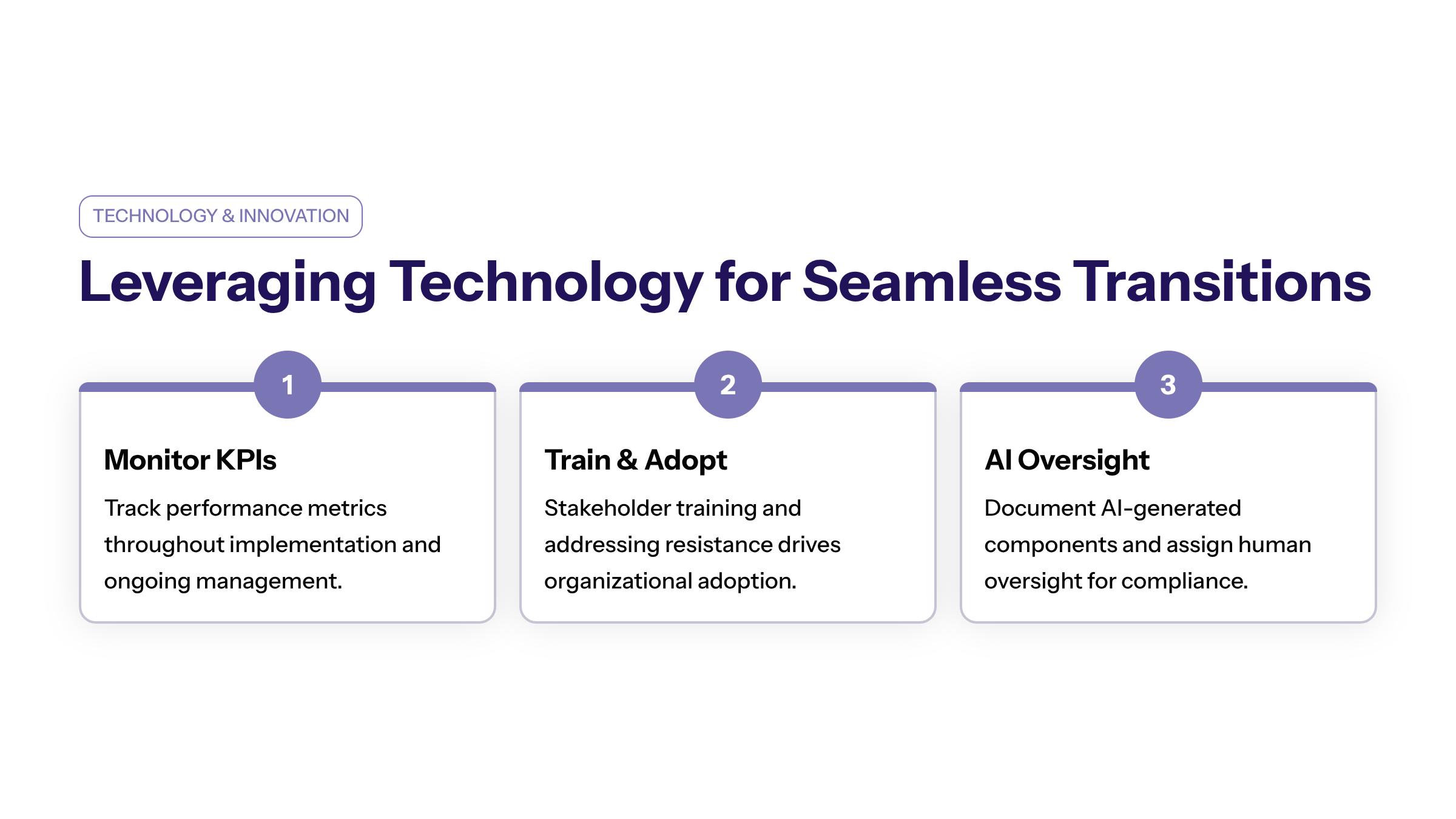
Modern project environments benefit significantly from integrating technology and continuous process improvement into handover practices. The implementation and ongoing management of a new process should include monitoring KPIs, training stakeholders, addressing resistance, and ensuring organizational adoption to drive sustainable success.
When using AI tools in project management, it is essential to clearly document AI-generated components and assign human oversight to ensure compliance.
Role of Project Management Software and Process Maps to Visually Map Workflows
Project management software platforms such as Jira, Trello, or Microsoft Project enable centralized tracking of handover tasks, documentation, and deadlines. These tools support automated reminders, version control, and collaboration features that enhance transparency.
Process maps visually represent workflows and handoff points, helping teams identify process bottlenecks and rework loops. This visualization aids in refining handover procedures and aligns with Six Sigma methodologies for process improvement. Visual maps reveal bottlenecks, duplicate steps, and inefficiencies, providing insights that help shorten cycle times and improve future processes.
Practical Strategies for Knowledge Transfer and Documentation Integration
Effective knowledge transfer involves more than handing over documents. Knowledge handover documentation is a common practice in many industries whenever it's necessary to train a new employee or a new team on a task or a project. The goal of handover documentation is to ensure a smooth transition and continuity of work, regardless of the underlying reason for the change.
Practical strategies include:
Structured knowledge transfer sessions with clear objectives
Use of multimedia resources like video tutorials and interactive FAQs
Creating centralized, searchable repositories for handover documentation
Encouraging knowledge sharing culture to mitigate resistance and preserve institutional knowledge
Continuous Improvement and Feedback Loops
Instituting feedback loops ensures that handoff processes evolve with organizational needs. Regularly reviewing success metrics, gathering stakeholder feedback, and updating checklists contribute to a culture of continuous improvement.
Organizations like BASF and Mace have demonstrated success by embedding these practices into their handover workflows, resulting in reduced downtime and improved project outcomes.
Conclusion: The Strategic Value of a Handoff Mapping Checklist for Smooth and Efficient Transitions
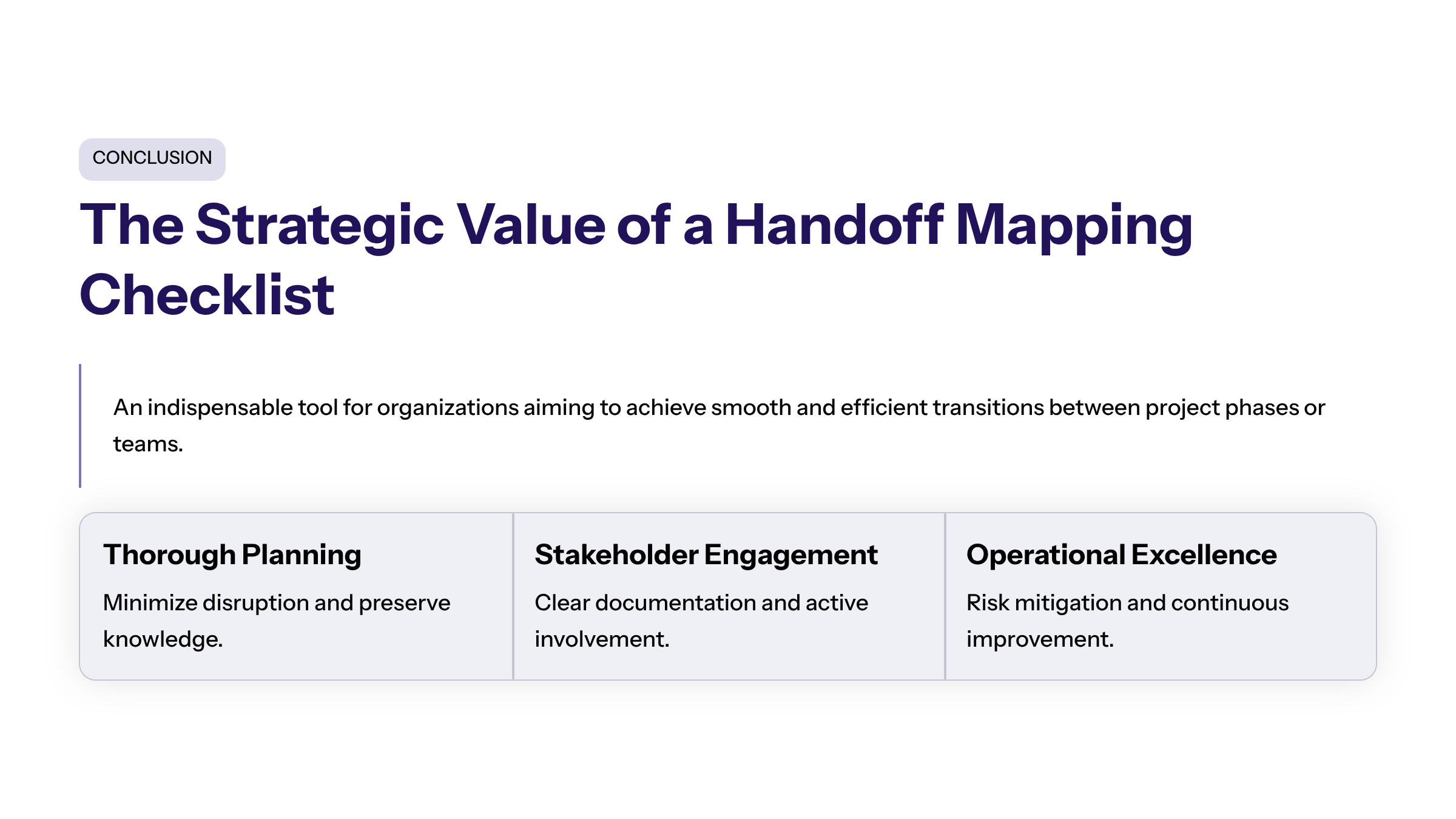
A handoff mapping checklist is an indispensable tool for organizations aiming to achieve a smooth and efficient transition between project phases or teams. By combining thorough planning, clear documentation, stakeholder engagement, and technology integration, organizations can minimize disruption, preserve valuable knowledge, and enhance project outcomes.
For executive leaders and project managers, investing in a well-planned handover process is a strategic move that supports operational excellence, risk mitigation, and continuous improvement. As digital transformation accelerates and projects become increasingly complex, mastering the art of project handover will remain a critical factor for sustained success.
For organizations seeking to implement or refine their handoff mapping checklists, consulting with experts in AI-driven software development and digital transformation—such as Cognativ—can provide tailored strategies to optimize handover processes and drive measurable business outcomes.