How to Reduce Rework Rate in Manufacturing
Manufacturing rework remains a critical challenge that directly impacts production efficiency, operational costs, and customer satisfaction.
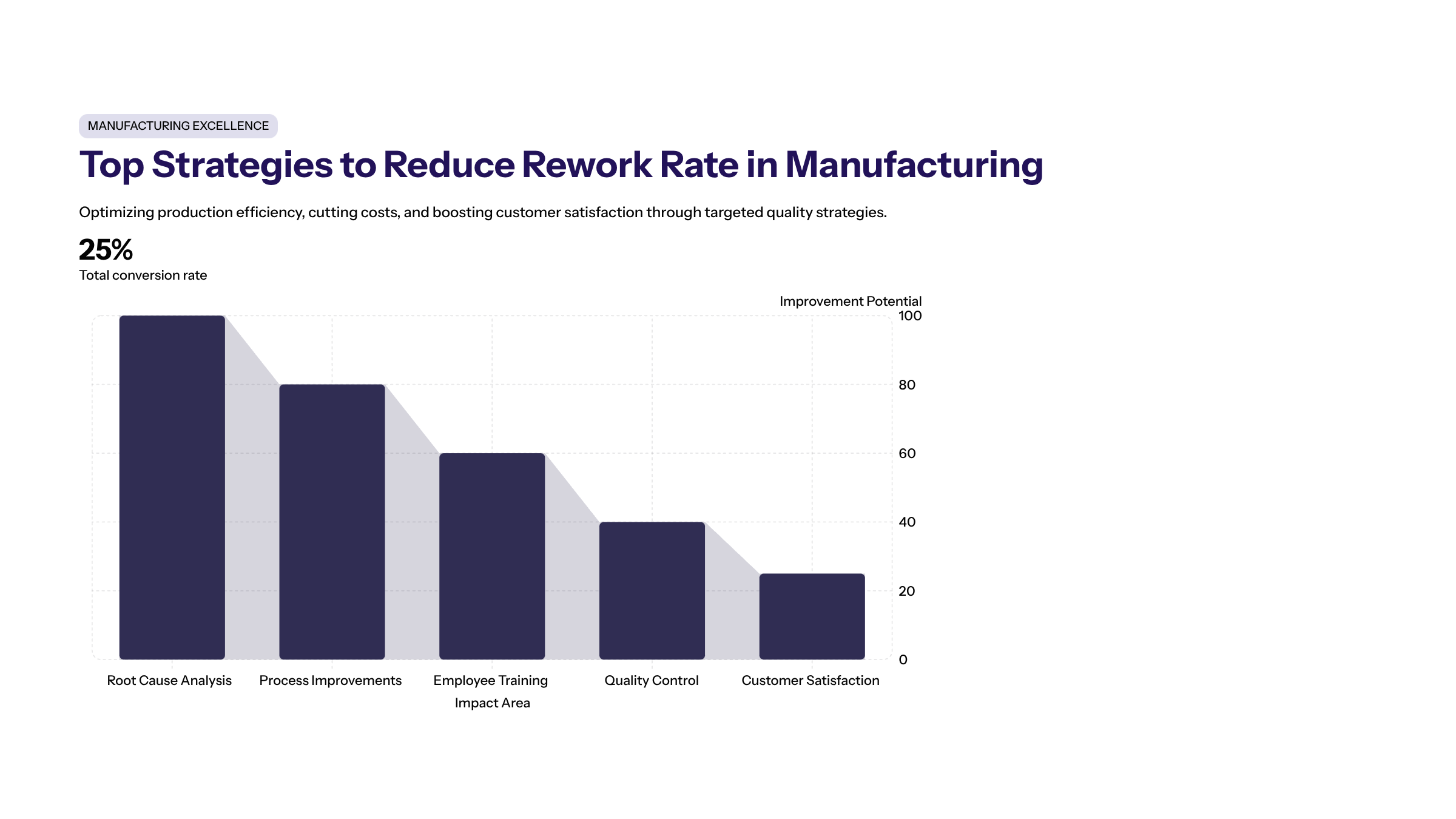
This article offers an in-depth exploration of strategies to reduce rework rate, emphasizing the importance of quality control measures, employee training, root cause analysis, and process improvements.
By understanding and addressing the root causes of defects and errors, businesses can optimize their production lines, minimize additional costs, and enhance overall product quality to meet stringent product specifications.
Key Takeaways
Reducing rework rate is essential for improving production efficiency, controlling costs, and satisfying customers.
Implementing comprehensive quality management systems, including standard operating procedures and employee training, plays a pivotal role in minimizing defects and rework.
Conducting root cause analysis and addressing inconsistent quality through data-driven process improvements enable manufacturers to sustain long-term operational excellence.
Standardized documentation helps ensure consistent quality checks are performed correctly every time.
Frequent plant floor checks are paramount for verifying that operators are following standardized work.
Using data for coaching rather than punishment can help improve team performance and reduce rework.
Centralizing project data in a single software platform eliminates errors caused by bad data or data silos.
Introduction to Manufacturing Rework and Its Impact on Customer Satisfaction
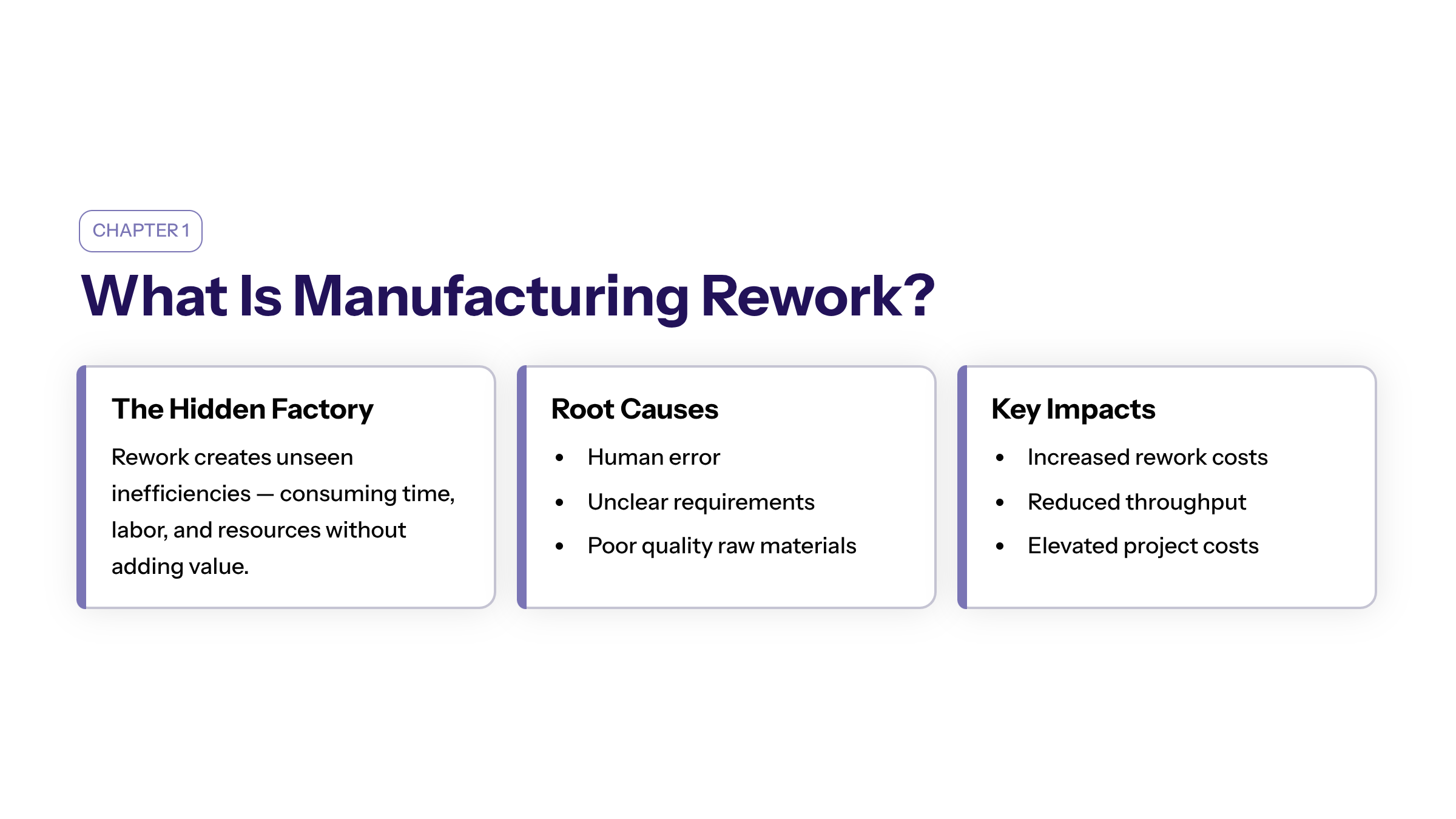
Manufacturing rework refers to the process of correcting or redoing products or procedures that fail to meet defined quality standards or product specifications. High rework rates often indicate underlying issues such as human error, unclear requirements, or the use of poor quality raw materials.
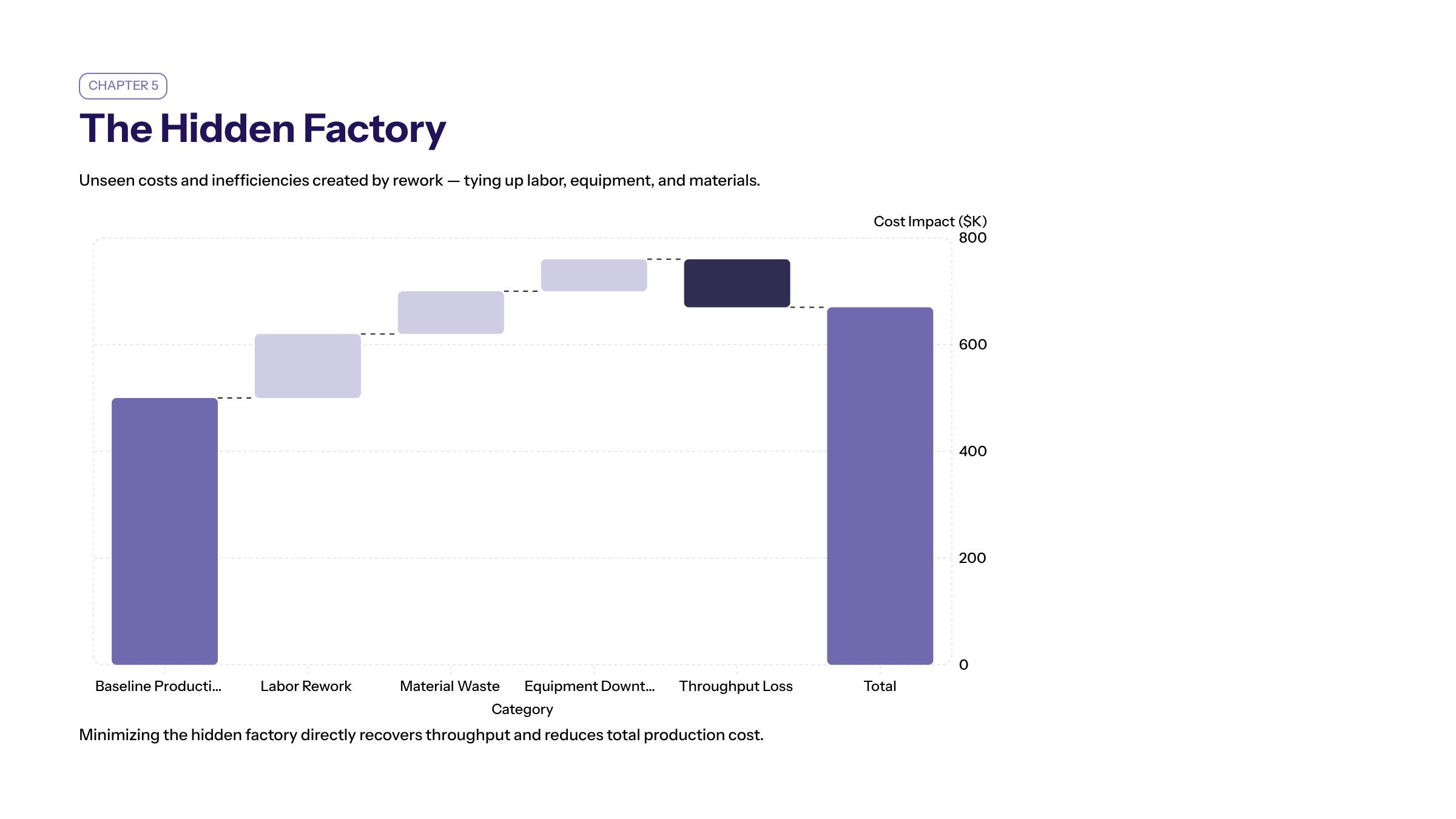
These defects not only increase rework costs but also consume valuable time and resources on the shop floor, creating what is often referred to as a "hidden factory." This hidden factory represents inefficiencies that reduce production line throughput and elevate overall project costs.
In today’s competitive manufacturing landscape, reducing rework rate is not simply a matter of cutting costs but a strategic imperative that directly influences customer satisfaction and brand reputation.
Satisfied customers expect consistent product quality delivered on time, which can only be achieved through rigorous quality control and continuous process improvements. Connected worker software can help bridge gaps by providing operators with the necessary resources to ensure first-time quality.

Understanding Rework Rate in the Manufacturing Process
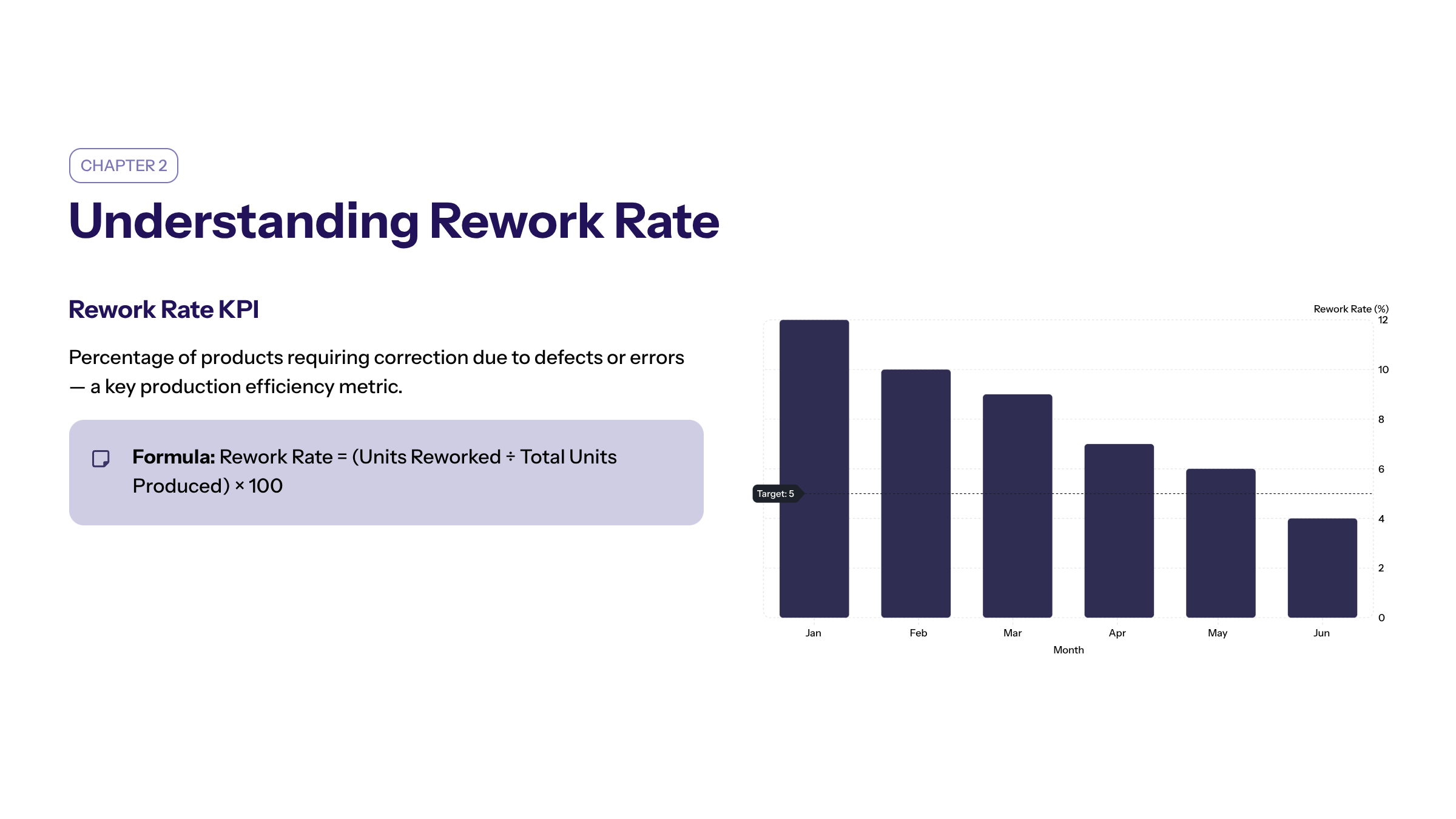
The rework rate is a key performance indicator (KPI) that quantifies the percentage of products or processes requiring correction due to defects or errors. It serves as a valuable metric for tracking production efficiency and identifying areas that require attention.
Calculating Rework Rate
Rework rate measures the percentage of products that require rework due to defects or errors and is calculated as follows:
Metric | Formula |
|---|---|
Rework Rate (%) | (Number of Reworked Products / Total Products Produced) × 100 |
For example, if a manufacturing line produces 10,000 units and 500 require rework, the rework rate would be 5%. Tracking this rate over time allows businesses to identify patterns and implement targeted quality management interventions. |
Rework Rate also serves as a critical quality indicator for documentation teams, measuring how often content must be revised, corrected, or completely redone after initial creation. Implementing Rework Rate tracking can identify which API docs require the most corrections after publication.
Tracking rework rates by individual writer and content type helps establish baseline metrics for different document complexities.
Using Rework Rate as a coaching and development metric helps identify training needs and optimize assignments. Tracking rework occurrences at each workflow stage identifies stages with the highest rework rates.
Establishing specific, measurable criteria distinguishes between normal iterative improvements and actual rework requiring correction of errors or defects.
The Impact of High Rework Rate and Rework Trends on Customer Satisfaction
Analyzing rework trends provides insights into recurring issues such as inconsistent quality or unclear requirements that require rework. These trends help businesses allocate resources efficiently and prioritize corrective actions to improve production processes.
"Manufacturers who proactively track and analyze rework data can reduce their hidden factory costs by up to 30%, leading to significant improvements in delivery times and customer satisfaction." — Industry Quality Manager, Siemens AG
Analyzing rework trends helps product managers understand the root cause of rework and identify strategies to reduce it. Using data for coaching, not punishment, leverages rework rate metrics as development tools to identify training opportunities.
Quality Control Measures to Address High Rework in the Manufacturing Process
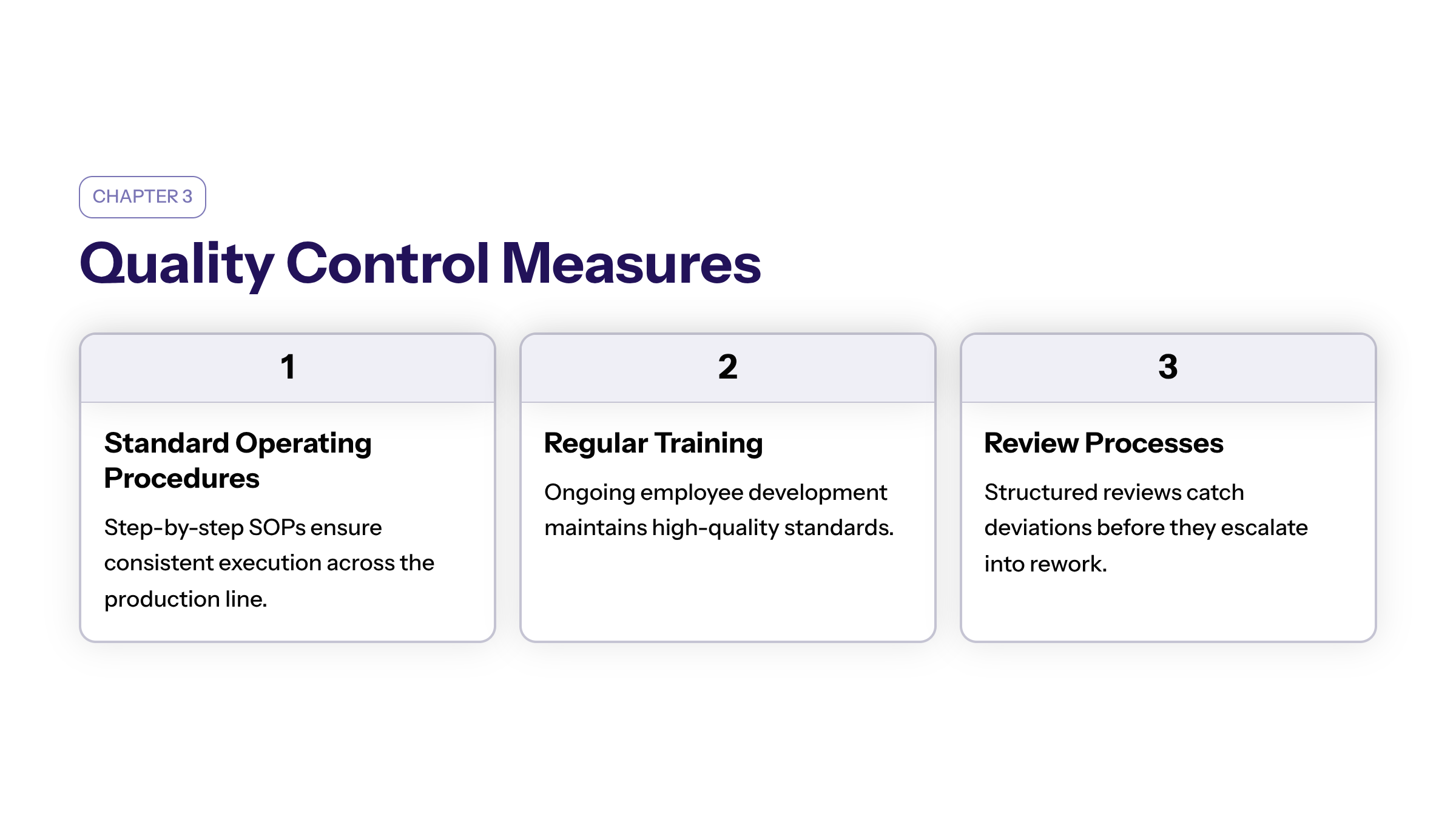
Effective quality control measures form the backbone of any strategy to reduce rework rate. These measures encompass standard operating procedures (SOPs), regular training, and review processes designed to maintain high-quality standards throughout the production line.
Standard Operating Procedures (SOPs)
SOPs provide detailed, step-by-step instructions that ensure consistent execution of manufacturing processes. By clearly defining decision points and quality checkpoints, SOPs help prevent errors and reduce variability caused by human error.
They set the groundwork for subsequent activities such as employee training and audits. Enhancing templates and style guides based on common rework patterns can strengthen upfront quality measures.
Material Quality and Supplier Management
Poor quality materials are a common source of defective products that require rework. Establishing stringent supplier quality management and material inspection protocols is essential to minimize the introduction of defective inputs into the production line.
This focus on reducing scrap and preventing defective products early in the process directly contributes to lower rework rates and increased efficiency.
Employee Training and Development to Reduce High Rework Rate
Ongoing employee training ensures that workers are equipped with the latest tools and knowledge to perform their tasks accurately. Training programs should focus on:
Identifying product defects early
Understanding quality standards and product specifications
Using diagnostic and inspection tools effectively
Applying corrective actions to prevent rework
Regular training sessions and mentoring programs foster a culture of quality and accountability, reducing inconsistent quality and the need for major revisions. Contractors who invest in regular training can reduce rework costs by 11-22%. Providing additional training and giving operators the right resources enables teams to maintain high standards and reduce errors that lead to rework.
Reducing High Rework in the Manufacturing Process
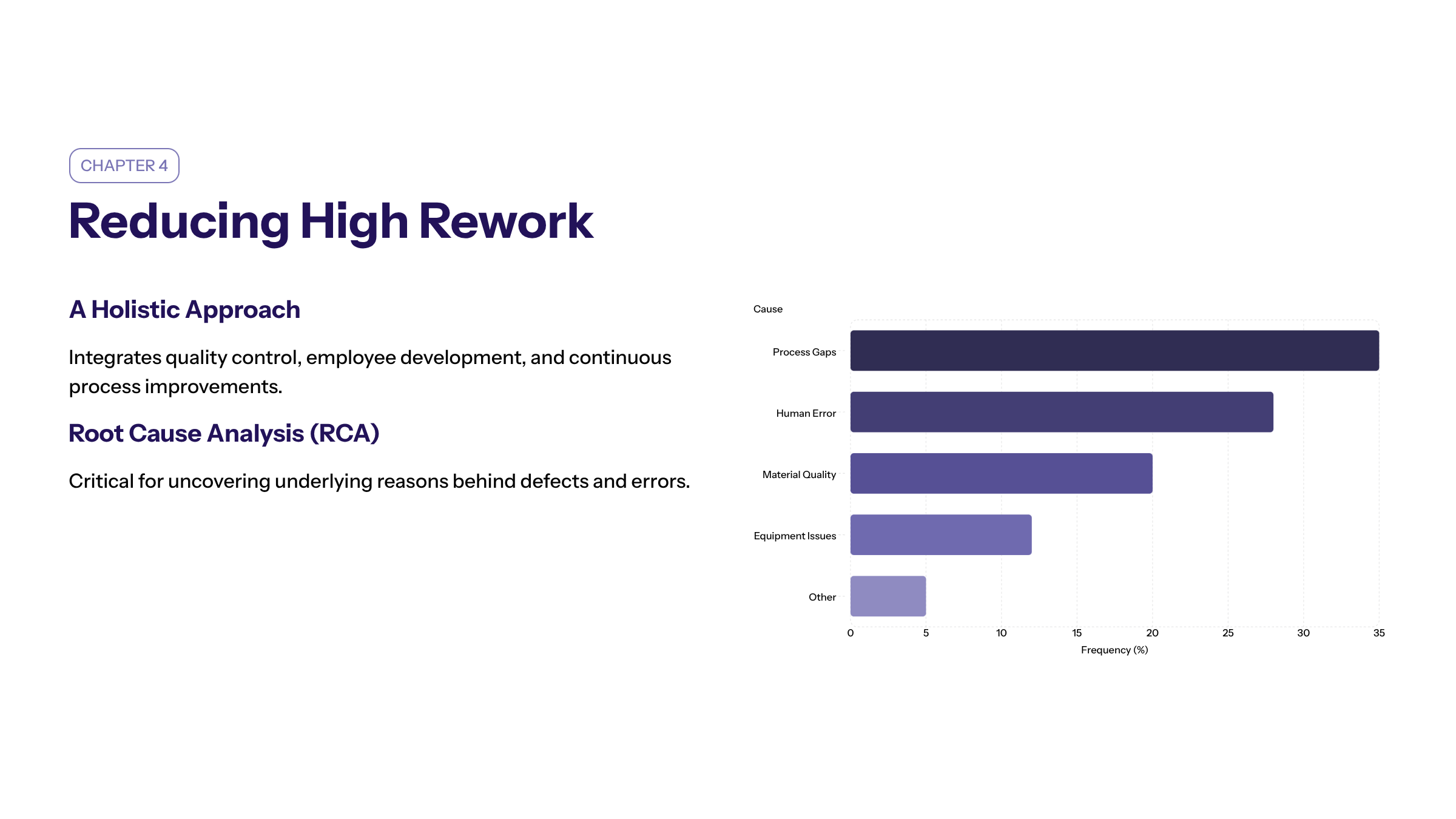
Reducing rework requires a holistic approach that integrates quality control, employee development, and continuous process improvements.
Identifying Root Causes of High Rework Rate
Root cause analysis (RCA) is critical for uncovering the underlying reasons behind defects and errors. Techniques such as the "5 Whys" or fishbone diagrams help teams systematically identify and address issues like unclear requirements or process bottlenecks.
Process Improvements to Lower High Rework Rate
Implementing process improvements based on RCA findings can include:
Refining product design to eliminate complexity that leads to errors
Enhancing inspection protocols to catch defects early
Automating repetitive tasks to reduce human error
Improving communication channels to keep all stakeholders on the same page, using project management software to ensure updates on modifications and defects
These efficient ways to improve efficiency can significantly reduce rework and associated increased costs. Mistake-proofing (Poka-Yoke) involves embedding mandatory checklists into digital workflows to prevent task progression if quality checks are missed.
Building Information Modeling (BIM) allows for early spotting and correction of design errors in the pre-construction phase, preventing up to 70% of design flaw-related rework.
Utilizing predictive analytics can help identify risks and under-resourced activities that typically lead to quality issues.
Leveraging Data and Technology to Monitor and Reduce High Rework
Advanced data analytics and shop floor digitalization enable real-time tracking of rework instances and quality metrics.
These tools provide valuable insights that inform decision-making and continuous improvement efforts. Giving operators access to digital tools and dashboards enables teams to respond quickly to quality issues and reduce rework.
Technology provides crucial tools in addressing challenges related to rework, offering visibility into processes and resources needed for quality assurance. Centralizing project data in a single software platform eliminates errors caused by bad data or data silos.
"Digital transformation in manufacturing, including AI-driven quality management systems, empowers teams with actionable data to proactively reduce rework and optimize production efficiency." — Digital Transformation Lead, GE Digital
Daily problem-removal meetings can surface blockers and early-stage mistakes, improving project outcomes. An "async-first" culture utilizes digital project boards and threaded discussions to reduce meeting frequency, allowing for complex problem-solving only when necessary.
WorkOps is a framework that combines people, processes, tools, and AI to enhance productivity and prioritize employee well-being.
The Hidden Factory: Impact of High Rework on the Manufacturing Process
The hidden factory represents the unseen costs and inefficiencies created by rework activities. It ties up labor, equipment, and materials that could otherwise be used to produce defect-free products.
Minimizing the Hidden Factory Caused by High Rework
Strategies to minimize the hidden factory include:
Implementing robust quality control measures early in the production process
Providing employees with the tools and training necessary to prevent errors
Streamlining workflows to reduce rework decision points
Continuously monitoring production line performance to identify inefficiencies
Reducing the hidden factory not only decreases operational costs but also improves delivery reliability and customer satisfaction. Improving first-time complete rates leads to lower operational costs by reducing the need for rework and additional visits.
Control Measures to Sustain Low Rework Rate and Enhance Customer Satisfaction
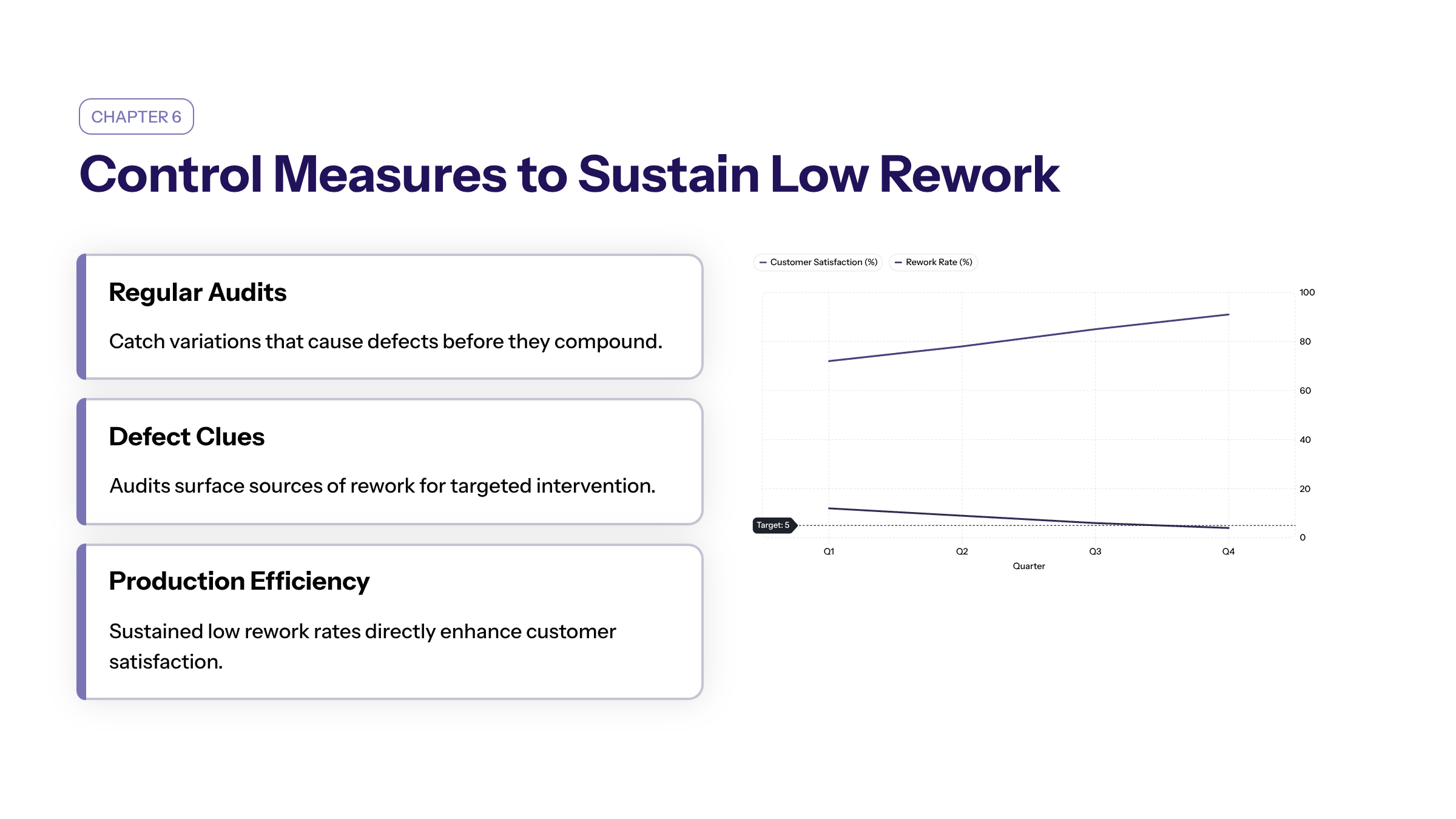
Control measures are essential to maintaining low rework rates and ensuring production efficiency.
Regular Reviews and Audits to Manage High Rework
Frequent audits help catch variations that cause defects and provide important clues when investigating potential sources of rework. Periodic reviews and audits of manufacturing processes help verify adherence to SOPs and quality standards. These activities identify lapses that could lead to product defects and require rework.
Continuous Improvement Programs to Combat High Rework Rate
Instituting continuous improvement programs such as Lean or Six Sigma fosters a proactive approach to quality management. These methodologies emphasize eliminating waste, reducing variability, and enhancing process stability.
Employee Engagement in Quality Control to Reduce High Rework
Encouraging employee involvement in quality initiatives promotes ownership and accountability. Workers who understand the impact of their role on product quality are more likely to identify and prevent errors. Investing in employee training and development is critical to reducing product rework rates by equipping staff with necessary skills.
Root Cause Analysis for High Rework Rate Reduction
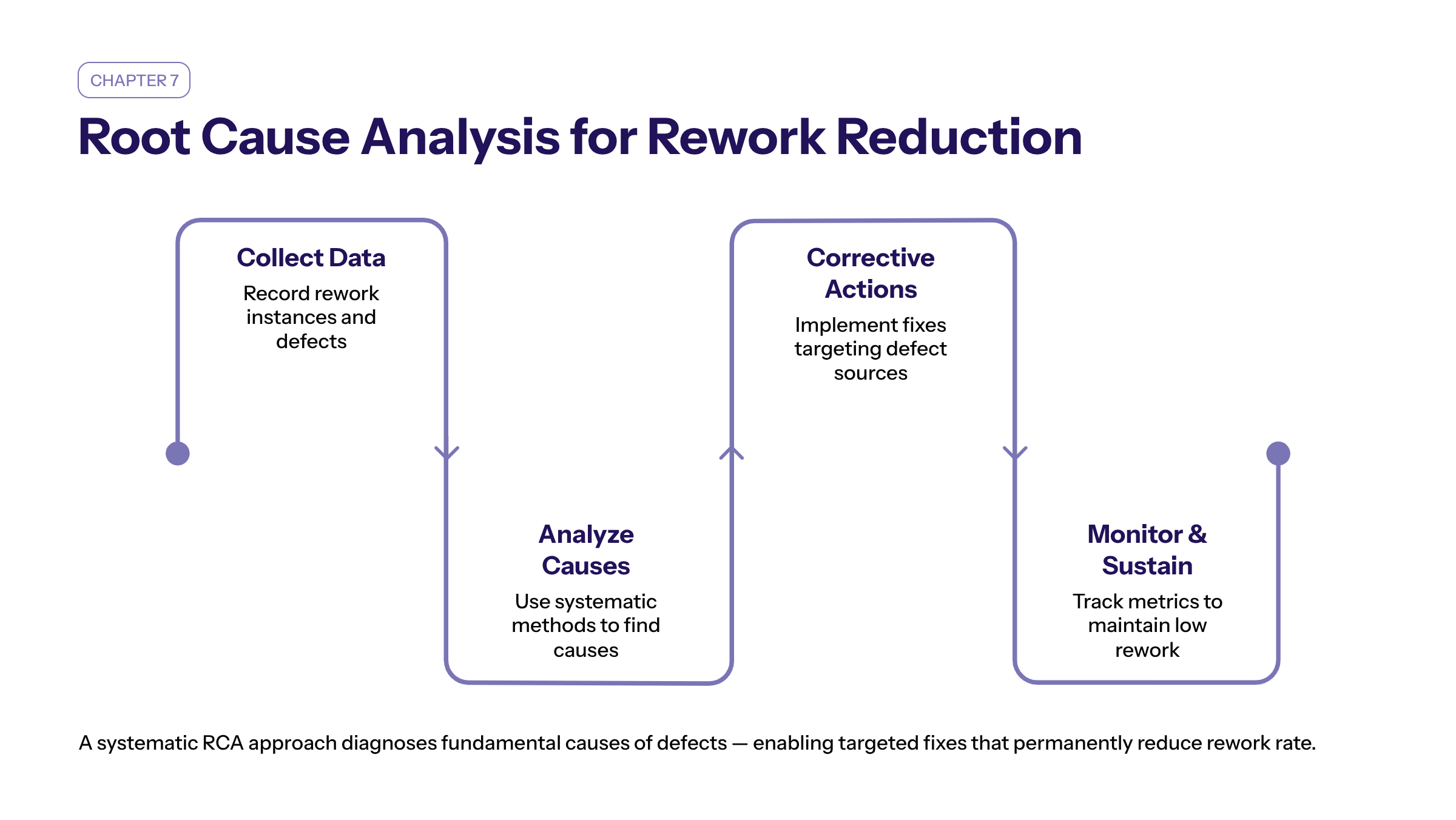
Root cause analysis is a systematic approach to diagnosing the fundamental causes of defects and errors that lead to rework.
Implementing Root Cause Analysis to Address High Rework
Effective RCA involves:
Collecting data on rework instances and product defects
Categorizing defects by type and severity
Analyzing process steps to pinpoint failure modes
Developing corrective actions to address root causes
Monitoring the effectiveness of implemented solutions
Benefits of Root Cause Analysis in Managing High Rework Rate
By focusing on root causes rather than symptoms, manufacturers can reduce rework costs, improve product quality, and enhance customer satisfaction over time.
"Root cause analysis is not just a reactive tool; it’s a strategic enabler that drives sustainable quality improvements and operational excellence." — Quality Assurance Director, Toyota Motor Corporation
Reducing rework rate is a multifaceted challenge that demands a strategic, data-driven approach.
By integrating quality control measures, investing in employee development, leveraging technology, and conducting thorough root cause analysis, manufacturers can significantly enhance production efficiency, reduce costs, and deliver superior products that satisfy customers and comply with rigorous product specifications.
These efforts ultimately position businesses to compete effectively in a dynamic global market.