Identifying Common Operating Model Anti Patterns
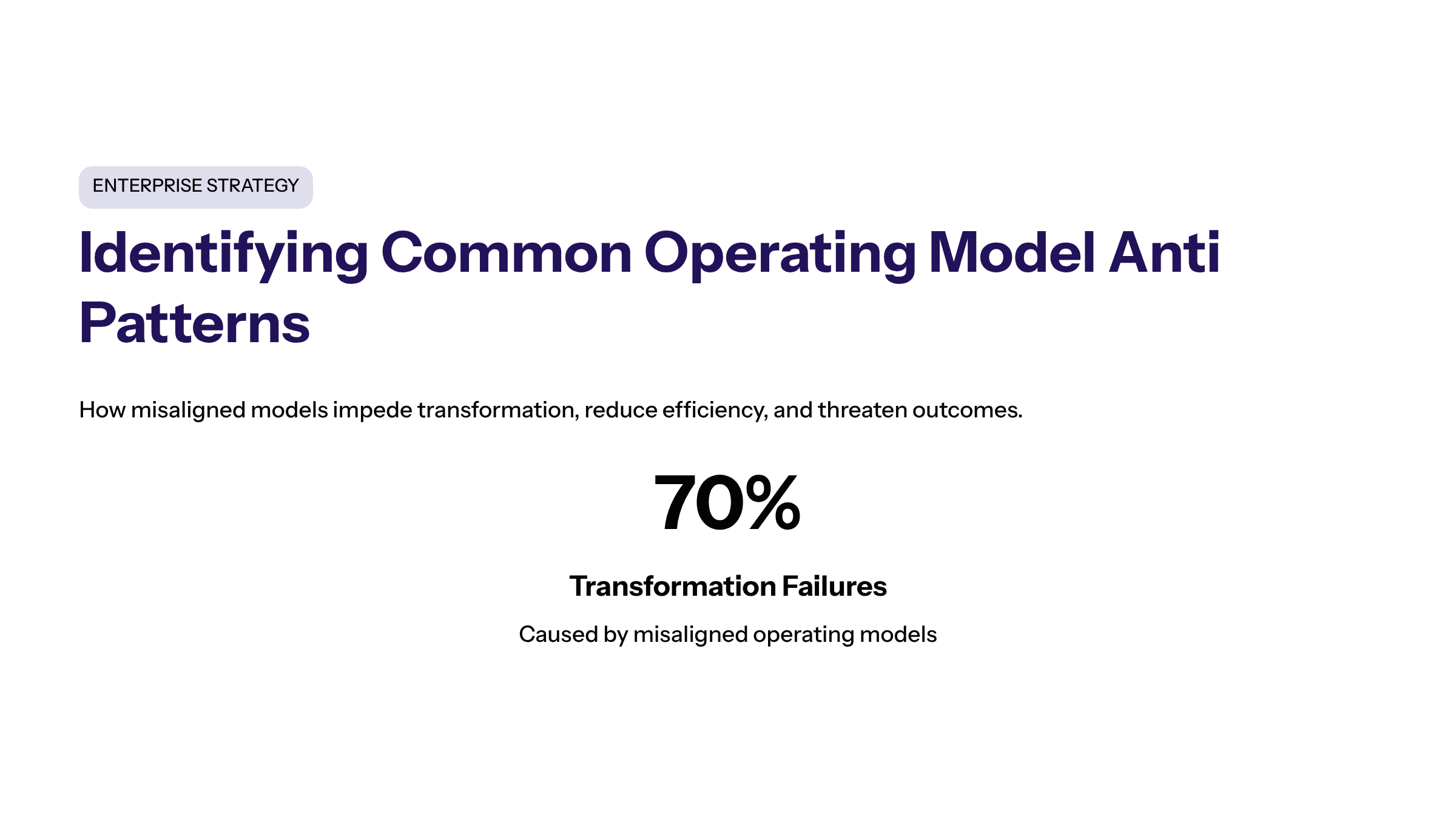
In today’s rapidly evolving business landscape, operating models serve as the backbone for organizational success, defining how companies deliver value and achieve strategic objectives. Misaligned operating models are estimated to cause up to 70% of organizational transformation failures. However, many enterprises encounter common operating model anti patterns that impede transformation efforts, reduce efficiency, and threaten business outcomes.
This article offers an analytical exploration of these anti patterns within the context of the product operating model, providing executives with insights to recognize, address, and ultimately overcome these pitfalls.
Understanding and mitigating operating model anti patterns is crucial for organizations aiming to sustain competitive advantage, especially amid digital transformation initiatives. It is essential to clearly define strategic elements—such as goals, metrics, and roadmaps—to prevent anti patterns from taking root. By aligning product vision, strategy, and leadership style, organizations can empower product teams to deliver meaningful outcomes, enhance customer satisfaction, and drive business value.
Being actively involved in transformation efforts is key to ensuring a successful transition and shift towards a product operating model. Organizations can fail if they do not support an ongoing system for continuous improvement, maintenance, and alignment.
We delve into the underlying causes of these anti patterns, their impact on portfolio management and team dynamics, and actionable strategies to course correct and foster a culture of continuous improvement.
Key Takeaways
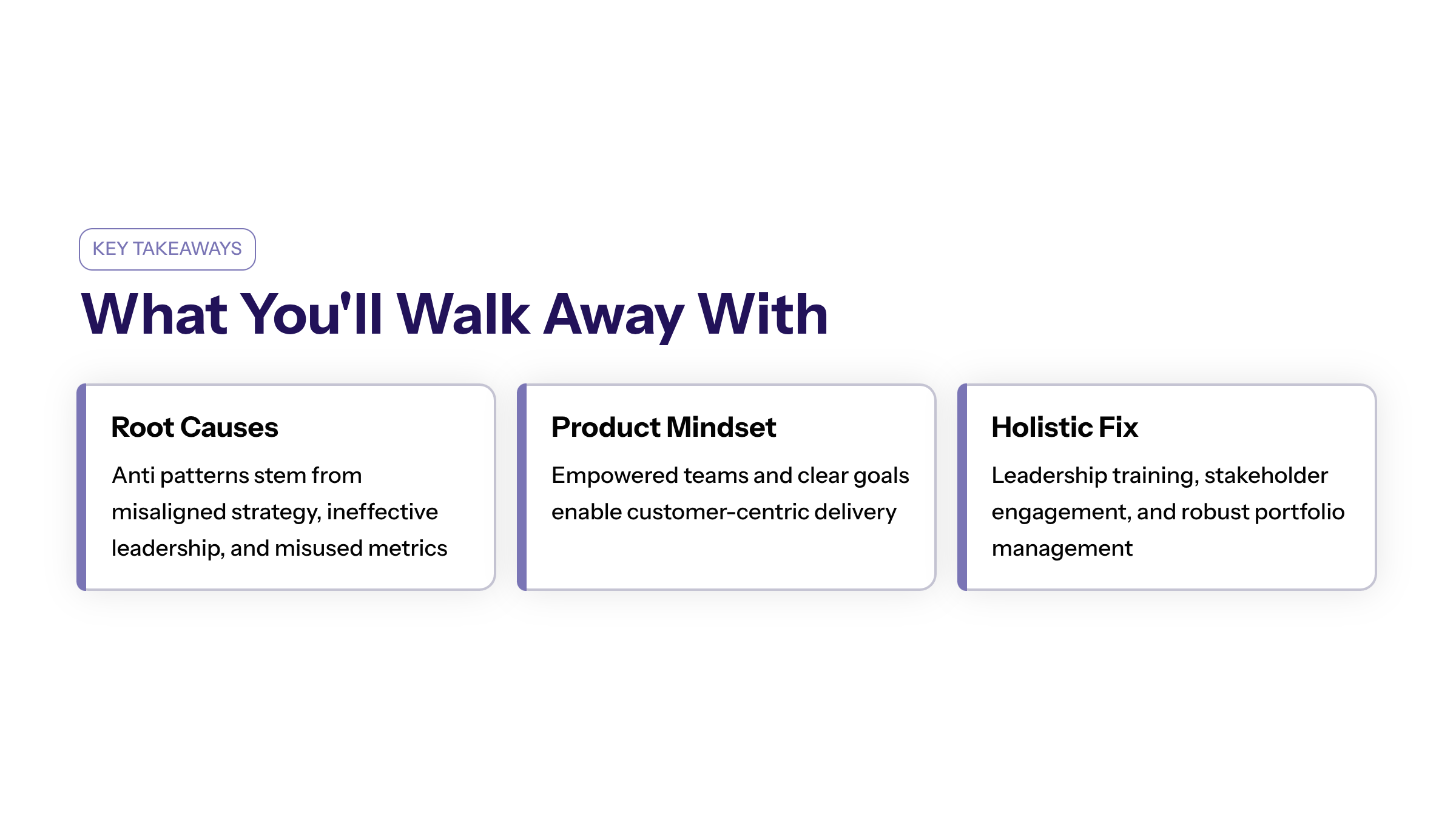
Operating model anti patterns often stem from misaligned strategy, ineffective leadership, and the misuse of metrics, leading to transformation failure and diminished business performance.
The product operating model emphasizes empowered teams, clear strategic goals, and a product mindset that collectively enable organizations to navigate complex systems and deliver customer-centric solutions.
Addressing common pitfalls requires a holistic approach involving leadership training, stakeholder engagement, and robust portfolio management to support successful transitions and measurable outcomes, highlighting the importance of managing the transition process and implementing the right solution to address anti patterns.

Introduction to Operating Models
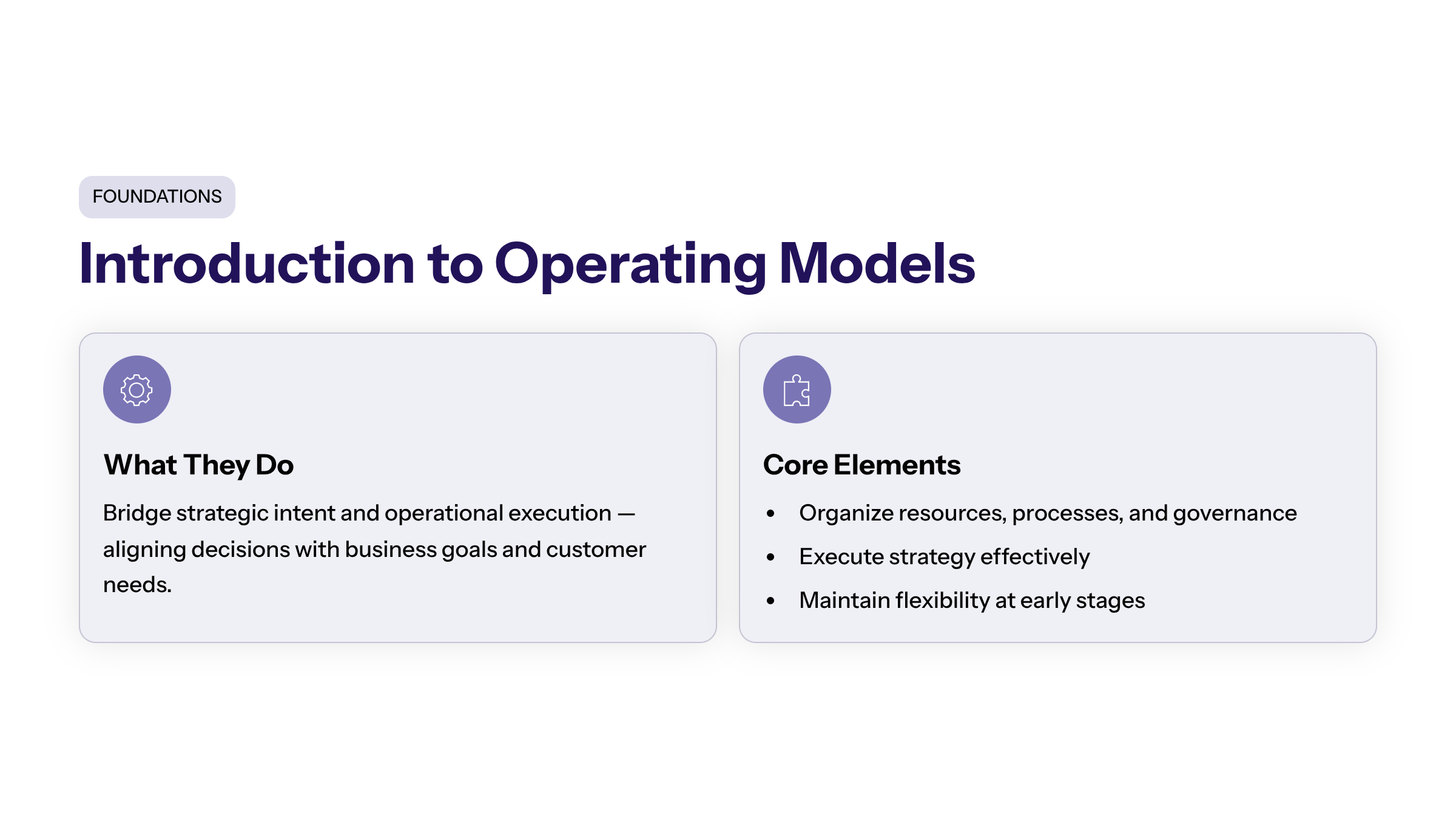
Operating models articulate how organizations organize resources, processes, and governance to execute strategy effectively. It is crucial to clearly define the scope of the operating model and avoid getting bogged down in excessive detail at early stages, as flexibility and high-level alignment are key to adapting to evolving requirements.
They bridge the gap between strategic intent and operational execution, ensuring that decisions align with business goals and customer needs. In the context of digital transformation, a well-defined operating model is indispensable for managing complexity, accelerating innovation, and improving time-to-market.
The Role of Operating Models in Business Value Creation
Operating models enable organizations to translate strategic goals into actionable initiatives by defining roles, responsibilities, workflows, and decision-making frameworks.
For example, companies like Microsoft and Amazon have leveraged adaptive operating models to scale innovation while maintaining operational discipline. These models facilitate collaboration across product teams, engineering, and stakeholders, ensuring alignment and shared accountability.
Common Challenges and Anti Patterns in Operating Models
Despite their importance, many organizations fall prey to operating model anti patterns that undermine transformation efforts. These include fragmented decision-making, reliance on vanity metrics, insufficient leadership support, and misaligned incentives. Such patterns often result in siloed teams, duplication of effort, and a lack of focus on outcomes that matter to customers and the business. Siloed Operations occur when teams work in isolation, leading to duplicated efforts and information hoarding.
Silo Mentality results in departments working in isolation with little collaboration, which creates inefficiencies. The structure and culture of an organization can significantly contribute to these anti patterns, making it critical to address organizational alignment and collaboration.
In addition, overly rigid constraints within the operating model stifle creativity and prevent meaningful problem-solving, limiting teams’ ability to innovate and adapt. Shadow governance is another critical anti pattern where unofficial decision-makers override formal structures, undermining alignment and disrupting focus across teams.
Furthermore, the presence of spaghetti code or process—overly complex, tangled, or undocumented workflows and codebases—can severely impede maintainability and agility, creating hidden technical debt that slows down delivery.
Understanding the Product Operating Model
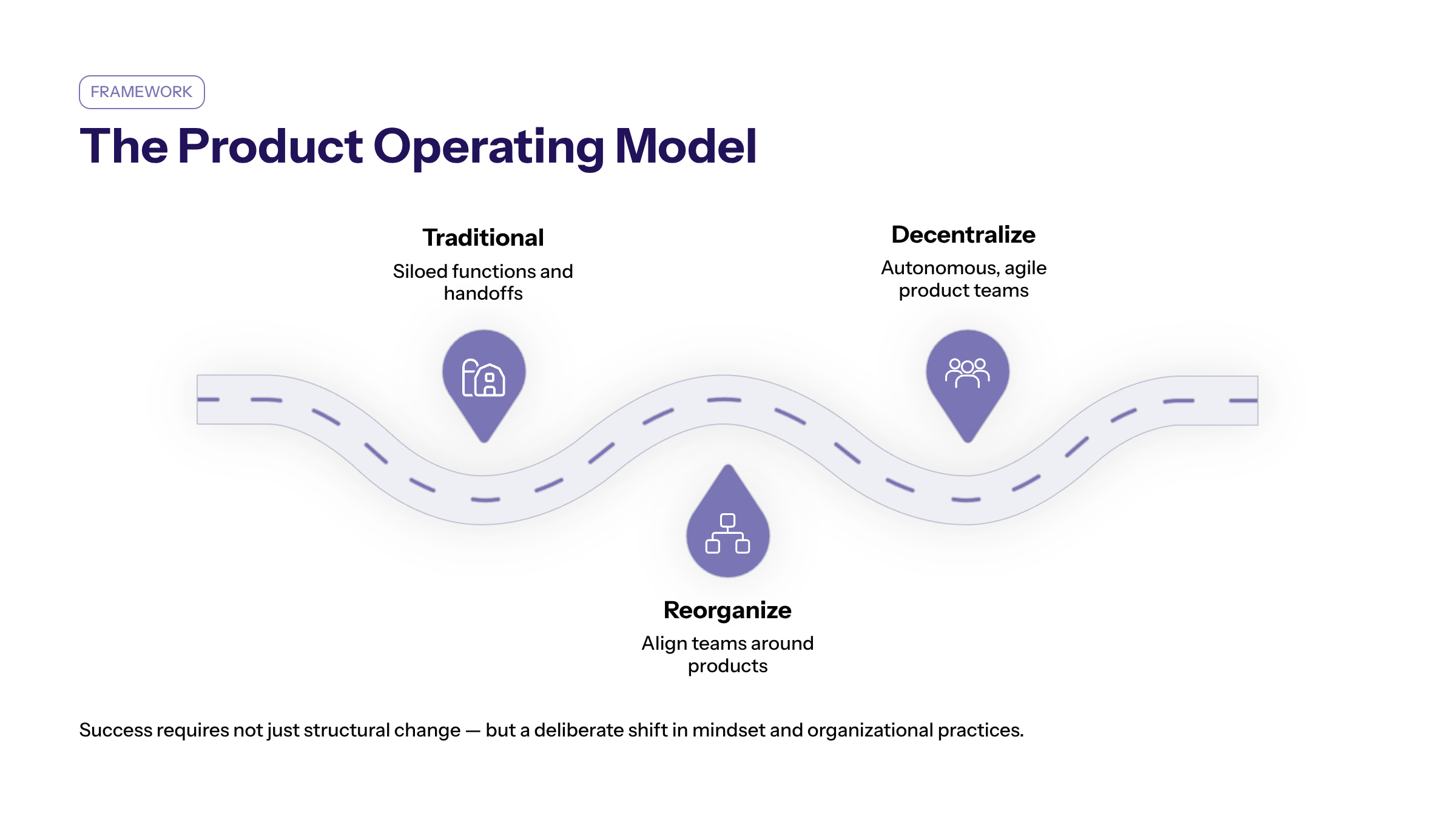
The product operating model is a specialized framework designed to organize and empower product teams to deliver continuous value. As a modern product model, it requires a transition from traditional, siloed approaches to a more decentralized and agile way of working.
This transition involves not only structural changes but also a deliberate shift in mindset and organizational practices to fully realize the benefits of the product model. It integrates product vision, strategy, and execution, emphasizing autonomy balanced with alignment to strategic objectives.
Defining the Product Operating Model
At its core, the product operating model fosters a product mindset where teams are accountable for outcomes rather than outputs. To ensure success, it is essential to clearly define the key points of the model, including roles, objectives, and decision-making frameworks, so that everyone understands their responsibilities and the purpose behind each element.
This approach contrasts with traditional project-based models by focusing on solving customer problems through iterative discovery and delivery. Organizations such as Spotify and Atlassian exemplify this model by structuring teams around product areas with clear objectives and enabling decision-making closer to the work.
However, organizations must avoid the 'Golden Hammer' strategy—an obsessive application of a single framework or methodology across various parts of the organization regardless of its suitability—which can create rigidity and reduce adaptability.
Similarly, 'Bolted-On' compliance, where governance is treated as a downstream activity after product development rather than integrated into the design process, can lead to costly rework and compliance risks.
Empowering Teams and Facilitating Collaboration
Empowered teams are central to the product operating model. They possess the skills, insights, and authority to make decisions, supported by product managers, designers, and engineering leads. This cross-functional collaboration enhances innovation and responsiveness to market changes.
However, empowerment requires deliberate leadership to balance autonomy with alignment and to provide necessary training and support. It is essential to train teams and ensure teams understand the strategic context and purpose behind their empowerment, so they can operate effectively and align with organizational goals.
Over-reliance on 'heroes'—where success depends on a few individuals stepping outside formal processes to solve problems—can create bottlenecks and risks. Building team competence and fostering shared ownership helps mitigate this anti pattern.
Ongoing Evaluation and Improvement
Continuous evaluation of the operating model, along with maintaining a robust system for ongoing improvement and alignment, ensures it remains aligned with evolving business goals and customer expectations.
Metrics should measure success in terms of business outcomes, customer satisfaction, and team effectiveness. Incorporating feedback loops and adapting portfolio management practices are vital for sustaining performance and avoiding common anti patterns.
Transitioning from large-scale, monolithic transformations to iterative design involving smaller pilot programs can build momentum and reduce risk. This incremental approach allows organizations to learn and course correct as they scale changes.
Common Anti Patterns
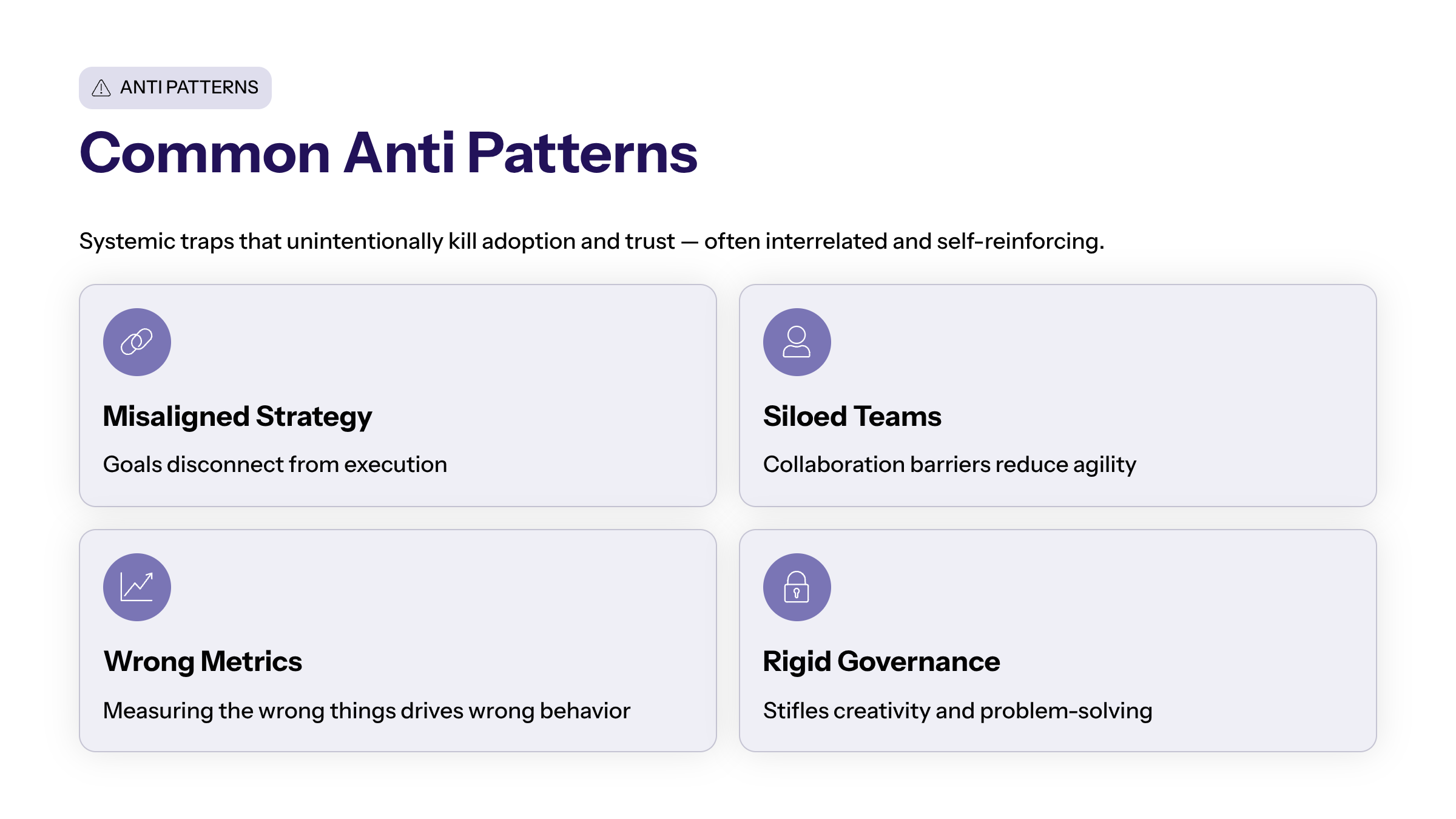
Operating model anti patterns manifest in various forms, often interrelated and reinforcing one another. Many organizations fall into systemic traps that unintentionally kill adoption and trust, causing initiatives to fail. Recognizing these patterns enables organizations to intervene proactively.
Misuse of Metrics and Vanity Metrics
Many organizations rely on metrics that do not accurately reflect value creation, such as focusing on output quantity over quality or customer impact. Metrics, particularly those used to micromanage, can reduce team morale and creativity. Vanity metrics—like website traffic or number of features delivered without context—can create a false sense of progress and misdirect resources.
Neglecting User Research and Customer-Centric Metrics
Ignoring qualitative insights from users leads to misaligned product features and diminished customer satisfaction. Effective product operating models integrate user research to inform strategy and measure metrics that matter, such as Net Promoter Score (NPS) and customer retention rates.
Fragmented Leadership and Lack of Strategic Alignment
Poor leadership styles, including micromanagement or laissez-faire approaches, can erode team motivation and alignment. Without clear communication of product vision and strategic goals, teams may work in silos, duplicating efforts and missing the bigger picture.
Shadow governance and the 'Too Many Cooks' phenomenon—where multiple people influence decisions without clear ownership—further exacerbate misalignment and hinder focused direction.
Technical and Process Anti Patterns
Spaghetti code and convoluted processes create maintenance challenges and slow innovation. Similarly, the 'Distributed Monolith' arises when services are tightly coupled in modern architectures, preventing independent deployment and increasing risk, thus undermining agility.
The Dangers of Wrong Metrics
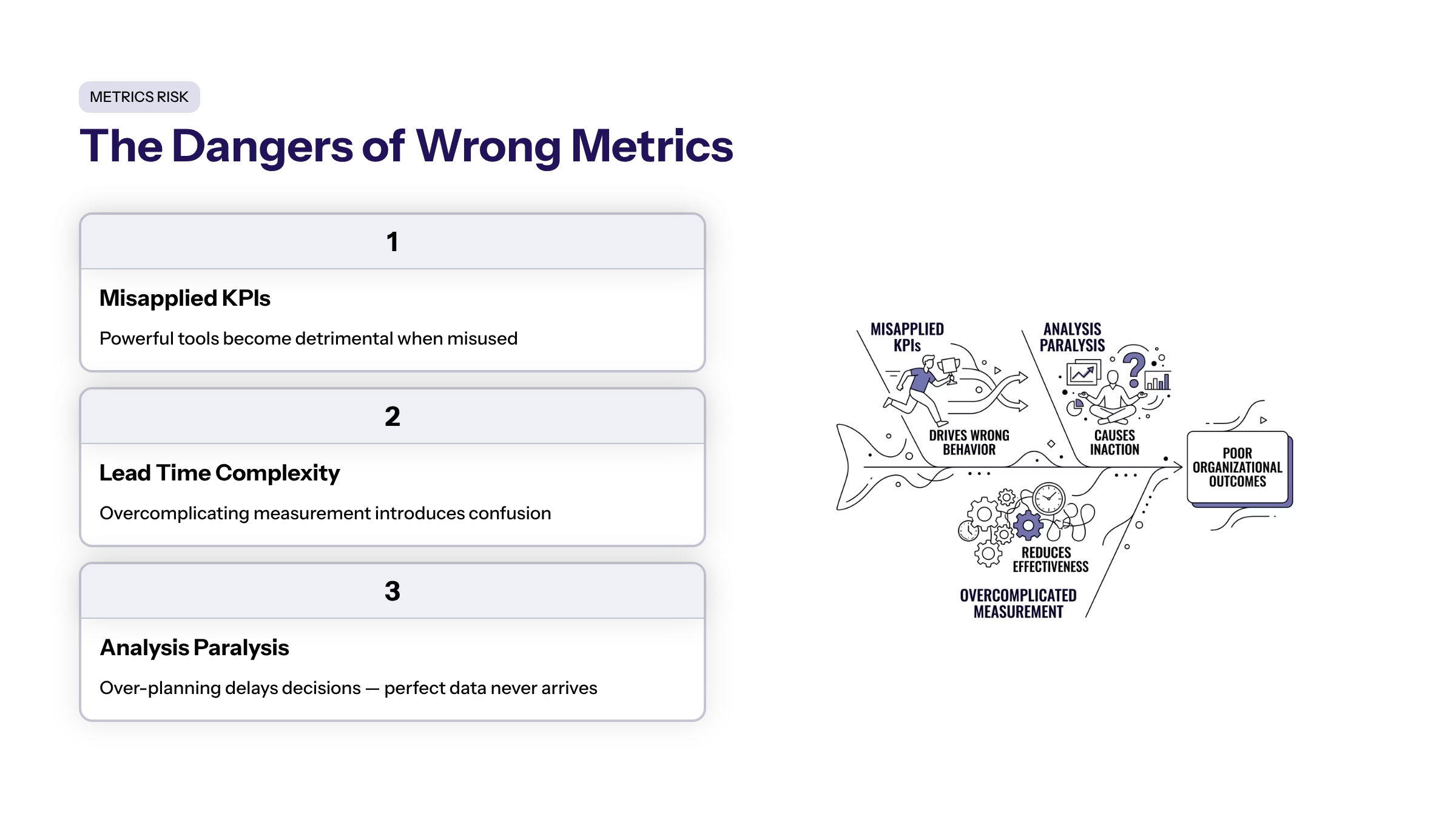
Metrics are powerful tools for guiding decision-making but can become detrimental when misapplied. Measuring lead time as a key performance metric is essential for understanding workflow efficiency and system performance, but overcomplicating how lead time is measured can introduce confusion and reduce its effectiveness.
Analysis paralysis can occur when organizations over-analyze or over-plan, seeking perfect data before making decisions, which often leads to inaction.
Impact of Vanity Metrics on Decision-Making
Vanity metrics often mask underlying issues, leading to poor prioritization and resource allocation. For instance, measuring the number of features shipped without assessing their business impact can encourage a feature factory mentality.
Importance of Business and Customer-Focused Metrics
Shifting focus to metrics that reflect business outcomes—such as revenue growth, customer satisfaction, and operational efficiency—provides a more accurate gauge of success, especially when maintaining flexibility in scope to ensure metrics remain relevant and actionable. Product leaders should involve teams in defining these metrics to ensure relevance and ownership.
Avoiding Transformation Failure
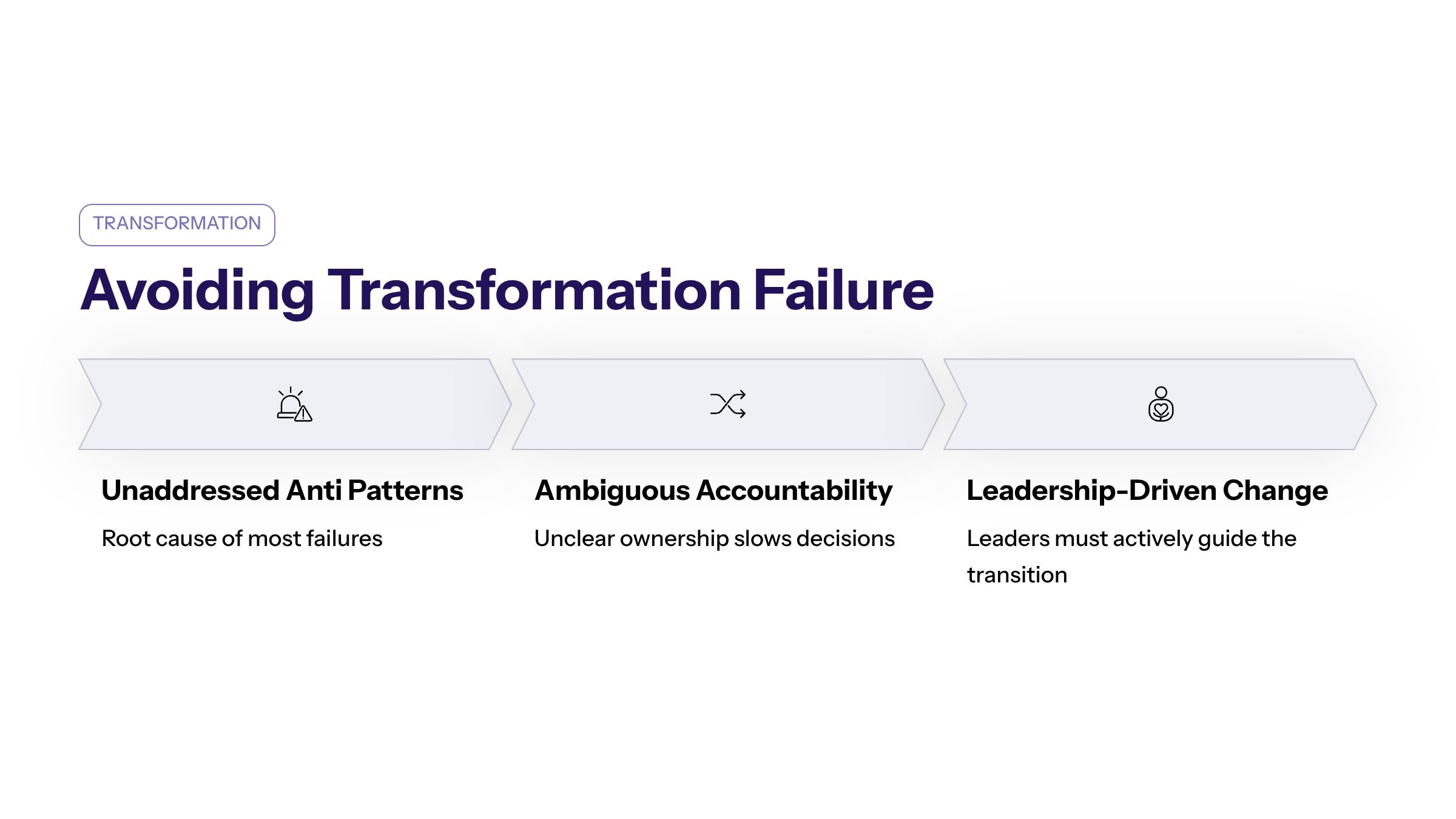
Transformation failure frequently results from unaddressed anti patterns and inadequate adaptation to change. Managing the transition from traditional to more agile operating models is critical, as ambiguity in accountability during this process can lead to unclear ownership of processes and decisions, ultimately slowing decision-making.
The Role of Leadership in Driving Change
Effective leadership involves setting a clear product vision, fostering a culture of accountability, and providing necessary training to develop team skills. Leaders must also engage stakeholders to align priorities and expectations.
Training and Awareness to Support Teams
Investing in training programs to train teams equips product managers and teams with the skills required for discovery, agile delivery, and stakeholder management. Conducting periodic diagnostics can uncover hidden bottlenecks in resource utilization and process complexity. Awareness initiatives help identify anti patterns early and promote a culture of continuous improvement.
Portfolio Management as a Strategic Lever
Robust portfolio management ensures initiatives align with strategic goals and deliver measurable outcomes. It facilitates prioritization, resource allocation, and monitoring, enabling organizations to course correct when needed.
Understanding Anti Pattern
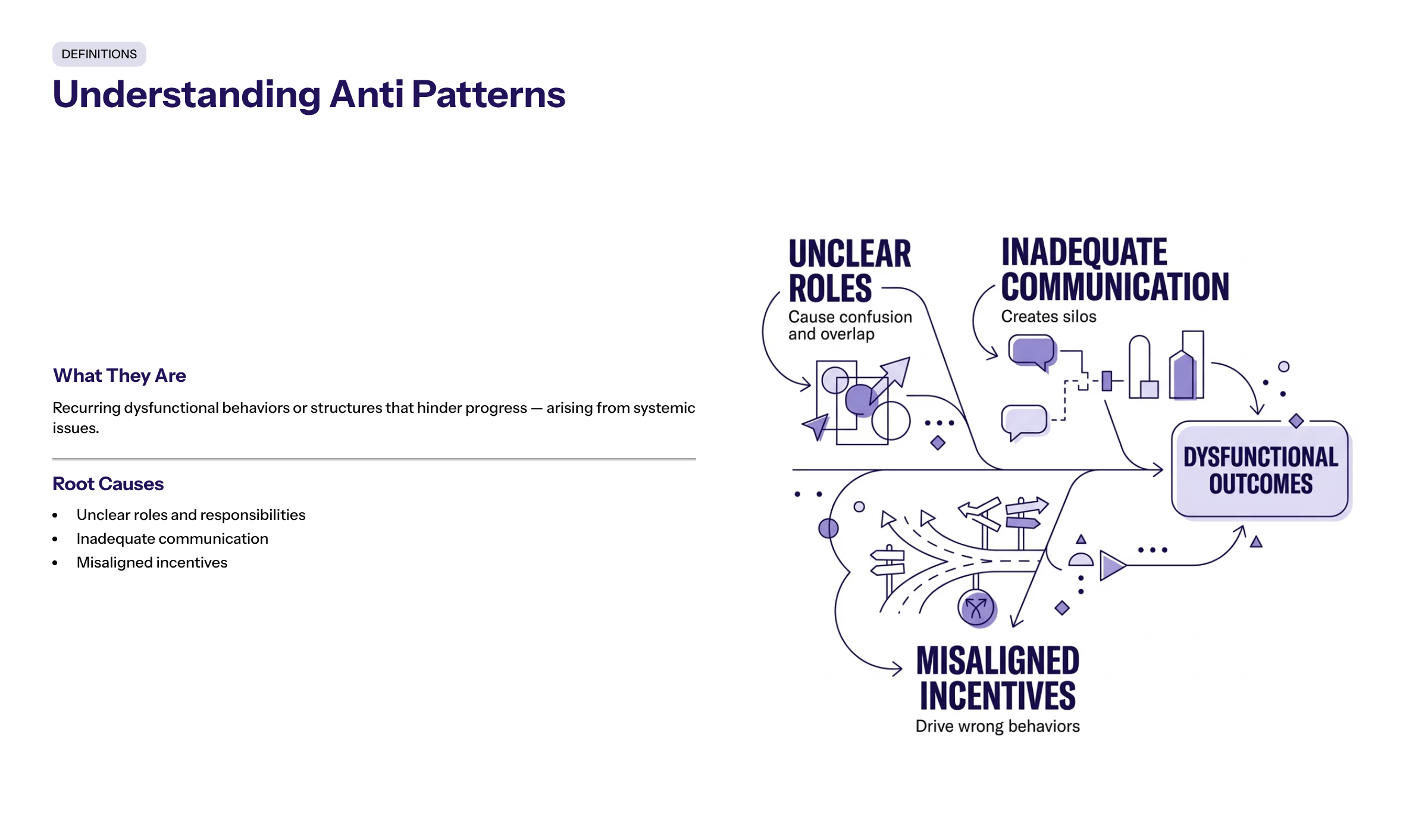
Anti patterns are recurring dysfunctional behaviors or structures that hinder progress.
Characteristics of Anti Patterns in Operating Models
They often arise from systemic issues such as unclear roles, inadequate communication, or misaligned incentives. Addressing these requires systemic interventions rather than isolated fixes.
Strategies to Identify and Address Anti Patterns
Organizations should employ diagnostic tools, feedback mechanisms, and data analytics to surface anti patterns. Engaging cross-functional teams in retrospectives and leadership workshops fosters shared understanding and commitment to change.
Common Anti Patterns
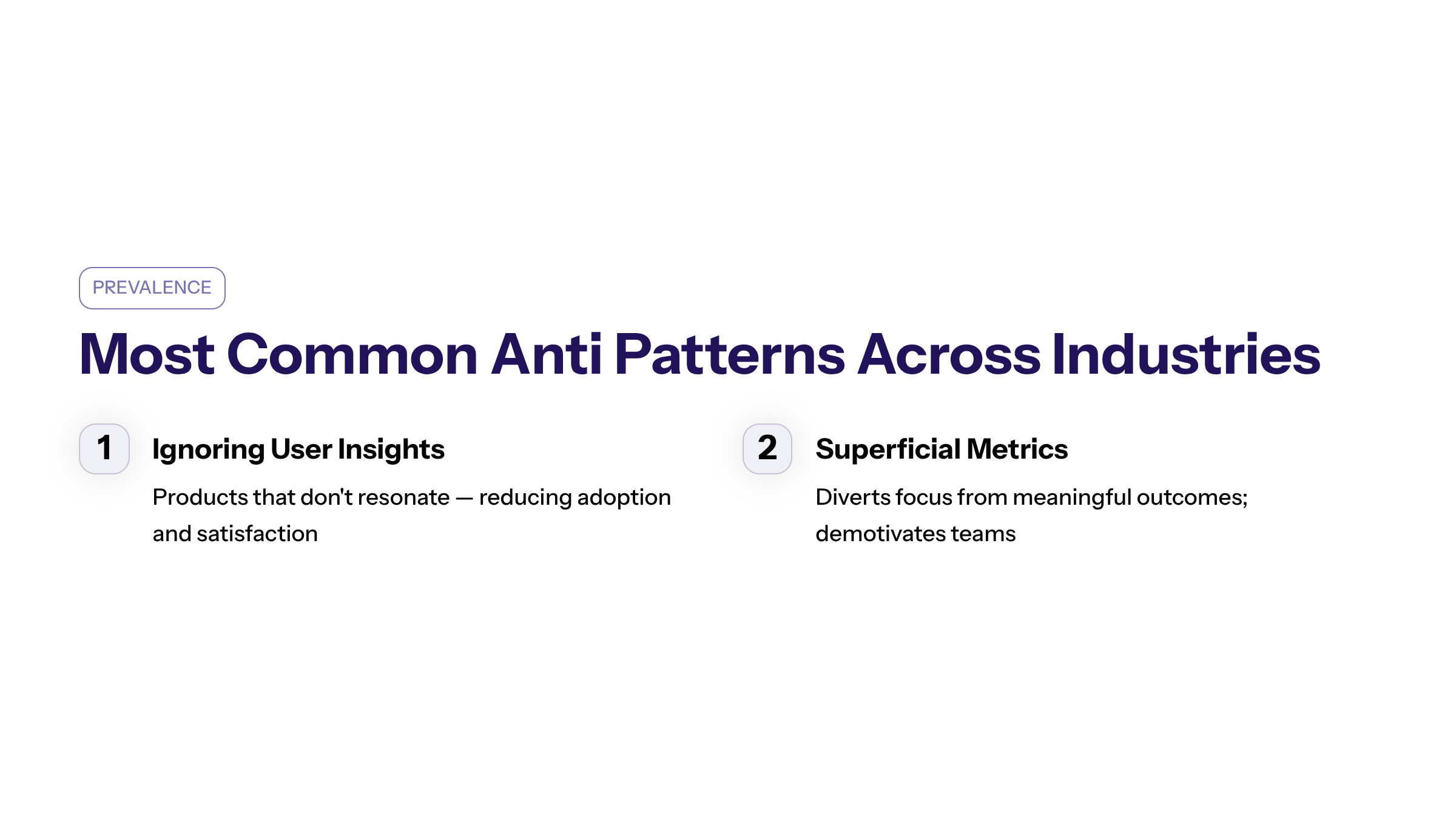
This section consolidates the most prevalent anti patterns observed across industries.
Neglecting User Research
Failure to prioritize user insights leads to products that do not resonate with customers, reducing adoption and satisfaction.
Overreliance on Vanity Metrics
Focusing on superficial metrics diverts attention from meaningful outcomes and can demotivate teams.
Lack of Leadership Support
Without active leadership engagement, teams may lack direction, clarity, and motivation.
Avoid Common Pitfalls
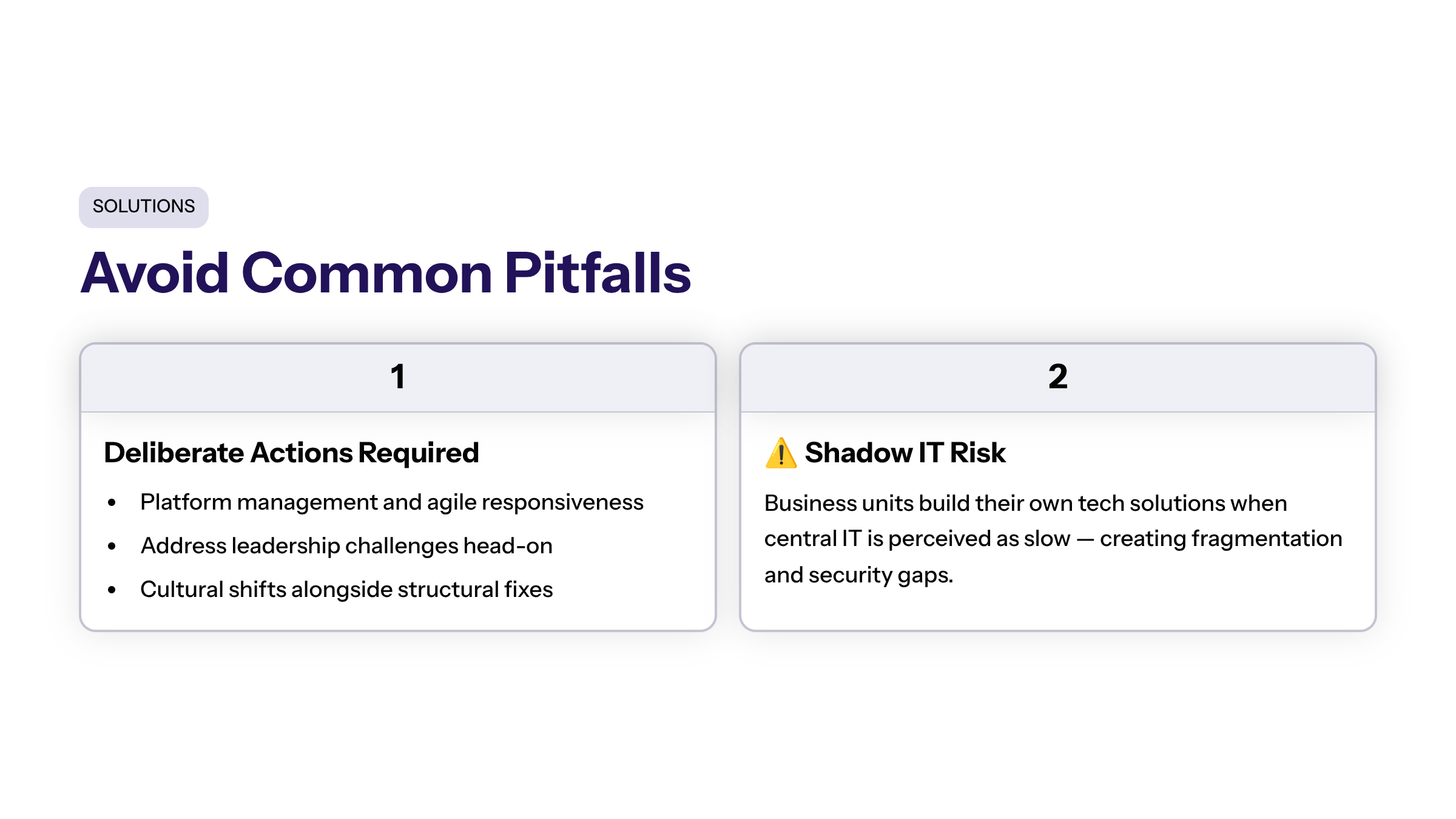
Avoiding pitfalls requires deliberate actions and cultural shifts. Finding the right solution is essential to address operating model anti patterns, ensuring that platform management, agile responsiveness, and leadership challenges are effectively resolved.
A common risk is the emergence of Shadow IT, where business units develop their own tech solutions due to perceived inefficiency or slow response from central IT.
Enhancing Decision Making
Implementing clear frameworks and involving teams in strategic discussions improves decision quality and alignment.
Aligning Resources with Strategic Goals
Ensuring that budgets, personnel, and initiatives support prioritized objectives maximizes impact.
Fostering a Product Mindset
Encouraging experimentation, learning, and customer focus drives innovation and adaptability.
The Importance of Effective Operations
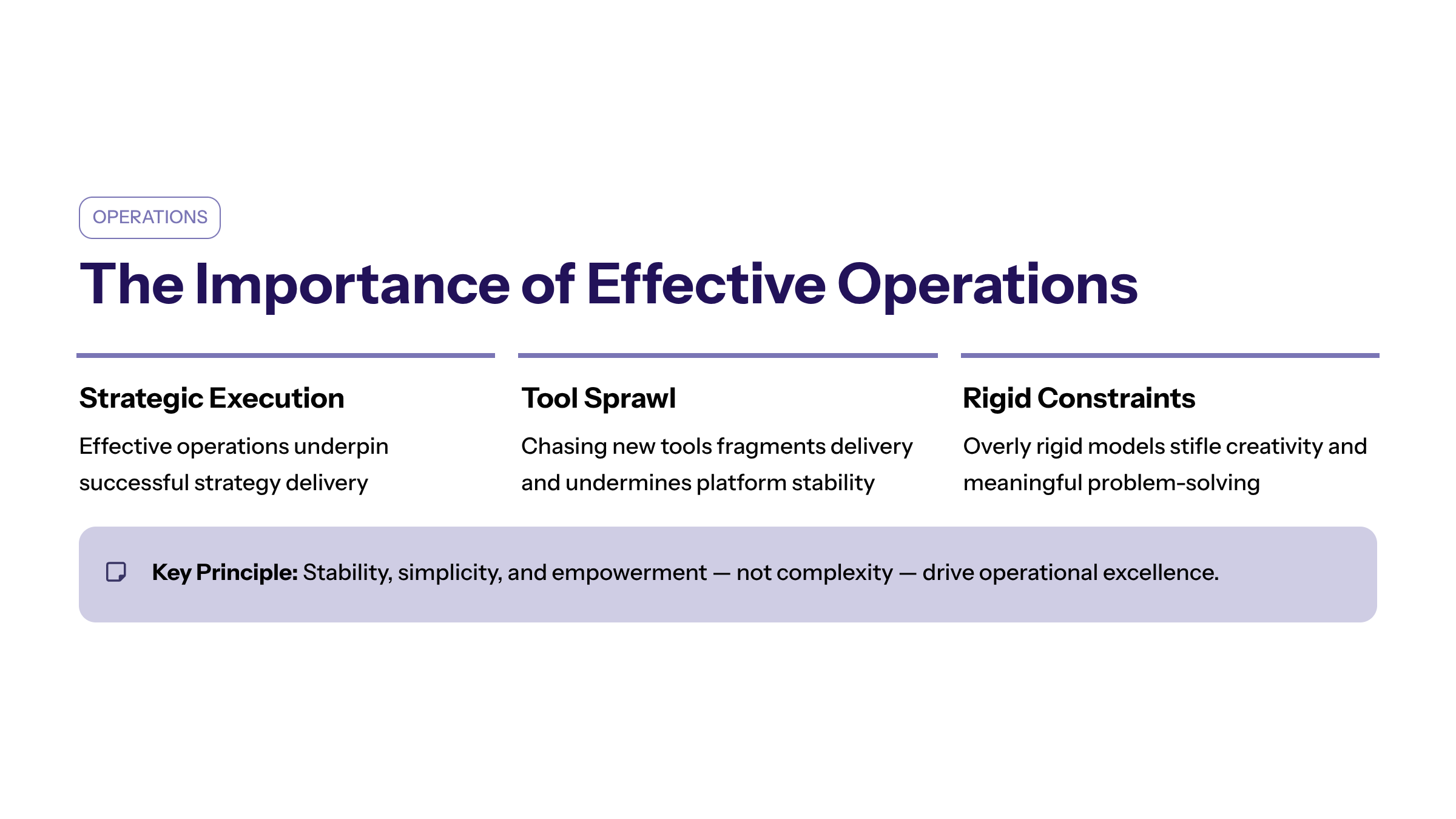
Effective operations underpin the successful execution of strategy. Chasing new tools in software development can introduce fragmentation and complexity, which slows down delivery and undermines platform stability.
Overly rigid constraints within an operating model can stifle creativity and prevent meaningful problem-solving.
Defining Clear Product Vision and Strategy
A compelling product vision guides teams and stakeholders, providing purpose and direction. It is essential to clearly define the product vision and strategy to ensure alignment, actionable goals, and to prevent operating model anti patterns.
Empowering Product Leaders and Teams
Building capabilities and granting autonomy enables teams to deliver value efficiently.
Continuous Improvement and Feedback Integration
Regularly assessing performance and incorporating feedback sustains relevance and competitiveness.
By recognizing and addressing operating model anti patterns, organizations can unlock the full potential of their product operating models, leading to enhanced efficiency, innovation, and business value. This requires a concerted effort across leadership, teams, and stakeholders, supported by strategic portfolio management and a commitment to continuous learning and adaptation.