Improve Business Outcomes by Reducing Decision Latency
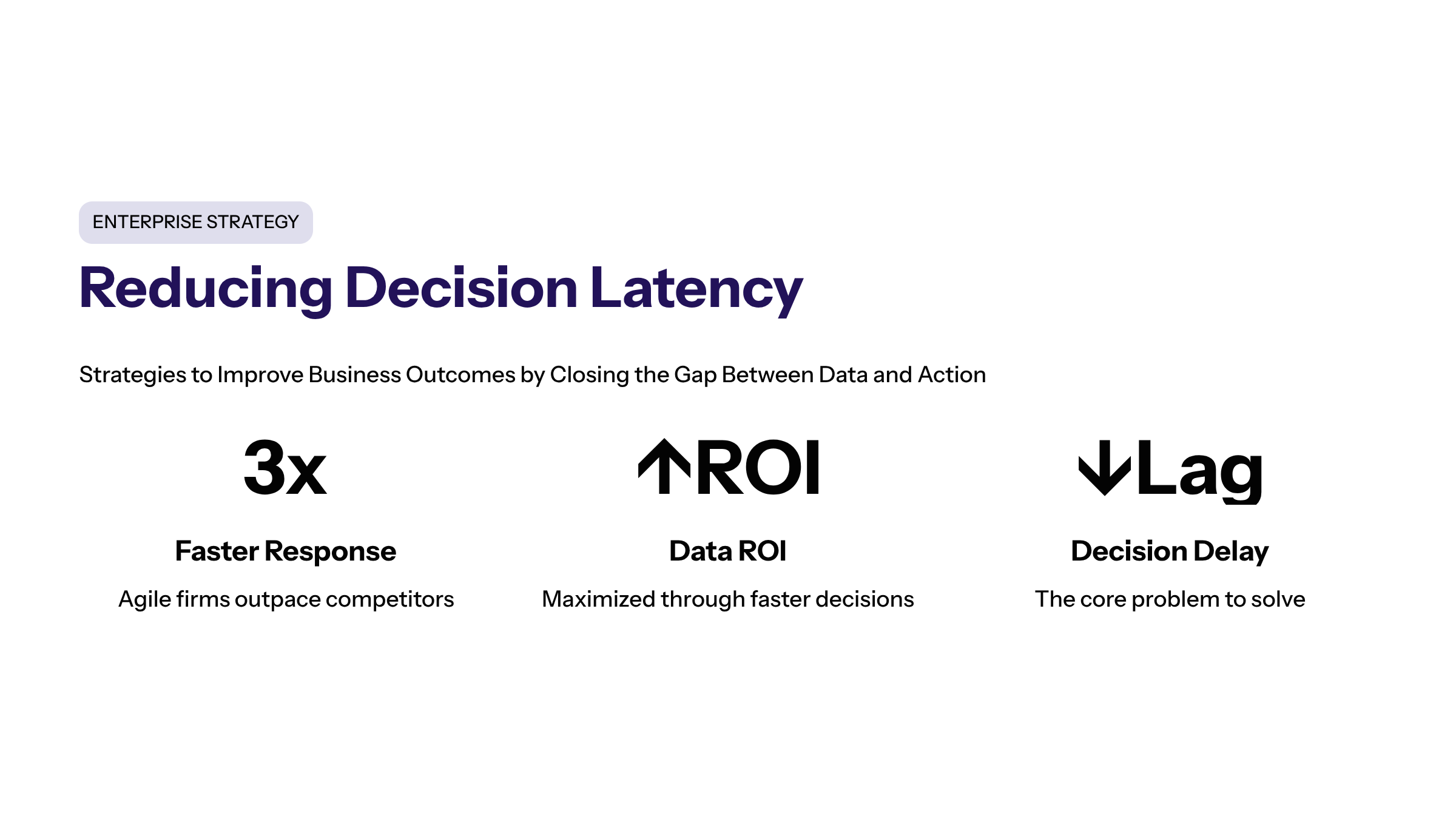
In today’s fast-paced business environment, the ability to reduce decision latency—the time delay between receiving information and acting upon it—has become a critical determinant of organizational success. Minimizing decision latency improves business agility, competitive response, and data ROI, enabling companies to adapt swiftly and seize market opportunities.
This article explores the strategic importance of minimizing decision latency to improve business outcomes, increase operational efficiency, and secure a competitive advantage. By leveraging actionable data, creating decision ready data, and fostering a data driven culture, companies can streamline their decision making processes and respond swiftly to market changes.
We analyze how these developments fit within the broader context of digital transformation and data analytics, highlighting practical strategies and real-world examples that executives can implement to accelerate their decision cycles and enhance performance.
Key Takeaways:
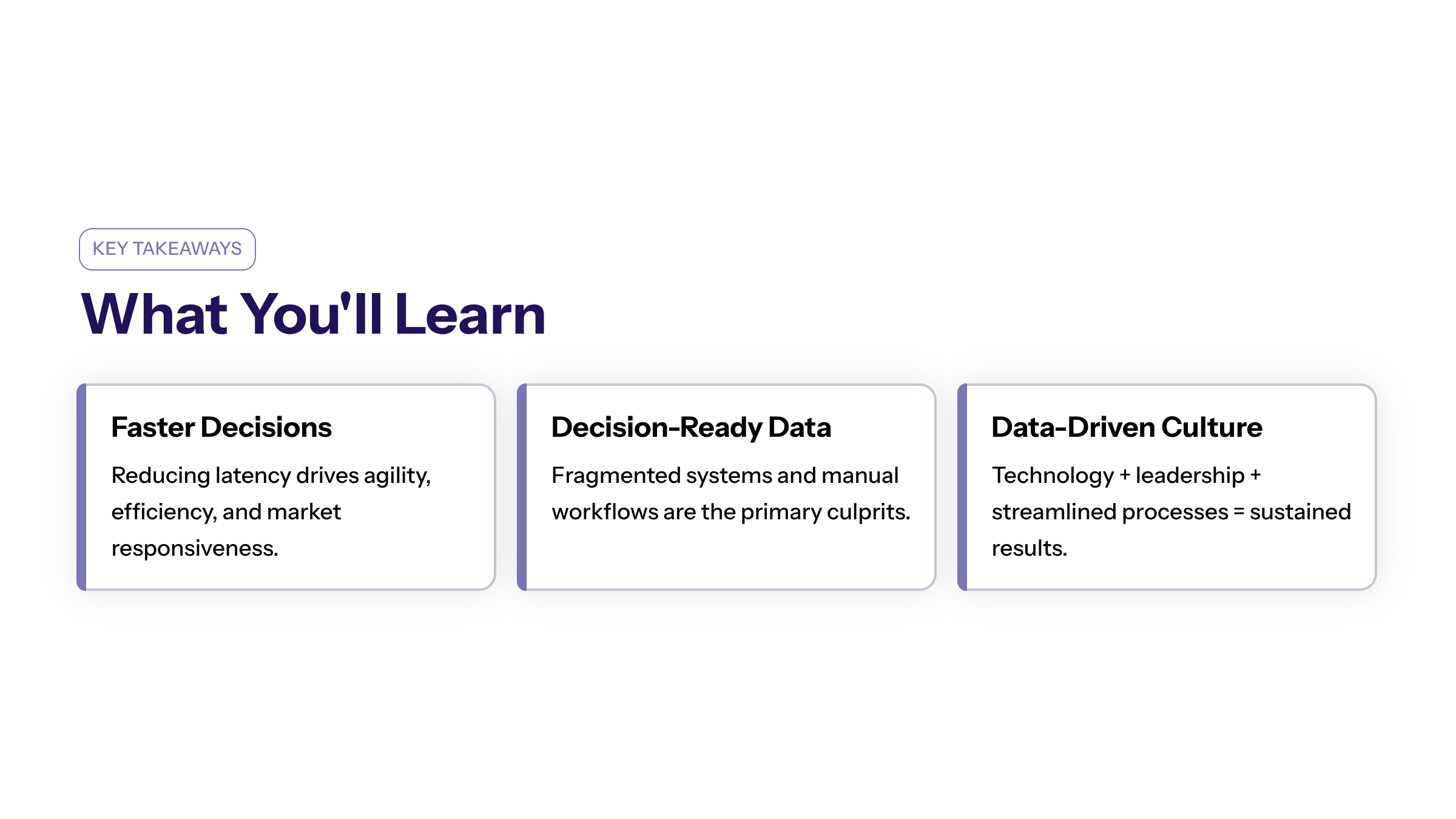
Reducing decision latency enables faster decision making, leading to improved business agility, higher efficiency, and increased market responsiveness.
Creating and leveraging decision ready data is essential for minimizing delays caused by fragmented systems, manual workflows, and unclear accountability.
Building a data driven culture supported by technology, leadership commitment, and streamlined processes is fundamental to sustaining reduced decision latency and achieving measurable business outcomes.
Automating BI reporting and reducing decision latency can recover hundreds of analyst hours annually and drive measurable gains in revenue and competitive agility.
Organizations reducing decision cycle time by just 25% see a 17% improvement in EBITDA within a year.

Introduction to Decision Making in Business Context
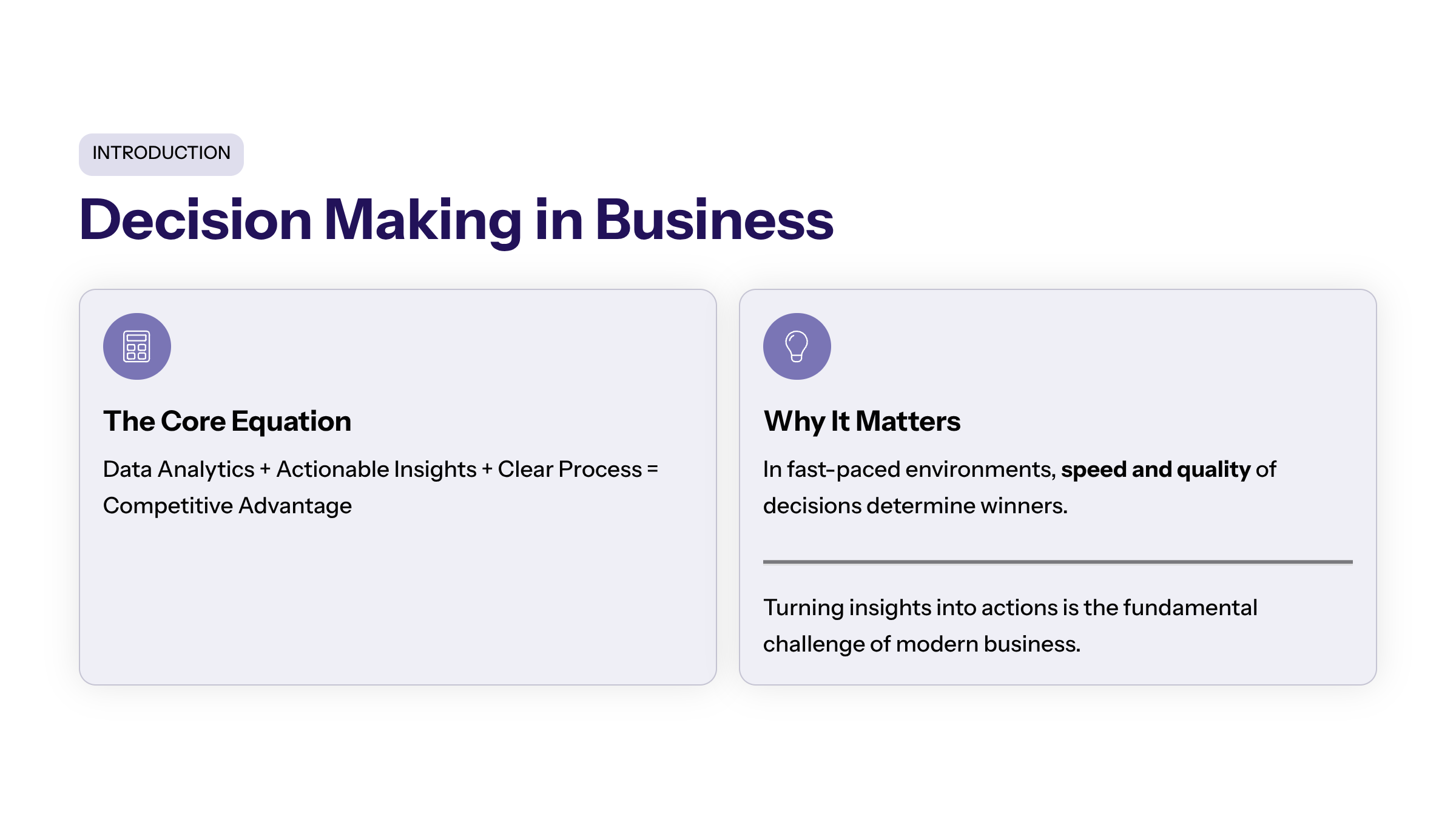
Decision making is a critical concept in business that involves turning insights into actions. It requires a combination of data analytics, actionable data, and a well-defined decision making process. Effective decision making is essential for gaining a competitive advantage in a fast-paced business environment where speed and quality of decisions matter.
Successful businesses rely on data driven decisions to stay ahead of the competition and adapt to market changes. The use of business intelligence tools and data analytics platforms can help organizations make faster and more informed decisions based on real-time insights.
The Impact of Decision Latency on Business Performance
Decision latency, often called decision delay, refers to the time gap between when new data becomes available and when a business acts on that information. This latency can lead to missed opportunities, slow decisions, and ultimately a loss of market share and revenue.
For example, a company that delays acting on a sudden demand spike risks stockouts and dissatisfied customers.
Conversely, quick decisions based on up-to-date reports enable companies to capitalize on emerging trends and optimize resource allocation. High latency causes bottlenecks, stalled projects, increased costs, and reduced competitiveness, putting organizations at risk of losing their competitive edge in a volatile business environment.
According to a 2024 Gartner report, over 60% of data leaders prioritize reducing decision latency to improve business intelligence outcomes and accelerate time-to-action.
Called Decision Latency
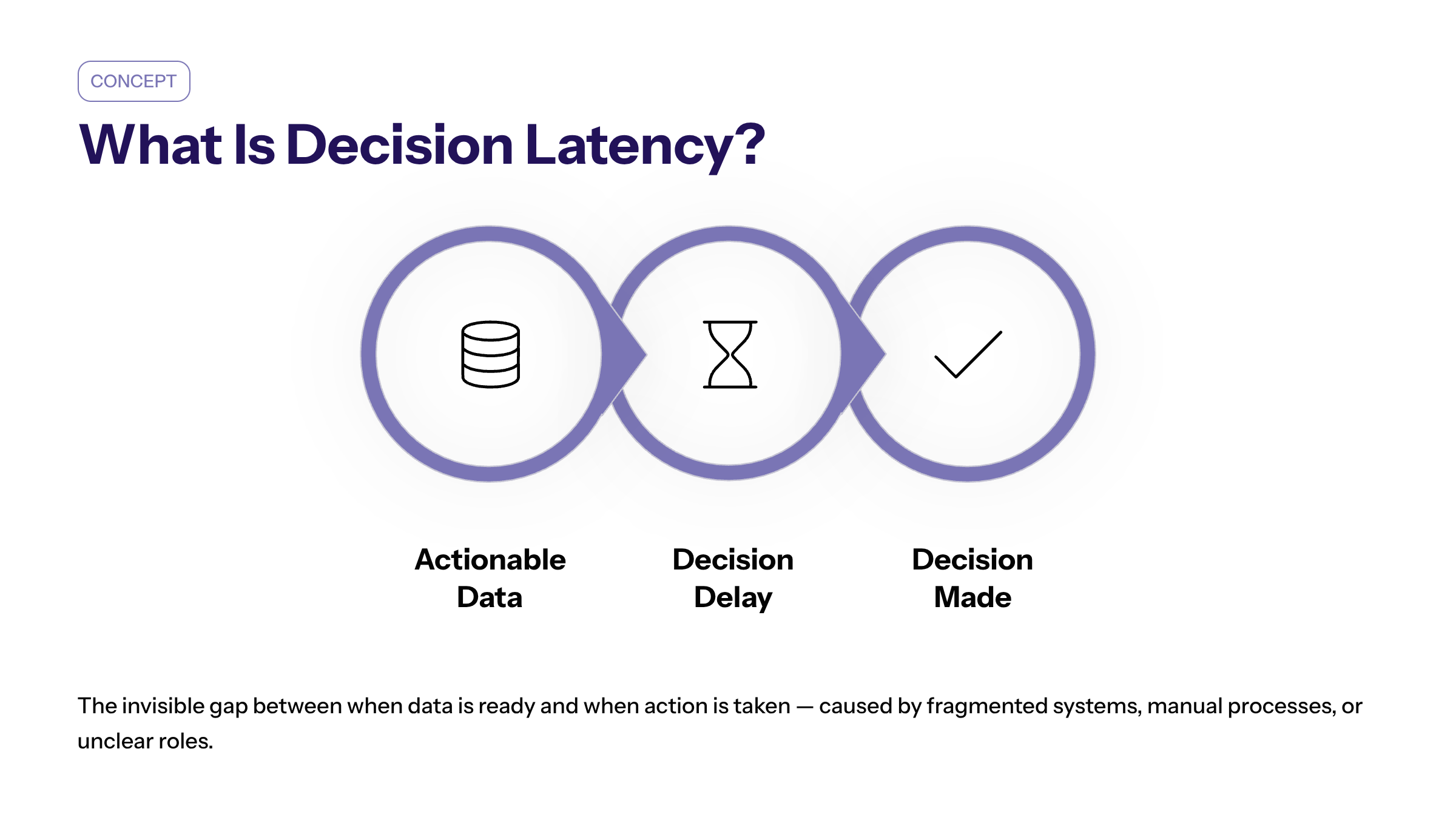
Decision latency, also called decision delay, is the invisible gap between when actionable data becomes available and when a decision is actually made. This delay can be caused by fragmented data systems, manual processes, or unclear roles in the decision making process.
Recognizing this latency as a distinct and measurable phenomenon helps organizations focus efforts on closing the gap to improve operational efficiency and responsiveness.
Trusted, reconciled, decision-ready data that flows continuously is key to shrinking decision latency and enabling faster, more confident decisions.
Understanding Decision Latency
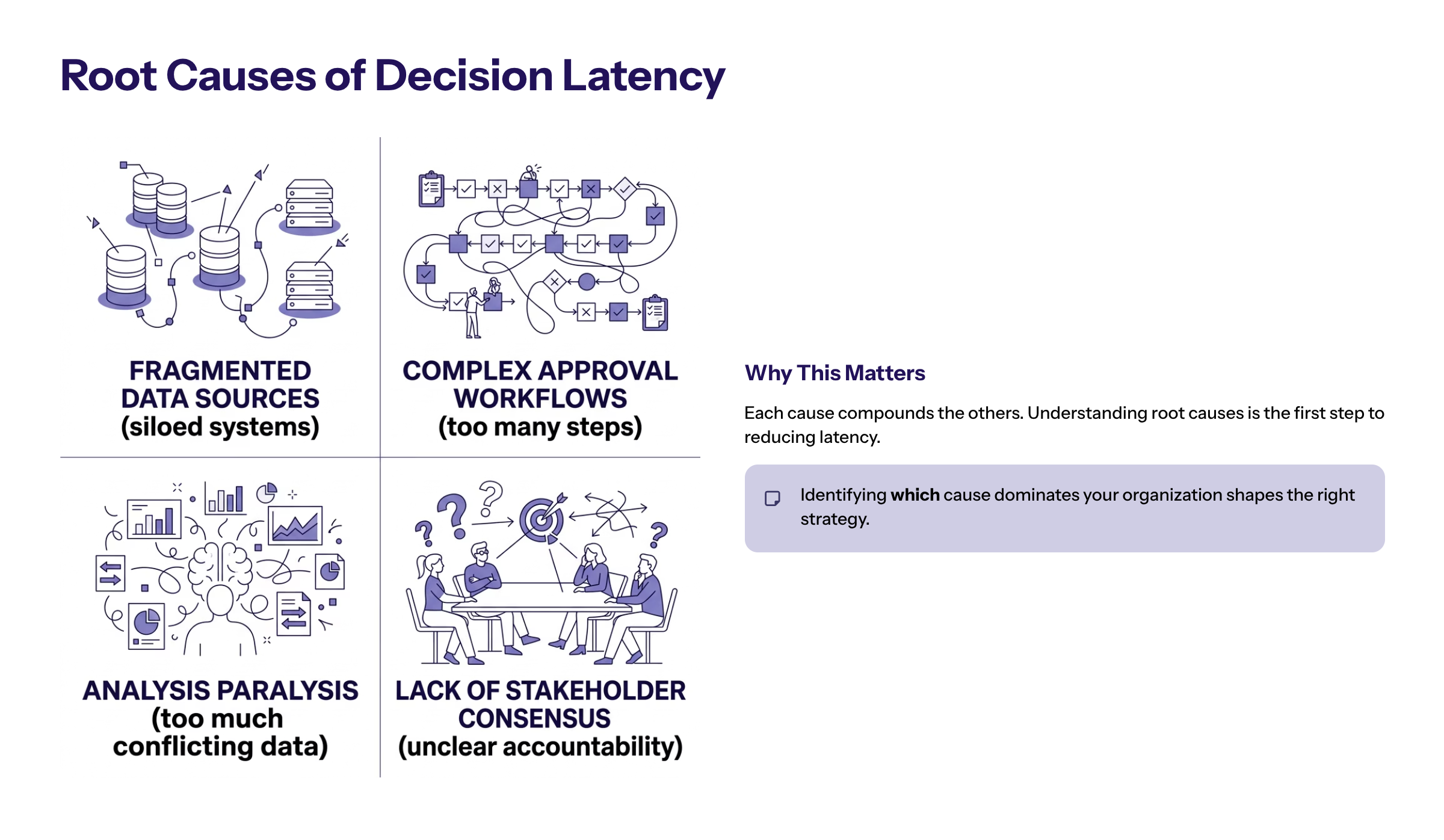
Decision latency is a critical factor that can impact business outcomes significantly. It is often caused by several factors including fragmented data sources, complex approval workflows, analysis paralysis, and lack of consensus among stakeholders.
Understanding the root causes of decision latency is essential to developing effective strategies to reduce it.
Causes of Decision Latency in Business Context
Fragmented Systems: Disparate data systems such as ERP, CRM, and legacy platforms often do not communicate seamlessly, causing delays in consolidating information.
Manual Processes and Approval Workflows: Lengthy approval chains and manual report generation slow down the decision making process. Too many approval steps in decision-making processes can lengthen the time it takes to respond to issues, especially in supply chain and HR contexts.
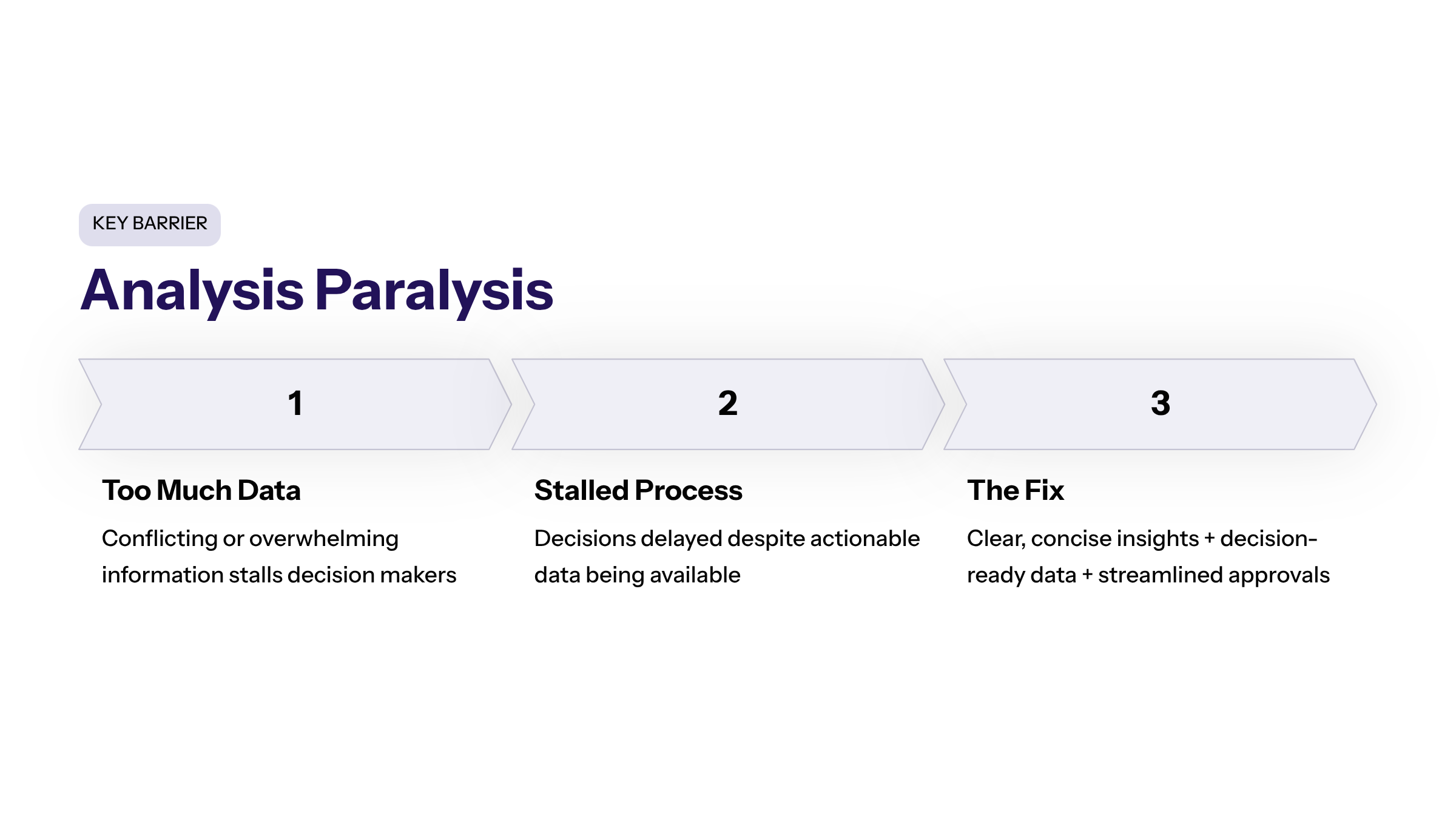
Analysis Paralysis: Overabundance of data without clear actionable insights can lead to indecision.
Lack of Decision Ready Data: Data that is not timely, accurate, or relevant prevents quick and confident decisions.
Siloed Data: In supply chain systems, siloed data forces teams to switch between multiple platforms to find insights, slowing down decision-making.
Unclear Roles: Manual processes and unclear roles in decision-making significantly increase decision latency.
These factors create a gap between when data is happening and when decisions are made, undermining business agility and efficiency.
Analysis Paralysis
Analysis paralysis occurs when decision makers are overwhelmed by too much information or conflicting data, leading to delayed or no decisions. This phenomenon exacerbates decision latency by stalling the decision making process despite the availability of actionable data.
To overcome analysis paralysis, organizations must focus on delivering clear, concise, and relevant insights, supported by decision ready data and streamlined approval workflows.
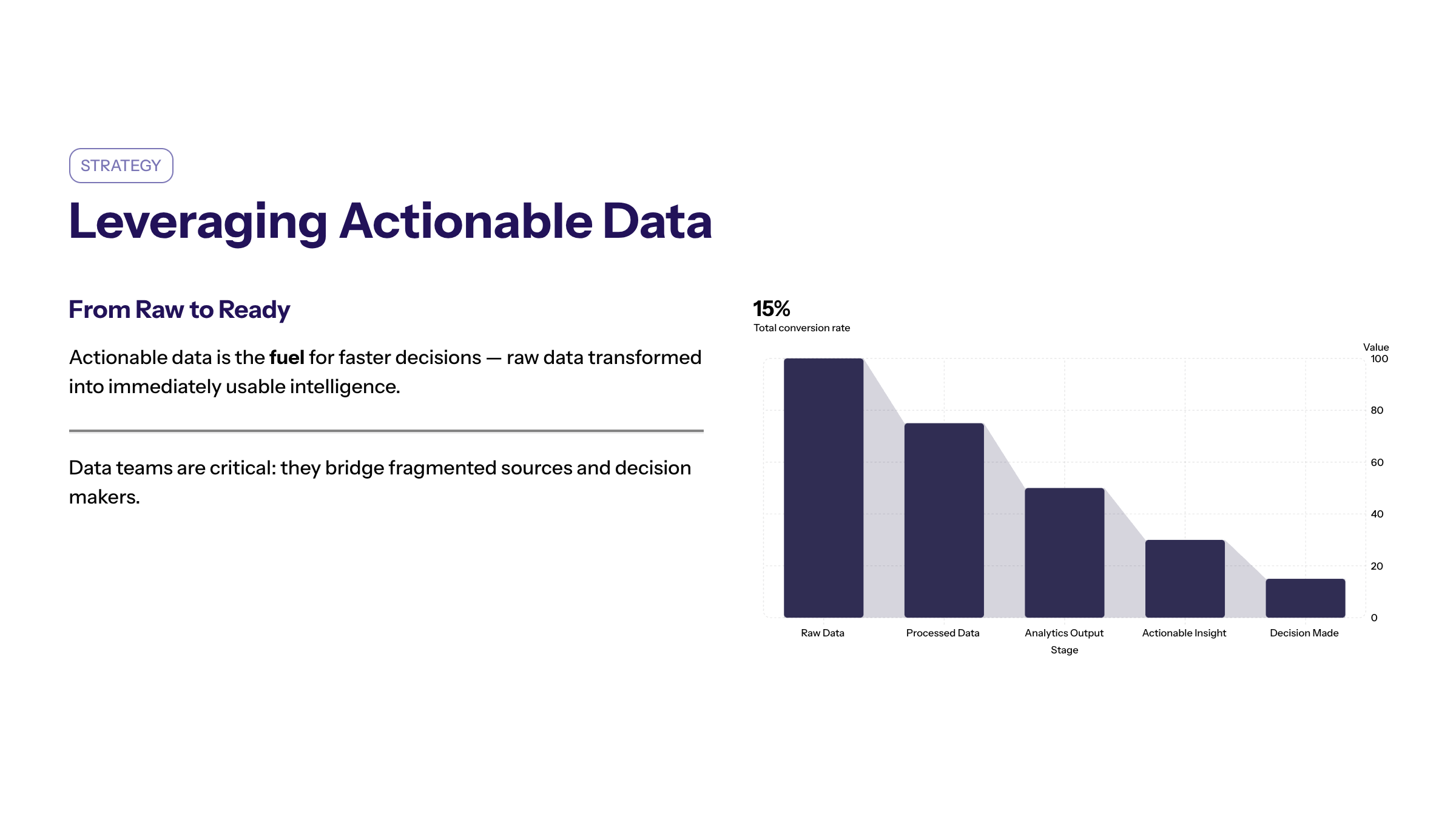
Leveraging Actionable Data to Reduce Decision Latency
Actionable data is the fuel for faster decision making. It involves turning raw data into insights that can be immediately acted upon. Data teams play a critical role in transforming fragmented data into actionable intelligence through data analytics and business intelligence platforms.
Creating Decision Ready Data
Decision ready data is timely, relevant, and accurate data that supports quick, informed decisions. It reduces the lag between data availability and action by ensuring that decision makers have access to the right information at the right moment.
Characteristics of Decision Ready Data | Benefits |
|---|---|
Real-time or near real-time updates | Enables quick decisions based on current conditions |
Integrated from multiple systems | Eliminates data silos and reduces reconciliation time |
Cleaned and validated | Increases confidence in data quality and reduces errors |
Presented via intuitive dashboards | Facilitates faster interpretation and consensus |
A mid-market manufacturing CFO reported reducing her financial reporting cycle from 12 days to daily decision ready data, significantly improving leadership’s ability to respond to market changes.
Continuous pipelines that automatically clean and deliver data across all systems in real-time are becoming essential for maintaining decision ready data, enabling organizations to shift from simple dashboards to automated actionable insights by 2026.
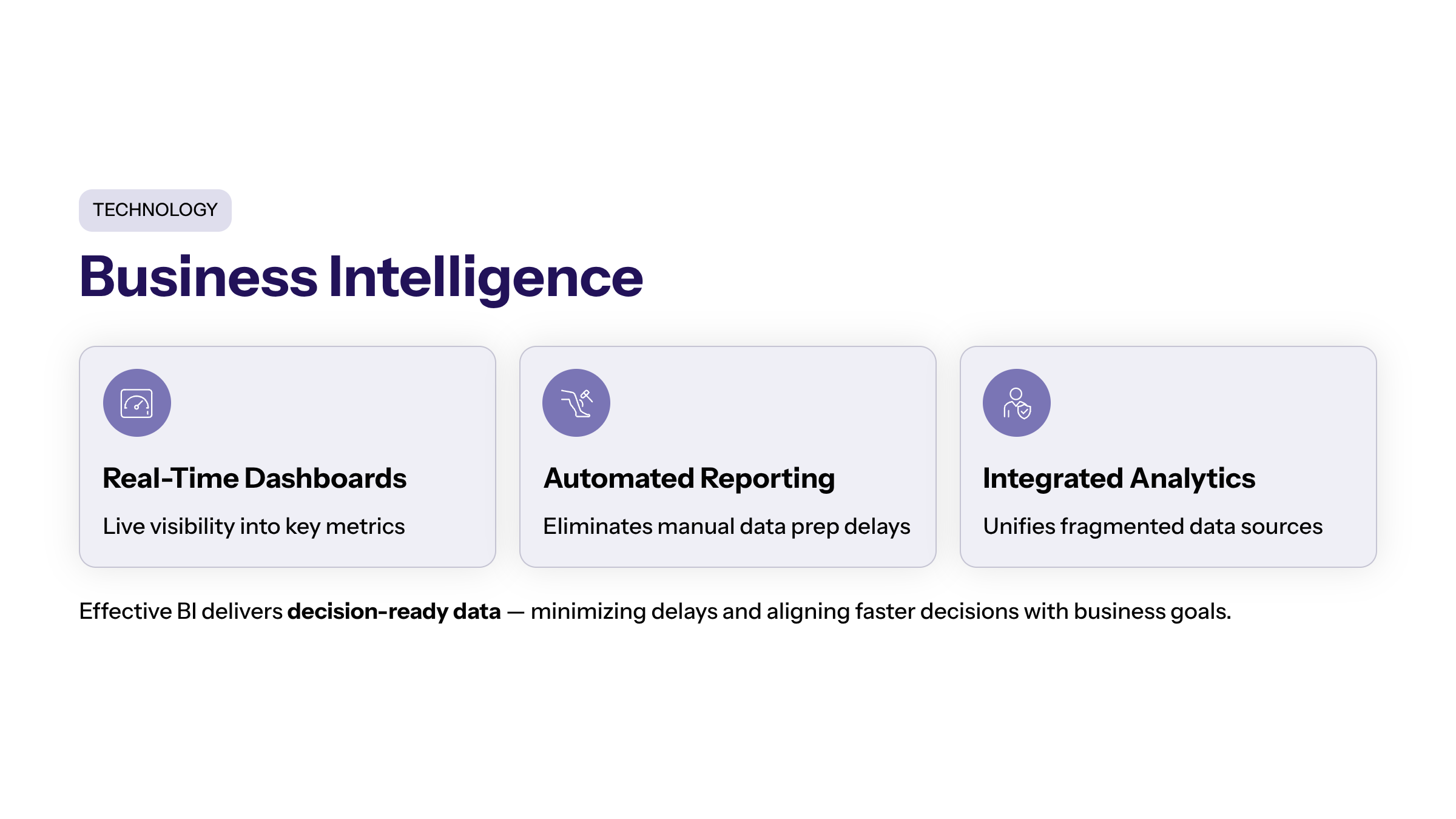
Business Intelligence
Business intelligence (BI) encompasses the tools, technologies, and practices that transform raw data into meaningful insights to support decision making. Effective BI reduces decision latency by providing decision ready data through automated reporting, real-time dashboards, and integrated analytics platforms.
By leveraging BI, organizations can minimize delays caused by fragmented data and manual processes, enabling faster decisions that align with business goals.
Automating BI reporting and reducing decision latency can recover hundreds of analyst hours annually and drive measurable gains in revenue and competitive agility.
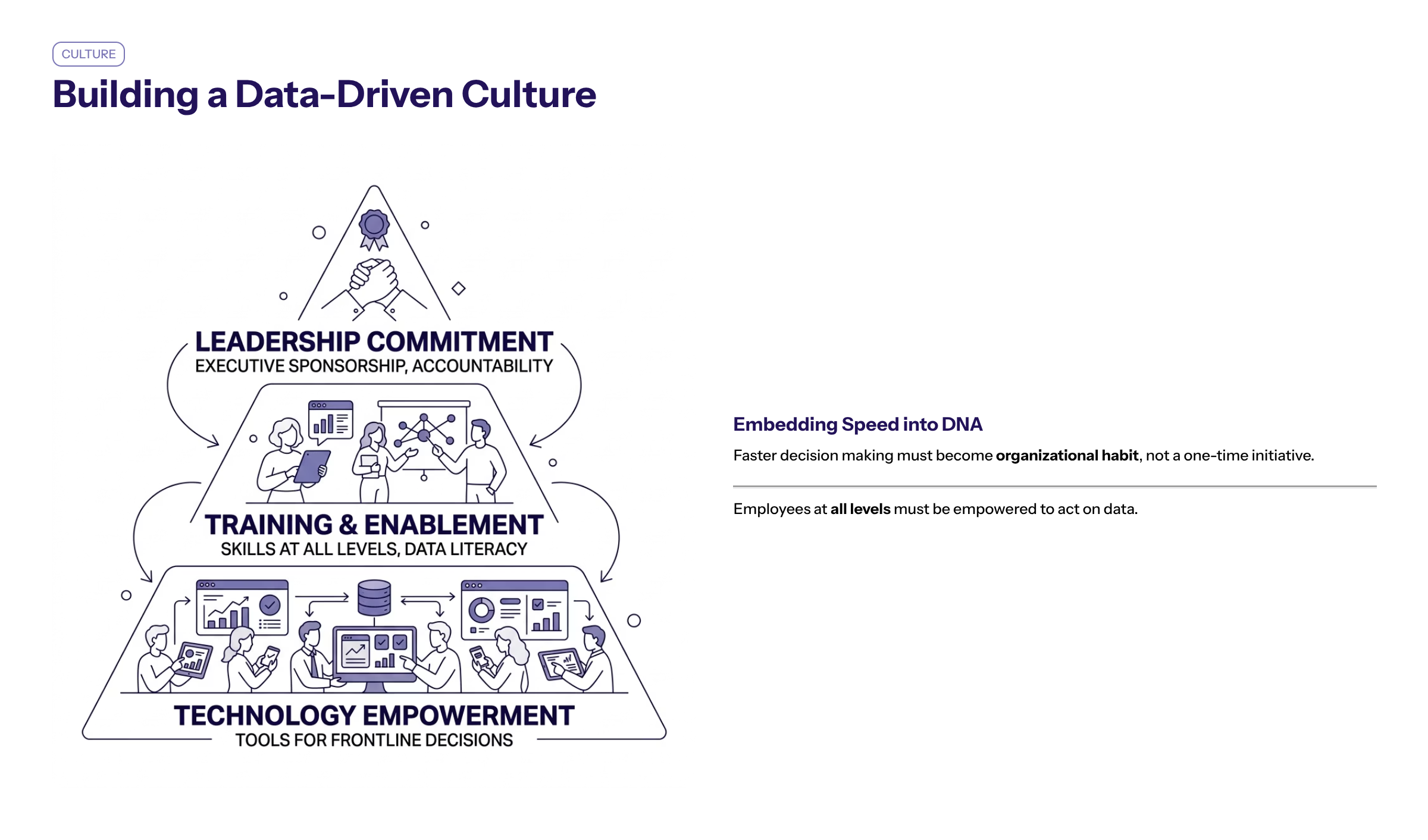
Building a Data Driven Culture to Sustain Reduced Decision Latency
A data driven culture is vital for embedding faster decision making into the organization’s DNA. It involves leadership commitment, training, and the use of technology to empower employees at all levels to make decisions based on data.
Key Elements of a Data Driven Culture
Leadership Buy-In: Executives must prioritize reducing decision latency as a strategic objective.
Agile Workflows: Streamlined processes that allow for quick approvals and iterative decision cycles.
Technology Enablement: Adoption of integrated tools such as AI-powered analytics, automated reporting, and collaboration platforms. By 2026, many organizations are integrating real-time data and AI agents into their core workflows to reduce decision latency.
Continuous Learning: Training teams to interpret data effectively and make data driven decisions confidently.
Organizations that cultivate a data driven culture are better positioned to implement next steps rapidly and adapt to evolving business demands.
Avoiding Slow Decisions Through Process Optimization
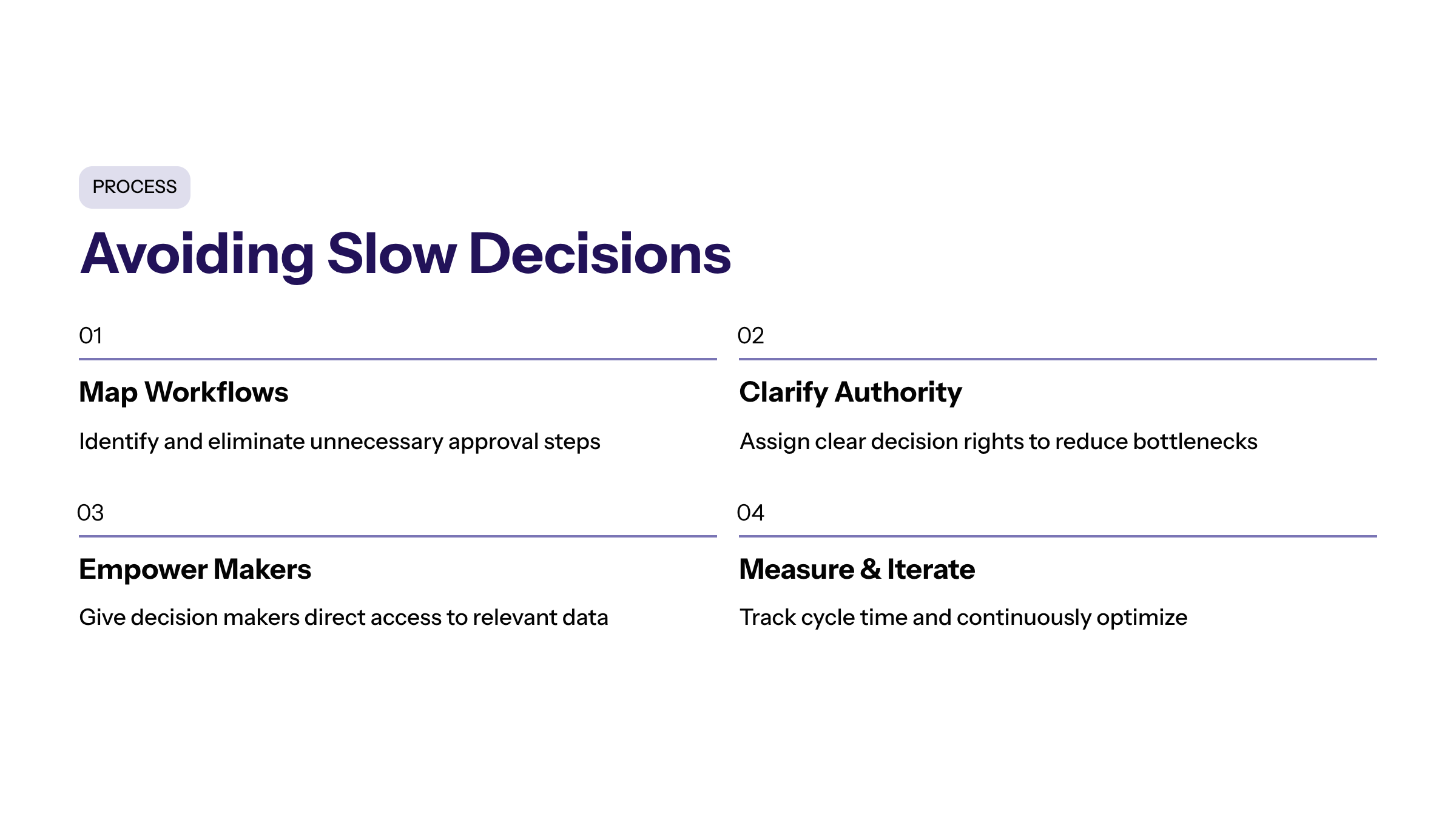
Slow decisions often result from inefficient workflows and unclear roles. To avoid this, companies should streamline the decision making process by eliminating unnecessary steps and empowering decision makers with clear authority.
Strategies to Avoid Slow Decisions
Map and optimize approval workflows to reduce bottlenecks. Establish clear frameworks with predefined criteria to enable teams to approve decisions without waiting for meetings.
Implement decision frameworks to guide consistent and rapid choices. Pushing decisions down to frontline teams eliminates high-level bottlenecks in decision-making processes.
Use real-time dashboards to provide continuous visibility into key metrics.
Foster consensus through collaborative tools and transparent communication.
Use AI-powered alerts for threshold breaches to accelerate the response cycle by notifying stakeholders immediately.
By focusing on these areas, businesses can improve efficiency and reduce the cost associated with delayed decisions.
Decision Latency in Human Resources
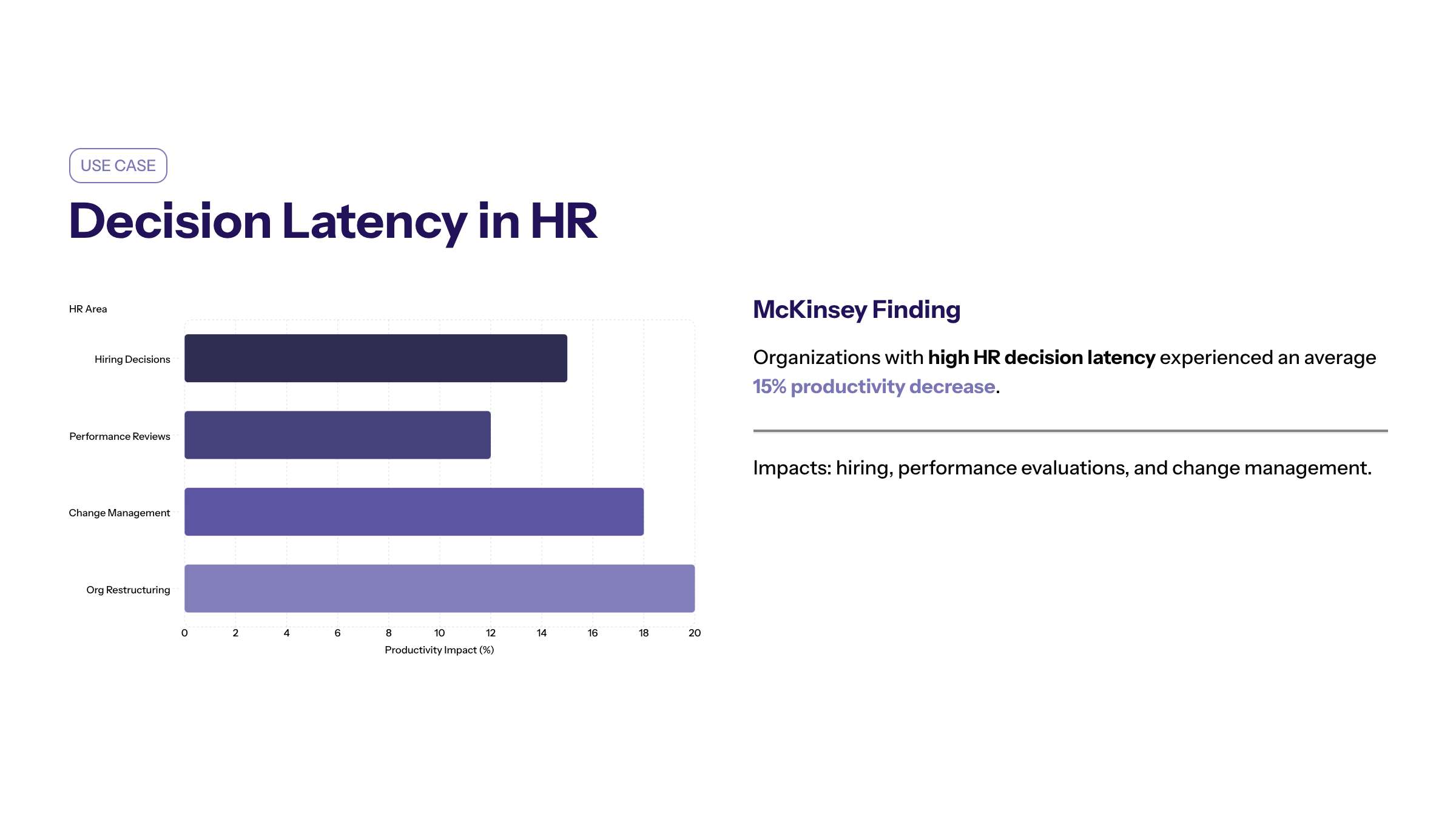
In HR, decision latency can impact hiring processes, employee performance evaluations, and organizational change management. Reducing decision latency often leads to improved efficiency and competitive advantage in HR processes. A study by McKinsey & Company found that organizations with high decision latency in their HR processes experienced an average decrease in productivity of 15%.
Strategies to Reduce Decision Latency in HR
Streamline approval processes to reduce delays.
Develop clear decision-making frameworks to guide HR professionals.
Foster a culture of agility that encourages quick, informed decision-making.
Invest in HR management systems to facilitate faster information processing and decision-making.
Leverage Artificial Intelligence (AI), which is playing an increasingly significant role in reducing decision latency in HR.
Developing a Business Case for Reducing Decision Latency
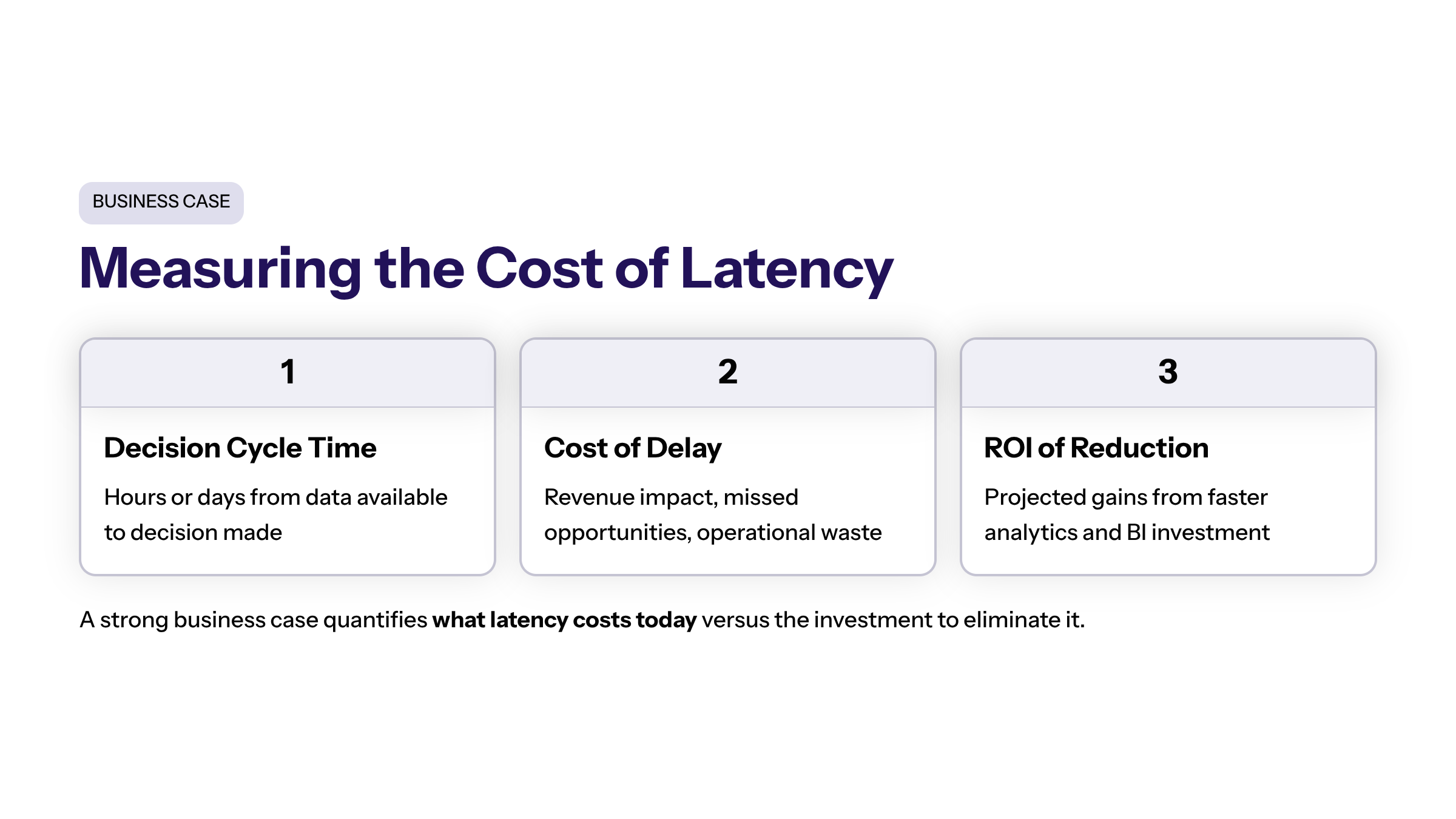
Justifying investments in data analytics and business intelligence requires a strong business case that demonstrates the cost of decision latency and the potential ROI of reducing it.
Metrics and Dashboards to Track Improvement
Decision cycle time (hours or days)
Percentage of decisions made within target timeframes
Impact on revenue growth and cost savings
Market share changes related to faster decision making
Leading organizations measure Decision Latency Index (DLI) alongside financial metrics to identify bottlenecks.
Time-to-Decision is the period from when an insight surfaces to when executive or stakeholder sign-off is achieved.
BCG estimates that reducing decision cycle time by 25% can lift EBITDA by 17%, underscoring the financial benefits of cutting decision latency.
Reducing Decision Latency: Implementation and Next Steps
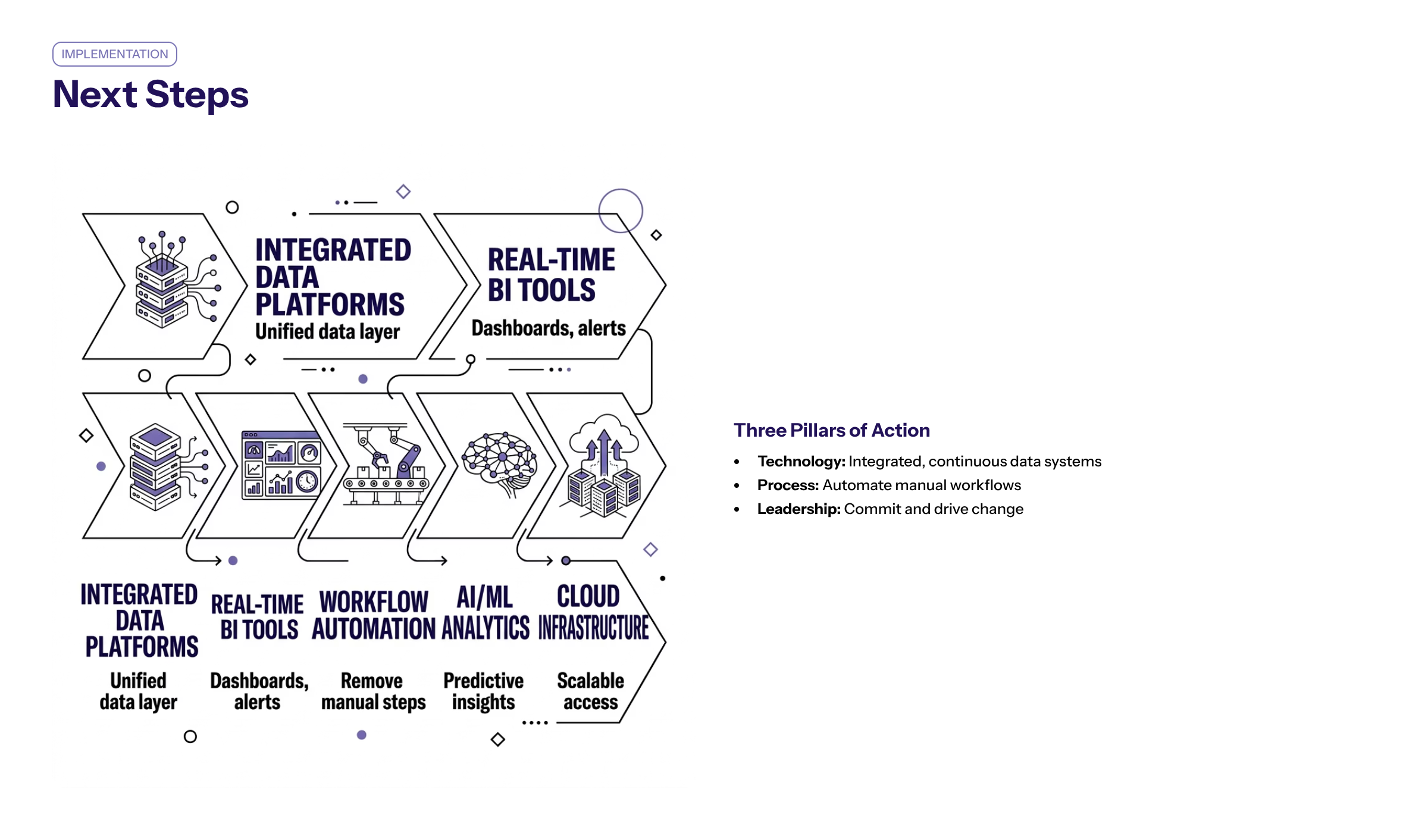
Reducing decision latency requires a combination of technology adoption, process improvements, and leadership commitment. Companies should implement integrated systems that provide continuous, decision ready data and automate manual workflows.
Technologies and Tools to Implement
AI-powered analytics platforms for real-time insights
Automated data pipelines to ensure fresh data availability
Collaboration and workflow tools to accelerate approvals
Business intelligence dashboards tailored to decision maker needs
Edge computing to process data locally at the source, minimizing latency and enhancing decision-making speed.
Next Steps for Organizations
Conduct an audit to measure current decision latency and identify bottlenecks.
Develop a roadmap to integrate data systems and automate reporting.
Foster a culture of data driven decision making through training and leadership engagement.
Continuously monitor performance metrics to track improvement and adjust strategies.
Making the Decision to Reduce Decision Latency
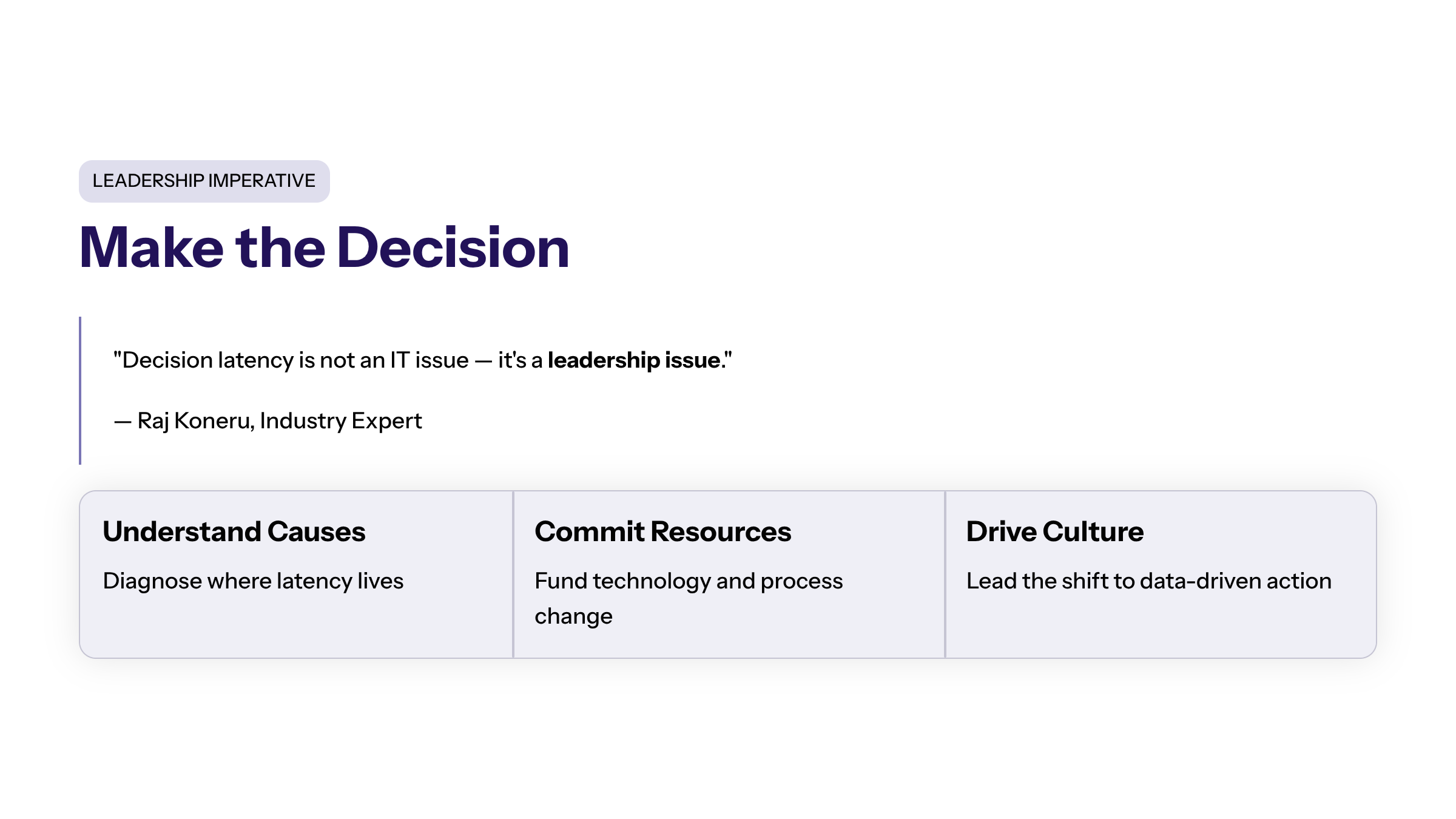
Ultimately, making the decision to reduce decision latency is a leadership imperative. It involves understanding the causes, committing resources, and driving change across technology, process, and culture.
“Decision latency is not an IT issue — it’s a leadership issue,” notes industry expert Raj Koneru. “Executives must treat decision latency as a measurable business KPI alongside cost and efficiency.”
By embracing this mindset, companies can improve their response to market changes, enhance operational performance, and secure sustainable competitive advantage.
This comprehensive approach to reducing decision latency equips executives with the knowledge and strategies needed to transform their organizations into agile, data driven enterprises capable of making quick, high-quality decisions that matter.