KPI Theater Checklist for Effective Performance Tracking
Understanding and effectively implementing Key Performance Indicators (KPIs) is essential for organizations aiming to optimize their performance measurement and achieve strategic objectives. This article provides a high level overview of KPI theater checklists, offering a summarized, strategic view to help stakeholders quickly understand objectives and results.
This article presents a comprehensive KPI theater checklist designed to guide executives and business leaders through the process of selecting, creating, and utilizing KPIs to drive business success.
By integrating relevant KPIs, accurate reporting, and data visualization tools such as KPI dashboards, organizations can enhance their ability to track performance, conduct trend analysis, and make informed, data-driven decisions.
Key Takeaways:
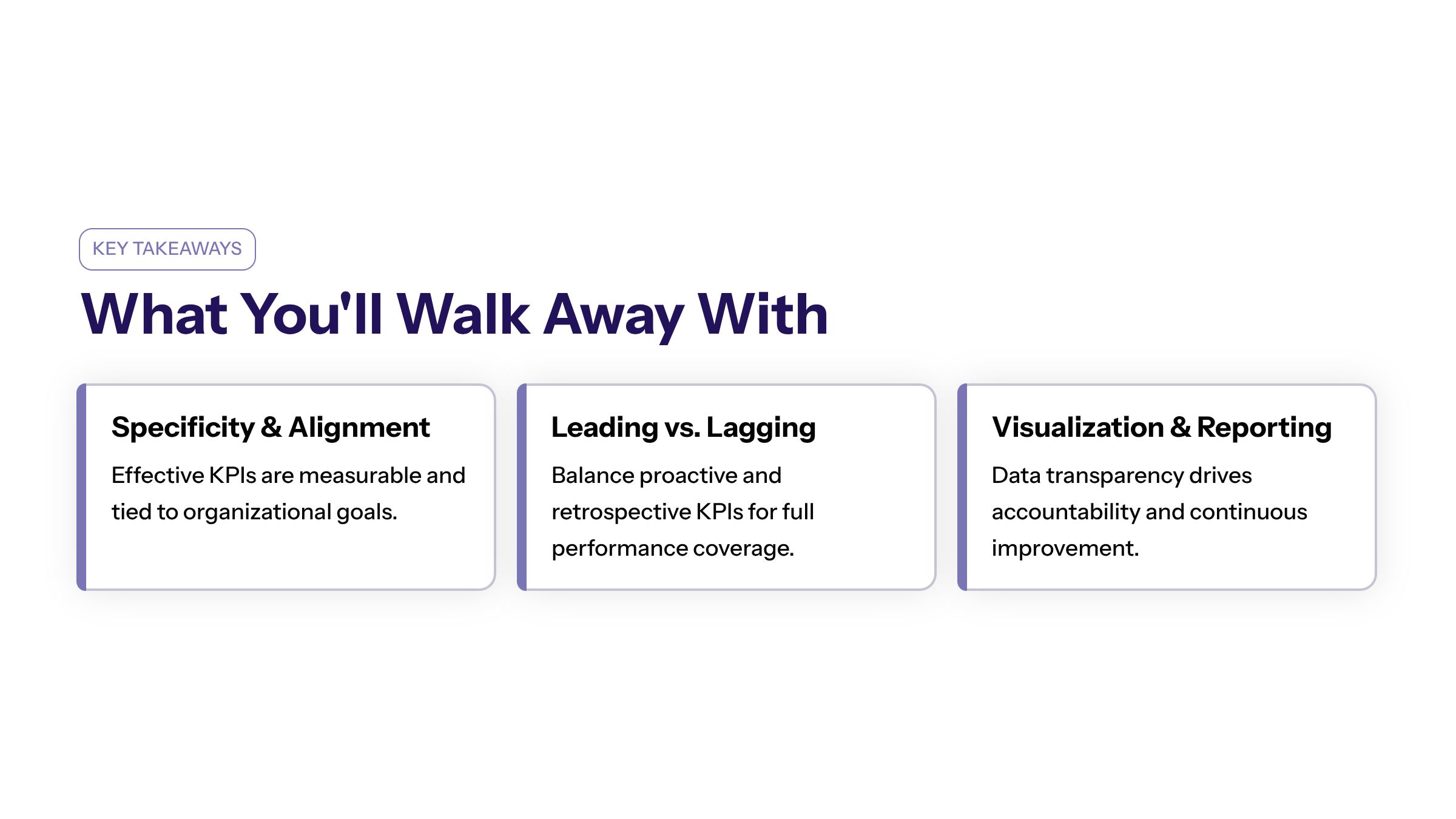
Effective KPIs are specific, measurable, and aligned with organizational goals, enabling businesses to monitor financial performance, customer satisfaction, and operational efficiency.
Differentiating between leading and lagging KPIs is critical for balanced performance measurement, allowing proactive adjustments and retrospective analysis.
Leveraging data visualization and regular KPI reporting fosters transparency, accountability, and continuous performance improvements across departments.
Focusing on important KPIs drives business performance and supports informed decision-making by providing clear metrics to track progress and optimize strategy.

Introduction to KPIs
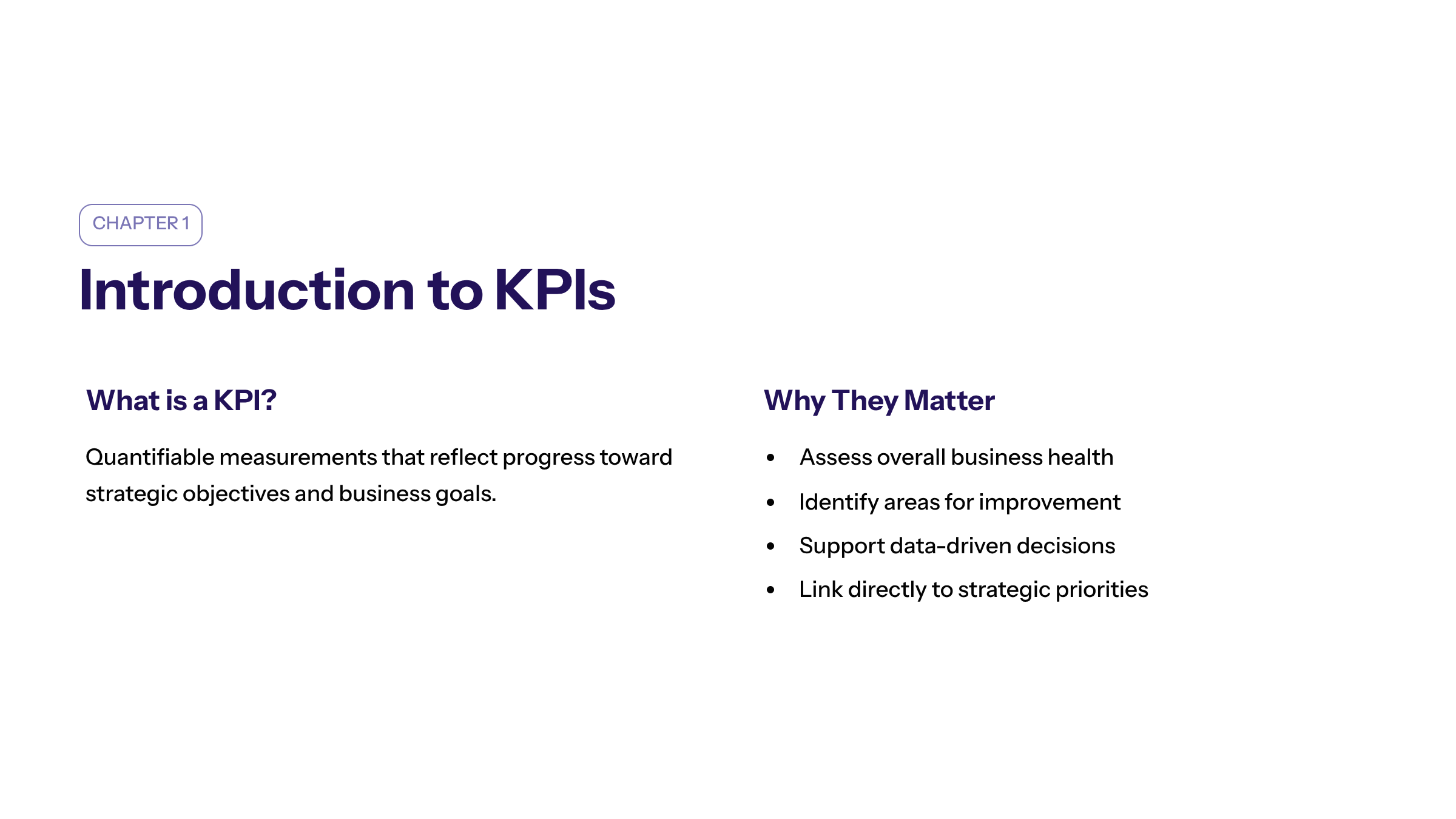
Key Performance Indicators (KPIs) serve as quantifiable measurements that reflect how well a company is progressing towards its strategic objectives and business goals. They provide an essential framework for performance measurement, allowing organizations to assess business health, identify areas for improvement, and support data-driven decisions.
KPIs are a curated subset of metrics that link directly to a company's strategic priorities. KPIs encompass a wide range of business activities, including financial performance metrics such as net profit margin and gross profit margin, customer-centric indicators like customer satisfaction and net promoter score (NPS), and operational measures such as inventory turnover.
These business activities are tracked using key metrics, which are essential measurements for monitoring progress toward company objectives and driving operational improvements.
In today’s competitive landscape, companies like Deloitte Digital and Accenture emphasize the integration of KPIs within digital transformation initiatives, leveraging AI-driven analytics and real-time dashboards to enhance decision-making agility.
This KPI theater checklist offers a structured approach for executives to implement meaningful KPIs that align with their company’s strategic goals. The article will also provide KPI examples relevant to theater organizations.
Understanding KPI Types
Financial KPIs
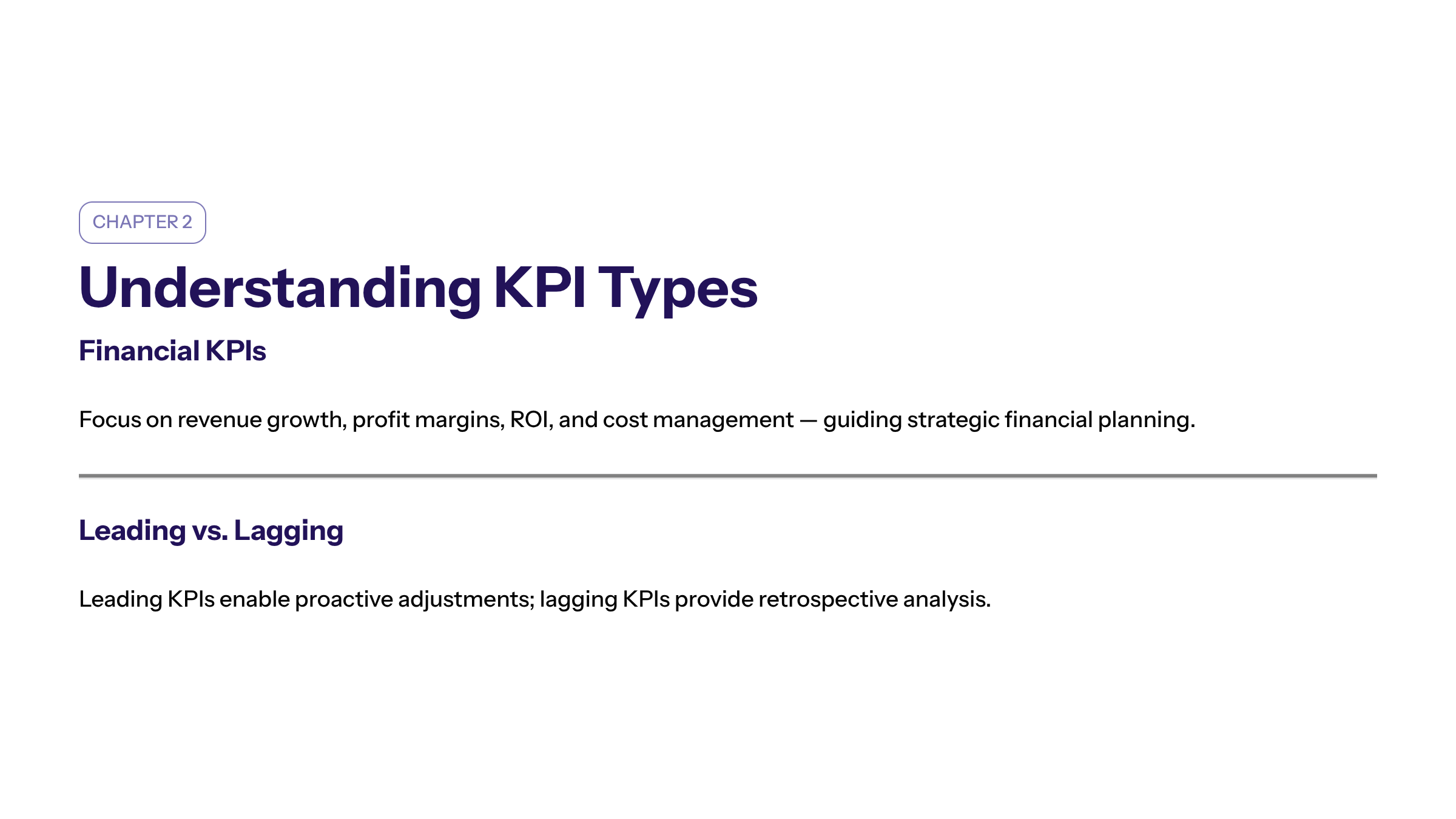
Financial KPIs focus on quantifiable measurements related to revenue growth, profit margins, return on investment (ROI), and cost management. These KPIs provide critical insights into a company’s financial health and guide strategic financial planning.
Examples of financial KPIs include:
KPI | Description | Relevance |
|---|---|---|
Net Profit Margin | Percentage of revenue remaining after expenses | Indicates overall profitability |
Gross Profit Margin | Revenue minus cost of goods sold | Measures production efficiency |
Inventory Turnover | Frequency of inventory replacement | Reflects operational efficiency |
Return on Investment (ROI) | Profitability relative to invested capital | Assesses investment effectiveness |
Financial KPIs are foundational for organizations to monitor market share growth and make performance improvements aligned with business strategy.
Human Resources KPIs
Human Resources (HR) KPIs measure workforce engagement, retention, and productivity, which directly impact organizational performance. Metrics such as employee satisfaction, turnover rate, and training participation offer insights into workforce health.
Common HR KPIs include:
KPI | Description | Strategic Impact |
|---|---|---|
Employee Engagement | Level of employee commitment and motivation | Drives productivity and innovation |
Turnover Rate | Percentage of employees leaving | Highlights retention challenges |
Time-to-Hire | Duration to fill vacancies | Affects operational continuity |
Retention Rate | Percentage of employees retained over time | Indicates workforce stability |
Leading indicators in HR, such as employee engagement surveys, provide early signals for potential issues, while lagging KPIs like turnover rates reflect past outcomes.
Creating Effective KPIs
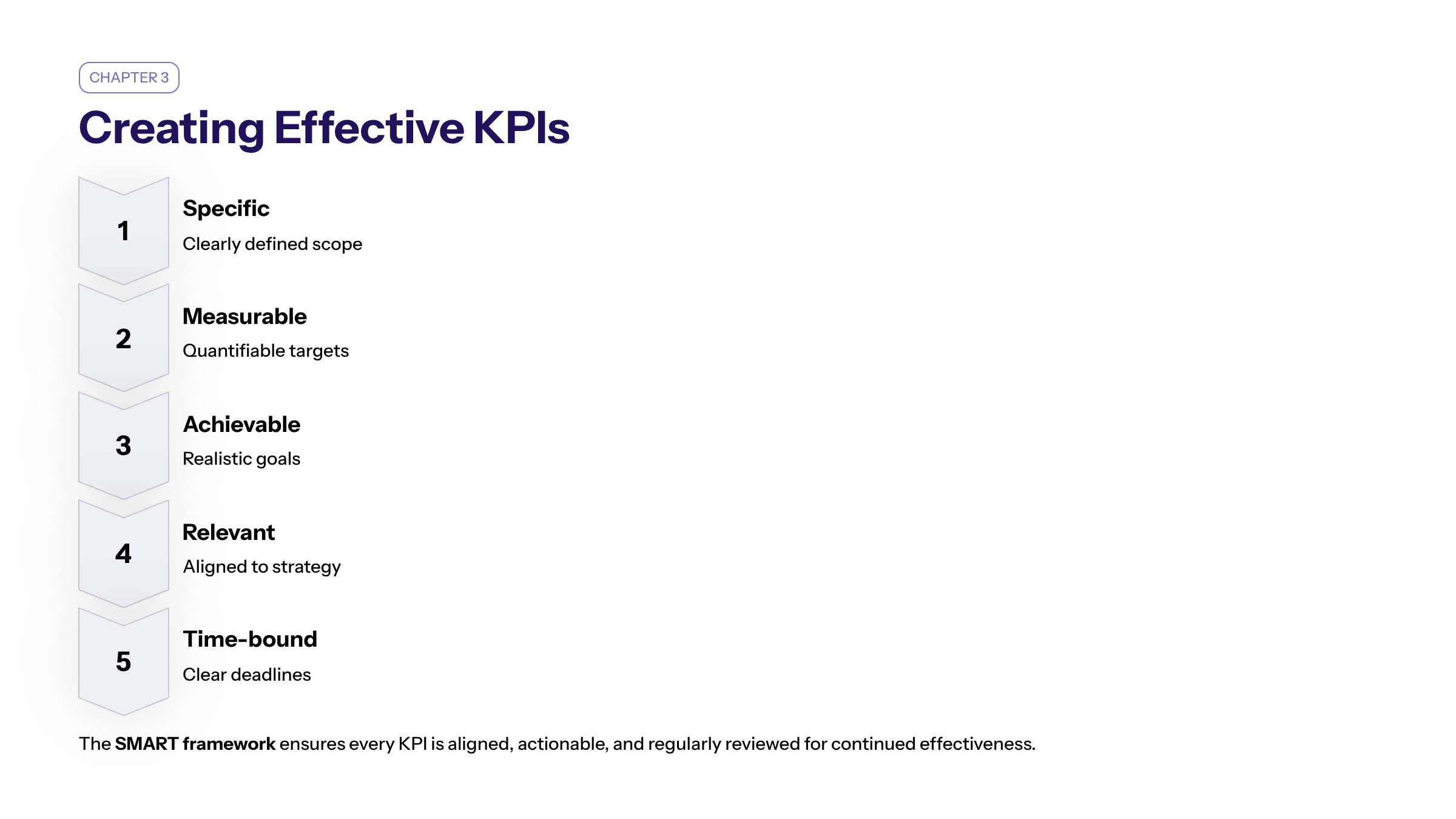
Creating KPIs requires a disciplined approach grounded in the SMART framework — Specific, Measurable, Achievable, Relevant, and Time-bound. This ensures KPIs are aligned with organizational goals and provide clear targets for performance measurement.
A good KPI is one that demonstrates relevance, clarity, and strong alignment with organizational objectives, ensuring it is tailored to the specific needs of the business and regularly reviewed for continued effectiveness.
SMART Criteria | Description |
|---|---|
Specific | Clearly defined and focused on a particular area |
Measurable | Quantifiable with clear metrics for tracking progress |
Achievable | Realistic and attainable given available resources |
Relevant | Directly related to business objectives and priorities |
Time-bound | Set within a defined timeframe for assessment |
A well-designed KPI should place performance in context against industry standards or historical baselines, allowing organizations to accurately assess progress and identify areas for improvement.
The SMART Framework Applied
SMART Element | Description | Example KPI |
|---|---|---|
Specific | Clearly defined and focused | Increase customer satisfaction by 20% |
Measurable | Quantifiable with clear data points | Achieve NPS score of 60 |
Achievable | Realistic given resources and constraints | Improve employee retention by 10% |
Relevant | Aligned with strategic objectives | Boost revenue growth in target market |
Time-bound | Defined timeframe for achievement | Within the next 6 months |
Organizations like McKinsey Digital advocate for KPIs that not only measure outcomes but also provide actionable insights to drive business success.
Aligning KPIs with Business Strategy
KPIs must be directly connected to strategic objectives to ensure relevance. Setting targets is a critical step when aligning KPIs with business strategy, as it provides clear direction and measurable goals for teams. For example, a KPI targeting increased sales qualified leads supports broader goals of market expansion and revenue growth.
Establishing performance baselines and setting targets for growth motivates teams to improve over time.
KPI Best Practices
Balanced Scorecard Approach
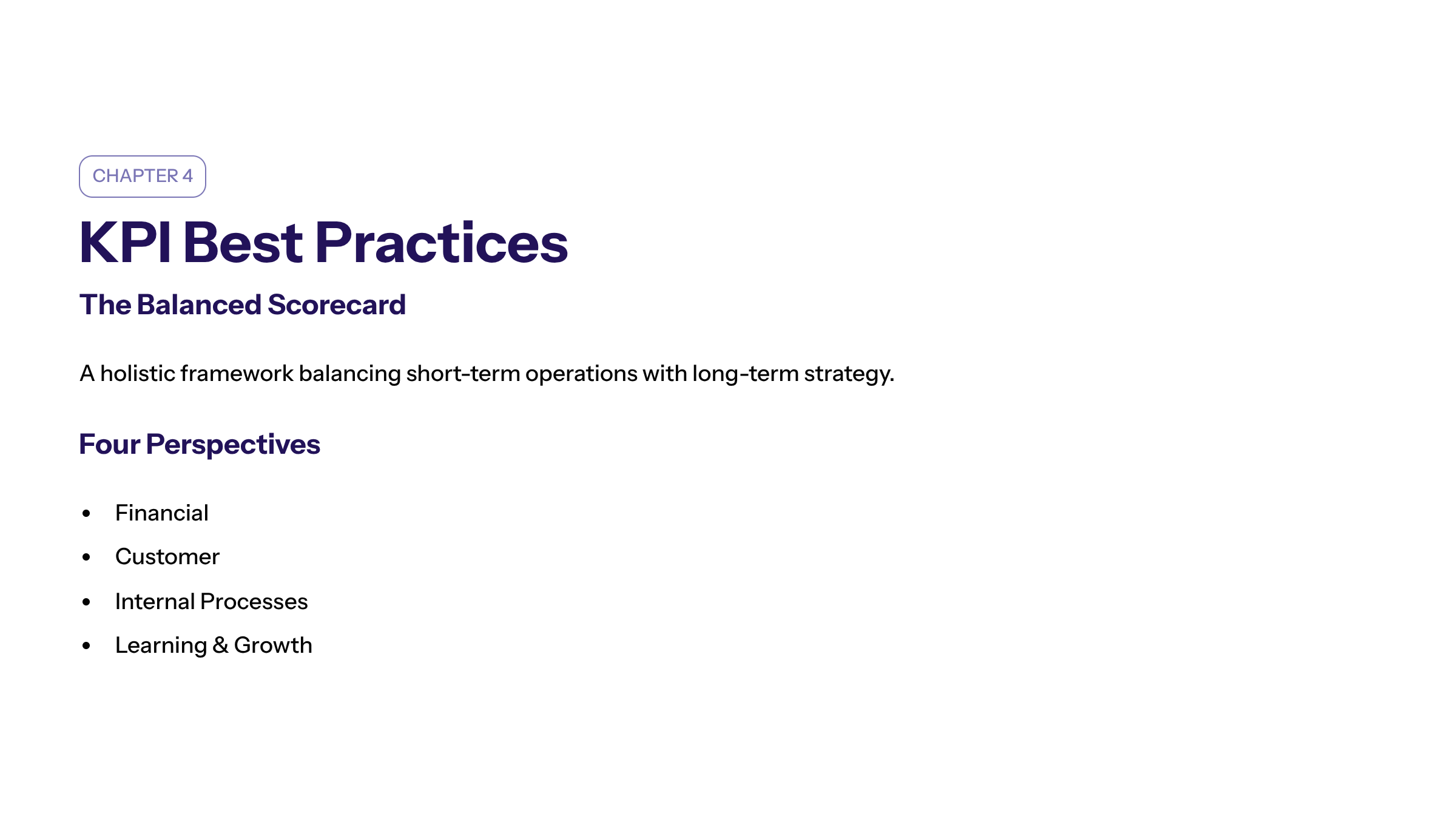
The balanced scorecard framework offers a holistic view by categorizing KPIs into four perspectives: financial, customer, internal processes, and learning and growth. This approach enables organizations to balance short-term operational metrics with long-term strategic goals.
Perspective | Focus Area | Example KPIs |
|---|---|---|
Financial | Profitability and growth | Revenue growth, net profit margin |
Customer | Satisfaction and retention | Customer satisfaction, NPS |
Internal Processes | Operational efficiency | Inventory turnover, process cycle time |
Learning & Growth | Employee development | Training participation, employee engagement |
Tracking the same KPIs over time is essential for enabling accurate comparisons, identifying trends, and ensuring consistency in performance measurement across departments. Using a mixture of leading and lagging KPIs allows organizations to monitor progress and identify early warning signs.
This framework is widely adopted by enterprises for comprehensive performance measurement and continuous improvement.
Common KPIs Across Functions
Businesses track diverse KPIs depending on departmental focus. Marketing teams may prioritize metrics such as conversion rate and marketing qualified leads (MQLs), while the sales team uses KPIs to track performance by monitoring sales qualified leads (SQLs), close rates, number of wins, calls, and leads—these metrics serve as leading indicators of future business performance. Operational departments monitor units produced and order fulfillment times.
KPIs also help arts organizations manage teams and resources by highlighting metrics like staffing costs and inventory turnover.
Data Driven Decision Making
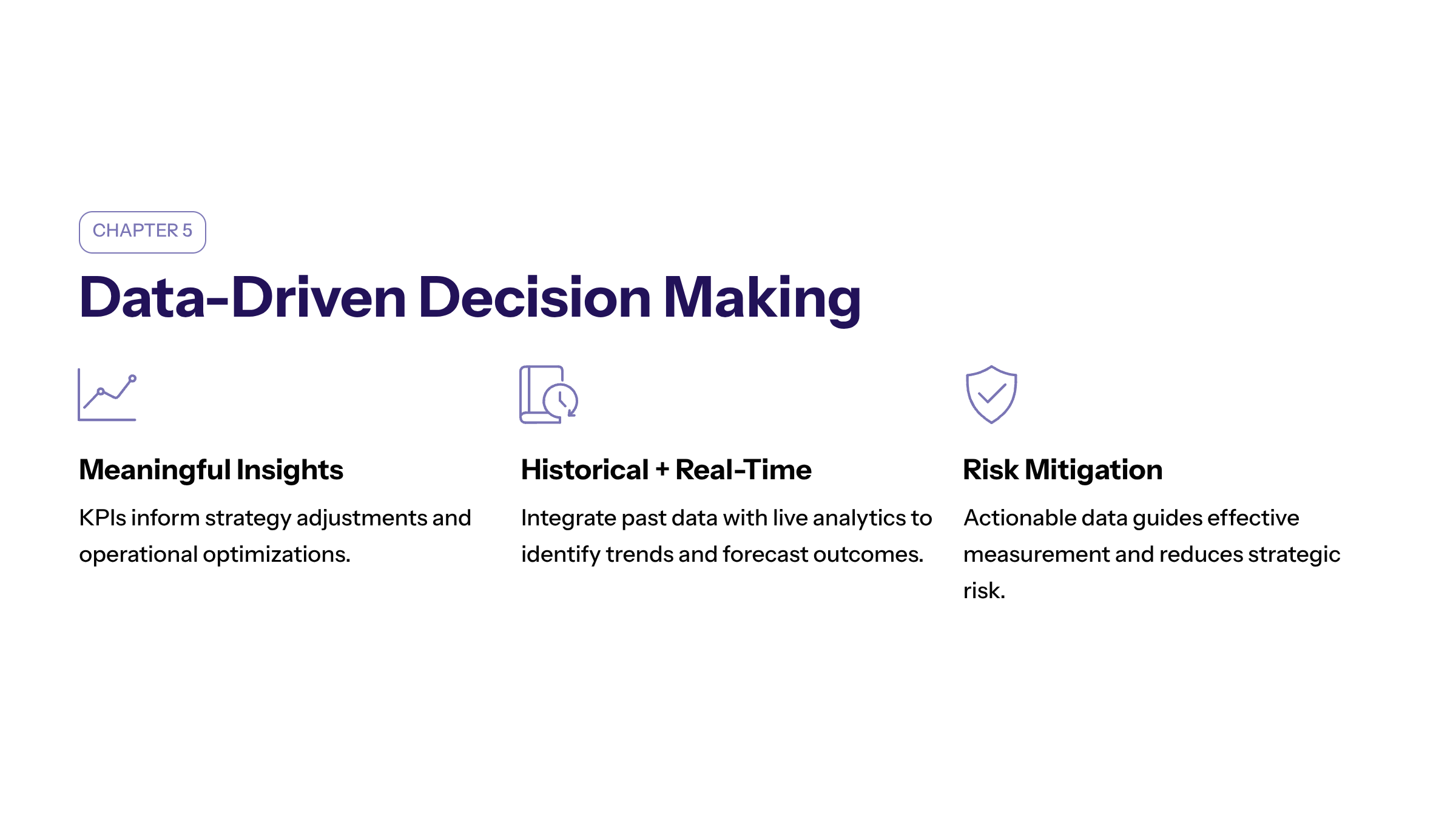
Data-driven decision making leverages KPIs to provide meaningful insights that inform strategy adjustments and operational optimizations. KPIs enable organizations to make informed decisions by offering practical, actionable data that guides effective measurement of success.
By integrating historical data and real-time analytics, companies can identify trends, forecast outcomes, and mitigate risks.
Organizations increasingly use AI-powered platforms to automate KPI reporting and enhance accuracy. For instance, Cognativ’s RAPID framework integrates AI/ML for precise performance measurement and strategic planning.
KPIs also help create a culture of accountability and data-driven decision-making within organizations.
Data Visualization
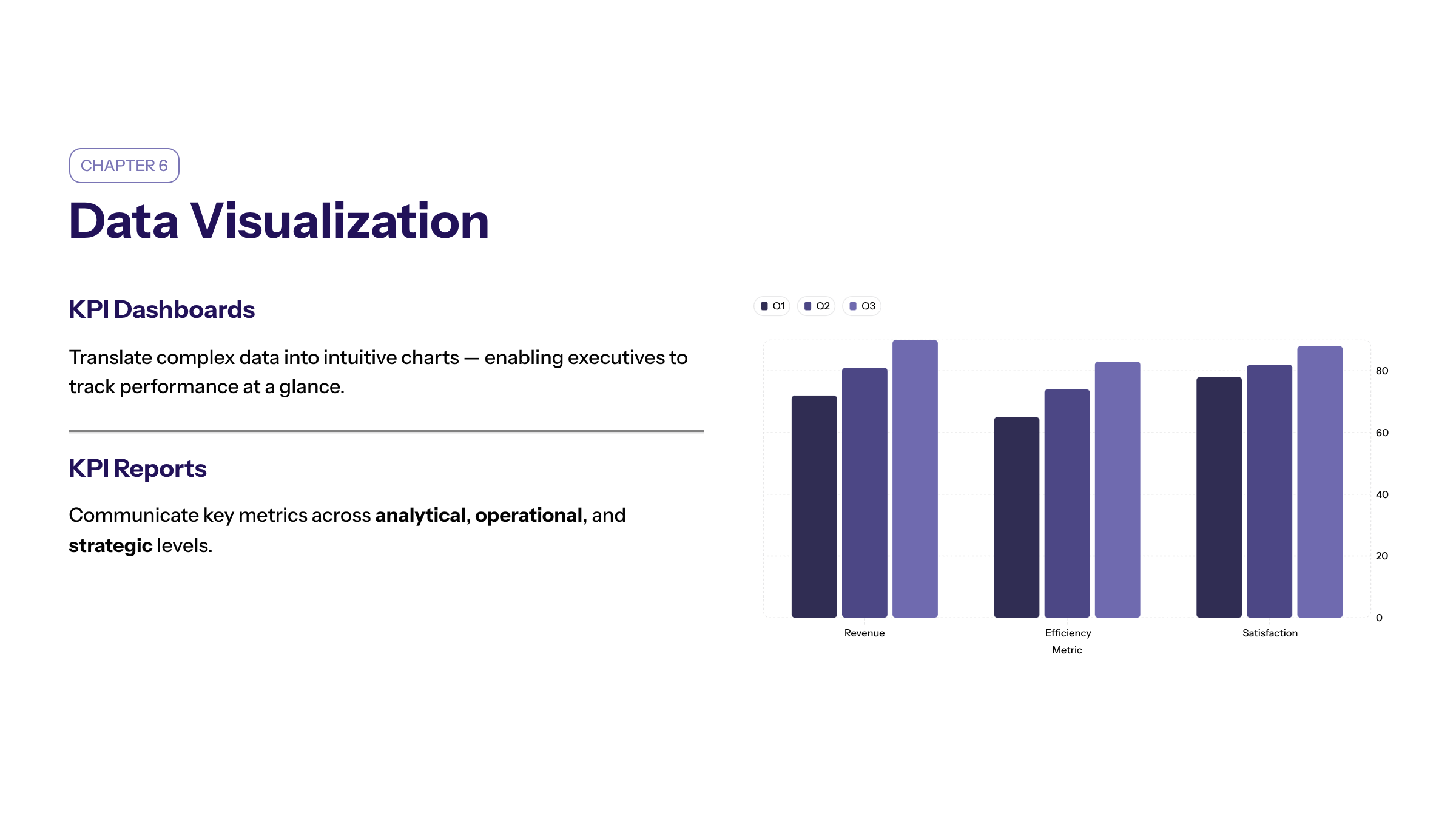
Data visualization tools such as KPI dashboards translate complex data points into intuitive charts and graphs, enabling executives to track performance at a glance. KPI reports are also essential for tracking and sharing performance data, as they help categorize and communicate key metrics across analytical, operational, and strategic levels.
A KPI dashboard is primarily a visualization tool that provides real-time performance of KPIs and metrics. Effective dashboards highlight clear targets, track progress, and support trend analysis.
The most effective KPI strategies combine smart data collection, clear visualization, and seamless distribution.
KPI Dashboards: Features and Benefits
Real-time data updates for accurate reporting
Customizable views tailored to executive needs
Integration with ERP and CRM systems for comprehensive insights
Support for leading and lagging KPIs to balance foresight and hindsight
Measuring Customer Satisfaction
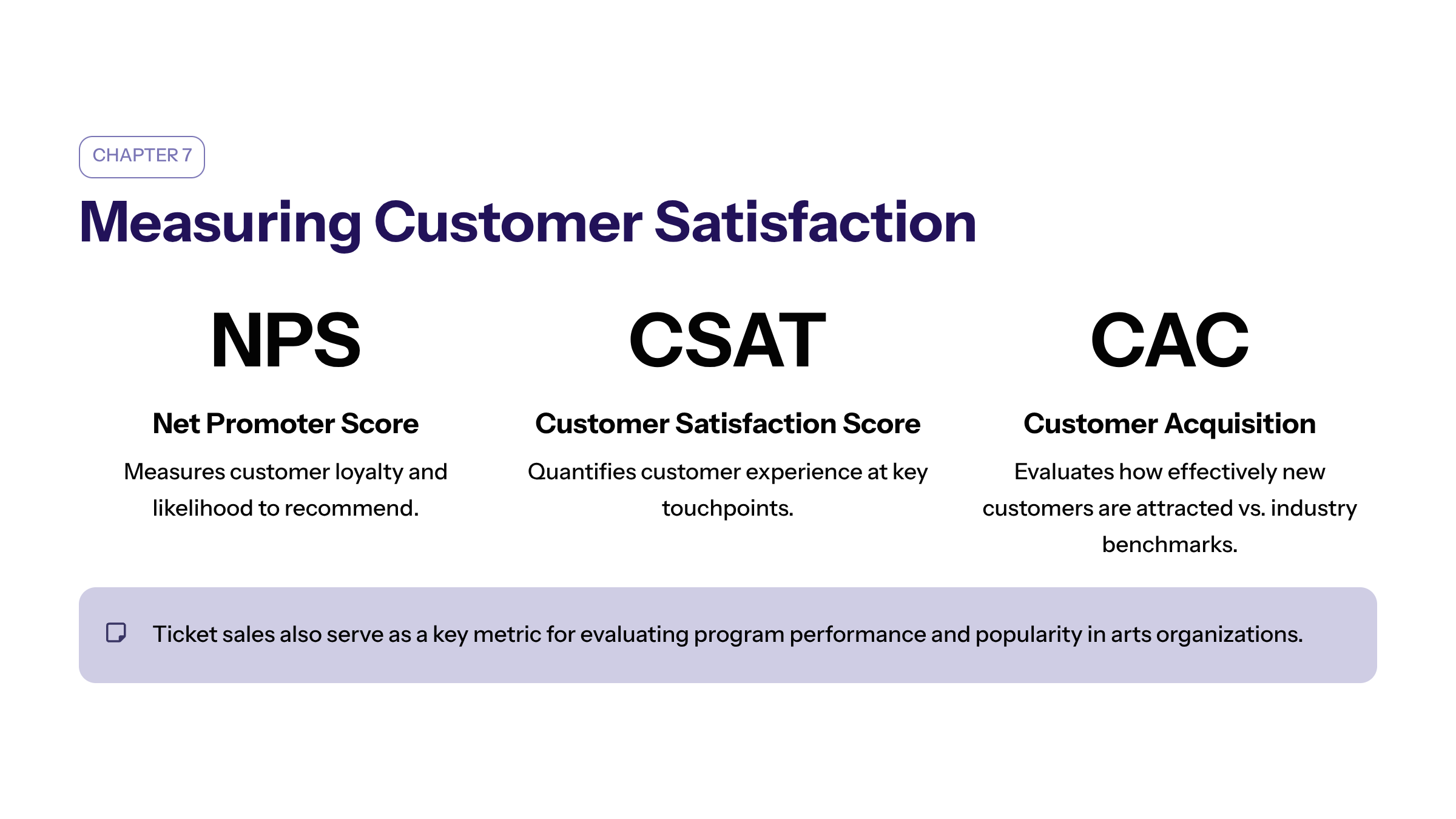
Customer satisfaction remains a critical KPI area, with metrics like net promoter score (NPS) and customer satisfaction score (CSAT) offering quantifiable measurements of customer loyalty and experience.
Customer acquisition is also a vital KPI for measuring strategic growth and performance, helping organizations evaluate how effectively they attract new customers compared to industry standards.
Ticket sales serve as a key metric for evaluating program performance and the popularity of arts programs or performances.
Audience Engagement KPIs consist of attendance, satisfaction, and social media buzz. Monitoring program performance in arts organizations involves tracking ticket sales, guest satisfaction scores, and merchandising revenue. Audience reach and engagement KPIs for arts organizations include website traffic, social media followers, and attendance numbers.
Tracking attendance numbers and social media followers complements these metrics by providing broader engagement insights.
Determining KPI Quantity
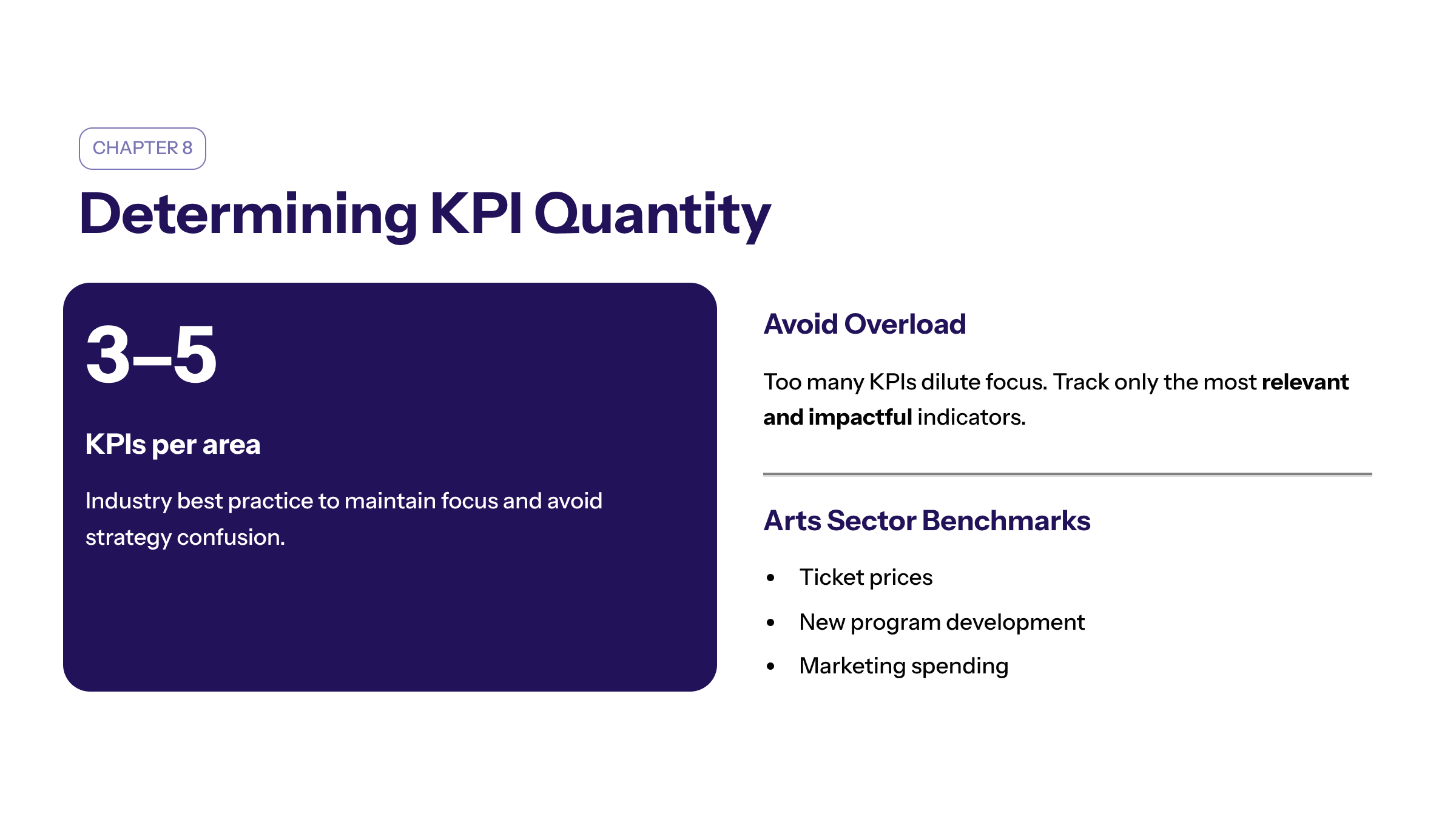
Selecting the right number of KPIs is vital to avoid information overload while ensuring comprehensive performance measurement, and many organizations ask how many KPIs should be tracked for optimal results.
Industry best practice suggests tracking a limited and balanced selection of 3 to 5 KPIs per area to maintain focus and avoid strategy confusion, focusing on the most relevant and impactful indicators.
Benchmarking KPIs in the arts sector can include ticket prices, new program development, and marketing spending.
KPI Ownership and Accountability
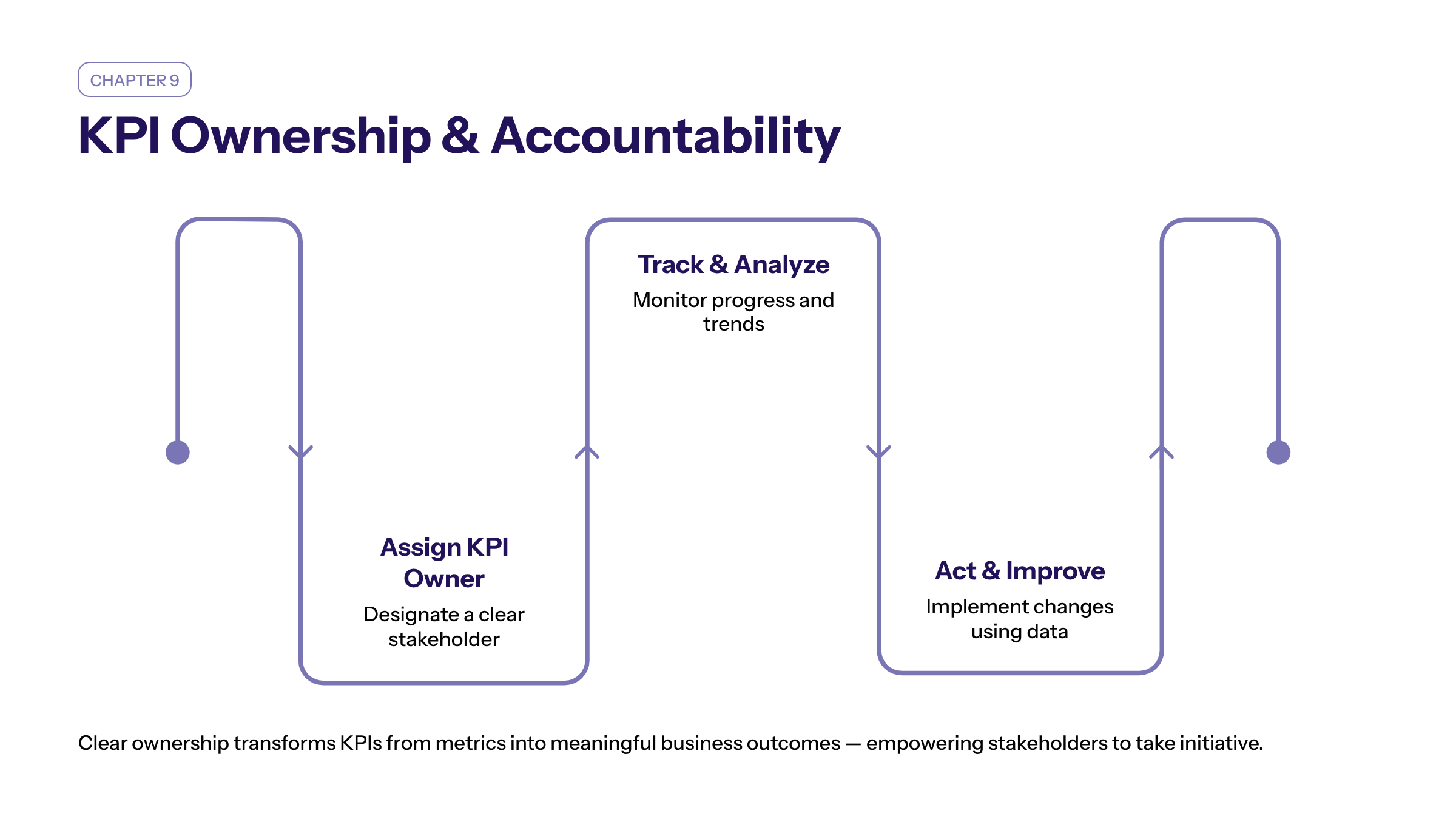
Establishing clear ownership and accountability for key performance indicators (KPIs) is fundamental to ensuring that performance metrics translate into meaningful business outcomes.
When each KPI is assigned to a specific individual or team, it becomes clear who is responsible for tracking progress, analyzing results, and driving improvements. This targeted approach not only streamlines the monitoring of key performance indicators kpis but also empowers stakeholders to take initiative and make data driven decisions.
Effective KPI ownership involves more than just assigning names to metrics—it requires setting expectations for regular review, transparent reporting, and open communication across departments. By holding teams accountable for their assigned KPIs, organizations foster a culture where performance metrics are actively managed and continuously optimized.
This accountability encourages collaboration, as departments work together to address challenges and capitalize on opportunities revealed by the data.
Ultimately, clear KPI ownership and accountability ensure that kpis are not just numbers on a dashboard, but actionable tools that guide business activities and support ongoing performance improvements.
By embedding these practices into your KPI management process, your organization can maximize the impact of its metrics and drive sustained business success.
Implementing KPIs
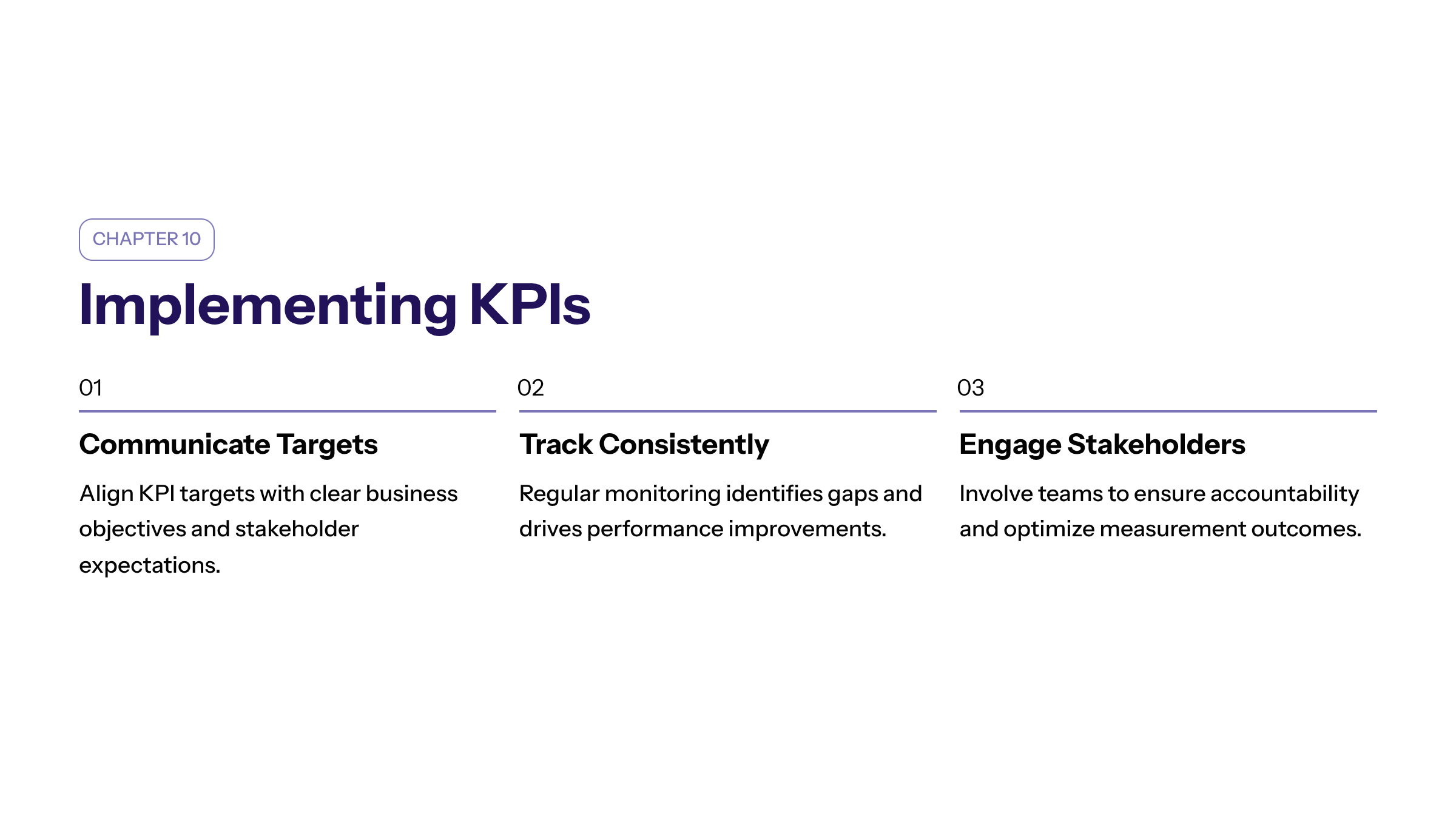
Successful KPI implementation requires clear communication of targets based on business objectives, regular tracking, and stakeholder engagement. Consistent monitoring enables organizations to identify gaps and drive performance improvements.
Conclusion
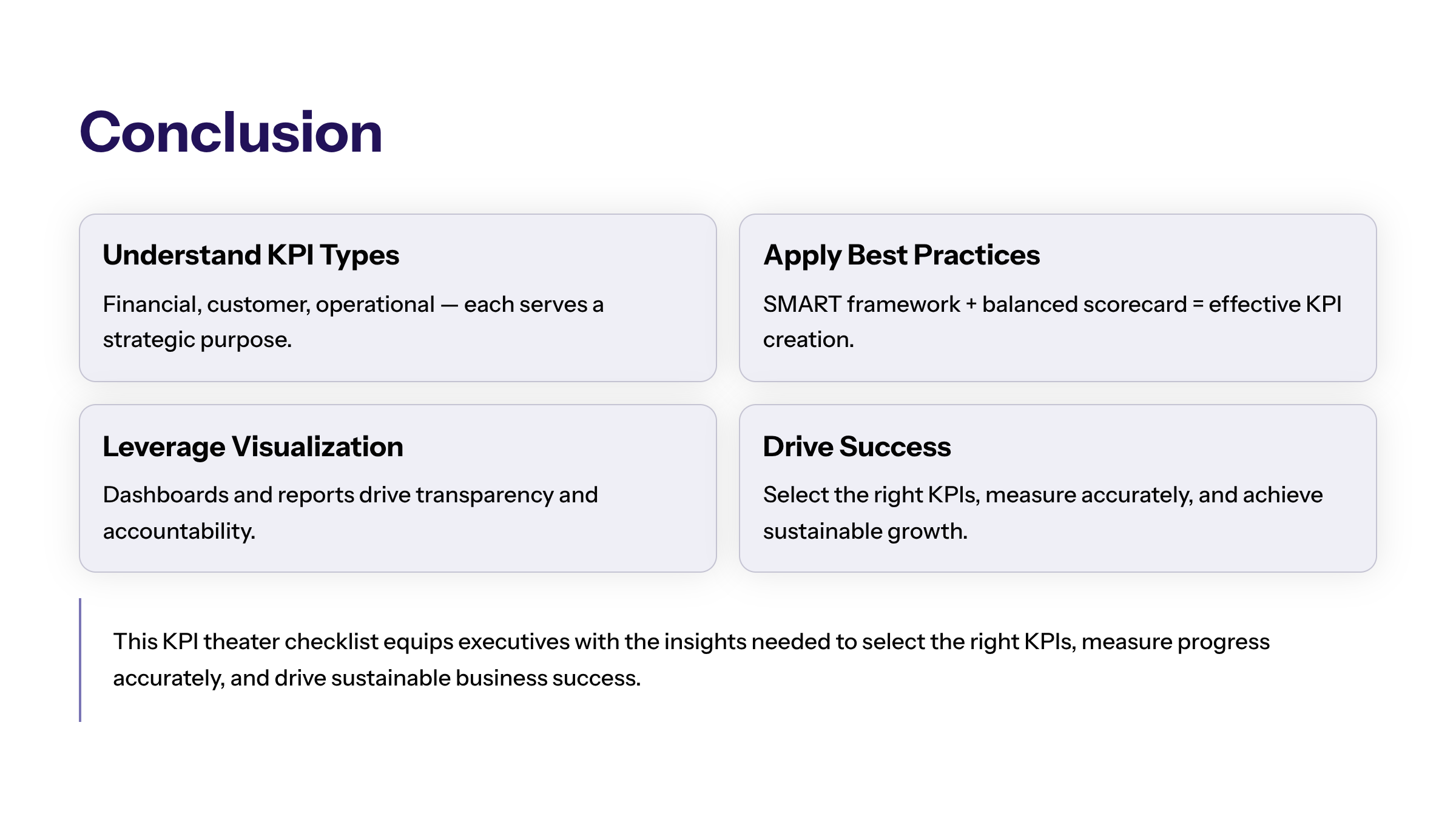
Key Performance Indicators are indispensable tools for tracking and analyzing business performance. By understanding KPI types, applying best practices in KPI creation and implementation, and leveraging data visualization, organizations can enhance transparency, accountability, and strategic decision-making.
This KPI theater checklist equips executives with the insights needed to select the right KPIs, measure progress accurately, and drive sustainable business success.