Prioritization Workshop Agenda for Effective Decision-Making
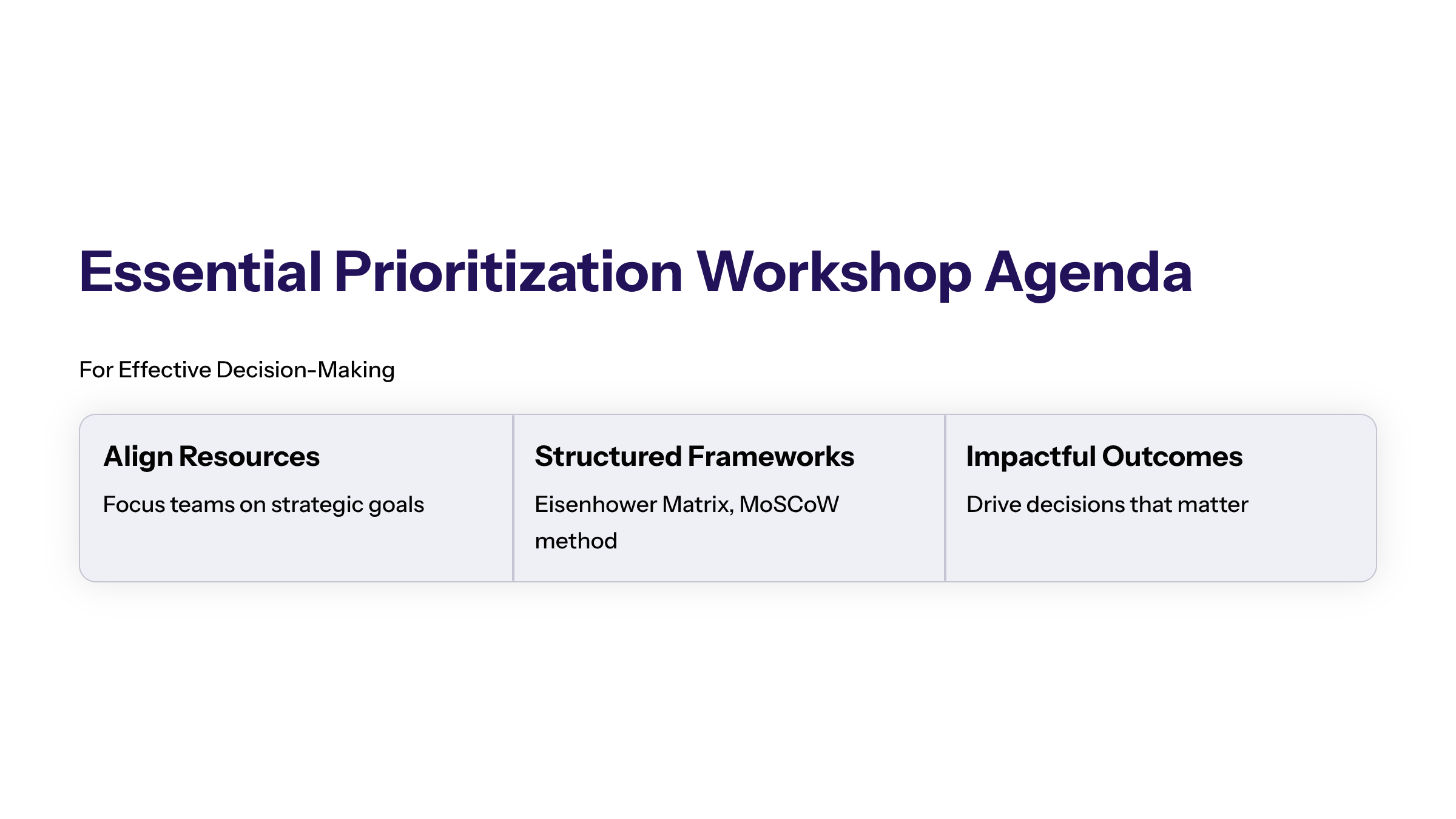
Effective prioritization workshops are critical for organizations aiming to align resources, focus on strategic goals, and drive impactful outcomes.
This article provides an expert analysis of a comprehensive prioritization workshop agenda designed for executive teams and key stakeholders. It emphasizes the importance of structured decision-making frameworks, such as the Eisenhower Matrix and MoSCoW method, to prioritize tasks and projects efficiently.
By integrating proven methodologies and facilitation techniques, organizations can enhance collaboration, reduce ambiguity, and accelerate progress on high-priority initiatives.
Key Takeaways
-
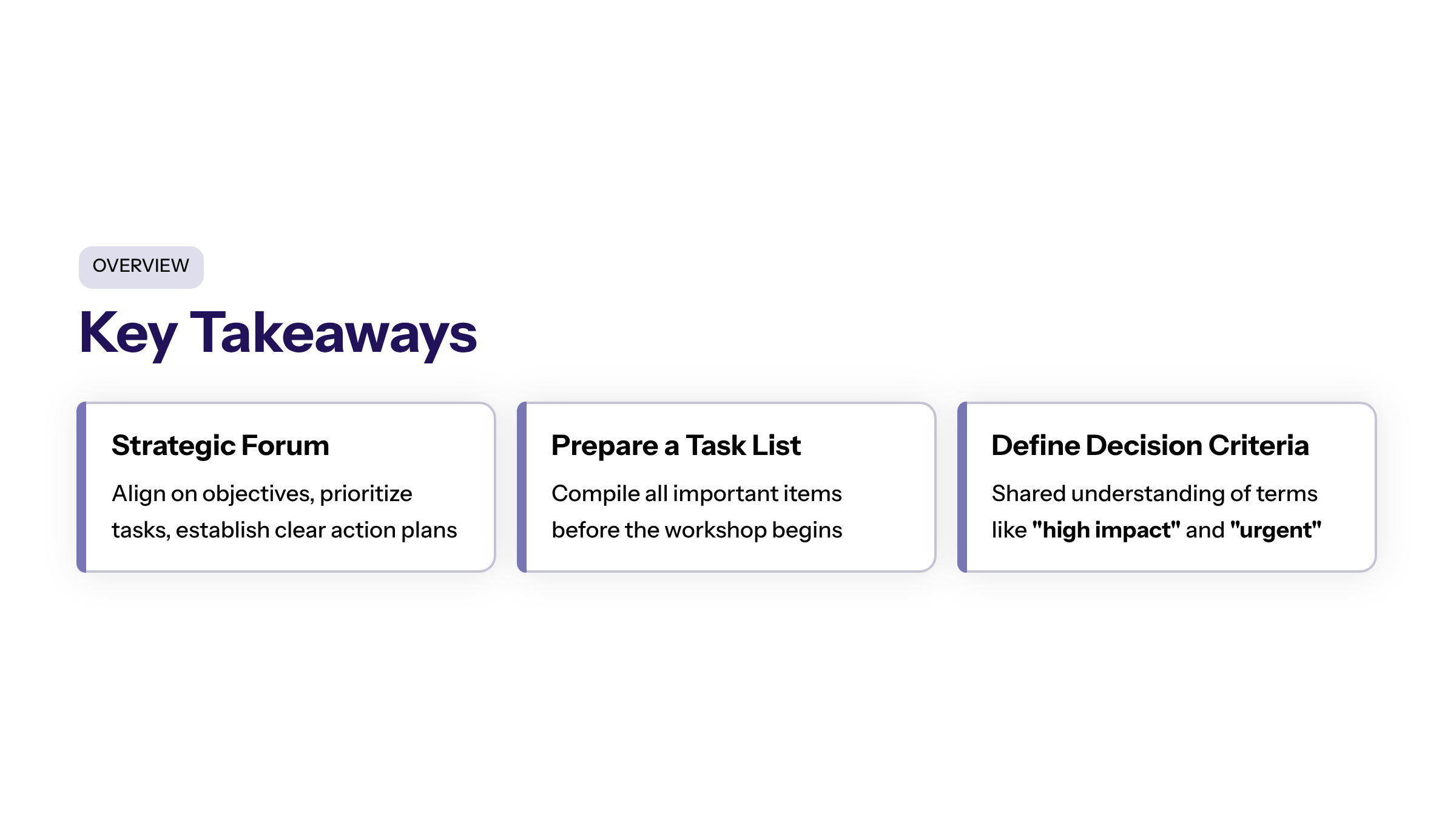
Prioritization workshops serve as a strategic forum where teams align on business objectives, prioritize tasks using structured frameworks, and establish clear action plans.
-
Before the workshop begins, create a comprehensive project or task list to ensure all important items are included in the discussion.
-
At the outset, define decision criteria so all participants share an understanding of key terms like 'high impact' and 'urgent'.
-
Tools like the Eisenhower Matrix and MoSCoW method help categorize tasks by urgency and importance, enabling teams to focus on initiatives with significant impact while managing resources effectively.
-
Facilitated collaboration, transparent decision-making, and continuous review processes are essential to adapt priorities in dynamic business environments.
-
Stakeholders can be given an imaginary budget to 'spend' on the most valuable items during a prioritization workshop, such as through the 100$ Test, which engages participants more than arbitrary ranking systems.
-
Explicitly agreeing on what will not be done protects team bandwidth during prioritization discussions, ensuring focus on top priorities.
-
Deciding on a communication plan is essential for sharing new priorities with stakeholders not present in the meeting, maintaining alignment beyond the workshop.
-
Effective prioritization workshops in 2026 focus on aligning team members through visual frameworks and data-driven decision-making, leveraging tools like the How-Now-Wow Matrix to break creative paradoxes by weighing ideas on two parameters.
-
Setting a timer for each session during the workshop helps teams know how long they have to brainstorm, keeping discussions focused and efficient.
-
After the workshop, it's important to have someone monitor any shifts in priorities due to changes in the market or user needs, ensuring ongoing relevance of the prioritization.

Introduction to Effective Decision-Making
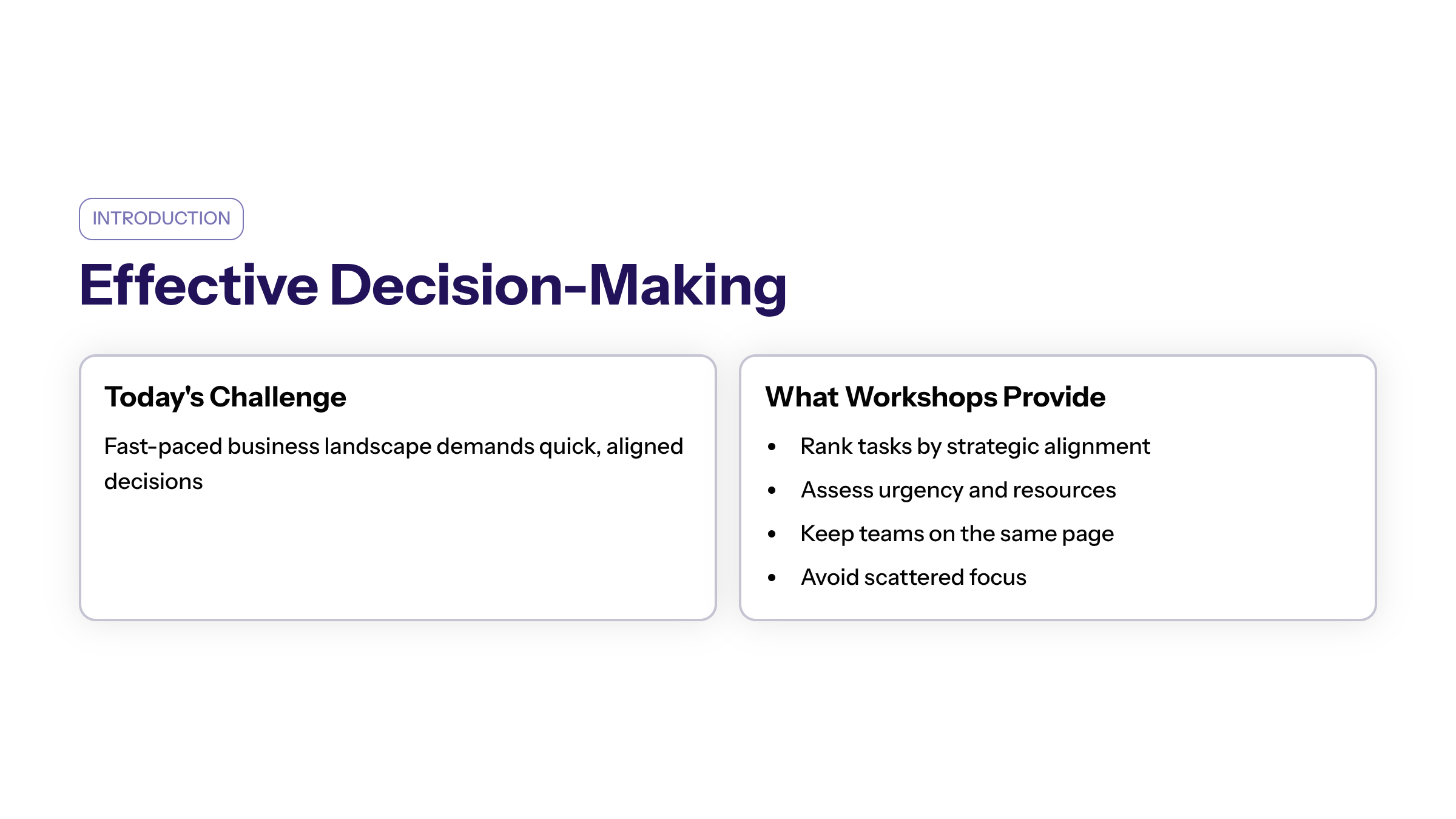
In today’s fast-paced business landscape, the ability to make effective decisions quickly is paramount. Prioritization workshops provide a structured environment for teams to rank tasks and initiatives based on their alignment with strategic goals, urgency, and resource availability. This process ensures that teams are on the same page, avoiding the pitfalls of misaligned efforts and scattered focus.
Effective decision-making hinges on clear communication of business goals and a shared understanding of what constitutes high-priority work. Workshops that incorporate interactive activities such as sticky notes, group discussions, and prioritization exercises foster engagement and collective ownership of decisions.
Aligning Prioritization with Business Strategy
Successful workshops start with a clear articulation of the company’s business objectives. Leadership must communicate strategic goals transparently to ensure all participants understand the broader context. This alignment helps teams identify key stakeholders and tailor prioritization criteria accordingly.
Understanding Business Objectives
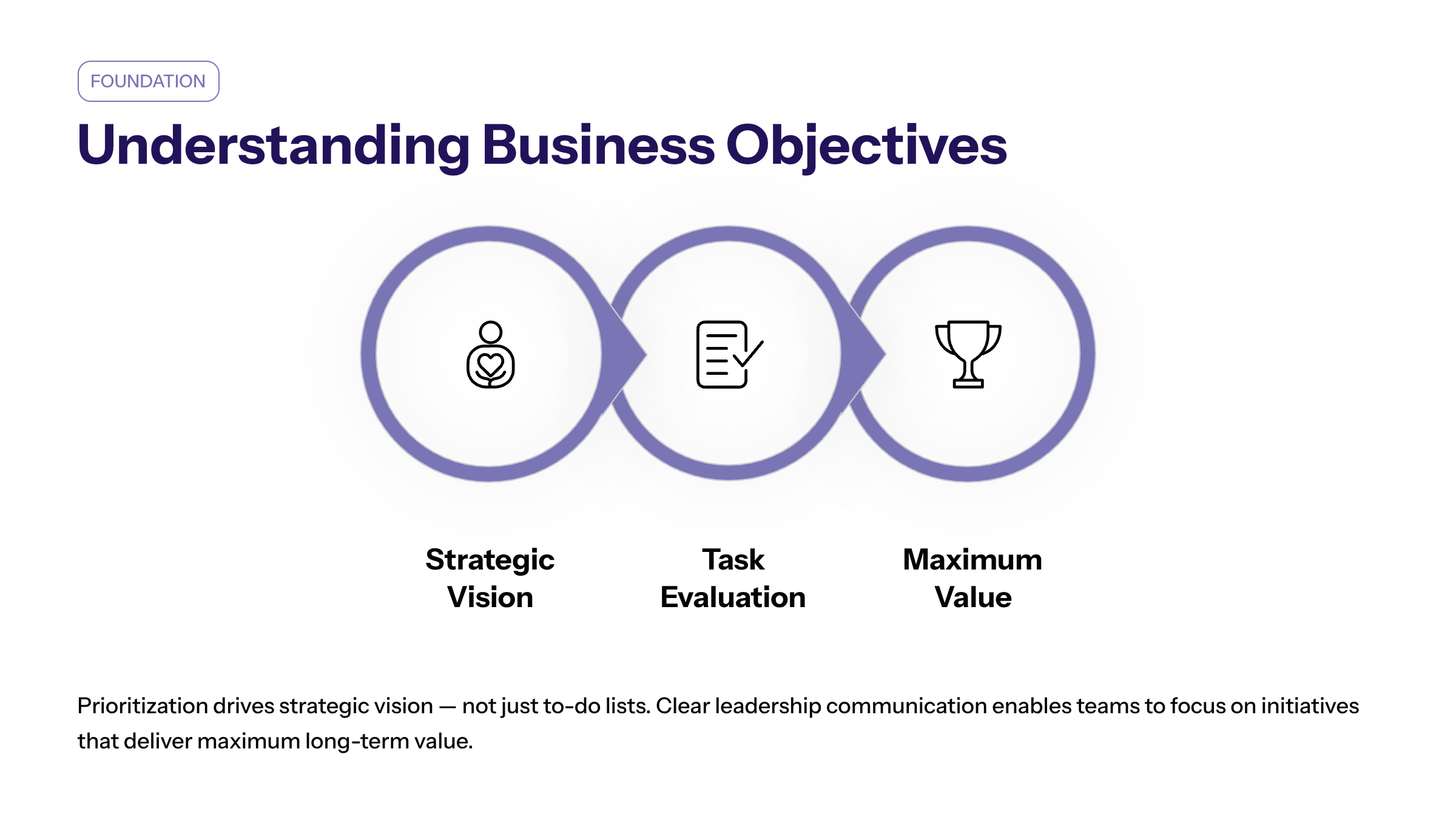
Prioritization is not merely about managing a to-do list; it is about making decisions that drive the company’s strategic vision. Understanding business objectives allows teams to evaluate tasks not only by their immediate urgency but also by their contribution to long-term goals.
Communicating Strategic Goals
Clear communication from leadership regarding strategic goals enables teams to prioritize initiatives that deliver maximum value. This includes defining what success looks like, identifying customers’ needs, and recognizing market opportunities.
Identifying Key Stakeholders and Their Needs
Stakeholder analysis is crucial for effective prioritization. Different stakeholders may have varying perspectives on what constitutes priority depending on their roles and responsibilities. Workshops should facilitate discussions that capture these diverse viewpoints to build consensus.
Task Management
Effective task management is the backbone of any prioritization workshop. Teams must be equipped to rank tasks based on importance, urgency, and resource requirements. The Eisenhower Matrix is a widely used tool that categorizes tasks into four boxes based on their urgency and importance, enabling teams to focus on what truly matters.
When using the Eisenhower Matrix, it is crucial to identify important tasks that contribute to long-term goals and urgent tasks that are time sensitive and require immediate attention, distinguishing them from less critical items.
Creating a comprehensive task list is a foundational step before applying prioritization frameworks, as it ensures all possible actions are considered and organized for effective decision-making. Teams can create customized matrices or templates to facilitate this process and streamline workflow management.
Another useful tool is the Impact and Effort Matrix, which categorizes ideas or actions based on the effort required to implement them and their potential impact, helping teams prioritize initiatives that offer the greatest value for the least effort.
Using the Eisenhower Matrix
The Eisenhower Matrix divides tasks into four quadrants:
|
Quadrant |
Description |
Action |
|---|---|---|
|
1 |
Urgent and Important |
Do first |
|
2 |
Important but Not Urgent (e.g., write a report) |
Schedule |
|
3 |
Urgent but Not Important |
Delegate |
|
4 |
Neither Urgent nor Important |
Eliminate or Defer |
For example, you might write a report as an important but not urgent task, or write a quick email response as an urgent but not important task.
Using the matrix helps teams spend less time on low-value or non-essential tasks, allowing them to focus on what truly matters. This increases efficiency and productivity during your prioritization workshop agenda.
Practical Application in Workshops
During workshops, participants can engage in a collaborative exercise by sorting tasks into these quadrants using sticky notes or digital tools like ClickUp Whiteboards. Preparing a task list before the meeting and using a voting process to narrow down priorities can help whittle down a long list and keep the meeting focused and productive. This visual and interactive approach fosters clarity and consensus.
Setting a timer for each session during the workshop helps teams stay on track and manage brainstorming time effectively, preventing discussions from dragging on too long and ensuring all agenda items are covered.
Prioritization Frameworks
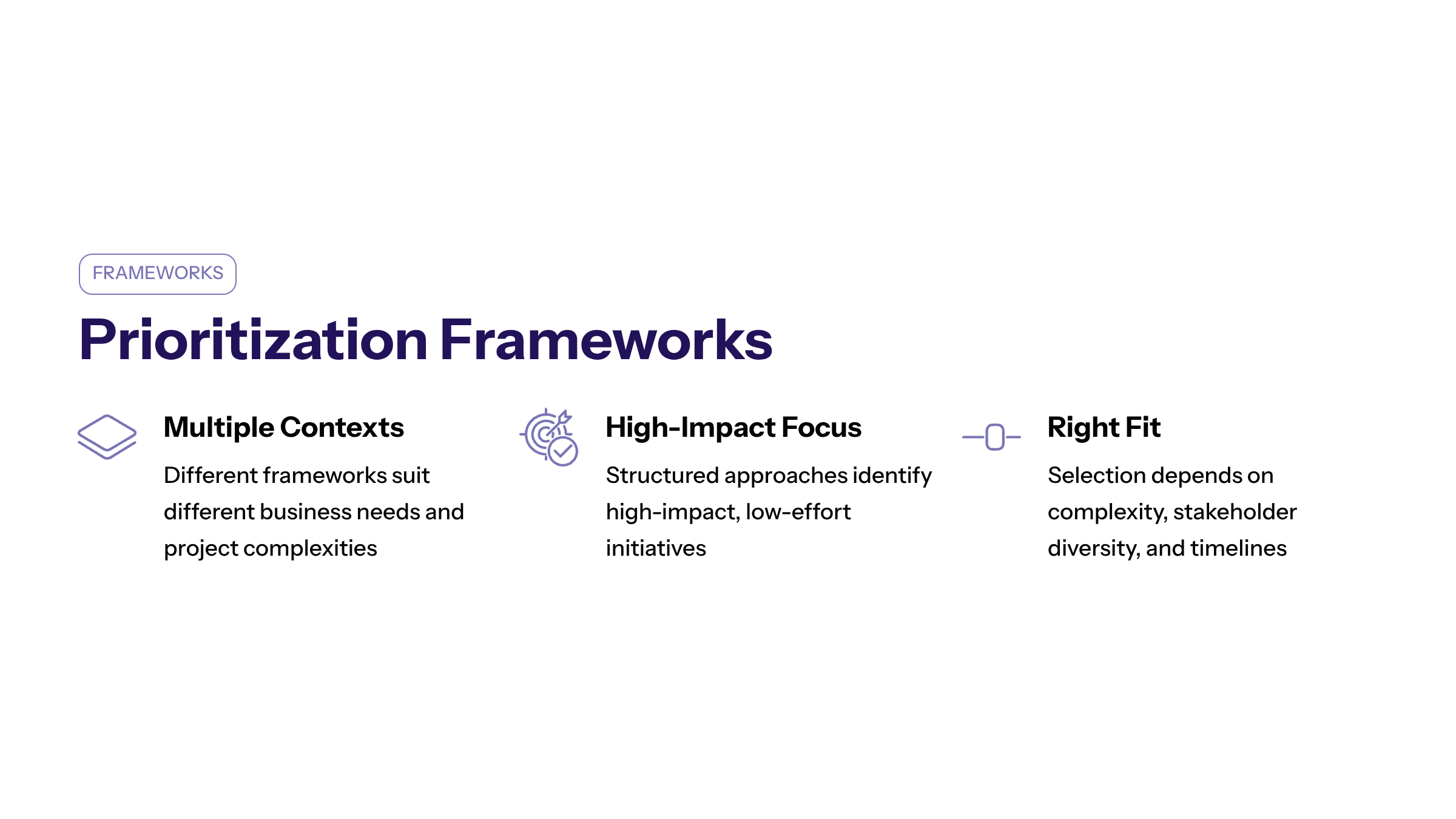
Various prioritization frameworks, also known as prioritization methods, exist to support decision-making, each suitable for different contexts and business needs. These methods help teams evaluate possible actions and manage multiple projects simultaneously by providing structured approaches to identify high-impact, low-effort initiatives. Selecting the appropriate framework depends on factors such as project complexity, stakeholder diversity, and timelines.
MoSCoW Method
The MoSCoW method categorizes tasks or features into four groups:
-
Must Have: Critical for success
-
Should Have: Important but not vital
-
Could Have: Desirable but not necessary
-
Won’t Have: Not a priority for now
For example, a product team might use the MoSCoW method to prioritize new app features: login security could be a Must Have, a dark mode a Should Have, custom avatars a Could Have, and a built-in chat a Won’t Have for the current release.
This method is particularly effective in product management, where teams must balance different features and resource constraints. By applying MoSCoW, teams can arrive at a final list of prioritized items to focus on during development.
Explicitly agreeing on what will not be done during the workshop protects team bandwidth, preventing distraction by low-priority items and ensuring resources are dedicated to the most impactful initiatives.
Kano Model and Weighted Scoring
Other frameworks like the Kano Model focus on customer satisfaction and are used to prioritize product features, ensuring that the most relevant features are identified to meet customer needs. Weighted Scoring allows teams to assign numerical weights to criteria such as impact, effort, and cost, facilitating data-driven decision-making. Teams can use these frameworks to develop actionable solutions from new ideas, transforming initial concepts into prioritized, implementable product features.
How-Now-Wow Matrix
The How-Now-Wow Matrix is an idea selection tool that helps break the creative paradox by weighing ideas on two parameters. It encourages teams to classify ideas into categories based on their novelty and feasibility, helping to identify quick wins and innovative solutions that are worth pursuing.
Decision-Making Techniques
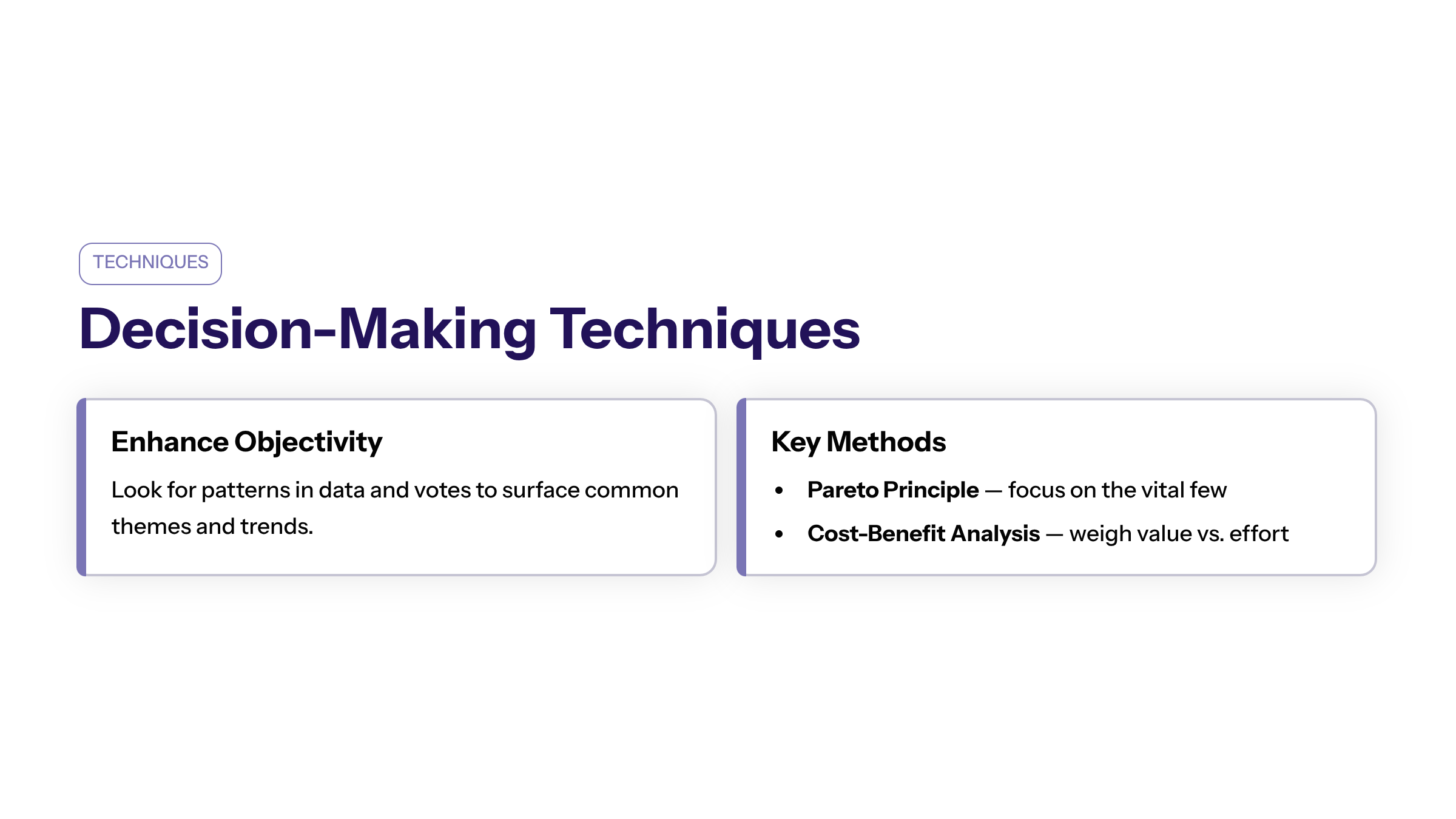
In addition to frameworks, workshops benefit from decision-making techniques that enhance objectivity and transparency. Teams can look for patterns in the data or votes to identify standout ideas, helping to surface common themes and trends that inform better decisions.
Pareto Principle and Cost-Benefit Analysis
The Pareto Principle (80/20 rule) helps teams focus on the critical few tasks that generate the majority of value. Cost-benefit analysis evaluates the trade-offs between resource investment and expected returns, guiding rational prioritization.
Facilitating Consensus
Effective facilitation ensures that all participants contribute to discussions, biases are minimized, and decisions reflect collective agreement. Techniques such as dot voting or the 100$ Test engage participants actively and democratically. The 100$ Test involves participants assigning relative value to a list of items by spending an imaginary $100, which encourages thoughtful consideration and prioritization beyond simple ranking.
Prioritization in Practice
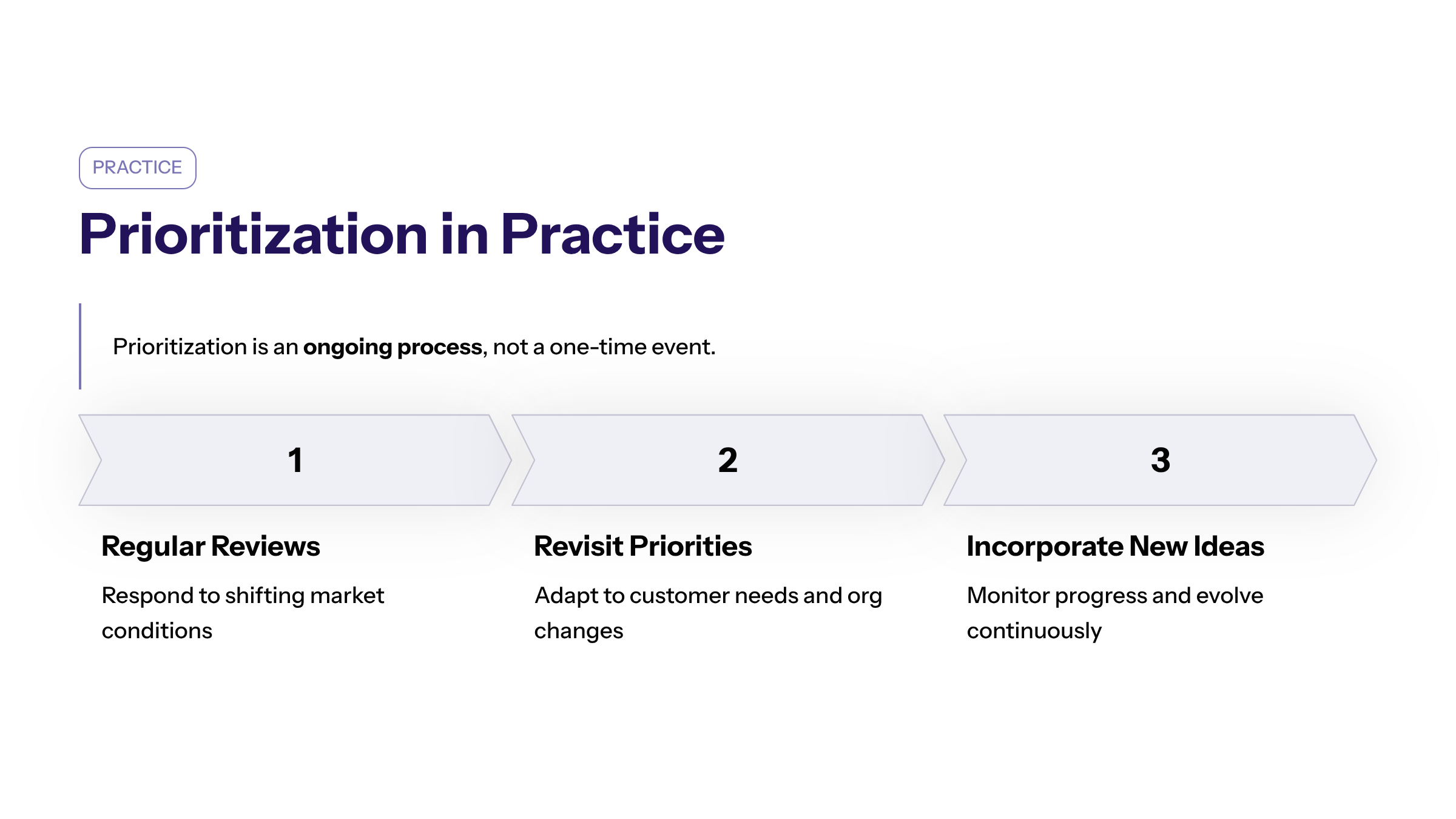
Prioritization is an ongoing process, not a one-time event. Regular reviews and adjustments are necessary to respond to shifting market conditions, customer needs, and organizational changes.
Continuous Review and Adaptation
Teams should establish mechanisms for monitoring progress, revisiting priorities, and incorporating new ideas. This dynamic approach ensures that resources remain focused on initiatives with the highest strategic value.
After the workshop, appointing someone to monitor any shifts in priorities due to changes in the market or user needs ensures that the prioritization remains relevant and adaptive.
Recording and Accountability
Workshops should conclude with clear documentation of decisions, assigned responsibilities, and timelines. Tools like action logs and project management software support tracking and accountability.
Workshop Agenda
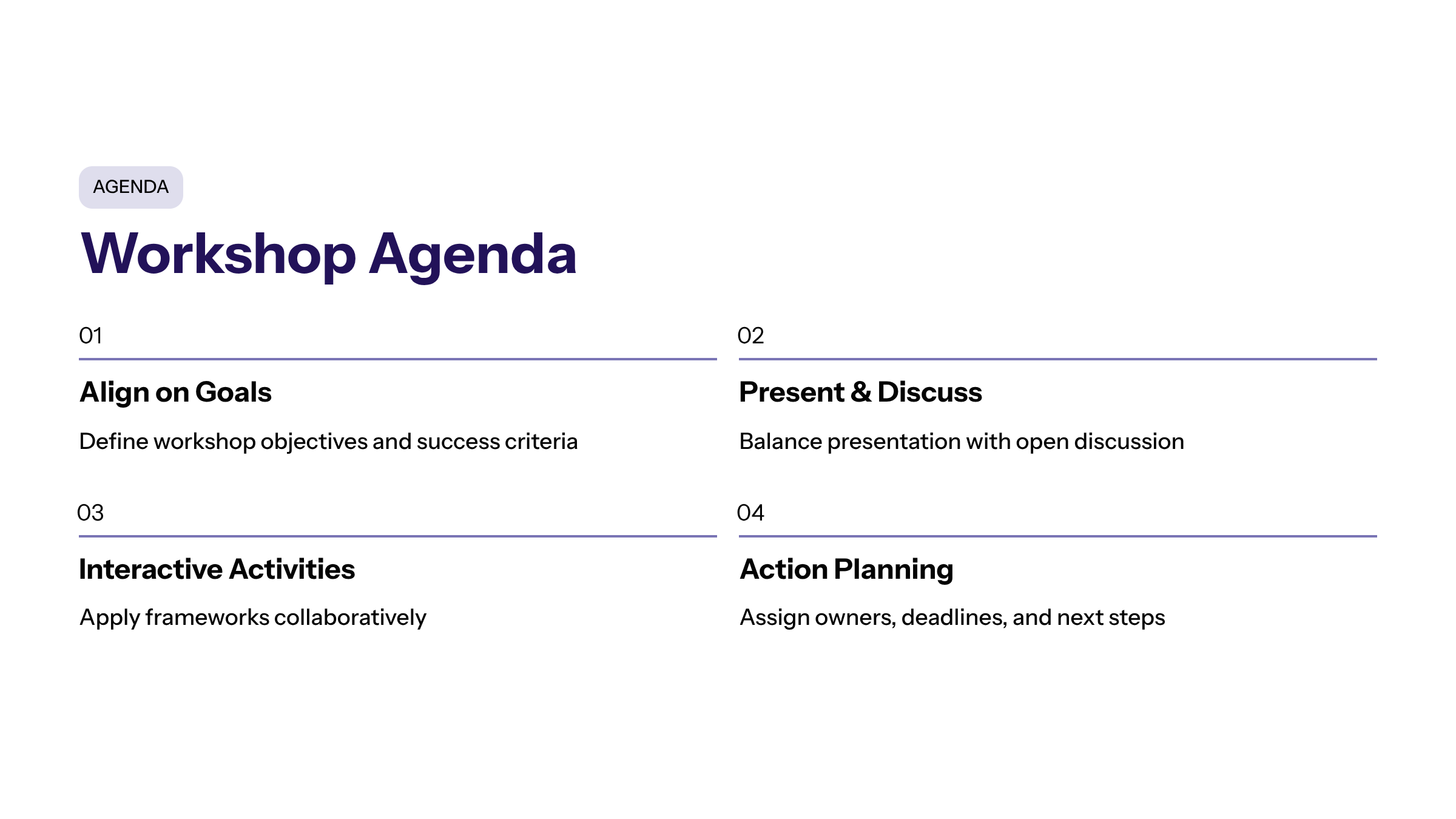
A well-structured agenda is essential for a productive prioritization workshop. It should balance presentation, discussion, and interactive activities.
Sample Agenda Outline
|
Time |
Activity |
Purpose |
|---|---|---|
|
0-15 minutes |
Introduction to Prioritization |
Align on goals and workshop objectives |
|
15-30 minutes |
Review of Business Objectives |
Clarify strategic goals and stakeholder needs |
|
30-60 minutes |
Task Listing and Initial Sorting |
Identify tasks and categorize using Eisenhower Matrix |
|
60-90 minutes |
Prioritization Framework Presentation |
Explain MoSCoW, Kano, or other methods |
|
90-120 minutes |
Group Prioritization Exercises |
Collaborative ranking and discussion |
|
120-135 minutes |
Decision-Making Techniques and Voting |
Apply Pareto, dot voting, or 100$ Test |
|
135-150 minutes |
Action Planning and Next Steps |
Assign responsibilities and timelines |
Time Management Strategies
Timeboxing sessions and setting clear milestones help maintain focus and ensure the workshop stays on track. Utilizing digital collaboration tools facilitates participation, especially for remote teams.
High-Priority Task Management
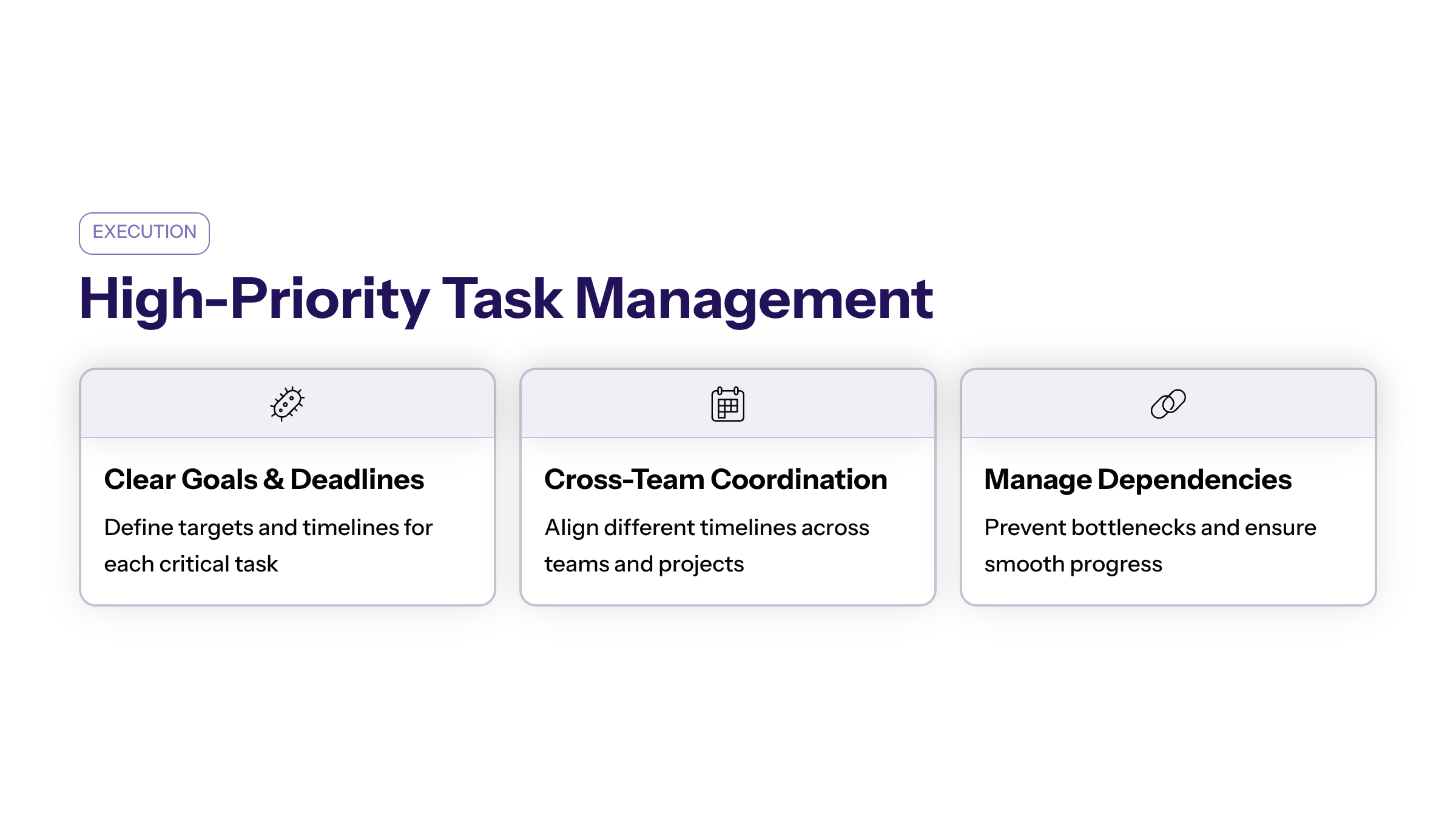
Managing high-priority tasks effectively requires clear goals, defined deadlines, and ongoing monitoring. Often, this also means coordinating across different timelines for various teams or projects to ensure that each task aligns with its specific schedule and resource needs. This coordination helps prevent bottlenecks and ensures that dependencies between tasks are managed proactively, allowing for smooth progress and timely completion of critical initiatives.
Tracking Progress
Using task lists, dashboards, or project management platforms enables teams to identify bottlenecks and adjust priorities as needed. These tools provide real-time visibility into task status, resource availability, and potential risks, facilitating proactive management. Regular progress reviews help teams stay aligned, address challenges promptly, and maintain momentum toward achieving high-priority goals.
Resource Allocation
Ensuring that adequate resources are allocated to top priorities prevents delays and supports timely delivery. This involves not only assigning personnel but also securing necessary budget, technology, and other assets. Effective resource allocation requires ongoing assessment and flexibility to reallocate resources as priorities shift or unexpected obstacles arise.
Effective Decision-Making
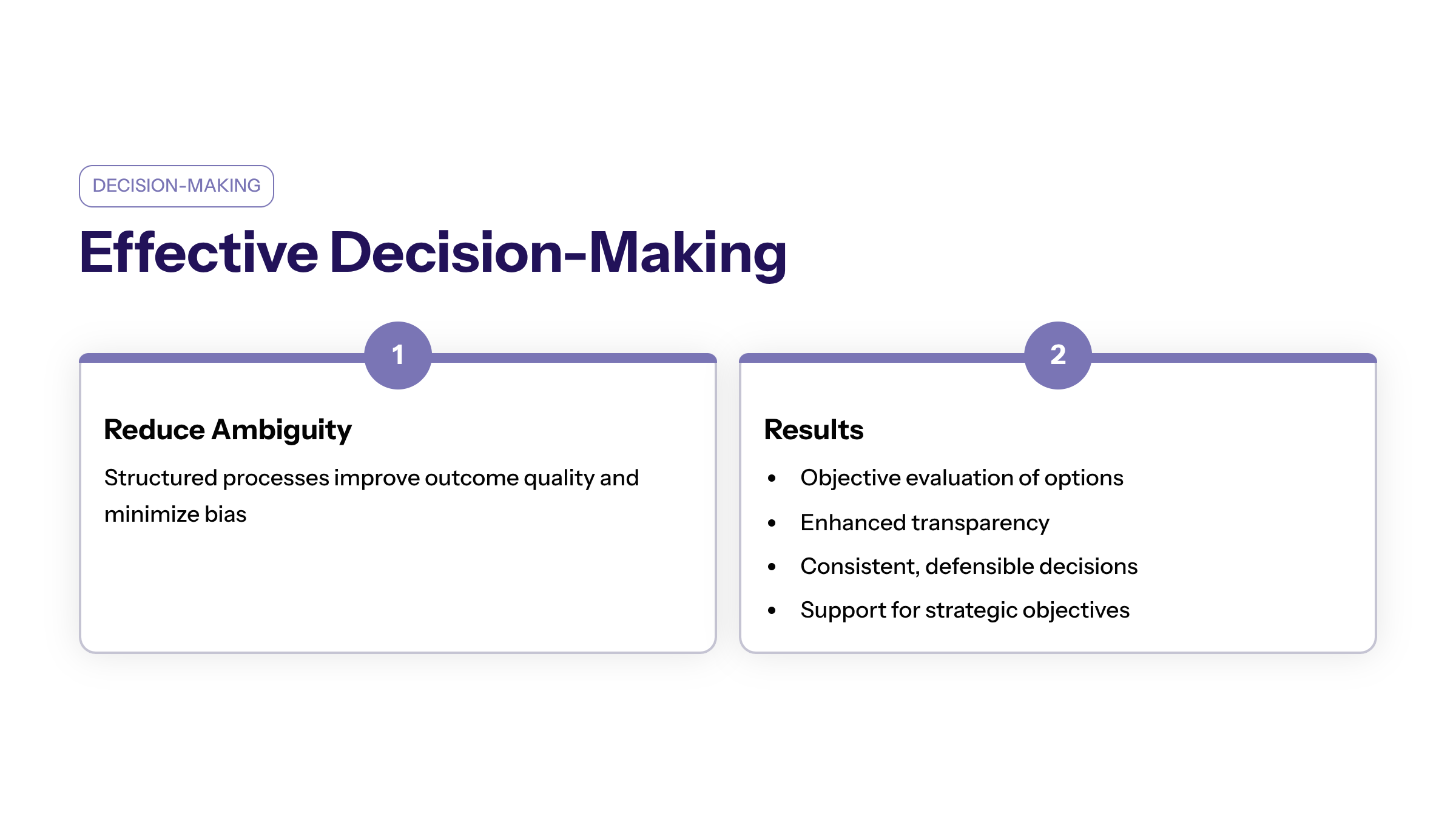
Structured decision-making processes reduce ambiguity and improve the quality of outcomes. By establishing clear criteria and frameworks, teams can evaluate options objectively, minimizing bias and enhancing transparency. This leads to more consistent and defensible decisions that support strategic objectives.
Stakeholder Involvement
Engaging all relevant stakeholders ensures diverse perspectives are considered and fosters buy-in. Inclusive participation helps uncover potential risks and opportunities that might otherwise be overlooked. It also promotes shared ownership of decisions, increasing commitment to execution and reducing resistance to change.
Multi-Factor Evaluation
Considering factors such as impact, effort, cost, and alignment with strategic goals leads to balanced decisions. Evaluating multiple dimensions encourages a holistic view of each task or project, helping teams prioritize initiatives that deliver the greatest value while managing risks and resource constraints effectively.
Business Goal Alignment
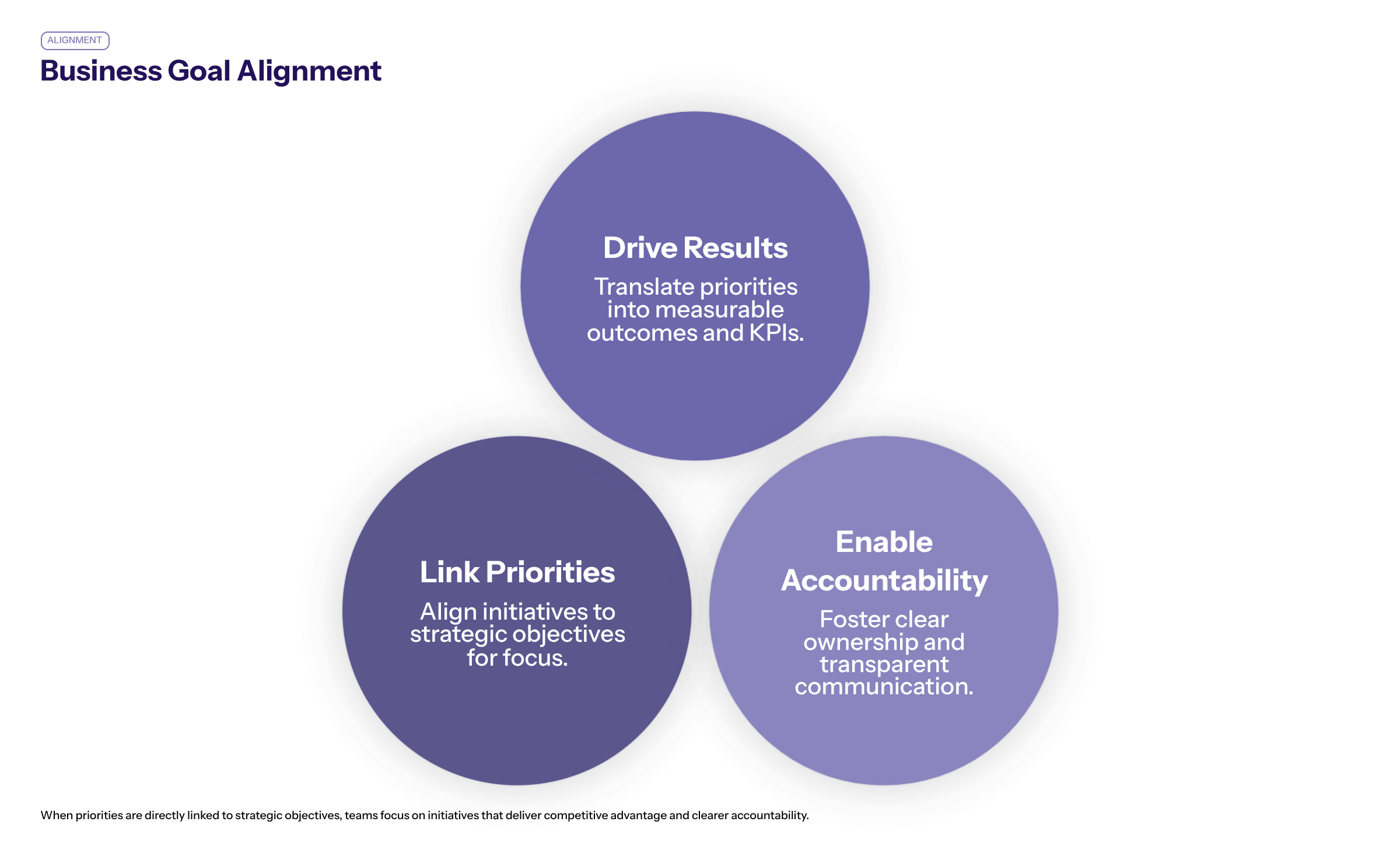
Aligning tasks and projects with business goals maximizes organizational impact. When priorities are directly linked to strategic objectives, teams can focus their efforts on initiatives that drive measurable results and competitive advantage. This alignment also facilitates clearer communication and accountability.
Frameworks for Alignment
Using prioritization frameworks helps maintain focus on initiatives that support the company’s vision and customer needs. Frameworks such as the Eisenhower Matrix, MoSCoW method, and weighted scoring provide structured approaches to evaluate and rank tasks based on their relevance and urgency, ensuring resources are directed appropriately.
Leadership Communication
Ongoing communication from leadership reinforces priorities and motivates teams. Transparent messaging about business goals, progress, and changes in direction helps maintain alignment and morale. Leaders play a critical role in championing prioritization efforts and ensuring that teams understand the rationale behind decisions.
Deciding on a communication plan during the workshop is essential to share new priorities effectively with stakeholders not present, maintaining transparency and alignment across the organization. This plan should specify communication channels, frequency, and responsible parties to ensure timely and consistent updates.
Prioritization Best Practices
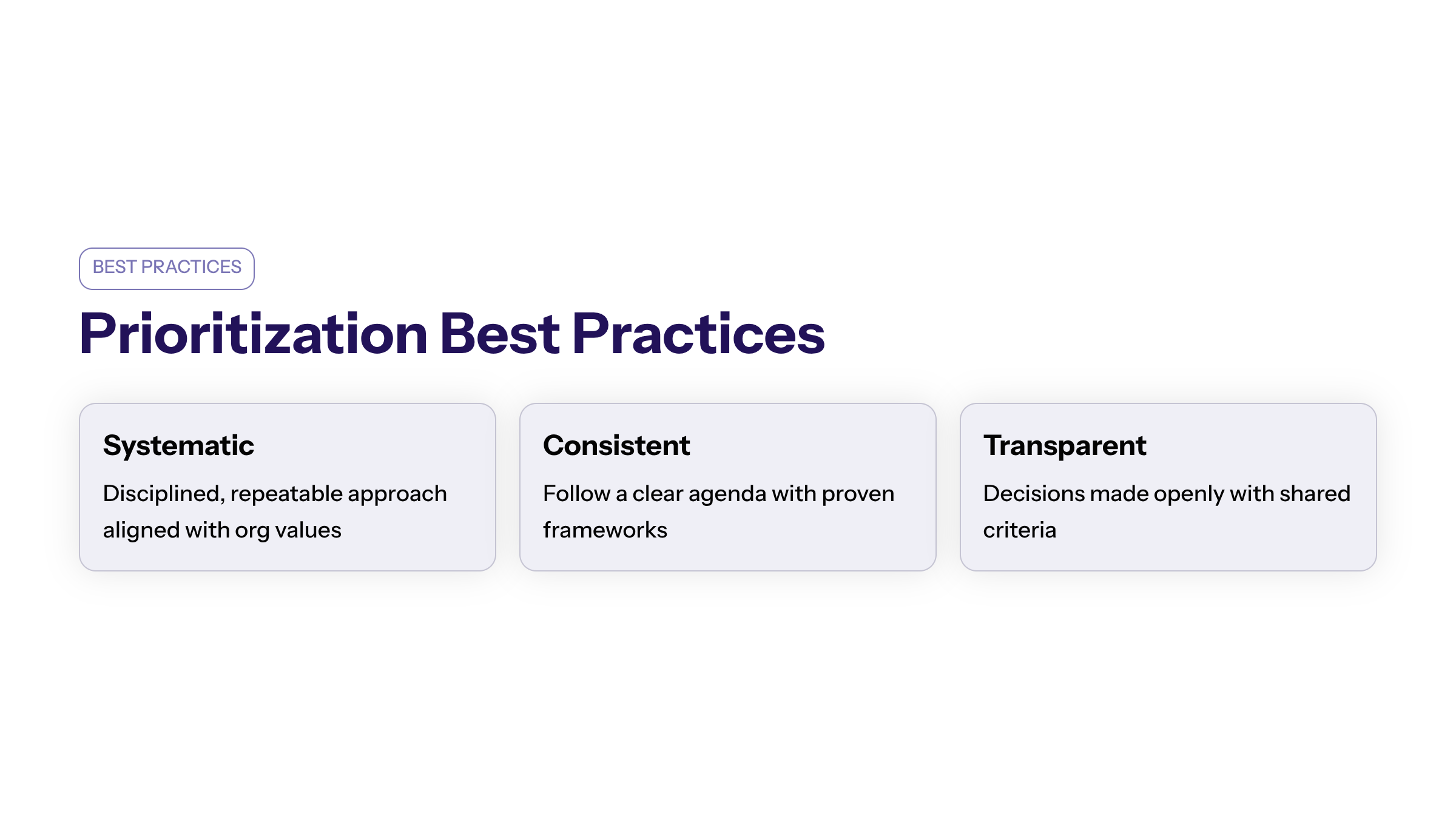
Adopting best practices enhances the effectiveness of prioritization efforts. A disciplined approach ensures that prioritization is systematic, repeatable, and aligned with organizational values.
Structured Approach
Following a clear agenda and using proven frameworks supports consistency. Structured workshops with defined objectives, timeboxes, and facilitation techniques help keep discussions focused and productive, reducing the risk of scope creep or decision fatigue.
Inclusive Participation
Involving all stakeholders promotes comprehensive understanding and commitment. It's important to consider both personal tasks and professional responsibilities during the prioritization workshop agenda to ensure all perspectives and types of tasks are addressed. This inclusivity fosters collaboration and helps identify dependencies and conflicts early.
Flexibility and Adaptability
Remaining open to revising priorities as circumstances change is critical for sustained success. Business environments are dynamic, and unexpected events may necessitate shifts in focus. Agile prioritization processes enable teams to respond effectively without losing sight of strategic goals.
Common Challenges
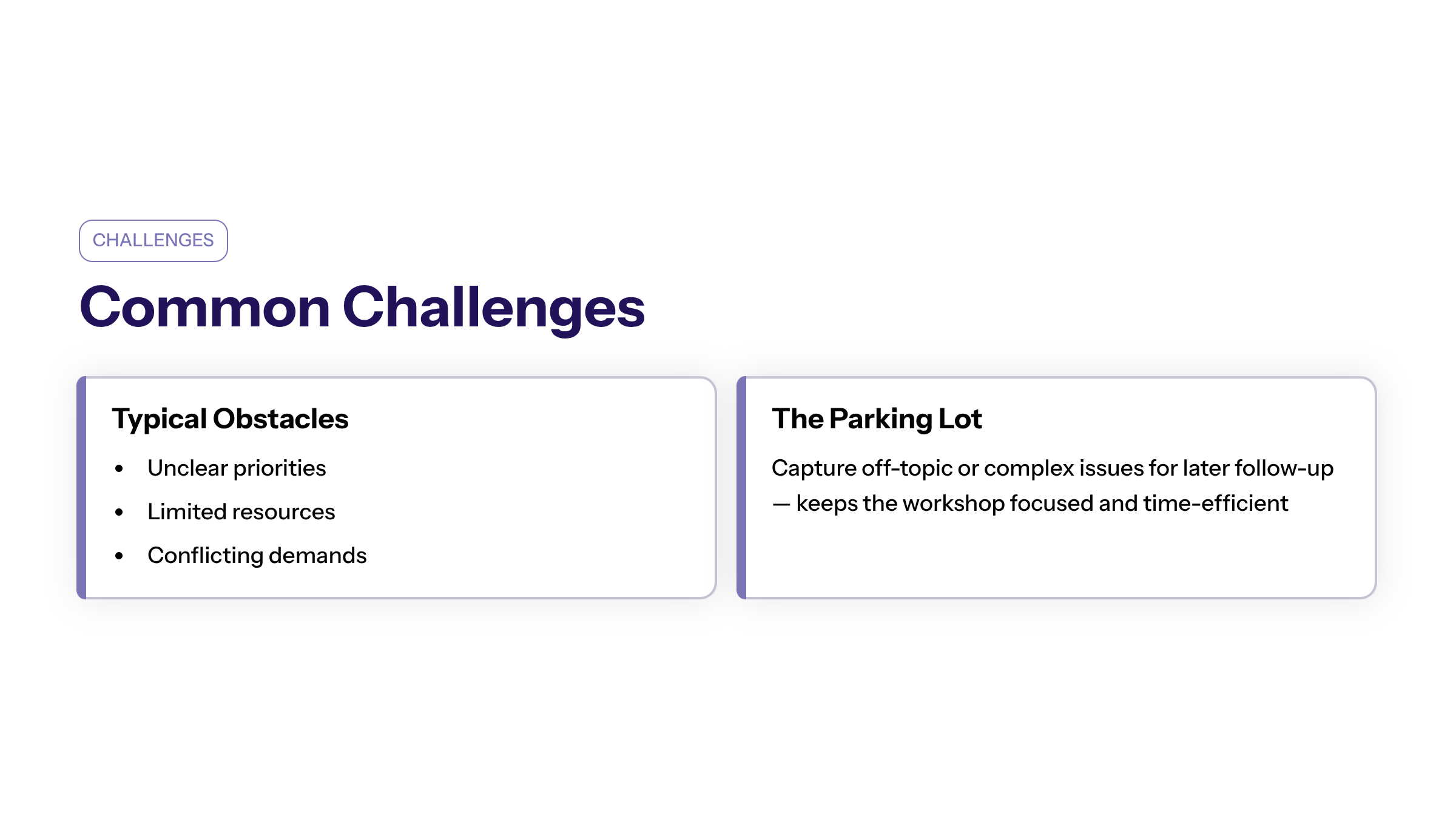
Teams often face challenges such as unclear priorities, limited resources, and conflicting demands. Using a 'Parking Lot'—a list for off-topic discussions or complex issues that require further data—can help capture these items for later follow-up, ensuring the workshop stays focused. This technique prevents distractions and helps manage time efficiently.
Addressing Challenges
Facilitated discussions and transparent criteria help resolve conflicts and clarify priorities. Skilled facilitators guide conversations to surface underlying concerns, mediate disagreements, and foster consensus, enabling the group to move forward with confidence.
Resource Constraints
Prioritization must account for available resources to set realistic expectations. Recognizing limitations upfront helps teams make pragmatic decisions about what can be achieved within given constraints, avoiding overcommitment and burnout.
Facilitating Collaboration
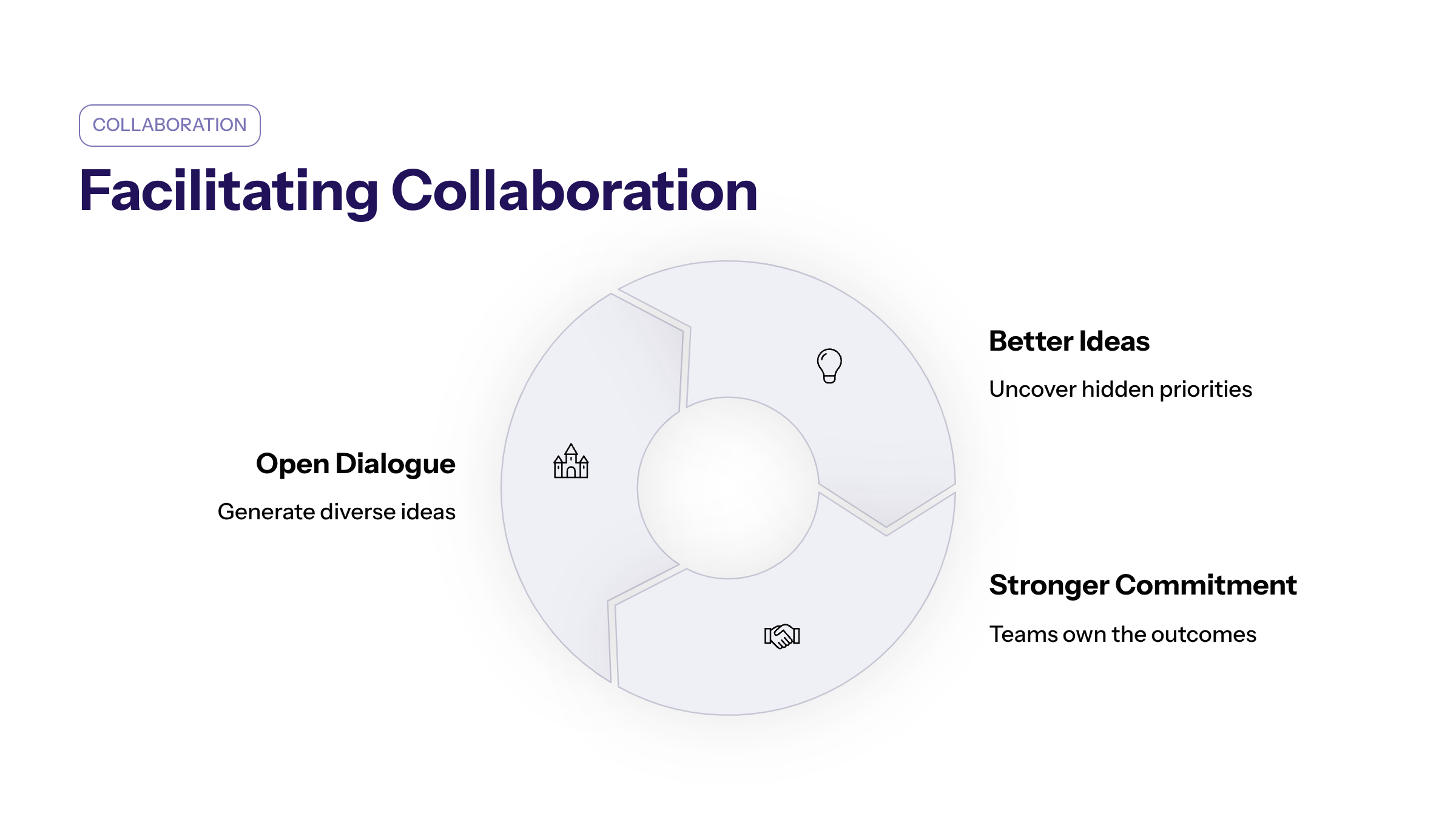
Collaboration is key to successful prioritization workshops. Engaged teams generate better ideas and develop stronger commitment to outcomes.
Group Discussions and Brainstorming
Encouraging open dialogue generates diverse ideas and uncovers hidden priorities. Brainstorming sessions allow participants to share perspectives freely, fostering creativity and comprehensive understanding of challenges and opportunities.
Decision-Making Exercises
Interactive exercises engage participants and build consensus. Techniques such as dot voting, the 100$ Test, or impact-effort matrices provide structured ways to evaluate options democratically, ensuring that decisions reflect the collective input.
Additional Resources
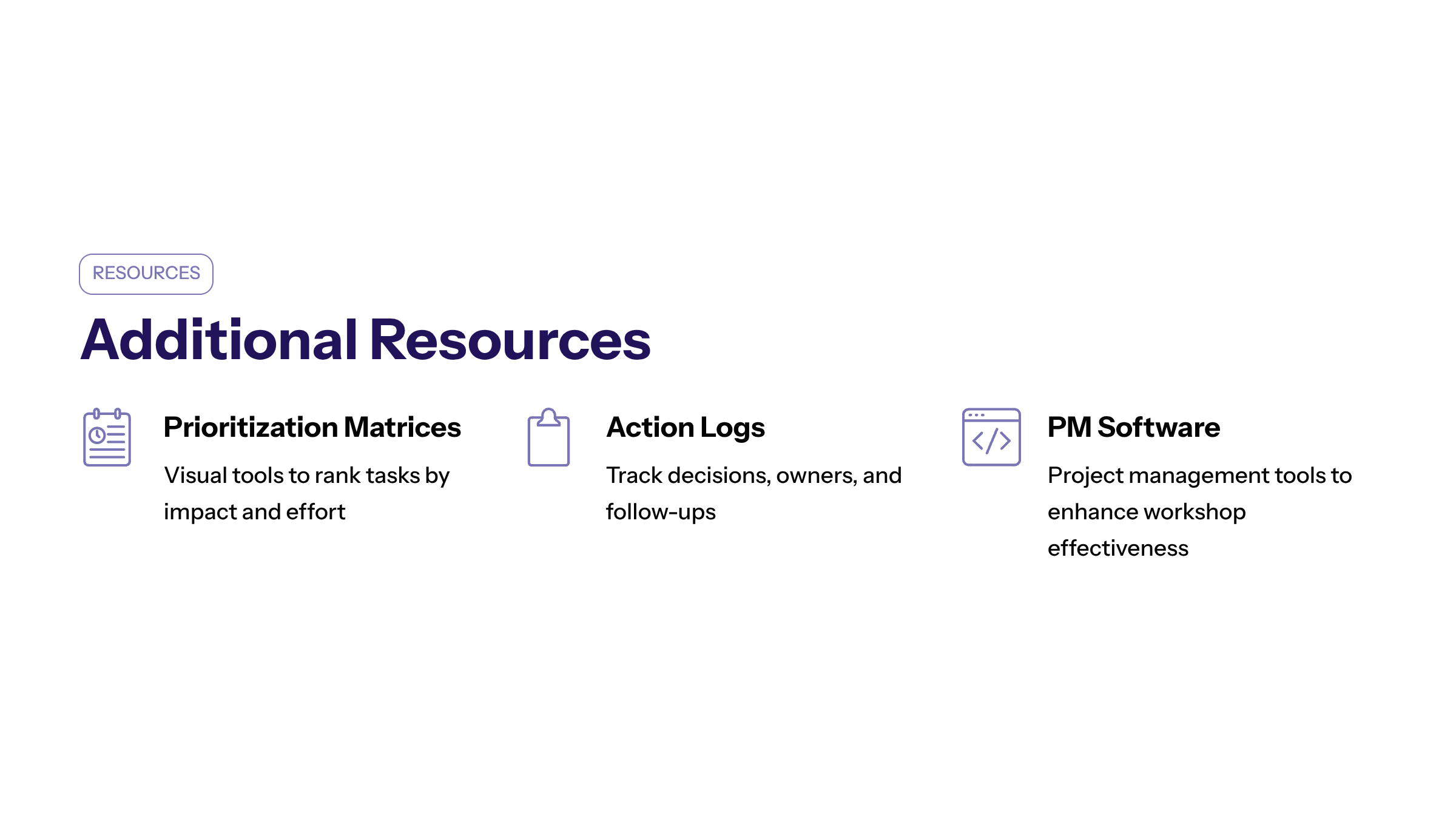
Providing templates, tools, and best practice guides supports ongoing prioritization efforts. Access to quality resources empowers teams to implement effective processes consistently and efficiently.
Access to Tools
Resources such as prioritization matrices, action logs, and project management software enhance workshop effectiveness. Many prioritization tools offer free templates or free trials, making it easy to get started without any initial cost.
Training and Support
Offering training sessions and expert facilitation improves team capabilities. Continuous learning opportunities help participants develop skills in prioritization techniques and workshop facilitation, leading to better outcomes.
Prioritization Methodology
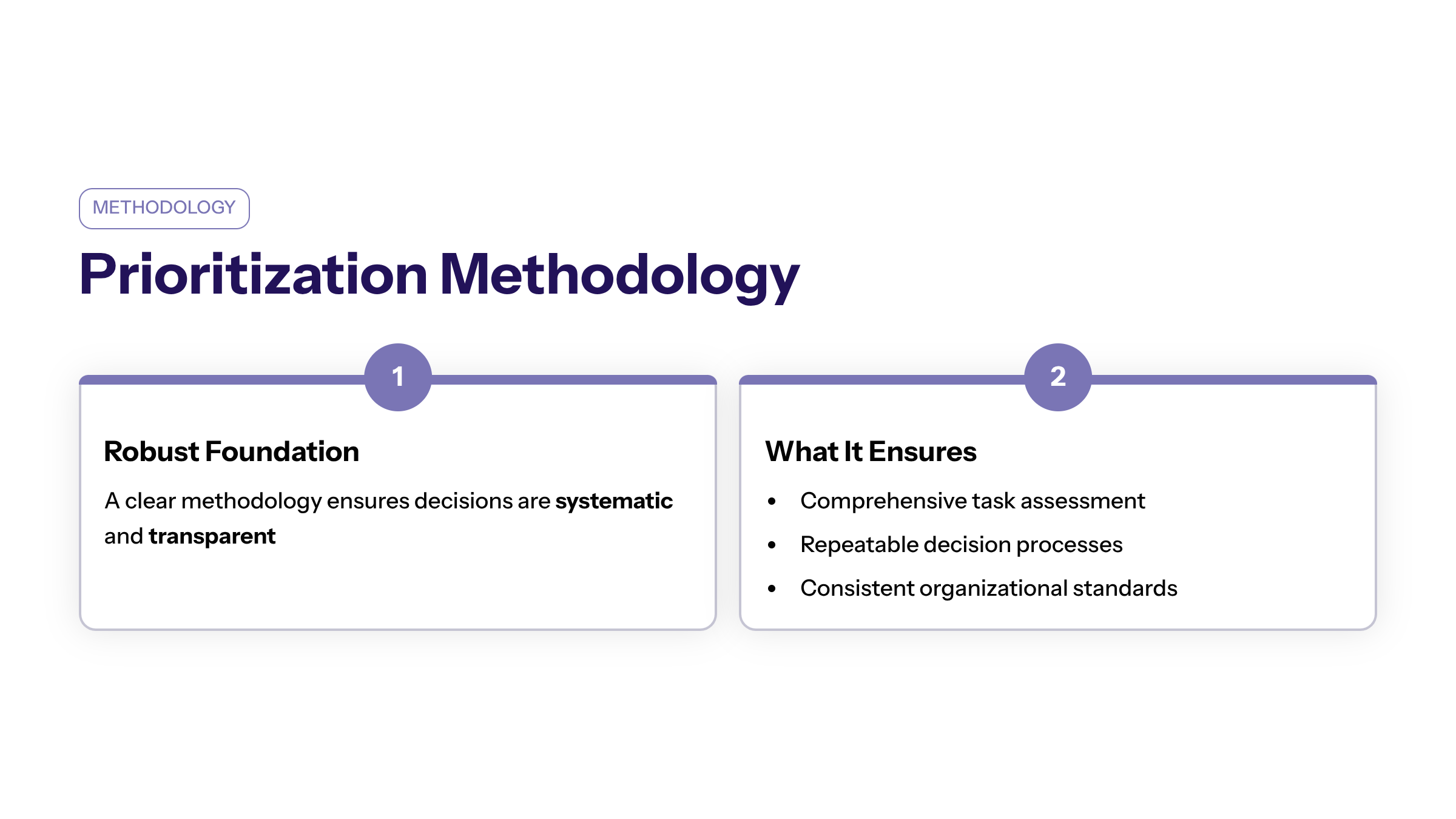
A robust methodology underpins effective prioritization. Clear processes ensure that decisions are made systematically and transparently.
Identification, Evaluation, and Prioritization
Systematic processes ensure that tasks and projects are assessed comprehensively. Identification involves gathering all relevant items, evaluation applies criteria to assess value and feasibility, and prioritization ranks items to guide action.
Adaptability
Methodologies should be tailored to fit different business contexts and timelines. Flexibility allows organizations to adjust approaches based on project complexity, team dynamics, and external factors.
Decision-Making Tools
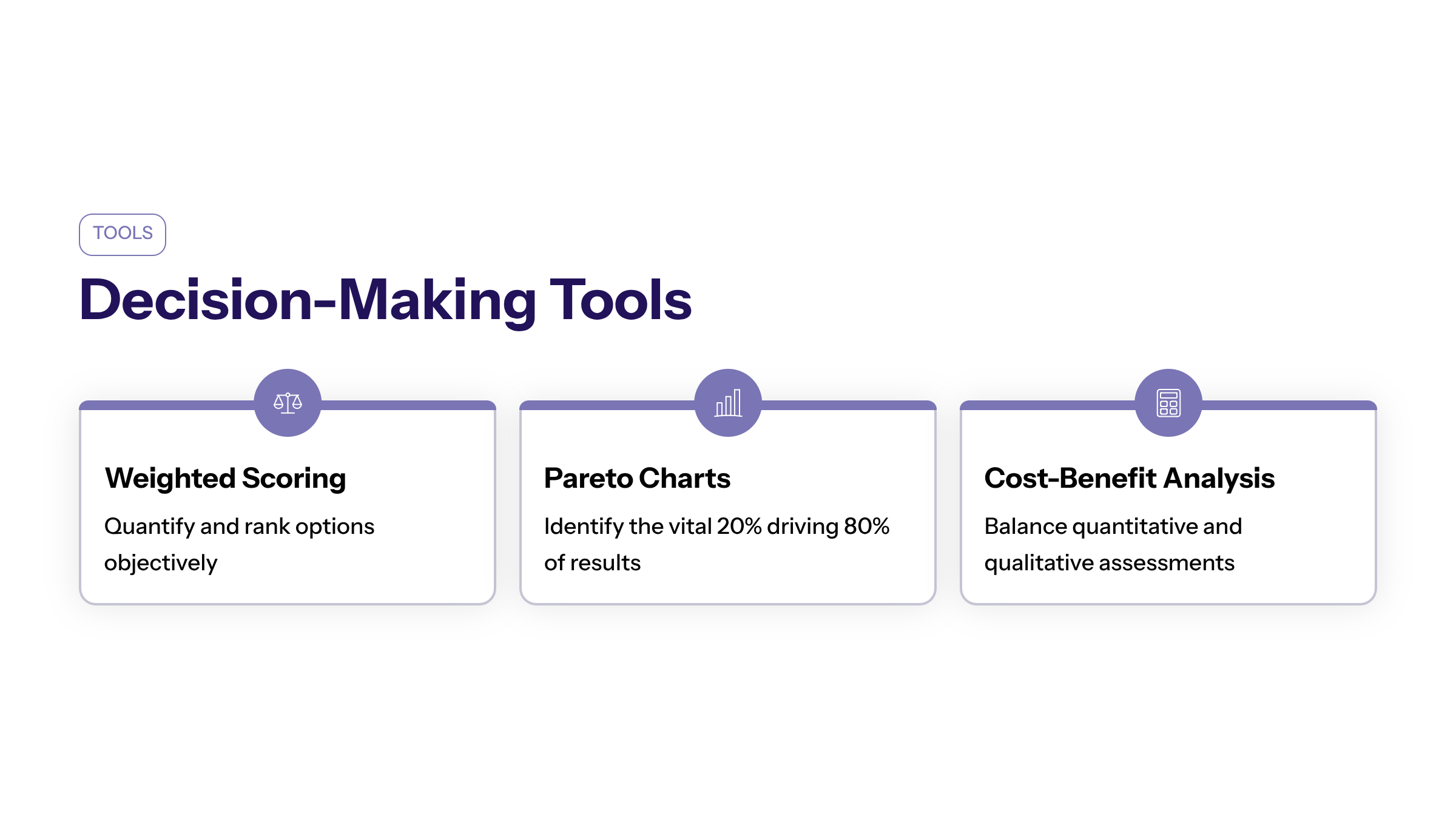
Utilizing decision-making tools enhances clarity and objectivity. Quantitative and qualitative tools support balanced assessments and reduce bias.
Examples
Tools such as weighted scoring, Pareto charts, and cost-benefit analysis provide quantitative support. These tools help teams visualize trade-offs and focus on initiatives with the highest return on investment.
Integration into Workshops
Incorporating these tools into workshop activities strengthens decision-making quality. Interactive use of tools engages participants, facilitates discussions, and leads to more informed and agreed-upon priorities.
Prioritization Method
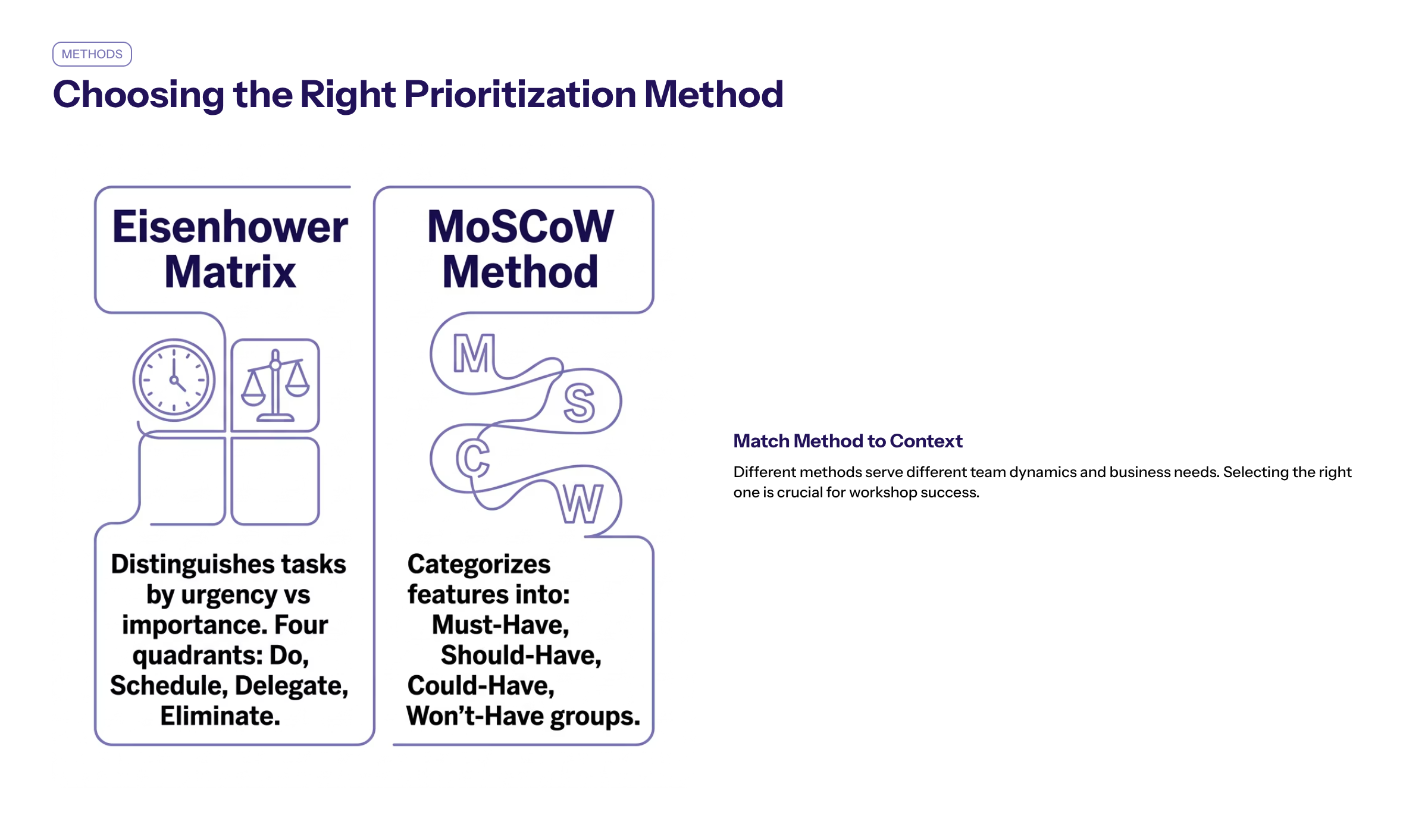
Selecting the right prioritization method is crucial for the success of any workshop. Different methods cater to various business needs and team dynamics. For example, the Eisenhower Matrix helps distinguish tasks by urgency and importance, while the MoSCoW method categorizes features into must-have and could-have groups.
Choosing an appropriate prioritization method ensures that the team can efficiently rank tasks, align on criteria, and focus on initiatives with the most significant strategic impact. Facilitators should introduce the chosen method clearly, so all participants understand how decisions will be made during the workshop.
Important Tasks
Identifying important tasks is a key outcome of the prioritization process. Important tasks contribute directly to achieving strategic goals and often require thoughtful planning and resource allocation.
Unlike urgent tasks, which demand immediate attention, important tasks may have longer timelines but carry significant weight in driving business success. Prioritization workshops help teams recognize these tasks, schedule them appropriately, and avoid the trap of focusing solely on urgent but less impactful activities.
Task List
A comprehensive task list forms the foundation of an effective prioritization workshop. It includes all possible actions, projects, and initiatives under consideration.
Creating this list before the workshop ensures that no critical items are overlooked. During the session, participants can collaboratively refine and organize the task list, using tools like sticky notes or digital boards.
Maintaining a well-structured task list allows teams to systematically apply prioritization frameworks and track progress on selected priorities.
Four Quadrants
The concept of four quadrants is central to several prioritization frameworks, most notably the Eisenhower Matrix. This approach divides tasks into four categories based on their urgency and importance: urgent and important, important but not urgent, urgent but not important, and neither urgent nor important.
Sorting tasks into these four quadrants helps teams decide which tasks to do immediately, schedule for later, delegate, or eliminate. Visualizing tasks this way promotes clarity, reduces decision fatigue, and drives focused execution.
Possible Actions
During prioritization workshops, teams generate a list of possible actions that can address business challenges or opportunities. Evaluating these possible actions against criteria such as impact, effort, and alignment with strategic goals enables informed decision-making. Facilitators encourage participants to consider a broad range of options, then narrow the list to high-value initiatives.
This process ensures that resources are directed toward actions that offer the greatest return and supports continuous progress toward organizational objectives.
Conclusion
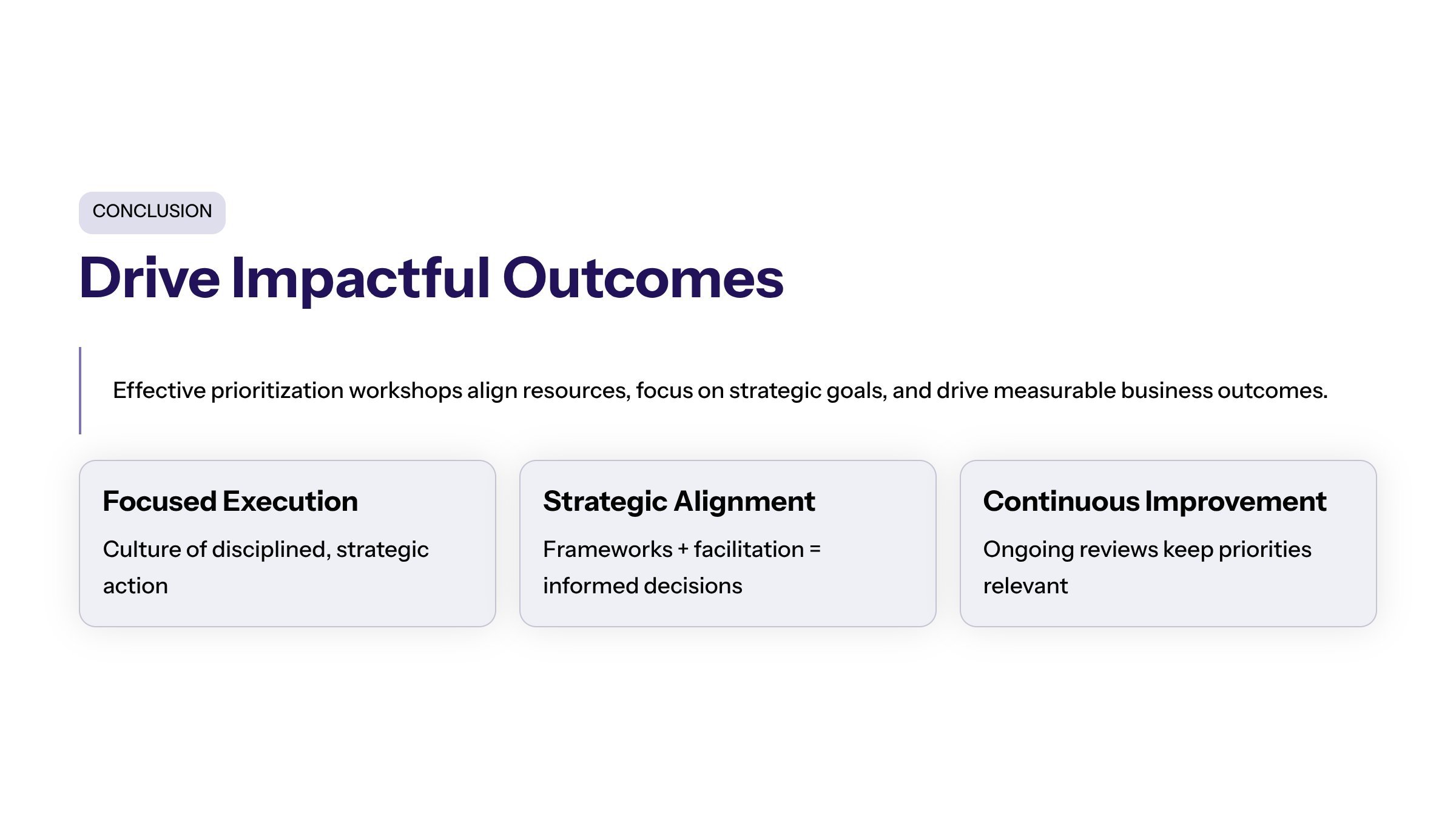
By adopting this comprehensive prioritization workshop agenda, organizations can foster a culture of focused execution, strategic alignment, and continuous improvement. Leveraging established frameworks and facilitation techniques empowers teams to make informed decisions that drive measurable business outcomes.